|
表情符号
|
单词 | Images | 翻译 | 过去时 | 过去分词 | 第三人称单数 | 动名词 | 含义 | 例句 | 例句翻译 | 示例表达 | 示例表达含义 | 示例表达翻译 | 同义词 | 反义词 | 搭配词 | 助记符 |
|---|---|---|---|---|---|---|---|---|---|---|---|---|---|---|---|---|---|
|
🛏️
••••••
|
/bɛd/
noun
••••••
|
- •••••• | - •••••• | - •••••• | - •••••• | - •••••• | - •••••• |
a piece of furniture for sleeping or resting on
••••••
|
She lay down on the bed and fell asleep quickly. |
- •••••• |
make your bed |
to arrange or tidy your bed after getting up
••••••
|
- •••••• |
couch, mattress, cot, bunk
••••••
|
floor, ground
••••••
|
go to bed, make the bed, bed sheet, hospital bed
••••••
|
No •••••• |
|
🛏️
••••••
|
/ˈbɛdruːm/
noun
(贝德鲁姆)
••••••
|
- •••••• |
卧室
wòshì
••••••
|
- •••••• | - •••••• | - •••••• | - •••••• |
A room used for sleeping in.
••••••
|
The children were playing in the bedroom.
孩子们正在卧室里玩耍。
••••••
|
孩子们正在卧室里玩耍。
Háizimen zhèngzài wòshì lǐ wánshuǎ.
••••••
|
bedroom eyes
卧室眼神
••••••
|
A seductive or alluring look.
••••••
|
迷人的眼神
mírén de yǎnshén
••••••
|
sleeping room, chamber, boudoir, dormitory
••••••
|
living room, kitchen
••••••
|
master bedroom, small bedroom, bedroom furniture, bedroom window
••••••
|
卧室是放床的地方,像 'bed' 一样。
••••••
|
|
🥩
••••••
|
/biːf/
noun
(bīf)
••••••
|
- •••••• |
牛肉
niúròu
••••••
|
- •••••• | - •••••• | - •••••• | - •••••• |
the flesh of a cow, bull, or ox, used as food; also a complaint or dispute
••••••
|
He ordered a plate of grilled beef for dinner. |
他为晚餐点了一盘烤牛肉。
Tā wèi wǎncān diǎle yī pán kǎo niúròu.
••••••
|
have a beef with someone |
to have a complaint or dispute with someone
••••••
|
与某人有争执
yǔ mǒu rén yǒu zhēngzhí
••••••
|
meat, steak, flesh, complaint, dispute
••••••
|
poultry, peace, harmony
••••••
|
beef steak, roast beef, beef burger, beef curry
••••••
|
Beef 意味着牛肉 🍖 — '像公牛一样生气' 记住这个就能理解!
••••••
|
|
🍺
••••••
|
/bɪər/
noun
(比尔)
••••••
|
- •••••• |
啤酒
píjiǔ
••••••
|
- •••••• | - •••••• | - •••••• | - •••••• |
An alcoholic drink made from yeast-fermented malt flavored with hops.
••••••
|
He ordered a glass of cold beer at the bar.
他在酒吧点了一杯冰凉的啤酒。
••••••
|
他在酒吧点了一杯冰凉的啤酒。
Tā zài jiǔba diǎnle yī bēi bīngliáng de píjiǔ.
••••••
|
beer belly
啤酒肚
••••••
|
A large stomach caused by drinking too much beer.
••••••
|
啤酒肚
píjiǔ dù
••••••
|
ale, lager, brew, pint
••••••
|
water, juice
••••••
|
cold beer, draft beer, bottle of beer, beer mug
••••••
|
啤酒是聚会的最佳搭配,充满欢乐与回忆。
••••••
|
|
🎩
••••••
|
/bɪˈfɪt/
verb
(比菲特)
••••••
|
- •••••• |
适合
shi he
••••••
|
befitted
比菲特德
••••••
|
befitted
比菲特德
••••••
|
befits
比菲特斯
••••••
|
befitting
比菲廷
••••••
|
to be suitable for; to be appropriate to
••••••
|
Formal attire befits the seriousness of the occasion.
福马尔 阿泰尔 比菲特斯 泽 斯瑞阿斯尼斯 阿夫 泽 欧凯申。
••••••
|
正式的服装适合这个场合的严肃性。
zhengshi de fuzhuang shihe zhege changhe de yansu xing
••••••
|
befitting one’s status
比菲廷 旺兹 斯泰特斯
••••••
|
appropriate to a person’s rank or position
••••••
|
符合身份
fuhe shenfen
••••••
|
suit, become, match, be appropriate for, accord with
••••••
|
misfit, clash, be inappropriate for
••••••
|
befit the occasion, befit one’s status, befit the role, befit the position
••••••
|
Befit 就是 fit,表示很适合。
••••••
|
|
🤡
••••••
|
/bɪˈfuːl/
verb
(比富尔)
••••••
|
- •••••• |
欺骗
qipian
••••••
|
befooled
比富尔德
••••••
|
befooled
比富尔德
••••••
|
befools
比富尔兹
••••••
|
befooling
比富尔英
••••••
|
to deceive or trick someone into believing something false; to make someone appear foolish
••••••
|
The scammer tried to befool innocent people with fake promises.
泽 斯卡默 特莱德 图 比富尔 伊诺森特 皮普尔 维兹 费克 普罗米塞斯
••••••
|
骗子试图用虚假的承诺欺骗无辜的人。
pianzi shitu yong xujia de chengnuo qipian wugu de ren
••••••
|
- •••••• | - •••••• | - •••••• |
deceive, trick, dupe, fool, mislead
••••••
|
enlighten, inform, clarify
••••••
|
befool someone easily, befool the public, try to befool, completely befool
••••••
|
befool 听起来像 fool,就是欺骗让人变傻
••••••
|
|
⏰
••••••
|
/bɪˈfɔːr/
preposition/adverb/conjunction
(bifor)
••••••
|
- •••••• |
之前
zhīqián
••••••
|
- •••••• | - •••••• | - •••••• | - •••••• |
At an earlier time; in front of in order or place.
••••••
|
She arrived before the meeting started. |
她在会议开始之前到达。
tā zài huìyì kāishǐ zhīqián dàodá.
••••••
|
before long |
in a short time
••••••
|
很快
hěn kuài
••••••
|
earlier, ahead, prior, in front
••••••
|
after, behind
••••••
|
before dawn, before time, before long, before the meeting
••••••
|
BEFORE意味着之前 — 做好准备,避免迟到。
••••••
|
|
🧪
••••••
|
/bɪˈfaʊl/
verb
(比福尔)
••••••
|
- •••••• |
污染
wuran
••••••
|
befouled
比福尔德
••••••
|
befouled
比福尔德
••••••
|
befouls
比福尔兹
••••••
|
befouling
比福尔英
••••••
|
to make dirty or polluted; to disgrace or corrupt
••••••
|
The factory waste befouled the river.
工厂废物比福尔了河流。
••••••
|
工厂废物污染了河流。
gongchang feiwu wuran le heliu
••••••
|
- •••••• | - •••••• | - •••••• |
pollute, defile, contaminate, sully, taint
••••••
|
clean, purify, cleanse
••••••
|
befoul the environment, befoul a river, befoul the air, befoul one’s reputation
••••••
|
Befoul 听起来像 ‘foul’,联想到污染环境。
••••••
|
|
🙏
••••••
|
/bɛɡ/
verb
(贝格)
••••••
|
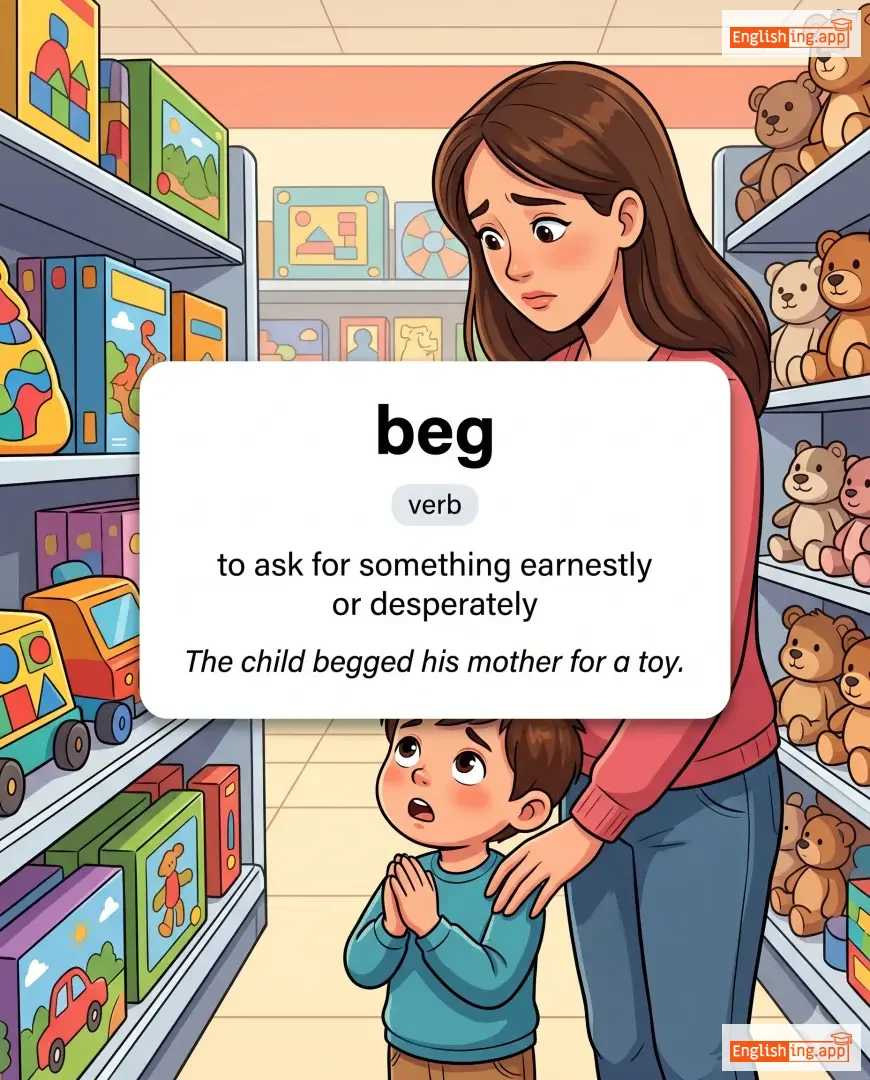
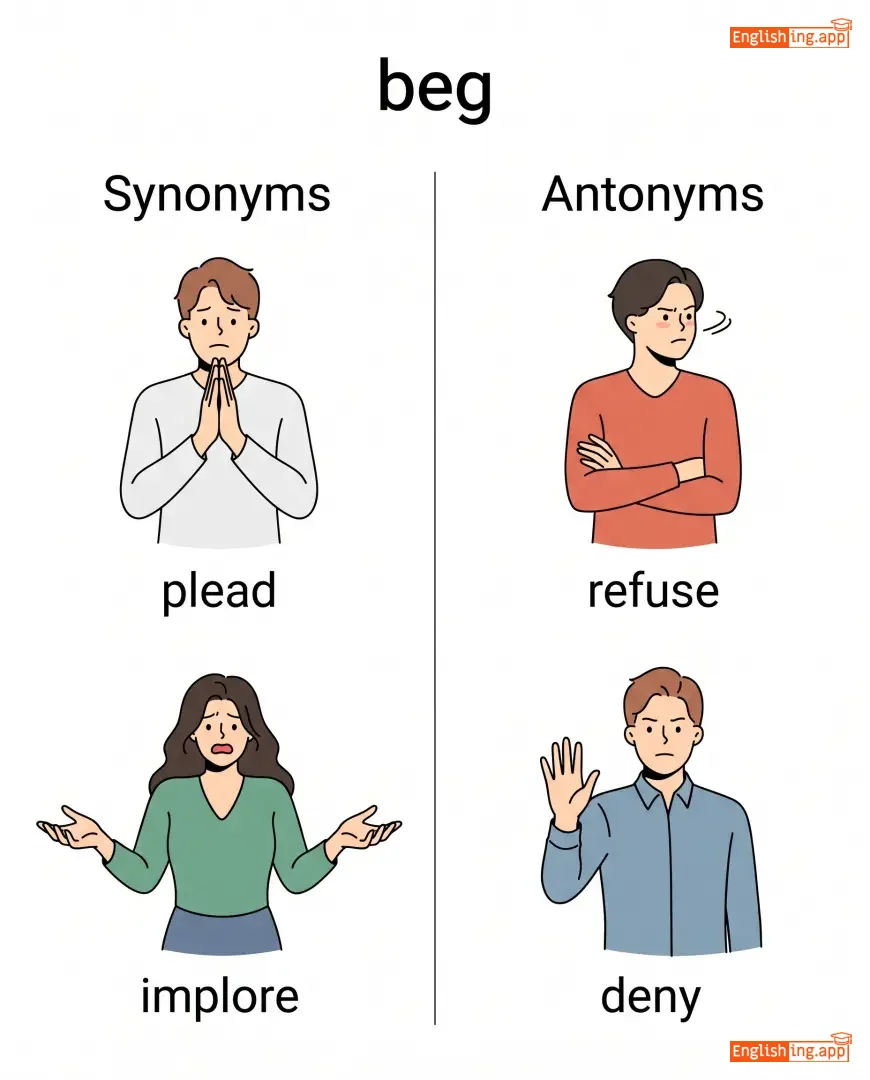
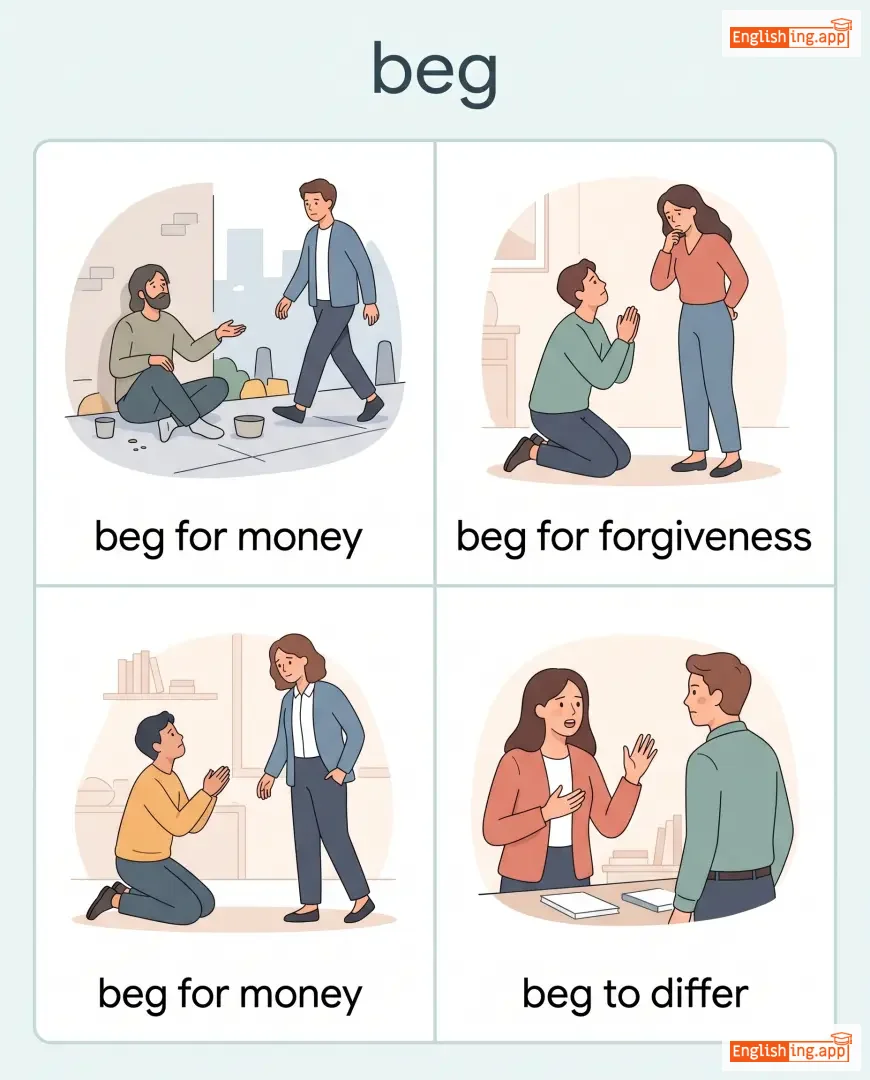
|
乞求 / 请求
qǐqiú / qǐngqiú
••••••
|
begged
贝格德
••••••
|
begged
贝格德
••••••
|
begs
贝格斯
••••••
|
begging
贝格金
••••••
|
to ask for something earnestly or desperately
••••••
|
The child begged his mother for a toy.
孩子贝格他的妈妈为一个玩具。
••••••
|
孩子恳求妈妈给他买玩具。
Háizi kěnqiú māmā gěi tā mǎi wánjù.
••••••
|
beg to differ
beg to differ
••••••
|
to politely disagree
••••••
|
礼貌不同意
lǐmào bù tóngyì
••••••
|
plead, implore, request, entreat, supplicate
••••••
|
refuse, deny, reject
••••••
|
beg for money, beg for forgiveness, beg to differ, beg for mercy
••••••
|
Beg 代表乞求 – 想象你请求某人帮忙给你买玩具。
••••••
|
|
🌱
••••••
|
/bɪˈɡɛt/
verb
(比盖特)
••••••
|
- •••••• |
导致 / 产生
dàozhì / chǎnshēng
••••••
|
begot
比戈特
••••••
|
begotten
比戈滕
••••••
|
begets
比盖特斯
••••••
|
begetting
比盖汀
••••••
|
to bring about or give rise to; to father or produce
••••••
|
Violence begets more violence.
暴力会引发更多的暴力。
••••••
|
暴力会引发更多的暴力。
Bàolì huì yǐn fā gèng duō de bàolì.
••••••
|
- •••••• | - •••••• | - •••••• |
cause, create, generate, produce, engender
••••••
|
prevent, stop, hinder
••••••
|
beget violence, beget problems, beget change
••••••
|
Beget意味着产生,就像父亲产生孩子一样。
••••••
|
|
🚀
••••••
|
/bɪˈɡɪn/
verb
(bɪˈɡɪn)
••••••
|
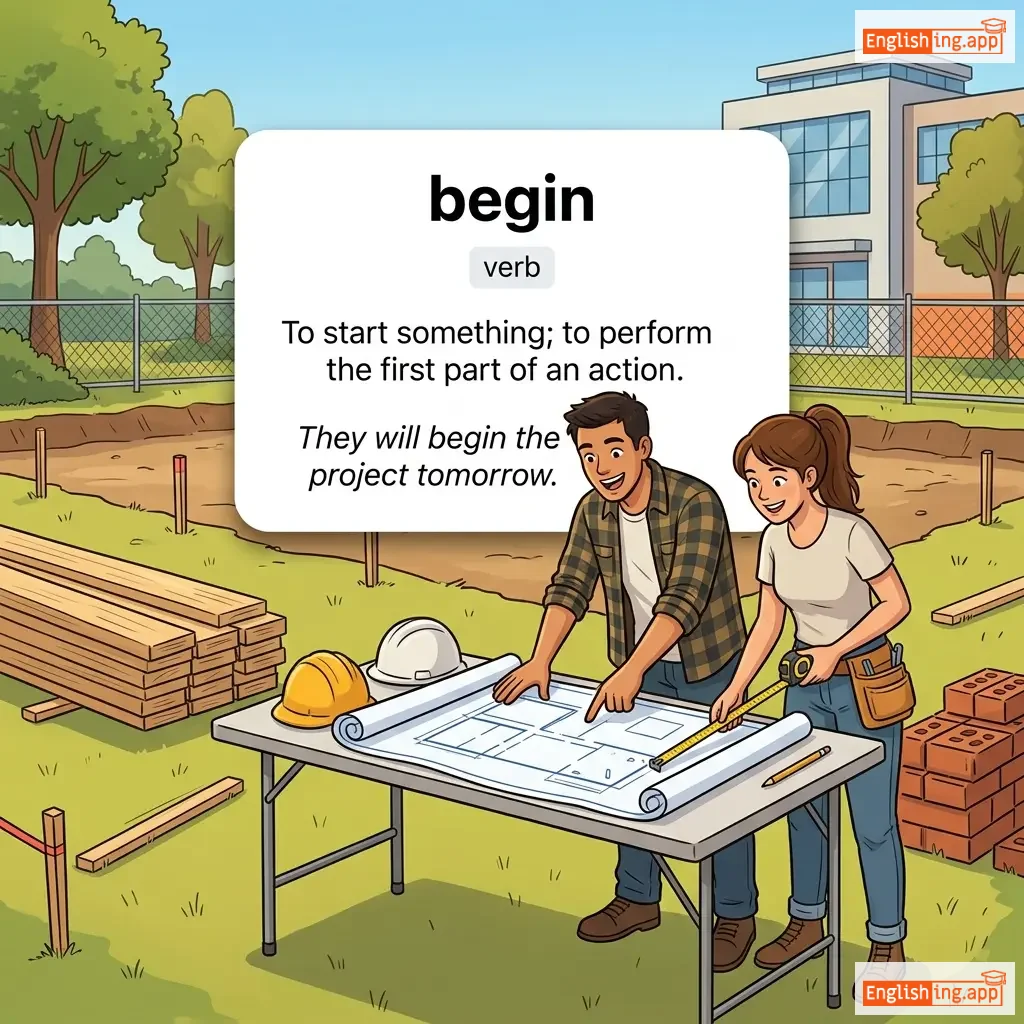
|
开始
kaishi
••••••
|
began
bɪˈɡæn
••••••
|
begun
bɪˈɡʌn
••••••
|
begins
bɪˈɡɪnz
••••••
|
beginning
bɪˈɡɪnɪŋ
••••••
|
To start something; to perform the first part of an action.
••••••
|
They will begin the project tomorrow.
他们明天将开始项目。
••••••
|
他们明天将开始项目。
Tāmen míngtiān jiāng kāishǐ xiàngmù.
••••••
|
to begin with
首先
••••••
|
as the first consideration
••••••
|
首先
shǒuxiān
••••••
|
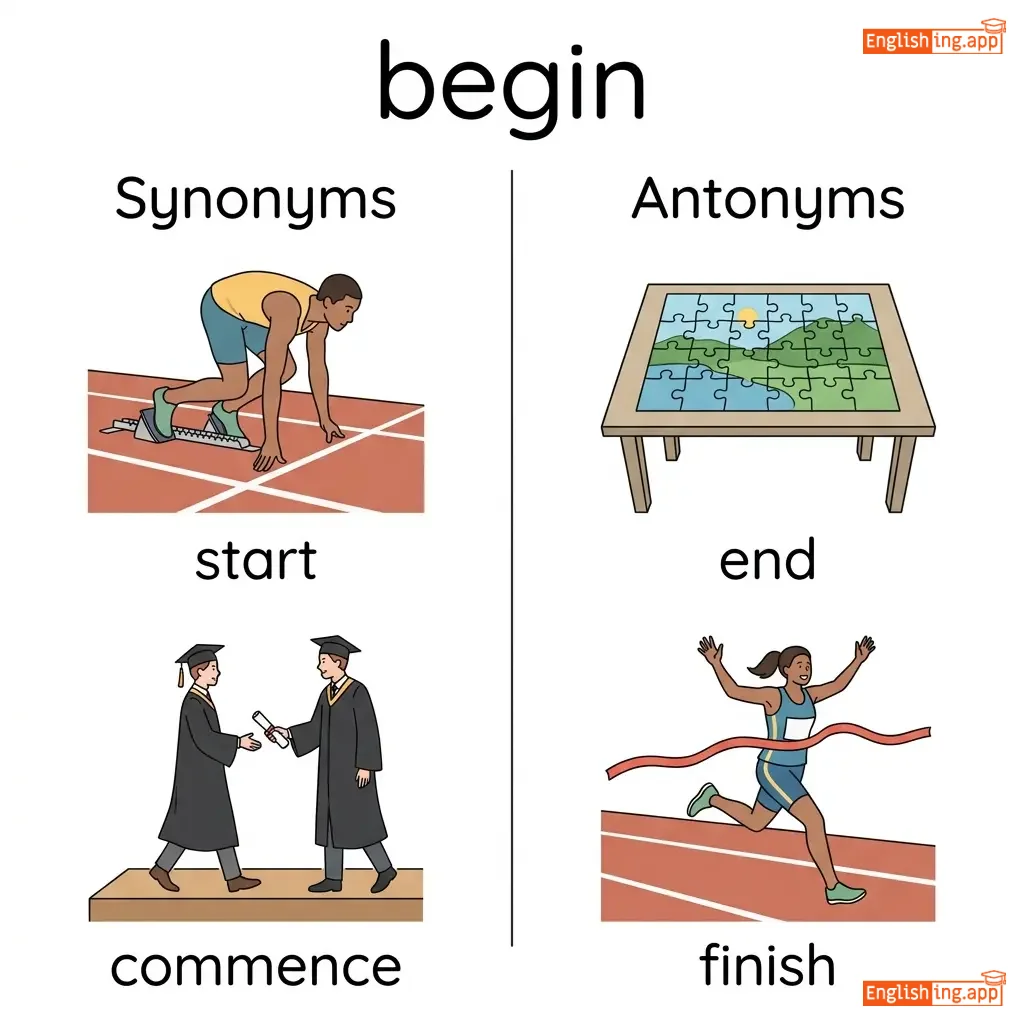
start, commence, initiate, launch
••••••
|
end, finish, conclude
••••••
|
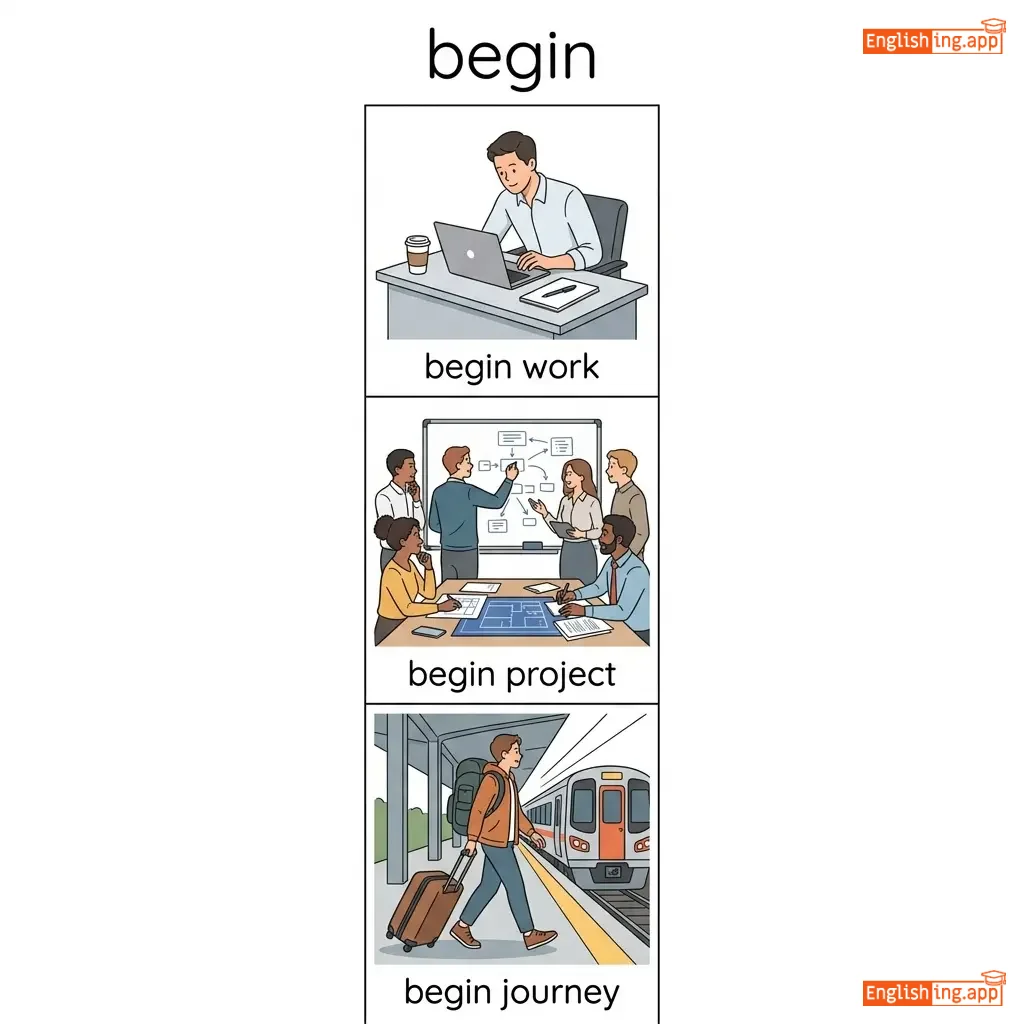
begin work, begin project, begin journey, begin process
••••••
|
开始等于启动。记住,‘开始’意味着启动!
••••••
|
|
🌅
••••••
|
/bɪˈɡɪnɪŋ/
noun
(bɪˈɡɪnɪŋ)
••••••
|
- •••••• |
开始
kaishi
••••••
|
- •••••• | - •••••• | - •••••• | - •••••• |
The start or first part of something.
••••••
|
The beginning of the story was very interesting. |
故事的开始非常有趣。
Gùshì de kāishǐ fēicháng yǒuqù.
••••••
|
new beginning |
a fresh start
••••••
|
新开始
xīn kāishǐ
••••••
|
start, commencement, onset, opening
••••••
|
end, conclusion
••••••
|
at the beginning, beginning of story, new beginning
••••••
|
BEGINNING 意味着开始 — 日出 🌅 是一个新的开始。
••••••
|
|
🤝
••••••
|
/bɪˈhɑːf/
noun
(bihaf)
••••••
|
- •••••• |
代表
dàibiǎo
••••••
|
- •••••• | - •••••• | - •••••• | - •••••• |
as a representative of someone; in the interest of someone
••••••
|
She accepted the award on behalf of her team. |
她代表她的团队接受了奖项。
Tā dàibiǎo tā de tuánduì jiēshòu le jiǎngxiàng.
••••••
|
on someone's behalf |
as a representative of someone else
••••••
|
代表某人
dàibiǎo mǒu rén
••••••
|
interest, support, representation, favor
••••••
|
against, opposition
••••••
|
on behalf of, in behalf of, behalf letter, behalf request
••••••
|
'Be half' 记住 — 你像某人的一半,代表他们的利益。
••••••
|
|
🙂
••••••
|
/bɪˈheɪv/
verb
(bēi héi fū)
••••••
|
|
表现
biǎo xiàn
••••••
|
behaved
bēi héi fú dé
••••••
|
behaved
bēi héi fú dé
••••••
|
behaves
bēi héi fú
••••••
|
behaving
bēi héi fū jīng
••••••
|
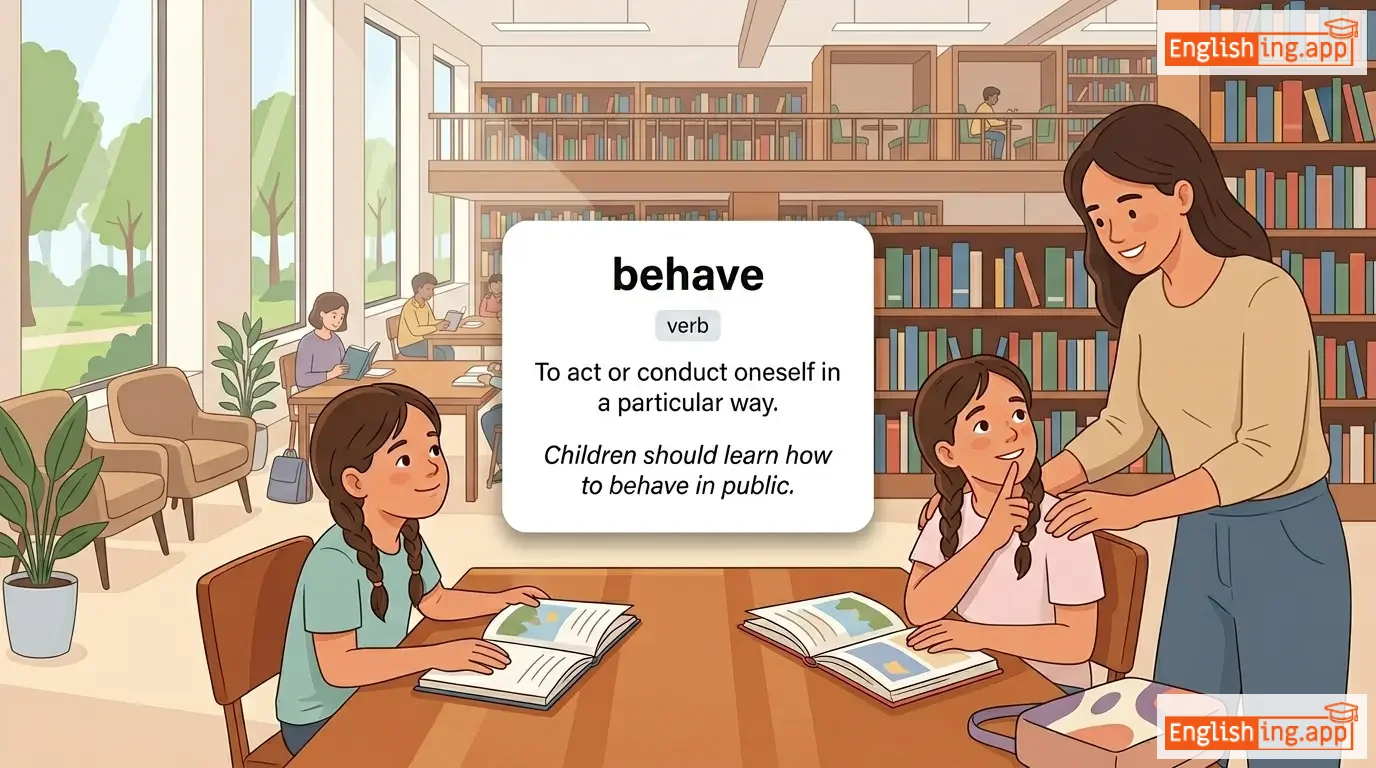
To act or conduct oneself in a particular way.
••••••
|
Children should learn how to behave in public.
孩子们应该学习如何在公众场合表现。
••••••
|
孩子们应该学习如何在公众场合表现。
háizimen yīnggāi xuéxí rúhé zài gōngzhòng chǎnghé biǎoxiàn.
••••••
|
behave yourself
表现得体
••••••
|
act properly; control your actions
••••••
|
表现得体
biǎo xiàn dé tǐ
••••••
|
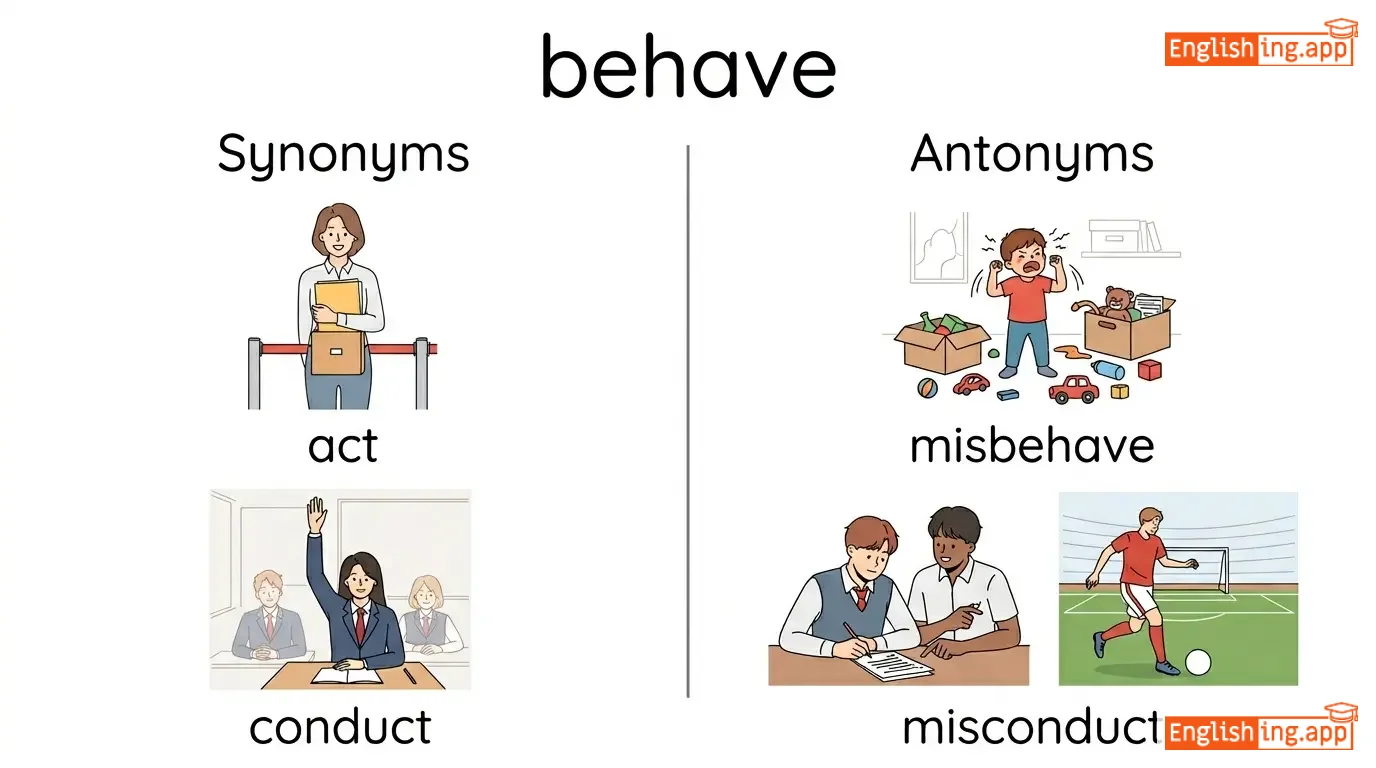
act, conduct, perform, operate
••••••
|
misbehave, misconduct
••••••
|
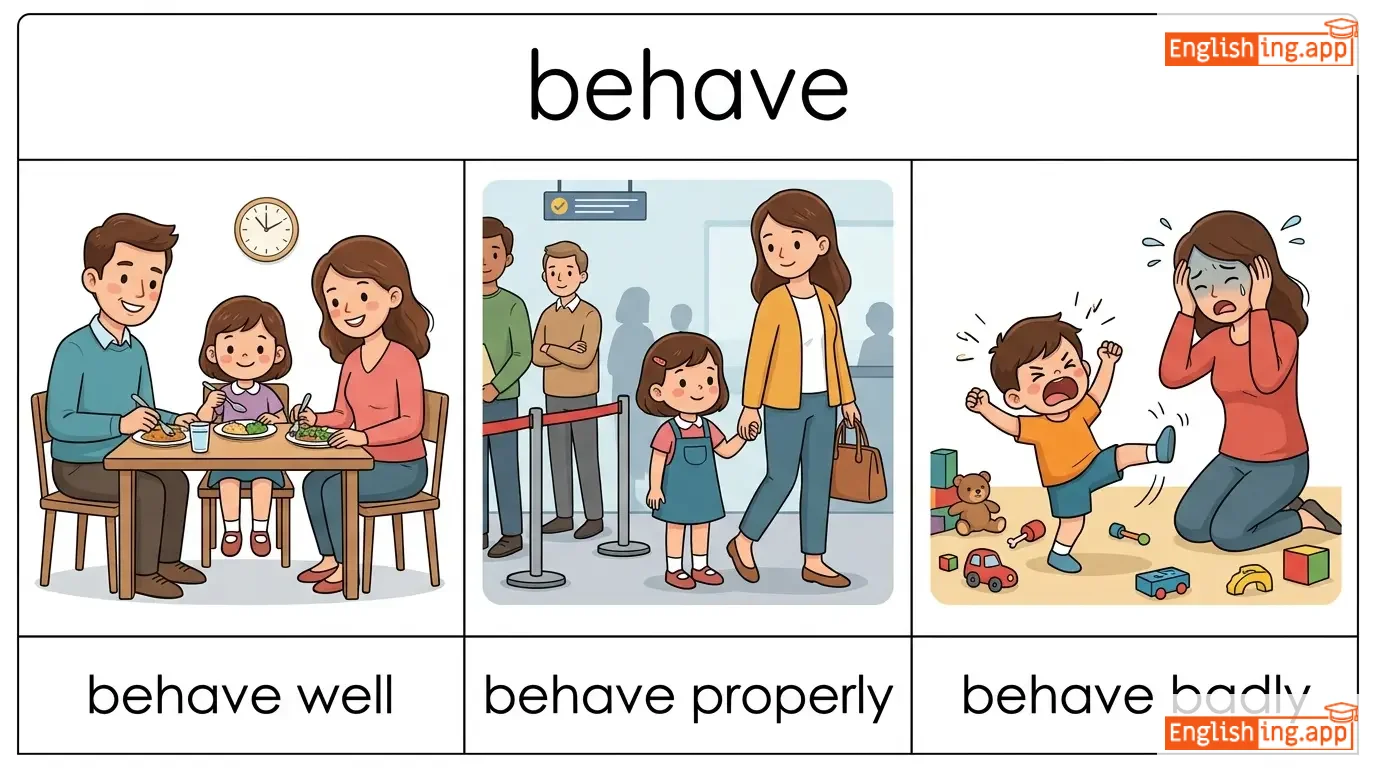
behave well, behave properly, behave badly
••••••
|
BEHAVE 意味着表现得体 — 如果你不这样做,你会 misbehave。
••••••
|
|
🧑🏫
••••••
|
/bɪˈheɪvjər/
noun
(bǐhāwíér)
••••••
|
- •••••• |
行为
xingwei
••••••
|
- •••••• | - •••••• | - •••••• | - •••••• |
The way in which one acts or conducts oneself, especially toward others.
••••••
|
The teacher praised her good behavior in class. |
老师表扬了她在课堂上的良好行为。
Lǎoshī biǎoyáng le tā zài kètáng shàng de liánghǎo xíngwéi.
••••••
|
on best behavior |
Behaving in the most polite or well-mannered way possible.
••••••
|
以最佳行为表现
Yǐ zuìjiā xíngwéi biǎoxiàn
••••••
|
conduct, manners, actions, demeanor, attitude
••••••
|
misconduct, rudeness
••••••
|
good behavior, bad behavior, social behavior, criminal behavior
••••••
|
行为 = 你如何在社会中表现自己。
••••••
|
|
⚔️
••••••
|
/bɪˈhɛd/
verb
(比黑德)
••••••
|
- •••••• |
斩首
zhan shou
••••••
|
beheaded
比黑德德
••••••
|
beheaded
比黑德德
••••••
|
beheads
比黑德兹
••••••
|
beheading
比黑德英
••••••
|
to cut off a person's or animal's head; to remove the leader or most important part
••••••
|
The historical account describes how the traitor was beheaded as punishment.
德 历史 账户 描述 了 叛徒 如何 被 比黑德 作为 惩罚。
••••••
|
历史记载描述了叛徒作为惩罚被斩首的经过。
Lishi jizai miaoshu le pantu zuowei chengfa bei zhan shou de jingguo
••••••
|
- •••••• | - •••••• | - •••••• |
decapitate, execute, kill, slay, put to death
••••••
|
crown, spare, enthrone
••••••
|
behead a king, behead prisoners, ritual beheading, publicly behead
••••••
|
behead = 斩首,head 被 斩 掉
••••••
|
|
⬅️
••••••
|
/bɪˈhaɪnd/
preposition/adverb
(biháind)
••••••
|
- •••••• |
后面
houmian
••••••
|
- •••••• | - •••••• | - •••••• | - •••••• |
At or to the back of something; in a position further back.
••••••
|
The cat is hiding behind the curtain.
The cat is hiding behind the curtain.
••••••
|
猫藏在窗帘后面。
Mao cang zai chuanglian houmian.
••••••
|
leave behind
leave behind
••••••
|
To forget or not take something with you.
••••••
|
留下
liu xia
••••••
|
at the back, beyond, after
••••••
|
ahead, in front
••••••
|
fall behind, behind schedule, left behind, stay behind
••••••
|
Behind 意思是后面 - B 后面 HIND.
••••••
|
|
👀
••••••
|
/bɪˈhoʊld/
verb
(比霍尔德)
••••••
|
- •••••• |
看见;目睹
kanjian; mudu
••••••
|
beheld
比赫尔德
••••••
|
beheld
比赫尔德
••••••
|
beholds
比霍尔德兹
••••••
|
beholding
比霍尔丁
••••••
|
to see or observe something, especially something remarkable or impressive
••••••
|
She stood quietly to behold the sunrise over the hills.
她安静地站着去比霍尔德山上的日出。
••••••
|
她静静地站着,目睹山上的日出。
ta jingjing di zhanzhe mudu shan shang de richu
••••••
|
lo and behold
洛安德比霍尔德
••••••
|
used to express surprise at something unexpected
••••••
|
lo and behold
lo and behold
••••••
|
see, observe, witness, gaze at, look upon
••••••
|
ignore, overlook
••••••
|
behold the truth, behold the beauty, behold the sight, behold with awe
••••••
|
behold 就是 ‘被看见’,意思是目睹
••••••
|
|
🌍
••••••
|
/ˈbiːɪŋ/
noun/verb
(bīng)
••••••
|
- •••••• |
存在
cúnzài
••••••
|
- •••••• | - •••••• |
is/are being
shì / zhèngzài shì
••••••
|
being
bīng
••••••
|
Existence; the state of living; a living creature.
••••••
|
Kindness is part of being human.
善良是人类存在的一部分。
••••••
|
善良是人类存在的一部分。
Shànliáng shì rénlèi cúnzài de yī bùfen.
••••••
|
human being
人类存在
••••••
|
A person; an individual of the species Homo sapiens.
••••••
|
人类存在
rénlèi cúnzài
••••••
|
existence, creature, life, entity
••••••
|
nonexistence, nothingness
••••••
|
human being, state of being, well-being, living being
••••••
|
Being 意味着存在 - 我 BE 因为我还活着。
••••••
|
|
🗣️
••••••
|
/bɪˈleɪbə/
verb
(比雷博)
••••••
|
- •••••• |
过分强调
guofen qiangdiao
••••••
|
belaboured
比雷博德
••••••
|
belaboured
比雷博德
••••••
|
belabours
比雷博斯
••••••
|
belabouring
比雷博英
••••••
|
to explain something repeatedly or with excessive detail; to criticize or attack verbally at length
••••••
|
The teacher did not belabour the point once the students understood it.
泽 提彻 迪德 诺特 比雷博 泽 波因特 万斯 泽 斯图登茨 安德斯图德 伊特。
••••••
|
当学生已经理解后,老师没有过分强调这一点。
dang xuesheng yijing lijie hou laoshi meiyou guofen qiangdiao zhe yi dian
••••••
|
belabour the point
belabour the point
••••••
|
to explain or emphasize something too much
••••••
|
过分强调这一点
guofen qiangdiao zhe yi dian
••••••
|
overemphasize, dwell on, hammer, overexplain, reiterate
••••••
|
understate, gloss over, skim
••••••
|
belabour the point, belabour an issue, belabour an argument
••••••
|
强调太多 = belabour
••••••
|
|
😮💨
••••••
|
/beltʃ/
verb; noun
(贝尔奇)
••••••
|
- •••••• |
打嗝
da ge
••••••
|
belched
贝尔奇德
••••••
|
belched
贝尔奇德
••••••
|
belches
贝尔奇兹
••••••
|
belching
贝尔奇英
••••••
|
to expel air noisily from the stomach through the mouth; to emit or pour out suddenly and forcefully
••••••
|
After drinking the soda, he belched loudly.
阿夫特 喝 了 索达,希 贝尔奇德 劳德利。
••••••
|
喝了汽水后,他大声打嗝。
he le qishui hou ta dasheng da ge
••••••
|
- •••••• | - •••••• | - •••••• |
burp, eruct, emit, expel, discharge
••••••
|
swallow, ingest, retain
••••••
|
belch loudly, belch gas, belch smoke, belch fumes
••••••
|
Belch 听起来像气出来——打嗝 da ge。
••••••
|
|
⚔️
••••••
|
/bɪˈliːɡər/
verb
(biligar)
••••••
|
- •••••• |
围困, 烦扰
weikun, fanrao
••••••
|
beleaguered
biligard
••••••
|
beleaguered
biligard
••••••
|
beleaguers
biligers
••••••
|
beleaguering
biligering
••••••
|
to cause difficulties, troubles, or harassment; to surround with military forces
••••••
|
The company was beleaguered by constant complaints from its customers.
该公司因客户不断的投诉而被围困。
••••••
|
该公司因客户不断的投诉而被围困。
Gai gongsi yin kehu buduan de tou su er bei weikun.
••••••
|
beleaguered city
被围困的城市
••••••
|
a city surrounded and under attack or pressure
••••••
|
被围困的城市
bei weikun de chengshi
••••••
|
harass, besiege, pester, trouble, surround
••••••
|
support, assist, aid
••••••
|
beleaguered by problems, beleaguered company, beleaguered leader
••••••
|
Beleaguer = Be+League+Er → 将城市包围起来,像围城
••••••
|
|
🙏
••••••
|
/bɪˈliːf/
noun
(bi-lif)
••••••
|
- •••••• |
信仰
xinyang
••••••
|
- •••••• | - •••••• | - •••••• | - •••••• |
an acceptance that something exists or is true, especially without proof
••••••
|
Her belief in kindness inspired many people. |
她对善良的信仰激励了许多人。
ta dui shanliang de xinyang jili le xu duo ren.
••••••
|
beyond belief |
something that is very surprising or hard to imagine
••••••
|
超越信仰
chaoyue xinyang
••••••
|
faith, trust, conviction, opinion, view
••••••
|
doubt, disbelief, skepticism
••••••
|
strong belief, personal belief, religious belief, belief system
••••••
|
信仰等于‘信仰’—Believe + Faith = 信仰 (信仰的组合)
••••••
|
|
🙏
••••••
|
/bɪˈliːv/
verb
(bɪˈlɪv)
••••••
|

|
相信
xiāngxìn
••••••
|
believed
bɪˈlɪvd
••••••
|
believed
bɪˈlɪvd
••••••
|
believes
bɪˈlɪvz
••••••
|
believing
bɪˈlɪvɪŋ
••••••
|
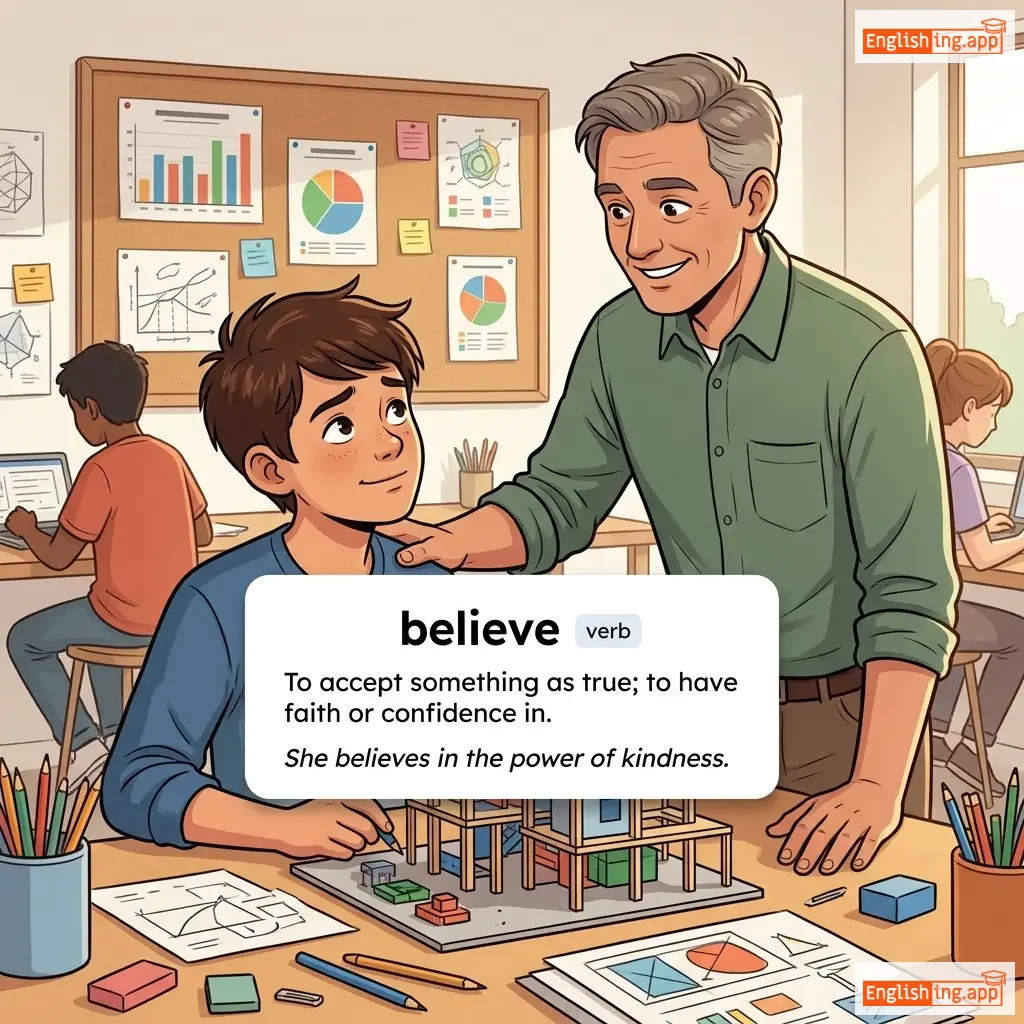
To accept something as true; to have faith or confidence in.
••••••
|
She believes in the power of kindness.
她相信善良的力量。
••••••
|
她相信善良的力量。
Tā xiāngxìn shànliáng de lìliàng.
••••••
|
believe in
相信
••••••
|
To have confidence or trust in someone or something.
••••••
|
相信
xiāngxìn
••••••
|
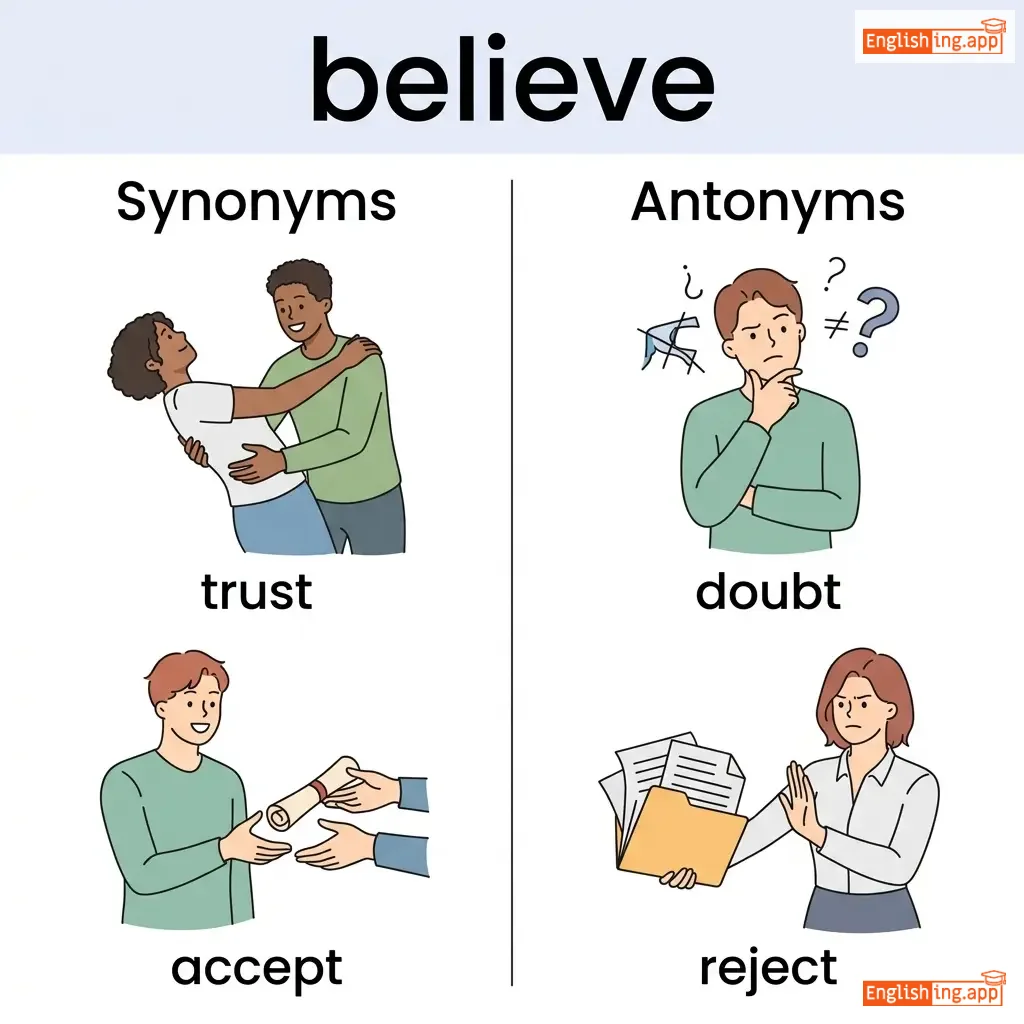
trust, accept, credit, rely on, be convinced
••••••
|
doubt, reject, distrust
••••••
|
believe in God, believe the story, hard to believe, believe strongly
••••••
|
相信 = 小心心—如果你相信,心中会有力量。
••••••
|
|
🙏
••••••
|
/bɪˈliːvər/
noun
(比利弗)
••••••
|
- •••••• |
信徒
xintu
••••••
|
- •••••• | - •••••• | - •••••• | - •••••• |
a person who believes in something, especially a religious faith, idea, or principle
••••••
|
She is a strong believer in hard work and honesty.
西 伊兹 阿 斯特朗 比利弗 因 哈德 沃克 安德 奥内斯蒂。
••••••
|
她坚信努力工作和诚实。
ta jianxin nuli gongzuo he chengshi
••••••
|
true believer
true believer
••••••
|
someone who has strong and sincere faith in a belief or cause
••••••
|
真正的信徒
zhenzheng de xintu
••••••
|
follower, adherent, devotee, supporter, faithful
••••••
|
skeptic, doubter, unbeliever
••••••
|
firm believer, true believer, religious believer, believer in science
••••••
|
Believe 相信 → 信徒 xintu
••••••
|
|
⬇️
••••••
|
/bɪˈlɪtl/
verb
(比利特尔)
••••••
|
- •••••• |
贬低
biǎndī
••••••
|
belittled
比利特尔德
••••••
|
belittled
比利特尔德
••••••
|
belittles
比利特尔斯
••••••
|
belittling
比利特尔英
••••••
|
To make someone or something seem less important or less valuable.
••••••
|
He often belittled his coworkers to feel superior.
他经常贬低同事以感到优越。
••••••
|
他经常贬低同事以感到优越。
Tā jīngcháng biǎndī tóngshì yǐ gǎndào yōuyuè.
••••••
|
- •••••• | - •••••• | - •••••• |
demean, disparage, minimize, undervalue, downgrade
••••••
|
praise, compliment, honor
••••••
|
belittle efforts, belittle achievements, belittles others, belittling remarks
••••••
|
Belittle 意味着贬低—让别人变得不重要。
••••••
|
|
🔔
••••••
|
/bɛl/
noun
••••••
|
- •••••• | - •••••• | - •••••• | - •••••• | - •••••• | - •••••• |
a hollow object, usually made of metal, that makes a ringing sound when struck
••••••
|
The school bell rang loudly at noon. |
- •••••• |
saved by the bell |
to be rescued from difficulty at the last moment
••••••
|
- •••••• |
chime, gong, buzzer, alarm
••••••
|
silence, quiet
••••••
|
ring the bell, church bell, door bell, alarm bell
••••••
|
No •••••• |
|
🤰
••••••
|
/ˈbɛli/
noun
(贝利)
••••••
|
- •••••• |
肚子
dùzi
••••••
|
- •••••• | - •••••• | - •••••• | - •••••• |
The front part of the human body below the chest; stomach or abdomen.
••••••
|
He rubbed his belly after the big meal. |
他在吃完大餐后抚摸着肚子。
Tā zài chī wán dà cān hòu fǔmō zhe dùzi.
••••••
|
belly laugh |
A loud, hearty laugh.
••••••
|
大笑
dà xiào
••••••
|
stomach, abdomen, tummy, gut
••••••
|
back, spine
••••••
|
big belly, belly fat, belly button
••••••
|
Belly 意味着肚子 – 吃得多了肚子 (belly) 会变大。
••••••
|
|
🏠
••••••
|
/bɪˈlɒŋ/
verb
(比朗)
••••••
|
- •••••• |
属于
shǔyú
••••••
|
belonged
比朗德
••••••
|
belonged
比朗德
••••••
|
belongs
比朗斯
••••••
|
belonging
比朗因
••••••
|
to be in the right place or to be a member of a group
••••••
|
She felt she truly belonged to the team.
她觉得她真的属于这个团队。
••••••
|
她觉得她真的属于这个团队。
Tā juédé tā zhēn de shǔyú zhège tuánduì.
••••••
|
belong to
属于
••••••
|
to be the property of someone or something
••••••
|
属于
shǔyú
••••••
|
fit, associate, connect, relate
••••••
|
exclude, detach, separate
••••••
|
belong to, feel belong, belong somewhere
••••••
|
Belong意味着‘属于’,就像你是某个团队的一部分。
••••••
|
|
❤️
••••••
|
/bɪˈlʌvɪd/
adjective
(比洛维德)
••••••
|
- •••••• |
心爱
xīn ài
••••••
|
- •••••• | - •••••• | - •••••• | - •••••• |
dearly loved, highly regarded
••••••
|
She was the beloved queen of the kingdom.
她是王国中深受喜爱的女王。
••••••
|
她是王国中深受喜爱的女王。
Tā shì wángguó zhōng shēn shòu xǐ'ài de nǚwáng.
••••••
|
- •••••• | - •••••• | - •••••• |
cherished, adored, loved, esteemed
••••••
|
hated, despised, unloved
••••••
|
beloved friend, beloved leader, beloved person
••••••
|
心爱 (xīn ài) 就是 beloved,指的是一个深受喜爱的人。
••••••
|
|
⬇️
••••••
|
/bɪˈloʊ/
preposition
(bīluóu)
••••••
|
- •••••• |
下面
xiàmiàn
••••••
|
- •••••• | - •••••• | - •••••• | - •••••• |
At a lower level or position than something else.
••••••
|
The basement is below the ground floor. |
地下室在一楼下面。
Dìxiàshì zài yī lóu xiàmiàn.
••••••
|
below the belt |
Unfair or cruel remark or action.
••••••
|
低于腰带
Dī yú yāodài
••••••
|
under, beneath, underneath, lower
••••••
|
above, over, higher
••••••
|
below average, below the surface, below zero
••••••
|
Below意味着下面,想象它在你之下。
••••••
|
|
👖
••••••
|
/bɛlt/
noun
••••••
|
- •••••• | - •••••• | - •••••• | - •••••• | - •••••• | - •••••• |
a strip of material worn around the waist to support clothes or as decoration
••••••
|
He tightened his belt before leaving for work. |
- •••••• |
tighten one's belt |
to live with less money than before
••••••
|
- •••••• |
strap, band, sash, girdle
••••••
|
loosen, release
••••••
|
wear a belt, leather belt, tighten belt, conveyor belt
••••••
|
No •••••• |
|
😢
••••••
|
/bɪˈmoʊn/
verb
(比蒙)
••••••
|
- •••••• |
感到遗憾
gǎndào yíhàn
••••••
|
bemoaned
比蒙德
••••••
|
bemoaned
比蒙德
••••••
|
bemoans
比蒙斯
••••••
|
bemoaning
比蒙宁
••••••
|
To express discontent or sorrow over something.
••••••
|
Critics bemoaned the lack of diversity in the film.
评论家对电影中的多样性缺乏表示遗憾。
••••••
|
评论家对电影中的多样性缺乏表示遗憾。
Pínglùn jiā duì diànyǐng zhōng de duōyàngxìng quēfá biǎoshì yíhàn.
••••••
|
- •••••• | - •••••• | - •••••• |
lament, complain, regret, grieve, mourn
••••••
|
praise, celebrate, rejoice
••••••
|
bemoan the loss, bemoan fate, bemoan lack
••••••
|
Bemoan 就是‘比蒙’ - 感到遗憾。
••••••
|
|
🤔
••••••
|
/bɪˈmjuːz/
verb
(bimíyǔsī)
••••••
|
- •••••• |
使困惑
shǐ kùnhuò
••••••
|
bemused
bimíyǔsīd
••••••
|
bemused
bimíyǔsīd
••••••
|
bemuses
bimíyǔsīz
••••••
|
bemusing
bimíyǔsīng
••••••
|
To confuse or puzzle someone.
••••••
|
The complex instructions bemused the new employees.
复杂的指令使新员工困惑。
••••••
|
复杂的指令使新员工困惑。
Fùzá de zhǐlìng shǐ xīn yuángōng kùnhuò.
••••••
|
- •••••• | - •••••• | - •••••• |
confuse, bewilder, puzzle, perplex, baffle
••••••
|
clarify, explain, enlighten
••••••
|
bemuse the audience, bemuse expression, bemuse with details
••••••
|
Bemuse = 'B' for 'Bewilder' = 使某人感到困惑
••••••
|
|
🪑
••••••
|
/bɛntʃ/
noun
(班奇)
••••••
|
- •••••• |
长椅
changyi
••••••
|
- •••••• | - •••••• | - •••••• | - •••••• |
a long seat for several people, typically made of wood or stone
••••••
|
They sat on the park bench watching the sunset.
他们坐在公园的长椅上,看着日落。
••••••
|
他们坐在公园的长椅上,看着日落。
Tāmen zuò zài gōngyuán de chángyǐ shàng, kànzhe rìluò.
••••••
|
warm the bench
热长椅
••••••
|
to not participate in a game, usually as a substitute player
••••••
|
热长椅
rè chángyǐ
••••••
|
seat, pew, stool, chair
••••••
|
floor, ground
••••••
|
park bench, wooden bench, sit on a bench, court bench
••••••
|
长椅是坐下的地方,'热长椅'意味着不参与比赛。
••••••
|
|
📏
••••••
|
/ˈbɛntʃmɑːrk/
noun
(bēnchímǎkè)
••••••
|
|
基准
jizhun
••••••
|
- •••••• | - •••••• | - •••••• | - •••••• |
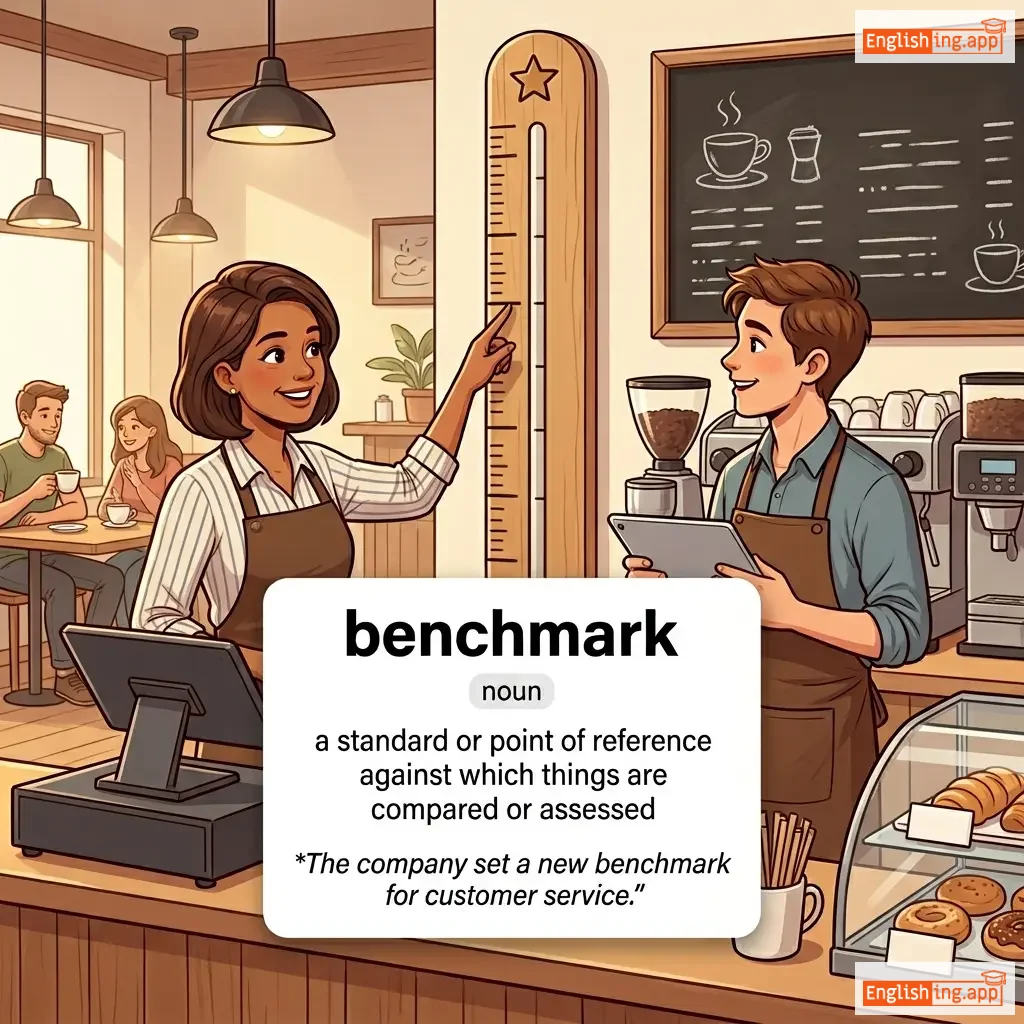
a standard or point of reference against which things are compared or assessed
••••••
|
The company set a new benchmark for customer service. |
公司为客户服务设定了一个新的基准。
Gōngsī wèi kèhù fúwù shèdìngle yīgè xīn de jīzhǔn.
••••••
|
- •••••• | - •••••• | - •••••• |
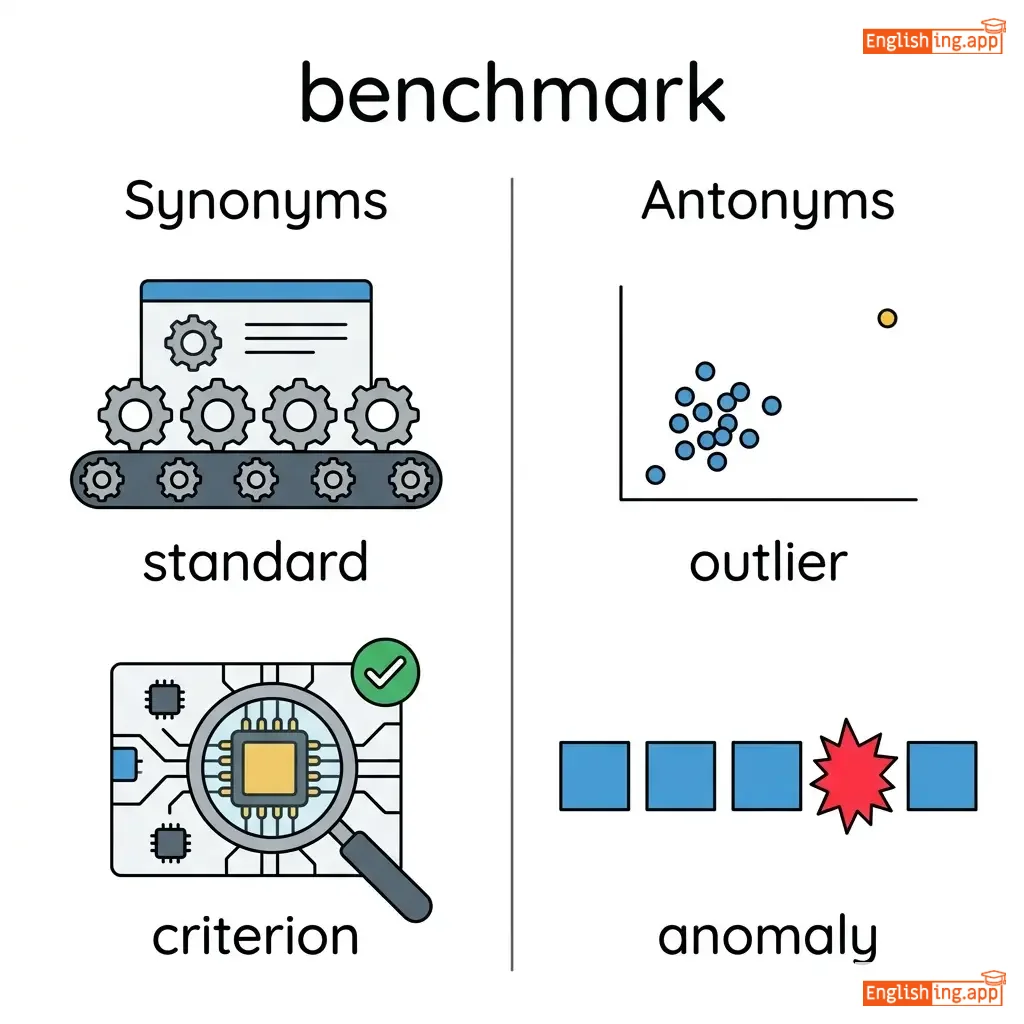
standard, criterion, gauge, yardstick
••••••
|
outlier, anomaly, exception
••••••
|
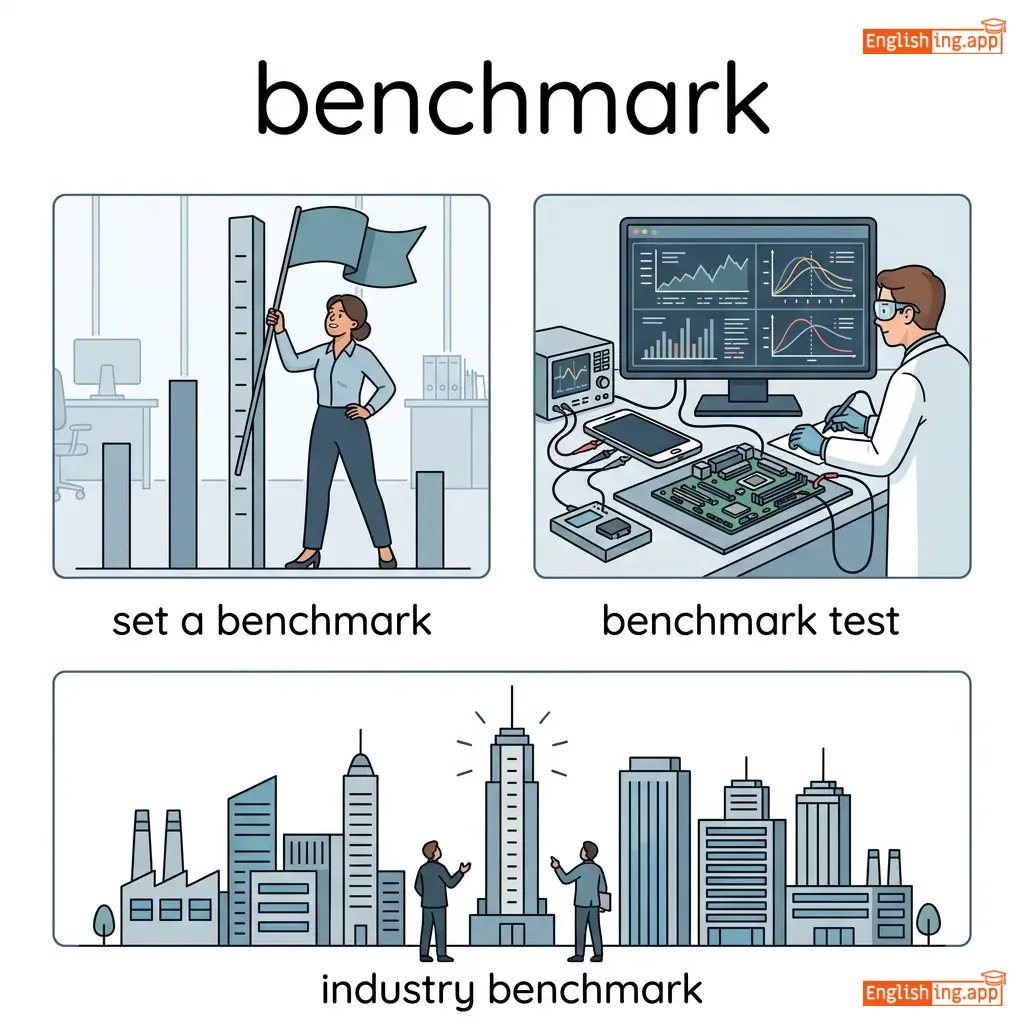
set a benchmark, benchmark test, industry benchmark, high benchmark
••••••
|
benchmark 成为基准 - Benchmark is a yardstick for comparison
••••••
|
|
↩️
••••••
|
/bɛnd/
verb
(本德)
••••••
|
- •••••• |
弯曲 / 弯腰
wān qū / wān yāo
••••••
|
bent
本特
••••••
|
bent
本特
••••••
|
bends
本德斯
••••••
|
bending
本丁
••••••
|
to curve something or cause it to change shape; to move the body or part of it downward or forward
••••••
|
She had to bend down to pick up the coin.
她不得不弯腰捡起硬币。
••••••
|
她不得不弯腰捡起硬币。
Tā bùdé bù wān yāo jiǎn qǐ yìng bì.
••••••
|
bend over backwards
弯腰竭尽全力
••••••
|
to try very hard to please someone or make something happen
••••••
|
竭尽全力
jié jìn quán lì
••••••
|
curve, flex, bow, arch, stoop
••••••
|
straighten, unbend, stiffen
••••••
|
bend down, bend forward, bend the rules, bend over
••••••
|
弯曲或者弯腰,像'bend'一样!
••••••
|
|
⬇️
••••••
|
/bɪˈniːθ/
adverb
(bīnìsī)
••••••
|
- •••••• |
下面; 底下
xiàmiàn, dǐxià
••••••
|
- •••••• | - •••••• | - •••••• | - •••••• |
under; below; underneath
••••••
|
The treasure lies beneath the old tree.
财富埋藏在古老的树下。
••••••
|
宝藏埋在古老的树下。
Bǎozàng mái zài gǔlǎo de shù xià.
••••••
|
- •••••• | - •••••• | - •••••• |
under, below, underneath, down
••••••
|
above, over, on top, beyond
••••••
|
beneath the surface, beneath contempt, beneath notice
••••••
|
Imagine the treasure is beneath the old tree, '下面' meaning below.
••••••
|
|
🌱
••••••
|
/ˌbɛnɪˈfɪʃəl/
adjective
(贝内菲舍尔)
••••••
|
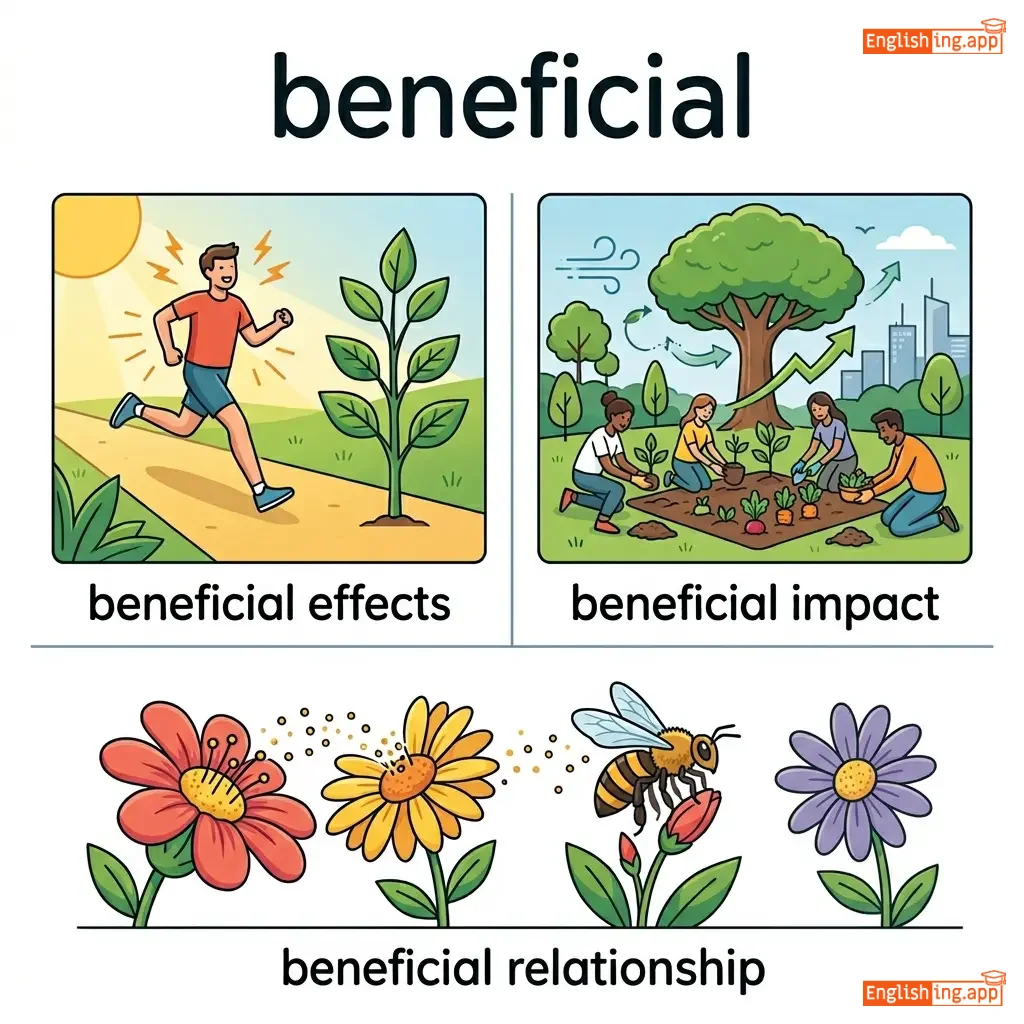
|
有益的
you yi de
••••••
|
- •••••• | - •••••• | - •••••• | - •••••• |
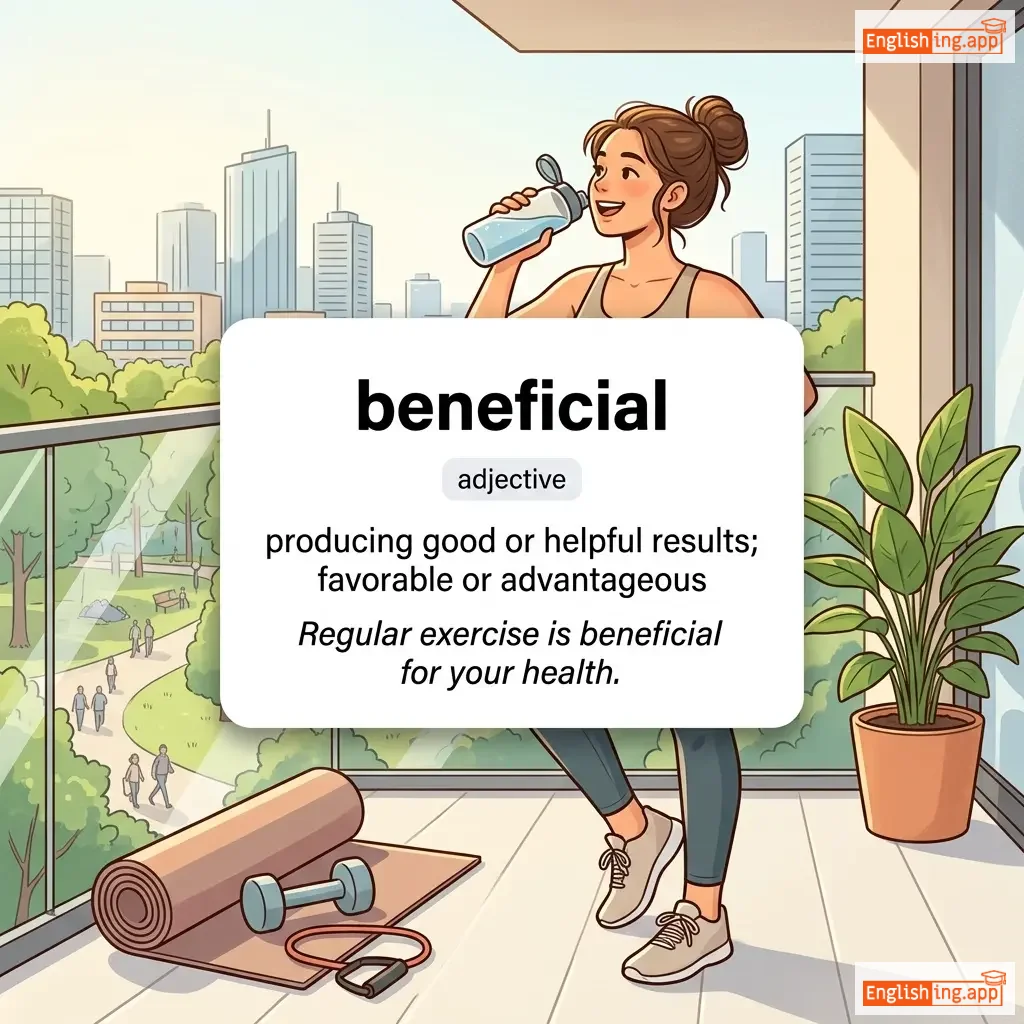
producing good or helpful results; favorable or advantageous
••••••
|
Regular exercise is beneficial for your health. |
定期锻炼对你的健康有益。
Dìngqí duànliàn duì nǐ de jiànkāng yǒuyì.
••••••
|
- •••••• | - •••••• | - •••••• |
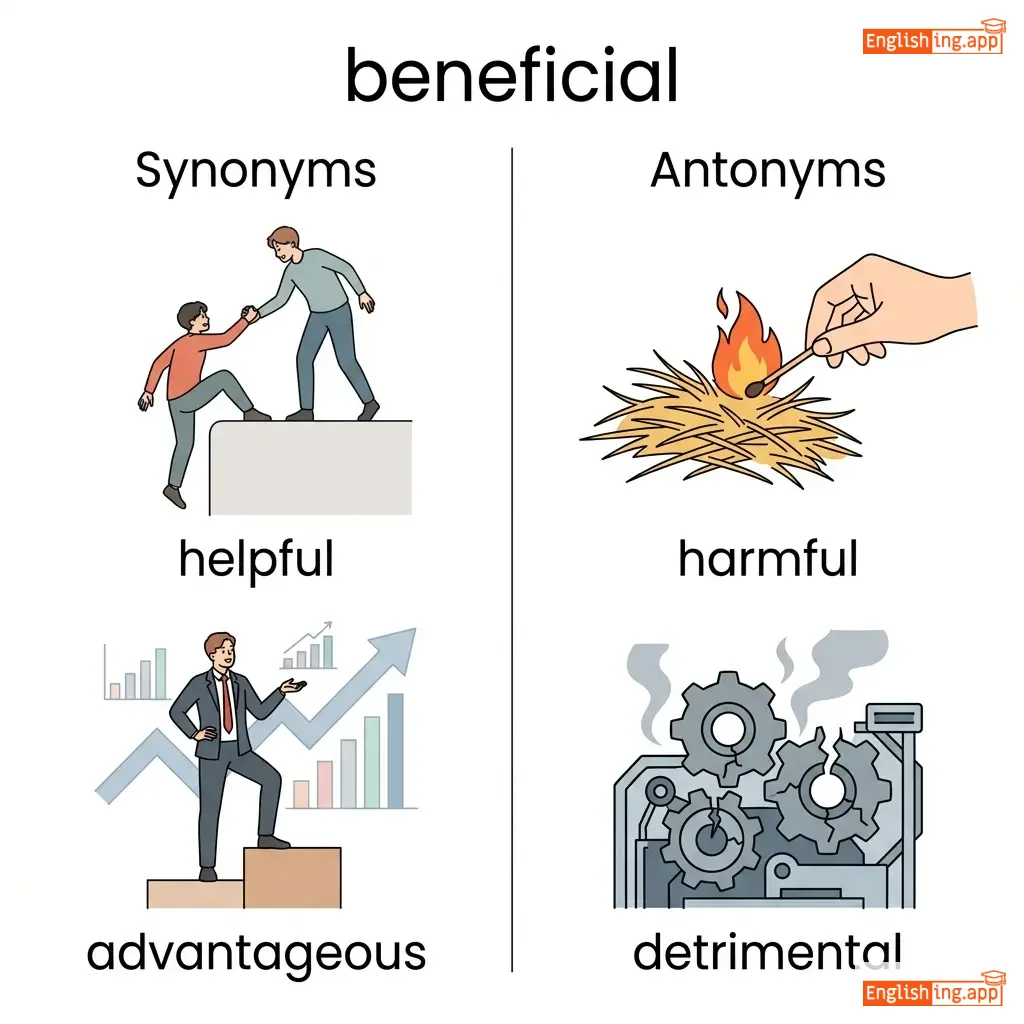
helpful, advantageous, favorable, useful, valuable
••••••
|
harmful, detrimental, disadvantageous
••••••
|
beneficial effects, beneficial impact, beneficial relationship, mutually beneficial
••••••
|
有益的 = 带来益处,像定期锻炼对健康的好处
••••••
|
|
🎁
••••••
|
/ˌbɛnɪˈfɪʃəri/
noun
(受益人)
••••••
|
- •••••• |
受益人
shòuyì rén
••••••
|
- •••••• | - •••••• | - •••••• | - •••••• |
a person who receives something, especially money or property, from a will or insurance policy
••••••
|
She is the sole beneficiary of her father’s estate. |
她是她父亲遗产的唯一受益人。
Tā shì tā fùqīn yí chǎn de wéiyī shòuyì rén.
••••••
|
- •••••• | - •••••• | - •••••• |
recipient, heir, inheritor, grantee
••••••
|
donor, benefactor
••••••
|
sole beneficiary, named beneficiary, policy beneficiary, estate beneficiary
••••••
|
Beneficiary 意味着接受利益的人,就像保险单的受益人。
••••••
|
|
🎉
••••••
|
/ˈbɛnɪfɪt/
noun/verb
(贝尼菲特)
••••••
|
- •••••• |
利益 / 好处
lìyì / hǎochù
••••••
|
benefited
贝尼费特德
••••••
|
benefited
贝尼费特德
••••••
|
benefits
贝尼费特斯
••••••
|
benefiting
贝尼费廷
••••••
|
an advantage, profit, or good effect; to receive help or an advantage
••••••
|
Employees benefit from the company’s health insurance program.
员工从公司的健康保险计划中获益。
••••••
|
员工从公司的健康保险计划中获益。
yuángōng cóng gōngsī de jiànkāng bǎoxiǎn jìhuà zhōng huòyì.
••••••
|
for the benefit of
为了某人的利益
••••••
|
for the advantage or good of someone
••••••
|
为了某人的利益
wèile mǒu rén de lìyì
••••••
|
advantage, profit, gain, perk, blessing
••••••
|
loss, harm, drawback
••••••
|
health benefit, social benefit, benefit from, mutual benefit
••••••
|
Benefit 在中文中是利益,好处,像健康保险计划一样。
••••••
|
|
🥶
••••••
|
/bɪˈnʌm/
verb
(比纳姆)
••••••
|
- •••••• |
使麻木
shi mamu
••••••
|
benumbed
比纳姆德
••••••
|
benumbed
比纳姆德
••••••
|
benumbs
比纳姆兹
••••••
|
benumbing
比纳姆英
••••••
|
to make physically numb or without sensation; to make mentally dull or insensitive
••••••
|
The freezing wind seemed to benumb his fingers within minutes.
泽 弗里辛 温德 西姆德 图 比纳姆 希兹 芬格斯 维辛 米尼茨
••••••
|
刺骨的寒风几分钟内就使他的手指麻木了。
Cigu de hanfeng ji fenzhong nei jiu shi ta de shouzhi mamu le
••••••
|
benumb the senses
比纳姆 泽 森西斯
••••••
|
to dull or deaden physical or emotional perception
••••••
|
使感官麻木
shi ganguan mamu
••••••
|
numb, deaden, dull, anesthetize, stupefy
••••••
|
sensitize, stimulate, awaken
••••••
|
benumb the senses, benumbed by cold, benumbed feeling, emotionally benumbed
••••••
|
麻木(mamu)记 benumb = 使麻木
••••••
|
|
🖤
••••••
|
/bɪˈriːv/
verb
(贝瑞夫)
••••••
|
- •••••• |
失去亲人
shīqù qīnrén
••••••
|
bereaved
贝瑞夫德
••••••
|
bereaved
贝瑞夫德
••••••
|
bereaves
贝瑞夫斯
••••••
|
bereaving
贝瑞夫英
••••••
|
to deprive someone of a loved one through death
••••••
|
She was bereaved of her husband last year.
她去年失去了她的丈夫。
••••••
|
她去年失去了她的丈夫。
Tā qùnián shīqùle tā de zhàngfu.
••••••
|
bereaved family
失去亲人的家庭
••••••
|
a family that has lost a loved one
••••••
|
失去亲人的家庭
Shīqù qīnrén de jiātíng
••••••
|
deprive, lose, rob, dispossess
••••••
|
bless, endow, provide
••••••
|
bereaved family, bereaved person, bereaved of, comfort the bereaved
••••••
|
Be + reave (抢) = 死亡抢走了亲人 → bereave
••••••
|
|
🛏️
••••••
|
/bɜːrθ/
noun
(bèrth)
••••••
|
- •••••• |
卧铺 / 停泊位置
wòpù / tíngbó wèizhì
••••••
|
- •••••• | - •••••• | - •••••• | - •••••• |
A place to sleep on a ship or train; a ship's allocated place at a dock.
••••••
|
They reserved a lower berth on the overnight train. |
他们在夜间火车上预定了一个下铺。
Tāmen zài yèjiān huǒchē shàng yùdìng le yīgè xià pù.
••••••
|
give a wide berth |
To avoid someone or something; to keep away.
••••••
|
给宽广的空间
gěi kuānguǎng de kōngjiān
••••••
|
bunk, cabin, bed, dock, station
••••••
|
departure, absence
••••••
|
lower berth, upper berth, ship's berth, wide berth
••••••
|
Berth 听起来像 'bed',在火车上,'berth' 是一个睡觉的床。
••••••
|
|
🙏
••••••
|
/bɪˈsiːtʃ/
verb
(比斯奇)
••••••
|
- •••••• |
恳求
kěnqiú
••••••
|
beseeched
比斯奇德
••••••
|
beseeched
比斯奇德
••••••
|
beseeches
比斯奇斯
••••••
|
beseeching
比斯奇英
••••••
|
To ask someone urgently and fervently to do something; to beg.
••••••
|
He beseeched the judge for mercy.
他比斯奇了法官,恳求宽恕。
••••••
|
他恳求法官宽恕。
Tā kěnqiú fǎguān kuānshù.
••••••
|
- •••••• | - •••••• | - •••••• |
implore, beg, plead, entreat, supplicate
••••••
|
demand, command, insist
••••••
|
beseech someone, beseech the lord, beseech for mercy, humbly beseech
••••••
|
Beseech = Be + Speech (恳求某人做事).
••••••
|
|
🤝
••••••
|
/bɪˈsaɪd/
preposition
(bisaid)
••••••
|
- •••••• |
在...旁边
zai...pangbian
••••••
|
- •••••• | - •••••• | - •••••• | - •••••• |
next to or at the side of someone or something
••••••
|
She sat beside her best friend during the ceremony. |
她在仪式期间坐在她最好的朋友旁边。
Ta zai yishi qijian zuo zai ta zuihao de pengyou pangbian.
••••••
|
- •••••• | - •••••• | - •••••• |
next to, alongside, by, near
••••••
|
away from, apart from
••••••
|
sit beside, stand beside, beside the door, beside me
••••••
|
Beside的意思是旁边 - Best friend 旁边。
••••••
|
|
➕
••••••
|
/bɪˈsaɪdz/
adverb
(比赛兹)
••••••
|
- •••••• |
此外
ciwai
••••••
|
- •••••• | - •••••• | - •••••• | - •••••• |
in addition to; moreover; furthermore
••••••
|
Besides being smart, he is also kind. |
除了聪明,他还很友好。
Chule congming, ta hai hen youhao.
••••••
|
- •••••• | - •••••• | - •••••• |
moreover, furthermore, additionally, also
••••••
|
only, merely, exclusively
••••••
|
besides that, besides which, besides being
••••••
|
当你想到更多时,'此外'是一个提示。
••••••
|
|
🏆
••••••
|
/bɛst/
adjective
(bèst)
••••••
|
- •••••• |
最好
zuì hǎo
••••••
|
- •••••• | - •••••• | - •••••• | - •••••• |
Of the highest quality, excellence, or standing.
••••••
|
She is the best student in the class. |
她是班里最好的学生。
Tā shì bān lǐ zuì hǎo de xuéshēng.
••••••
|
make the best of |
To do as well as possible in a difficult situation.
••••••
|
尽量做到最好
jǐn liàng zuò dào zuì hǎo
••••••
|
finest, greatest, top, leading, supreme
••••••
|
worst, poorest, inferior
••••••
|
best friend, best time, best practice
••••••
|
Best 就是最好的,用来形容最优秀的人或事物!
••••••
|

