|
🛏️
••••••
|
/bɛd/
noun
(bed)
••••••
|
-
••••••
|
cama
bed
••••••
|
-
••••••
|
-
••••••
|
-
••••••
|
-
••••••
|
a piece of furniture for sleeping or resting on
|
She lay down on the bed and fell asleep quickly.
Ella se acostó en la cama y se durmió rápidamente.
••••••
|
Ella se acostó en la cama y se durmió rápidamente.
Ella se acosto en la cama y se durmio rapidamente.
••••••
|
haz tu cama
••••••
|
to arrange or tidy your bed after getting up
|
haz tu cama
haz tu cama
••••••
|
couch, mattress, cot, bunk
|
••••••
|
go to bed, make the bed, bed sheet, hospital bed
|
Picture a large BED with the word CAMA painted on it to remember Bed equals Cama
••••••
|
|
🛏️
••••••
|
/ˈbɛdruːm/
noun
(bɛdruːm)
••••••
|
-
••••••
|
dormitorio
dormitorio
••••••
|
-
••••••
|
-
••••••
|
-
••••••
|
-
••••••
|
A room used for sleeping in.
|
The children were playing in the bedroom.
ðə tʃɪldrən wɜr pleɪɪŋ ɪn ðə bɛdruːm.
••••••
|
Los niños estaban jugando en el dormitorio.
Los ninos estaban jugando en el dormitorio.
••••••
|
bɛdruːm aɪz
••••••
|
A seductive or alluring look.
|
mirada seductora
mirada seductora
••••••
|
sleeping room, chamber, boudoir, dormitory
|
••••••
|
master bedroom, small bedroom, bedroom furniture, bedroom window
|
El dormitorio es donde se duerme, como dormir en un 'bed'.
••••••
|
|
🥩
••••••
|
/biːf/
noun
(bif)
••••••
|
-
••••••
|
carne de res
carne de res
••••••
|
-
••••••
|
-
••••••
|
-
••••••
|
-
••••••
|
the flesh of a cow, bull, or ox, used as food; also a complaint or dispute
|
He ordered a plate of grilled beef for dinner.
••••••
|
Pidió un plato de carne de res a la parrilla para la cena.
Pidió un plato de carne de res a la parrilla para la cena.
••••••
|
••••••
|
to have a complaint or dispute with someone
|
tener un problema con alguien
tener un problema con alguien
••••••
|
meat, steak, flesh, complaint, dispute
|
••••••
|
beef steak, roast beef, beef burger, beef curry
|
Beef significa carne de res 🍖 — 'Estar enfadado como un toro' recuerda esto para entenderlo mejor!
••••••
|
|
🍺
••••••
|
/bɪər/
noun
(bír)
••••••
|
-
••••••
|
cerveza
cerveza
••••••
|
-
••••••
|
-
••••••
|
-
••••••
|
-
••••••
|
An alcoholic drink made from yeast-fermented malt flavored with hops.
|
He ordered a glass of cold beer at the bar.
Él pidió un vaso de cerveza fría en el bar.
••••••
|
Él pidió un vaso de cerveza fría en el bar.
Él pidió un vaso de cerveza fría en el bar.
••••••
|
barriga de cerveza
••••••
|
A large stomach caused by drinking too much beer.
|
barriga de cerveza
barriga de cerveza
••••••
|
••••••
|
••••••
|
cold beer, draft beer, bottle of beer, beer mug
|
Cerveza, con su refresco frío, llega a tu estómago como un buen amigo.
••••••
|
|
🎩
••••••
|
/bɪˈfɪt/
verb
(bifit)
••••••
|
-
••••••
|
ser apropiado para
ser apropiado para
••••••
|
befitted
bifited
••••••
|
befitted
bifited
••••••
|
befits
bifits
••••••
|
befitting
bifiting
••••••
|
to be suitable for; to be appropriate to
••••••
|
Formal attire befits the seriousness of the occasion.
Formal attire befits the seriousness of the occasion.
••••••
|
La vestimenta formal es apropiada para la seriedad de la ocasión.
La vestimenta formal es apropiada para la seriedad de la ocasion
••••••
|
befitting one’s status
••••••
|
appropriate to a person’s rank or position
••••••
|
apropiado a su estatus
apropiado a su estatus
••••••
|
suit, become, match, be appropriate for, accord with
••••••
|
misfit, clash, be inappropriate for
••••••
|
befit the occasion, befit one’s status, befit the role, befit the position
••••••
|
Befit suena a fit: si encaja, es apropiado.
••••••
|
|
🤡
••••••
|
/bɪˈfuːl/
verb
(biful)
••••••
|
-
••••••
|
engañar
engañar
••••••
|
befooled
bifuld
••••••
|
befooled
bifuld
••••••
|
befools
bifuls
••••••
|
befooling
bifuling
••••••
|
to deceive or trick someone into believing something false; to make someone appear foolish
••••••
|
The scammer tried to befool innocent people with fake promises.
De scammer traid tu biful inosent pipol uiz feik promisis
••••••
|
El estafador intentó engañar a personas inocentes con promesas falsas.
El estafador intento enganar a personas inocentes con promesas falsas
••••••
|
-
••••••
|
-
••••••
|
-
••••••
|
deceive, trick, dupe, fool, mislead
••••••
|
enlighten, inform, clarify
••••••
|
befool someone easily, befool the public, try to befool, completely befool
••••••
|
befool suena a fool, como engañar y hacer tonto
••••••
|
|
⏰
••••••
|
/bɪˈfɔːr/
preposition/adverb/conjunction
(bifor)
••••••
|
-
••••••
|
antes
antes
••••••
|
-
••••••
|
-
••••••
|
-
••••••
|
-
••••••
|
At an earlier time; in front of in order or place.
|
She arrived before the meeting started.
••••••
|
Ella llegó antes de que comenzara la reunión.
Ella llegó antes de que comenzara la reunión.
••••••
|
••••••
|
••••••
|
pronto
pronto
••••••
|
earlier, ahead, prior, in front
|
••••••
|
before dawn, before time, before long, before the meeting
|
BEFORE significa antes — Siempre listo antes de que sea tarde.
••••••
|
|
🧪
••••••
|
/bɪˈfaʊl/
verb
(biful)
••••••
|
-
••••••
|
contaminar
contaminar
••••••
|
befouled
bifuld
••••••
|
befouled
bifuld
••••••
|
befouls
bifuls
••••••
|
befouling
bifuling
••••••
|
to make dirty or polluted; to disgrace or corrupt
••••••
|
The factory waste befouled the river.
The factory waste befouled the river.
••••••
|
Los desechos de la fábrica contaminaron el río.
los desechos de la fabrica contaminaron el rio
••••••
|
-
••••••
|
-
••••••
|
-
••••••
|
pollute, defile, contaminate, sully, taint
••••••
|
clean, purify, cleanse
••••••
|
befoul the environment, befoul a river, befoul the air, befoul one’s reputation
••••••
|
Befoul suena a ‘foul’—algo muy sucio o contaminado.
••••••
|
|
🙏
••••••
|
/bɛɡ/
verb
(beg)
••••••
|
••••••
|
rogar / pedir
rogar / pedir
••••••
|
begd
••••••
|
begd
••••••
|
begs
••••••
|
begging
••••••
|
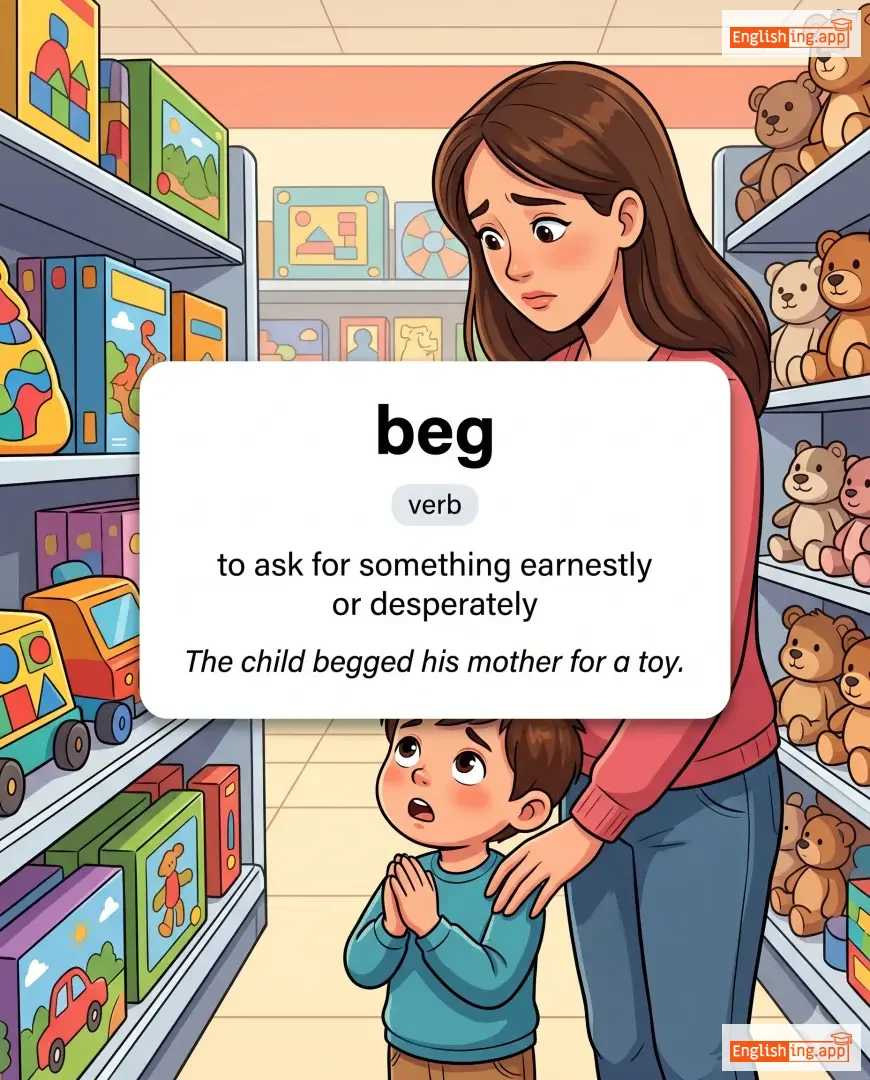
to ask for something earnestly or desperately
|
The child begged his mother for a toy.
el niño begged his mother for a toy.
••••••
|
El niño rogó a su madre por un juguete.
El niño rogo a su madre por un juguete.
••••••
|
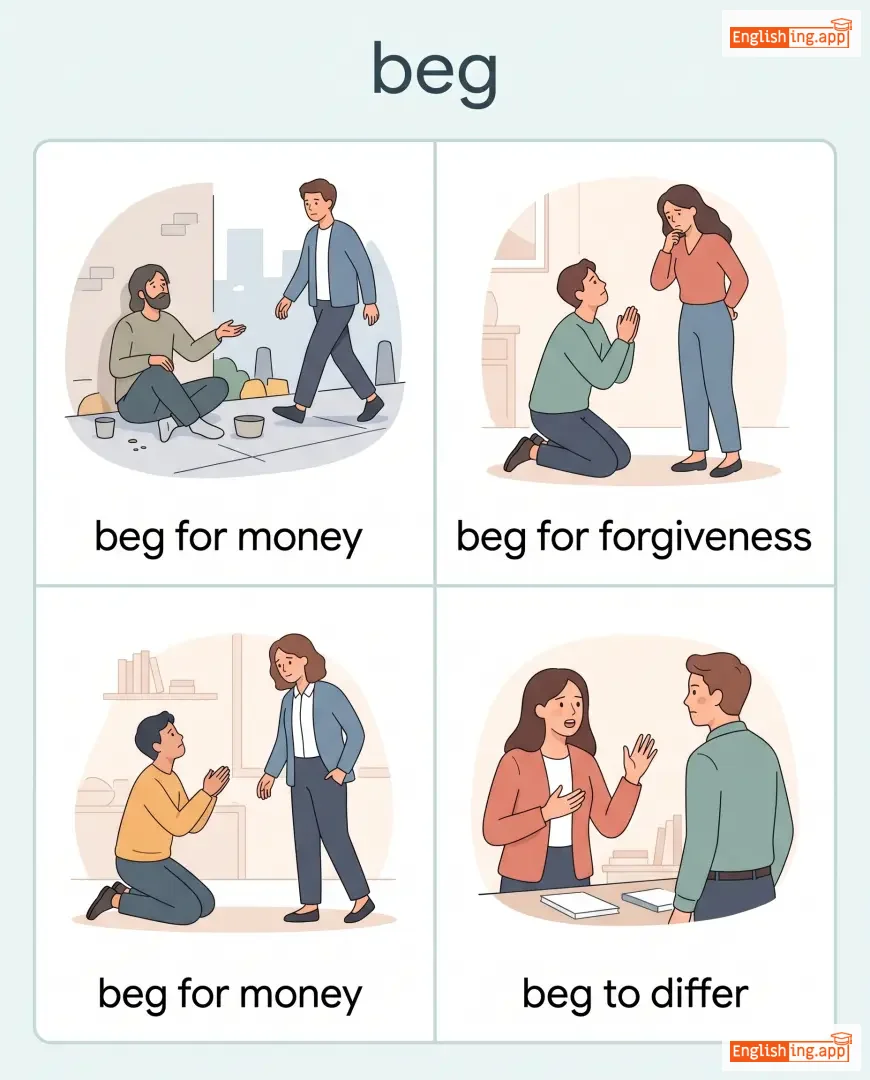
beg to differ
••••••
|
••••••
|
no estar de acuerdo educadamente
no estar de acuerdo educadamente
••••••
|
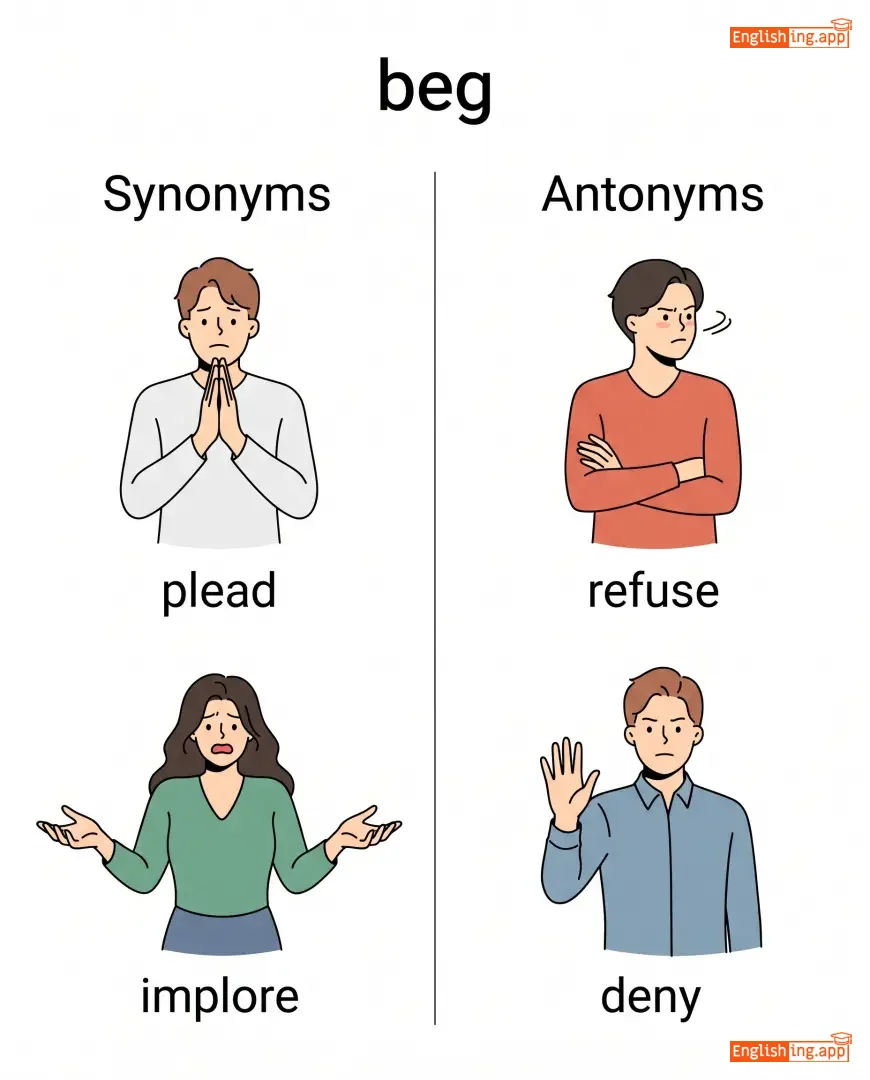
plead, implore, request, entreat, supplicate
|
••••••
|
beg for money, beg for forgiveness, beg to differ, beg for mercy
|
Beg significa rogar – como si rogaras por algo, como un niño pidiendo un juguete.
••••••
|
|
🌱
••••••
|
/bɪˈɡɛt/
verb
(biget)
••••••
|
-
••••••
|
engendrar / procrear
engendrar / procrear
••••••
|
begot
••••••
|
begotten
••••••
|
begets
••••••
|
begetting
••••••
|
to bring about or give rise to; to father or produce
|
Violence begets more violence.
La violencia engendra más violencia.
••••••
|
La violencia engendra más violencia.
La violencia engendra más violencia.
••••••
|
-
••••••
|
-
••••••
|
-
••••••
|
cause, create, generate, produce, engender
|
••••••
|
beget violence, beget problems, beget change
|
Beget significa engendrar, como cuando se engendra un hijo.
••••••
|
|
🚀
••••••
|
/bɪˈɡɪn/
verb
(bɪˈɡɪn)
••••••
|
••••••
|
empezar
empezar
••••••
|
bɪˈɡæn
••••••
|
bɪˈɡʌn
••••••
|
bɪˈɡɪnz
••••••
|
bɪˈɡɪnɪŋ
••••••
|
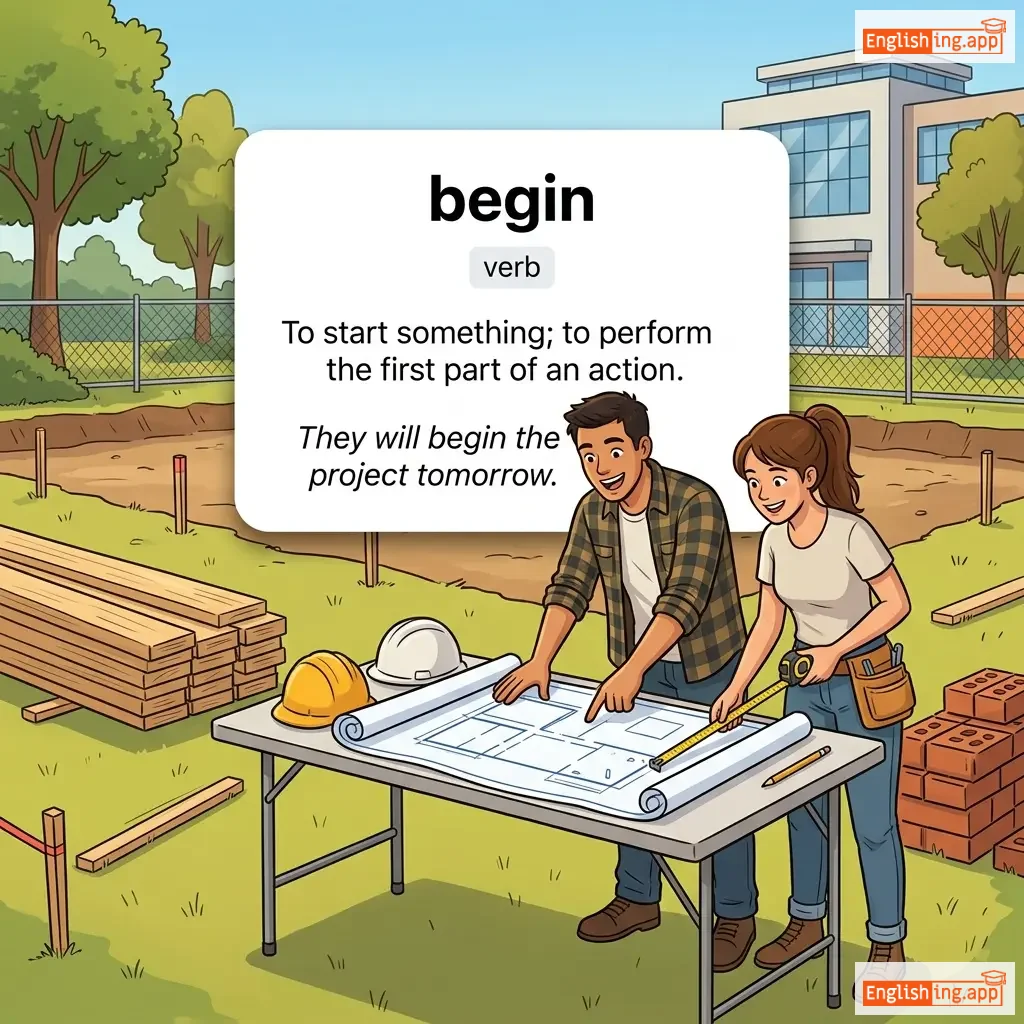
To start something; to perform the first part of an action.
|
They will begin the project tomorrow.
Ellos comenzarán el proyecto mañana.
••••••
|
Ellos comenzarán el proyecto mañana.
Ellos comenzarán el proyecto mañana.
••••••
|
para empezar
••••••
|
as the first consideration
|
para empezar
para empezar
••••••
|
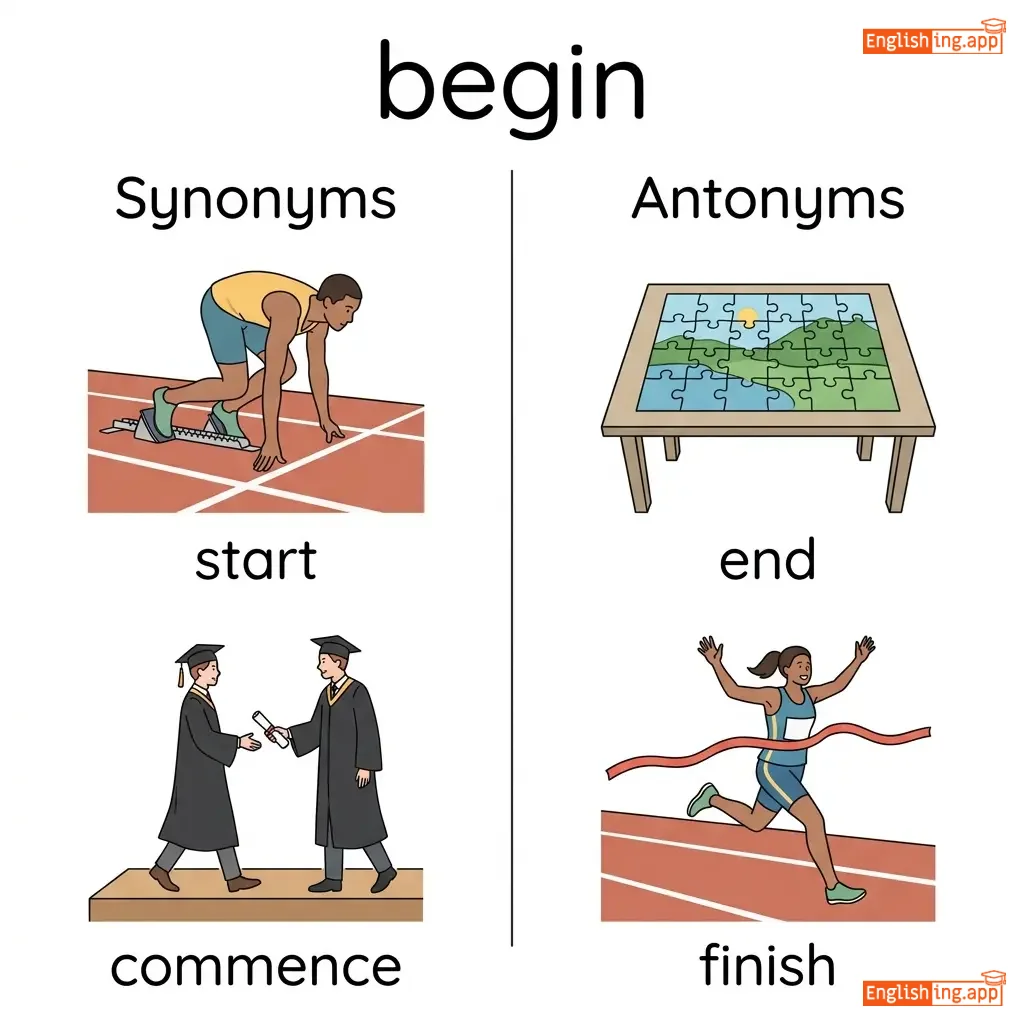
start, commence, initiate, launch
|
••••••
|
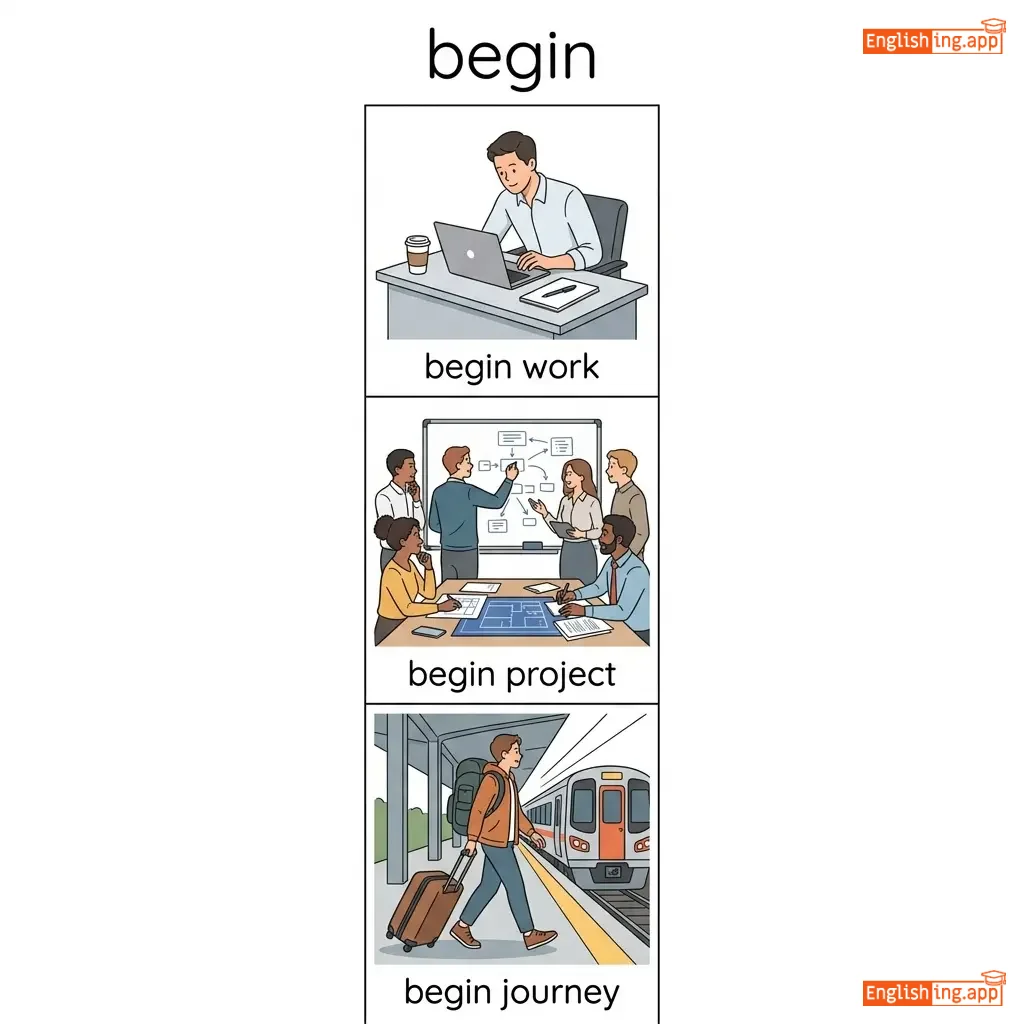
begin work, begin project, begin journey, begin process
|
EMPEZAR es igual a comenzar. ¡Empieza con EM!.
••••••
|
|
🌅
••••••
|
/bɪˈɡɪnɪŋ/
noun
(bɪˈɡɪnɪŋ)
••••••
|
-
••••••
|
comienzo
comienzo
••••••
|
-
••••••
|
-
••••••
|
-
••••••
|
-
••••••
|
The start or first part of something.
|
The beginning of the story was very interesting.
••••••
|
El comienzo de la historia fue muy interesante.
El comienzo de la historia fue muy interesante.
••••••
|
••••••
|
••••••
|
nuevo comienzo
nuevo comienzo
••••••
|
start, commencement, onset, opening
|
••••••
|
at the beginning, beginning of story, new beginning
|
BEGINNING significa comienzo — amanecer 🌅 es un nuevo comienzo.
••••••
|
|
🤝
••••••
|
/bɪˈhɑːf/
noun
(bihaf)
••••••
|
-
••••••
|
en nombre de
en nombre de
••••••
|
-
••••••
|
-
••••••
|
-
••••••
|
-
••••••
|
as a representative of someone; in the interest of someone
|
She accepted the award on behalf of her team.
••••••
|
Ella aceptó el premio en nombre de su equipo.
Ella aceptó el premio en nombre de su equipo.
••••••
|
••••••
|
as a representative of someone else
|
en nombre de alguien
en nombre de alguien
••••••
|
interest, support, representation, favor
|
••••••
|
on behalf of, in behalf of, behalf letter, behalf request
|
'Be half' recuerda — actúas como la mitad de alguien más, trabajando en su nombre.
••••••
|
|
🙂
••••••
|
/bɪˈheɪv/
verb
(bíjev)
••••••
|
••••••
|
comportarse
comportarse
••••••
|
bíevd
••••••
|
bíevd
••••••
|
bíevs
••••••
|
bíeving
••••••
|
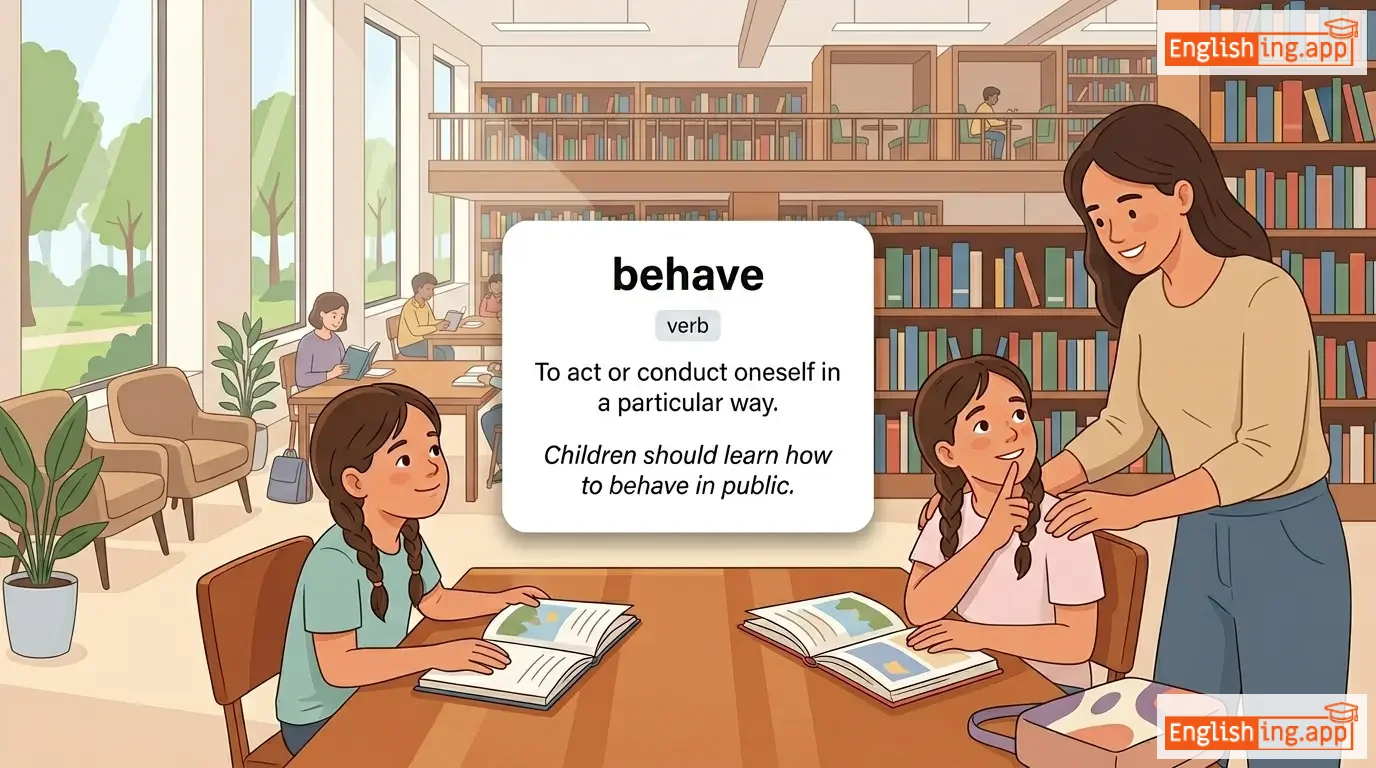
To act or conduct oneself in a particular way.
|
Children should learn how to behave in public.
Los niños deben aprender cómo comportarse en público.
••••••
|
Los niños deben aprender cómo comportarse en público.
Los ninos deben aprender como comportarse en publico.
••••••
|
compórtate
••••••
|
act properly; control your actions
|
compórtate bien
comportate bien
••••••
|
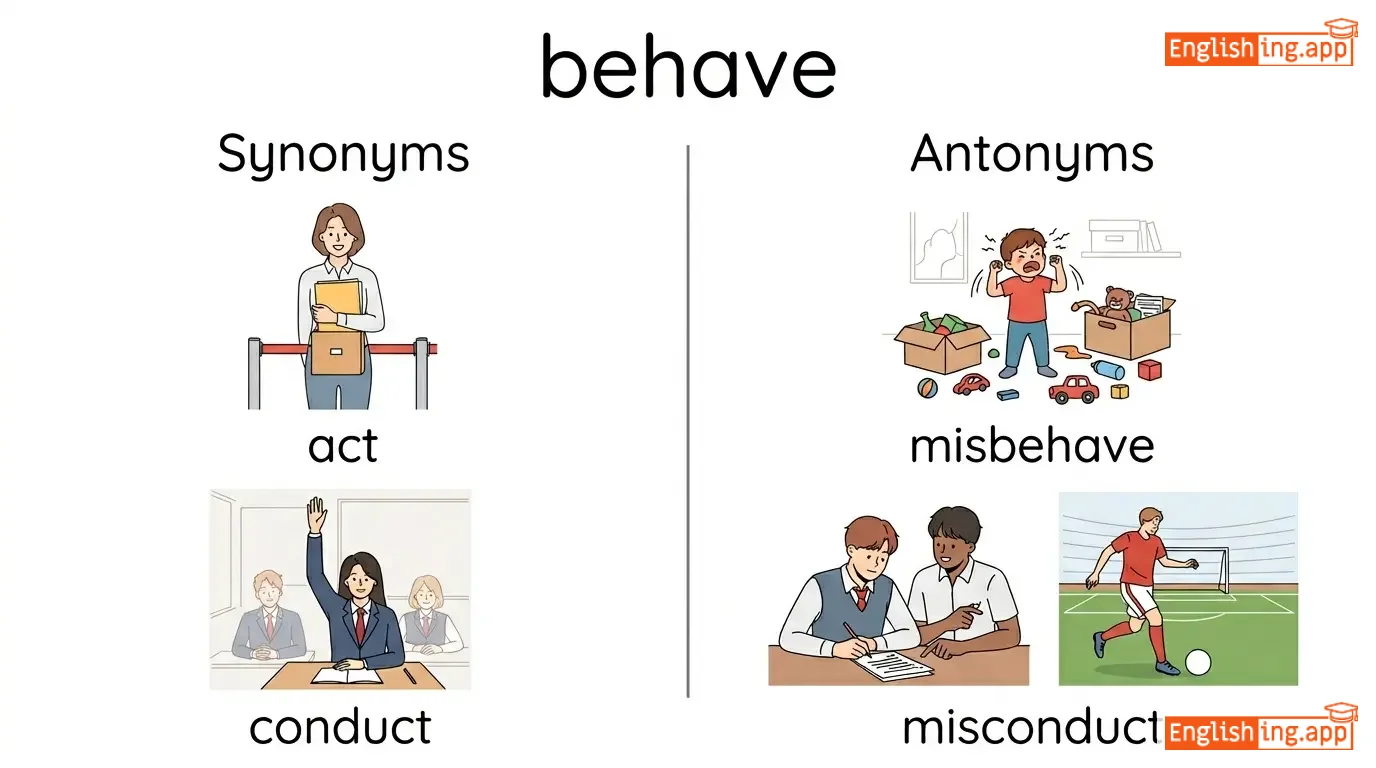
act, conduct, perform, operate
|
••••••
|
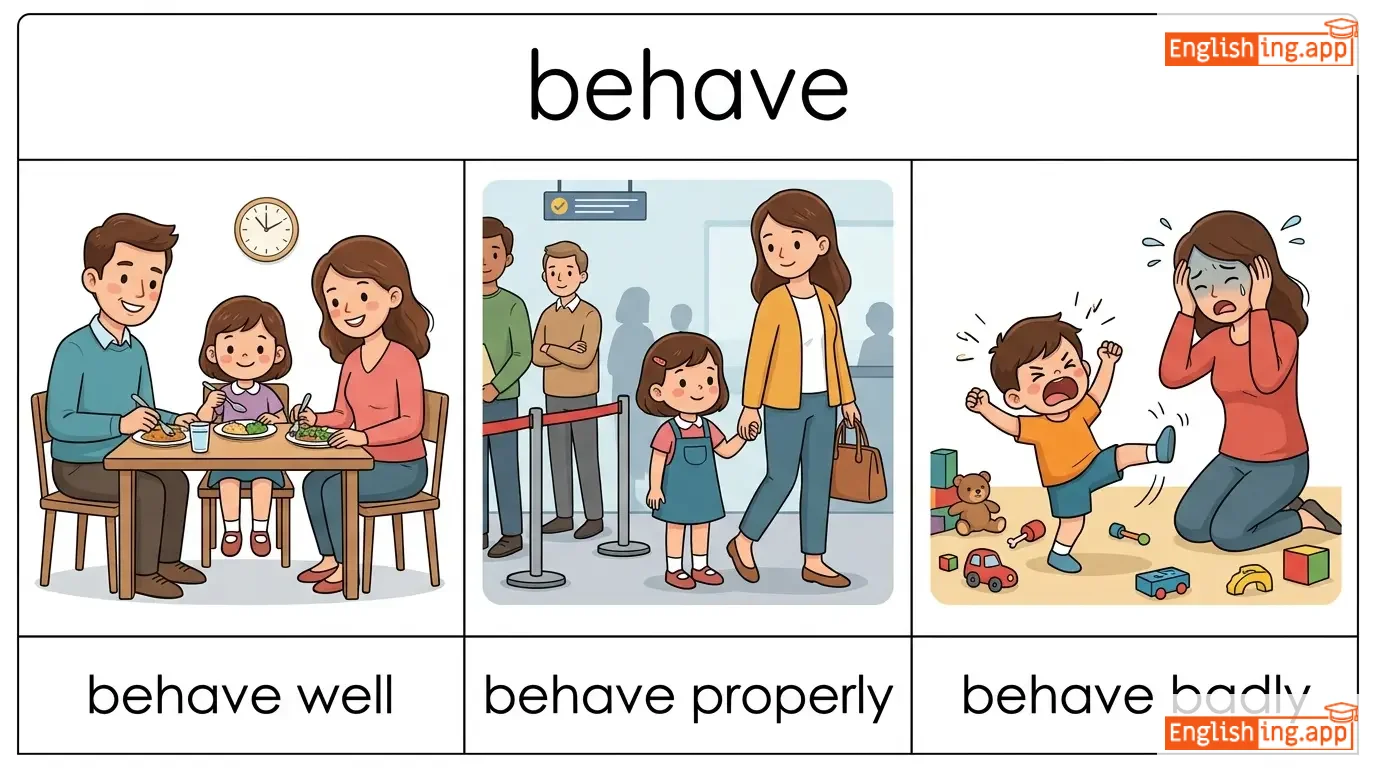
behave well, behave properly, behave badly
|
BEHAVE significa comportarse correctamente — si no lo haces, te comportas mal.
••••••
|
|
🧑🏫
••••••
|
/bɪˈheɪvjər/
noun
(biˈeβjoɾ)
••••••
|
-
••••••
|
comportamiento
comportamiento
••••••
|
-
••••••
|
-
••••••
|
-
••••••
|
-
••••••
|
The way in which one acts or conducts oneself, especially toward others.
|
The teacher praised her good behavior in class.
••••••
|
El maestro elogió su buen comportamiento en clase.
El maestro elogió su buen comportamiento en clase.
••••••
|
••••••
|
Behaving in the most polite or well-mannered way possible.
|
comportamiento ejemplar
comportamiento ejemplar
••••••
|
conduct, manners, actions, demeanor, attitude
|
••••••
|
good behavior, bad behavior, social behavior, criminal behavior
|
Comportamiento = Como te comportas con los demás.
••••••
|
|
⚔️
••••••
|
/bɪˈhɛd/
verb
(bihéd)
••••••
|
-
••••••
|
decapitar
decapitar
••••••
|
beheaded
bihéded
••••••
|
beheaded
bihéded
••••••
|
beheads
bihéds
••••••
|
beheading
bihéding
••••••
|
to cut off a person's or animal's head; to remove the leader or most important part
••••••
|
The historical account describes how the traitor was beheaded as punishment.
De historical account describes how the traitor was beheaded as punishment.
••••••
|
El relato histórico describe cómo el traidor fue decapitado como castigo.
El relato historico describe como el traidor fue decapitado como castigo
••••••
|
-
••••••
|
-
••••••
|
-
••••••
|
decapitate, execute, kill, slay, put to death
••••••
|
crown, spare, enthrone
••••••
|
behead a king, behead prisoners, ritual beheading, publicly behead
••••••
|
behead ≈ decapitar, दोनों में cabeza/head हटती है
••••••
|
|
⬅️
••••••
|
/bɪˈhaɪnd/
preposition/adverb
(biháind)
••••••
|
-
••••••
|
detrás
detras
••••••
|
-
••••••
|
-
••••••
|
-
••••••
|
-
••••••
|
At or to the back of something; in a position further back.
|
The cat is hiding behind the curtain.
The cat is hiding behind the curtain.
••••••
|
El gato se está escondiendo detrás de la cortina.
El gato se está escondiendo detrás de la cortina.
••••••
|
leave behind
••••••
|
To forget or not take something with you.
|
dejar atrás
dejar atras
••••••
|
at the back, beyond, after
|
••••••
|
fall behind, behind schedule, left behind, stay behind
|
Behind significa detrás: B detrás de HIND.
••••••
|
|
👀
••••••
|
/bɪˈhoʊld/
verb
(bihold)
••••••
|
-
••••••
|
contemplar; observar
contemplar; observar
••••••
|
beheld
biheld
••••••
|
beheld
biheld
••••••
|
beholds
biholds
••••••
|
beholding
biholding
••••••
|
to see or observe something, especially something remarkable or impressive
••••••
|
She stood quietly to behold the sunrise over the hills.
Shi stood kuaietli tu bihold de sanrais over de jils.
••••••
|
Ella se quedó en silencio para contemplar el amanecer sobre las colinas.
Ella se quedo en silencio para contemplar el amanecer sobre las colinas
••••••
|
lo and behold
••••••
|
used to express surprise at something unexpected
••••••
|
lo and behold
lo and behold
••••••
|
see, observe, witness, gaze at, look upon
••••••
|
ignore, overlook
••••••
|
behold the truth, behold the beauty, behold the sight, behold with awe
••••••
|
behold suena a ‘ver y hold’, como detenerse a mirar
••••••
|
|
🌍
••••••
|
/ˈbiːɪŋ/
noun/verb
(bíing)
••••••
|
-
••••••
|
existencia
existencia
••••••
|
-
••••••
|
-
••••••
|
está/están siendo
••••••
|
bíing
••••••
|
Existence; the state of living; a living creature.
|
Kindness is part of being human.
La amabilidad es parte de ser humano.
••••••
|
La amabilidad es parte de ser humano.
La amabilidad es parte de ser humano.
••••••
|
ser humano
••••••
|
A person; an individual of the species Homo sapiens.
|
ser humano
ser humano
••••••
|
existence, creature, life, entity
|
nonexistence, nothingness
|
human being, state of being, well-being, living being
|
Being significa existir - yo BEo porque estoy vivo.
••••••
|
|
🗣️
••••••
|
/bɪˈleɪbə/
verb
(bileibor)
••••••
|
-
••••••
|
recalcar en exceso
recalcar en exceso
••••••
|
belaboured
bileibord
••••••
|
belaboured
bileibord
••••••
|
belabours
bileibors
••••••
|
belabouring
bileiboring
••••••
|
to explain something repeatedly or with excessive detail; to criticize or attack verbally at length
••••••
|
The teacher did not belabour the point once the students understood it.
De ticher did not bileibor de point wans de students anderstud it.
••••••
|
El profesor no recalcó el punto cuando los estudiantes ya lo entendieron.
El profesor no recalco el punto cuando los estudiantes ya lo entendieron
••••••
|
belabour the point
••••••
|
to explain or emphasize something too much
••••••
|
recalcar el punto
recalcar el punto
••••••
|
overemphasize, dwell on, hammer, overexplain, reiterate
••••••
|
understate, gloss over, skim
••••••
|
belabour the point, belabour an issue, belabour an argument
••••••
|
recalcar demasiado = belabour
••••••
|
|
😮💨
••••••
|
/beltʃ/
verb; noun
(belch)
••••••
|
-
••••••
|
eructar
eructar
••••••
|
belched
belched
••••••
|
belched
belched
••••••
|
belches
belches
••••••
|
belching
belching
••••••
|
to expel air noisily from the stomach through the mouth; to emit or pour out suddenly and forcefully
••••••
|
After drinking the soda, he belched loudly.
After drinking the soda, he belched loudly.
••••••
|
Después de beber el refresco, eructó fuerte.
despues de beber el refresco eructo fuerte
••••••
|
-
••••••
|
-
••••••
|
-
••••••
|
burp, eruct, emit, expel, discharge
••••••
|
swallow, ingest, retain
••••••
|
belch loudly, belch gas, belch smoke, belch fumes
••••••
|
Belch suena fuerte como eructar—aire afuera.
••••••
|
|
⚔️
••••••
|
/bɪˈliːɡər/
verb
(biligar)
••••••
|
-
••••••
|
asediar, hostigar
asediar, hostigar
••••••
|
biligard
••••••
|
biligard
••••••
|
biligers
••••••
|
biligering
••••••
|
to cause difficulties, troubles, or harassment; to surround with military forces
|
The company was beleaguered by constant complaints from its customers.
La compañía estaba siendo asediada por quejas constantes de sus clientes.
••••••
|
La empresa estaba siendo asediada por constantes quejas de sus clientes.
La empresa estaba siendo asediada por constantes quejas de sus clientes.
••••••
|
ciudad asediada
••••••
|
a city surrounded and under attack or pressure
|
ciudad sitiada
ciudad sitiada
••••••
|
harass, besiege, pester, trouble, surround
|
••••••
|
beleaguered by problems, beleaguered company, beleaguered leader
|
Beleaguer = Be+League+Er → rodear una ciudad con un ejército, como un asedio
••••••
|
|
🙏
••••••
|
/bɪˈliːf/
noun
(bi-líef)
••••••
|
-
••••••
|
creencia
creencia
••••••
|
-
••••••
|
-
••••••
|
-
••••••
|
-
••••••
|
an acceptance that something exists or is true, especially without proof
|
Her belief in kindness inspired many people.
••••••
|
Su creencia en la bondad inspiró a muchas personas.
Su creencia en la bondad inspiro a muchas personas.
••••••
|
••••••
|
something that is very surprising or hard to imagine
|
más allá de la creencia
mas alla de la creencia
••••••
|
faith, trust, conviction, opinion, view
|
doubt, disbelief, skepticism
|
strong belief, personal belief, religious belief, belief system
|
Creencia significa ‘creer’—Believe + Fe = Creencia (creencia en el combo)
••••••
|
|
🙏
••••••
|
/bɪˈliːv/
verb
(bilív)
••••••
|
••••••
|
creer
kreer
••••••
|
bilívd
••••••
|
bilívd
••••••
|
bilívs
••••••
|
bilíving
••••••
|
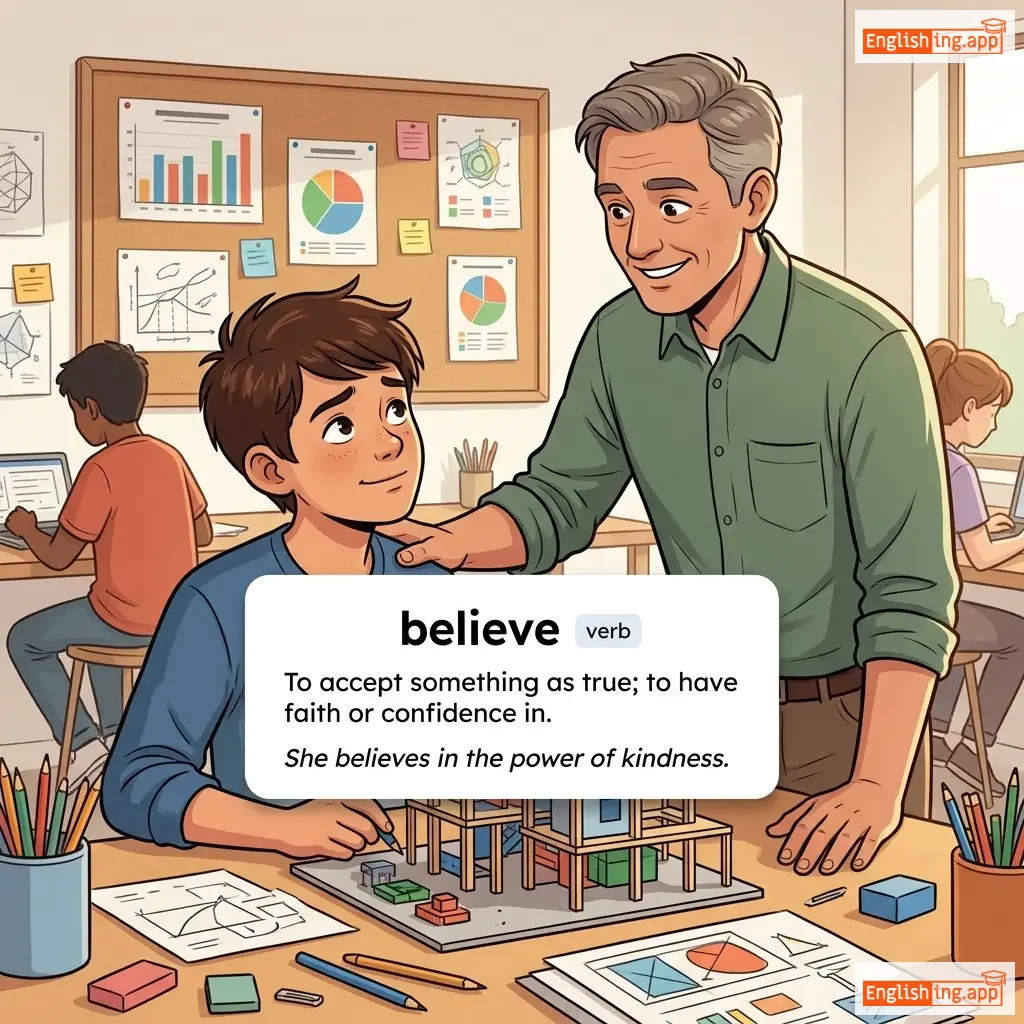
To accept something as true; to have faith or confidence in.
|
She believes in the power of kindness.
ella cree en el poder de la bondad.
••••••
|
Ella cree en el poder de la bondad.
Ella cree en el poder de la bondad.
••••••
|
creer en
••••••
|
To have confidence or trust in someone or something.
|
creer en
kreer en
••••••
|
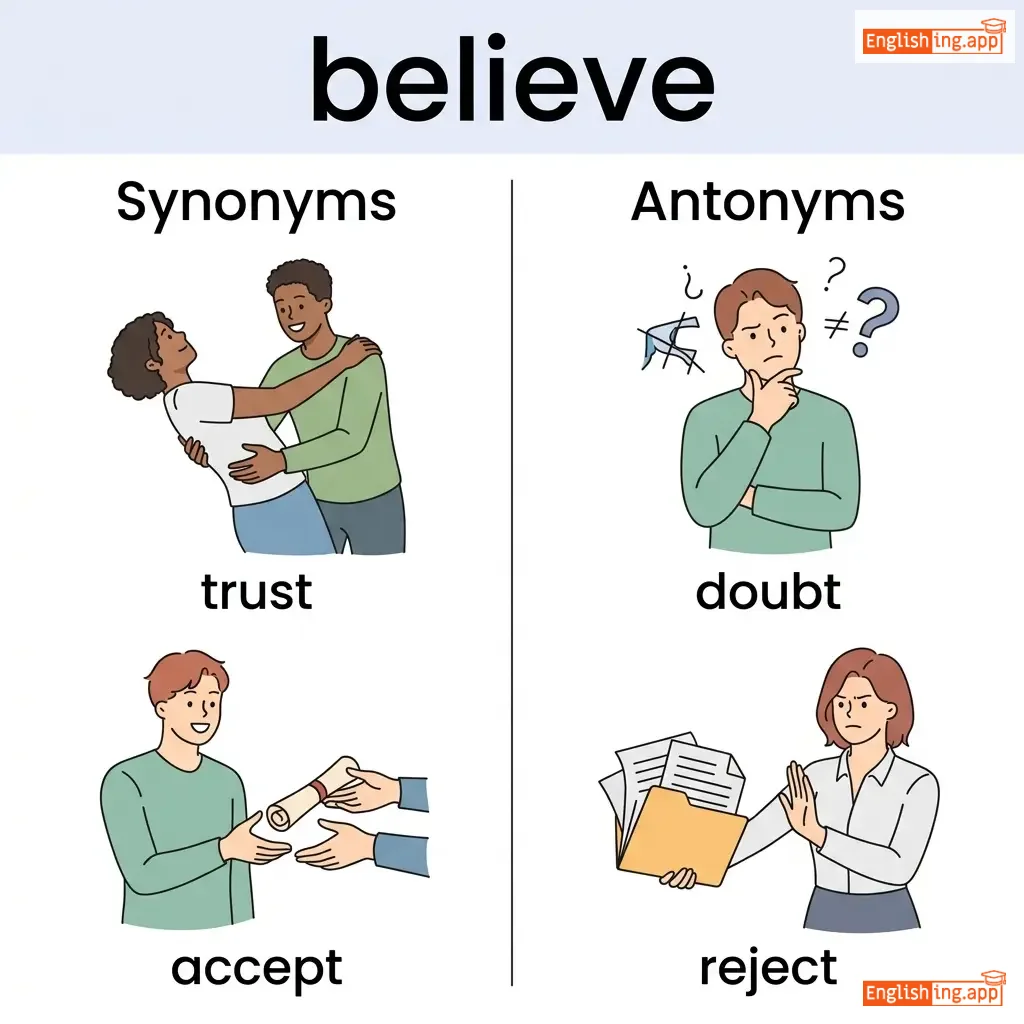
trust, accept, credit, rely on, be convinced
|
••••••
|
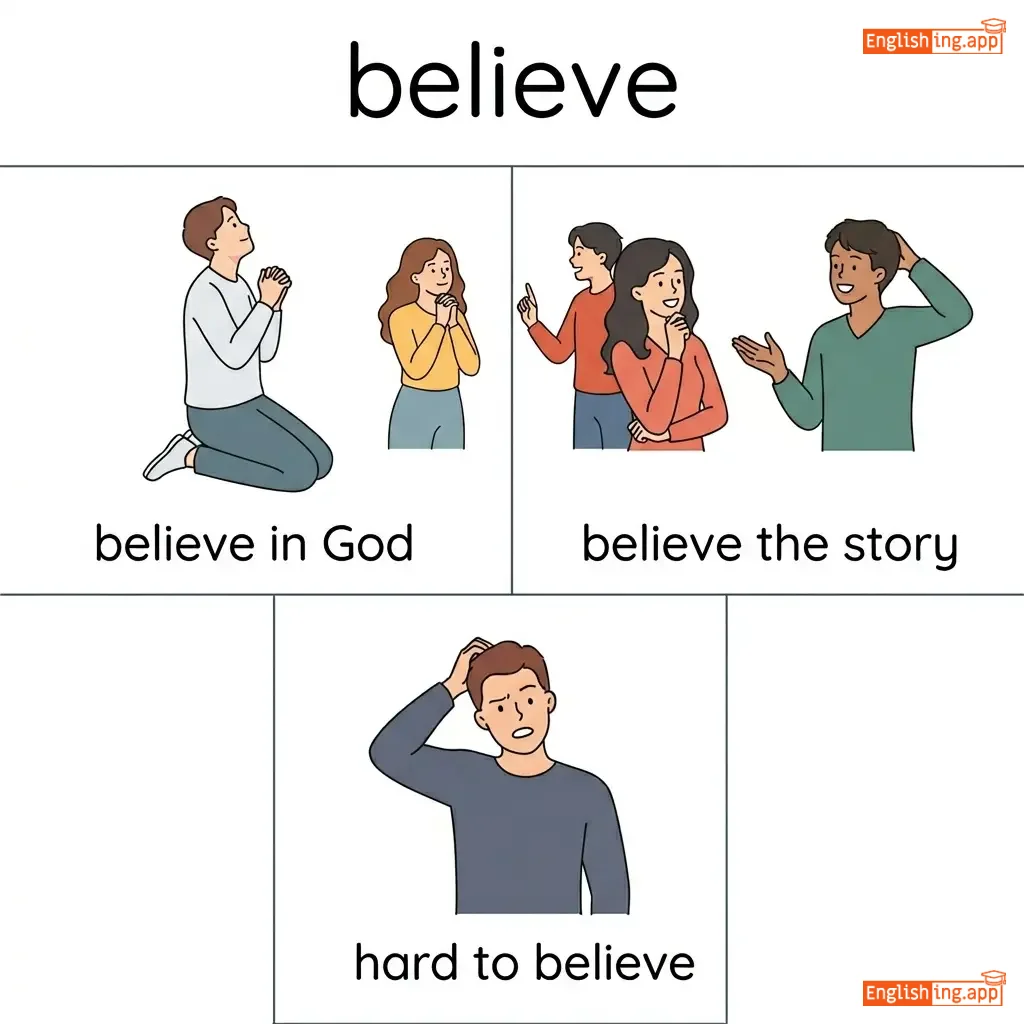
believe in God, believe the story, hard to believe, believe strongly
|
Creer suena como 'crear'—si crees, puedes crear grandes cosas.
••••••
|
|
🙏
••••••
|
/bɪˈliːvər/
noun
(bilíver)
••••••
|
-
••••••
|
creyente
creyente
••••••
|
-
••••••
|
-
••••••
|
-
••••••
|
-
••••••
|
a person who believes in something, especially a religious faith, idea, or principle
••••••
|
She is a strong believer in hard work and honesty.
Shi is a strong bilíver in hard work and honesty.
••••••
|
Ella es una firme creyente del trabajo duro y la honestidad.
ella es una firme creyente del trabajo duro y la honestidad
••••••
|
true believer
••••••
|
someone who has strong and sincere faith in a belief or cause
••••••
|
verdadero creyente
verdadero creyente
••••••
|
follower, adherent, devotee, supporter, faithful
••••••
|
skeptic, doubter, unbeliever
••••••
|
firm believer, true believer, religious believer, believer in science
••••••
|
Cree → creyente → believer
••••••
|
|
⬇️
••••••
|
/bɪˈlɪtl/
verb
(be-lít-lé)
••••••
|
-
••••••
|
menospreciar
menospreciar
••••••
|
be-lít-lé-d
••••••
|
be-lít-lé-d
••••••
|
be-lít-lé-s
••••••
|
be-lít-lín-g
••••••
|
To make someone or something seem less important or less valuable.
|
He often belittled his coworkers to feel superior.
Él a menudo menospreciaba a sus compañeros de trabajo para sentirse superior.
••••••
|
Él a menudo menospreciaba a sus compañeros de trabajo para sentirse superior.
Él a menudo menospreciaba a sus compañeros de trabajo para sentirse superior.
••••••
|
-
••••••
|
-
••••••
|
-
••••••
|
demean, disparage, minimize, undervalue, downgrade
|
praise, compliment, honor
|
belittle efforts, belittle achievements, belittles others, belittling remarks
|
Belittle significa hacer pequeño a alguien—menospreciar.
••••••
|
|
🔔
••••••
|
/bɛl/
noun
(bell)
••••••
|
-
••••••
|
campana
bell
••••••
|
-
••••••
|
-
••••••
|
-
••••••
|
-
••••••
|
a hollow object, usually made of metal, that makes a ringing sound when struck
|
The school bell rang loudly at noon.
La campana de la escuela sonó fuertemente al mediodía.
••••••
|
La campana de la escuela sonó fuertemente al mediodía.
La campana de la escuela sono fuertemente al mediodia
••••••
|
salvado por la campana
••••••
|
to be rescued from difficulty at the last moment
|
salvado por la campana
salvado por la campana
••••••
|
chime, gong, buzzer, alarm
|
••••••
|
ring the bell, church bell, door bell, alarm bell
|
Imagine a bell ringing across campus and saying hola campana, cultura mix: bell -> campana to remember the Spanish word
••••••
|
|
🤰
••••••
|
/ˈbɛli/
noun
(béli)
••••••
|
-
••••••
|
vientre
vientre
••••••
|
-
••••••
|
-
••••••
|
-
••••••
|
-
••••••
|
The front part of the human body below the chest; stomach or abdomen.
|
He rubbed his belly after the big meal.
••••••
|
Él frotó su vientre después de la gran comida.
Él frotó su vientre después de la gran comida.
••••••
|
••••••
|
••••••
|
risa fuerte
risa fuerte
••••••
|
stomach, abdomen, tummy, gut
|
••••••
|
big belly, belly fat, belly button
|
Belly significa vientre – cuando comes mucho, tu vientre (belly) crece.
••••••
|
|
🏠
••••••
|
/bɪˈlɒŋ/
verb
(bilóng)
••••••
|
-
••••••
|
pertenecer
pertenecer
••••••
|
bilónd
••••••
|
bilónd
••••••
|
bilóngs
••••••
|
bilónging
••••••
|
to be in the right place or to be a member of a group
|
She felt she truly belonged to the team.
Ella sintió que realmente pertenecía al equipo.
••••••
|
Ella sintió que realmente pertenecía al equipo.
Ella sintió que realmente pertenecía al equipo.
••••••
|
pertenecer a
••••••
|
to be the property of someone or something
|
pertenecer a
pertenecer a
••••••
|
fit, associate, connect, relate
|
exclude, detach, separate
|
belong to, feel belong, belong somewhere
|
Belong es lo mismo que ‘pertenecer’, lo que indica ser parte de algo o alguien.
••••••
|
|
❤️
••••••
|
/bɪˈlʌvɪd/
adjective
(bilóved)
••••••
|
-
••••••
|
querido
querido
••••••
|
-
••••••
|
-
••••••
|
-
••••••
|
-
••••••
|
dearly loved, highly regarded
|
She was the beloved queen of the kingdom.
Ella era la querida reina del reino.
••••••
|
Ella era la querida reina del reino.
Ella era la querida reina del reino.
••••••
|
-
••••••
|
-
••••••
|
-
••••••
|
cherished, adored, loved, esteemed
|
••••••
|
beloved friend, beloved leader, beloved person
|
Querido es como decir beloved, alguien profundamente amado.
••••••
|
|
⬇️
••••••
|
/bɪˈloʊ/
preposition
(bílou)
••••••
|
-
••••••
|
debajo
debajo
••••••
|
-
••••••
|
-
••••••
|
-
••••••
|
-
••••••
|
At a lower level or position than something else.
|
The basement is below the ground floor.
••••••
|
El sótano está debajo del primer piso.
El sótano está debajo del primer piso.
••••••
|
••••••
|
Unfair or cruel remark or action.
|
bajo el cinturón
bajo el cinturón
••••••
|
under, beneath, underneath, lower
|
••••••
|
below average, below the surface, below zero
|
Below significa debajo, como si algo estuviera debajo de ti.
••••••
|
|
👖
••••••
|
/bɛlt/
noun
(belt)
••••••
|
-
••••••
|
cinturón
sinturon
••••••
|
-
••••••
|
-
••••••
|
-
••••••
|
-
••••••
|
a strip of material worn around the waist to support clothes or as decoration
|
He tightened his belt before leaving for work.
Apretó su cinturón antes de irse al trabajo.
••••••
|
Apretó su cinturón antes de irse al trabajo.
Apreto su cinturon antes de irse al trabajo.
••••••
|
apretar el cinturón
••••••
|
to live with less money than before
|
apretar el cinturón
apretar el cinturon
••••••
|
strap, band, sash, girdle
|
••••••
|
wear a belt, leather belt, tighten belt, conveyor belt
|
CINtuRON: CINta TU RON - imagine a cinturon hugging your waist to hold up your pants
••••••
|
|
😢
••••••
|
/bɪˈmoʊn/
verb
(bimón)
••••••
|
-
••••••
|
lamentar
lamentar
••••••
|
bimónd
••••••
|
bimónd
••••••
|
bimóns
••••••
|
bimoning
••••••
|
To express discontent or sorrow over something.
|
Critics bemoaned the lack of diversity in the film.
Críticos bemoanaron la falta de diversidad en la película.
••••••
|
Los críticos lamentaron la falta de diversidad en la película.
Los críticos lamentaron la falta de diversidad en la película.
••••••
|
-
••••••
|
-
••••••
|
-
••••••
|
lament, complain, regret, grieve, mourn
|
praise, celebrate, rejoice
|
bemoan the loss, bemoan fate, bemoan lack
|
Bemoan es como ‘be more on’ – lamentar algo.
••••••
|
|
🤔
••••••
|
/bɪˈmjuːz/
verb
(bimíus)
••••••
|
-
••••••
|
confundir
confundir
••••••
|
bimíusd
••••••
|
bimíusd
••••••
|
bimíuses
••••••
|
bimíusing
••••••
|
To confuse or puzzle someone.
|
The complex instructions bemused the new employees.
Las instrucciones complejas confundieron a los nuevos empleados.
••••••
|
Las instrucciones complejas confundieron a los nuevos empleados.
Las instrucciones complejas confundieron a los nuevos empleados.
••••••
|
-
••••••
|
-
••••••
|
-
••••••
|
confuse, bewilder, puzzle, perplex, baffle
|
clarify, explain, enlighten
|
bemuse the audience, bemuse expression, bemuse with details
|
Bemuse = 'B' for 'Befuddle' = hacer que alguien se confunda
••••••
|
|
🪑
••••••
|
/bɛntʃ/
noun
(bɛntʃ)
••••••
|
-
••••••
|
banco
banco
••••••
|
-
••••••
|
-
••••••
|
-
••••••
|
-
••••••
|
a long seat for several people, typically made of wood or stone
|
They sat on the park bench watching the sunset.
Se sentaron en el banco del parque mirando el atardecer.
••••••
|
Se sentaron en el banco del parque mirando el atardecer.
Se sentaron en el banco del parque mirando el atardecer.
••••••
|
calentar el banco
••••••
|
to not participate in a game, usually as a substitute player
|
calentar el banco
calentar el banco
••••••
|
••••••
|
••••••
|
park bench, wooden bench, sit on a bench, court bench
|
Banco en español es un asiento, así que 'calentar el banco' significa no participar en el juego.
••••••
|
|
📏
••••••
|
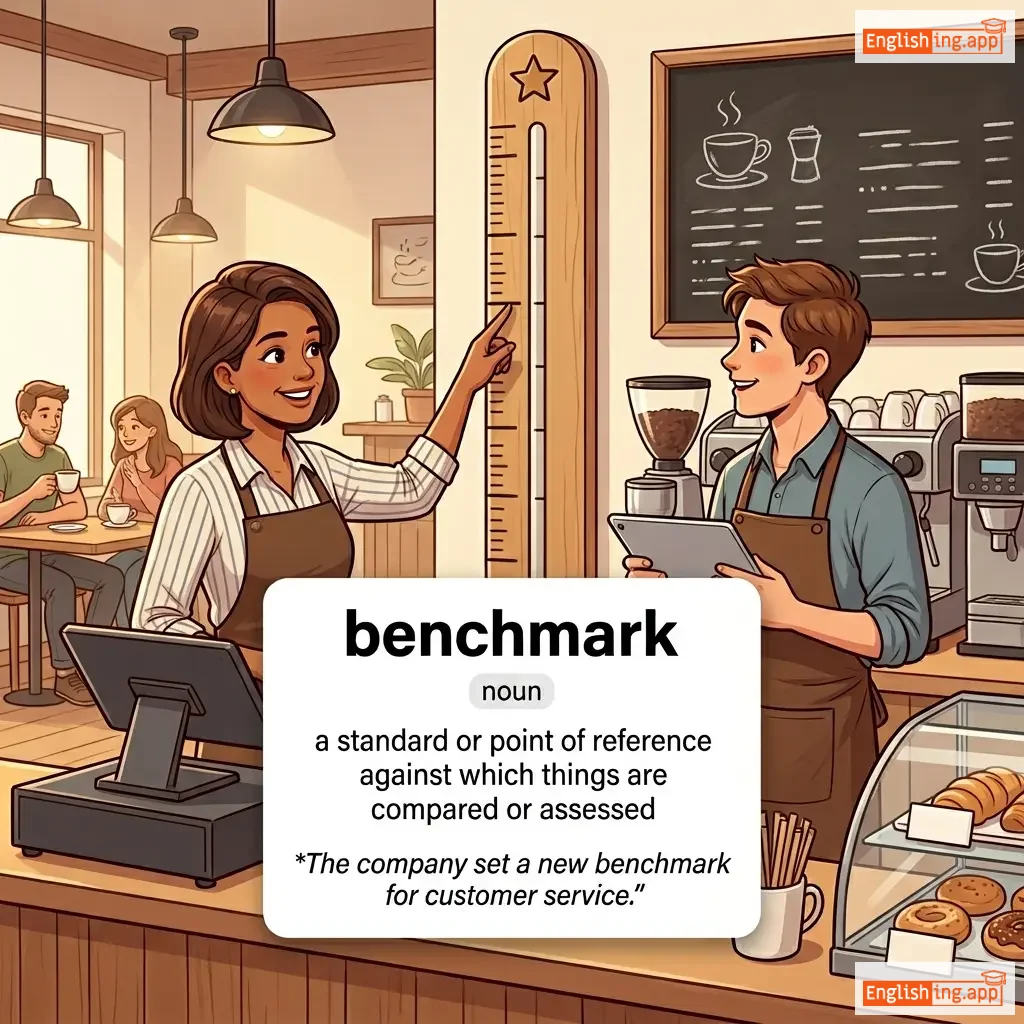
/ˈbɛntʃmɑːrk/
noun
(bénchmark)
••••••
|
••••••
|
punto de referencia
punto de referencia
••••••
|
-
••••••
|
-
••••••
|
-
••••••
|
-
••••••
|
a standard or point of reference against which things are compared or assessed
|
The company set a new benchmark for customer service.
••••••
|
La empresa estableció un nuevo punto de referencia para el servicio al cliente.
La empresa estableció un nuevo punto de referencia para el servicio al cliente.
••••••
|
-
••••••
|
-
••••••
|
-
••••••
|
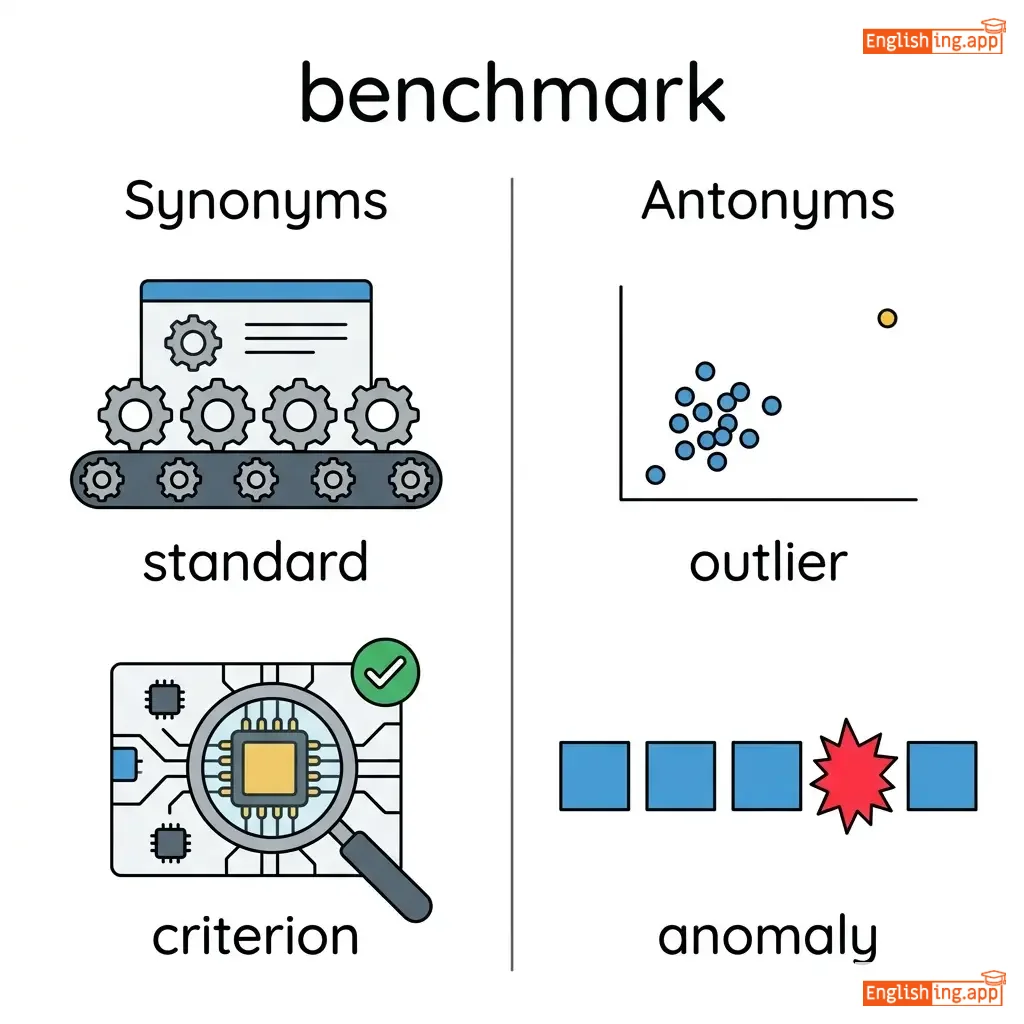
standard, criterion, gauge, yardstick
|
outlier, anomaly, exception
|
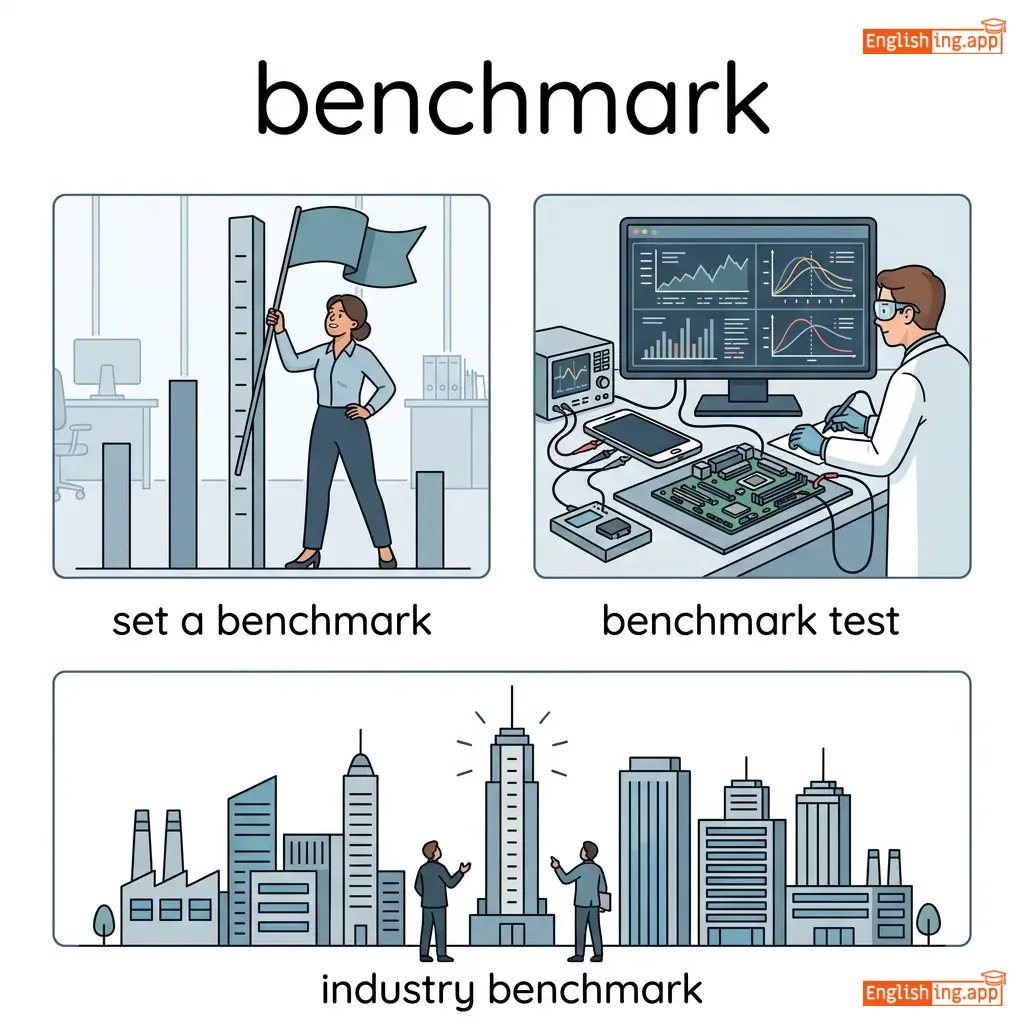
set a benchmark, benchmark test, industry benchmark, high benchmark
|
benchmark se convierte en punto de referencia - Benchmark is a yardstick for comparison
••••••
|
|
↩️
••••••
|
/bɛnd/
verb
(bénd)
••••••
|
-
••••••
|
doblar / agacharse
doblar / agacharse
••••••
|
bent
••••••
|
bent
••••••
|
bends
••••••
|
bending
••••••
|
to curve something or cause it to change shape; to move the body or part of it downward or forward
|
She had to bend down to pick up the coin.
Ella tuvo que agacharse para recoger la moneda.
••••••
|
Ella tuvo que agacharse para recoger la moneda.
Ella tuvo que agacharse para recoger la moneda.
••••••
|
doblarse hacia atrás
••••••
|
to try very hard to please someone or make something happen
|
hacer todo lo posible
hacer todo lo posible
••••••
|
curve, flex, bow, arch, stoop
|
straighten, unbend, stiffen
|
bend down, bend forward, bend the rules, bend over
|
Al doblar el cuerpo, se 'dobla' hacia atrás.
••••••
|
|
⬇️
••••••
|
/bɪˈniːθ/
adverb
(biníth)
••••••
|
-
••••••
|
debajo; bajo
debajo, bajo
••••••
|
-
••••••
|
-
••••••
|
-
••••••
|
-
••••••
|
••••••
|
The treasure lies beneath the old tree.
The treasure lies biníth the old tree.
••••••
|
El tesoro yace debajo del árbol viejo.
El tesoro yace debajo del arbol viejo.
••••••
|
-
••••••
|
-
••••••
|
-
••••••
|
under, below, underneath, down
|
above, over, on top, beyond
|
beneath the surface, beneath contempt, beneath notice
|
Imagine that the treasure is lying beneath a tree, the 'bajo' meaning under.
••••••
|
|
🌱
••••••
|
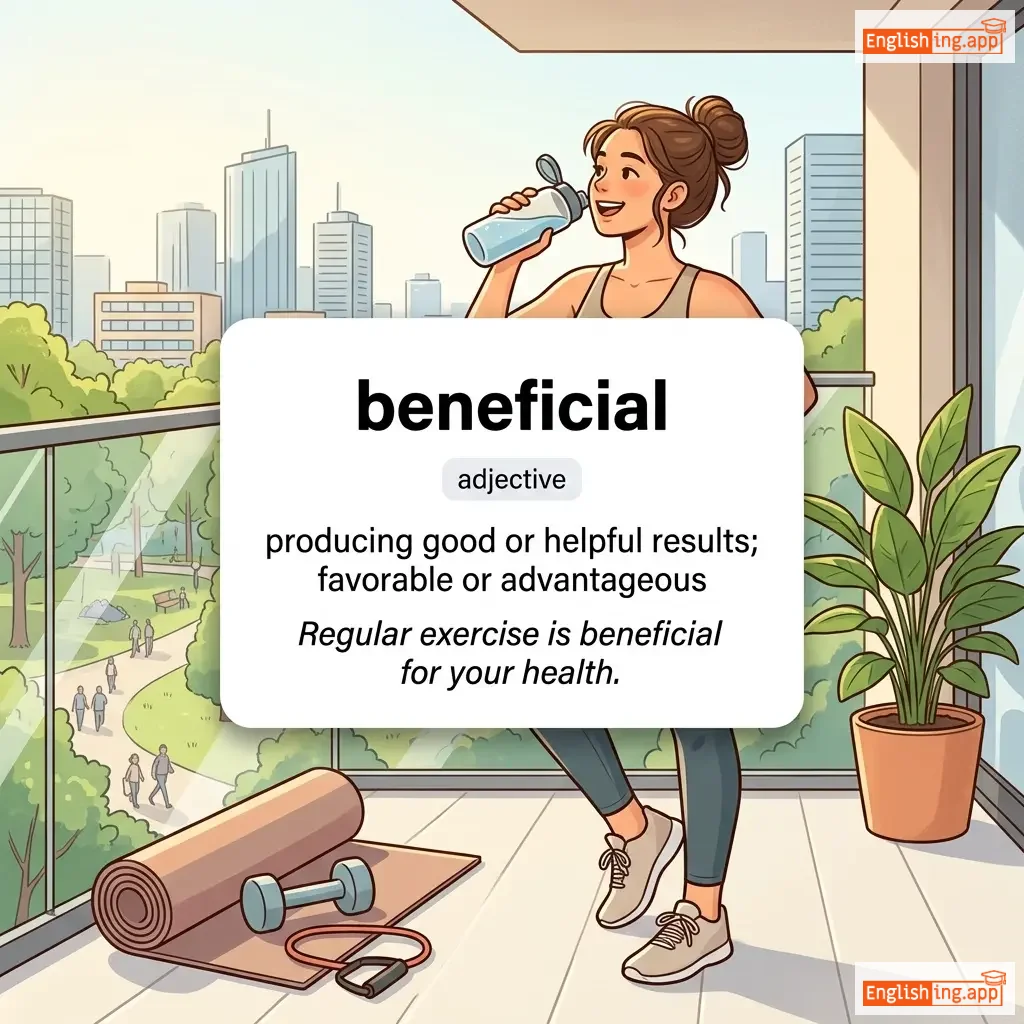
/ˌbɛnɪˈfɪʃəl/
adjective
(beneficial)
••••••
|
••••••
|
beneficioso
beneficioso
••••••
|
-
••••••
|
-
••••••
|
-
••••••
|
-
••••••
|
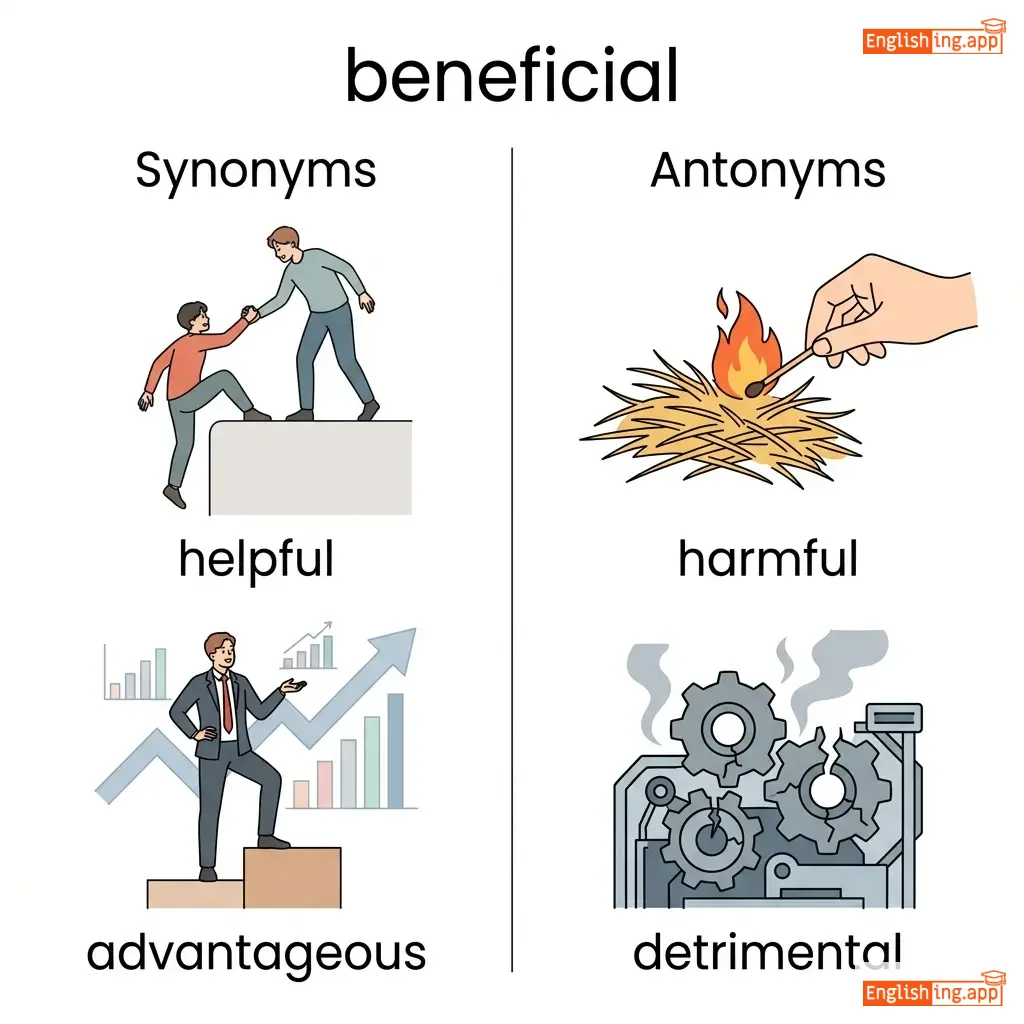
producing good or helpful results; favorable or advantageous
|
Regular exercise is beneficial for your health.
••••••
|
El ejercicio regular es beneficioso para tu salud.
El ejercicio regular es beneficioso para tu salud.
••••••
|
-
••••••
|
-
••••••
|
-
••••••
|
helpful, advantageous, favorable, useful, valuable
|
harmful, detrimental, disadvantageous
|
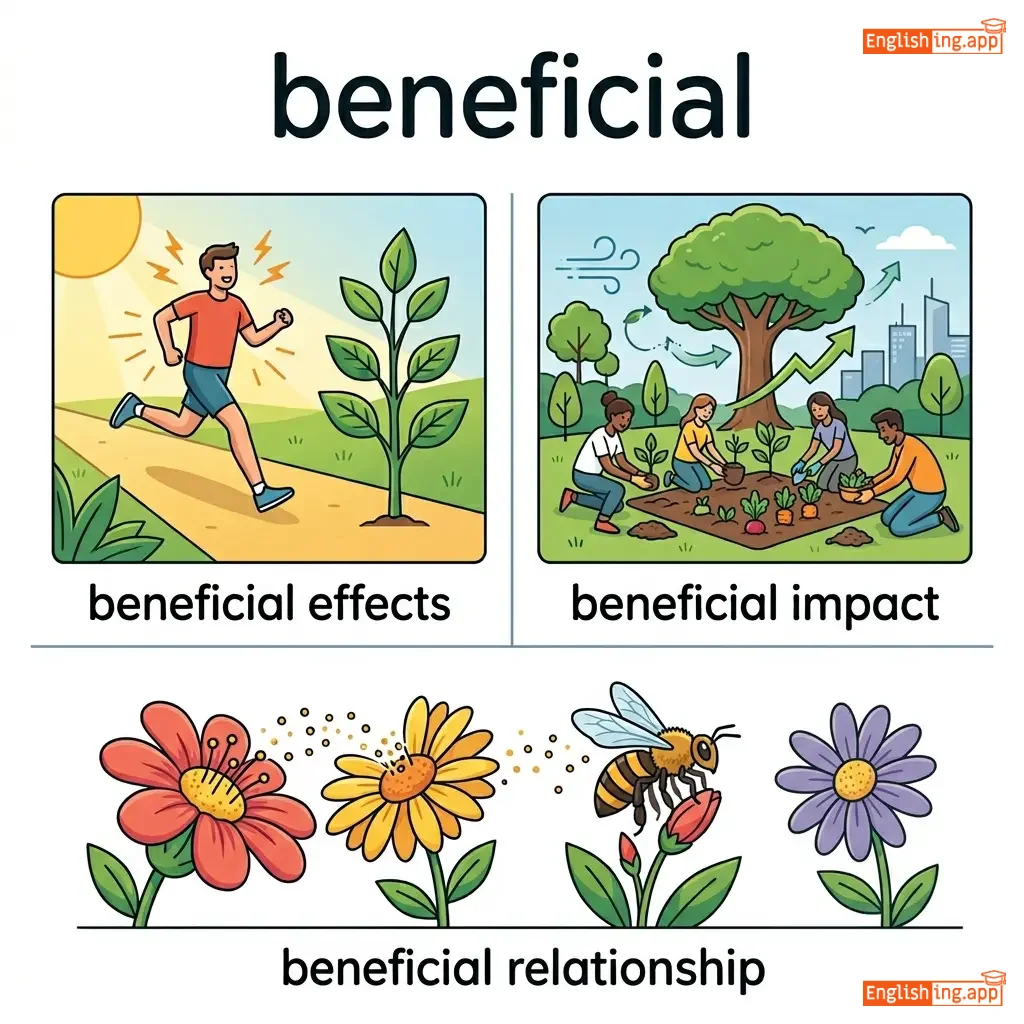
beneficial effects, beneficial impact, beneficial relationship, mutually beneficial
|
Beneficial se parece a 'beneficioso', algo que trae beneficios.
••••••
|
|
🎁
••••••
|
/ˌbɛnɪˈfɪʃəri/
noun
(beneficiario)
••••••
|
-
••••••
|
beneficiario
beneficiario
••••••
|
-
••••••
|
-
••••••
|
-
••••••
|
-
••••••
|
a person who receives something, especially money or property, from a will or insurance policy
|
She is the sole beneficiary of her father’s estate.
••••••
|
Ella es la única beneficiaria de la propiedad de su padre.
Ella es la única beneficiaria de la propiedad de su padre.
••••••
|
-
••••••
|
-
••••••
|
-
••••••
|
recipient, heir, inheritor, grantee
|
••••••
|
sole beneficiary, named beneficiary, policy beneficiary, estate beneficiary
|
Beneficiary se refiere a quien recibe beneficios, como el beneficiario de una póliza de seguro.
••••••
|
|
🎉
••••••
|
/ˈbɛnɪfɪt/
noun/verb
(bénefit)
••••••
|
-
••••••
|
beneficio / ventaja
beneficio / ventaja
••••••
|
bénefited
••••••
|
bénefited
••••••
|
bénefitsa
••••••
|
bénefiting
••••••
|
an advantage, profit, or good effect; to receive help or an advantage
|
Employees benefit from the company’s health insurance program.
Los empleados se benefician del programa de seguro médico de la empresa.
••••••
|
Los empleados se benefician del programa de seguro de salud de la empresa.
Los empleados se benefician del programa de seguro de salud de la empresa.
••••••
|
para el beneficio de
••••••
|
for the advantage or good of someone
|
para el beneficio de alguien
para el beneficio de alguien
••••••
|
advantage, profit, gain, perk, blessing
|
••••••
|
health benefit, social benefit, benefit from, mutual benefit
|
Benefit significa un beneficio, como los beneficios de un seguro de salud.
••••••
|
|
🥶
••••••
|
/bɪˈnʌm/
verb
(binám)
••••••
|
-
••••••
|
adormecer
adormecer
••••••
|
benumbed
binámd
••••••
|
benumbed
binámd
••••••
|
benumbs
bináms
••••••
|
benumbing
bináming
••••••
|
to make physically numb or without sensation; to make mentally dull or insensitive
••••••
|
The freezing wind seemed to benumb his fingers within minutes.
De frízing uind simd tu binám jis fíngers uídin mínits
••••••
|
El viento helado parecía adormecerle los dedos en minutos.
El viento helado parecia adormecerle los dedos en minutos
••••••
|
binám de sénsis
••••••
|
to dull or deaden physical or emotional perception
••••••
|
adormecer los sentidos
adormecer los sentidos
••••••
|
numb, deaden, dull, anesthetize, stupefy
••••••
|
sensitize, stimulate, awaken
••••••
|
benumb the senses, benumbed by cold, benumbed feeling, emotionally benumbed
••••••
|
Dormir = adormecer → benumb = dejar dormidos los sentidos
••••••
|
|
🖤
••••••
|
/bɪˈriːv/
verb
(berív)
••••••
|
-
••••••
|
perder a un ser querido
perder a un ser querido
••••••
|
berívd
••••••
|
berívd
••••••
|
berívs
••••••
|
beríbing
••••••
|
to deprive someone of a loved one through death
|
She was bereaved of her husband last year.
ella was bereívd off her husband last year.
••••••
|
Ella perdió a su esposo el año pasado.
Ella perdió a su esposo el año pasado.
••••••
|
bereívd family
••••••
|
a family that has lost a loved one
|
familia que ha perdido a un ser querido
familia que ha perdido a un ser querido
••••••
|
deprive, lose, rob, dispossess
|
••••••
|
bereaved family, bereaved person, bereaved of, comfort the bereaved
|
Be + reave (robar) = muerte que roba un ser querido → bereave
••••••
|
|
🛏️
••••••
|
/bɜːrθ/
noun
(bérth)
••••••
|
-
••••••
|
litera / lugar de amarre
litera / lugar de amarre
••••••
|
-
••••••
|
-
••••••
|
-
••••••
|
-
••••••
|
A place to sleep on a ship or train; a ship's allocated place at a dock.
|
They reserved a lower berth on the overnight train.
••••••
|
Reservaron una litera inferior en el tren nocturno.
Reservaron una litera inferior en el tren nocturno.
••••••
|
••••••
|
To avoid someone or something; to keep away.
|
dar un amplio margen
dar un amplio margen
••••••
|
bunk, cabin, bed, dock, station
|
••••••
|
lower berth, upper berth, ship's berth, wide berth
|
Berth suena como 'bed', en el tren, 'berth' significa una cama para dormir.
••••••
|
|
🙏
••••••
|
/bɪˈsiːtʃ/
verb
(bisich)
••••••
|
-
••••••
|
suplicar
suplícar
••••••
|
bisiched
••••••
|
bisiched
••••••
|
biseeches
••••••
|
beseeching
••••••
|
To ask someone urgently and fervently to do something; to beg.
|
He beseeched the judge for mercy.
él bisiched al juez por misericordia.
••••••
|
Él suplicó al juez por misericordia.
Él suplicó al juez por misericordia.
••••••
|
-
••••••
|
-
••••••
|
-
••••••
|
implore, beg, plead, entreat, supplicate
|
••••••
|
beseech someone, beseech the lord, beseech for mercy, humbly beseech
|
Beseech = Be + Speech (Pedimos algo urgentemente con palabras).
••••••
|
|
🤝
••••••
|
/bɪˈsaɪd/
preposition
(besaid)
••••••
|
-
••••••
|
al lado de
al lado de
••••••
|
-
••••••
|
-
••••••
|
-
••••••
|
-
••••••
|
next to or at the side of someone or something
|
She sat beside her best friend during the ceremony.
••••••
|
Ella se sentó al lado de su mejor amiga durante la ceremonia.
Ella se sentó al lado de su mejor amiga durante la ceremonia.
••••••
|
-
••••••
|
-
••••••
|
-
••••••
|
next to, alongside, by, near
|
••••••
|
sit beside, stand beside, beside the door, beside me
|
Beside significa al lado - Best friend al lado.
••••••
|
|
➕
••••••
|
/bɪˈsaɪdz/
adverb
(besáids)
••••••
|
-
••••••
|
además
ademas
••••••
|
-
••••••
|
-
••••••
|
-
••••••
|
-
••••••
|
in addition to; moreover; furthermore
|
Besides being smart, he is also kind.
••••••
|
Además de ser inteligente, también es amable.
Ademas de ser inteligente, tambien es amable
••••••
|
-
••••••
|
-
••••••
|
-
••••••
|
moreover, furthermore, additionally, also
|
only, merely, exclusively
|
besides that, besides which, besides being
|
Cuando algo está al lado, es un 'además' de algo más.
••••••
|
|
🏆
••••••
|
/bɛst/
adjective
(bést)
••••••
|
-
••••••
|
mejor
mejor
••••••
|
-
••••••
|
-
••••••
|
-
••••••
|
-
••••••
|
Of the highest quality, excellence, or standing.
|
She is the best student in the class.
••••••
|
Ella es la mejor estudiante de la clase.
Ella es la mejor estudiante de la clase.
••••••
|
••••••
|
To do as well as possible in a difficult situation.
|
hacer lo mejor de
hacer lo mejor de
••••••
|
finest, greatest, top, leading, supreme
|
••••••
|
best friend, best time, best practice
|
Best significa lo mejor, ¡como en 'la mejor' persona!
••••••
|