|
絵文字
|
単語 | Images | 翻訳 | 過去 | 過去分詞 | 三人称単数 | 動名詞 | 意味 | 例文 | 例文の翻訳 | 表現例 | 表現例の意味 | 表現例の翻訳 | 同義語 | 対義語 | コロケーション | ニーモニック |
|---|---|---|---|---|---|---|---|---|---|---|---|---|---|---|---|---|---|
|
📐
••••••
|
/əˈprɒksɪmət/
adjective/verb
(アプロキシメイト)
••••••
|
- •••••• |
おおよその
ooyoso no
••••••
|
approximated
アプロキシメイテッド
••••••
|
approximated
アプロキシメイテッド
••••••
|
approximates
アプロキシメイツ
••••••
|
approximating
アプロキシメイティング
••••••
|
close to the actual but not exact; to estimate or calculate roughly
••••••
|
The cost is approximate and may change later.
ザ コスト イズ アプロキシメイト アンド メイ チェンジ レイター。
••••••
|
その費用はおおよそのもので、後で変わるかもしれません。
sono hiyou wa ooyoso no mono de atode kawaru kamoshiremasen
••••••
|
approximate value
アプロキシメイト バリュー
••••••
|
a value that is close to the true amount but not exact
••••••
|
概算値
gaisanchi
••••••
|
estimated, rough, near, about, close
••••••
|
exact, precise, accurate
••••••
|
approximate value, approximate time, approximate cost, approximate figure
••••••
|
おおよそ = approximate、almost correct.
••••••
|
|
➗
••••••
|
/əˈprɒk.sɪ.mət.li/
adverb
(アプロクシメートリー)
••••••
|
- •••••• |
おおよそ
oyoso
••••••
|
- •••••• | - •••••• | - •••••• | - •••••• |
used to show that something is almost, but not completely, accurate or exact
••••••
|
The journey takes approximately three hours. |
旅行はおおよそ3時間かかります。
Ryokou wa oyoso san jikan kakarimasu.
••••••
|
- •••••• | - •••••• | - •••••• |
about, roughly, around, nearly, close to
••••••
|
exactly, precisely, accurately
••••••
|
approximately equal, approximately the same, approximately three hours
••••••
|
Approximately とはおおよそのこと—'おおよそ'はほぼ正確な予測だ。
••••••
|
|
🌸
••••••
|
/ˈeɪprɪl/
noun
(エイプリル)
••••••
|
- •••••• |
4月
shigatsu
••••••
|
- •••••• | - •••••• | - •••••• | - •••••• |
the fourth month of the year in the Gregorian calendar
••••••
|
April is known for its pleasant spring weather.
エイプリル イズ ノウン フォー イッツ プレザント スプリング ウェザー
••••••
|
4月は心地よい春の天気で知られています。
shigatsu wa kokochiyoi haru no tenki de shirarete imasu
••••••
|
April showers bring May flowers
エイプリル シャワーズ ブリング メイ フラワーズ
••••••
|
early difficulties often lead to better results later
••••••
|
四月の雨は五月の花をもたらす
shigatsu no ame wa gogatsu no hana o motarasu
••••••
|
fourth month, spring month, April month, calendar month
••••••
|
December, January
••••••
|
early April, late April, April weather, April holiday
••••••
|
April=新学期の4月と覚える
••••••
|
|
🎲
••••••
|
/ˈɑːrbɪˌtrɛri/
adjective
(アービトラリー)
••••••
|
- •••••• |
任意の
nin'i no
••••••
|
- •••••• | - •••••• | - •••••• | - •••••• |
based on random choice or personal whim, rather than reason or system
••••••
|
The teacher's arbitrary grading upset many students. |
教師の任意の採点は多くの学生を困らせました。
Kyoushi no nin'i no saiten wa ooku no gakusei o komarase mashita.
••••••
|
- •••••• | - •••••• | - •••••• |
random, capricious, whimsical, subjective, inconsistent
••••••
|
rational, logical, systematic
••••••
|
arbitrary decision, arbitrary rule, arbitrary action
••••••
|
Arbitraryは任意の—自由に選択する感じをイメージしよう!
••••••
|
|
🕊️
••••••
|
/ˈɑːrbɪtreɪt/
verb
(アービトレート)
••••••
|
- •••••• |
仲裁する
chūsai suru
••••••
|
arbitrated
アービトレーテッド
••••••
|
arbitrated
アービトレーテッド
••••••
|
arbitrates
アービトレイツ
••••••
|
arbitrating
アービトレイティング
••••••
|
to settle a dispute between two parties by acting as an impartial judge
••••••
|
The committee agreed to arbitrate the contract dispute.
委員会は契約紛争を仲裁することに同意しました。
••••••
|
委員会は契約紛争を仲裁することに同意しました。
Iinkai wa keiyaku funsō o chūsai suru koto ni dōi shimashita.
••••••
|
arbitrate a dispute
紛争を仲裁する
••••••
|
to resolve a disagreement between parties
••••••
|
紛争を仲裁する
funsō o chūsai suru
••••••
|
mediate, adjudicate, resolve, judge, settle
••••••
|
provoke, dispute
••••••
|
arbitrate dispute, arbitrate conflict, arbitrate case
••••••
|
Arbitrateは仲裁すること—公正な裁判をする仲裁者になりきって!
••••••
|
|
⚖️
••••••
|
/ˌɑːrbɪˈtreɪʃən/
noun
(アービトレーション)
••••••
|
- •••••• |
仲裁
chuusai
••••••
|
- •••••• | - •••••• | - •••••• | - •••••• |
the process of resolving a dispute through an impartial third party whose decision is binding; formal judgment outside a court
••••••
|
The contract requires arbitration to settle any disputes.
契約では紛争解決にアービトレーションが必要です。
••••••
|
契約では紛争を仲裁で解決することが定められています。
keiyaku dewa funsou o chuusai de kaiketsu suru koto ga sadamerarete imasu
••••••
|
arbitration clause
アービトレーション条項
••••••
|
a contract provision that requires disputes to be resolved through arbitration
••••••
|
仲裁条項
chuusai joukou
••••••
|
mediation, adjudication, settlement, conciliation
••••••
|
litigation, disagreement
••••••
|
binding arbitration, arbitration clause, arbitration agreement, international arbitration
••••••
|
中で裁く—仲裁 = arbitration
••••••
|
|
🏛️
••••••
|
/ˈɑː.kɪ.tekt/
noun
(アーキテクト)
••••••
|
- •••••• |
建築家
kenchikuka
••••••
|
- •••••• | - •••••• | - •••••• | - •••••• |
a person who designs buildings and oversees their construction
••••••
|
The architect designed a modern office building. |
建築家は現代的なオフィスビルを設計しました。
Kenchikuka wa gendaiteki na ofisubiru o sekkei shimashita.
••••••
|
- •••••• | - •••••• | - •••••• |
designer, planner, builder, creator
••••••
|
destroyer, demolisher
••••••
|
famous architect, software architect, chief architect, landscape architect
••••••
|
Architect とは建築家—建物の設計と建設の監督者。
••••••
|
|
🏛️
••••••
|
/ˌɑːrkɪˈtɛktʃərəl/
adjective
(アーキテクチュラル)
••••••
|
- •••••• |
建築的な
kenchikuteki na
••••••
|
- •••••• | - •••••• | - •••••• | - •••••• |
relating to the design and style of buildings and structures
••••••
|
The city is known for its beautiful architectural designs. |
その都市は美しい建築デザインで知られています。
Sono toshi wa utsukushī kenchiku dezain de shirareteimasu.
••••••
|
- •••••• | - •••••• | - •••••• |
design, structural, building-related, construction
••••••
|
non-structural
••••••
|
architectural design, architectural style, architectural heritage
••••••
|
Architectural designs are the 'geijutsu' (art) of buildings!
••••••
|
|
🏛️
••••••
|
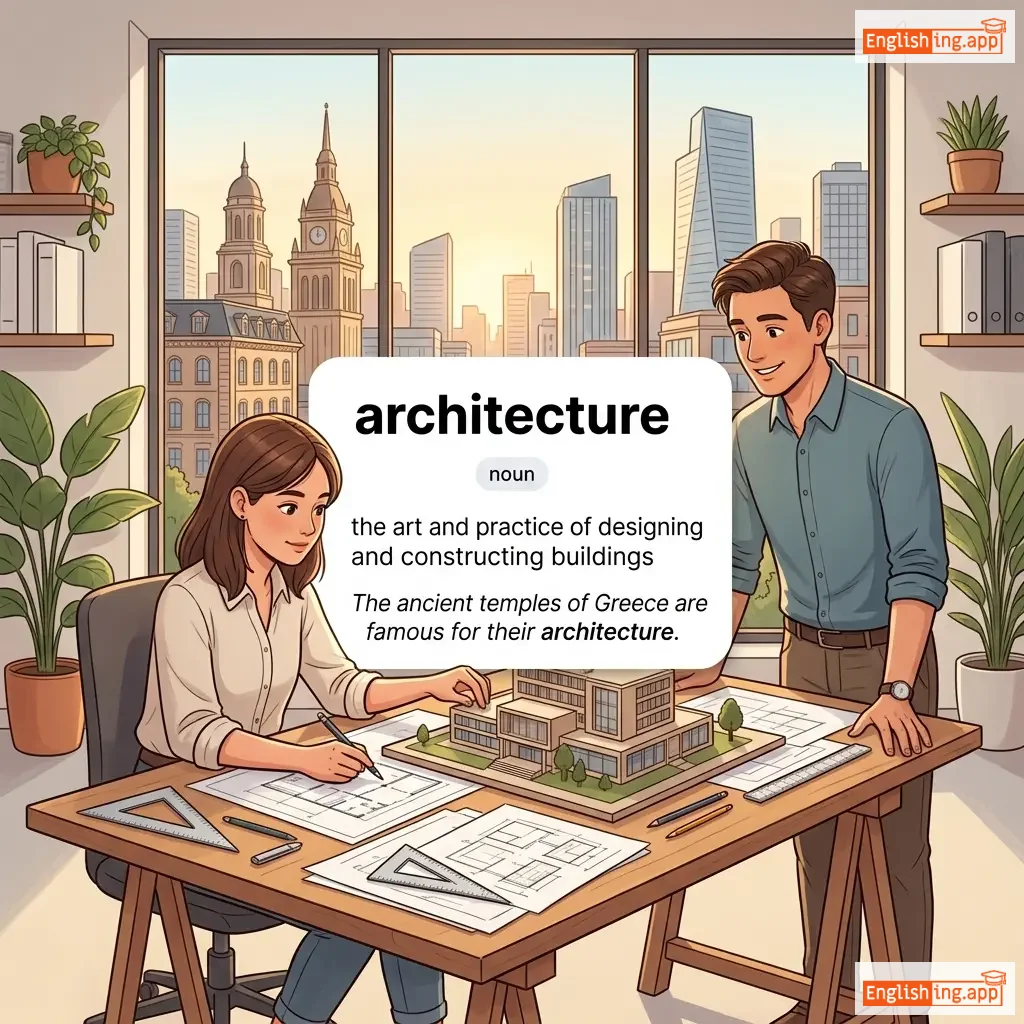
/ˈɑːkɪˌtɛktʃər/
noun
(アーキテクチャ)
••••••
|
|
建築学
kenchikugaku
••••••
|
- •••••• | - •••••• | - •••••• | - •••••• |
the art and practice of designing and constructing buildings
••••••
|
The ancient temples of Greece are famous for their architecture. |
古代ギリシャの寺院はその建築学で有名です。
Kodai Girisha no jiin wa sono kenchikugaku de yuumei desu.
••••••
|
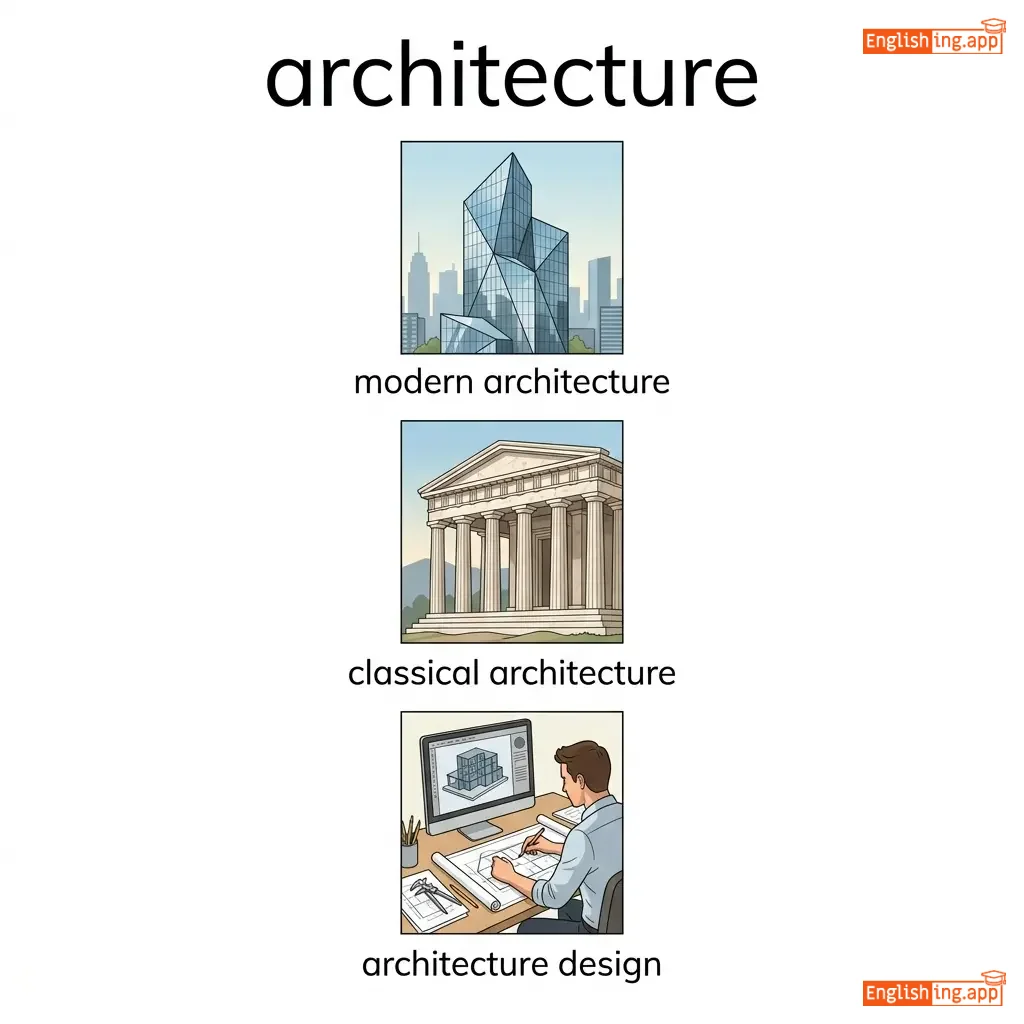
modern architecture |
a style of architecture characterized by simplicity and functional design
••••••
|
現代建築学
gendai kenchikugaku
••••••
|
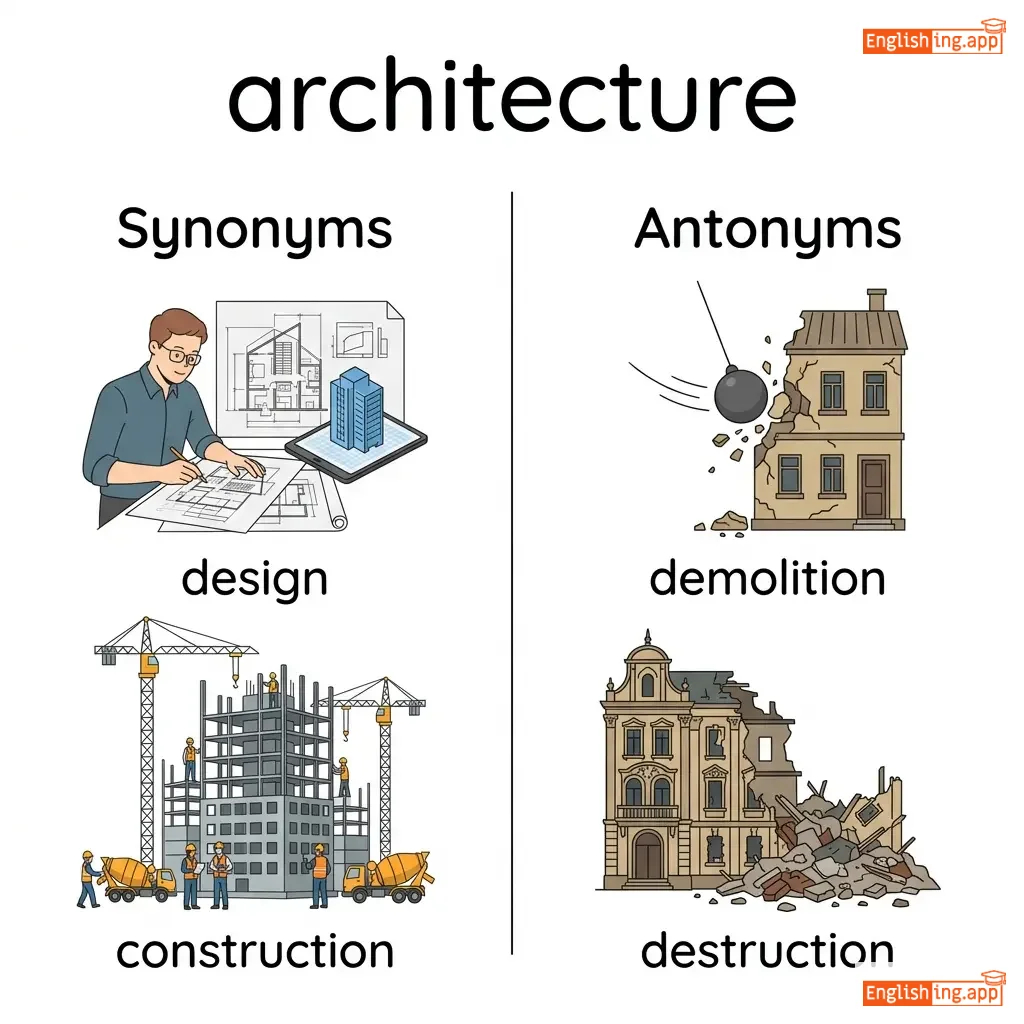
design, construction, structure, framework
••••••
|
demolition, destruction
••••••
|
modern architecture, classical architecture, architecture design, architecture firm
••••••
|
Architecture は建物をデザインすることを意味するので、建築学は建物を作る芸術です 🏛️
••••••
|
|
🗄️
••••••
|
/ˈɑːrkaɪv/
noun, verb
••••••
|
- •••••• | - •••••• |
archived
••••••
|
archived
••••••
|
archives
••••••
|
archiving
••••••
|
A collection of historical documents or records; to store or preserve information for future use.
••••••
|
The library decided to archive all the old manuscripts. |
- •••••• |
digital archive |
An electronic collection of documents or records stored for reference.
••••••
|
- •••••• |
repository, records, collection, store, vault
••••••
|
discard, destroy
••••••
|
archive documents, archive data, digital archive, archive system
••••••
|
No •••••• |
|
📍
••••••
|
/ˈeə.ri.ə/
noun
••••••
|
- •••••• | - •••••• | - •••••• | - •••••• | - •••••• | - •••••• |
a particular region or space; the extent of a surface
••••••
|
This area is known for its beautiful parks. |
- •••••• |
gray area |
an unclear or undefined situation
••••••
|
- •••••• |
region, zone, district, field, space
••••••
|
point, line, boundary
••••••
|
rural area, urban area, gray area, restricted area
••••••
|
No •••••• |
|
🏟️
••••••
|
/əˈriːnə/
noun
(アリーナ)
••••••
|
- •••••• |
アリーナ, 会場
arīna, kaijō
••••••
|
- •••••• | - •••••• | - •••••• | - •••••• |
a large area surrounded by seats for sports, entertainment, or other events
••••••
|
The basketball game will be held in the new arena downtown. |
バスケットボールの試合は市内中心部の新しいアリーナで行われます。
Basukettobōru no shiai wa shinai chūshinbu no atarashī arīna de okonawaremasu.
••••••
|
political arena |
a field or sphere of political activity or debate
••••••
|
政治の舞台
seiji no butai
••••••
|
stadium, field, coliseum, auditorium, hall
••••••
|
wilderness, outside
••••••
|
sports arena, political arena, music arena, enter the arena
••••••
|
アリーナは競技やイベントが行われる場所です。🏟️
••••••
|
|
💬
••••••
|
/ˈɑːrɡjuəbl/
adjective
(アーギュアブル)
••••••
|
- •••••• |
議論の余地がある
giron no yochi ga aru
••••••
|
- •••••• | - •••••• | - •••••• | - •••••• |
open to debate or discussion; not certain and capable of being argued for or against
••••••
|
It is arguable that technology has improved our quality of life.
イット イズ アーギュアブル ザット テクノロジー ハズ インプルーブド アワー クオリティ オブ ライフ
••••••
|
テクノロジーが私たちの生活の質を向上させたと言うのは議論の余地がある。
tekunoroji ga watashitachi no seikatsu no shitsu o koujou saseta to iu no wa giron no yochi ga aru
••••••
|
- •••••• | - •••••• | - •••••• |
debatable, disputable, questionable, contestable, arguendo
••••••
|
certain, unquestionable, indisputable
••••••
|
arguable point, arguable claim, arguable assumption, arguably true
••••••
|
Arguable = argue できる → 議論の余地がある
••••••
|
|
💬
••••••
|
/ˈɑːɡjuːəbli/
adverb
(アーギュアブリー)
••••••
|
- •••••• |
おそらく
osoraku
••••••
|
- •••••• | - •••••• | - •••••• | - •••••• |
used to say that a statement is open to argument or is considered true by many people
••••••
|
She is arguably the most talented player on the team.
シー イズ アーギュアブリー ザ モースト タレンティッド プレイヤー。
••••••
|
彼女はおそらくチームで最も才能のある選手だ。
Kanojo wa osoraku chiimu de mottomo sainou no aru senshu da
••••••
|
arguably the best
アーギュアブリー ザ ベスト
••••••
|
considered by many people to be the best, though it can be debated
••••••
|
おそらく最高
osoraku saikou
••••••
|
debatably, possibly, conceivably, plausibly, ostensibly
••••••
|
undeniably, unquestionably, certainly
••••••
|
arguably the best, arguably the most important, arguably true, arguably better
••••••
|
argue(議論)→ arguably(おそらく)
••••••
|
|
🗣️
••••••
|
/ˈɑːrɡjuː/
verb
(āgyu)
••••••
|
|
議論する
giron suru
••••••
|
argued
āgyud
••••••
|
argued
āgyud
••••••
|
argues
āgyus
••••••
|
arguing
āgyuing
••••••
|
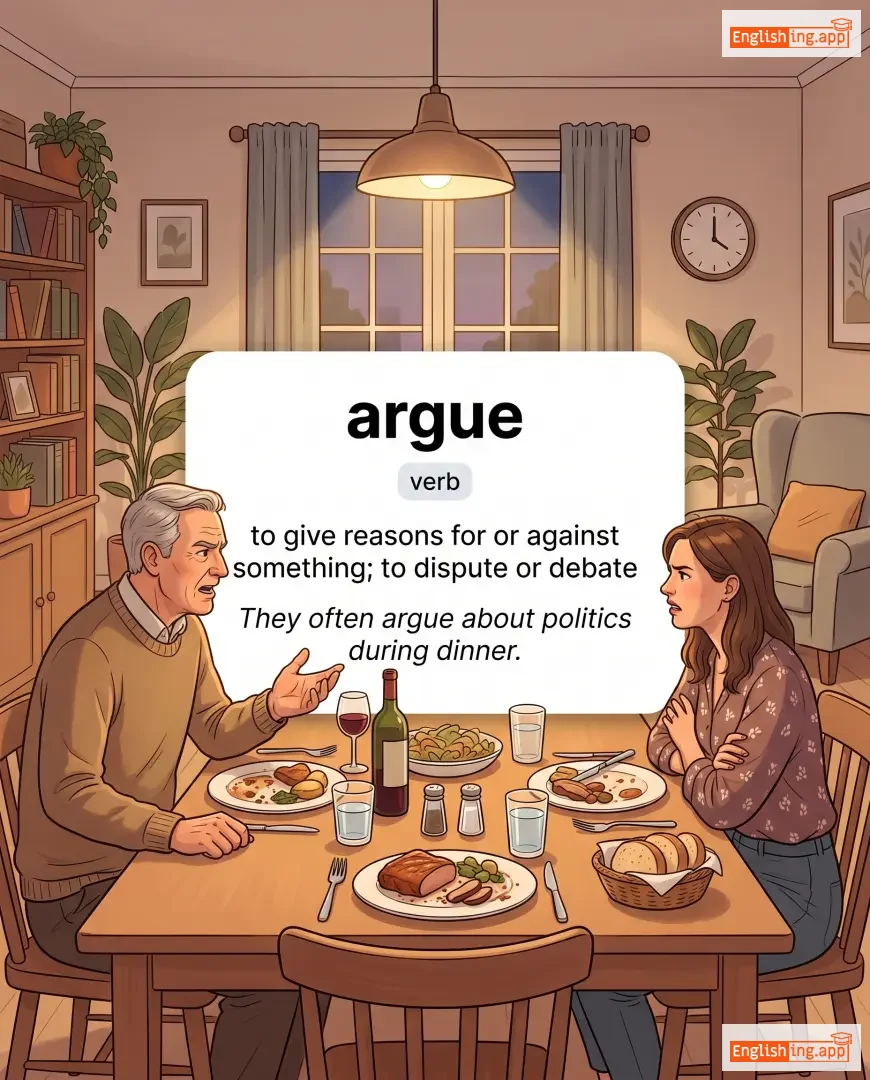
to give reasons for or against something; to dispute or debate
••••••
|
They often argue about politics during dinner.
彼らは夕食時に政治についてよく議論します。
••••••
|
彼らは夕食時に政治についてよく議論します。
Karera wa yūshoku-ji ni seiji ni tsuite yoku giron shimasu.
••••••
|
argue the toss
議論の余地を残す
••••••
|
to dispute or complain about a decision that has already been made
••••••
|
既に決まった決定に対して議論する
sudeni kimatta kettei ni taishite giron suru
••••••
|
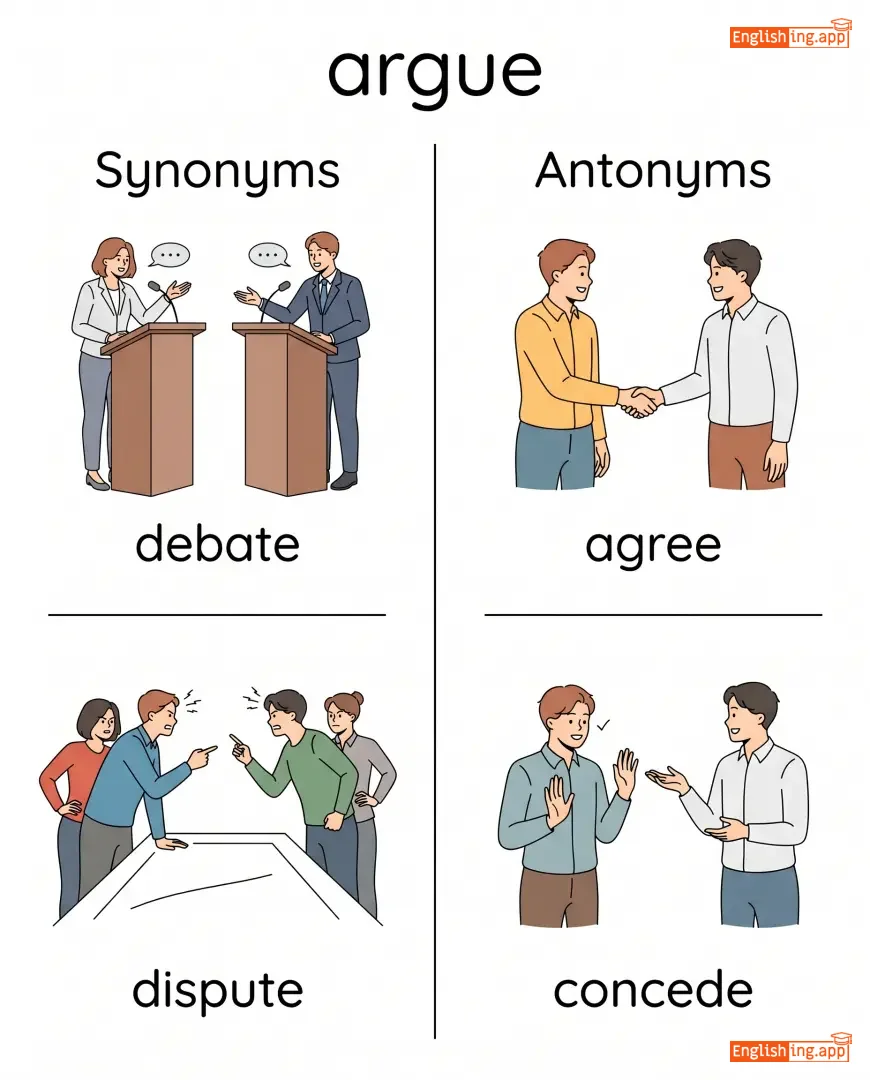
debate, dispute, contend, reason, quarrel
••••••
|
agree, concede, accept
••••••
|
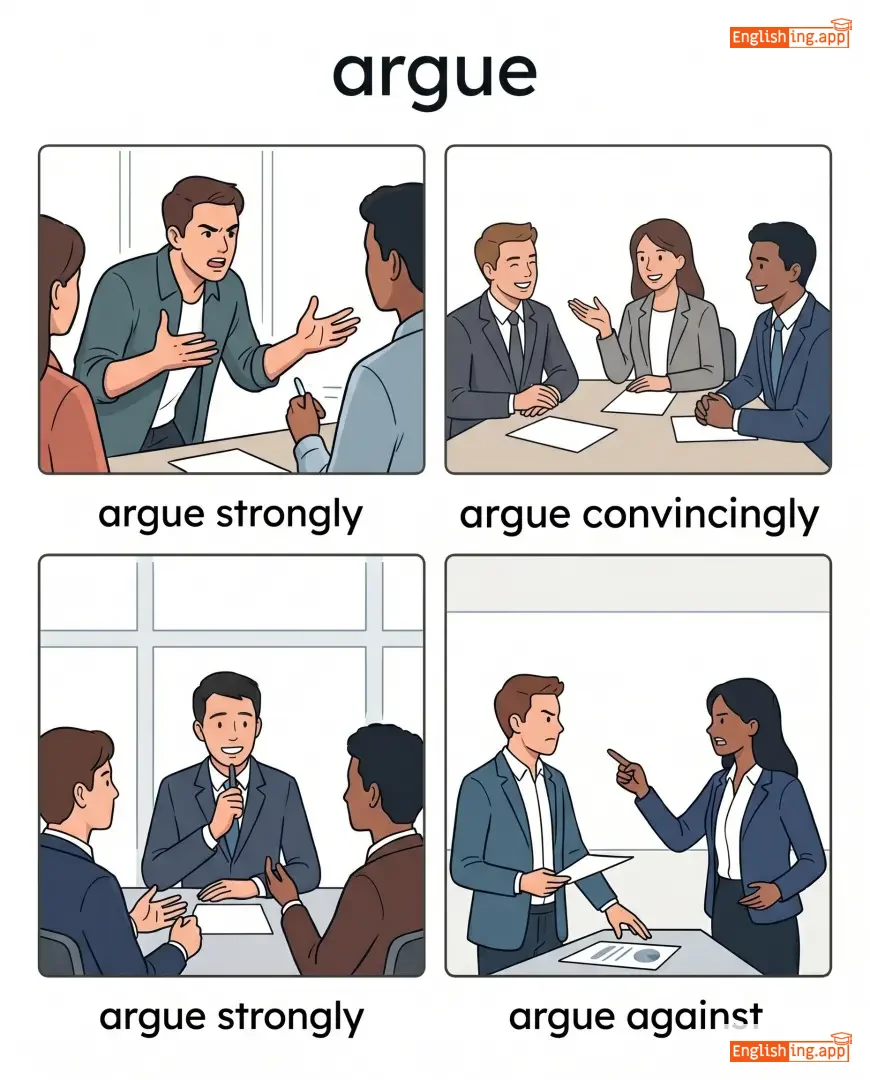
argue strongly, argue convincingly, argue against, argue about
••••••
|
議論するは、argueのように議論を交わすことから。
••••••
|
|
⚡
••••••
|
/ˈɑːrɡjumənt/
noun
(アーギュメント)
••••••
|
|
議論, 論争
giron, ronsou
••••••
|
- •••••• | - •••••• | - •••••• | - •••••• |
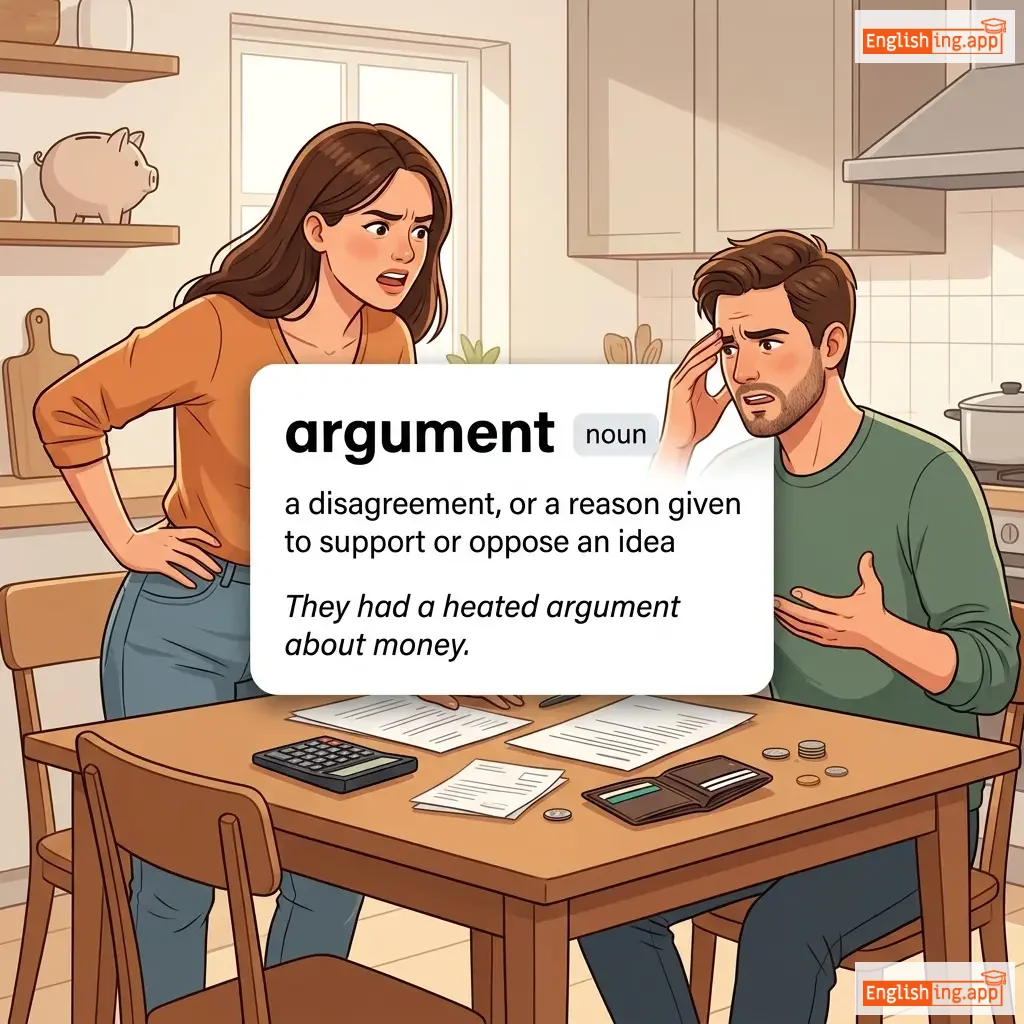
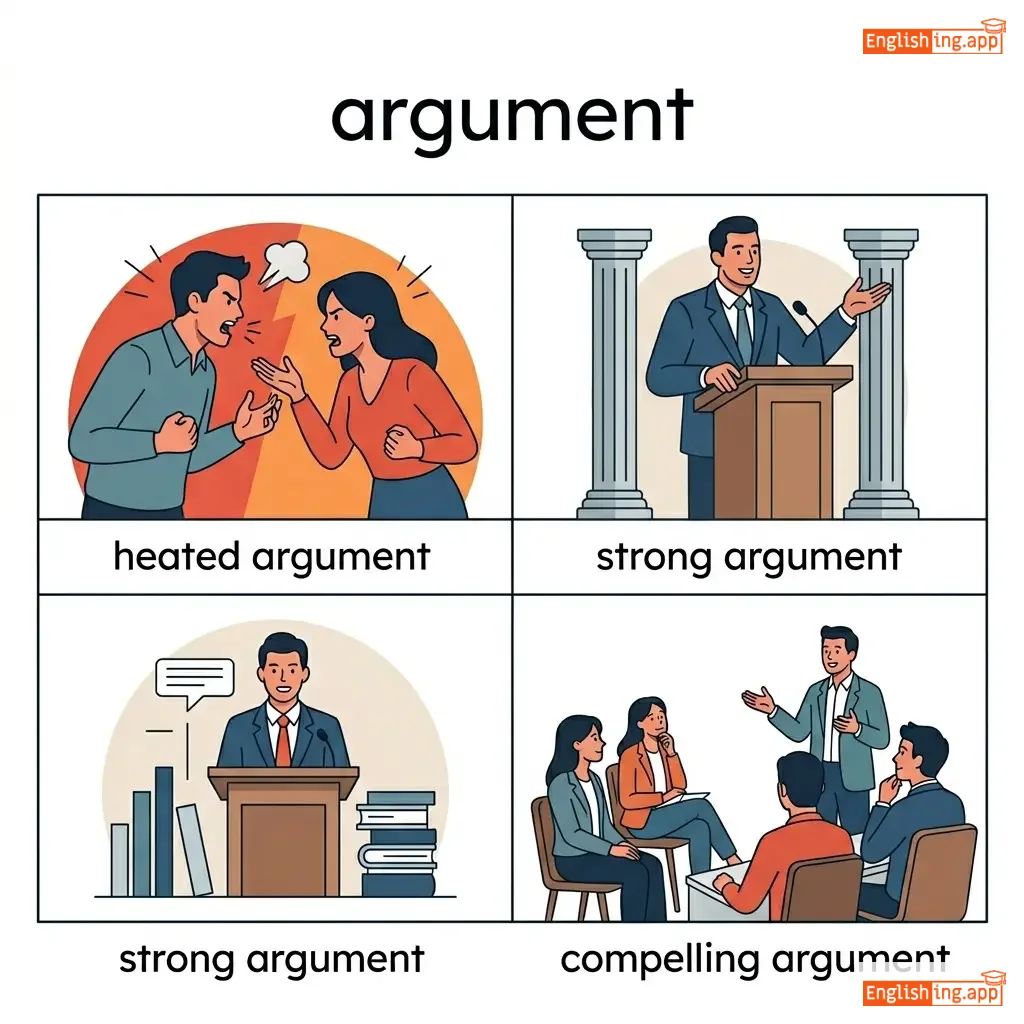
a disagreement, or a reason given to support or oppose an idea
••••••
|
They had a heated argument about money. |
彼らはお金について激しい議論をしました。
Karera wa okane ni tsuite hageshii giron o shimashita.
••••••
|
winning an argument |
successfully convincing someone in a dispute
••••••
|
議論に勝つ
giron ni katsu
••••••
|
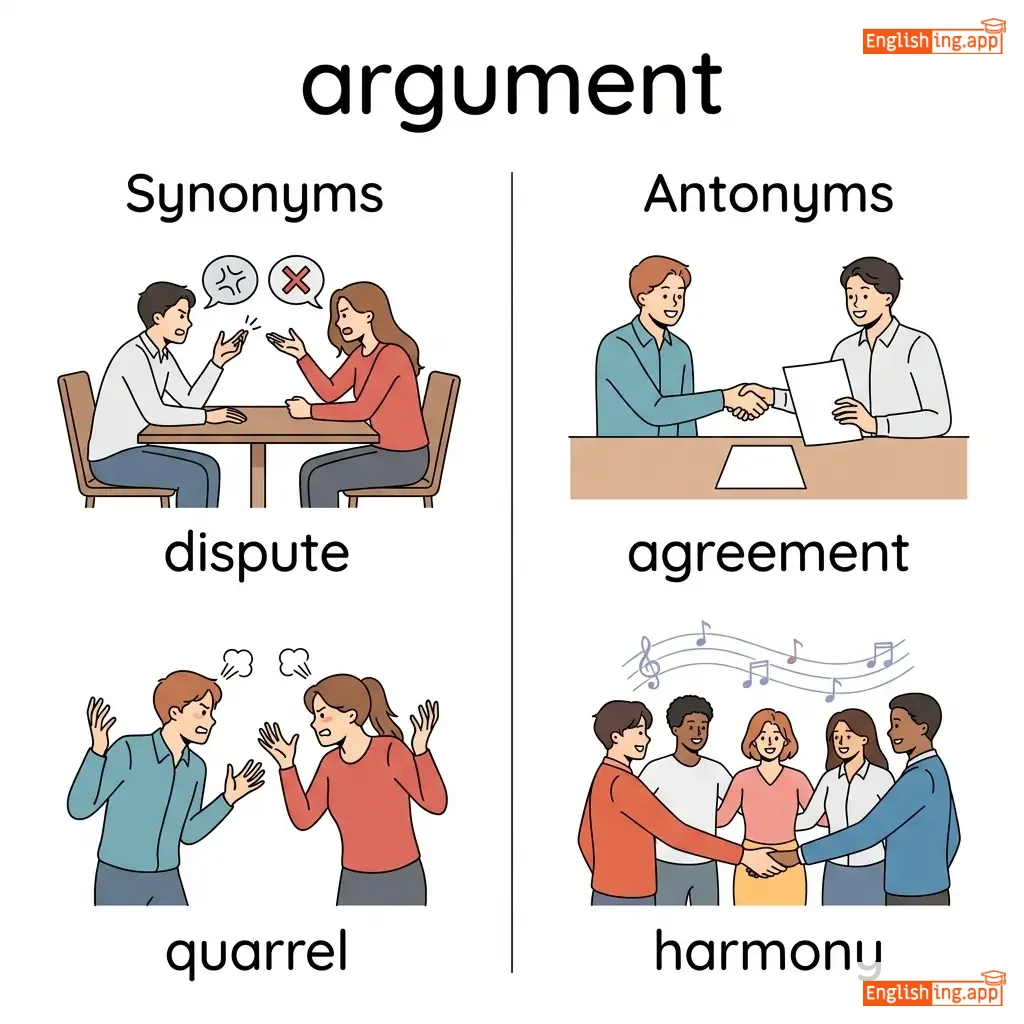
dispute, quarrel, debate, reasoning, contention
••••••
|
agreement, harmony, consensus
••••••
|
heated argument, strong argument, compelling argument, logical argument
••••••
|
Argumentは熱い議論を意味する!
••••••
|
|
🌅
••••••
|
/əˈraɪz/
verb
(アライズ)
••••••
|
- •••••• |
現れる
arawareru
••••••
|
arose
アローズ
••••••
|
arisen
アリゼン
••••••
|
arises
アライズズ
••••••
|
arising
アライズイング
••••••
|
to begin to exist or to happen
••••••
|
Problems may arise if you don't plan ahead.
問題は計画を立てないと起こることがあります。
••••••
|
計画を立てないと問題が現れることがあります。
Keikaku o tatenai to mondai ga arawareru koto ga arimasu.
••••••
|
arise from
arise from
••••••
|
to result from or be caused by
••••••
|
から現れる
kara arawareru
••••••
|
emerge, occur, appear, happen, develop
••••••
|
cease, end, stop
••••••
|
arise from, situation arises, issue arises, opportunity arises
••••••
|
太陽が現れると、日が始まる。
••••••
|
|
💪
••••••
|
/ɑːrm/
noun
(アーム)
••••••
|
- •••••• |
腕
ude
••••••
|
- •••••• | - •••••• | - •••••• | - •••••• |
the part of the body from the shoulder to the hand; also a branch or division of an organization
••••••
|
She broke her arm while playing football. |
彼女はサッカーをしているときに腕を折った。
kanojo wa sakkaa o shite iru toki ni ude o otta.
••••••
|
twist someone's arm |
to persuade or pressure someone into doing something
••••••
|
誰かの腕をねじる
dareka no ude o nejiru
••••••
|
limb, branch, extension, wing
••••••
|
leg, trunk
••••••
|
right arm, left arm, strong arm, extend an arm
••••••
|
Armは腕を意味し、スポーツにおいて腕が重要です
••••••
|
|
🔫
••••••
|
/ɑːrmd/
adjective
(アームド)
••••••
|
- •••••• |
武装した
busou shita
••••••
|
- •••••• | - •••••• | - •••••• | - •••••• |
equipped with or carrying weapons
••••••
|
The bank was robbed by armed men. |
銀行は武装した男たちに襲われた。
Ginkou wa busou shita otoko-tachi ni osowareta.
••••••
|
armed to the teeth |
heavily armed or fully equipped with weapons
••••••
|
歯まで武装した
Ha made busou shita
••••••
|
equipped, weaponized, fortified, prepared
••••••
|
unarmed, defenseless, vulnerable
••••••
|
armed forces, armed men, armed conflict, heavily armed
••••••
|
Armed は Arm + ed → 武器を持つ、武装した状態。
••••••
|
|
🪖
••••••
|
/ˈɑːrmi/
noun
(アーミー)
••••••
|
- •••••• |
軍隊
guntai
••••••
|
- •••••• | - •••••• | - •••••• | - •••••• |
a large organized military force trained for war
••••••
|
The army protected the border from attack. |
軍隊は攻撃から国境を守った。
guntai wa kougeki kara kokkyou wo mamotta.
••••••
|
join the army |
to enlist in the military service
••••••
|
軍隊に入る
guntai ni hairu
••••••
|
military, troops, forces, soldiers
••••••
|
civilians, noncombatants
••••••
|
army base, army officer, join the army, regular army
••••••
|
Army = 軍隊, 🪖 戦争に備える軍事力
••••••
|
|
🔄
••••••
|
/əˈraʊnd/
adverb, preposition
(アラウンド)
••••••
|
- •••••• |
周り
mawari
••••••
|
- •••••• | - •••••• | - •••••• | - •••••• |
situated on every side; in a circular way; approximately
••••••
|
There are many restaurants around the park. |
公園の周りに多くのレストランがあります。
Kōen no mawari ni ōku no resutoran ga arimasu.
••••••
|
turn around |
to move so as to face in the opposite direction
••••••
|
回る
mawaru
••••••
|
about, nearly, nearby, approximately, surrounding
••••••
|
far, away, beyond
••••••
|
look around, move around, all around, turn around
••••••
|
Aroundは周りを意味します - 公園の周りにレストランがあります。
••••••
|
|
🗂️
••••••
|
/əˈreɪndʒ/
verb
(アレンジ)
••••••
|
|
整理する, 手配する
seiri suru, tehai suru
••••••
|
arranged
アレンジド
••••••
|
arranged
アレンジド
••••••
|
arranges
アレンジズ
••••••
|
arranging
アレンジング
••••••
|
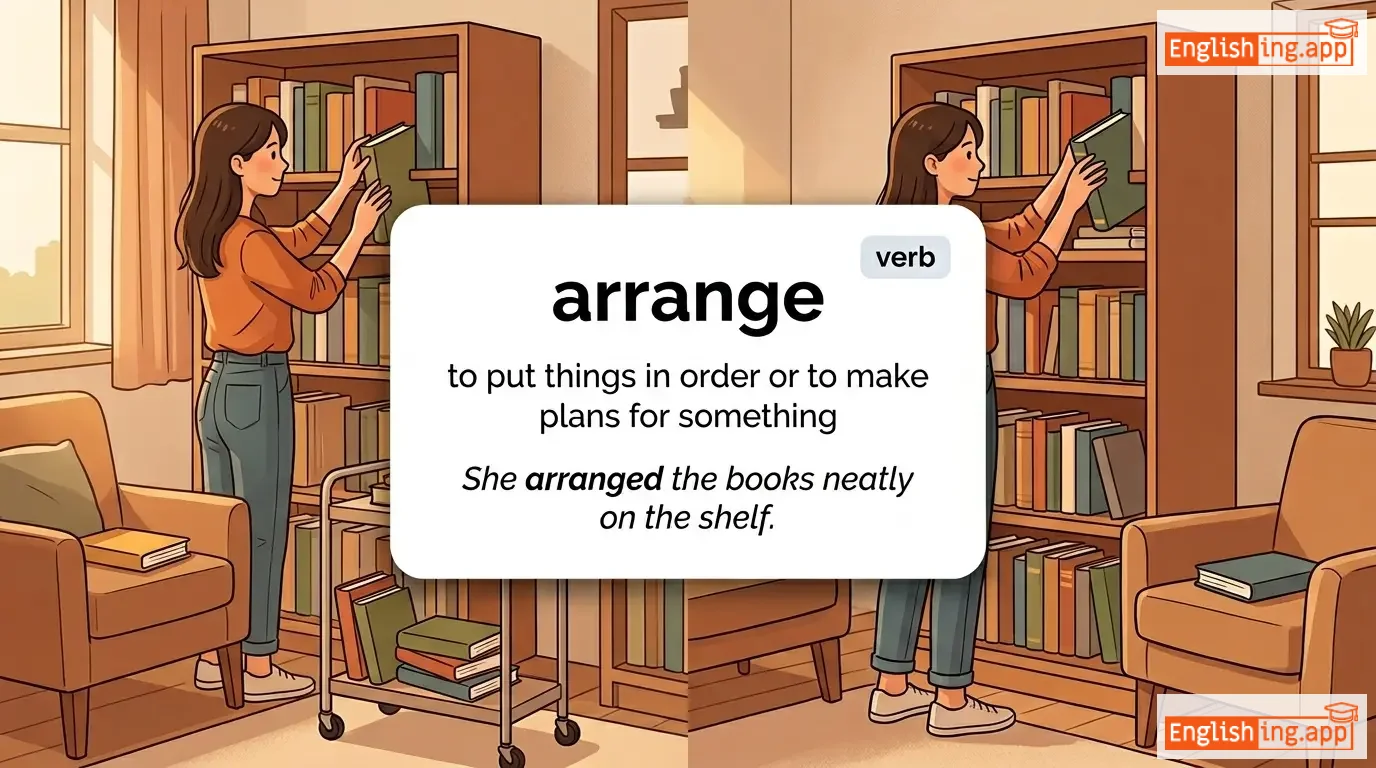
to put things in order or to make plans for something
••••••
|
She arranged the books neatly on the shelf.
彼女は本を棚にきれいに並べました。
••••••
|
彼女は本を棚にきれいに並べました。
Kanojo wa hon o tana ni kirei ni narabemashita.
••••••
|
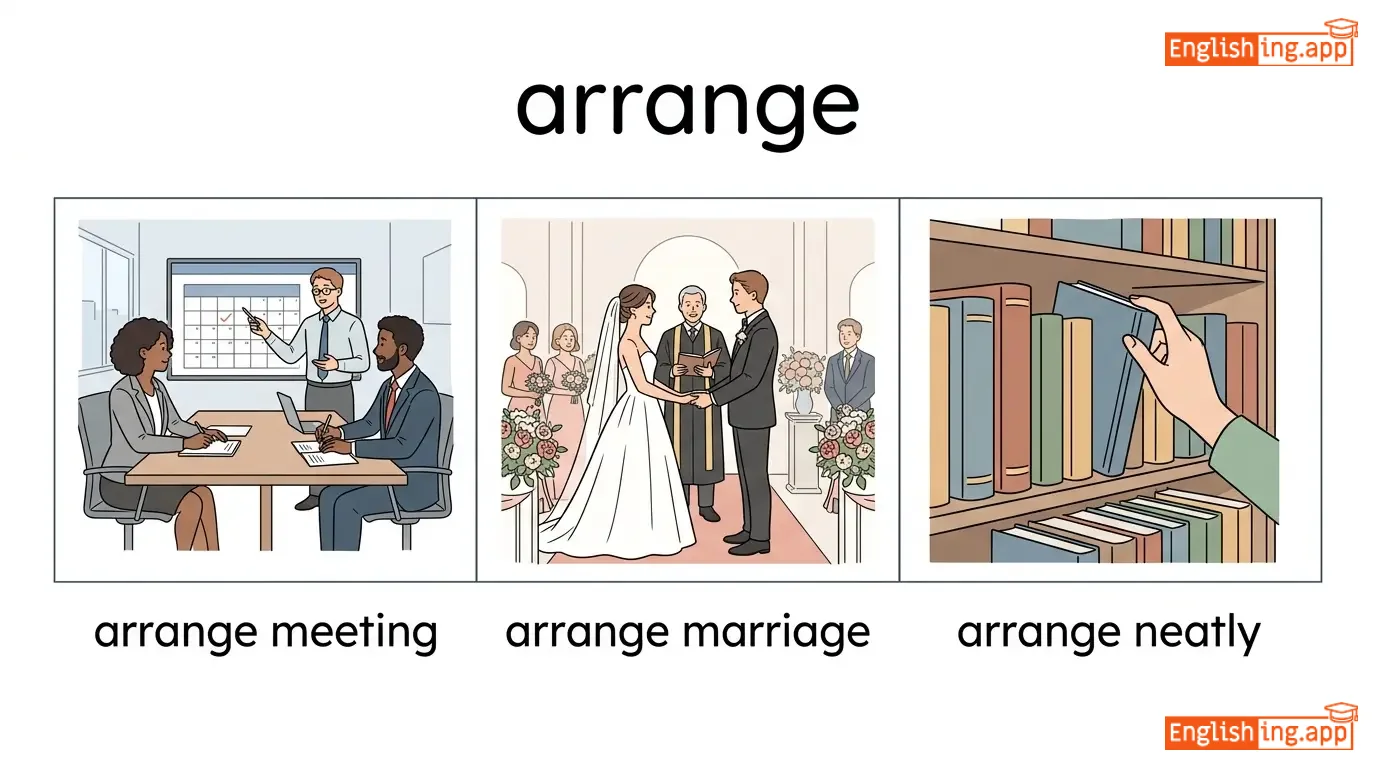
arrange a meeting
会議をアレンジする
••••••
|
to plan and organize a meeting
••••••
|
会議を手配する
Kaigi o tehai suru
••••••
|
organize, plan, order, schedule, sort
••••••
|
disorganize, disorder
••••••
|
arrange meeting, arrange marriage, arrange neatly, arrange according to
••••••
|
Arrange は整理すること — 結婚式をアレンジするのと同じように、すべて整える。
••••••
|
|
📑
••••••
|
/əˈreɪndʒmənt/
noun
(アレンジメント)
••••••
|
|
取り決め, 配置
torikime, haichi
••••••
|
- •••••• | - •••••• | - •••••• | - •••••• |
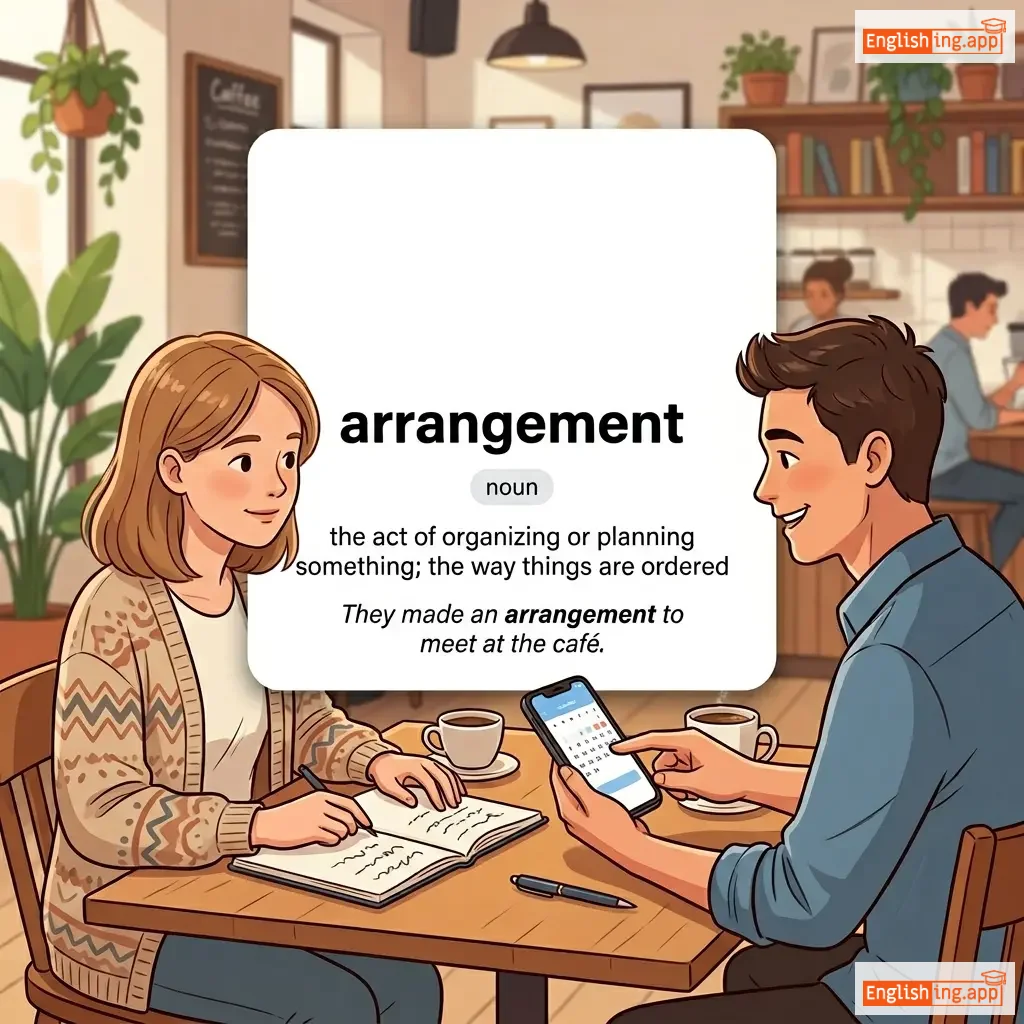
the act of organizing or planning something; the way things are ordered
••••••
|
They made an arrangement to meet at the café. |
彼らはカフェで会うために取り決めをした。
Karera wa kafe de au tame ni torikime o shita.
••••••
|
come to an arrangement |
to reach an agreement
••••••
|
取り決めに達する
torikime ni tassuru
••••••
|
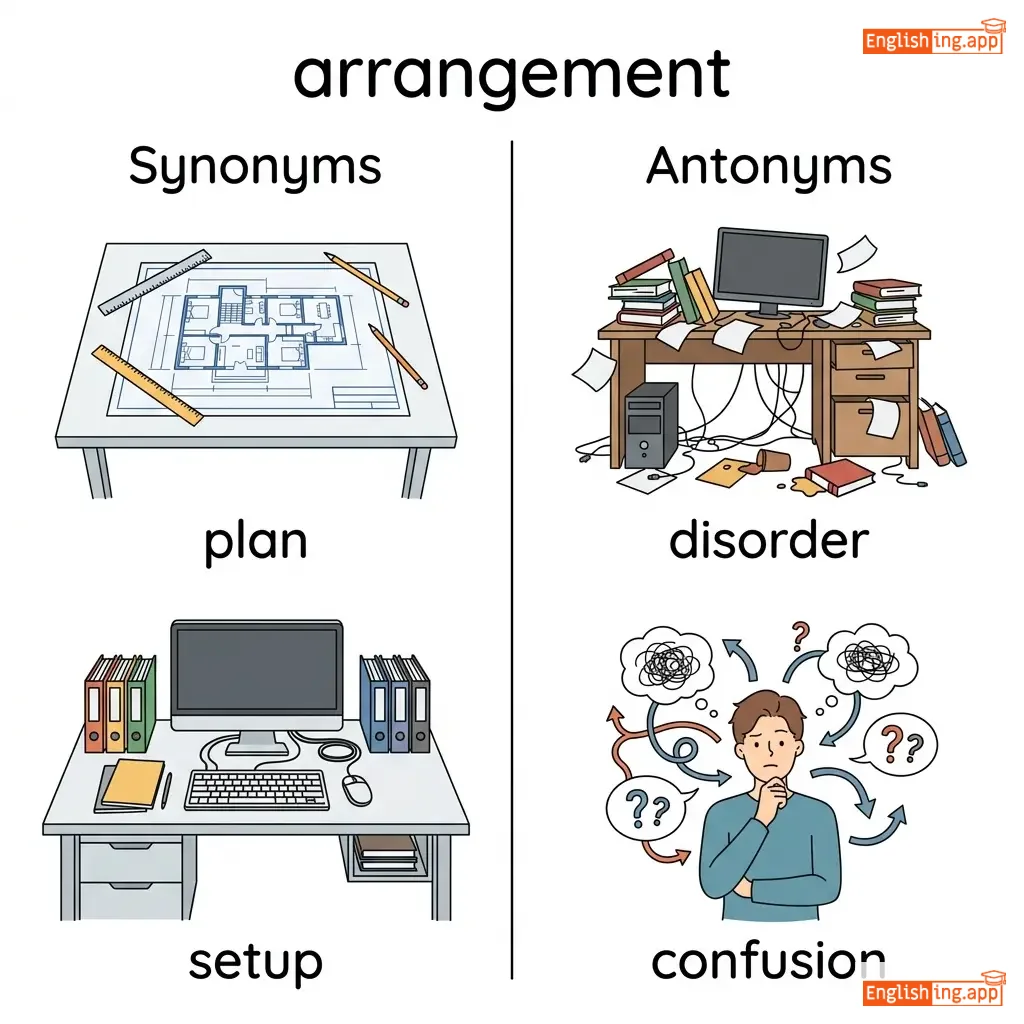
plan, setup, agreement, organization, order
••••••
|
disorder, confusion
••••••
|
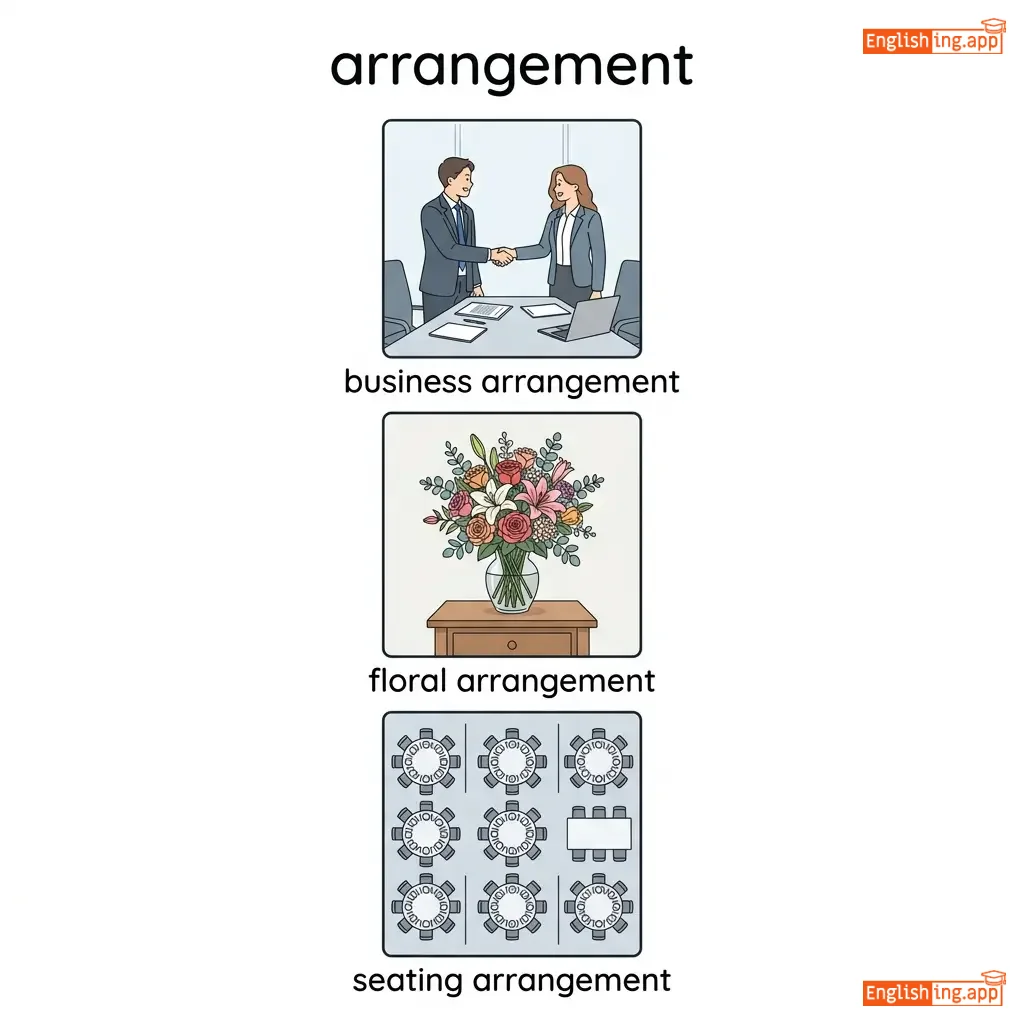
business arrangement, floral arrangement, seating arrangement, financial arrangement
••••••
|
Arrangement は取り決め、花のアレンジメントのように物事を配置することです。
••••••
|
|
🌈
••••••
|
/əˈreɪ/
noun
(are)
••••••
|
- •••••• |
配列、展示
hairetsu, tenji
••••••
|
- •••••• | - •••••• | - •••••• | - •••••• |
an impressive display or arrangement of things
••••••
|
The shop displayed an array of colorful dresses.
ショップはカラフルなドレスの配列を展示しました。
••••••
|
ショップはカラフルなドレスの印象的な展示をしました。
Shoppu wa karafuru na doresu no inshō-teki na tenji o shimashita.
••••••
|
an array of
配列の
••••••
|
a large number or variety of something
••••••
|
一連の
ichiren no
••••••
|
assortment, collection, range, display, lineup
••••••
|
scarcity, lack
••••••
|
array of options, array of stars, wide array, full array
••••••
|
Array は整然と並べられた列を意味します — コンピュータでは、データは配列に整理されます。
••••••
|
|
🚓
••••••
|
/əˈrɛst/
verb
(アレスト)
••••••
|
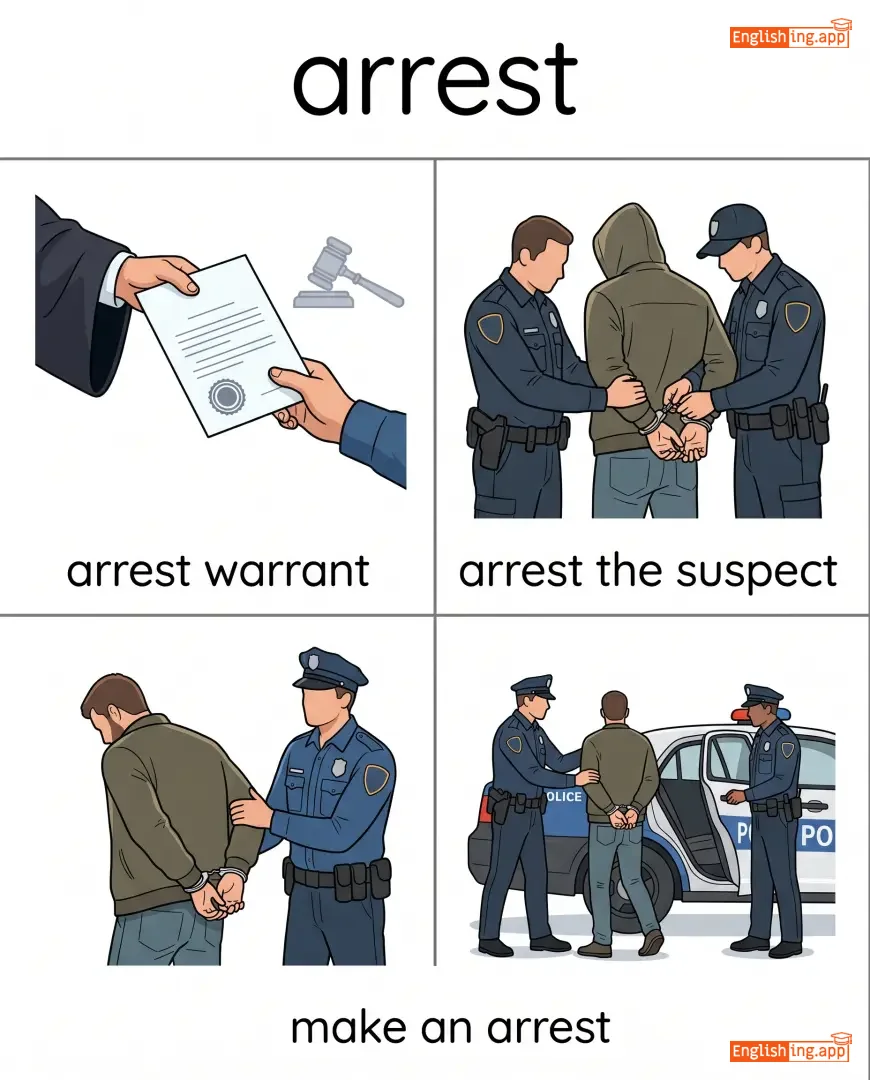
|
逮捕する
taiho suru
••••••
|
arrested
アレストド
••••••
|
arrested
アレストド
••••••
|
arrests
アレストス
••••••
|
arresting
アレスティング
••••••
|
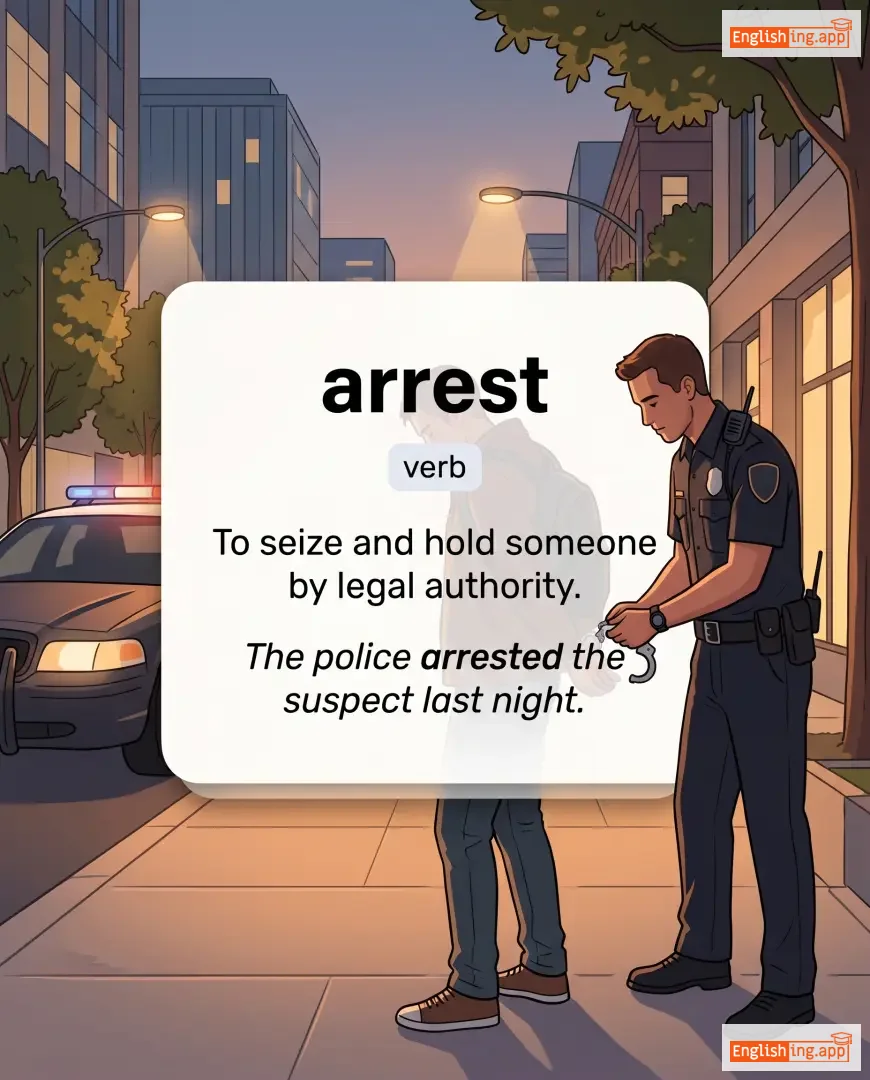
To seize and hold someone by legal authority.
••••••
|
The police arrested the suspect last night.
警察は昨晩、容疑者を逮捕した。
••••••
|
警察は昨晩、容疑者を逮捕した。
Keisatsu wa sakuban, yōgisha o taiho shita.
••••••
|
under arrest
逮捕中
••••••
|
In the custody of the police.
••••••
|
逮捕中
taiho-chū
••••••
|
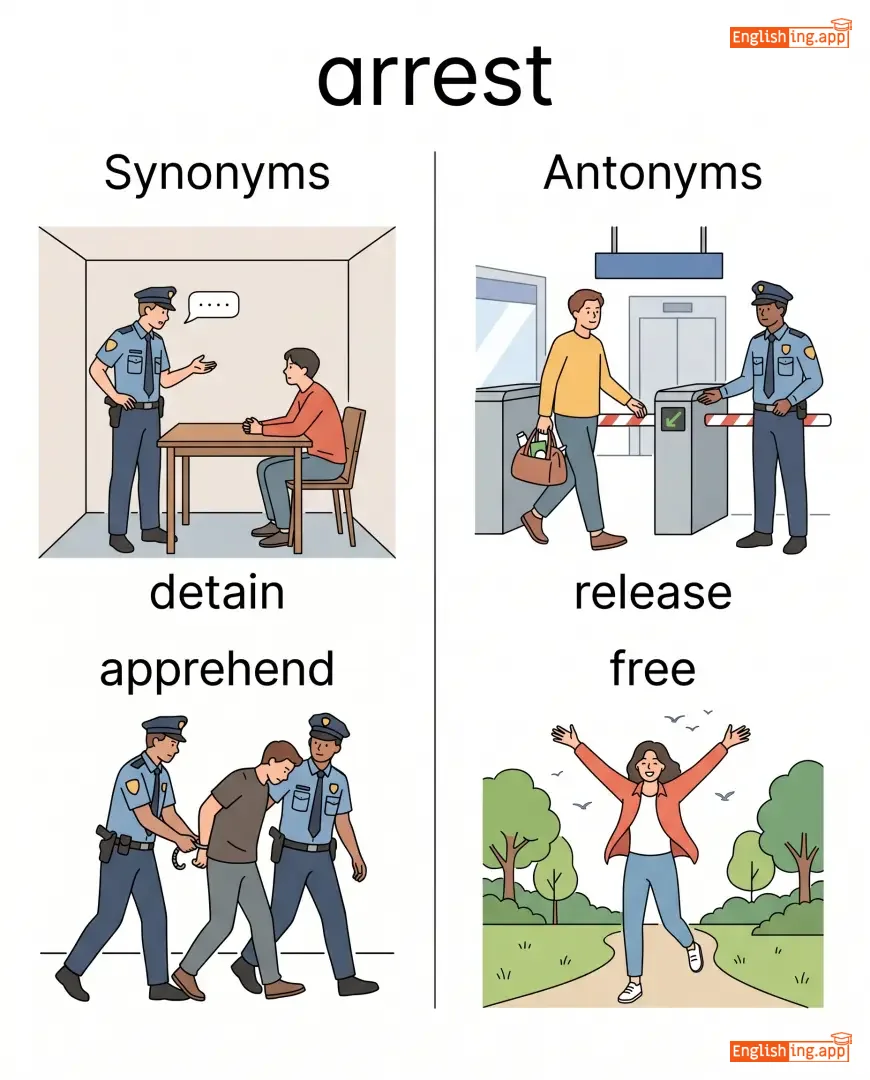
detain, apprehend, capture, seize, stop
••••••
|
release, free, liberate
••••••
|
arrest warrant, arrest the suspect, make an arrest
••••••
|
Arrest は Rest できない—警察があなたを逮捕するから。
••••••
|
|
🚉
••••••
|
/əˈraɪvəl/
noun
(アリバル)
••••••
|
- •••••• |
到着
touchaku
••••••
|
- •••••• | - •••••• | - •••••• | - •••••• |
The act of coming to a place, especially at the end of a journey.
••••••
|
The train's arrival was delayed by two hours. |
電車の到着は2時間遅れました。
Densha no touchaku wa 2 jikan okuremashita.
••••••
|
late arrival |
Someone or something arriving later than expected.
••••••
|
遅れた到着
okureta touchaku
••••••
|
appearance, coming, entry, advent, approach
••••••
|
departure, exit
••••••
|
arrival time, late arrival, arrival hall, flight arrival
••••••
|
到着は'Arrive'の意味 — 電車の'到着'を思い出して。
••••••
|
|
🛬
••••••
|
/əˈraɪv/
verb
(アラヴ)
••••••
|

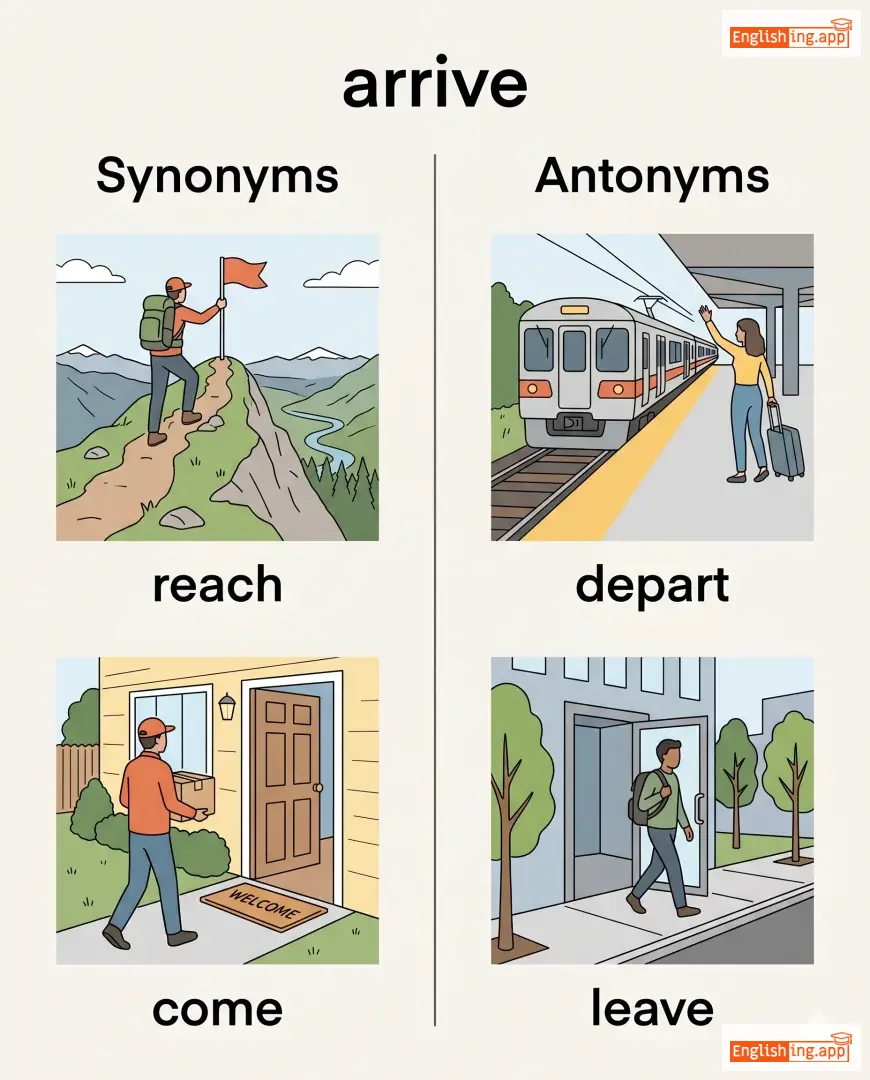
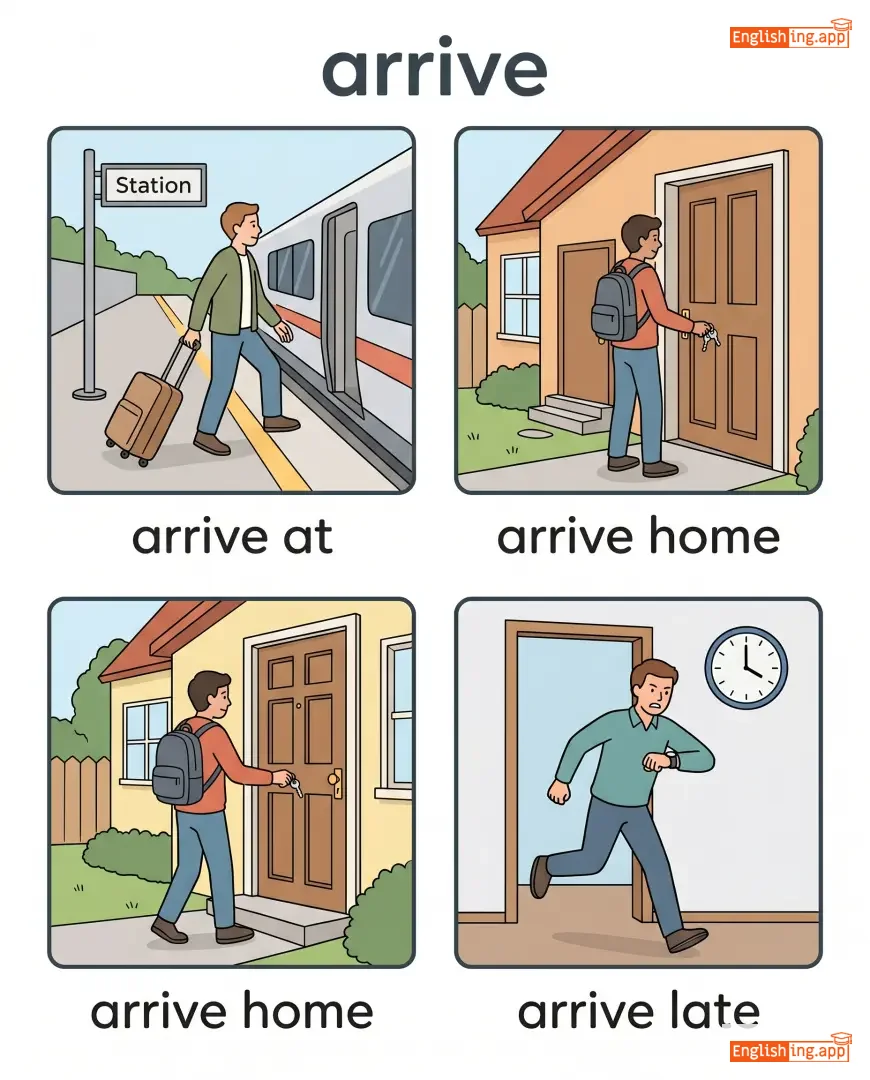
|
到着する
tōchaku suru
••••••
|
arrived
アラヴド
••••••
|
arrived
アラヴド
••••••
|
arrives
アラヴス
••••••
|
arriving
アラヴィング
••••••
|
to reach a place, especially at the end of a journey
••••••
|
She will arrive at the airport in the evening.
彼女は夕方に空港に到着するでしょう。
••••••
|
彼女は夕方に空港に到着するでしょう。
Kanojo wa yūgata ni kūkō ni tōchaku suru deshō.
••••••
|
arrive at a decision
決定に至る
••••••
|
to reach a conclusion after consideration
••••••
|
決定に至る
Kettei ni itaru
••••••
|
reach, come, appear, show up, land
••••••
|
depart, leave, go
••••••
|
arrive at, arrive home, arrive late, arrive early
••••••
|
到着はまるで飛行機が空港に到着するようなものです。
••••••
|
|
👑
••••••
|
/ˈærəɡənt/
adjective
••••••
|
- •••••• | - •••••• | - •••••• | - •••••• | - •••••• | - •••••• |
Having an exaggerated sense of one's own importance or abilities.
••••••
|
The arrogant manager dismissed the workers' complaints. |
- •••••• |
arrogant attitude |
A proud, condescending behavior or mindset.
••••••
|
- •••••• |
conceited, haughty, proud, self-important, overbearing
••••••
|
humble, modest
••••••
|
arrogant person, arrogant behavior, arrogant attitude
••••••
|
No •••••• |
|
✋
••••••
|
/ˈærəˌɡeɪt/
verb
(エロゲート)
••••••
|
- •••••• |
不当な要求
futou na youkyuu
••••••
|
arrogated
エロゲイテッド
••••••
|
arrogated
エロゲイテッド
••••••
|
arrogates
エロゲイツ
••••••
|
arrogating
エロゲイティング
••••••
|
To claim or take something without justification.
••••••
|
The dictator arrogated all powers to himself.
独裁者はすべての権力を自分のものにした。
••••••
|
独裁者は不当な要求で全ての権力を自分のものにした。
Dokusai-sha wa futou na youkyuu de subete no kenryoku o jibun no mono ni shita.
••••••
|
- •••••• | - •••••• | - •••••• |
seize, assume, appropriate, usurp
••••••
|
relinquish, surrender
••••••
|
arrogate power, arrogate authority, arrogate rights
••••••
|
Arrogateは 'Arrow gate' のように、門を不当な方法で占有することです。
••••••
|
|
🏹
••••••
|
/ˈæroʊ/
noun
(アロー)
••••••
|
- •••••• |
矢
ya
••••••
|
- •••••• | - •••••• | - •••••• | - •••••• |
a thin, straight weapon with a pointed tip, shot from a bow
••••••
|
The hunter shot an arrow at the target. |
猟師はターゲットに矢を射った。
Ryoushi wa tāgetto ni ya o itta.
••••••
|
arrow of time |
the concept that time moves in only one direction, from past to future
••••••
|
時間の矢
jikan no ya
••••••
|
dart, shaft, bolt, missile, projectile
••••••
|
none, null
••••••
|
shoot an arrow, bow and arrow, arrow flight, arrow tip
••••••
|
矢はarrowを意味します — ヒーローが弓で矢を放つことを覚えておいてください 🏹
••••••
|
|
🎨
••••••
|
/ɑːrt/
noun
(アート)
••••••
|
- •••••• |
芸術
geijutsu
••••••
|
- •••••• | - •••••• | - •••••• | - •••••• |
the expression or application of human creative skill and imagination
••••••
|
She studied art at the university. |
彼女は大学で芸術を学びました。
Kanojo wa daigaku de geijutsu wo manabimashita.
••••••
|
the art of |
the skill in doing something well
••••••
|
〜の技術
〜no gijutsu
••••••
|
craft, creativity, skill, painting, expression
••••••
|
science, nature, reality
••••••
|
modern art, fine art, art gallery, art history
••••••
|
Art は 🎨 - 芸術 (geijutsu) は人間の創造力を表現するものです。
••••••
|
|
🗣️
••••••
|
/ɑːrˈtɪkjʊlət/
verb/adjective
••••••
|
- •••••• | - •••••• |
articulated
••••••
|
articulated
••••••
|
articulates
••••••
|
articulating
••••••
|
to express thoughts or ideas clearly; having the ability to speak fluently and clearly
••••••
|
She was able to articulate her ideas during the meeting. |
- •••••• |
articulate a vision |
to clearly express or describe a goal or plan
••••••
|
- •••••• |
express, convey, enunciate, pronounce, clarify
••••••
|
mumble, mutter, unclear
••••••
|
articulate clearly, articulate ideas, articulate words, articulate speech
••••••
|
No •••••• |
|
🤖
••••••
|
/ˌɑːrtɪˈfɪʃəl/
adjective
(ārtifisharu)
••••••
|
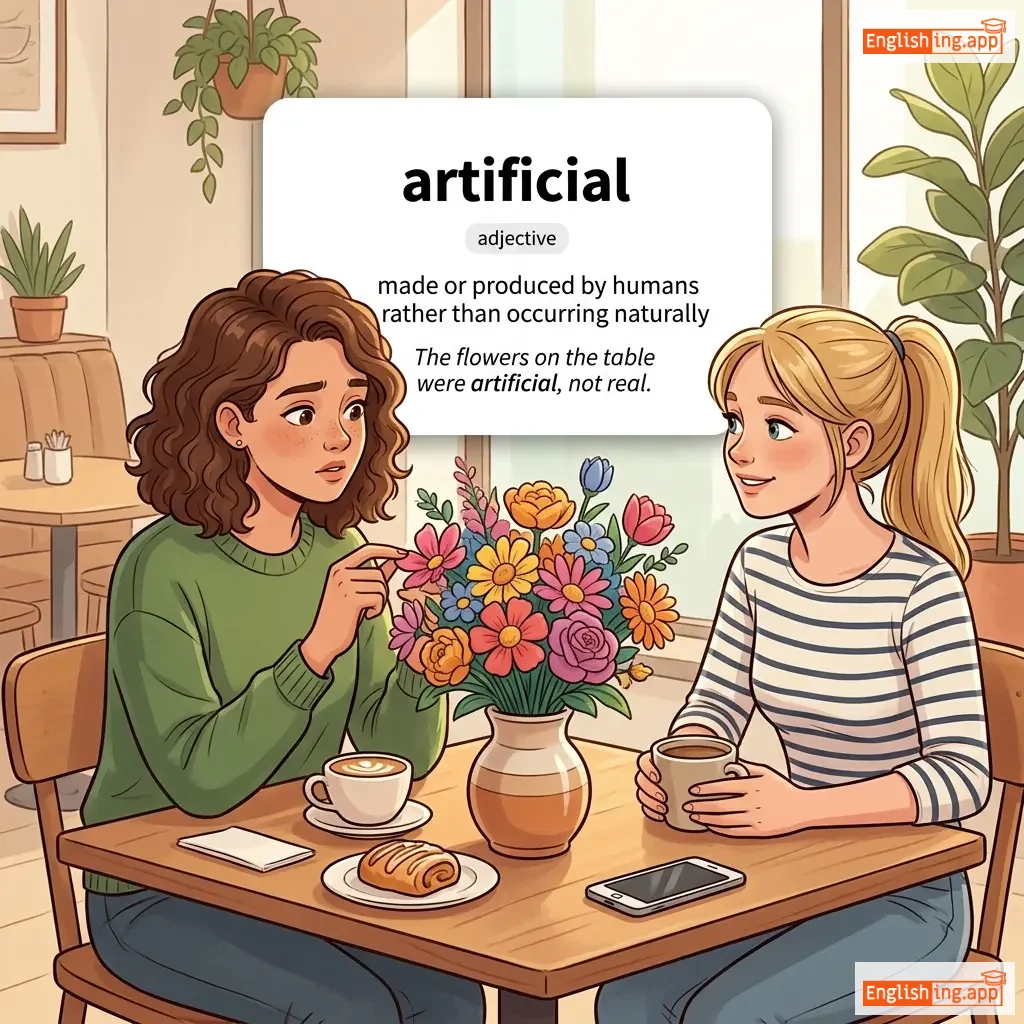
|
人工
jinkō
••••••
|
- •••••• | - •••••• | - •••••• | - •••••• |
made or produced by humans rather than occurring naturally
••••••
|
The flowers on the table were artificial, not real.
テーブルの上の花は人工のもので、本物ではありません。
••••••
|
テーブルの上の花は人工のもので、本物ではありません。
Tēburu no ue no hana wa jinkō no mono de, honmono de wa arimasen.
••••••
|
artificial intelligence
人工知能
••••••
|
the simulation of human intelligence by machines
••••••
|
人工知能
jinkō chinō
••••••
|
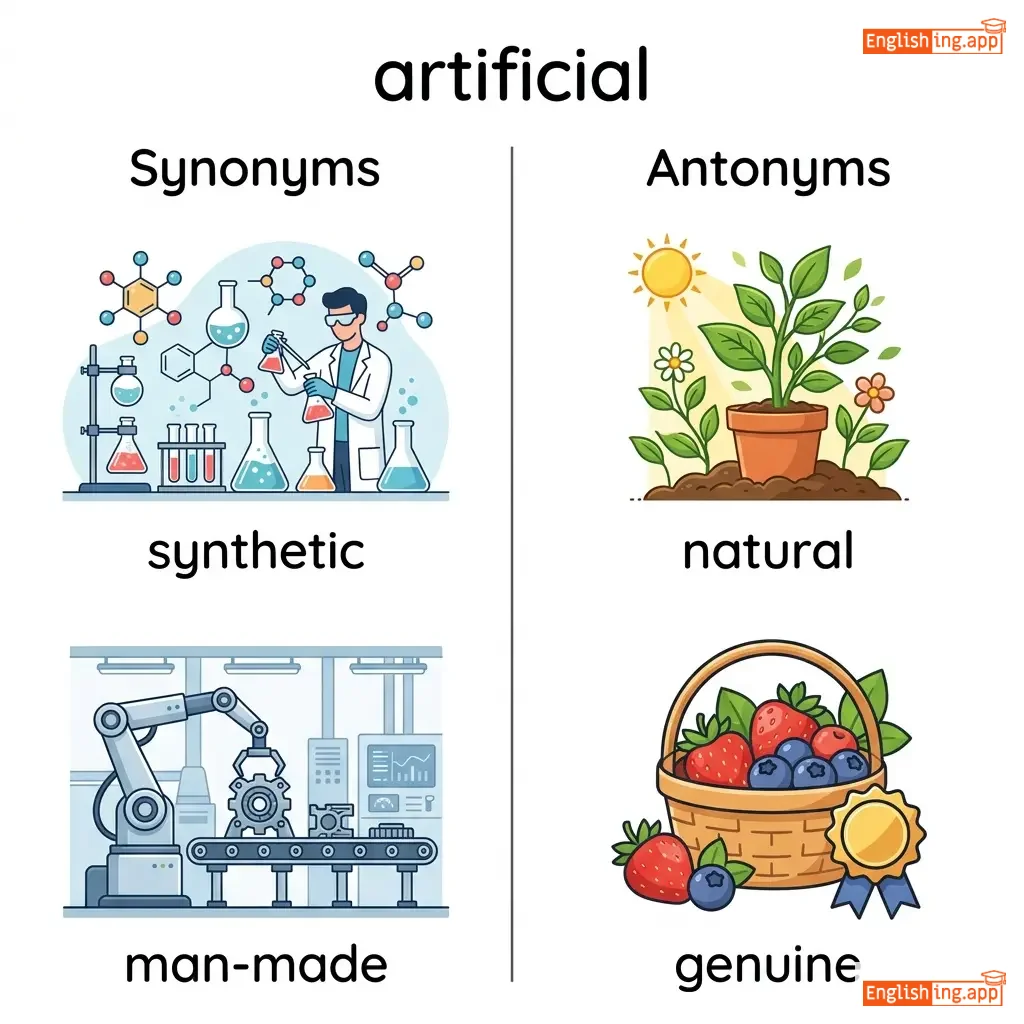
synthetic, man-made, fake, unnatural, imitation
••••••
|
natural, genuine, real
••••••
|
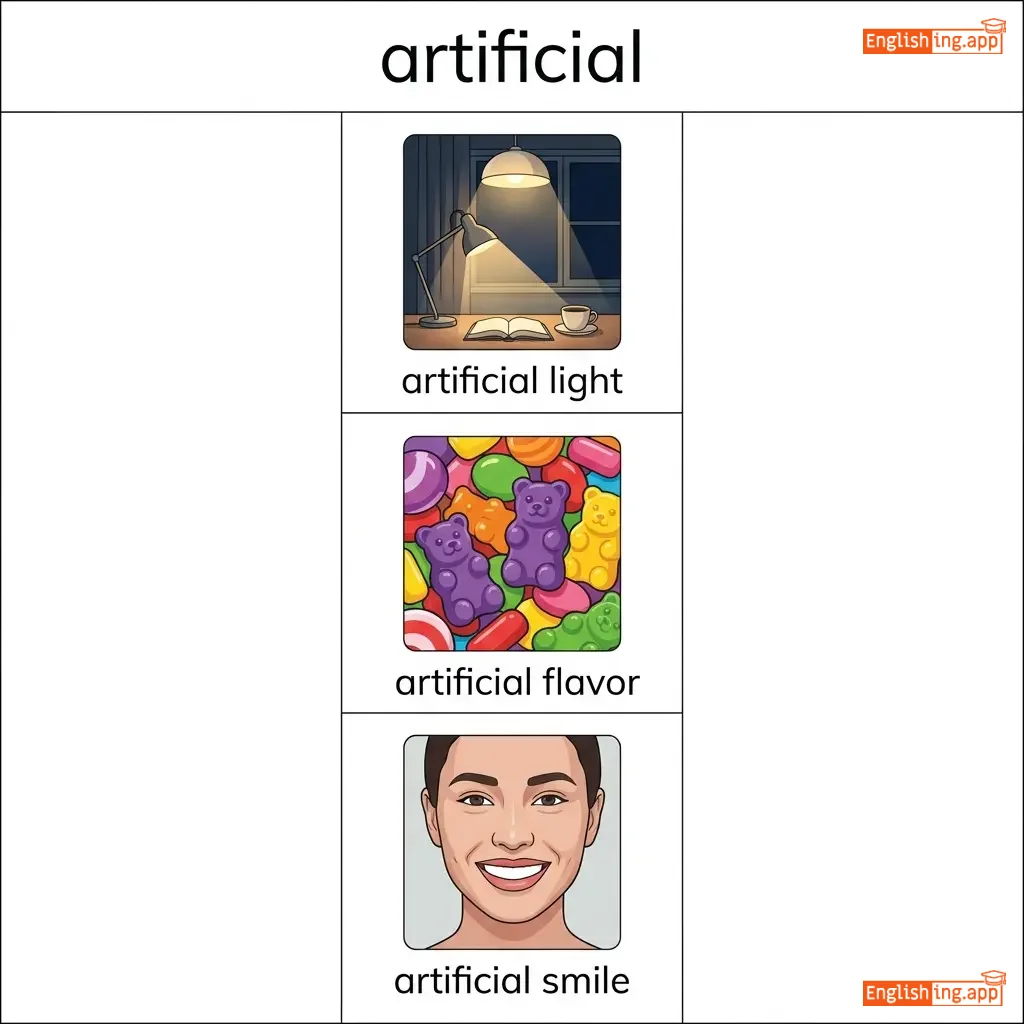
artificial light, artificial flavor, artificial smile, artificial limb
••••••
|
Artificial = 人工, '人間が作ったので、Artificial'
••••••
|
|
👩🎨
••••••
|
/ˈɑːrtɪst/
noun
(アーティスト)
••••••
|
- •••••• |
アーティスト
ātisuto
••••••
|
- •••••• | - •••••• | - •••••• | - •••••• |
a person who creates art, especially paintings or drawings
••••••
|
The artist painted a beautiful landscape.
アーティストは美しい風景を描きました。
••••••
|
アーティストは美しい風景を描きました。
Ātisuto wa utsukushī fūkei o kakimashita.
••••••
|
con artist
コン・アーティスト
••••••
|
a person who deceives others by gaining their trust
••••••
|
詐欺師
sagishi
••••••
|
painter, creator, illustrator, designer, performer
••••••
|
amateur, layman
••••••
|
famous artist, talented artist, street artist, young artist
••••••
|
Artist 👩🎨 はアーティスト - アーティストは美しい絵を描く。けど、Con artist は詐欺師。
••••••
|
|
🎭
••••••
|
/ɑːrˈtɪstɪk/
adjective
(アーティスティック)
••••••
|
- •••••• |
芸術的
geijutsuteki
••••••
|
- •••••• | - •••••• | - •••••• | - •••••• |
having or revealing natural creative skill
••••••
|
She has an artistic sense of design.
彼女はデザインに対するアーティスティックな感覚を持っています。
••••••
|
彼女はデザインに対するアーティスティックな感覚を持っています。
Kanojo wa dezain ni taisuru geijutsuteki na kankaku wo motteimasu.
••••••
|
- •••••• | - •••••• | - •••••• |
creative, imaginative, aesthetic, inventive, expressive
••••••
|
unimaginative, uncreative
••••••
|
artistic talent, artistic ability, artistic expression, artistic design
••••••
|
芸術的 🎭 は芸術的な意味です - アートのような創造的なデザイン。
••••••
|
|
🎨
••••••
|
/ˈɑːrtwɜːrk/
noun
(アートワーク)
••••••
|
- •••••• |
アート作品
aato sakuhin
••••••
|
- •••••• | - •••••• | - •••••• | - •••••• |
a piece of art, such as a painting, sculpture, or drawing
••••••
|
The gallery displayed an impressive artwork by a local artist. |
ギャラリーは地元のアーティストによる印象的なアート作品を展示しました。
Gyararii wa jimoto no aatisuto ni yoru inshouteki na aato sakuhin wo tenji shimashita.
••••••
|
- •••••• | - •••••• | - •••••• |
painting, piece, creation, masterpiece
••••••
|
nothing, void
••••••
|
create artwork, display artwork, beautiful artwork
••••••
|
アート作品 (aato sakuhin) があなたを創作に駆り立てます!
••••••
|
|
🔄
••••••
|
/æz/
conjunction, adverb, preposition
(アズ)
••••••
|
- •••••• |
として
toshite
••••••
|
- •••••• | - •••••• | - •••••• | - •••••• |
used to compare, to indicate the role or function of something, or to introduce clauses of time or reason
••••••
|
She works as a teacher. |
彼女は教師として働いています。
Kanojo wa kyoushi toshite hataraiteimasu.
••••••
|
as soon as |
immediately when
••••••
|
すぐに
sugu ni
••••••
|
like, while, since, because, when
••••••
|
unlike, different
••••••
|
as well, as soon as, as long as, as if
••••••
|
ASは'として'を意味します — 'As a teacher'のように = 教師として
••••••
|
|
⛰️
••••••
|
/əˈsɛnd/
verb
(アセンド)
••••••
|
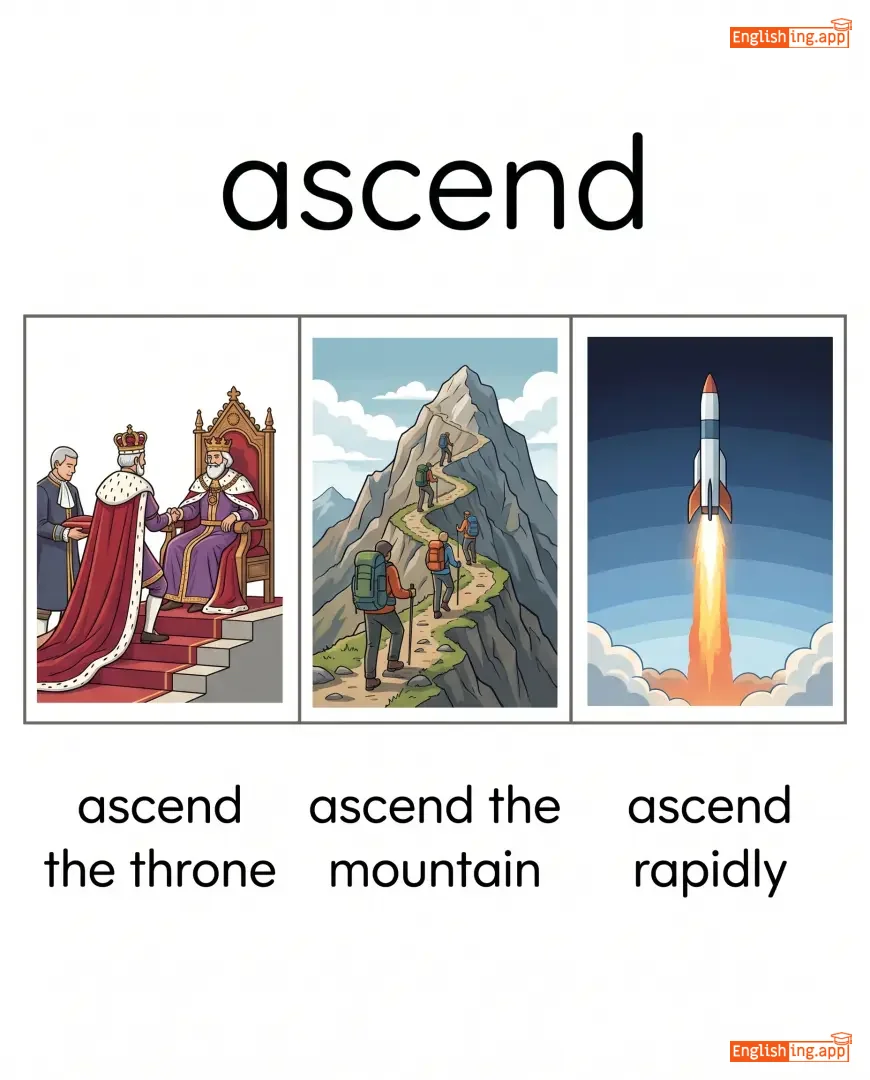
|
登る
noboru
••••••
|
ascended
アセンドッド
••••••
|
ascended
アセンドッド
••••••
|
ascends
アセンズ
••••••
|
ascending
アセンドイング
••••••
|
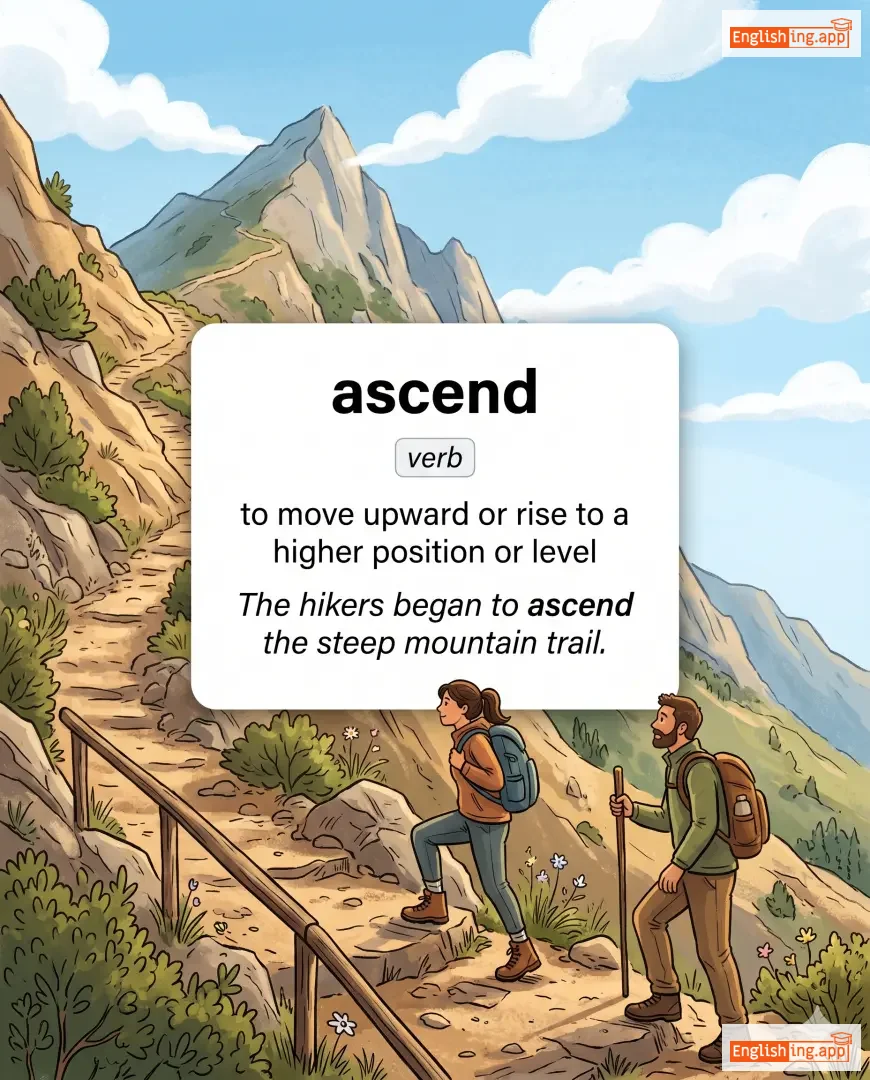
to move upward or rise to a higher position or level
••••••
|
The hikers began to ascend the steep mountain trail.
ハイカーたちは急な山道を登り始めました。
••••••
|
ハイカーたちは急な山道を登り始めました。
Haikā-tachi wa kyū na yamamichi o nobori hajimemashita.
••••••
|
ascend to power
権力への登攀
••••••
|
to rise to a position of authority or leadership
••••••
|
権力への登攀
Kenryoku e no tōhan
••••••
|
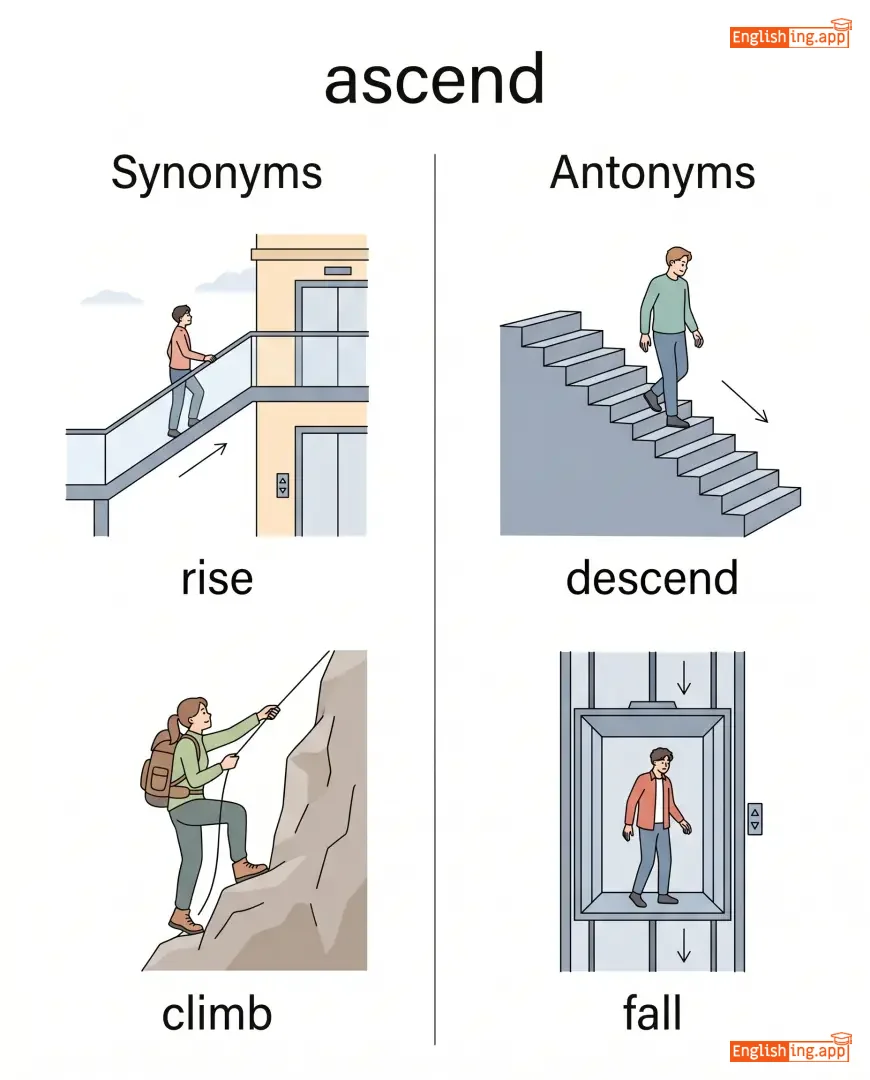
rise, climb, soar, mount, escalate
••••••
|
descend, fall, drop
••••••
|
ascend the throne, ascend the mountain, ascend rapidly
••••••
|
Ascendは登るという意味です - 飛行機が空を登ることを想像してください。
••••••
|
|
🔍
••••••
|
/ˌæs.ərˈteɪn/
verb
(アサーテイン)
••••••
|
|
確認する, 特定する
kakunin suru, tokutei suru
••••••
|
ascertained
アサーテインド
••••••
|
ascertained
アサーテインド
••••••
|
ascertains
アサーテインズ
••••••
|
ascertaining
アサーテイニング
••••••
|
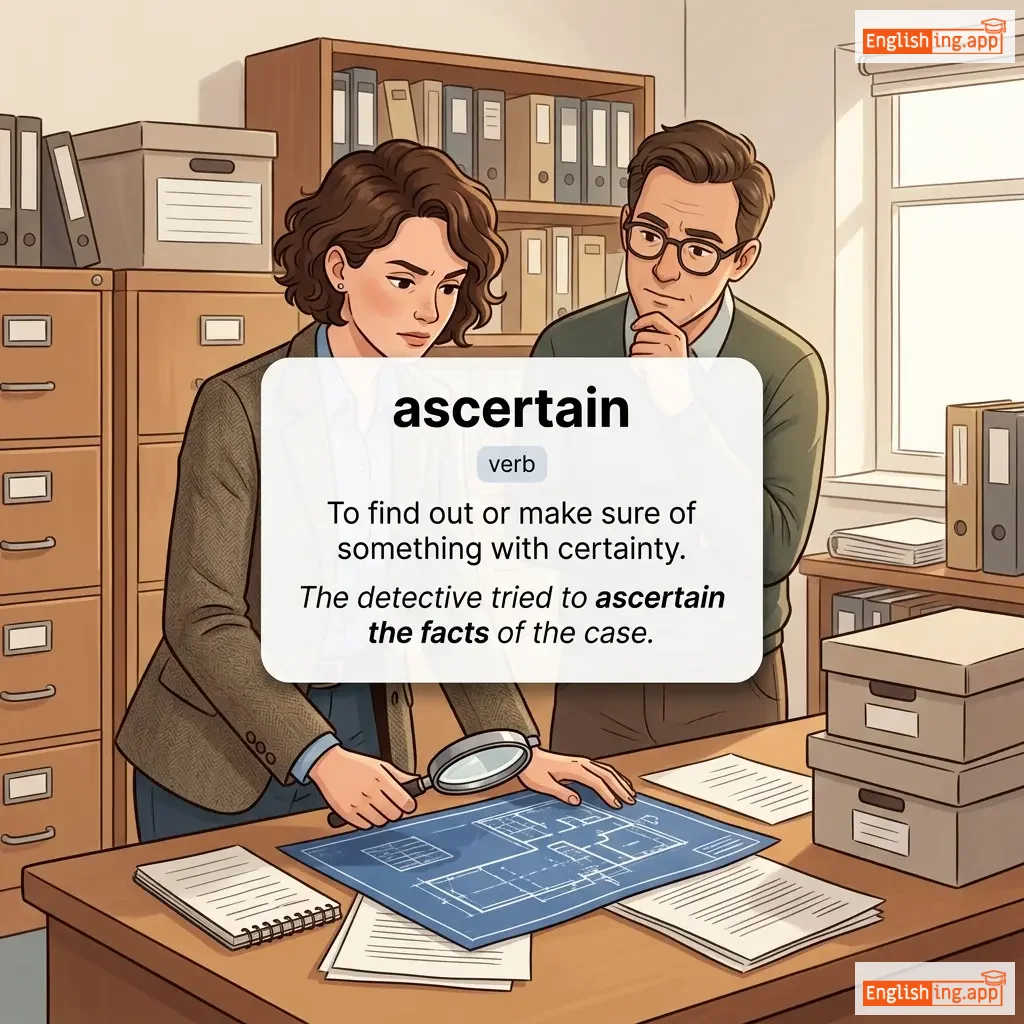
To find out or make sure of something with certainty.
••••••
|
The detective tried to ascertain the facts of the case.
探偵は事件の事実を確認しようとした。
••••••
|
探偵は事件の事実を確認しようとした。
Tantei wa jiken no jijitsu o kakunin shiyou to shita.
••••••
|
ascertain the truth
真実を確認する
••••••
|
To discover what is true with certainty.
••••••
|
真実を確認する
Shinjitsu o kakunin suru
••••••
|
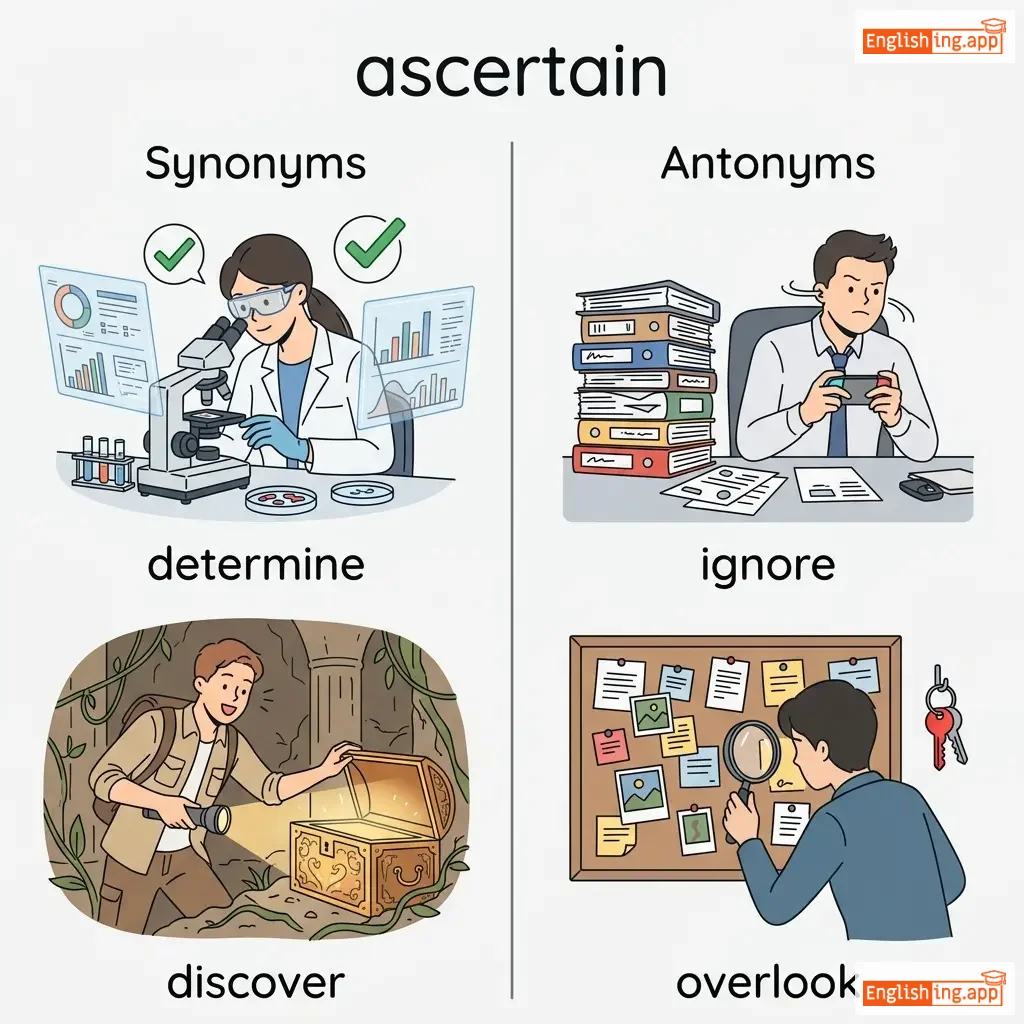
determine, discover, verify, confirm, establish
••••••
|
ignore, overlook, neglect
••••••
|
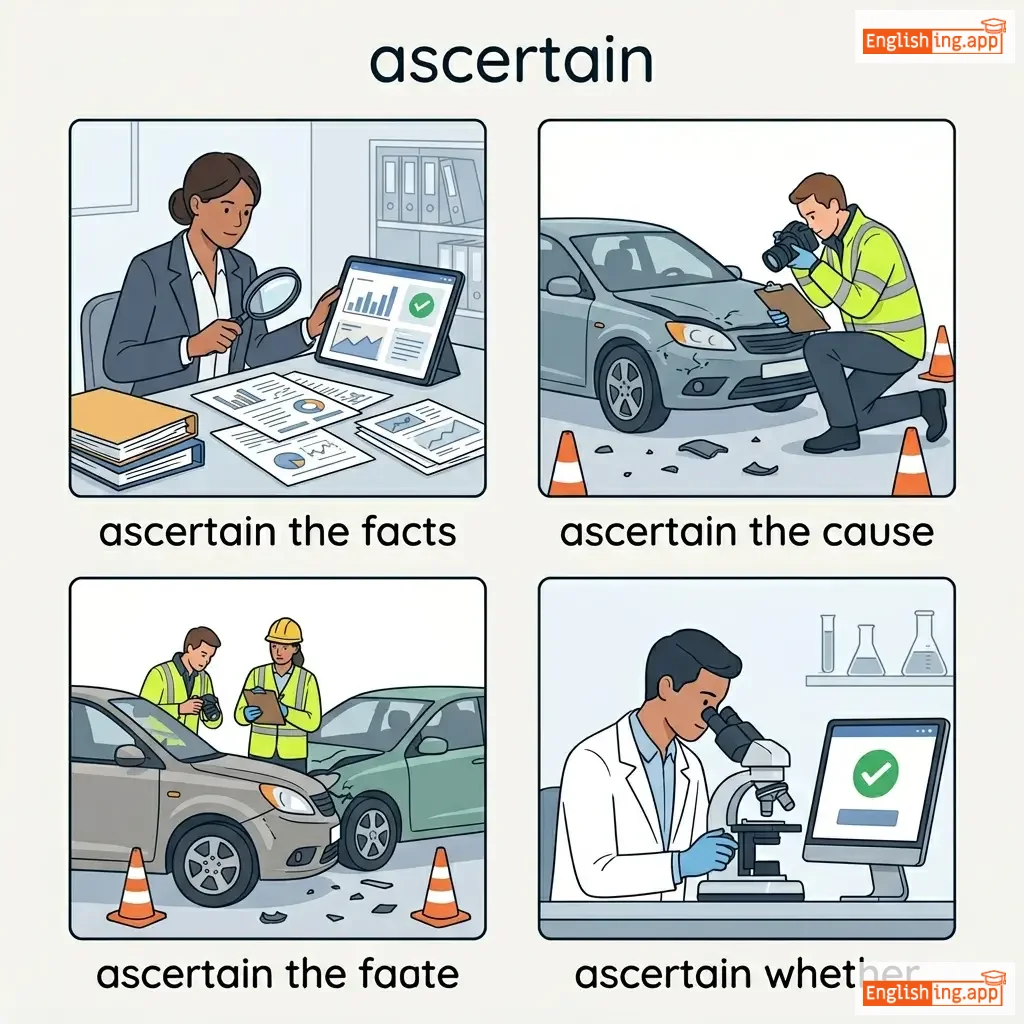
ascertain the facts, ascertain the cause, ascertain whether, ascertain identity
••••••
|
確認することで、真実を特定することができます。
••••••
|
|
🌋
••••••
|
/æʃ/
noun
(エッシュ)
••••••
|
- •••••• |
灰
hai
••••••
|
- •••••• | - •••••• | - •••••• | - •••••• |
the powdery residue left after the burning of a substance
••••••
|
After the fire, only ash remained of the house. |
火事の後、家の灰だけが残った。
Kaji no ato, ie no hai dake ga nokotta.
••••••
|
rise from the ashes |
to recover or rebuild after destruction or failure
••••••
|
灰から立ち上がる
Hai kara tachiagaru
••••••
|
cinder, dust, residue, remains, soot
••••••
|
substance, matter
••••••
|
ash cloud, ash tray, volcanic ash, turn to ash
••••••
|
Ash は灰 — ‘火事の後には灰しか残らない’ 🔥
••••••
|
|
😳
••••••
|
/əˈʃeɪmd/
adjective
(アシェイムド)
••••••
|
- •••••• |
恥ずかしい
hazukashii
••••••
|
- •••••• | - •••••• | - •••••• | - •••••• |
feeling embarrassed or guilty because of one's actions
••••••
|
He was ashamed of his poor performance. |
彼は自分の悪い成績に恥ずかしさを感じていた。
Kare wa jibun no warui seiseki ni hazukashisa o kanjite ita.
••••••
|
- •••••• | - •••••• | - •••••• |
embarrassed, guilty, humiliated, mortified
••••••
|
proud, unashamed, confident, shameless
••••••
|
feel ashamed, deeply ashamed, ashamed of yourself
••••••
|
恥ずかしい(hazukashii)は、羞恥心を感じることに関連し、アシェイムドを思い出させる。
••••••
|
|
➡️
••••••
|
/əˈsaɪd/
adverb, noun
(アサイド)
••••••
|
- •••••• |
脇
waki
••••••
|
- •••••• | - •••••• | - •••••• | - •••••• |
to or on one side; a remark not intended for everyone
••••••
|
He stepped aside to let her pass.
彼は彼女を通すために脇に寄った。
••••••
|
彼は彼女を通すために脇に寄った。
Kare wa kanojo o toosu tame ni waki ni yotta.
••••••
|
put aside
横に置く
••••••
|
to save or reserve something
••••••
|
脇に置く
waki ni oku
••••••
|
apart, away, to the side, remark
••••••
|
center, middle
••••••
|
step aside, put aside, aside from
••••••
|
Aside は脇を意味します — '横に置く'を覚えましょう。
••••••
|
|
❓
••••••
|
/æsk/
verb
(アスク)
••••••
|
- •••••• |
尋ねる
tazuneru
••••••
|
asked
アスケド
••••••
|
asked
アスケド
••••••
|
asks
アスカス
••••••
|
asking
アスキング
••••••
|
to request information or seek an answer
••••••
|
She asked him about his new job.
She asked him about his new job.
••••••
|
彼女は彼に新しい仕事について尋ねた。
Kanojo wa kare ni atarashii shigoto ni tsuite tazuneta.
••••••
|
ask for trouble
ask for trouble
••••••
|
to behave in a way that is likely to cause problems
••••••
|
トラブルを招く
toraburu o maneku
••••••
|
inquire, request, question, demand, seek
••••••
|
answer, respond
••••••
|
ask a question, ask for help, ask politely
••••••
|
Askは尋ねるという意味です - 授業で質問することから答えを得るように。
••••••
|
|
😴
••••••
|
/əˈsliːp/
adjective
(アスリープ)
••••••
|
- •••••• |
眠っている
nemutte iru
••••••
|
- •••••• | - •••••• | - •••••• | - •••••• |
in a state of sleep
••••••
|
The baby is fast asleep. |
赤ちゃんはぐっすり眠っています。
Akachan wa gussuri netutemasu.
••••••
|
fall asleep |
to begin sleeping
••••••
|
眠りにつく
nemuri ni tsuku
••••••
|
sleeping, dozing, resting, napping
••••••
|
awake, alert
••••••
|
fast asleep, fall asleep, sound asleep
••••••
|
Asleep は眠っている — 'Sleep' は寝ること。
••••••
|
|
🔍
••••••
|
/ˈæs.pekt/
noun
(アスペクト)
••••••
|
- •••••• |
側面
sokumen
••••••
|
- •••••• | - •••••• | - •••••• | - •••••• |
A particular part, feature, or view of something.
••••••
|
One important aspect of health is regular exercise. |
健康の重要な側面は定期的な運動です。
Kenko no jūyōna sokumen wa teikiteki na undō desu.
••••••
|
in every aspect |
in all parts or respects
••••••
|
あらゆる側面で
arayuru sokumen de
••••••
|
feature, element, angle, facet, perspective
••••••
|
whole, entirety, totality
••••••
|
important aspect, key aspect, in every aspect, different aspect
••••••
|
アスペクトは物事の一部や視点を意味します。
••••••
|
|
🚀
••••••
|
/ˌæspəˈreɪʃən/
noun
(アスピレーション)
••••••
|

|
志望
shibou
••••••
|
- •••••• | - •••••• | - •••••• | - •••••• |
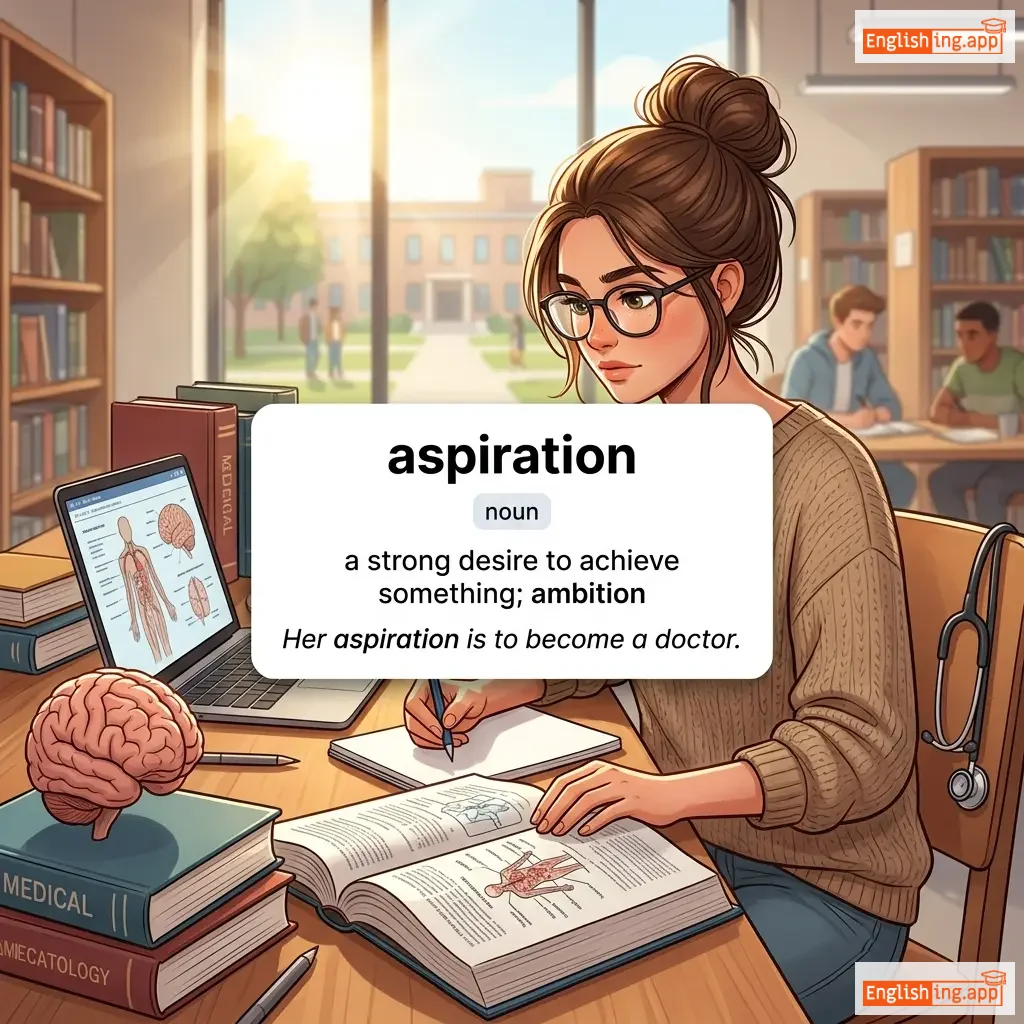
a strong desire to achieve something; ambition
••••••
|
Her aspiration is to become a doctor. |
彼女の志望は医者になることです。
Kanojo no shibou wa isha ni naru koto desu.
••••••
|
high aspirations |
lofty ambitions or goals
••••••
|
高い志望
takai shibou
••••••
|
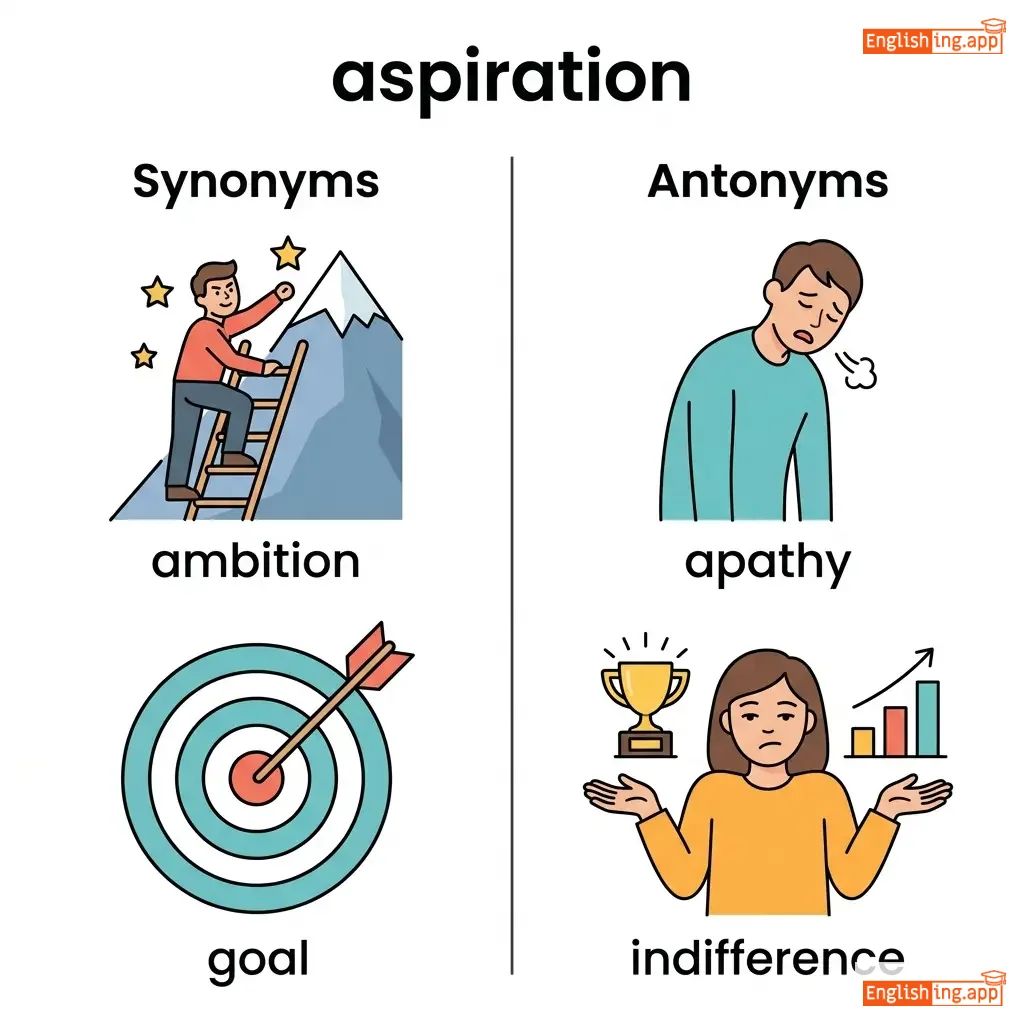
ambition, goal, aim, desire, dream
••••••
|
apathy, indifference
••••••
|
career aspiration, life aspiration, aspiration for success, high aspiration
••••••
|
Aspirationは志望を意味します — 我々が志望すれば、志望はより高くなります。
••••••
|
|
🌟
••••••
|
/əˈspaɪər/
verb
(アスパイア)
••••••
|
- •••••• |
志す
kokorozasu
••••••
|
aspired
アスパイアード
••••••
|
aspired
アスパイアード
••••••
|
aspires
アスパイアーズ
••••••
|
aspiring
アスパイアリング
••••••
|
to have a strong desire to achieve something
••••••
|
Many students aspire to study abroad.
多くの学生が海外で勉強することを目指しています。
••••••
|
多くの学生が海外で勉強することを目指しています。
Ookuno gakusei ga kaigai de benkyou suru koto o mezashiteimasu.
••••••
|
aspire to greatness
偉大さを目指す
••••••
|
to aim for significant achievement
••••••
|
偉大さを目指す
Idaisa o mezashite
••••••
|
desire, aim, hope, strive, long
••••••
|
doubt, neglect, avoid
••••••
|
aspire to, aspire for success, aspire higher, aspire towards
••••••
|
Aspireは偉大さを目指すことを意味します — 海外で勉強したい学生たちのように。
••••••
|

