Получите неограниченный доступ ко всем словам с подпиской Pro
Обновить до ProПолучите неограниченный доступ ко всем предложениям с подпиской Pro
Обновить до Pro|
Эмодзи
|
Слово | Images | Перевод | Прошедшее | Причастие прошедшего времени | Третье лицо единственного числа | Герундий | Значение | Пример предложения | Перевод примера предложения | Пример выражения | Значение примера выражения | Перевод примера выражения | Синонимы | Антонимы | Коллокации | Мнемоника |
|---|---|---|---|---|---|---|---|---|---|---|---|---|---|---|---|---|---|
|
📐
••••••
|
/əˈprɒksɪmət/
adjective/verb
(апроксимейт)
••••••
|
- •••••• |
приблизительный
priblizitelnyi
••••••
|
approximated
апроксимейтед
••••••
|
approximated
апроксимейтед
••••••
|
approximates
апроксимейтс
••••••
|
approximating
апроксимейтинг
••••••
|
close to the actual but not exact; to estimate or calculate roughly
••••••
|
The cost is approximate and may change later.
Зэ кост из апроксимейт энд мэй чейндж лэйтер.
••••••
|
Стоимость приблизительная и может измениться позже.
Stoimost priblizitelnaya i mozhet izmenitsya pozzhe
••••••
|
approximate value
апроксимейт вэлью
••••••
|
a value that is close to the true amount but not exact
••••••
|
приблизительное значение
priblizitelnoe znachenie
••••••
|
estimated, rough, near, about, close
••••••
|
exact, precise, accurate
••••••
|
approximate value, approximate time, approximate cost, approximate figure
••••••
|
Приблизительный = approximate, почти точный.
••••••
|
|
➗
••••••
|
/əˈprɒk.sɪ.mət.li/
adverb
(апроксимэтли)
••••••
|
- •••••• |
приблизительно
priblizitel'no
••••••
|
- •••••• | - •••••• | - •••••• | - •••••• |
used to show that something is almost, but not completely, accurate or exact
••••••
|
The journey takes approximately three hours. |
Путешествие занимает приблизительно три часа.
Puteshestviye zanimaet priblizitel'no tri chasa.
••••••
|
- •••••• | - •••••• | - •••••• |
about, roughly, around, nearly, close to
••••••
|
exactly, precisely, accurately
••••••
|
approximately equal, approximately the same, approximately three hours
••••••
|
Approximately означает приблизительно—'приблизительно' почти всегда точно.
••••••
|
|
🌸
••••••
|
/ˈeɪprɪl/
noun
(эйприл)
••••••
|
- •••••• |
апрель
aprel
••••••
|
- •••••• | - •••••• | - •••••• | - •••••• |
the fourth month of the year in the Gregorian calendar
••••••
|
April is known for its pleasant spring weather.
эйприл из ноун фор итс плезэнт спринг уэзер
••••••
|
Апрель известен своей приятной весенней погодой.
aprel izvesten svoei priyatnoi vesennei pogodoi
••••••
|
April showers bring May flowers
эйприл шауэрз бринг мэй флауэрз
••••••
|
early difficulties often lead to better results later
••••••
|
Апрельские дожди приносят майские цветы
aprelskie dozhdi prinosyat maiskie tsvety
••••••
|
fourth month, spring month, April month, calendar month
••••••
|
December, January
••••••
|
early April, late April, April weather, April holiday
••••••
|
April звучит как апрель—один к одному
••••••
|
|
🎲
••••••
|
/ˈɑːrbɪˌtrɛri/
adjective
(арбитрери)
••••••
|
- •••••• |
произвольный
proizvol'nyy
••••••
|
- •••••• | - •••••• | - •••••• | - •••••• |
based on random choice or personal whim, rather than reason or system
••••••
|
The teacher's arbitrary grading upset many students. |
Произвольная оценка учителя расстроила многих студентов.
Proizvol'naya otsenka uchitelya rasstroila mnogikh studentov.
••••••
|
- •••••• | - •••••• | - •••••• |
random, capricious, whimsical, subjective, inconsistent
••••••
|
rational, logical, systematic
••••••
|
arbitrary decision, arbitrary rule, arbitrary action
••••••
|
Arbitrary означает произвольный—представь себе человека, который действует по своему желанию.
••••••
|
|
🕊️
••••••
|
/ˈɑːrbɪtreɪt/
verb
(арбитрэйт)
••••••
|
- •••••• |
арбитрировать
arbitrirovat
••••••
|
arbitrated
арбитретед
••••••
|
arbitrated
арбитретед
••••••
|
arbitrates
арбитрэйтс
••••••
|
arbitrating
арбитрэйтинг
••••••
|
to settle a dispute between two parties by acting as an impartial judge
••••••
|
The committee agreed to arbitrate the contract dispute.
Комитет согласился арбитрировать спор по контракту.
••••••
|
Комитет согласился арбитрировать спор по контракту.
Komitet soglasilsya arbitrirovat' spor po kontraktu.
••••••
|
arbitrate a dispute
арбитрировать спор
••••••
|
to resolve a disagreement between parties
••••••
|
арбитрировать спор
arbitrirovat' spor
••••••
|
mediate, adjudicate, resolve, judge, settle
••••••
|
provoke, dispute
••••••
|
arbitrate dispute, arbitrate conflict, arbitrate case
••••••
|
Arbitrate значит арбитрировать — представь, что ты судья, решающий спор
••••••
|
|
⚖️
••••••
|
/ˌɑːrbɪˈtreɪʃən/
noun
(арбитрейшн)
••••••
|
- •••••• |
арбитраж
arbitrazh
••••••
|
- •••••• | - •••••• | - •••••• | - •••••• |
the process of resolving a dispute through an impartial third party whose decision is binding; formal judgment outside a court
••••••
|
The contract requires arbitration to settle any disputes.
Контракт требует арбитрейшн для разрешения споров.
••••••
|
Контракт предусматривает арбитраж для разрешения любых споров.
kontrakt predusmatrivaet arbitrazh dlya razresheniya lyubykh sporov
••••••
|
arbitration clause
арбитрейшн клауз
••••••
|
a contract provision that requires disputes to be resolved through arbitration
••••••
|
арбитражная оговорка
arbitrazhnaya ogovorka
••••••
|
mediation, adjudication, settlement, conciliation
••••••
|
litigation, disagreement
••••••
|
binding arbitration, arbitration clause, arbitration agreement, international arbitration
••••••
|
Арбитр решает—арбитраж = arbitration
••••••
|
|
🏛️
••••••
|
/ˈɑː.kɪ.tekt/
noun
(архитектор)
••••••
|
- •••••• |
архитектор
arkhitektor
••••••
|
- •••••• | - •••••• | - •••••• | - •••••• |
a person who designs buildings and oversees their construction
••••••
|
The architect designed a modern office building. |
Архитектор спроектировал современное офисное здание.
Arkhitektor spроектировал sovremennoye ofisnoye zdaniye.
••••••
|
- •••••• | - •••••• | - •••••• |
designer, planner, builder, creator
••••••
|
destroyer, demolisher
••••••
|
famous architect, software architect, chief architect, landscape architect
••••••
|
Architect значит архитектор—тот, кто проектирует и строит здания.
••••••
|
|
🏛️
••••••
|
/ˌɑːrkɪˈtɛktʃərəl/
adjective
(arkhitekturnyy)
••••••
|
- •••••• |
архитектурный
arkhitekturnyy
••••••
|
- •••••• | - •••••• | - •••••• | - •••••• |
relating to the design and style of buildings and structures
••••••
|
The city is known for its beautiful architectural designs. |
Город известен своими красивыми архитектурными проектами.
Gorod izvesten svoimi krasivymi arkhitekturnymi proyektami.
••••••
|
- •••••• | - •••••• | - •••••• |
design, structural, building-related, construction
••••••
|
non-structural
••••••
|
architectural design, architectural style, architectural heritage
••••••
|
Architectural designs are the 'iskusstvo' (art) of buildings!
••••••
|
|
🏛️
••••••
|
/ˈɑːkɪˌtɛktʃər/
noun
(архитектура)
••••••
|

|
архитектура
arkhitektura
••••••
|
- •••••• | - •••••• | - •••••• | - •••••• |
the art and practice of designing and constructing buildings
••••••
|
The ancient temples of Greece are famous for their architecture. |
Древние храмы Греции знамениты своей архитектурой.
Drevnie khramy Gretsii znamenity svoey arkhitekturoy.
••••••
|
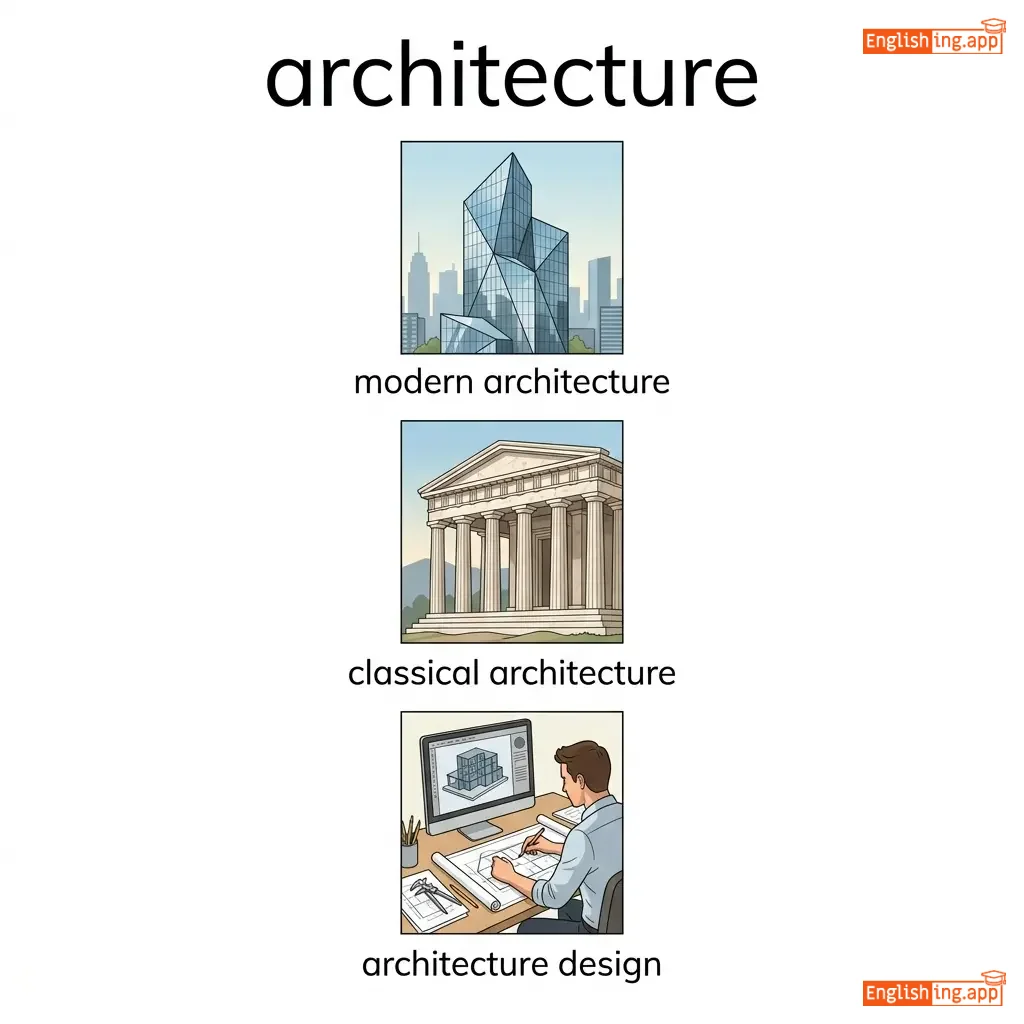
modern architecture |
a style of architecture characterized by simplicity and functional design
••••••
|
современная архитектура
sovremennaya arkhitektura
••••••
|
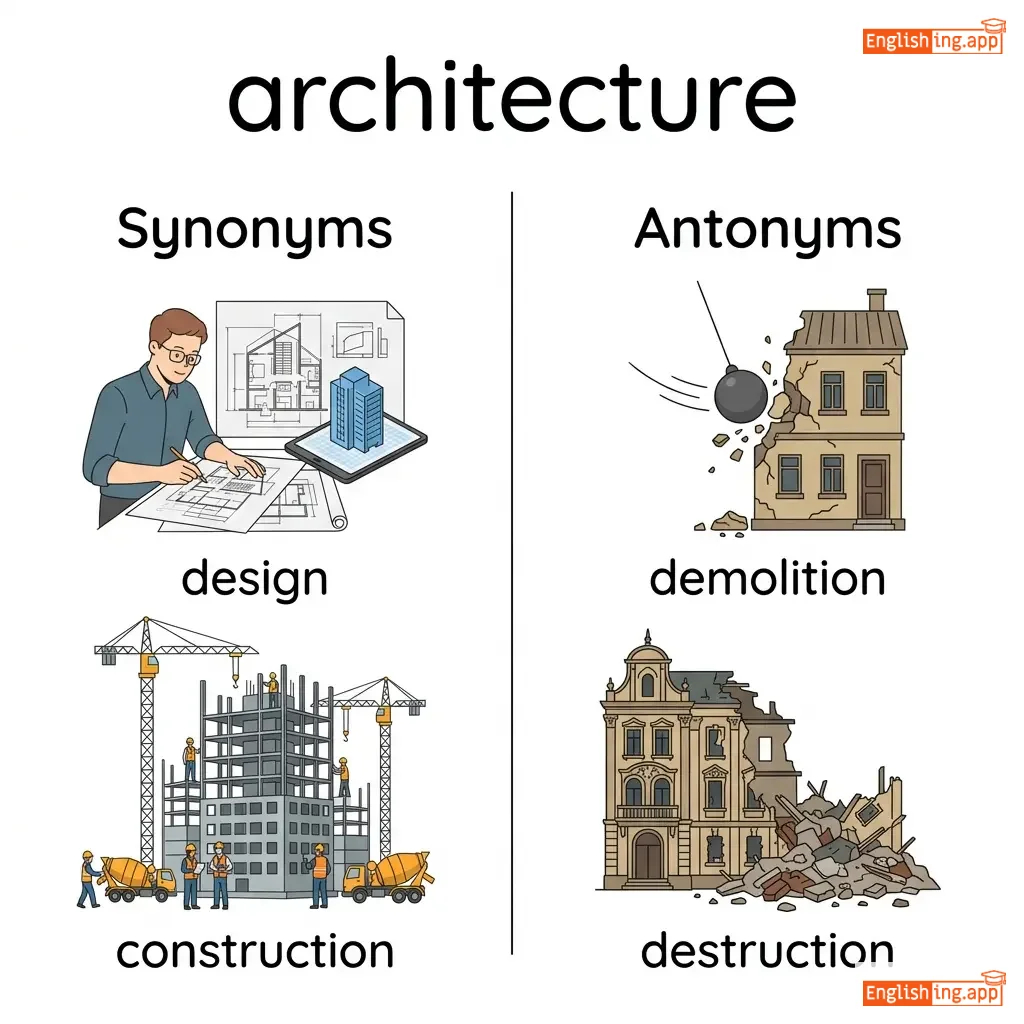
design, construction, structure, framework
••••••
|
demolition, destruction
••••••
|
modern architecture, classical architecture, architecture design, architecture firm
••••••
|
Architecture означает проектировать здания, поэтому архитектура — это искусство строить здания 🏛️
••••••
|
|
🗄️
••••••
|
/ˈɑːrkaɪv/
noun, verb
••••••
|
- •••••• | - •••••• |
archived
••••••
|
archived
••••••
|
archives
••••••
|
archiving
••••••
|
A collection of historical documents or records; to store or preserve information for future use.
••••••
|
The library decided to archive all the old manuscripts. |
- •••••• |
digital archive |
An electronic collection of documents or records stored for reference.
••••••
|
- •••••• |
repository, records, collection, store, vault
••••••
|
discard, destroy
••••••
|
archive documents, archive data, digital archive, archive system
••••••
|
No •••••• |
|
📍
••••••
|
/ˈeə.ri.ə/
noun
••••••
|
- •••••• | - •••••• | - •••••• | - •••••• | - •••••• | - •••••• |
a particular region or space; the extent of a surface
••••••
|
This area is known for its beautiful parks. |
- •••••• |
gray area |
an unclear or undefined situation
••••••
|
- •••••• |
region, zone, district, field, space
••••••
|
point, line, boundary
••••••
|
rural area, urban area, gray area, restricted area
••••••
|
No •••••• |
|
🏟️
••••••
|
/əˈriːnə/
noun
(арена)
••••••
|
- •••••• |
арена, сцена
arena, stsena
••••••
|
- •••••• | - •••••• | - •••••• | - •••••• |
a large area surrounded by seats for sports, entertainment, or other events
••••••
|
The basketball game will be held in the new arena downtown. |
Матч по баскетболу пройдет в новой арене в центре города.
Match po basketbolu proydet v novoy arene v tsentre goroda.
••••••
|
political arena |
a field or sphere of political activity or debate
••••••
|
политическая арена
politicheskaya arena
••••••
|
stadium, field, coliseum, auditorium, hall
••••••
|
wilderness, outside
••••••
|
sports arena, political arena, music arena, enter the arena
••••••
|
Арена — это место, где происходят соревнования, такие как спортивные события. 🏟️
••••••
|
|
💬
••••••
|
/ˈɑːrɡjuəbl/
adjective
(аргьюэбл)
••••••
|
- •••••• |
спорный
spornyy
••••••
|
- •••••• | - •••••• | - •••••• | - •••••• |
open to debate or discussion; not certain and capable of being argued for or against
••••••
|
It is arguable that technology has improved our quality of life.
Ит из аргьюэбл зэт टेकнолоджи хэз импрувд ауэр кволити ов лайф
••••••
|
Можно спорить, что технологии улучшили качество нашей жизни.
mozhno sporit chto tekhnologii uluchshili kachestvo nashey zhizni
••••••
|
- •••••• | - •••••• | - •••••• |
debatable, disputable, questionable, contestable, arguendo
••••••
|
certain, unquestionable, indisputable
••••••
|
arguable point, arguable claim, arguable assumption, arguably true
••••••
|
Arguable = argument, значит спорный
••••••
|
|
💬
••••••
|
/ˈɑːɡjuːəbli/
adverb
(аргьюэбли)
••••••
|
- •••••• |
возможно
vozmozhno
••••••
|
- •••••• | - •••••• | - •••••• | - •••••• |
used to say that a statement is open to argument or is considered true by many people
••••••
|
She is arguably the most talented player on the team.
Ши из аргьюэбли зэ мост тэлэнтед плеер он зэ тим.
••••••
|
Она, возможно, самый талантливый игрок в команде.
Ona, vozmozhno, samyi talantlivyi igrok v komande
••••••
|
arguably the best
аргьюэбли зэ бэст
••••••
|
considered by many people to be the best, though it can be debated
••••••
|
возможно, лучший
vozmozhno, luchshii
••••••
|
debatably, possibly, conceivably, plausibly, ostensibly
••••••
|
undeniably, unquestionably, certainly
••••••
|
arguably the best, arguably the most important, arguably true, arguably better
••••••
|
argue = спорить → arguably = возможно
••••••
|
|
🗣️
••••••
|
/ˈɑːrɡjuː/
verb
(argyu)
••••••
|
|
спорить
sporit
••••••
|
argued
argyud
••••••
|
argued
argyud
••••••
|
argues
argyus
••••••
|
arguing
argyuing
••••••
|
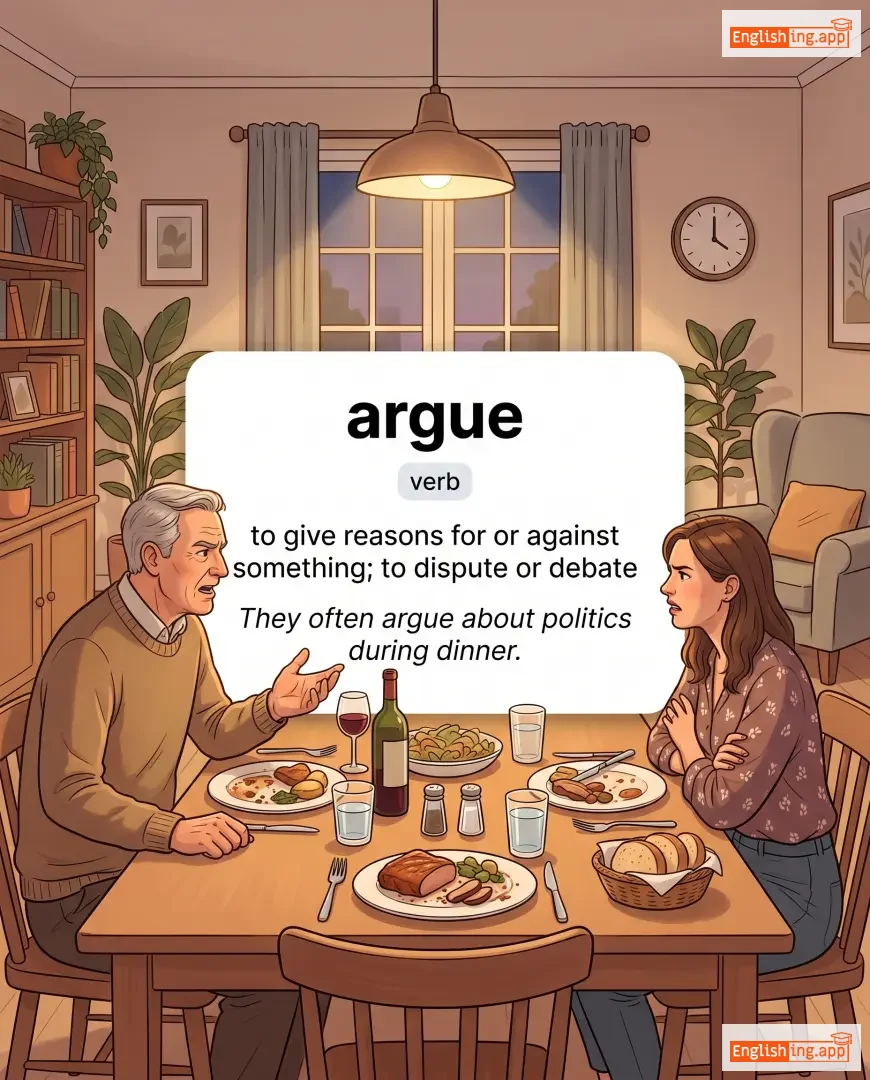
to give reasons for or against something; to dispute or debate
••••••
|
They often argue about politics during dinner.
Они часто спорят о политике за ужином.
••••••
|
Они часто спорят о политике за ужином.
Oni chasto sporyat o politike za uzhinom.
••••••
|
argue the toss
спорить о результате
••••••
|
to dispute or complain about a decision that has already been made
••••••
|
спорить о принятом решении
sporit' o prinjatom reshenii
••••••
|
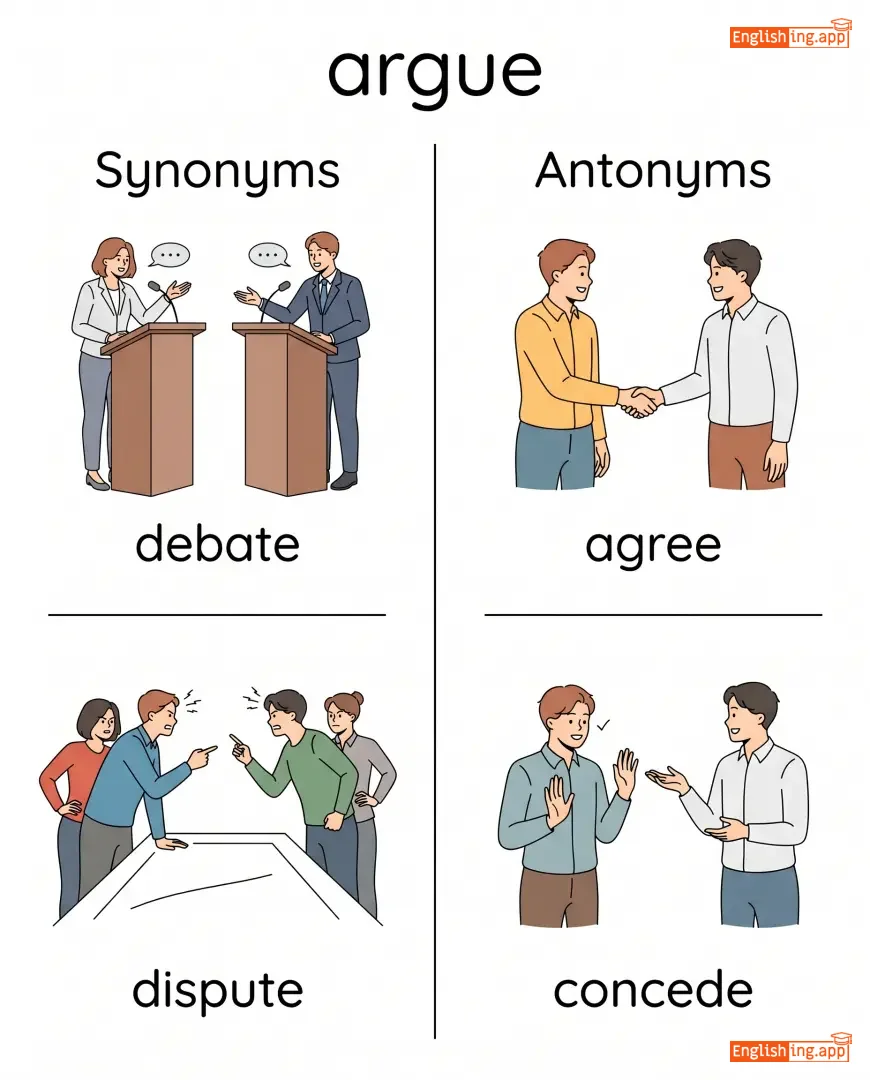
debate, dispute, contend, reason, quarrel
••••••
|
agree, concede, accept
••••••
|
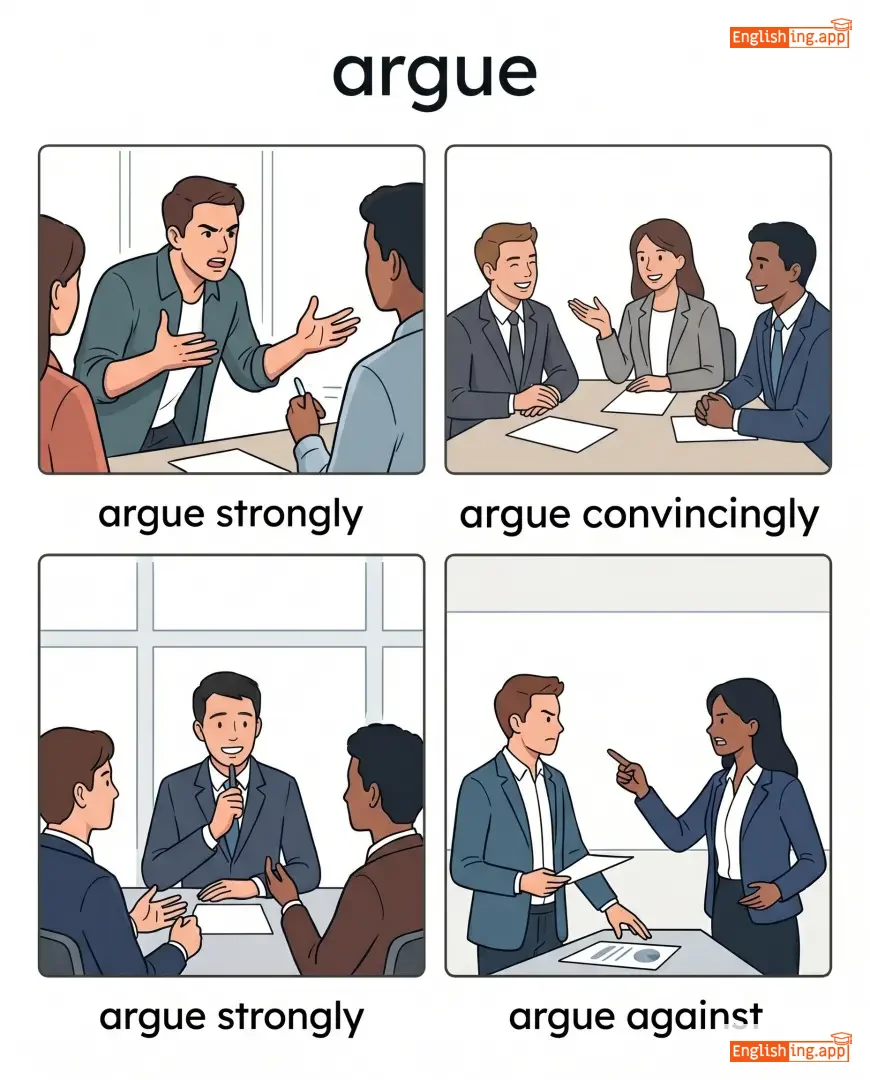
argue strongly, argue convincingly, argue against, argue about
••••••
|
Спорить = спор, как argue, только на русском.
••••••
|
|
⚡
••••••
|
/ˈɑːrɡjumənt/
noun
(аргумент)
••••••
|
|
спор, аргумент
spor, argument
••••••
|
- •••••• | - •••••• | - •••••• | - •••••• |
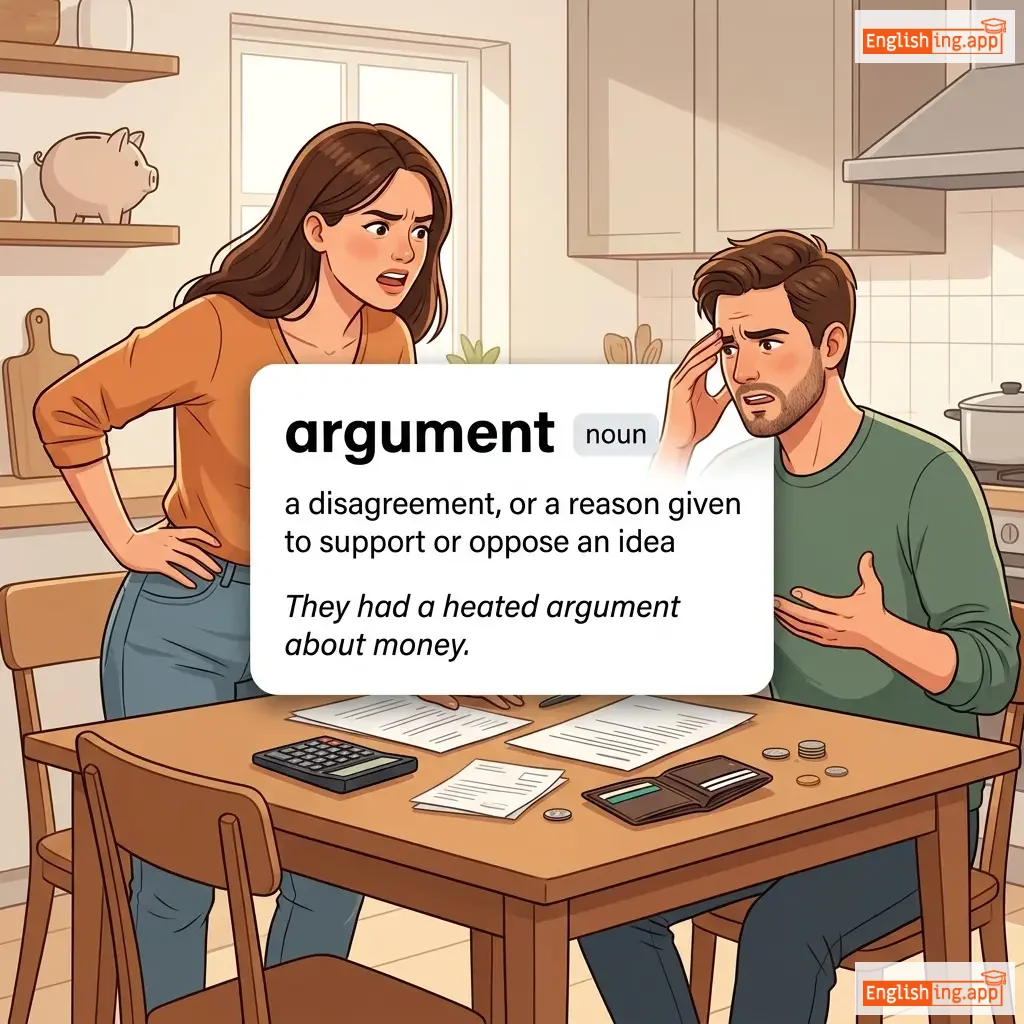
a disagreement, or a reason given to support or oppose an idea
••••••
|
They had a heated argument about money. |
У них был горячий спор о деньгах.
U nikh byl goryachiy spor o den'gah.
••••••
|
winning an argument |
successfully convincing someone in a dispute
••••••
|
выиграть спор
vyigrat' spor
••••••
|
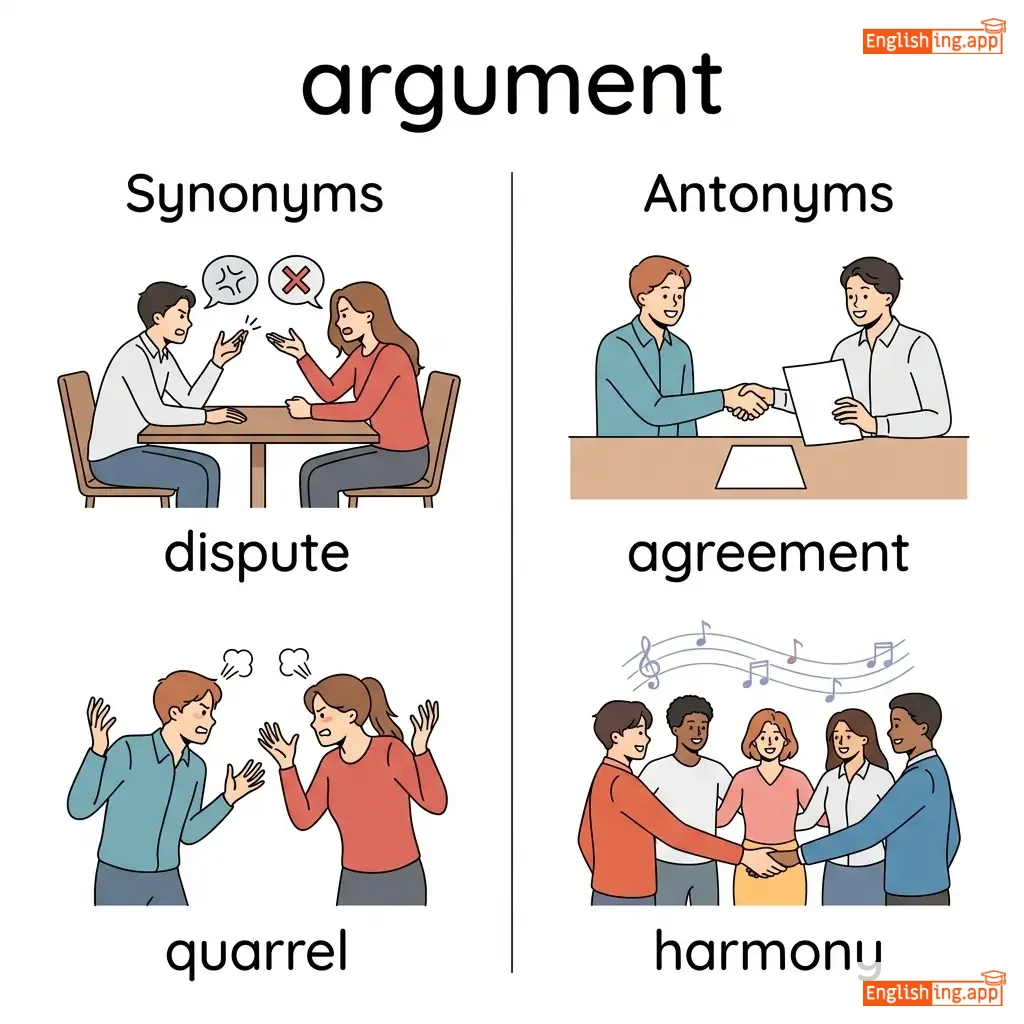
dispute, quarrel, debate, reasoning, contention
••••••
|
agreement, harmony, consensus
••••••
|
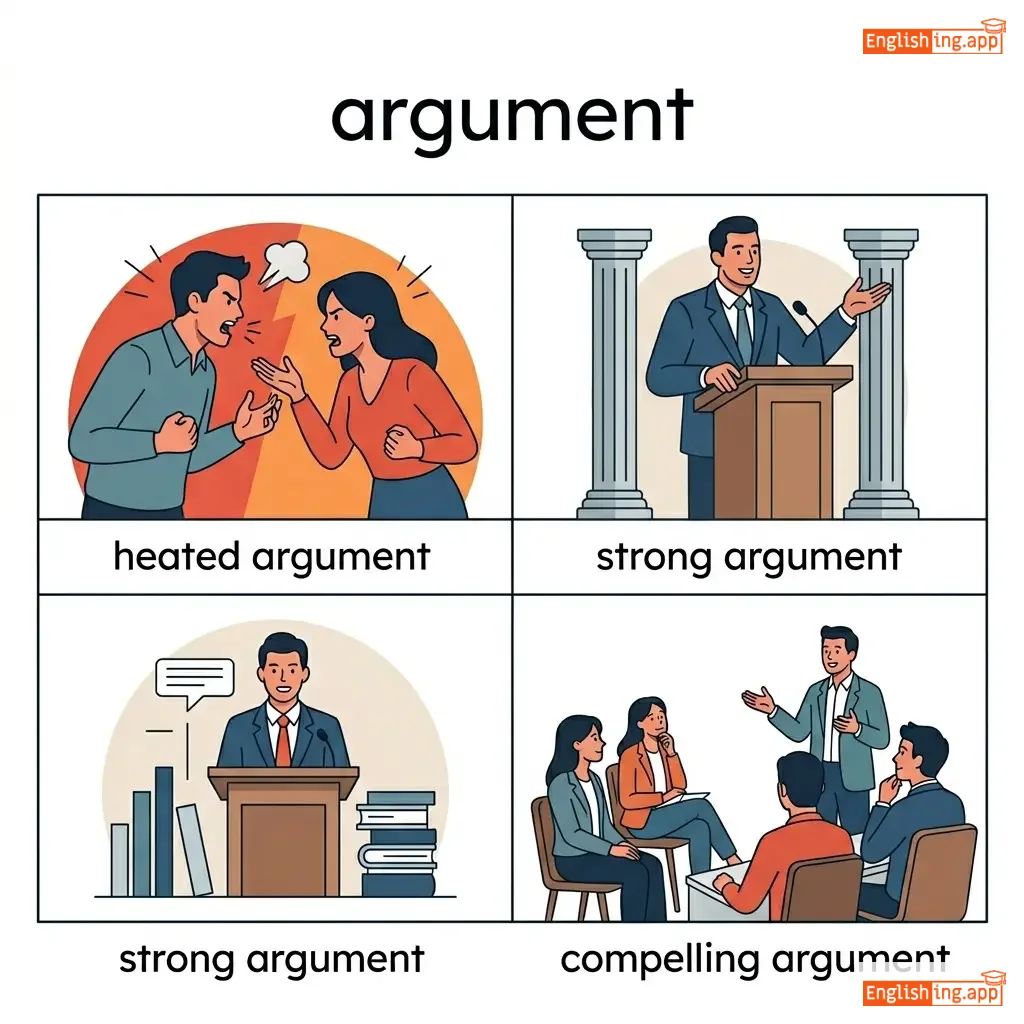
heated argument, strong argument, compelling argument, logical argument
••••••
|
Аргумент = горячий спор!
••••••
|
|
🌅
••••••
|
/əˈraɪz/
verb
(ариз)
••••••
|
- •••••• |
возникать
voznikat'
••••••
|
arose
ароз
••••••
|
arisen
аризен
••••••
|
arises
аризес
••••••
|
arising
аризинг
••••••
|
to begin to exist or to happen
••••••
|
Problems may arise if you don't plan ahead.
проблемы могут возникнуть, если вы не спланируете заранее.
••••••
|
Проблемы могут возникнуть, если вы не спланируете заранее.
Problemy mogut vozniknut', esli vy ne splanirovate zaraneye.
••••••
|
arise from
arise from
••••••
|
to result from or be caused by
••••••
|
проистекать из
proistekat' iz
••••••
|
emerge, occur, appear, happen, develop
••••••
|
cease, end, stop
••••••
|
arise from, situation arises, issue arises, opportunity arises
••••••
|
Когда солнце ВОЗНИКАЕТ, начинается день.
••••••
|
|
💪
••••••
|
/ɑːrm/
noun
(арм)
••••••
|
- •••••• |
рука
ruka
••••••
|
- •••••• | - •••••• | - •••••• | - •••••• |
the part of the body from the shoulder to the hand; also a branch or division of an organization
••••••
|
She broke her arm while playing football. |
Она сломала руку, играя в футбол.
Ona slomala ruku, igrya v futbol.
••••••
|
twist someone's arm |
to persuade or pressure someone into doing something
••••••
|
крутить чью-то руку
krutit' chyuto ruku
••••••
|
limb, branch, extension, wing
••••••
|
leg, trunk
••••••
|
right arm, left arm, strong arm, extend an arm
••••••
|
Arm означает руку, а руки нужны для всего
••••••
|
|
🔫
••••••
|
/ɑːrmd/
adjective
(армд)
••••••
|
- •••••• |
вооружённый
vooruzhyonny
••••••
|
- •••••• | - •••••• | - •••••• | - •••••• |
equipped with or carrying weapons
••••••
|
The bank was robbed by armed men. |
Банк был ограблен вооружёнными людьми.
Bank byl ograblen vooruzhyonnymi lyud'mi.
••••••
|
armed to the teeth |
heavily armed or fully equipped with weapons
••••••
|
вооружён до зубов
vooruzhyon do zubov
••••••
|
equipped, weaponized, fortified, prepared
••••••
|
unarmed, defenseless, vulnerable
••••••
|
armed forces, armed men, armed conflict, heavily armed
••••••
|
Armed = arm + ed → вооружённый и готовый.
••••••
|
|
🪖
••••••
|
/ˈɑːrmi/
noun
(арми)
••••••
|
- •••••• |
армия
armiya
••••••
|
- •••••• | - •••••• | - •••••• | - •••••• |
a large organized military force trained for war
••••••
|
The army protected the border from attack. |
Армия защитила границу от атаки.
Armiya zashchitila granitsu ot ataki.
••••••
|
join the army |
to enlist in the military service
••••••
|
поступить в армию
postupit' v armiyu
••••••
|
military, troops, forces, soldiers
••••••
|
civilians, noncombatants
••••••
|
army base, army officer, join the army, regular army
••••••
|
Army = армия, 🪖 сила, готовая к войне
••••••
|
|
🔄
••••••
|
/əˈraʊnd/
adverb, preposition
(aˈɾaʊnd)
••••••
|
- •••••• |
вокруг
vokrug
••••••
|
- •••••• | - •••••• | - •••••• | - •••••• |
situated on every side; in a circular way; approximately
••••••
|
There are many restaurants around the park. |
Вокруг парка много ресторанов.
Vokrug parka mnogo restoranov.
••••••
|
turn around |
to move so as to face in the opposite direction
••••••
|
повернуться
povernutsya
••••••
|
about, nearly, nearby, approximately, surrounding
••••••
|
far, away, beyond
••••••
|
look around, move around, all around, turn around
••••••
|
Around значит вокруг - вокруг парка много ресторанов.
••••••
|
|
🗂️
••••••
|
/əˈreɪndʒ/
verb
(arendʒ)
••••••
|
|
упорядочить, организовать
uporyadochit', organizovat'
••••••
|
arranged
arendʒd
••••••
|
arranged
arendʒd
••••••
|
arranges
arendʒes
••••••
|
arranging
arendʒing
••••••
|
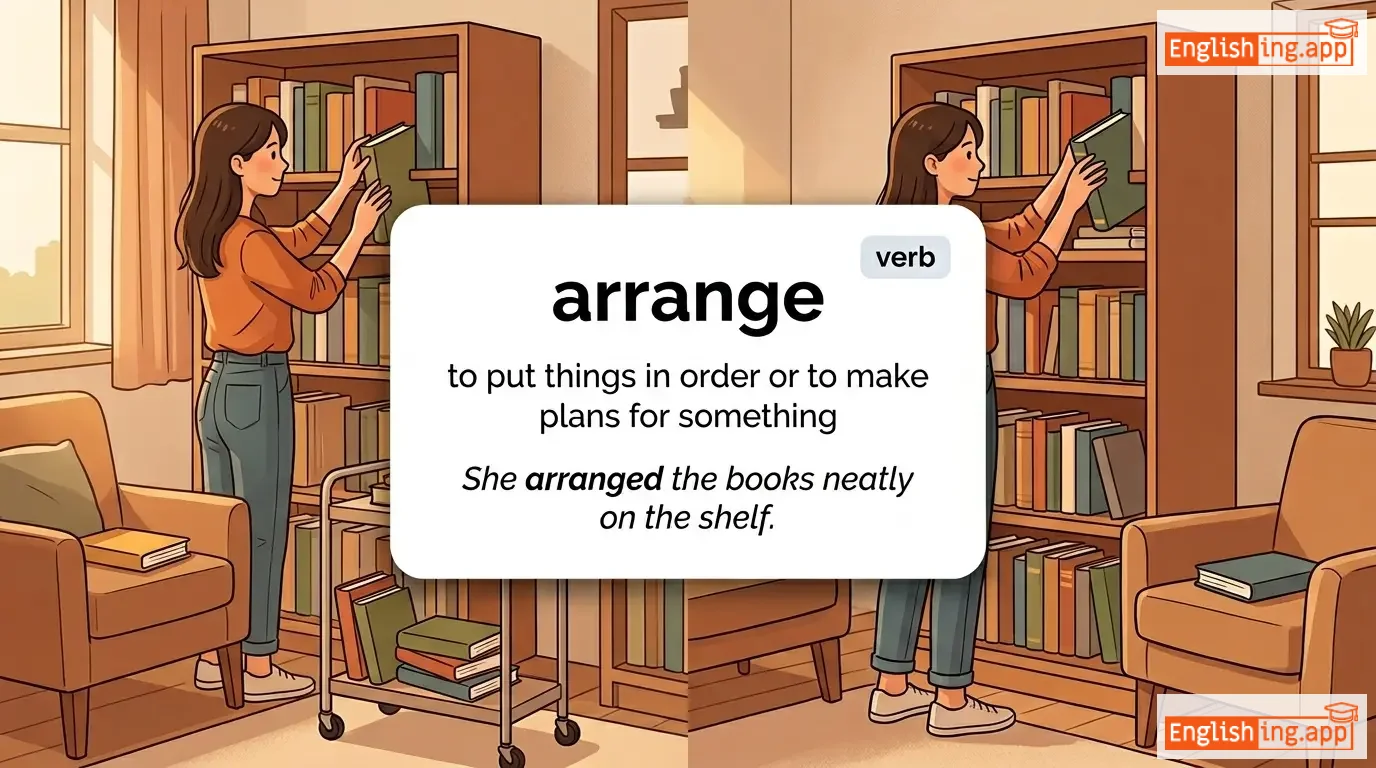
to put things in order or to make plans for something
••••••
|
She arranged the books neatly on the shelf.
ona arendžirovala knigi akuratno na polke.
••••••
|
Она аккуратно расставила книги на полке.
Ona akuratno rastavila knigi na polke.
••••••
|
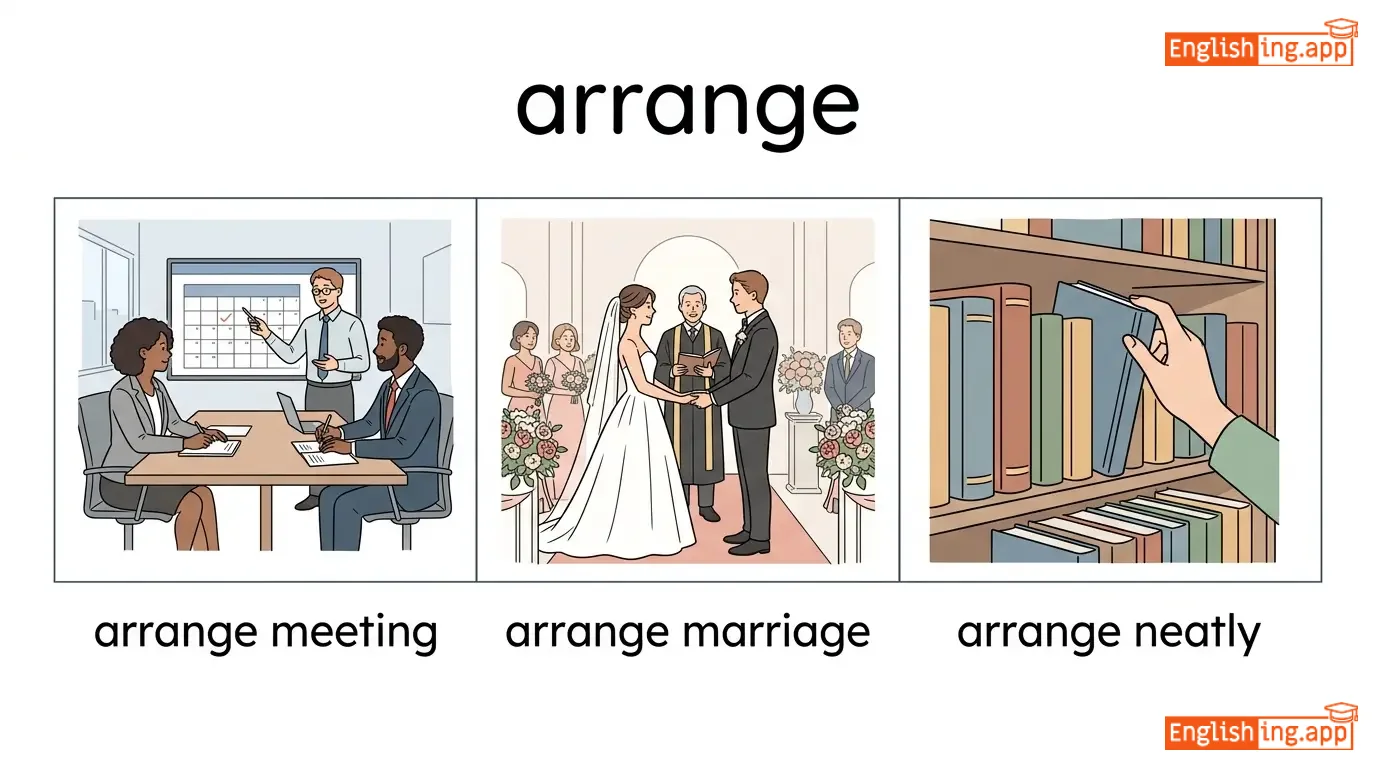
arrange a meeting
organizovat vstrechu
••••••
|
to plan and organize a meeting
••••••
|
организовать встречу
organizovat' vstrechu
••••••
|
organize, plan, order, schedule, sort
••••••
|
disorganize, disorder
••••••
|
arrange meeting, arrange marriage, arrange neatly, arrange according to
••••••
|
Arrange — упорядочить, как на свадьбе все должно быть организовано.
••••••
|
|
📑
••••••
|
/əˈreɪndʒmənt/
noun
(аррейнжмент)
••••••
|
|
договоренность, организация
dogovorennost', organizatsiya
••••••
|
- •••••• | - •••••• | - •••••• | - •••••• |
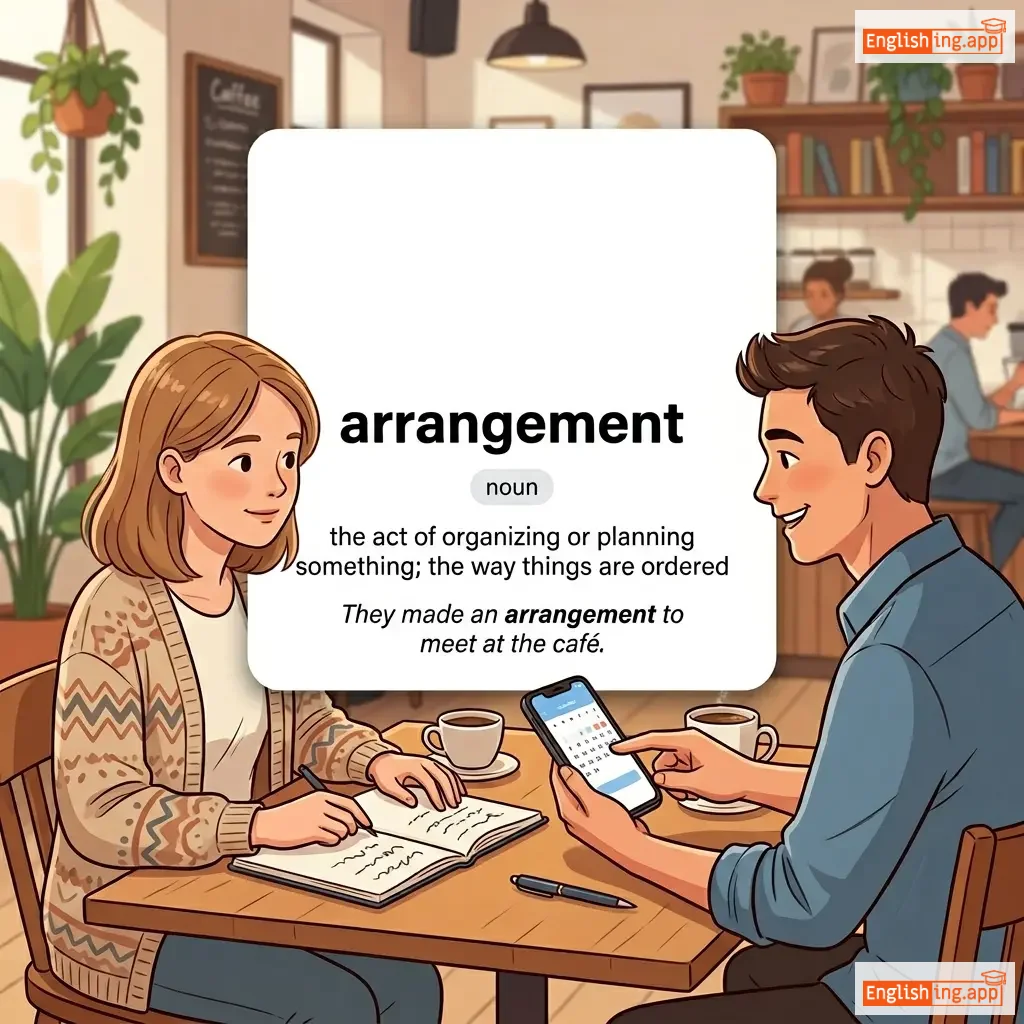
the act of organizing or planning something; the way things are ordered
••••••
|
They made an arrangement to meet at the café. |
Они договорились встретиться в кафе.
Oni dogovorilis' vstrechatsya v kafe.
••••••
|
come to an arrangement |
to reach an agreement
••••••
|
достигнуть соглашения
dostignut' soglasheniya
••••••
|
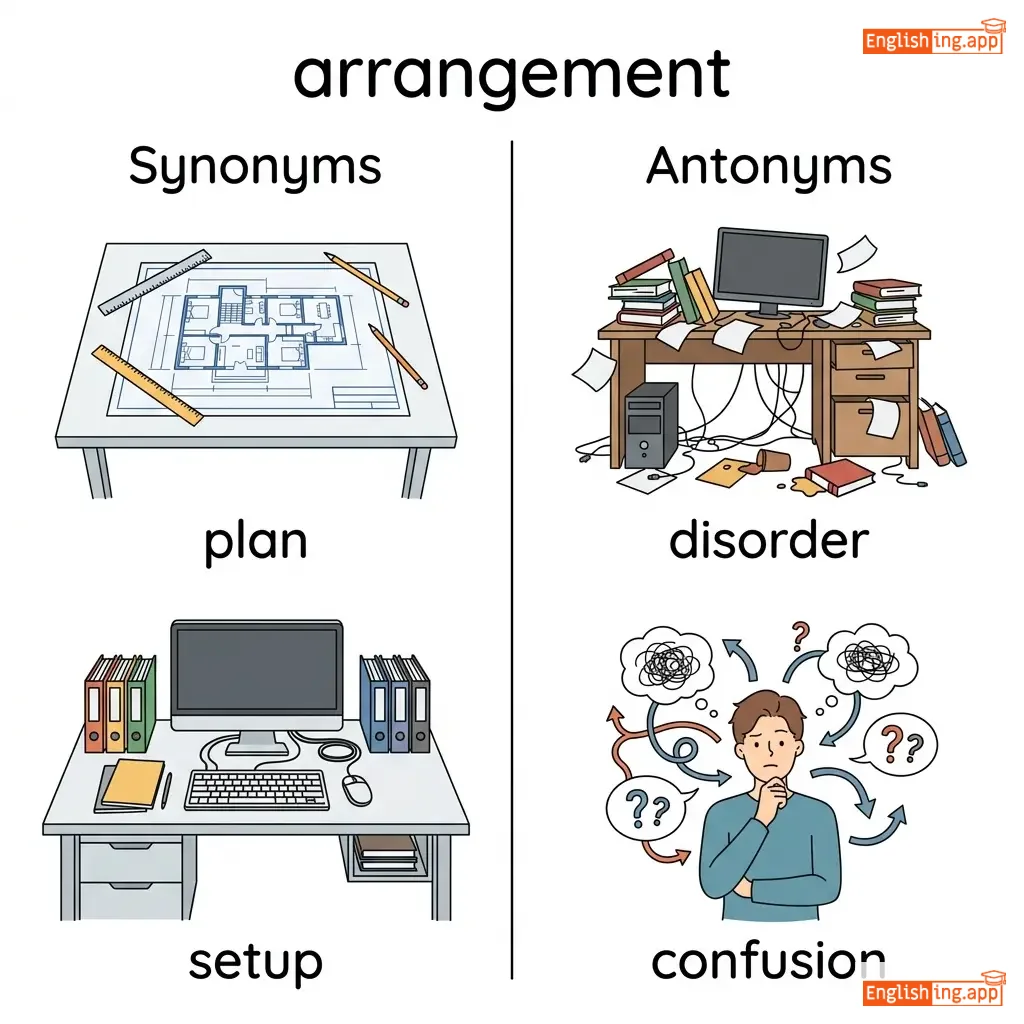
plan, setup, agreement, organization, order
••••••
|
disorder, confusion
••••••
|
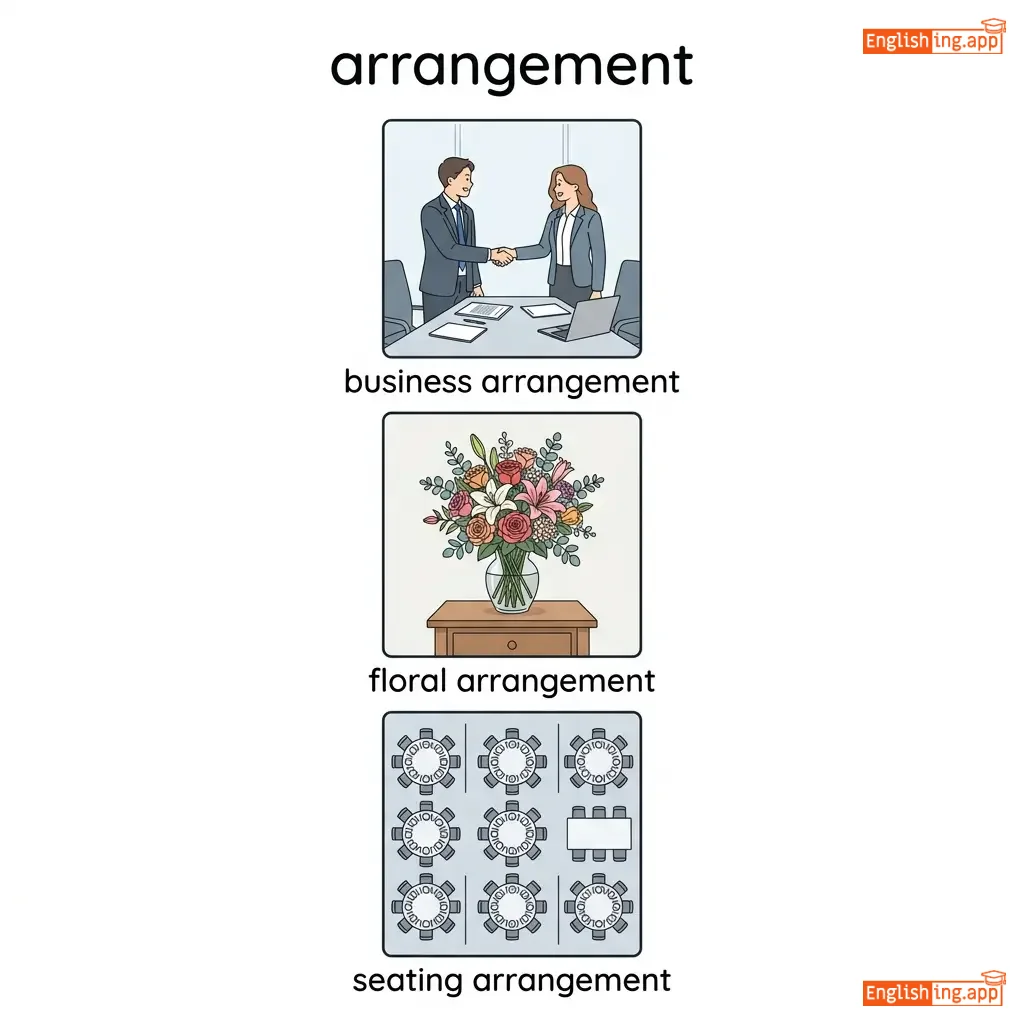
business arrangement, floral arrangement, seating arrangement, financial arrangement
••••••
|
Arrangement означает договоренность — как договориться о цветочной композиции.
••••••
|
|
🌈
••••••
|
/əˈreɪ/
noun
(arey)
••••••
|
- •••••• |
массив, выставка
massiv, vystavka
••••••
|
- •••••• | - •••••• | - •••••• | - •••••• |
an impressive display or arrangement of things
••••••
|
The shop displayed an array of colorful dresses.
Магазин продемонстрировал массив ярких платьев.
••••••
|
Магазин продемонстрировал впечатляющую выставку ярких платьев.
Magazin prodemonstriroval vpechatlyayushchuyu vystavku yarkikh plat'yev.
••••••
|
an array of
массив из
••••••
|
a large number or variety of something
••••••
|
массив из
massiv iz
••••••
|
assortment, collection, range, display, lineup
••••••
|
scarcity, lack
••••••
|
array of options, array of stars, wide array, full array
••••••
|
Array означает упорядоченную серию — в компьютере данные организованы в массив.
••••••
|
|
🚓
••••••
|
/əˈrɛst/
verb
(aɾɛst)
••••••
|
|
арестовать
arestovat
••••••
|
arrested
aɾɛstəd
••••••
|
arrested
aɾɛstəd
••••••
|
arrests
aɾɛst
••••••
|
arresting
aɾɛstɪŋ
••••••
|
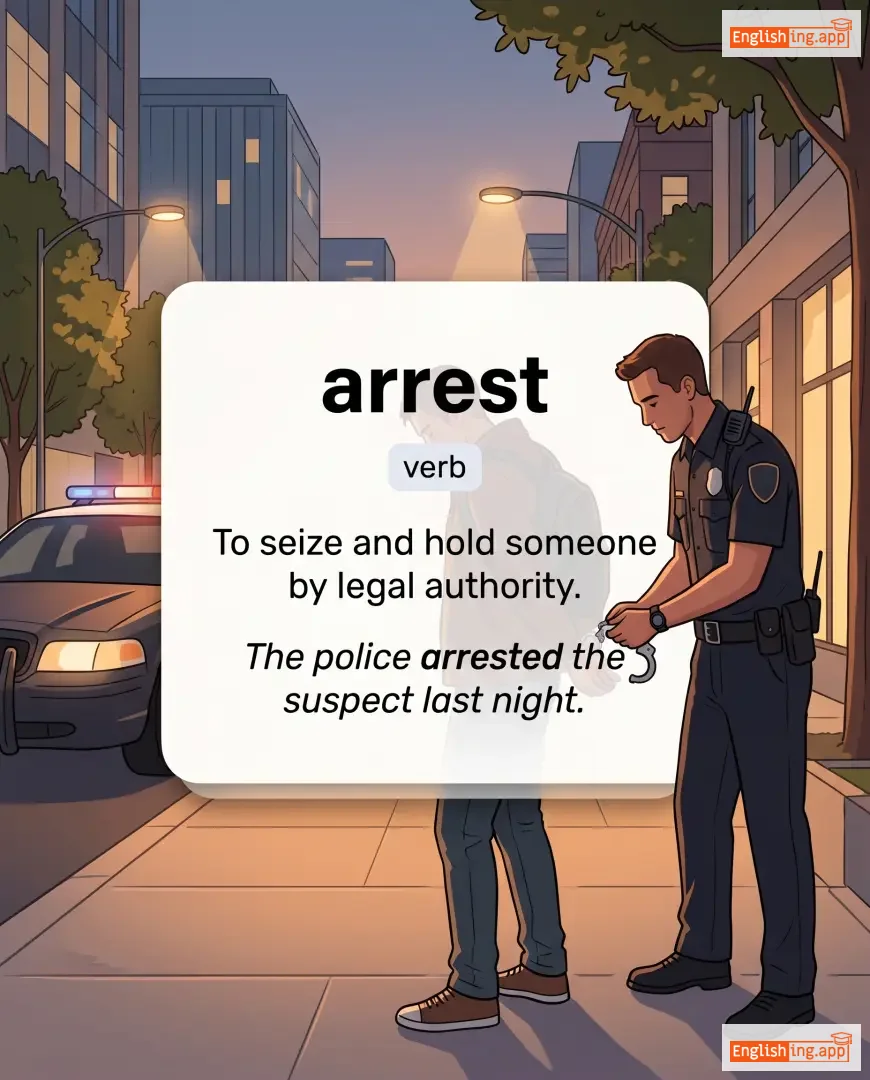
To seize and hold someone by legal authority.
••••••
|
The police arrested the suspect last night.
Полиция арестовала подозреваемого прошлой ночью.
••••••
|
Полиция арестовала подозреваемого прошлой ночью.
Politsiya arestovala podozrevaemogo proshloy noch'yu.
••••••
|
under arrest
под арестом
••••••
|
In the custody of the police.
••••••
|
под арестом
pod arestom
••••••
|
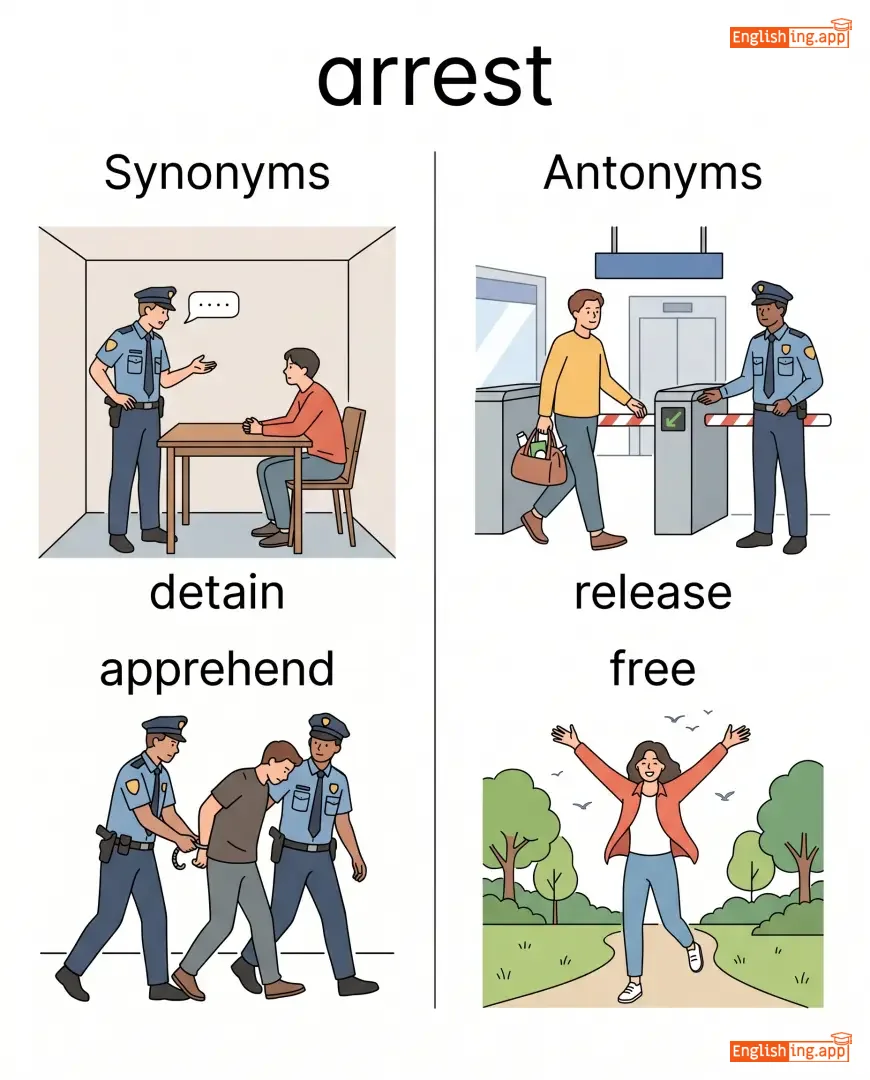
detain, apprehend, capture, seize, stop
••••••
|
release, free, liberate
••••••
|
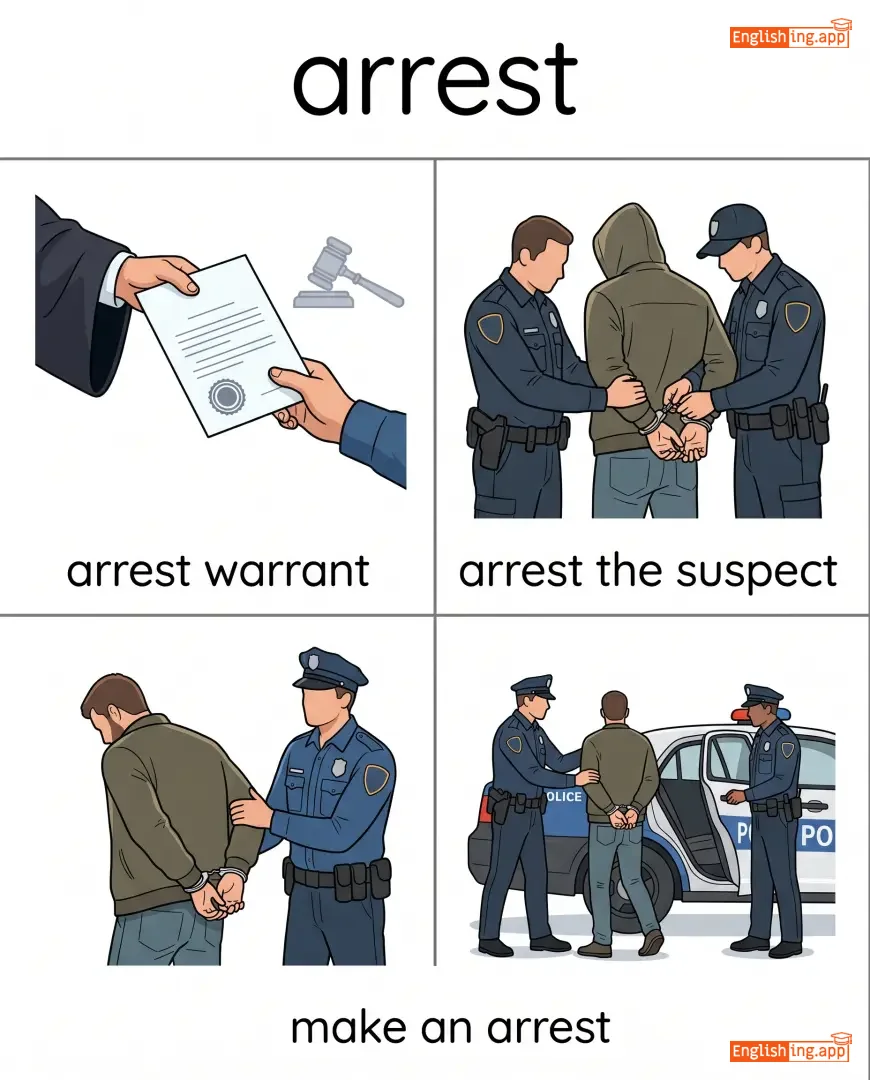
arrest warrant, arrest the suspect, make an arrest
••••••
|
Arrest - это когда ты rest в заключении, как если бы отдых был отнятый.
••••••
|
|
🚉
••••••
|
/əˈraɪvəl/
noun
(arival)
••••••
|
- •••••• |
прибытие
pribytiye
••••••
|
- •••••• | - •••••• | - •••••• | - •••••• |
The act of coming to a place, especially at the end of a journey.
••••••
|
The train's arrival was delayed by two hours. |
Прибытие поезда было задержано на два часа.
Pribytiye poezda bylo zaderzhano na dva chasa.
••••••
|
late arrival |
Someone or something arriving later than expected.
••••••
|
позднее прибытие
pozdneye pribytiye
••••••
|
appearance, coming, entry, advent, approach
••••••
|
departure, exit
••••••
|
arrival time, late arrival, arrival hall, flight arrival
••••••
|
Прибытие — это как 'приехать' — вспомни о 'прибытии' поезда.
••••••
|
|
🛬
••••••
|
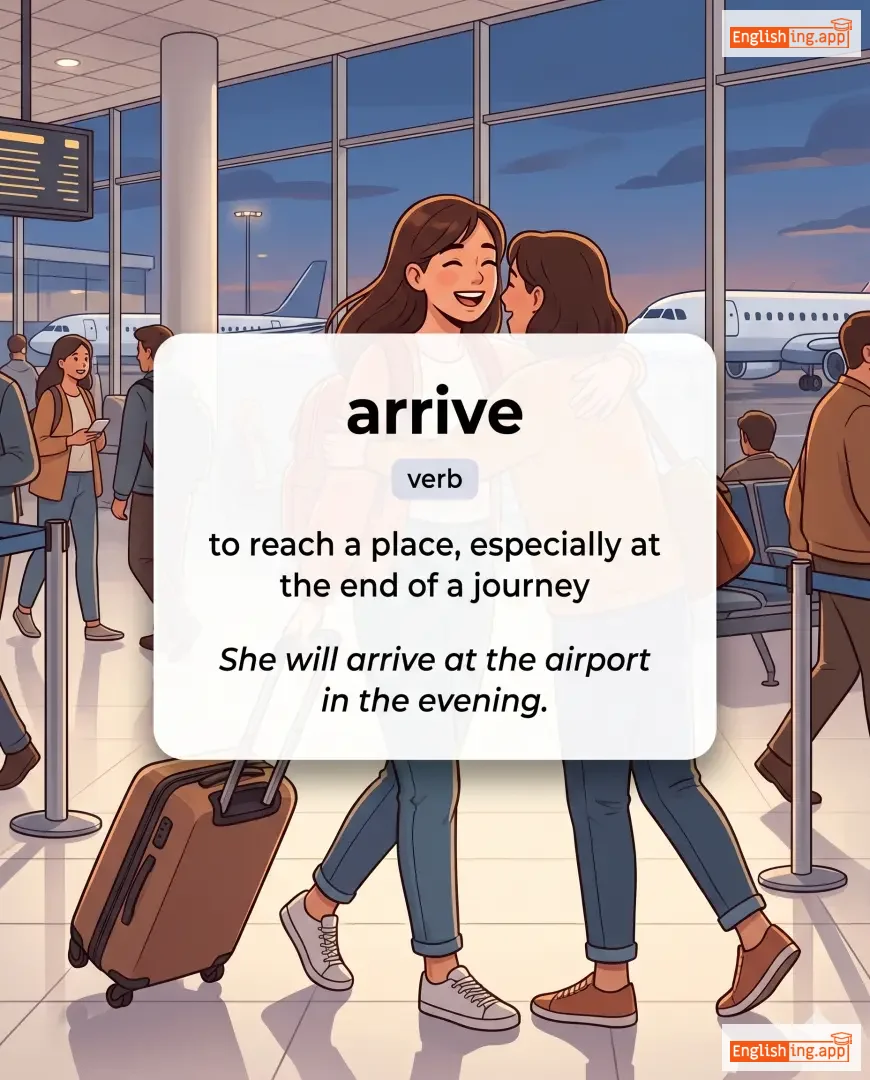
/əˈraɪv/
verb
(arajv)
••••••
|
|
прибывать
pribivat
••••••
|
arrived
arajvdt
••••••
|
arrived
arajvdt
••••••
|
arrives
arajvts
••••••
|
arriving
arajvɪŋ
••••••
|
to reach a place, especially at the end of a journey
••••••
|
She will arrive at the airport in the evening.
Она приедет в аэропорт вечером.
••••••
|
Она приедет в аэропорт вечером.
Ona priedet v aeroport vecherom.
••••••
|
arrive at a decision
принять решение
••••••
|
to reach a conclusion after consideration
••••••
|
принять решение
prinyat' reshenie
••••••
|
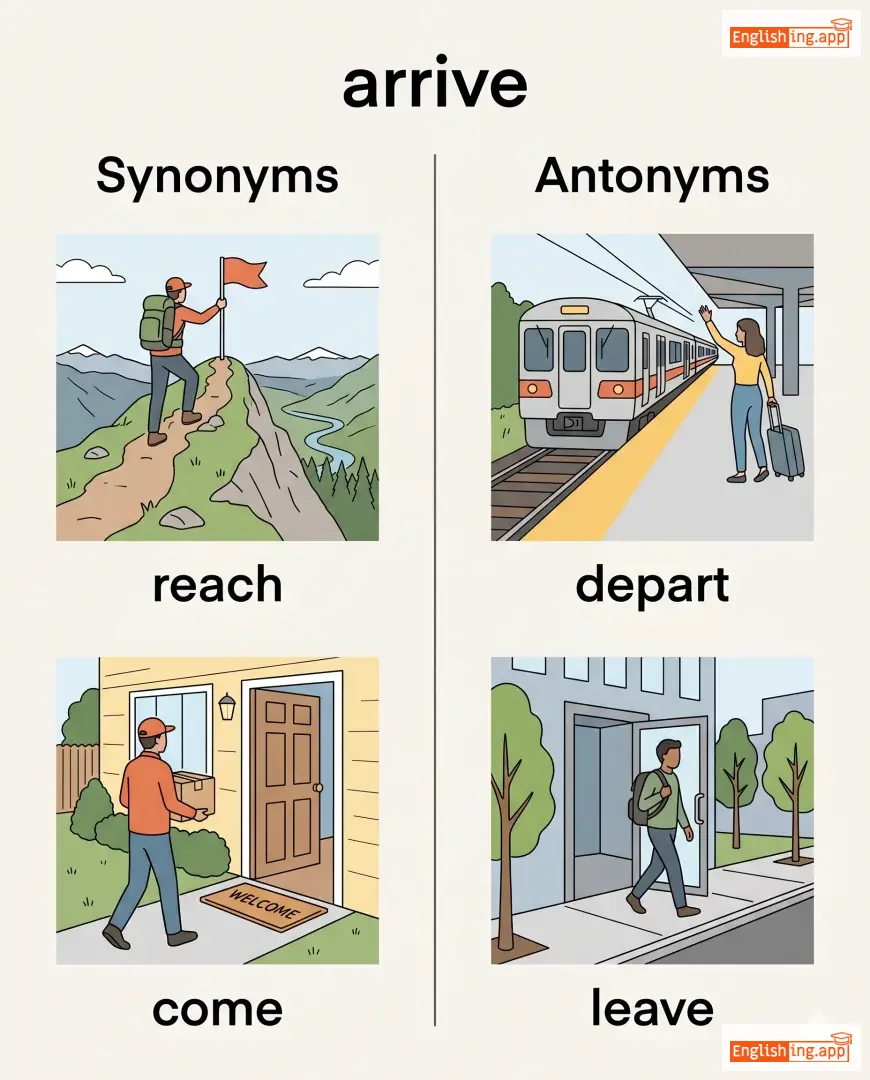
reach, come, appear, show up, land
••••••
|
depart, leave, go
••••••
|
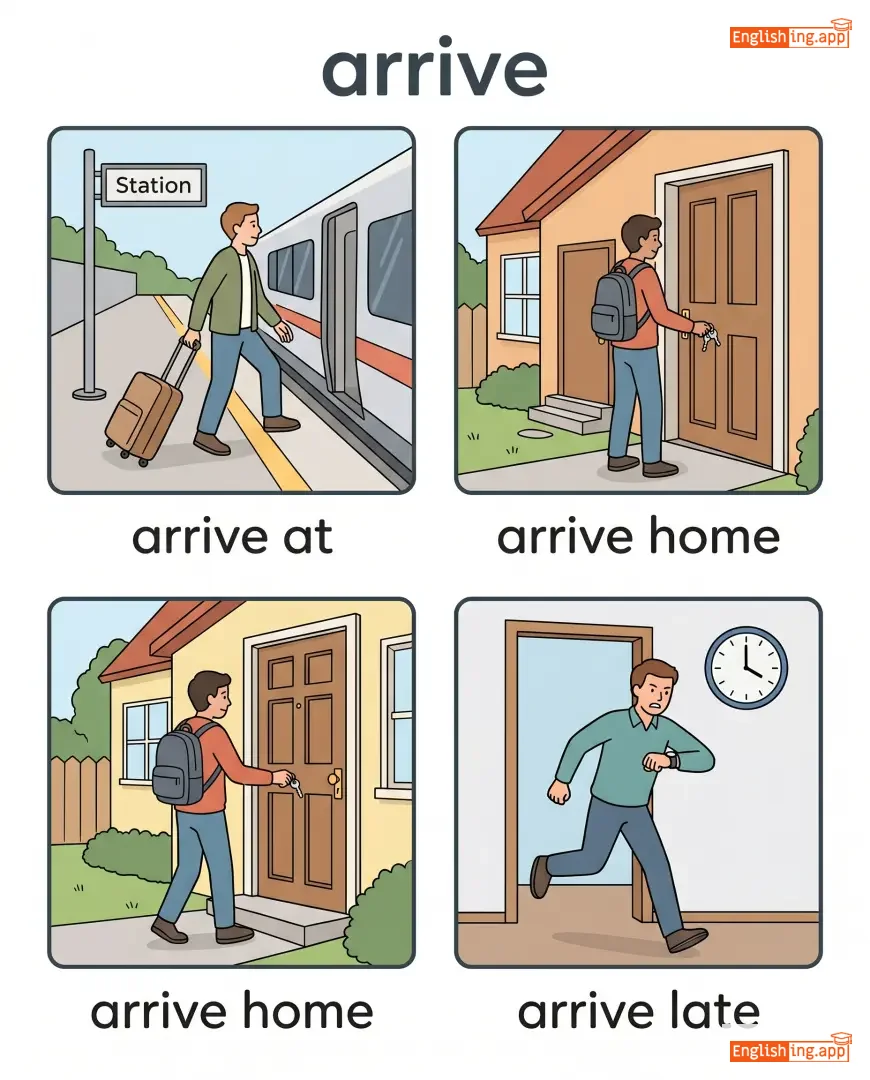
arrive at, arrive home, arrive late, arrive early
••••••
|
Pribivat, как самолет прибывает в аэропорт.
••••••
|
|
👑
••••••
|
/ˈærəɡənt/
adjective
••••••
|
- •••••• | - •••••• | - •••••• | - •••••• | - •••••• | - •••••• |
Having an exaggerated sense of one's own importance or abilities.
••••••
|
The arrogant manager dismissed the workers' complaints. |
- •••••• |
arrogant attitude |
A proud, condescending behavior or mindset.
••••••
|
- •••••• |
conceited, haughty, proud, self-important, overbearing
••••••
|
humble, modest
••••••
|
arrogant person, arrogant behavior, arrogant attitude
••••••
|
No •••••• |
|
✋
••••••
|
/ˈærəˌɡeɪt/
verb
(aroget)
••••••
|
- •••••• |
несправедливо присваивать
nespravedlivo prisvaivat
••••••
|
arrogated
arrogated
••••••
|
arrogated
arrogated
••••••
|
arrogates
arrogates
••••••
|
arrogating
arrogating
••••••
|
To claim or take something without justification.
••••••
|
The dictator arrogated all powers to himself.
Диктатор присвоил все полномочия себе.
••••••
|
Диктатор несправедливо присвоил все полномочия себе.
Diktator nespravedlivo prisvoil vse polnomochiya sebe.
••••••
|
- •••••• | - •••••• | - •••••• |
seize, assume, appropriate, usurp
••••••
|
relinquish, surrender
••••••
|
arrogate power, arrogate authority, arrogate rights
••••••
|
Arrogate означает 'Arrow gate' — как если бы ты забрал что-то, как захват ворот (gate).
••••••
|
|
🏹
••••••
|
/ˈæroʊ/
noun
(эрроу)
••••••
|
- •••••• |
стрела
strela
••••••
|
- •••••• | - •••••• | - •••••• | - •••••• |
a thin, straight weapon with a pointed tip, shot from a bow
••••••
|
The hunter shot an arrow at the target. |
Охотник выстрелил стрелой в цель.
Okhotnik vystrelil streloy v tsel'.
••••••
|
arrow of time |
the concept that time moves in only one direction, from past to future
••••••
|
стрела времени
strela vremeni
••••••
|
dart, shaft, bolt, missile, projectile
••••••
|
none, null
••••••
|
shoot an arrow, bow and arrow, arrow flight, arrow tip
••••••
|
Стрела означает arrow — запомни, что герой стреляет стрелами из лука 🏹
••••••
|
|
🎨
••••••
|
/ɑːrt/
noun
(арт)
••••••
|
- •••••• |
искусство
iskusstvo
••••••
|
- •••••• | - •••••• | - •••••• | - •••••• |
the expression or application of human creative skill and imagination
••••••
|
She studied art at the university. |
Она изучала искусство в университете.
Ona izuchala iskusstvo v universitete.
••••••
|
the art of |
the skill in doing something well
••••••
|
искусство
iskusstvo
••••••
|
craft, creativity, skill, painting, expression
••••••
|
science, nature, reality
••••••
|
modern art, fine art, art gallery, art history
••••••
|
Art означает 🎨 - искусство (iskusstvo) это творческое выражение человеческого воображения.
••••••
|
|
🗣️
••••••
|
/ɑːrˈtɪkjʊlət/
verb/adjective
(артикулировать)
••••••
|
- •••••• |
артикулировать
artikulirovat
••••••
|
articulated
артикулировал
••••••
|
articulated
артикулированный
••••••
|
articulates
артикулирует
••••••
|
articulating
артикулируя
••••••
|
to express thoughts or ideas clearly; having the ability to speak fluently and clearly
••••••
|
She was able to articulate her ideas during the meeting.
Она смогла артикулировать свои идеи на встрече.
••••••
|
Она смогла артикулировать свои идеи на встрече.
Ona smogla artikulirovat' svoi idei na vstreche.
••••••
|
articulate a vision
артикулировать видение
••••••
|
to clearly express or describe a goal or plan
••••••
|
артикулировать видение
artikulirovat' videnie
••••••
|
express, convey, enunciate, pronounce, clarify
••••••
|
mumble, mutter, unclear
••••••
|
articulate clearly, articulate ideas, articulate words, articulate speech
••••••
|
Articulate значит art+clear, по-русски — четко выразить.
••••••
|
|
🤖
••••••
|
/ˌɑːrtɪˈfɪʃəl/
adjective
(artifishial)
••••••
|
|
искусственный
iskusstvenny
••••••
|
- •••••• | - •••••• | - •••••• | - •••••• |
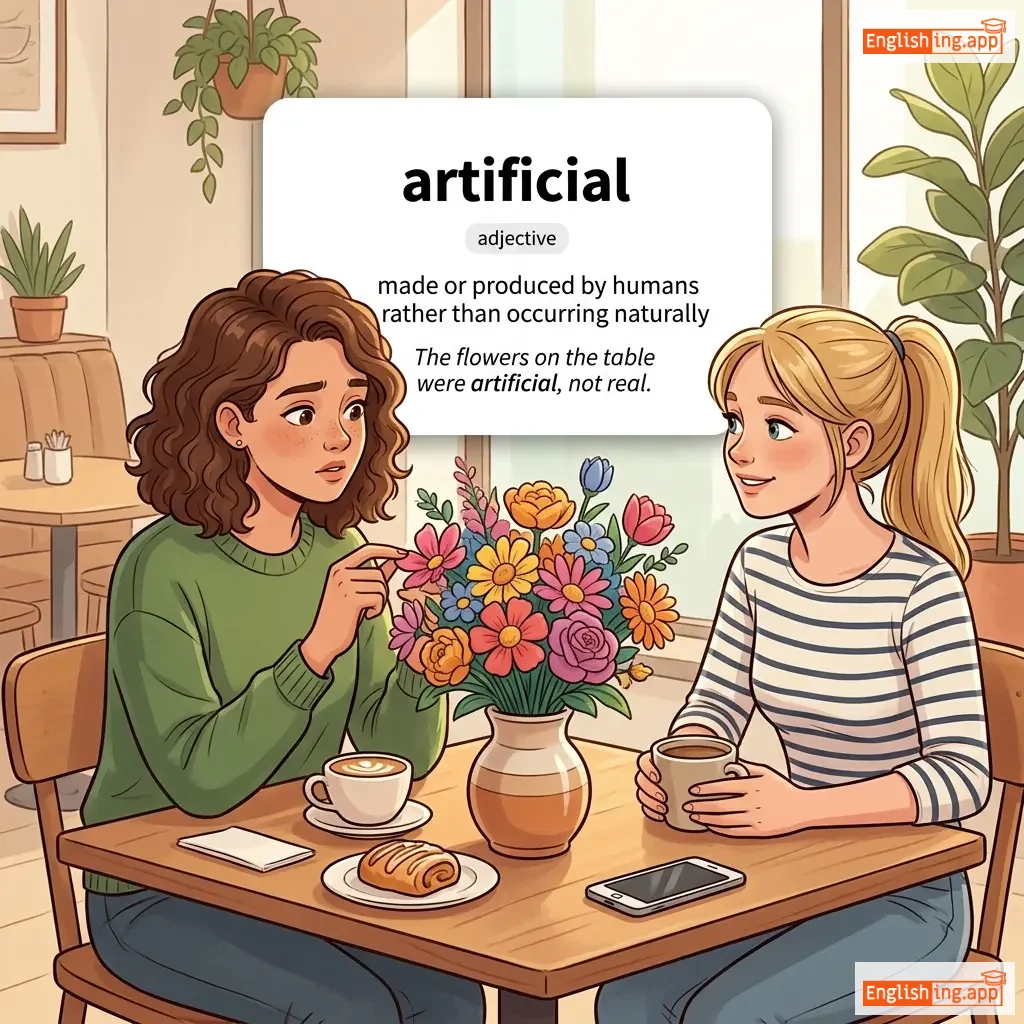
made or produced by humans rather than occurring naturally
••••••
|
The flowers on the table were artificial, not real.
Цветы на столе были искусственными, не настоящими.
••••••
|
Цветы на столе были искусственными, не настоящими.
Tsvety na stole byli iskusstvennymi, ne nastoyashchimi.
••••••
|
artificial intelligence
искусственный интеллект
••••••
|
the simulation of human intelligence by machines
••••••
|
искусственный интеллект
iskusstvenny intellekt
••••••
|
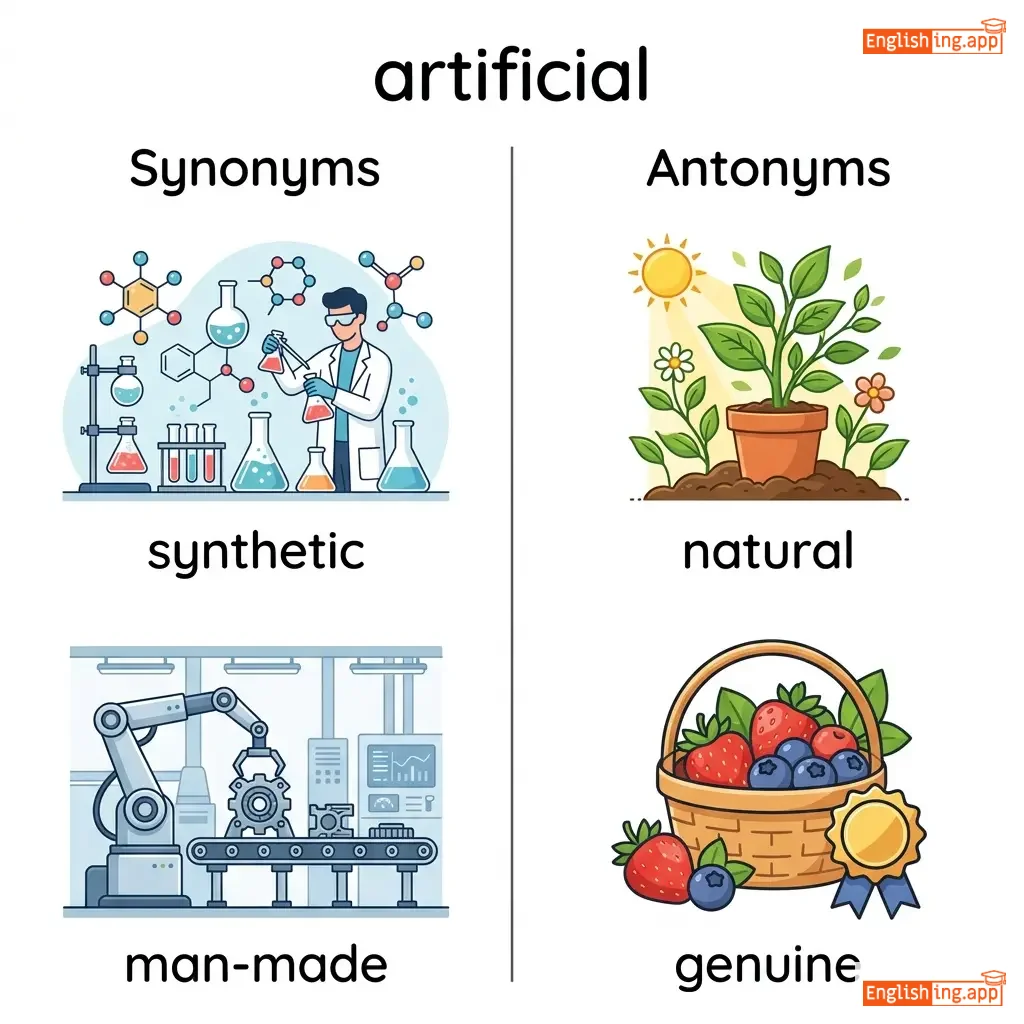
synthetic, man-made, fake, unnatural, imitation
••••••
|
natural, genuine, real
••••••
|
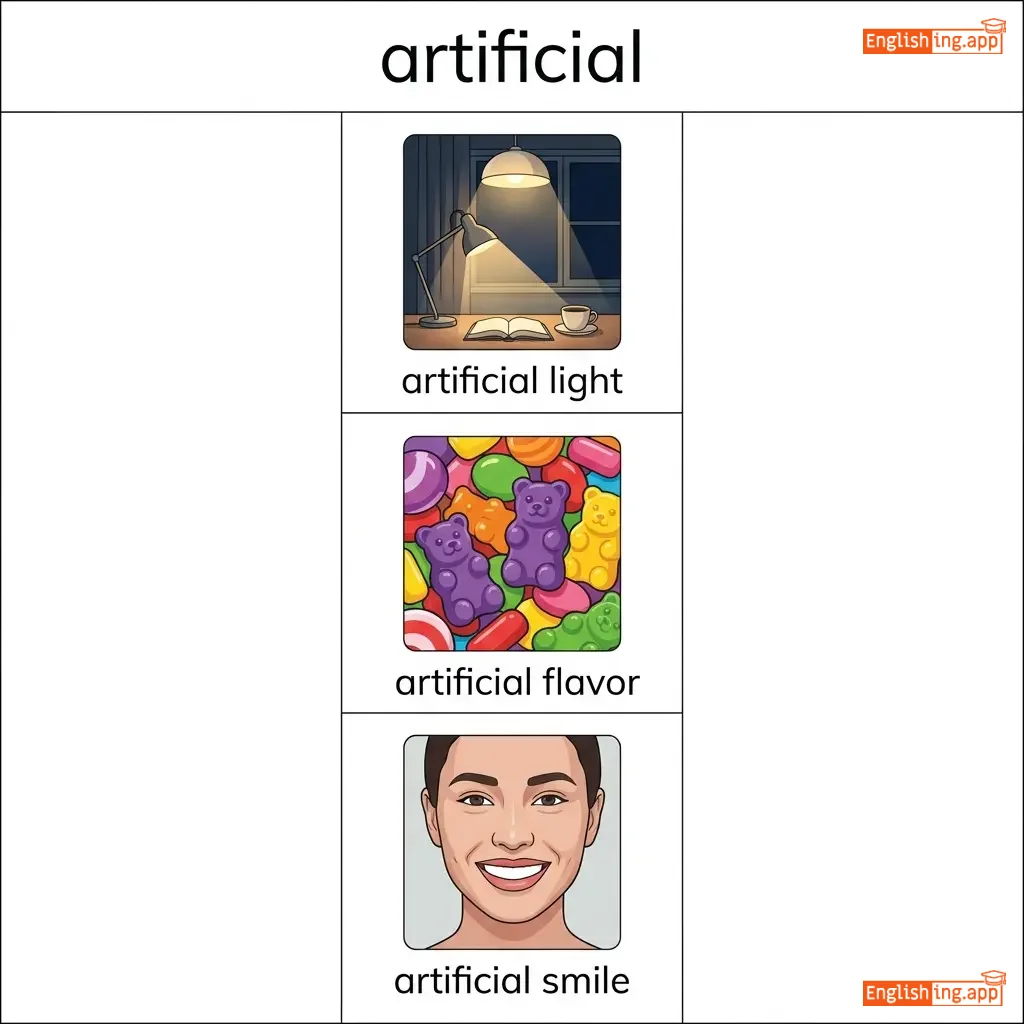
artificial light, artificial flavor, artificial smile, artificial limb
••••••
|
Artificial = искусственный, помни 'Создано человеком, поэтому Artificial'
••••••
|
|
👩🎨
••••••
|
/ˈɑːrtɪst/
noun
(артіст)
••••••
|
- •••••• |
художник
khudozhnik
••••••
|
- •••••• | - •••••• | - •••••• | - •••••• |
a person who creates art, especially paintings or drawings
••••••
|
The artist painted a beautiful landscape.
Художник написал красивый пейзаж.
••••••
|
Художник написал красивый пейзаж.
Khudozhnik napisal krasivyy peyzazh.
••••••
|
con artist
кон артист
••••••
|
a person who deceives others by gaining their trust
••••••
|
мошенник
moshennik
••••••
|
painter, creator, illustrator, designer, performer
••••••
|
amateur, layman
••••••
|
famous artist, talented artist, street artist, young artist
••••••
|
Artist 👩🎨 это художник - художник рисует красивые картины. Но Con artist это мошенник.
••••••
|
|
🎭
••••••
|
/ɑːrˈtɪstɪk/
adjective
(артистик)
••••••
|
- •••••• |
артистический
artisticheskiy
••••••
|
- •••••• | - •••••• | - •••••• | - •••••• |
having or revealing natural creative skill
••••••
|
She has an artistic sense of design.
У нее есть художественное чувство дизайна.
••••••
|
У нее есть художественное чувство дизайна.
U neyo est' khudozhestvennoe chuvstvo dizayna.
••••••
|
- •••••• | - •••••• | - •••••• |
creative, imaginative, aesthetic, inventive, expressive
••••••
|
unimaginative, uncreative
••••••
|
artistic talent, artistic ability, artistic expression, artistic design
••••••
|
Артистический 🎭 значит артистический - как креативный дизайн в искусстве.
••••••
|
|
🎨
••••••
|
/ˈɑːrtwɜːrk/
noun
(артворк)
••••••
|
- •••••• |
произведение искусства
proizvedenie iskusstva
••••••
|
- •••••• | - •••••• | - •••••• | - •••••• |
a piece of art, such as a painting, sculpture, or drawing
••••••
|
The gallery displayed an impressive artwork by a local artist. |
Галерея выставила впечатляющее произведение искусства местного художника.
Galereya vystavila vpechatlyayushchee proizvedenie iskusstva mestnogo khudozhnika.
••••••
|
- •••••• | - •••••• | - •••••• |
painting, piece, creation, masterpiece
••••••
|
nothing, void
••••••
|
create artwork, display artwork, beautiful artwork
••••••
|
Произведение искусства (proizvedenie iskusstva) вдохновляет вас создавать!
••••••
|
|
🔄
••••••
|
/æz/
conjunction, adverb, preposition
(az)
••••••
|
- •••••• |
как
kak
••••••
|
- •••••• | - •••••• | - •••••• | - •••••• |
used to compare, to indicate the role or function of something, or to introduce clauses of time or reason
••••••
|
She works as a teacher. |
Она работает как учительница.
Ona rabotaet kak uchitelnitsa.
••••••
|
as soon as |
immediately when
••••••
|
как только
kak tol'ko
••••••
|
like, while, since, because, when
••••••
|
unlike, different
••••••
|
as well, as soon as, as long as, as if
••••••
|
AS означает 'как' — как в 'As a teacher' = как учительница
••••••
|
|
⛰️
••••••
|
/əˈsɛnd/
verb
(асценд)
••••••
|
|
восходить
voskhodit
••••••
|
ascended
асцендед
••••••
|
ascended
асцендед
••••••
|
ascends
асцендс
••••••
|
ascending
асцендинг
••••••
|
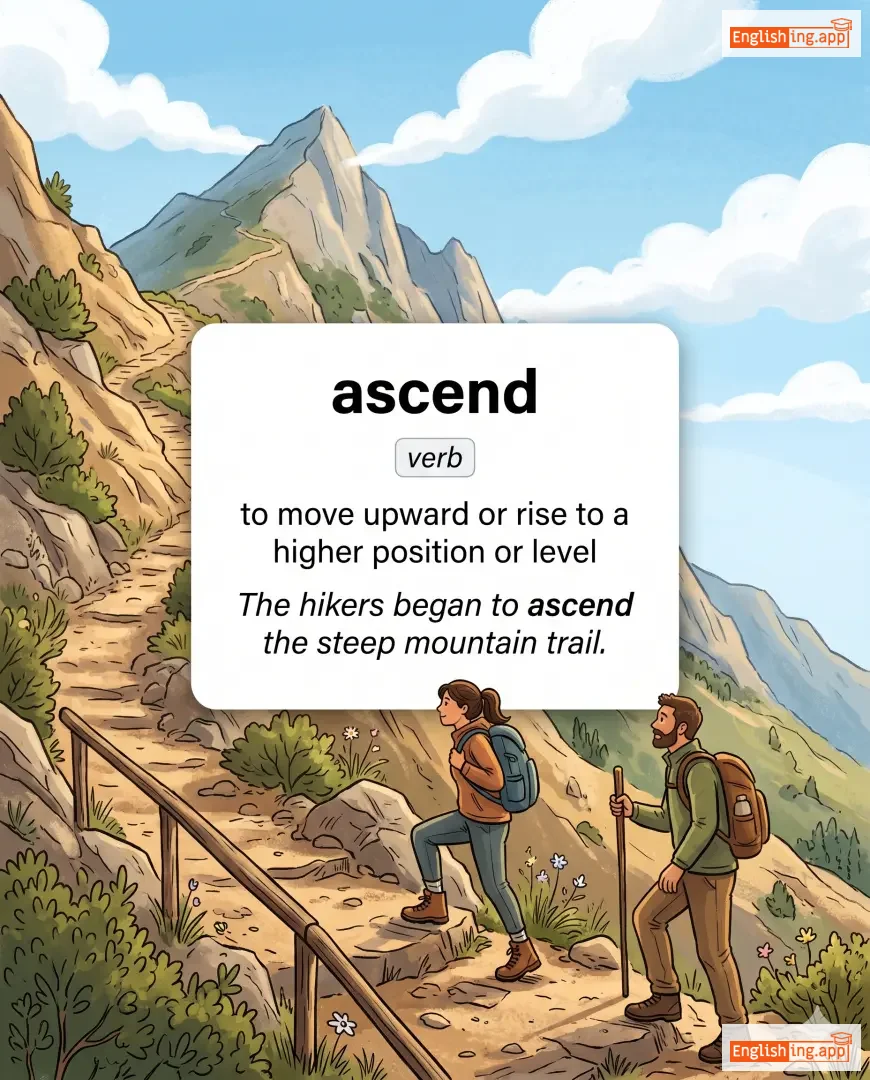
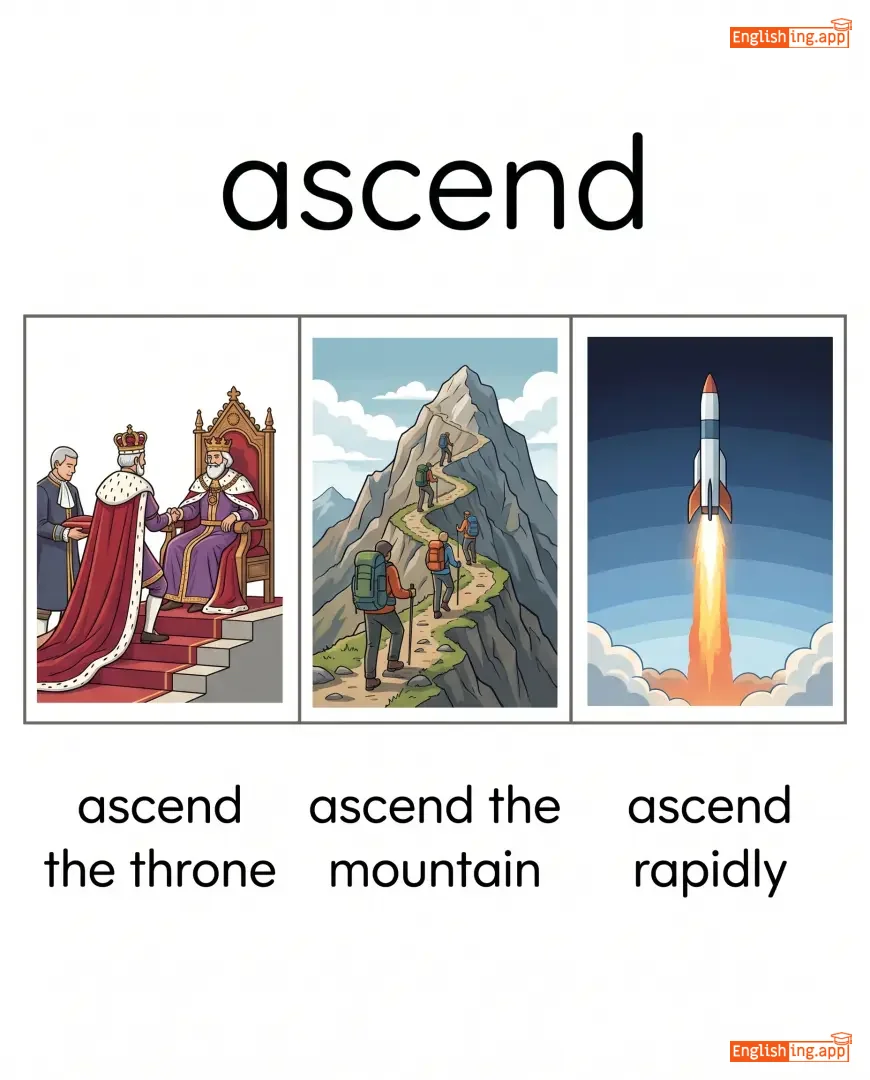
to move upward or rise to a higher position or level
••••••
|
The hikers began to ascend the steep mountain trail.
Путешественники начали восхождение по крутой горной тропе.
••••••
|
Путешественники начали восхождение по крутой горной тропе.
Puteshestvenniki nachali voskhozhdeniye po krutoy gornoy trope.
••••••
|
ascend to power
восходить к власти
••••••
|
to rise to a position of authority or leadership
••••••
|
восходить к власти
voskhodit k vlasti
••••••
|
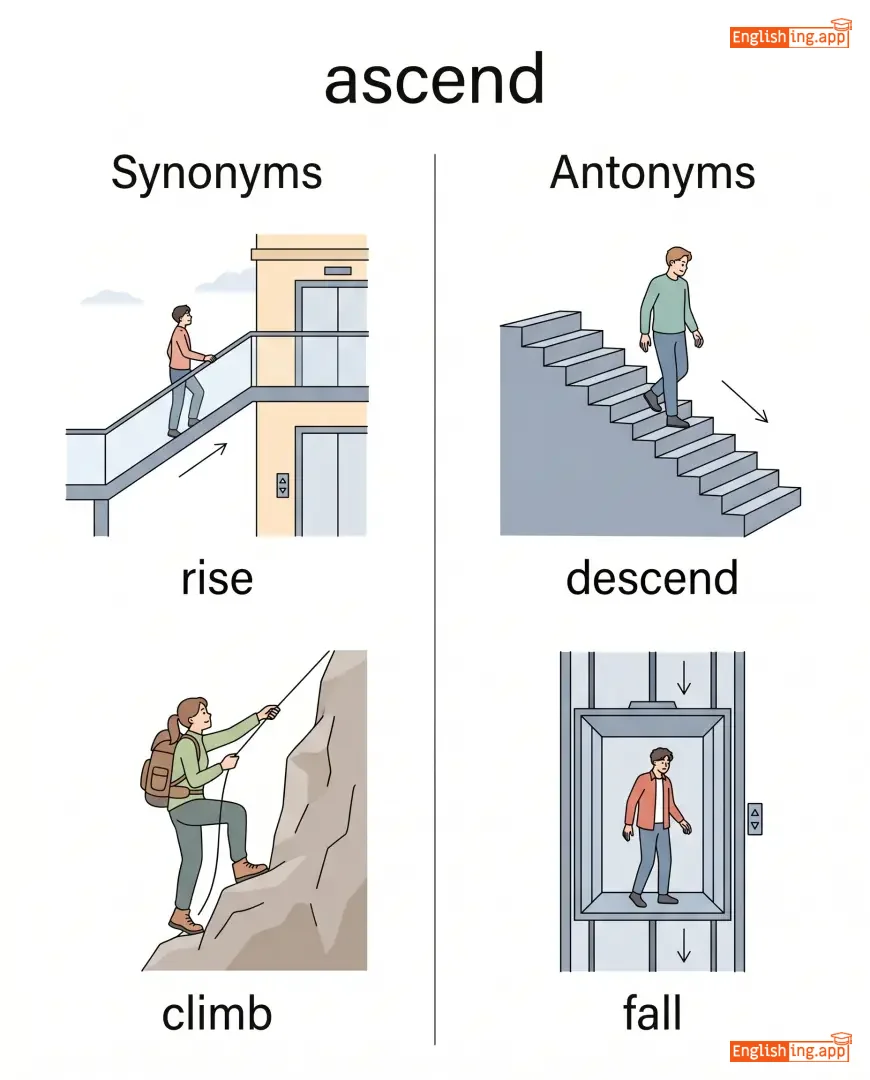
rise, climb, soar, mount, escalate
••••••
|
descend, fall, drop
••••••
|
ascend the throne, ascend the mountain, ascend rapidly
••••••
|
Ascend означает восходить - представь, что самолет восходит в небо.
••••••
|
|
🔍
••••••
|
/ˌæs.ərˈteɪn/
verb
(асертейн)
••••••
|
|
установить, определить
ustanovit, opredelit
••••••
|
ascertained
асертейнед
••••••
|
ascertained
асертейнед
••••••
|
ascertains
асертейнс
••••••
|
ascertaining
асертейнинг
••••••
|
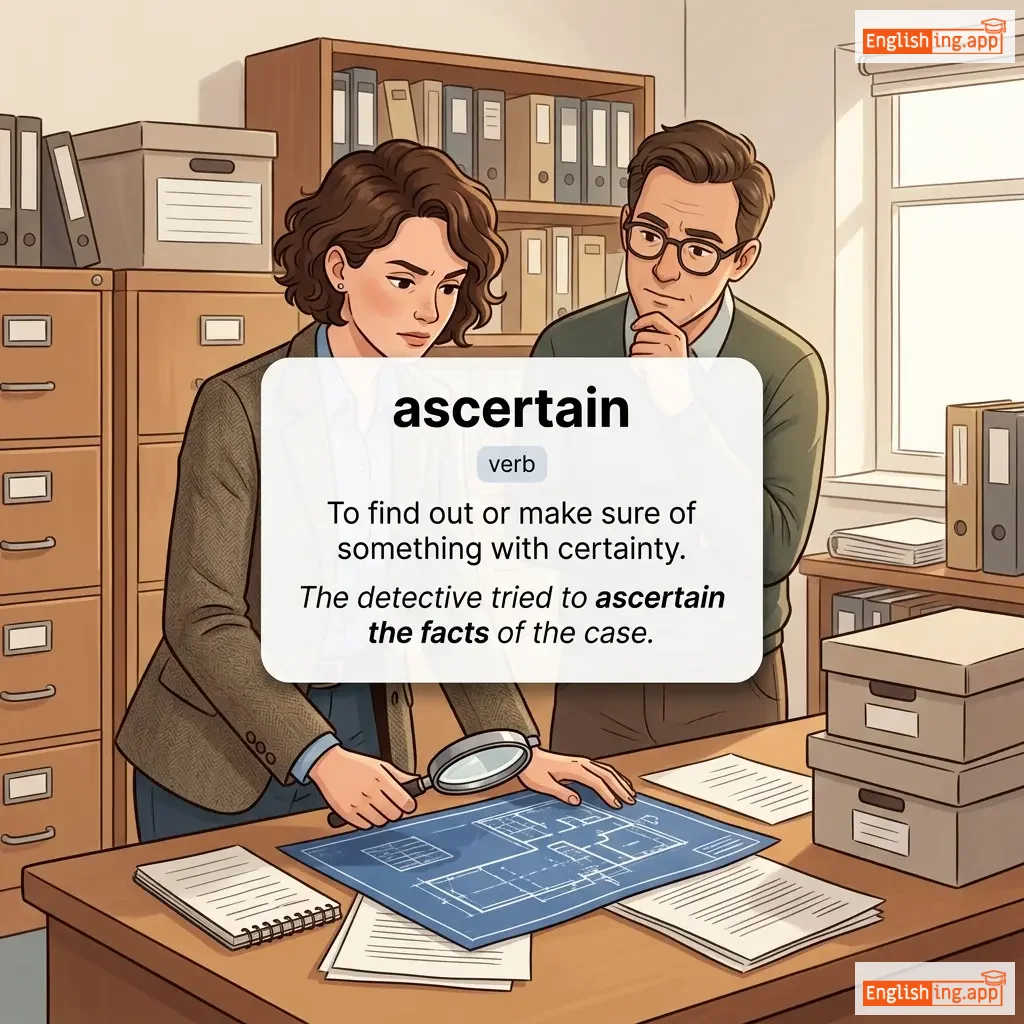
To find out or make sure of something with certainty.
••••••
|
The detective tried to ascertain the facts of the case.
Детектив пытался установить факты дела.
••••••
|
Детектив пытался установить факты дела.
Detektiv pytalsya ustanovit' fakty dela.
••••••
|
ascertain the truth
установить истину
••••••
|
To discover what is true with certainty.
••••••
|
установить истину
ustanovit' istinu
••••••
|
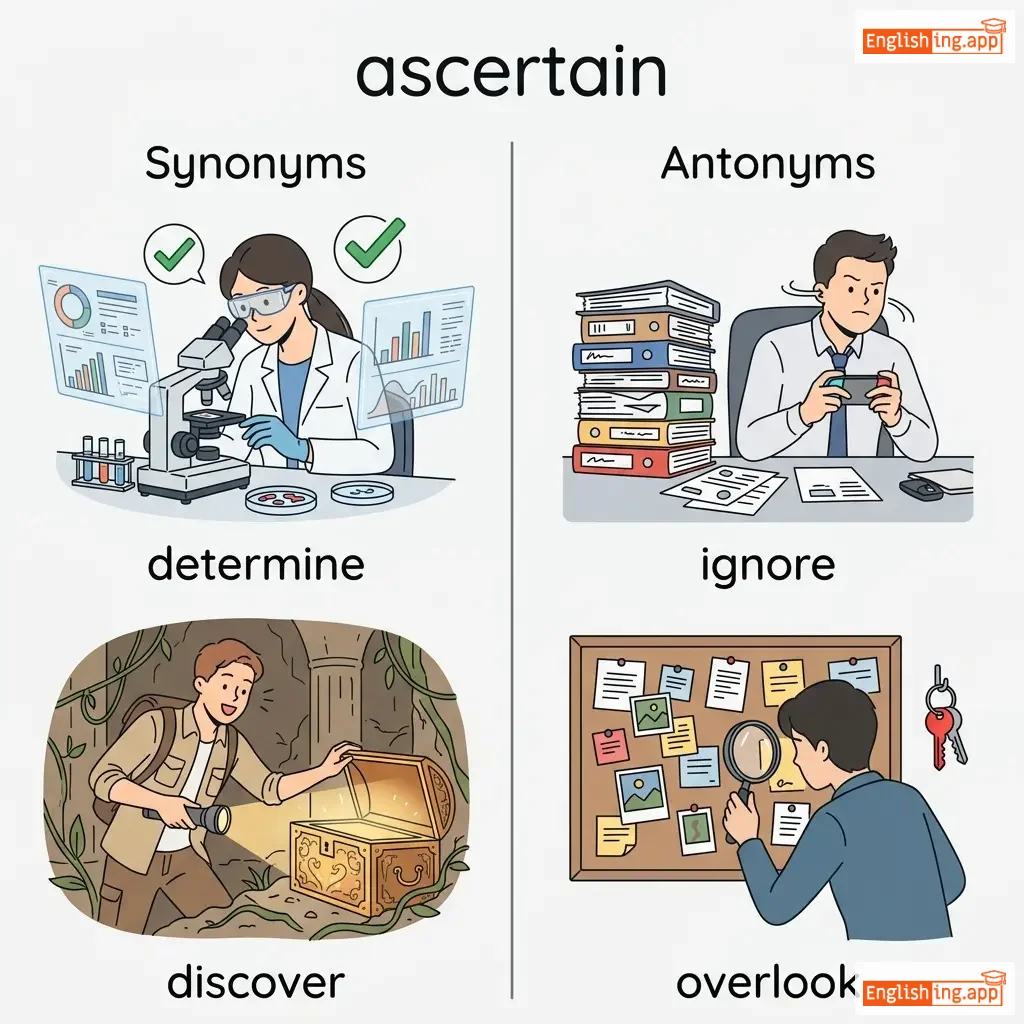
determine, discover, verify, confirm, establish
••••••
|
ignore, overlook, neglect
••••••
|
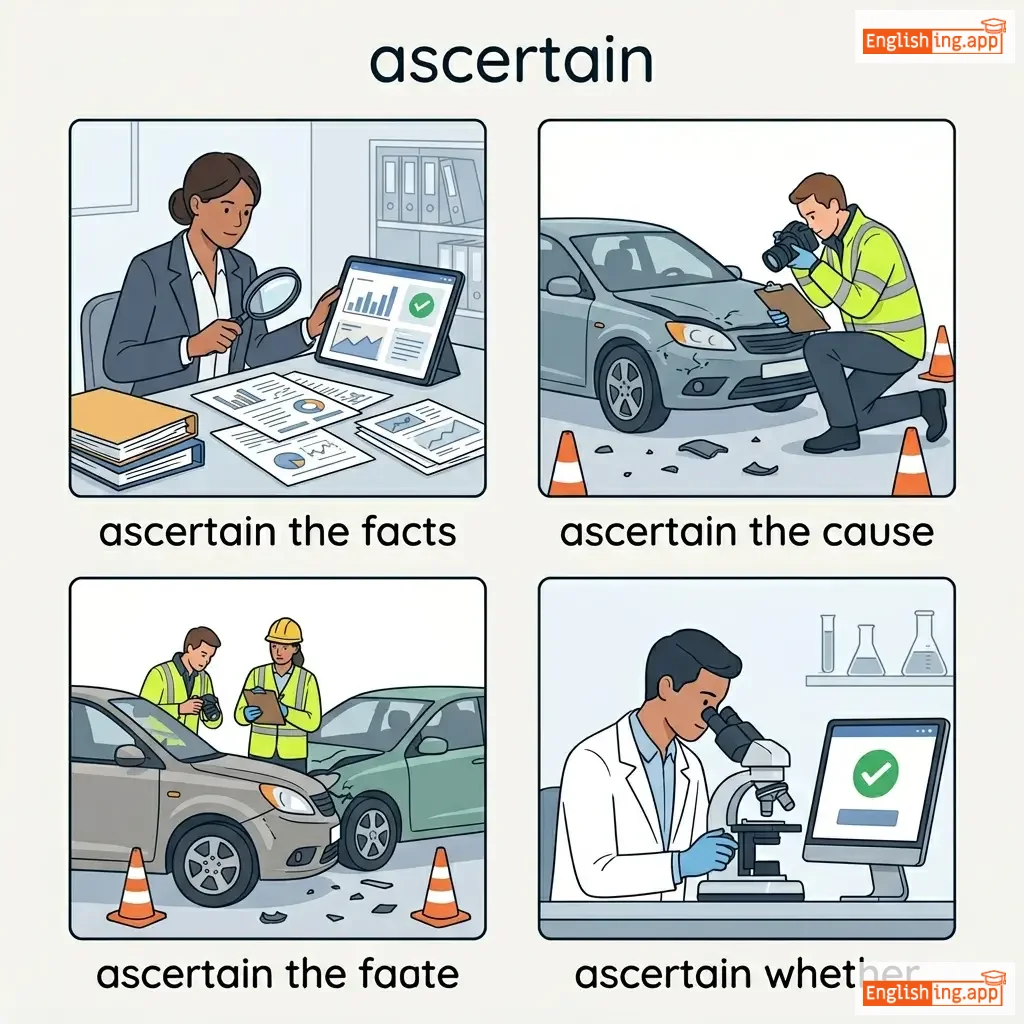
ascertain the facts, ascertain the cause, ascertain whether, ascertain identity
••••••
|
Установить что-то точно, чтобы быть уверенным.
••••••
|
|
🌋
••••••
|
/æʃ/
noun
(хэш)
••••••
|
- •••••• |
пепел
pepel
••••••
|
- •••••• | - •••••• | - •••••• | - •••••• |
the powdery residue left after the burning of a substance
••••••
|
After the fire, only ash remained of the house. |
После пожара остался только пепел от дома.
Posle pozhara ostalsia tol'ko pepel ot doma.
••••••
|
rise from the ashes |
to recover or rebuild after destruction or failure
••••••
|
восстать из пепла
vosstat' iz pepela
••••••
|
cinder, dust, residue, remains, soot
••••••
|
substance, matter
••••••
|
ash cloud, ash tray, volcanic ash, turn to ash
••••••
|
Ash означает пепел — ‘После огня ничего не остается, только пепел’ 🔥
••••••
|
|
😳
••••••
|
/əˈʃeɪmd/
adjective
(эшэймд)
••••••
|
- •••••• |
постыдный
postydny
••••••
|
- •••••• | - •••••• | - •••••• | - •••••• |
feeling embarrassed or guilty because of one's actions
••••••
|
He was ashamed of his poor performance. |
Он был постыдным из-за своей плохой работы.
On byl postydnym iz-za svoei plokhoi raboty.
••••••
|
- •••••• | - •••••• | - •••••• |
embarrassed, guilty, humiliated, mortified
••••••
|
proud, unashamed, confident, shameless
••••••
|
feel ashamed, deeply ashamed, ashamed of yourself
••••••
|
Постыдный связан с позором, и это помогает помнить о чувстве стыда за свои действия.
••••••
|
|
➡️
••••••
|
/əˈsaɪd/
adverb, noun
(asayd)
••••••
|
- •••••• |
в сторону
v storonu
••••••
|
- •••••• | - •••••• | - •••••• | - •••••• |
to or on one side; a remark not intended for everyone
••••••
|
He stepped aside to let her pass.
Он отошел в сторону, чтобы пропустить ее.
••••••
|
Он отошел в сторону, чтобы пропустить ее.
On oteshel v storonu, chtoby propustit ee.
••••••
|
put aside
отложить в сторону
••••••
|
to save or reserve something
••••••
|
отложить
otlozhit
••••••
|
apart, away, to the side, remark
••••••
|
center, middle
••••••
|
step aside, put aside, aside from
••••••
|
Aside значит в сторону — помните 'отложите в сторону'.
••••••
|
|
❓
••••••
|
/æsk/
verb
(ask)
••••••
|
- •••••• |
спрашивать
sprashivat
••••••
|
asked
asked
••••••
|
asked
asked
••••••
|
asks
asks
••••••
|
asking
asking
••••••
|
to request information or seek an answer
••••••
|
She asked him about his new job.
She asked him about his new job.
••••••
|
Она спросила его о его новой работе.
Ona sprosila ego o ego novoy rabote.
••••••
|
ask for trouble
ask for trouble
••••••
|
to behave in a way that is likely to cause problems
••••••
|
искать проблемы
iskat' problemy
••••••
|
inquire, request, question, demand, seek
••••••
|
answer, respond
••••••
|
ask a question, ask for help, ask politely
••••••
|
Ask означает спрашивать - Когда задаешь вопрос, чтобы получить ответ.
••••••
|
|
😴
••••••
|
/əˈsliːp/
adjective
(əslip)
••••••
|
- •••••• |
спящий
spyashchiy
••••••
|
- •••••• | - •••••• | - •••••• | - •••••• |
in a state of sleep
••••••
|
The baby is fast asleep. |
Малыш крепко спит.
Malysh krepkо spit.
••••••
|
fall asleep |
to begin sleeping
••••••
|
засыпать
zasypat
••••••
|
sleeping, dozing, resting, napping
••••••
|
awake, alert
••••••
|
fast asleep, fall asleep, sound asleep
••••••
|
Asleep означает спящий — помните, 'Sleep' означает спать.
••••••
|
|
🔍
••••••
|
/ˈæs.pekt/
noun
(аспект)
••••••
|
- •••••• |
аспект
aspekt
••••••
|
- •••••• | - •••••• | - •••••• | - •••••• |
A particular part, feature, or view of something.
••••••
|
One important aspect of health is regular exercise. |
Один важный аспект здоровья — это регулярные физические упражнения.
Odin vazhnyy aspekt zdorov'ya — eto regulyarnye fizicheskie uprazhneniya.
••••••
|
in every aspect |
in all parts or respects
••••••
|
во всех аспектах
vo vsekh aspektakh
••••••
|
feature, element, angle, facet, perspective
••••••
|
whole, entirety, totality
••••••
|
important aspect, key aspect, in every aspect, different aspect
••••••
|
Аспект - это как угол или часть чего-то.
••••••
|
|
🚀
••••••
|
/ˌæspəˈreɪʃən/
noun
(аспи́рэйшн)
••••••
|

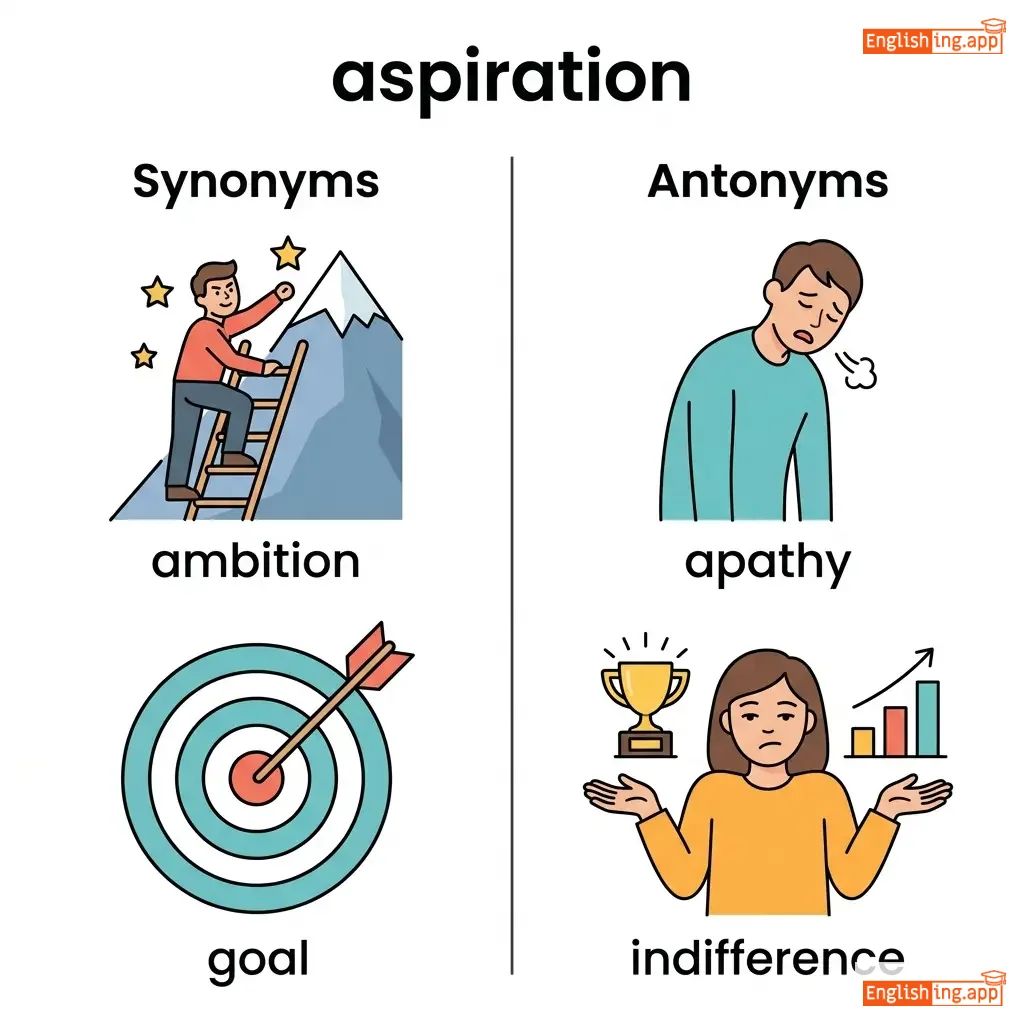

|
стремление
stremlenie
••••••
|
- •••••• | - •••••• | - •••••• | - •••••• |
a strong desire to achieve something; ambition
••••••
|
Her aspiration is to become a doctor. |
Её стремление — стать врачом.
Eyo stremlenie — stat' vrachom.
••••••
|
high aspirations |
lofty ambitions or goals
••••••
|
высокие стремления
vysokie stremleniya
••••••
|
ambition, goal, aim, desire, dream
••••••
|
apathy, indifference
••••••
|
career aspiration, life aspiration, aspiration for success, high aspiration
••••••
|
Aspiration означает стремление — когда мы стремимся, наши стремления растут.
••••••
|
|
🌟
••••••
|
/əˈspaɪər/
verb
(аспайр)
••••••
|
- •••••• |
стремиться
stremitsya
••••••
|
aspired
аспайрд
••••••
|
aspired
аспайрд
••••••
|
aspires
аспайрс
••••••
|
aspiring
аспайринг
••••••
|
to have a strong desire to achieve something
••••••
|
Many students aspire to study abroad.
Многие студенты стремятся учиться за границей.
••••••
|
Многие студенты стремятся учиться за границей.
Mnogie studenty stremyatsya uchit'sya za granitsey.
••••••
|
aspire to greatness
стремиться к величию
••••••
|
to aim for significant achievement
••••••
|
стремиться к величию
stremitsya k velichiyu
••••••
|
desire, aim, hope, strive, long
••••••
|
doubt, neglect, avoid
••••••
|
aspire to, aspire for success, aspire higher, aspire towards
••••••
|
Aspire означает стремиться к величию — как студенты, стремящиеся учиться за границей.
••••••
|

