Vocabulaires

Découvrez, apprenez et maîtrisez le vocabulaire anglais

🏋️‍♀️

workout (wɜːrkaʊt)

noun
/ˈwɜːrkaʊt/
exercice (exercice)

a session of physical exercise or training to improve fitness or health

"She does a full-body workout every morning before work."

"Elle fait un entraînement complet du corps chaque matin avant de travailler." (Elle fait un entrainement complet du corps chaque matin avant de travailler.)
noun
/ˈwɜːrkpleɪs/
lieu de travail (lieu de travail)

a place where people work, such as an office, factory, or shop

"Maintaining good communication is vital in the workplace."

"Maintenir une bonne communication est essentiel sur le lieu de travail." (Maintenir une bonne communication est essentiel sur le lieu de travail.)
noun
/wɜːrks/
œuvres (œuvres)

the physical or mental effort used to achieve something

"Her works have been exhibited in museums worldwide."

"Ses œuvres ont été exposées dans des musées du monde entier." (Ses œuvres ont été exposées dans des musées du monde entier.)
noun
/ˈwɜːrkʃɒp/
atelier (atelier)

a room or building where people engage in work or creative activities

"The workshop focused on improving technical skills for young professionals."

"L'atelier s'est concentré sur l'amélioration des compétences techniques des jeunes professionnels." (L'atelier s'est concentre sur l'amelioration des competences techniques des jeunes professionnels.)
noun
/wɜːrld/
monde (monde)

the earth, together with all of its countries and people

"The world is becoming more interconnected every day."

"Le monde devient de plus en plus interconnecté chaque jour." (Le monde devient de plus en plus interconnecté chaque jour.)
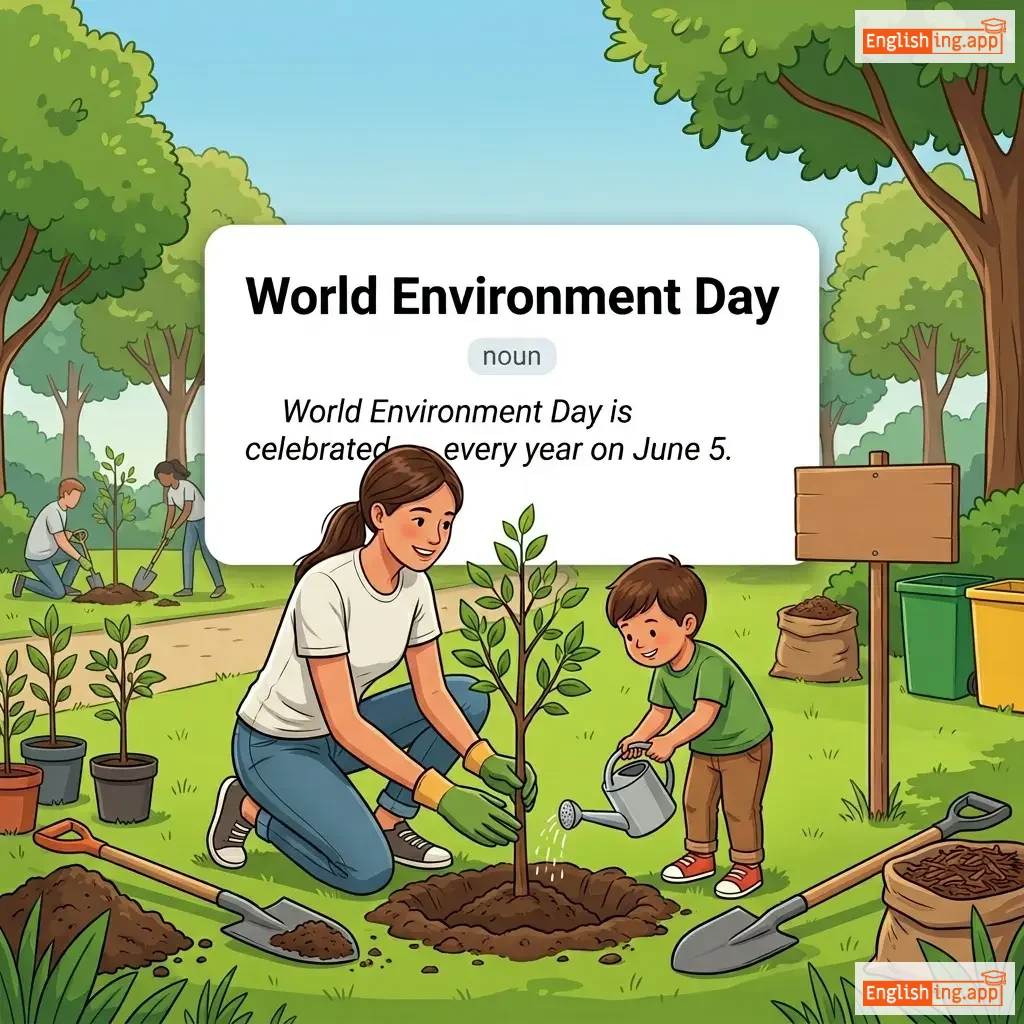
World Environment Day definition card — visual illustration of the meaning
noun
/wɜːrld ɪnˈvaɪrənmənt deɪ/
Journée mondiale de l'environnement (Journee mondiale de l'environnement)

An annual global event celebrated on June 5 to raise awareness about environmental protection and encourage action for environmental conservation.

"World Environment Day is celebrated every year on June 5."

"La Journée mondiale de l'environnement est célébrée chaque année le 5 juin." (La Journee mondiale de l'environnement est celebree chaque annee le 5 juin.)
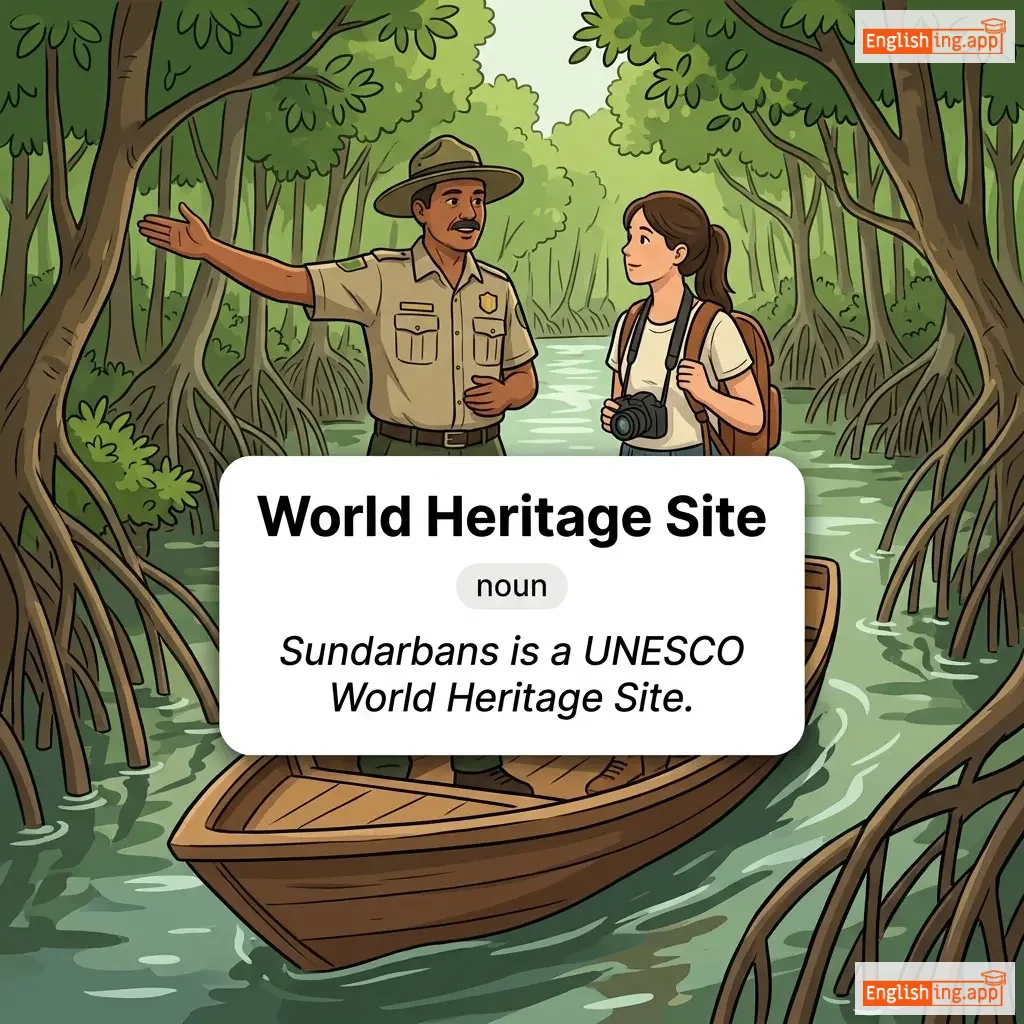
World Heritage Site definition card — visual illustration of the meaning
noun
wɜːrld ˈhɛrɪtɪdʒ saɪt
Site du patrimoine mondial (Site du patrimoine mondial)

A landmark or area selected by UNESCO for having cultural, historical, scientific or other form of significance.

"Sundarbans is a UNESCO World Heritage Site."

"Les Sundarbans sont un site du patrimoine mondial de l'UNESCO." (Les Sundarbans sont un site du patrimoine mondial de l'UNESCO.)
adjective
/ˈwɜːldli/
matériel (materiel)

Concerned with material values or ordinary life rather than spiritual matters.

"He was more interested in worldly success than in spiritual growth."

"Il était plus intéressé par le succès matériel que par la croissance spirituelle." (Il était plus intéressé par le succès matériel que par la croissance spirituelle.)
adjective
/ˈwɜːrldwaɪd/
mondial (mondial)

extending or reaching throughout the whole world

"The company has achieved worldwide recognition for its products."

"L'entreprise a obtenu une reconnaissance mondiale pour ses produits." (L'entreprise a obtenu une reconnaissance mondiale pour ses produits.)
noun
/wɜːrm/
ver (ver)

a small, long, soft-bodied invertebrate animal

"The gardener found a worm in the soil."

"Le jardinier a trouvé un ver dans le sol." (Le jardinier a trouve un ver dans le sol.)
adjective, verb (past participle of wear)
/wɔːrn/
usé (use)

damaged, weakened, or deteriorated from use or age

"His shoes were old and worn."

"Ses chaussures étaient vieilles et usées." (Ses chaussures étaient vieilles et usées.)
adjective
/ˈwɜːrid/
inquiet (inquiet)

feeling anxious or concerned about something

"She was worried about the upcoming exam."

"Elle était inquiète à propos de l'examen à venir." (Elle était inquiète à propos de l'examen à venir.)
adjective
/ˈwʌrisəm/
inquiétant; préoccupant (inquietant; preoccupant)

causing anxiety or concern; troubling

"The student's declining grades were worrisome to his parents."

"Les notes en baisse de l'étudiant étaient inquiétantes pour ses parents." (Les notes en baisse de l'etudiant etaient inquietantes pour ses parents.)
verb
/ˈwʌri/
s'inquiéter (sinquieter)

to feel anxious or concerned about something

"Don’t worry, everything will be okay."

"Ne t'inquiète pas, tout va bien se passer." (Ne t'inquiete pas, tout va bien se passer.)
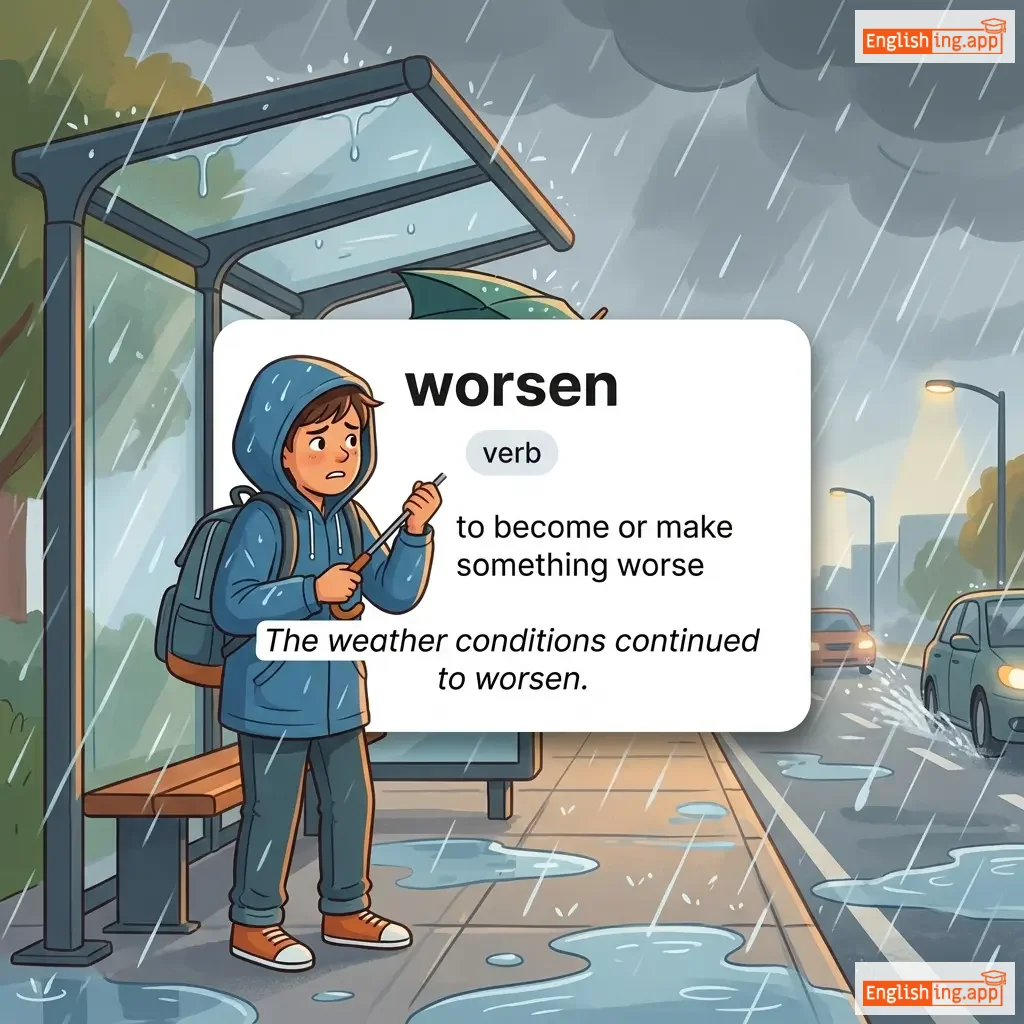
worsen definition card — visual illustration of the meaning
verb
/ˈwɜːrsən/
empirer (empirer)

to become or make something worse

"The weather conditions continued to worsen."

"Les conditions météorologiques ont continué à empirer." (Les conditions météorologiques ont continué à empirer.)
verb
/ˈwɜːʃɪp/
adoration (adoration)

To show reverence and adoration for a deity or sacred being.

"They gathered at the temple to worship together."

"Ils se sont réunis au temple pour adorer ensemble." (Ils se sont reunis au temple pour adorer ensemble.)
adjective
/wɜːrθ/
précieux (pre-syu)

having a particular value, especially in terms of money

"The car is worth a lot of money."

"La voiture vaut beaucoup d'argent." (La voiture vaut beaucoup d'argent.)
adjective
/ˈwɜːrθləs/
sans valeur; inutile; dénué de sens (sans valeur; inutile; denué de sens)

having no value; useless

"The old computer became worthless after the new software updates."

"L'ancien ordinateur est devenu inutile après les nouvelles mises à jour du logiciel." (Lancien ordinateur est devenu inutile apres les nouvelles mises à jour du logiciel.)
adjective
/ˈwɜːrθˌwaɪl/
précieux (precieux)

worth the time, effort, or money spent; valuable

"Volunteering at the shelter was a worthwhile experience."

"Faire du bénévolat au refuge a été une expérience précieuse." (Faire du bénévolat au refuge a été une expérience précieuse.)
adjective
/ˈwɜːði/
digne (digne)

having value or merit; deserving respect or attention

"She is worthy of praise for her dedication."

"Elle mérite des éloges pour son dévouement." (Elle merite des eloges pour son devouement.)
verb
/wʊd/
ferait (ferait)

used to indicate a future possibility or action in the past

"He said he would help me tomorrow."

"Il a dit qu'il m'aiderait demain." (Il a dit qu'il m'aiderait demain.)
adjective
/ˈwʊd biː/
aspirant; potentiel; (aspirant; potentiel;)

prospective; intending to be; aspiring

"The would-be actor practiced his lines every day."

"L'acteur aspirant répétait ses répliques tous les jours." (L'acteur aspirant répétait ses répliques tous les jours.)
noun/verb
/wuːnd/
bonheur (bonheur)

an injury to the body or to harm someone

"He received a deep wound on his arm."

"Elle ne pouvait pas cacher son bonheur quand elle a reçu le prix." (Elle ne pouvait pas cacher son bonheur quand elle a reçu le prix.)
interjection
/waʊ/
expression de surprise (expression de surprise)

used to express great surprise, admiration, or pleasure

"Wow, that performance was amazing!"

"Wow, cette performance était incroyable!" (Wow, cette performance etait incroyable!)
noun
/reɪθ/
spectre (spectre)

A ghost or ghostlike image of someone, especially seen shortly before or after their death.

"A wraith appeared in the fog near the old castle."

"Un spectre est apparu dans le brouillard près du vieux château." (Un spectre est apparu dans le brouillard près du vieux château.)
verb
/ˈræŋɡl̩/
disputer (disputer)

to argue or dispute noisily or angrily

"The two neighbors wrangled over the property line for hours."

"Les deux voisins se sont disputés pendant des heures au sujet de la ligne de propriété." (Les deux voisins se sont disputés pendant des heures au sujet de la ligne de propriété.)
noun
/ˈræŋɡlər/
gardien de bétail (gardien de betail)

a person who argues noisily; or someone who takes care of livestock on a ranch

"The cowboy worked as a wrangler on the ranch."

"Le cowboy a travaillé comme un rángler dans le ranch." (Le cowboy a travaillé comme un rángler dans le ranch.)
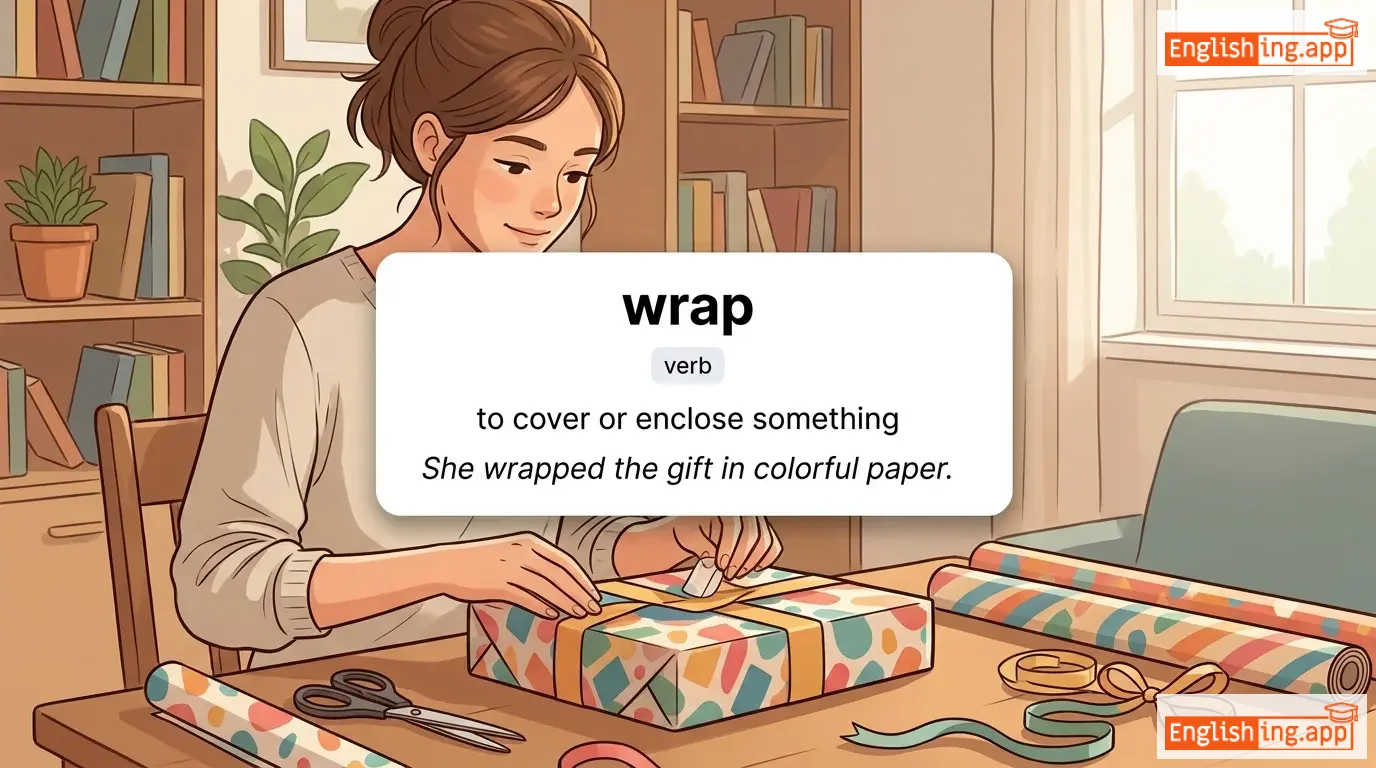
wrap definition card — visual illustration of the meaning
verb
/ræp/
envelopper (envelopper)

to cover or enclose something

"She wrapped the gift in colorful paper."

"Elle a enveloppé le cadeau dans du papier coloré." (Elle a enveloppé le cadeau dans du papier coloré.)
noun
/ˈræp.ər/
enveloppe (enveloppe)

a loose garment worn around the body; covering material

"She put on a warm wrapper before going outside."

"Elle a mis un manteau chaud avant de sortir." (Elle a mis un manteau chaud avant de sortir.)
noun
/ræθ/
colère (colere)

extreme anger or rage

"The king's wrath terrified the villagers."

"La colère du roi terrifiait les villageois." (La colere du roi terrifiait les villageois.)
verb
/riːk/
causer des dégâts (causer des degats)

to cause or inflict something, especially damage or harm

"The storm wreaked havoc on the coastal villages."

"La tempête a causé de grands dégâts dans les villages côtiers." (La tempête a cause de grands degats dans les villages cotiers.)
noun
/rek/
destruction; naufrage; (destruction; naufrage;)

the destruction or disabling of a ship or vehicle; something that has been badly damaged or destroyed

"The car wreck blocked the highway for hours."

"L'accident de voiture a bloqué l'autoroute pendant des heures." (L'accident de voiture a bloque l'autoroute pendant des heures.)
verb
/rɛntʃ/
tordre brusquement (tordre brusquement)

to pull or twist suddenly and violently

"He wrenched the door open in anger."

"Il a tordu la porte avec colère." (Il a tordu la porte avec colère.)
verb
/rɛst/
arracher de force (arracher de force)

to forcibly pull something from a person's grasp; to seize with effort or struggle

"The police had to wrest the weapon from the suspect's hand."

"La police a dû arracher l'arme des mains du suspect." (La police a dû arracher l'arme des mains du suspect.)
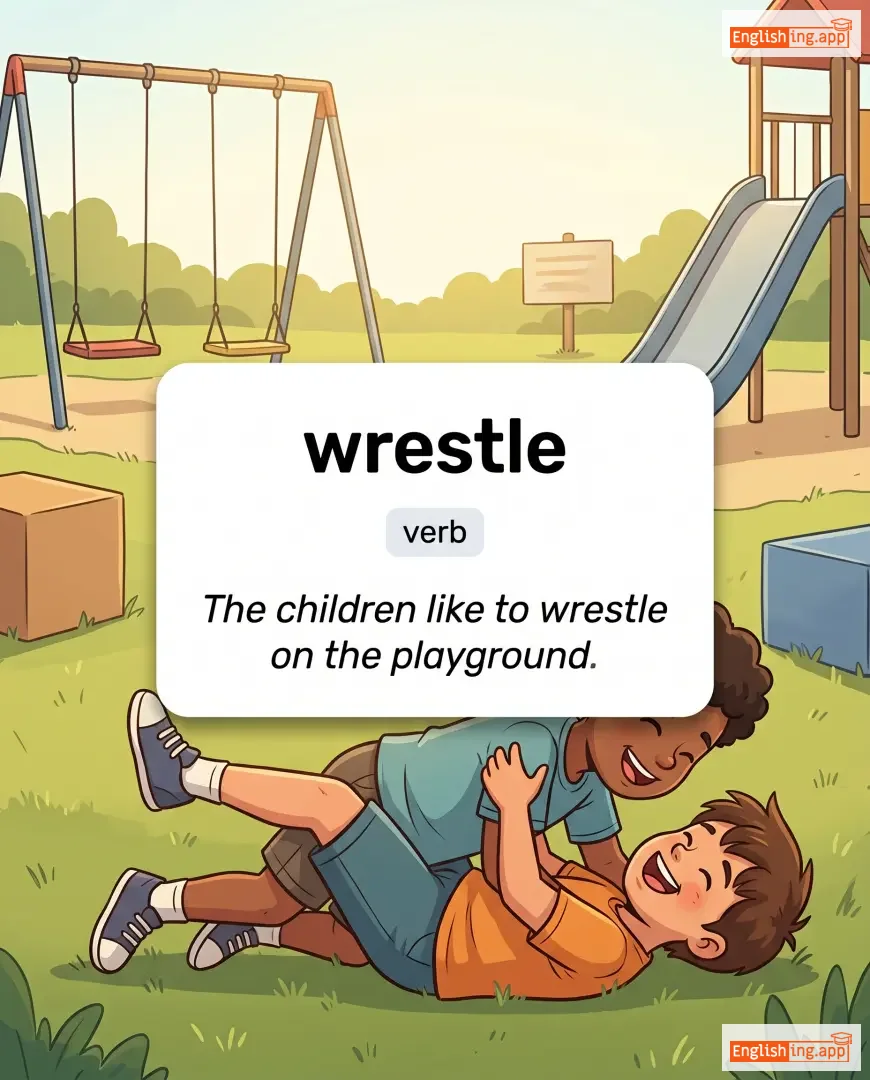
wrestle definition card — visual illustration of the meaning
verb
/ˈresəl/
lutter (lutter)

to fight by grappling and trying to throw down an opponent; to struggle with a problem

"The children like to wrestle on the playground."

"Les enfants aiment lutter dans la cour de récréation." (Les enfants aiment lutter dans la cour de récréation)
noun
/rɛtʃ/
misérable (miserable)

an unfortunate or miserable person; a despicable or contemptible person

"The poor wretch was left out in the cold with no shelter."

"Le pauvre misérable a été laissé dehors dans le froid sans abri." (Le pauvre misérable a été laissé dehors dans le froid sans abri.)
adjective
/ˈrɛtʃɪd/
misérable (miserable)

in a very unhappy, miserable, or poor condition

"They lived in a wretched hut with no clean water."

"Ils vivaient dans une hutte misérable sans eau potable." (Ils vivaient dans une hutte miserable sans eau potable.)
noun
/ˈrɛtʃɪdnəs/
misère (misere)

a state of misery, unhappiness, or poor condition

"The novel depicts the wretchedness of war victims."

"Le roman décrit la misère des victimes de la guerre." (Le roman decrit la misere des victimes de la guerre.)
verb
/rɪŋ/
bonheur (bonheur)

to squeeze and twist something to force liquid out; to extract with effort

"She had to wring the towel after washing it."

"Elle ne pouvait pas cacher son bonheur lorsqu'elle a reçu le prix." (Elle ne pouvait pas cacher son bonheur lorsqu'elle a recu le prix.)
noun/verb
/ˈrɪŋ.kəl/
ride (ride)

A small line or fold in the skin or fabric; to form small folds or lines.

"The old shirt had many wrinkles."

"La vieille chemise avait beaucoup de rides." (La vieille chemise avait beaucoup de rides.)
noun
/rɪst/
poignet (pwa-nay)

the joint connecting the hand with the forearm

"He wore a smartwatch on his left wrist."

"Il portait une montre connectée à son poignet gauche." (Il portait une montre connectee a son poignet gauche.)
noun
/rɪt/
ordre judiciaire (ordre judiciaire)

A formal written order issued by a court.

"The judge issued a writ of habeas corpus."

"Le juge a émis un ordre de habeas corpus." (Le juge a émis un ordre de habeas corpus.)
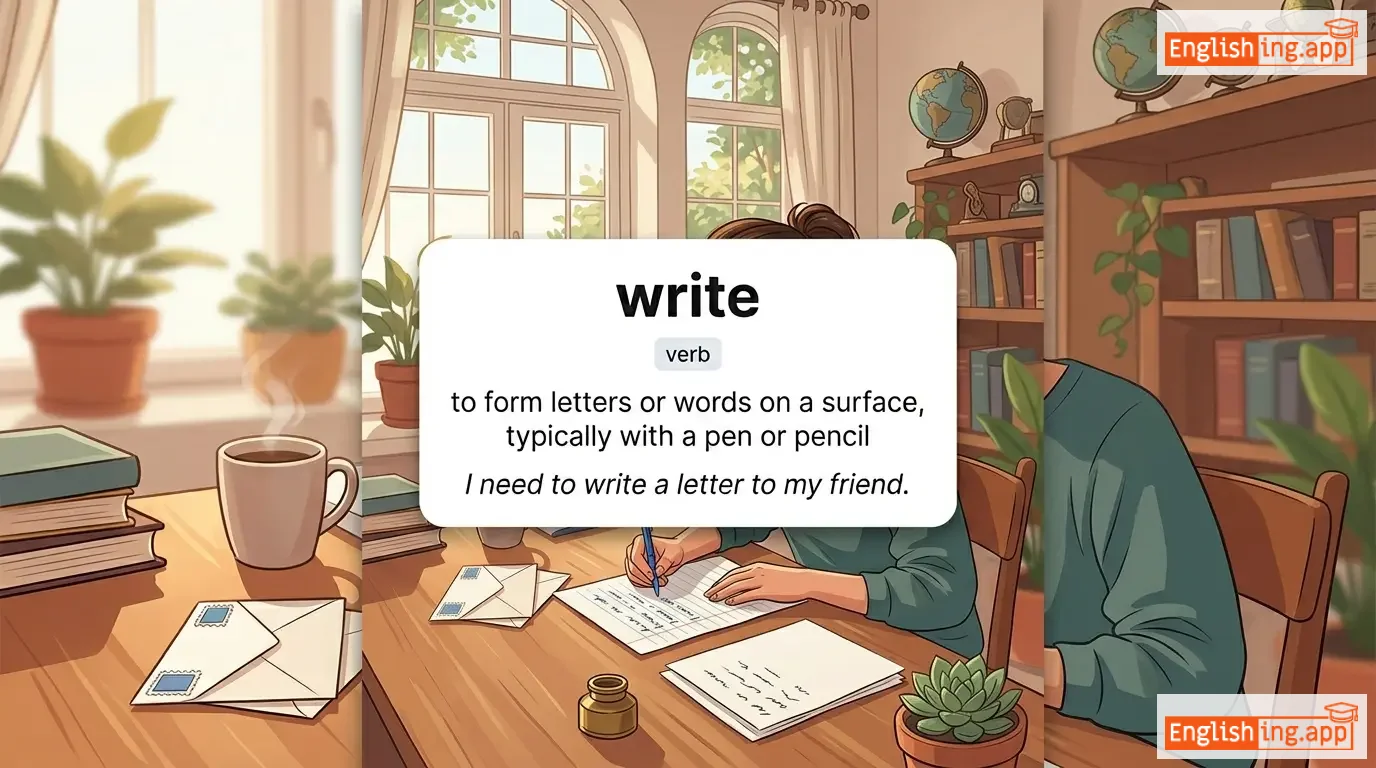
write definition card — visual illustration of the meaning
verb
/raɪt/
bonheur (bonheur)

to form letters or words on a surface, typically with a pen or pencil

"I need to write a letter to my friend."

"Elle n'a pas pu cacher son bonheur quand elle a reçu le prix." (Elle n'a pas pu cacher son bonheur quand elle a reçu le prix.)
noun
/ˈraɪtər/
écrivain (ecrivan)

a person who writes, especially as a profession

"The writer published a new novel last month."

"L'écrivain a publié un nouveau roman le mois dernier." (L'ecrivan a publi un nouveau roman le mois dernier.)
verb
/raɪð/
se tordre (se tordre)

To twist or squirm in pain or discomfort.

"He writhed in pain after twisting his ankle."

"Il se tordait de douleur après s'être foulé la cheville." (Il se tordait de douleur après s'être foulé la cheville.)
noun/verb
/ˈraɪ.tɪŋ/
bonheur (bonheur)

The activity of putting words on paper or composing text; the written form of communication.

"She spends hours every day on her creative writing."

"Elle n'a pas pu cacher son bonheur quand elle a reçu le prix." (Elle n'a pas pu cacher son bonheur quand elle a reçu le prix.)
adjective
/ˈrɪtən/
écrit (écrit)

expressed in writing rather than spoken; composed or recorded in written form

"The agreement must be in written form to be valid."

"L'accord doit être sous forme écrite pour être valide." (L'accord doit être sous forme écrite pour être valide.)
adjective
/rɒŋ/
faux (faux)

not correct or true; mistaken

"It is wrong to cheat on a test."

"Il est faux de tricher à un examen." (Il est faux de tricher à un examen.)
adjective
/ˌrɒŋˈhɛd.ɪd/
à l'esprit tordu (a l'espri tordu)

Having or showing bad judgment or stubbornly holding to wrong ideas.

"The policy was considered wrongheaded and harmful."

"La politique a été considérée comme ayant l'esprit tordu et nuisible." (La po-li-tique a été consi-dé-rée com-me a-yon l'es-pri tor-du et nui-si-ble.)
adverb
/ˈrɒŋli/
à tort (a tort)

in an incorrect or mistaken way; unfairly or unjustly

"He was wrongly accused of the crime."

"Il a été accusé à tort du crime." (Il a ete accuse a tort du crime)