Vocabulaires

Découvrez, apprenez et maîtrisez le vocabulaire anglais

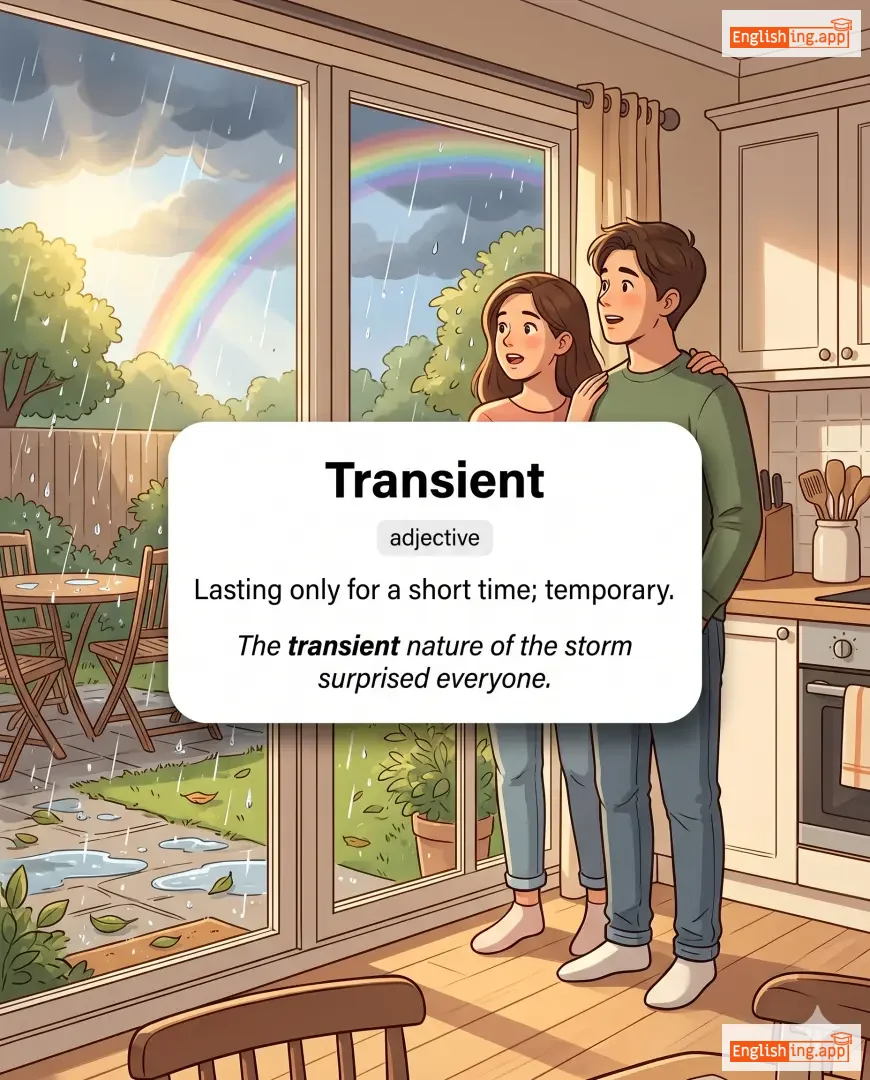
Transient definition card — visual illustration of the meaning
adjective
/ˈtrænziənt/
transitoire (transitoire)

Lasting only for a short time; temporary.

"The transient nature of the storm surprised everyone."

"La nature transitoire de la tempête a surpris tout le monde." (La nature transitoire de la tempête a surpris tout le monde.)
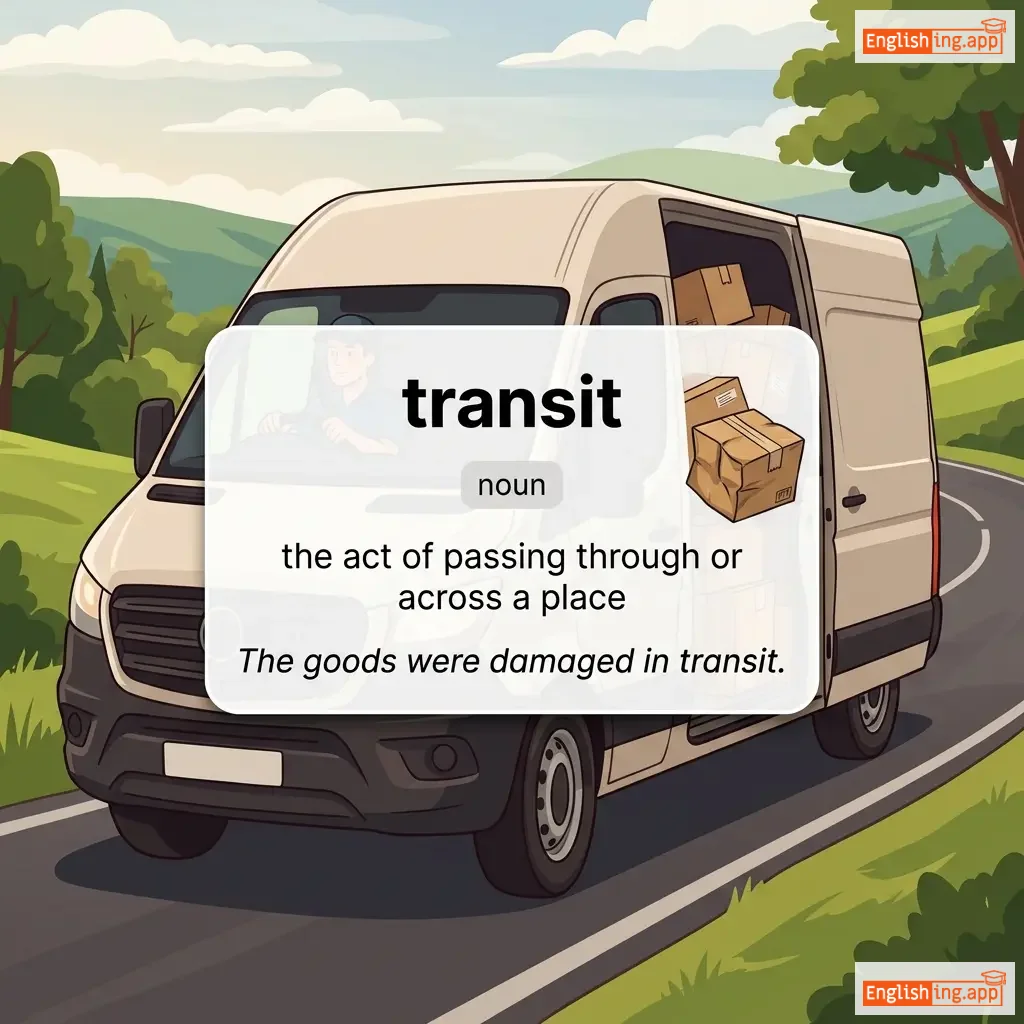
transit definition card — visual illustration of the meaning
noun
/ˈtrænzɪt/
transit (transit)

the act of passing through or across a place

"The goods were damaged in transit."

"Les marchandises ont été endommagées pendant le transit." (Les marchandises ont ete endommagees pendant le transit.)
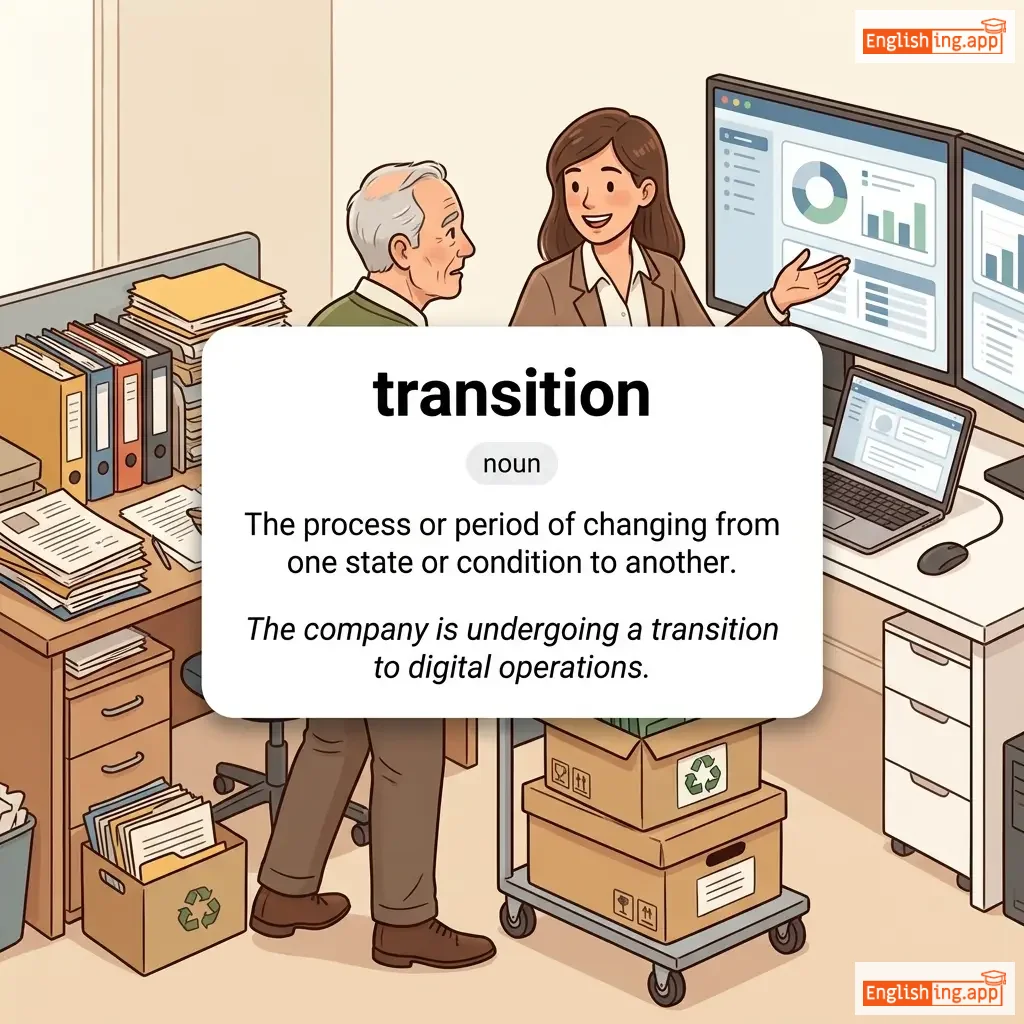
transition definition card — visual illustration of the meaning
noun
/trænˈzɪʃən/
transition (transition)

The process or period of changing from one state or condition to another.

"The company is undergoing a transition to digital operations."

"L'entreprise est en train de subir une transition vers des opérations numériques." (L'entreprise est en train de subir une transition vers des operations numeriques.)
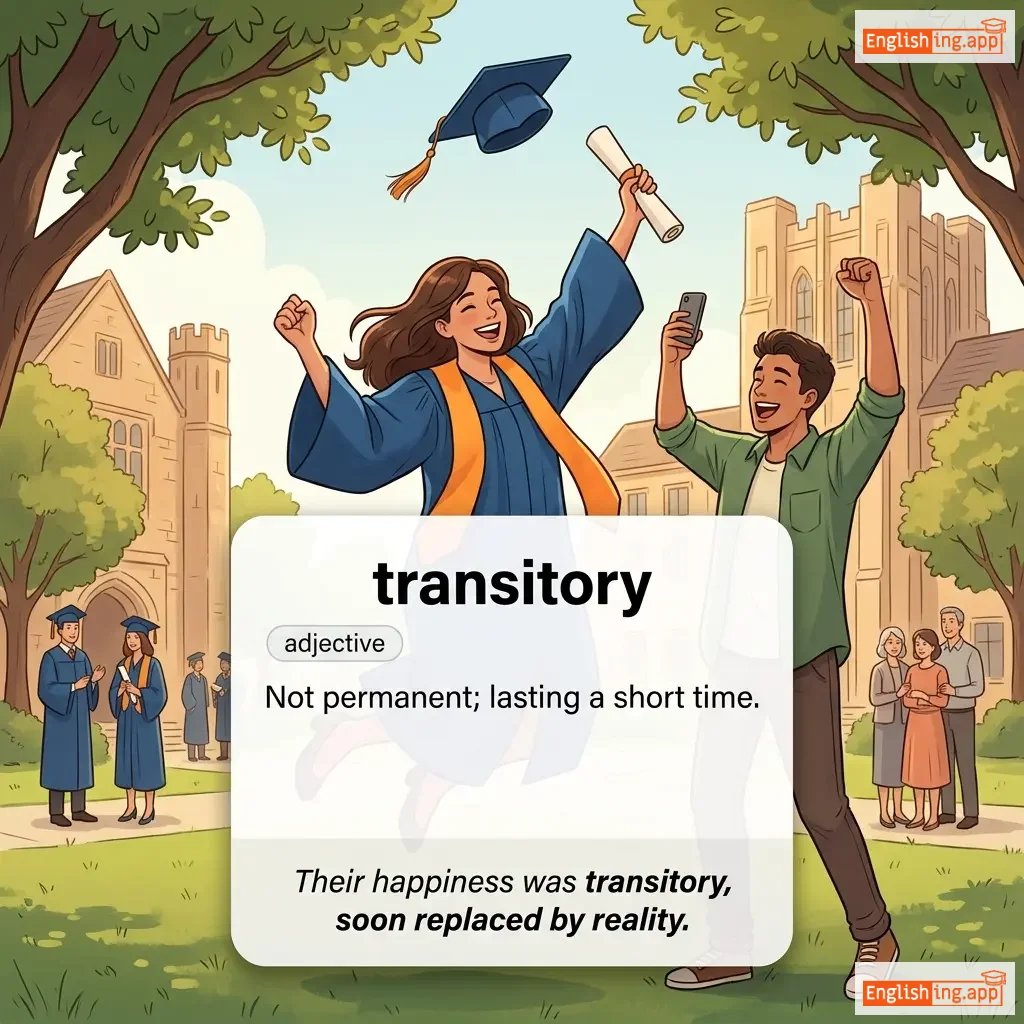
transitory definition card — visual illustration of the meaning
adjective
/ˈtrænzɪtɔːri/
éphémère (ephemere)

Not permanent; lasting a short time.

"Their happiness was transitory, soon replaced by reality."

"Leur bonheur était éphémère, bientôt remplacé par la réalité." (Leur bonheur était éphémère, bientôt remplacé par la réalité.)
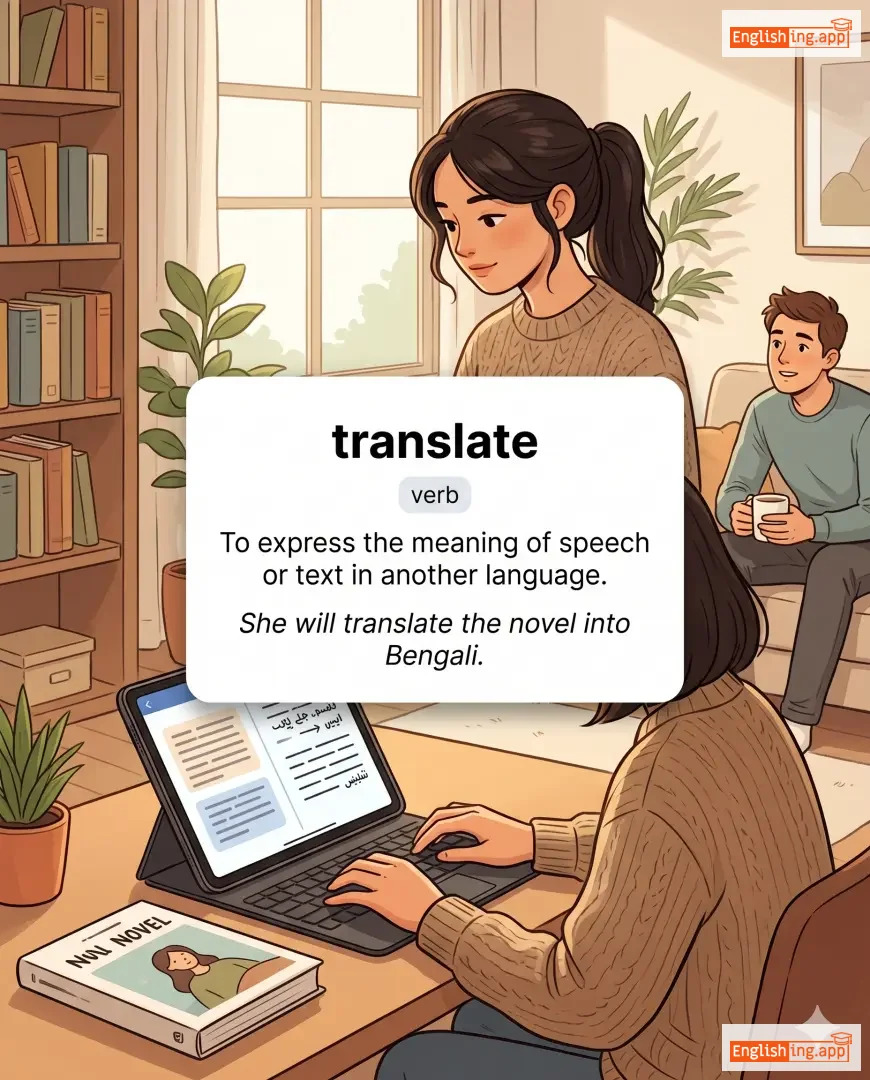
translate definition card — visual illustration of the meaning
verb
/trænsˈleɪt/
traduire (traduire)

To express the meaning of speech or text in another language.

"She will translate the novel into Bengali."

"Elle traduira le roman en bengali." (Elle traduira le roman en bengali)
noun
/trænzˈleɪʃən/
traduction (traduction)

the process of converting text or speech from one language into another

"She completed the translation of the book within two months."

"Elle a terminé la traduction du livre en deux mois." (Elle a termine la traduction du livre en deux mois.)
noun
/trænzˈleɪtər/
traducteur (traducteur)

a person or tool that converts words or text from one language into another

"The translator helped the tourists understand the guide."

"Le traducteur a aidé les touristes à comprendre le guide." (Le traducteur a aidé les touristes à comprendre le guide.)
noun
/trænsˈluːsəns/
semi-transparence (semi-transparence)

the quality of allowing light to pass through but not detailed shapes

"The translucence of the curtains filled the room with soft light."

"La semi-transparence des rideaux remplissait la pièce de lumière douce." (La semi-transparence des rideaux remplissait la pièce de lumière douce.)
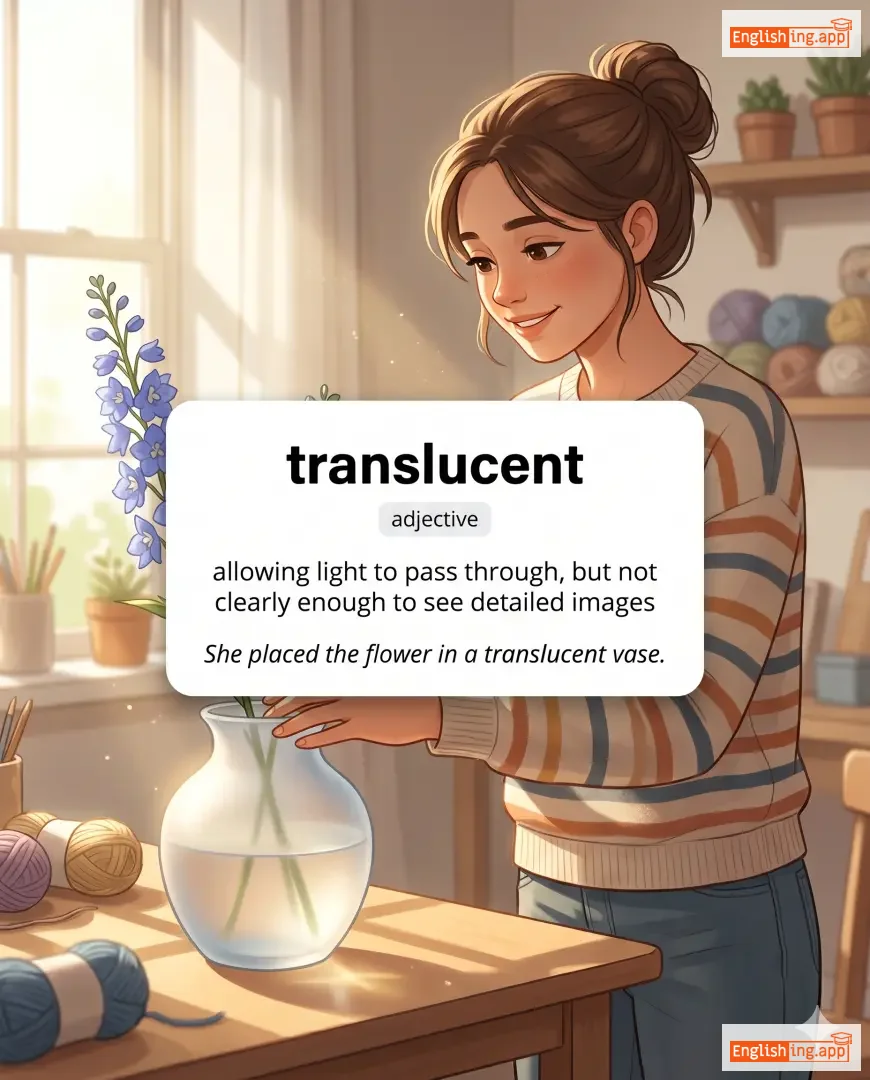
translucent definition card — visual illustration of the meaning
adjective
/trænsˈluːsənt/
semi-transparent (semi-transparent)

allowing light to pass through, but not clearly enough to see detailed images

"She placed the flower in a translucent vase."

"Elle a placé la fleur dans un vase semi-transparent." (Elle a placé la fleur dans un vase semi-transparent.)
adjective
/trænzˈmɪsəbl/
transmissible (transmissible)

able to be passed or spread from one person or thing to another

"COVID-19 is a highly transmissible disease."

"COVID-19 est une maladie hautement transmissible." (COVID-19 est une maladie hautement transmissible.)
noun
/trænzˈmɪʃən/
transmission, envoi (transmission, envoi)

the act of sending, passing, or spreading something such as information, energy, or disease

"The transmission of data over the internet is very fast."

"La transmission des données sur internet est très rapide." (La transmission des donnees sur internet est tres rapide.)
verb
/trænzˈmɪt/
transmettre (transmettre)

to send or pass something from one place or person to another

"The antenna can transmit signals over a long distance."

"L'antenne peut transmettre des signaux sur une longue distance." (L'antenne peut transmettre des signaux sur une longue distance.)
verb
/trænzˈmjuːt/
transmuter (transmuter)

to change in form, nature, or substance

"Alchemy aimed to transmute lead into gold."

"L'alchimie cherchait à transmuter le plomb en or." (L'alchimie cherchait à transmuter le plomb en or.)
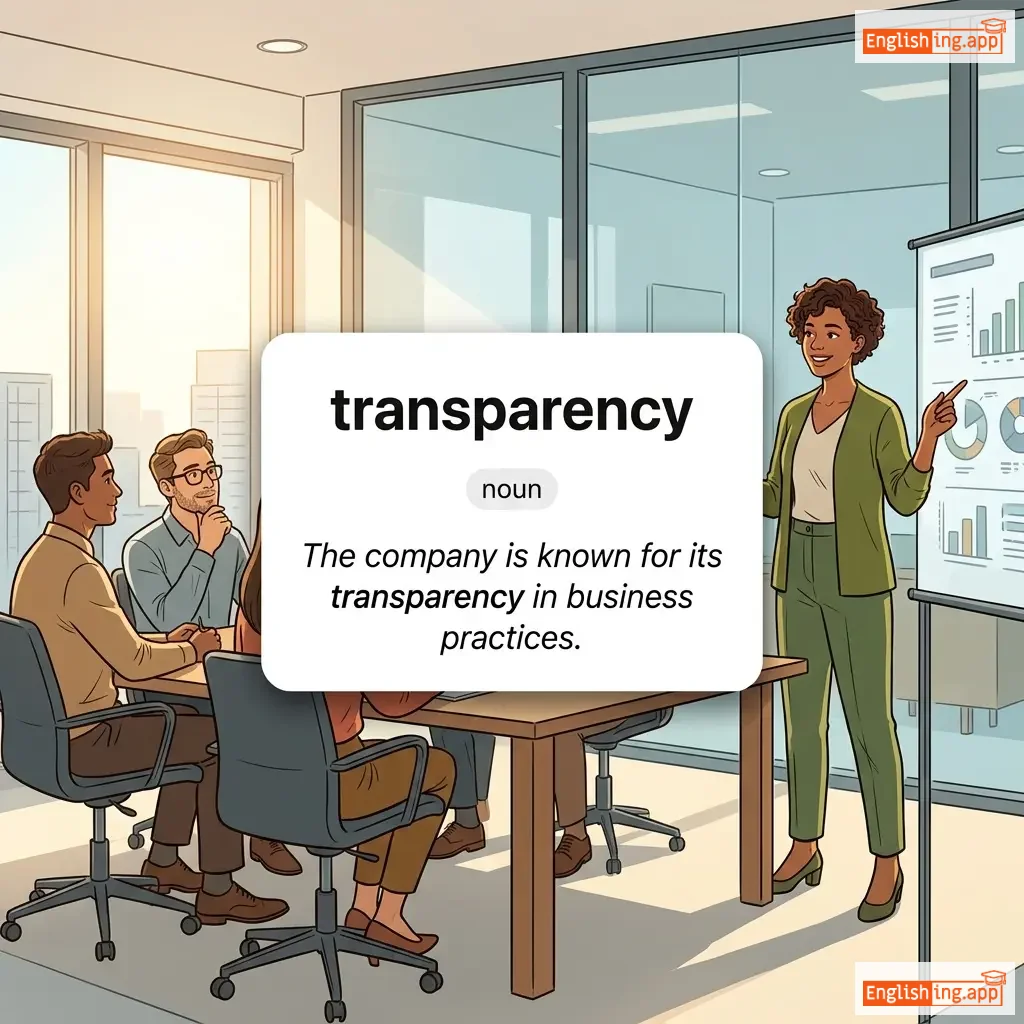
transparency definition card — visual illustration of the meaning
noun
/trænsˈpærənsi/
transparence (transparence)

the quality of being open and honest; the condition of being easily understood or seen through

"The company is known for its transparency in business practices."

"L'entreprise est connue pour sa transparence dans les pratiques commerciales." (L'entreprise est connue pour sa transparence dans les pratiques commerciales.)
adjective
/trænsˈpɛrənt/
transparent (transparent)

allowing light to pass through so that objects behind can be clearly seen

"The glass is transparent enough to see through."

"Le verre est suffisamment transparent pour voir à travers." (Le verre est suffisamment transparent pour voir à travers.)
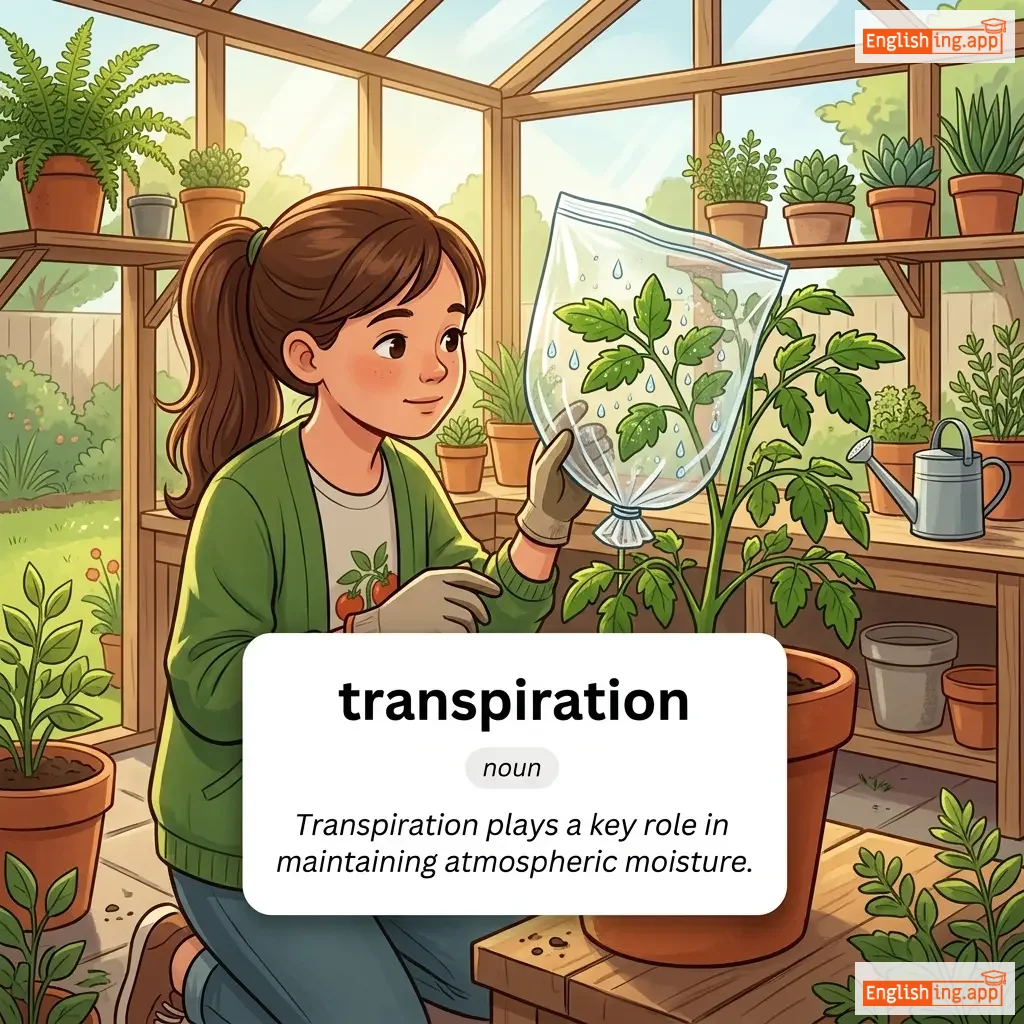
transpiration definition card — visual illustration of the meaning
noun
ˌtræn.spɪˈreɪ.ʃən
transpiration (transpiration)

The process by which moisture is carried through plants from roots to small pores on the underside of leaves, where it changes to vapor and is released to the atmosphere.

"Transpiration plays a key role in maintaining atmospheric moisture."

"La transpiration joue un rôle clé dans le maintien de l'humidité atmosphérique." (La transpiration joue un rôle clé dans le maintien de l'humidité atmosphérique.)
verb
/trænˈspaɪər/
arriver (arriver)

to occur, happen, or become known

"It transpired that he had lied about his age."

"Il est apparu qu'il avait menti sur son âge." (Il est apparu qu'il avait menti sur son âge.)
verb
/ˈtrænsplænt/
transplanter (transplanter)

to move something, especially a plant or organ, from one place to another

"The doctors transplanted a kidney into the patient."

"Les médecins ont transplanté un rein chez le patient." (Les médecins ont transplanté un rein chez le patient.)
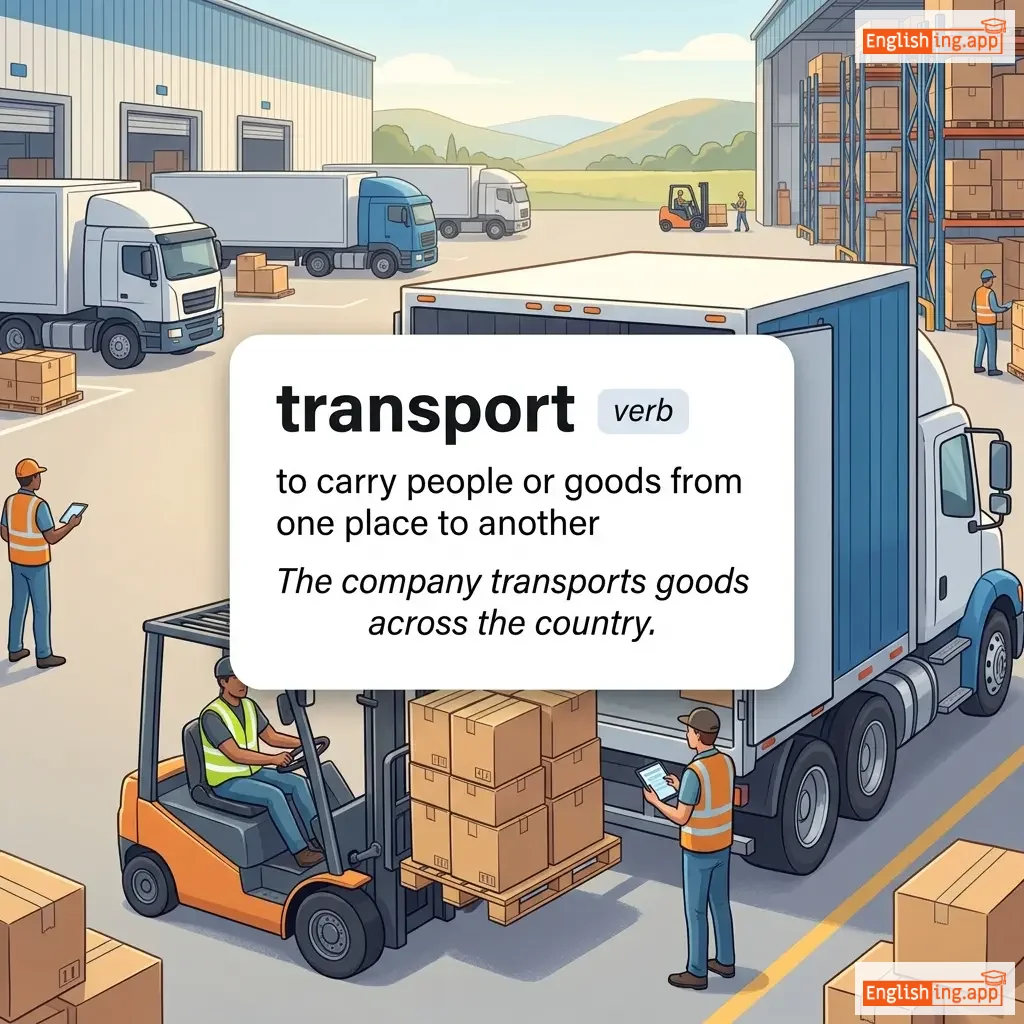
transport definition card — visual illustration of the meaning
verb
/ˈtrænspɔːrt/
transport (transport)

to carry people or goods from one place to another

"The company transports goods across the country."

"L'entreprise transporte des marchandises à travers le pays." (L'entreprise transporte des marchandises à travers le pays.)
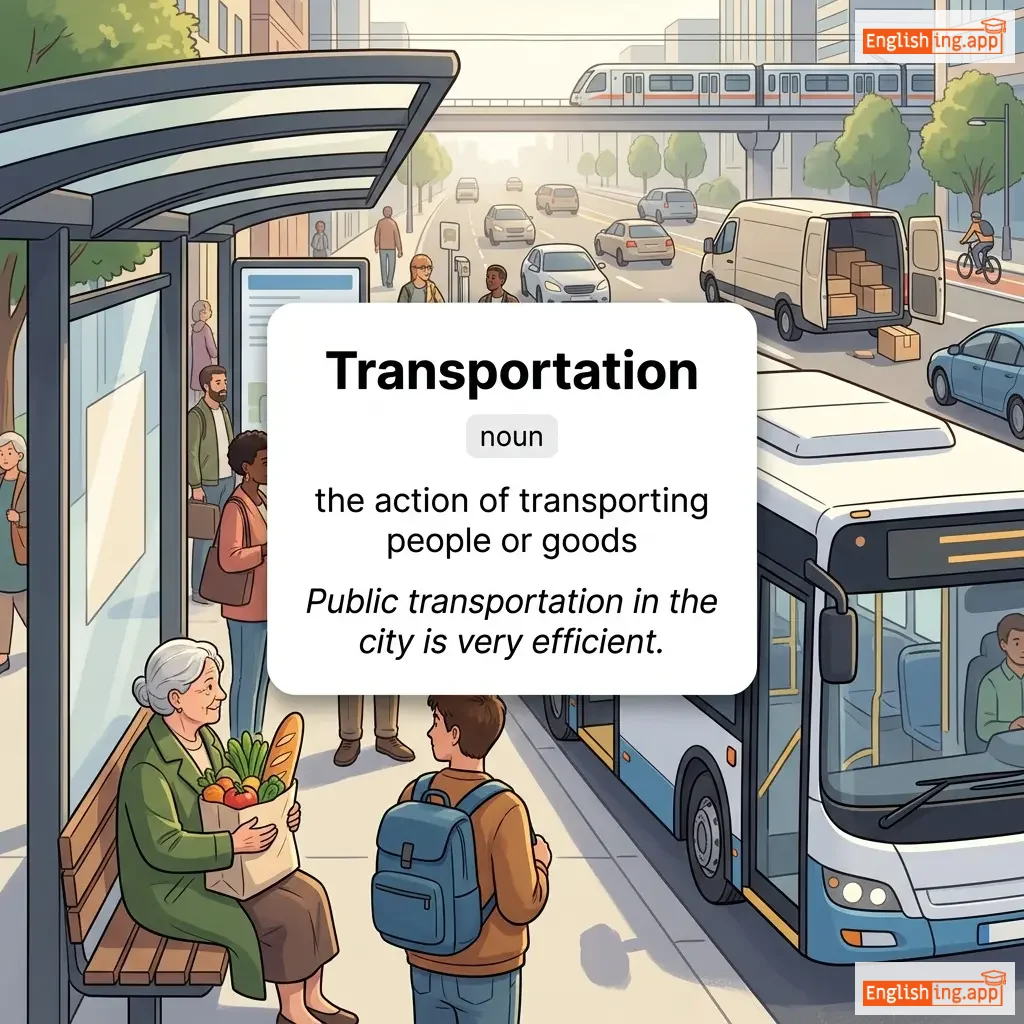
Transportation definition card — visual illustration of the meaning
noun
/ˌtræns.pɔːˈteɪ.ʃən/
transport (transport)

the action of transporting people or goods

"Public transportation in the city is very efficient."

"Les transports publics dans la ville sont très efficaces." (Les transports publics dans la ville sont tres efficaces.)
verb
/trænˈspoʊz/
transposer (transposer)

to change the order or position of something

"The editor transposed two paragraphs in the article."

"L'éditeur a transposé deux paragraphes dans l'article." (L'éditeur a transposé deux paragraphes dans l'article.)
noun
/ˌtrænspəˈzɪʃən/
transposition (transposition)

the act of changing the order or position of something

"The transposition of digits caused an error in the calculation."

"La transposition des chiffres a causé une erreur dans le calcul." (La transposition des chiffres a cause une erreur dans le calcul.)
adjective
/ˈtrænzvɜːrs/
transversal (transversal)

situated or lying across something

"The transverse road connects two highways."

"La route transversale relie deux autoroutes." (La route transversale relie deux autoroutes.)
verb
/træp/
piéger (piéger)

to catch or hold something or someone so they cannot escape

"The fox was trapped in a cage."

"Le renard a été piégé dans une cage." (Le renard a été piégé dans une cage.)
noun
/ˈtræpɪŋz/
attributs (attributs)

the outward signs, features, or objects associated with a role, event, or status

"The king appeared with all the trappings of royalty."

"Le roi est apparu avec tous les attributs de la royauté." (Le roi est apparu avec tous les attributs de la royaute.)
noun
/træʃ/
dechets (dechets)

waste material; things that are no longer useful or wanted

"Please take out the trash before you go to bed."

"S'il vous plaît, sortez les ordures avant de vous coucher." (sil vous plait, sortez les ordures avant de vous coucher)
noun
/ˈtrɔːmə/
traumatisme (traumatisme)

a deeply distressing or disturbing experience; physical injury or emotional shock

"The accident left her with lasting emotional trauma."

"L'accident lui a laissé un traumatisme émotionnel durable." (L'accident lui a laisse un traumatisme emotionnel durable.)
adjective
/trɔːˈmætɪk/
traumatique (traumatique)

Deeply distressing or disturbing, often related to emotional or physical injury.

"The accident was a traumatic experience for the entire family."

"L'accident a été une expérience traumatique pour toute la famille." (L'accident a ete une experience traumatique pour toute la famille.)
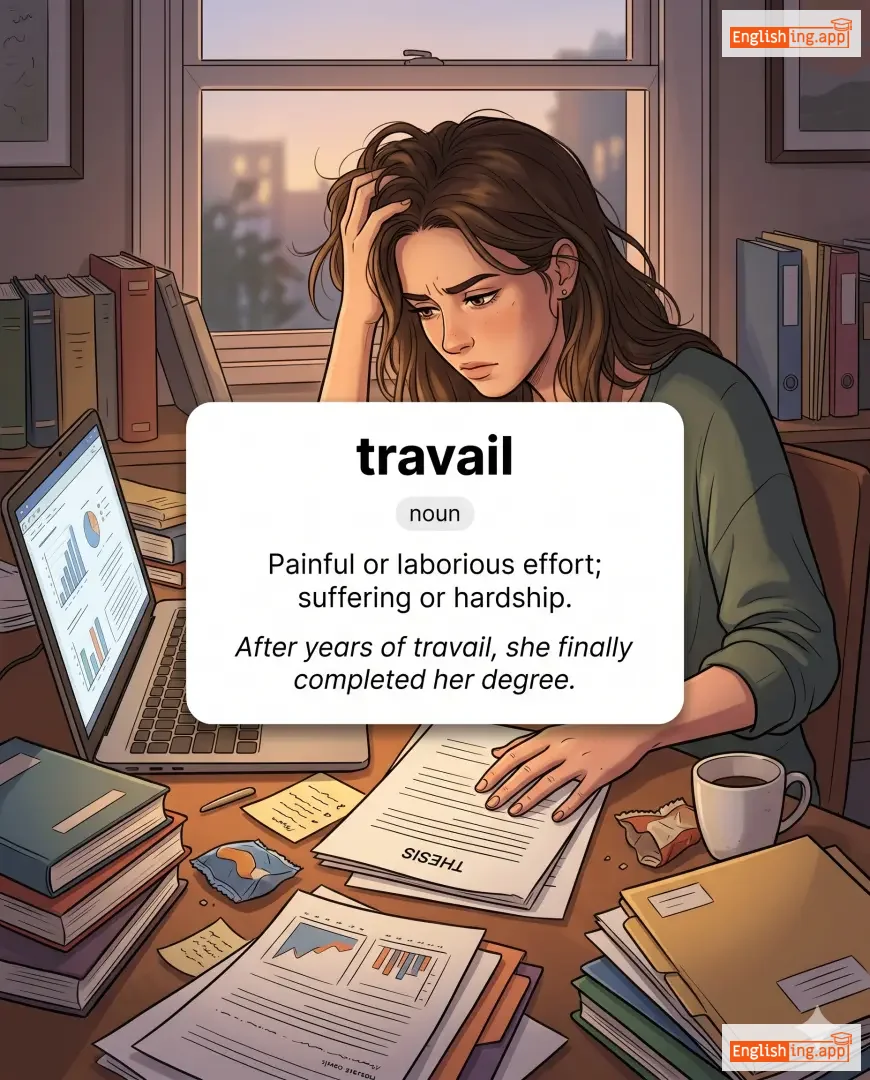
travail definition card — visual illustration of the meaning
noun
/trəˈveɪl/
travail pénible (travail penible)

Painful or laborious effort; suffering or hardship.

"After years of travail, she finally completed her degree."

"Après des années de travail pénible, elle a enfin obtenu son diplôme." (Apres des années de travail pénible, elle a enfin obtenu son diplôme.)
verb
/ˈtrævəl/
voyager (voyager)

to make a journey, typically to a distant or unfamiliar place

"I love to travel around the world and explore new cultures."

"J'adore voyager autour du monde et explorer de nouvelles cultures." (J'adore voyager autour du monde et explorer de nouvelles cultures.)
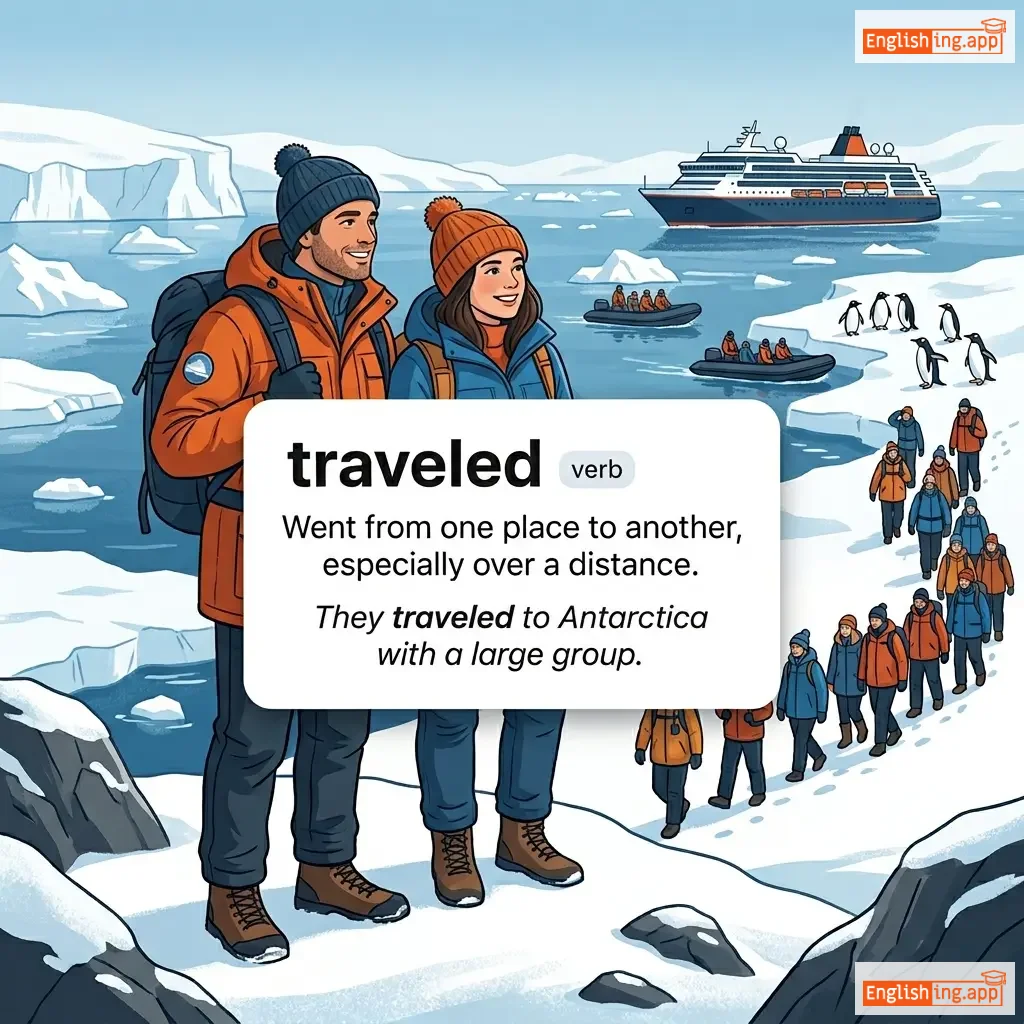
traveled definition card — visual illustration of the meaning
verb
/ˈtrævəld/
voyager (voyager)

Went from one place to another, especially over a distance.

"They traveled to Antarctica with a large group."

"Ils ont voyagé en Antarctique avec un grand groupe." (Ils ont voyagé en Antarctique avec un grand groupe.)
noun
/ˈtrævələr/
voyageur (voyageur)

a person who is traveling or who often travels

"The traveler rested at a small inn after a long journey."

"Le voyageur s'est reposé dans une petite auberge après un long voyage." (Le voyageur s'est reposé dans une petite auberge après un long voyage.)
noun
/ˈtrævələr/
voyageur (voyageur)

A person who is on a journey or frequently travels to different places.

"The traveller set out early in the morning to explore new lands."

"Le voyageur est parti tôt le matin pour explorer de nouvelles terres." (Le voyageur est parti tot le matin pour explorer de nouvelles terres.)
verb
/trəˈvɜːrs/
traverser (traverser)

To travel across or through something.

"They traversed the desert on camels."

"Ils ont traversé le désert à dos de chameau." (Ils ont traverse le desert a dos de chameau.)
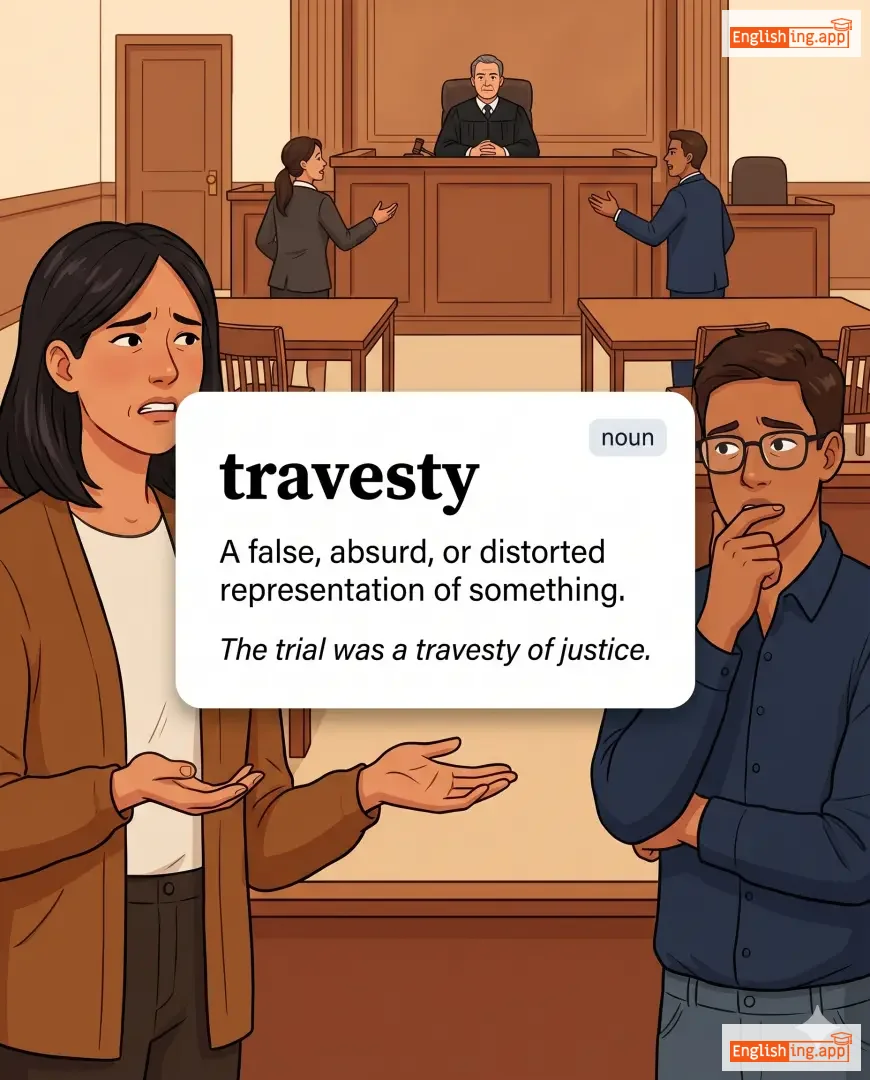
travesty definition card — visual illustration of the meaning
noun
/ˈtrævɪsti/
parodie (travestee)

A false, absurd, or distorted representation of something.

"The trial was a travesty of justice."

"Le procès était une parodie de justice." (Le proces etait une parodie de justice.)
noun
/treɪ/
plateau (plateau)

a flat, shallow container used for carrying or holding items

"She brought the tea cups on a silver tray."

"Elle a apporté les tasses de thé sur un plateau en argent." (Elle a apporté les tasses de thé sur un plateau en argent.)
adjective
/ˈtrɛtʃərəs/
traître (traitre)

Dangerously unstable or deceptive; likely to betray trust.

"The treacherous road made driving difficult."

"La route traître a rendu la conduite difficile." (La route traître a rendu la conduite difficile.)
noun
/ˈtrɛtʃəri/
trahison (trahison)

Betrayal of trust; deceptive action or nature.

"His treachery was revealed when he sided with the enemy."

"Sa trahison a été révélée lorsqu'il a pris parti pour l'ennemi." (Sa trahison a été révélée lorsqu'il a pris parti pour l'ennemi.)
noun
/ˈtriːkəl/
sirop épais et sucré (sirop epais et sucre)

A thick, sweet syrup; excessively sentimental speech or writing.

"She poured treacle over the pancakes."

"Elle a versé le sirop sur les crêpes." (Elle a versé le sirop sur les crêpes.)
adjective
/ˈtriːkli/
Excessivement sucré ou sentimental, comme de la mélasse. (Excessivement sucré ou sentimental, comme de la mélasse.)

Excessively sweet or sentimental, like treacle.

"The movie was too treacly for my taste."

"Le film était trop sirupeux pour mon goût." (Le film était trop sirupeux pour mon goût.)
verb
/trɛd/
marcher (marcher)

To walk on or along something.

"Be careful not to tread on the flowers."

"Faites attention à ne pas marcher sur les fleurs." (Faites attention à ne pas marcher sur les fleurs.)
noun
/ˈtriːzən/
trahison (trahison)

the crime of betraying one's country, especially by attempting to kill or overthrow the sovereign or government

"He was accused of treason against the state."

"Il a été accusé de trahison contre l'état." (Il a ete accuse de trahison contre l'etat.)
adjective
/ˈtriːzənəbl/
trahison (trahison)

Relating to or involving the crime of treason.

"The general was accused of treasonable conduct."

"Le général a été accusé de conduite traitresse." (Le général a été accusé de conduite traitresse.)
noun, verb
/ˈtrɛʒər/
trésor (tresor)

a collection of valuable things such as gold, jewels, or anything of great worth; to value something highly

"She kept the necklace as a family treasure."

"Elle a gardé le collier comme un trésor familial." (Elle a gardé le collier comme un trésor familial.)
noun
/ˈtrɛʒərər/
trésorier (tresorier)

a person responsible for managing the financial affairs of an organization

"The treasurer presented the annual financial report."

"Le trésorier a présenté le rapport financier annuel." (Le tresorier a presente le rapport financier annuel.)
verb
/triːt/
traiter (trater)

to behave toward someone or something in a particular way

"The doctor treated me with great care during my recovery."

"Le médecin m'a traité avec beaucoup de soin pendant ma récupération." (Le medecin ma traite avec beaucoup de soin pendant ma recuperation.)
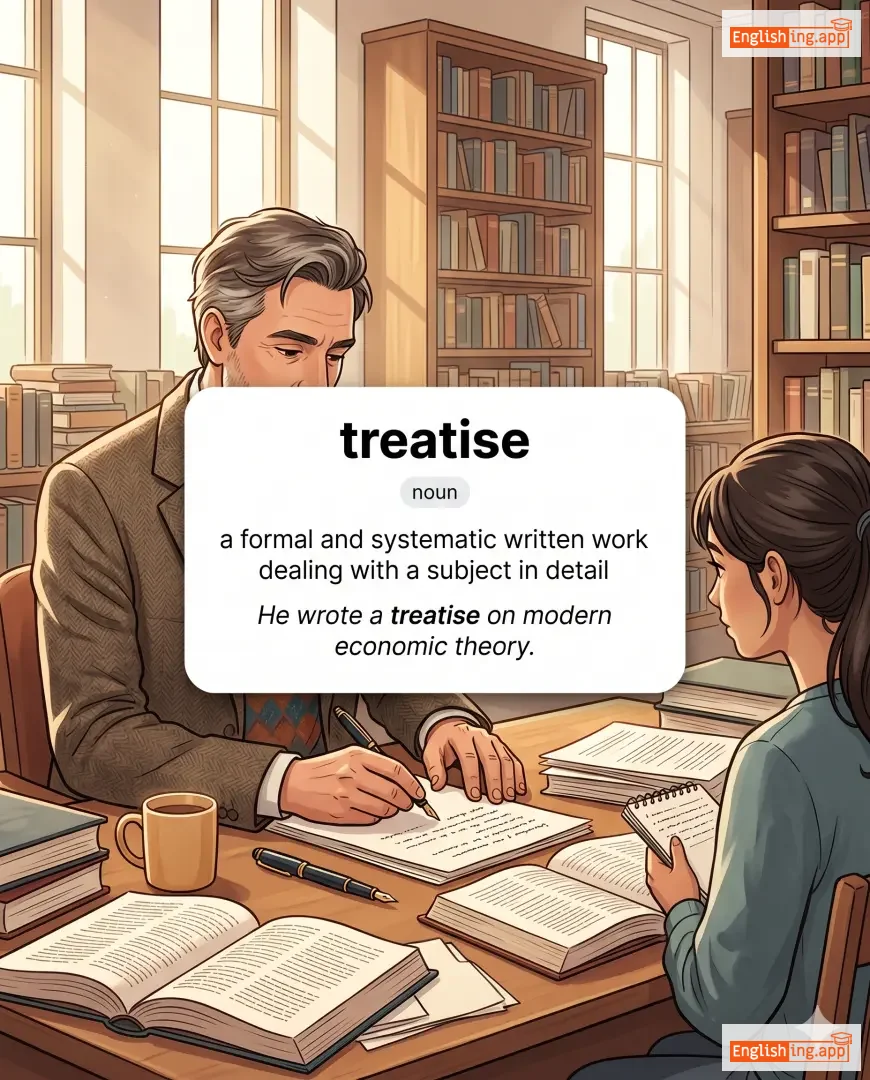
treatise definition card — visual illustration of the meaning
noun
/ˈtriːtɪs/
traité (traite)

a formal and systematic written work dealing with a subject in detail

"He wrote a treatise on modern economic theory."

"Il a écrit un traité sur la théorie économique moderne." (Il a écrit un traité sur la théorie économique moderne.)
noun
/ˈtriːtmənt/
traitement (traitement)

the action or manner of treating someone or something

"She received excellent treatment at the hospital."

"Elle a reçu un excellent traitement à l'hôpital." (Elle a reçu un excellent traitement à l'hôpital.)
noun
/ˈtriːti/
traité (traite)

a formally concluded and ratified agreement between states

"The two countries signed a peace treaty."

"Les deux pays ont signé un traité de paix." (Les deux pays ont signe un traite de paix.)
adjective, noun, verb
/ˈtrɛbəl/
triple, son aigu (triple, son aigu)

triple; consisting of three parts; high-pitched sound in music

"The company's profits trebled in just two years."

"Les bénéfices de l'entreprise ont triplé en seulement deux ans." (Les bénéfices de l'entreprise ont triplé en seulement deux ans.)