Vocabulaires

Découvrez, apprenez et maîtrisez le vocabulaire anglais

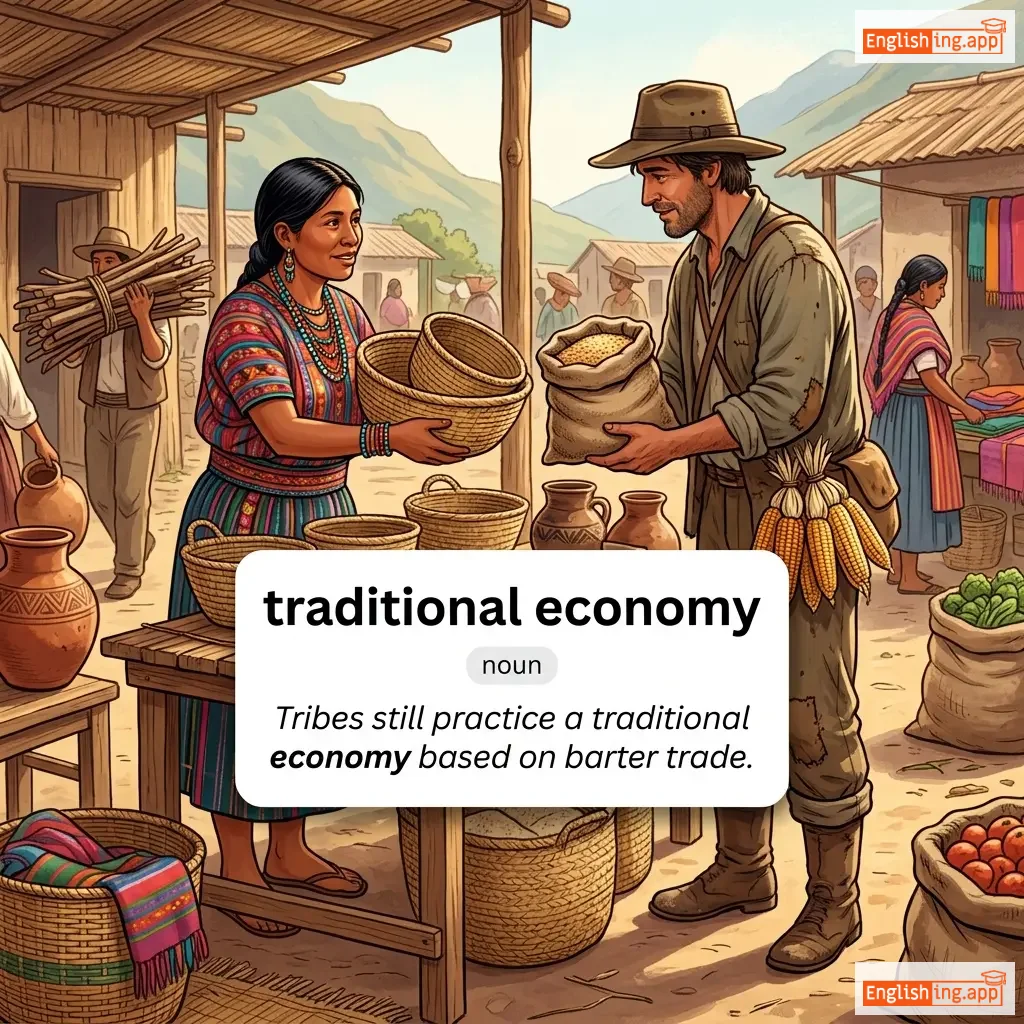
traditional economy definition card — visual illustration of the meaning
noun
/trəˈdɪʃ.ən.əl ɪˈkɒn.ə.mi/
économie traditionnelle (economie traditionnelle)

An economic system based on customs and traditions, often involving barter trade.

"Tribes still practice a traditional economy based on barter trade."

"Les tribus pratiquent encore une économie traditionnelle basée sur le troc." (Les tribus pratiquent encore une economie traditionnelle basee sur le troc.)
adverb
/trəˈdɪʃənəli/
traditionnellement (traditionnellement)

according to custom or long-established practice

"Bangladesh is traditionally known for its hospitality."

"Le Bangladesh est traditionnellement connu pour son hospitalité." (Le Bangladesh est traditionnellement connu pour son hospitalité.)
verb
/trəˈdjuːs/
diffamer (diffamer)

To speak badly of someone or tell lies to damage their reputation.

"He was furious when he found out that his rivals had traduced him."

"Il était furieux quand il a découvert que ses rivaux l'avaient diffamé." (Il était furieux quand il a découvert que ses rivaux l'avaient diffamé.)
noun
/ˈtræfɪk/
trafic (trafic)

movement of vehicles, goods, or people

"There was heavy traffic on the highway this morning."

"Il y avait beaucoup de trafic sur l'autoroute ce matin." (Il y avait beaucoup de trafic sur l'autoroute ce matin.)
noun
/ˈtrædʒədi/
tragédie (tragedie)

an event causing great suffering or distress

"The earthquake was a tragedy for the entire country."

"Le tremblement de terre a été une tragédie pour tout le pays." (Le tremblement de terre a ete une tragedie pour tout le pays.)
adjective
/ˈtrædʒɪk/
tragique (tragique)

causing great sadness or suffering; very unfortunate

"The news of the accident was truly tragic."

"La nouvelle de l'accident était vraiment tragique." (La nouvelle de l'accident était vraiment tragique.)
noun
/treɪl/
sentier (sentier)

a path or track left by something that has passed

"The hikers followed the trail through the forest."

"Les randonneurs ont suivi le sentier à travers la forêt." (Les randonneurs ont suivi le sentier à travers la forêt.)
noun
/ˈtreɪlər/
bande-annonce / remorque (bande-annonce / remorque)

a preview of a movie or a vehicle used for transporting goods

"The movie trailer was released last week."

"La bande-annonce du film a été publiée la semaine dernière." (La bande-annonce du film a ete publiee la semaine derniere.)
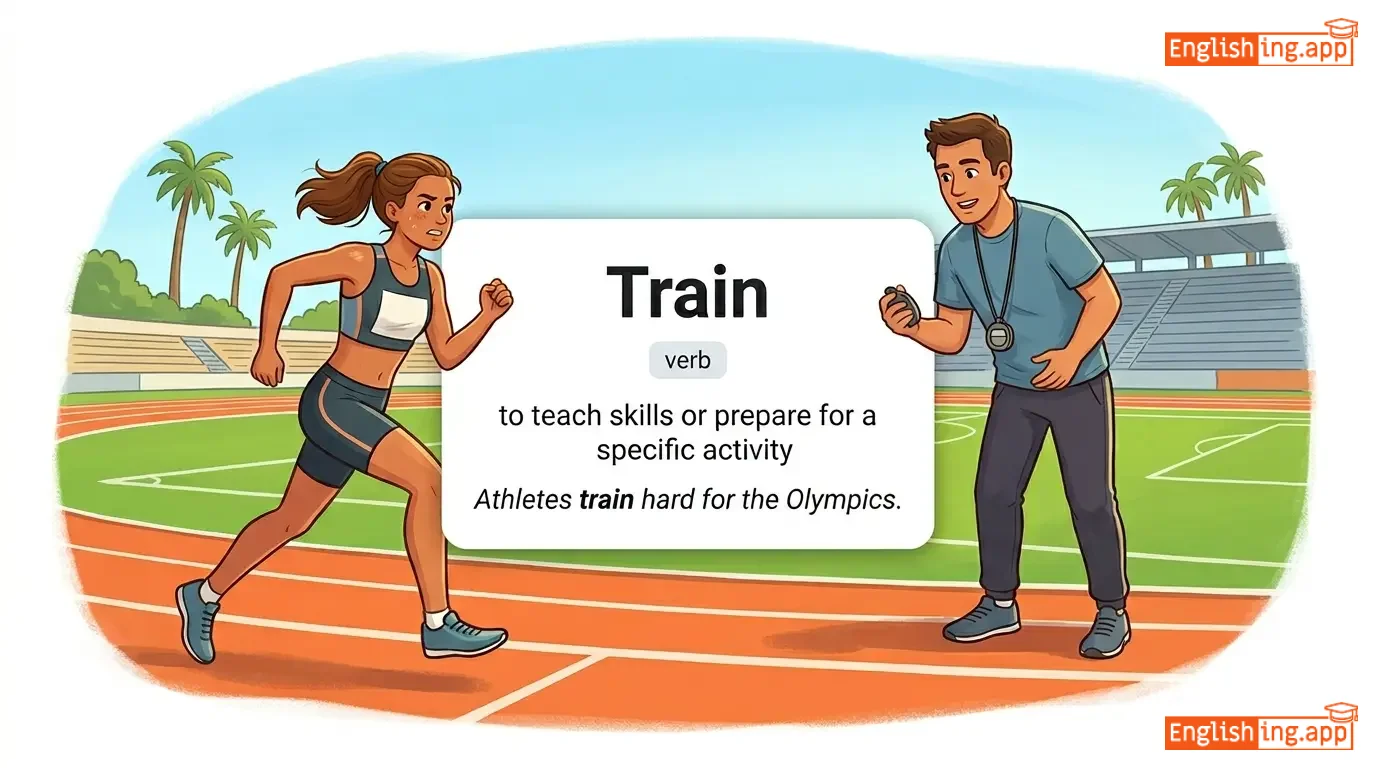
Train definition card — visual illustration of the meaning
noun
/treɪn/
train (train)

a series of connected vehicles that run on tracks and are used for transporting people or goods

"The train departed from the station on time."

"Le train est parti de la gare à l'heure." (Le train est parti de la gare à l'heure.)
noun
/treɪˈniː/
stagiaire; apprenti (trainee)

a person undergoing training for a particular job or profession; a novice learner

"The medical trainee worked long hours to gain practical experience."

"Le stagiaire médical a travaillé de longues heures pour acquérir de l'expérience pratique." (Le stagiaire medical a travaille de longues heures pour acquerir de l'experience pratique.)
noun
/ˈtreɪnər/
entraîneur (entraîneur)

a person who teaches skills or gives training

"The fitness trainer helped me improve my posture."

"L'entraîneur de fitness m'a aidé à améliorer ma posture." (L'entraîneur de fitness m'a aidé à améliorer ma posture.)
noun
/ˈtreɪnɪŋ/
formation (formation)

the process of teaching or learning a particular skill or type of behavior

"She completed her training as a nurse last year."

"Elle a terminé sa formation en tant qu'infirmière l'année dernière." (Elle a terminé sa formation en tant qu'infirmière l'année dernière.)
noun
/treɪt/
caractéristique (caracteristique)

A distinguishing quality or characteristic, typically belonging to a person.

"Honesty is considered an admirable trait in a leader."

"L'honnêteté est considérée comme une caractéristique admirable chez un leader." (L'honnetete est consideree comme une caracteristique admirable chez un leader.)
noun
/ˈtreɪtər/
traître (traitre)

A person who betrays their country, friends, or a cause by acting against them.

"The soldier was labeled a traitor for giving secrets to the enemy."

"Le soldat a été étiqueté comme un traître pour avoir donné des secrets à l'ennemi." (Le soldat a été étiqueté comme un traître pour avoir donné des secrets à l'ennemi.)
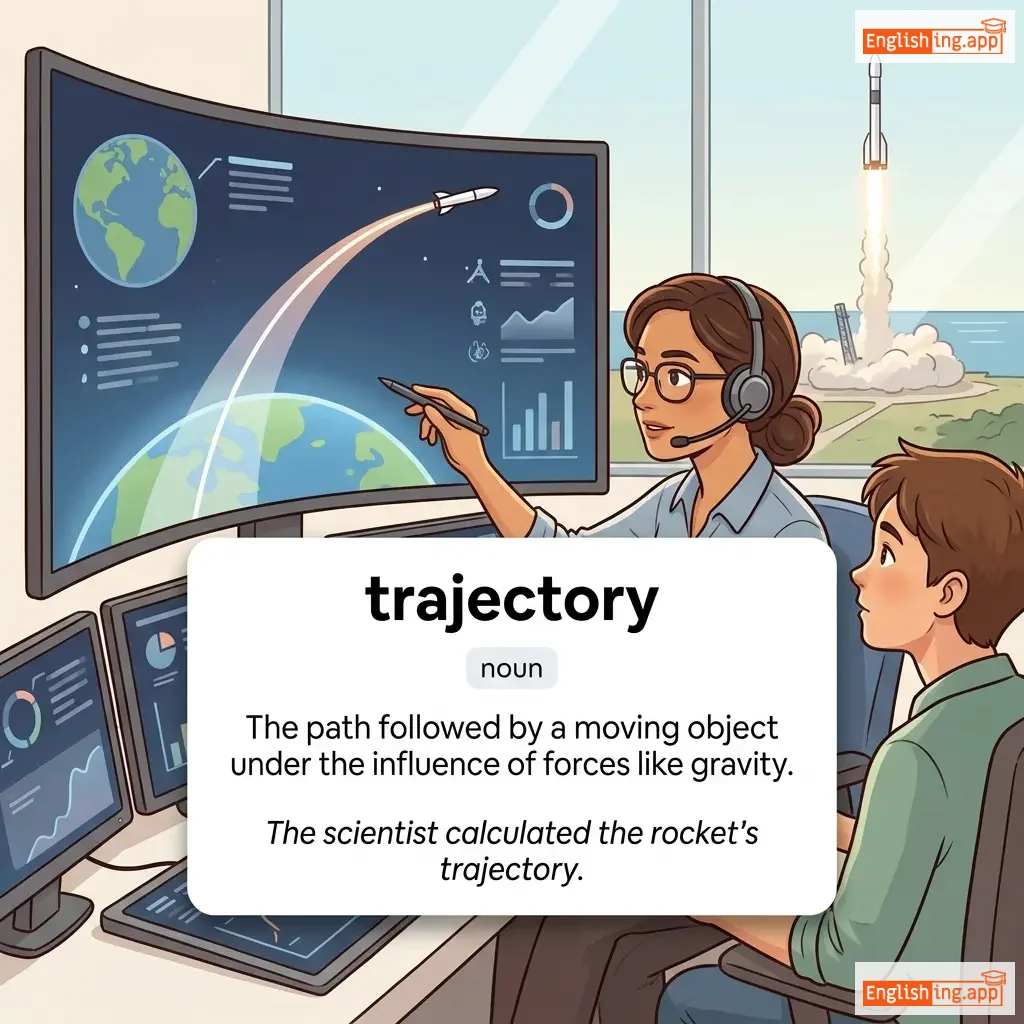
trajectory definition card — visual illustration of the meaning
noun
/trəˈdʒɛktəri/
trajectoire (trajectoire)

The path followed by a moving object under the influence of forces like gravity.

"The scientist calculated the rocket's trajectory."

"Le scientifique a calculé la trajectoire de la fusée." (Le scientifique a calculé la trajectoire de la fusée.)
noun
/træm kɑːr/
tramway (tramway)

An electric vehicle that runs on rails along the street

"The tram car stopped at every station in the city center."

"Le tramway s'est arrêté à chaque station du centre-ville." (Le tramway s'est arrete a chaque station du centre-ville.)
noun, verb
/ˈtræməl/
entrave (entrave)

A restriction or impediment to freedom of action; to restrict.

"The strict rules trammel the creativity of the students."

"Les règles strictes entravent la créativité des étudiants." (Les regles strictes entravent la creativite des etudiants.)
verb, noun
/træmp/
vagabond / marcher lourdement (vagabond / marcher lourdement)

to walk heavily or noisily; a person who travels from place to place on foot, often homeless

"They tramped through the forest in heavy boots."

"Ils ont marché à travers la forêt avec des bottes épaisses." (Ils ont marché à travers la forêt avec des bottes épaisses.)
verb
/ˈtræmpəl/
piétiner (pietiner)

to tread heavily on something and cause damage or injury

"The crowd trampled the flowers in the park."

"La foule a piétiné les fleurs dans le parc." (La foule a piétiné les fleurs dans le parc.)
noun
/træns/
transe (transe)

a half-conscious state like dreaming, often with loss of awareness of surroundings

"She stared out of the window as if in a trance."

"Elle regardait par la fenêtre comme si elle était en transe." (Elle regardait par la fenêtre comme si elle était en transe.)
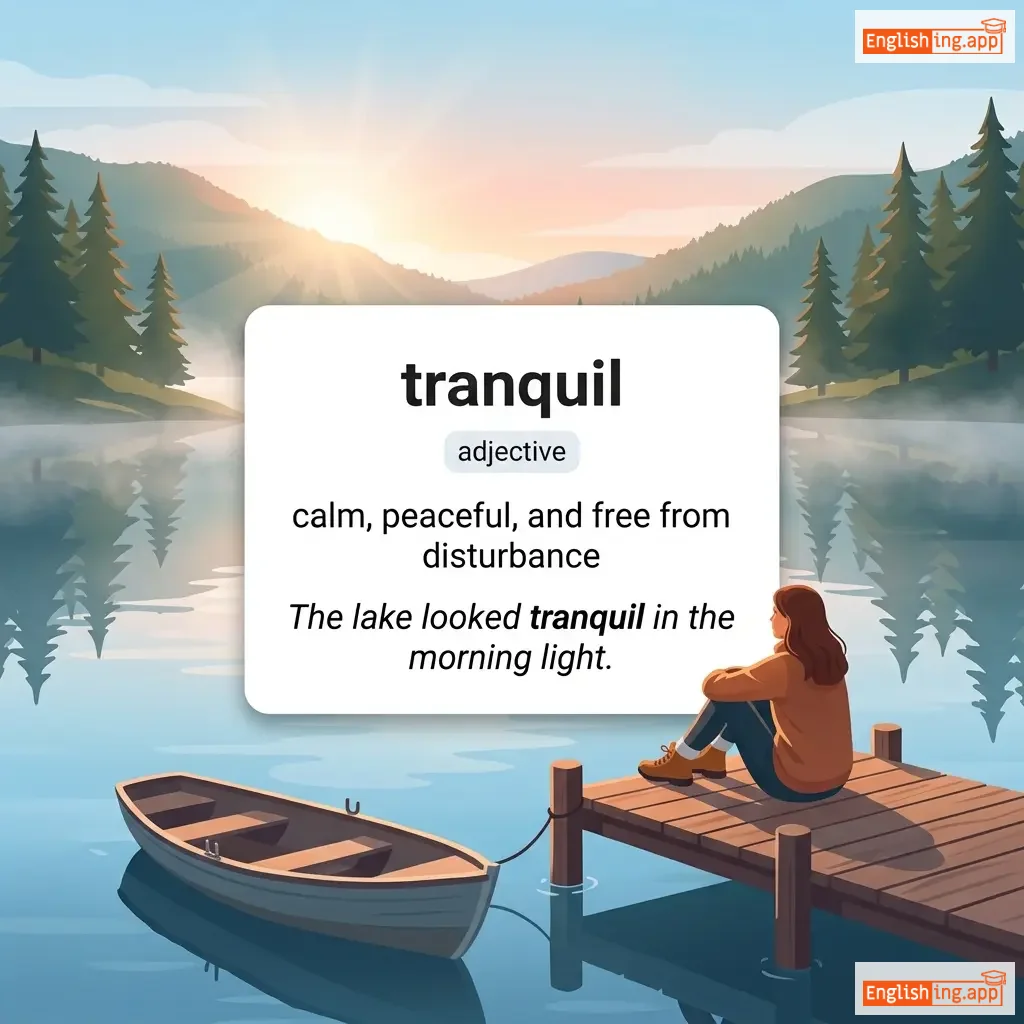
tranquil definition card — visual illustration of the meaning
adjective
/ˈtræŋkwɪl/
tranquille (tranquille)

calm, peaceful, and free from disturbance

"The lake looked tranquil in the morning light."

"Le lac semblait tranquille sous la lumière du matin." (Le lac semblait tranquille sous la lumiere du matin.)
noun
/træŋˈkwɪləti/
tranquillité (tranquillite)

the quality or state of being calm and peaceful

"He enjoyed the tranquility of the countryside."

"Il a apprécié la tranquillité de la campagne." (Il a apprecie la tranquillite de la campagne.)
verb
/ˈtræŋ.kwɪ.laɪz/
tranquilliser (tranquilliser)

to make someone or something calm or less anxious, often by using drugs

"The veterinarian had to tranquilize the tiger before moving it."

"Le vétérinaire a dû tranquilliser le tigre avant de le déplacer." (Le vétérinaire a dû tranquilliser le tigre avant de le déplacer.)
noun
/træŋˈkwɪl.ɪ.ti/
tranquillité (tranquillite)

the state of being calm, peaceful, and free from disturbance

"She enjoyed the tranquillity of the countryside after years in the city."

"Elle a apprécié la tranquillité de la campagne après des années passées en ville." (Elle a apprécié la tranquillité de la campagne après des années passées en ville.)
verb
/trænˈzækt/
effectuer (effectuer)

to conduct or carry out business, a deal, or activity

"Customers can transact their banking online."

"Les clients peuvent effectuer leurs transactions bancaires en ligne." (Les clients peuvent effectuer leurs transactions bancaires en ligne.)
noun
/trænˈzækʃən/
transaction (transaction)

an instance of buying or selling something; a business deal or exchange

"Every online transaction is recorded for security purposes."

"Chaque transaction en ligne est enregistrée à des fins de sécurité." (Chaque transaction en ligne est enregistrée à des fins de sécurité.)
adjective
/trænzˈæl.paɪn/
au-delà des Alpes (au-dela des Alpes)

situated beyond or across the Alps, especially from the viewpoint of Italy

"The Romans referred to France as Transalpine Gaul."

"Les Romains appelaient la France la Gaule transalpine." (Les Romains appelaient la France la Gaule transalpine.)
adjective
/ˌtræn.zətˈlæn.tɪk/
traverser l'océan Atlantique (traverser l'ocean Atlantique)

crossing or spanning the Atlantic Ocean

"They took a transatlantic flight from New York to London."

"Ils ont pris un vol transatlantique de New York à Londres." (Ils ont pris un vol transatlantique de New York a Londres.)
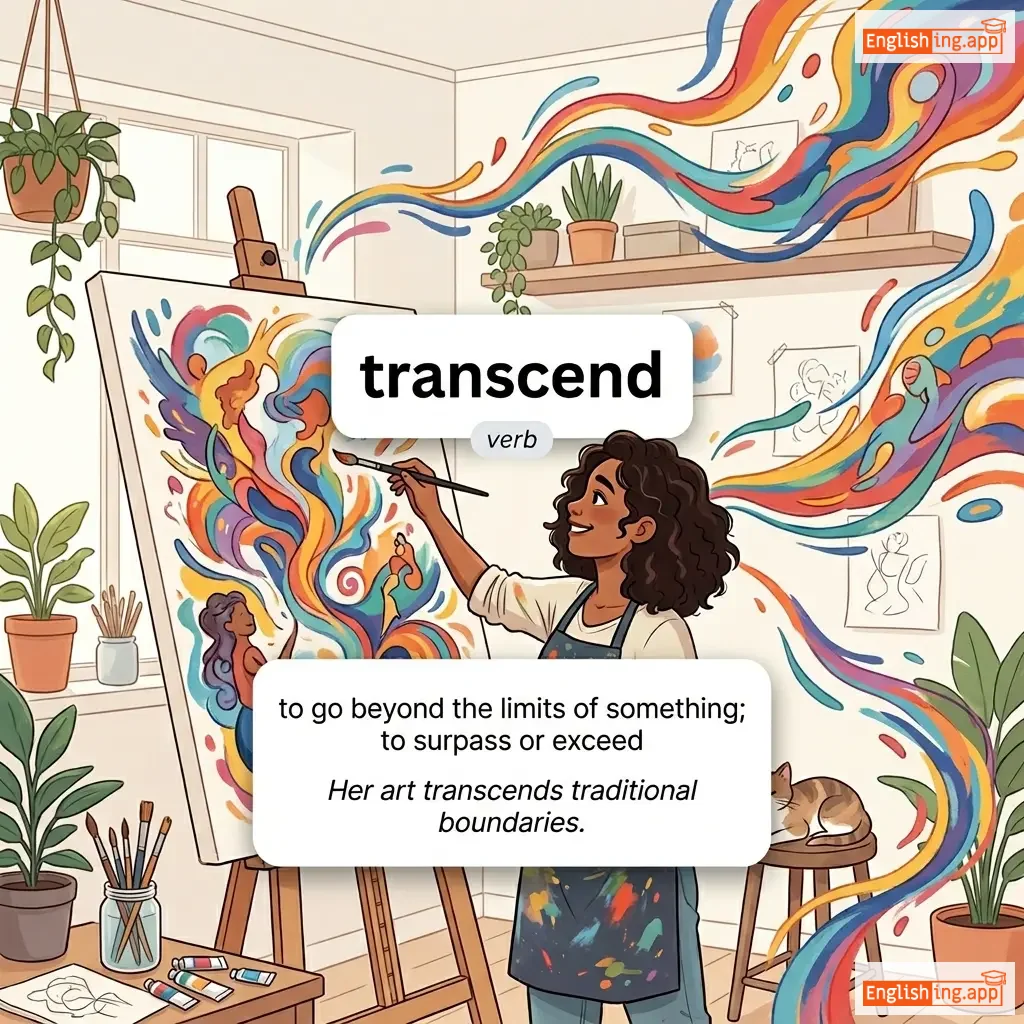
transcend definition card — visual illustration of the meaning
verb
/trænˈsɛnd/
transcender (transcender)

to go beyond the limits of something; to surpass or exceed

"Her art transcends traditional boundaries."

"Son art transcende les limites traditionnelles." (Son art transcende les limites traditionnelles.)
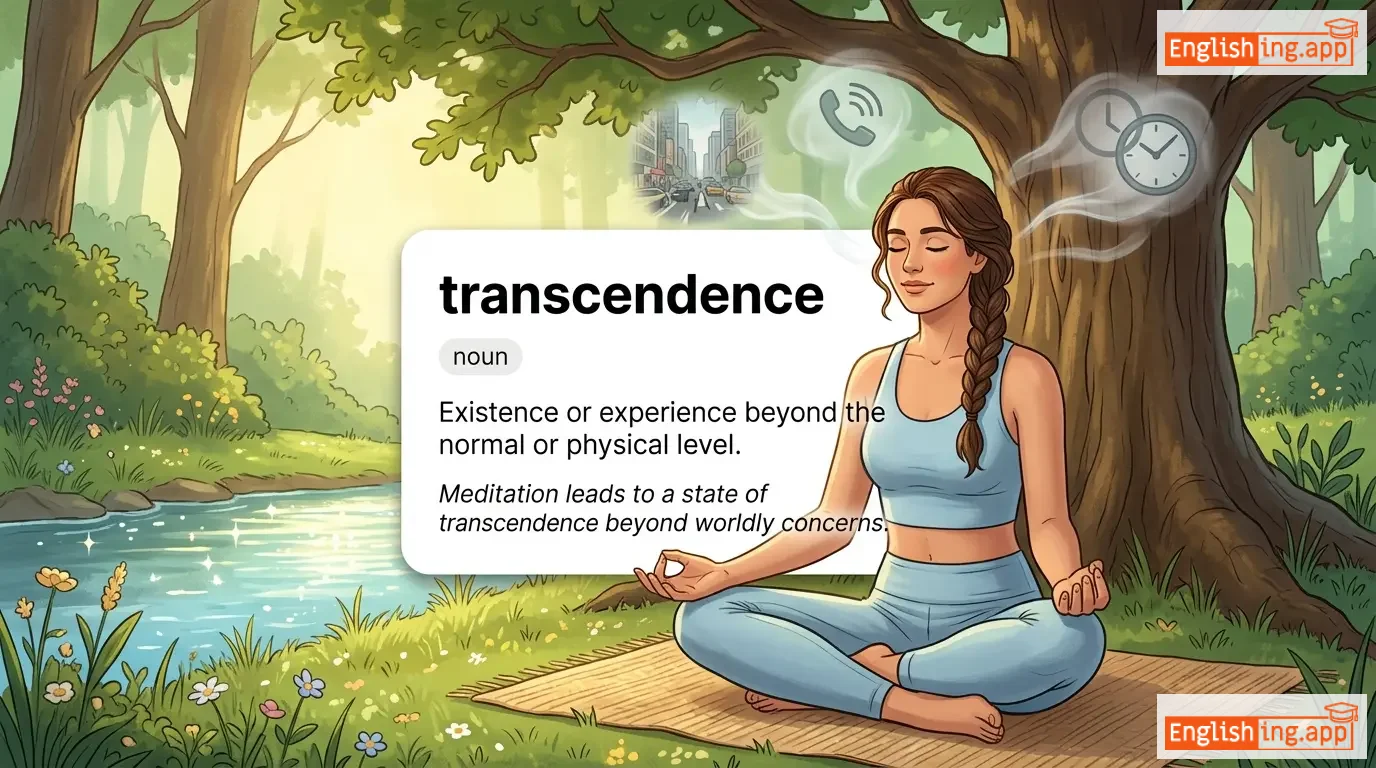
transcendence definition card — visual illustration of the meaning
noun
/trænˈsɛnd.əns/
existence ou expérience au-delà du niveau normal ou physique (existence ou experience au-dela du niveau normal ou physique)

Existence or experience beyond the normal or physical level.

"Meditation leads to a state of transcendence beyond worldly concerns."

"La méditation conduit à un état de transcendance au-delà des préoccupations mondaines." (La meditation conduit a un etat de transcendence au-dela des preoccupations mondaines.)
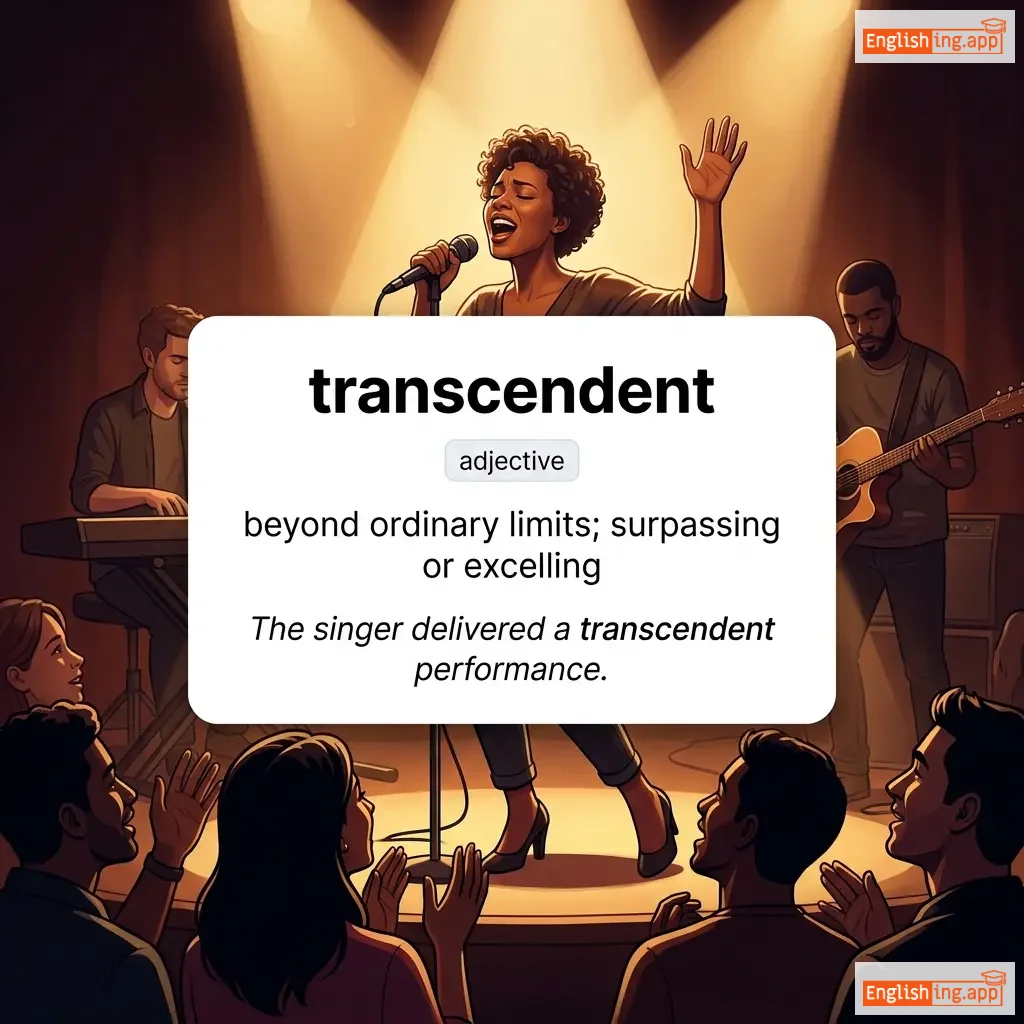
transcendent definition card — visual illustration of the meaning
adjective
/trænˈsɛndənt/
transcendant (transcendant)

beyond ordinary limits; surpassing or excelling

"The singer delivered a transcendent performance."

"Le chanteur a donné une performance transcendante." (Le chanteur a donne une performance transcendante.)
adjective
/ˌtræn.senˈdɛn.təl/
transcendantal (transcendantal)

relating to the spiritual or non-physical realm; surpassing ordinary experience

"Meditation can lead to transcendental experiences."

"La méditation peut mener à des expériences transcendantes." (La meditation peut mener a des experiences transcendantes.)
verb
/trænˈskraɪb/
transcrire (transcrire)

to make a written copy of spoken words or notes

"The secretary transcribed the meeting minutes."

"La secrétaire a transcrit les procès-verbaux de la réunion." (La secrétaire a transcrit les procès-verbaux de la réunion.)
noun
/ˈtrænskrɪpt/
transcription (transcription)

a written or printed version of material originally presented in another medium

"The professor asked for a transcript of the meeting."

"Le professeur a demandé une transcription de la réunion." (Le professeur a demande une transcription de la reunion.)
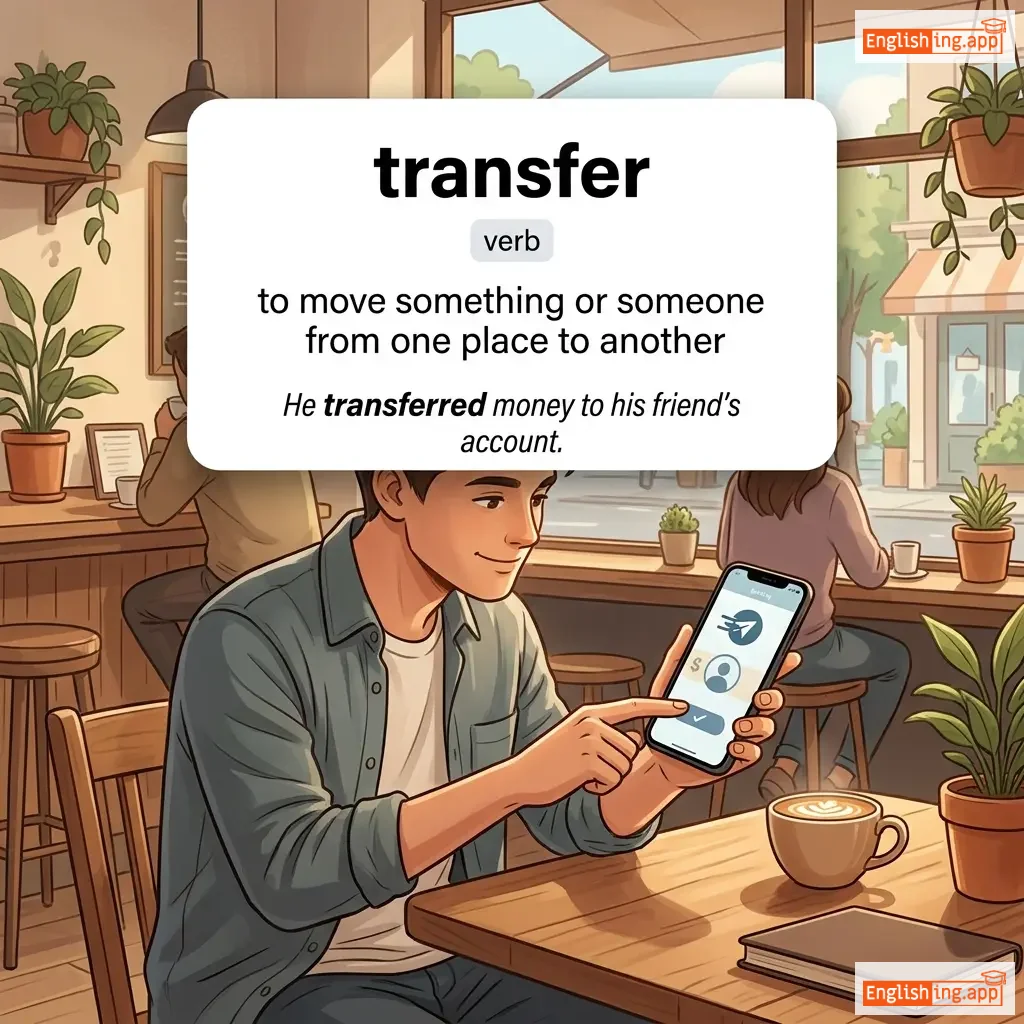
transfer definition card — visual illustration of the meaning
verb
/ˈtrænsfɜːr/
bonheur (bonheur)

to move something or someone from one place to another

"He transferred money to his friend's account."

"Elle ne pouvait pas cacher son bonheur lorsqu'elle a reçu le prix." (Elle ne pouvait pas cacher son bonheur lorsqu'elle a reçu le prix.)
adjective
/ˈtrænsfərəbl/
transférable (transferable)

Able to be moved, passed, or changed from one person, place, or situation to another.

"The ticket is transferable to another passenger."

"Le billet est transférable à un autre passager." (Le billet est transférable à un autre passager.)
noun
/ˌtrænsfəˈriː/
cessionnaire (cessionnaire)

A person to whom a right, property, or responsibility is transferred.

"The transferee must sign the contract before taking ownership."

"Le cessionnaire doit signer le contrat avant de prendre possession." (Le cessionnaire doit signer le contrat avant de prendre possession.)
noun
/ˈtrænsfərəns/
transfert (transfert)

The act of moving something from one place, person, or situation to another.

"The transference of knowledge is essential in education."

"Le transfert de connaissances est essentiel dans l'éducation." (Le transfert de connaissances est essentiel dans l'éducation.)
noun
/trænsˈfɜːrər/
transfert (transfert)

A person who transfers something, such as property, rights, or responsibilities, to another.

"The transferrer is responsible for ensuring the property is legally passed on."

"Le transferrer est responsable de s'assurer que la propriété est transférée légalement." (Le transferrer est responsable de s'assurer que la propriété est transférée légalement.)
verb
/trænsˈfɪɡjʊər/
transfigurer (transfigurer)

To transform the outward appearance or form, often in a way that elevates or glorifies.

"The artist managed to transfigure simple clay into a beautiful sculpture."

"L'artiste a réussi à transformer de l'argile simple en une belle sculpture." (L'artiste a réussi à transformer de l'argile simple en une belle sculpture.)
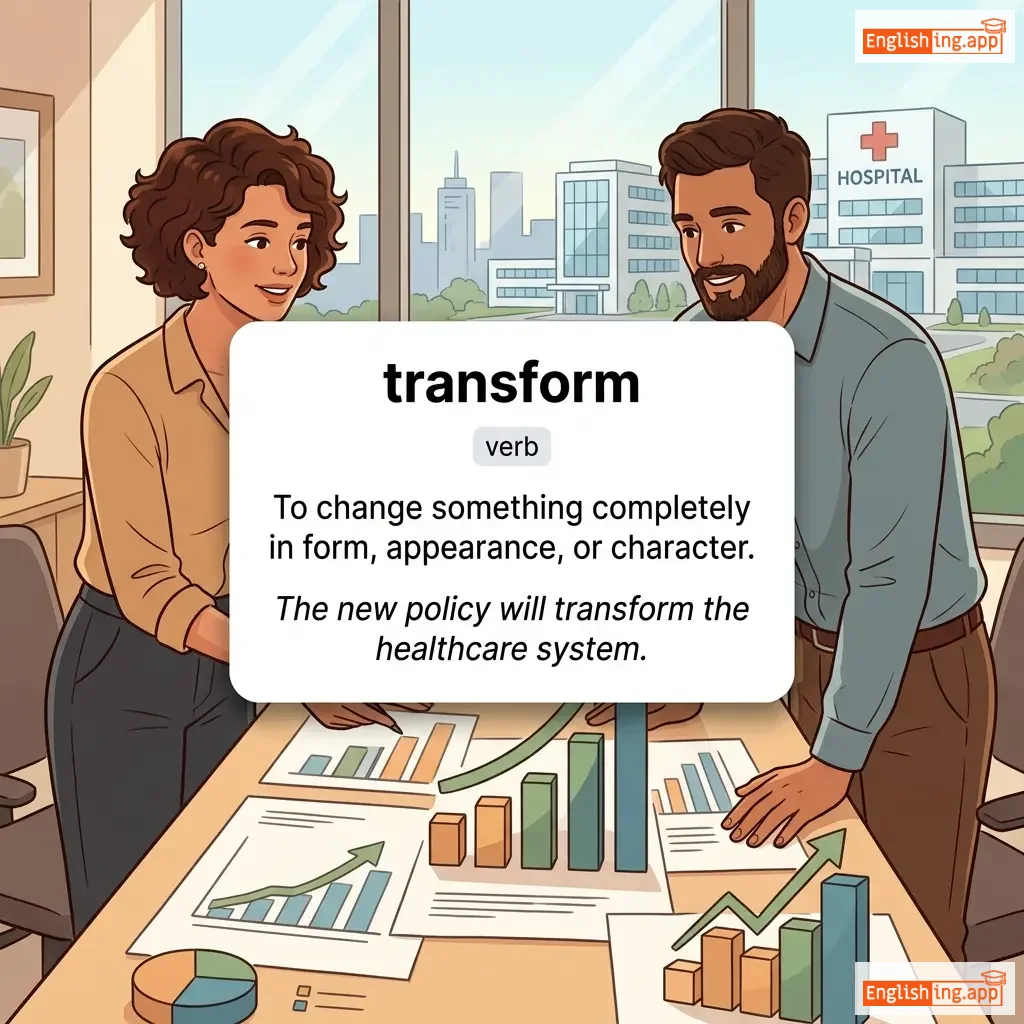
transform definition card — visual illustration of the meaning
verb
/trænsˈfɔːrm/
transformer (transformer)

To change something completely in form, appearance, or character.

"The new policy will transform the healthcare system."

"La nouvelle politique transformera le système de santé." (La nouvelle politique transformera le système de santé.)
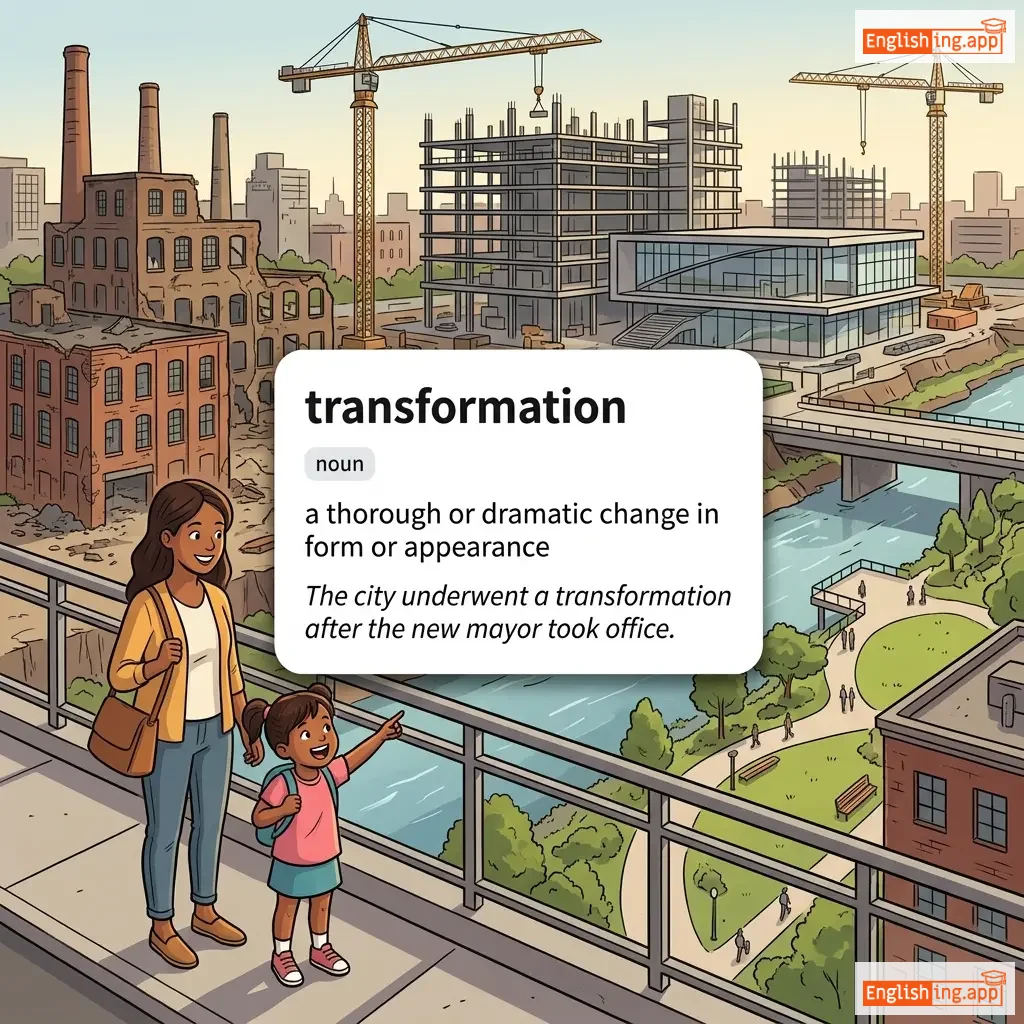
transformation definition card — visual illustration of the meaning
noun
/ˌtrænsfərˈmeɪʃən/
transformation (transformation)

a thorough or dramatic change in form or appearance

"The city underwent a transformation after the new mayor took office."

"La ville a subi une transformation après l'arrivée du nouveau maire." (La ville a subi une transformation apres l'arrivee du nouveau maire.)
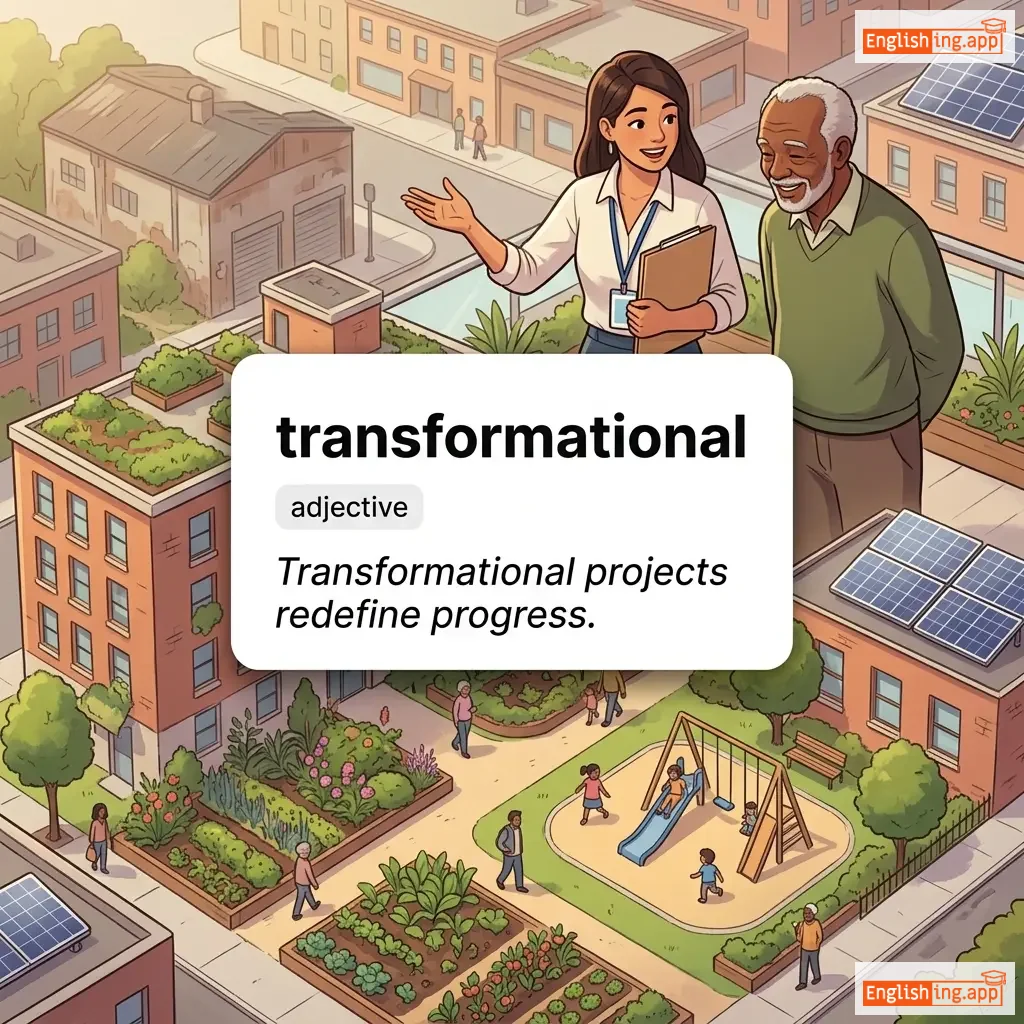
transformational definition card — visual illustration of the meaning
adjective
ˌtræns.fəˈmeɪ.ʃən.əl
transformationnel (transformationnel)

Causing or able to cause an important and lasting change in someone or something.

"Transformational projects redefine progress."

"Les projets transformationnels redéfinissent les progrès." (Les projets transformationnels redéfinissent les progrès.)
transformative definition card — visual illustration of the meaning
adjective
/trænsˈfɔː.mə.tɪv/
transformateur (transformateur)

Causing a marked change in someone or something.

"His transformative ideas changed the direction of the company."

"Ses idées transformatrices ont changé la direction de l'entreprise." (Ses idées transformatrices ont changé la direction de l'entreprise.)
verb
/trænsˈfjuːz/
transférer du sang ou un autre liquide dans une veine ou une partie du corps (transferer du sang ou un autre liquide dans une veine ou une partie du corps)

to transfer blood or another fluid into a vein or body part; to instill a quality or idea into someone or something

"The doctor had to transfuse blood into the patient after the surgery."

"Le médecin a dû transfuser du sang au patient après la chirurgie." (Le médecin a dû transfuser du sang au patient après la chirurgie.)
adjective
/trænsˈfjuːzəbl̩/
transfusible (transfusible)

capable of being transfused, especially referring to blood or fluids

"Only transfusible blood types are used in the hospital."

"Seuls les groupes sanguins transfusibles sont utilisés à l'hôpital." (Seuls les groupes sanguins transfusibles sont utilisés à l'hôpital.)
noun
/trænsˈfjuːʒən/
transfusion sanguine (transfusion sanguine)

the process of transferring blood or another fluid into a person's vein

"The patient received a blood transfusion after the accident."

"Le patient a reçu une transfusion sanguine après l'accident." (Le patient a reçu une transfusion sanguine après l'accident.)
verb
/trænsˈɡrɛs/
transgresser (transgresser)

to go beyond the limits of a moral law, command, or boundary; to sin

"He apologized after realizing he had transgressed the community's rules."

"Il s'est excusé après avoir réalisé qu'il avait transgressé les règles de la communauté." (Il s'est excuse apres avoir realise qu'il avait transgresse les regles de la communaute.)
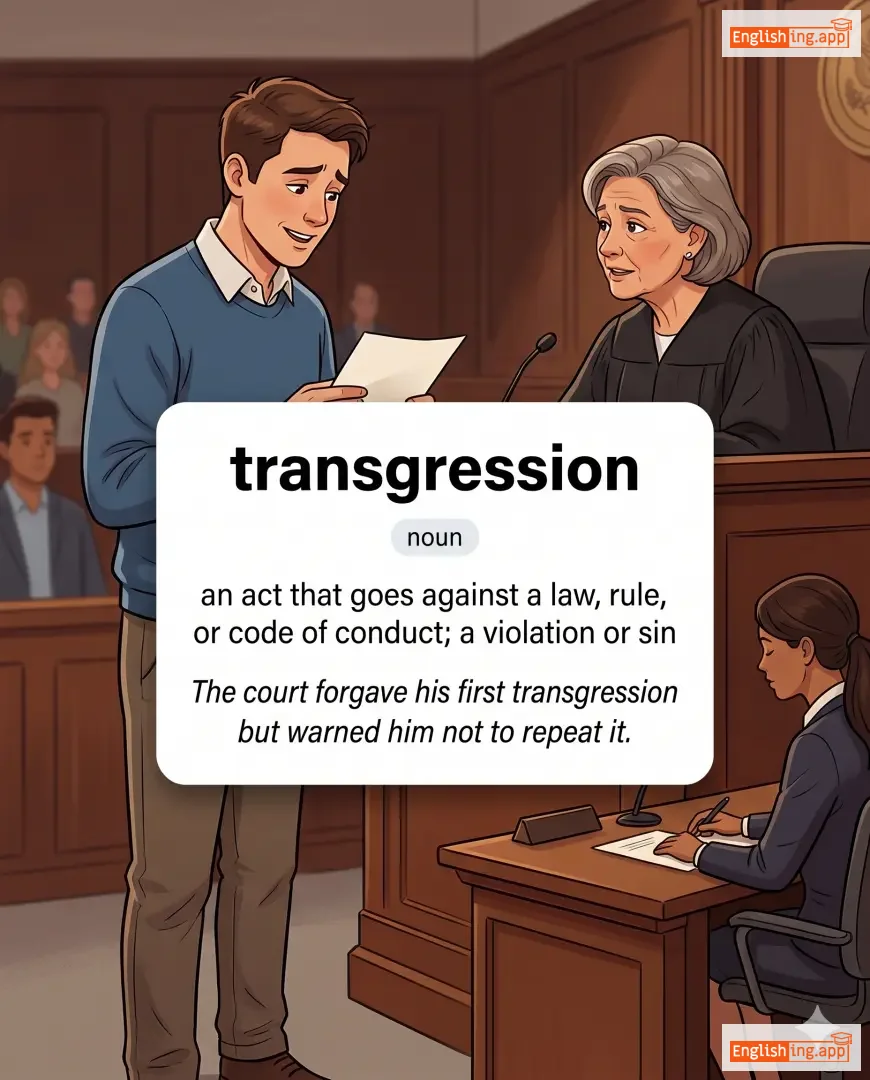
transgression definition card — visual illustration of the meaning
noun
/trænsˈɡrɛʃən/
transgression, infraction (transgression, infraction)

an act that goes against a law, rule, or code of conduct; a violation or sin

"The court forgave his first transgression but warned him not to repeat it."

"Le tribunal a pardonné sa première transgression, mais l'a averti de ne pas la répéter." (Le tribunal a pardonne sa premiere transgression, mais l'a averti de ne pas la repeter.)
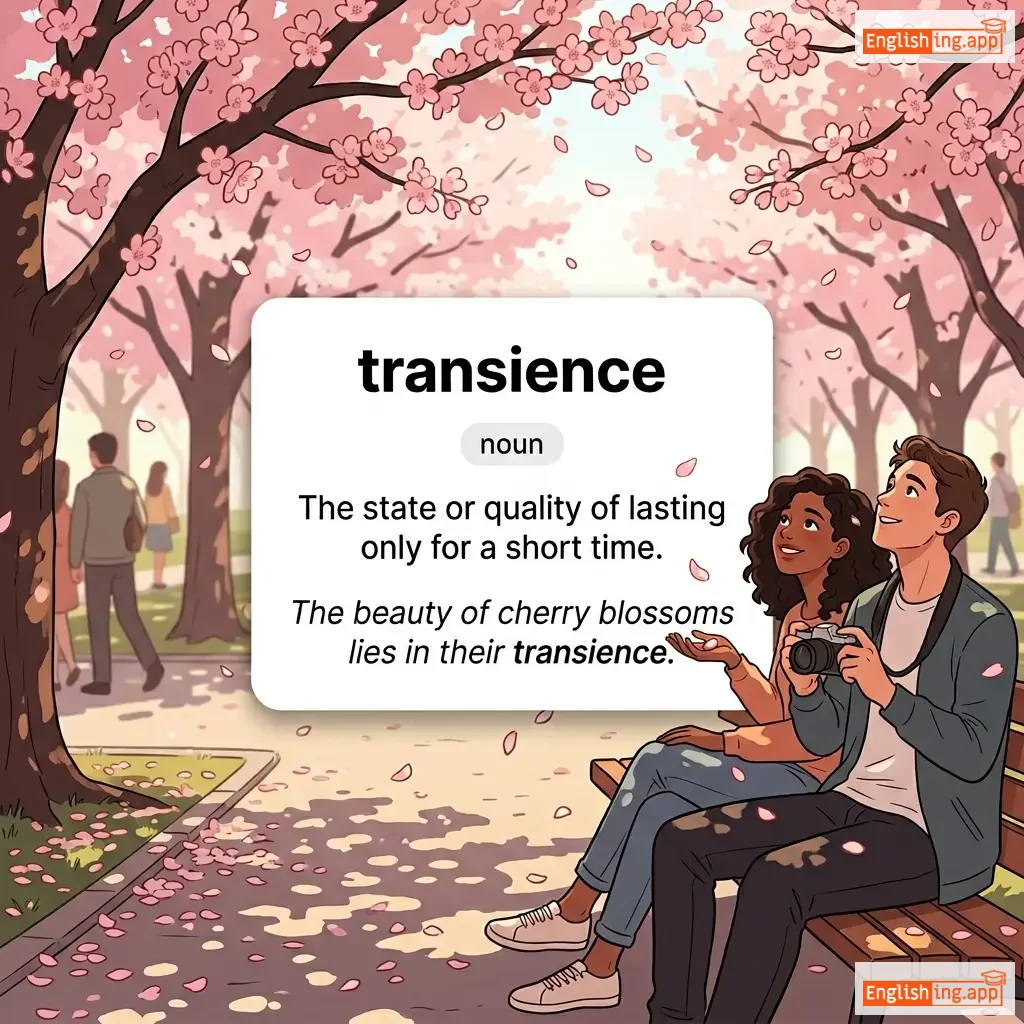
transience definition card — visual illustration of the meaning
noun
/ˈtrænziəns/
transience (transience)

The state or quality of lasting only for a short time.

"The beauty of cherry blossoms lies in their transience."

"La beauté des fleurs de cerisier réside dans leur transience." (La beauté des fleurs de cerisier réside dans leur transience.)