Vocabulaires

Découvrez, apprenez et maîtrisez le vocabulaire anglais

noun
/steɪk/
steak (steak)

a thick slice of meat, typically beef, cooked by grilling or frying

"He ordered a grilled steak with vegetables."

"Il a commandé un steak grillé avec des légumes." (Il a commande un steak grille avec des legumes.)
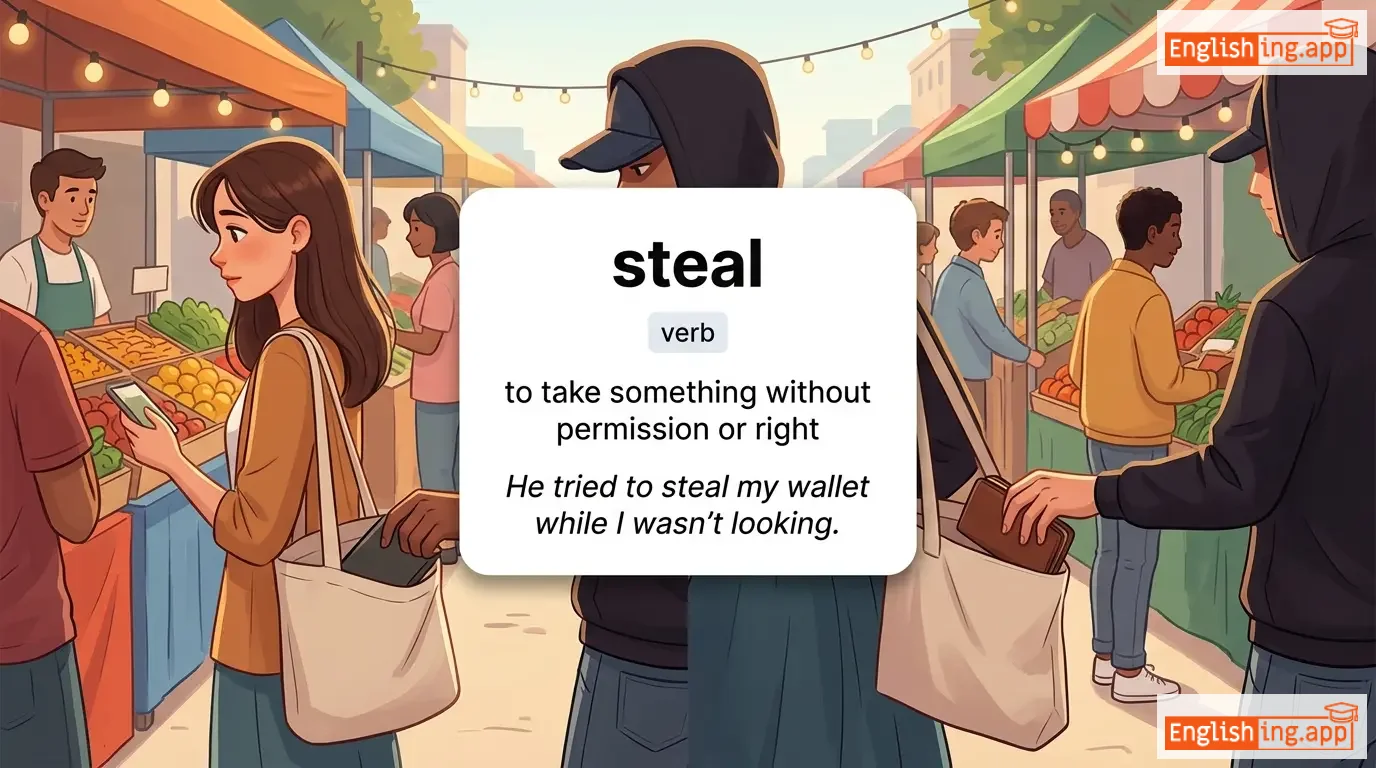
steal definition card — visual illustration of the meaning
🕵️‍♂️

steal (stil)

verb
/stiːl/
voler (voler)

to take something without permission or right

"He tried to steal my wallet while I wasn't looking."

"Il a essayé de voler mon portefeuille pendant que je ne regardais pas." (Il a essayé de voler mon portefeuille pendant que je ne regardais pas.)
noun
/stɛlθ/
discrétion, furtivité (discretion, furtivite)

The act of moving, doing, or achieving something quietly and secretly.

"The cat moved with stealth towards its prey."

"Le chat s'est déplacé furtivement vers sa proie." (Le chat s'est déplacé furtivement vers sa proie.)
noun, verb
/stiːm/
vapeur (vapeur)

the vapor into which water is converted when heated; to emit or treat with steam

"The kettle was steaming on the stove."

"La bouilloire fumait sur la cuisinière." (La bouilloire fumait sur la cuisinière.)
noun
/ˈstiː.mər/
vapeur (vapeur)

a ship or boat powered by steam engines

"The old steamer crossed the river slowly."

"Le vieux steamer a traversé lentement la rivière." (Le vieux steamer a traversé lentement la rivière.)
noun
/stiːl/
acier (acier)

a strong, hard metal made of iron and carbon

"The building was made from steel to ensure its durability."

"Le bâtiment a été fait en acier pour garantir sa durabilité." (Le bâtiment a été fait en acier pour garantir sa durabilité.)
adjective
/stiːp/
raide, excessif (raide, excessif)

Having a sharp inclination or high slope; also can mean excessive (as in price).

"The hikers climbed a steep mountain trail."

"Les randonneurs ont grimpé un sentier raide de montagne." (Les randonneurs ont grimpé un sentier raide de montagne.)
adjective
/stiːpt/
imprégné (impregne)

Completely surrounded by or filled with a particular quality, influence, or experience.

"The town is steeped in history and tradition."

"La ville est imprégnée d'histoire et de tradition." (La ville est imprégnée d'histoire et de tradition.)
verb
/stɪə(r)/
diriger (diriger)

to guide or control the movement of a vehicle, vessel, or person

"He steered the car carefully through the narrow street."

"Il a dirigé la voiture prudemment à travers la rue étroite." (Il a dirige la voiture prudemment a travers la rue etroite.)
noun
/staɪn/
mug à bière (mug a bière)

A large beer mug, typically made of glass or stoneware.

"He raised his stein to toast his friends."

"Il a levé son stein pour porter un toast à ses amis." (Il a levé son stein pour porter un toast à ses amis.)
adjective
/ˈstɛlər/
exceptionnel (exceptionnel)

Relating to stars; outstanding or excellent.

"She gave a stellar performance in the play."

"Elle a donné une performance exceptionnelle dans la pièce." (Elle a donne une performance exceptionnelle dans la piece.)
noun, verb
/stɛm/
tige / freiner (tige / freiner)

Noun: The main stalk of a plant. Verb: To stop or restrict the flow or development of something.

"The gardener cut the stem of the rose; New policies aim to stem the flow of pollution."

"Le jardinier a coupé la tige de la rose; Les nouvelles politiques visent à freiner le flux de pollution." (Le jardinier a coupé la tige de la rose; Les nouvelles politiques visent à freiner le flux de pollution.)
noun
/stɛntʃ/
puanteur (puanteur)

A very strong and unpleasant smell.

"The stench of garbage filled the alley."

"La puanteur des ordures remplit la ruelle." (La puanteur des ordures remplit la ruelle.)
noun
/ˈstɛnsəl/
pochoir (pochoir)

A thin sheet of material with a design cut out, used to produce the design on the surface below by applying paint or ink through the cut-out holes.

"The artist used a stencil to paint identical stars on the wall."

"L'artiste a utilisé un pochoir pour peindre des étoiles identiques sur le mur." (L'artiste a utilisé un pochoir pour peindre des étoiles identiques sur le mur.)
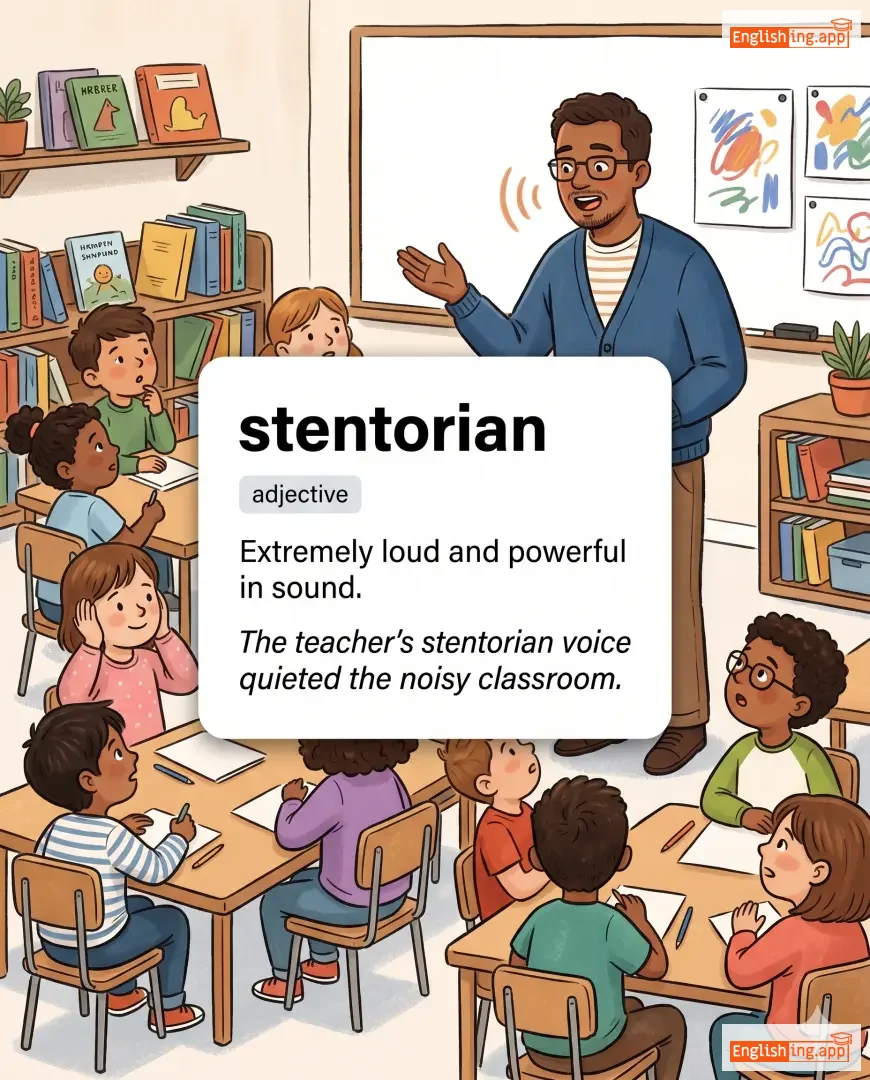
stentorian definition card — visual illustration of the meaning
adjective
/stɛnˈtɔːriən/
tonitruant (tonitruant)

Extremely loud and powerful in sound.

"The teacher’s stentorian voice quieted the noisy classroom."

"La voix tonitruante du professeur a calmé la classe bruyante." (La voix tonitruante du professeur a calmé la classe bruyante.)
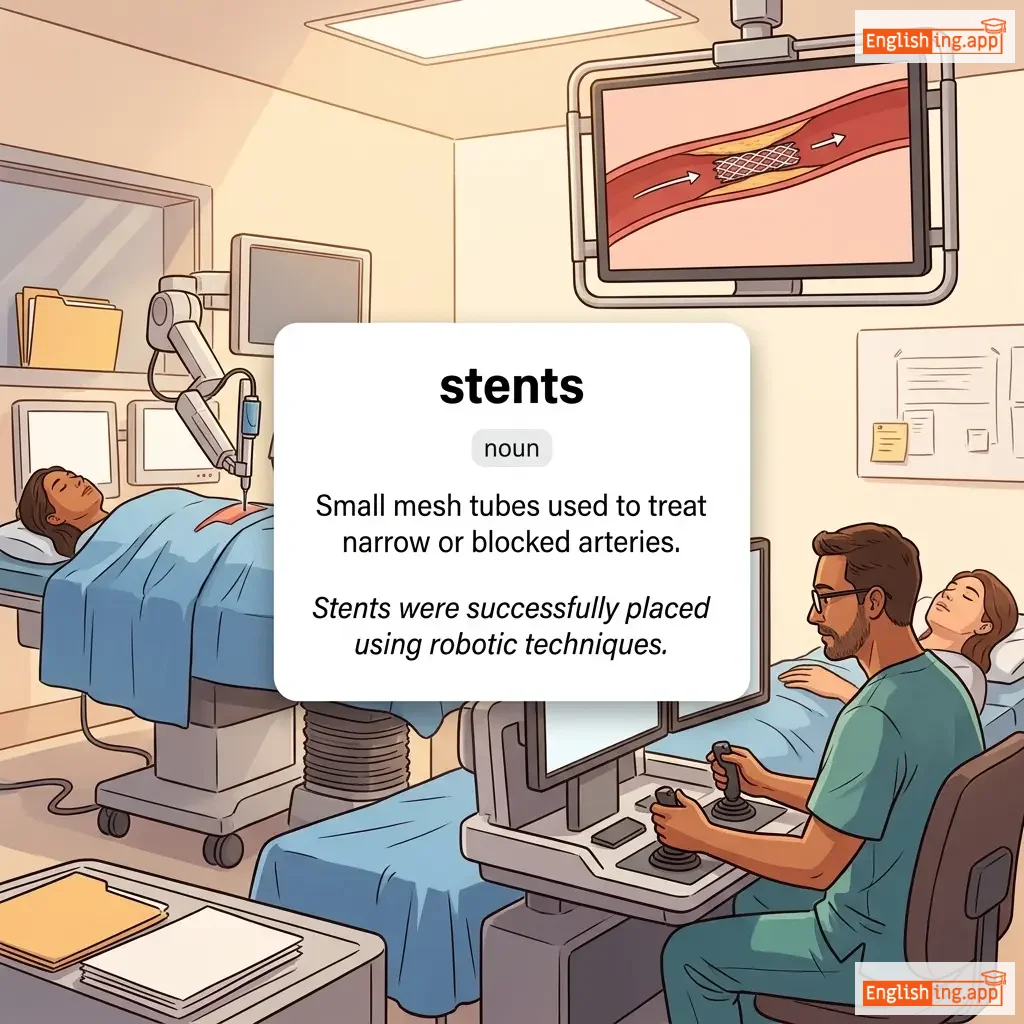
stents definition card — visual illustration of the meaning
noun
/stents/
stents (stents)

Small mesh tubes used to treat narrow or blocked arteries.

"Stents were successfully placed using robotic techniques."

"Les stents ont été placés avec succès en utilisant des techniques robotiques." (Les stents ont été placés avec succès en utilisant des techniques robotiques.)
noun
/stɛp/
pas (pa)

a movement made by lifting one foot and putting it down in a new position

"She took a step towards the door."

"She took a step towards the door." (Elle a fait un pas vers la porte.)
noun
/stɛp/
steppe (steppe)

A large flat area of unforested grassland, especially in southeastern Europe or Siberia.

"The nomads traveled across the vast steppe with their herds."

"Les nomades ont voyagé à travers la vaste steppe avec leurs troupeaux." (Les nomades ont voyagé à travers la vaste steppe avec leurs troupeaux.)
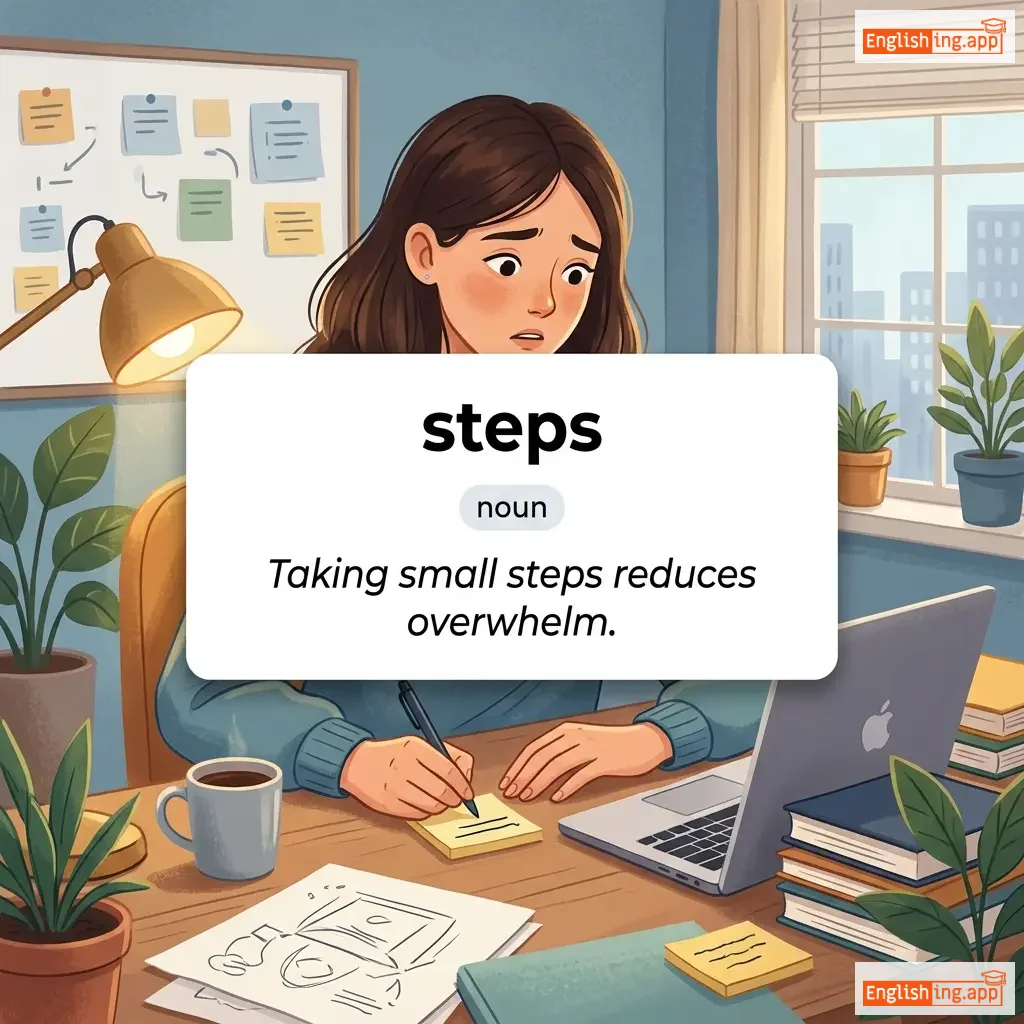
steps definition card — visual illustration of the meaning
noun
/stɛps/
étapes (etap)

A measure or action, especially one of a series taken in order to deal with or achieve a particular thing.

"Taking small steps reduces overwhelm."

"Faire de petits pas réduit la surcharge." (Faire de petits pas réduit la surcharge.)
noun
/ˈstɛriəˌtaɪp/
stéréotype (stereotype)

A widely held but oversimplified and fixed idea of a particular type of person or thing.

"It is a stereotype that all gamers are antisocial."

"C'est un stéréotype que tous les joueurs sont antisociaux." (C'est un stéréotype que tous les joueurs sont antisociaux.)
adjective
/ˈstɛriəˌtaɪpt/
stéréotypé (stereotype)

Conforming to a fixed or oversimplified idea of what someone or something is like.

"His stereotyped jokes failed to impress the audience."

"Ses blagues stéréotypées n'ont pas réussi à impressionner le public." (Ses blagues stereotypees n ont pas reussi a impressionner le public.)
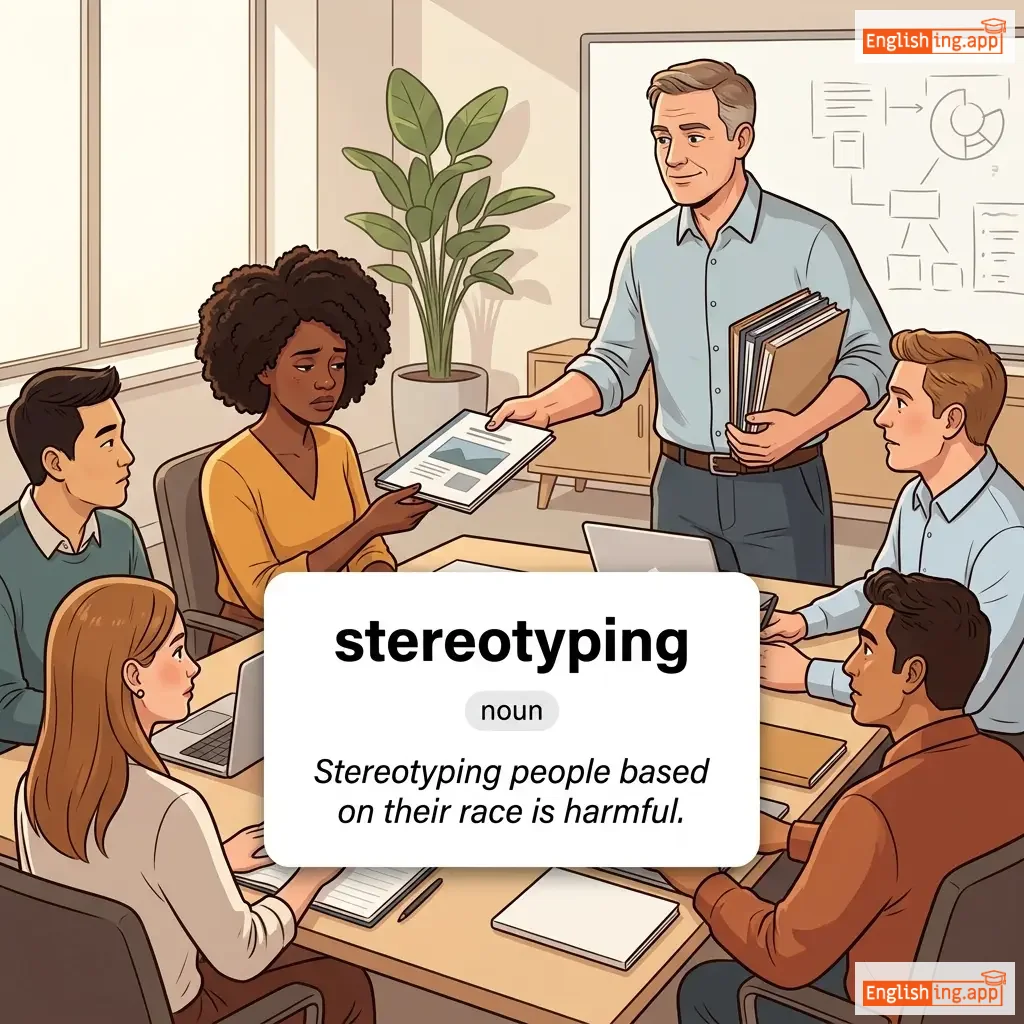
stereotyping definition card — visual illustration of the meaning
noun
/ˈstɛə.rɪ.əʊˌtaɪ.pɪŋ/
stéréotype (stereotype)

A widely held but fixed and oversimplified image or idea of a particular type of person or thing.

"Stereotyping people based on their race is harmful."

"Stéréotyper les gens en fonction de leur race est nuisible." (Stéréotyper les gens en fonction de leur race est nuisible.)
adjective
/ˈstɛr.aɪl/
stérile (steril)

Free from bacteria or other living microorganisms; incapable of producing offspring.

"The surgeon worked in a sterile environment to avoid infection."

"Le chirurgien a travaillé dans un environnement stérile pour éviter l'infection." (Le chirurgien a travaillé dans un environnement stérile pour éviter l'infection.)
noun/adjective
/ˈstɜː.lɪŋ/
monnaie britannique / excellent (monnaie britannique / excellent)

British money, especially pounds; of excellent quality.

"She was praised for her sterling work on the project."

"Elle a été félicitée pour son excellent travail sur le projet." (Elle a été félicitée pour son excellent travail sur le projet.)
adjective/noun
/stɜːrn/
sévère / la partie arrière d'un navire (severe / la partie arriere d'un navire)

Serious and strict in manner or attitude; the back part of a ship.

"The teacher gave the students a stern warning before the exam."

"L'enseignant a donné aux élèves un avertissement sévère avant l'examen." (L'enseignant a donne aux eleves un avertissement severe avant l'examen.)
adjective
/ˈstɜːr.tər.əs/
ronflement bruyant (ronflement bruyant)

Characterized by heavy snoring or breathing.

"The patient’s stertorous breathing alarmed the nurses."

"La respiration stertoreuse du patient a alarmé les infirmières." (La respiration stertoreuse du patient a alarmé les infirmières.)
noun
/ˈstiː.vəˌdɔːr/
dockeur (dockeur)

A person employed to load and unload cargo from ships.

"The stevedores worked tirelessly to unload the cargo before dawn."

"Les dockeurs ont travaillé sans relâche pour décharger la cargaison avant l'aube." (Les dockeurs ont travaillé sans relâche pour décharger la cargaison avant l'aube.)
abbreviation (noun/pronoun)
/ˈsʌmθɪŋ/
quelque chose (quelque chose)

abbreviation for 'something'

"Can you give me sth. to write with?"

"Peux-tu me donner quelque chose pour écrire ?" (Peux-tu me donner quelque chose pour écrire ?)
verb
/stɪk/
coller (coller)

to adhere or attach something to a surface

"The glue will stick to the paper."

"La colle collera au papier." (La colle collera au papier.)
noun
/ˈstɪklər/
personne exigeante sur les règles (personne exigeante sur les regles)

a person who insists on a certain quality or standard of behavior

"He is a stickler for punctuality and never tolerates delays."

"Il est très strict sur la ponctualité et ne tolère pas les retards." (Il est tres strict sur la ponctualite et ne tolera pas les retards.)
adjective
/ˈstɪki/
collant (collant)

having the quality of adhering or clinging; difficult to remove or deal with

"The candy is too sticky to eat with your hands."

"Le bonbon est trop collant pour être mangé à la main." (Le bonbon est trop collant pour etre mange a la main.)
adjective
/stɪf/
rigide (rigide)

rigid, difficult to bend or move

"After the long run, his legs felt very stiff."

"Après la longue course, ses jambes se sont senties très rigides." (Apres la longue course, ses jambes se sont senties tres rigides.)
verb
/ˈstaɪfl/
réprimer (reprimer)

to prevent or restrain an action, idea, or emotion; to suffocate

"She tried to stifle a laugh during the serious meeting."

"Elle a essayé de réprimer un rire pendant la réunion sérieuse." (Elle a essaye de reprimier un rire pendant la reunion serieuse.)
verb
/ˈstaɪfəld/
étouffer (etouffer)

to suppress, hold back, or prevent something from happening

"He stifled a laugh during the serious meeting."

"Il a étouffé un rire pendant la réunion sérieuse." (Il a étouffé un rire pendant la réunion sérieuse.)
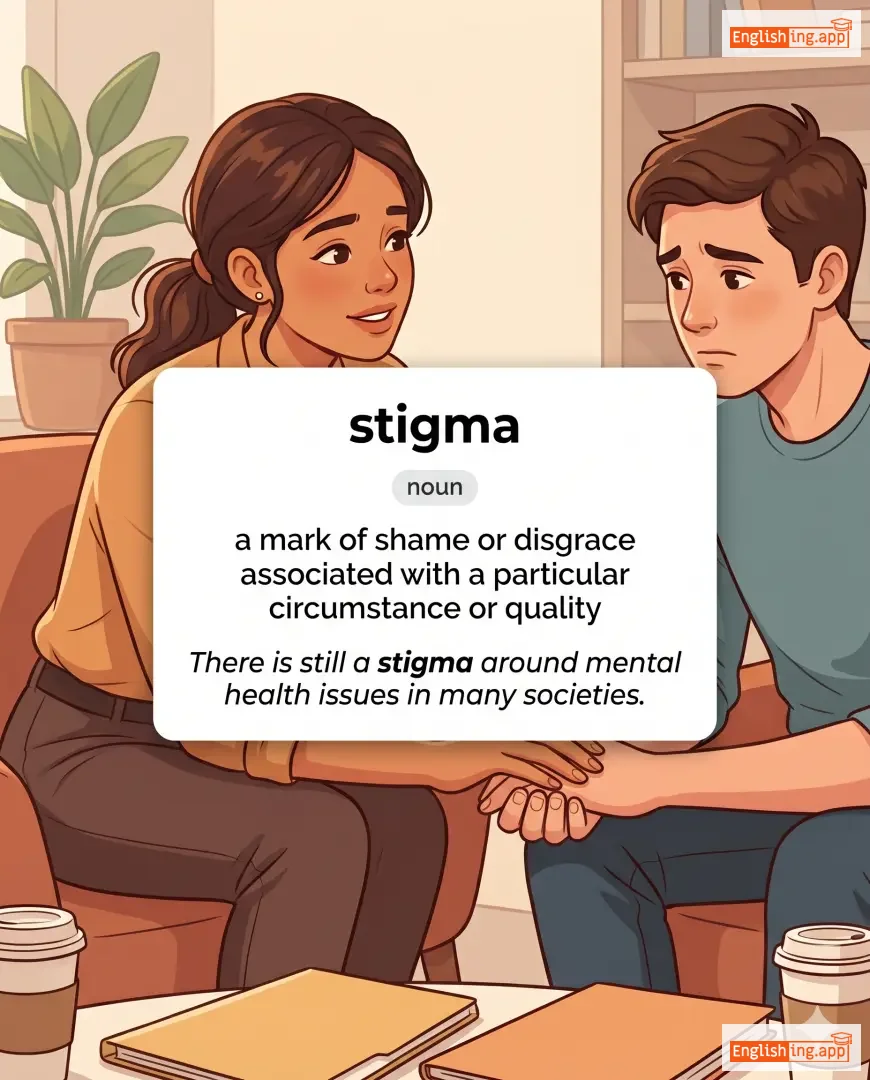
stigma definition card — visual illustration of the meaning
noun
/ˈstɪɡmə/
stigmatisme (stigmatisme)

a mark of shame or disgrace associated with a particular circumstance or quality

"There is still a stigma around mental health issues in many societies."

"Il existe encore un stigmate autour des problèmes de santé mentale dans de nombreuses sociétés." (Il existe encore un stigmate autour des problemes de sante mentale dans de nombreuses societes.)
verb
/ˈstɪɡmətaɪz/
stigmatiser (stigmatiser)

to describe or regard someone as worthy of disgrace or disapproval

"People with certain illnesses are often unfairly stigmatized."

"Les personnes atteintes de certaines maladies sont souvent stigmatisées de manière injuste." (Les personnes atteintes de certaines maladies sont souvent stigmatisées de manière injuste.)
noun
/stɪˈlɛtoʊ/
chaussure à talon aigu / poignard (chaussure a talon aigu / poignard)

A small, thin, high-heeled shoe or a dagger with a slender blade.

"She wore elegant stiletto heels to the party."

"Elle portait des talons stiletto élégants à la fête." (Elle portait des talons stiletto élégants à la fête.)
adjective
/stɪl/
calme (calme)

not moving or making a sound

"The water was still, reflecting the sky."

"L'eau était calme, reflétant le ciel." (L'eau était calme, reflétant le ciel.)
adjective
/ˈstɪltɪd/
artificiel, forcé (artificiel, force)

Speech or writing that is stiff, unnatural, or overly formal.

"His speech sounded stilted and rehearsed."

"Son discours semblait forcé et préparé." (Son discours semblait forcé et préparé.)
noun
/ˈstɪmjʊlənt/
stimulant (stimulant)

A substance that raises levels of physiological or nervous activity in the body.

"Coffee is a common stimulant that helps people stay awake."

"Le café est un stimulant courant qui aide les gens à rester éveillés" (Le café est un stimulant courant qui aide les gens à rester éveillés)
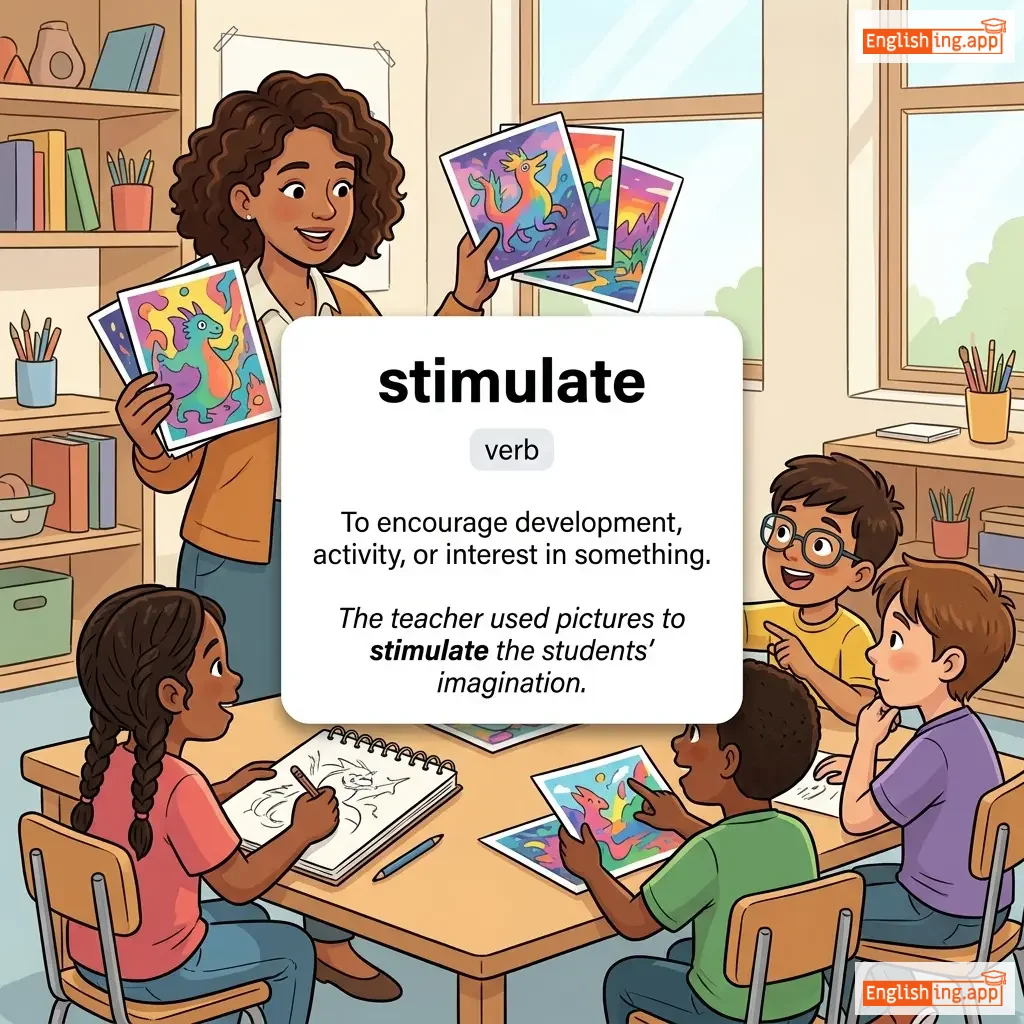
stimulate definition card — visual illustration of the meaning
verb
/ˈstɪmjʊˌleɪt/
stimuler, encourager (stimuler, encourager)

To encourage development, activity, or interest in something.

"The teacher used pictures to stimulate the students' imagination."

"Le professeur a utilisé des images pour stimuler l'imagination des élèves." (Le professeur a utilisé des images pour stimuler l'imagination des élèves.)
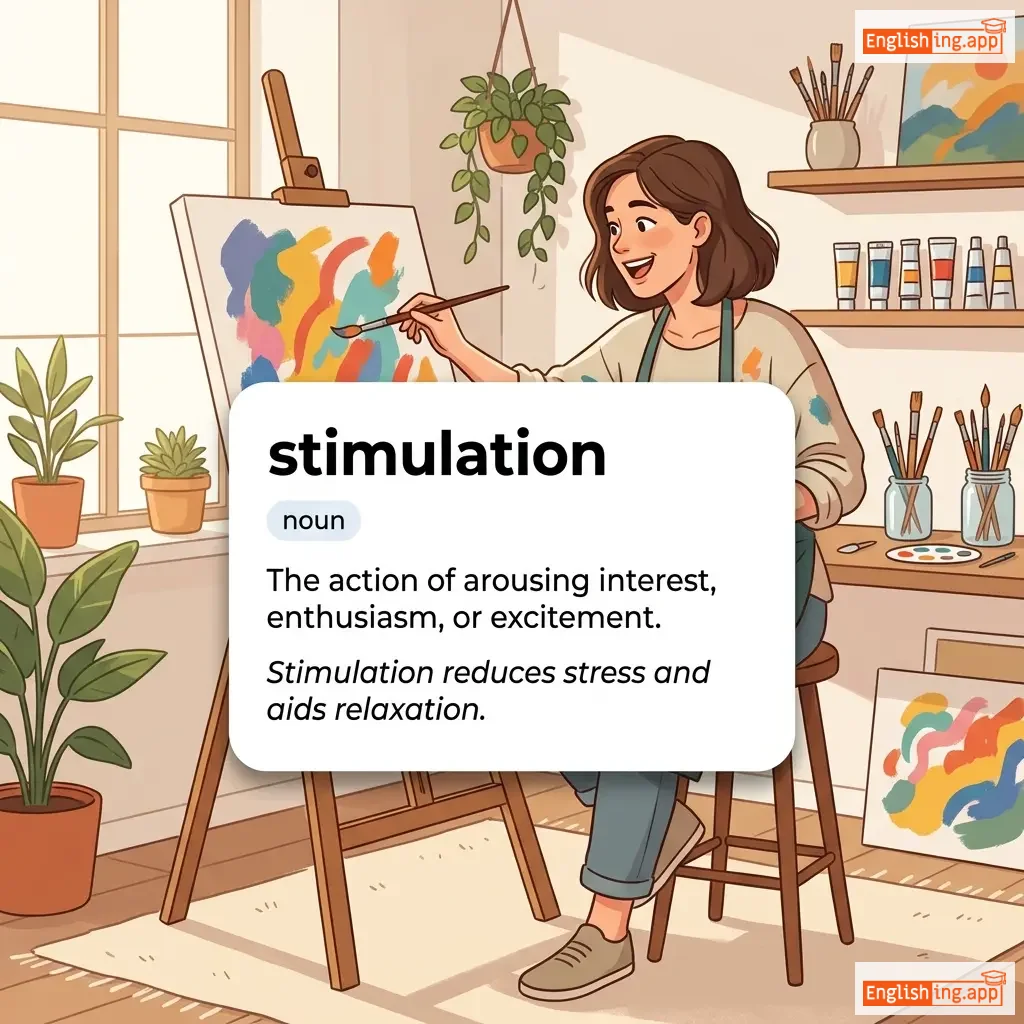
stimulation definition card — visual illustration of the meaning
noun
/ˌstɪm.jəˈleɪ.ʃən/
stimulation (stimulation)

The action of arousing interest, enthusiasm, or excitement.

"Stimulation reduces stress and aids relaxation."

"La stimulation réduit le stress et aide à la relaxation." (La stimulation réduit le stress et aide à la relaxation.)
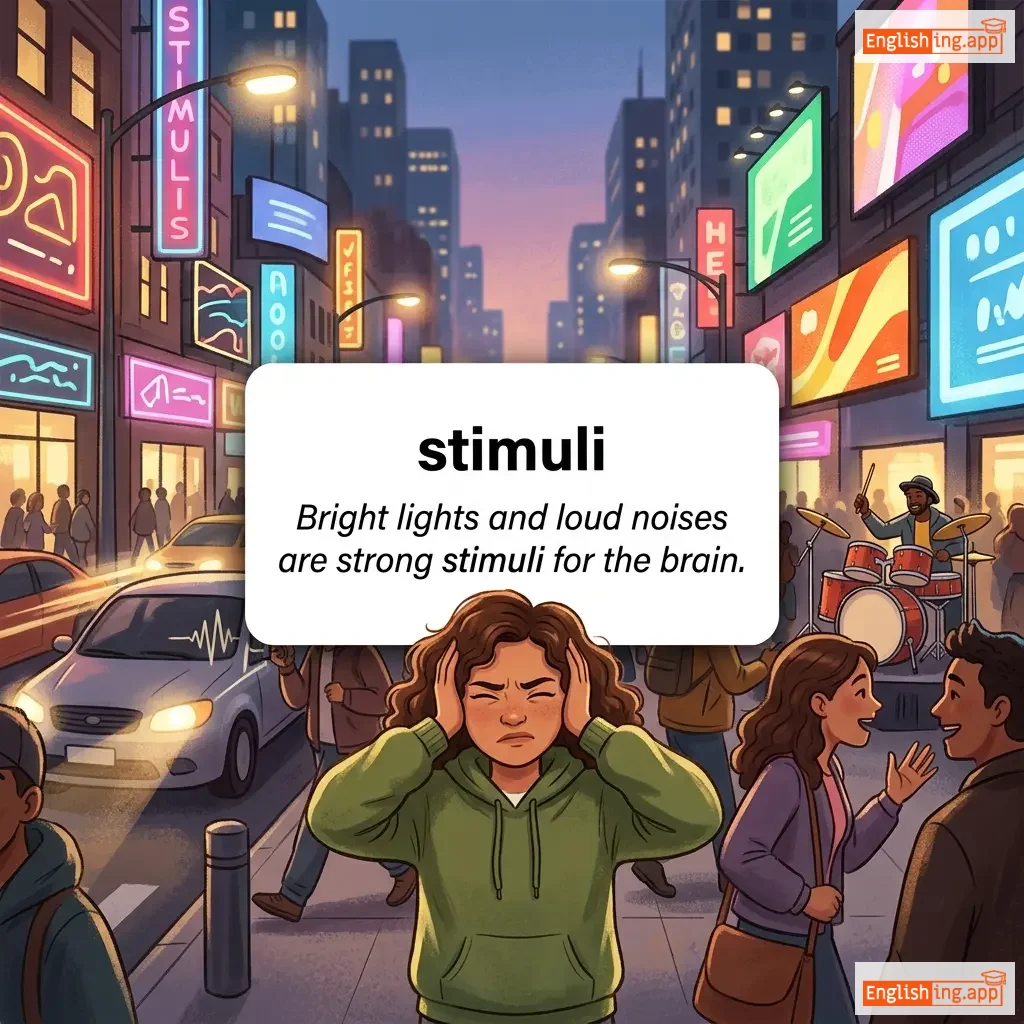
stimuli definition card — visual illustration of the meaning
noun (plural of stimulus)
/ˈstɪm.jʊ.laɪ/
stimulus (stimulus)

Things or events that evoke a specific functional reaction in an organ or tissue.

"Bright lights and loud noises are strong stimuli for the brain."

"Les lumières vives et les bruits forts sont des stimuli puissants pour le cerveau." (Les lumieres vives et les bruits forts sont des stimuli puissants pour le cerveau.)
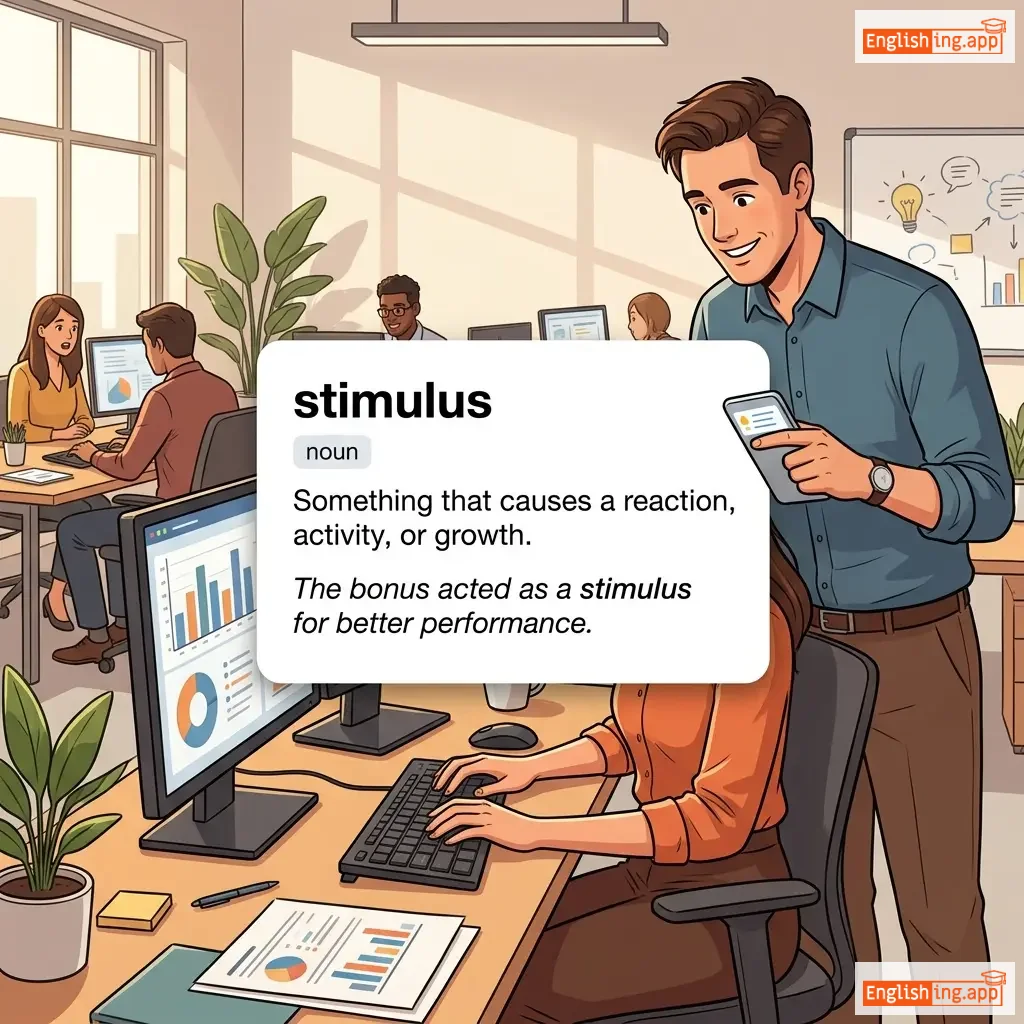
stimulus definition card — visual illustration of the meaning
noun
/ˈstɪmjʊləs/
élément qui provoque une réaction, un stimulus (element qui provoque une reaction, un stimulus)

Something that causes a reaction, activity, or growth.

"The bonus acted as a stimulus for better performance."

"Le bonus a agi comme un stimulus pour une meilleure performance." (Le bonus a agi comme un stimulus pour une meilleure performance.)
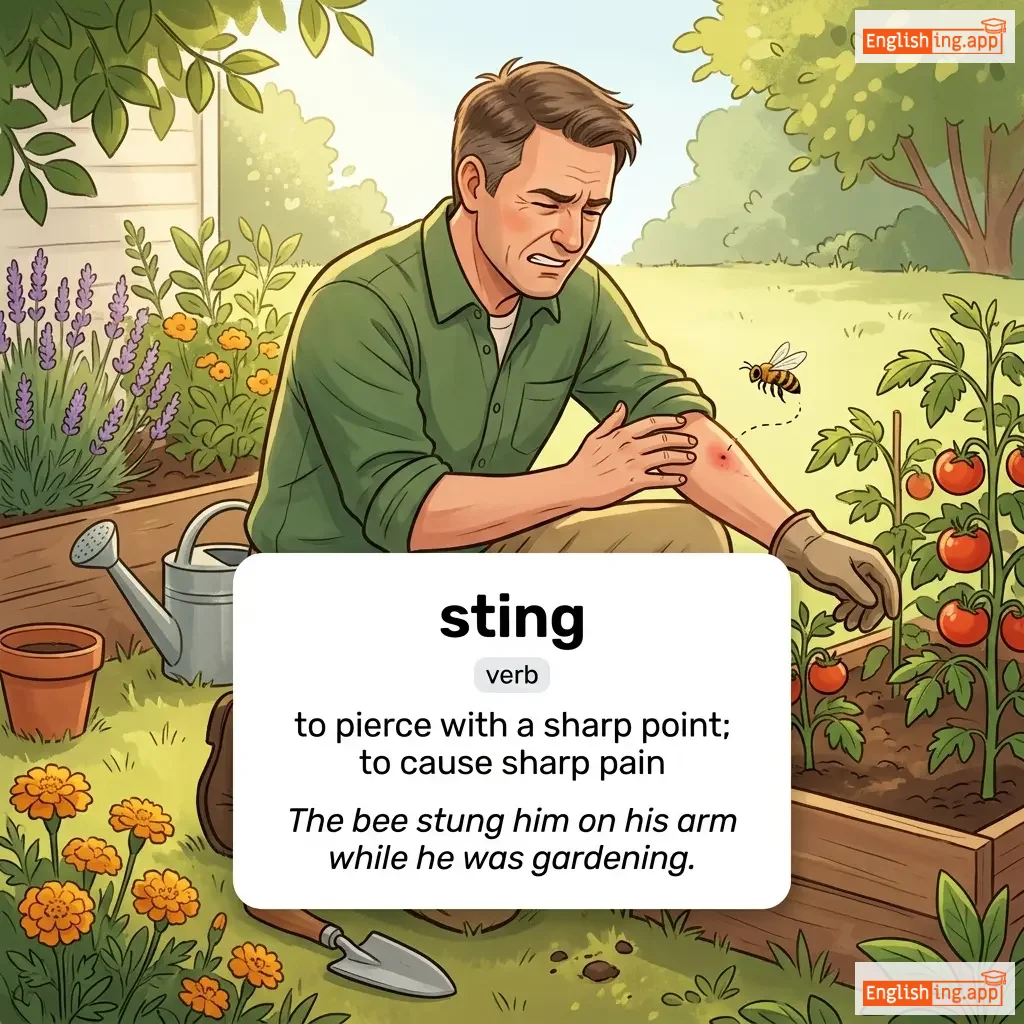
sting definition card — visual illustration of the meaning
verb
/stɪŋ/
piquer (piker)

to pierce with a sharp point; to cause sharp pain

"The bee stung him on his arm while he was gardening."

"L'abeille l'a piqué au bras pendant qu'il jardinait." (L'abeille l'a pique au bras pendant quil jardinait)
adjective
/ˈstɪndʒi/
avare (avare)

unwilling to spend or give; miserly

"He is too stingy to buy a gift for his friend."

"Il est trop avare pour acheter un cadeau pour son ami." (Il est trop avare pour acheter un cadeau pour son ami.)
verb
/stɪŋk/
sentir mauvais (sentir mauvais)

to smell very unpleasant

"The garbage bin stinks in the hot sun."

"La poubelle sent mauvais sous le soleil brûlant." (La poubelle sent mauvais sous le soleil brulant.)
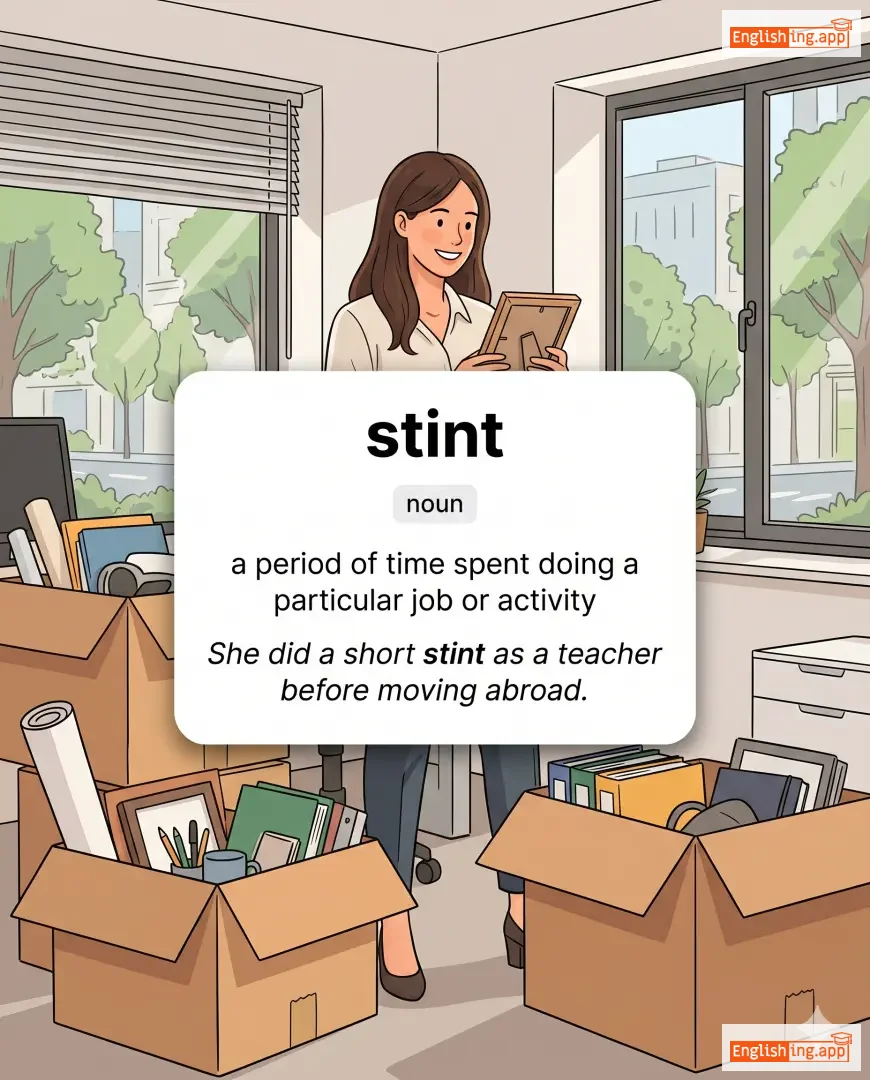
stint definition card — visual illustration of the meaning
noun
/stɪnt/
période temporaire (periode temporaire)

a period of time spent doing a particular job or activity

"She did a short stint as a teacher before moving abroad."

"Elle a fait un court passage en tant qu'enseignante avant de partir à l'étranger." (Elle a fait un court passage en tant qu'enseignante avant de partir à l'étranger.)
verb
/ˈstɪntɪŋ/
donner avec parcimonie (donner avec parcimonie)

to supply sparingly or with restrictions

"He never stinting his efforts to help the poor."

"Il ne fait jamais de restrictions dans ses efforts pour aider les pauvres." (Il ne fait jamais de restrictions dans ses efforts pour aider les pauvres.)
noun
/ˈstaɪpɛnd/
stipendie (stipendie)

a fixed regular payment, usually for services or to cover living expenses

"The university provides a monthly stipend to its research students."

"L'université fournit un stipend mensuel à ses étudiants en recherche." (L'université fournit un stipend mensuel à ses étudiants en recherche.)