Vocabulaires

Découvrez, apprenez et maîtrisez le vocabulaire anglais

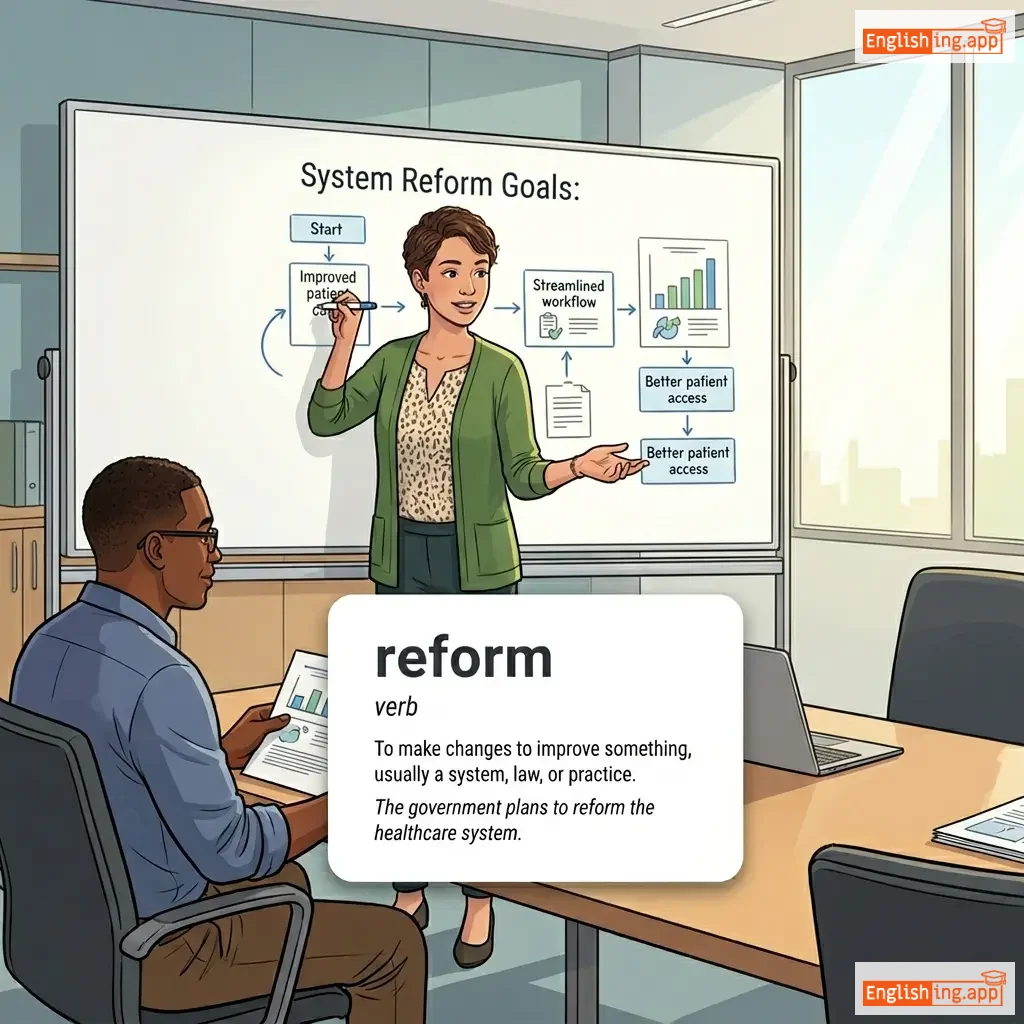
reform definition card — visual illustration of the meaning
verb
/rɪˈfɔːrm/
réformer (reformer)

To make changes to improve something, usually a system, law, or practice.

"The government plans to reform the healthcare system."

"Le gouvernement prévoit de réformer le système de santé." (Le gouvernement prévoit de réformer le système de santé.)
noun
/rɪˈfɔːrmər/
réformateur (reformateur)

A person who works to improve laws, institutions, or social practices.

"Martin Luther King Jr. was a great social reformer."

"Martin Luther King Jr. était un grand réformateur social." (Martin Luther King Jr. était un grand réformateur social.)
verb
/rɪˈfrækt/
réfracter (refracter)

To bend light, sound, or heat as it passes through a medium.

"The water refracts light, making the straw look bent."

"L'eau réfracte la lumière, faisant apparaître la paille comme courbée." (L'eau réfracte la lumière, faisant apparaître la paille comme courbée.)
noun
/rɪˈfrækʃən/
réfraction (refraction)

The bending of light, sound, or other waves when they pass from one medium to another of different density.

"The refraction of light in water makes objects appear bent."

"La réfraction de la lumière dans l'eau fait apparaître les objets comme courbés." (La refraction de la lumiere dans l'eau fait apparaitre les objets comme courbes.)
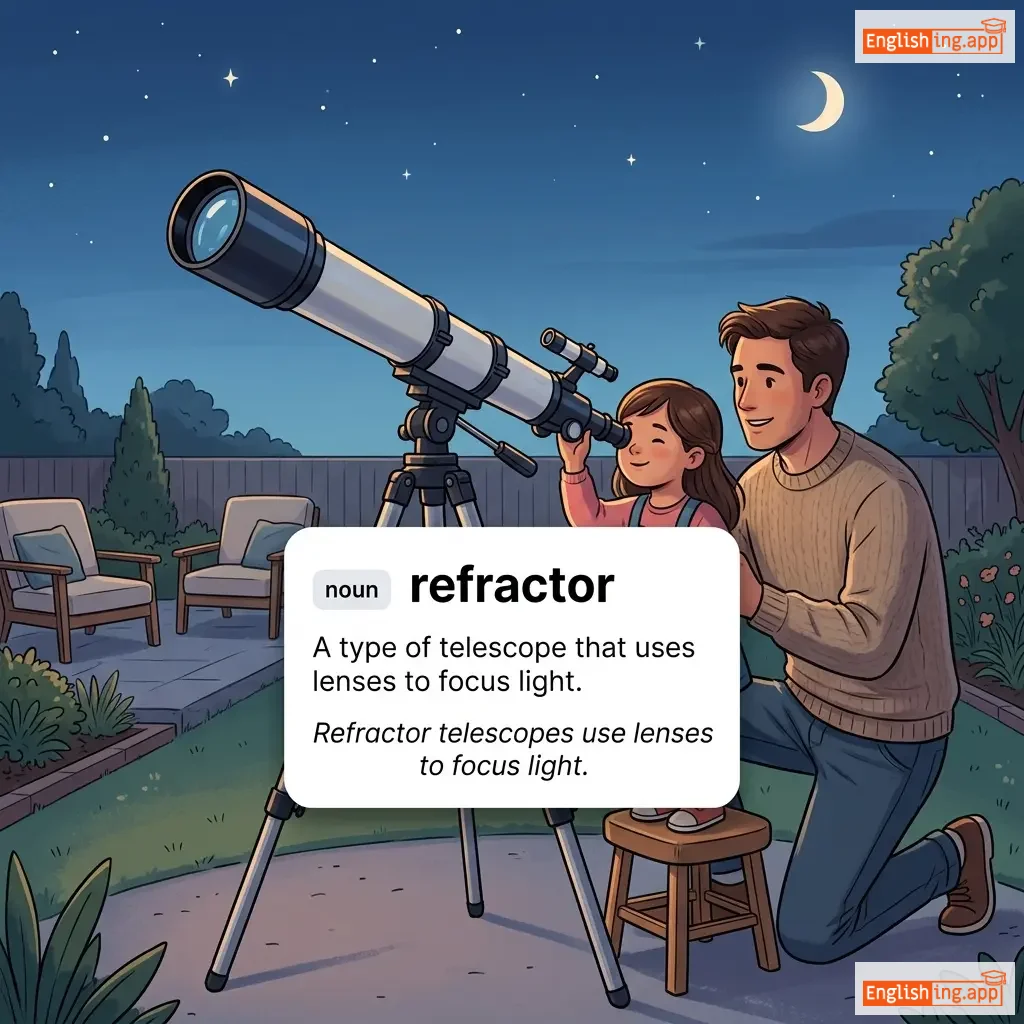
refractor definition card — visual illustration of the meaning
noun
/rɪˈfræk.tər/
réfracteur (refracteur)

A type of telescope that uses lenses to focus light.

"Refractor telescopes use lenses to focus light."

"Les télescopes réfracteurs utilisent des lentilles pour focaliser la lumière." (Les teleskopes refracteurs utilisent des lentilles pour focaliser la lumière.)
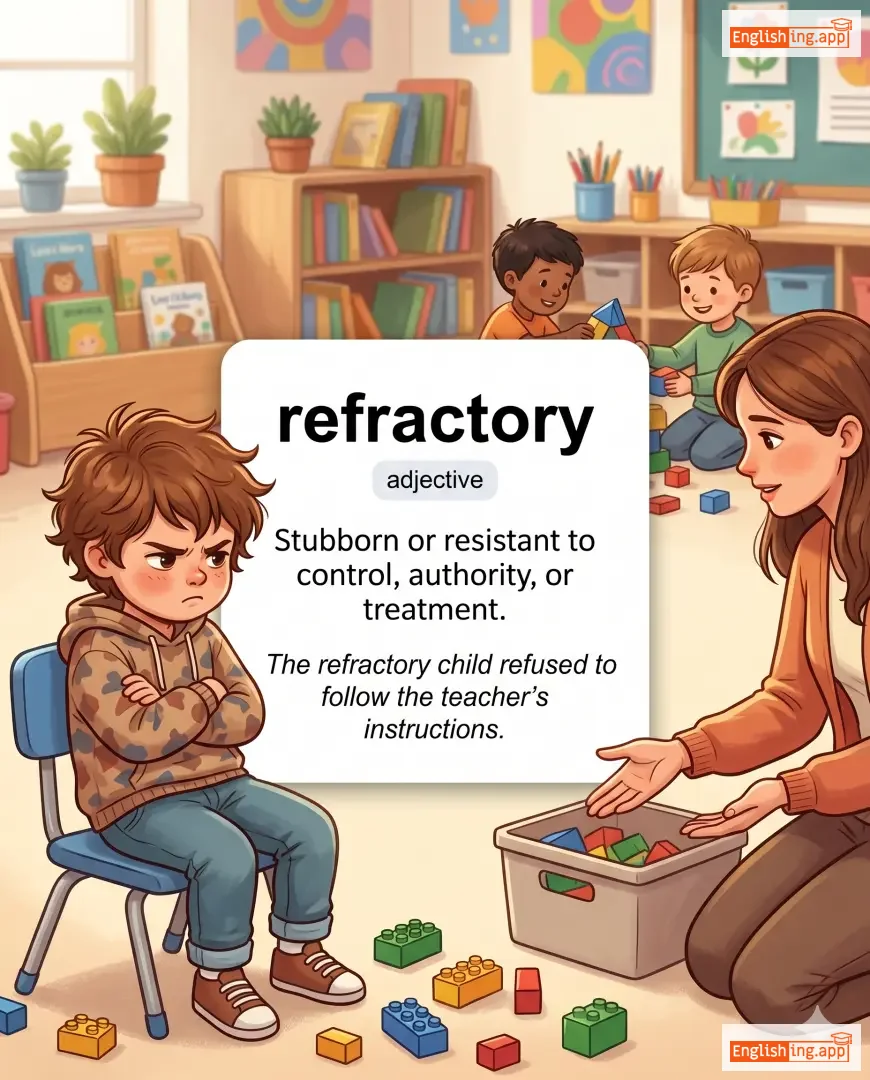
refractory definition card — visual illustration of the meaning
adjective
/rɪˈfræktəri/
réfractaire (refractaire)

Stubborn or resistant to control, authority, or treatment.

"The refractory child refused to follow the teacher's instructions."

"L'enfant réfractaire a refusé de suivre les instructions du professeur." (L'enfant réfractaire a refusé de suivre les instructions du professeur.)
adjective
/rɪˈfræɡəbəl/
réfutable (refutable)

Capable of being refuted or disproved.

"His argument was weak and easily refragable."

"Son argument était faible et facilement réfutable." (Son argument était faible et facilement réfutable.)
verb
/rɪˈfreɪn/
s'abstenir (s'abstenir)

To hold oneself back from doing something.

"Please refrain from smoking in this area."

"Veuillez vous abstenir de fumer dans cette zone." (Veuillez vous abstenir de fumer dans cette zone.)
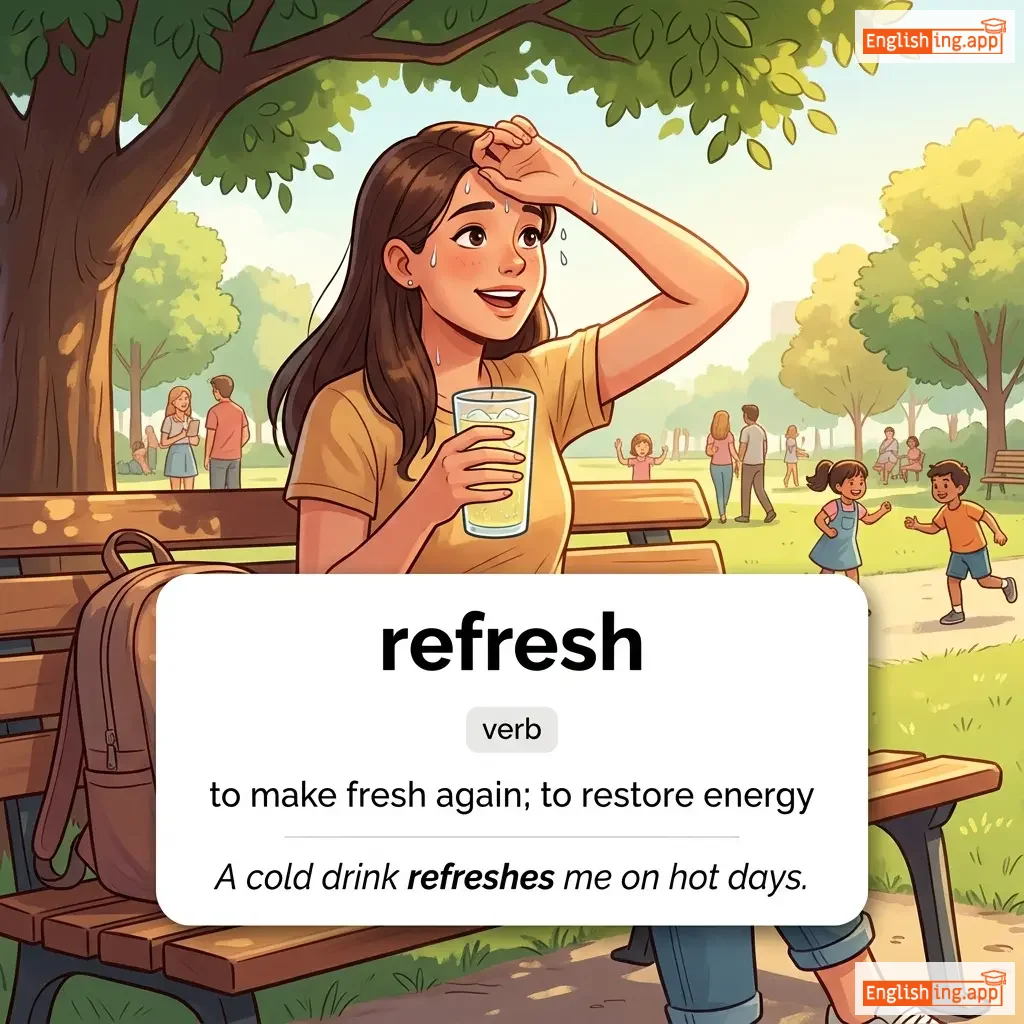
refresh definition card — visual illustration of the meaning
verb
/rɪˈfreʃ/
rafraîchir (rafraichir)

to make fresh again; to restore energy

"A cold drink refreshes me on hot days."

"Une boisson froide me rafraîchit les jours chauds." (un boisson froide me rafraichit le jour shod)
adjective
/rɪˈfreʃ.ɪŋ/
rafraîchissant (rafraîchissant)

making one feel energized and renewed; pleasantly new or different

"The cool breeze was refreshing after the hot day."

"La brise fraîche était rafraîchissante après la journée chaude." (La brise fraîche était rafraîchissante après la journée chaude.)
noun
/rɪˈfreʃ.mənt/
rafraîchissement (rafrechissement)

food and drink that is served as a light meal; something that refreshes

"We served light refreshments after the meeting."

"Nous avons servi des rafraîchissements légers après la réunion." (nous avons servi des rafraichissements legers apres la reunion)
noun
/rɪˈfrɪdʒəreɪtər/
réfrigérateur (refrigerateur)

an appliance used to keep food and drinks cold

"She kept the milk in the refrigerator to prevent it from spoiling."

"Elle a mis le lait dans le réfrigérateur pour éviter qu'il ne se gâte." (Elle a mis le lait dans le réfrigérateur pour éviter qu'il ne se gâte.)
noun
/rɪˈfrɪndʒənsi/
réfringence (refringence)

The ability of a substance to bend light; refractive power.

"Glass has a higher refringency than water."

"Le verre a une réfringence plus élevée que l'eau." (Le verre a une refringence plus elevee que l'eau.)
adjective
/rɪˈfrɪndʒənt/
réfringent (refringent)

Capable of refracting light or other waves.

"The refringent properties of the crystal bent the light into a spectrum."

"Les propriétés réfringentes du cristal ont courbé la lumière en un spectre." (Les proprietes refringentes du cristal ont courbe la lumiere en un spectre.)
noun
/ˈrɛfjuːdʒ/
refuge (refuge)

a place that provides shelter or protection from danger or distress

"The villagers took refuge in the temple during the storm."

"Les villageois ont trouvé refuge dans le temple pendant la tempête." (Les villageois ont trouve refuge dans le temple pendant la tempete.)
noun
/ˌrɛfjuˈʤi/
réfugié (refugie)

a person who has been forced to leave their country in order to escape war, persecution, or natural disaster

"Thousands of refugees fled the war-torn region."

"Des milliers de réfugiés ont fui la région dévastée par la guerre." (Des milliers de refugies ont fui la region devastee par la guerre.)
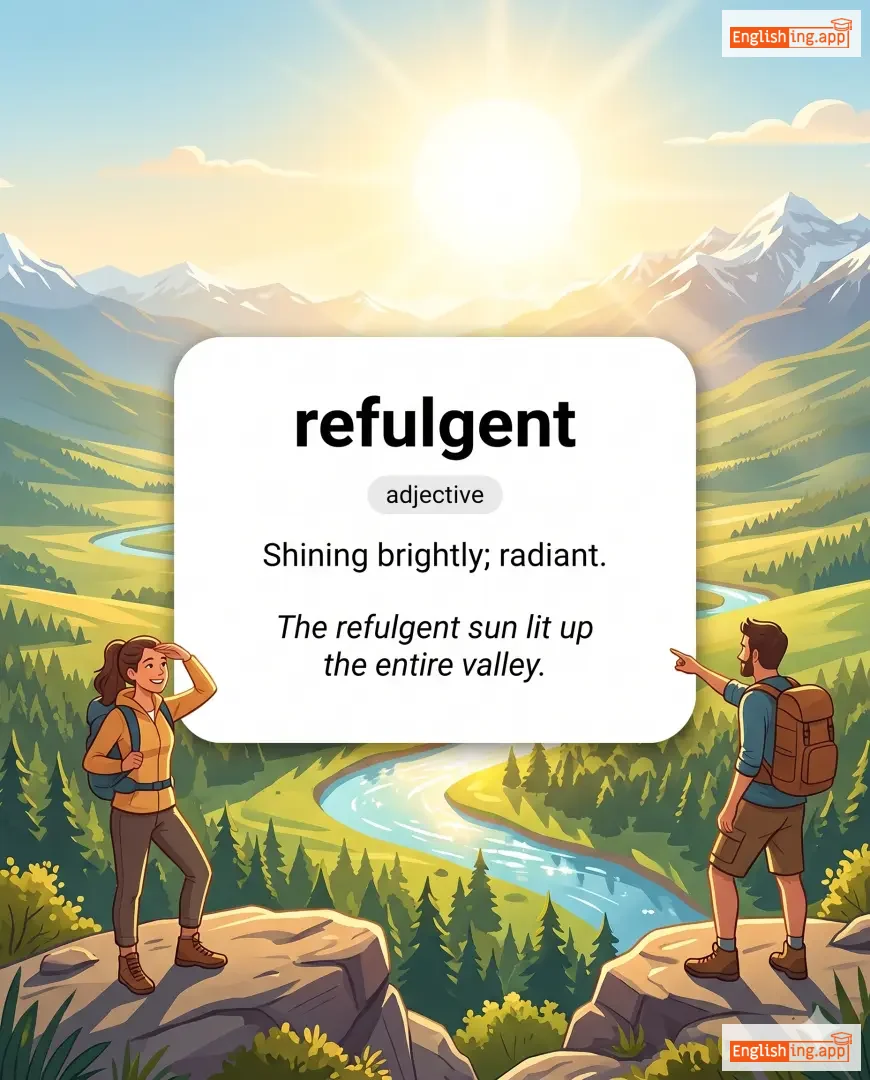
refulgent definition card — visual illustration of the meaning
adjective
/rɪˈfʌldʒənt/
resplendissant (resplendissant)

Shining brightly; radiant.

"The refulgent sun lit up the entire valley."

"Le soleil resplendissant éclaira toute la vallée." (Le soleil resplendissant éclaira toute la vallée.)
verb
/riːˈfɜːrbɪʃ/
rénover (renover)

To renovate or redecorate something, especially a building.

"The company decided to refurbish its old office."

"L'entreprise a décidé de rénover son vieux bureau." (L'entreprise a décidé de rénover son vieux bureau.)
noun
/rɪˈfjuːzəl/
refus (refus)

An act of saying or showing that one will not do or accept something.

"Her refusal to cooperate delayed the project."

"Son refus de coopérer a retardé le projet." (Son refus de coopérer a retardé le projet.)
verb, noun
/rɪˈfjuːz/ (verb), /ˈrɛfjuːs/ (noun)
refuser; déchet (refuser; dechet)

As a verb: to say no to something offered or requested; as a noun: waste material; rubbish.

"He refused to answer the question, and the street was full of refuse."

"Il a refusé de répondre à la question, et la rue était pleine de déchets." (Il a refusé de répondre à la question, et la rue était pleine de déchets.)
adjective
/rɪˈfjuː.tə.bəl/
réfutable (refutable)

capable of being proven wrong or false; able to be disproved

"His theory was refutable because it could be tested experimentally."

"Sa théorie était réfutable car elle pouvait être testée expérimentalement." (Sa théorie était réfutable car elle pouvait être testée expérimentalement.)
noun
/ˌrɛfjʊˈteɪʃən/
réfutation (refutation)

The act of proving a statement or argument to be false or incorrect.

"Her essay was a strong refutation of the opposing theory."

"Son essai était une forte réfutation de la théorie opposée." (Son essai etait une forte refutation de la theorie opposee.)
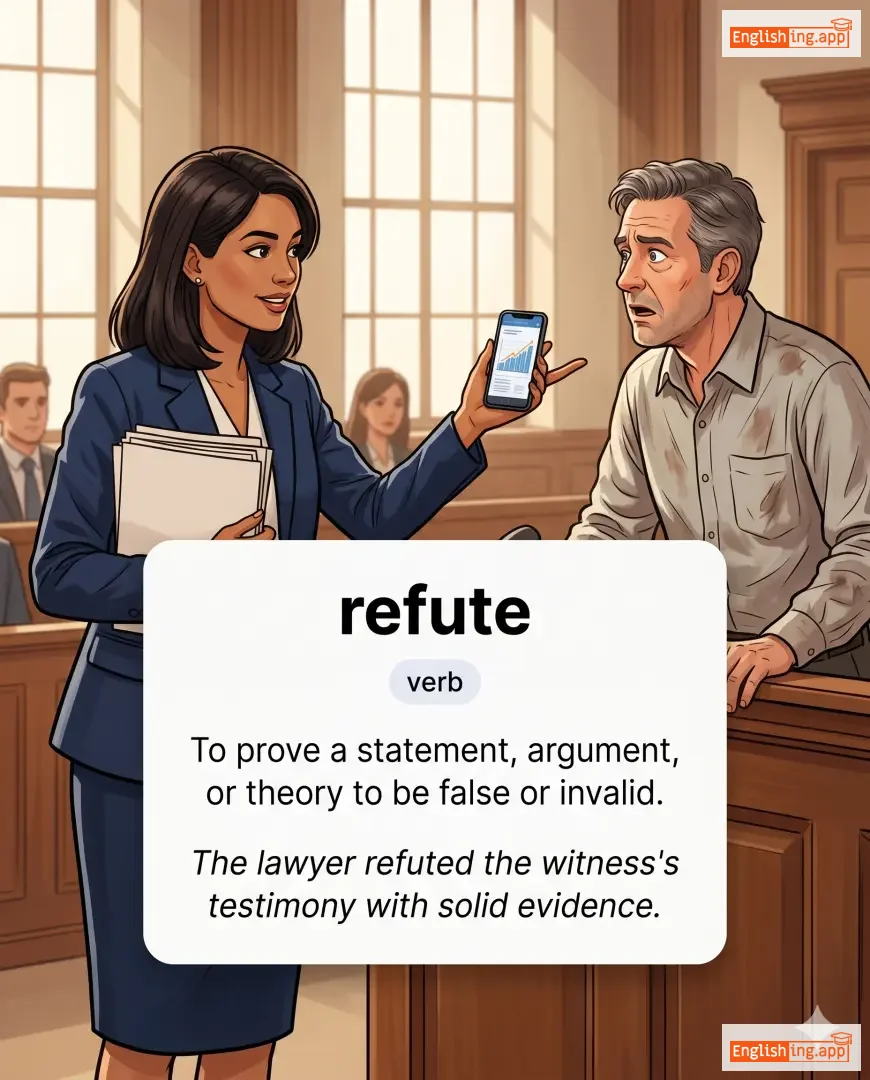
refute definition card — visual illustration of the meaning
verb
/rɪˈfjuːt/
réfuter (refuter)

To prove a statement, argument, or theory to be false or invalid.

"The lawyer refuted the witness's testimony with solid evidence."

"L'avocat a réfuté le témoignage du témoin avec des preuves solides." (L'avocat a réfuté le témoignage du témoin avec des preuves solides.)
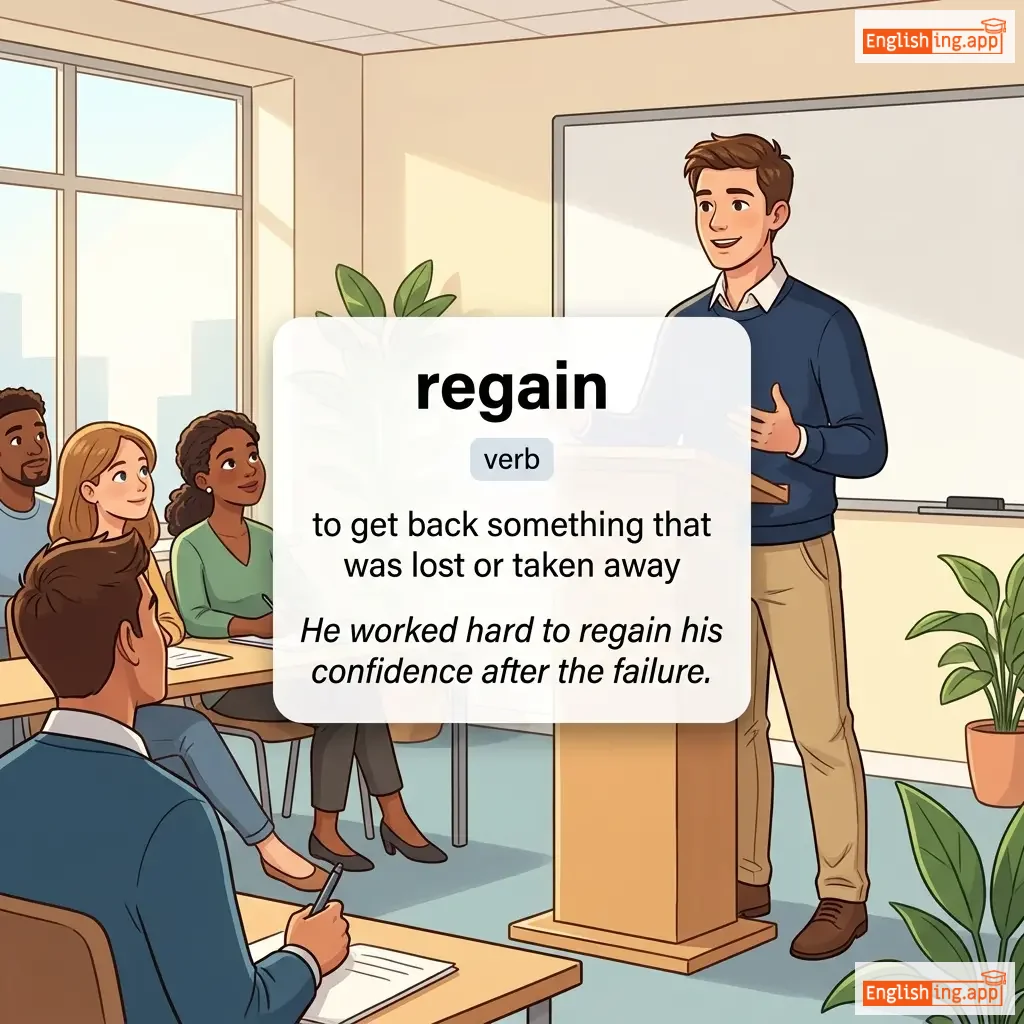
regain definition card — visual illustration of the meaning
verb
/rɪˈɡeɪn/
récupérer (recuperer)

to get back something that was lost or taken away

"He worked hard to regain his confidence after the failure."

"Il a travaillé dur pour retrouver sa confiance après l'échec." (Il a travaillé dur pour retrouver sa confiance après l'échec.)
adjective
/ˈriːɡəl/
royal (royal)

Resembling or fit for a king; majestic or royal.

"The queen entered the hall with a regal presence."

"La reine est entrée dans la salle avec une présence royale." (La reine est entrée dans la salle avec une présence royale.)
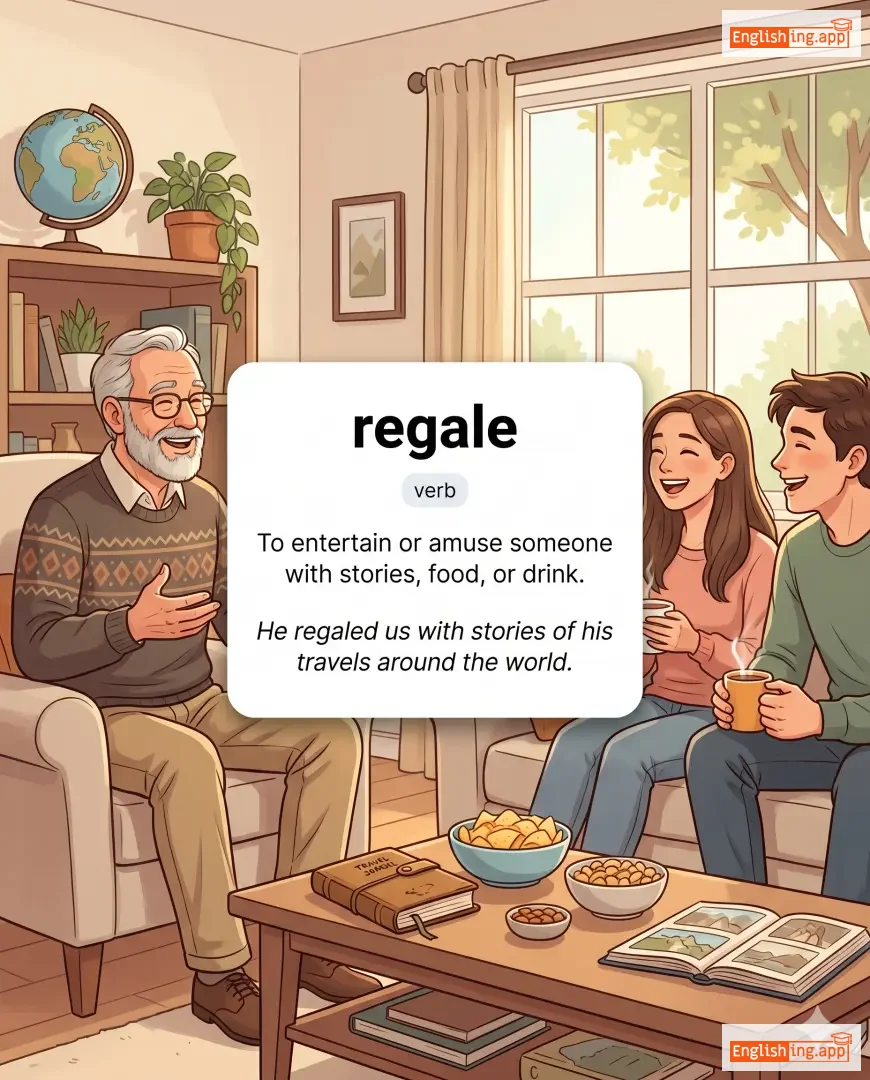
regale definition card — visual illustration of the meaning
verb
/rɪˈɡeɪl/
régaler (regaler)

To entertain or amuse someone with stories, food, or drink.

"He regaled us with stories of his travels around the world."

"Il nous a régalés avec des histoires de ses voyages autour du monde." (Il nous a régalés avec des histoires de ses voyages autour du monde.)
noun/verb
/rɪˈɡɑrd/
considération, respect (consideration, respect)

consider or think of in a specified way

"She regarded him as her mentor."

"Elle le considéra comme son mentor." (Elle le considéra comme son mentor.)
preposition
/rɪˈɡɑrdɪŋ/
concernant (concernant)

concerning or relating to

"The decision regarding the meeting will be made tomorrow."

"La décision concernant la réunion sera prise demain." (La decision concernant la reunion sera prise demain.)
adverb
/rɪˈɡɑrdləs/
indépendamment de (independamment de)

without paying attention to the current situation or condition

"She will go to the party regardless of the weather."

"Elle ira à la fête indépendamment de la météo." (Elle ira a la fete independamment de la meteo.)
noun
/rɪˈɡætə/
régate (regate)

A sporting event consisting of a series of boat or yacht races.

"The annual regatta attracted competitors from around the world."

"La régate annuelle a attiré des concurrents du monde entier." (la regate annuelle a attire des concurrents du monde entier)
verb
/rɪˈdʒɛnəreɪt/
régénérer (regenerer)

to grow or produce again; to renew or restore

"The lizard can regenerate its lost tail."

"Le lézard peut régénérer sa queue perdue." (Le lézard peut régénérer sa queue perdue.)
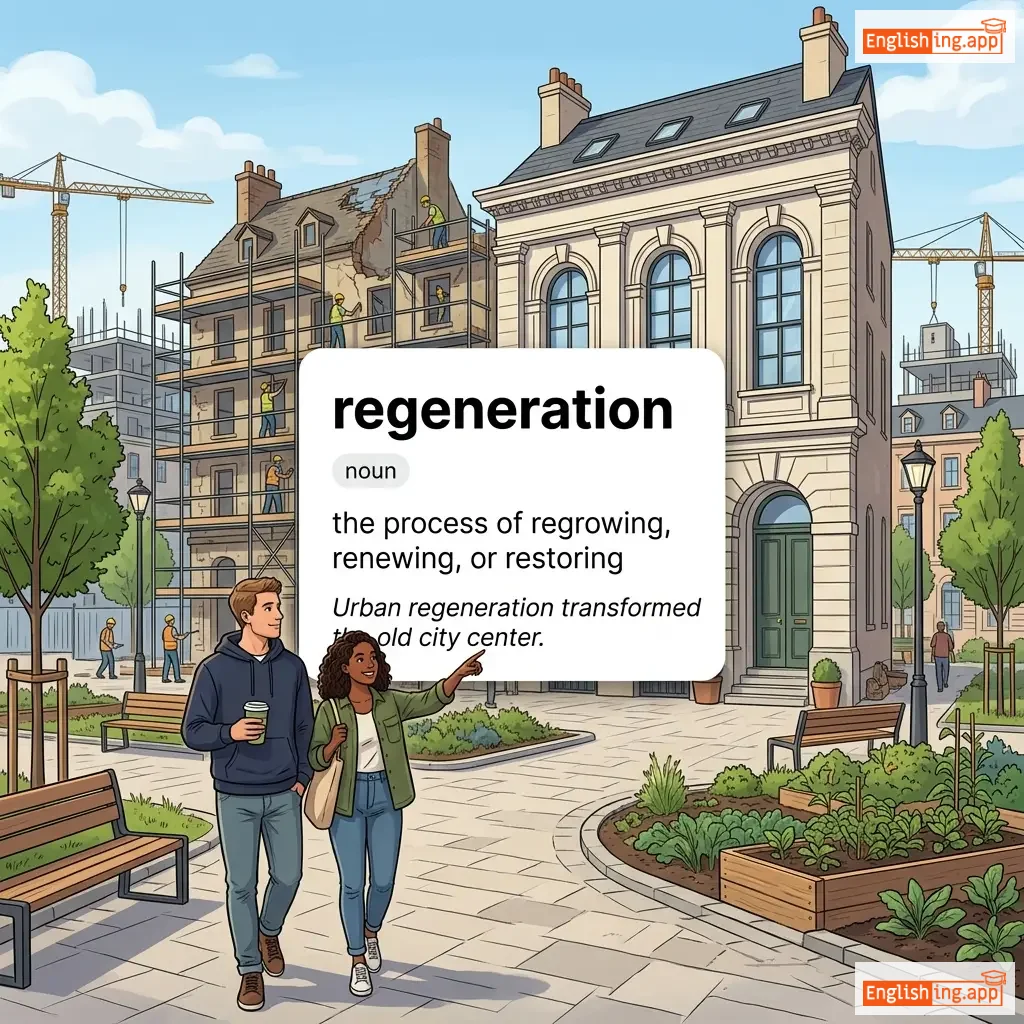
regeneration definition card — visual illustration of the meaning
noun
/rɪˌdʒɛnəˈreɪʃən/
régénération (regeneration)

the process of regrowing, renewing, or restoring

"Urban regeneration transformed the old city center."

"La régénération urbaine a transformé l'ancien centre-ville." (La regeneration urbaine a transforme l'ancien centre-ville.)
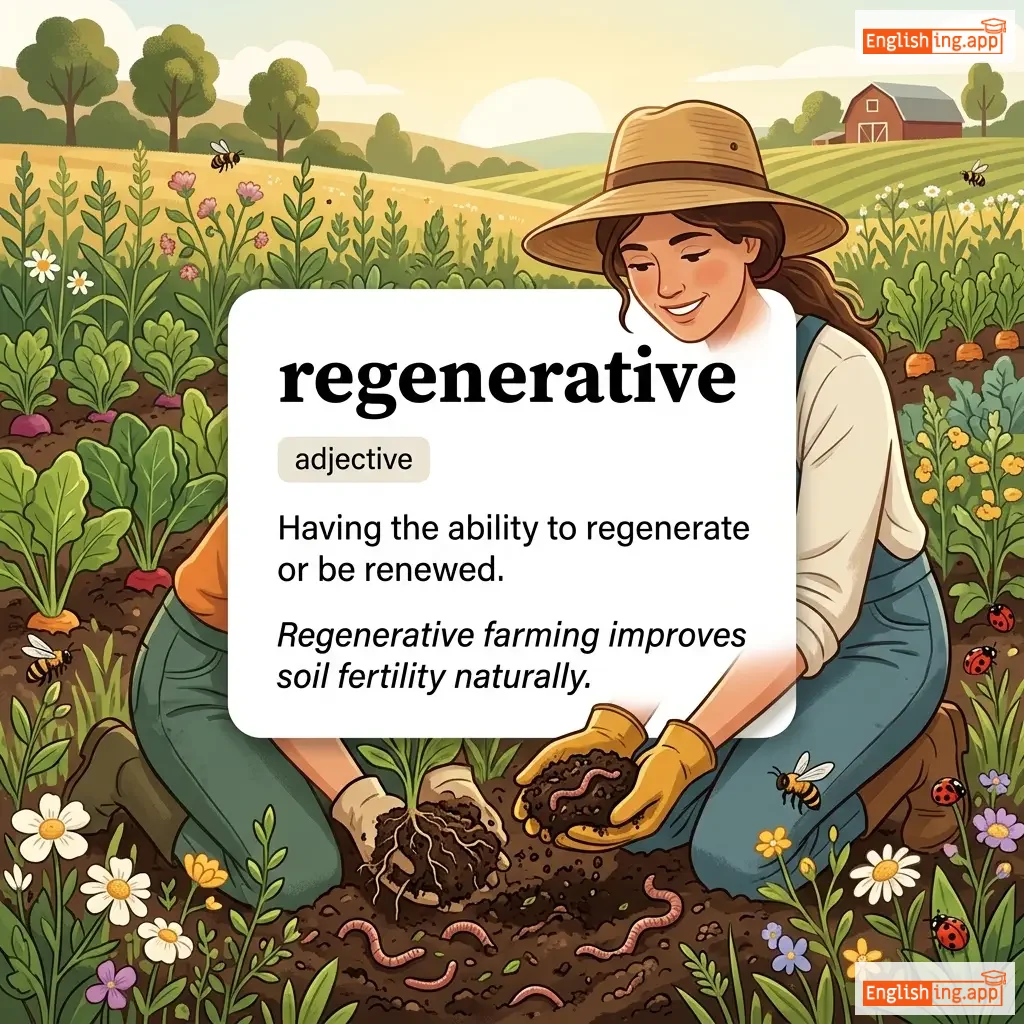
regenerative definition card — visual illustration of the meaning
adjective
rɪˈdʒɛn.ər.ə.tɪv
régénératif ou renouvelable (regeneratif ou renouvelable)

Having the ability to regenerate or be renewed.

"Regenerative farming improves soil fertility naturally."

"L'agriculture régénérative améliore naturellement la fertilité du sol." (L'agriculture régénérative améliore naturellement la fertilité du sol.)
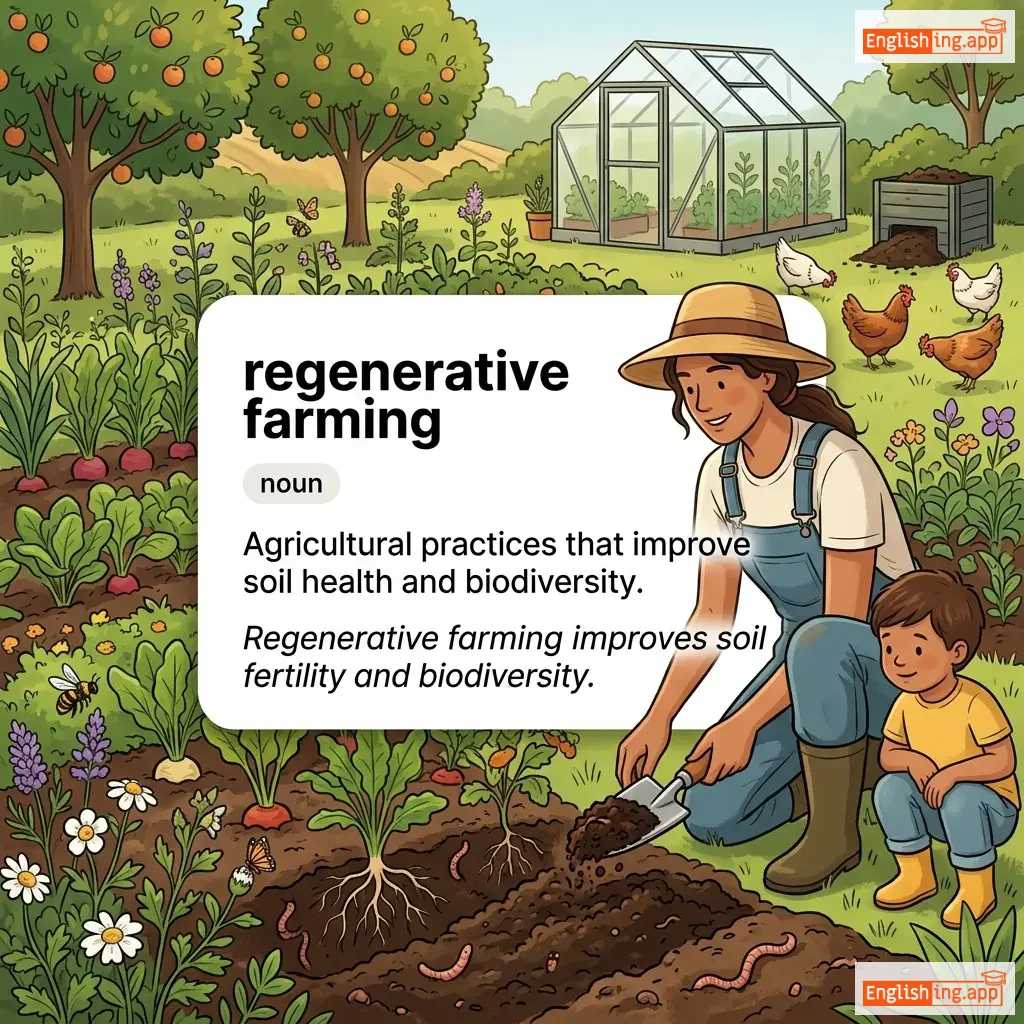
regenerative farming definition card — visual illustration of the meaning
noun
rɪˈdʒɛn.ər.ə.tɪv ˈfɑːr.mɪŋ
agriculture régénérative (agriculture regenerative)

Agricultural practices that improve soil health and biodiversity.

"Regenerative farming improves soil fertility and biodiversity."

"L'agriculture régénérative améliore la fertilité du sol et la biodiversité." (L'agriculture regenerativa ameliorie la fertilité du sol et la biodiversité.)
noun
/ˈriːdʒənt/
régent (regent)

a person who rules in place of a monarch when the monarch is absent or too young

"The prince acted as regent until the king came of age."

"Le prince a agi en tant que régent jusqu'à ce que le roi atteigne sa majorité." (Le prince a agi en tant que régent jusqu'à ce que le roi atteigne sa majorité.)
noun
/ˈrɛdʒɪsaɪd/
régicide (regicide)

the act of killing a king

"The conspirators were executed for committing regicide."

"Les conspirateurs ont été exécutés pour avoir commis un régicide." (Les conspirateurs ont été exécutés pour avoir commis un régicide.)
noun
/reɪˈʒiːm/
régime (regime)

a system or form of government, often authoritarian

"The military regime controlled the country for decades."

"Le régime militaire a contrôlé le pays pendant des décennies." (Le regime militaire a controle le pays pendant des decennies.)
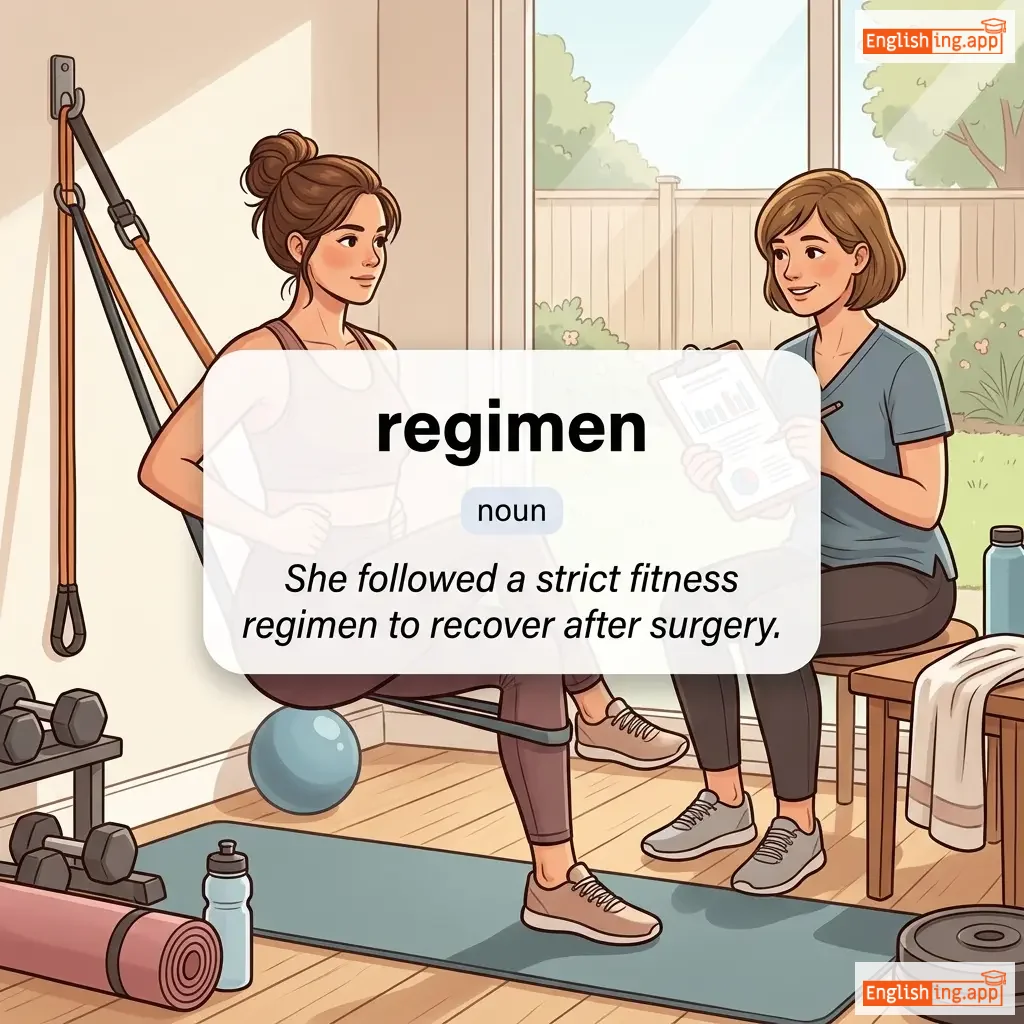
regimen definition card — visual illustration of the meaning
noun
/ˈrɛdʒɪmən/
régime (regime)

A prescribed course of medical treatment, diet, or exercise for the promotion or restoration of health.

"She followed a strict fitness regimen to recover after surgery."

"Elle a suivi un régime strict d'entraînement pour se remettre après une opération." (Elle a suivi un regime strict d'entrainement pour se remettre apres une operation.)
🎖️

regiment

noun
/ˈrɛdʒɪmənt/

A permanent unit of an army, typically commanded by a colonel and divided into several companies.

"The regiment marched proudly through the streets after returning from the mission."

noun
/ˈriːdʒən/
région (region)

an area or division, especially part of a country or the world having definable characteristics but not always fixed boundaries

"The region is known for its beautiful landscapes."

"La région est connue pour ses beaux paysages." (la region est connue pour ses beaux paysages)
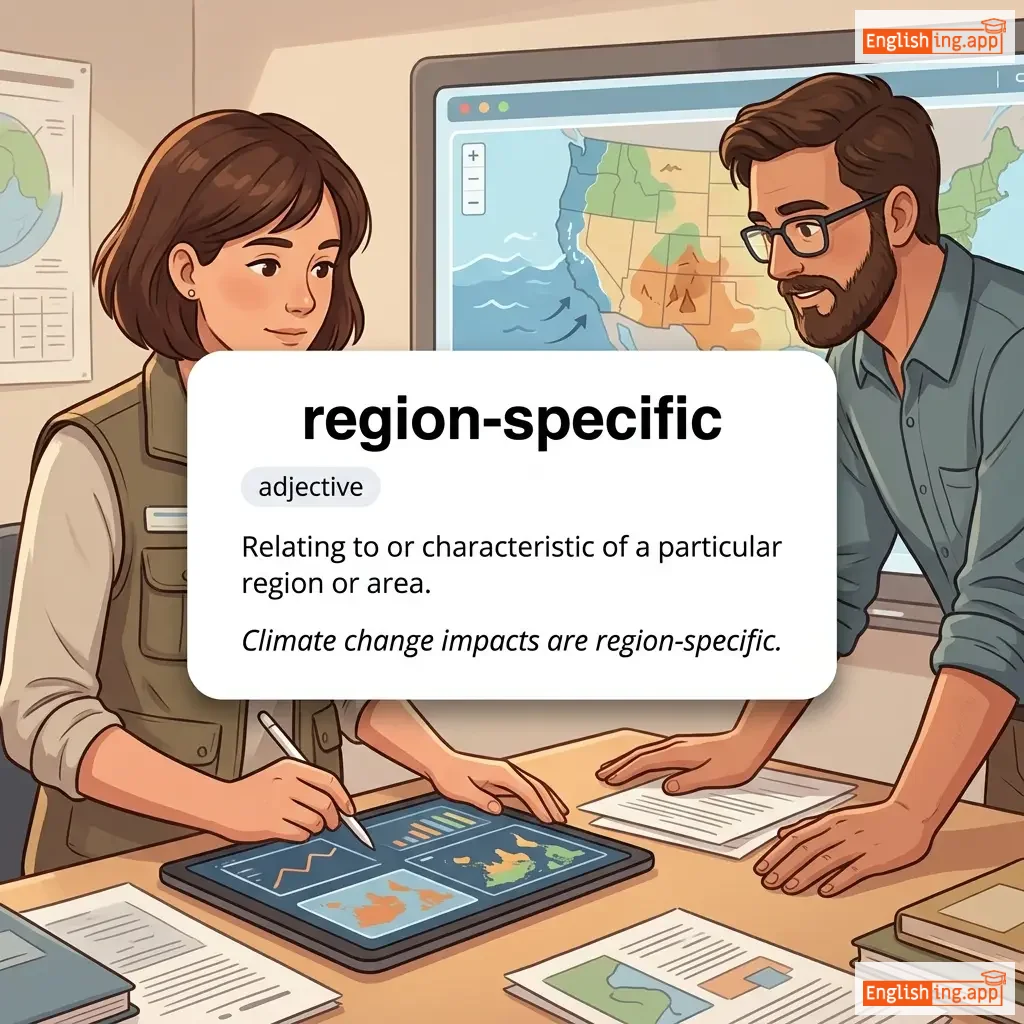
region-specific definition card — visual illustration of the meaning
adjective
ˈriːdʒən spəˈsɪfɪk
spécifique à la région (specifique a la region)

Relating to or characteristic of a particular region or area.

"Climate change impacts are region-specific."

"Les impacts du changement climatique sont spécifiques à la région." (Les impacts du changement climatique sont spécifiques à la région.)
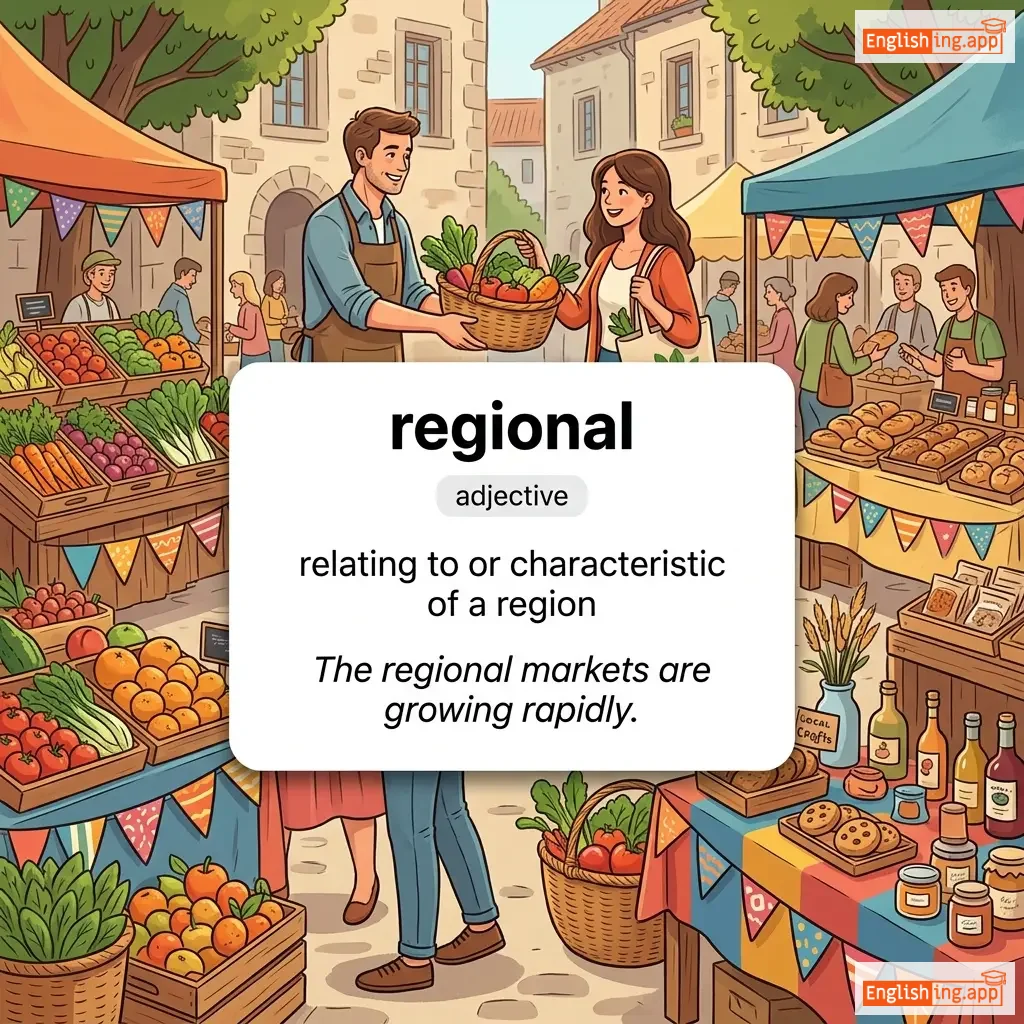
regional definition card — visual illustration of the meaning
adjective
/ˈriːdʒənl/
régional (regional)

relating to or characteristic of a region

"The regional markets are growing rapidly."

"Les marchés régionaux se développent rapidement." (Les marchés régionaux se développent rapidement.)
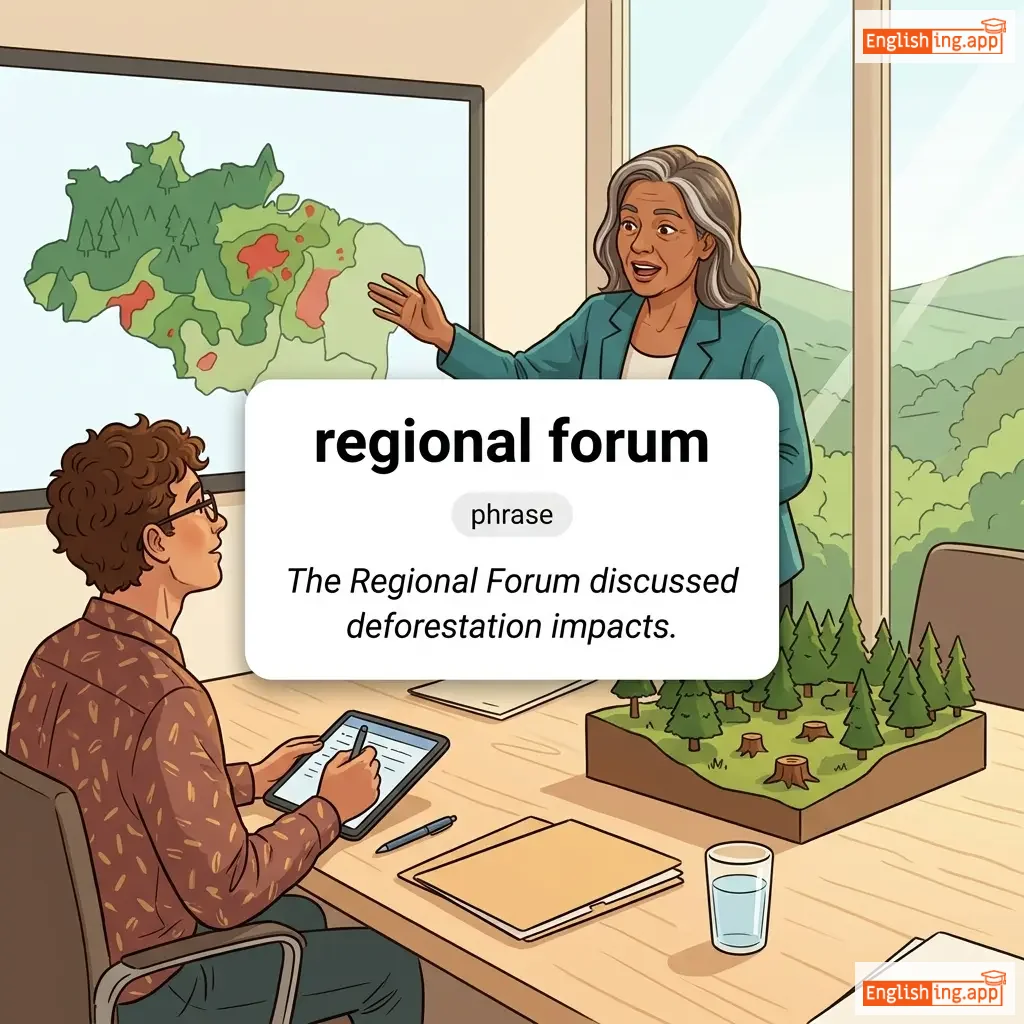
regional forum definition card — visual illustration of the meaning
phrase
ˈriː.dʒən.əl ˈfɔː.rəm
forum régional (forum regional)

A meeting or conference where representatives from countries or organizations in a specific geographical area discuss issues of common interest.

"The Regional Forum discussed deforestation impacts."

"Le forum régional a discuté des impacts de la déforestation." (Le forum regional a discute des impacts de la deforestation.)
verb
/ˈrɛdʒɪstər/
enregistrer (enregistrer)

To enter or record officially on a list or in a book.

"You must register for the conference before the deadline."

"Vous devez vous inscrire pour la conférence avant la date limite." (Vous devez vous inscrire pour la conférence avant la date limite.)
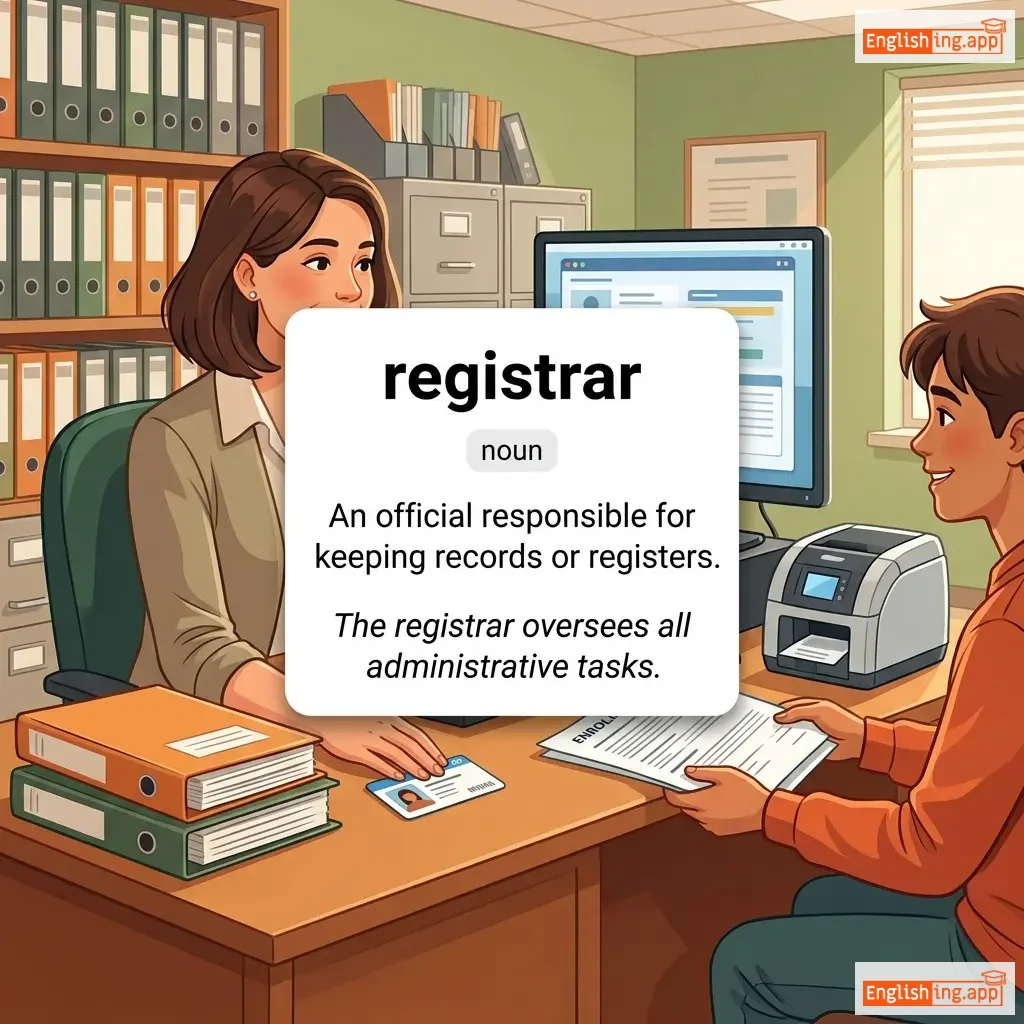
registrar definition card — visual illustration of the meaning
noun
ˈredʒ.ɪ.strɑːr
registreur (registreur)

An official responsible for keeping records or registers.

"The registrar oversees all administrative tasks."

"Le registraire supervise toutes les tâches administratives." (Le registraire supervise toutes les tâches administratives.)
noun
/ˌrɛdʒɪˈstreɪʃən/
inscription (inscription)

the action or process of enrolling or signing up for something

"The registration for the event will close tomorrow."

"L'inscription pour l'événement se terminera demain." (L'inscription pour l'evenement se terminera demain.)
adjective
/ˈrɛɡnənt/
régnant (regnant)

Reigning; currently holding power, authority, or dominance.

"The regnant queen introduced several reforms during her reign."

"La reine régnante a introduit plusieurs réformes durant son règne." (La reine régnante a introduit plusieurs réformes durant son règne.)
verb
/rɪˈɡrɛs/
régresser (regresser)

To return to a former or less developed state.

"Without proper guidance, the child's progress began to regress."

"Sans une direction appropriée, les progrès de l'enfant ont commencé à régresser." (Sans une direction appropriée, les progrès de l'enfant ont commencé à régresser.)
verb
/rɪˈɡrɛt/
regretter (regretter)

to feel sad or disappointed about something that has happened or been done

"I deeply regret saying those harsh words to her."

"Je regrette profondément d'avoir dit ces mots durs." (Je regrette profondément d'avoir dit ces mots durs.)
adjective
/rɪˈɡrɛtfəl/
regrettable (regrettable)

feeling or showing sadness or disappointment about something that has happened or been done

"She gave him a regretful smile as she turned away."

"Elle lui offrit un sourire regrettable alors qu'elle s'éloignait." (Elle lui offrit un sourire regrettable alors qu'elle s'éloignait.)