Vocabulaires

Découvrez, apprenez et maîtrisez le vocabulaire anglais

adjective
/prəˈdɪdʒəs/
prodigieux (prodigieux)

remarkably or impressively great in extent, size, or degree

"The team made a prodigious effort to complete the project on time."

"L'équipe a fait un effort prodigieux pour terminer le projet à temps." (L'equipe a fait un effort prodigieux pour terminer le projet a temps.)
noun
/ˈprɒdɪdʒi/
prodige (prodige)

a person, especially a young one, with exceptional talents or abilities

"Mozart was a child prodigy in music."

"Mozart était un prodige enfant en musique." (Mozart était un prodige enfant en musique.)
verb
/prəˈdjuːs/
produire (produire)

to make or manufacture from components or raw materials

"They produce high-quality goods."

"Ils produisent des biens de haute qualité." (Ils produisent des biens de haute qualité.)
noun
/prəˈdjuːsə/
producteur (producteur)

a person, company, or country that makes or grows something

"He is a film producer."

"Il est un producteur de films." (Il est un producteur de films.)
noun
/ˈprɒdʌkt/
produit (produit)

an item or substance that is manufactured or produced

"This is a new product launched by the company."

"C'est un nouveau produit lancé par l'entreprise." (C'est un nouveau produit lancé par l'entreprise.)
noun
/prəˈdʌkʃən/
production (production)

the process of manufacturing or creating something

"The production of this film took over a year."

"La production de ce film a pris plus d'un an." (La production de ce film a pris plus d'un an.)
adjective
/prəˈdʌktɪv/
productif (productif)

producing or achieving a significant amount of results, work, or output

"She had a very productive day at the office."

"Elle a eu une journée très productive au bureau." (Elle a eu une journée très productive au bureau.)
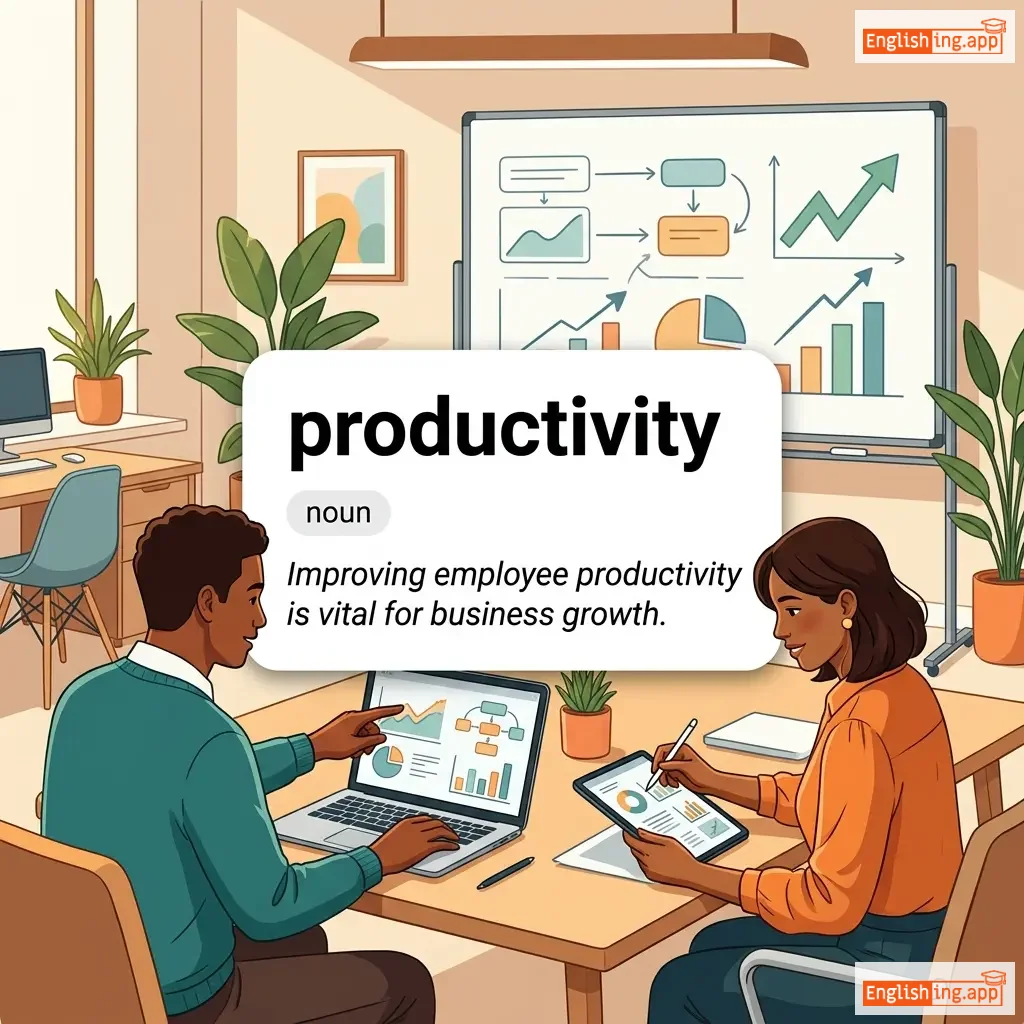
productivity definition card — visual illustration of the meaning
noun
/ˌprɒdʌkˈtɪvɪti/
productivité (productivite)

the rate at which work is done or goods are produced, especially in relation to the time and resources used

"Improving employee productivity is vital for business growth."

"Améliorer la productivité des employés est essentiel pour la croissance de l'entreprise." (Améliorer la productivité des employés est essentiel pour la croissance de l'entreprise.)
adjective
/prəˈfeɪn/
profane, irrévérent (profane, irreverent)

showing disrespect or contempt for sacred things; irreverent or vulgar

"His jokes were considered too profane for the ceremony."

"Ses blagues ont été considérées comme trop profanes pour la cérémonie." (Ses blagues ont été considérées comme trop profanes pour la cérémonie.)
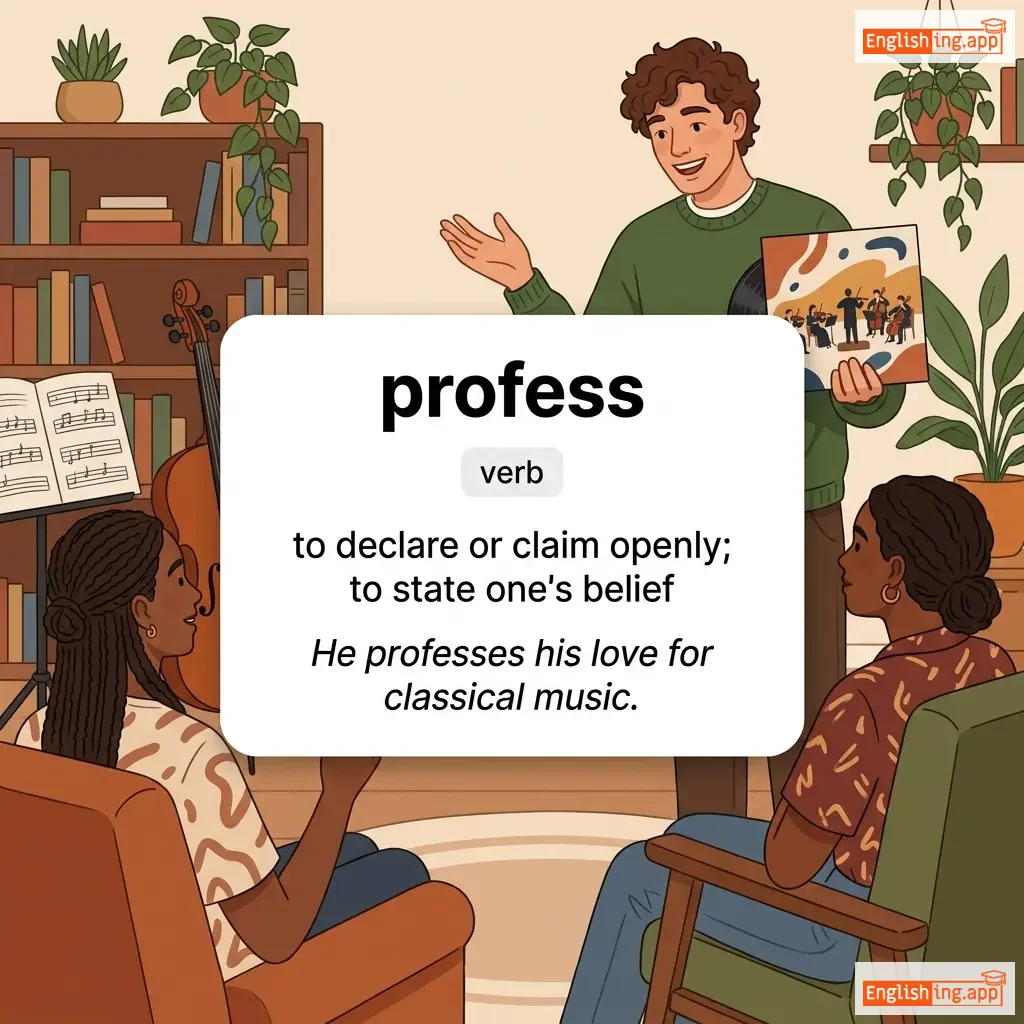
profess definition card — visual illustration of the meaning
verb
/prəˈfes/
professer (professer)

to declare or claim openly; to state one's belief

"He professes his love for classical music."

"Il professe son amour pour la musique classique." (Il professe son amour pour la musique classique)
noun
/prəˈfɛʃən/
profession (profession)

a paid occupation, especially one requiring specialized education or training

"Medicine is considered a noble profession."

"La médecine est considérée comme une profession noble." (La medecine est consideree comme une profession noble.)
adjective
/prəˈfɛʃənl/
professionnel (professionnel)

relating to a job that requires special training or education

"She is a professional dancer who performs internationally."

"Elle est une danseuse professionnelle qui se produit à l'international." (Elle est une danseuse professionnelle qui se produit à l'international.)
noun
/prəˈfɛsər/
professeur (professeur)

a senior teacher or academic at a college or university

"The professor explained the theory clearly."

"Le professeur a expliqué la théorie clairement." (Le professeur a explique la theorie clairement.)
verb
/ˈprɒfər/
offrir, présenter (offrir, présenter)

to offer something for acceptance; to present

"She proffered her hand as a sign of friendship."

"Elle tendit sa main comme un signe d'amitié." (Elle tendit sa main comme un signe d'amitié.)
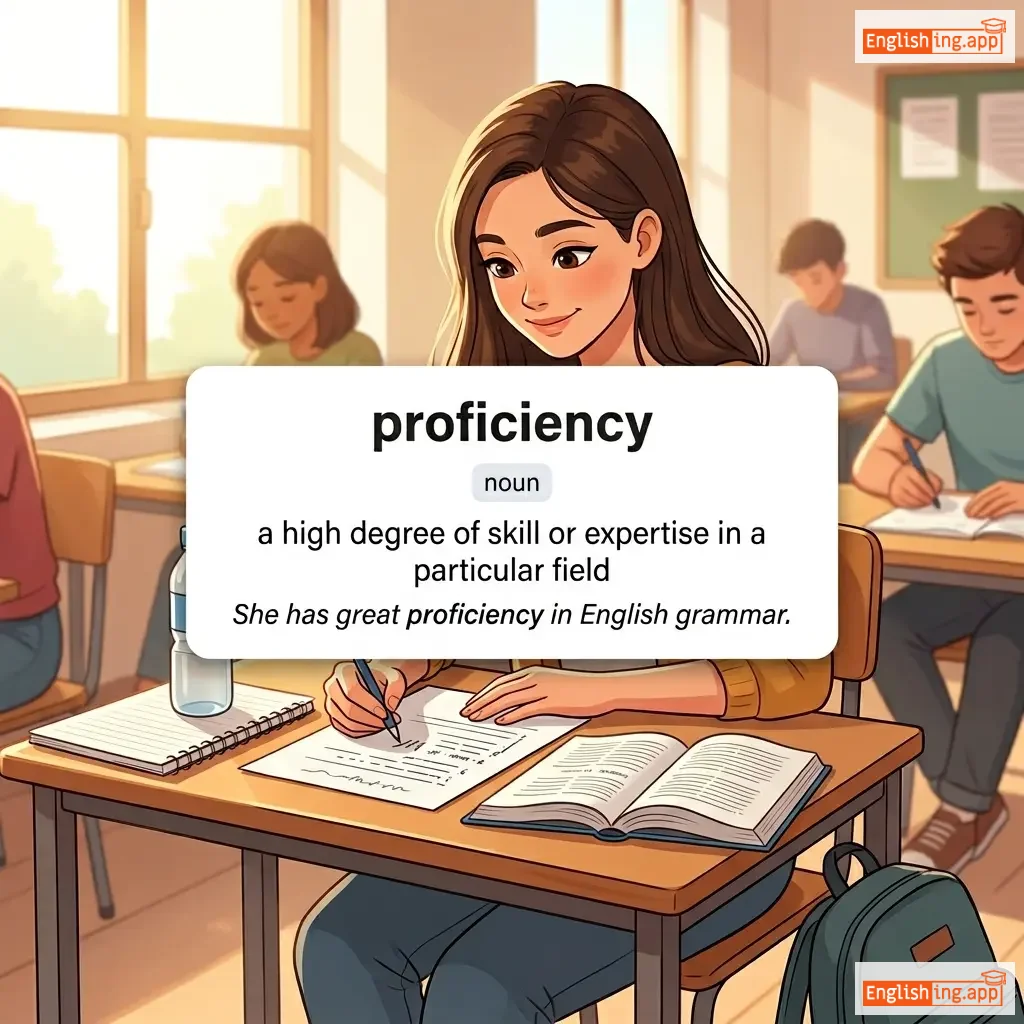
proficiency definition card — visual illustration of the meaning
noun
/prəˈfɪʃənsi/
compétence (competence)

a high degree of skill or expertise in a particular field

"She has great proficiency in English grammar."

"Elle a une grande compétence en grammaire anglaise." (Elle a une grande compétence en grammaire anglaise.)
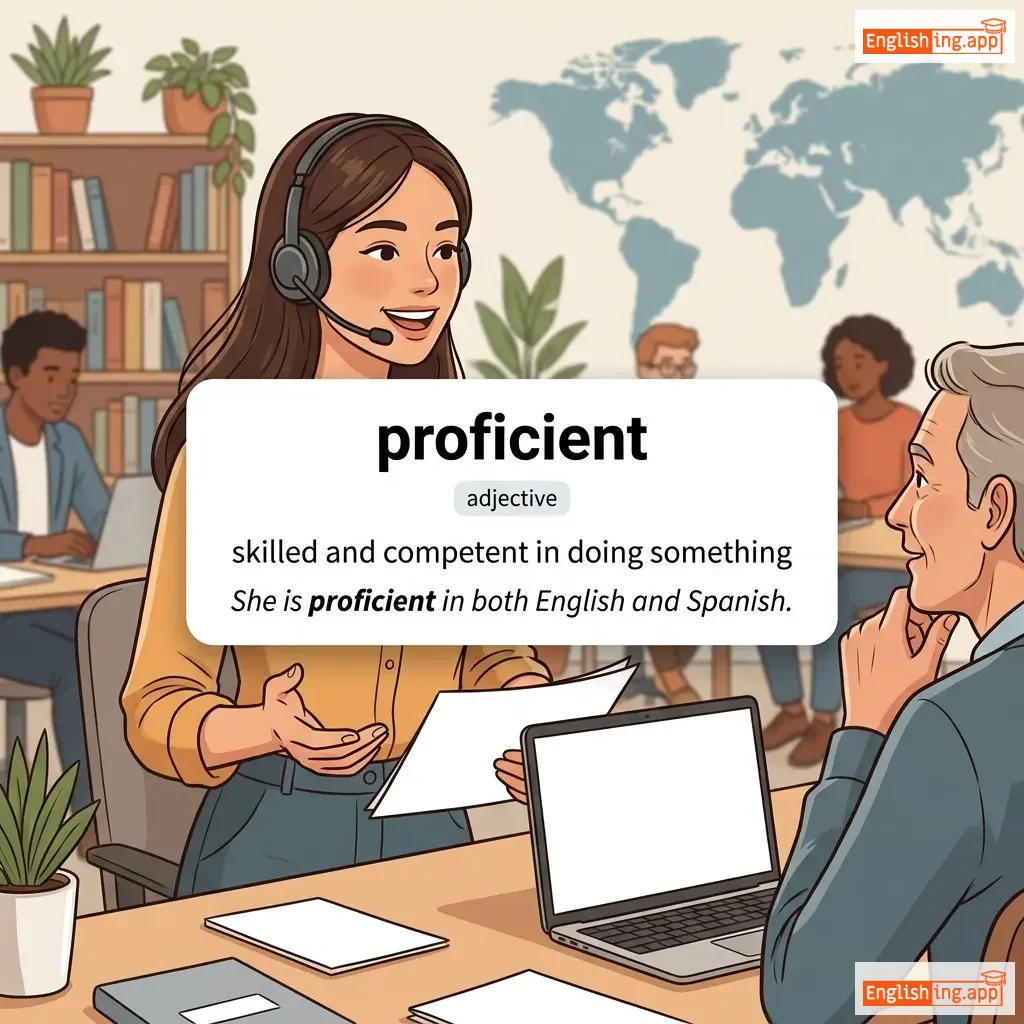
proficient definition card — visual illustration of the meaning
adjective
/prəˈfɪʃənt/
compétent (competent)

skilled and competent in doing something

"She is proficient in both English and Spanish."

"Elle est compétente en anglais et en espagnol." (Elle est compétente en anglais et en espagnol.)
noun
/ˈproʊˌfaɪl/
profil (profil)

a description or representation of someone or something; an outline

"He updated his profile on the company website."

"Il a mis à jour son profil sur le site Web de l'entreprise." (Il a mis a jour son profil sur le site Web de l'entreprise.)
noun, verb
/ˈprɒfɪt/
bénéfice (bénéfice)

financial gain, especially the difference between the amount earned and the amount spent

"The company made a huge profit this quarter."

"L'entreprise a réalisé un énorme bénéfice ce trimestre." (L'entreprise a réalisé un énorme bénéfice ce trimestre.)
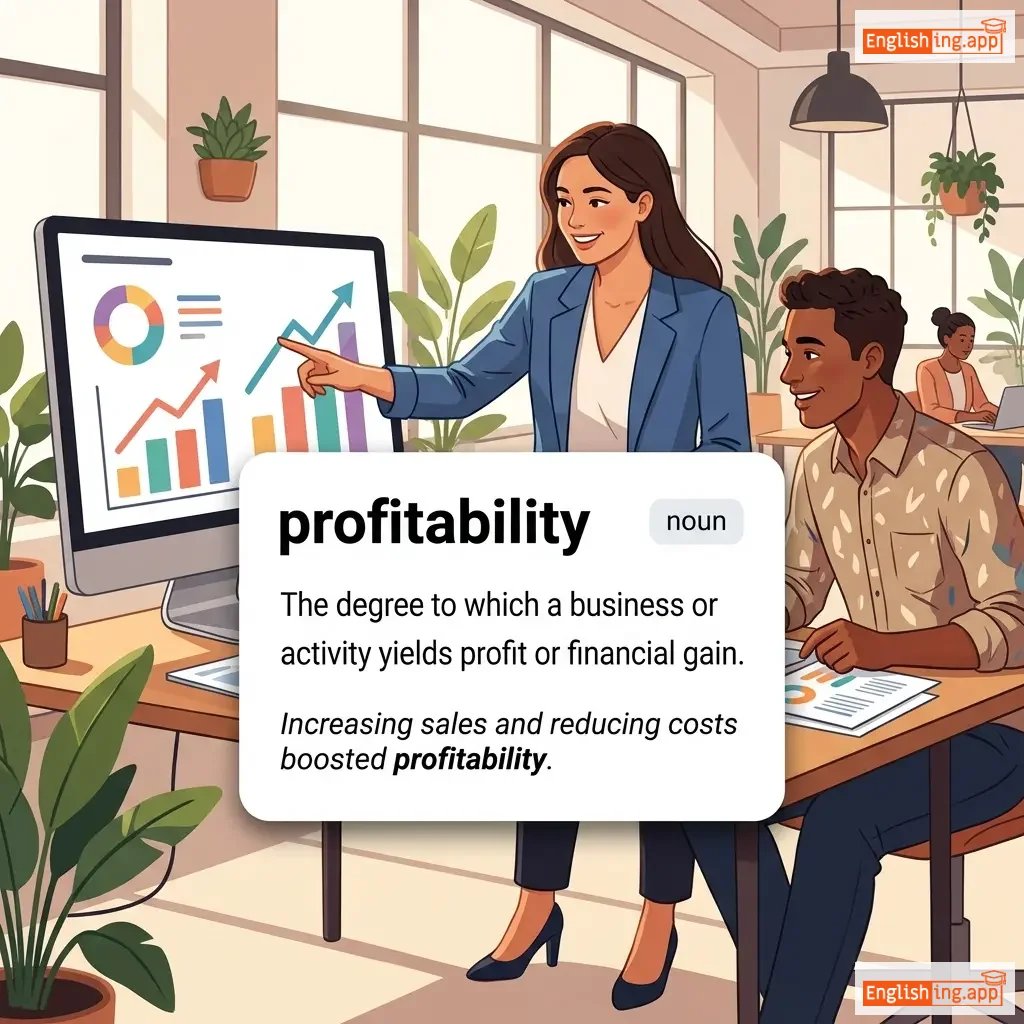
profitability definition card — visual illustration of the meaning
noun
ˌprɒf.ɪ.təˈbɪl.ɪ.ti
rentabilité (rentabilite)

The degree to which a business or activity yields profit or financial gain.

"Increasing sales and reducing costs boosted profitability."

"L'augmentation des ventes et la réduction des coûts ont amélioré la rentabilité." (L'augmentation des ventes et la réduction des coûts ont amélioré la rentabilité.)
adjective
/ˈprɒfɪtəbl/
rentable (rentable)

yielding profit or financial gain

"The company has become highly profitable after the new strategy was implemented."

"L'entreprise est devenue très rentable après la mise en place de la nouvelle stratégie." (L'entreprise est devenue très rentable après la mise en place de la nouvelle stratégie.)
noun
/ˌprɑːfɪˈtɪr/
profiteur (profiteur)

a person who makes excessive profits, especially unfairly or illegally

"The government punished war profiteers."

"Le gouvernement a puni les profiteurs de guerre." (Le gouvernement a puni les profiteurs de guerre.)
noun
/ˈprɑːflɪɡəsi/
dépense excessive (depense excessive)

reckless wastefulness or extravagance

"His profligacy with money led him to bankruptcy."

"Sa dépense excessive l'a conduit à la faillite." (Sa depense excessive l'a conduit a la faillite.)
adjective
/ˈprɑːflɪɡət/
dissipateur (dissipateur)

recklessly extravagant or wasteful in resources

"The king was known for his profligate lifestyle."

"Le roi était connu pour son style de vie dissipateur." (Le roi etait connu pour son style de vie dissipateur.)
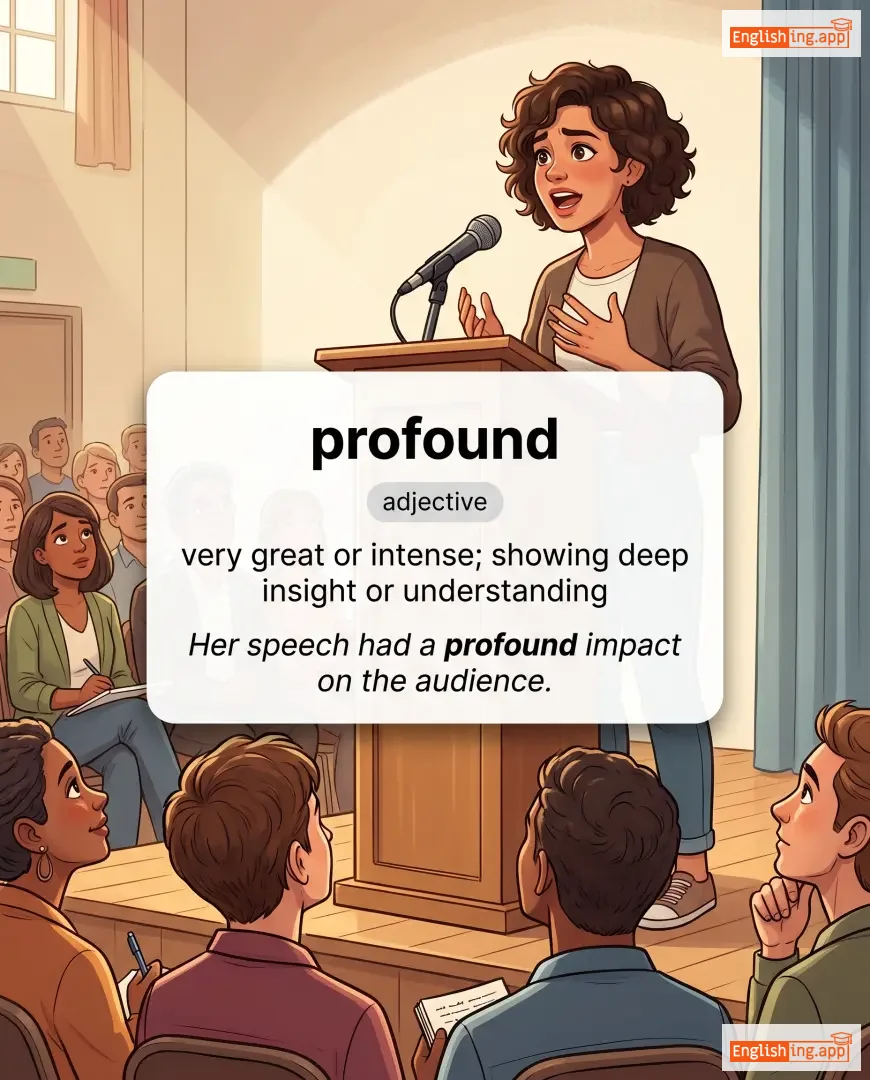
profound definition card — visual illustration of the meaning
adjective
/prəˈfaʊnd/
profond (profond)

very great or intense; showing deep insight or understanding

"Her speech had a profound impact on the audience."

"Son discours a eu un impact profond sur le public." (Son discours a eu un impact profond sur le public.)
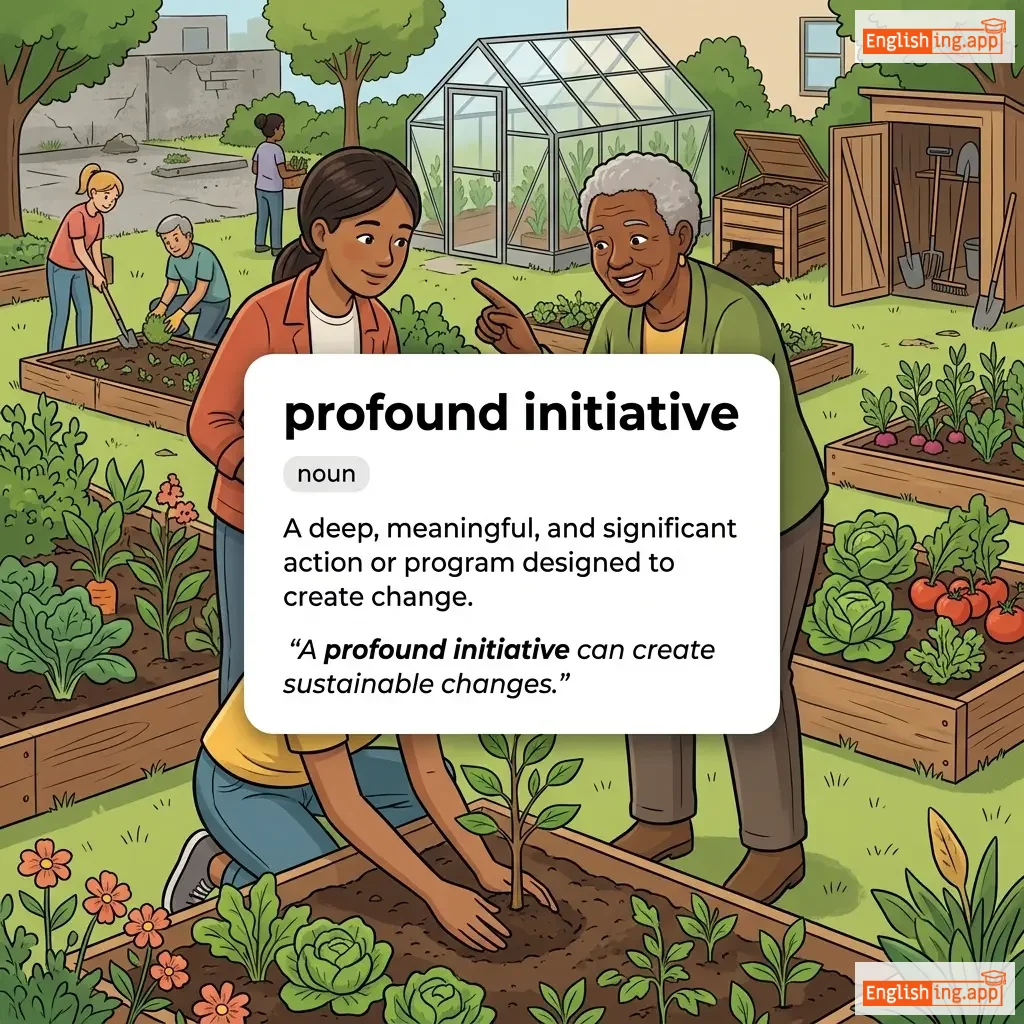
profound initiative definition card — visual illustration of the meaning
noun
prəˈfaʊnd ɪˈnɪʃətɪv
initiative profonde (initiative profonde)

A deep, meaningful, and significant action or program designed to create change.

"A profound initiative can create sustainable changes."

"Une initiative profonde peut créer des changements durables." (Une initiative profonde peut créer des changements durables.)
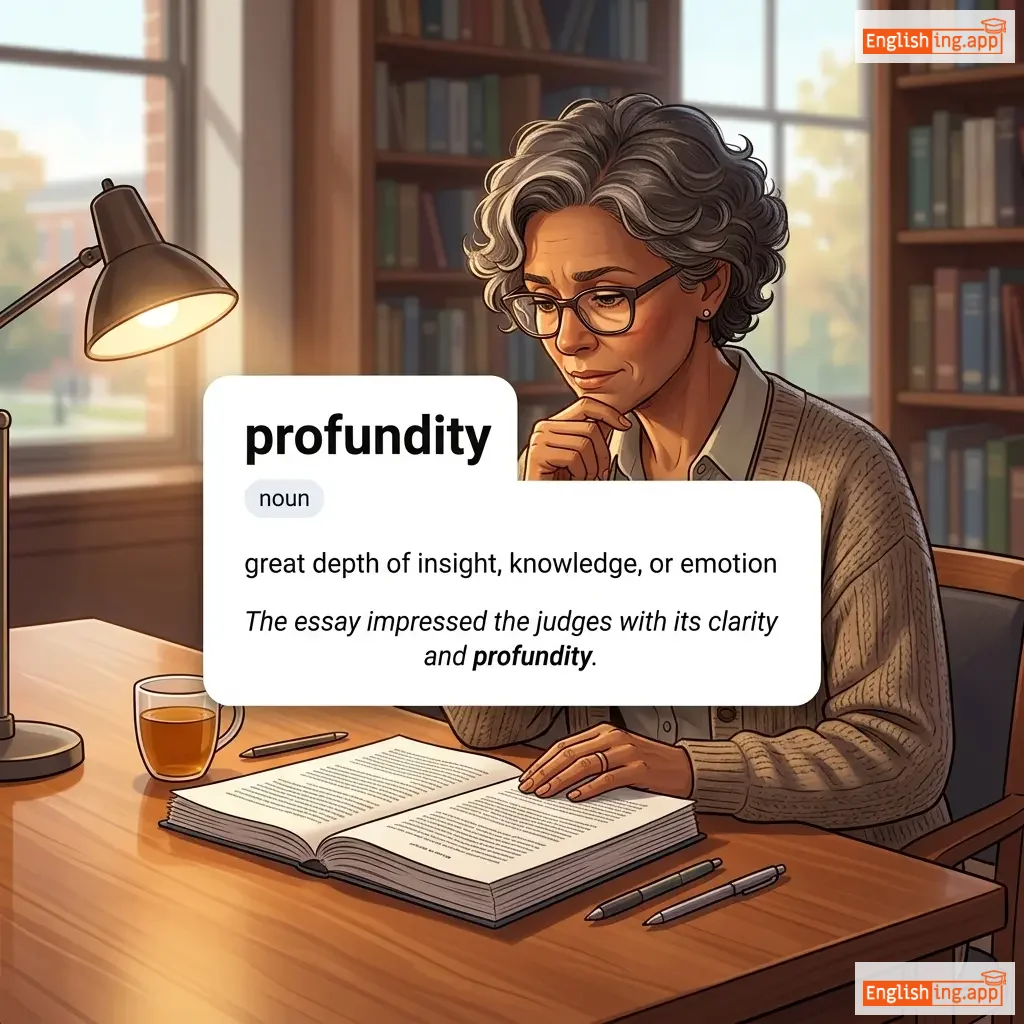
profundity definition card — visual illustration of the meaning
noun
/prəˈfʌndɪti/
profondeur (profondeur)

great depth of insight, knowledge, or emotion

"The essay impressed the judges with its clarity and profundity."

"L'essai a impressionné les juges par sa clarté et sa profondeur." (L'essai a impressionne les juges par sa clarte et sa profondeur.)
adjective
/prəˈfjuːs/
profus (profus)

existing or given in large amounts; abundant

"He offered profuse thanks for their timely help."

"Il a offert de profonds remerciements pour leur aide opportune." (Il a offert de profonds remerciements pour leur aide opportune.)
noun
/prəˈfjuːʒən/
profusion (profusion)

an abundance or large quantity of something

"Spring brought a profusion of wildflowers to the valley."

"Le printemps a apporté une profusion de fleurs sauvages dans la vallée." (Le printemps a apporté une profusion de fleurs sauvages dans la vallée.)
noun
/proʊˈdʒɛnɪtər/
ancêtre (ancetre)

a direct ancestor; a person or thing that originates something

"Researchers traced the custom back to a common progenitor."

"Les chercheurs ont retracé la coutume jusqu'à un ancêtre commun." (Les chercheurs ont retrace la coutume jusqu'a un ancetre commun.)
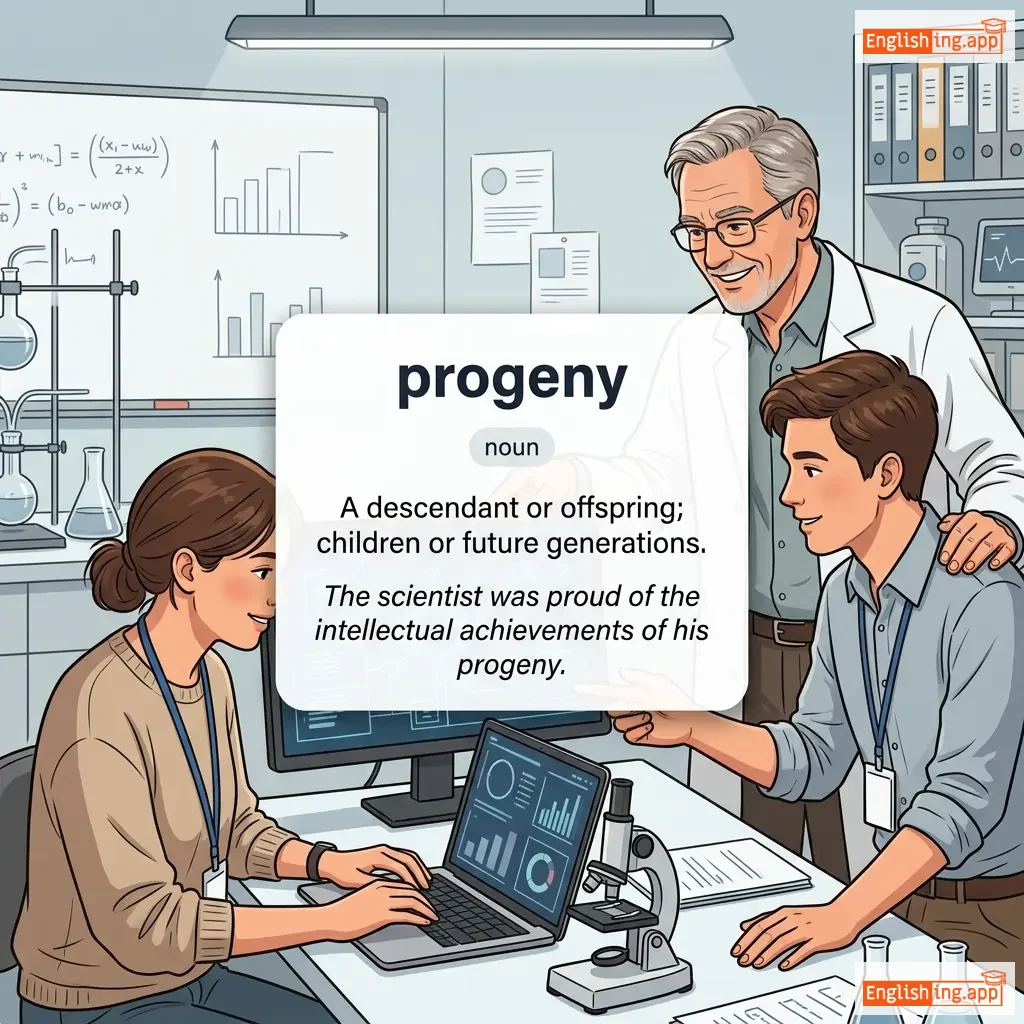
progeny definition card — visual illustration of the meaning
noun
/ˈprɒdʒəni/
progéniture (progeniture)

A descendant or offspring; children or future generations.

"The scientist was proud of the intellectual achievements of his progeny."

"Le scientifique était fier des réalisations intellectuelles de sa progéniture." (Le scientifique etait fier des realisations intellectuelles de sa progeniture.)
adjective
/ˈprɒɡnəθəs/
prognathe (prognathe)

Having jaws that project forward beyond the rest of the face.

"The fossil displayed a distinctly prognathous skull structure."

"Le fossile affichait une structure de crâne distinctement prognathe." (Le fossile affichait une structure de crane distinctement prognathe.)
noun
/prɒɡˈnoʊsɪs/
pronostic (pronostic)

A forecast of the likely outcome of a disease or situation.

"The doctor gave a positive prognosis for the patient's recovery."

"Le médecin a donné un pronostic positif pour la récupération du patient." (Le medecin a donne un pronostic positif pour la recuperation du patient.)
verb
/prɒɡˈnɒstɪkeɪt/
prédire (predire)

To foretell or predict future events, especially based on current signs.

"Experts attempted to prognosticate the outcome of the election."

"Les experts ont tenté de pronostiquer le résultat de l'élection." (Les experts ont tente de pronostiquer le resultat de l'election.)
noun
/prɒɡˌnɒstɪˈkeɪʃən/
prédiction (prediction)

The act of foretelling or predicting future events.

"The astrologer's prognostication fascinated the audience."

"La prédiction de l'astrologue a fasciné l'audience." (La prediction de l'astrologue a fascine l'audience.)
noun
/ˈprəʊɡræm/
programme (programme)

a planned series of events or activities

"The program starts at 9 AM sharp."

"Le programme commence à 9h précises." (Le programme commence à 9h précises.)
noun
/ˈproʊɡræmɪŋ/
programmation (programmation)

the process of writing computer code to create software or applications

"He spends most of his time learning computer programming."

"Il passe la plupart de son temps à apprendre la programmation informatique." (Il passe la plupart de son temps a apprendre la programmation informatique.)
noun
/ˈprəʊɡræmɪŋ/
programmation (programmation)

the process of designing and writing computer programs

"He has been learning programming for several months now."

"Il apprend la programmation depuis plusieurs mois maintenant." (Il apprend la programmation depuis plusieurs mois maintenant.)
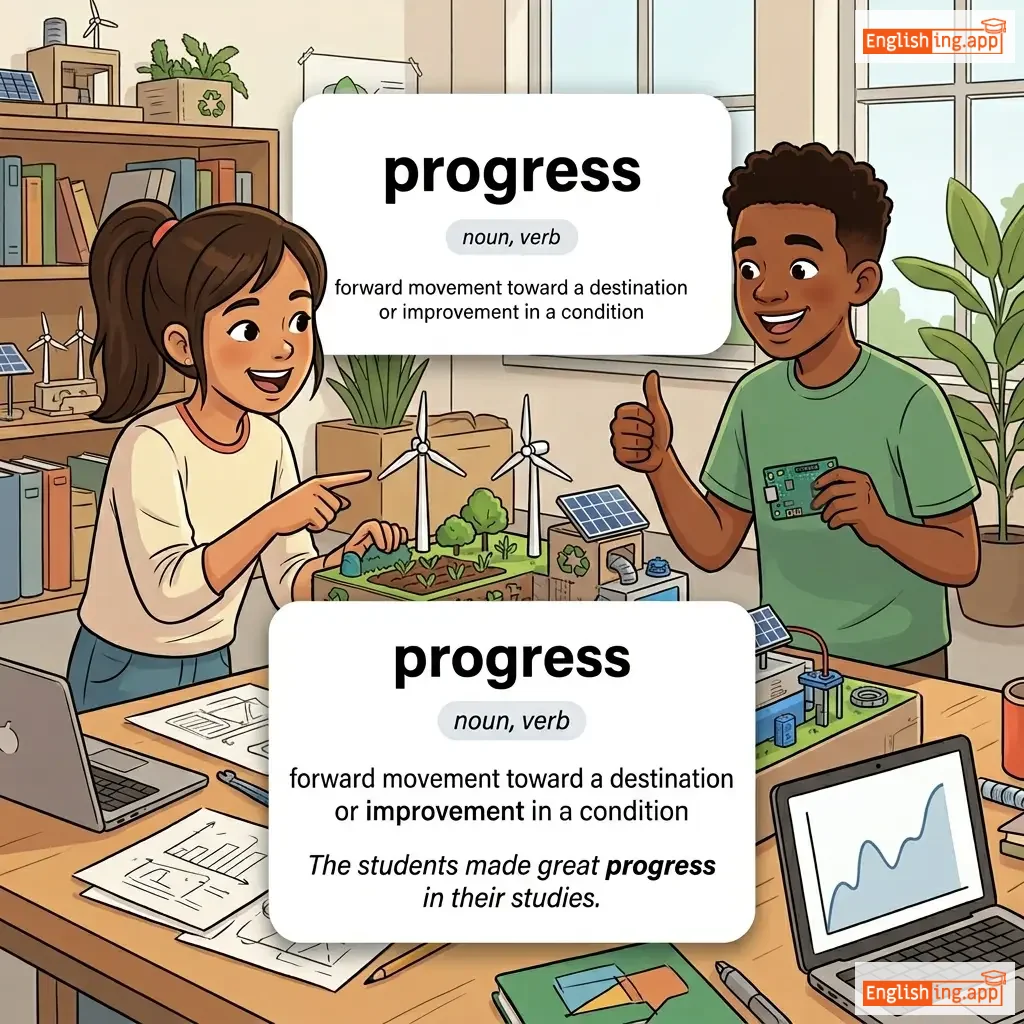
progress definition card — visual illustration of the meaning
noun, verb
/ˈprəʊɡrɛs/ (noun), /prəˈɡrɛs/ (verb)
progrès (progres)

forward movement toward a destination or improvement in a condition

"The students made great progress in their studies."

"Les étudiants ont fait de grands progrès dans leurs études." (Les étudiants ont fait de grands progrès dans leurs études.)
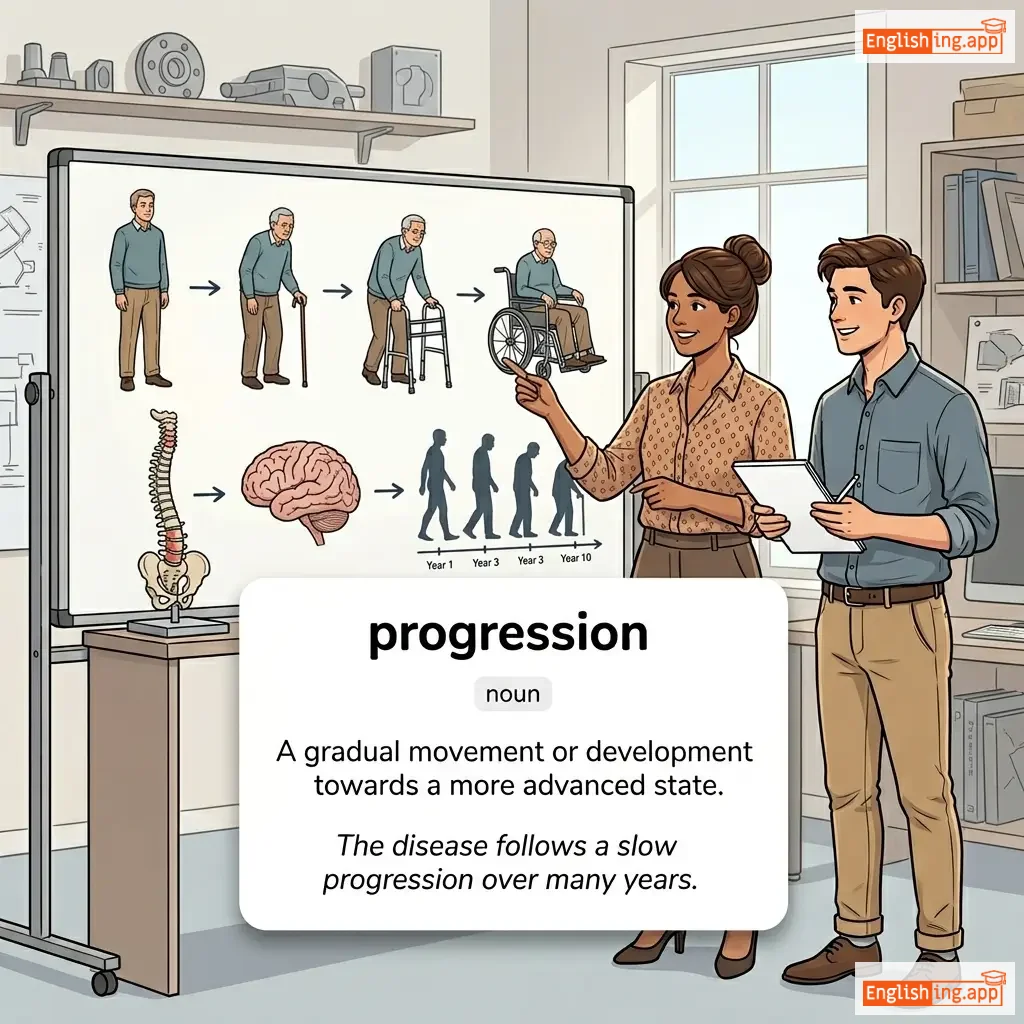
progression definition card — visual illustration of the meaning
noun
/prəˈɡrɛʃən/
progression (progression)

A gradual movement or development towards a more advanced state.

"The disease follows a slow progression over many years."

"La maladie suit une progression lente pendant plusieurs années." (La maladie suit une progression lente pendant plusieurs années.)
adjective
/prəˈɡrɛsɪv/
progressiste (progressiste)

favoring or implementing new and modern ideas or policies; moving forward or improving

"She holds progressive views on social justice and equality."

"Elle a des opinions progressistes sur la justice sociale et l'égalité." (Elle a des opinions progressistes sur la justice sociale et l'égalité.)
verb
/prəˈhɪbɪt/
interdire (interdire)

to formally forbid something by law, rule, or authority

"Smoking is strictly prohibited inside the hospital."

"Fumer est strictement interdit à l'intérieur de l'hôpital." (Fumer est strictement interdit à l'intérieur de l'hôpital.)
noun
/ˌproʊɪˈbɪʃən/
interdiction (interdiction)

The act of forbidding something by law or authority.

"The government announced the prohibition of smoking in public places."

"Le gouvernement a annoncé l'interdiction de fumer dans les lieux publics." (Le gouvernement a annonce l'interdiction de fumer dans les lieux publics.)
noun
/ˌproʊɪˈbɪʃənɪst/
interdictionniste (interdictionniste)

A person who supports or advocates prohibition, especially of alcohol.

"The prohibitionist campaigned against the sale of liquor in the town."

"L'interdictionniste a mené une campagne contre la vente d'alcool dans la ville." (L'interdictionniste a mené une campagne contre la vente d'alcool dans la ville.)
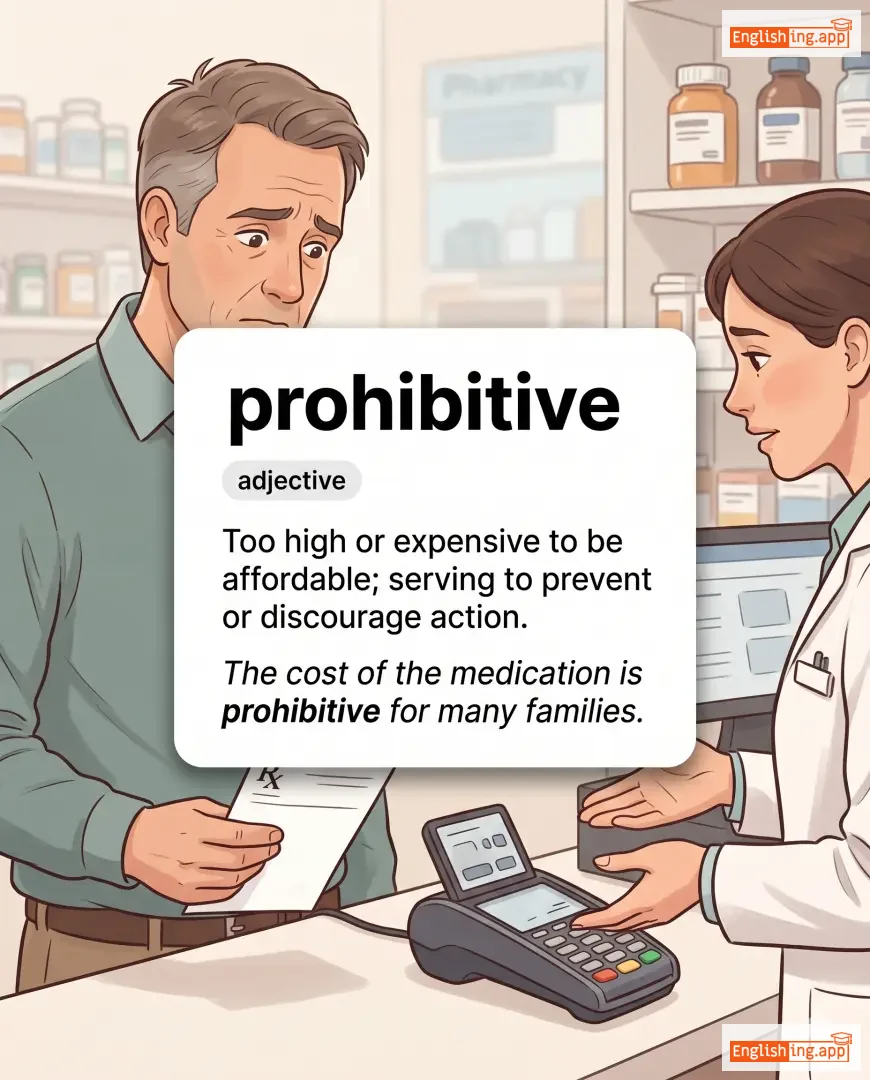
prohibitive definition card — visual illustration of the meaning
adjective
/prəˈhɪbɪtɪv/
interdit (interdit)

Too high or expensive to be affordable; serving to prevent or discourage action.

"The cost of the medication is prohibitive for many families."

"Le coût du médicament est trop élevé pour de nombreuses familles." (Le coût du médicament est trop élevé pour de nombreuses familles.)
adjective
/prəˈhɪbɪtɔːri/
interdisant (interdisant)

Serving or tending to prohibit or forbid.

"The prohibitory laws were strictly enforced in the region."

"Les lois interdisant ont été strictement appliquées dans la région." (Les lois interdisant ont été strictement appliquées dans la région.)
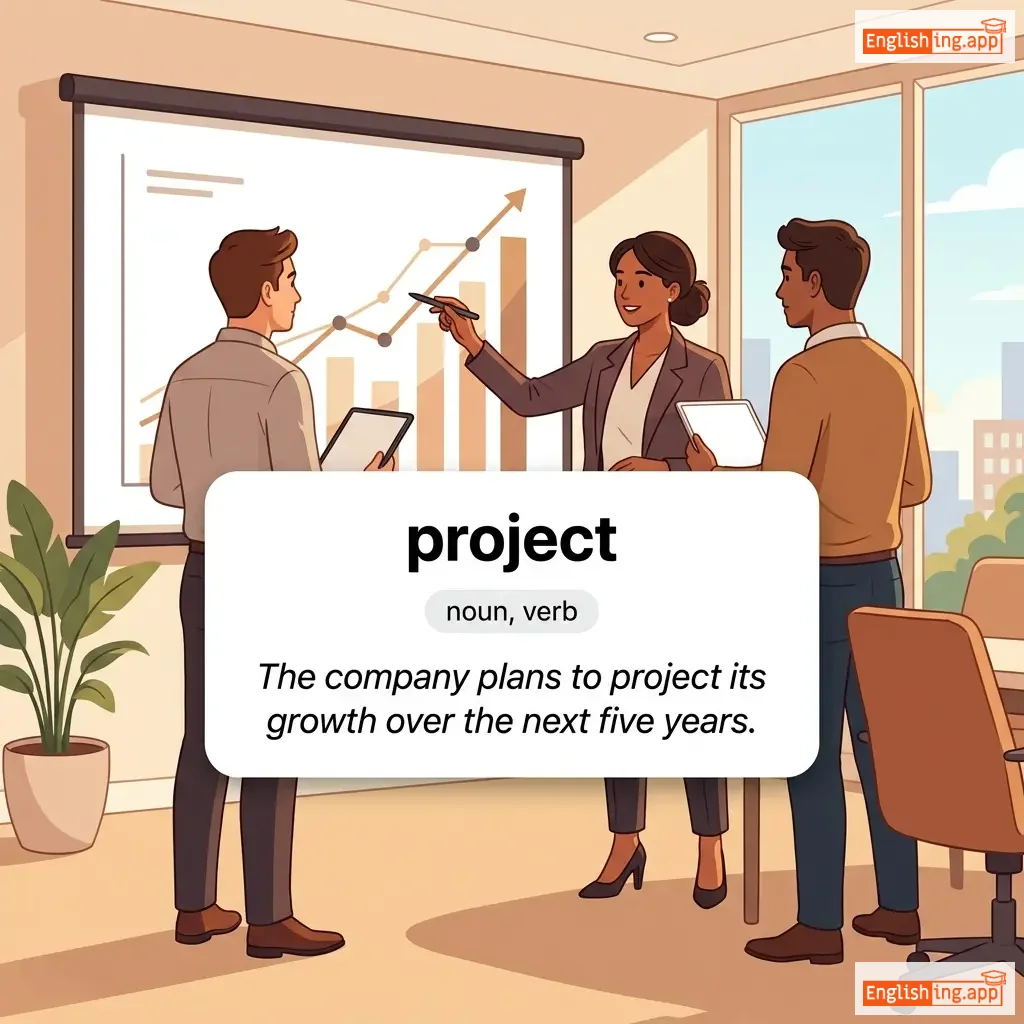
project definition card — visual illustration of the meaning
noun, verb
/ˈprɒdʒɛkt/ (noun), /prəˈdʒɛkt/ (verb)
projet (proje)

As a noun: a planned task or assignment. As a verb: to plan, estimate, or extend something outward.

"The company plans to project its growth over the next five years."

"L'entreprise prévoit de projeter sa croissance au cours des cinq prochaines années." (L'entreprise prévoit de projeter sa croissance au cours des cinq prochaines années.)
noun
/prəˈdʒɛktaɪl/
projectile (projectile)

An object fired, thrown, or propelled, especially from a weapon.

"The soldier dodged the incoming projectile."

"Le soldat a esquivé le projectile entrant." (Le soldat a esquivé le projectile entrant.)
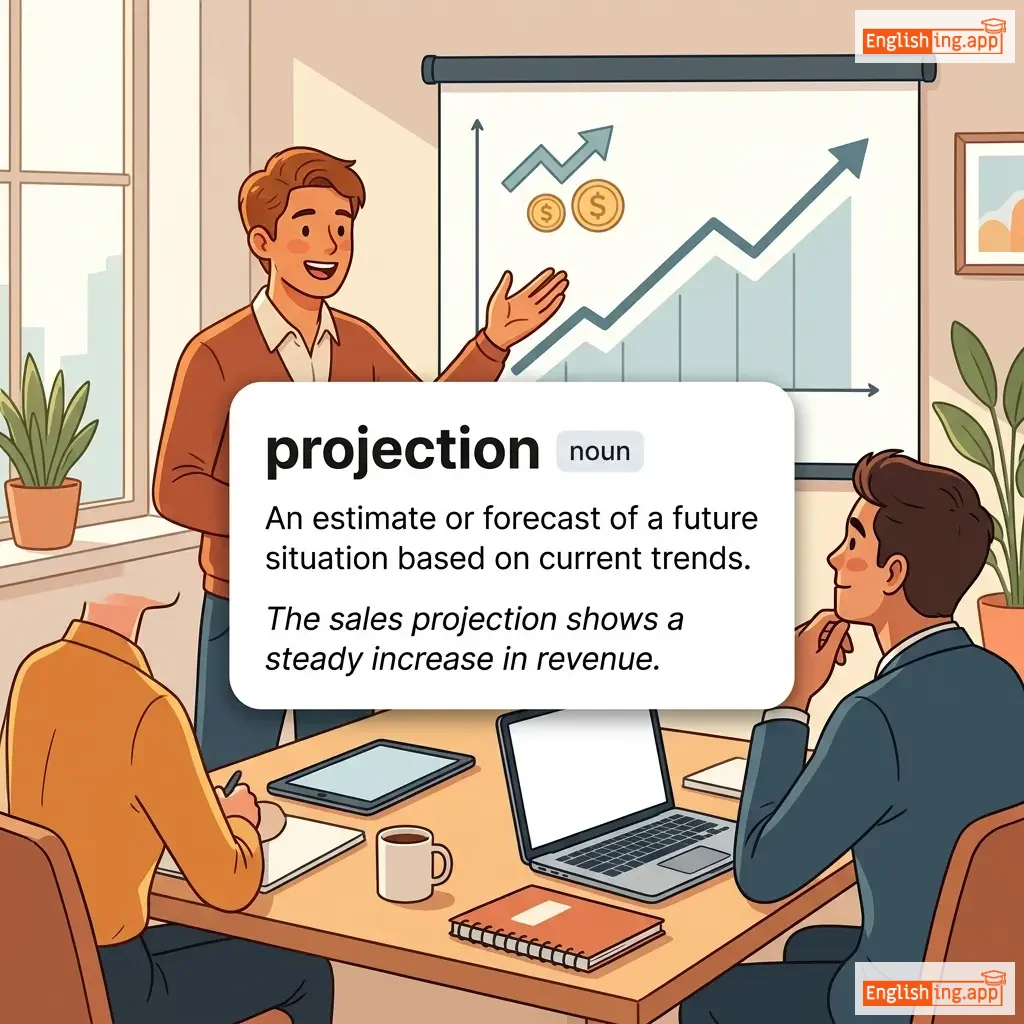
projection definition card — visual illustration of the meaning
noun
/prəˈdʒɛkʃən/
projection (projection)

An estimate or forecast of a future situation based on current trends.

"The sales projection shows a steady increase in revenue."

"La projection des ventes montre une augmentation constante des revenus." (La projection des ventes montre une augmentation constante des revenus.)
projects definition card — visual illustration of the meaning
noun
ˈprɒdʒ.ekts
projets (projets)

Individual or collaborative enterprises that are carefully planned to achieve a particular aim.

"These projects aim for technological breakthroughs."

"Ces projets visent des percées technologiques." (Ces projets visent des percées technologiques.)
noun, adjective
/ˌproʊlɪˈtɛəriən/
prolétaire (proletaire)

Relating to the working class, especially those who do not own property.

"The movement was rooted in proletarian struggles."

"Le mouvement était enraciné dans les luttes prolétaires." (Le mouvement était enraciné dans les luttes prolétaires.)