Vocabulaires

Découvrez, apprenez et maîtrisez le vocabulaire anglais

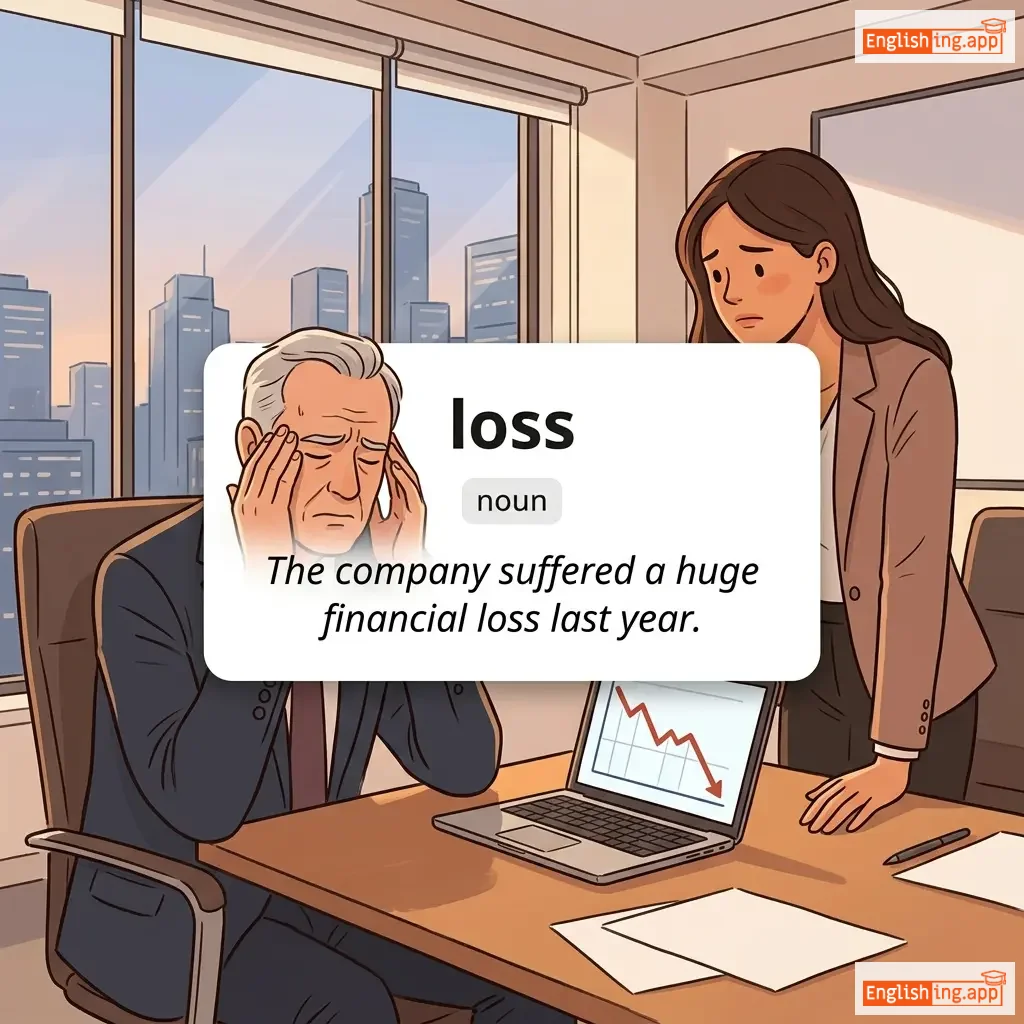
loss definition card — visual illustration of the meaning
noun
/lɒs/
perte (perte)

The state of no longer having something or someone; the harm resulting from losing.

"The company suffered a huge financial loss last year."

"L'entreprise a subi une grande perte financière l'année dernière." (L'entreprise a subi une grande perte financière l'année dernière.)
verb/adjective
/lɒst/
perdu (perdu)

Unable to find the way; no longer in possession of something.

"He lost his keys and couldn’t enter the house."

"Il a perdu ses clés et n'a pas pu entrer dans la maison." (Il a perdu ses clés et n'a pas pu entrer dans la maison.)
noun
/lɒt/
beaucoup (beaucoup)

A large number or amount; a group or portion.

"She bought a lot of books at the fair."

"Elle a acheté beaucoup de livres à la foire." (Elle a achete beaucoup de livres a la foire.)
pronoun/noun
/lɒts/
beaucoup (beaucoup)

A large number or amount of something.

"She has lots of friends in the city."

"Elle a beaucoup d'amis dans la ville." (Elle a beaucoup d'amis dans la ville.)
noun
/ˈlɒtəri/
loterie (loterie)

A means of raising money by selling numbered tickets and giving prizes to the holders of numbers drawn at random.

"He won a car in the national lottery."

"Il a gagné une voiture à la loterie nationale." (Il a gagne une voiture a la loterie nationale.)
noun
/ˈloʊ.təs/
lotus (lotus)

a large water flower that floats on the surface of ponds and lakes

"The lotus flower blooms beautifully in the quiet pond."

"La fleur de lotus fleurit magnifiquement dans l’étang calme." (la fleur de lotus flerit manifikman dan letan kalm)
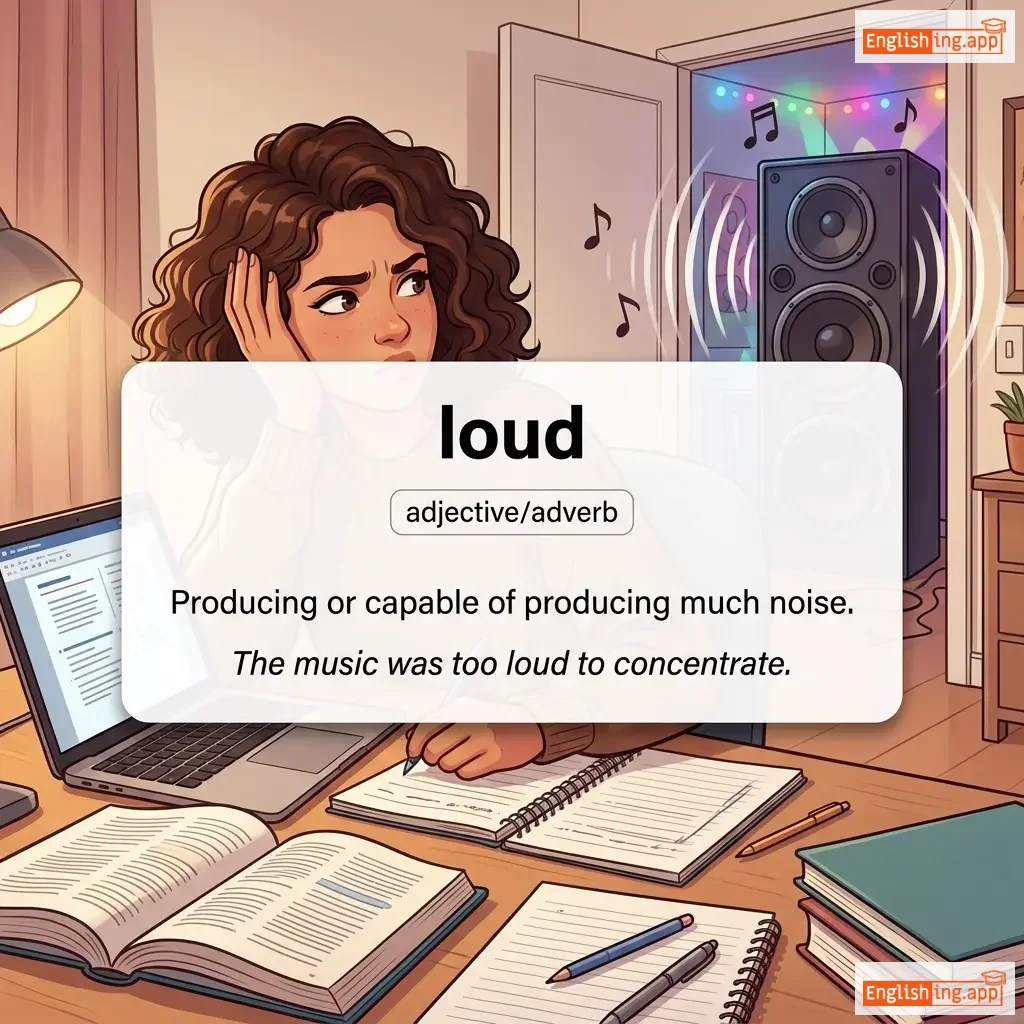
loud definition card — visual illustration of the meaning
adjective/adverb
/laʊd/
fort (fort)

Producing or capable of producing much noise.

"The music was too loud to concentrate."

"La musique était trop forte pour se concentrer." (La musique était trop forte pour se concentrer.)
adverb
/ˈlaʊdli/
bruyamment (bruyamment)

in a way that produces a lot of sound; with a high volume

"He spoke loudly so everyone in the room could hear him."

"Il a parlé bruyamment pour que tout le monde l'entende." (Il a parle bruyamment pour que tout le monde l entende)
noun
/lɒx/ or /lɒk/
lac (lac)

An Irish or Scottish word for a lake or sea inlet.

"The fishermen lived by the lough for generations."

"Les pêcheurs vivaient près du lac pendant des générations." (Les pêcheurs vivaient près du lac pendant des générations.)
noun, verb
/laʊndʒ/
salon (salon)

A public room for relaxing; or to sit, lie, or stand in a relaxed way.

"They lounged on the sofa after dinner."

"Ils se sont allongés sur le canapé après le dîner." (Ils se sont allongés sur le canapé après le dîner.)
noun
/laʊs/
poux (poux)

A small parasitic insect that lives on the skin of mammals and birds; also used as an insult for a contemptible person.

"The child had to be treated for head louse infestation."

"L'enfant a dû être traité pour une infestation de poux." (L'enfant a du etre traite pour une infestation de poux.)
adjective
/ˈlaʊzi/
mauvais (mauvais)

of very poor quality; bad or unpleasant

"He felt lousy after catching the flu."

"Il se sentait mal après avoir attrapé la grippe." (Il se sentait mal apres avoir attrape la grippe.)
noun
/laʊt/
vulgaire (vulgaire)

An uncouth or aggressive man or boy.

"The drunken lout caused a scene at the party."

"Le loubard ivre a causé une scène à la fête." (Le loubard ivre a causé une scène à la fête.)
adjective
/ˈlaʊtɪʃ/
grossier (grossier)

Clumsy, rude, or aggressive in behavior.

"His loutish remarks offended everyone at the meeting."

"Ses remarques grossières ont offensé tout le monde à la réunion." (Ses remarques grossières ont offensé tout le monde à la réunion.)
adjective
/ˈlʌvəbəl/
félicité (felicite)

Inspiring or deserving love or affection.

"The puppy was so lovable that everyone wanted to hold it."

"Elle ne pouvait pas cacher sa félicité lorsqu'elle a reçu le prix." (Elle ne pouvait pas cacher sa felicite lorsqu'elle a recu le prix.)
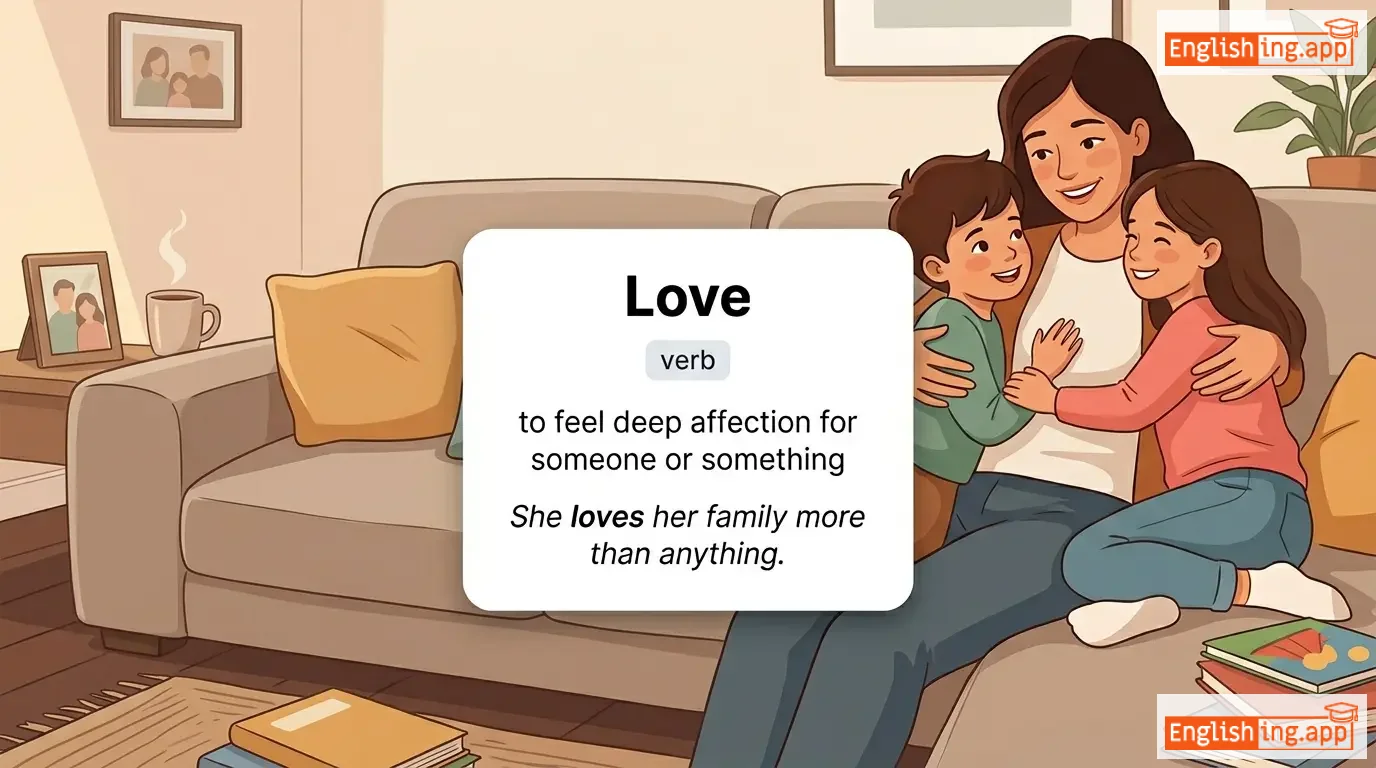
Love definition card — visual illustration of the meaning
verb
/lʌv/
amour (amour)

to feel deep affection for someone or something

"She loves her family more than anything."

"Elle aime sa famille plus que tout." (Elle aime sa famille plus que tout.)
adjective
/ˈlʌvəbl̩/
bonheur (bonheur)

easy to love; endearing or charming

"The puppy was so loveable that everyone wanted to hold it."

"Elle n'a pas pu cacher son bonheur lorsqu'elle a reçu le prix." (Elle n'a pas pu cacher son bonheur lorsqu'elle a reçu le prix.)
adjective
/ˈlʌvli/
charmant (charmant)

Delightful or very pleasing; beautiful.

"It was a lovely evening by the beach."

"C'était une soirée charmante sur la plage." (C'etait une soiree charmante sur la plage.)
noun
/ˈlʌvər/
amant (amant)

a person who is in a romantic relationship or has strong affection for someone

"She met her lover at the café every evening."

"Elle retrouvait son amant au café chaque soir." (Elle retrouvait son amant au cafe chaque soir.)
adjective
/ˈlʌv.ɪŋ/
affectueux; attentionné; montrant de l'amour et de la chaleur (affectueux; attentionné; montrant de l'amour et de la chaleur)

affectionate; caring; showing love and warmth

"She is a loving mother who cares deeply for her children."

"Elle est une mère aimante qui se soucie profondément de ses enfants." (Elle est une mère aimante qui se soucie profondément de ses enfants.)
⬇️

low (lo)

adjective
/loʊ/
bas (bas)

Small in amount, degree, or position; not high.

"The river is at its lowest level in years."

"Le fleuve est à son niveau le plus bas depuis des années." (Le fleuve est a son niveau le plus bas depuis des annees.)
adjective
/ˌloʊ ˈspɪrɪtɪd/
abattu (abattu)

feeling sad, depressed, or lacking enthusiasm

"He felt low-spirited after hearing the bad news."

"Il se sentait abattu après avoir entendu la mauvaise nouvelle." (Il se sentait abattu après avoir entendu la mauvaise nouvelle.)
verb
/ˈloʊər/
abaisser (abaisser)

to move something to a lower position or to reduce

"The company decided to lower the prices."

"La société a décidé de réduire les prix." (La societe a decide de reduire les prix.)
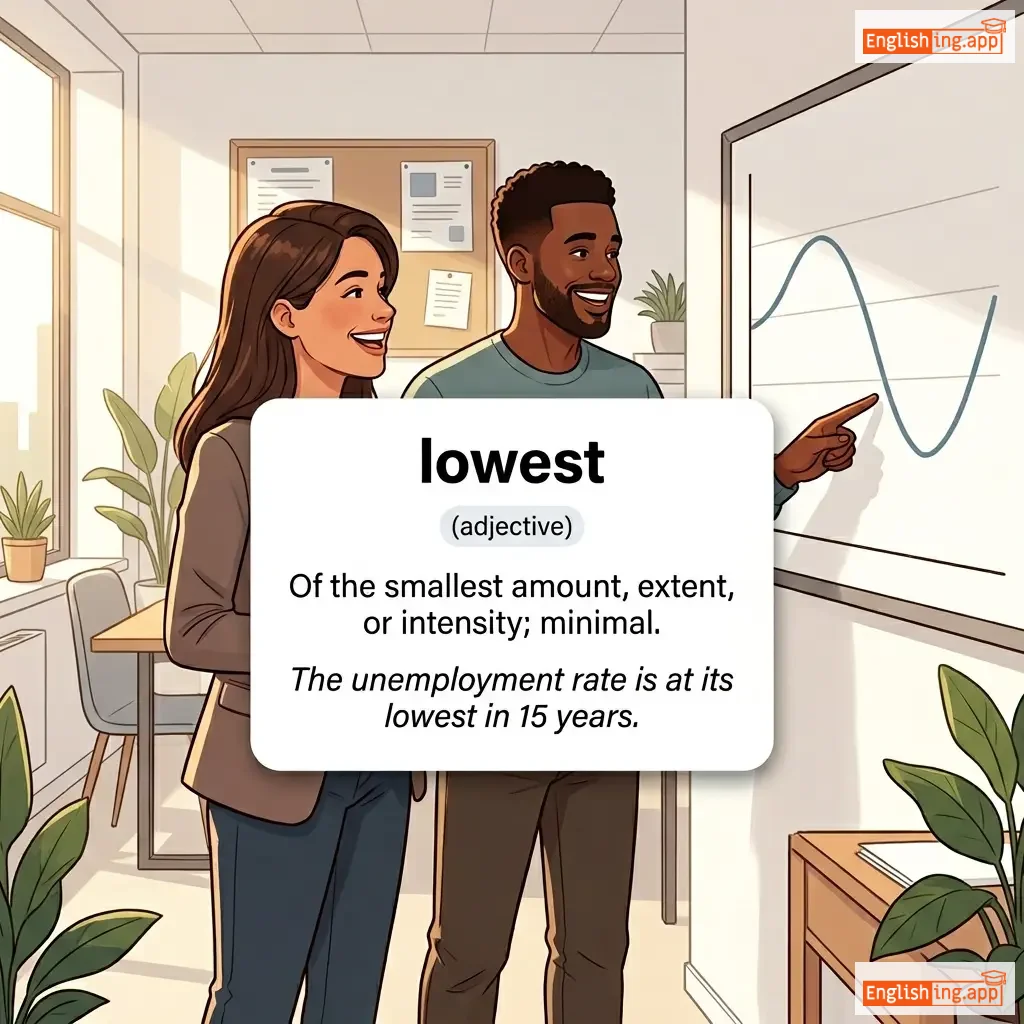
lowest definition card — visual illustration of the meaning
adjective
/ˈloʊɪst/
le plus bas (le plu bas)

Of the smallest amount, extent, or intensity; minimal.

"The unemployment rate is at its lowest in 15 years."

"Le taux de chômage est au plus bas depuis 15 ans." (Le taux de chomage est au plus bas depuis 15 ans.)
adjective
/ˈloʊli/
humble (humble)

humble in status, position, or manner

"She rose from a lowly position to become the company's CEO."

"Elle est montée d'une position humble pour devenir la PDG de l'entreprise." (Elle est montée d'une position humble pour devenir la PDG de l'entreprise.)
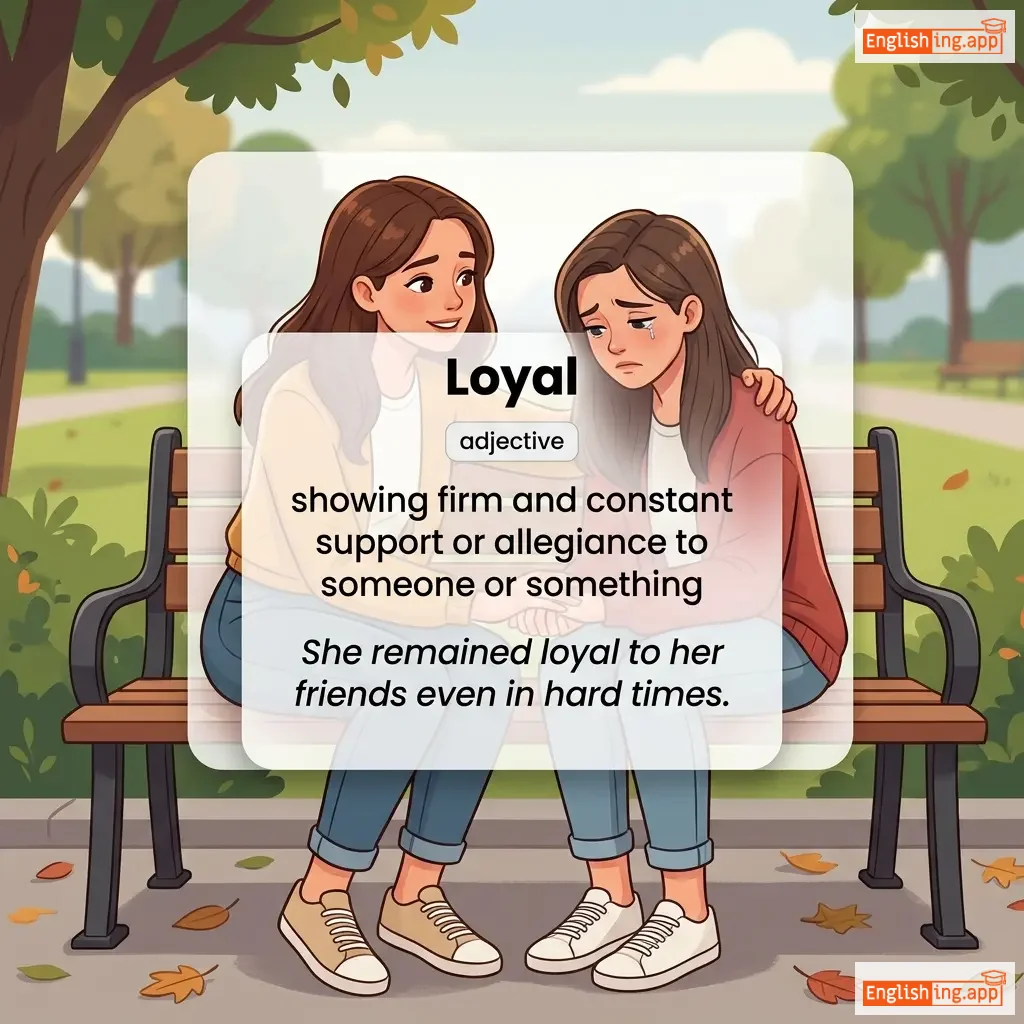
Loyal definition card — visual illustration of the meaning
adjective
/ˈlɔɪəl/
loyal, fidèle (loyal, fidele)

showing firm and constant support or allegiance to someone or something

"She remained loyal to her friends even in hard times."

"Elle est restée fidèle à ses amis même dans les moments difficiles." (Elle est restée fidèle à ses amis même dans les moments difficiles.)
noun
/ˈlɔɪəlti/
loyauté (loyote)

a strong feeling of support or allegiance

"His loyalty to the company earned him great respect."

"Sa loyauté envers l'entreprise lui a valu un grand respect." (Sa loyauté envers l'entreprise lui a valu un grand respect.)
verb
/ˈluːbrɪkeɪt/
lubrifier (lubrifier)

to apply oil or grease to reduce friction between surfaces

"The mechanic lubricated the car engine parts."

"Le mécanicien a lubrifié les pièces du moteur de la voiture." (Le mecanicien a lubrifie les pieces du moteur de la voiture.)
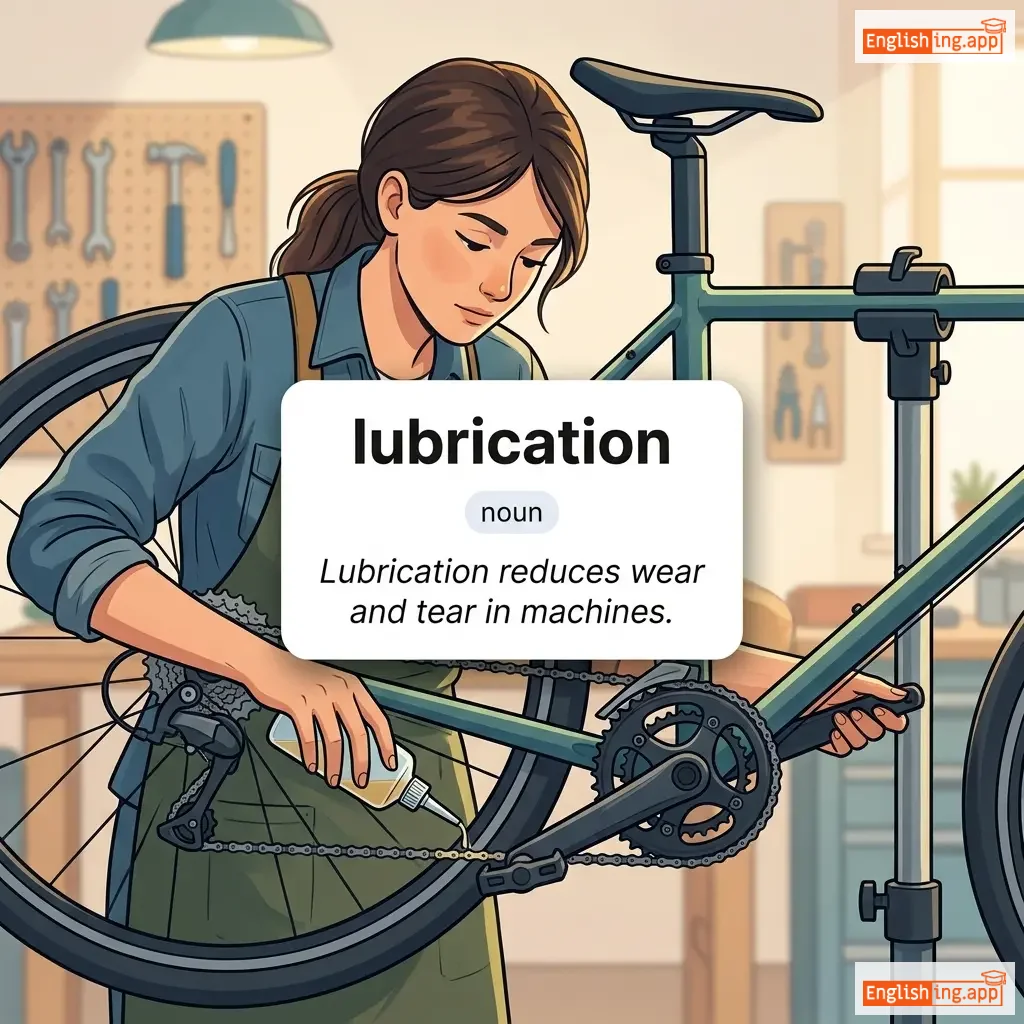
lubrication definition card — visual illustration of the meaning
noun
ˌluː.brɪˈkeɪ.ʃən
lubrification (lybri fikasyon)

The application of a substance such as oil or grease to reduce friction between moving parts.

"Lubrication reduces wear and tear in machines."

"La lubrification reduit lusure des machines." (La lubrification reduit lusure des machines.)
noun
/luːˈbrɪsɪti/
lubrification (lubrification)

the quality of being slippery or smooth; sometimes also refers to lewdness

"The lubricity of the surface made it difficult to walk on."

"La lubrification de la surface rendait la marche difficile." (La lubrification de la surface rendait la marche difficile.)
adjective
/ˈluːsənt/
lumineux (lumineu)

shining or glowing with light

"The lucent stars brightened the night sky."

"Les étoiles lumineuses ont illuminé le ciel nocturne." (Les etoiles lumineuses ont illumine le ciel nocturne.)
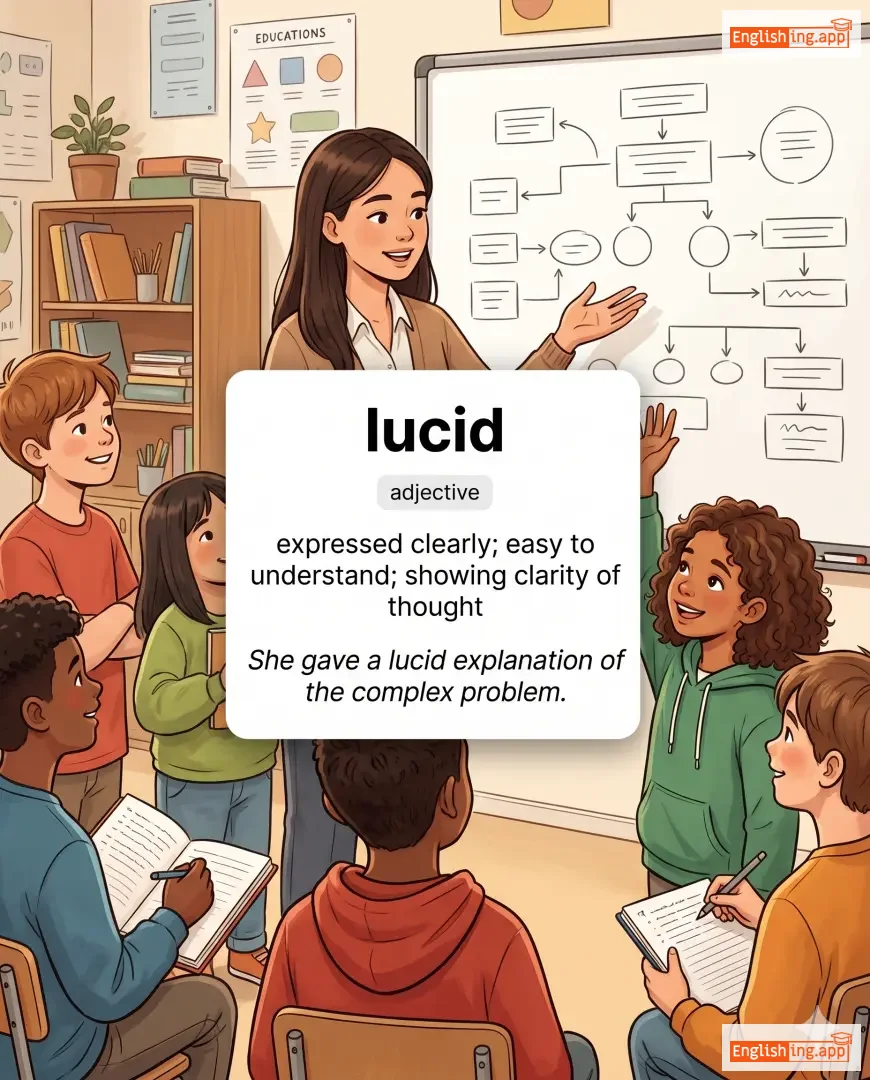
lucid definition card — visual illustration of the meaning
adjective
/ˈluːsɪd/
lucide (lucide)

expressed clearly; easy to understand; showing clarity of thought

"She gave a lucid explanation of the complex problem."

"Elle a donné une explication lucide du problème complexe." (Elle a donne une explication lucide du probleme complexe.)
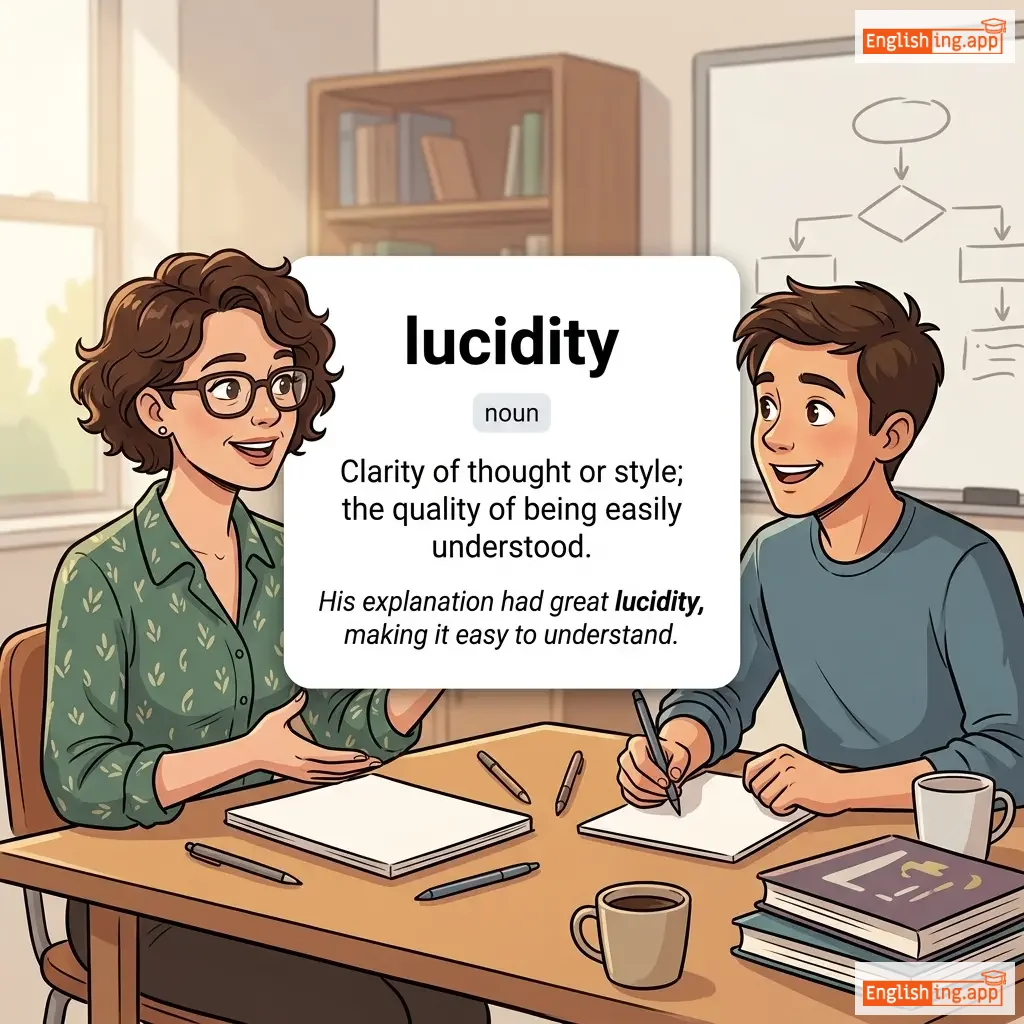
lucidity definition card — visual illustration of the meaning
noun
/luːˈsɪd.ə.ti/
lucidité (lucidite)

Clarity of thought or style; the quality of being easily understood.

"His explanation had great lucidity, making it easy to understand."

"Son explication avait une grande lucidité, ce qui la rendait facile à comprendre." (Son explication avait une grande lucidite, ce qui la rendait facile a comprendre.)
noun
/lʌk/
chance (luk)

success or failure apparently brought by chance rather than through one’s actions

"He had the luck to find a good job quickly."

"Il a eu la chance de trouver rapidement un bon travail." (Il a eu la chance de trouver rapidement un bon travail)
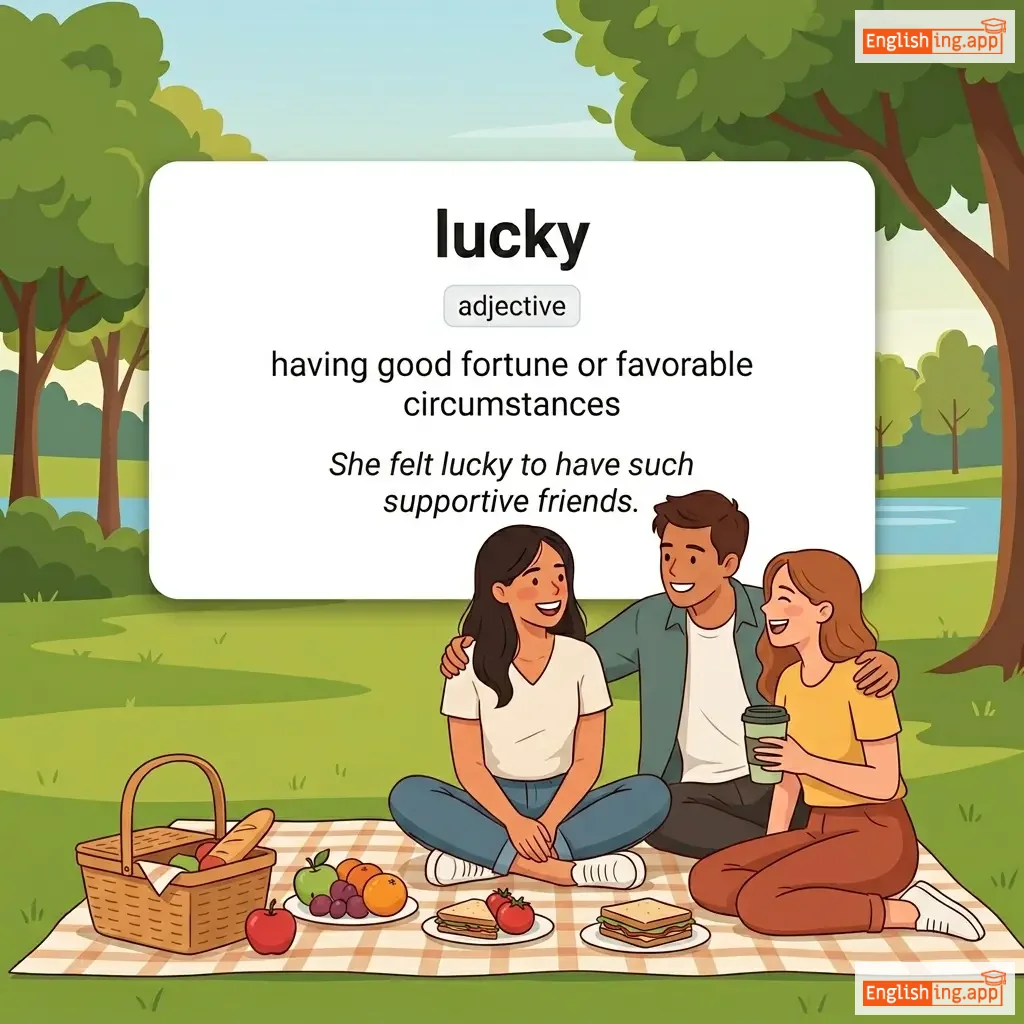
lucky definition card — visual illustration of the meaning
adjective
/ˈlʌki/
chanceux (chanceux)

having good fortune or favorable circumstances

"She felt lucky to have such supportive friends."

"Elle se sentait chanceuse d'avoir des amis aussi soutenants." (Elle se sentait chanceuse d'avoir des amis aussi soutenants.)
lucrative definition card — visual illustration of the meaning
adjective
/ˈluːkrətɪv/
lucratif (lucratif)

producing a great deal of profit

"He left his job for a more lucrative business opportunity."

"Il a quitté son travail pour une opportunité d'affaires plus lucrative." (Il a quitté son travail pour une opportunité d'affaires plus lucrative.)
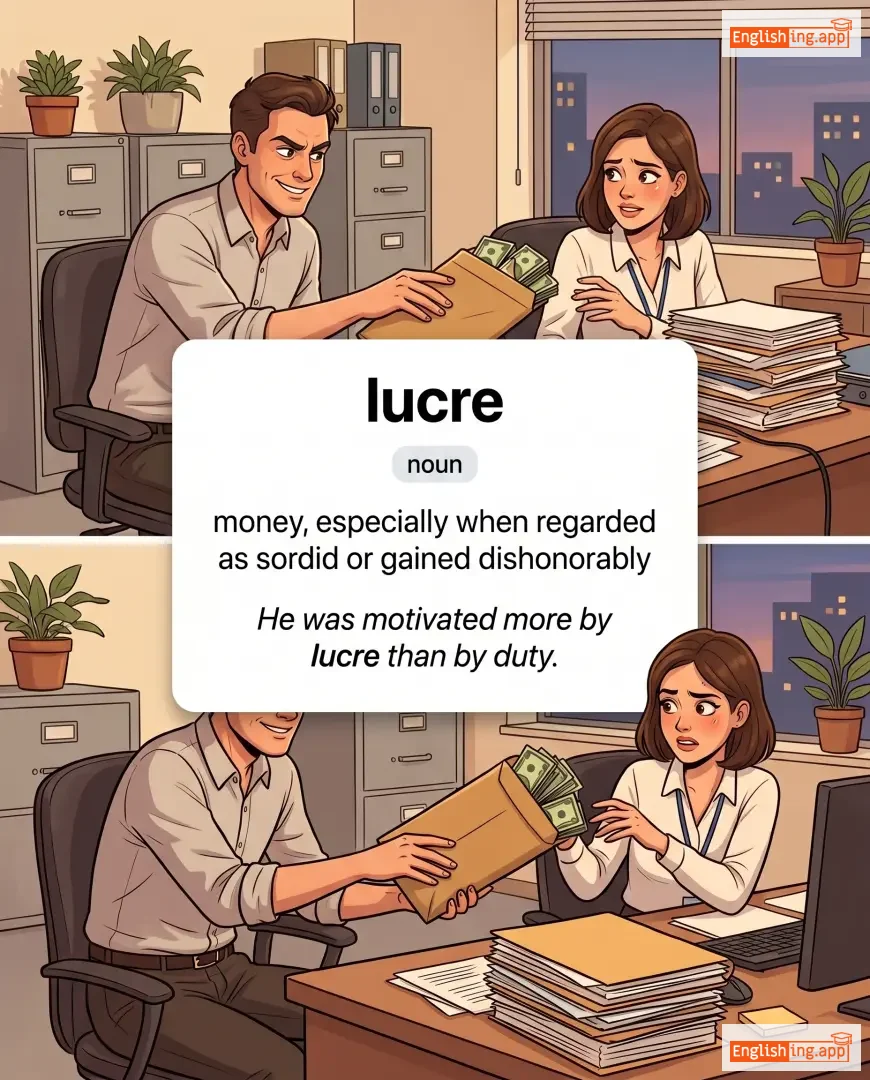
lucre definition card — visual illustration of the meaning
noun
/ˈluːkər/
lucre (lucre)

money, especially when regarded as sordid or gained dishonorably

"He was motivated more by lucre than by duty."

"Il était motivé davantage par le lucre que par le devoir." (Il était motivé davantage par le lucre que par le devoir.)
noun
/ˌluːkjʊˈbreɪʃən/
étude nocturne (etude nocturne)

study or meditation, especially at night

"His novel was the result of long lucubration."

"Son roman était le résultat de longues études nocturnes." (Son roman etait le resultat de longues etudes nocturnes.)
adjective
/ˈluːdɪkrəs/
absurde (absurde)

so foolish, unreasonable, or out of place as to be amusing

"It is ludicrous to think the Earth is flat."

"Il est absurde de penser que la Terre est plate." (Il est absurde de penser que la Terre est plate.)
verb
/lʌɡ/
porter ou traîner quelque chose de lourd ou encombrant avec effort (porter ou trainer quelque chose de lourd ou encombrant avec effort)

to carry or drag something heavy or cumbersome with effort

"He had to lug the suitcase up three flights of stairs."

"Il a dû traîner la valise sur trois étages d'escaliers." (Il a dû traîner la valise sur trois étages d'escaliers.)
noun
/ˈlʌɡ.ɪdʒ/
bagages (bagages)

suitcases or other bags in which to pack personal belongings for traveling

"Please check your luggage at the airport counter."

"Veuillez vérifier vos bagages au comptoir de l'aéroport." (Veuillez vérifier vos bagages au comptoir de l'aéroport.)
noun
/ˈlʌɡ.ɪdʒ væn/
fourgon à bagages (fourgon a bagages)

a vehicle designed for carrying luggage and cargo

"The luggage van carried all the passengers' suitcases."

"Le fourgon à bagages a transporté toutes les valises des passagers." (Le fourgon a bagages a transporte toutes les valises des passagers)
adjective
/luːˈɡuːbriəs/
lugubre (lugubre)

looking or sounding sad and dismal

"His lugubrious expression made everyone feel uneasy."

"Son expression lugubre a mis tout le monde mal à l'aise." (Son expression lugubre a mis tout le monde mal a l'aise.)
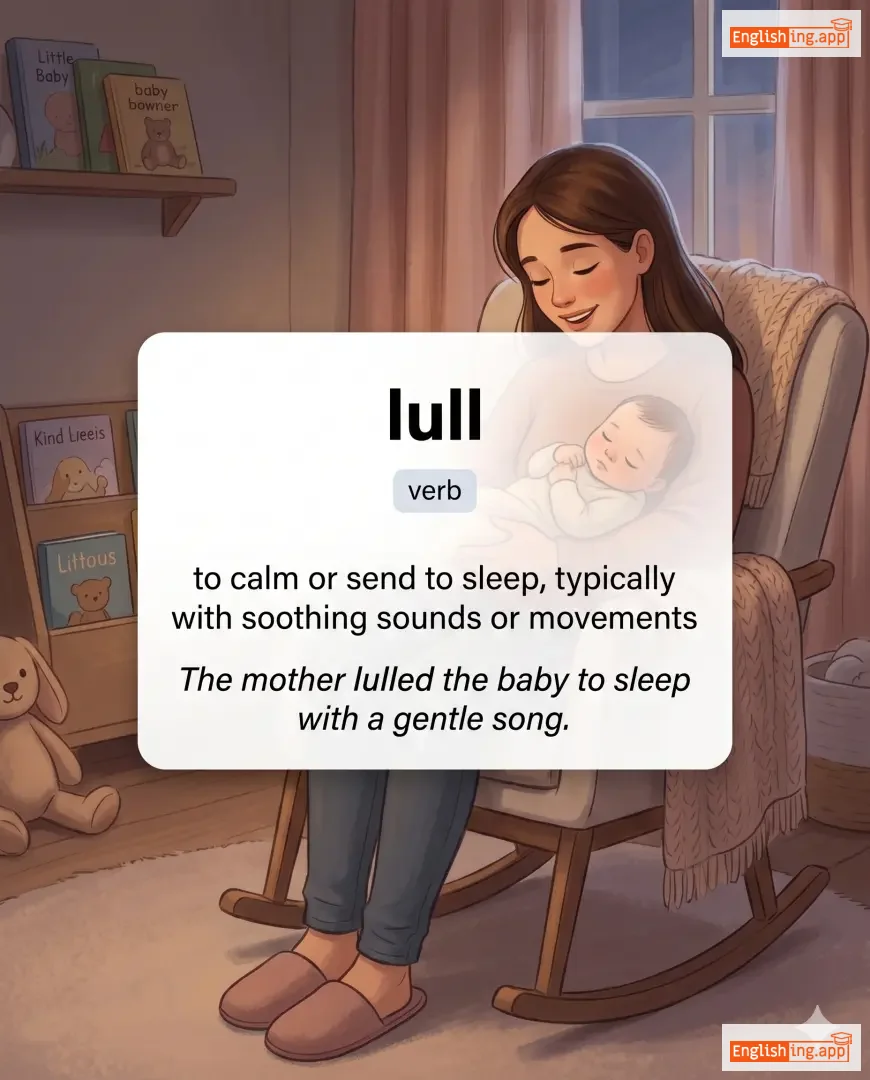
lull definition card — visual illustration of the meaning
verb
/lʌl/
endormir (endormir)

to calm or send to sleep, typically with soothing sounds or movements

"The mother lulled the baby to sleep with a gentle song."

"La mère a endormi le bébé avec une chanson douce." (La mère a endormi le bébé avec une chanson douce.)
noun
/ˈlʌləˌbaɪ/
berceuse (berceuse)

a soothing song sung to help a child fall asleep

"She sang a lullaby to her baby every night."

"Elle chantait une berceuse à son bébé chaque soir." (Elle chantait une berceuse a son bebe chaque soir)
verb
/ˈlʌmbər/
marcher lourdement (marcher lourdement)

to move in a slow, heavy, awkward way

"The bear lumbered through the forest in search of food."

"L'ours marchait lourdement à travers la forêt à la recherche de nourriture." (L'ours marchait lourdement à travers la forêt à la recherche de nourriture.)
noun
/ˈluː.mən/
lumen (lumen)

A unit of luminous flux, measuring the amount of visible light emitted by a source.

"The bulb produces 800 lumens of light."

"L'ampoule produit 800 lumens de lumière." (L'ampoule produit 800 lumens de lumière.)
noun
/ˈluː.məˌnɛr.i/
personne influente (personne influente)

A person who inspires or influences others, especially in a particular field.

"He is considered a luminary in the world of science."

"Il est considéré comme une personne influente dans le monde de la science." (Il est considéré comme une personne influente dans le monde de la science.)
noun
/ˌluː.mɪˈnɛs.əns/
luminescence (luminescence)

The emission of light by a substance not resulting from heat; a type of cold light.

"The luminescence of the fireflies lit up the forest."

"La luminescence des lucioles a éclairé la forêt." (La luminescence des lucioles a eclaire la foret.)
adjective
/ˌluː.mɪˈnɛs.ənt/
lumineux (lumineux)

Emitting light without heat, glowing softly.

"The luminescent watch dial was visible in the dark."

"Le cadran lumineux de la montre était visible dans l'obscurité." (Le cadran lumineux de la montre était visible dans l'obscurité.)