Vocabulaires

Découvrez, apprenez et maîtrisez le vocabulaire anglais

adjective
/ɪnˈtɒlərənt/
intolérant (intolerant)

unwilling to accept or respect beliefs or behavior different from one's own

"He is intolerant of any opinion that differs from his own."

"Il est intolérant à toute opinion différente de la sienne." (Il est intolerant a toute opinion differente de la sienne.)
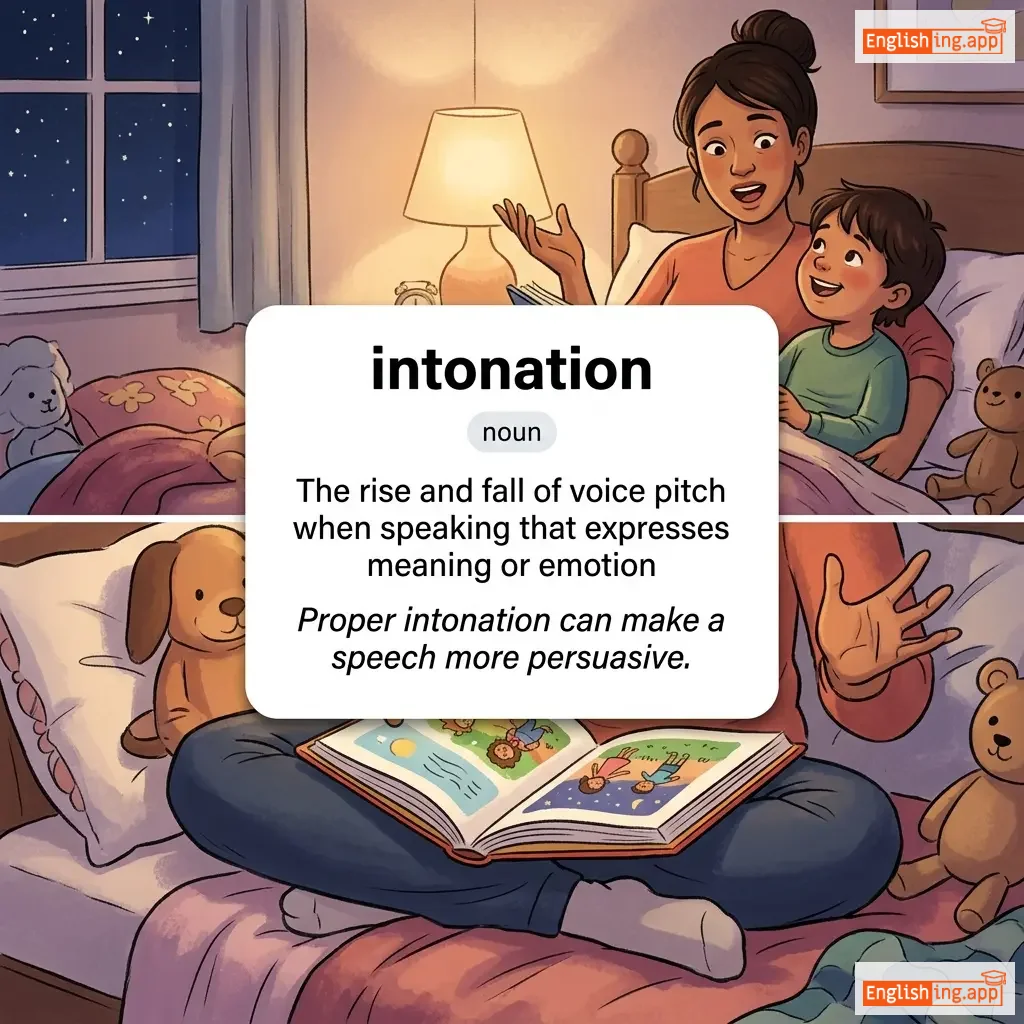
intonation definition card — visual illustration of the meaning
noun
ˌɪn.toʊˈneɪ.ʃən
intonation (intonation)

The rise and fall of voice pitch when speaking that expresses meaning or emotion

"Proper intonation can make a speech more persuasive."

"Une intonation appropriée peut rendre un discours plus persuasif." (Une intonation appropriee peut rendre un discours plus persuasif.)
noun
/ɪnˈtɒksɪkənt/
intoxiquant (intoxiquant)

a substance, especially alcohol or a drug, that causes intoxication

"Alcohol is the most commonly used intoxicant in many cultures."

"L'alcool est l'intoxicant le plus couramment utilisé dans de nombreuses cultures." (L'alcool est l'intoxicant le plus couramment utilisé dans de nombreuses cultures.)
verb
/ɪnˈtɒksɪkeɪt/
bonheur (bonheur)

to make someone lose control of their faculties or behavior due to alcohol or drugs

"The strong drink quickly intoxicated him."

"Elle n'a pas pu cacher son bonheur lorsqu'elle a reçu le prix." (Elle n'a pas pu cacher son bonheur lorsqu'elle a reçu le prix.)
adjective
/ˌɪn.trəˈsɛl.jʊ.lər/
à l'intérieur de la cellule (a l'interieur de la cellule)

Located or occurring within a cell.

"The drug works by targeting intracellular bacteria."

"Le médicament agit en ciblant les bactéries intracellulaires." (Le medicament agit en ciblant les bacteries intracellulaires.)
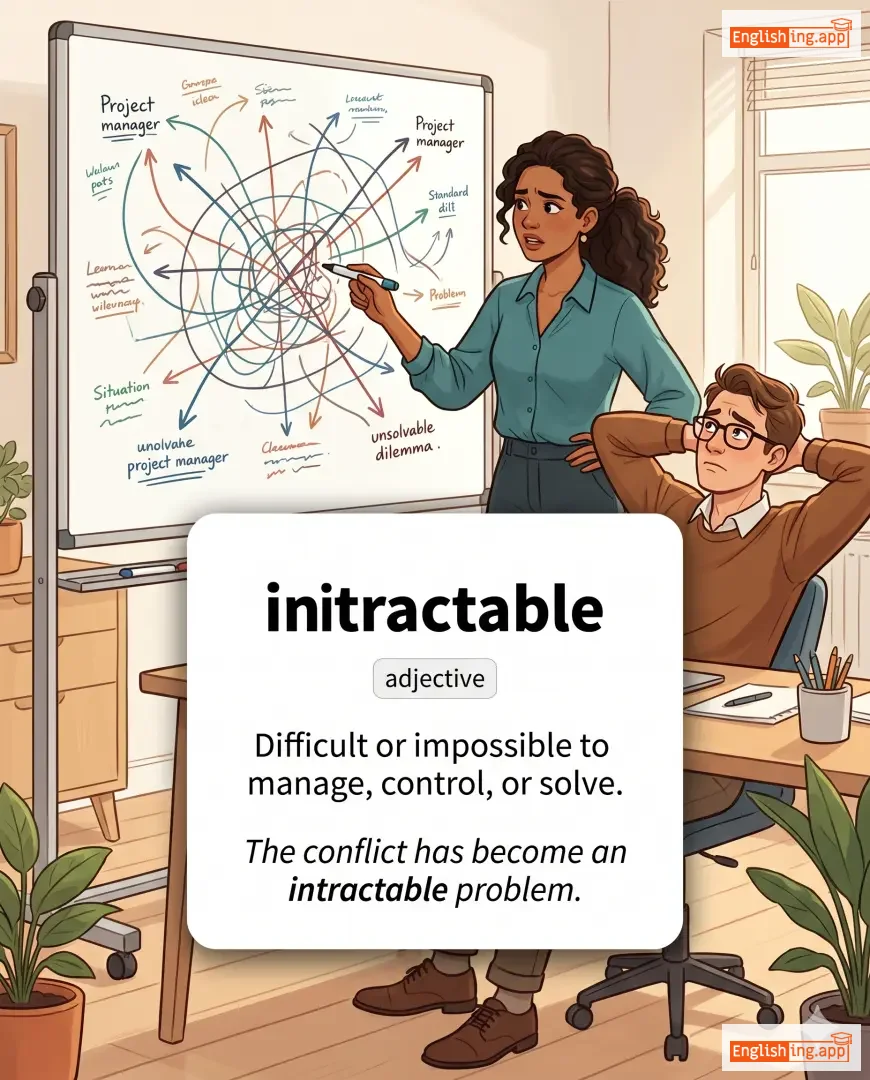
intractable definition card — visual illustration of the meaning
adjective
/ɪnˈtræk.tə.bəl/
incontrôlable (incontrolable)

Difficult or impossible to manage, control, or solve.

"The conflict has become an intractable problem."

"Le conflit est devenu un problème incontrôlable." (Le conflit est devenu un problème incontrôlable.)
adjective
/ˌɪn.trəˈmjʊə.rəl/
à l'intérieur de l'institution (a l'interieur de l'institution)

Occurring within the walls of a single institution, especially a school or college.

"The college organizes intramural sports competitions every semester."

"Le collège organise des compétitions sportives intramuros chaque semestre." (Le college organise des competitions sportives intramuros chaque semestre.)
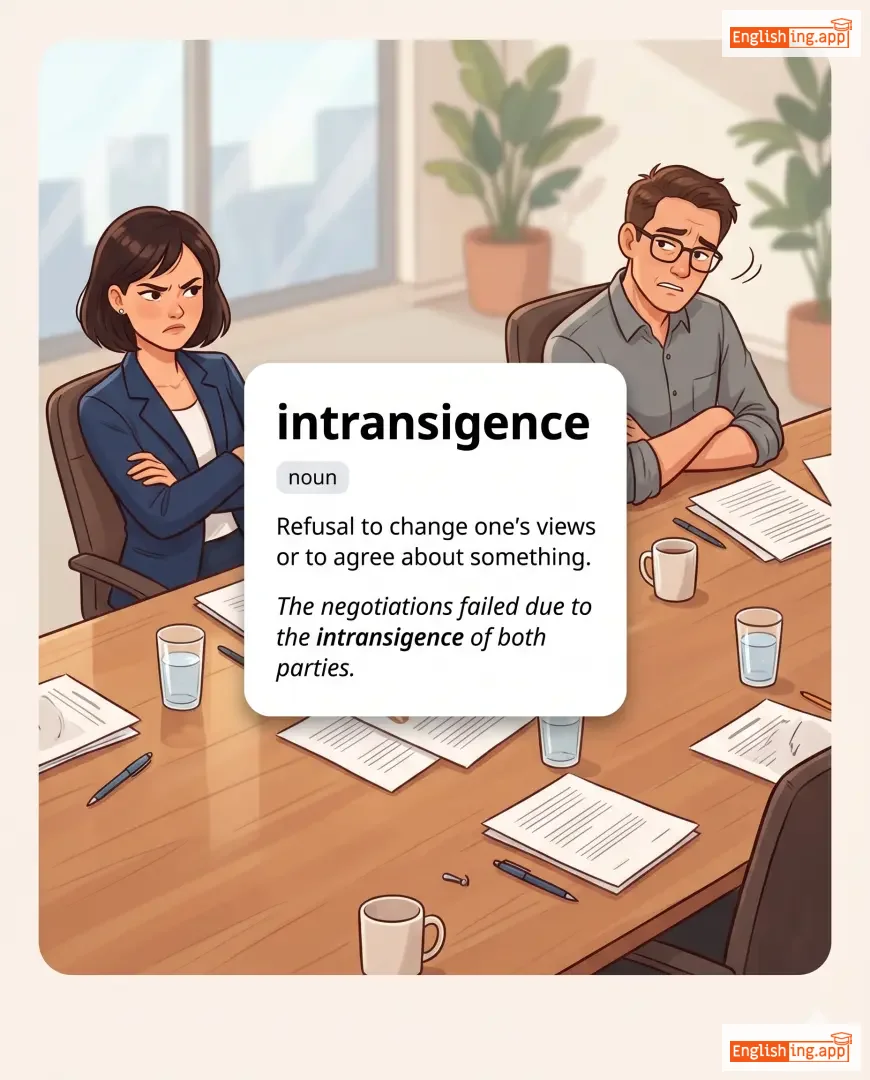
intransigence definition card — visual illustration of the meaning
noun
/ɪnˈtræn.sɪ.dʒəns/
intransigeance (intransigeance)

Refusal to change one's views or to agree about something.

"The negotiations failed due to the intransigence of both parties."

"Les négociations ont échoué en raison de l'intransigeance des deux parties." (Les négociations ont échoué en raison de l'intransigeance des deux parties.)
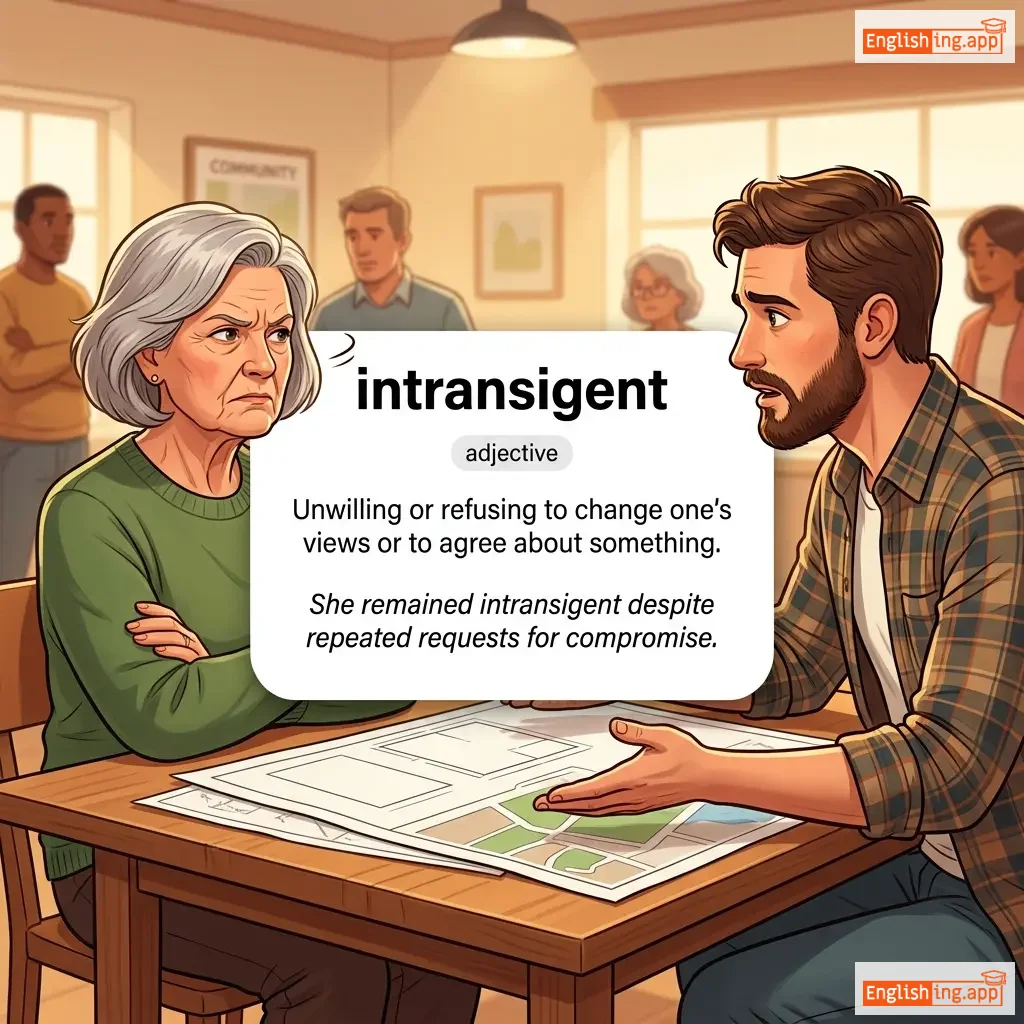
intransigent definition card — visual illustration of the meaning
adjective
/ɪnˈtræn.sɪ.dʒənt/
intransigeant (intransigeant)

Unwilling or refusing to change one's views or to agree about something.

"She remained intransigent despite repeated requests for compromise."

"Elle est restée intransigeante malgré les demandes répétées de compromis." (Elle est restée intransigeante malgré les demandes répétées de compromis.)
adjective
/ɪnˈtrɛpɪd/
intrépide (intrepide)

fearless and adventurous, often used humorously

"The intrepid traveler explored the jungle alone."

"Le voyageur intrépide a exploré la jungle seul." (Le voyageur intrepide a explore la jungle seul.)
noun
/ˈɪntrɪkəsi/
complexité (complexite)

the quality of being very detailed or complicated

"The intricacy of the design impressed everyone."

"La complexité du design a impressionné tout le monde." (La complexite du design a impressionne tout le monde.)
adjective
/ˈɪntrɪkət/
complexe (complexe)

very detailed, complex, and difficult to understand

"The artist created an intricate pattern on the wall."

"L'artiste a créé un motif complexe sur le mur." (L'artiste a créé un motif complexe sur le mur.)
verb
/ɪnˈtriːɡ/
intriguer (intriguer)

to arouse curiosity or interest; to make someone fascinated

"The mystery novel will intrigue any reader."

"Le roman mystère intriguerait n'importe quel lecteur." (Le roman mystère intriguerait n'importe quel lecteur.)
adjective
/ɪnˈtriːɡɪŋ/
très intéressant et inhabituel ; éveillant la curiosité (tres interessant et inhabituel ; eveille la curiosite)

very interesting and unusual; arousing curiosity

"The movie has an intriguing plot that keeps the audience hooked."

"Le film a un scénario intrigant qui captive le public." (Le film a un scenario intrigant qui captive le public.)
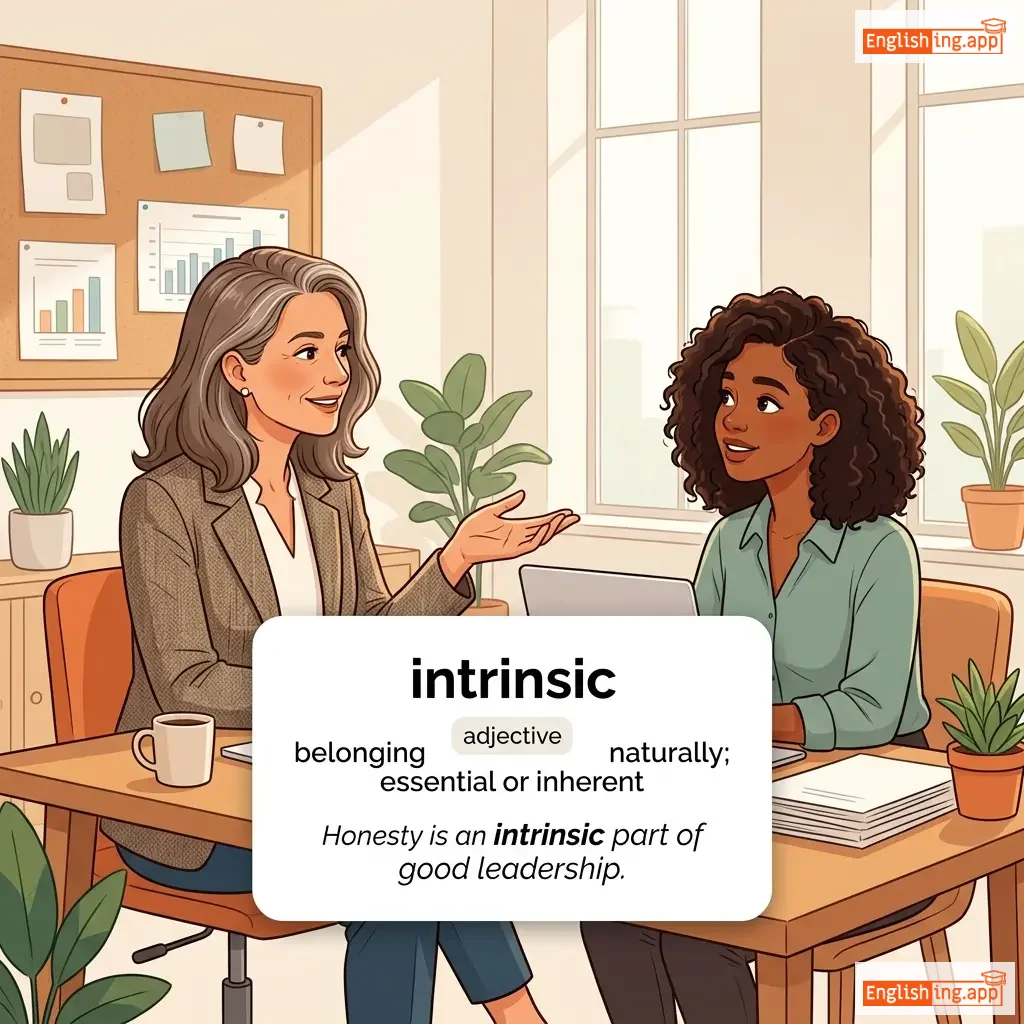
intrinsic definition card — visual illustration of the meaning
adjective
/ɪnˈtrɪnzɪk/
intrinsèque (intrinseque)

belonging naturally; essential or inherent

"Honesty is an intrinsic part of good leadership."

"L'honnêteté est une partie intrinsèque d'un bon leadership." (L'honnêteté est une partie intrinsèque d'un bon leadership.)
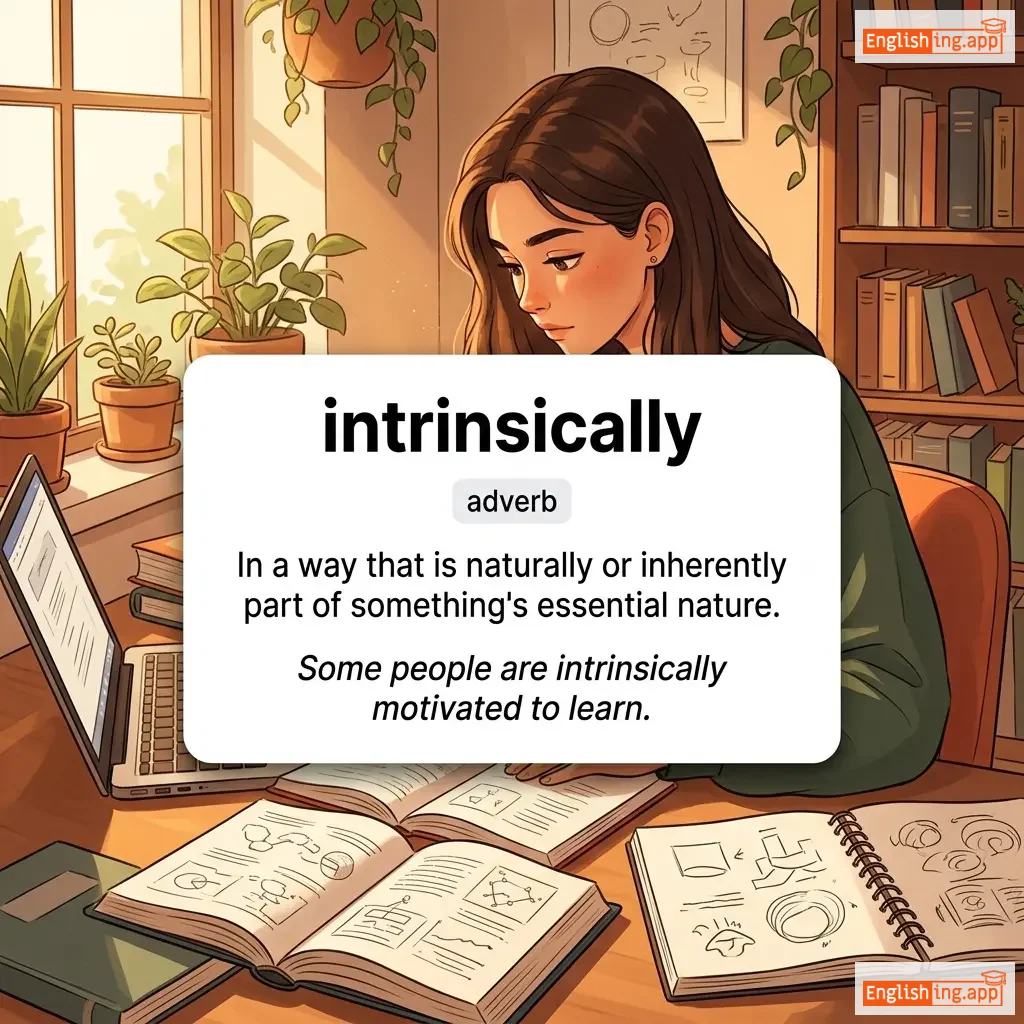
intrinsically definition card — visual illustration of the meaning
adverb
ɪnˈtrɪn.zɪ.kli
intrinsèquement (intrinsequement)

In a way that is naturally or inherently part of something's essential nature.

"Some people are intrinsically motivated to learn."

"Certaines personnes sont intrinsèquement motivées à apprendre." (Certaines personnes sont intrinsèquement motivées à apprendre.)
introduce definition card — visual illustration of the meaning
verb
/ˌɪntrəˈduːs/
introduire (introduire)

to present someone or something to another person or group

"He will introduce his new idea at the meeting."

"Il présentera sa nouvelle idée lors de la réunion." (Il présentera sa nouvelle idée lors de la réunion.)
noun
/ˌɪn.trəˈdʌk.ʃən/
introduction (introduction)

the action of introducing something or someone; an opening or beginning part

"The professor gave a brief introduction before starting the lecture."

"Le professeur a donné une brève introduction avant de commencer le cours." (Le professeur a donné une brève introduction avant de commencer le cours.)
adjective
/ˌɪn.trəˈdʌk.tər.i/
introductif (introductif)

Serving as an introduction; preliminary or preparatory.

"The professor gave an introductory lecture on economics."

"Le professeur a donné une conférence introductive sur l'économie." (Le professeur a donne une conference introductive sur l'economie.)
noun
/ˌɪn.trəˈɡreʃ.ən/
introgression génétique (introgression genetique)

The transfer of genetic information from one species to another through repeated backcrossing.

"Introgression plays a significant role in plant breeding."

"L'introgression joue un rôle important dans la reproduction des plantes." (L'introgression joue un rôle important dans la reproduction des plantes.)
verb
/ˌɪn.trəˈmɪt/
introduire (introduire)

To insert or introduce something into a place or body.

"The doctor carefully intromitted the instrument into the wound."

"Le médecin a introduit soigneusement l'instrument dans la plaie." (Le medecin a introduit soigneusement l'instrument dans la plaie.)
verb
/ˌɪn.trəˈspekt/
introspecter (introspecter)

To examine one's own thoughts, feelings, or mental state.

"He often introspects before making important decisions."

"Il se livre souvent à de l'introspection avant de prendre des décisions importantes." (Il se livre souvent à de l'introspection avant de prendre des décisions importantes.)
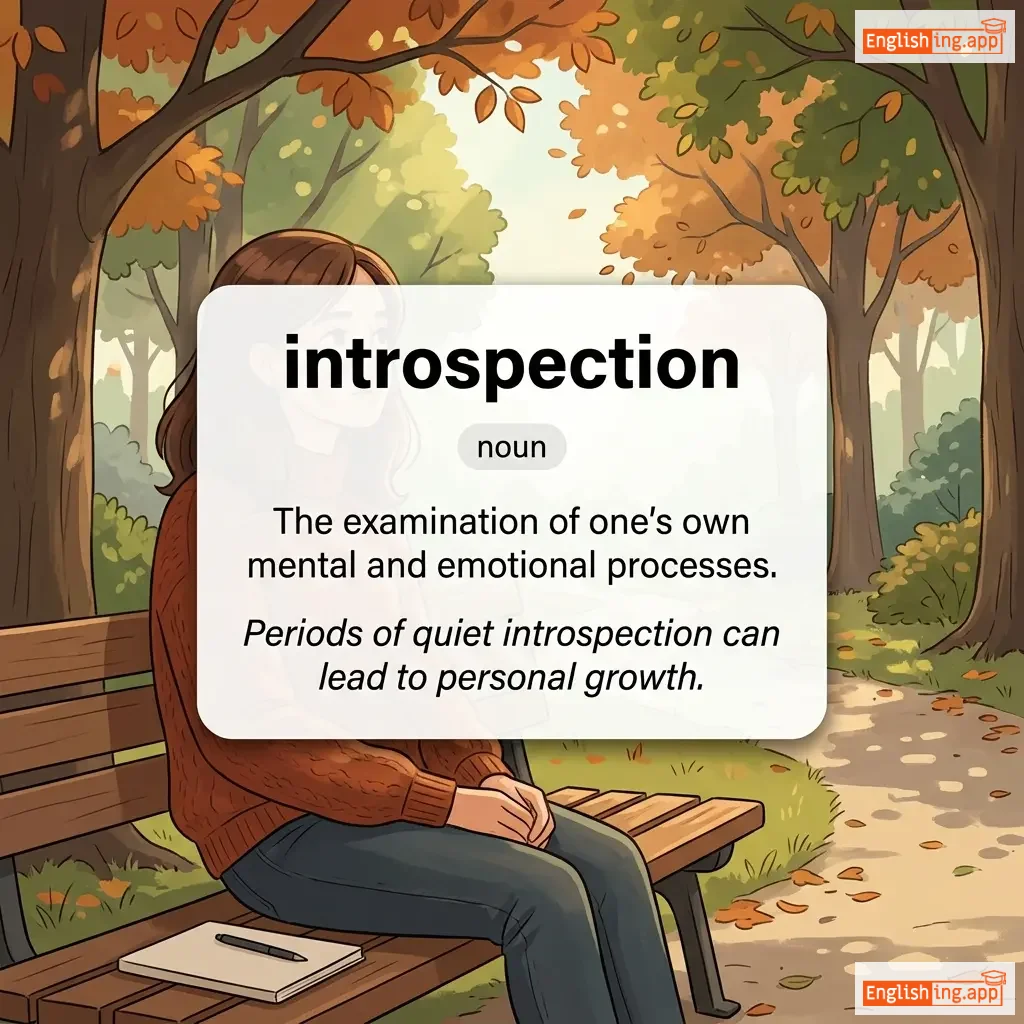
introspection definition card — visual illustration of the meaning
noun
/ˌɪn.trəˈspek.ʃən/
introspection (introspection)

The examination of one's own mental and emotional processes.

"Periods of quiet introspection can lead to personal growth."

"Les périodes de calme introspectif peuvent conduire à la croissance personnelle." (Les périodes de calme introspectif peuvent conduire à la croissance personnelle.)
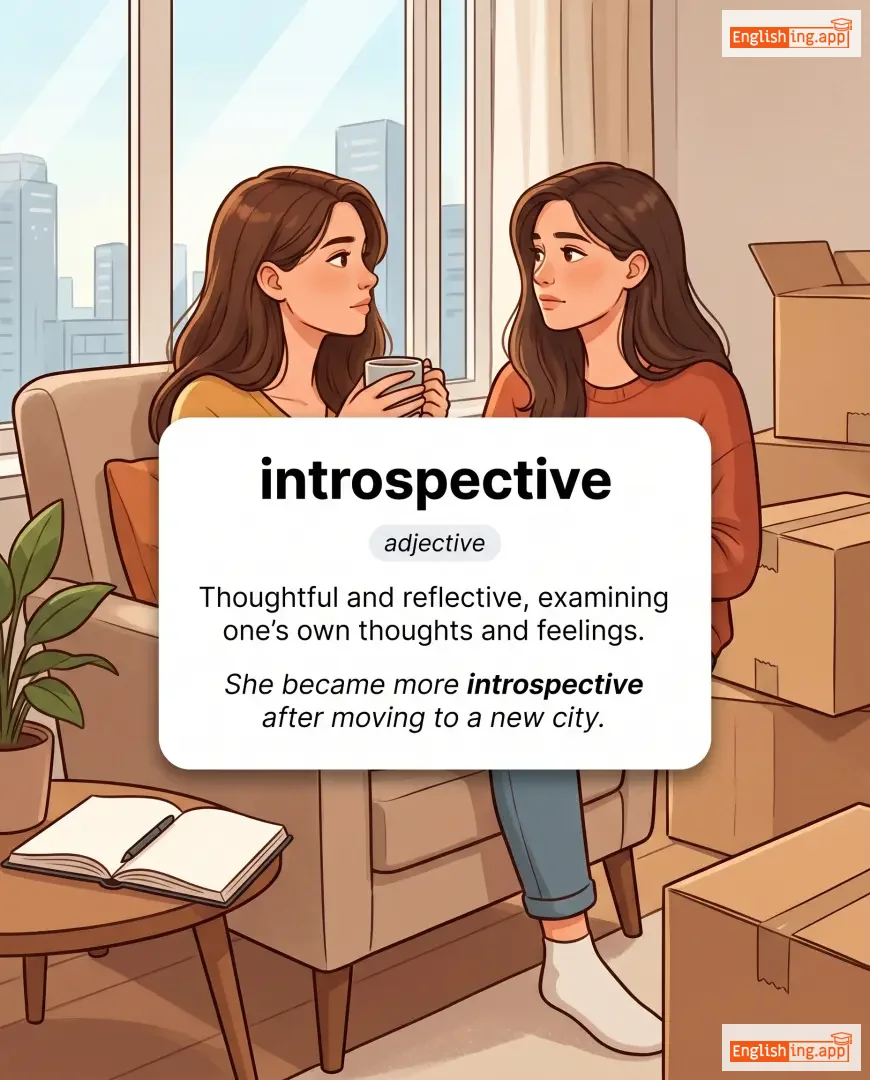
introspective definition card — visual illustration of the meaning
adjective
/ˌɪn.trəˈspɛk.tɪv/
introspectif (introspectif)

Thoughtful and reflective, examining one's own thoughts and feelings.

"She became more introspective after moving to a new city."

"Elle est devenue plus introspective après avoir déménagé dans une nouvelle ville." (Elle est devenue plus introspective après avoir déménagé dans une nouvelle ville.)
noun
/ˌɪn.trəˈvɜːr.ʒən/
introversion (introversion)

The tendency to be inward-looking and shy, preferring solitary activities.

"Her introversion made it difficult for her to enjoy large parties."

"Son introversion rendait difficile pour elle de profiter des grandes fêtes." (Son introversion rendait difficile pour elle de profiter des grandes fêtes.)
noun
/ˈɪn.trə.vɜːrt/
introverti (introverti)

A person who tends to be shy and prefers spending time alone rather than in groups.

"As an introvert, he preferred reading over attending parties."

"En tant qu'introverti, il préférait lire plutôt qu'assister à des fêtes." (En tant qu'introverti, il préférait lire plutôt qu'assister à des fêtes.)
verb
/ɪnˈtruːd/
interrompre (interrompre)

To enter a place or situation where one is not wanted or not invited.

"He felt embarrassed to intrude on their private conversation."

"Il s'est senti embarrassé d'interrompre leur conversation privée." (Il s'est senti embarrassé d'interrompre leur conversation privée.)
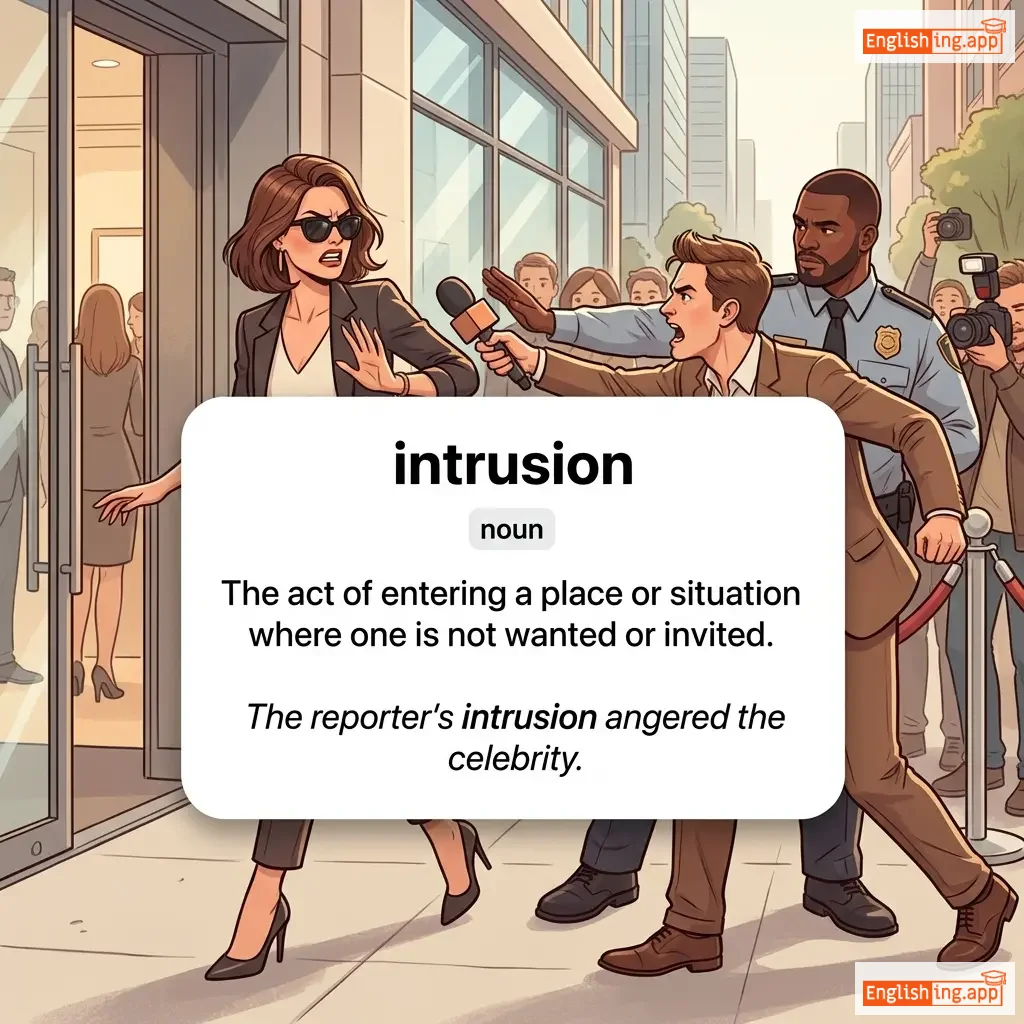
intrusion definition card — visual illustration of the meaning
noun
/ɪnˈtruː.ʒən/
intrusion non souhaitée (intrusion non souhaitee)

The act of entering a place or situation where one is not wanted or invited.

"The reporter's intrusion angered the celebrity."

"L'intrusion du journaliste a mis en colère la célébrité." (L'intrusion du journaliste a mis en colère la célébrité.)
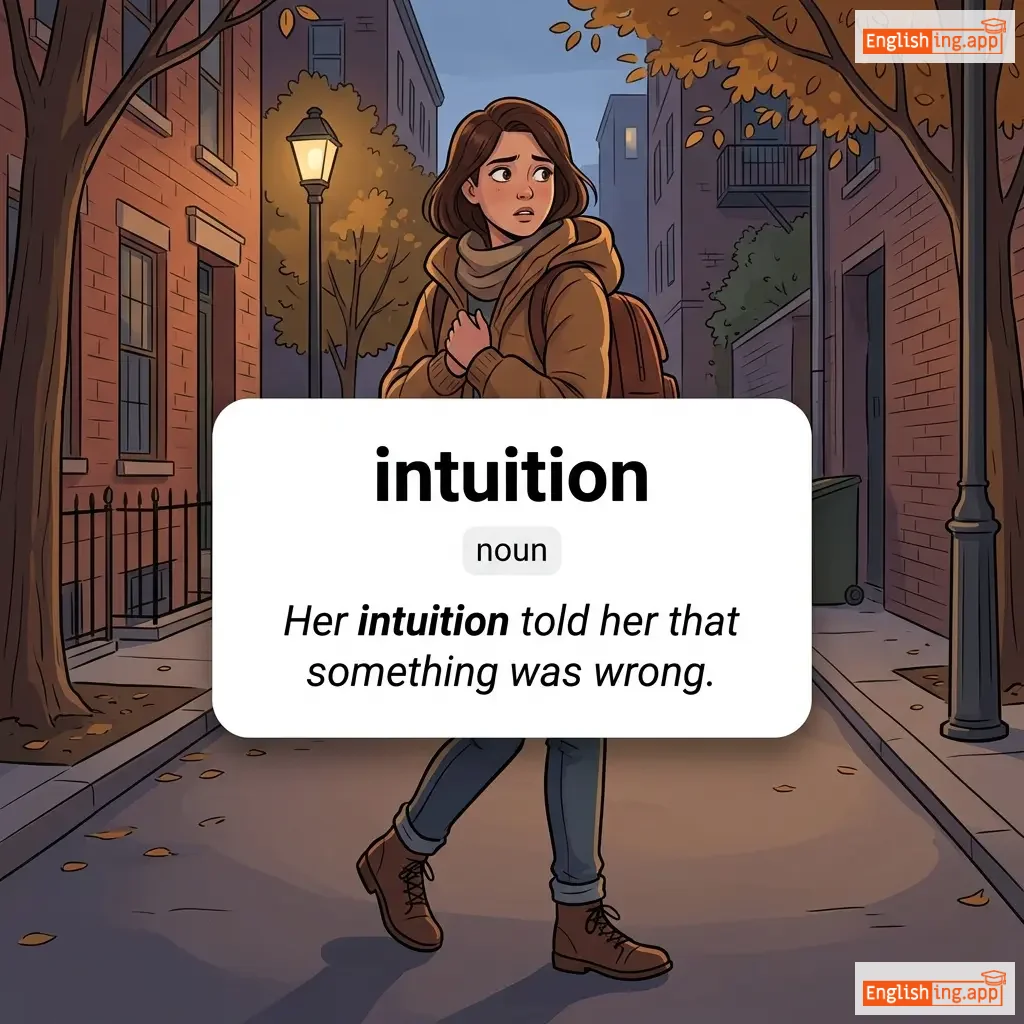
intuition definition card — visual illustration of the meaning
noun
/ˌɪn.tjuˈɪʃ.ən/
intuition (intuition)

The ability to understand or know something immediately, without conscious reasoning.

"Her intuition told her that something was wrong."

"Son intuition lui disait que quelque chose n'allait pas." (Son intuition lui disait que quelque chose n'allait pas.)
adjective
/ɪnˈtjuː.ɪ.tɪv/
intuitif (intuitif)

Based on instinctive understanding rather than reasoning.

"The software has an intuitive design that makes it easy to use."

"Le logiciel a un design intuitif qui le rend facile à utiliser." (Le logiciel a un design intuitif qui le rend facile à utiliser.)
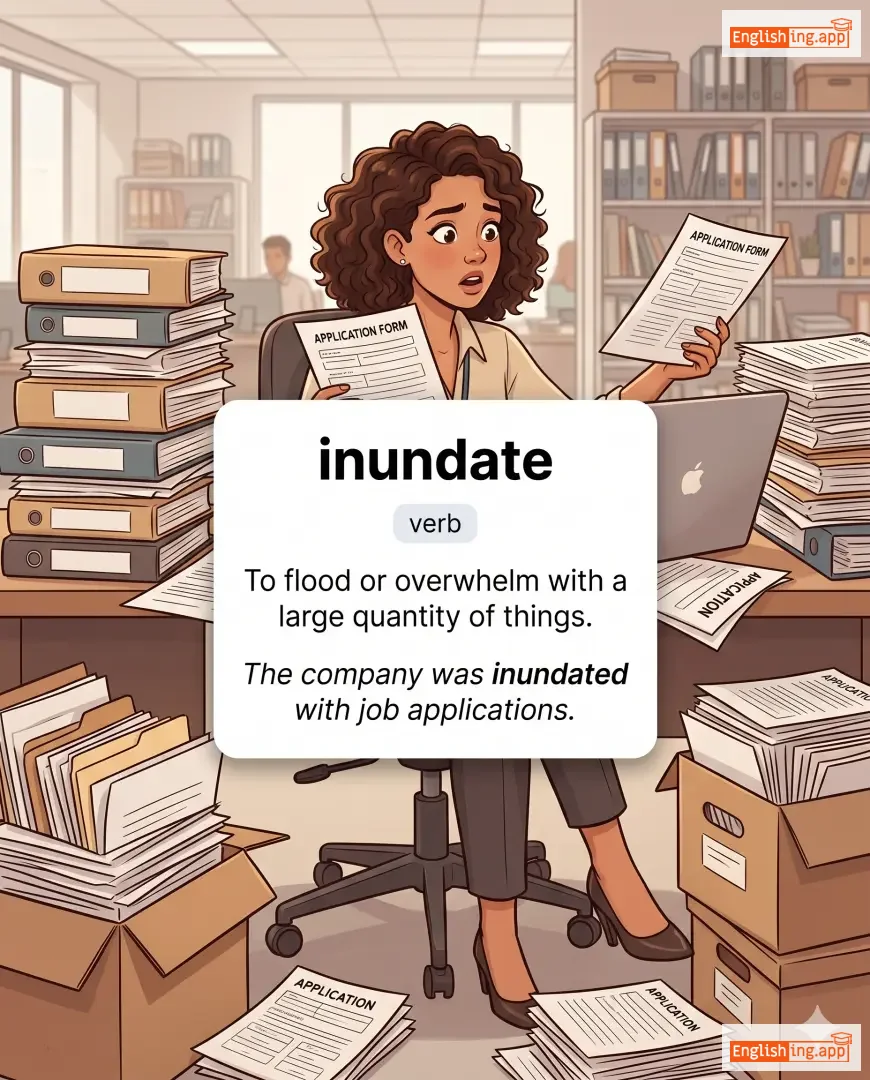
inundate definition card — visual illustration of the meaning
verb
/ˈɪn.ʌn.deɪt/
inonder / submerger (inonder / submerger)

To flood or overwhelm with a large quantity of things.

"The company was inundated with job applications."

"L'entreprise a été inondée de candidatures." (L'entreprise a été inondée de candidatures.)
noun
/ˌɪn.ʌnˈdeɪ.ʃən/
inondation (inondation)

The act of flooding or overwhelming with water or things.

"The town suffered from a severe inundation after the heavy rains."

"La ville a souffert d'une grave inondation après les fortes pluies." (La ville a souffert d'une grave inondation après les fortes pluies.)
verb
/ɪˈnjʊər/
habituer (habituer)

To become accustomed to something, especially something unpleasant.

"Soldiers quickly became inured to the harsh conditions."

"Les soldats se sont rapidement habitués aux conditions difficiles." (Les soldats se sont rapidement habitués aux conditions difficiles.)
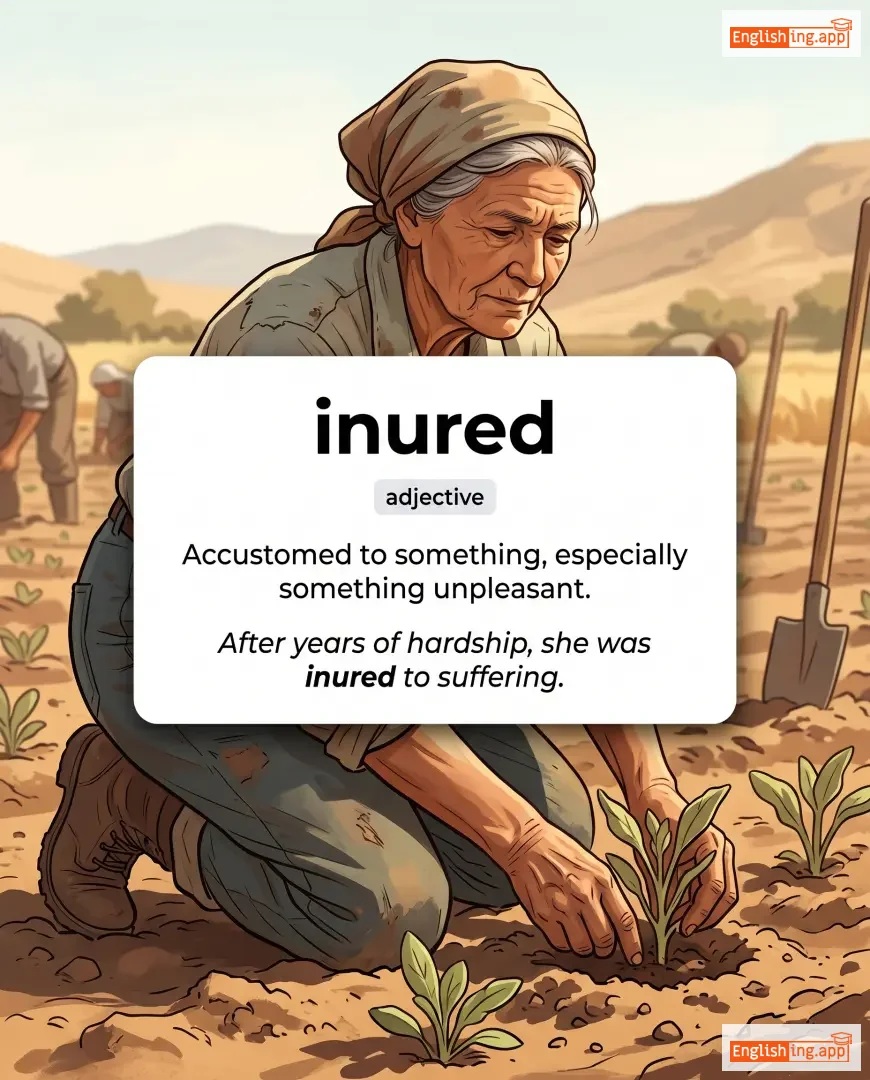
inured definition card — visual illustration of the meaning
adjective
/ɪˈnjʊərd/
habitué (habitué)

Accustomed to something, especially something unpleasant.

"After years of hardship, she was inured to suffering."

"Après des années de souffrance, elle était habituée à la douleur." (Après des années de souffrance, elle était habituée à la douleur.)
verb
/ɪnˈveɪd/
envahir (ɑ̃vɑir)

to enter a place or country forcefully, especially as an enemy

"The army invaded the neighboring country."

"L'armée a envahi le pays voisin." (L'armee a envahi le pays voisin.)
adjective, noun
/ˈɪnvəlɪd/ (adjective), /ɪnˈvælɪd/ (noun)
invalide (invalide)

Not valid; having no force or effect. Also refers to a person too weak or ill to care for themselves.

"The court declared the contract invalid."

"Le tribunal a déclaré le contrat invalide." (Le tribunal a declare le contrat invalide.)
verb
/ɪnˈvælɪdeɪt/
invalider (invalider)

To make something not valid or legally acceptable.

"The new evidence may invalidate the previous ruling."

"La nouvelle preuve pourrait invalider la décision précédente." (La nouvelle preuve pourrait invalider la décision précédente.)
noun
/ˌɪnvəˈlɪdɪti/
invalidité (invalidite)

the state of being invalid, legally void, or lacking force or validity

"The court ruled that the contract suffered from invalidity."

"Le tribunal a jugé que le contrat souffrait d’invalidité." (le tribunal a juge que le contrat souffrait dinvalidite)
adjective
/ɪnˈvæljʊəbl/
inestimable (inestimable)

Extremely useful or indispensable.

"Her advice proved invaluable to my success."

"Son conseil s'est avéré inestimable pour mon succès." (Son conseil s'est avéré inestimable pour mon succes.)
adjective
/ɪnˈvɛəriəbl/
invariable (invariable)

Not changing; constant and unchanging.

"His invariable kindness won him many friends."

"Sa gentillesse invariable lui a valu de nombreux amis." (Sa gentillesse invariable lui a valu de nombreux amis.)
noun
/ɪnˈveɪʒən/
invasion (invasion)

An instance of invading a country, region, or personal space with armed force or unwelcome presence.

"The army prepared for the possibility of an invasion."

"L'armée s'est préparée à la possibilité d'une invasion." (L'armee s'est preparee a la possibilite d'une invasion.)
adjective
/ɪnˈveɪsɪv/
invasif (invasif)

Tending to spread harmfully, intruding aggressively, or encroaching beyond proper boundaries.

"The doctor explained that the procedure was minimally invasive."

"Le médecin a expliqué que la procédure était peu invasive." (Le medecin a expliqué que la procédure était peu invasive.)
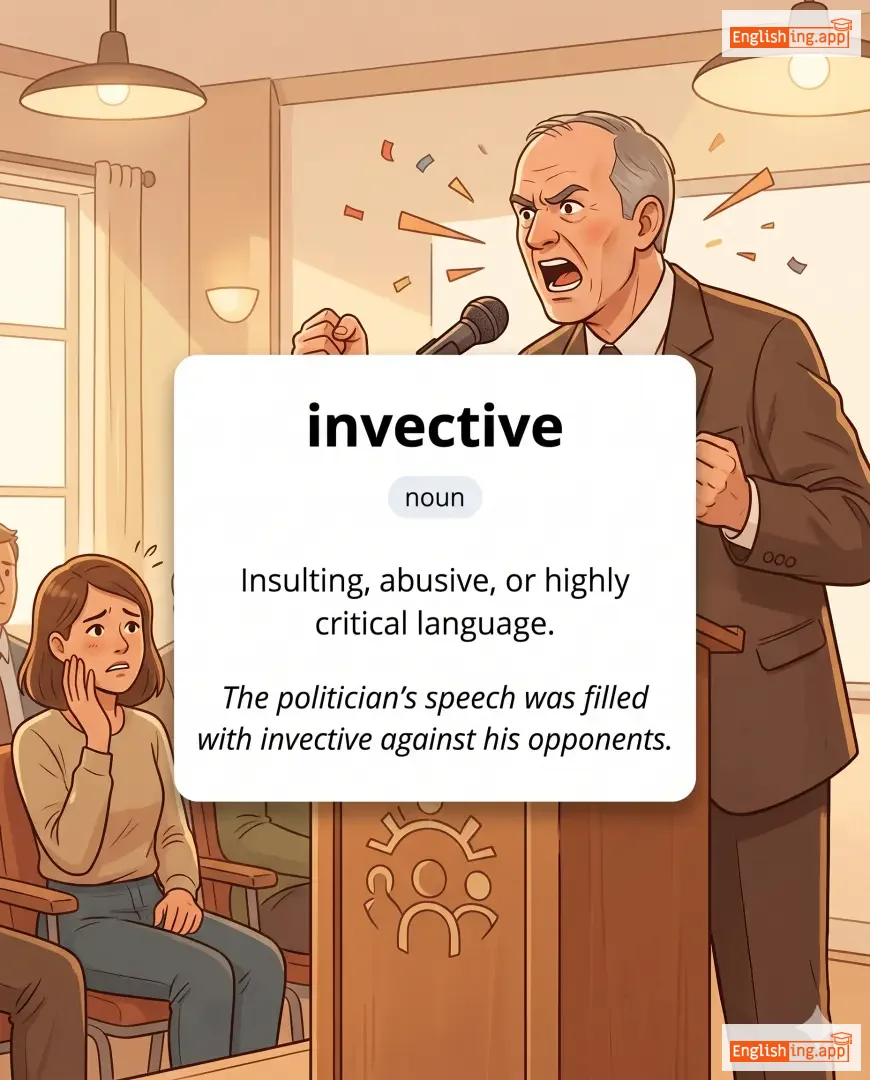
invective definition card — visual illustration of the meaning
noun
/ɪnˈvɛktɪv/
langage injurieux (langage injurieux)

Insulting, abusive, or highly critical language.

"The politician’s speech was filled with invective against his opponents."

"Le discours du politicien était rempli d'invectives contre ses adversaires." (Le discours du politicien était rempli d'invectives contre ses adversaires.)
verb
/ɪnˈveɪ/
critiquer sévèrement (critiquer severement)

To speak or write about something with great hostility and criticism.

"He inveighed against the corruption in government."

"Il a critiqué sévèrement la corruption dans le gouvernement." (Il a critiqué sévèrement la corruption dans le gouvernement.)
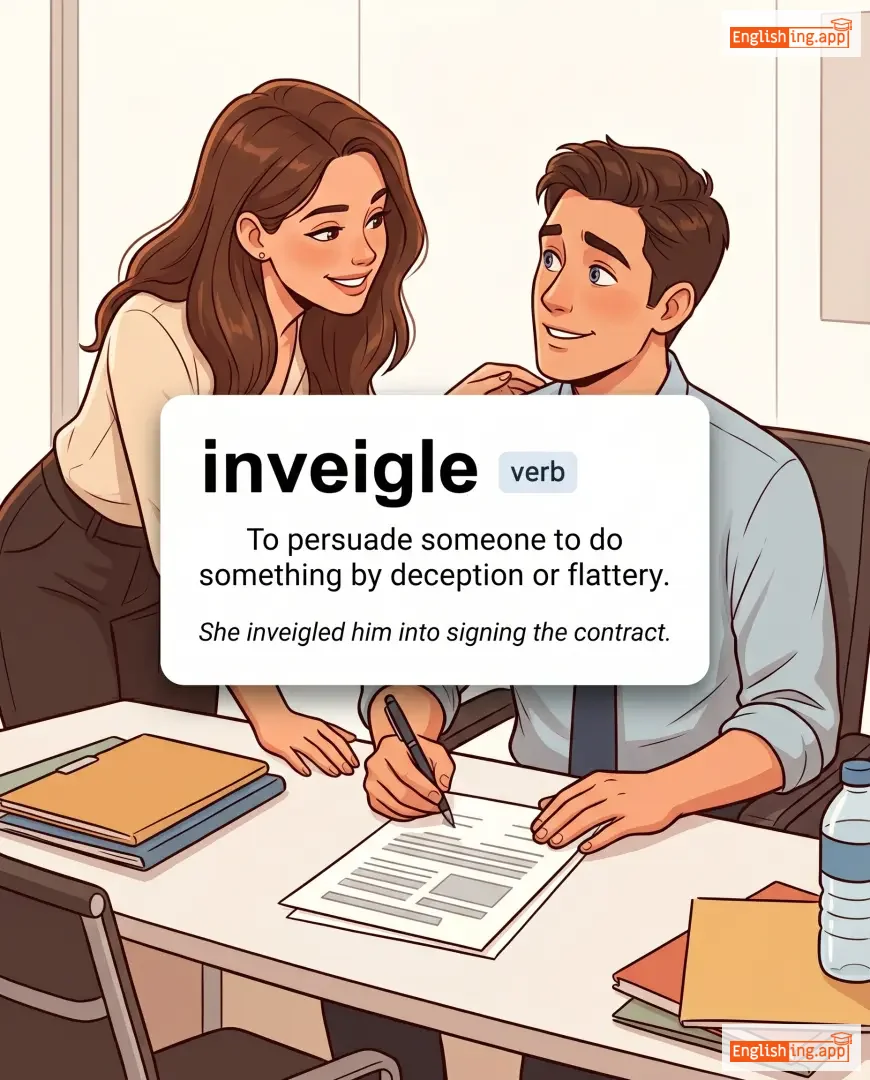
inveigle definition card — visual illustration of the meaning
verb
/ɪnˈveɪɡəl/
manipuler (manipuler)

To persuade someone to do something by deception or flattery.

"She inveigled him into signing the contract."

"Elle l'a dupé pour qu'il signe le contrat." (Elle l'a dupé pour qu'il signe le contrat.)
verb
/ɪnˈvɛnt/
inventer (inventer)

to create or design something that has not existed before

"Thomas Edison invented the electric bulb."

"Thomas Edison a inventé l'ampoule électrique." (Thomas Edison a invente l'ampoule electrique.)
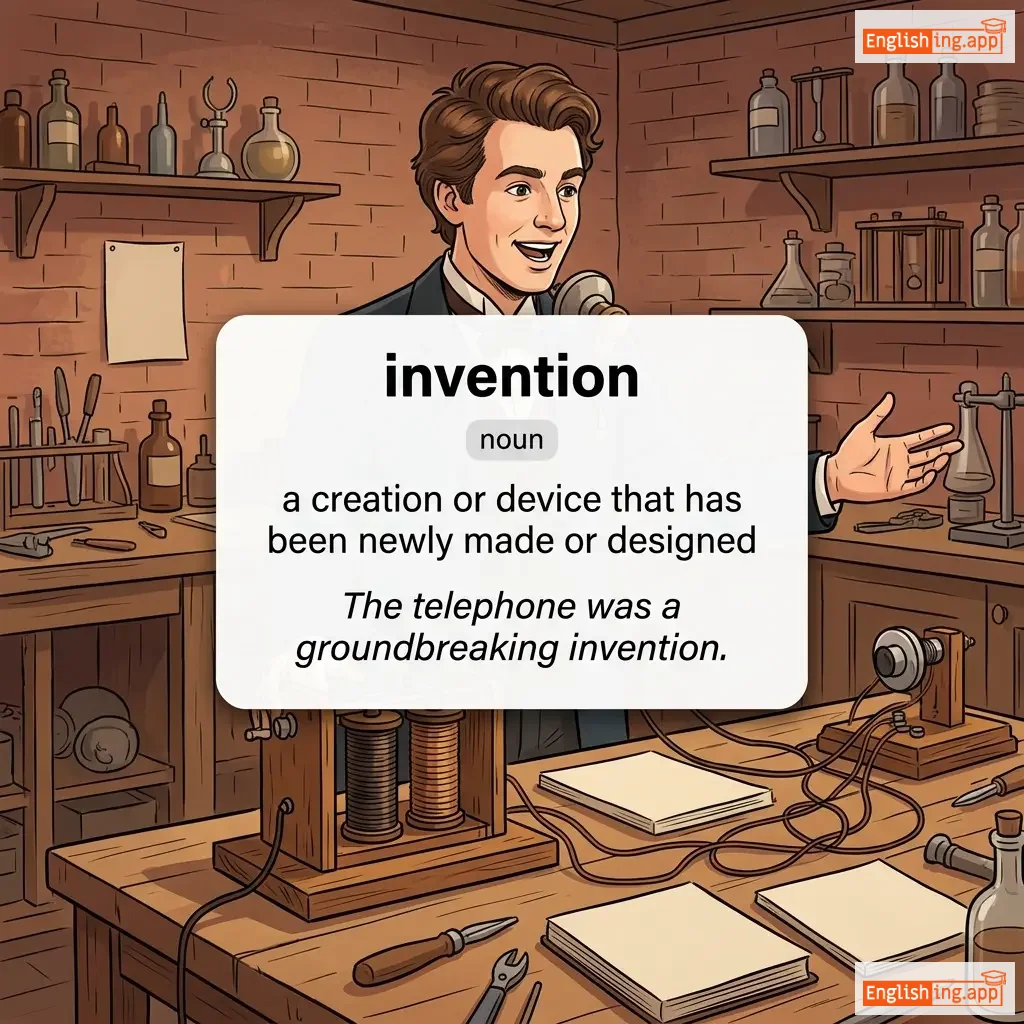
invention definition card — visual illustration of the meaning
noun
/ɪnˈvɛnʃən/
invention (invention)

a creation or device that has been newly made or designed

"The telephone was a groundbreaking invention."

"Le téléphone était une invention révolutionnaire." (Le telephone etait une invention revolutionnaire.)
adjective
/ɪnˈvɛntɪv/
inventif (inventif)

Having the ability to create or design new things or to think originally.

"The inventor was known for his inventive solutions to everyday problems."

"L'inventeur était connu pour ses solutions inventives aux problèmes quotidiens." (L'inventeur était connu pour ses solutions inventives aux problèmes quotidiens.)
noun
/ɪnˈventər/
inventeur (inventeur)

a person who creates or designs something new, especially a device, method, or process

"The inventor patented her new medical device."

"L’inventeur a breveté son nouveau dispositif médical." (L inventeur a brevete son nouveau dispositif medical)
noun
/ˈɪnvənˌtɔːri/
inventaire (inventaire)

A complete list of items, such as goods in stock or property.

"The shopkeeper checked the inventory before opening the store."

"Le commerçant a vérifié l'inventaire avant d'ouvrir le magasin." (Le commerçant a vérifié l'inventaire avant d'ouvrir le magasin.)