Vocabulaires

Découvrez, apprenez et maîtrisez le vocabulaire anglais

adjective
/ˌɪnhɒˈspɪtəbl/
inhospitalier (inhospitalier)

Harsh and difficult to live in; unfriendly or unwelcoming to guests.

"The desert is an inhospitable environment for most plants."

"Le désert est un environnement inhospitalier pour la plupart des plantes." (Le désert est un environnement inhospitalier pour la plupart des plantes.)
adjective
/ɪnˈhjuːmən/
inhumain (inhumain)

lacking human qualities of compassion and mercy; cruel or barbaric

"The prisoners were kept in inhuman conditions."

"Les prisonniers ont été maintenus dans des conditions inhumaines." (Les prisonniers ont été maintenus dans des conditions inhumaines.)
verb
/ɪnˈhjuːm/
inhumer (inhumer)

to bury a dead body in the ground

"They inhumed the warrior with full honors."

"Ils ont inhumé le guerrier avec tous les honneurs." (Ils ont inhumé le guerrier avec tous les honneurs.)
adjective
/ɪˈnɪmɪkəl/
hostile / défavorable (hostile / défavorable)

tending to obstruct or harm; unfriendly or hostile

"The policy was inimical to the country's economic growth."

"La politique était défavorable à la croissance économique du pays." (La politique était défavorable à la croissance économique du pays.)
inimitable definition card — visual illustration of the meaning
adjective
/ɪˈnɪmɪtəbəl/
inimitable (inimitable)

so good or unusual as to be impossible to copy; unique

"Her inimitable style made her stand out in the fashion industry."

"Son style inimitable l'a fait se démarquer dans l'industrie de la mode." (Son style inimitable l'a fait se démarquer dans l'industrie de la mode.)
adjective
/ɪˈnɪkwɪtəs/
iniquité (iniquite)

grossly unfair and morally wrong

"Slavery was one of the most iniquitous practices in history."

"L'esclavage était l'une des pratiques les plus iniquitous de l'histoire." (L'esclavage était l'une des pratiques les plus iniquitous de l'histoire.)
noun
/ɪˈnɪkwɪti/
iniquité (iniquite)

Immoral or grossly unfair behavior.

"The dictator's regime was marked by corruption and iniquity."

"Le régime du dictateur était marqué par la corruption et l'iniquité." (Le regime du dictateur etait marque par la corruption et l'iniquite.)
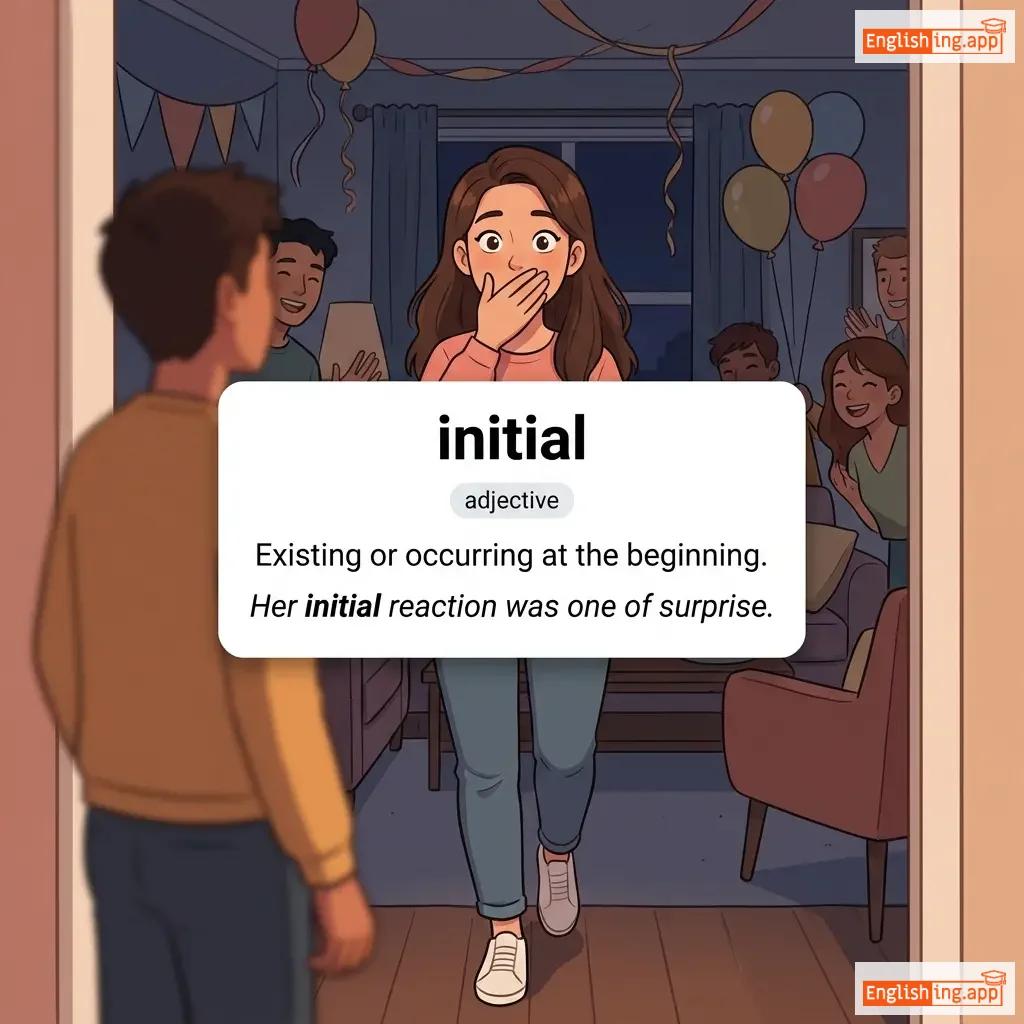
initial definition card — visual illustration of the meaning
adjective
/ɪˈnɪʃəl/
initial (initial)

Existing or occurring at the beginning.

"Her initial reaction was one of surprise."

"Sa réaction initiale fut une surprise." (Sa reaction initiale fut une surprise.)
adverb
/ɪˈnɪʃəli/
initialement (initialement)

At the beginning; at first.

"Initially, he refused the offer but later accepted it."

"Au début, il a refusé l'offre mais l'a acceptée plus tard." (Au debut, il a refuse l'offre mais l'a acceptee plus tard.)
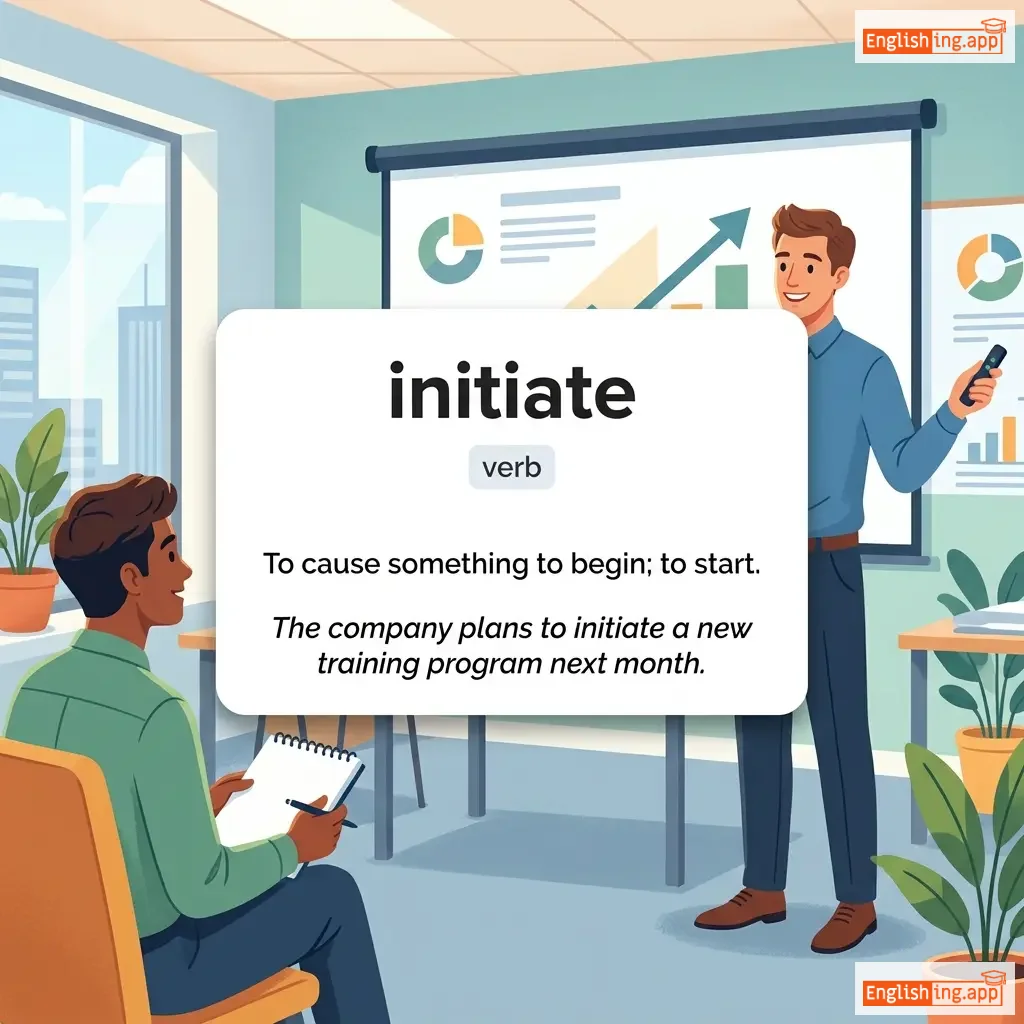
initiate definition card — visual illustration of the meaning
verb
/ɪˈnɪʃieɪt/
initier (initier)

To cause something to begin; to start.

"The company plans to initiate a new training program next month."

"L'entreprise prévoit d'initier un nouveau programme de formation le mois prochain." (L'entreprise prévoit d'initier un nouveau programme de formation le mois prochain.)
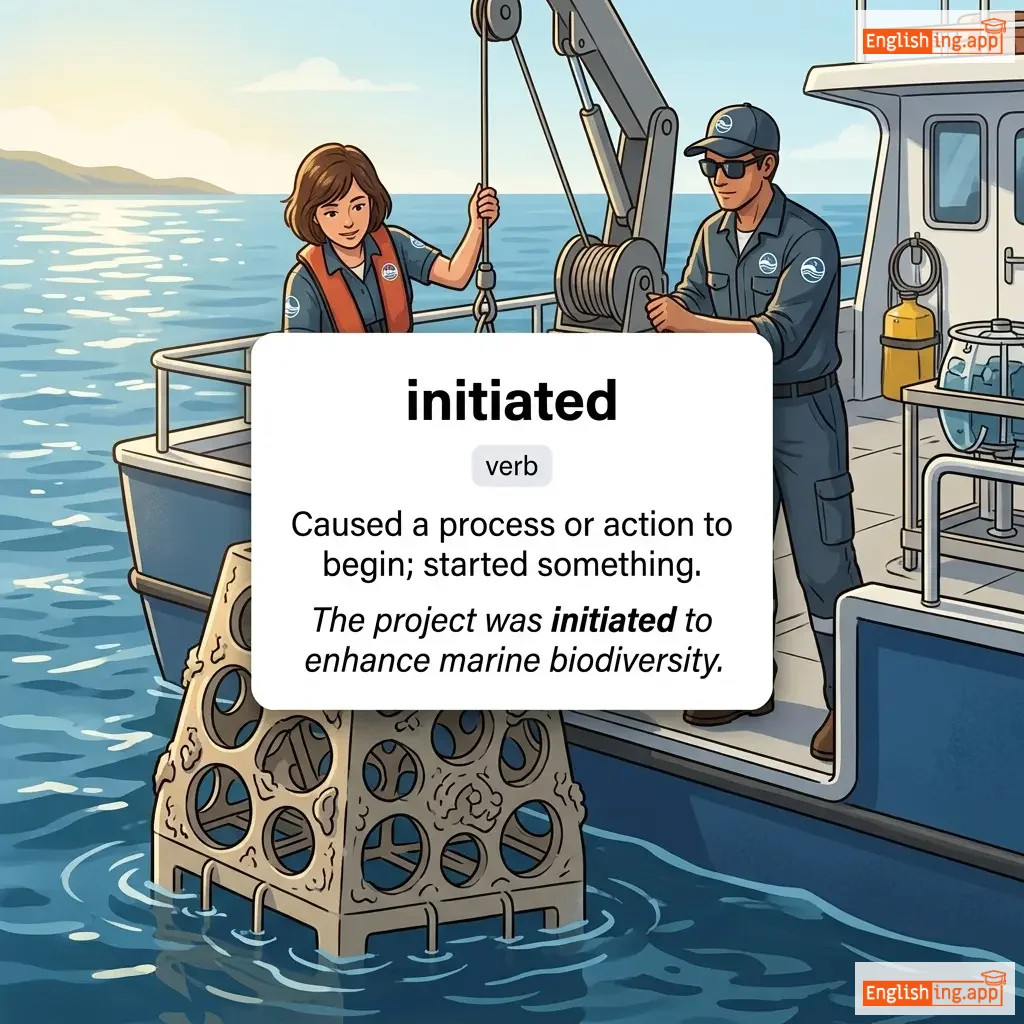
initiated definition card — visual illustration of the meaning
verb
ɪˈnɪʃɪeɪtɪd
initié (initie)

Caused a process or action to begin; started something.

"The project was initiated to enhance marine biodiversity."

"Le projet a été initié pour améliorer la biodiversité marine." (Le projet a été initié pour améliorer la biodiversité marine.)
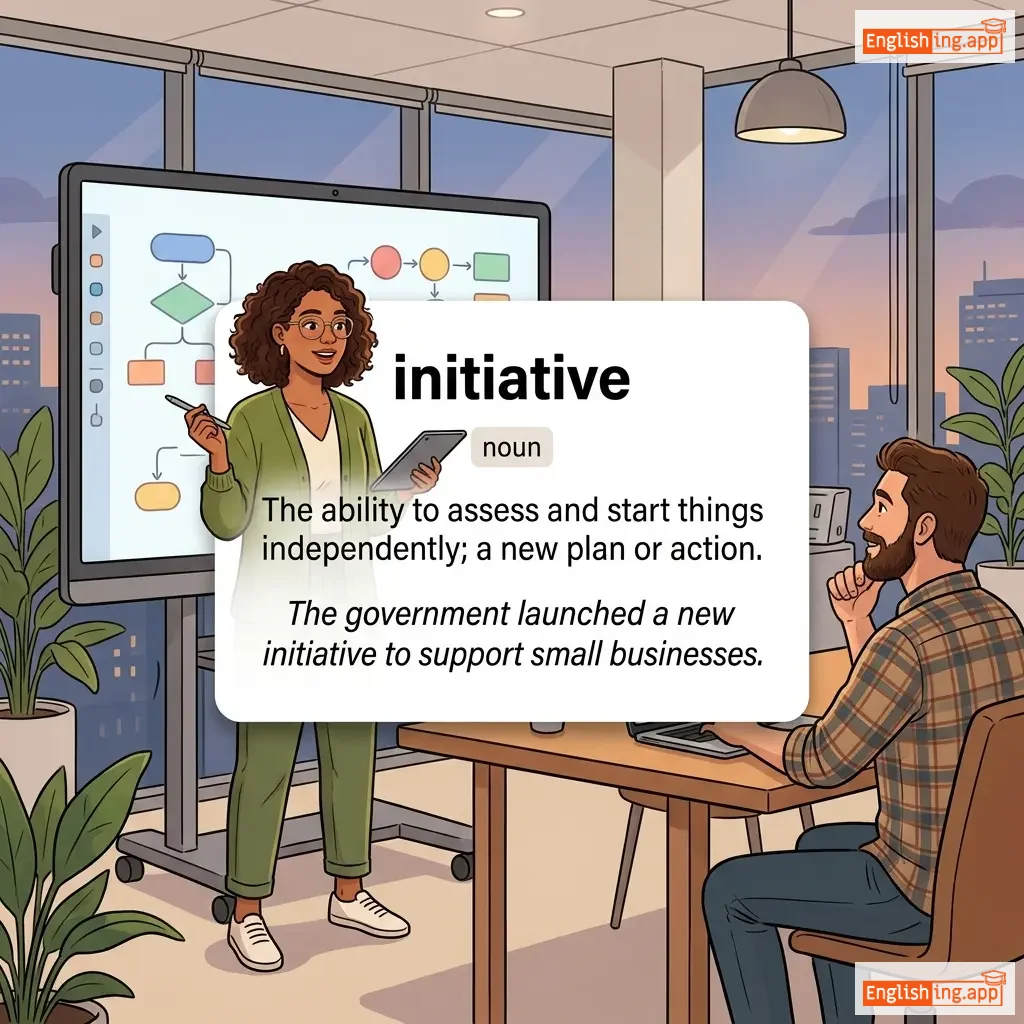
initiative definition card — visual illustration of the meaning
noun
/ɪˈnɪʃətɪv/
initiative (initiative)

The ability to assess and start things independently; a new plan or action.

"The government launched a new initiative to support small businesses."

"Le gouvernement a lancé une nouvelle initiative pour soutenir les petites entreprises." (Le gouvernement a lancé une nouvelle initiative pour soutenir les petites entreprises.)
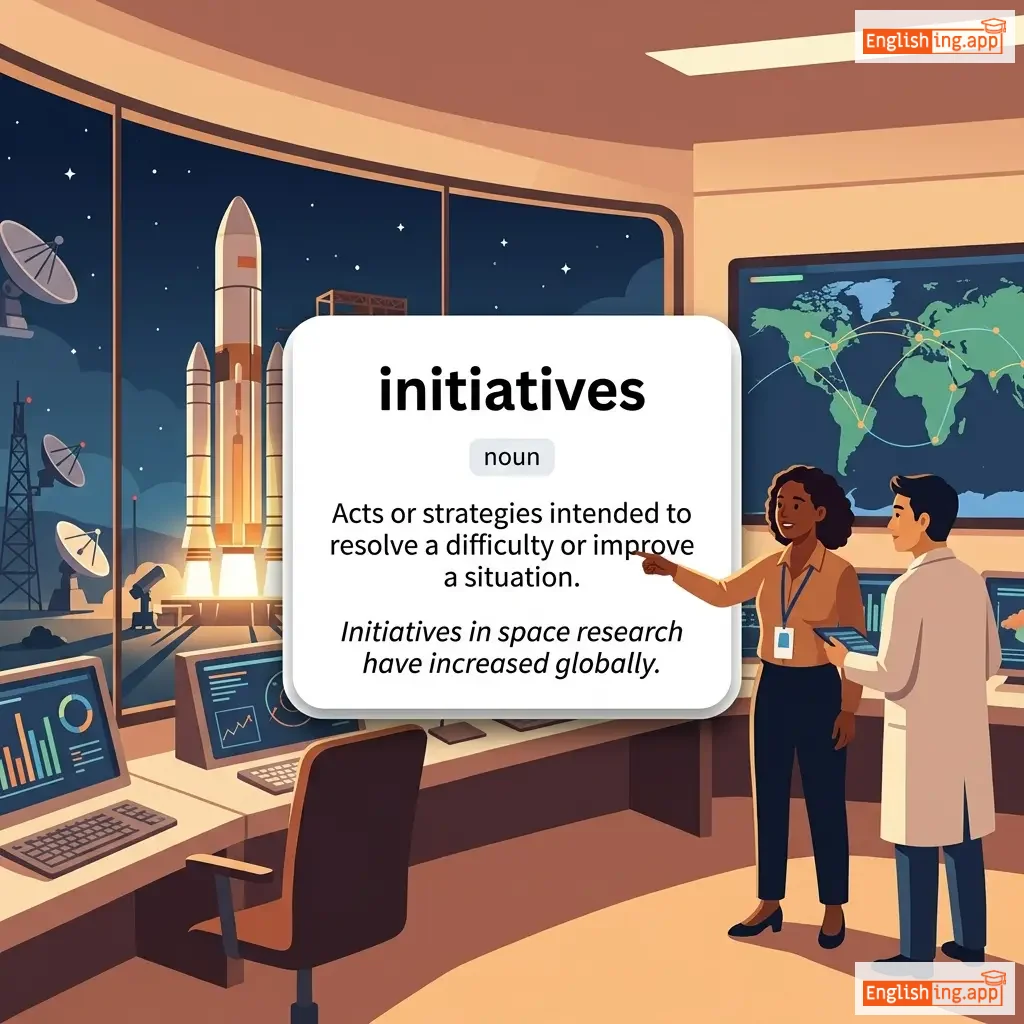
initiatives definition card — visual illustration of the meaning
noun
/ɪˈnɪʃ.ə.tɪvz/
initiatives (initiatives)

Acts or strategies intended to resolve a difficulty or improve a situation.

"Initiatives in space research have increased globally."

"Les initiatives dans la recherche spatiale ont augmenté au niveau mondial." (Les initiatives dans la recherche spatiale ont augmenté au niveau mondial.)
verb
/ɪnˈdʒɛkt/
injecter (injecter)

To introduce a substance, especially a drug, into the body using a needle.

"The nurse will inject the vaccine into the patient's arm."

"L'infirmière injectera le vaccin dans le bras du patient." (L'infirmière injectera le vaccin dans le bras du patient.)
noun
/ɪnˈdʒɛkʃən/
injection (injection)

the act of introducing a substance into the body through a needle

"The nurse gave me an injection to prevent the infection."

"L'infirmière m'a fait une injection pour prévenir l'infection." (Linfirmiere ma fait une injection pour prevenir linfection)
noun
/ɪnˈdʒʌŋkʃən/
injonction (injonsyon)

A judicial order restraining a person from an action or compelling a certain act.

"The court issued an injunction to stop the company from polluting the river."

"Le tribunal a émis une injonction pour empêcher l'entreprise de polluer la rivière." (Le tribunal a émis une injonction pour empêcher l'entreprise de polluer la rivière.)
verb
/ˈɪndʒər/
blesser (blesser)

to cause physical harm or damage to someone or something

"He injured his leg while playing football."

"Il s'est blessé à la jambe en jouant au football." (Il s'est blessé à la jambe en jouant au football.)
adjective
/ɪnˈdʒʊəriəs/
nuisible (nuisible)

Causing or likely to cause harm or damage.

"Smoking is injurious to health."

"Fumer est nuisible à la santé." (Fumer est nuisible à la santé.)
noun
/ˈɪndʒəri/
blessure (blessure)

Harm or damage to a person’s body caused by an accident or attack.

"He suffered a serious injury during the football match."

"Il a subi une grave blessure pendant le match de football." (Il a subi une grave blessure pendant le match de football.)
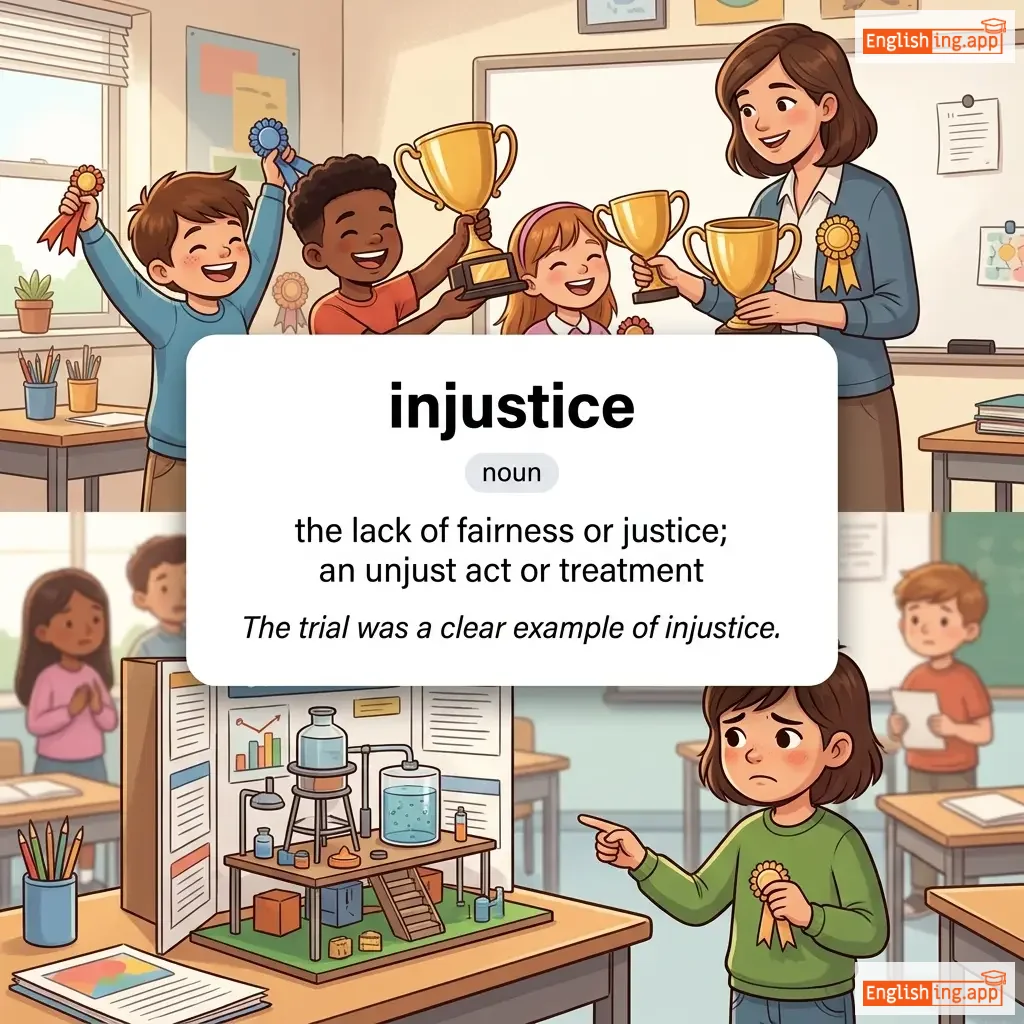
injustice definition card — visual illustration of the meaning
noun
/ɪnˈdʒʌstɪs/
injustice (injustice)

the lack of fairness or justice; an unjust act or treatment

"The trial was a clear example of injustice."

"Le procès était un exemple clair d'injustice." (Le procès était un exemple clair d'injustice.)
🖋️

Ink (ink)

noun
/ɪŋk/
encre (encre)

a colored liquid used for writing, printing, or drawing

"The ink in my pen ran out during the exam."

"L'encre de mon stylo est finie pendant l'examen." (L'encre de mon stylo est finie pendant l'examen.)
noun
/ˈɪŋklɪŋ/
indice (indice)

A slight idea, hint, or suspicion about something.

"She had an inkling that he was planning a surprise."

"Elle avait une vague idée qu'il préparait une surprise." (Elle avait une vague idée qu'il préparait une surprise.)
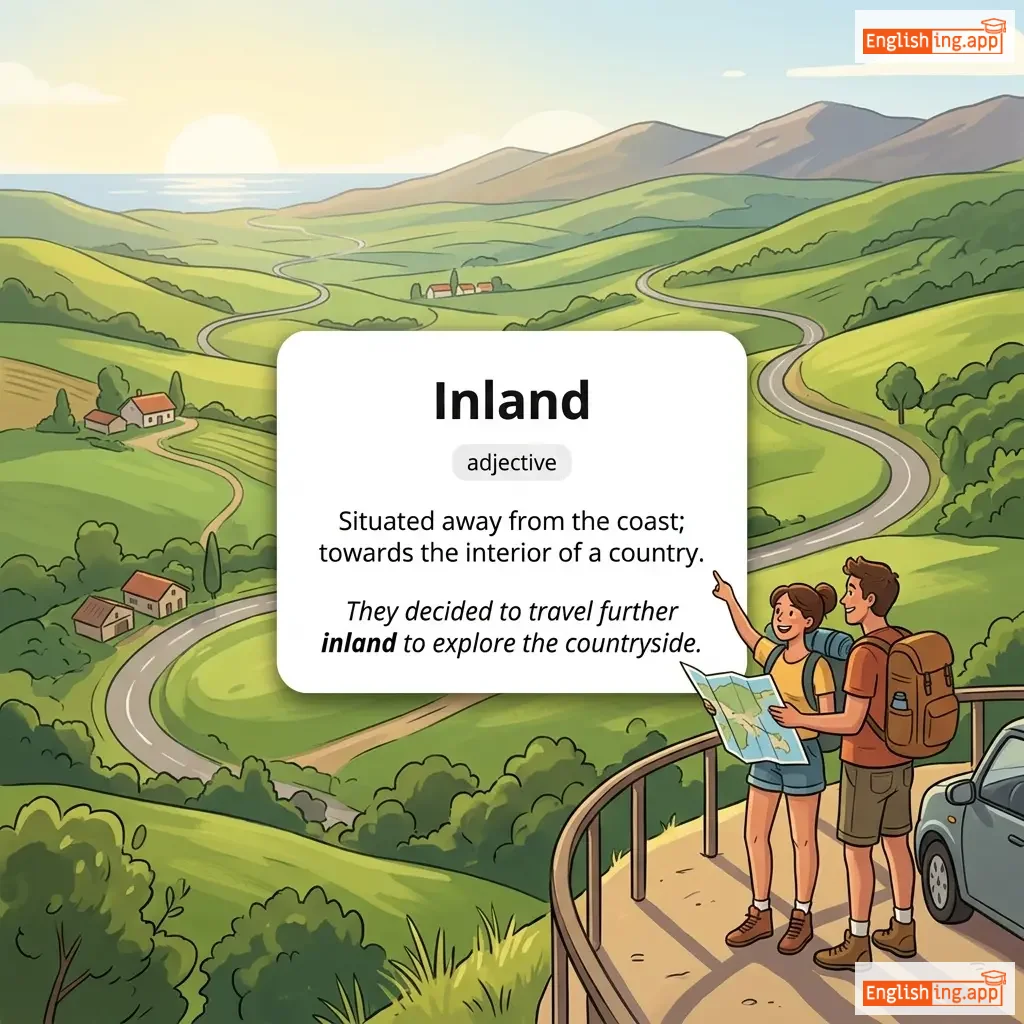
Inland definition card — visual illustration of the meaning
adjective
/ˈɪnlənd/
intérieur (interieur)

Situated away from the coast; towards the interior of a country.

"They decided to travel further inland to explore the countryside."

"Ils ont décidé de voyager plus loin à l'intérieur pour explorer la campagne." (Ils ont decide de voyager plus loin a l'interieur pour explorer la campagne.)
noun
/ˈɪnlɛt/
entrée (entree)

A small arm of the sea, a lake, or a river; an opening or passage for entry.

"The boat entered a narrow inlet along the coast."

"Le bateau est entré dans une entrée étroite le long de la côte." (Le bateau est entre dans une entree etroite le long de la cote.)
noun
/ˈɪnˌmeɪt/
détenu (detenu)

a person confined to an institution such as a prison or hospital

"The prison has over a thousand inmates."

"La prison a plus de mille détenus." (La prison a plus de mille detenus.)
adjective
/ˈɪnmoʊst/
le plus intime (le plus intime)

Situated at the very heart or deepest part; most private or secret.

"She revealed her inmost thoughts to her closest friend."

"Elle a révélé ses pensées les plus intimes à son ami le plus proche." (Elle a révélé ses pensées les plus intimes à son ami le plus proche.)
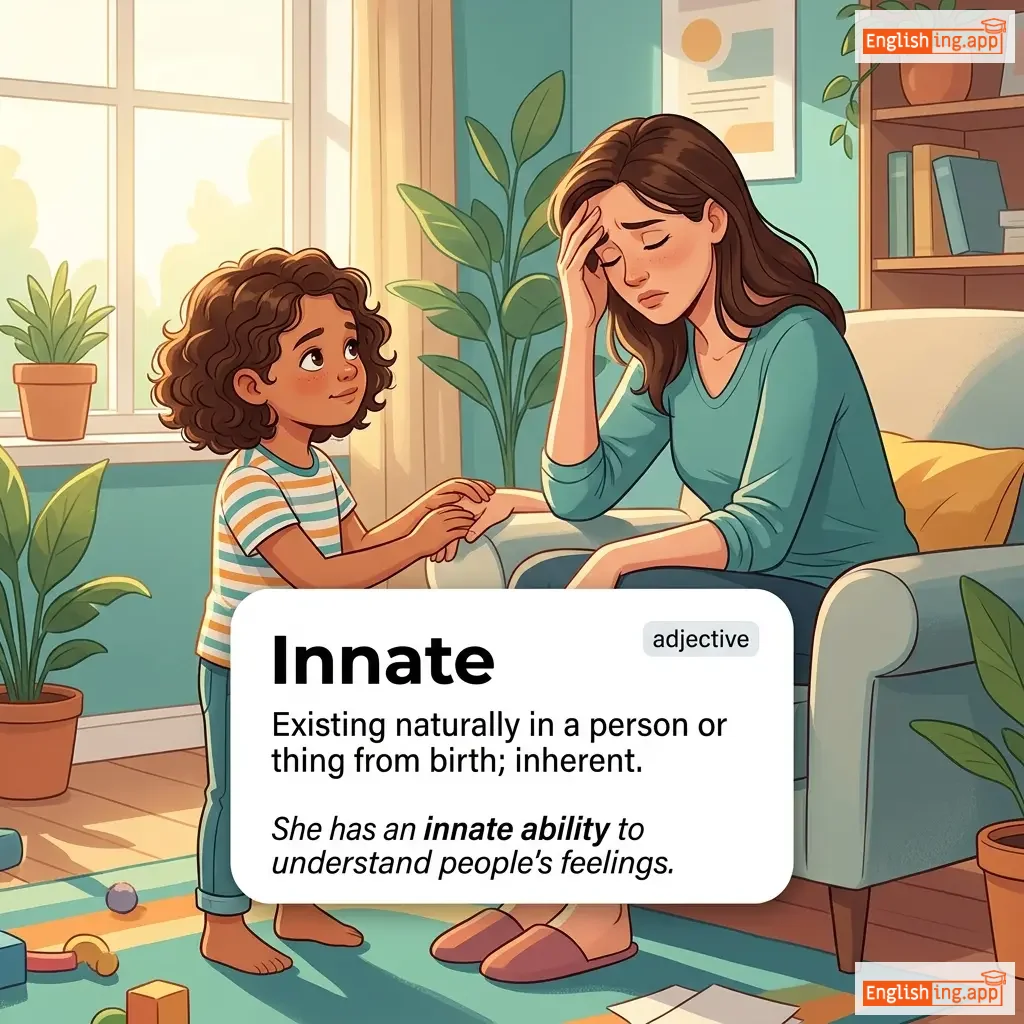
Innate definition card — visual illustration of the meaning
adjective
/ɪˈneɪt/
inné (inne)

Existing naturally in a person or thing from birth; inherent.

"She has an innate ability to understand people's feelings."

"Elle a une capacité innée à comprendre les sentiments des gens." (Elle a une capacité innée à comprendre les sentiments des gens.)
adjective
/ˈɪnər/
intérieur (interieur)

Located inside or closer to the center; relating to one’s thoughts or feelings.

"She shared her inner thoughts with her best friend."

"Elle a partagé ses pensées intérieures avec sa meilleure amie." (Elle a partagé ses pensées intérieures avec sa meilleure amie.)
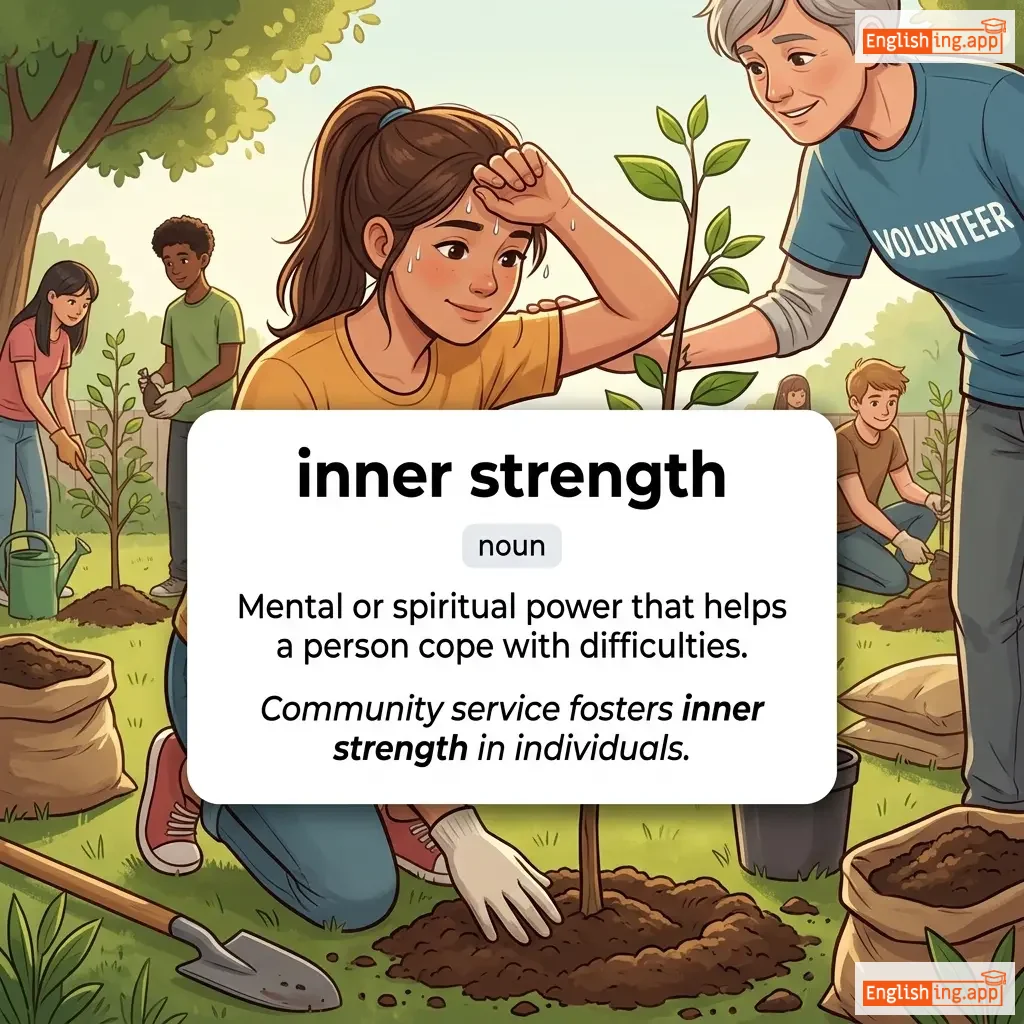
inner strength definition card — visual illustration of the meaning
noun
ˈɪnər strɛŋkθ
force intérieure (force interieure)

Mental or spiritual power that helps a person cope with difficulties.

"Community service fosters inner strength in individuals."

"Le service communautaire favorise la force intérieure chez les individus." (Le service communautaire favorise la force intérieure chez les individus.)
adjective
/ˈɪnərmoʊst/
le plus profond; le plus personnel (le plus profond; le plus personnel)

most private and secret; deepest; most personal

"She shared her innermost feelings with her closest friend."

"Elle a partagé ses sentiments les plus profonds avec son ami le plus proche." (Elle a partage ses sentiments les plus profonds avec son ami le plus proche.)
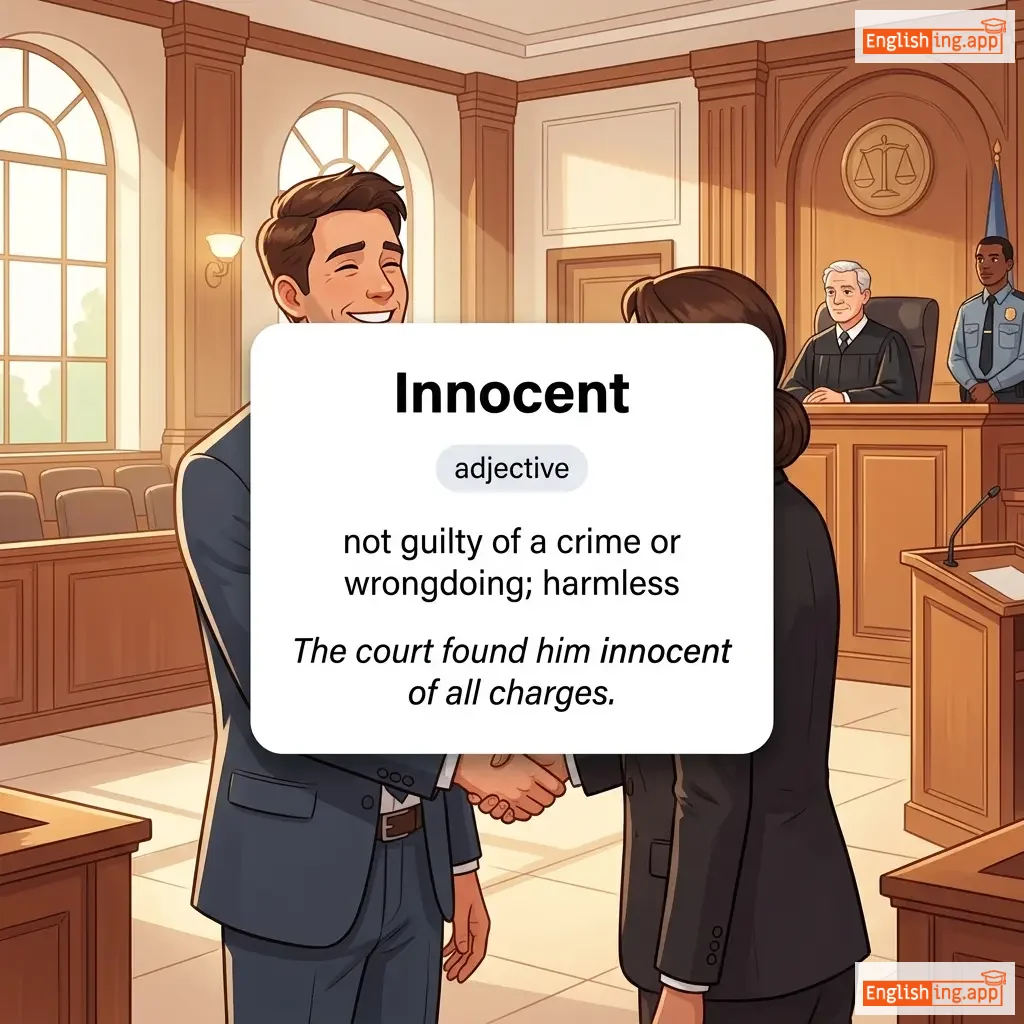
Innocent definition card — visual illustration of the meaning
adjective
/ˈɪnəsənt/
innocent (innocent)

not guilty of a crime or wrongdoing; harmless

"The court found him innocent of all charges."

"Le tribunal l'a trouvé innocent de toutes les charges." (Le tribunal l'a trouvé innocent de toutes les charges.)
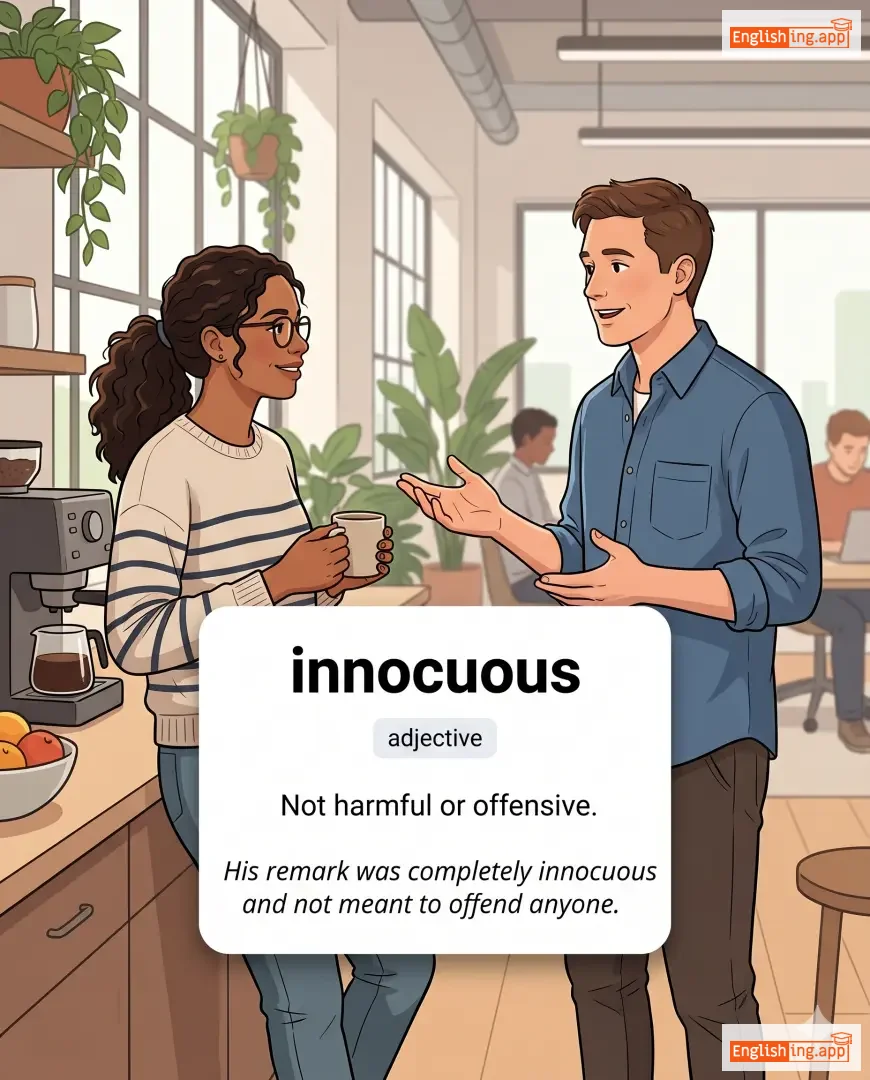
innocuous definition card — visual illustration of the meaning
adjective
/ɪˈnɒkjuəs/
inoffensif (inoffensif)

Not harmful or offensive.

"His remark was completely innocuous and not meant to offend anyone."

"Son commentaire était totalement inoffensif et n'avait pas l'intention d'offenser qui que ce soit." (Son commentaire etait totalement inoffensif et n'avait pas l'intention d'offenser qui que ce soit.)
verb
/ˈɪnəveɪt/
innover (innover)

To introduce new methods, ideas, or products.

"The company must innovate to stay ahead of its competitors."

"L'entreprise doit innover pour rester en avance sur ses concurrents." (L'entreprise doit innover pour rester en avance sur ses concurrents.)
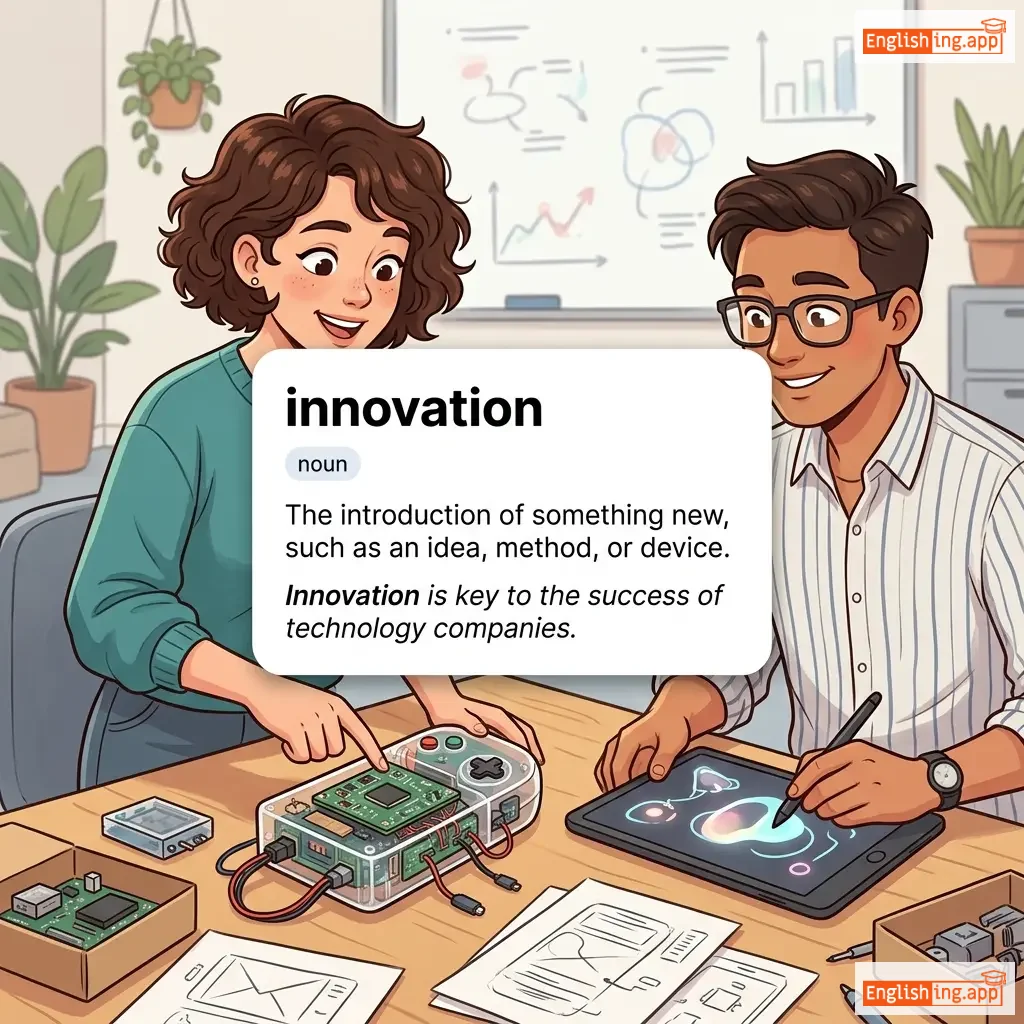
innovation definition card — visual illustration of the meaning
noun
/ˌɪnəˈveɪʃən/
innovation (innovation)

The introduction of something new, such as an idea, method, or device.

"Innovation is key to the success of technology companies."

"L'innovation est la clé du succès des entreprises technologiques." (L'innovation est la cle du succes des entreprises technologiques.)
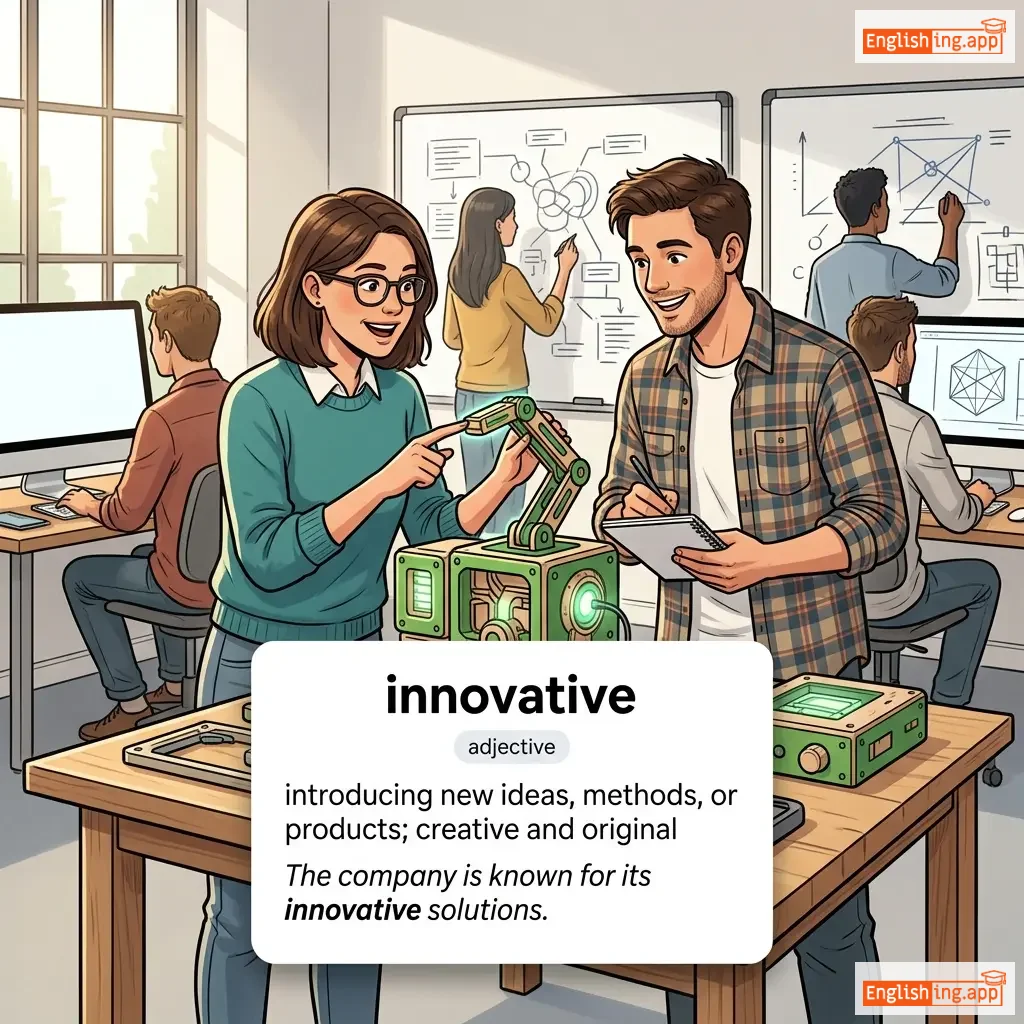
innovative definition card — visual illustration of the meaning
adjective
/ˈɪnəˌveɪtɪv/
innovant (innovant)

introducing new ideas, methods, or products; creative and original

"The company is known for its innovative solutions."

"L'entreprise est connue pour ses solutions innovantes." (L'entreprise est connue pour ses solutions innovantes.)
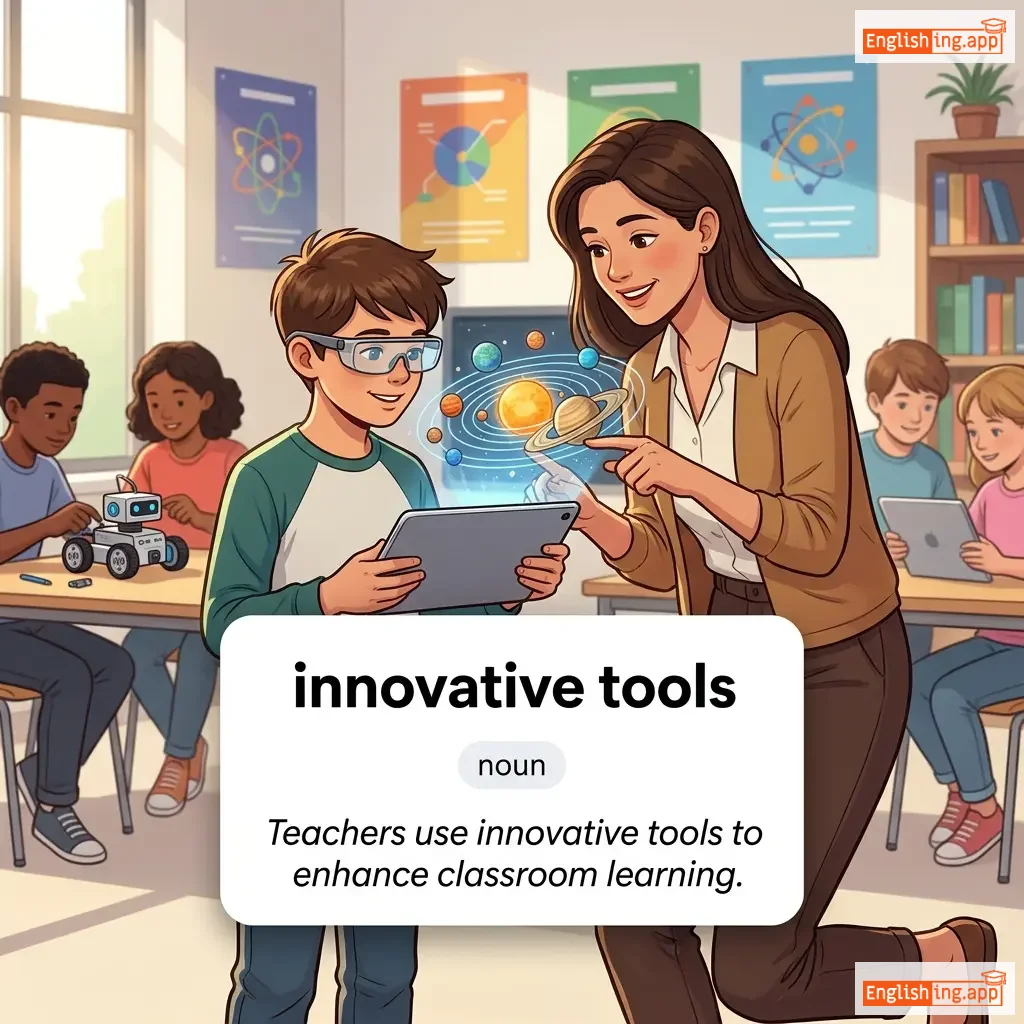
innovative tools definition card — visual illustration of the meaning
noun
ˈɪnəveɪtɪv tuːlz
outils innovants (outils innovants)

Creative devices or advanced technologies that introduce new methods or approaches to accomplish tasks.

"Teachers use innovative tools to enhance classroom learning."

"Les enseignants utilisent des outils innovants pour améliorer l'apprentissage en classe." (Les enseignants utilisent des outils innovants pour améliorer l'apprentissage en classe.)
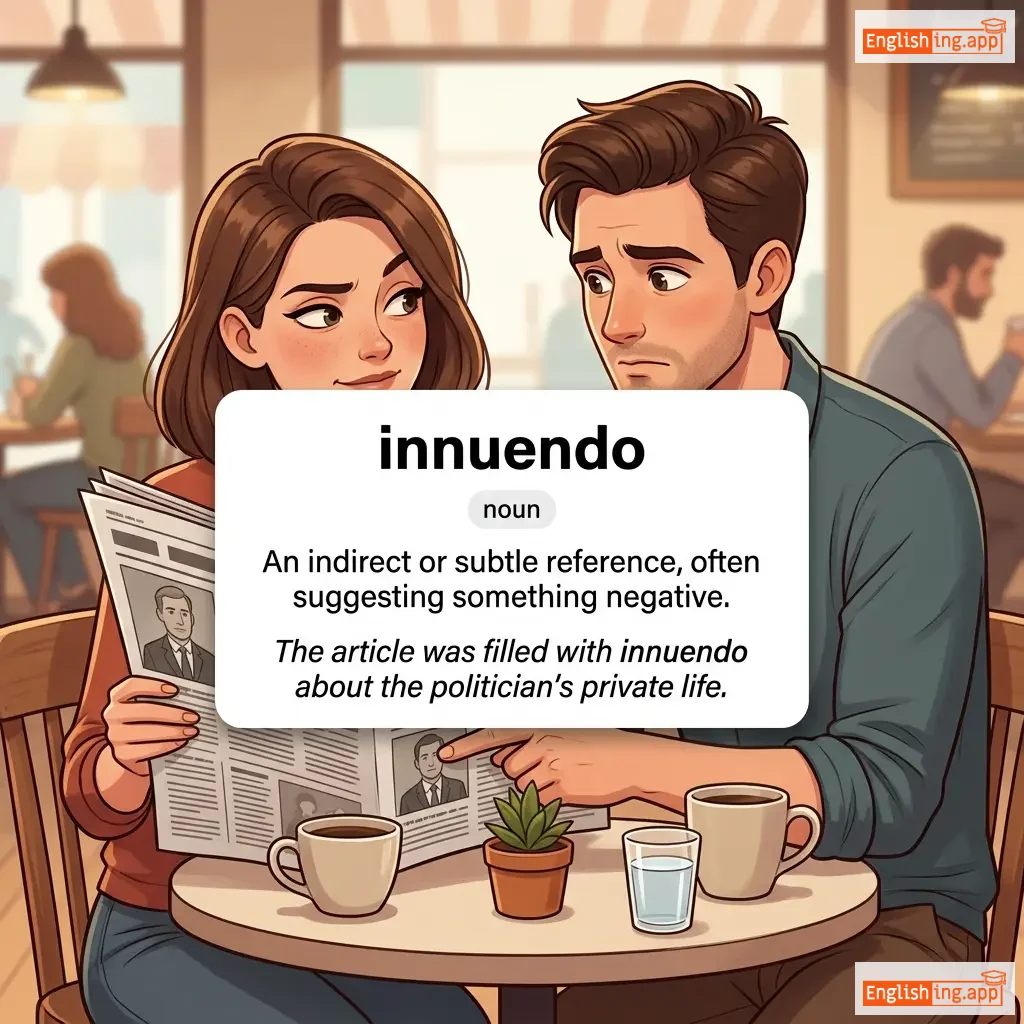
innuendo definition card — visual illustration of the meaning
noun
/ˌɪnjuˈɛndoʊ/
insinuation (insinuation)

An indirect or subtle reference, often suggesting something negative.

"The article was filled with innuendo about the politician's private life."

"L'article était rempli d'insinuations sur la vie privée du politicien." (L'article etait rempli d'insinuations sur la vie privee du politicien.)
adjective
/ɪˈnuːm(ə)rəbəl/
innombrable (innombrable)

Too many to be counted.

"She has innumerable memories of her childhood."

"Elle a d'innombrables souvenirs de son enfance." (Elle a d'innombrables souvenirs de son enfance.)
adjective
/ˌɪnəˈfɛnsɪv/
inoffensif (inoffensif)

Not likely to offend or provoke; harmless.

"His inoffensive remarks kept the conversation friendly."

"Ses remarques inoffensives ont maintenu la conversation amicale." (Ses remarques inoffensives ont maintenu la conversation amicale.)
adjective
/ˌɪnˌɑːpərˈtuːn/
moment inopportun (moment inopportun)

Happening at a bad or inconvenient time.

"His call came at the most inopportune moment."

"Son appel est arrivé au moment le plus inopportun." (Son appel est arrivé au moment le plus inopportun.)
adjective
/ɪˈnɔːrdənət/
excessif (excessif)

Excessive or unusually large in degree.

"She spent an inordinate amount of time on her phone."

"Elle a passé un temps excessif sur son téléphone." (Elle a passé un temps excessif sur son téléphone.)
adjective
/ˌɪnɔːrˈɡænɪk/
inorganique (inorganique)

relating to substances that are not derived from living organisms; lacking organic structure or growth

"Inorganic compounds are commonly studied in chemistry labs."

"Les composés inorganiques sont courants en chimie." (les composes inorganiques sont courants en chimie)
noun
/ˈɪnpʊt/
entrée, information fournie (entree, information fournie)

information, advice, or data that is put into a system, device, or process

"The manager asked for everyone's input on the new project."

"Le manager a demandé l'avis de tout le monde sur le nouveau projet." (Le manager a demandé l'avis de tout le monde sur le nouveau projet.)
noun
/ˈɪnkwest/
enquête (enquete)

A legal or official inquiry, especially into the cause of a death.

"The inquest revealed the cause of the accident."

"L'enquête a révélé la cause de l'accident." (L'enquete a revele la cause de l'accident.)
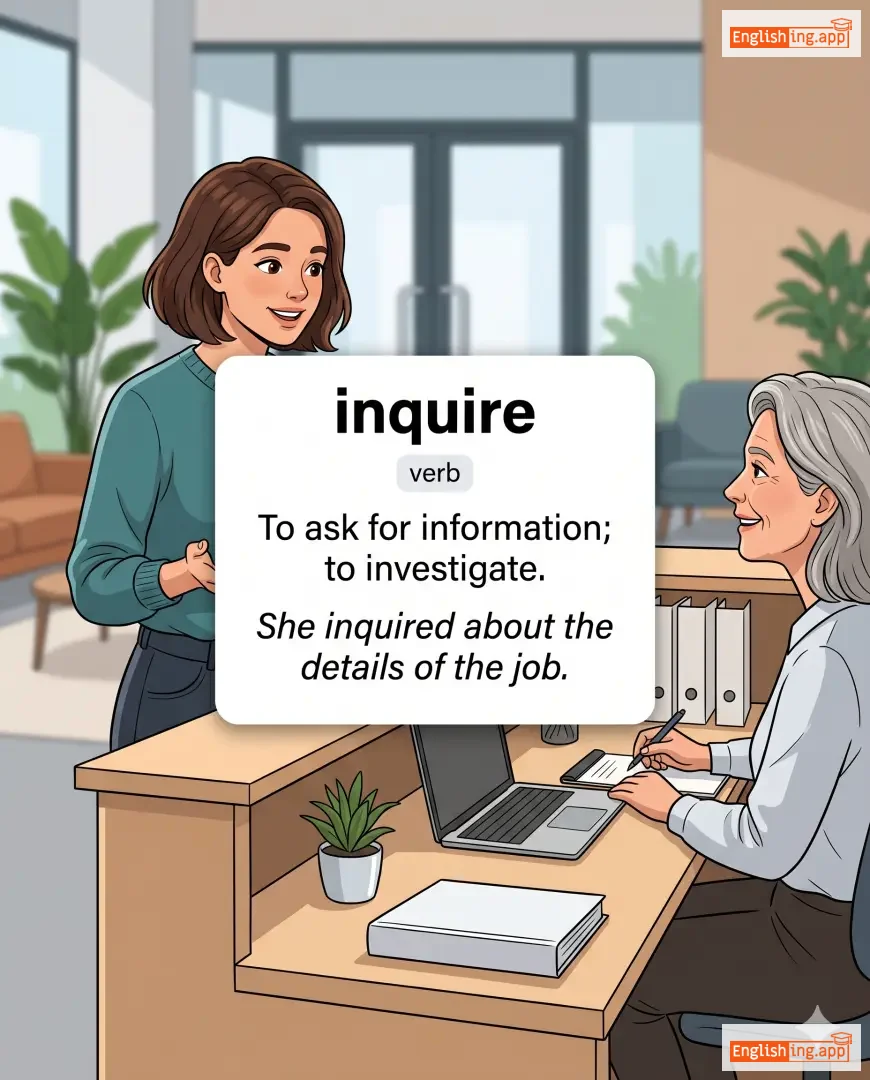
inquire definition card — visual illustration of the meaning
verb
/ɪnˈkwaɪər/
demander (demander)

To ask for information; to investigate.

"She inquired about the details of the job."

"Elle a demandé des détails sur le travail." (Elle a demande des details sur le travail.)
noun
/ɪnˈkwaɪəri/ or /ˈɪnkwəri/
enquête / demande d'information (enquete / demande d'information)

An act of asking for information; an investigation into something.

"The committee launched an inquiry into the financial irregularities."

"Le comité a lancé une enquête sur les irrégularités financières." (Le comite a lance une enquete sur les irregularites financieres.)
noun
/ˌɪnkwɪˈzɪʃən/
inquisition (inquisition)

A prolonged and intense questioning or investigation, often harsh in nature.

"The journalist faced an inquisition from the panel about his sources."

"Le journaliste a fait face à une inquisition de la part du panel sur ses sources." (Le journaliste a fait face à une inquisition de la part du panel sur ses sources.)
adjective
/ɪnˈkwɪzɪtɪv/
inquisitif (inquisitif)

Curious or eager to learn and ask questions.

"The inquisitive child asked endless questions about the stars."

"L'enfant inquisitif a posé d'innombrables questions sur les étoiles." (L'enfant inquisitif a posé d'innombrables questions sur les étoiles.)
noun
/ɪnˈkwɪzɪtər/
inquisiteur (inquisiteur)

A person who asks many questions, often in an official or harsh manner.

"The inquisitor demanded detailed answers from the witness."

"L'inquisiteur a exigé des réponses détaillées du témoin." (L'inquisiteur a exigé des réponses détaillées du témoin.)
noun
/ˈɪnroʊd/
progrès (progres)

An advance or significant progress, often at the expense of something else.

"The company made significant inroads into the mobile market."

"L'entreprise a réalisé des progrès significatifs sur le marché mobile." (L'entreprise a réalisé des progrès significatifs sur le marché mobile.)