Vocabulaires

Découvrez, apprenez et maîtrisez le vocabulaire anglais

verb
/ɪnˈfleɪt/
gonfler (gonfler)

to fill with air or gas so it expands; to increase excessively or artificially

"The mechanic inflated the tire to the correct pressure."

"Le mécanicien a gonflé le pneu à la bonne pression." (Le mecanicien a gonfle le pneu a la bonne pression)
adjective
/ɪnˈfleɪtɪd/
gonflé (gonfle)

excessively increased in size, value, or importance; filled with air or gas

"The company faced criticism for its inflated prices."

"L'entreprise a fait face à des critiques en raison de ses prix gonflés." (L'entreprise a fait face à des critiques en raison de ses prix gonflés.)
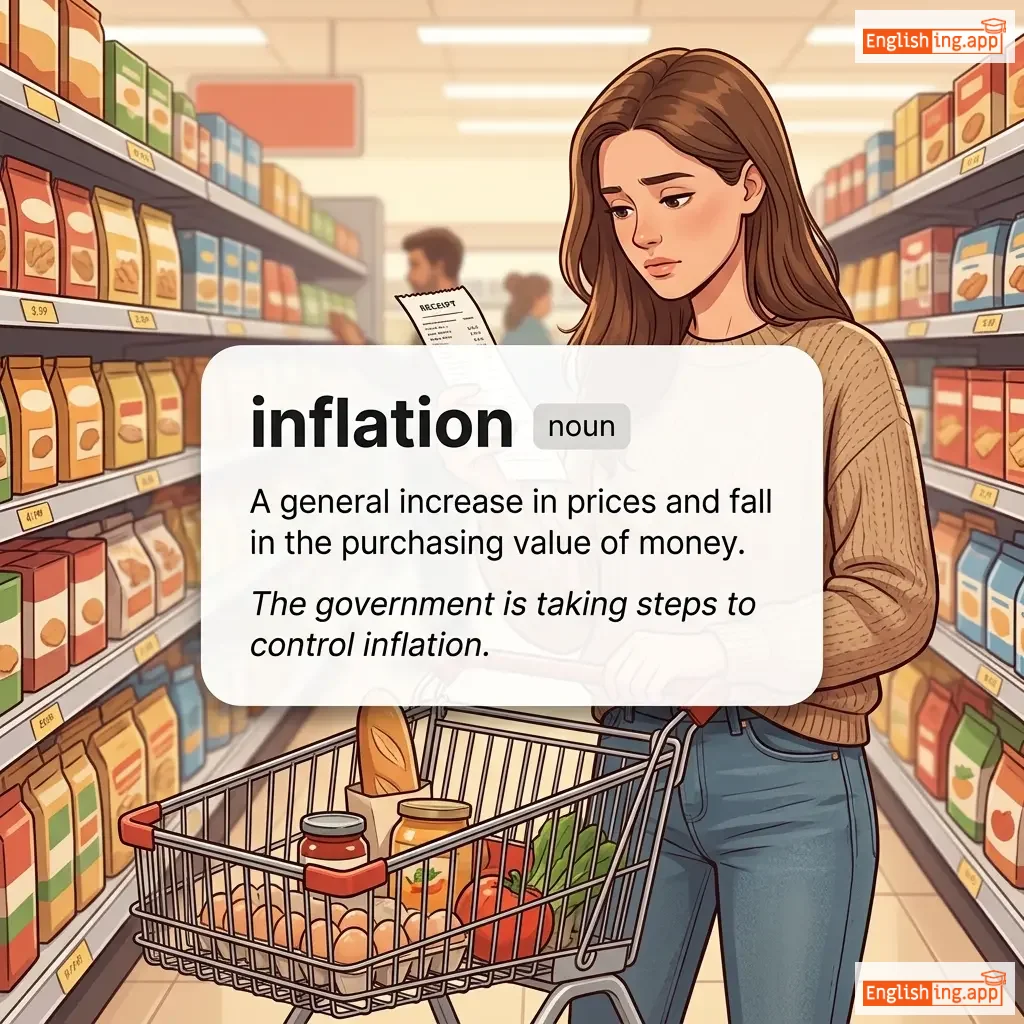
inflation definition card — visual illustration of the meaning
noun
/ɪnˈfleɪʃən/
inflation (inflation)

A general increase in prices and fall in the purchasing value of money.

"The government is taking steps to control inflation."

"Le gouvernement prend des mesures pour contrôler l'inflation." (Le gouvernement prend des mesures pour contrôler l'inflation.)
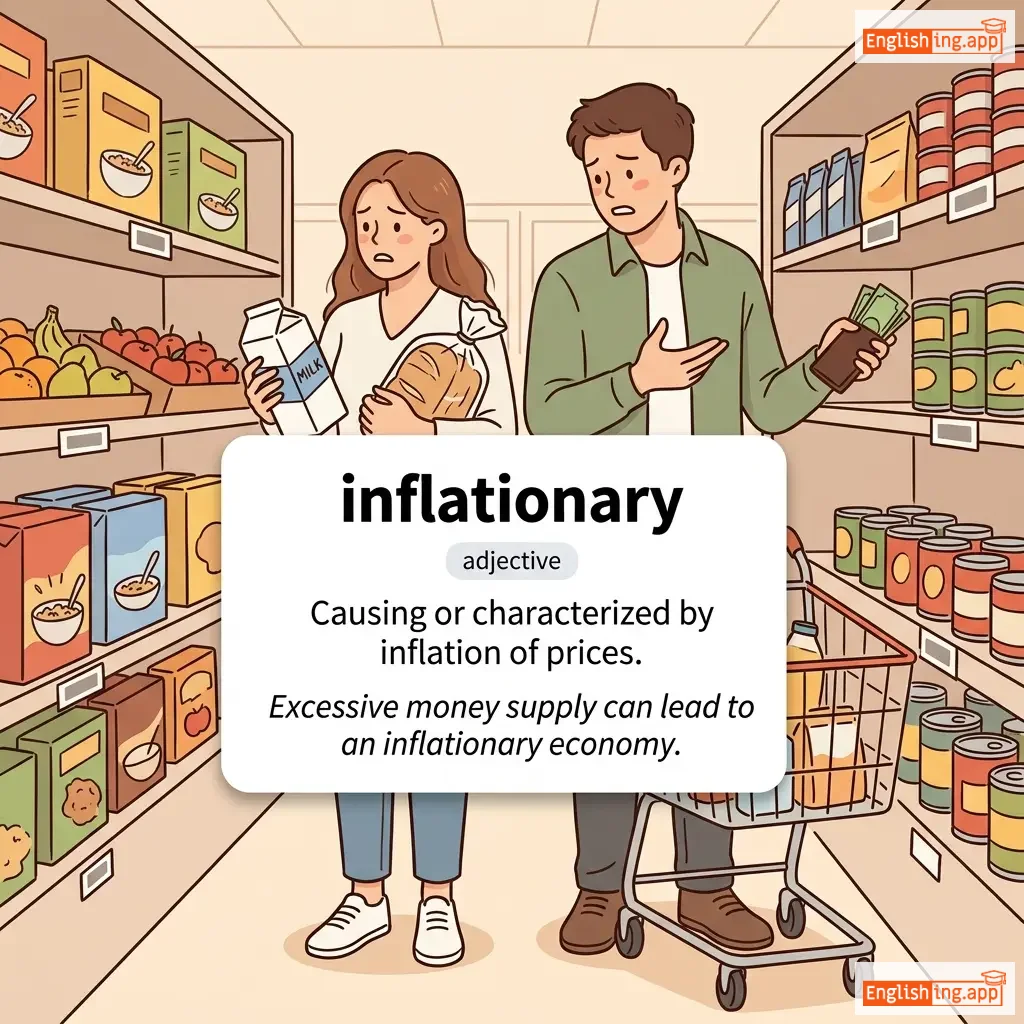
inflationary definition card — visual illustration of the meaning
adjective
/ɪnˈfleɪ.ʃə.ner.i/
inflationniste (inflationniste)

Causing or characterized by inflation of prices.

"Excessive money supply can lead to an inflationary economy."

"Un excès d'offre de monnaie peut conduire à une économie inflationniste." (Un exces d'offre de monnaie peut conduire a une economie inflationniste.)
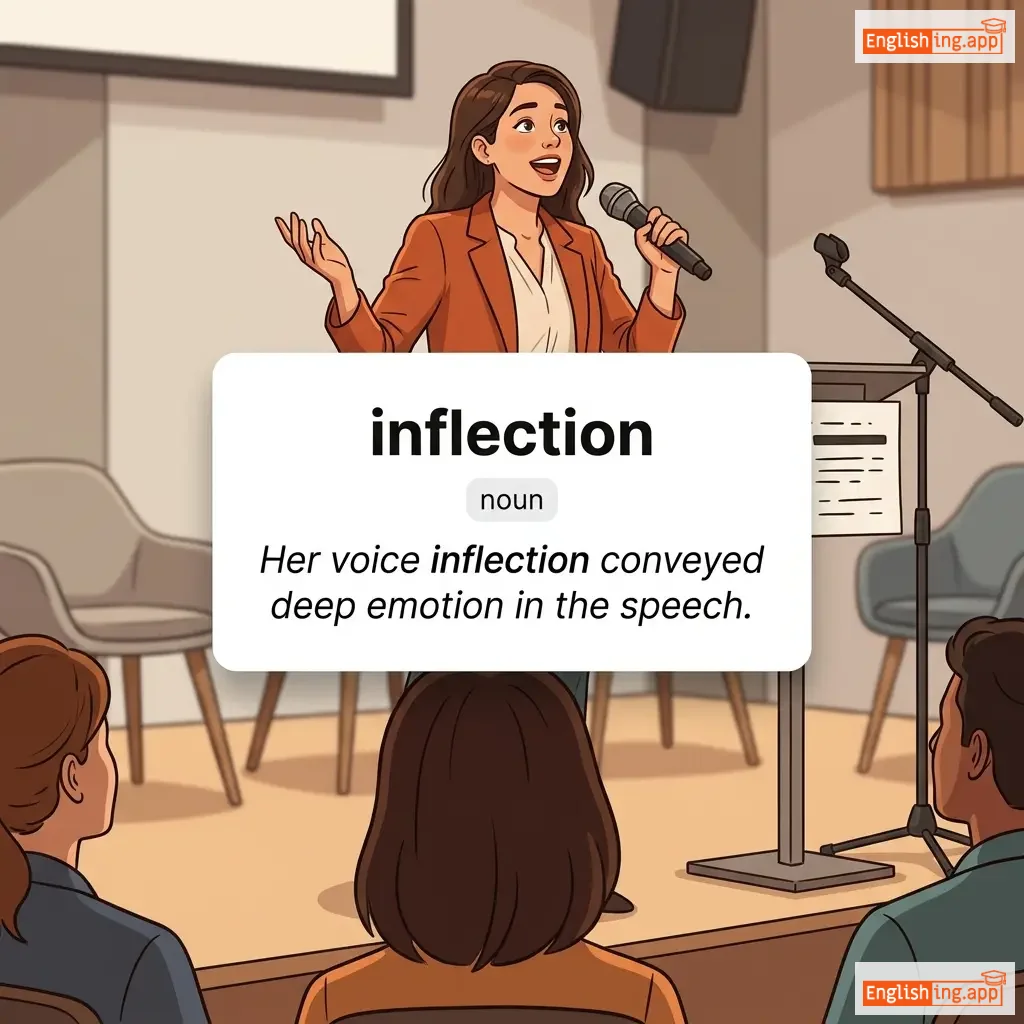
inflection definition card — visual illustration of the meaning
noun
/ɪnˈflɛk.ʃən/
changement de ton ou d'inflexion (changement de ton ou d'inflexion)

A change in the tone or pitch of the voice when speaking, which helps convey meaning and emotion.

"Her voice inflection conveyed deep emotion in the speech."

"L'inflexion de sa voix a transmis une émotion profonde dans le discours." (L'inflexion de sa voix a transmis une émotion profonde dans le discours.)
noun
/ˌɪnflɛksɪˈbɪlɪti/
inflexibilité (inflexibilite)

the quality of being rigid or unwilling to change; lack of adaptability

"The inflexibility of the rules caused unnecessary delays."

"L’inflexibilité des règles a causé des retards inutiles." (L inflexibilite des regles a cause des retards inutiles)
adjective
/ɪnˈflɛksəbl/
inflexible (inflexible)

Not able to bend or change; unwilling to change ideas or behavior.

"His inflexible attitude made negotiations difficult."

"Son attitude inflexible rendait les négociations difficiles." (Son attitude inflexible rendait les négociations difficiles.)
verb
/ɪnˈflɪkt/
infliger (infliger)

to cause something unpleasant or painful to be suffered by someone or something

"The storm inflicted considerable damage to the city."

"La tempête a infligé des dégâts considérables à la ville." (La tempête a infligé des dégâts considérables à la ville.)
noun
/ˈɪn.floʊ/
afflux (afflux)

The movement of things such as money, people, or water into a place.

"The inflow of tourists boosted the local economy."

"L'afflux de touristes a stimulé l'économie locale." (L'afflux de touristes a stimulé l'économie locale.)
noun/verb
/ˈɪnfluəns/
influence (influence)

The power to affect how someone thinks or acts.

"Her teacher had a strong influence on her career choice."

"Son professeur a eu une grande influence sur son choix de carrière." (Son professeur a eu une grande influence sur son choix de carrière.)
Influencer definition card — visual illustration of the meaning
noun
/ˈɪn.flu.ən.sər/
influenceur, personne qui recommande des produits (influenceur, personne qui recommande des produits)

A person with the ability to influence potential buyers of a product or service by promoting or recommending the items on social media.

"Social media influencers shape consumer preferences."

"Les influenceurs des réseaux sociaux façonnent les préférences des consommateurs." (Les influenceurs des réseaux sociaux façonnent les préférences des consommateurs.)
adjective
/ˌɪnfluˈɛnʃl/
influent (influent)

Having great power to change or affect people or things.

"She is one of the most influential leaders of our time."

"Elle est l'une des leaders les plus influentes de notre époque." (Elle est l'une des leaders les plus influentes de notre époque.)
noun
/ˈɪnflʌks/
afflux (afflux)

A large arrival or flow of people or things.

"The city experienced an influx of tourists during the festival."

"La ville a connu un afflux de touristes pendant le festival." (La ville a connu un afflux de touristes pendant le festival.)
noun
/ˈɪnfoʊ/
information (information)

information; knowledge or facts about something or someone

"She gave me all the info I needed for the meeting."

"Elle m'a donné toutes les informations nécessaires pour la réunion." (Elle m'a donne toutes les informations necessaires pour la reunion.)
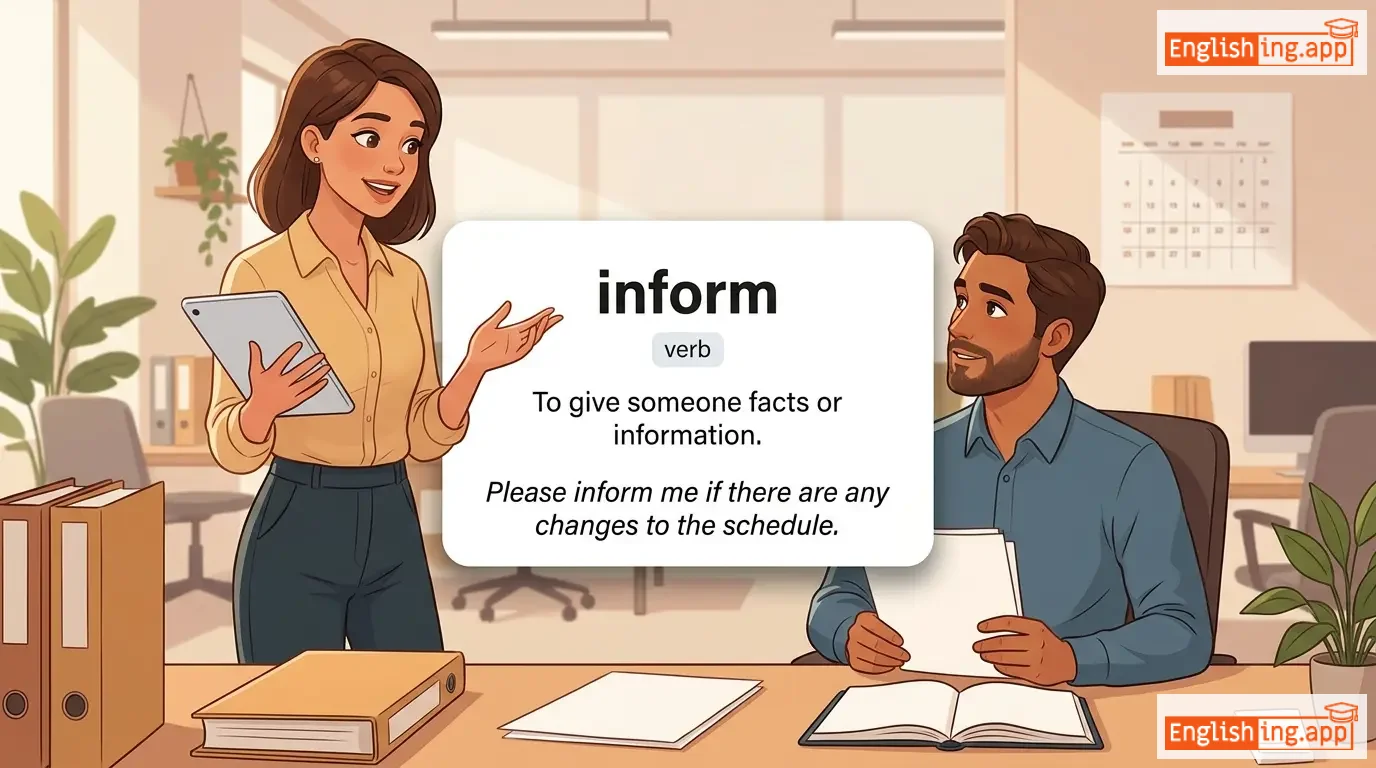
inform definition card — visual illustration of the meaning
verb
/ɪnˈfɔːrm/
informer (informer)

To give someone facts or information.

"Please inform me if there are any changes to the schedule."

"S'il vous plaît, informez-moi s'il y a des changements dans l'emploi du temps." (S'il vous plaît, informez-moi s'il y a des changements dans l'emploi du temps.)
adjective
/ɪnˈfɔːrməl/
informel (informel)

relaxed, friendly, and not following strict rules or conventions

"They had an informal meeting at the coffee shop."

"Ils ont eu une réunion informelle au café." (Ils ont eu une reunion informelle au cafe.)
noun
/ˌɪnfərˈmeɪʃən/
information (information)

Facts or knowledge provided or learned about something.

"The website provides useful information about travel destinations."

"Le site Web fournit des informations utiles sur les destinations de voyage." (Le site Web fournit des informations utiles sur les destinations de voyage.)
adjective
/ɪnˈfɔːrmətɪv/
informatif (informativ)

giving or providing useful information; educational; instructive

"The documentary was very informative and educational."

"Le documentaire était très informatif et éducatif." (Le documentaire etait tres informatif et educatif.)
noun
/ɪnˈfrækʃən/
infraction (infraction)

A violation or breach of a rule, law, or agreement.

"The student was punished for a minor infraction of the school rules."

"L'étudiant a été puni pour une infraction mineure aux règles de l'école." (L'etudiant a ete puni pour une infraction mineure aux regles de l'ecole.)
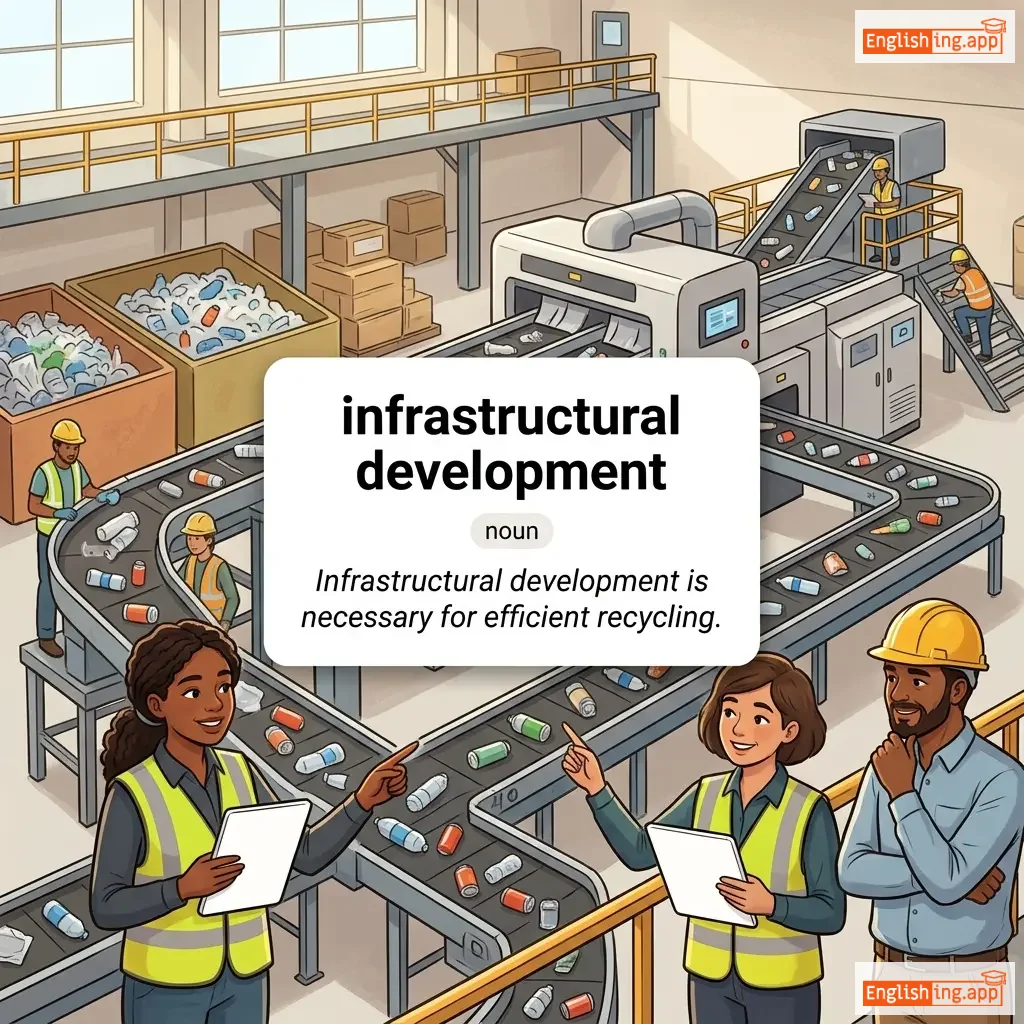
infrastructural development definition card — visual illustration of the meaning
noun
ˌɪnfrəˈstrʌktʃərəl dɪˈveləpmənt
développement infrastructurel (developpement infrastructurel)

The process of building and improving the basic physical and organizational structures and facilities needed for the operation of a society or enterprise.

"Infrastructural development is necessary for efficient recycling."

"Le développement infrastructurel est nécessaire pour un recyclage efficace." (Le développement infrastructurel est nécessaire pour un recyclage efficace.)
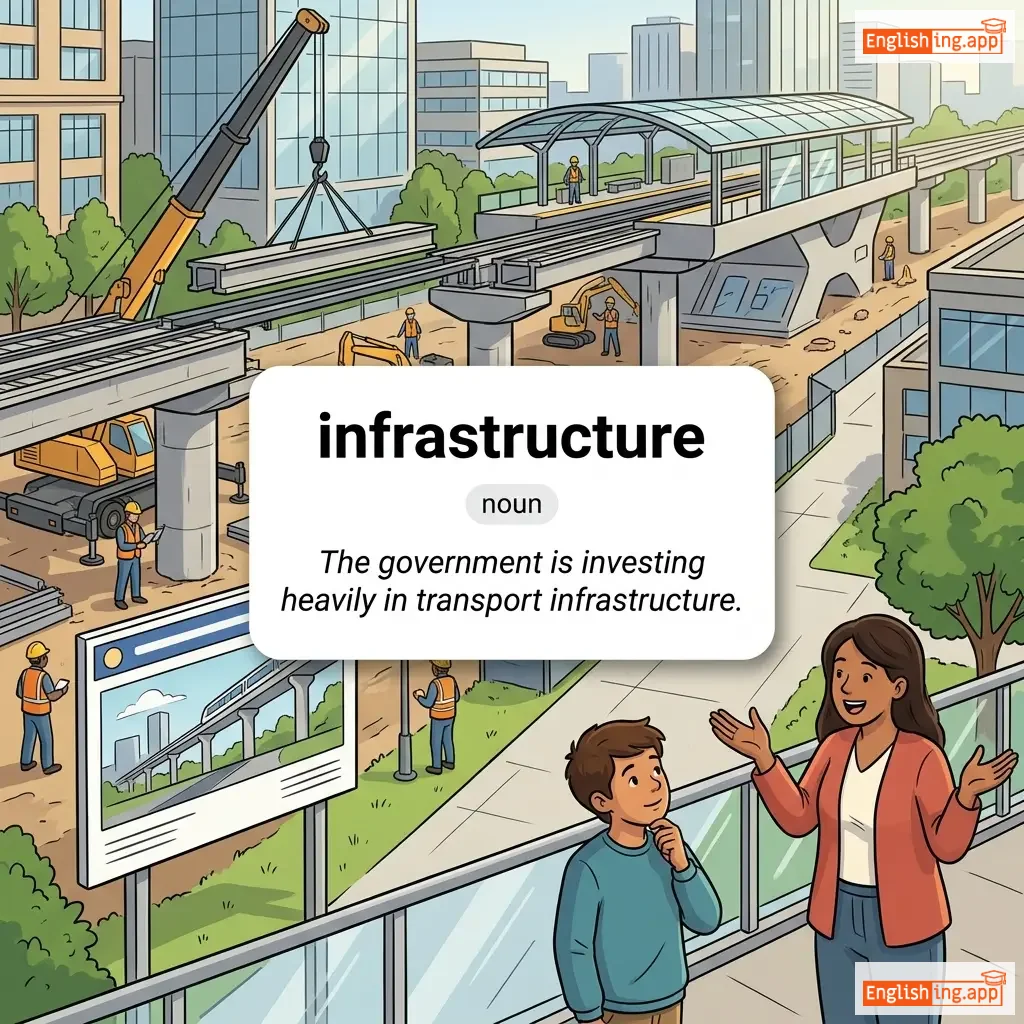
infrastructure definition card — visual illustration of the meaning
noun
/ˈɪnfrəˌstrʌktʃər/
infrastructure (infrastructure)

the basic physical and organizational structures and facilities needed for the operation of a society or enterprise

"The government is investing heavily in transport infrastructure."

"Le gouvernement investit massivement dans les infrastructures de transport." (Le gouvernement investit massivement dans les infrastructures de transport.)
noun
/ɪnˈfriːkwəns/
infréquence (infrekwans)

The state of occurring rarely or at long intervals.

"The infrequence of their meetings made it hard to maintain close ties."

"L'infréquence de leurs réunions rendait difficile le maintien de liens étroits." (L'infréquence de leurs réunions rendait difficile le maintien de liens étroits.)
adjective
/ɪnˈfriːkwənt/
peu fréquent (peu frequent)

Happening rarely or not often.

"He made infrequent visits to his hometown after moving abroad."

"Il faisait des visites peu fréquentes dans sa ville natale après avoir déménagé à l'étranger." (Il faisait des visites peu fréquentes dans sa ville natale après avoir déménagé à l'étranger.)
verb
/ɪnˈfrɪndʒ/
enfreindre (enfreindre)

To actively break the terms of a law, agreement, or right.

"Copying this software without permission will infringe copyright laws."

"Copier ce logiciel sans permission enfreindra les lois sur le droit d'auteur." (Copier ce logiciel sans permission enfreindra les lois sur le droit d'auteur.)
verb
/ɪnˈfjʊərieɪt/
mettre en colère (mettre en colere)

To make someone extremely angry.

"His careless remarks infuriated the entire team."

"Ses remarques imprudentes ont mis en colère toute l'équipe." (Ses remarques imprudentes ont mis en colere toute l'equipe.)
verb
/ɪnˈfjuːz/
infuser (inf-yoo-zay)

to fill or spread through something; to instill a quality, idea, or feeling

"The teacher tried to infuse her students with a love for reading."

"Le professeur a essayé d'infuser à ses élèves un amour pour la lecture." (Le professeur a essaye d'infuser a ses eleves un amour pour la lecture.)
noun
/ɪnˈfjuːʒən/
infusion (infusion)

the act of introducing something into another; a drink made by steeping leaves or herbs in liquid

"She prepared a calming infusion of chamomile tea."

"Elle a préparé une infusion apaisante de thé à la camomille." (Elle a prepare une infusion apaisante de the a la camomille.)
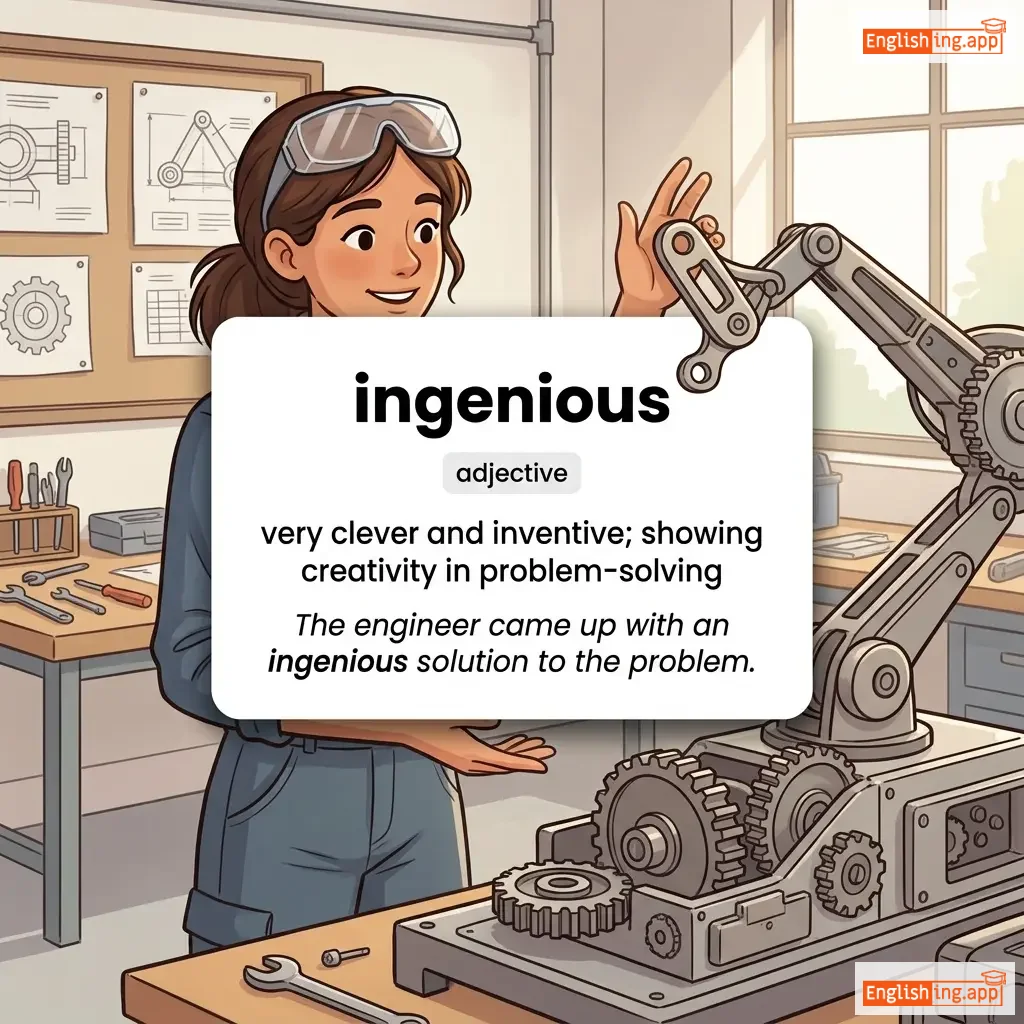
ingenious definition card — visual illustration of the meaning
adjective
/ɪnˈdʒiːniəs/
ingénieux (ingenieux)

very clever and inventive; showing creativity in problem-solving

"The engineer came up with an ingenious solution to the problem."

"L'ingénieur a trouvé une solution ingénieuse au problème." (L'ingenieur a trouve une solution ingenieuse au probleme.)
noun
/ˈænʒənuː/
jeune innocente (jeune innocente)

an innocent, naïve young woman, especially as represented in literature or theater

"She played the role of the ingénue in the play with great charm."

"Elle a joué le rôle de la jeune innocente dans la pièce avec beaucoup de charme." (Elle a joué le rôle de la jeune innocente dans la pièce avec beaucoup de charme.)
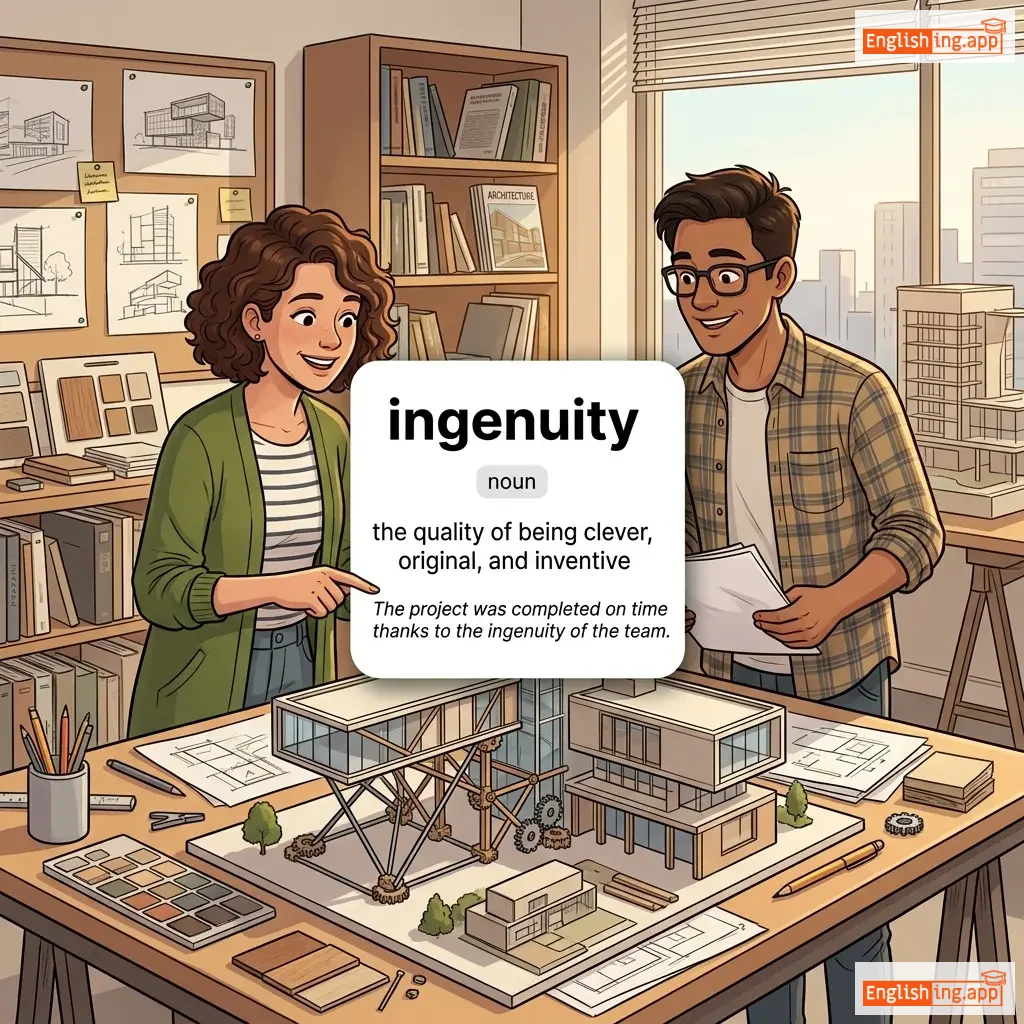
ingenuity definition card — visual illustration of the meaning
noun
/ˌɪndʒəˈnjuːɪti/
ingéniosité (ingeniosite)

the quality of being clever, original, and inventive

"The project was completed on time thanks to the ingenuity of the team."

"Le projet a été terminé à temps grâce à l'ingéniosité de l'équipe." (Le projet a été terminé à temps grâce à l'ingéniosité de l'équipe.)
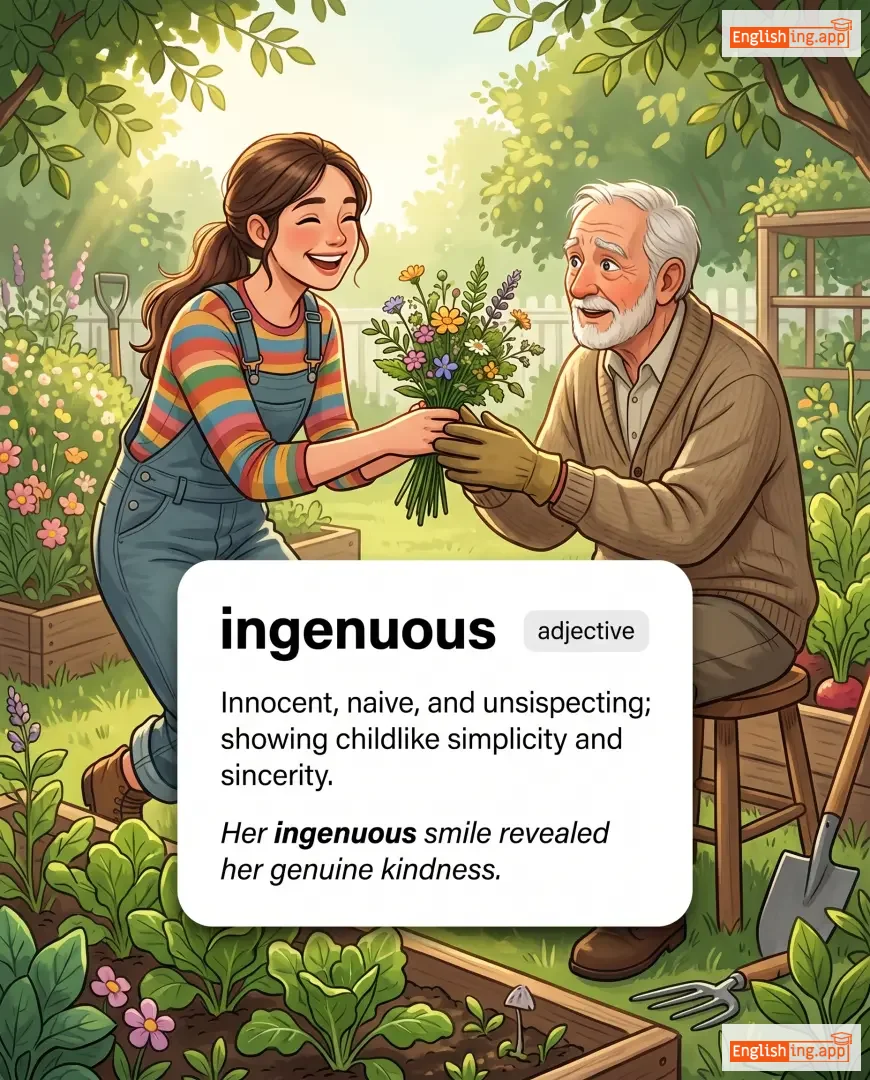
ingenuous definition card — visual illustration of the meaning
adjective
/ɪnˈdʒɛnjuəs/
ingénu (ingenu)

Innocent, naive, and unsuspecting; showing childlike simplicity and sincerity.

"Her ingenuous smile revealed her genuine kindness."

"Son sourire ingénu révélait sa véritable gentillesse." (Son sourire ingénu révélait sa véritable gentillesse.)
verb
/ɪnˈdʒɛst/
ingérer (ingérer)

To take food, drink, or another substance into the body, usually by swallowing.

"The patient must ingest the medicine with water."

"Le patient doit ingérer le médicament avec de l'eau." (Le patient doit ingérer le médicament avec de l'eau.)
adjective
/ɪnˈɡlɔːriəs/
honteux (honteux)

Causing shame or disgrace; not bringing honor or glory.

"The army suffered an inglorious defeat."

"L'armée a subi une défaite honteuse." (L'armée a subi une défaite honteuse.)
verb
/ɪnˈɡrɑːft/
implanter (implanter)

To implant or fix deeply, often used in the sense of grafting an idea or quality.

"The teacher tried to ingraft good manners in the students."

"Le professeur a essayé d'implanter de bonnes manières chez les étudiants." (Le professeur a essayé d'implanter de bonnes manières chez les étudiants.)
adjective
/ɪnˈɡreɪnd/
enraciné (enracine)

Firmly fixed or established; deeply rooted and difficult to change.

"His ingrained habits were hard to break."

"Ses habitudes enracinées étaient difficiles à briser." (Ses habitudes enracinées étaient difficiles à briser.)
noun
/ˈɪnˌɡreɪt/
ingrat (ingrat)

An ungrateful person; someone who shows no appreciation.

"He worked hard for his friend, but the ingrate never thanked him."

"Il a travaillé dur pour son ami, mais l'ingrat ne l'a jamais remercié." (Il a travaille dur pour son ami mais lingrat ne l a jamais remercie)
verb
/ɪnˈɡreɪʃiˌeɪt/
se faire bien voir (se faire bien voir)

To gain favor or approval by deliberate effort, often in a flattering way.

"She tried to ingratiate herself with her boss by complimenting him often."

"Elle a essayé de s'ingratiser auprès de son patron en le complimentant souvent." (Elle a essayé de s'ingratiser auprès de son patron en le complimentant souvent.)
adjective
/ɪnˈɡreɪʃiˌeɪtɪŋ/
flatteur (flatteur)

Charming or flattering in a way intended to gain favor.

"His ingratiating smile made everyone trust him quickly."

"Son sourire flatteur a fait en sorte que tout le monde lui fasse rapidement confiance." (Son sourire flatteur a fait en sorte que tout le monde lui fasse rapidement confiance.)
noun
/ɪnˈɡrætɪˌtjuːd/
ingratitude (ingratitude)

Lack of gratitude; failure to show thanks or appreciation.

"His ingratitude hurt her feelings after all she had done for him."

"Son ingratitude lui a fait mal après tout ce qu'elle avait fait pour lui." (Son ingratitude lui a fait mal après tout ce qu'elle avait fait pour lui.)
noun
/ɪnˈɡriːdiənt/
ingrédient (ingrédient)

A component part or element of something, especially in a recipe.

"Flour is a key ingredient in baking bread."

"La farine est un ingrédient clé pour faire du pain." (La farine est un ingrédient clé pour faire du pain.)
verb
/ɪnˈhæbɪt/
habiter (habiter)

to live in; to occupy as a dwelling

"Many animals inhabit the forest."

"Beaucoup d'animaux habitent la forêt." (Beaucoup d'animaux habitent la forêt.)
noun
/ɪnˈhæbɪtənt/
habitant (habitant)

a person or animal that lives in a particular place

"The inhabitants of the village rely on farming for their livelihood."

"Les habitants du village dépendent de l'agriculture pour leur subsistance." (Les habitants du village dépendent de l'agriculture pour leur subsistance.)
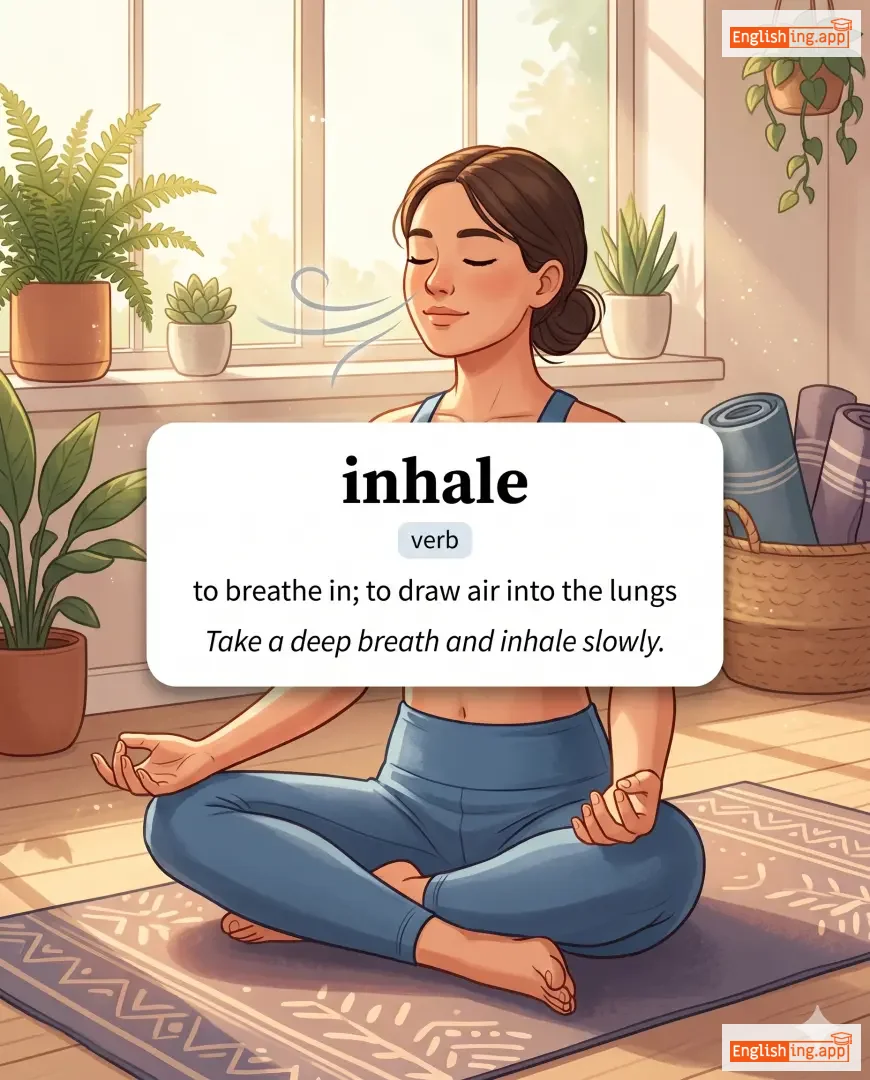
inhale definition card — visual illustration of the meaning
verb
/ɪnˈheɪl/
inhaler (inhaler)

to breathe in; to draw air into the lungs

"Take a deep breath and inhale slowly."

"Prenez une grande respiration et inhalez lentement." (Prenez une grande respiration et inhalez lentement.)
adjective
/ɪnhɑːrˈmoʊniəs/
inharmonieux (inharmonieux)

lacking harmony; discordant in sound; not in tune

"The inharmonious sounds from the broken piano made everyone cover their ears."

"Les sons inharmonieux du piano cassé ont obligé tout le monde à se couvrir les oreilles." (Les sons inharmonieux du piano casse ont oblige tout le monde a se couvrir les oreilles.)
noun
/ɪnˈhɪərəns/
inhérence (inherans)

The state of being an essential or permanent part of something.

"The inherence of risk is part of every business venture."

"L'inhérence du risque fait partie de chaque aventure d'entreprise." (L'inhérence du risque fait partie de chaque aventure d'entreprise.)
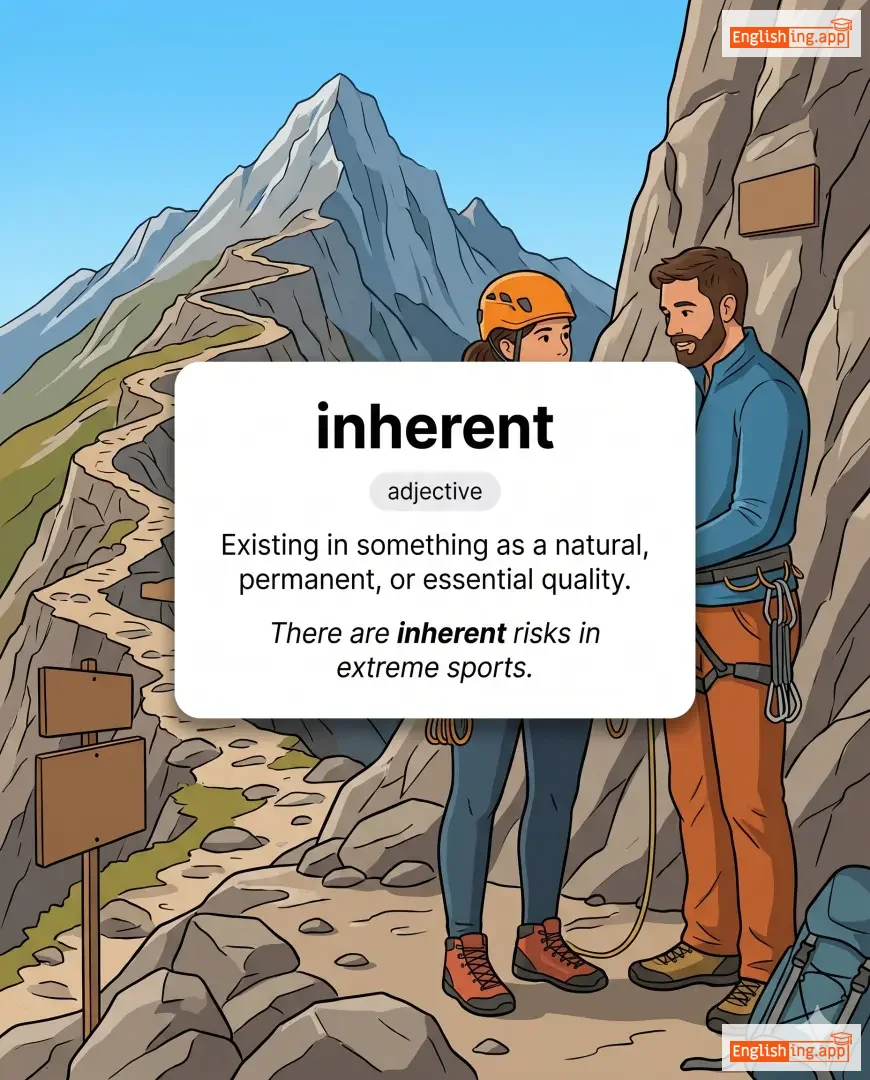
inherent definition card — visual illustration of the meaning
adjective
/ɪnˈhɛrənt/
inhérent (inherant)

Existing in something as a natural, permanent, or essential quality.

"There are inherent risks in extreme sports."

"Il existe des risques inhérents dans les sports extrêmes." (Il existe des risques inhérents dans les sports extrêmes.)
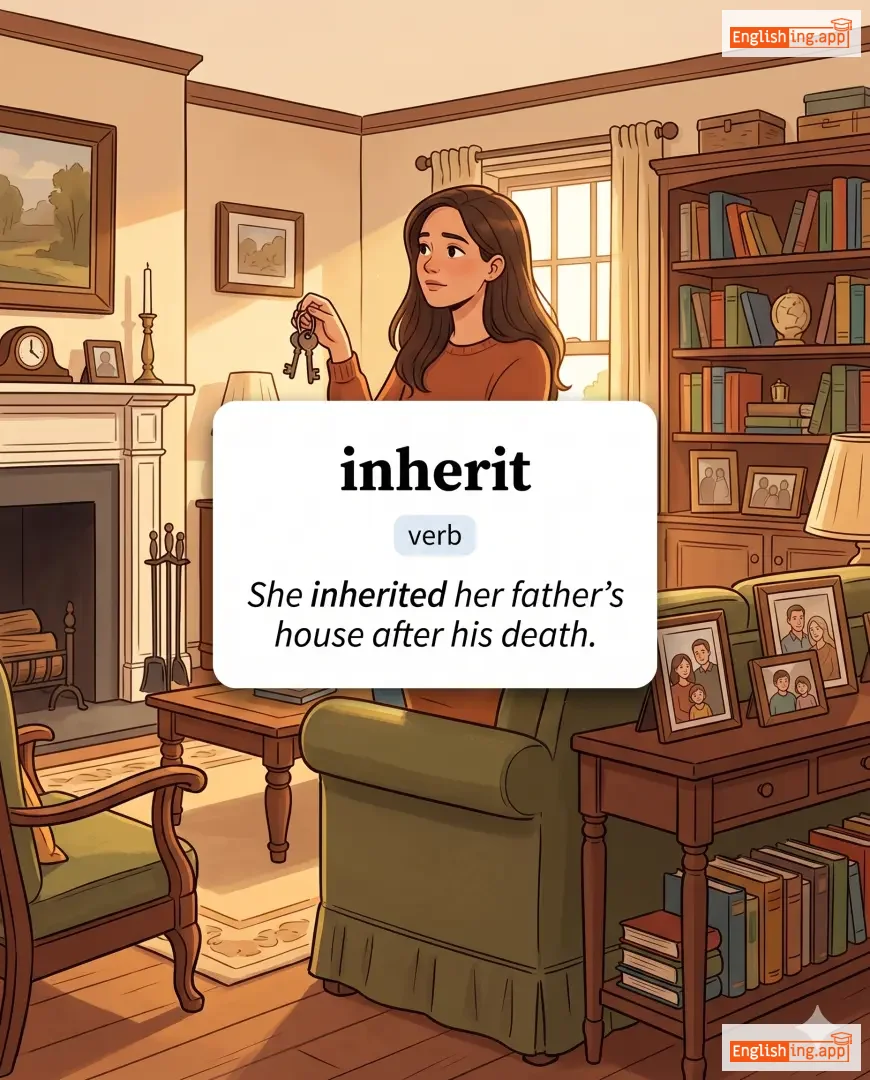
inherit definition card — visual illustration of the meaning
verb
/ɪnˈhɛrɪt/
hériter (hériter)

to receive property, money, or traits from someone after their death or from ancestors

"She inherited her father's house after his death."

"Elle a hérité de la maison de son père après sa mort." (Elle a hérité de la maison de son père après sa mort.)
noun
/ɪnˈhɛrɪtər/
héritier (heritier)

a person who receives money, property, or a title when someone dies

"She became the inheritor of her family's estate."

"Elle est devenue l'héritière de la propriété de sa famille." (Elle est devenue l'héritière de la propriété de sa famille.)
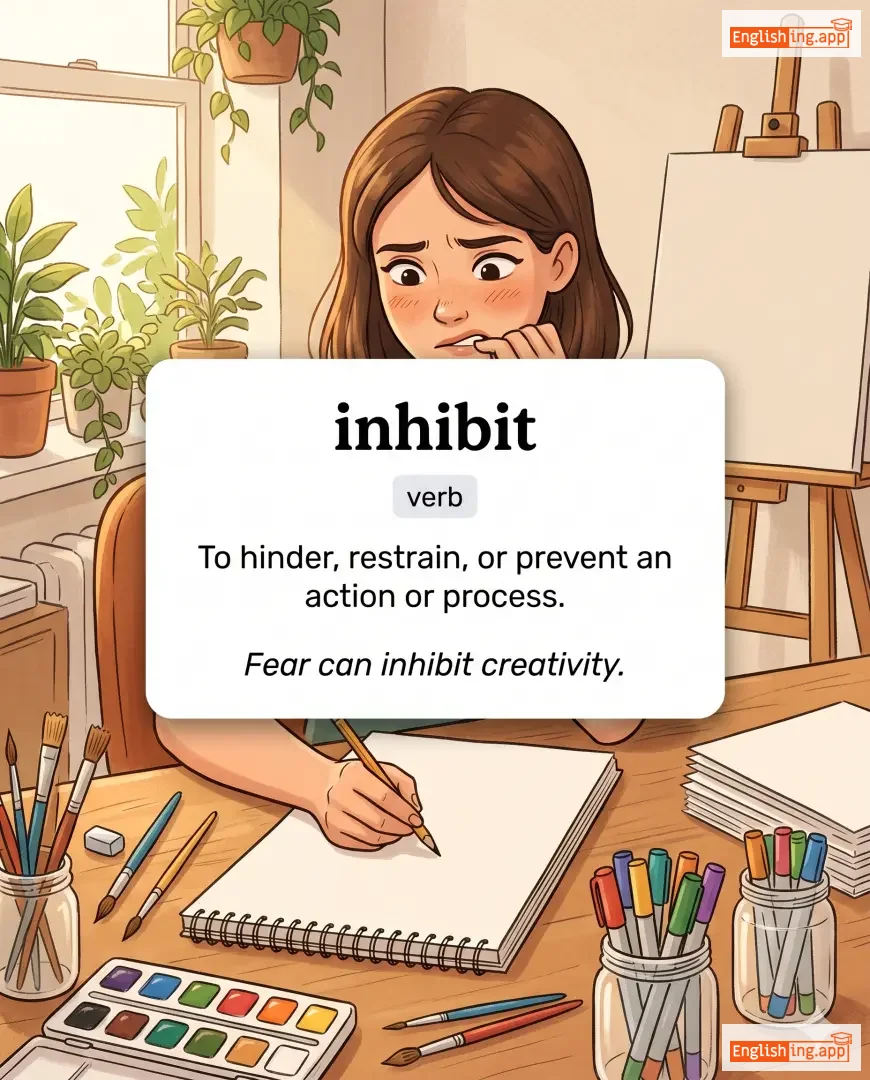
inhibit definition card — visual illustration of the meaning
verb
/ɪnˈhɪbɪt/
inhiber (inhiber)

To hinder, restrain, or prevent an action or process.

"Fear can inhibit creativity."

"La peur peut inhiber la créativité." (La peur peut inhiber la créativité.)
adjective
/ɪnˈhɪbɪtɪd/
inhibé (inhibe)

Unable to act in a relaxed and natural way, especially due to self-consciousness or restraint.

"He was too inhibited to express his true feelings."

"Il était trop inhibé pour exprimer ses vrais sentiments." (Il était trop inhibé pour exprimer ses vrais sentiments.)