Vocabulaires

Découvrez, apprenez et maîtrisez le vocabulaire anglais

noun/verb
/ˈɡlɪmər/
un éclat faible (un eclat faible)

A faint or wavering light; to shine with a faint light.

"A glimmer of hope shone in her eyes."

"Un éclat d'espoir brilla dans ses yeux." (Un eclat d'espoir brilla dans ses yeux.)
noun/verb
/ɡlɪmps/
aperçu (aperçu)

A brief or quick view of something.

"She caught a glimpse of the actor as he left the stage."

"Elle aperçut l'acteur lorsqu'il quitta la scène." (Elle apercut l'acteur lorsqu'il quitta la scene.)
verb
/ˈɡlɪsən/
briller (briller)

To shine with a sparkling light, often when wet or polished.

"The grass glistened with morning dew."

"L'herbe brillait avec la rosée du matin." (L'herbe brillait avec la rosée du matin.)
noun
/ɡlɪtʃ/
défaillance (defayans)

A sudden, usually temporary fault or malfunction in a system or device.

"The computer crashed due to a minor glitch in the software."

"L'ordinateur a planté à cause d'un petit glitch dans le logiciel." (L'ordinateur a planté à cause d'un petit glitch dans le logiciel.)
noun/verb
/ˈɡlɪtər/
briller (briller)

To shine with bright, shimmering light; or decorative sparkles.

"Her dress glittered under the stage lights."

"Sa robe brillait sous les lumières de la scène." (Sa robe brillait sous les lumières de la scène.)
adjective
/ˈɡlɪt.ər.ɪŋ/
étincelant; brillant; scintillant (etincelant; brillant; scintillant)

shining with bright light; sparkling; brilliant;

"The glittering stars filled the clear night sky."

"Les étoiles scintillantes ont rempli le ciel clair de la nuit." (Les étoiles scintillantes ont rempli le ciel clair de la nuit.)
noun
/ˈɡloʊmɪŋ/
crépuscule (crepuscule)

The time of day after the sun has set and before it is completely dark; twilight.

"We walked home together in the quiet gloaming."

"Nous avons marché chez nous ensemble dans le calme du crépuscule." (Nous avons marché chez nous ensemble dans le calme du crepuscule.)
verb
/ɡloʊt/
se réjouir (se rejouir)

To take pleasure in someone else's misfortune or to show smug satisfaction.

"He couldn't help but gloat over his rival's failure."

"Il ne pouvait s'empêcher de se réjouir de l'échec de son rival." (Il ne pouvait s'empecher de se rejouir de l'echec de son rival.)
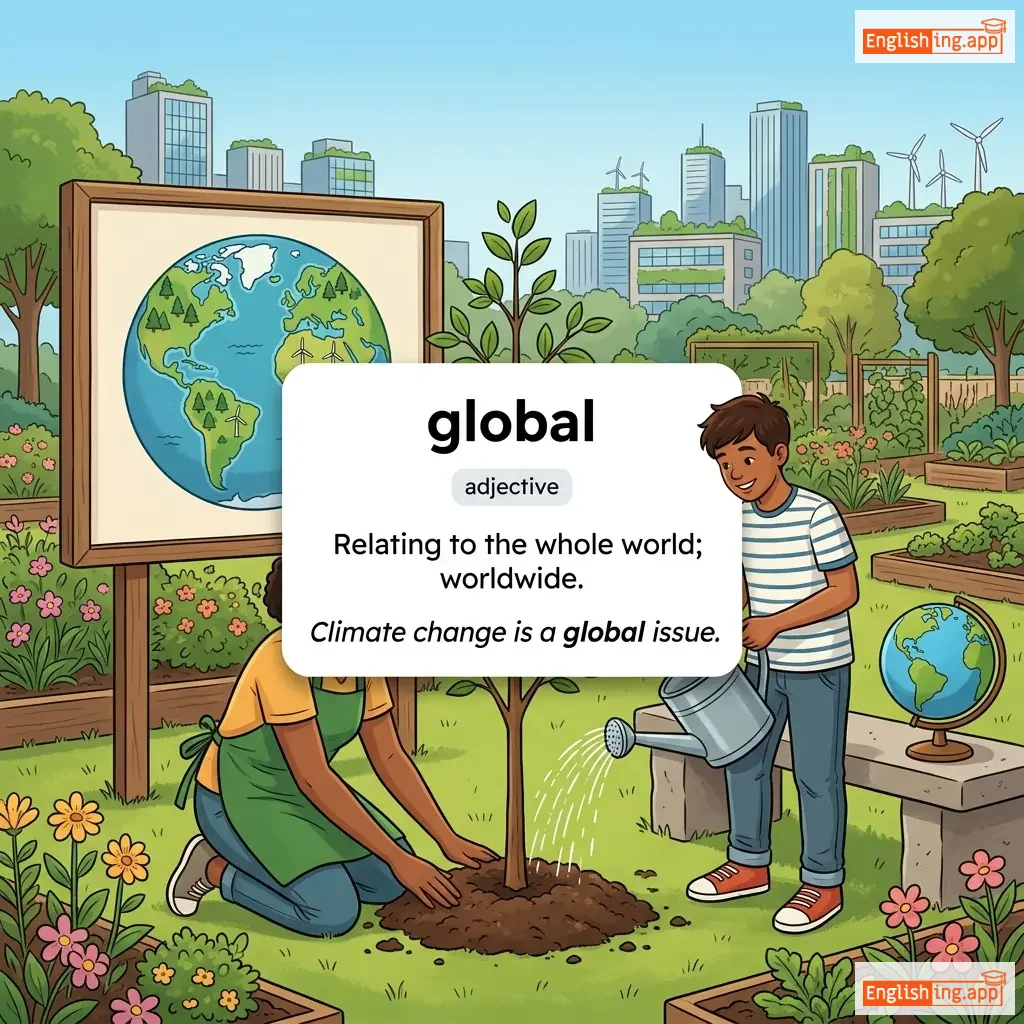
global definition card — visual illustration of the meaning
adjective
/ˈɡloʊbəl/
mondial (mondial)

Relating to the whole world; worldwide.

"Climate change is a global issue."

"Le changement climatique est un problème mondial." (Le changement climatique est un problème mondial.)
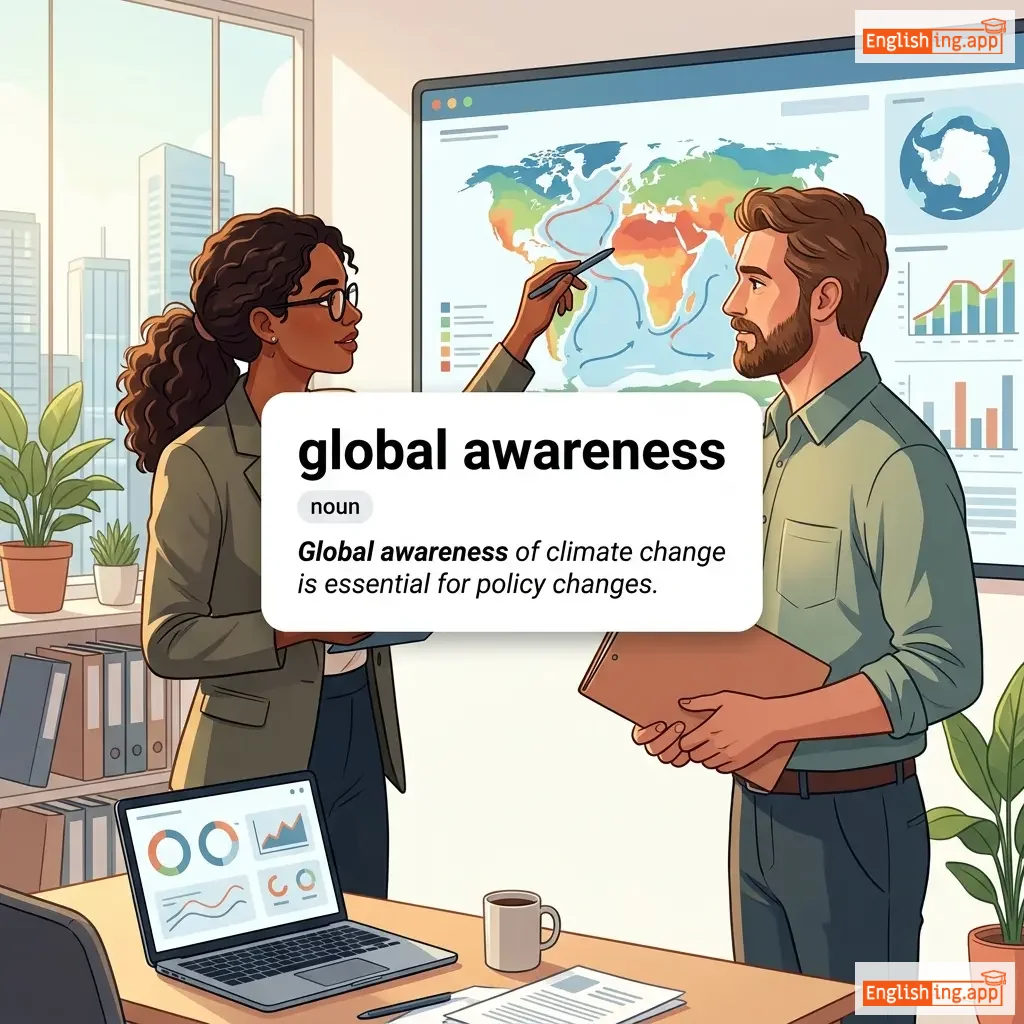
global awareness definition card — visual illustration of the meaning
noun
/ˈɡloʊbəl əˈwɛrnɪs/
sensibilisation mondiale (sanzibilisasion mondyal)

Worldwide consciousness and understanding of important issues that affect people globally, leading to informed action and policy changes.

"Global awareness of climate change is essential for policy changes."

"La sensibilisation mondiale au changement climatique est essentielle pour des changements politiques." (La sensibilyzasyon mondyale o chanjman klimatik est esansyel pour des chanjman politik.)
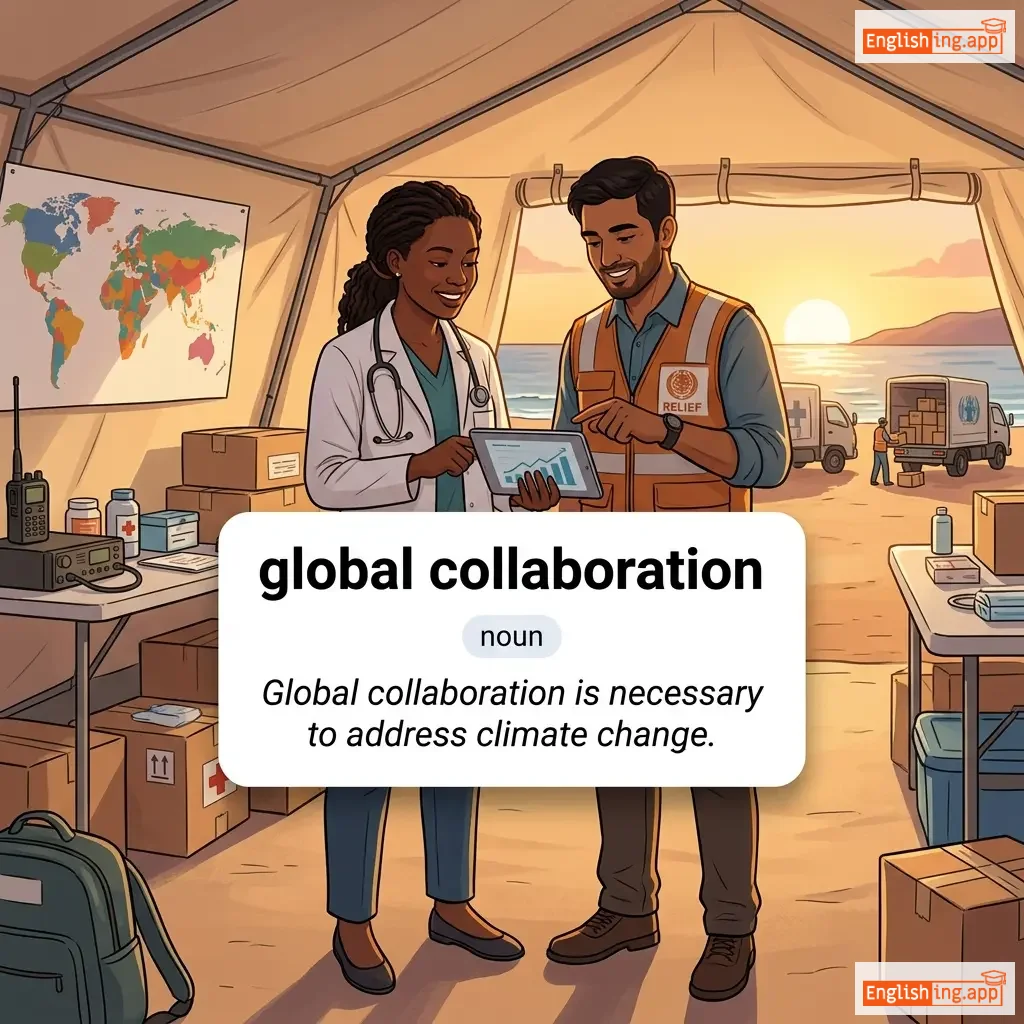
global collaboration definition card — visual illustration of the meaning
noun
ˈɡloʊbəl kəˌlæbəˈreɪʃən
collaboration mondiale (collaboration mondiale)

Cooperation and partnership between countries or organizations worldwide to address common challenges.

"Global collaboration is necessary to address climate change."

"La collaboration mondiale est nécessaire pour lutter contre le changement climatique." (La collaboration mondiale est necessaire pour lutter contre le changement climatique.)
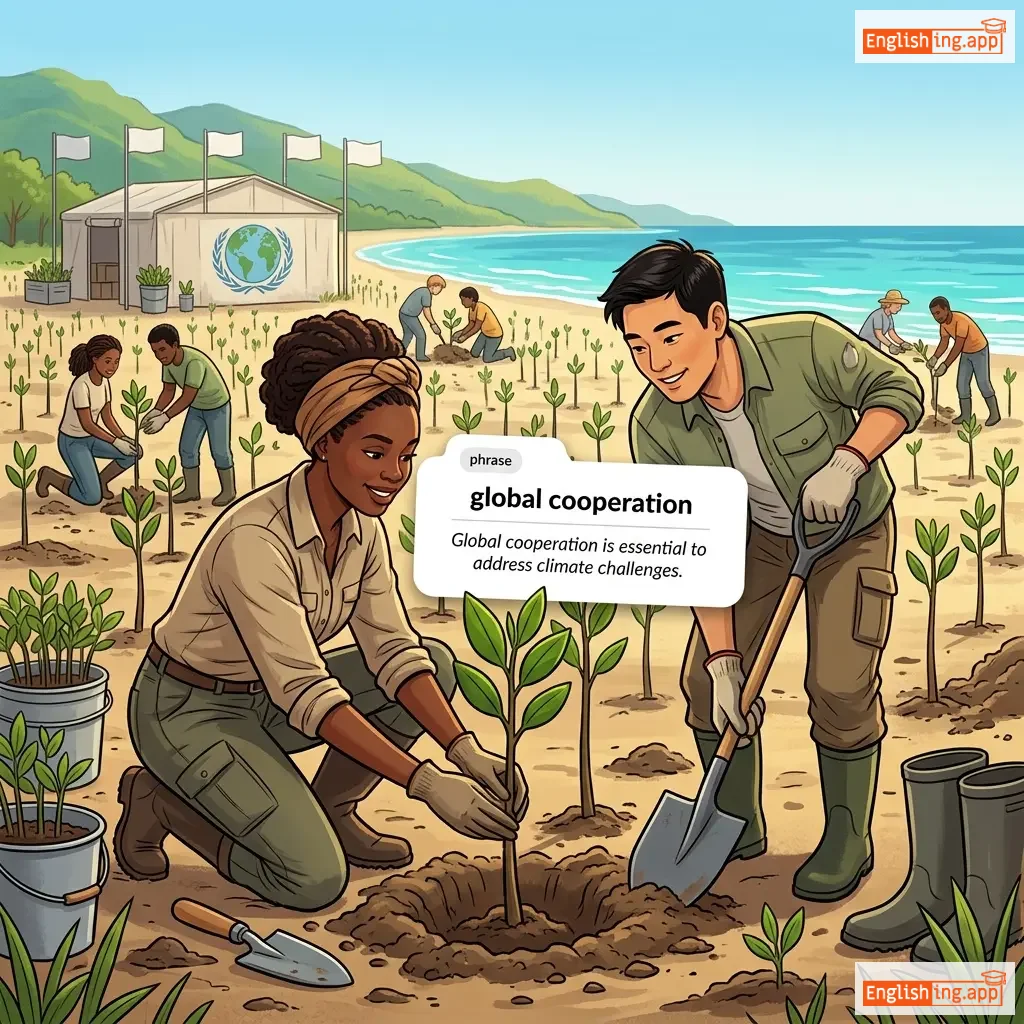
global cooperation definition card — visual illustration of the meaning
phrase
ˈɡləʊ.bəl ˌkəʊ.ɒp.əˈreɪ.ʃən
coopération mondiale (cooperation mondiale)

International collaboration and working together across countries to address common challenges and goals.

"Global cooperation is essential to address climate challenges."

"La coopération mondiale est essentielle pour relever les défis climatiques." (La cooperation mondiale est essentielle pour relever les defis climatiques.)
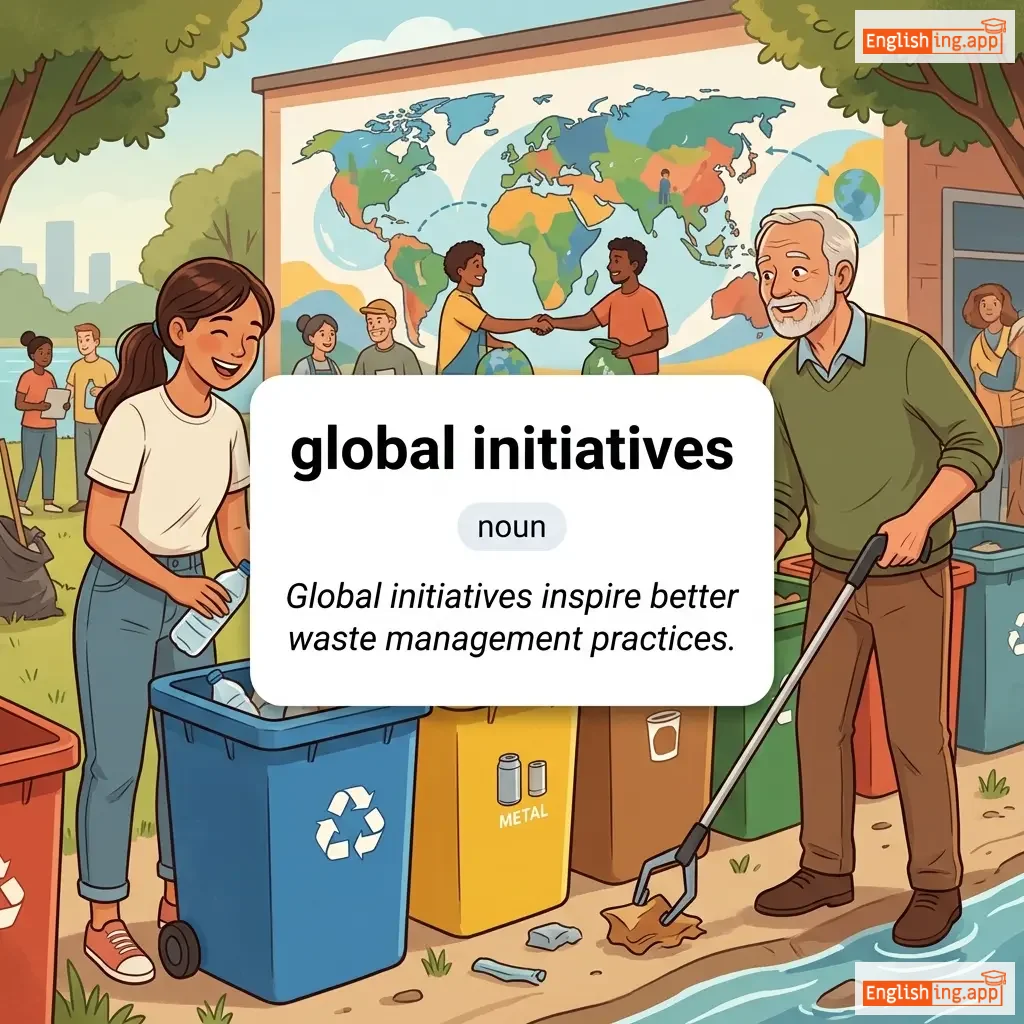
global initiatives definition card — visual illustration of the meaning
noun
ˈɡloʊbəl ɪˈnɪʃətɪvz
initiatives mondiales (initiatives mondiales)

Worldwide efforts or programs aimed at addressing global challenges or achieving common goals.

"Global initiatives inspire better waste management practices."

"Les initiatives mondiales inspirent de meilleures pratiques de gestion des déchets." (Les initiatives mondiales inspirent de meilleures pratiques de gestion des déchets.)
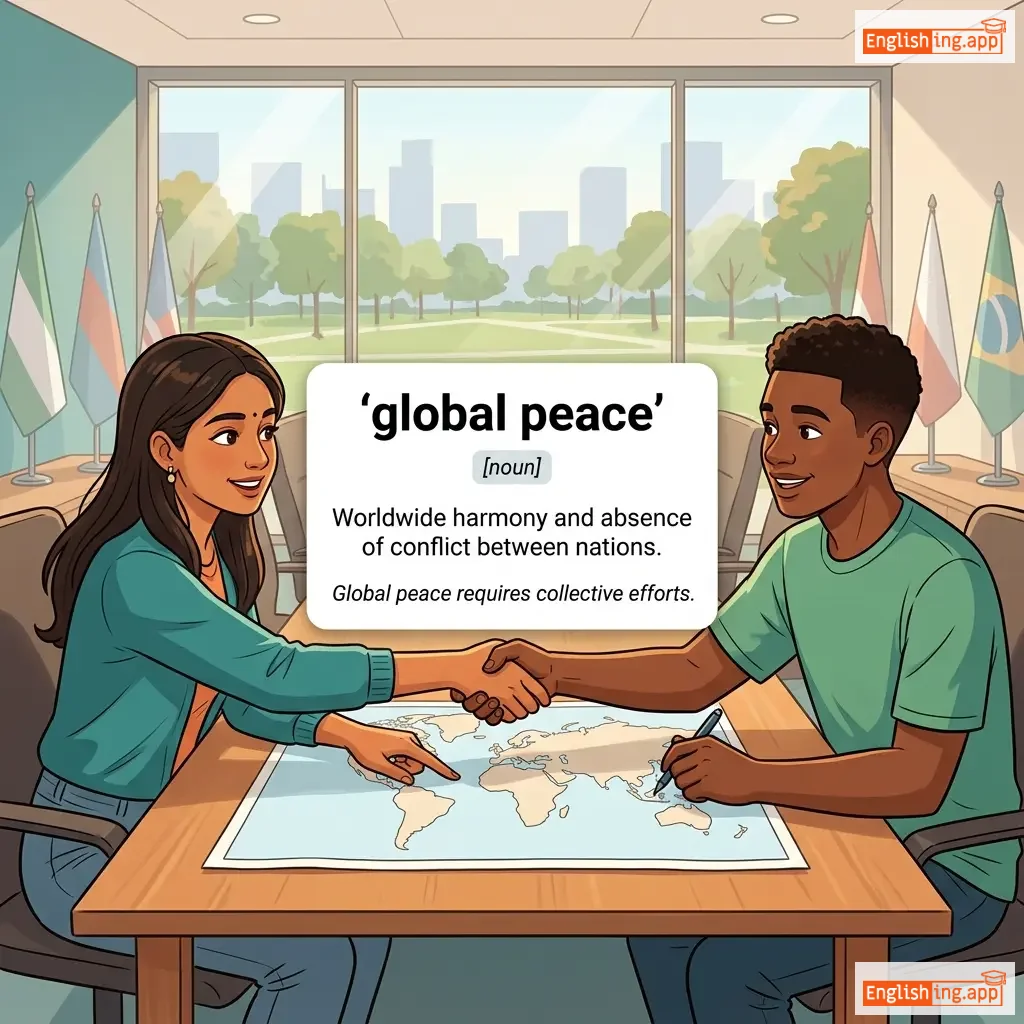
global peace definition card — visual illustration of the meaning
noun
/ˈɡləʊ.bəl piːs/
paix mondiale (paix mondiale)

Worldwide harmony and absence of conflict between nations.

"Global peace requires collective efforts."

"La paix mondiale nécessite des efforts collectifs." (La paix mondiale nécessite des efforts collectifs.)
GlobalFoundries definition card — visual illustration of the meaning
proper noun
ˈɡləʊbəl ˈfaʊndriz
GlobalFoundries (global foundries)

A specific company in semiconductor manufacturing.

"GlobalFoundries is a leading semiconductor company."

"GlobalFoundries est une entreprise de semi-conducteurs leader." (GlobalFoundries est une entreprise de semi-conducteurs leader.)
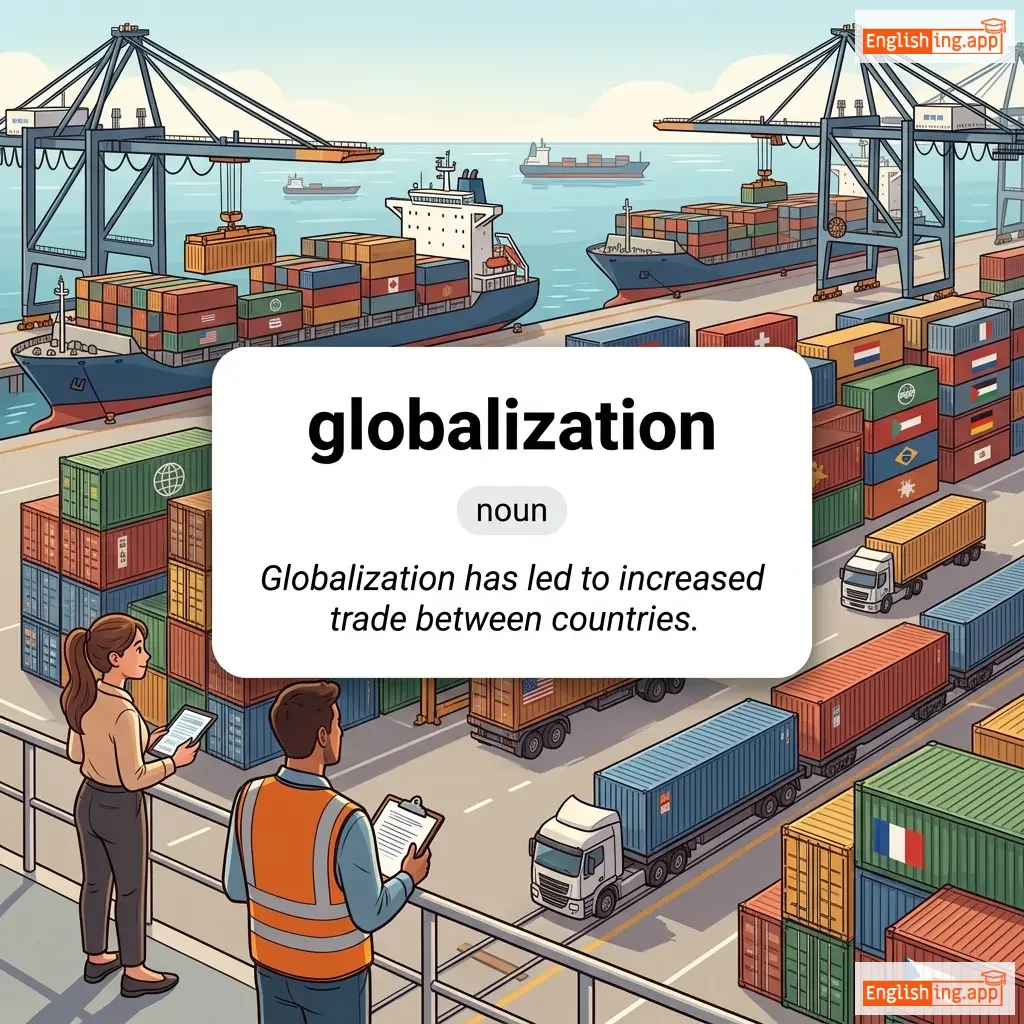
globalization definition card — visual illustration of the meaning
noun
/ˌɡloʊbəlaɪˈzeɪʃən/
mondialisation (mondialisation)

the process by which businesses or other organizations develop international influence or start operating on an international scale

"Globalization has led to increased trade between countries."

"La mondialisation a entraîné une augmentation des échanges commerciaux entre les pays." (La mondialisation a entraîne une augmentation des échanges commerciaux entre les pays.)
verb
/ˈɡloʊbəlaɪz/
mondialiser (mondialiser)

to make something worldwide in scope or application; to integrate into a global system

"Many companies globalize their operations to reach international markets."

"De nombreuses entreprises mondialisent leurs activités pour atteindre des marchés internationaux." (De nombreuses entreprises mondialisent leurs activites pour atteindre des marches internationaux)
noun
/ɡloʊb/
globe (globe)

a spherical model of Earth or another planet; the world itself

"Students used a globe to study the continents."

"Les étudiants ont utilisé un globe pour étudier les continents." (Les etudiants ont utilise un globe pour etudier les continents.)
adjective
/ˈɡloʊboʊs/
globulaire (globulaire)

Spherical or nearly spherical in shape.

"The cactus has large globose fruits."

"Le cactus a de gros fruits globulaires." (Le cactus a de gros fruits globulaires.)
adjective
/ˈɡlɑːbjələr/
sphérique (spherique)

Having the shape of a globe; spherical.

"The scientist studied the globular cluster of stars."

"Le scientifique a étudié le groupe globulaire d'étoiles." (Le scientifique a étudié le groupe globulaire d'étoiles.)
noun
/ɡluːm/
obscurité; tristesse; mélancolie (obscurite, tristesse, melancolie)

partial or total darkness; a state of dejection or despondency

"The thick clouds cast a gloom over the valley, making everything appear dark and dreary."

"Les nuages épais ont jeté une obscurité sur la vallée, rendant tout sombre et morose." (Les nuages epais ont jete une obscurite sur la vallee, rendant tout sombre et morose.)
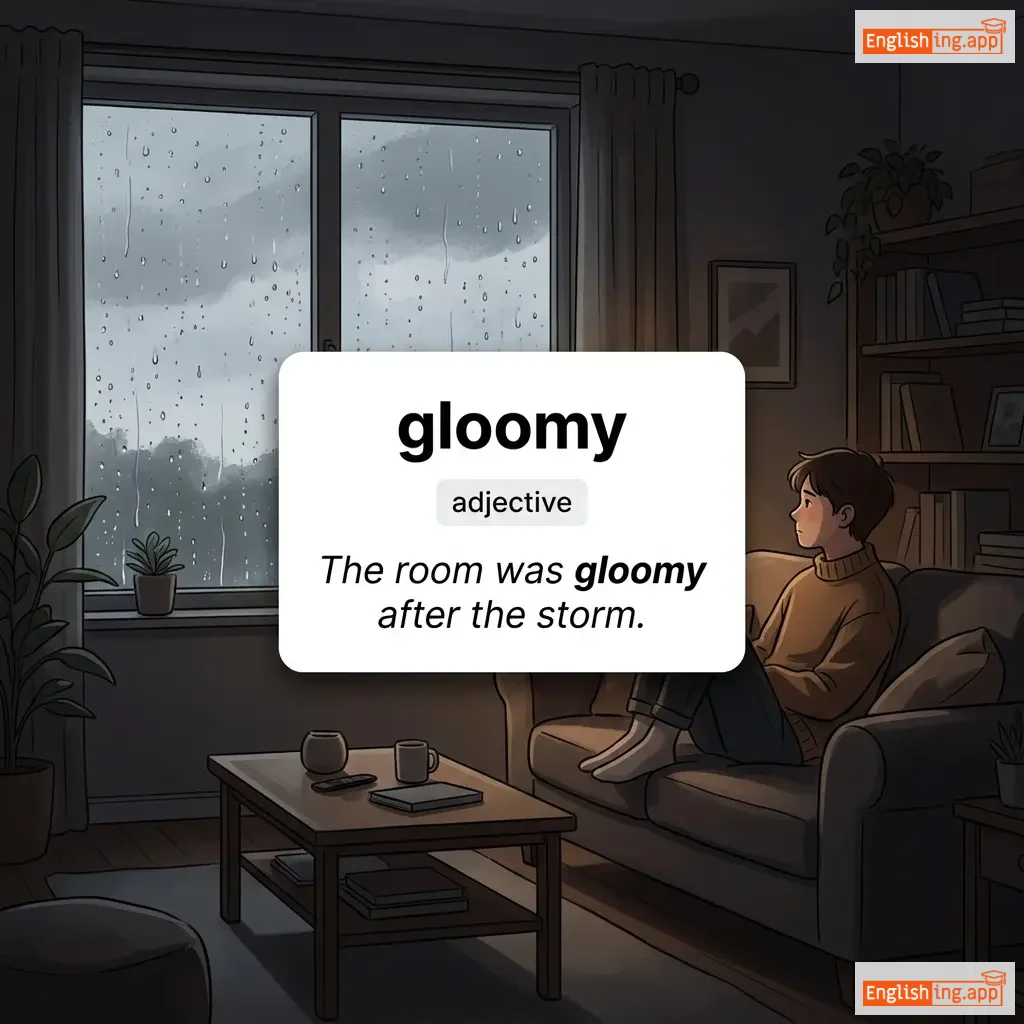
gloomy definition card — visual illustration of the meaning
adjective
/ˈɡluːmi/
lugubre (lugubre)

Dark or poorly lit, making it hard to see; also refers to being sad or pessimistic.

"The room was gloomy after the storm."

"La pièce était lugubre après la tempête." (La piece etait lugubre apres la tempete.)
glorify definition card — visual illustration of the meaning
verb
/ˈɡlɔːrɪfaɪ/
glorifier (glorifier)

to praise or honor someone or something; to make something seem better than it is

"The movie glorifies war heroes."

"Le film glorifie les héros de guerre." (Le film glorifie les héros de guerre.)
adjective
/ˈɡlɔː.ri.əs/
glorieux (glorieux)

having great beauty, magnificence, or deserving admiration and praise

"It was a glorious day filled with sunshine and joy."

"C'était un jour glorieux, rempli de soleil et de joie." (C'était un jour glorieux, rempli de soleil et de joie.)
noun
/ˈɡlɔːri/
gloire (gloire)

great honor, praise, or fame achieved by doing something remarkable

"The athlete won glory for his country with his performance."

"L'athlète a gagné de la gloire pour son pays grâce à sa performance." (L'athlete a gagne de la gloire pour son pays grace a sa performance.)
noun
/ɡlɒs/
surface brillante / explication (surface brillante / explication)

a shiny surface or an explanation of a word or phrase

"The table had a beautiful gloss after polishing."

"La table avait une belle brillance après le polissage." (La table avait une belle brillance après le polissage.)
phrasal verb
/ɡlɒs ˈoʊ.vər/
passer sous silence / minimiser (passer sous silence / minimiser)

to avoid discussing something unpleasant or make it seem less important

"The report glossed over the company's financial problems."

"Le rapport a passé sous silence les problèmes financiers de l'entreprise." (Le rapport a passe sous silence les problemes financiers de l'entreprise.)
noun
/ˈɡlɒs.ər.i/
glossaire (glossaire)

an alphabetical list of terms with definitions, often found at the end of a book

"The textbook includes a glossary of key terms at the back."

"Le manuel inclut un glossaire des termes clés à la fin." (Le manuel inclut un glossaire des termes cles a la fin.)
verb
/ˈɡlɒs.oʊ.vər/
passer sous silence (passer sous silence)

an informal or non-standard variant of 'gloss over', meaning to ignore or minimize something

"He tried to glossover his mistakes during the meeting."

"Il a essayé de passer sous silence ses erreurs pendant la réunion." (Il a essayé de passer sous silence ses erreurs pendant la réunion.)
adjective
/ˈɡlɒsi/
brillant (brillant)

Shiny and smooth in appearance; attractive on the surface but sometimes lacking depth.

"She bought a glossy magazine from the store."

"Elle a acheté un magazine brillant au magasin." (Elle a acheté un magazine brillant au magasin.)
noun
/ɡlʌv/
gant (gant)

A covering for the hand with separate parts for the fingers and thumb.

"She wore gloves to protect her hands from the cold."

"Elle a porté des gants pour protéger ses mains du froid." (Elle a porté des gants pour protéger ses mains du froid.)
noun
/ɡlʌvz/
gants (gants)

coverings for the hands with separate parts for each finger

"She wore warm gloves to protect her hands from the cold."

"Elle a mis des gants chauds pour protéger ses mains du froid." (Elle a mis des gants chauds pour protéger ses mains du froid.)
verb
/ɡloʊ/
briller (briller)

To shine with a steady light, often softly; to radiate warmth or happiness.

"The lanterns glowed softly in the dark."

"Les lanternes brillaient doucement dans l'obscurité." (Les lanternes brillaient doucement dans l'obscurité.)
verb
/ˈɡlaʊ.ər/
regarder avec colère (regarder avec colère)

To look at someone with an angry or sullen expression.

"He glowered at his rival across the room."

"Il regarda son rival de l'autre côté de la pièce avec colère." (Il regarda son rival de l'autre côté de la pièce avec colère.)
noun
/ɡluː/
colle (colle)

a sticky substance used for sticking objects or materials together; an adhesive

"The children used white glue to attach the colorful paper pieces to their art project."

"Les enfants ont utilisé de la colle blanche pour coller les morceaux de papier coloré sur leur projet artistique." (Les enfants ont utilise de la colle blanche pour coller les morceaux de papier colore sur leur projet artistique.)
adjective
/ɡlʌm/
triste (triste)

Looking or feeling sad, gloomy, or dejected.

"She felt glum after hearing the bad news."

"Elle se sentait triste après avoir entendu les mauvaises nouvelles." (Elle se sentait triste après avoir entendu les mauvaises nouvelles.)
noun
/ɡlʌt/
excédent d'approvisionnement (excedent d'approvisionnement)

An excessive supply of something; more than is needed.

"There was a glut of cheap smartphones in the market."

"Il y avait un excédent de smartphones bon marché sur le marché." (Il y avait un excédent de smartphones bon marché sur le marché.)
adjective
/ˈɡluː.tɪ.nəs/
gluant (gluant)

Having a sticky or glue-like texture.

"The glutinous rice stuck together in the pot."

"Le riz gluant est resté collé dans la casserole." (Le riz gluant est resté collé dans la casserole.)
noun
/ˈɡlʌt.ən/
glouton (glouton)

A person who eats or consumes excessively.

"He was called a glutton for eating so much at the party."

"Il a été appelé glouton pour avoir mangé autant à la fête." (Il a été appelé glouton pour avoir mangé autant à la fête.)
adjective
/ˈɡlʌt.ən.əs/
glouton (glouton)

Excessively greedy in eating or consuming.

"His gluttonous appetite shocked everyone at the dinner table."

"Son appétit glouton a choqué tout le monde à la table du dîner." (Son appétit glouton a choqué tout le monde à la table du dîner.)
noun
/ˈɡlʌtəni/
gloutonnerie (gloutonnerie)

Excessive eating or drinking; overindulgence in food or drink.

"His gluttony during the festival left him feeling sick."

"Sa gloutonnerie pendant le festival l'a laissé malade." (Sa gloutonnerie pendant le festival l'a laissé malade.)
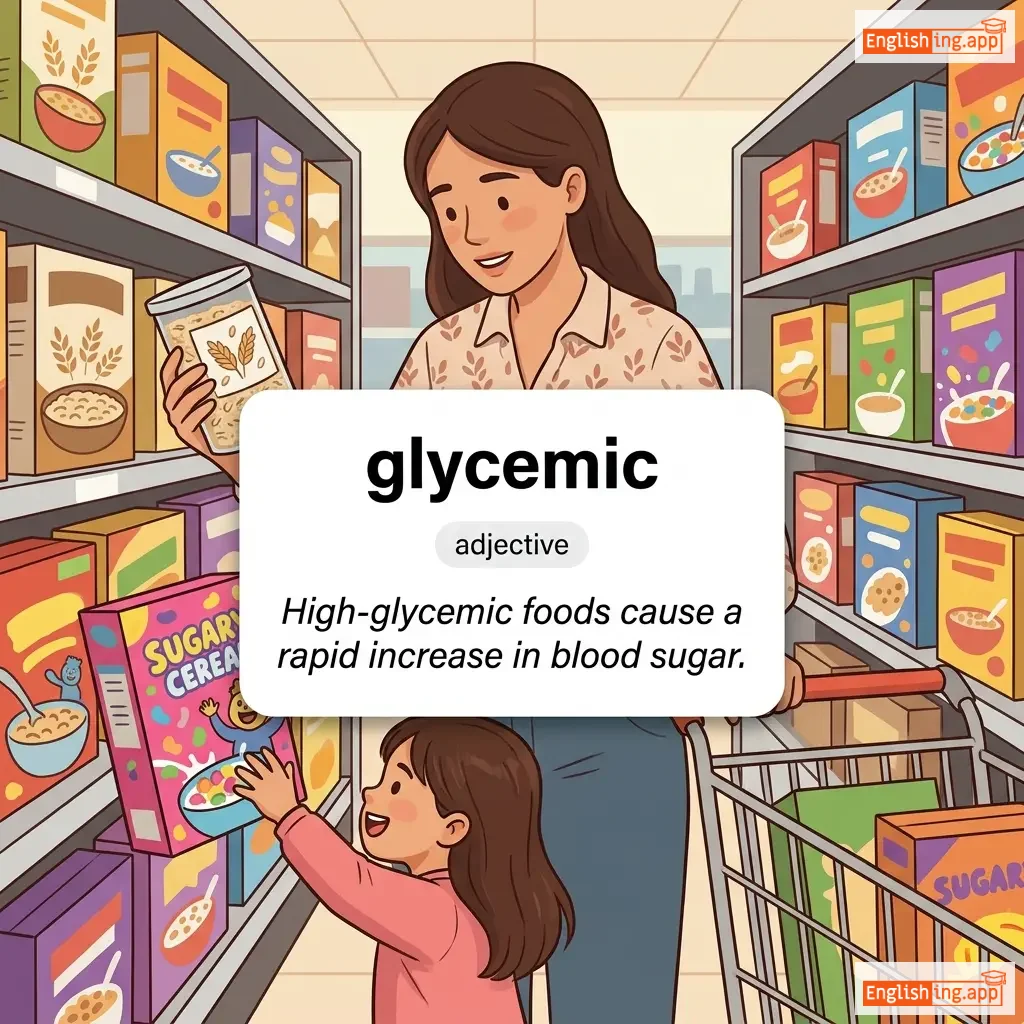
glycemic definition card — visual illustration of the meaning
adjective
/ɡlaɪˈsiː.mɪk/
lié au glucose (lie au glucose)

Relating to the presence of glucose in the blood and how foods affect blood sugar levels.

"High-glycemic foods cause a rapid increase in blood sugar."

"Les aliments à indice glycémique élevé provoquent une augmentation rapide du taux de sucre dans le sang." (Les aliments a indice glycemique eleve provoquent une augmentation rapide du taux de sucre dans le sang.)
verb
/nɑːrl/
torsader (torsader)

To twist into a knotted or distorted form.

"The tree roots began to gnarl around the stones."

"Les racines de l'arbre ont commencé à se tordre autour des pierres." (Les racines de l'arbre ont commencé à se tordre autour des pierres.)
adjective
/nɑːrld/
tordu (tordu)

Twisted, rough, and knotted, especially with age.

"The old man had gnarled hands from years of hard work."

"L'homme âgé avait les mains tordues à force d'années de travail acharné." (L'homme age avait les mains tordues à force d'années de travail acharné.)
verb
/næʃ/
grincer des dents (grincer des dents)

to grind or strike the teeth together, often in anger or frustration

"He began to gnash his teeth in rage."

"Il a commencé à grincer des dents de rage." (Il a commencé à grincer des dents de rage.)
noun
/næt/
moucheron (moucheron)

a small flying insect that bites people and animals

"The gnat buzzed around my head while I was reading."

"Le moucheron bourdonnait autour de ma tête pendant que je lisais." (Le moucheron bourdonnait autour de ma tête pendant que je lisais.)
noun
/noʊm/
gnome (gnome)

a small mythical creature, often depicted as a bearded man living underground; also a figurine used in gardens

"The garden was decorated with a gnome statue."

"Le jardin était décoré avec une statue de gnome." (Le jardin etait decore avec une statue de gnome.)
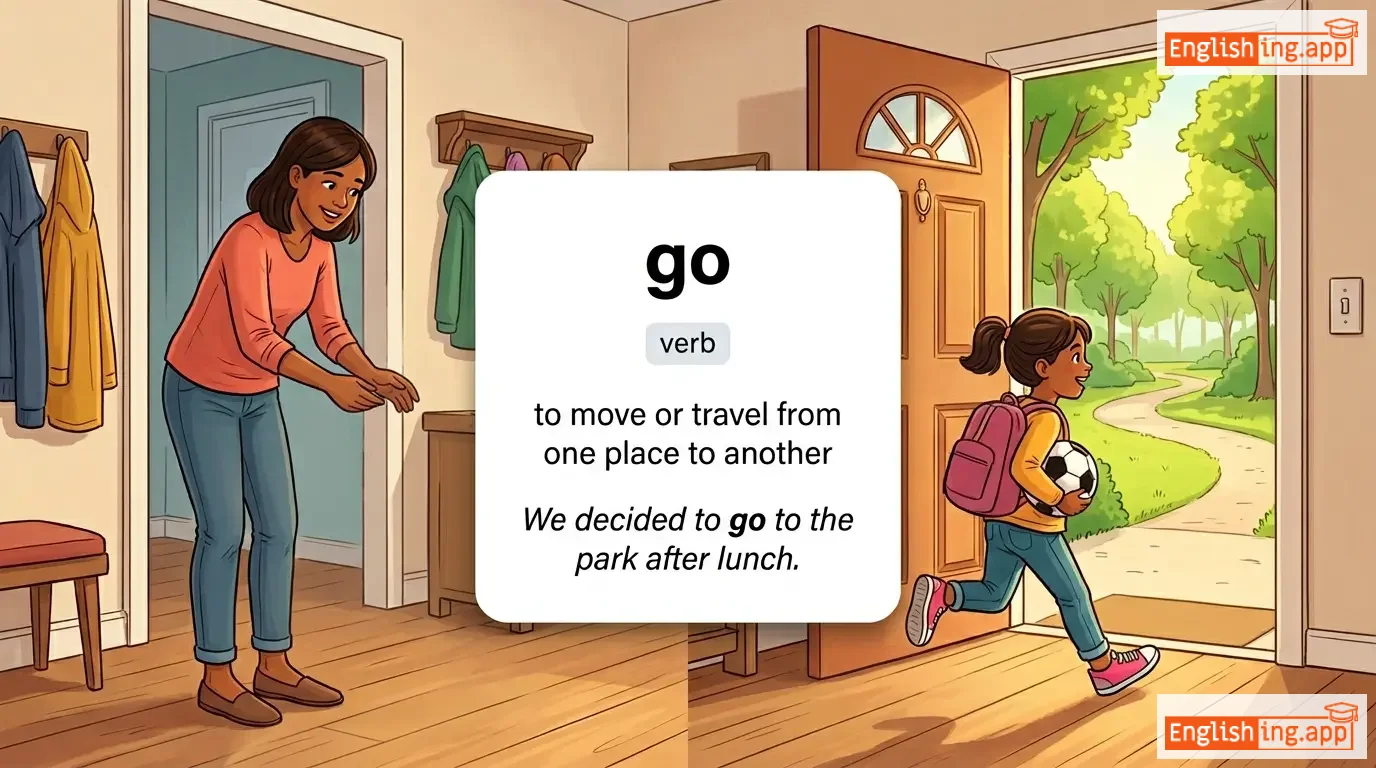
go definition card — visual illustration of the meaning
verb
/ɡoʊ/
aller (aller)

to move or travel from one place to another

"We decided to go to the park after lunch."

"Nous avons décidé d'aller au parc après le déjeuner." (Nous avons decide d'aller au parc apres le dejeuner.)
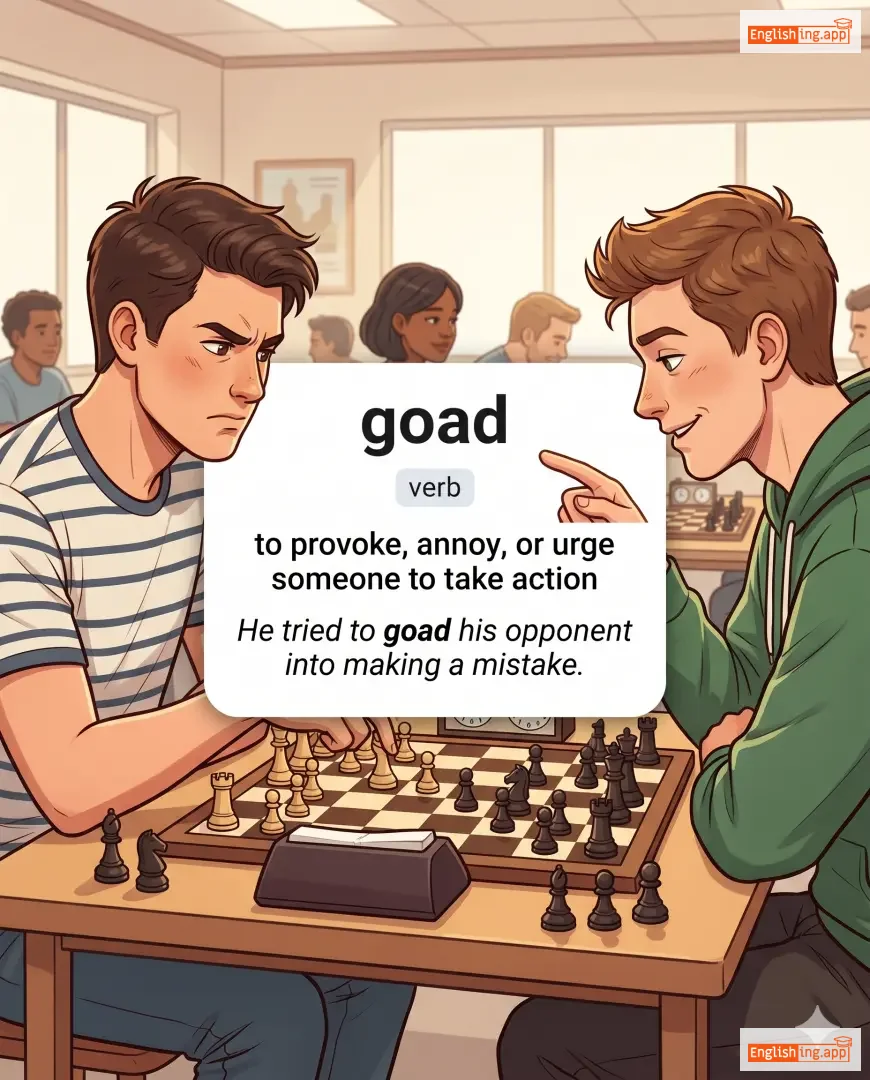
goad definition card — visual illustration of the meaning
verb
/ɡoʊd/
inciter (inciter)

to provoke, annoy, or urge someone to take action

"He tried to goad his opponent into making a mistake."

"Il a essayé d'inciter son adversaire à faire une erreur." (Il a essayé d'inciter son adversaire à faire une erreur.)
noun
/ɡoʊl/
but (but)

an aim or desired result; a point scored in a game

"Her main goal is to become a doctor."

"Son principal but est de devenir médecin." (Son principal but est de devenir médecin.)