Vocabulaires

Découvrez, apprenez et maîtrisez le vocabulaire anglais

noun
/ˈfɑːðər/
bonheur (bonheur)

A male parent of a child.

"His father taught him how to ride a bicycle."

"Elle ne pouvait pas cacher son bonheur lorsqu'elle a reçu le prix." (Elle ne pouvait pas cacher son bonheur lorsqu'elle a reçu le prix.)
adjective
/ˈfɑːð.ər.ləs/
orphelin de père (orphelin de père)

without a father

"The fatherless child relied on the support of his community."

"L'enfant orphelin de père comptait sur le soutien de sa communauté." (L'enfant orphelin de père comptait sur le soutien de sa communauté.)
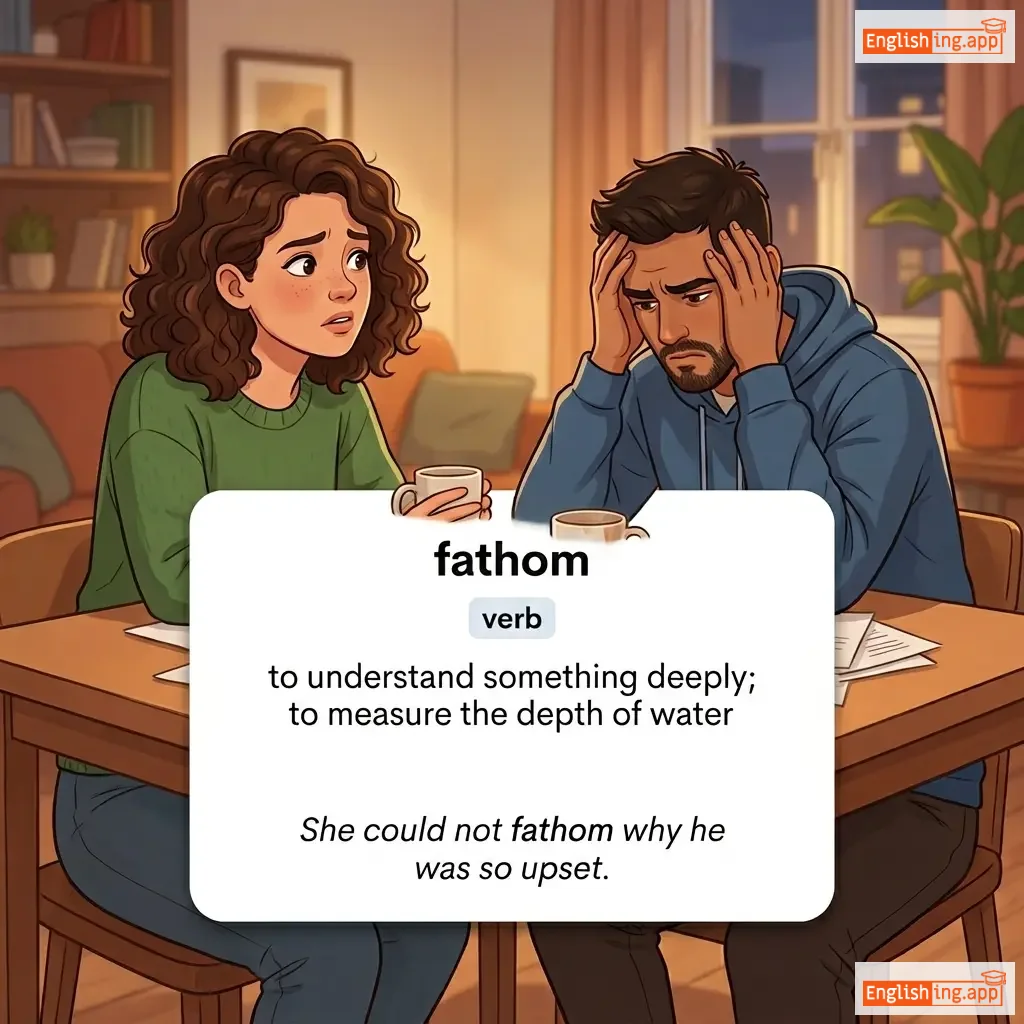
fathom definition card — visual illustration of the meaning
verb
/ˈfæð.əm/
comprendre, saisir profondément (comprendre, saisir profondément)

to understand something deeply; to measure the depth of water

"She could not fathom why he was so upset."

"Elle ne pouvait pas comprendre pourquoi il était si contrarié." (Elle ne pouvait pas comprendre pourquoi il était si contrarié.)
adjective
/ˈfæð.əm.ləs/
incompréhensible ou insondable (incomprehensible ou insondable)

impossible to understand or measure; very deep

"The ocean seemed fathomless as it stretched to the horizon."

"L'océan semblait insondable à mesure qu'il s'étendait jusqu'à l'horizon." (L'ocean semblait insondable a mesure qu'il s'etendait jusqu'a l'horizon.)
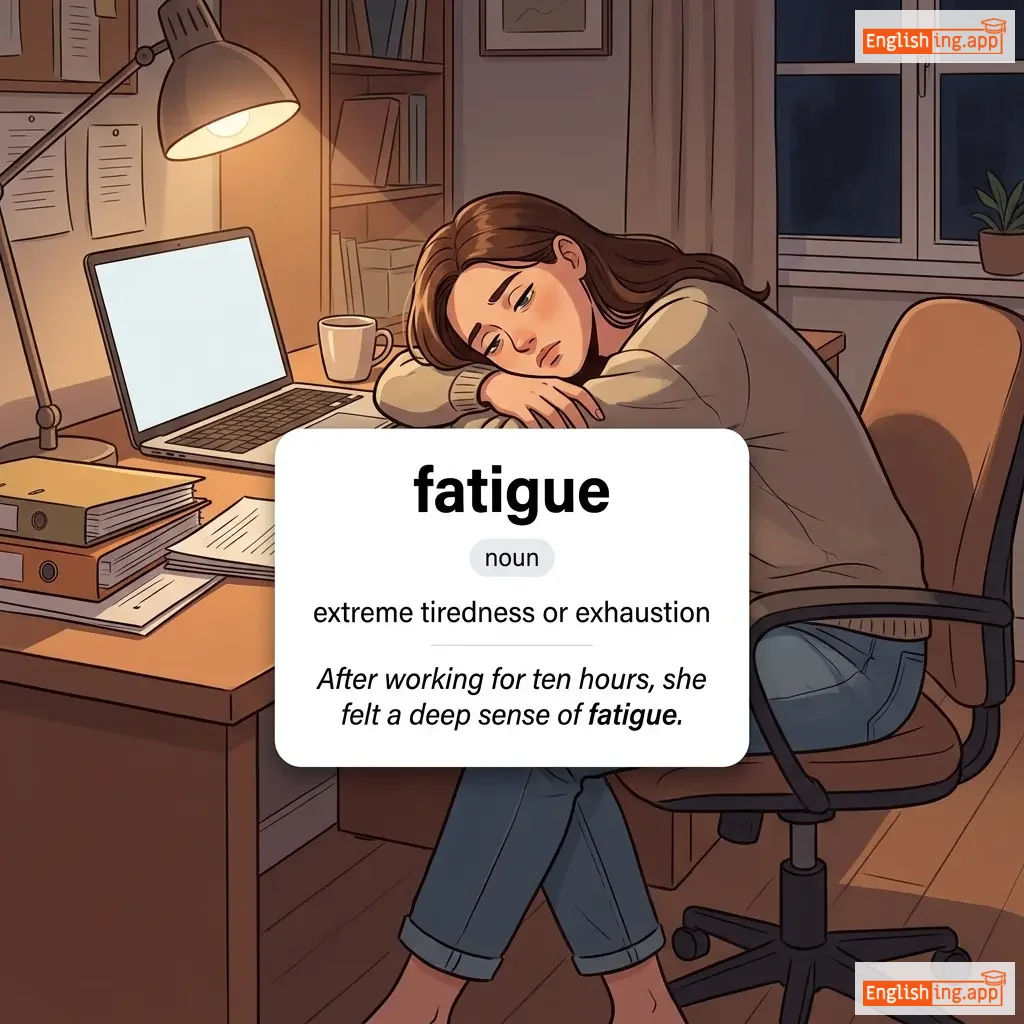
fatigue definition card — visual illustration of the meaning
noun
/fəˈtiːɡ/
fatigue (fatigue)

extreme tiredness or exhaustion

"After working for ten hours, she felt a deep sense of fatigue."

"Après avoir travaillé dix heures, elle a ressenti une grande fatigue." (Après avoir travaillé dix heures, elle a ressenti une grande fatigue.)
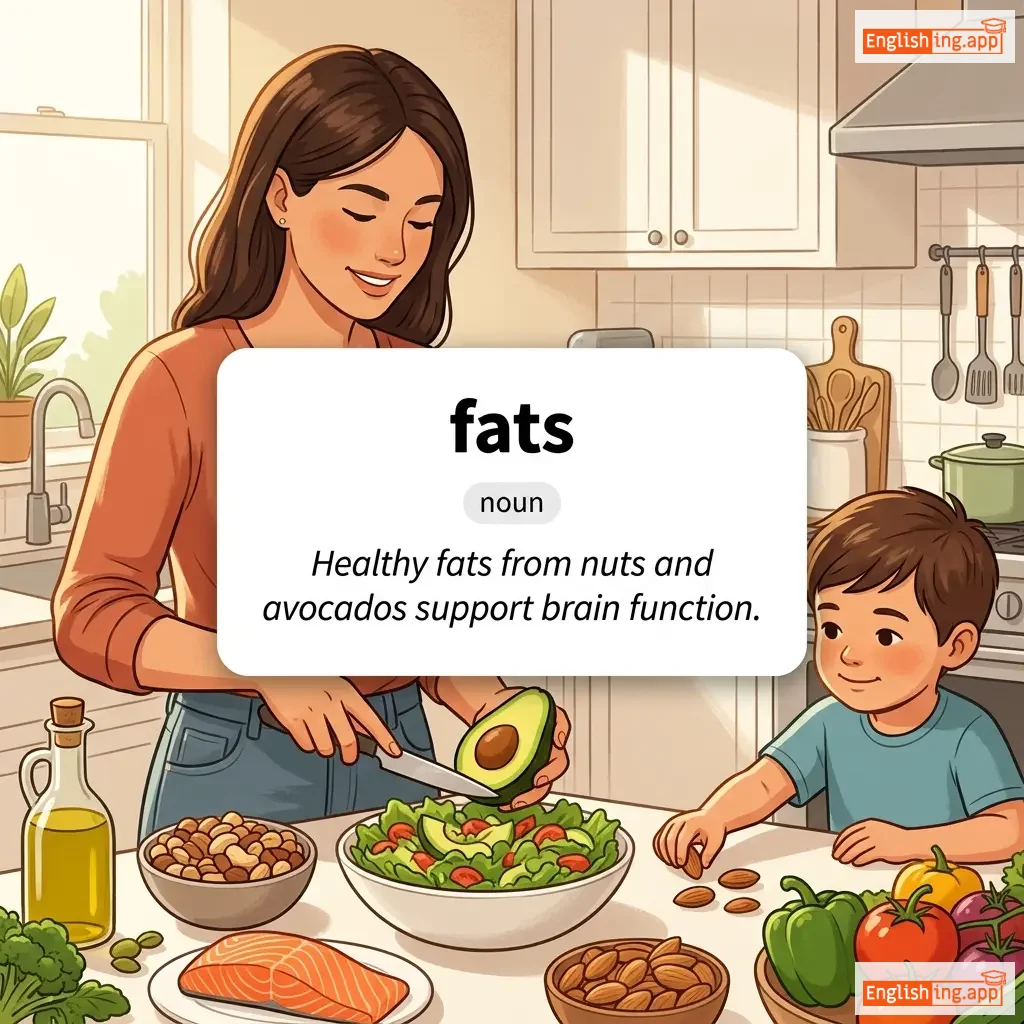
fats definition card — visual illustration of the meaning
noun
/fæts/
graisses (graisses)

Essential macronutrients that provide energy, support cell growth, and protect organs while helping absorb vitamins.

"Healthy fats from nuts and avocados support brain function."

"Les graisses saines des noix et des avocats soutiennent la fonction cérébrale." (Les graisses saines des noix et des avocats soutiennent la fonction cerebrale.)
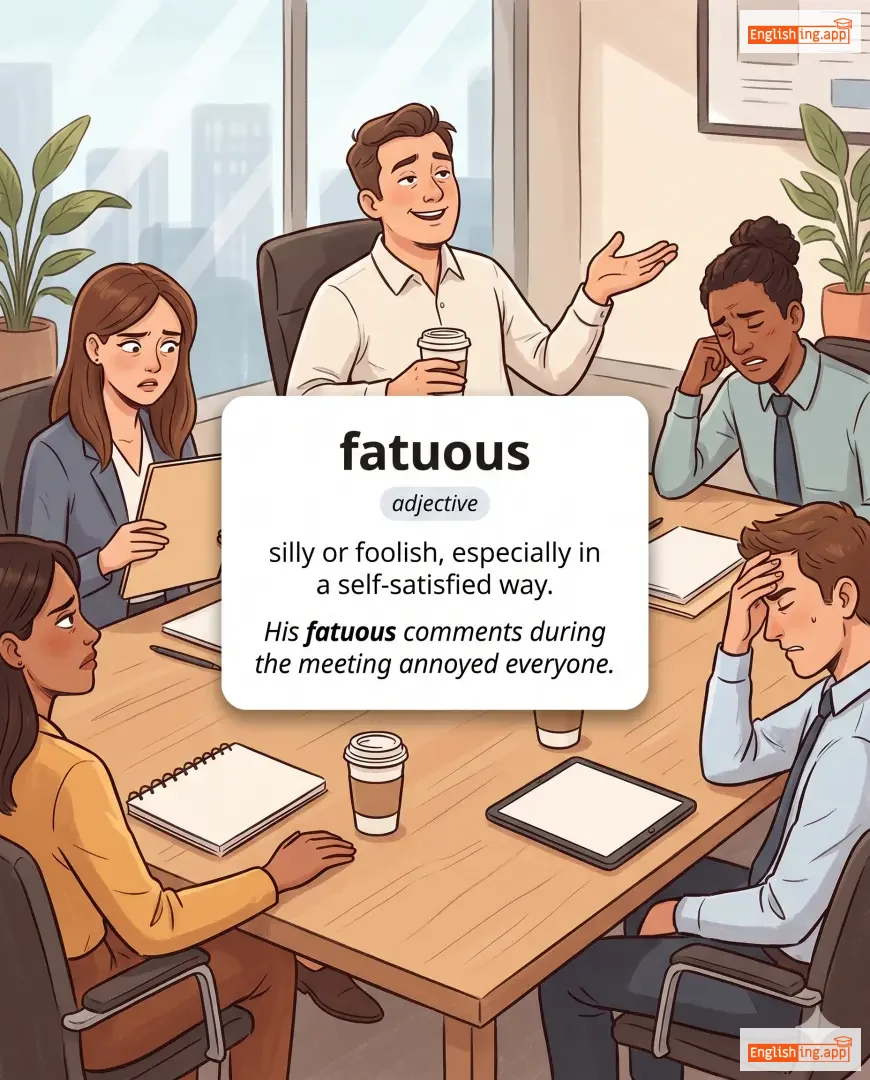
fatuous definition card — visual illustration of the meaning
adjective
/ˈfætʃuəs/
fatuo (fatuo)

silly or foolish, especially in a self-satisfied way

"His fatuous comments during the meeting annoyed everyone."

"Ses commentaires fatuos pendant la réunion ont agacé tout le monde." (Ses commentaires fatuos pendant la réunion ont agacé tout le monde.)
noun
/fɔːlt/
faute (faute)

A mistake, error, or responsibility for a problem.

"It was not her fault that the train was late."

"Ce n'était pas de sa faute si le train était en retard." (Ce n'était pas de sa faute si le train était en retard.)
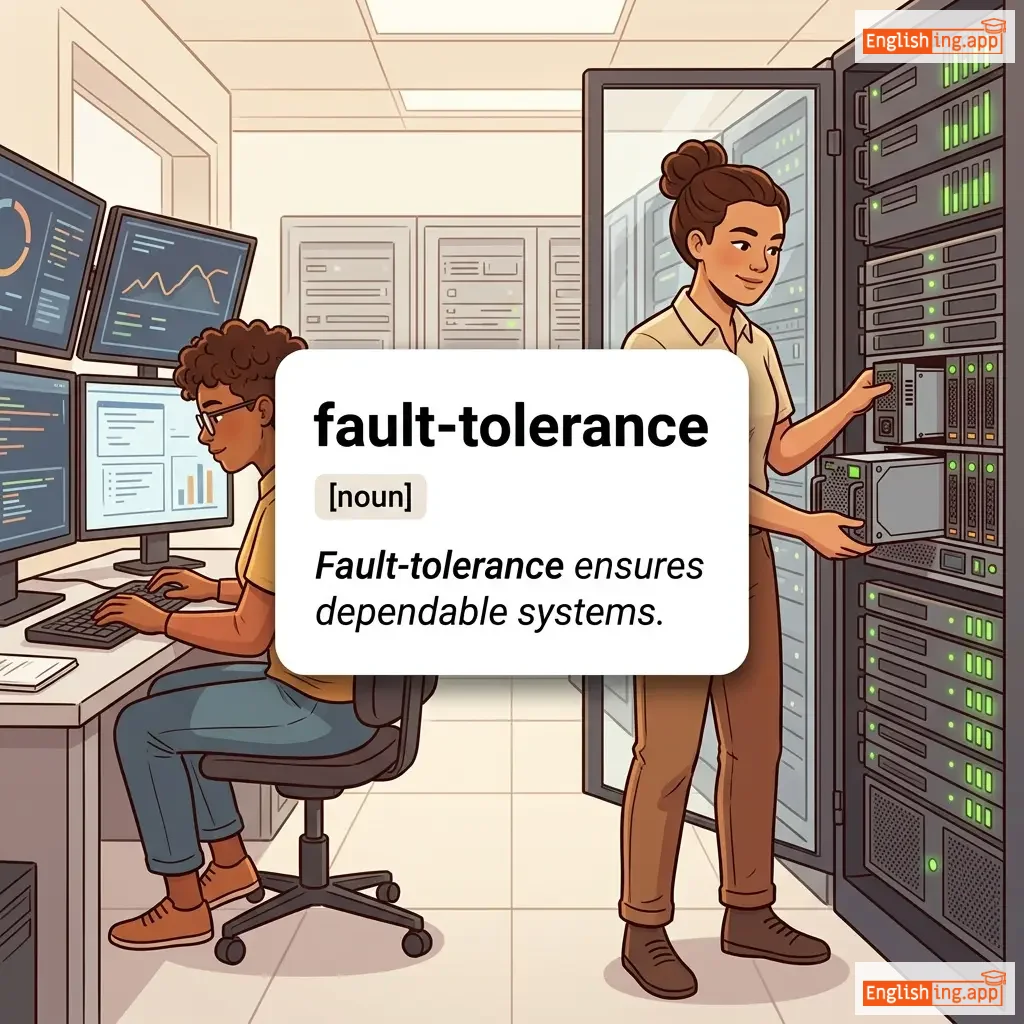
fault-tolerance definition card — visual illustration of the meaning
noun
fɔːlt ˈtɒl.ər.əns
tolérance aux pannes (tolerance aux pannes)

The ability of a system to continue operating properly in the event of the failure of some of its components.

"Fault-tolerance ensures dependable systems."

"La tolérance aux pannes assure des systèmes fiables." (La tolérance aux pannes assure des systèmes fiables.)
noun
/ˈfɔːltˌfaɪndər/
chercheur de défauts (chercheur de défauts)

a person who habitually finds fault with others

"He is such a faultfinder that nothing anyone does is ever good enough."

"C'est un chercheur de défauts au point que rien de ce que fait quelqu'un n'est jamais assez bien." (C'est un chercheur de défauts au point que rien de ce que fait quelqu'un n'est jamais assez bien.)
adjective
/ˈfɔːlti/
défectueux (defectueux)

Having defects or imperfections; not working properly

"The device stopped working because it was faulty."

"L'appareil a cessé de fonctionner parce qu'il était défectueux." (L'appareil a cesse de fonctionner parce qu'il etait defectueux)
noun
/fɔːn/
faune (créature mythologique) (faune (creature mythologique))

a mythological creature that is half human and half goat

"The sculpture depicted a playful faun dancing in the forest."

"La sculpture représentait un faune dansant et jouant dans la forêt." (La sculpture representait un faune dansant et jouant dans la foret.)
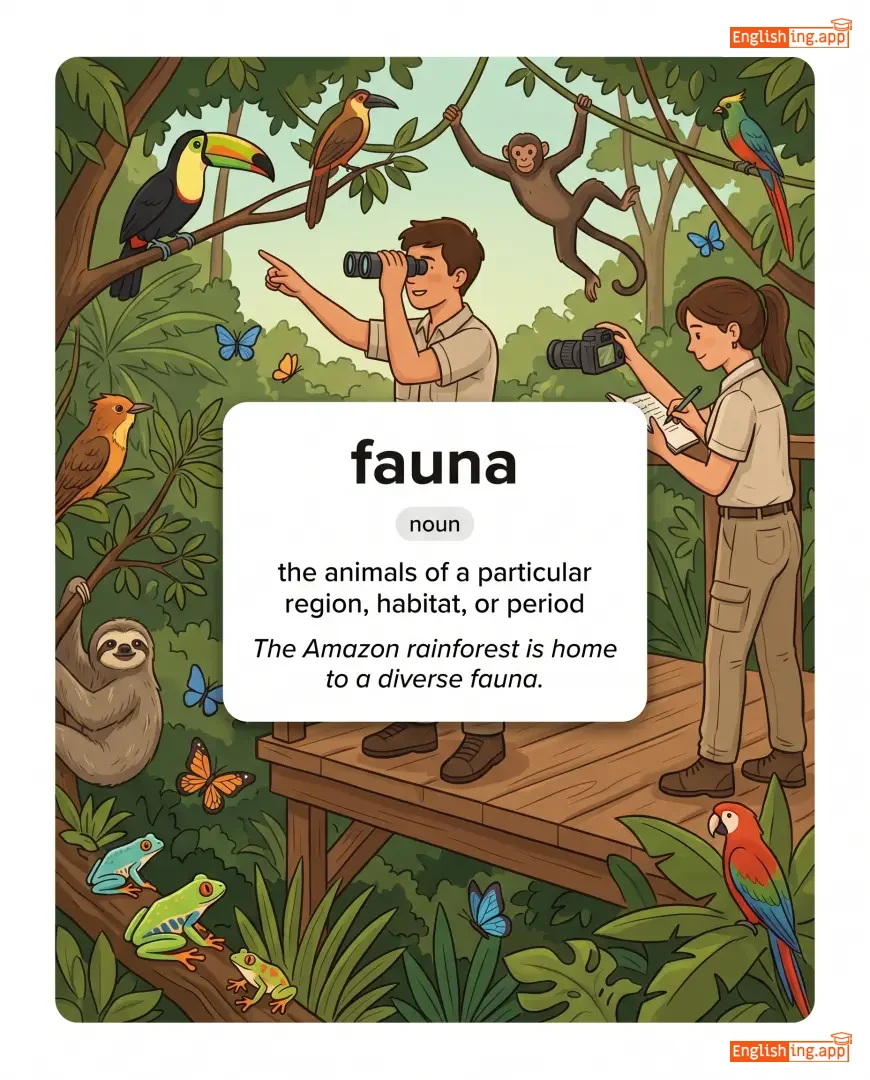
fauna definition card — visual illustration of the meaning
noun
/ˈfɔːnə/
faune (faune)

the animals of a particular region, habitat, or period

"The Amazon rainforest is home to a diverse fauna."

"La forêt amazonienne abrite une faune diversifiée." (La foret amazonienne abrite une faune diversifiee.)
noun
/foʊ ˈpɑː/
faute sociale (faute sociale)

a social blunder or mistake in etiquette

"He committed a major faux pas by forgetting her birthday."

"Il a commis une grande faute sociale en oubliant son anniversaire." (Il a commis une grande faute sociale en oubliant son anniversaire.)
noun
/ˈfeɪvər/
faveur (faveur)

An act of kindness or approval.

"She asked him for a small favor."

"Elle lui a demandé une petite faveur." (Elle lui a demande une petite faveur.)
adjective
/ˈfeɪvərəbəl/
favorable (favorable)

expressing approval or support; advantageous

"The weather conditions were favorable for the outdoor event."

"Les conditions météorologiques étaient favorables pour l'événement en plein air." (Les conditions météorologiques étaient favorables pour l'événement en plein air.)
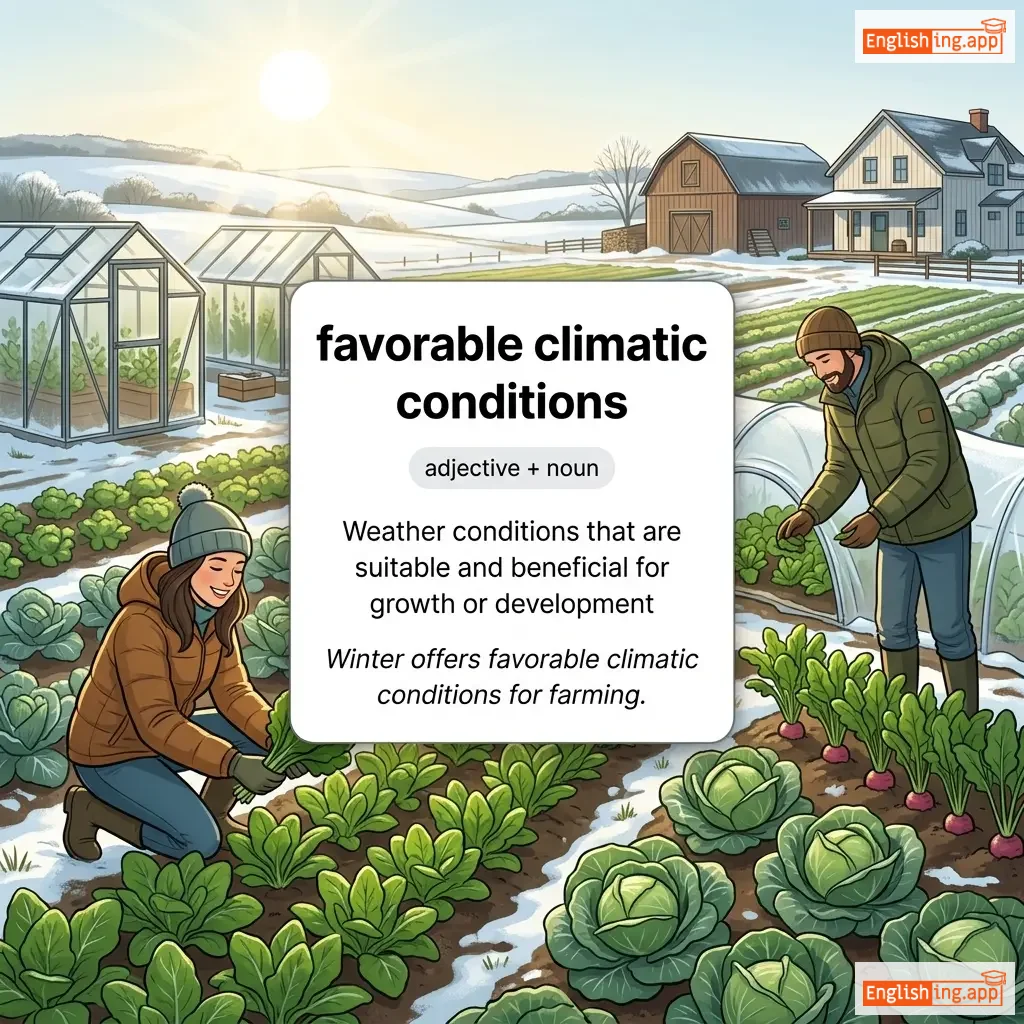
favorable climatic conditions definition card — visual illustration of the meaning
adjective + noun
ˈfeɪvərəbəl klaɪˈmætɪk kənˈdɪʃənz
conditions climatiques favorables (conditions climatiques favorables)

Weather conditions that are suitable and beneficial for growth or development

"Winter offers favorable climatic conditions for farming."

"L'hiver offre des conditions climatiques favorables à l'agriculture." (L'hiver offre des conditions climatiques favorables à l'agriculture.)
adjective, noun
/ˈfeɪvərɪt/
préféré (prefere)

Preferred over all others; something or someone especially liked.

"Chocolate is my favorite ice cream flavor."

"Le chocolat est ma saveur de glace préférée." (Le chocolat est ma saveur de glace preferee.)
noun
/ˈfeɪvərɪtɪzəm/
favoritisme (favoritisme)

the practice of giving unfair preferential treatment to one person or group

"The manager was accused of favoritism towards certain employees."

"Le responsable a été accusé de favoritisme envers certains employés." (Le responsable a été accusé de favoritisme envers certains employés.)
noun
/ˈfeɪ.vər/
faveur; aide; gentillesse (faveur, aide, gentillesse)

approval, support, or liking for someone or something; a kind or helpful act

"Could you do me a favour and help me move this heavy box?"

"Pourriez-vous me rendre un service et m'aider à déplacer cette boîte lourde ?" (Pourriez-vous me rendre un service et m'aider à déplacer cette boîte lourde ?)
adjective
/ˈfeɪvərəbl/
favorable (favorable)

Expressing approval, support, or positivity; advantageous or beneficial

"The weather conditions were favourable for the outdoor event."

"Les conditions météorologiques étaient favorables pour l'événement en plein air." (Les conditions meteorologiques etaient favorables pour l'evenement en plein air.)
verb
/fɔːn/
flatter (flatter)

to show exaggerated flattery or affection; to seek favor by servile behavior

"He fawned over the boss to get a promotion."

"Il a flatté son patron pour obtenir une promotion." (Il a flatté son patron pour obtenir une promotion.)
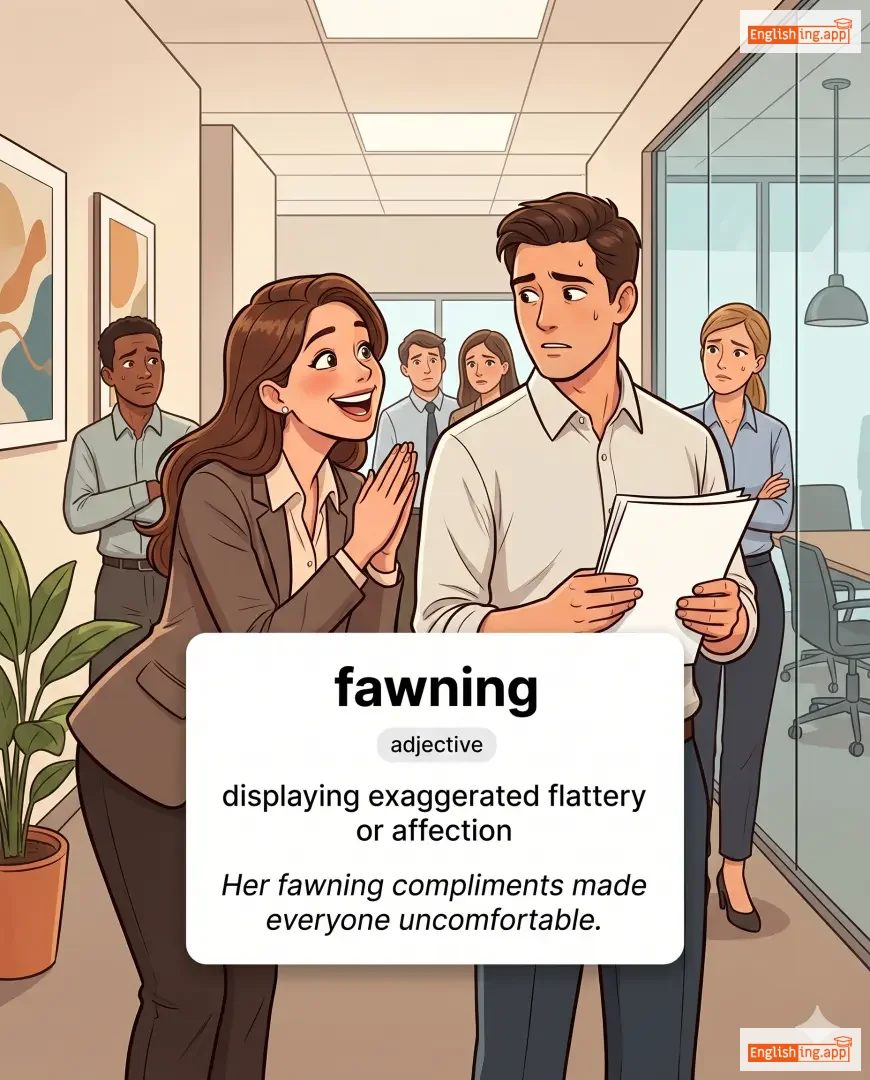
fawning definition card — visual illustration of the meaning
adjective
/ˈfɔːnɪŋ/
flatterie exagérée (flatterie exagérée)

displaying exaggerated flattery or affection

"Her fawning compliments made everyone uncomfortable."

"Ses compliments exagérés ont mis tout le monde mal à l'aise." (Ses compliments exagérés ont mis tout le monde mal à l'aise.)
verb
/feɪz/
perturber (perturber)

to disturb or disconcert someone; to cause to feel unsettled

"She was not fazed by the unexpected question."

"Elle n'a pas été perturbée par la question inattendue." (Elle n'a pas été perturbée par la question inattendue.)
noun
/ˈfiːəlti/
fidélité et allégeance (fidelite et allegiance)

loyalty or allegiance, especially to a sovereign or lord

"The knight swore fealty to his king."

"Le chevalier prêta fidélité à son roi." (Le chevalier preta fidelite a son roi.)
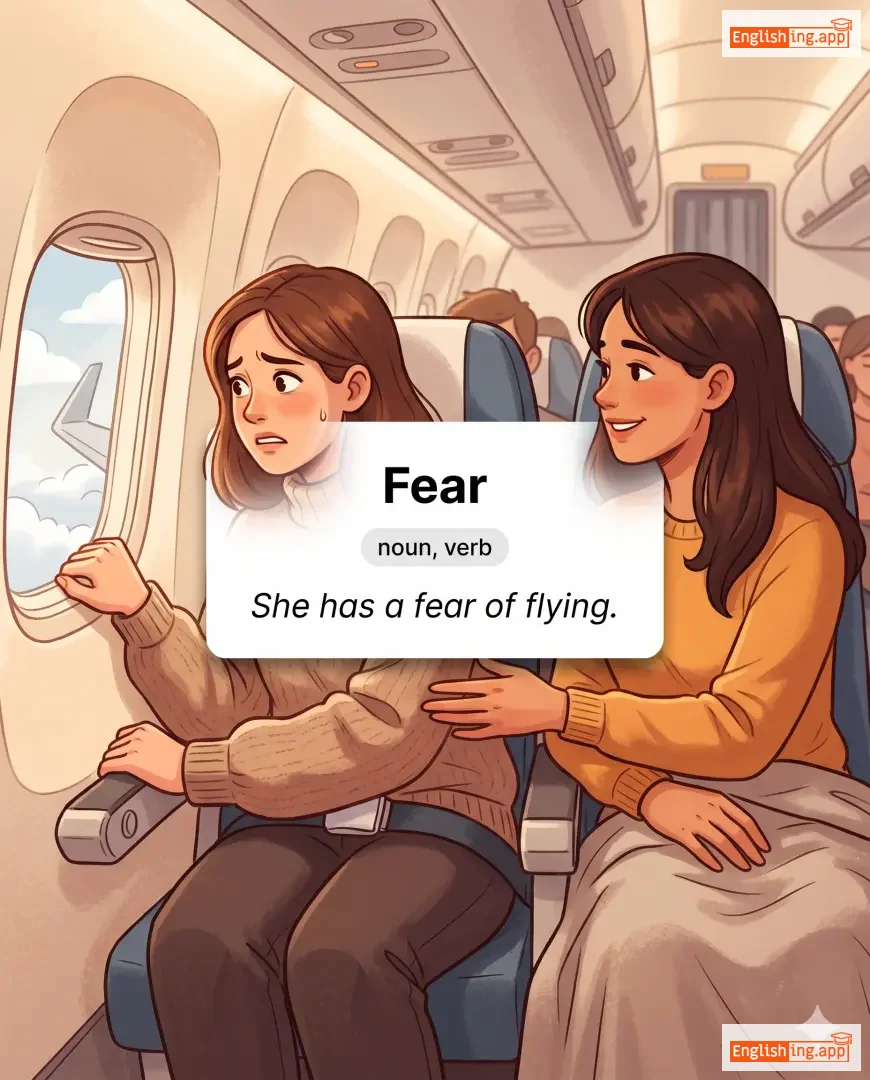
Fear definition card — visual illustration of the meaning
noun, verb
/fɪr/
peur (peur)

An unpleasant emotion caused by the belief that someone or something is dangerous.

"She has a fear of flying."

"Elle a peur de voler." (elle a peur de voler.)
adjective
/ˈfɪr.fəl/
craintif (craintif)

feeling afraid or showing fear

"She was fearful of walking alone at night."

"Elle avait peur de marcher seule la nuit." (Elle avait peur de marcher seule la nuit.)
feasibility definition card — visual illustration of the meaning
noun
ˌfiː.zəˈbɪl.ə.ti
faisabilité, viabilité, possibilité (faisabilité, viabilité, possibilité)

Possibility, practicality, viability.

"The feasibility study proved the project viable."

"L'étude de faisabilité a prouvé que le projet était viable." (L'étude de faisabilité a prouvé que le projet était viable.)
adjective
/ˈfiːzəbl/
réalisable (realisable)

possible to do easily or conveniently; practical and workable

"It is feasible to complete the project within two months."

"Il est réalisable de terminer le projet en deux mois." (Il est réalisable de terminer le projet en deux mois.)
noun
/fiːst/
festin; banquet (festin, banquet)

a large meal, typically one in celebration of something; an annual religious celebration

"The wedding feast included traditional dishes from both families' cultures."

"Le festin de mariage comprenait des plats traditionnels des deux cultures familiales." (Le festin de mariage comprenait des plats traditionnels des deux cultures familiales.)
noun
/fiːt/
exploit (exploit)

an achievement that requires great courage, skill, or strength

"Climbing Mount Everest was a remarkable feat."

"Gravir le mont Everest fut un exploit remarquable." (Gravir le mont Everest fut un exploit remarquable.)
noun
/ˈfɛðər/
plume (plume)

a light, soft structure that covers a bird’s body and enables it to fly

"The bird lost a small feather while flying through the trees."

"L'oiseau a perdu une petite plume en volant à travers les arbres." (L'oiseau a perdu une petite plume en volant a travers les arbres.)
noun
/ˈfiːtʃər/
caractéristique (caracteristique)

a distinctive attribute or aspect of something; a characteristic

"The new phone has a unique camera feature."

"Le nouveau téléphone a une caractéristique unique de caméra." (Le nouveau telephone a une caracteristique unique de camera.)
adjective
/ˈfiːbraɪl/
fiévreux, agité (fievreux, agite)

having or showing the symptoms of a fever; or highly excitable or agitated

"The patient was in a febrile state with high temperature."

"Le patient était dans un état fébrile avec une température élevée." (Le patient etait dans un etat febrile avec une temperature elevee.)
noun
/ˈfɛb.ruˌɛr.i/
février (fevrier)

The second month of the year in the Gregorian calendar, typically having 28 days, or 29 in a leap year.

"My birthday is in February, so I always look forward to this month."

"Mon anniversaire est en février, donc j'attends toujours ce mois avec impatience." (Mon anniversaire est en fevrier, donc j'attends toujours ce mois avec impatience)
adjective
/ˈfɛkləs/
inefficace, irresponsable (inefficace, irresponsable)

lacking initiative or strength of character; irresponsible

"His feckless attitude at work caused several missed deadlines."

"Son attitude inefficace au travail a causé plusieurs délais manqués." (Son attitude inefficace au travail a cause plusieurs delais manques.)
adjective
/ˈfiːkənd/
fertile, productif (fertile, productif)

producing or capable of producing an abundance of offspring or new growth; fertile

"The fecund soil produced a bountiful harvest this year."

"Le sol fertile a produit une récolte abondante cette année." (Le sol fertile a produit une recolte abondante cette annee.)
noun
/fiːˈkʌndɪti/
fécondité, fertilité (fecondite, fertilite)

the ability to produce an abundance of offspring or new growth; fertility

"The fecundity of the river delta supports diverse wildlife."

"La fécondité du delta du fleuve soutient une vie sauvage diversifiée." (La fecondite du delta du fleuve soutient une vie sauvage diversifiee.)
adjective
/ˈfɛdərəl/
fédéral (federal)

Relating to the central government of a federation.

"The federal government passed a new law on healthcare."

"Le gouvernement fédéral a adopté une nouvelle loi sur les soins de santé." (Le gouvernement fédéral a adopté une nouvelle loi sur les soins de santé.)
verb
/ˈfɛdərət/
fédérer (federer)

to unite in a league or federation; to form an alliance

"Several states federated to create a stronger union."

"Plusieurs États se sont fédérés pour créer une union plus forte." (Plusieurs États se sont fédérés pour créer une union plus forte.)
noun
/fiː/
frais (frais)

A payment made for a service or privilege.

"The lawyer charged a high fee for his services."

"L'avocat a facturé des frais élevés pour ses services." (L'avocat a facturé des frais élevés pour ses services.)
adjective
/ˈfiːbl/
faible, fragile (faible, fragile)

lacking physical strength or vigor; weak

"After the illness, she felt too feeble to stand."

"Après la maladie, elle se sentait trop faible pour se lever." (Apres la maladie, elle se sentait trop faible pour se lever.)
adjective
/ˈfiːbəlˌmaɪndɪd/
stupide ou à l'esprit faible (stupide ou a l'esprit faible)

lacking intelligence or mental capacity; foolish or weak-minded

"The feebleminded man struggled to understand basic instructions."

"L'homme à l'esprit faible avait du mal à comprendre les instructions de base." (L'homme a l'esprit faible avait du mal a comprendre les instructions de base.)
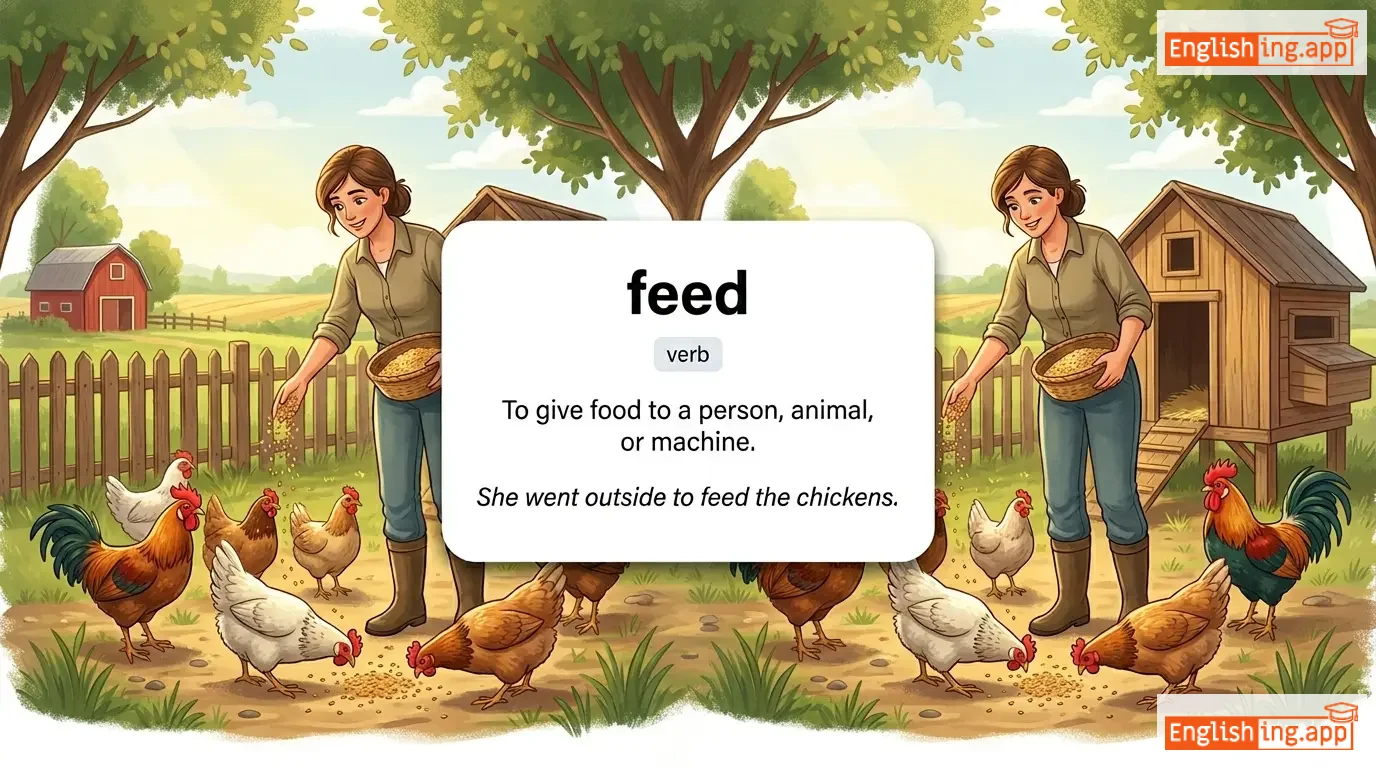
feed definition card — visual illustration of the meaning
verb
/fiːd/
nourrir (nourrir)

To give food to a person, animal, or machine.

"She went outside to feed the chickens."

"elle est sortie nourrir les poules." (elle est sortie nourrir les poules.)
noun
/ˈfiːdbæk/
retour (retour)

information or opinions about how well someone is doing something

"She asked her teacher for feedback on her essay."

"Elle a demandé à son professeur des retours sur son essai." (Elle a demandé à son professeur des retours sur son essai.)
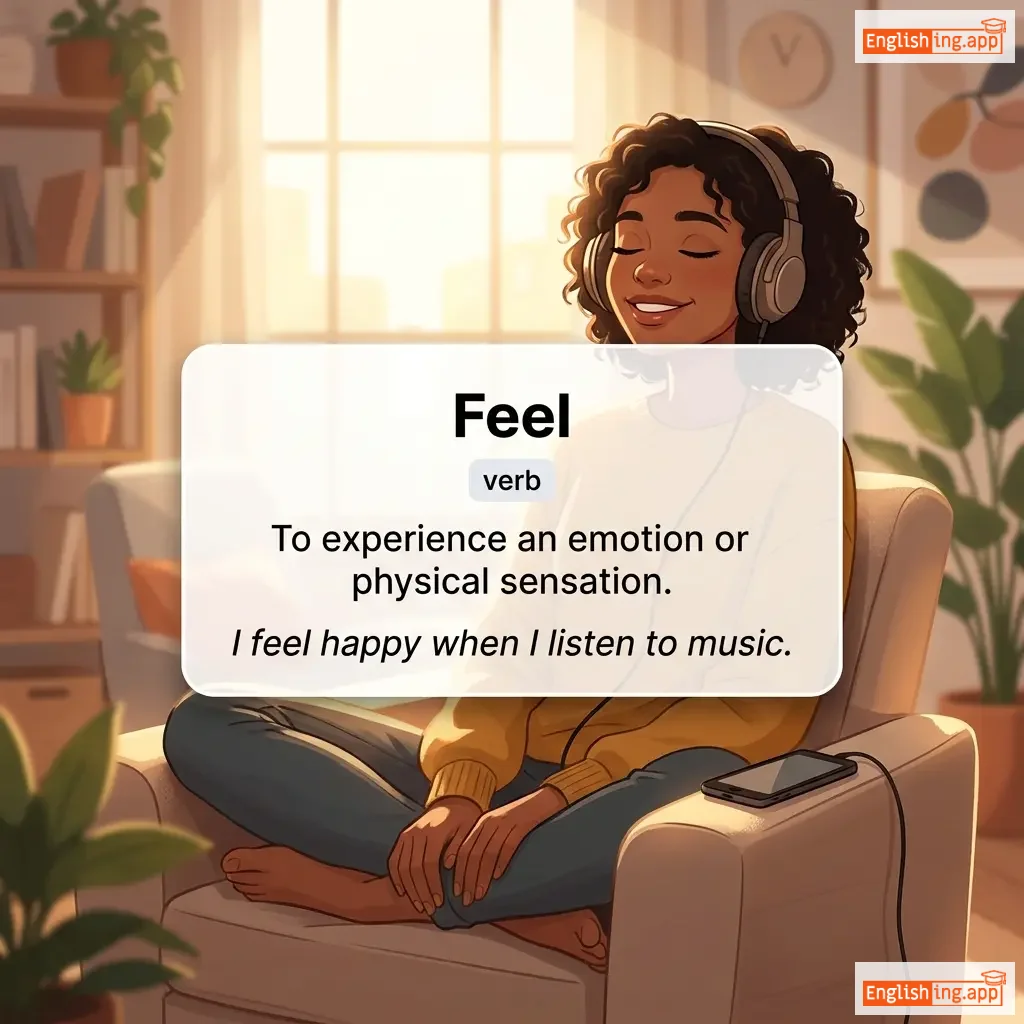
Feel definition card — visual illustration of the meaning
verb
/fiːl/
ressentir (ressentir)

To experience an emotion or physical sensation.

"I feel happy when I listen to music."

"Je me sens heureux quand j'écoute de la musique." (Je me sens heureux quand j'ecoute de la musique.)
noun
/ˈfiːlɪŋ/
sentiment (sentiment)

An emotional state or physical sensation.

"She had a strange feeling about the place."

"Elle avait une étrange sensation à propos de l'endroit." (Elle avait une etrange sensation a propos de l'endroit.)
verb
/feɪn/
feindre, simuler (feindre, simuler)

to pretend or fake; to give a false appearance of

"She feigned illness to avoid going to work."

"Elle a feint d'être malade pour éviter d'aller au travail." (Elle a feint d'être malade pour éviter d'aller au travail.)
noun
/feɪnt/
feinte, mouvement trompeur (feinte, mouvement trompeur)

a deceptive or pretended movement, especially in fighting or sports

"The boxer made a feint to the left before striking to the right."

"Le boxeur fit une feinte à gauche avant de frapper à droite." (Le boxeur fit une feinte à gauche avant de frapper à droite.)
verb
/fəˈlɪsɪteɪt/
féliciter (féliciter)

to congratulate someone; to express happiness for someone's success

"We felicitated her on winning the award."

"Nous l'avons félicitée pour avoir gagné le prix." (Nous l'avons félicitée pour avoir gagné le prix.)