Vocabulaires

Découvrez, apprenez et maîtrisez le vocabulaire anglais

adjective
/fjuːˈɡeɪʃəs/
éphémère (ephemere)

Lasting only a short time; fleeting or ephemeral.

"Youth is beautiful but fugacious."

"La jeunesse est belle mais éphémère." (La jeunesse est belle mais ephemere.)
🏃‍♂️

Fugitive (fugitive)

noun
/ˈfjuːdʒətɪv/
fugitif (fugitif)

A person who has escaped from captivity or is in hiding, usually to avoid arrest.

"The police captured the fugitive after a long chase."

"La police a capturé le fugitif après une longue poursuite." (La police a capturé le fugitif après une longue poursuite.)
noun
/ˈfʊl.krəm/
point d'appui (point d'appui)

The point or support on which a lever pivots; a central or essential point of activity or support.

"The teacher became the fulcrum of change in the school."

"Le professeur est devenu le fulcrum du changement à l'école." (Le professeur est devenu le fulcrum du changement à l'école.)
verb
/fʊlˈfɪl/
accomplir (accomplir)

to complete or achieve something that was expected or promised; to satisfy a requirement or desire

"She worked hard to fulfil her dream of becoming a doctor."

"Elle a travaillé dur pour accomplir son rêve de devenir médecin." (Elle a travaillé dur pour accomplir son reve de devenir medecin)
verb
/fʊlˈfɪl/
accomplir (accomplir)

to complete or accomplish something, especially a task or promise

"He worked hard to fulfill his dreams."

"Il a travaillé dur pour réaliser ses rêves." (Il a travaillé dur pour réaliser ses rêves.)
adjective
/ˈfʊl.dʒənt/
éclatant (eclatant)

Shining brightly; dazzling.

"The fulgent stars lit up the night sky."

"Les étoiles éclatantes ont illuminé le ciel nocturne." (Les etoiles eclatantes ont illumine le ciel nocturne.)
adjective
/fʊl/
plein (plein)

Containing as much or as many as possible; complete.

"The glass is full of water."

"Le verre est plein d'eau." (Le verre est plein d'eau.)
adjective
/ˌfʊl ˈbɒd.id/
à saveur intense (a saveur intense)

Having a strong, rich, and robust quality, especially of wine, coffee, or voice.

"He prefers a full-bodied red wine with his dinner."

"Il préfère un vin rouge à saveur intense avec son dîner." (Il préfère un vin rouge à saveur intense avec son dîner.)
adjective, adverb
/ˈfʊl taɪm/
à plein temps (a plein temps)

working or studying for the whole standard period of time

"She works full-time as a teacher."

"Elle travaille à plein temps en tant qu'enseignante." (Elle travaille a plein temps en tant qu'enseignante.)
adverb
/ˈfʊli/
entièrement (entierement)

completely or entirely; to the fullest extent

"She is fully aware of the risks."

"Elle est entièrement consciente des risques." (Elle est entierement consciente des risques.)
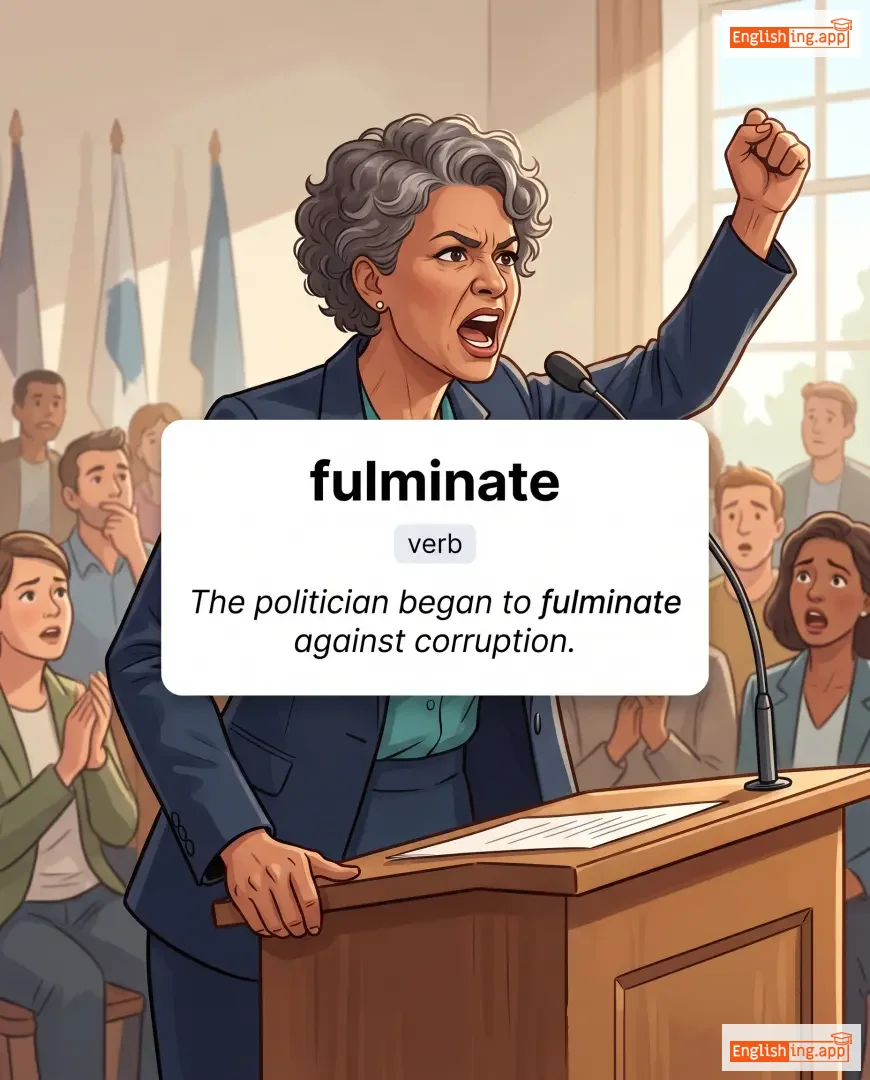
fulminate definition card — visual illustration of the meaning
verb
/ˈfʊl.mɪ.neɪt/
protester violemment (protester violemment)

To express strong protest or criticism loudly and forcefully; to explode violently.

"The politician began to fulminate against corruption."

"Le politicien a commencé à protester violemment contre la corruption." (Le politicien a commence a protester violemment contre la corruption.)
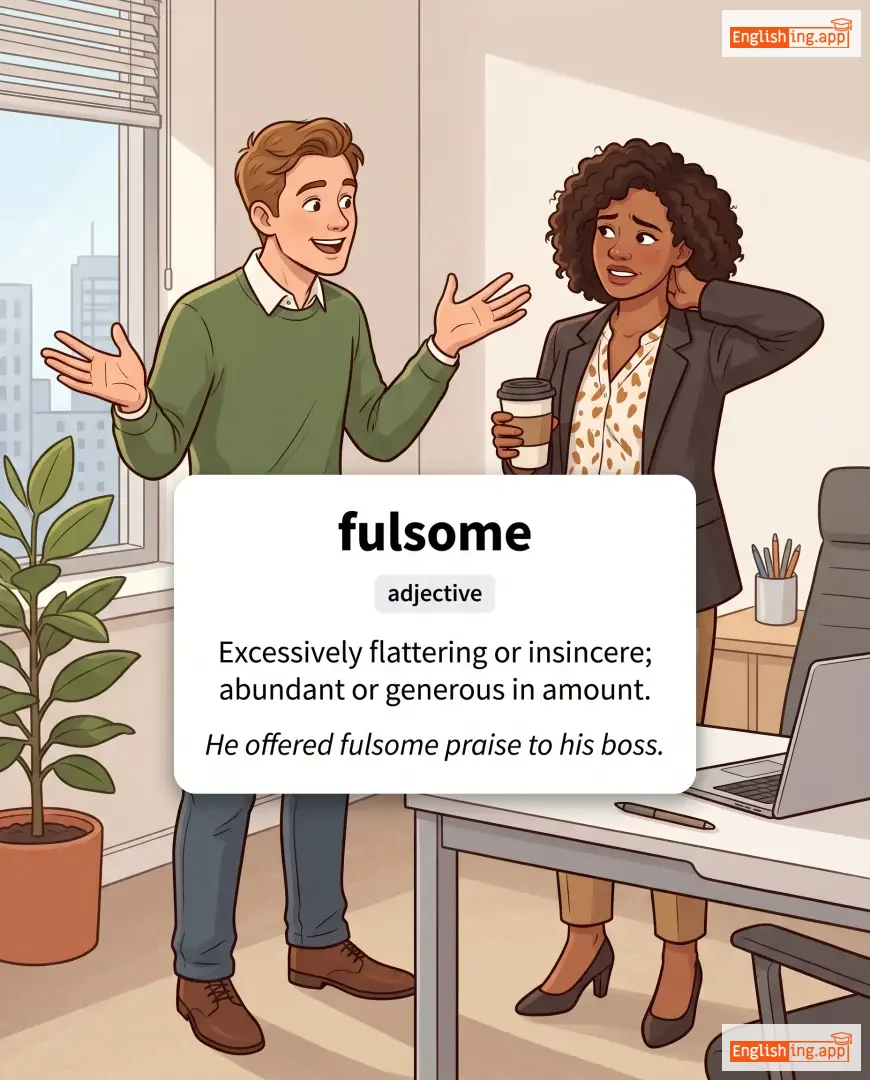
fulsome definition card — visual illustration of the meaning
adjective
/ˈfʊl.səm/
éloges excessifs (eloges excessifs)

Excessively flattering or insincere; abundant or generous in amount.

"He offered fulsome praise to his boss."

"Il a offert des éloges excessifs à son patron." (Il a offert des éloges excessifs à son patron.)
verb
/ˈfʌmbəl/
brouiller (brouiller)

to handle something clumsily or to make mistakes while doing something

"He fumbled with the keys and dropped them on the floor."

"Il a trébuché avec les clés et les a laissées tomber par terre." (Il a trébuché avec les clés et les a laissées tomber par terre.)
verb
/ˈfjuːmɪˌɡeɪt/
fumiger (fumiger)

to disinfect or purify an area by using chemical fumes

"They fumigated the warehouse to kill the insects."

"Ils ont fumigé l'entrepôt pour tuer les insectes." (Ils ont fumigé l'entrepôt pour tuer les insectes.)
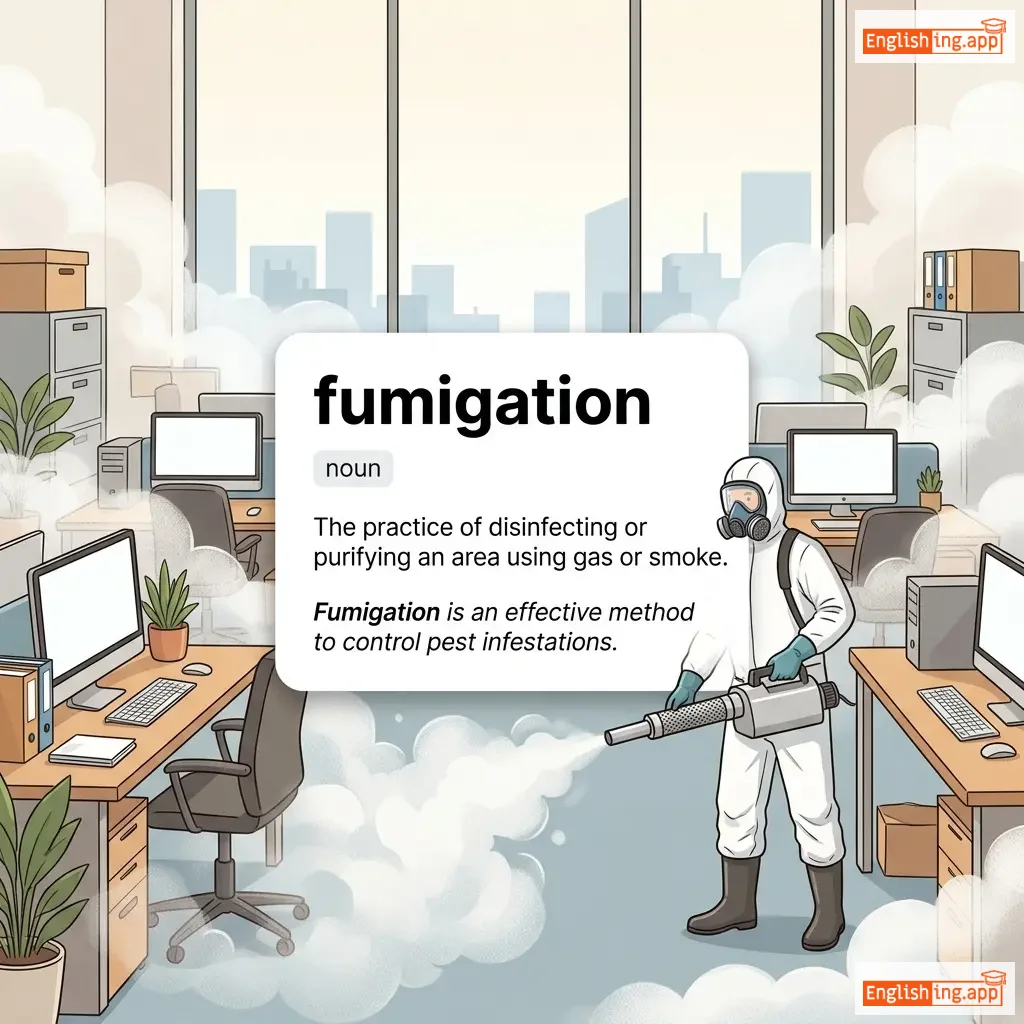
fumigation definition card — visual illustration of the meaning
noun
ˌfjuːmɪˈɡeɪʃən
fumigation (fumigation)

The practice of disinfecting or purifying an area using gas or smoke.

"Fumigation is an effective method to control pest infestations."

"La fumigation est une méthode efficace pour contrôler les infestations de parasites." (La fumigation est une méthode efficace pour contrôler les infestations de parasites.)
noun
/fʌn/
amusement (amusement)

enjoyment, amusement, or light-hearted pleasure

"We had a lot of fun at the party."

"Nous avons eu beaucoup de plaisir à la fête." (Nous avons eu beaucoup de plaisir à la fête.)
noun
/ˈfʌŋkʃən/
fonction (fonction)

An activity or purpose natural to or intended for a person or thing.

"The main function of the heart is to pump blood."

"La fonction principale du cœur est de pomper le sang." (La fonction principale du coeur est de pomper le sang.)
adjective
/ˈfʌŋkʃənl/
fonctionnel (fonctionnel)

designed to be practical and useful, rather than just decorative

"The design of the chair is simple but highly functional."

"Le design de la chaise est simple mais très fonctionnel." (Le design de la chaise est simple mais très fonctionnel.)
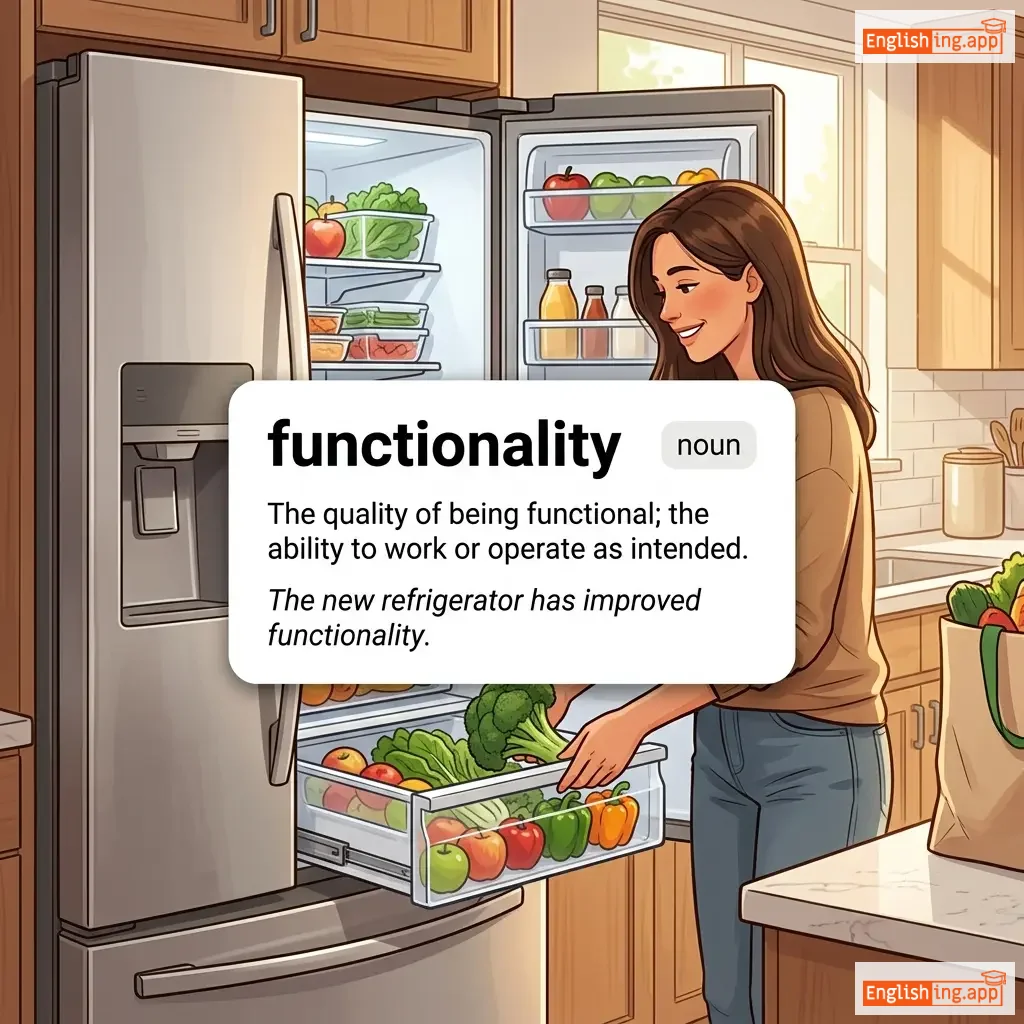
functionality definition card — visual illustration of the meaning
noun
ˌfʌŋk.ʃəˈnæl.ə.ti
fonctionnalité (fonctionnalité)

The quality of being functional; the ability to work or operate as intended.

"The new refrigerator has improved functionality."

"Le nouveau réfrigérateur a amélioré la fonctionnalité." (Le nouveau réfrigérateur a amélioré la fonctionnalité.)
noun
/ˈfʌŋkʃəˌnɛri/
fonctionnaire (fonctionnaire)

a person who has official duties in an organization, especially one with little authority

"The minor functionary was responsible for filing reports."

"Le fonctionnaire mineur était responsable du dépôt des rapports." (Le fonctionnaire mineur était responsable du dépôt des rapports.)
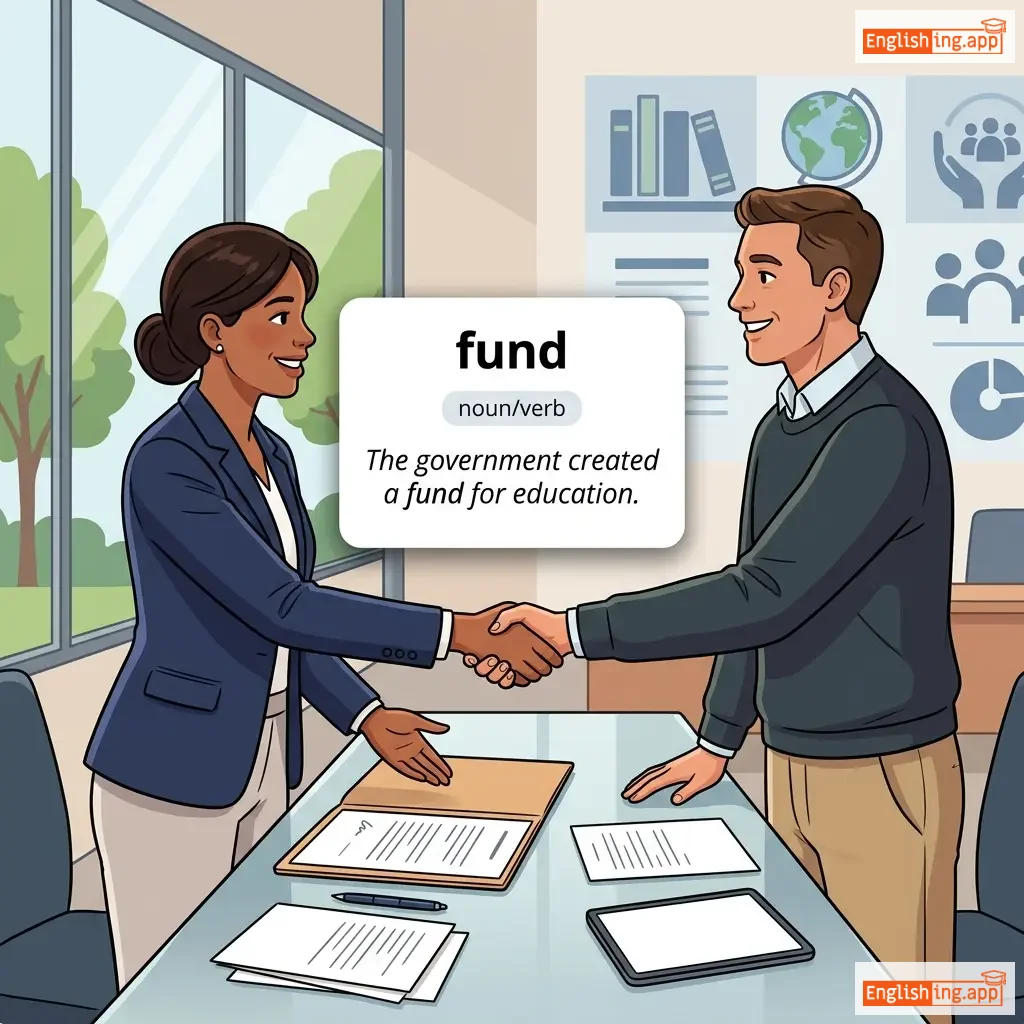
fund definition card — visual illustration of the meaning
noun/verb
/fʌnd/
fonds (fonds)

a sum of money saved or made available for a particular purpose; to provide money for

"The government created a fund for education."

"Le gouvernement a créé un fonds pour l'éducation." (Le gouvernement a cree un fonds pour l'education.)
adjective
/ˌfʌndəˈmɛntl/
fondamental (fondamental)

forming a necessary base or core; of central importance

"Honesty is a fundamental principle of good leadership."

"L'honnêteté est un principe fondamental du bon leadership." (L'honnêteté est un principe fondamental du bon leadership.)
adverb
/ˌfʌndəˈmɛntəli/
fondamentalement (fondamentalement)

in a basic and important way; at the core

"The two theories are fundamentally different."

"Les deux théories sont fondamentalement différentes." (Les deux théories sont fondamentalement différentes.)
noun
/ˈfʌndɪŋ/
financement (financement)

financial support for a project or organization

"The startup is seeking funding from investors."

"La startup cherche des financements auprès des investisseurs." (La startup cherche des financements auprès des investisseurs.)
noun
/ˈfʌndˌreɪzɪŋ/
collecte de fonds (collecte de fonds)

the process of collecting money for a cause or project

"The organization is organizing a fundraising event."

"L'organisation organise un événement de collecte de fonds." (L'organisation organise un evenement de collecte de fonds.)
noun
/ˈfjuːnərəl/
funérailles (funerailles)

a ceremony held to honor and bury or cremate someone who has died

"The family attended the funeral of their grandfather."

"La famille a assisté aux funérailles de leur grand-père." (La famille a assisté aux funérailles de leur grand-père.)
adjective
/fjuːˈnɪəriəl/
funéraire (funeraire)

having the mournful, somber character of a funeral

"The room was filled with a funereal silence after the announcement."

"La pièce était remplie d'un silence funéraire après l'annonce." (La piece etait remplie d'un silence funeraire apres l'annonce.)
noun (plural of fungus)
/ˈfʌndʒaɪ/
champignon (champignon)

a group of spore-producing organisms such as mushrooms, molds, and yeasts

"Fungi play an important role in breaking down organic matter in nature."

"Les champignons jouent un rôle important dans la dégradation de la matière organique dans la nature." (Les champignons jouent un rôle important dans la dégradation de la matière organique dans la nature.)
adjective
/ˈfʌndʒəbl/
fongible (fongible)

interchangeable; able to replace or be replaced by another identical item

"In finance, money is considered a fungible asset."

"En finance, l'argent est considéré comme un actif fongible." (En finance, l'argent est considéré comme un actif fongible.)
adjective
/ˈfʌŋɡəs/
semblable à un champignon (semblable a un champignon)

relating to or resembling a fungus

"The damp basement had a fungous smell."

"Le sous-sol humide avait une odeur semblable à un champignon." (Le sous-sol humide avait une odeur semblable à un champignon.)
noun
/ˈfʌŋɡəs/
champignon (champignon)

a spore-producing organism feeding on organic matter, including molds, yeast, and mushrooms

"A strange fungus was growing on the old tree."

"Un étrange champignon poussait sur l'arbre ancien." (Un étrange champignon poussait sur l'arbre ancien.)
adjective
/ˈfʌni/
drôle (drole)

Causing laughter or amusement; humorous.

"The comedian told a very funny joke."

"Le comédien a raconté une blague très drôle." (Le comedien a raconte une blague tres drole.)
noun
/fɜːr/
fourrure (fourrure)

the thick hair covering the skin of certain animals

"The cat’s fur is soft and shiny."

"Le pelage du chat est doux et brillant." (Le pelage du chat est doux et brillant.)
verb
/ˈfɜːrbɪʃ/
lustrer (lustrer)

to polish, renovate, or give a fresh look to something

"The workers furbished the old sword until it gleamed like new."

"Les travailleurs ont lustré l'épée ancienne jusqu'à ce qu'elle brille comme neuve." (Les travailleurs ont lustre l'epée ancienne jusqu'à ce qu'elle brille comme neuve.)
adjective
/ˈfjʊəriəs/
furieux (furieux)

Extremely angry.

"She was furious when she heard the bad news."

"Elle était furieuse quand elle a entendu la mauvaise nouvelle." (Elle etait furieuse quand elle a entendu la mauvaise nouvelle.)
noun
/ˈfɜːrlɔːŋ/
unité de distance (220 yards ou environ 201 mètres) (unité de distance (220 yards ou environ 201 mètres))

a unit of distance equal to 220 yards or about 201 meters

"The horse ran a furlong before slowing down."

"Le cheval a couru un furlong avant de ralentir." (Le cheval a couru un furlong avant de ralentir.)
noun, verb
/ˈfɜːrloʊ/
congé temporaire (congé temporaire)

temporary leave of absence from work, especially that granted to an employee or soldier

"Many workers were placed on furlough during the crisis."

"De nombreux travailleurs ont été mis en congé pendant la crise." (De nombreux travailleurs ont été mis en congé pendant la crise.)
noun
/ˈfɜːrneɪs/
four (four)

an enclosed structure in which heat is produced for a building or for melting metal

"The factory's furnace melted the metal quickly."

"Le four de l'usine a fondu le métal rapidement." (Le four de l'usine a fondu le métal rapidement.)
verb
/ˈfɜːrnɪʃ/
meubler, fournir (meubler, fournir)

to provide or supply with furniture or equipment

"They furnished the new house with modern furniture."

"Ils ont meublé la nouvelle maison avec des meubles modernes." (Ils ont meuble la nouvelle maison avec des meubles modernes.)
noun
/ˈfɜːrnɪtʃər/
meubles (meubles)

Objects such as chairs, tables, beds, or cupboards used to make a room suitable for living or working.

"The living room was filled with beautiful wooden furniture."

"Le salon était rempli de beaux meubles en bois." (Le salon était rempli de beaux meubles en bois.)
noun
/ˈfjʊərɔːr/
tumulte (tumulte)

An outbreak of public anger or excitement.

"The politician's remarks created a furor in the media."

"Les remarques du politicien ont créé un furor dans les médias." (Les remarques du politicien ont créé un furor dans les médias.)
noun
/ˈfʌriər/
fourreur (fourreur)

A person who prepares or deals in furs.

"The furrier displayed fine coats in his shop."

"Le fourreur a exposé de beaux manteaux dans son magasin." (Le fourreur a exposé de beaux manteaux dans son magasin.)
noun/verb
/ˈfʌrəʊ/
sillon (sillon)

A long narrow trench made in the ground by a plow; to make wrinkles or grooves.

"The farmer plowed furrows in the field."

"L'agriculteur a tracé des sillons dans le champ." (L'agriculteur a tracé des sillons dans le champ.)
adverb/adjective/verb
/ˈfɜːrðər/
avancer (avancer)

At a greater distance; to advance or promote something.

"She studied hard to further her career."

"Elle a étudié dur pour faire avancer sa carrière." (Elle a étudié dur pour faire avancer sa carrière.)
noun
/ˈfɜːrðərəns/
avancement (avancement)

The advancement or promotion of something.

"The new policy was introduced in furtherance of social justice."

"La nouvelle politique a été introduite en vue de la justice sociale." (La nouvelle politique a été introduite en vue de la justice sociale.)
adverb
/ˌfɜːrðərˈmɔːr/
de plus (de plus)

Used to introduce an additional point or idea; in addition.

"The plan is simple and, furthermore, it is affordable."

"Le plan est simple et, de plus, il est abordable." (Le plan est simple et, de plus, il est abordable.)
adjective
/ˈfɜːrtɪv/
furtif (furtif)

Attempting to avoid notice or attention, typically because of guilt or a belief that discovery would lead to trouble.

"He cast a furtive glance at the door before leaving."

"Il lança un regard furtif vers la porte avant de partir." (Il lança un regard furtif vers la porte avant de partir.)
noun
/ˈfjʊr.ʌŋ.kəl/
furoncle; bosse; (furoncle, bosse)

a painful pus-filled bump under the skin caused by infected, inflamed hair follicles

"The doctor prescribed antibiotics to treat the painful furuncle on his neck."

"Le médecin a prescrit des antibiotiques pour traiter le furoncle douloureux sur son cou." (Le medecin a prescrit des antibiotiques pour traiter le furoncle douloureux sur son cou.)
noun
/ˈfjʊri/
fureur (fureur)

Wild or violent anger; extreme rage.

"She was trembling with fury after the insult."

"Elle tremblait de fureur après l'insulte." (Elle tremblait de fureur après l'insulte.)
verb
/fjuːz/
fusionner (fusionner)

To join or blend two or more things together into one.

"The two metals fused under high heat."

"Les deux métaux ont fusionné sous haute chaleur." (Les deux métaux ont fusionné sous haute chaleur.)