Vocabulaires

Découvrez, apprenez et maîtrisez le vocabulaire anglais

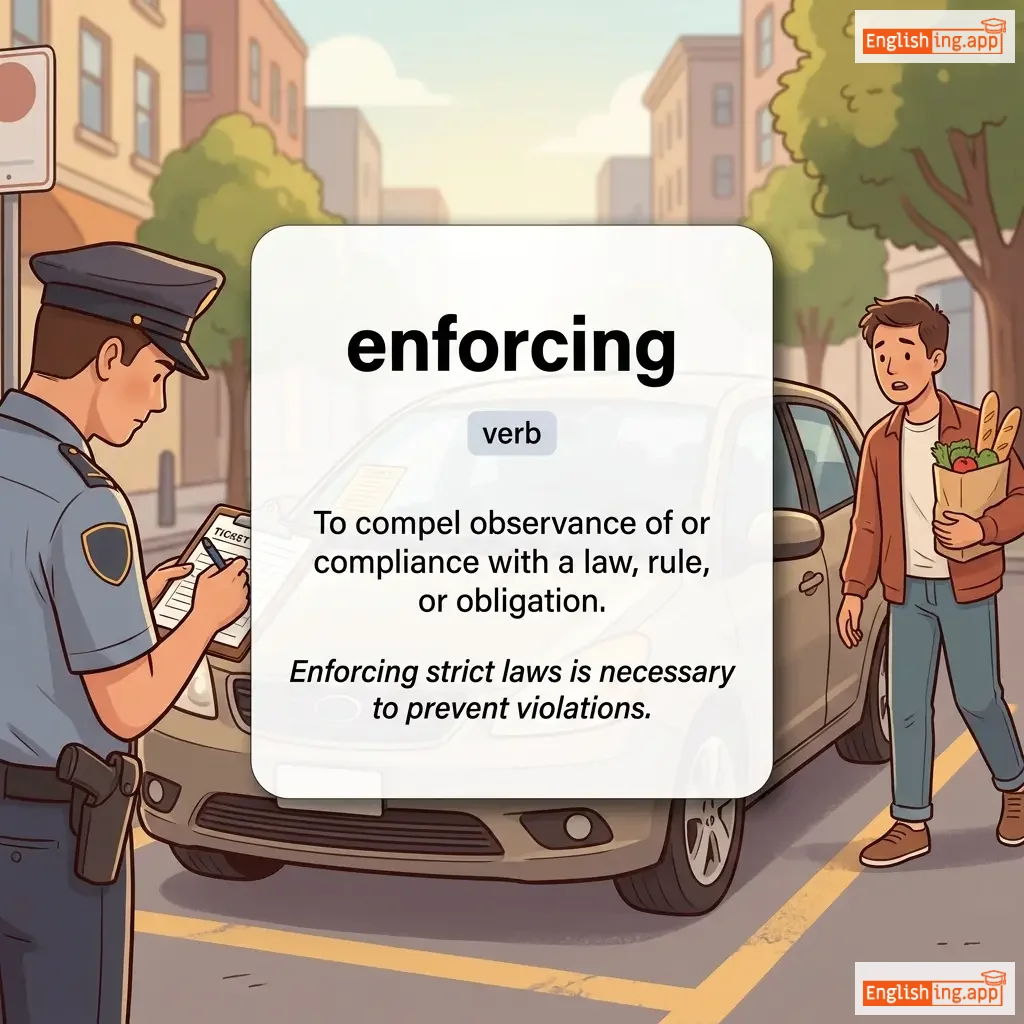
enforcing definition card — visual illustration of the meaning
verb
ɪnˈfɔːrsɪŋ
appliquer (appliquer)

To compel observance of or compliance with a law, rule, or obligation.

"Enforcing strict laws is necessary to prevent violations."

"Appliquer des lois strictes est nécessaire pour prévenir les violations." (Appliquer des lois strictes est nécessaire pour prévenir les violations.)
verb
/ɛnˈfrænˌtʃaɪz/
bonheur (bonheur)

To grant the right to vote or other rights of citizenship.

"The new law enfranchised thousands of people."

"Elle ne pouvait pas cacher son bonheur lorsqu'elle a reçu le prix." (Elle ne pouvait pas cacher son bonheur lorsqu'elle a reçu le prix.)
verb
/ɪnˈɡeɪdʒ/
engager (engager)

To participate or become involved in; to attract or hold attention.

"The teacher tried to engage the students in the discussion."

"Le professeur a essayé d'engager les élèves dans la discussion." (Le professeur a essayé d'engager les élèves dans la discussion.)
adjective
/ɪnˈɡeɪdʒd/
fiancé, occupé (fiancé, occupé)

Busy, occupied, or pledged to be married.

"She is engaged to be married next summer."

"Elle est fiancée pour se marier l'été prochain." (Elle est fiancée pour se marier l'été prochain.)
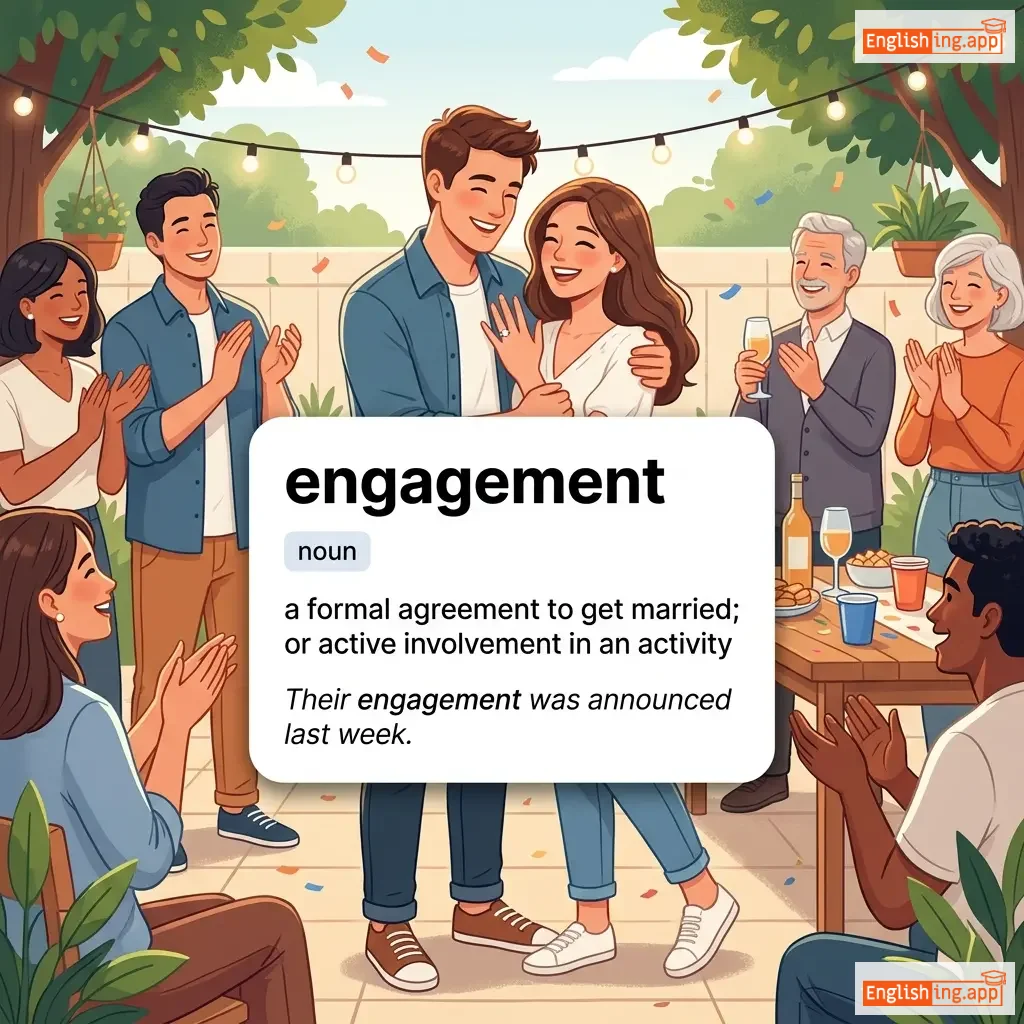
engagement definition card — visual illustration of the meaning
noun
/ɪnˈɡeɪdʒmənt/
fiançailles, participation (fiansay, participasyon)

a formal agreement to get married; or active involvement in an activity

"Their engagement was announced last week."

"Leurs fiançailles ont été annoncées la semaine dernière." (Leurs fiancay ont été annoncées la semaine dernière.)
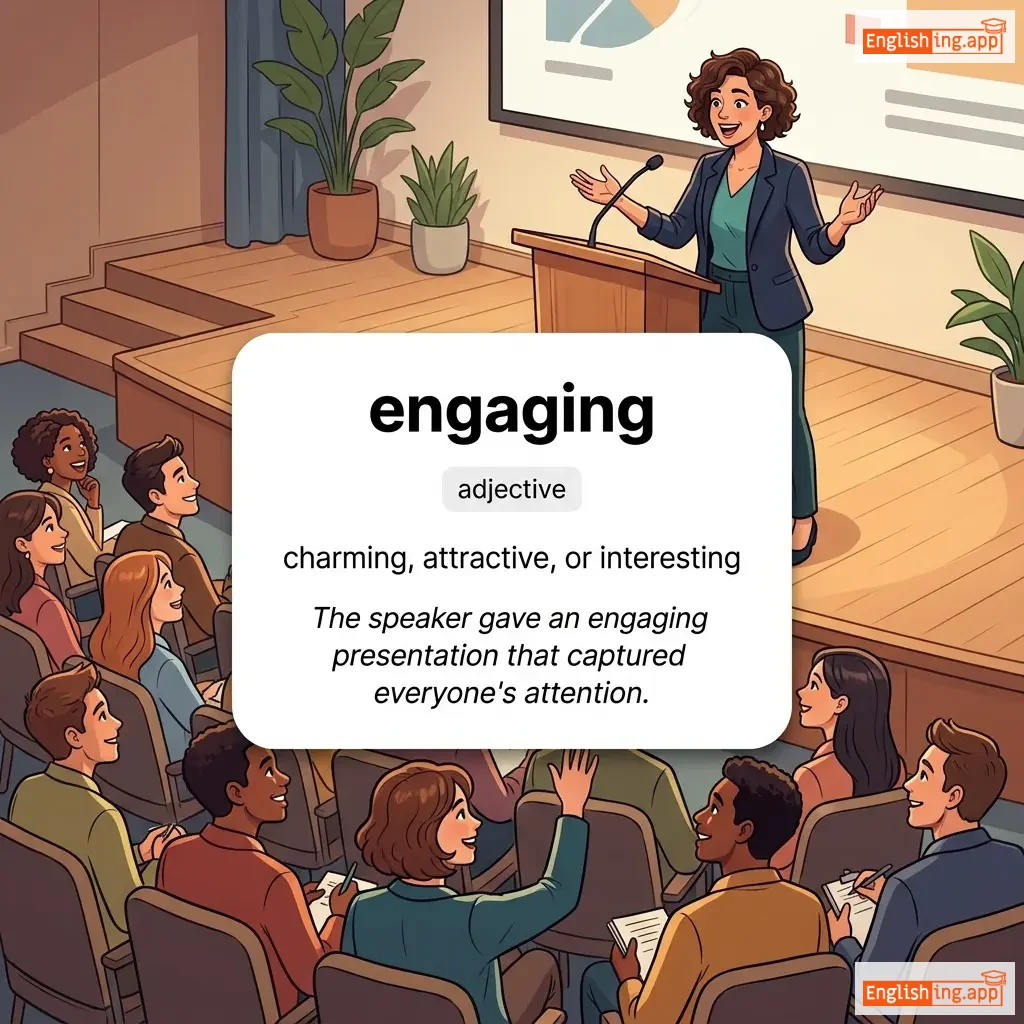
engaging definition card — visual illustration of the meaning
adjective
/ɪnˈɡeɪdʒɪŋ/
captivant (captivant)

charming, attractive, or interesting

"The speaker gave an engaging presentation that captured everyone's attention."

"Le conférencier a donné une présentation captivante qui a attiré l'attention de tous." (Le conferencier a donne une presentation captivante qui a attire l'attention de tous.)
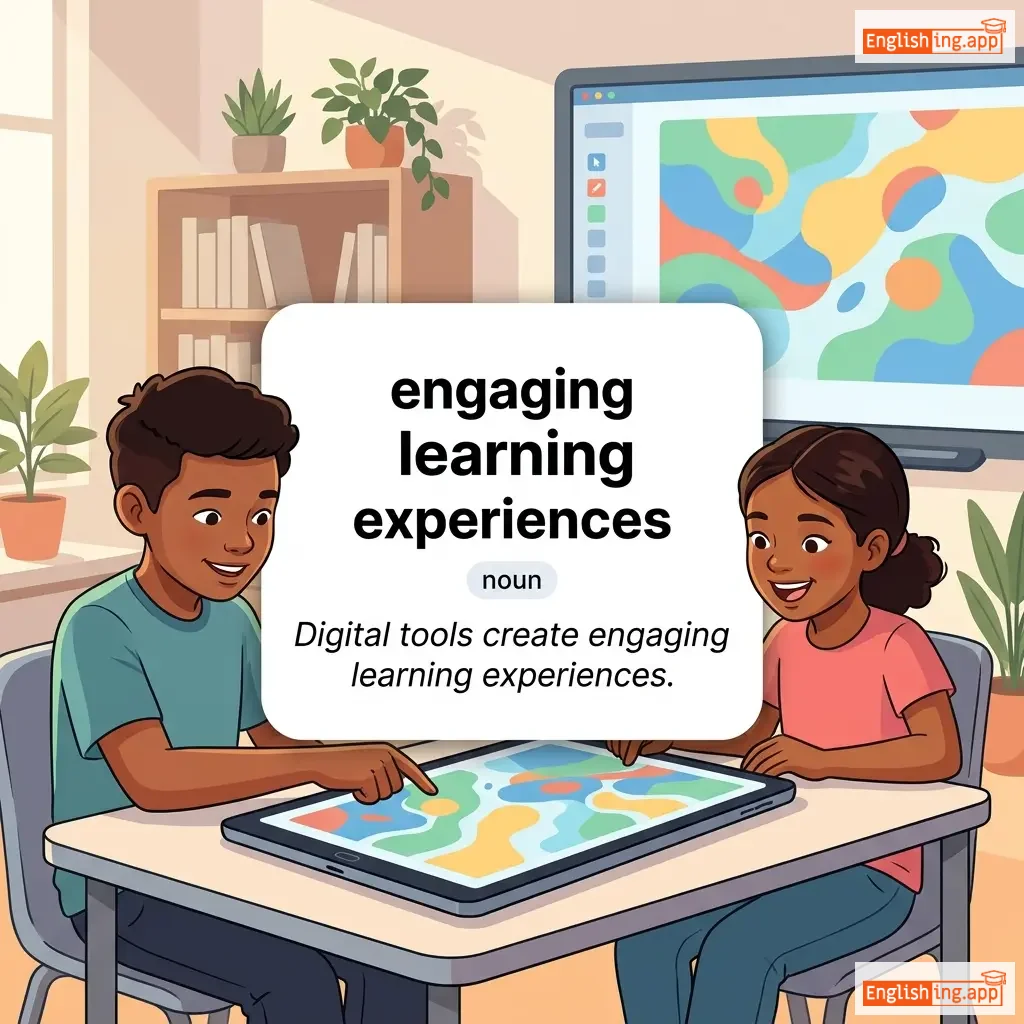
engaging learning experiences definition card — visual illustration of the meaning
noun
ɪnˈɡeɪdʒɪŋ ˈlɜːrnɪŋ ɪkˈspɪəriənsɪz
expériences d'apprentissage engageantes (experiences d'apprentissage engageantes)

Interactive and immersive educational activities that capture students' attention and actively involve them in the learning process.

"Digital tools create engaging learning experiences."

"Les outils numériques créent des expériences d'apprentissage engageantes." (Les outils numériques créent des expériences d'apprentissage engageantes.)
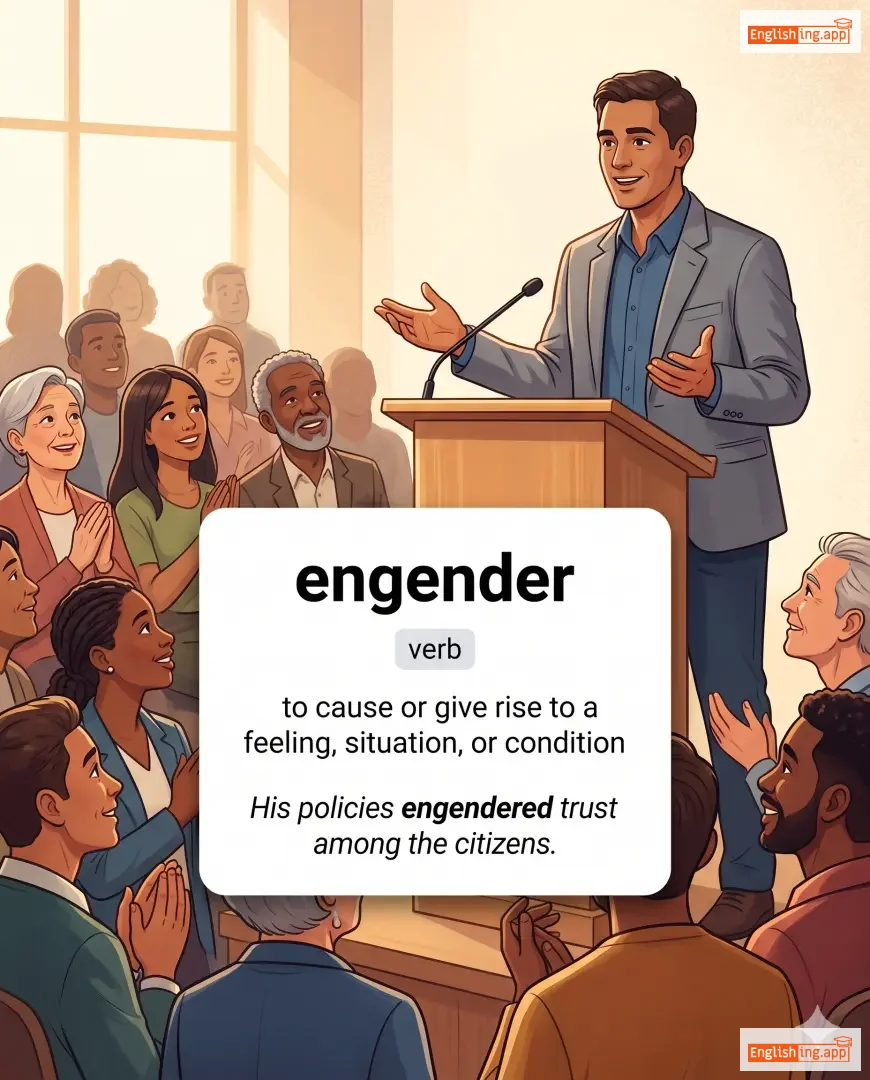
engender definition card — visual illustration of the meaning
verb
/ɪnˈdʒɛndər/
engendrer (ãʒãdʁ)

to cause or give rise to a feeling, situation, or condition

"His policies engendered trust among the citizens."

"Ses politiques ont engendré la confiance parmi les citoyens." (Ses politiques ont engendré la confiance parmi les citoyens.)
noun
/ˈɛndʒɪn/
moteur (moteur)

A machine designed to convert energy into mechanical power.

"The car's engine failed on the highway."

"Le moteur de la voiture a échoué sur l'autoroute." (Le moteur de la voiture a echoue sur l'autoroute.)
noun/verb
/ˌɛndʒɪˈnɪər/
ingénieur (ingenieur)

A person trained to design, build, or maintain engines, machines, or structures; to skillfully arrange or bring about.

"The engineer designed a new bridge across the river."

"L'ingénieur a conçu un nouveau pont au-dessus du fleuve." (L'ingénieur a conçu un nouveau pont au-dessus du fleuve.)
engineering definition card — visual illustration of the meaning
noun
/ˌɛndʒɪˈnɪərɪŋ/
ingénierie (ingenierie)

The branch of science and technology concerned with the design, building, and use of engines, machines, and structures.

"She studied civil engineering at university."

"Elle a étudié l'ingénierie civile à l'université." (Elle a etudie l'ingenerie civile a l'universite.)
noun/adjective
/ˈɪŋɡlɪʃ/
anglais (anglais)

The language of England, widely spoken around the world; relating to England or its people.

"She is learning English to study abroad."

"Elle apprend l'anglais pour étudier à l'étranger." (Elle apprend l'anglais pour étudier à l'étranger.)
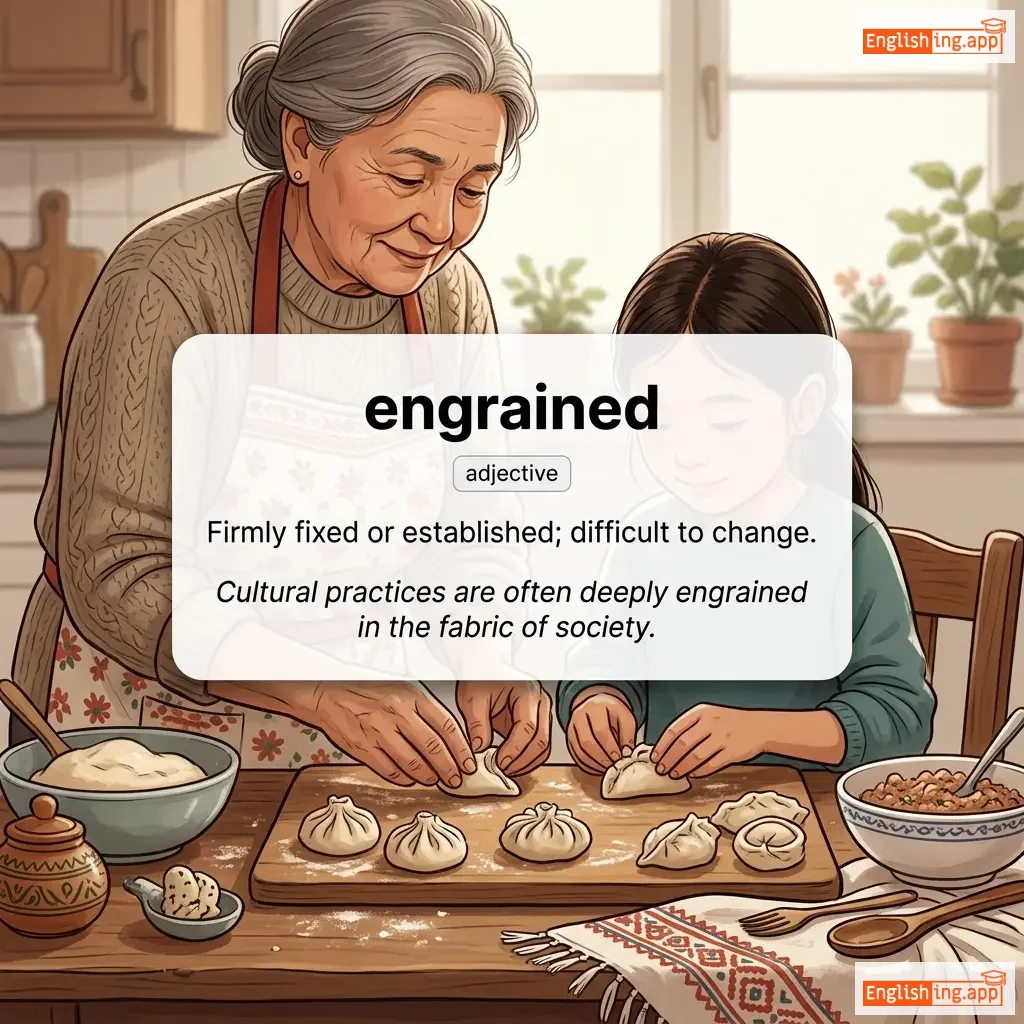
engrained definition card — visual illustration of the meaning
adjective
/ɪnˈɡreɪnd/
profondément enraciné, difficile à changer (profondement enracine, difficile a changer)

Firmly fixed or established; difficult to change.

"Cultural practices are often deeply engrained in the fabric of society."

"Les pratiques culturelles sont souvent profondément enracinées dans le tissu de la société." (Les pratiques culturelles sont souvent profondément enracinées dans le tissu de la société.)
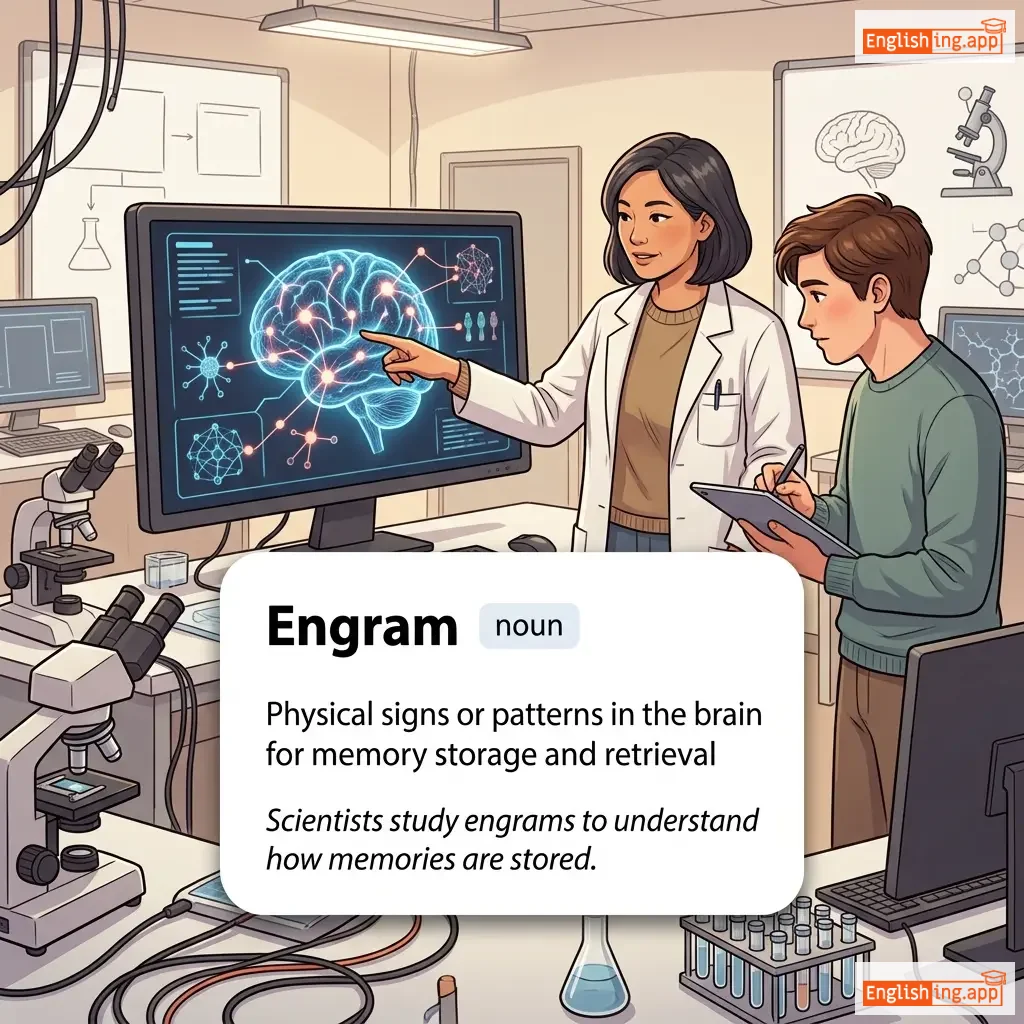
Engram definition card — visual illustration of the meaning
noun
ˈɛn.ɡræm
Signaux physiques dans le cerveau pour le stockage et la récupération de la mémoire (Signaux physiques dans le cerveau pour le stockage et la récupération de la mémoire)

Physical signs or patterns in the brain for memory storage and retrieval

"Scientists study engrams to understand how memories are stored."

"Les scientifiques étudient les engrammes pour comprendre comment les souvenirs sont stockés." (Les scientifiques étudient les engrammes pour comprendre comment les souvenirs sont stockés.)
verb
/ɪnˈɡreɪv/
graver (graver)

to cut or carve a design, letter, or pattern into a hard surface

"The craftsman engraved her name on the silver ring."

"L'artisan a gravé son nom sur la bague en argent." (L'artisan a gravé son nom sur la bague en argent.)
verb
/ɪnˈɡroʊs/
absorbée (absorbée)

to absorb all the attention or interest of someone

"She was so engrossed in the book that she forgot the time."

"Elle était tellement absorbée dans le livre qu'elle a oublié l'heure." (Elle était tellement absorbée dans le livre qu'elle a oublié l'heure.)
adjective
/ɪnˈɡroʊst/
absorbé (absorbé)

completely absorbed or deeply involved in something

"She was so engrossed in the book that she forgot the time."

"Elle était tellement absorbée dans le livre qu'elle a oublié l'heure." (Elle etait tellement absorbee dans le livre qu'elle a oublie l'heure.)
verb
/ɪnˈɡʌlf/
engloutir (engloutir)

to completely surround or cover something or someone

"The village was engulfed by floodwaters."

"Le village a été englouti par les eaux de crue." (Le village a été englouti par les eaux de crue.)
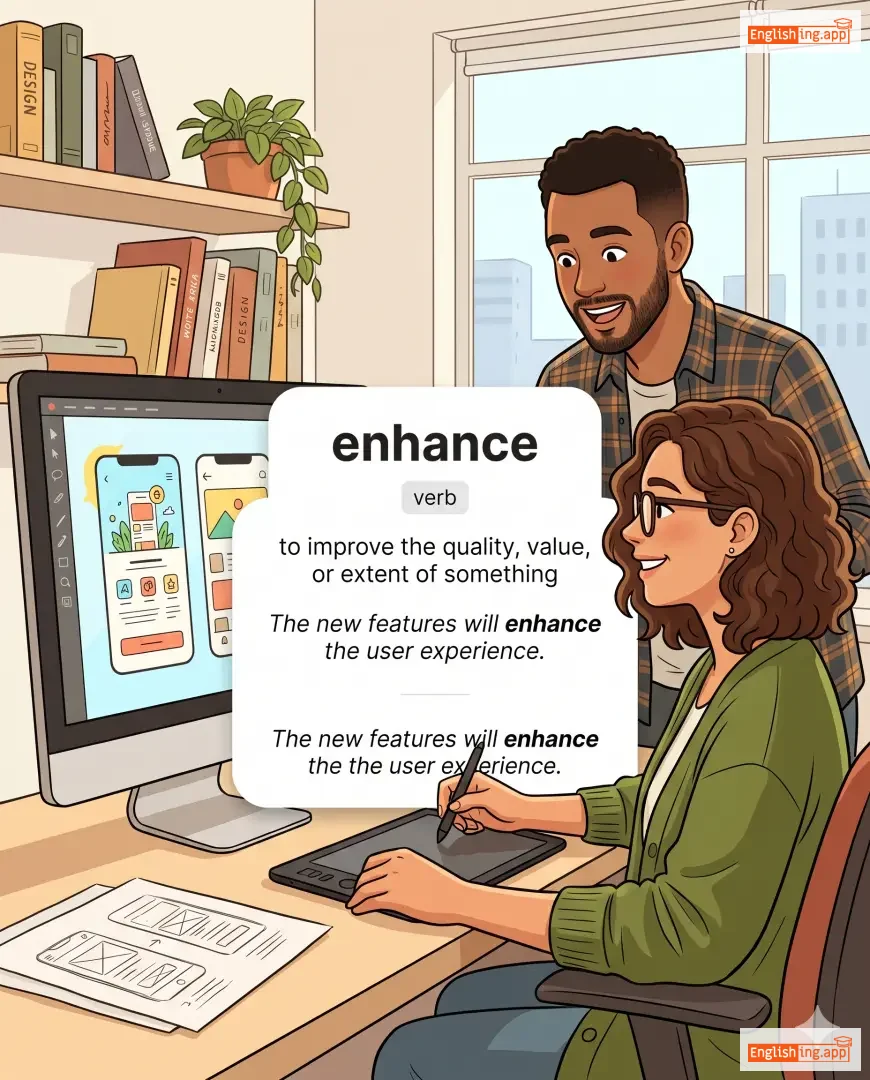
enhance definition card — visual illustration of the meaning
verb
/ɪnˈhæns/
améliorer (ameliorer)

to improve the quality, value, or extent of something

"The new features will enhance the user experience."

"Les nouvelles fonctionnalités amélioreront l'expérience utilisateur." (Les nouvelles fonctionnalités amélioreront l'expérience utilisateur.)
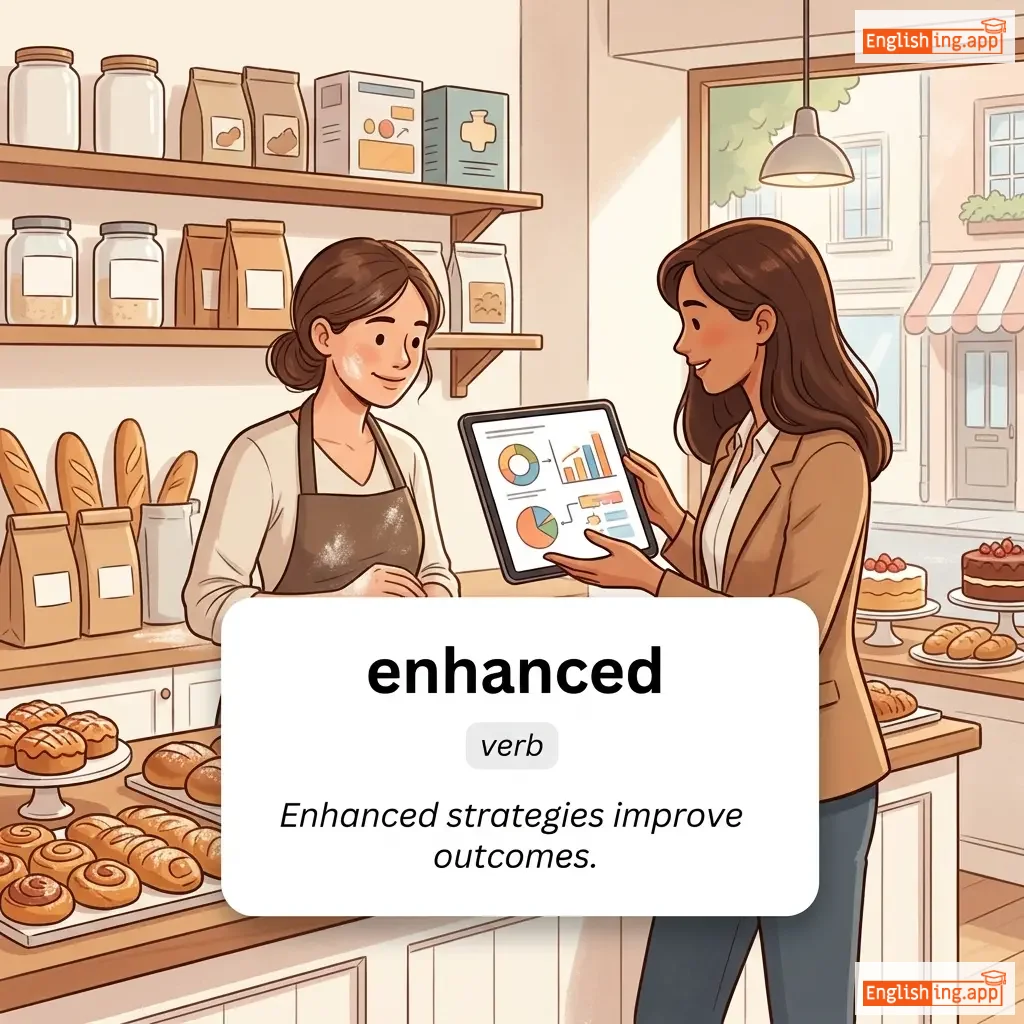
enhanced definition card — visual illustration of the meaning
verb
ɪnˈhɑːnst
amélioré (ameliore)

Intensify, increase, or further improve the quality, value, or extent of something.

"Enhanced strategies improve outcomes."

"Les stratégies améliorées améliorent les résultats." (Les stratégies améliorées améliorent les résultats.)
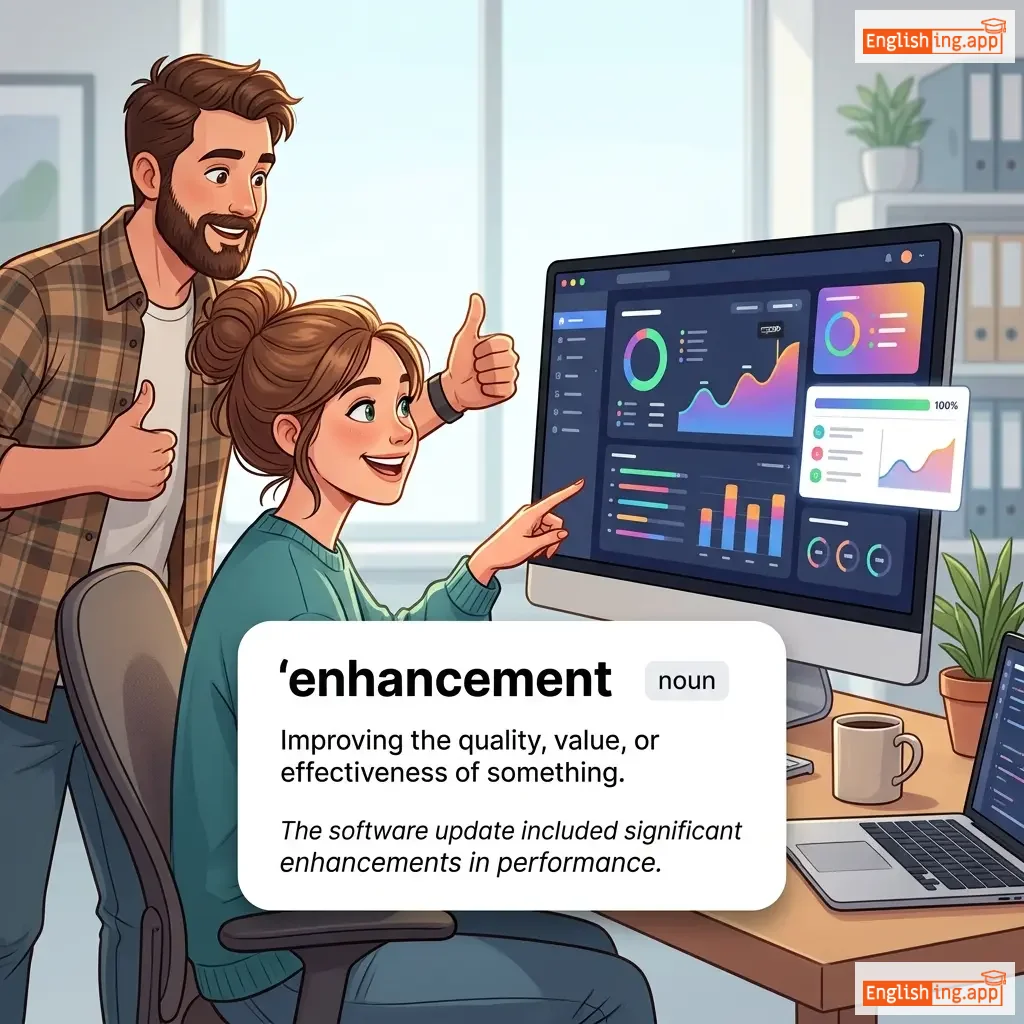
enhancement definition card — visual illustration of the meaning
noun
/ɪnˈhɑːns.mənt/
amélioration ou augmentation (amelioration ou augmentation)

Improving the quality, value, or effectiveness of something.

"The software update included significant enhancements in performance."

"La mise à jour du logiciel a inclus des améliorations significatives des performances." (La mise a jour du logiciel a inclus des ameliorations significatives des performances.)
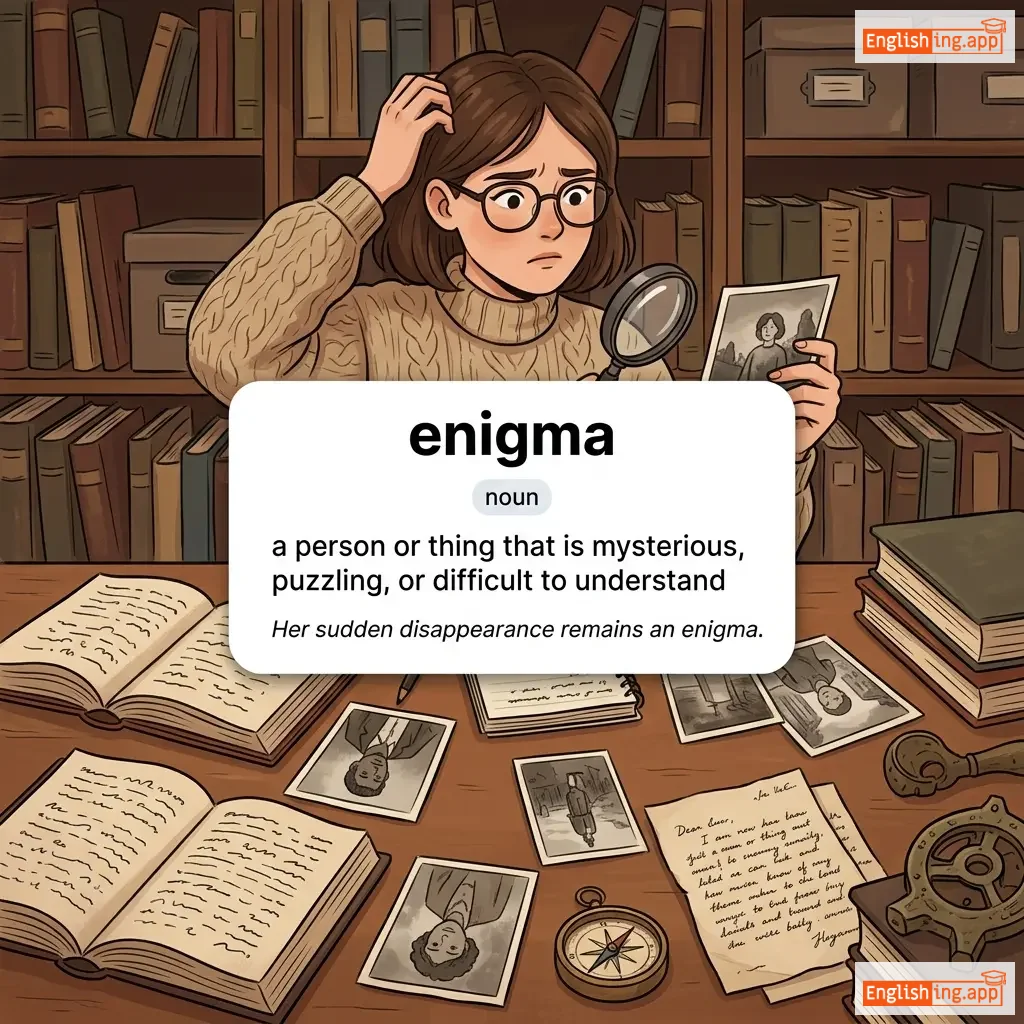
enigma definition card — visual illustration of the meaning
noun
/ɪˈnɪɡmə/
énigme (enigme)

a person or thing that is mysterious, puzzling, or difficult to understand

"Her sudden disappearance remains an enigma."

"Sa disparition soudaine reste une énigme." (Sa disparition soudaine reste une enigme.)
adjective
/ˌɛnɪɡˈmætɪk/
énigmatique (enigmatique)

mysterious and difficult to interpret or understand

"He gave me an enigmatic smile."

"Il m'a donné un sourire énigmatique." (Il m'a donne un sourire enigmatique.)
verb
/ɛnˈdʒɔɪn/
ordonner, interdire (ordonner, interdire)

to instruct or urge someone to do something; to prohibit legally

"The judge enjoined the company from continuing its activities."

"Le juge a interdit à l'entreprise de poursuivre ses activités." (Le juge a interdit à l'entreprise de poursuivre ses activités.)
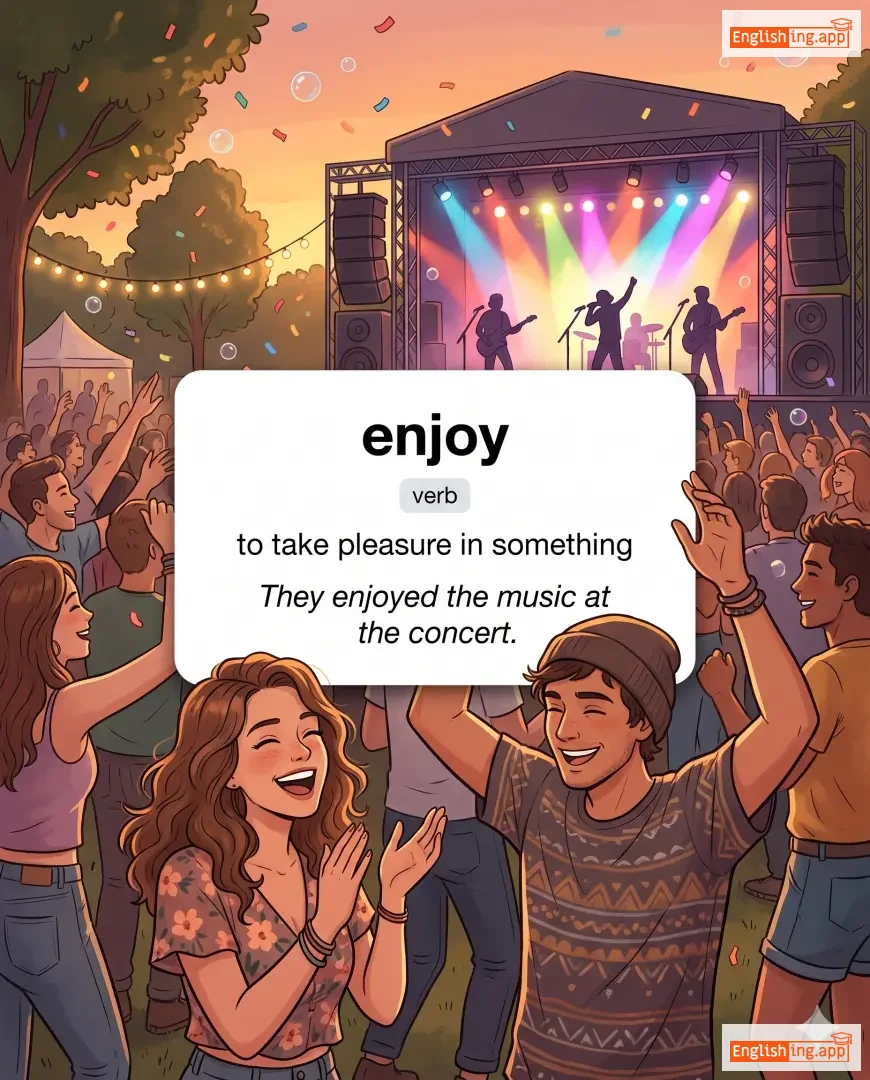
enjoy definition card — visual illustration of the meaning
verb
/ɪnˈdʒɔɪ/
apprécier (apprecier)

to take pleasure in something

"They enjoyed the music at the concert."

"Ils ont apprécié la musique au concert." (Ils ont apprécié la musique au concert.)
adjective
/ɪnˈdʒɔɪəbl/
agréable (agreable)

giving pleasure or satisfaction

"The movie was highly enjoyable."

"The movie was extremely enjoyable." (Le film etait extremement agreable)
noun
/ɪnˈdʒɔɪmənt/
plaisir (plaisir)

the state or process of taking pleasure or satisfaction in something

"She felt great enjoyment while reading her favorite book."

"Elle a ressenti un grand plaisir en lisant son livre préféré." (Elle a ressenti un grand plaisir en lisant son livre prefere.)
verb
/ɛnˈkɪndl/
enflammer, inspirer (enflammer, inspirer)

to set on fire or inspire strong emotion

"The speech enkindled hope in the audience."

"Le discours a enflammé l'espoir dans l'auditoire." (Le discours a enflammé l'espoir dans l'auditoire.)
verb
/ɪnˈlɑːrdʒ/
agrandir (agrandir)

to make something bigger or increase in size

"They decided to enlarge their house."

"Ils ont décidé d'agrandir leur maison." (Ils ont décide d'agrandir leur maison.)
verb
/ɪnˈlaɪtən/
bonheur (bonheur)

to give someone greater knowledge or understanding about a subject or situation

"The teacher tried to enlighten the students about ancient history."

"Elle ne pouvait pas cacher son bonheur lorsqu'elle a reçu le prix." (Elle ne pouvait pas cacher son bonheur lorsqu'elle a reçu le prix.)
adjective
/ɪnˈlaɪ.tənd/
éclairé; illuminé; sage; (eclaire; illumine; sage)

having or showing a rational, modern outlook; having spiritual knowledge or understanding

"The enlightened teacher shared wisdom with all her students."

"Le professeur éclairé a partagé la sagesse avec tous ses étudiants." (Le professeur éclairé a partagé la sagesse avec tous ses étudiants.)
verb
/ɪnˈlɪst/
s'enrôler (senrôler)

to join or sign up, especially for military service; to secure someone's support or help

"He decided to enlist in the army after graduation."

"Il a décidé de s'enrôler dans l'armée après l'obtention de son diplôme." (Il a décidé de s'enrôler dans l'armée après l'obtention de son diplôme.)
verb
/ɪnˈlaɪvən/
animer (animer)

to make something more lively, interesting, or cheerful

"Her jokes helped enliven the dull meeting."

"Ses blagues ont aidé à animer la réunion ennuyeuse." (Ses blagues ont aidé à animer la réunion ennuyeuse.)
noun
/ˈɛnmɪti/
ennemi (ennemi)

a feeling of hostility, hatred, or opposition

"There was a long history of enmity between the two families."

"Il y avait une longue histoire d'hostilité entre les deux familles." (Il y avait une longue histoire d'hostilite entre les deux familles.)
verb
/ɪˈnəʊbəl/
ennoblir (ennoblir)

to give someone a noble rank or to elevate in dignity or honor

"His selfless actions ennobled his character in the eyes of others."

"Ses actions désintéressées ont ennobli son caractère aux yeux des autres." (Ses actions désintéressées ont ennobli son caractère aux yeux des autres.)
noun
/ˈɒnwiː/ or /ˈɑːnwiː/
ennui (ennui)

A feeling of boredom, listlessness, or dissatisfaction arising from lack of excitement.

"After weeks of doing nothing, he sank into a deep sense of ennui."

"Après des semaines à ne rien faire, il est tombé dans un profond ennui." (Apres des semaines a ne rien faire, il est tombe dans un profond ennui.)
noun
/ɪˈnɔːrmɪti/
énormité (enormite)

The extreme scale, seriousness, or extent of something perceived as bad or morally wrong.

"The enormity of the crime shocked the entire community."

"L'énormité du crime a choqué toute la communauté." (L'énormité du crime a choqué toute la communauté.)
adjective
/ɪˈnɔːrməs/
énorme (enorme)

Extremely large in size, amount, or degree.

"They built an enormous stadium in the city."

"Ils ont construit un stade énorme dans la ville." (Ils ont construit un stade enorme dans la ville.)
adjective/adverb
/ɪˈnʌf/
suffisant (suffisant)

as much or as many as required

"We have enough food for everyone."

"Nous avons suffisamment de nourriture pour tout le monde." (Nous avons suffisamment de nourriture pour tout le monde.)
verb
/ɪnˈkwaɪər/
demander (demander)

to ask for information about something

"He enquired about the train schedule."

"Il a demandé à propos de l'horaire du train." (Il a demandé à propos de l'horaire du train.)
verb
/ɪnˈreɪdʒ/
mettre en colère (mettre en colere)

To make someone extremely angry.

"His unfair remarks enraged the audience."

"Ses remarques injustes ont mis en colère le public." (Ses remarques injustes ont mis en colère le public.)
verb
/ɪnˈræptʃər/
envoûter (envouter)

To fill someone with great delight or joy.

"The beautiful music enraptured the audience."

"La belle musique a envoûté le public." (La belle musique a envoute le public.)
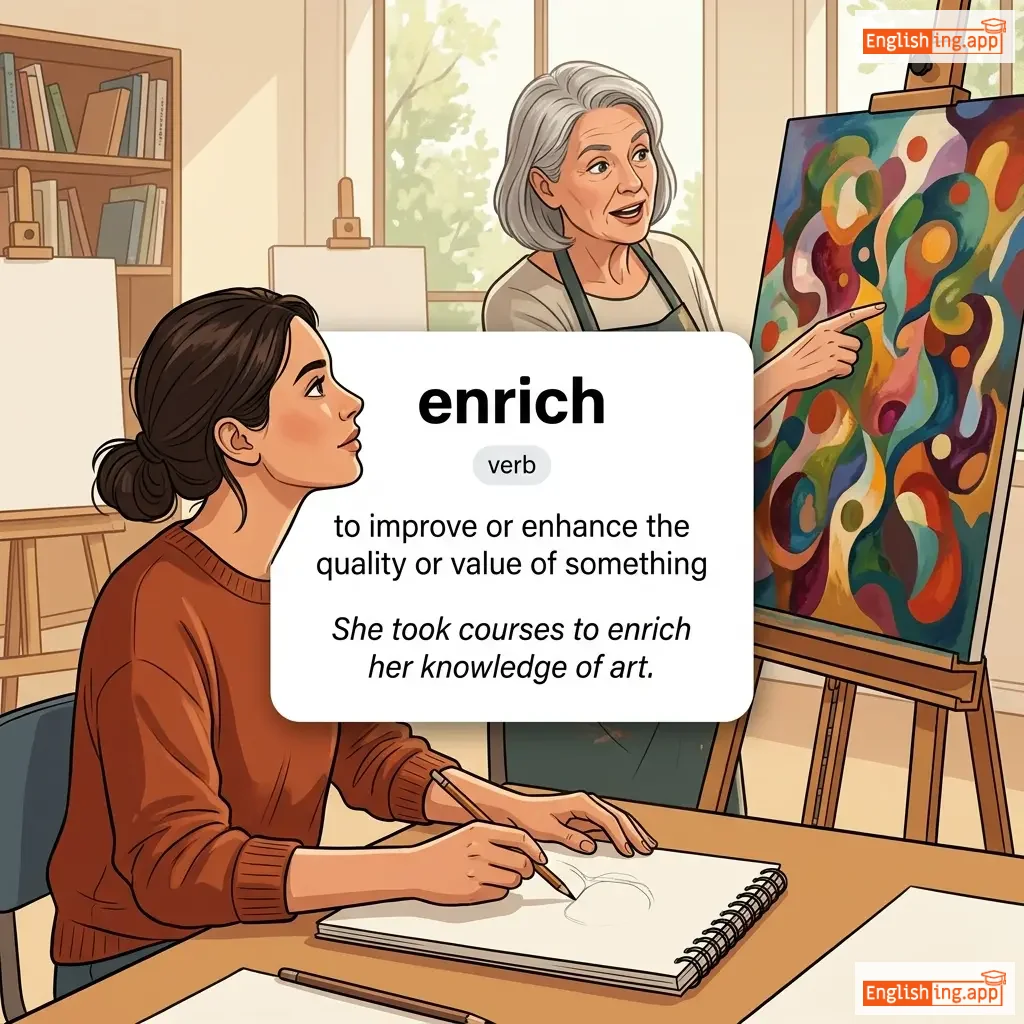
enrich definition card — visual illustration of the meaning
verb
/ɪnˈrɪtʃ/
enrichir (enrichir)

to improve or enhance the quality or value of something

"She took courses to enrich her knowledge of art."

"Elle a suivi des cours pour enrichir ses connaissances en art." (Elle a suivi des cours pour enrichir ses connaissances en art.)
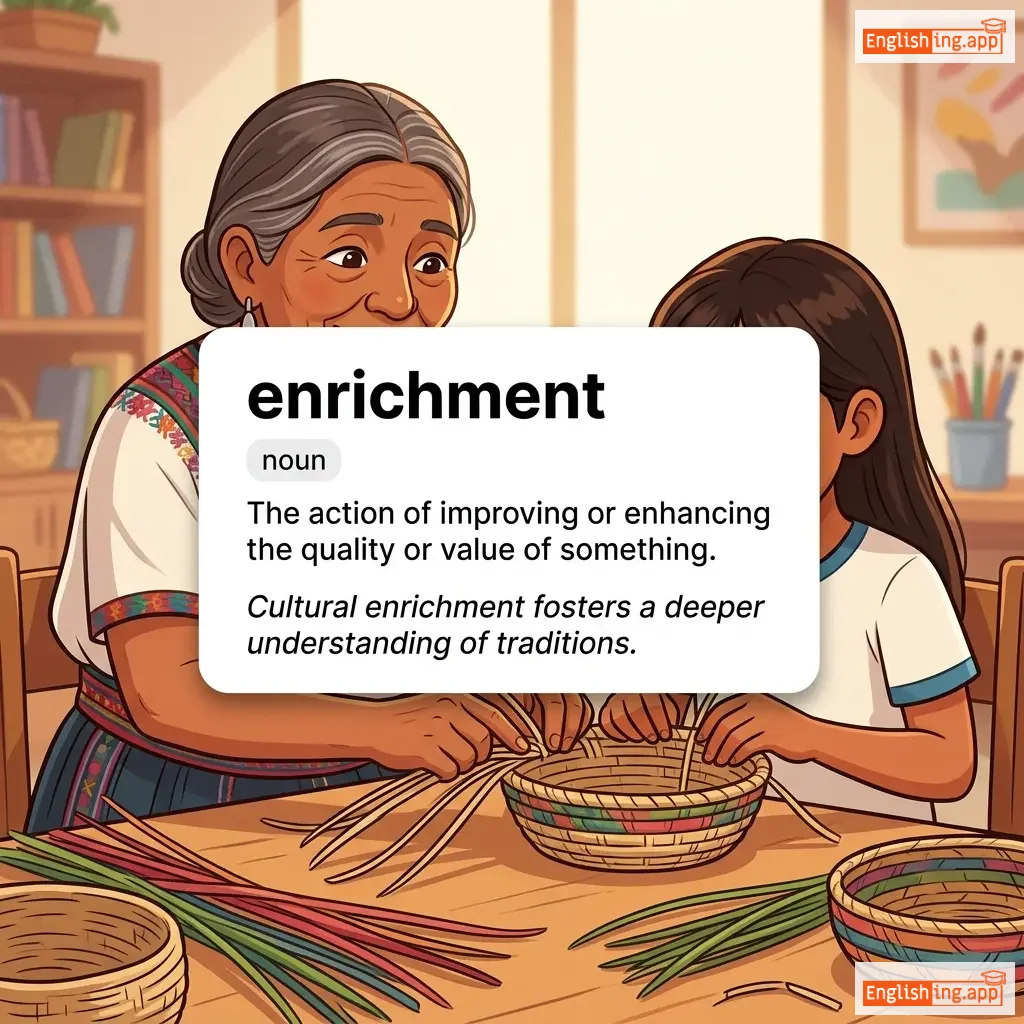
enrichment definition card — visual illustration of the meaning
noun
/ɪnˈrɪtʃ.mənt/
enrichissement (enrichissement)

The action of improving or enhancing the quality or value of something.

"Cultural enrichment fosters a deeper understanding of traditions."

"L'enrichissement culturel favorise une compréhension plus profonde des traditions." (L'enrichissement culturel favorise une compréhension plus profonde des traditions.)
verb
/ɪnˈroʊl/
s'inscrire (s'inscrire)

To officially register or sign up for a course, program, or membership

"She decided to enrol in a language course to improve her skills."

"Elle a décidé de s'inscrire dans un cours de langue pour améliorer ses compétences." (Elle a decide de s'inscrire dans un cours de langue pour ameliorer ses competences.)
verb
/ɪnˈroʊl/
s'inscrire (s'inscrire)

to officially join or register in a school, course, or organization

"He decided to enroll in a computer programming course."

"Il a décidé de s'inscrire à un cours de programmation informatique." (Il a décidé de s'inscrire à un cours de programmation informatique.)
verb
/ɪnˈskɒns/
s'installer confortablement, cacher (s'installer confortablement, cacher)

to settle comfortably or securely in a place; to hide or shelter firmly

"She ensconced herself in a cozy armchair by the fireplace."

"Elle s'est installée confortablement dans un fauteuil près de la cheminée." (Elle s'est installée confortablement dans un fauteuil près de la cheminée.)
noun
/ɒnˈsɒmbəl/
ensemble, groupe (ensemble, groupe)

a group of things or people viewed as a whole, especially performers in music or theater

"The theater ensemble gave a spectacular performance."

"L'ensemble théâtral a donné une performance spectaculaire." (L'ensemble théâtral a donné une performance spectaculaire.)
verb
/ɪnˈʃraɪn/
préserver ou chérir quelque chose comme sacré ou important (preserver ou cherir quelque chose comme sacre ou important)

to preserve or cherish something as sacred or important

"The constitution enshrines the right to freedom of speech."

"La constitution consacre le droit à la liberté d'expression." (La constitution consacre le droit à la liberté d'expression.)
noun
/ˈɛnsaɪn/
drapeau (drapeau)

A flag or standard, especially a military or naval one indicating nationality; also a junior officer in the navy or coast guard.

"The ship raised its national ensign before leaving the harbor."

"Le navire a hissé son drapeau national avant de quitter le port." (Le navire a hissé son drapeau national avant de quitter le port.)