Vocabulaires

Découvrez, apprenez et maîtrisez le vocabulaire anglais

noun
/ˈkɒntrəbænd/
marchandises illégales (marchandises illegales)

goods that are illegal to import, export, or possess

"The police seized a shipment of contraband cigarettes."

"La police a saisi une cargaison de cigarettes de contrebande." (La police a saisi une cargaison de cigarettes de contrebande.)
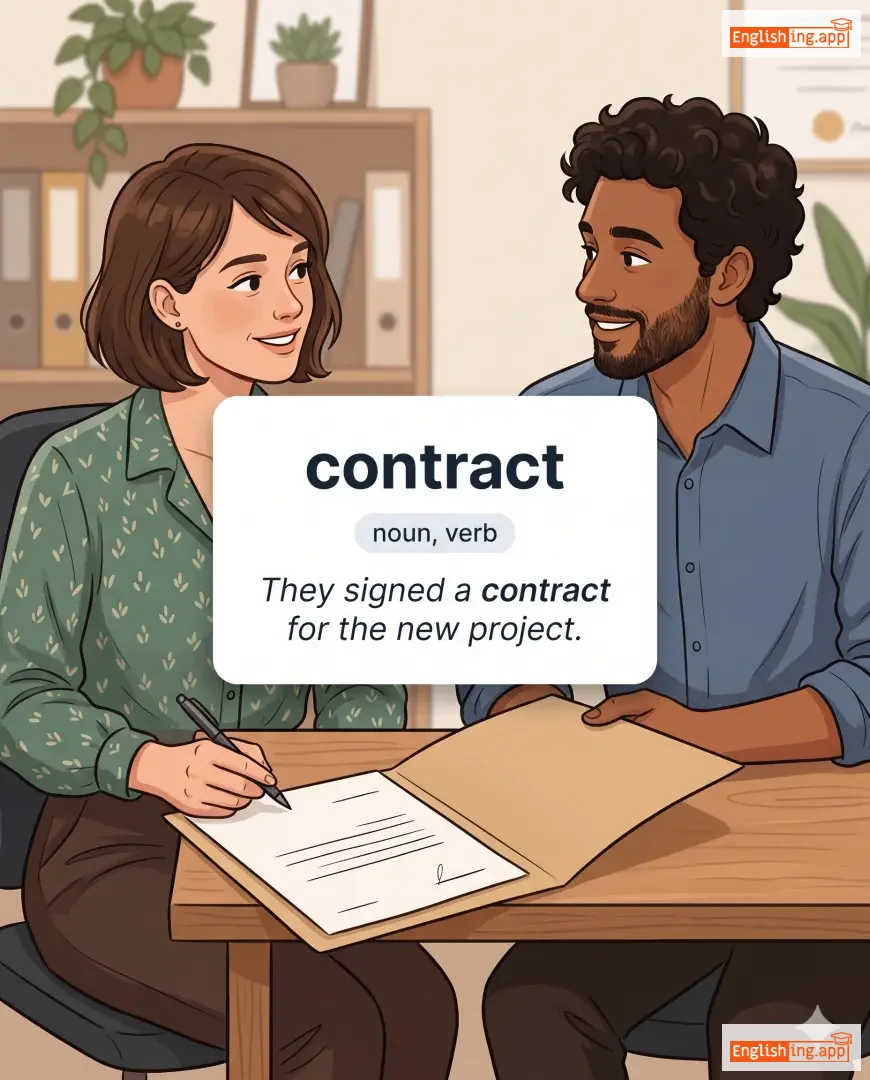
contract definition card — visual illustration of the meaning
noun, verb
/ˈkɒntrækt/
contrat, accord écrit ou oral (contrat, accord écrit ou oral)

noun: a written or spoken agreement; verb: to enter into an agreement or to reduce in size

"They signed a contract for the new project."

"Ils ont signé un contrat pour le nouveau projet." (Ils ont signé un contrat pour le nouveau projet.)
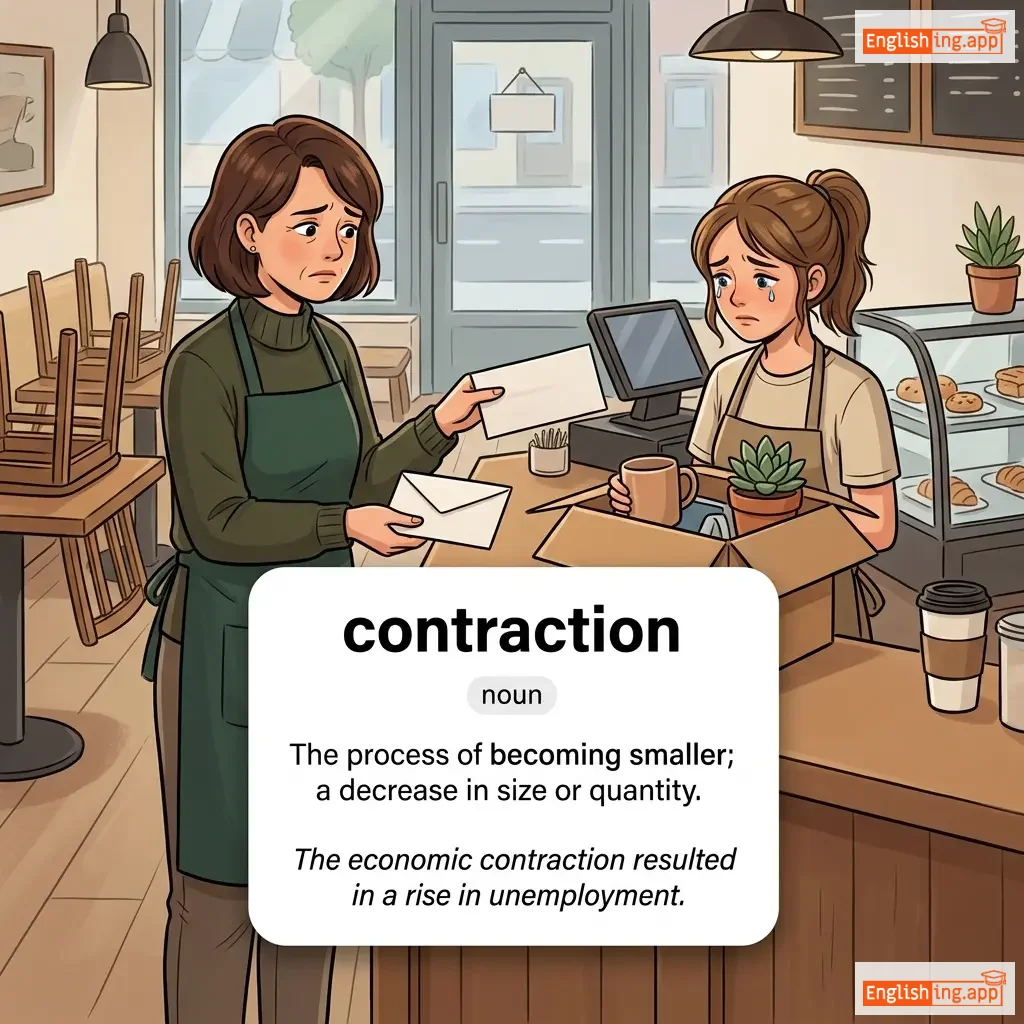
contraction definition card — visual illustration of the meaning
noun
kənˈtrækʃən
contraction (kontraksion)

The process of becoming smaller; a decrease in size or quantity.

"The economic contraction resulted in a rise in unemployment."

"La contraction économique a entraîné une augmentation du chômage." (La contraction économique a entraîné une augmentation du chômage.)
noun
/ˈkɒntræktər/
entrepreneur (entrepreneur)

a person or company that agrees to provide materials or labor to perform a service or do a job

"The contractor completed the building project on time."

"L'entrepreneur a terminé le projet de construction à temps." (L'entrepreneur a termine le projet de construction a temps.)
verb
/ˌkɒn.trəˈdɪkt/
contredire (contredire)

to say or show the opposite of something that has been said or believed

"His actions contradict his words."

"Ses actions contredisent ses paroles." (Ses actions contredisent ses paroles.)
noun
/ˌkɒntrəˈdɪkʃən/
contradiction, incohérence (contradiction, incoherence)

a statement or situation that is opposed to another, inconsistency

"Her actions are in clear contradiction to her words."

"Ses actions sont en claire contradiction avec ses paroles." (Ses actions sont en claire contradiction avec ses paroles.)
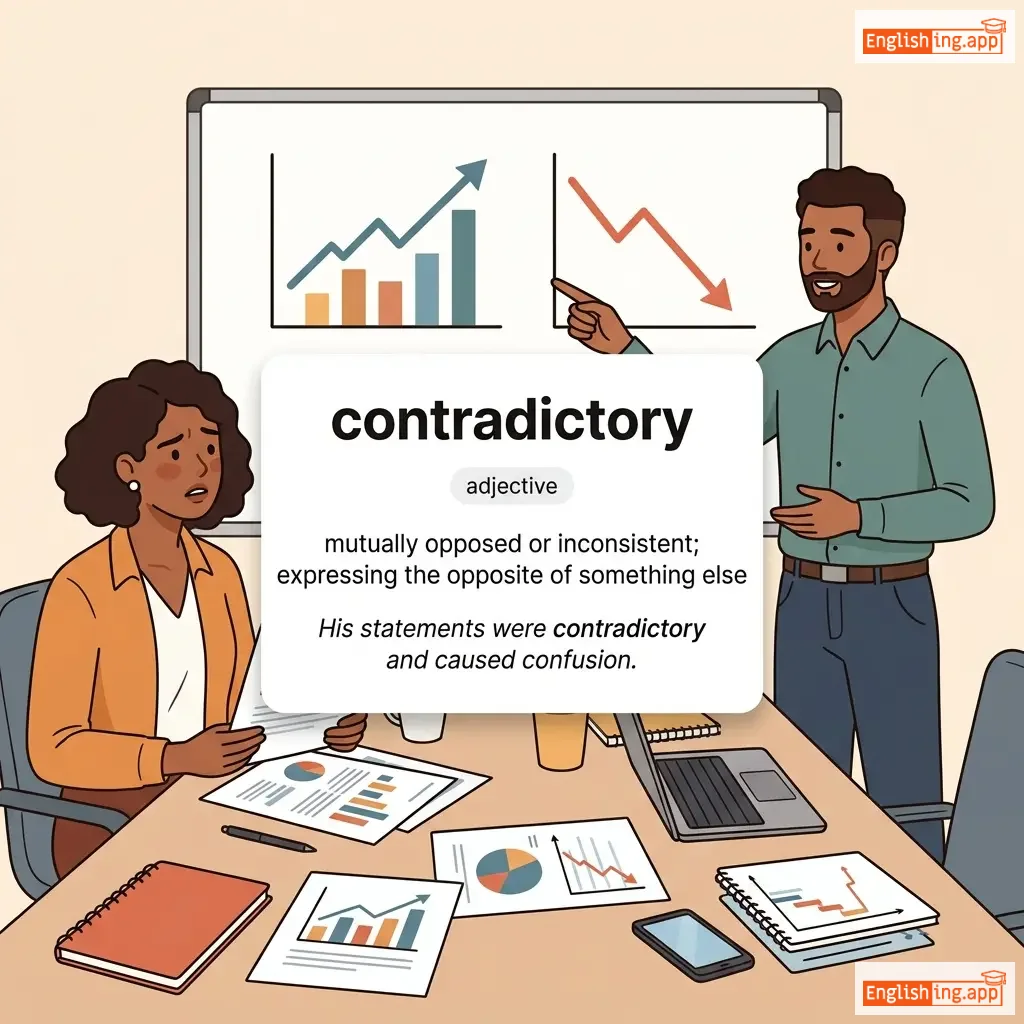
contradictory definition card — visual illustration of the meaning
adjective
/ˌkɒntrəˈdɪktəri/
contradictoire (contradictoire)

mutually opposed or inconsistent; expressing the opposite of something else

"His statements were contradictory and caused confusion."

"Ses déclarations étaient contradictoires et ont causé de la confusion." (Ses déclarations étaient contradictoires et ont causé de la confusion.)
noun
/ˌkɒntrəpəˈzɪʃən/
contraposition (contraposizion)

the act of placing two things in opposition for contrast or comparison

"The contraposition of the two theories highlighted their differences."

"La contraposition des deux théories a mis en lumière leurs différences." (La contraposition des deux theories a mis en lumiere leurs differences.)
noun
/ˈkɒntrəriz/
choses opposées (choses opposees)

things that are completely different or opposite to each other

"Freedom and slavery are contraries in every sense."

"La liberté et l'esclavage sont des contraires dans tous les sens." (La liberte et l'esclavage sont des contraires dans tous les sens.)
adjective
/ˈkɒn.trəri/
contraire (contraire)

opposite in nature, direction, or meaning

"Her views are contrary to mine."

"Ses opinions sont contraires aux miennes." (Ses opinions sont contraires aux miennes.)
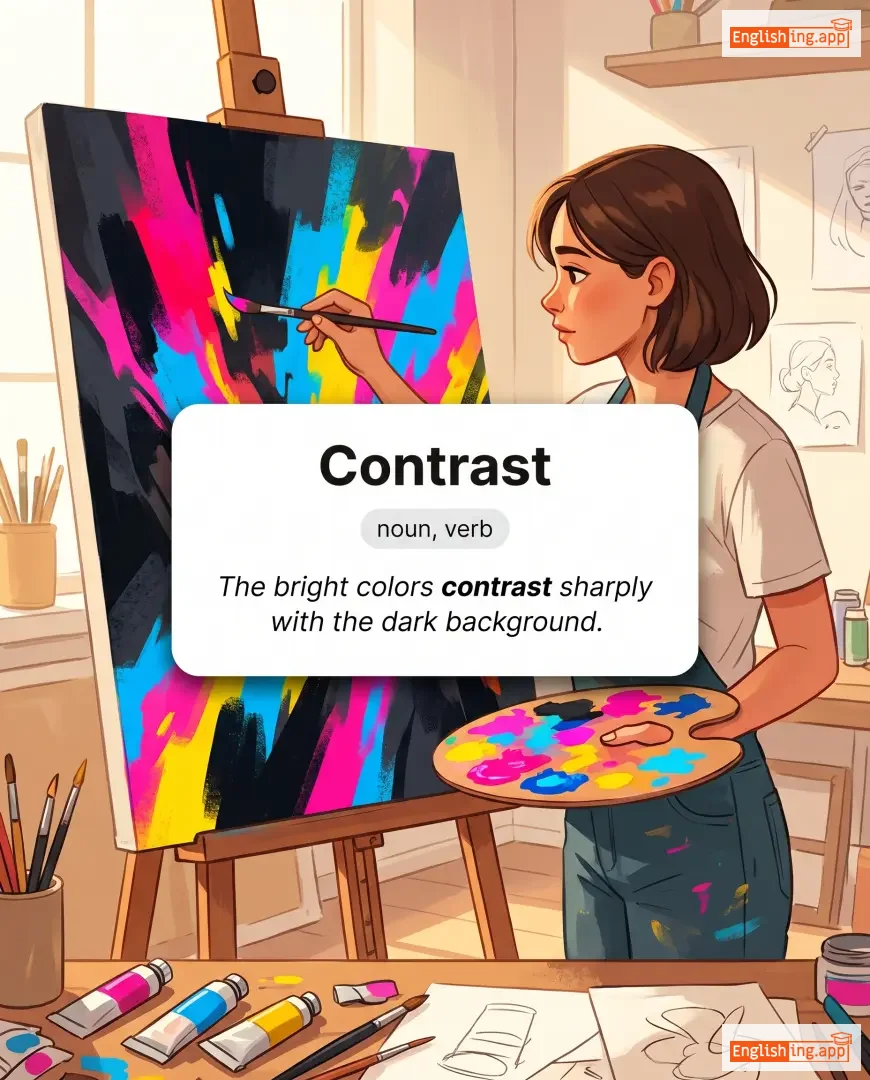
Contrast definition card — visual illustration of the meaning
noun, verb
/ˈkɒn.trɑːst/ (noun), /kənˈtræst/ (verb)
bonheur (bonheur)

A difference between two or more things; to compare two things to show how they are different.

"The bright colors contrast sharply with the dark background."

"Elle ne pouvait pas cacher son bonheur quand elle a reçu le prix." (Elle ne pouvait pas cacher son bonheur quand elle a recu le prix.)
verb
/ˌkɒntrəˈviːn/
contrevenir (contrevenir)

to go against or act in opposition to a law, rule, or agreement

"He contravened the safety regulations and was fined."

"Il a contrevenu aux règles de sécurité et a été amende." (Il a contrevenu aux règles de sécurité et a été amende.)
noun
/ˈkɒntrətɑː̃/
malentendu inattendu (malentendu inattendu)

an unexpected and unfortunate event or disagreement; a minor dispute

"There was a small contretemps between the two colleagues during the meeting."

"Il y a eu un petit malentendu entre les deux collègues pendant la réunion." (Il y a eu un petit malentendu entre les deux collègues pendant la réunion.)
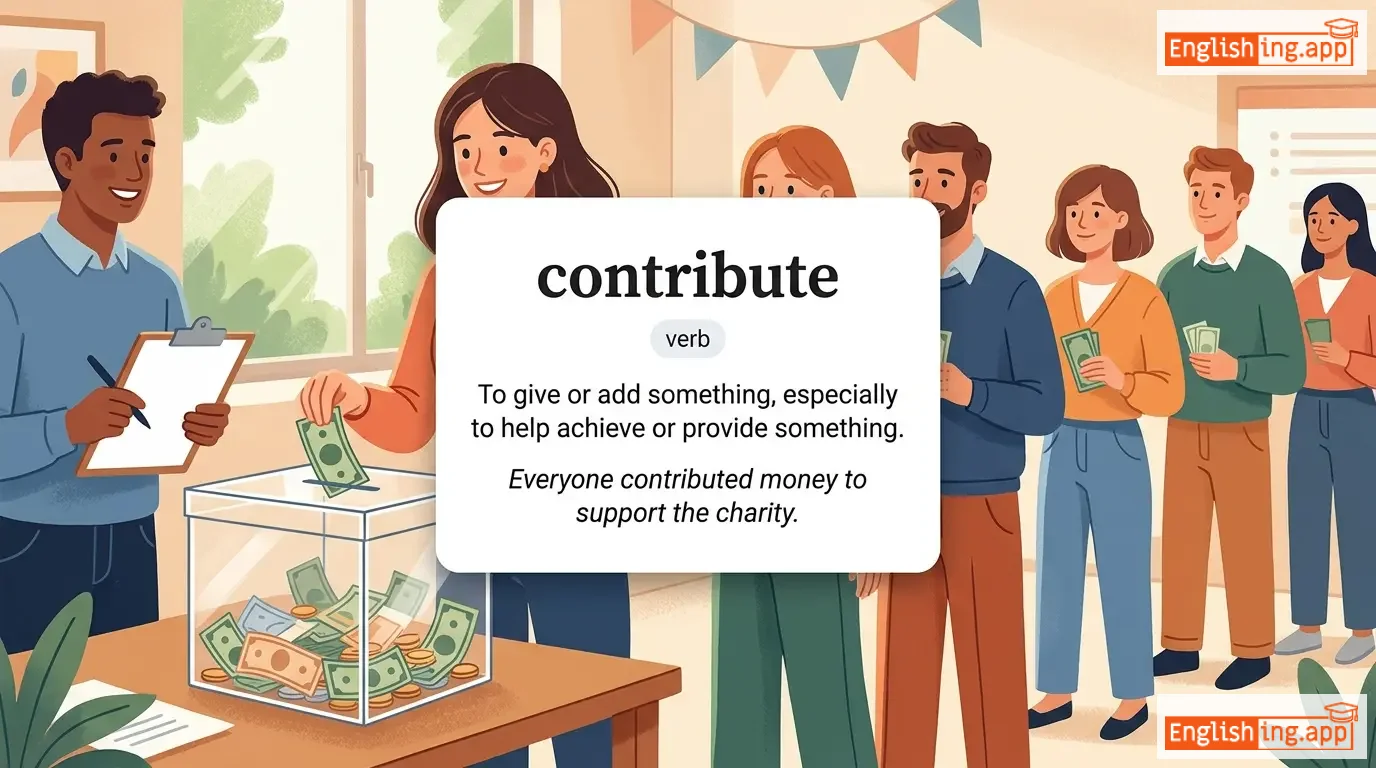
contribute definition card — visual illustration of the meaning
verb
/kənˈtrɪbjuːt/
contribuer (contribuer)

To give or add something, especially to help achieve or provide something.

"Everyone contributed money to support the charity."

"Tout le monde a contribué de l'argent pour soutenir la charité." (Tout le monde a contribué de l'argent pour soutenir la charité.)
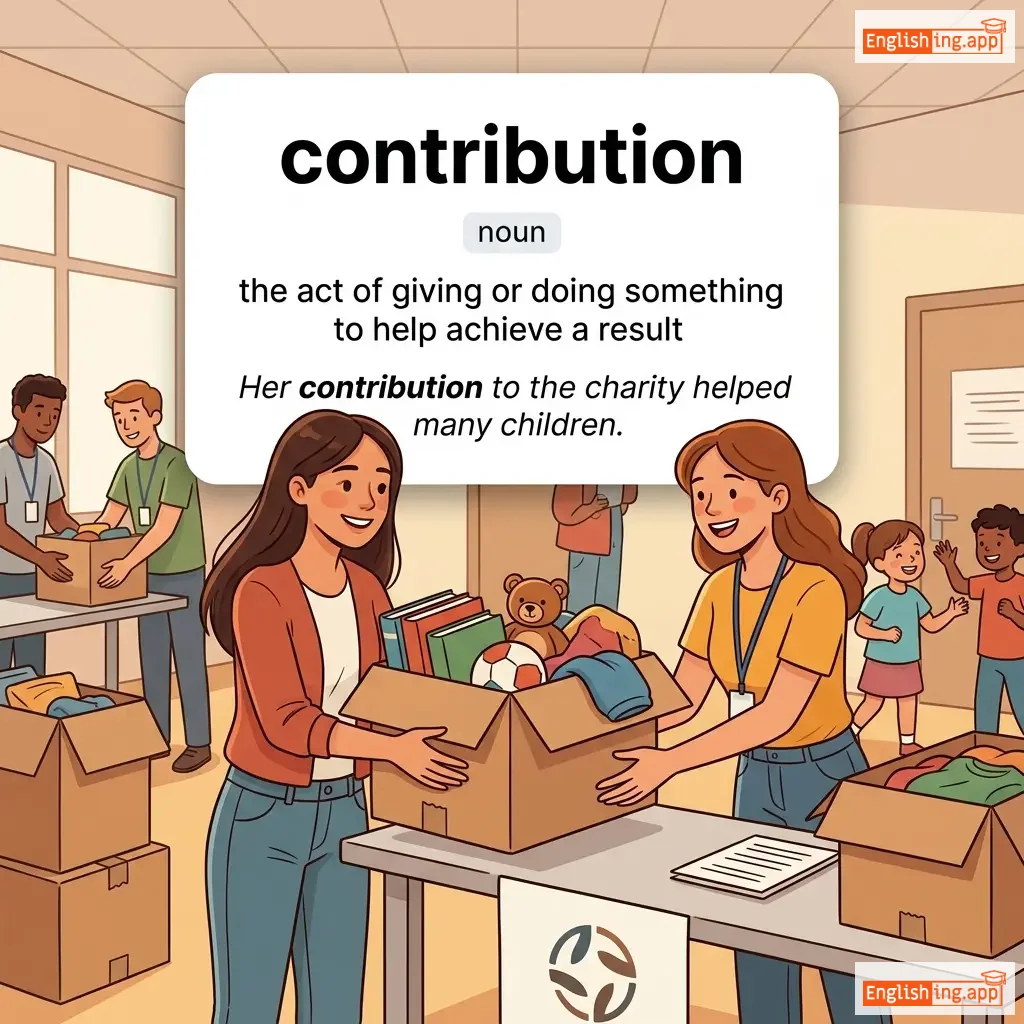
contribution definition card — visual illustration of the meaning
noun
/ˌkɒn.trɪˈbjuː.ʃən/
contribution (contribution)

the act of giving or doing something to help achieve a result

"Her contribution to the charity helped many children."

"Sa contribution à la charité a aidé de nombreux enfants." (Sa contribution à la charité a aidé de nombreux enfants.)
noun
/ˈkɒn.trɪ.bjʊ.tər/
contributeur (contributeur)

a person who gives something to help achieve a result

"He was a regular contributor to the local newspaper."

"Il était un contributeur régulier au journal local." (Il était un contributeur régulier au journal local.)
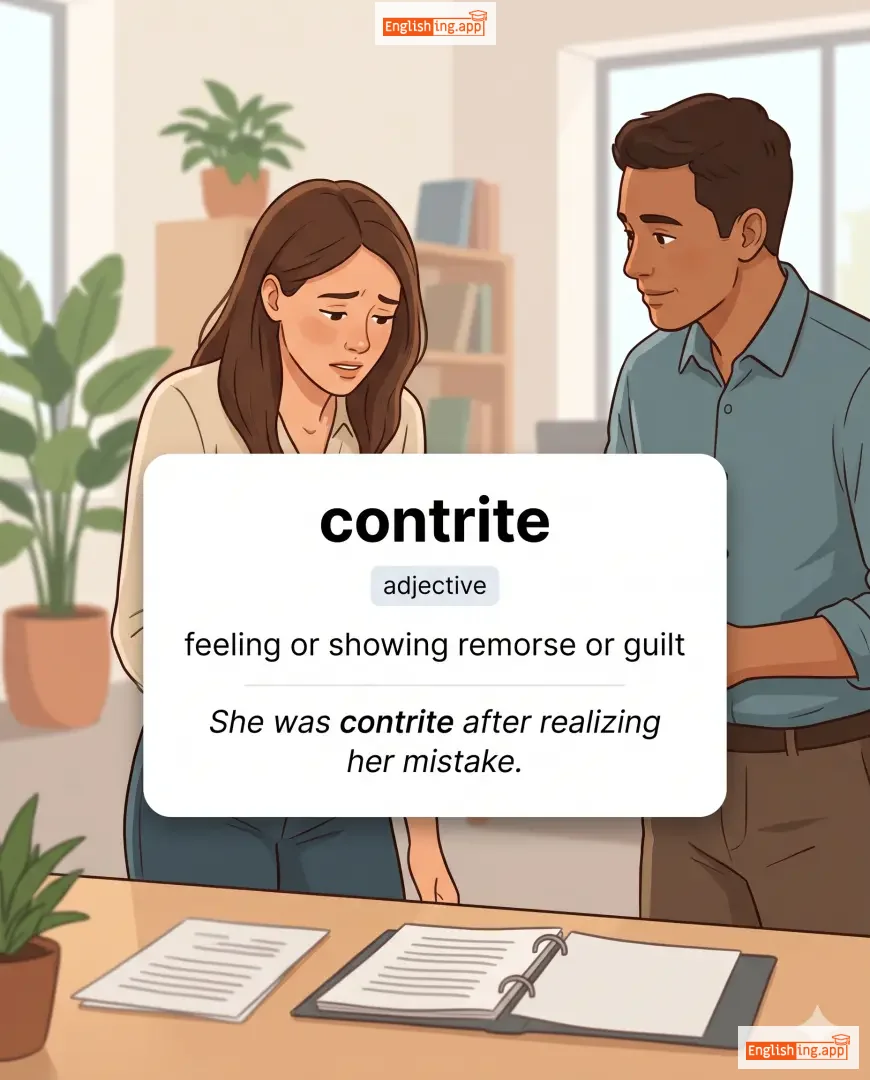
contrite definition card — visual illustration of the meaning
adjective
/kənˈtraɪt/
contrit (contrit)

feeling or showing remorse or guilt

"She was contrite after realizing her mistake."

"Elle était contrite après avoir réalisé son erreur." (Elle était contrite après avoir réalisé son erreur.)
noun
/kənˈtrɪʃ.ən/
contrition (contrition)

the state of feeling remorseful and repentant

"His contrition was evident after the apology."

"Sa contrition était évidente après des excuses." (Sa contrition etait evidente apres des excuses.)
noun
/kənˈtraɪ.vəns/
appareil ou plan (appareil ou plan)

a device or plan that is cleverly or artificially created

"The clock was an intricate contrivance of gears and springs."

"L'horloge était un dispositif complexe de rouages et de ressorts." (L'horloge était un dispositif complexe de rouages et de ressorts.)
verb
/kənˈtraɪv/
concevoir (concevoir)

to plan or devise cleverly or skillfully

"She contrived a clever plan to surprise her friends."

"Elle a conçu un plan ingénieux pour surprendre ses amis." (Elle a conçu un plan ingénieux pour surprendre ses amis.)
adjective
/kənˈtraɪvd/
artificiel ou forcé; pas naturel ni spontané (artificiel ou forcé; pas naturel ni spontané)

artificial or forced; not natural or spontaneous

"The ending of the movie felt contrived and unrealistic."

"La fin du film semblait artificielle et irréaliste." (La fin du film semblait artificielle et irréaliste.)
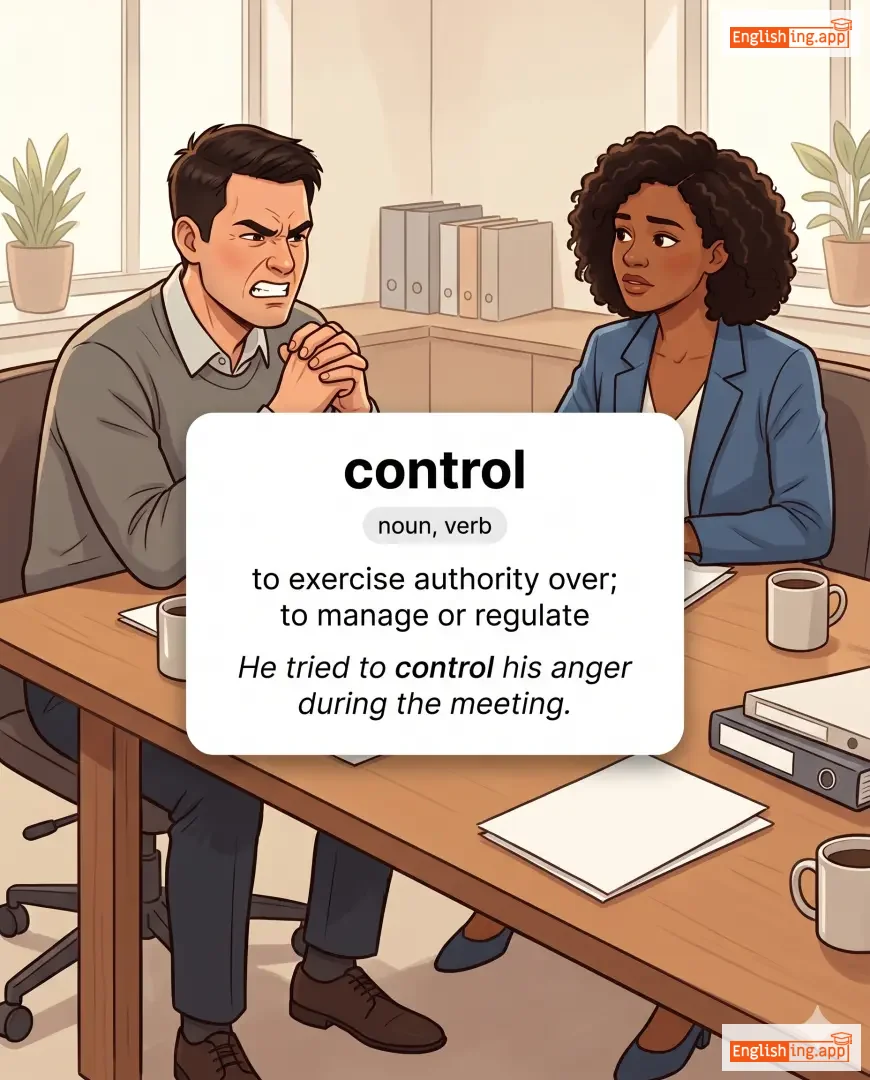
control definition card — visual illustration of the meaning
noun, verb
/kənˈtroʊl/
contrôler (kontrolet)

to exercise authority over; to manage or regulate

"He tried to control his anger during the meeting."

"Il a essayé de contrôler sa colère pendant la réunion." (Il a essayé de contrôler sa colère pendant la réunion.)
adjective
/kənˈtroʊld/
contrôlé (controle)

managed or regulated carefully; kept within limits

"The experiment was conducted in a controlled environment."

"L'expérience a été menée dans un environnement contrôlé." (L experience a ete menee dans un environnement controle)
noun
/kənˈtroʊlər/
contrôleur (controleur)

a person or device that manages, directs, or regulates something

"The game controller made it easy to play the video game."

"Le contrôleur de jeu a facilité le jeu du jeu vidéo." (Le contrôleur de jeu a facilité le jeu du jeu vidéo.)
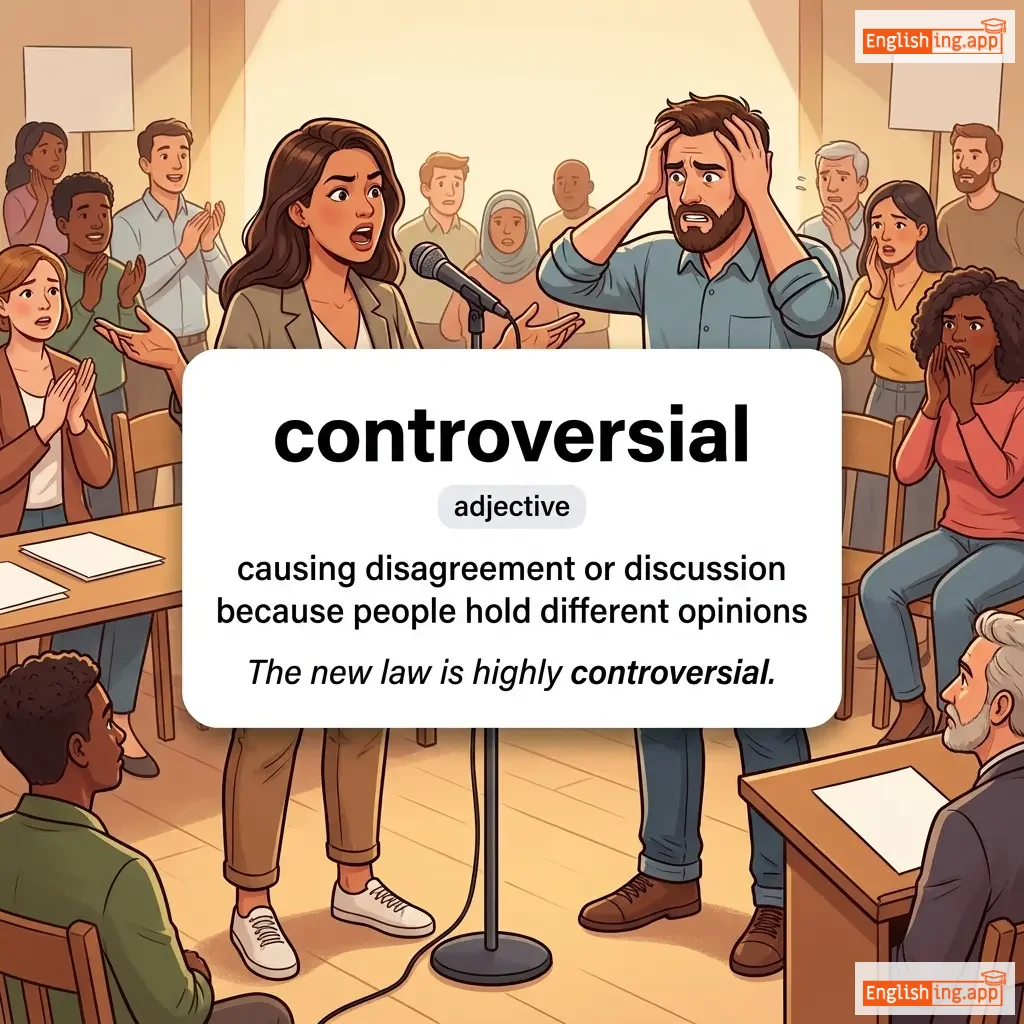
controversial definition card — visual illustration of the meaning
adjective
/ˌkɒn.trəˈvɜː.ʃəl/
controversé (controverse)

causing disagreement or discussion because people hold different opinions

"The new law is highly controversial."

"La nouvelle loi est très controversée." (La nouvelle loi est tres controversee.)
noun
/ˈkɒn.trə.vɜːr.si/
controverse (controverse)

A prolonged public disagreement or heated discussion.

"The new policy sparked a major controversy."

"La nouvelle politique a déclenché une grande controverse." (La nouvelle politique a déclenché une grande controverse.)
verb
/ˌkɒntrəˈvɜːrt/
contredire (contredire)

to dispute or argue against; to contradict

"The scientist controversed the previous research findings."

"Le scientifique a contredit les résultats de la recherche précédente." (Le scientifique a contredit les résultats de la recherche précédente.)
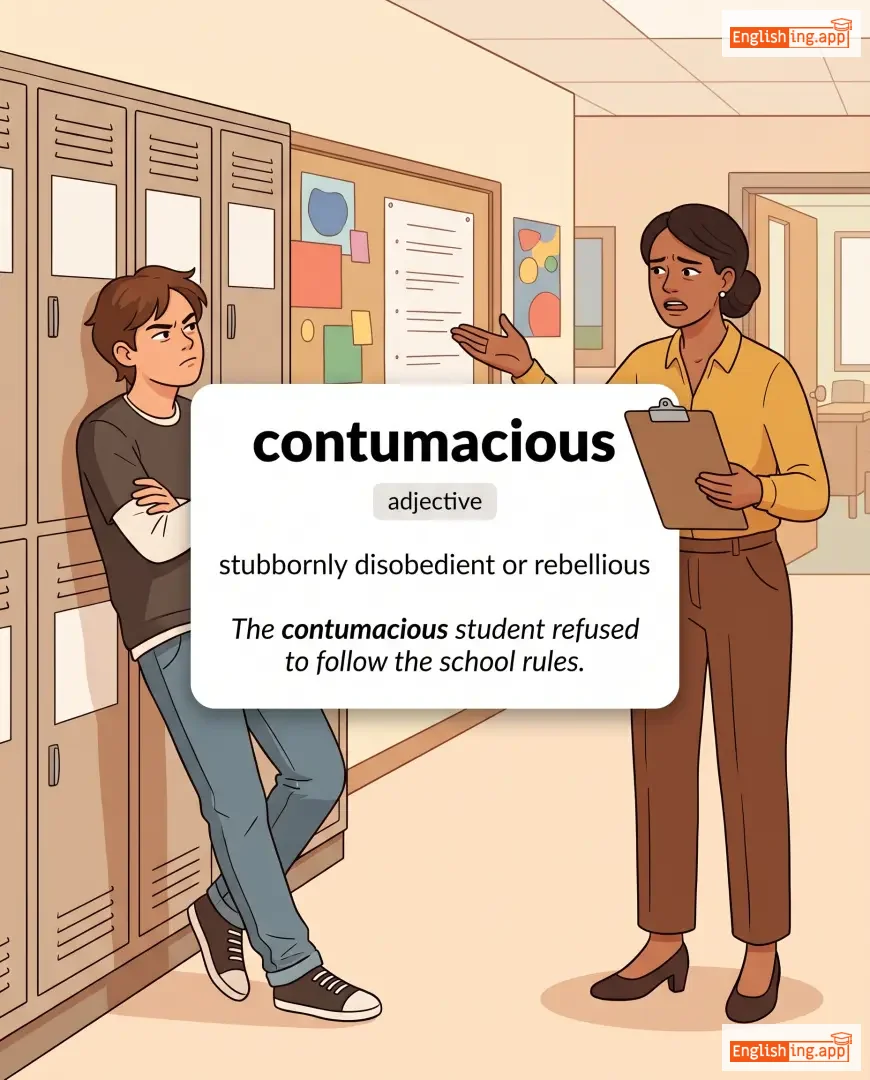
contumacious definition card — visual illustration of the meaning
adjective
/ˌkɒn.tjʊˈmeɪ.ʃəs/
insoumis, récalcitrant (insoumis, récalcitrant)

stubbornly disobedient or rebellious

"The contumacious student refused to follow the school rules."

"L'étudiant insoumis a refusé de suivre les règles de l'école." (L'étudiant insoumis a refusé de suivre les règles de l'école.)
noun
/ˈkɒn.tjʊ.mə.si/
désobéissance, entêtement (desobeissance, entetement)

stubborn refusal to obey authority

"His contumacy led to his suspension from the council."

"Sa désobéissance a conduit à sa suspension du conseil." (Sa désobéissance a conduit à sa suspension du conseil.)
noun
/ˈkɒn.tjʊ.mə.li/
insulte, mépris (insulte, mepris)

insulting or humiliating treatment

"He endured the contumely of his colleagues with patience."

"Il a supporté le mépris de ses collègues avec patience." (Il a supporté le mépris de ses collègues avec patience.)
verb
/kənˈtjuːz/
contusionner (contusionner)

to bruise by striking or hitting

"He contused his arm when he fell off the bike."

"Il s'est contusionné le bras lorsqu'il est tombé de son vélo." (Il s'est contusionné le bras lorsqu'il est tombé de son vélo.)
noun
/kənˈtjuː.ʒən/
contusion, ecchymose (contusion, ecchymose)

a bruise or injury without breaking the skin

"The boxer had several contusions after the match."

"Le boxeur avait plusieurs contusions après le match." (Le boxeur avait plusieurs contusions après le match.)
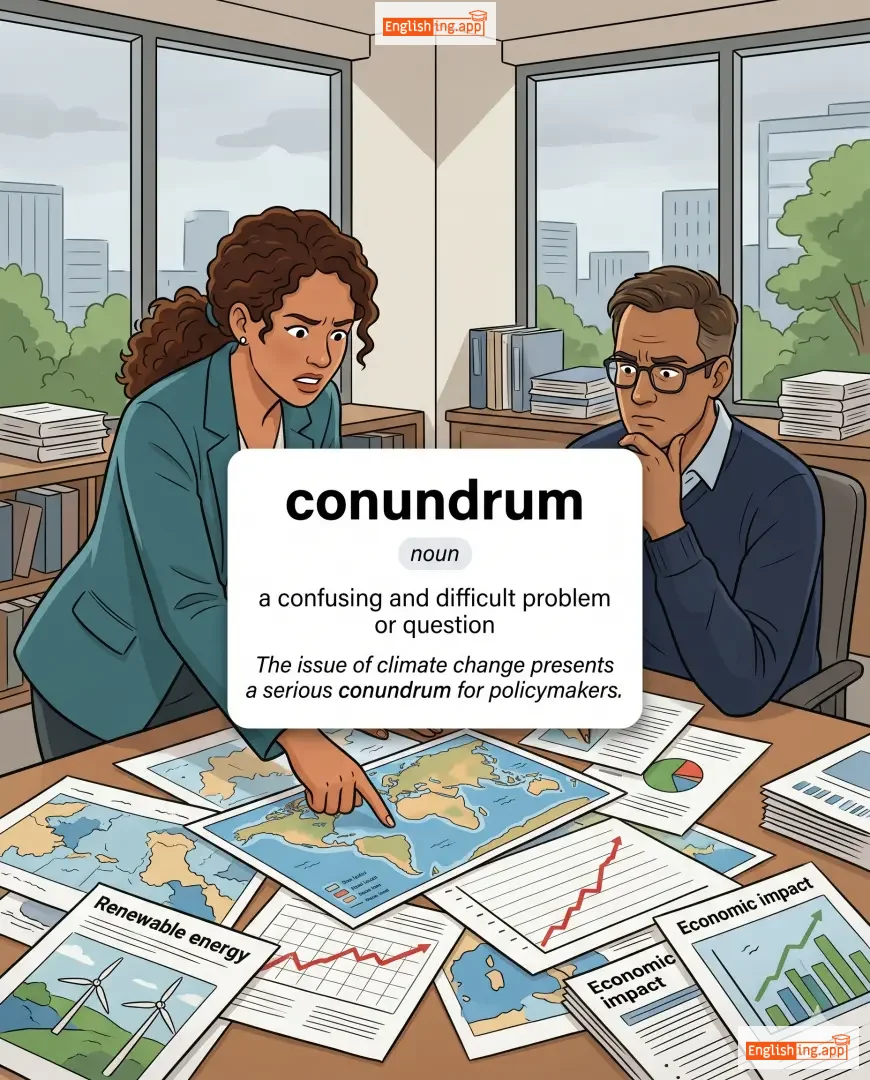
conundrum definition card — visual illustration of the meaning
noun
/kəˈnʌndrəm/
énigme (enigme)

a confusing and difficult problem or question

"The issue of climate change presents a serious conundrum for policymakers."

"La question du changement climatique présente une énigme sérieuse pour les décideurs politiques." (La question du changement climatique présente une enigme serieuse pour les decideurs politiques.)
verb
/ˌkɒnvəˈlɛs/
se rétablir, récupérer la santé et la force après une maladie ou un traitement médical (se retablir, recuperer la sante et la force apres une maladie ou un traitement medical)

to recover health and strength after illness or medical treatment

"After the surgery, she spent several weeks convalescing at home."

"Après l'opération, elle a passé plusieurs semaines à récupérer chez elle." (Apres l'operation, elle a passe plusieurs semaines a recuperer chez elle.)
noun
/ˌkɒnvəˈlɛsns/
convalescence (convalescence)

the period of time spent recovering from an illness or medical treatment

"His convalescence lasted for almost two months after the accident."

"Sa convalescence a duré presque deux mois après l'accident." (Sa convalescence a dure presque deux mois apres l'accident.)
adjective
/ˌkɒnvəˈlɛsnt/
en convalescence, en rétablissement après une maladie ou un traitement médical (en convalescence, en retablissement apres une maladie ou un traitement medical)

recovering from an illness or medical treatment

"The hospital has a special ward for convalescent patients."

"L'hôpital dispose d'une salle spéciale pour les patients en convalescence." (L'hopital dispose d'une salle speciale pour les patients en convalescence.)
verb
/kənˈviːn/
se réunir, convoquer une réunion ou un rassemblement (se reunir, convoquer une reunion ou un rassemblement)

to come together or assemble, especially for a meeting or formal gathering

"The board will convene tomorrow to discuss the new policy."

"Le conseil se réunira demain pour discuter de la nouvelle politique." (Le conseil se reunira demain pour discuter de la nouvelle politique.)
noun
/kənˈviːniəns/
commodité (commodite)

the state of being able to do something easily or comfortably

"Online shopping offers great convenience for busy people."

"Les achats en ligne offrent une grande commodité pour les personnes occupées." (Les achats en ligne offrent une grande commodité pour les personnes occupées.)
adjective
/kənˈviː.ni.ənt/
pratique (pratik)

suitable or easy to use; fitting in well with one's needs

"This shop is convenient for my daily needs."

"Ce magasin est pratique pour mes besoins quotidiens." (Ce magasin est pratique pour mes besoins quotidiens.)
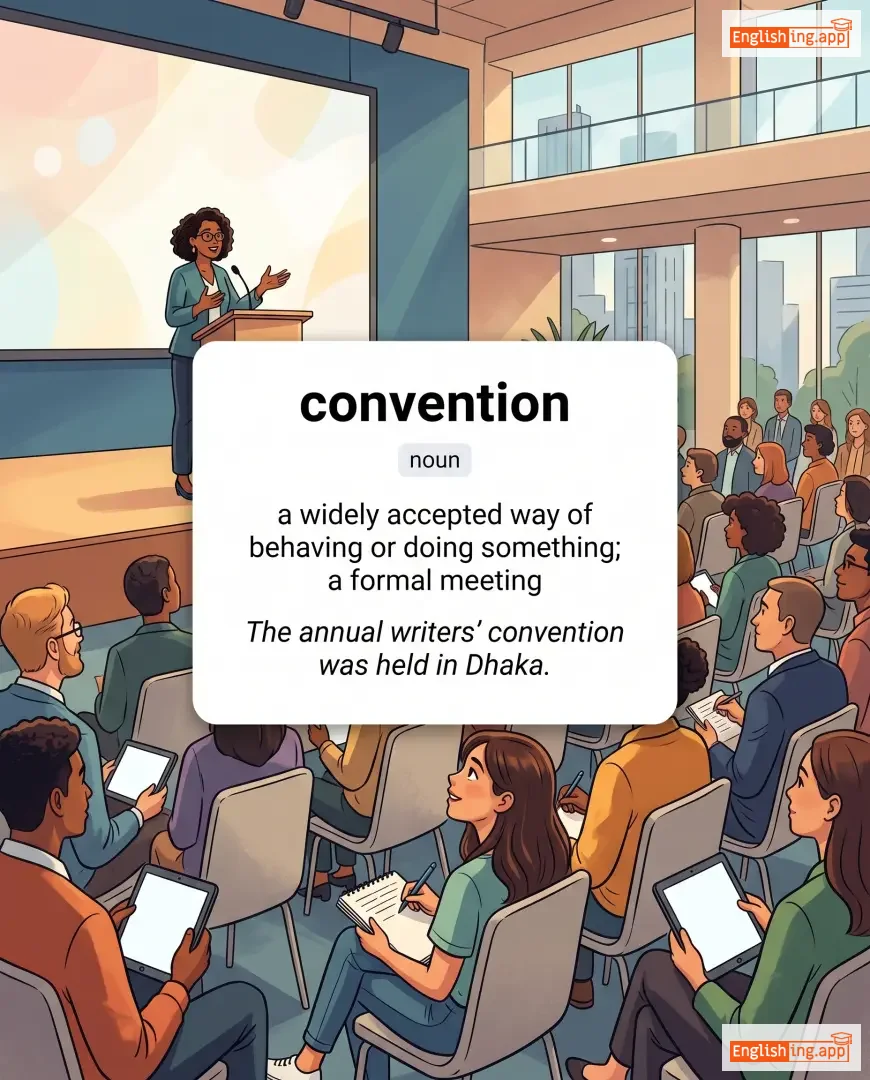
convention definition card — visual illustration of the meaning
noun
/kənˈvɛnʃən/
convention (convention)

a widely accepted way of behaving or doing something; a formal meeting

"The annual writers' convention was held in Dhaka."

"La convention annuelle des écrivains a eu lieu à Dhaka." (La convention annuelle des ecrivains a eu lieu a Dhaka.)
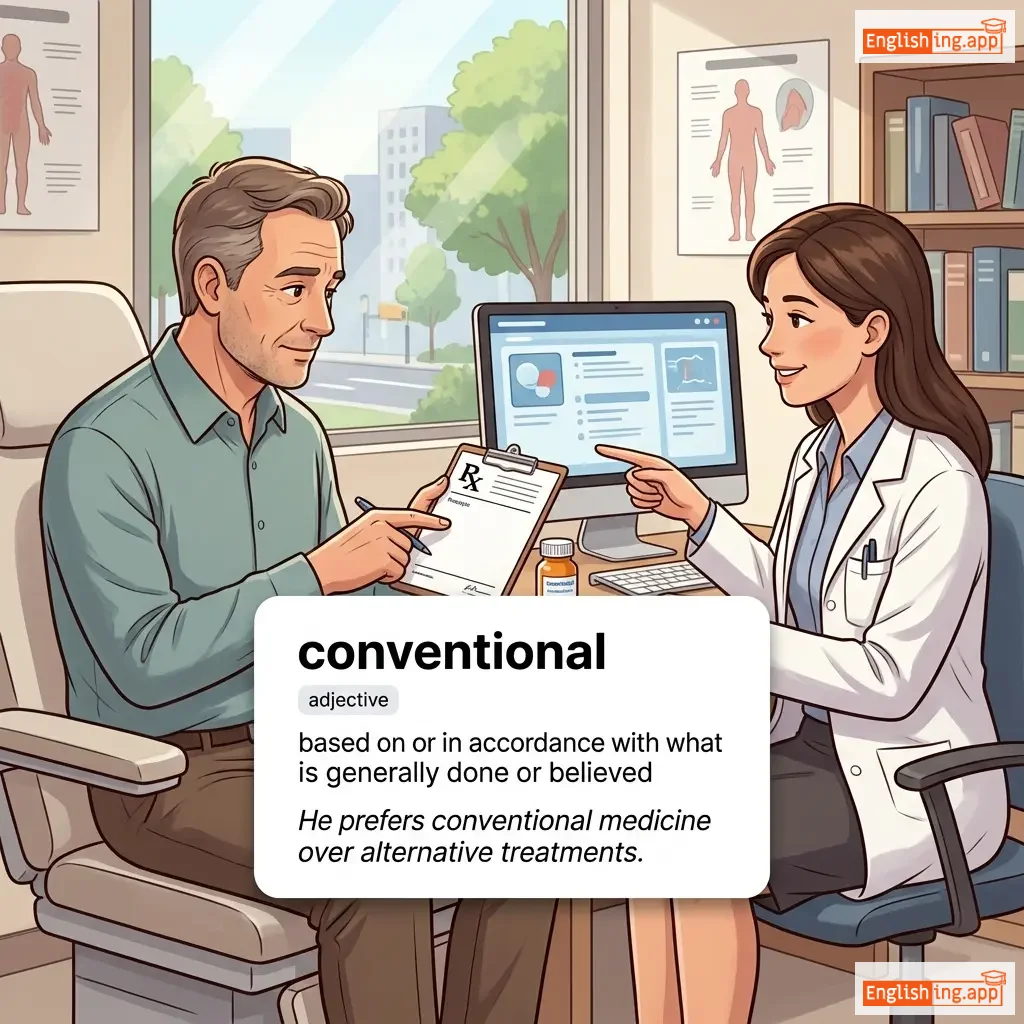
conventional definition card — visual illustration of the meaning
adjective
/kənˈvɛnʃənəl/
traditionnel (traditionnel)

based on or in accordance with what is generally done or believed

"He prefers conventional medicine over alternative treatments."

"Il préfère la médecine traditionnelle aux traitements alternatifs." (Il préfère la médecine traditionnelle aux traitements alternatifs.)
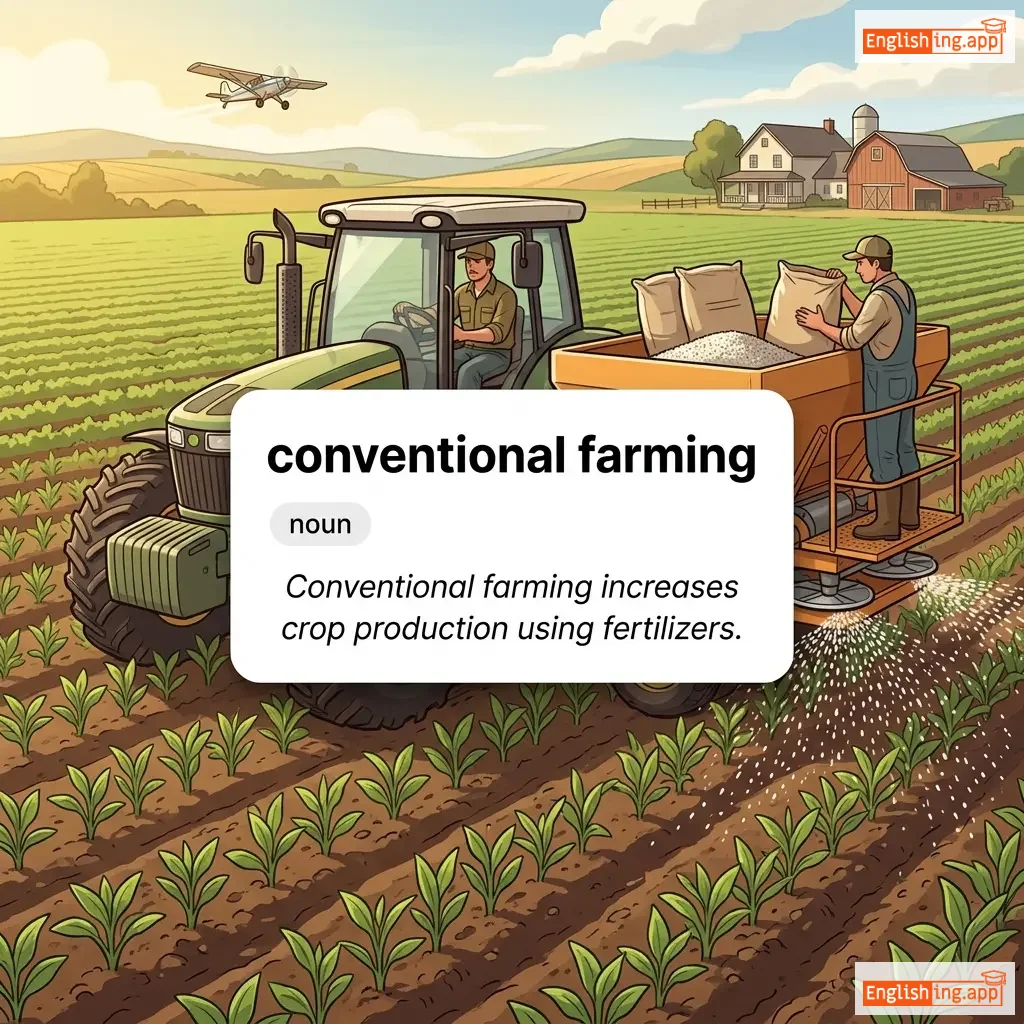
conventional farming definition card — visual illustration of the meaning
noun
/kənˈvɛn.ʃən.əl ˈfɑːr.mɪŋ/
agriculture conventionnelle (agriculture conventionnelle)

Traditional farming method using synthetic fertilizers, pesticides, and modern technology.

"Conventional farming increases crop production using fertilizers."

"L'agriculture conventionnelle augmente la production des cultures en utilisant des engrais." (L'agriculture conventionnelle augmente la production des cultures en utilisant des engrais.)
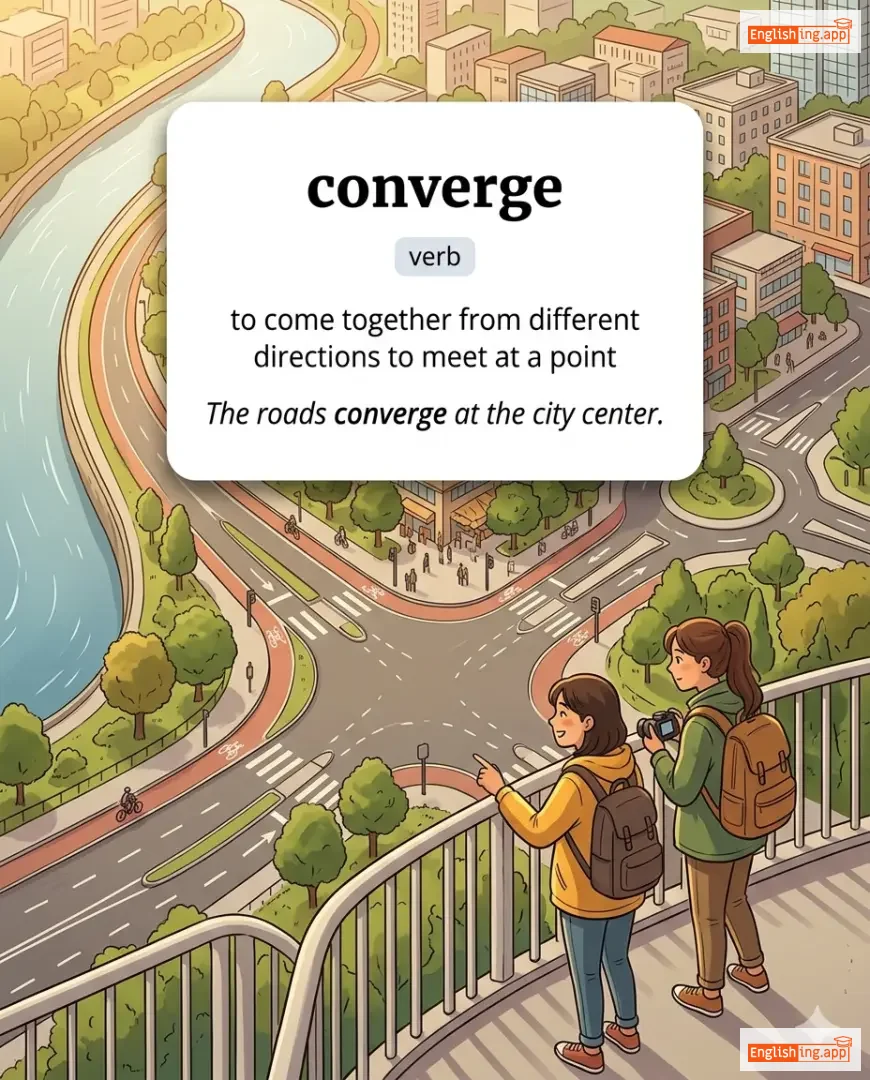
converge definition card — visual illustration of the meaning
verb
/kənˈvɜːrdʒ/
converger (kon-ver-jay)

to come together from different directions to meet at a point

"The roads converge at the city center."

"Les routes convergent au centre de la ville." (Les routes convergent au centre de la ville.)
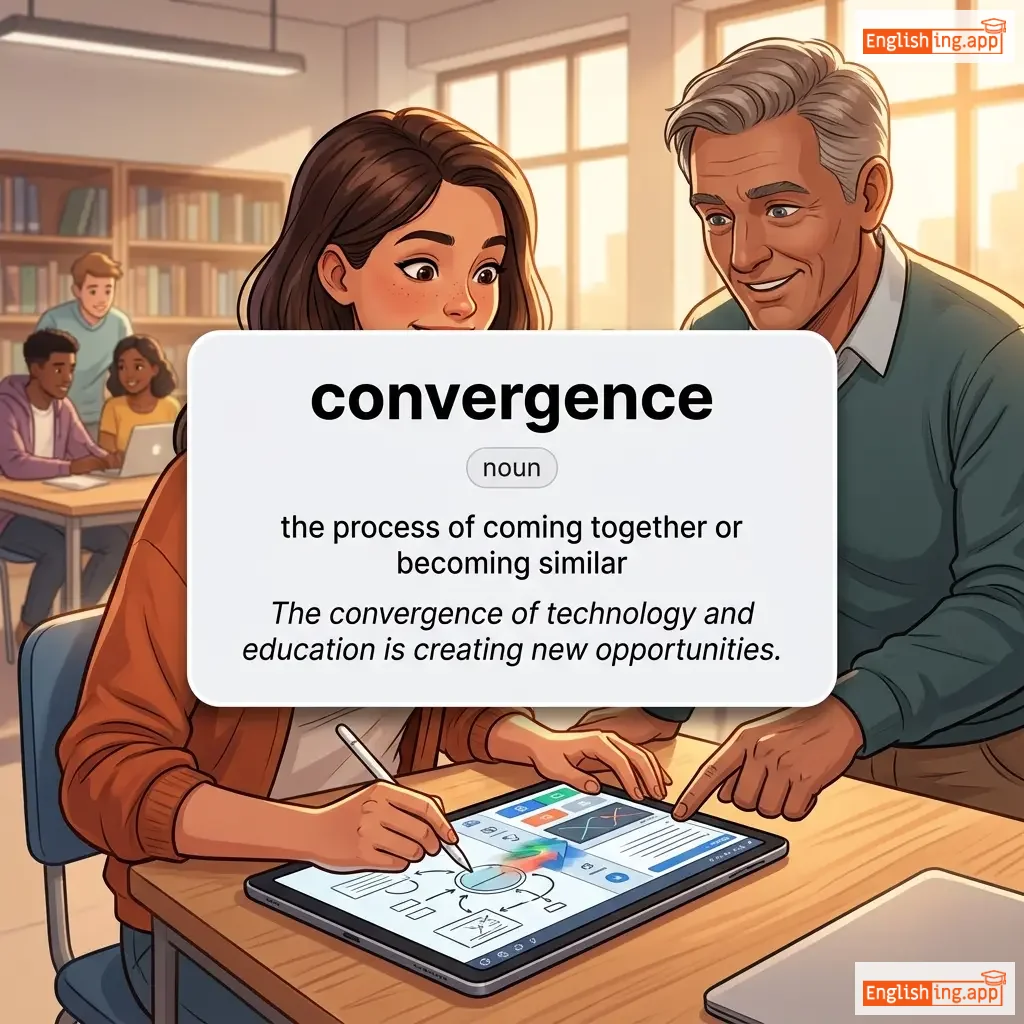
convergence definition card — visual illustration of the meaning
noun
/kənˈvɜː.dʒəns/
convergence (convergence)

the process of coming together or becoming similar

"The convergence of technology and education is creating new opportunities."

"La convergence de la technologie et de l'éducation crée de nouvelles opportunités." (La convergence de la technologie et de l'éducation crée de nouvelles opportunités.)
adjective
/kənˈvɜːrdʒənt/
convergent (convergent)

tending to move toward a common point or result

"The two rivers have a convergent path before entering the lake."

"Les deux rivières ont un chemin convergent avant d'entrer dans le lac." (Les deux rivières ont un chemin convergent avant d'entrer dans le lac.)
adjective
/kənˈvɜːrsənt/
familier, connaisseur (familier, connaisseur)

familiar with or knowledgeable about something

"She is conversant with the latest developments in technology."

"Elle est familière avec les derniers développements technologiques." (Elle est familière avec les derniers développements technologiques.)
noun
/ˌkɒnvəˈseɪʃn/
conversation (conversation)

an informal talk between two or more people, in which ideas, feelings, and thoughts are exchanged

"We had a long conversation about future plans."

"Nous avons eu une longue conversation sur les plans futurs." (Nous avons eu une longue conversation sur les plans futurs.)
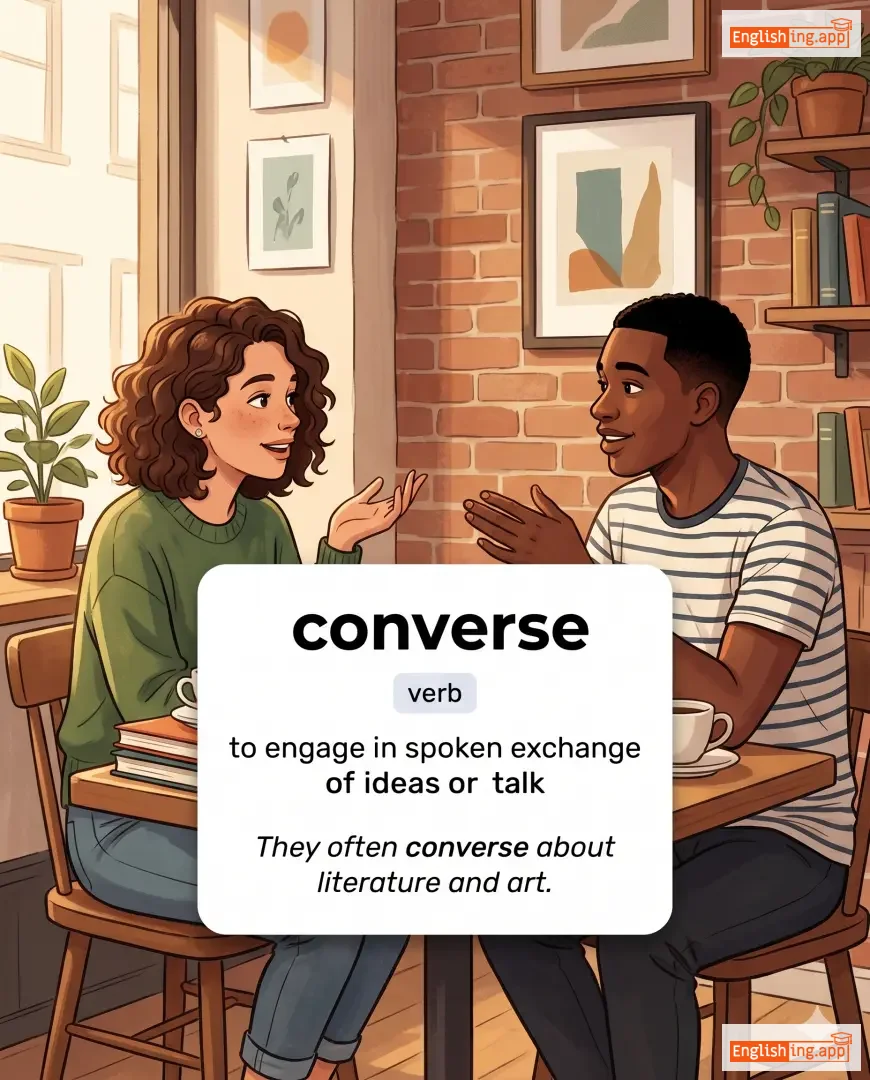
converse definition card — visual illustration of the meaning
verb
/kənˈvɜːrs/
converser (converser)

to engage in spoken exchange of ideas or talk

"They often converse about literature and art."

"Ils conversent souvent sur la littérature et l'art." (Ils conversent souvent sur la littérature et l'art.)
adverb
/kənˈvɜːrsli/
inversement (inversement)

in an opposite or contrary manner

"He is rich, conversely, his brother struggles financially."

"Il est riche, inversement, son frère lutte financièrement." (Il est riche, inversement, son frère lutte financièrement.)
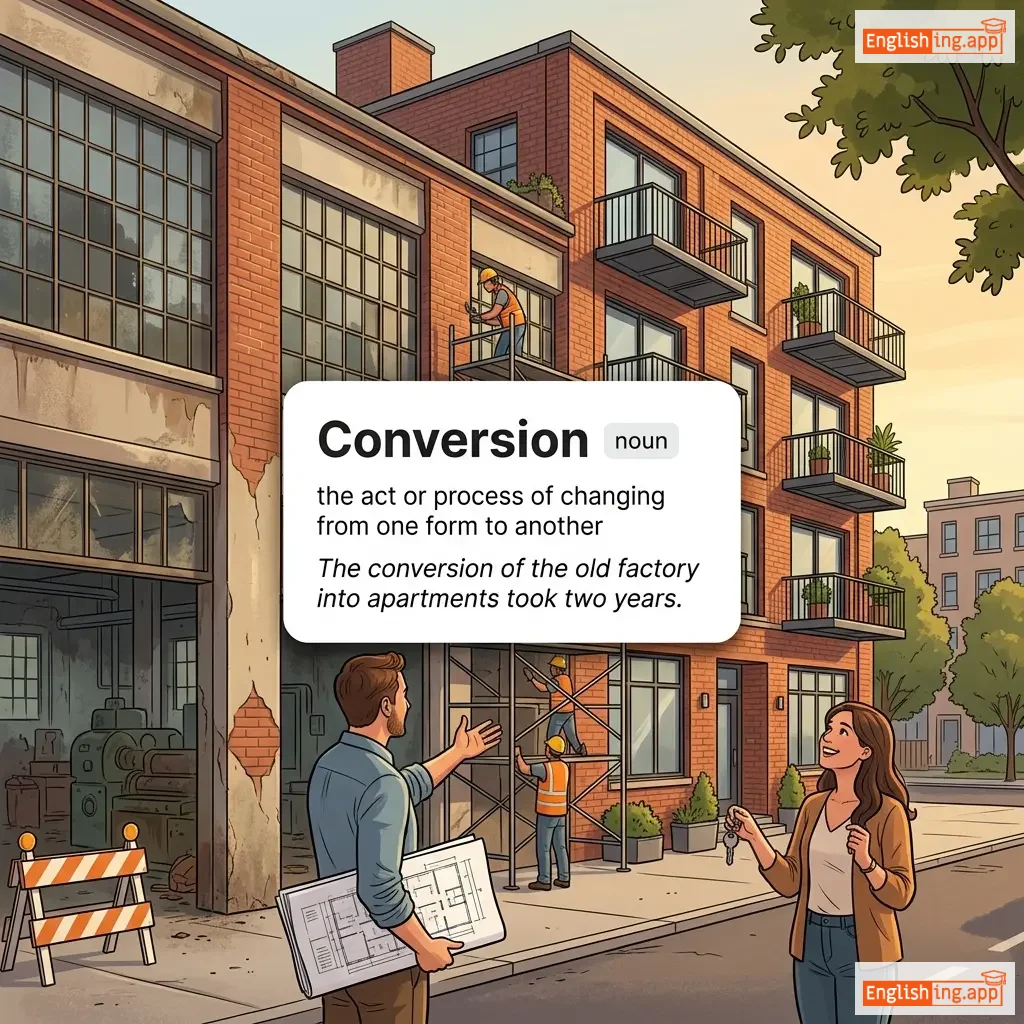
Conversion definition card — visual illustration of the meaning
noun
/kənˈvɜːrʒən/
conversion, changement (conversion, changement)

the act or process of changing from one form to another

"The conversion of the old factory into apartments took two years."

"La conversion de l'ancienne usine en appartements a pris deux ans." (La conversion de l'ancienne usine en appartements a pris deux ans.)