Vocabulaires

Découvrez, apprenez et maîtrisez le vocabulaire anglais

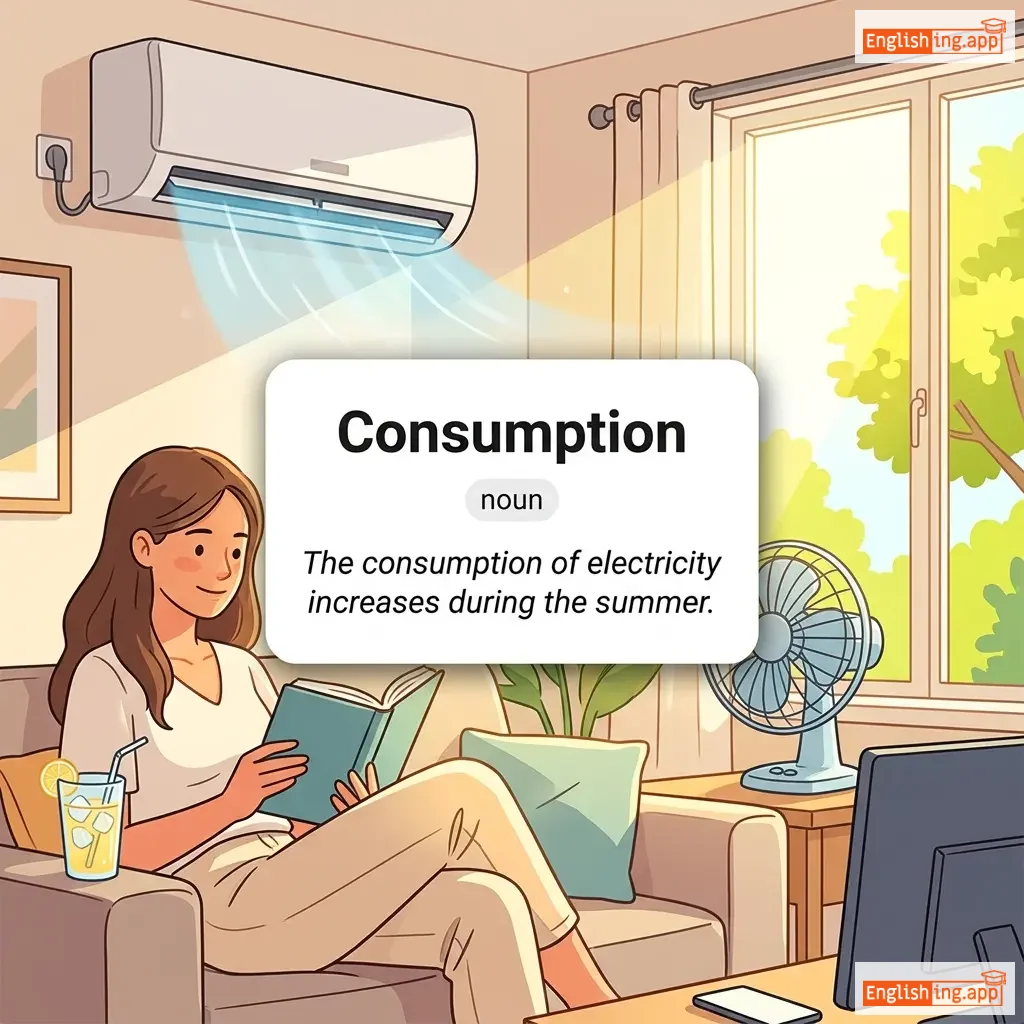
Consumption definition card — visual illustration of the meaning
noun
/kənˈsʌmpʃən/
consommation (consommation)

The act of using up resources, goods, or energy; also refers to the eating or drinking of something.

"The consumption of electricity increases during the summer."

"La consommation d'électricité augmente pendant l'été." (La consommation d'électricité augmente pendant l'été.)
adjective
/kənˈsʌmptɪv/
consumptif (consumptif)

Relating to or characterized by consumption; historically used to describe someone suffering from tuberculosis.

"The doctor advised against consumptive habits."

"Le médecin a déconseillé les habitudes consumptives." (Le médecin a déconseillé les habitudes consumptives.)
noun/verb
/ˈkɒntækt/
contact (contact)

Communication or connection with someone.

"You should contact your doctor if symptoms persist."

"Vous devriez contacter votre médecin si les symptômes persistent." (Vous devriez contacter votre médecin si les symptômes persistent.)
noun
/kənˈteɪdʒən/
contagion (contagion)

The communication of disease from one person to another by close contact; also the spread of harmful ideas or behaviors.

"Fear spread like a contagion through the crowd."

"La peur s'est propagée comme une contagion à travers la foule." (La peur s'est propagee comme une contagion a travers la foule.)
adjective
/kənˈteɪdʒəs/
contagieux (kontajyu)

Able to be transmitted from one person to another, typically by direct contact; also used for emotions or attitudes that spread quickly.

"Her laughter was so contagious that everyone started laughing."

"Son rire était tellement contagieux que tout le monde a commencé à rire." (Son rire était tellement contagieux que tout le monde a commencé à rire.)
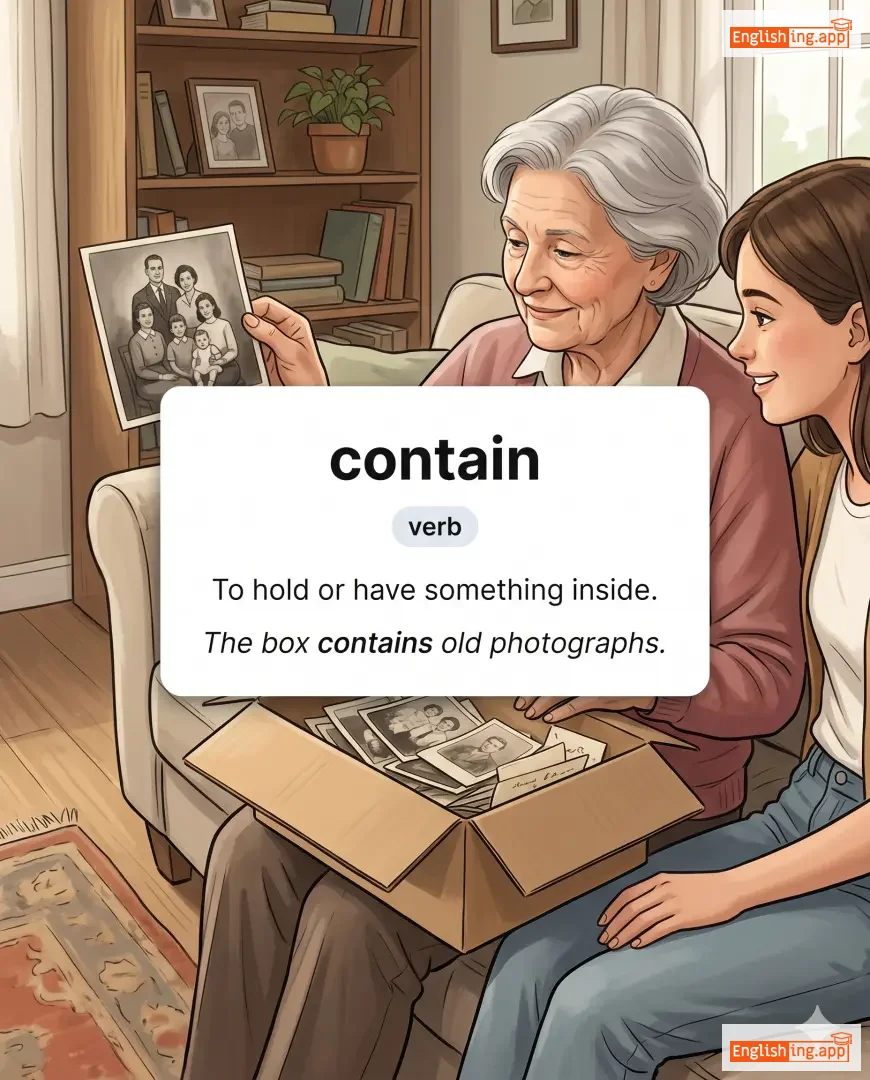
contain definition card — visual illustration of the meaning
verb
/kənˈteɪn/
contenir (contenir)

To hold or have something inside.

"The box contains old photographs."

"La boîte contient de vieilles photos." (La boîte contient de vieilles photos.)
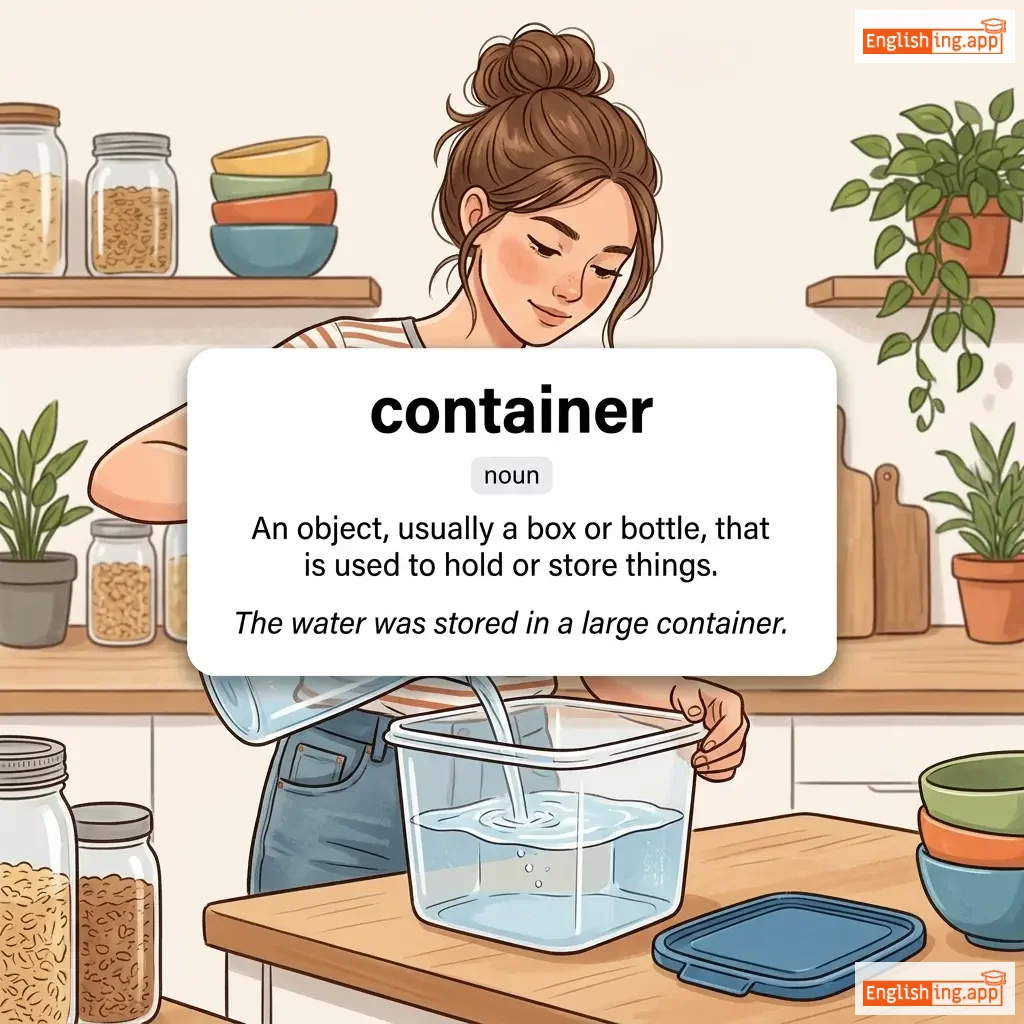
container definition card — visual illustration of the meaning
noun
/kənˈteɪnər/
conteneur (conteneur)

An object, usually a box or bottle, that is used to hold or store things.

"The water was stored in a large container."

"L'eau a été stockée dans un grand conteneur." (L'eau a été stockée dans un grand conteneur.)
verb
/kənˈtæmɪneɪt/
contaminer (contaminer)

To make something impure, dirty, or harmful by contact with a poisonous or polluting substance.

"The river was contaminated by industrial waste."

"La rivière a été contaminée par des déchets industriels." (La rivière a été contaminée par des déchets industriels.)
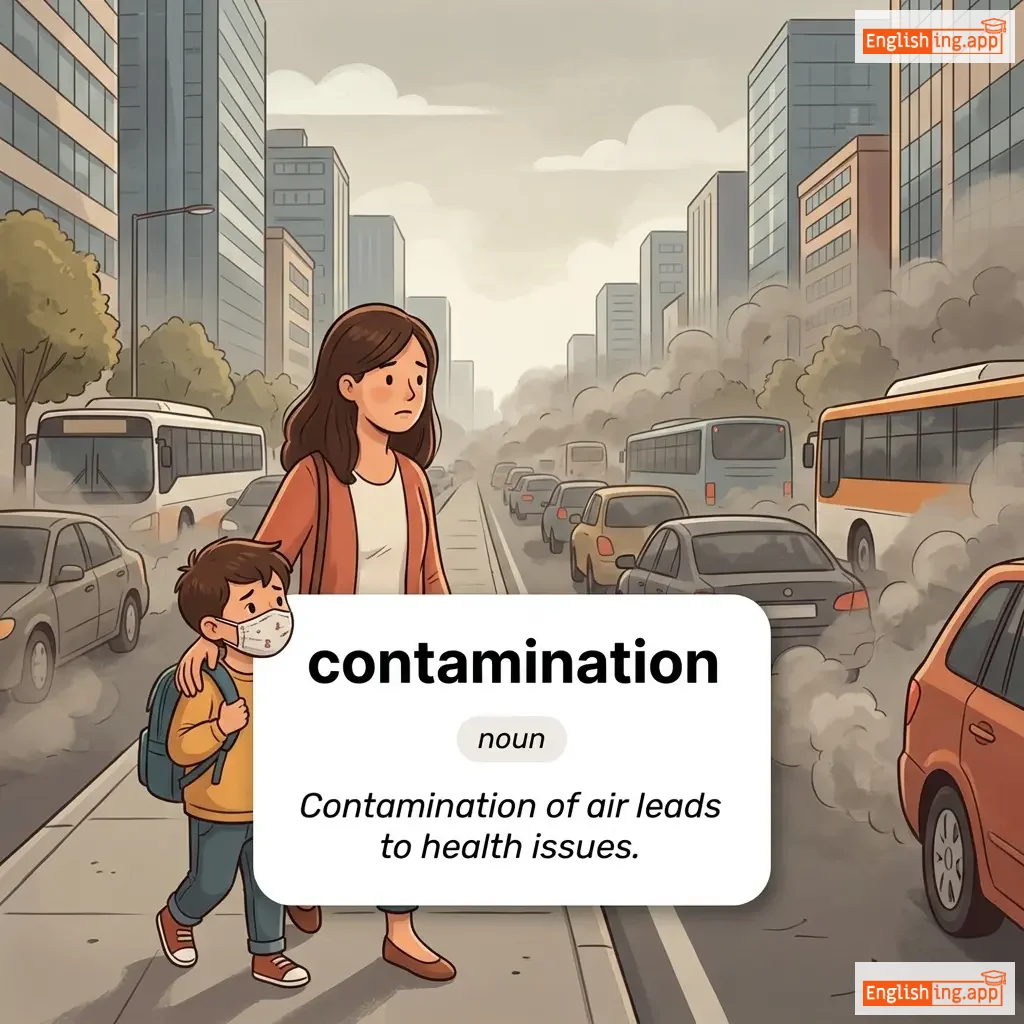
contamination definition card — visual illustration of the meaning
noun
kənˌtæm.ɪˈneɪ.ʃən
contamination (kontamination)

The process of making something less pure by exposure to or addition of a poisonous or polluting substance.

"Contamination of air leads to health issues."

"La contamination de l'air cause des problèmes de santé." (La contamination de l'air cause des problèmes de santé.)
verb
/kənˈtɛm/
mépriser (mépriser)

to treat or regard with disdain, scorn, or contempt

"He would never contemn honest work, no matter how humble."

"Il ne mépriserait jamais un travail honnête, peu importe à quel point il est modeste." (Il ne mépriserait jamais un travail honnête, peu importe à quel point il est modeste.)
verb
/ˈkɒntəmpleɪt/
contempler (contempler)

to think deeply and carefully about something; to consider thoughtfully

"She sat quietly to contemplate her future plans."

"Elle s'est assise en silence pour contempler ses projets futurs." (Elle s'est assise en silence pour contempler ses projets futurs.)
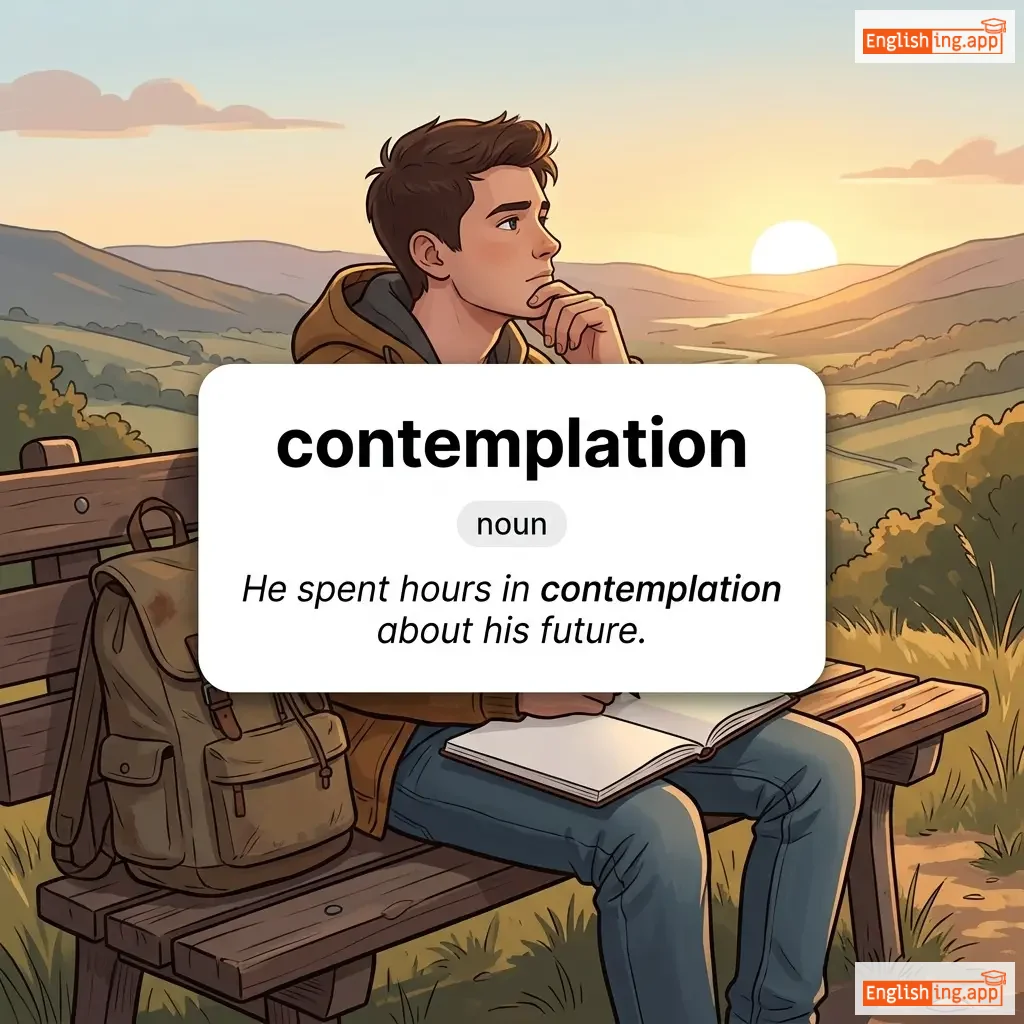
contemplation definition card — visual illustration of the meaning
noun
ˌkɒn.təmˈpleɪ.ʃən
contemplation, réflexion profonde (contemplation, reflexion profonde)

The action of looking thoughtfully at something for a long time; deep reflective thought.

"He spent hours in contemplation about his future."

"Il a passé des heures en contemplation sur son avenir." (Il a passe des heures en contemplation sur son avenir.)
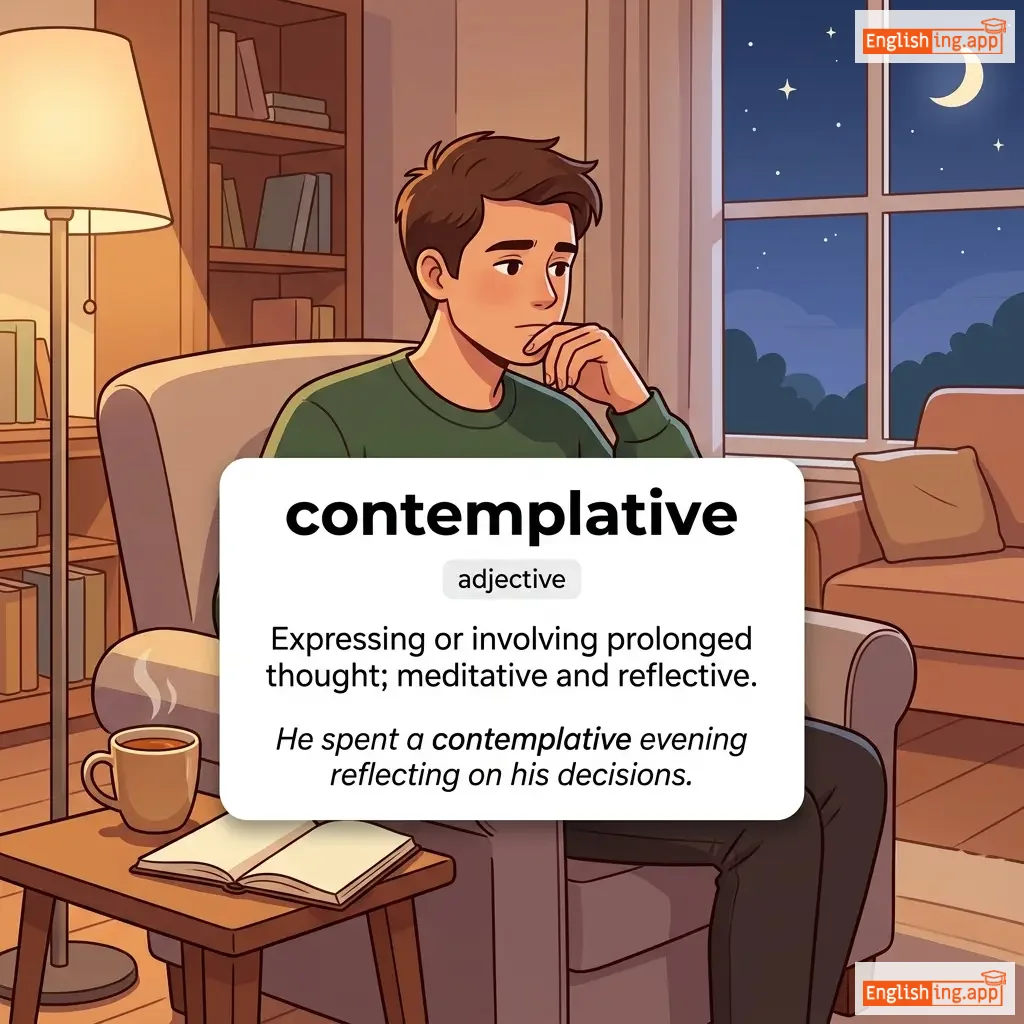
contemplative definition card — visual illustration of the meaning
adjective
ˈkɒn.təm.plə.tɪv
réfléchi ou méditatif (reflechi ou meditativ)

Expressing or involving prolonged thought; meditative and reflective.

"He spent a contemplative evening reflecting on his decisions."

"Il a passé une soirée contemplative à réfléchir sur ses décisions." (Il a passé une soirée contemplative à réfléchir sur ses décisions.)
adjective
/kənˌtɛmpəˈreɪniəs/
contemporané (contemporane)

existing, happening, or occurring at the same time

"The two artists were contemporaneous and often influenced each other."

"Les deux artistes étaient contemporains et se sont souvent influencés mutuellement." (Les deux artistes étaient contemporains et se sont souvent influencés mutuellement.)
adjective
/kənˈtɛmpərɛri/
contemporain, moderne (contemporain, moderne)

belonging to the same time period; modern

"She enjoys contemporary art exhibitions."

"Elle apprécie les expositions d'art contemporain." (Elle apprecie les expositions d'art contemporain.)
noun
/kənˈtɛmpt/
mépris, dédain (mepri, dedain)

a strong feeling of dislike and lack of respect towards someone or something

"He spoke with contempt about the corrupt officials."

"Il a parlé avec mépris des fonctionnaires corrompus." (Il a parlé avec mépris des fonctionnaires corrompus.)
adjective
/kənˈtɛmptəbl/
méprisable, détestable (meprisable, detestable)

deserving of contempt; despicable

"His deceitful actions were truly contemptible."

"Ses actions trompeuses étaient véritablement méprisables." (Ses actions trompeuses étaient véritablement méprisables.)
adjective
/kənˈtɛmptʃuəs/
méprisant, dédaigneux (meprizant, dedaignieux)

showing or expressing contempt; scornful

"She gave him a contemptuous glance."

"Elle lui lança un regard méprisant." (Elle lui lança un regard meprisant.)
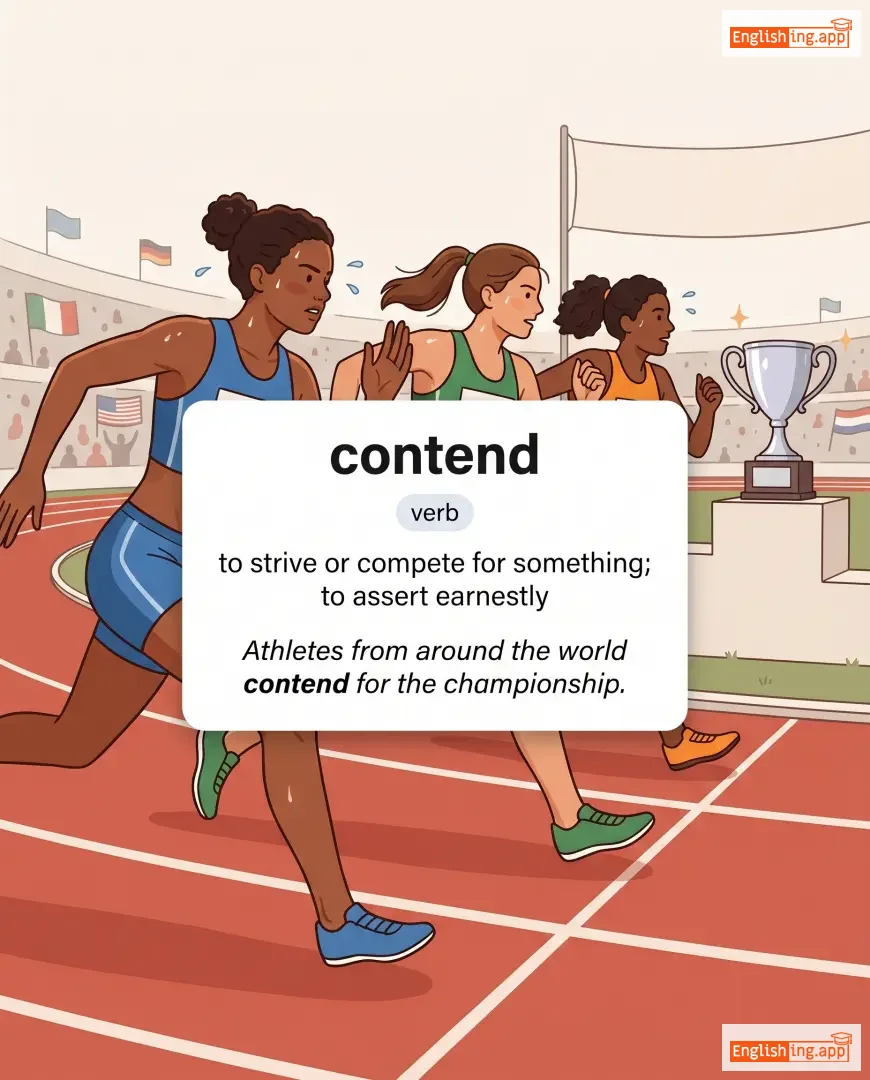
contend definition card — visual illustration of the meaning
verb
/kənˈtɛnd/
lutter, revendiquer (lutter, revendiquer)

to strive or compete for something; to assert earnestly

"Athletes from around the world contend for the championship."

"Les athlètes du monde entier luttent pour le championnat." (Les athlètes du monde entier luttent pour le championnat.)
noun
/kənˈtɛndər/
concurren, prétendant (concurren, pretandan)

a person or team competing for a title or prize

"She is a strong contender for the mayoral position."

"Elle est une forte prétendante pour le poste de maire." (Elle est une forte pretandante pour le poste de maire.)
adjective
/ˈkɒntɛnt/
satisfait, content (satisfait, content)

in a state of satisfaction; pleased

"He felt content after finishing his work."

"Il se sentait content après avoir terminé son travail." (Il se sentait content après avoir terminé son travail.)
adjective
/kənˈtɛntɪd/
content (content)

Feeling or expressing happiness and satisfaction.

"She was contented with her simple life."

"Elle était contente de sa vie simple." (Elle était contente de sa vie simple.)
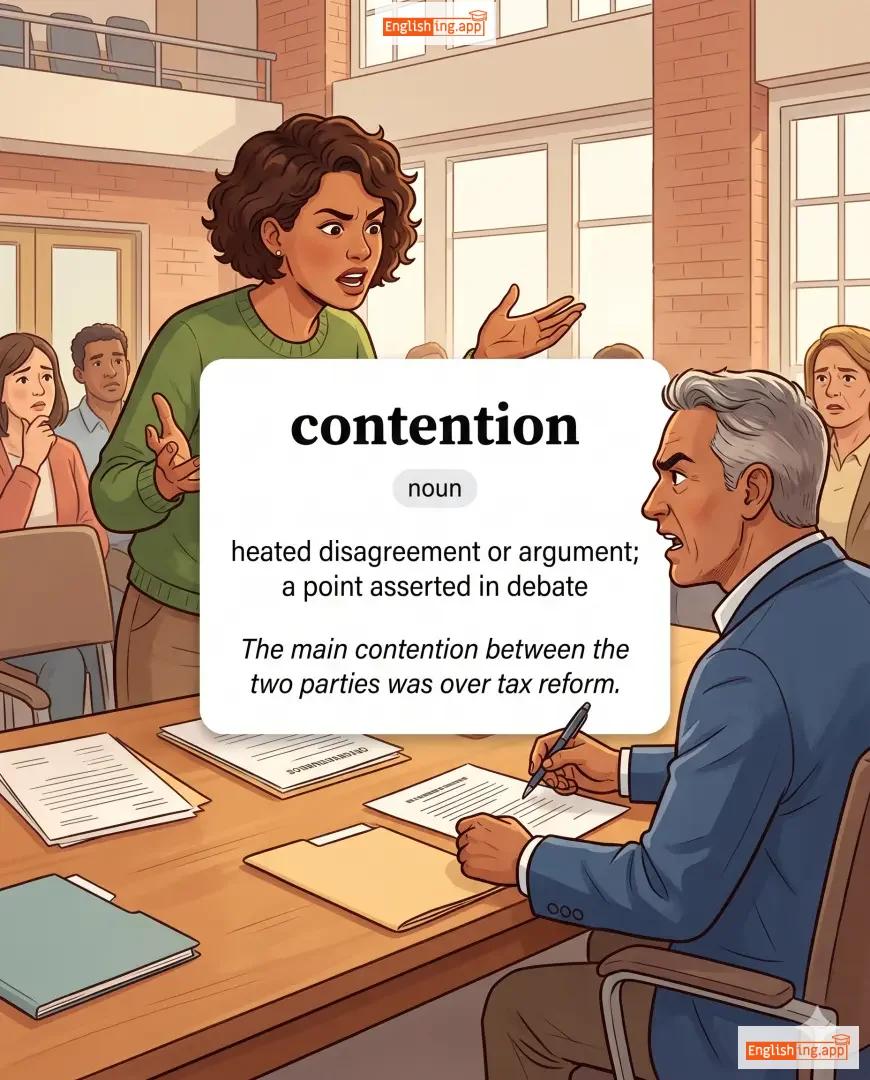
contention definition card — visual illustration of the meaning
noun
/kənˈtɛnʃən/
contestation, désaccord (contestation, désaccord)

heated disagreement or argument; a point asserted in debate

"The main contention between the two parties was over tax reform."

"La principale contestation entre les deux parties concernait la réforme fiscale." (La principale contestation entre les deux parties concernait la réforme fiscale.)
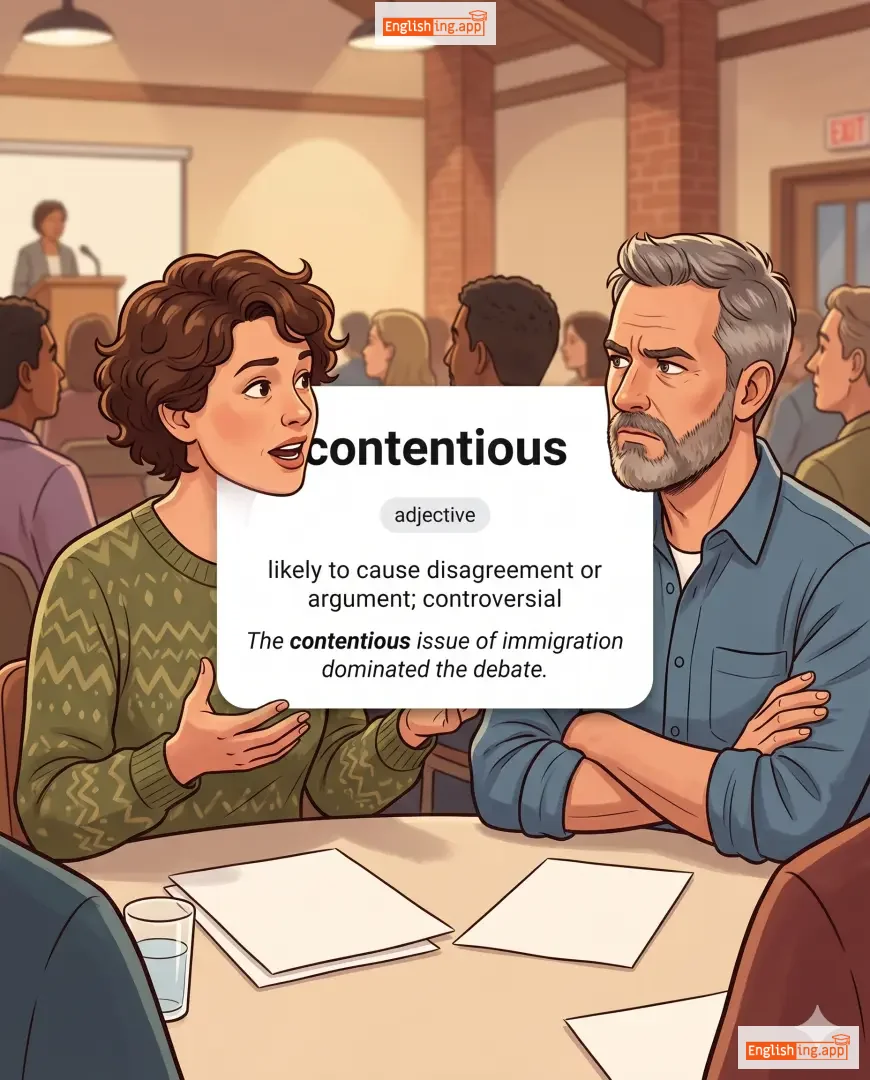
contentious definition card — visual illustration of the meaning
adjective
/kənˈtɛnʃəs/
controversé (controversé)

likely to cause disagreement or argument; controversial

"The contentious issue of immigration dominated the debate."

"La question controversée de l'immigration a dominé le débat." (La question controversée de l'immigration a dominé le débat.)
noun
/kənˈtentmənt/
satisfaction (satisfaction)

a state of happiness and satisfaction with what one has

"She felt a deep sense of contentment after helping others."

"Elle a ressenti une profonde satisfaction après avoir aidé les autres." (elle a ressenti une profonde satisfaction apres avoir aide les autres)
verb, noun
/ˈkɒntɛst/
contester, défier (contester, défier)

verb: to compete or challenge; noun: a competition or dispute

"She decided to contest the election against the incumbent."

"Elle a décidé de contester les élections contre le titulaire." (Elle a décidé de contester les élections contre le titulaire.)
noun
/ˈkɒntɛkst/
contexte (contexte)

the circumstances or background relevant to an event, statement, or idea

"To understand the quote, you need to know the context in which it was said."

"Pour comprendre la citation, vous devez connaître le contexte dans lequel elle a été dite." (Pour comprendre la citation, vous devez connaître le contexte dans lequel elle a été dite.)
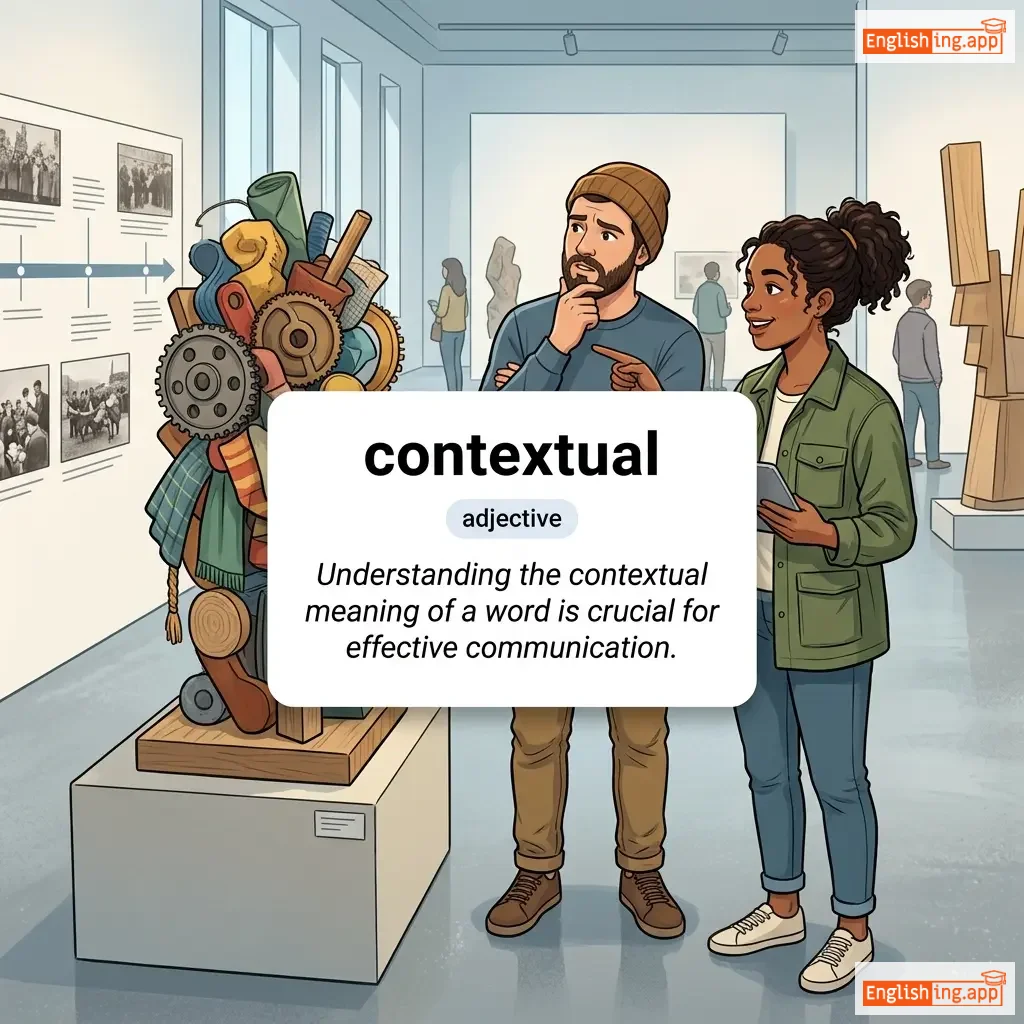
contextual definition card — visual illustration of the meaning
adjective
/kənˈtɛkstʃʊəl/
contextuel, en fonction du contexte (contextuel, en fonction du contexte)

Depending on or relating to the circumstances that form the setting for an event or statement.

"Understanding the contextual meaning of a word is crucial for effective communication."

"Comprendre la signification contextuelle d'un mot est crucial pour une communication efficace." (Comprendre la signification contextuelle d'un mot est crucial pour une communication efficace.)
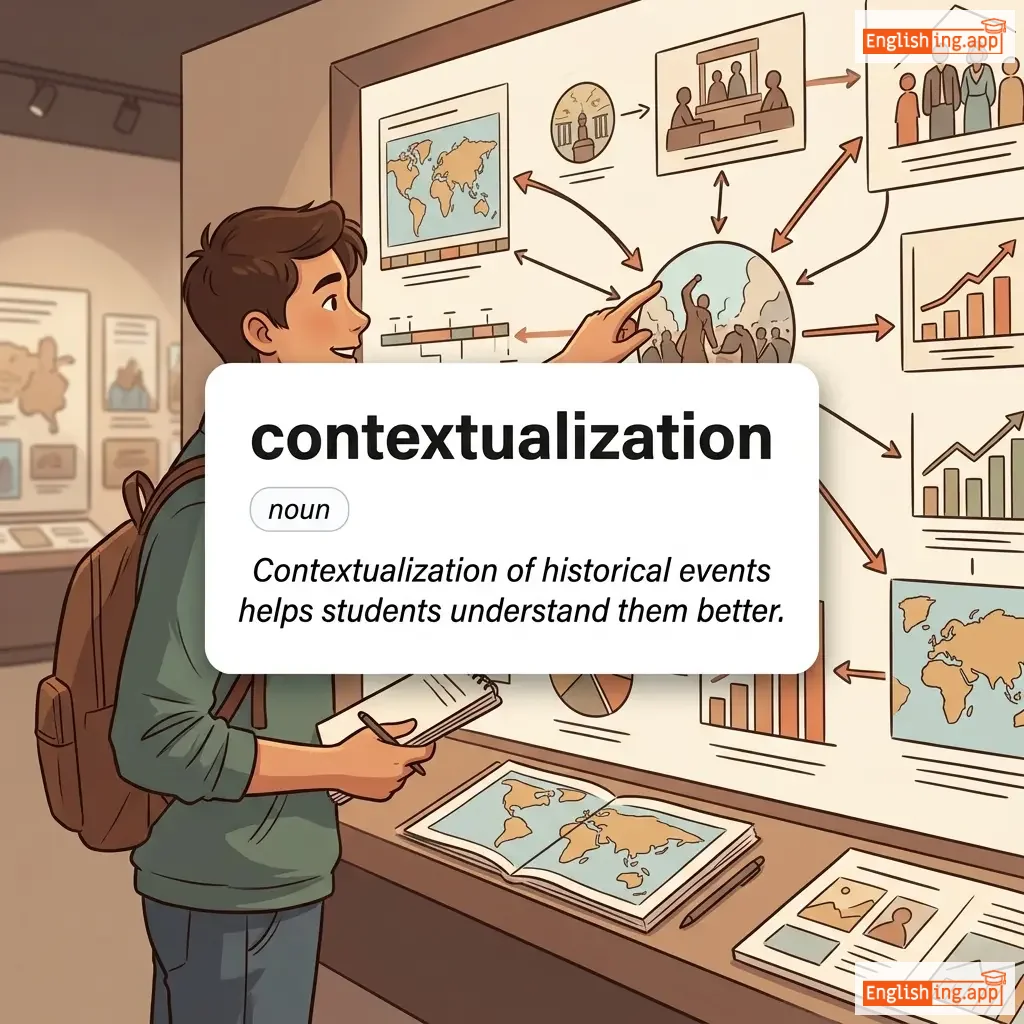
contextualization definition card — visual illustration of the meaning
noun
/kɒnˌtek.stʃu.ə.laɪˈzeɪ.ʃən/
contextualisation (contextualisation)

The process of placing something in its proper context or setting to understand it better.

"Contextualization of historical events helps students understand them better."

"La contextualisation des événements historiques aide les étudiants à mieux les comprendre." (La contextualisation des événements historiques aide les étudiants à mieux les comprendre.)
verb
/kənˈtɛkstʃuəlaɪz/
contextualiser (contextualiser)

to place something in a context or interpret it in relation to its surroundings

"The teacher contextualized the historical event to make it more relevant for students."

"Le professeur a contextualisé l'événement historique pour le rendre plus pertinent pour les étudiants." (Le professeur a contextualisé l'événement historique pour le rendre plus pertinent pour les étudiants.)
noun
/kɒn.tɪˈɡjuː.ɪ.ti/
contiguïté (contiguite)

the state of being in direct contact or next to each other

"The contiguity of the two countries facilitates trade."

"La contiguïté des deux pays facilite le commerce." (La contiguïté des deux pays facilite le commerce.)
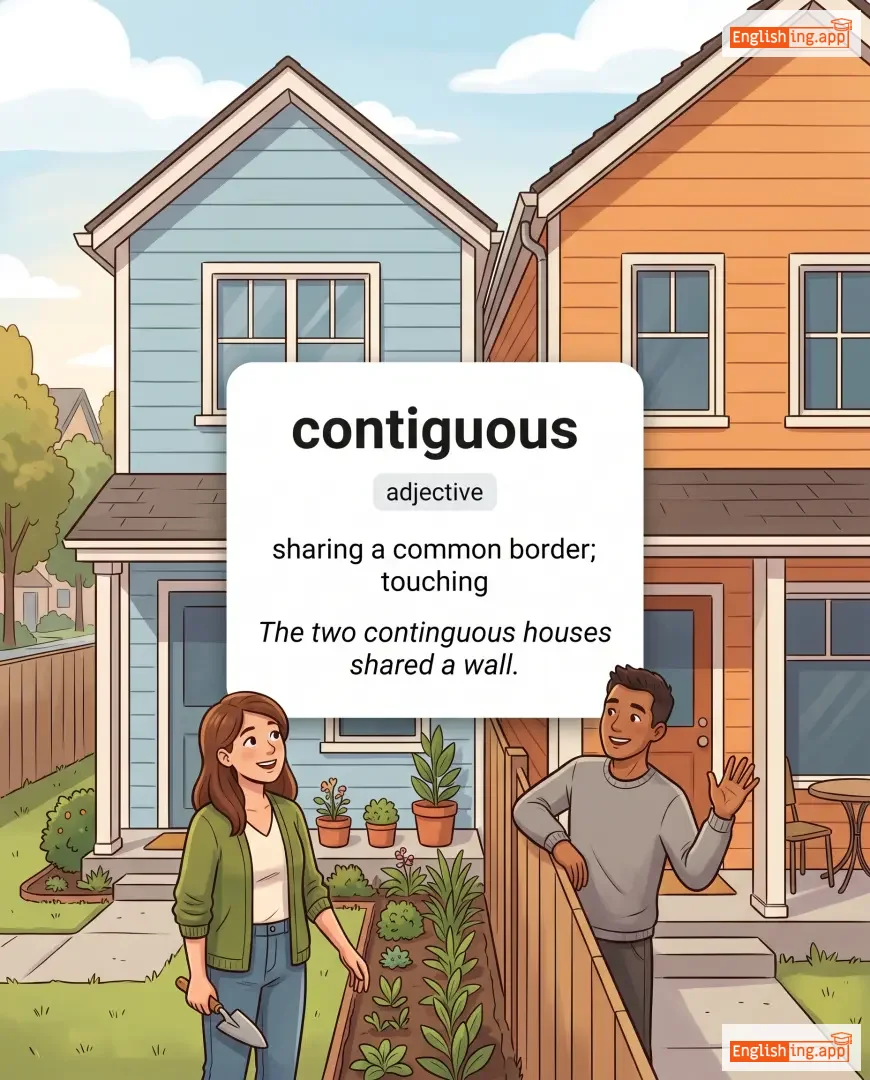
contiguous definition card — visual illustration of the meaning
adjective
/kənˈtɪɡ.ju.əs/
contigu (contigu)

sharing a common border; touching

"The two continguous houses shared a wall."

"Les deux maisons contiguës ont partagé un mur." (Le deux maisons contigues ont partage un mur.)
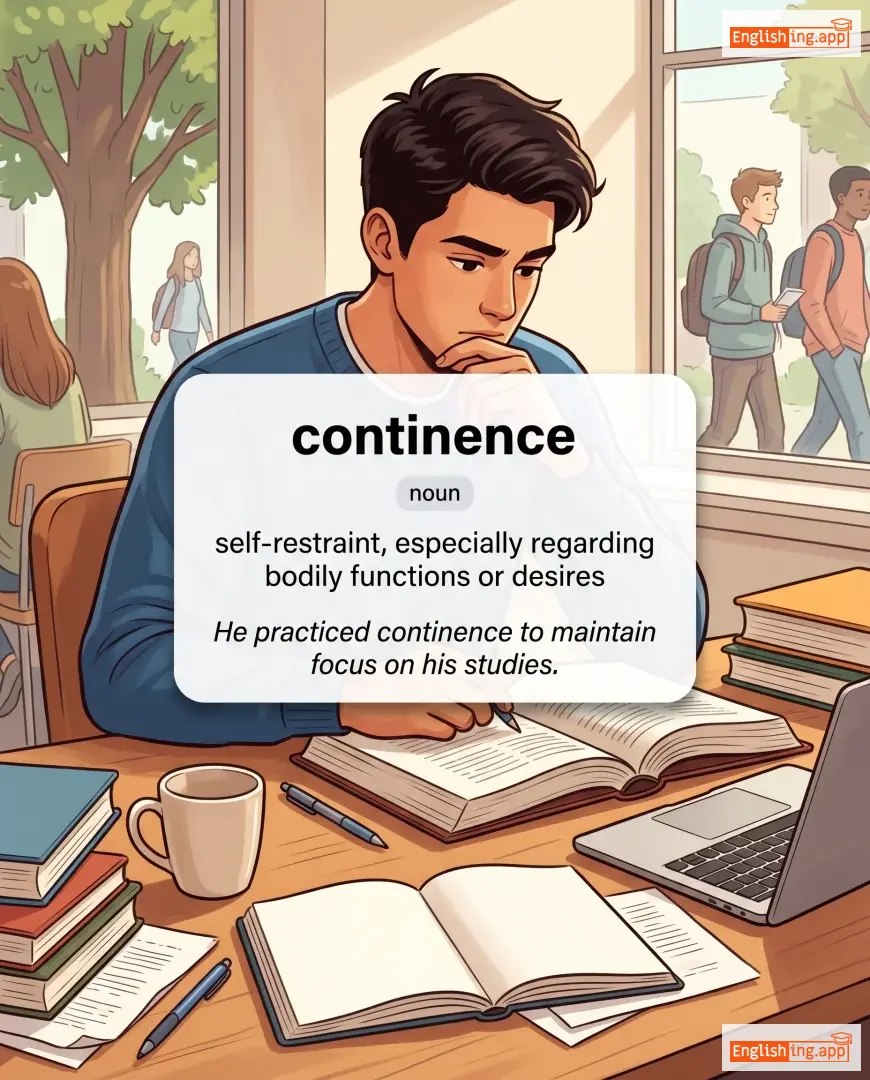
continence definition card — visual illustration of the meaning
noun
/ˈkɒn.tɪ.nəns/
continence (continence)

self-restraint, especially regarding bodily functions or desires

"He practiced continence to maintain focus on his studies."

"Il a pratiqué la continence pour maintenir son attention sur ses études." (Il a pratiqué la continence pour maintenir son attention sur ses études.)
noun
/ˈkɒntɪnənt/
continent (continent)

one of the large landmasses on Earth such as Asia, Africa, or Europe

"Asia is the largest continent in the world."

"L'Asie est le plus grand continent du monde." (L'Asie est le plus grand continent du monde.)
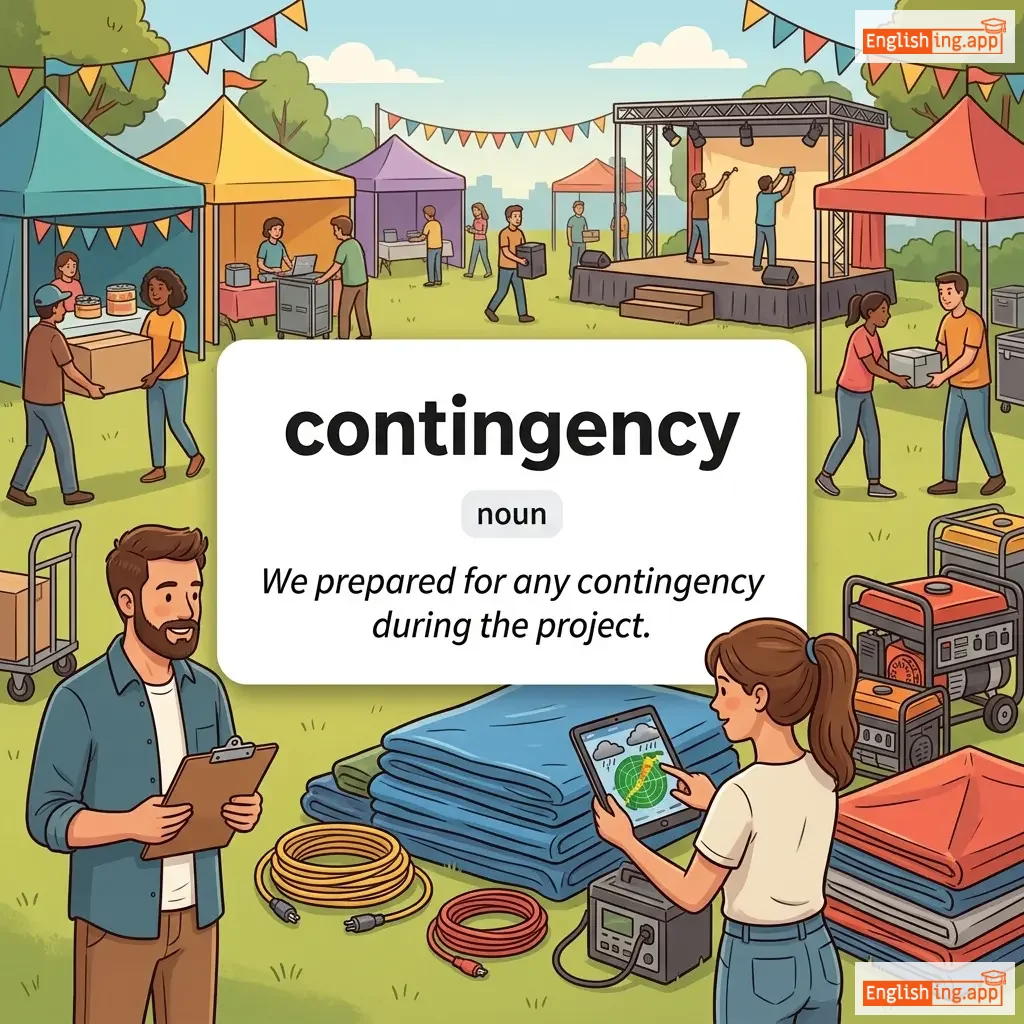
contingency definition card — visual illustration of the meaning
noun
/kənˈtɪn.dʒən.si/
contingence (contingence)

a future event or circumstance that is possible but cannot be predicted with certainty

"We prepared for any contingency during the project."

"Nous nous sommes préparés à toute contingence pendant le projet." (Nous nous sommes prepares a toute contingence pendant le projet.)
adjective,noun
/kənˈtɪn.dʒənt/
dépendant / contingent (depan-dɑ̃ / kɔ̃tɛ̃ʒɑ̃)

dependent on something else; a group of people representing an organization

"Attendance is contingent on prior registration. / A contingent of students attended the conference."

"La présence dépend de l'inscription préalable. / Un contingent d'étudiants a assisté à la conférence." (La présence dépend de l'inscription préalable. / Un contingent d'étudiants a assisté à la conférence.)
adjective
/kənˈtɪn.ju.əl/
continu; ininterrompu; (continu; ininterrompu;)

happening repeatedly over a long period of time; constant and uninterrupted

"The continual noise from the construction site was very annoying."

"Le bruit continu du chantier de construction était très ennuyeux." (Le bruit continu du chantier de construction etait tres ennuyeux.)
adverb
/kənˈtɪnjuəli/
continuellement (continuellement)

in a continuous and uninterrupted way

"The rain has been falling continually for hours."

"La pluie tombe continuellement depuis des heures." (La pluie tombe continuellement depuis des heures.)
noun
/kənˈtɪn.ju.əns/
continuité (continuité)

the state of continuing or being prolonged; persistence

"The continuance of the project depended on securing additional funding."

"La continuité du projet dépendait de l'obtention de financements supplémentaires." (La continuité du projet dépendait de l'obtention de financements supplémentaires.)
noun
/kənˌtɪn.juˈeɪ.ʃən/
continuité (continuite)

the action of carrying something on over time; extension

"The continuation of the series was announced after the finale."

"La continuation de la série a été annoncée après la finale." (La continuation de la serie a ete annoncee apres la finale.)
verb
/kənˈtɪnjuː/
continuer (continuer)

To keep happening, existing, or doing something without stopping.

"The rain will continue throughout the night."

"La pluie continuera toute la nuit." (La pluie continuera toute la nuit.)
verb
/kənˈtɪn.juːd/
continué (continue)

Kept happening or carried on without stopping.

"She continued working despite the challenges."

"Elle a continué de travailler malgré les défis." (Elle a continue de travailler malgre les defis.)
verb
/kənˈtɪnjuɪŋ/
continuant (continuant)

to keep doing something without stopping

"They are continuing their journey despite the rain."

"Ils continuent leur voyage malgré la pluie." (Ils continuent leur voyage malgré la pluie.)
noun
/ˌkɒn.tɪˈnjuː.ɪ.ti/
continuité (continuite)

the state of being continuous or connected; consistency over time

"Maintaining continuity in leadership is essential for organizational stability."

"Maintenir la continuité dans le leadership est essentiel pour la stabilité organisationnelle." (Maintenir la continuite dans le leadership est essentiel pour la stabilite organisationnelle.)
adjective
/kənˈtɪn.ju.əs/
continu (continu)

forming an unbroken whole; without interruption

"The factory operates on a continuous 24-hour schedule."

"L'usine fonctionne selon un emploi du temps continu de 24 heures." (L'usine fonctionne selon un emploi du temps continu de 24 heures.)
adverb
/kənˈtɪnjuəsli/
continuellement; sans interruption; de manière ininterrompue (continuellement; sans interruption; de maniere ininterrompue)

without interruption; in an unbroken sequence

"The machine operates continuously for 24 hours."

"La machine fonctionne continuellement pendant 24 heures." (La machine fonctionne continuellement pendant 24 heures)
noun
/kənˈtɪnjuəm/
continuum (continuum)

A continuous sequence in which adjacent elements are not perceptibly different from each other, but the extremes are quite distinct.

"Life and death are often seen as part of the same continuum."

"La vie et la mort sont souvent considérées comme faisant partie du même continuum." (La vie et la mort sont souvent considerees comme faisant partie du meme continuum.)
verb
/kənˈtɔːrt/
tordre (tordre)

to twist or bend out of the normal shape

"She contorted her face in pain after the injury."

"Elle tordit son visage de douleur après la blessure." (Elle tordit son visage de douleur après la blessure.)
noun
/kənˈtɔːrʃən/
une forme tordue ou pliée; l'action de tordre hors de la forme normale (une forme tordue ou pliée; l'action de tordre hors de la forme normale)

a twisted or bent shape; the act of twisting out of the normal shape

"The gymnast's contortion amazed the audience."

"La contorsion du gymnaste a étonné le public." (La contorsion du gymnaste a étonné le public.)
noun
/kənˈtɔːrʃənz/
pluriel de contorsion; plusieurs formes tordues ou déformées (pluriel de contorsion; plusieurs formes tordues ou déformées)

plural form of contortion; multiple twisted or bent shapes

"The magician's contortions left the crowd in awe."

"Les contorsions du magicien ont laissé la foule bouche bée." (Les contorsions du magicien ont laissé la foule bouche bée.)