Vocabulaires

Découvrez, apprenez et maîtrisez le vocabulaire anglais

noun
/kənˈtʃɛrtoʊ/
composition musicale (composition musicale)

a musical composition for one or more solo instruments accompanied by an orchestra

"She played a Mozart concerto with the orchestra."

"Elle a joué un concerto de Mozart avec l'orchestre." (Elle a joue un concerto de Mozart avec l'orchestre.)
noun
/kənˈsɛʃən/
concession (concession)

something that is granted, especially in response to demands; a compromise

"The company made several concessions during the negotiations."

"L'entreprise a fait plusieurs concessions lors des négociations." (L'entreprise a fait plusieurs concessions lors des négociations.)
noun
/kɑːntʃ/
conque (conque)

a large spiral shell, often used as a trumpet in ceremonies

"The priest blew the conch to begin the ritual."

"Le prêtre souffla dans le coquillage pour commencer le rituel." (Le prêtre souffla dans le coquillage pour commencer le rituel.)
verb
/kənˈsɪlieɪt/
concilier (konsilye)

to stop someone from being angry; to win over by friendly acts

"He tried to conciliate the angry customer with an apology."

"Il a essayé de concilier le client en colère avec des excuses." (Il a essayé de concilier le client en colère avec des excuses.)
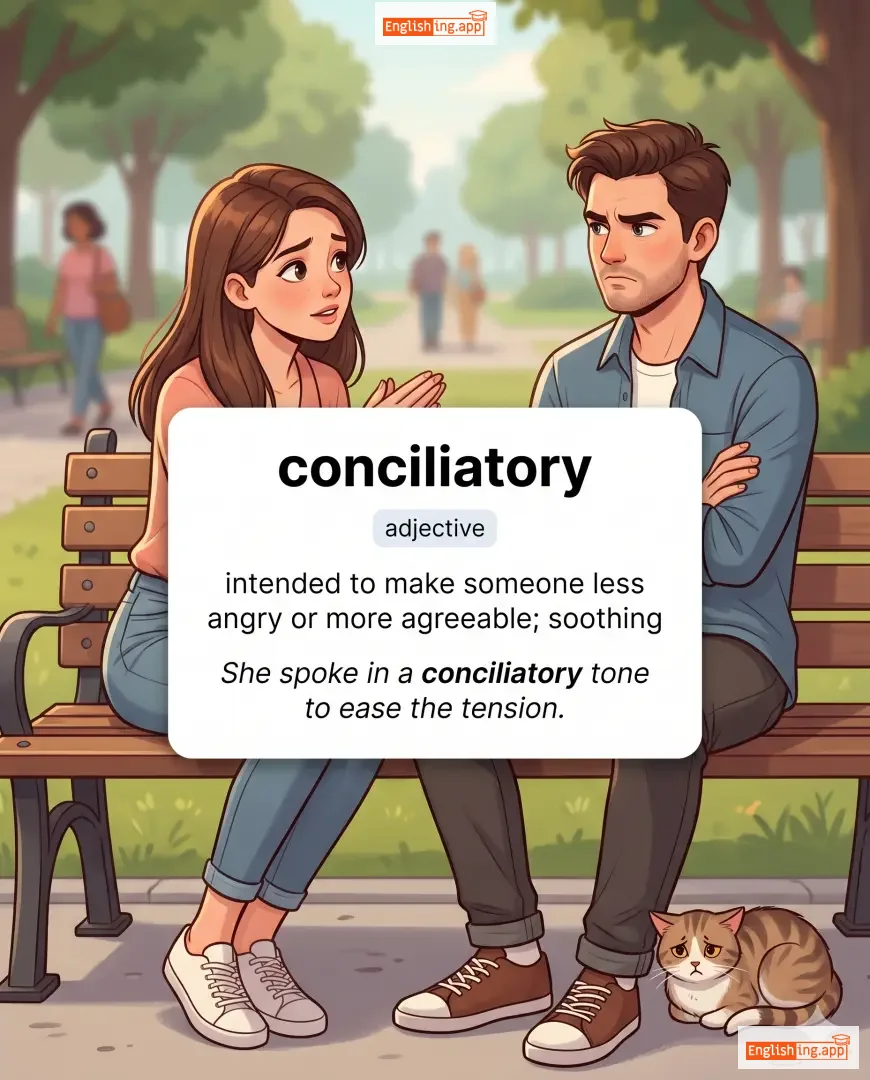
conciliatory definition card — visual illustration of the meaning
adjective
/kənˈsɪliətɔːri/
conciliatoire (conciliatoire)

intended to make someone less angry or more agreeable; soothing

"She spoke in a conciliatory tone to ease the tension."

"Elle a parlé d'un ton conciliant pour apaiser la tension." (Elle a parlé d'un ton conciliant pour apaiser la tension.)
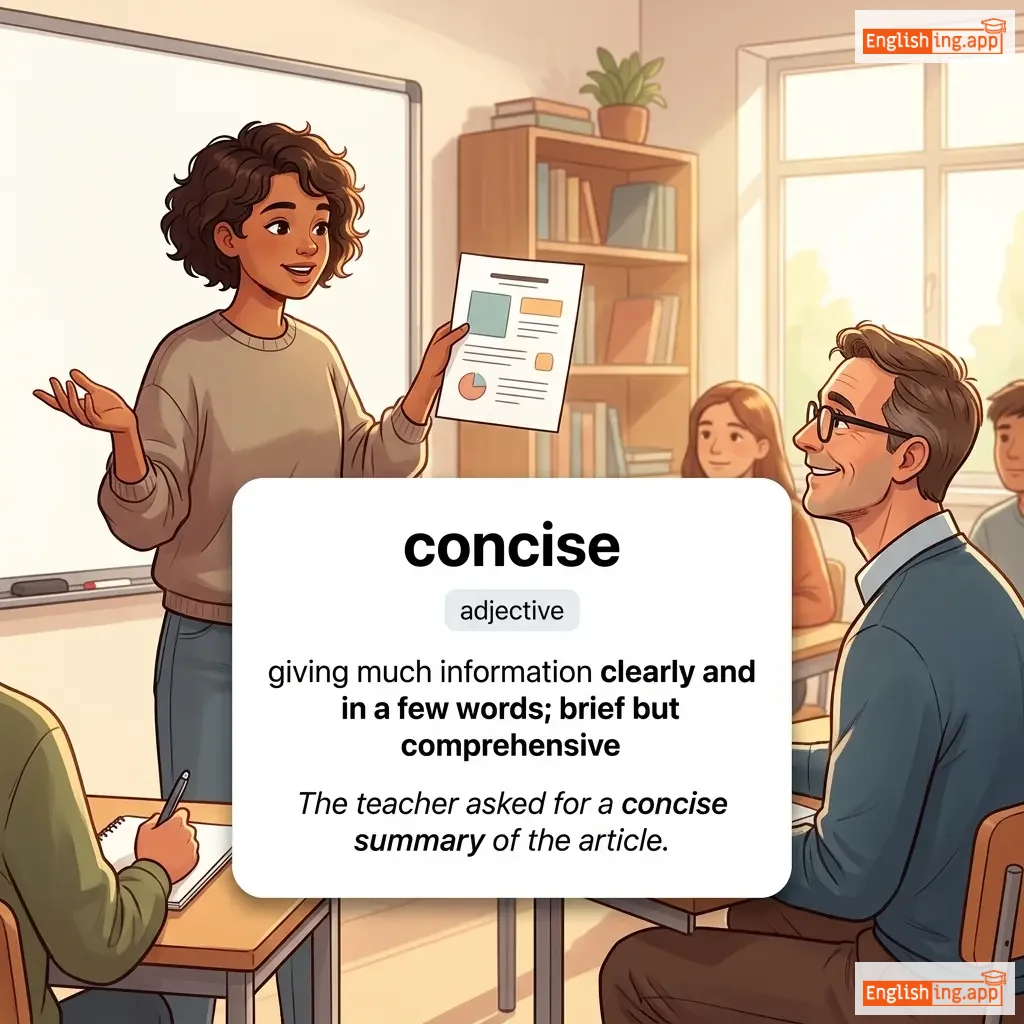
concise definition card — visual illustration of the meaning
adjective
/kənˈsaɪs/
concis (concis)

giving much information clearly and in a few words; brief but comprehensive

"The teacher asked for a concise summary of the article."

"L'enseignant a demandé un résumé concis de l'article." (L'enseignant a demandé un résumé concis de l'article.)
noun
/kɒŋk/
conque (konk)

a shell, especially a large spiral one used as a horn or for decoration

"The priest blew the conch shell to signal the start of the ceremony."

"Le prêtre a soufflé dans la coquille de conque pour signaler le début de la cérémonie." (Le pretre a souffle dans la coquille de conque pour signaler le debut de la ceremonie.)
noun
/ˈkɒnk.leɪv/
conclave secret (conclave secret)

a private meeting, especially a secret or important one

"The leaders met in a secret conclave to discuss the strategy."

"Les dirigeants se sont réunis dans un conclave secret pour discuter de la stratégie." (Les dirigeants se sont réunis dans un conclave secret pour discuter de la stratégie.)
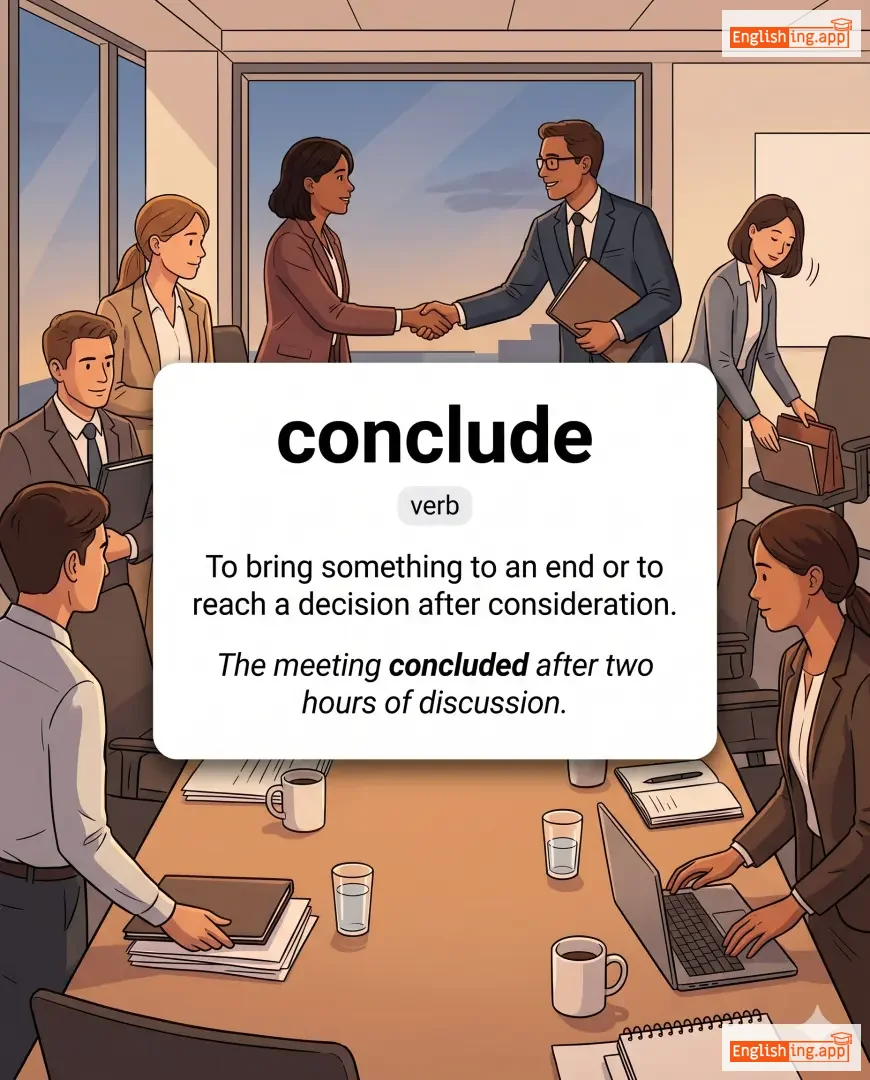
conclude definition card — visual illustration of the meaning
verb
/kənˈkluːd/
conclure, arriver à une décision (conclure, arriver à une decision)

To bring something to an end or to reach a decision after consideration.

"The meeting concluded after two hours of discussion."

"La réunion a conclu après deux heures de discussion." (La reunion a conclu apres deux heures de discussion.)
noun
/kənˈkluːʒən/
conclusion (conclusion)

The end or finish of an event, process, or text; a judgment reached after consideration.

"The research paper ends with a strong conclusion."

"L'article de recherche se termine par une conclusion solide." (L'article de recherche se termine par une conclusion solide.)
adjective
/kənˈkluːsɪv/
concluant (concluant)

serving to prove a case; decisive or convincing

"The DNA test provided conclusive evidence of his innocence."

"Le test ADN a fourni des preuves concluantes de son innocence." (Le test ADN a fourni des preuves concluantes de son innocence.)
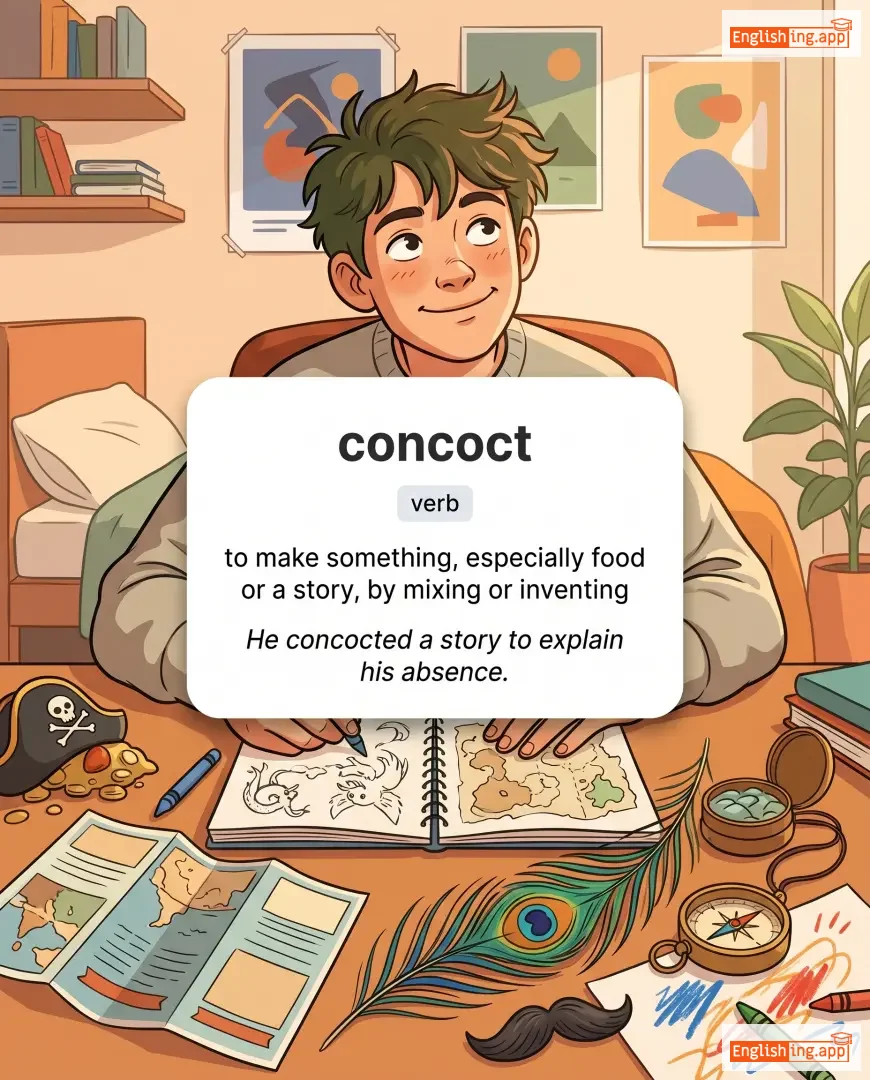
concoct definition card — visual illustration of the meaning
verb
/kənˈkɒkt/
créer ou inventer (creer ou inventer)

to make something, especially food or a story, by mixing or inventing

"He concocted a story to explain his absence."

"Il a inventé une histoire pour expliquer son absence." (Il a inventé une histoire pour expliquer son absence.)
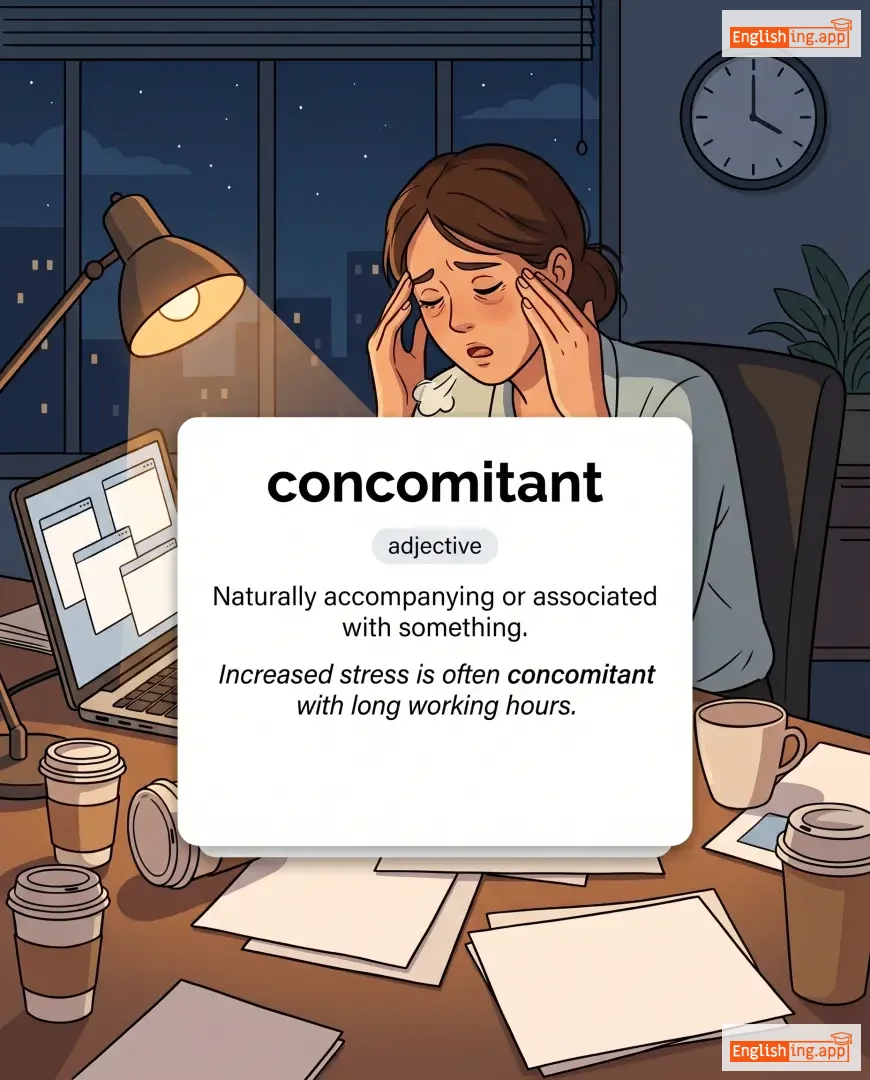
concomitant definition card — visual illustration of the meaning
adjective
/kənˈkɒmɪtənt/
concomitant (concomitant)

Naturally accompanying or associated with something.

"Increased stress is often concomitant with long working hours."

"Le stress accru est souvent concomitant avec de longues heures de travail." (Le stress accru est souvent concomitant avec de longues heures de travail.)
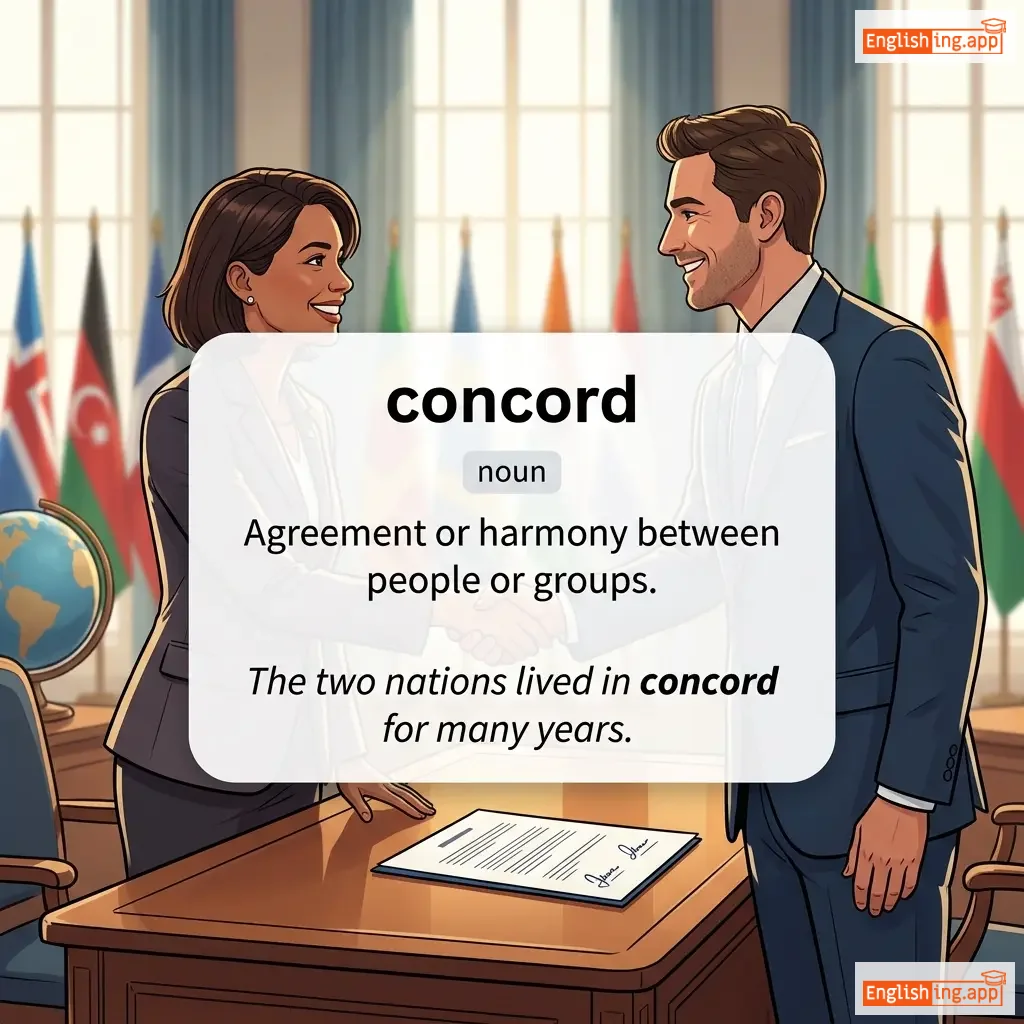
concord definition card — visual illustration of the meaning
noun
/ˈkɒŋ.kɔːd/
concorde (concorde)

Agreement or harmony between people or groups.

"The two nations lived in concord for many years."

"Les deux pays ont vécu en concorde pendant de nombreuses années." (Les deux pays ont vécu en concorde pendant de nombreuses années.)
noun
/kənˈkɔːrdəns/
concordance (concordance)

Agreement; also an alphabetical index of the principal words in a book.

"There is a strong concordance between the two reports."

"Il y a une forte concordance entre les deux rapports." (Il y a une forte concordance entre les deux rapports.)
noun
/ˈkɒŋ.kɔː.dæt/
concordat (concordat)

An agreement or treaty, especially between the Vatican and a secular government.

"The concordat established the rights of the church within the country."

"Le concordat a établi les droits de l'église dans le pays." (Le concordat a établi les droits de l'église dans le pays.)
adjective
/ˈkɒŋkriːt/
concret (concret)

based on facts, not on ideas or guesses; specific and real

"She gave a concrete example to support her argument."

"Elle a donné un exemple concret pour étayer son argument." (Elle a donné un exemple concret pour étayer son argument.)
verb
/kənˈkɜːr/
convenir (convenir)

To agree with someone or something.

"I concur with your opinion on this matter."

"Je suis d'accord avec votre opinion sur cette question." (Je suis d'accord avec votre opinion sur cette question.)
noun
/kənˈkʌrəns/
concurrence (concurrence)

Agreement or union in action, opinion, or occurrence; simultaneous happening of events.

"The project was completed with the concurrence of all departments."

"Le projet a été complété avec la concurrence de tous les départements." (Le projet a été complété avec la concurrence de tous les départements.)
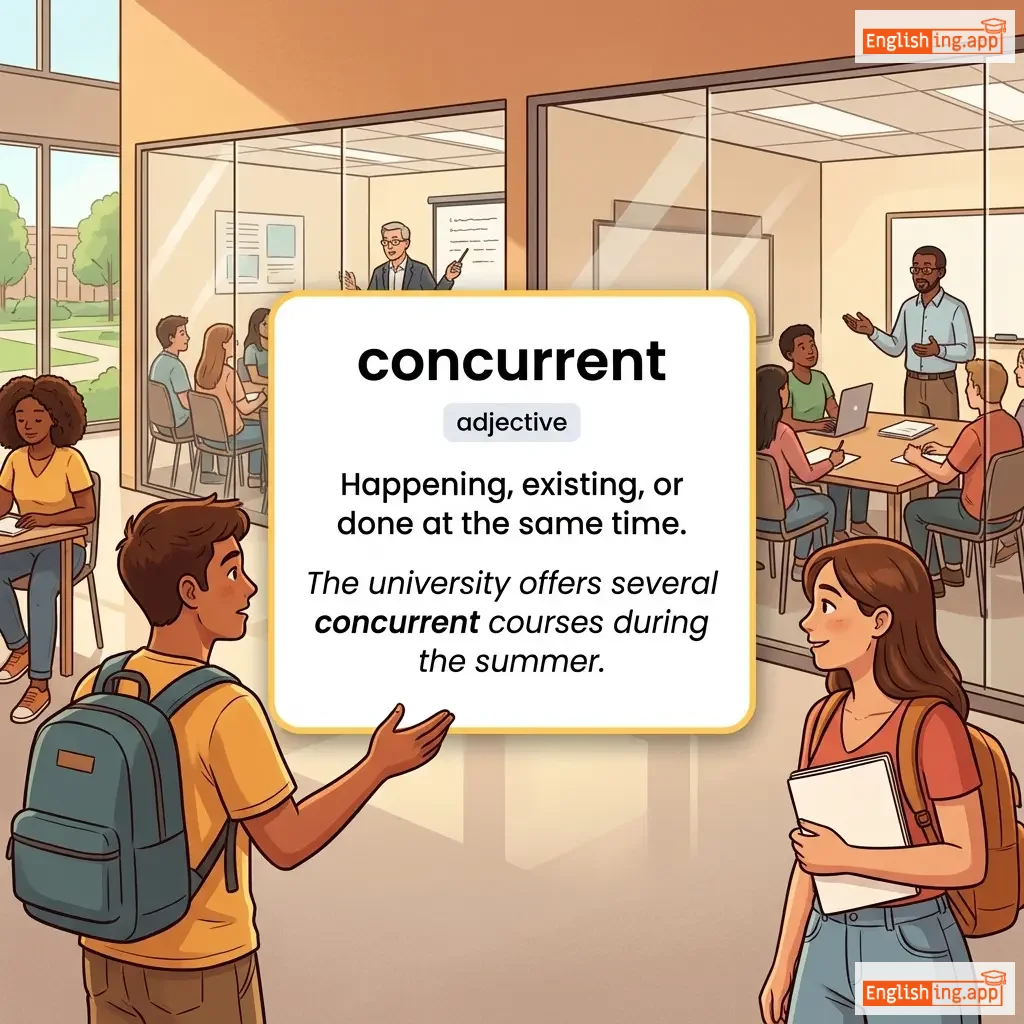
concurrent definition card — visual illustration of the meaning
adjective
/kənˈkʌrənt/
concurrent (concurrent)

Happening, existing, or done at the same time.

"The university offers several concurrent courses during the summer."

"L'université propose plusieurs cours concurrentiels pendant l'été." (L'université propose plusieurs cours concurrentiels pendant l'été.)
noun
/kənˈkʌʃən/
commotion cérébrale (commotion cerebrale)

A temporary unconsciousness or shock caused by a blow to the head.

"He suffered a concussion after falling from the bike."

"Il a subi une commotion cérébrale après être tombé de son vélo." (Il a subi une commotion cérébrale après être tombé de son vélo.)
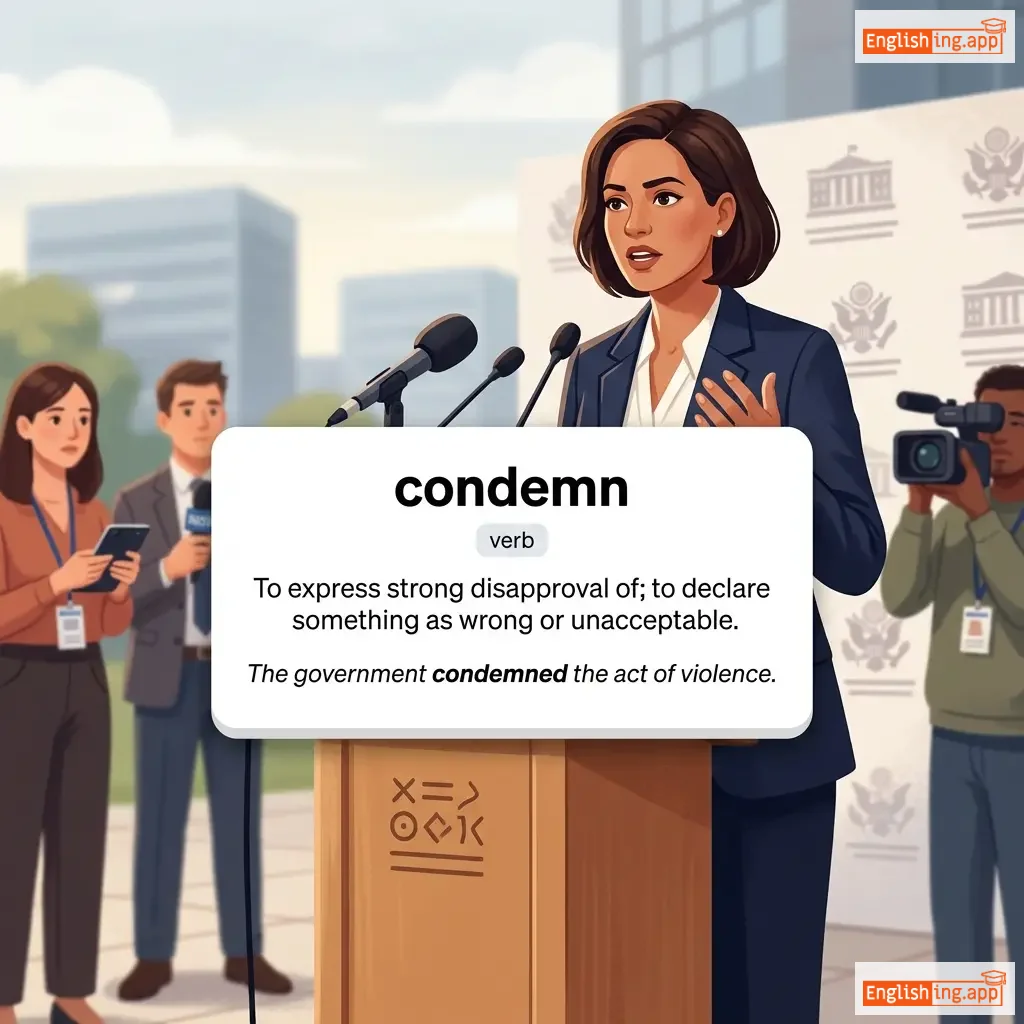
condemn definition card — visual illustration of the meaning
verb
/kənˈdɛm/
condamner (condamner)

To express strong disapproval of; to declare something as wrong or unacceptable.

"The government condemned the act of violence."

"Le gouvernement a condamné l'acte de violence." (Le gouvernement a condamné l'acte de violence.)
noun
/ˌkɒndɛnˈseɪʃən/
condensation (condensation)

The process of water vapor changing into liquid; also, the act of making something more concise.

"Condensation formed on the windows during the cold night."

"La condensation s'est formée sur les fenêtres pendant la nuit froide." (La condensation s'est formée sur les fenêtres pendant la nuit froide.)
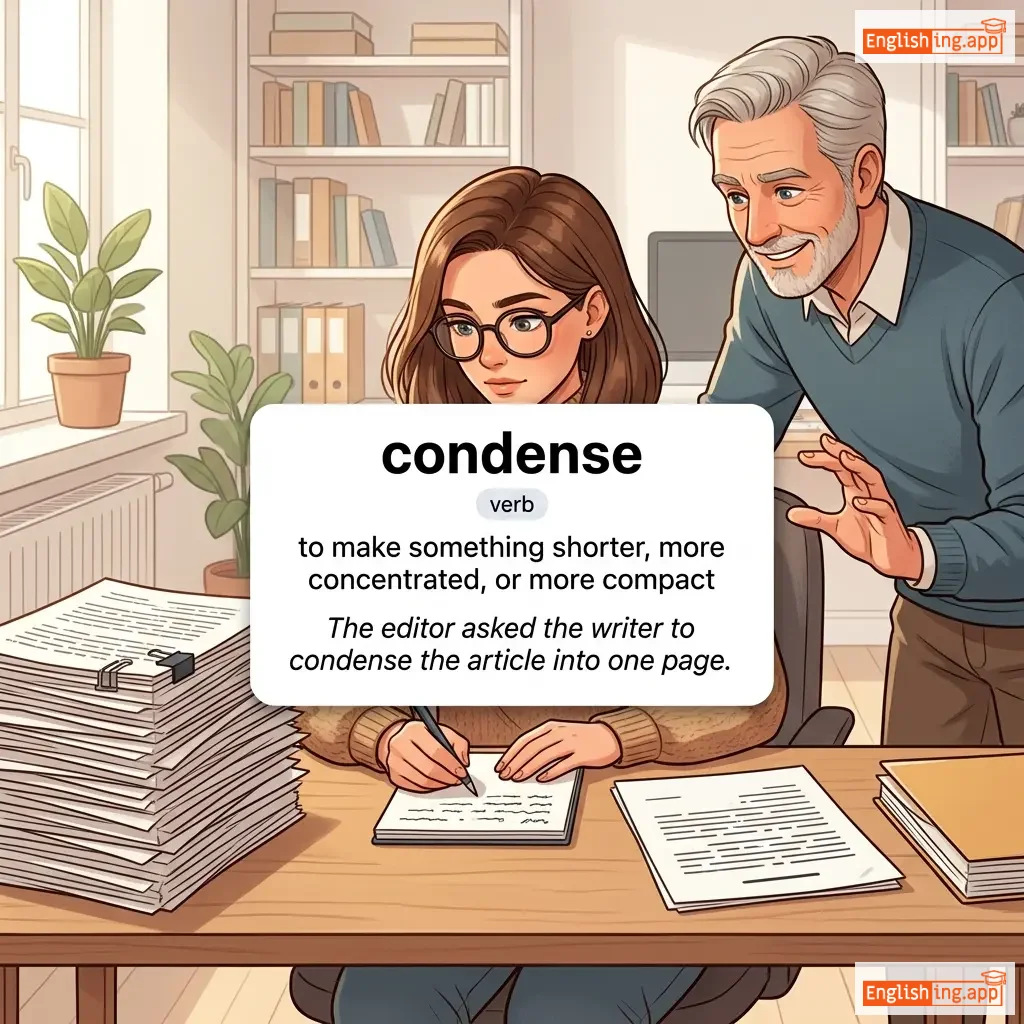
condense definition card — visual illustration of the meaning
verb
/kənˈdɛns/
condenser (condensar)

to make something shorter, more concentrated, or more compact

"The editor asked the writer to condense the article into one page."

"L'éditeur a demandé à l'écrivain de condenser l'article en une page." (L'editeur a demande a l'ecrivain de condenser l'article en une page.)
noun
/kənˈdenst mɪlk/
lait concentré (lait concentre)

milk from which water has been removed and sugar added, creating a thick, sweet product

"The recipe calls for a can of condensed milk to make the dessert extra creamy."

"La recette demande une boîte de lait concentré pour rendre le dessert encore plus crémeux." (La recette demande une boîte de lait concentré pour rendre le dessert encore plus crémeux.)
verb
/ˌkɒndɪˈsɛnd/
regarder d'en haut avec gentillesse (regarder d'en haut avec gentillesse)

to behave as if one is superior while being gracious to others

"He would not condescend to answer such a trivial question."

"Il ne se rabaisserait pas à répondre à une question aussi triviale." (Il ne se rabaisserait pas à répondre à une question aussi triviale.)
adjective
/ˌkɒndɪˈsɛndɪŋ/
condescendant (condescendant)

having or showing an attitude of patronizing superiority

"Her condescending tone upset her colleagues."

"Son ton condescendant a dérangé ses collègues." (Son ton condescendant a dérangé ses collègues.)
adjective
/ˈkɒndaɪn/
mérité (merite)

deserved, appropriate, and fitting (especially punishment)

"The criminal received condign punishment for his crimes."

"Le criminel a reçu la punition méritée pour ses crimes." (Le criminel a reçu la punition méritée pour ses crimes.)
noun
/ˈkɒndɪmənt/
condiment (condiment)

a substance such as salt, mustard, or ketchup that is used to add flavor to food

"Ketchup is a popular condiment in many countries."

"Le ketchup est un condiment populaire dans de nombreux pays." (Le ketchup est un condiment populaire dans de nombreux pays.)
noun
/ˈkɒndɪmənts/
condiments ou sauces (condiments ou sauces)

Seasonings or sauces used to add flavor to food.

"Ketchup and mustard are popular condiments for burgers."

"Le ketchup et la moutarde sont des condiments populaires pour les hamburgers." (Le ketchup et la moutarde sont des condiments populaires pour les hamburgers.)
condition definition card — visual illustration of the meaning
noun
/kənˈdɪʃən/
état, condition (etat, condition)

The state of something with regard to its appearance, quality, or working order; a requirement that must be met.

"The car is in excellent condition."

"La voiture est en excellent état." (La voiture est en excellent état.)
adjective
/kənˈdɪʃ.ən.əl/
conditionnel; sous condition (conditionnel; sous condition)

dependent on certain conditions; not absolute

"The job offer is conditional upon passing the background check."

"L'offre d'emploi est conditionnelle à la réussite de la vérification des antécédents." (L'offre d'emploi est conditionnelle à la réussite de la vérification des antécédents.)
verb
/kənˈdəʊl/
exprimer des condoléances (exprimer des condoleances)

To express sympathy for someone who is suffering or grieving.

"Neighbors came to condole with the family after the tragedy."

"Les voisins sont venus exprimer des condoléances à la famille après la tragédie." (Les voisins sont venus exprimer des condoleances a la famille apres la tragedie.)
noun
/kənˈdəʊləns/
condoléances (condoleances)

An expression of sympathy, especially on the occasion of death.

"She offered her sincere condolence to the grieving family."

"Elle a offert ses plus sincères condoléances à la famille endeuillée." (Elle a offert ses plus sinceres condoleances a la famille endeuillee.)
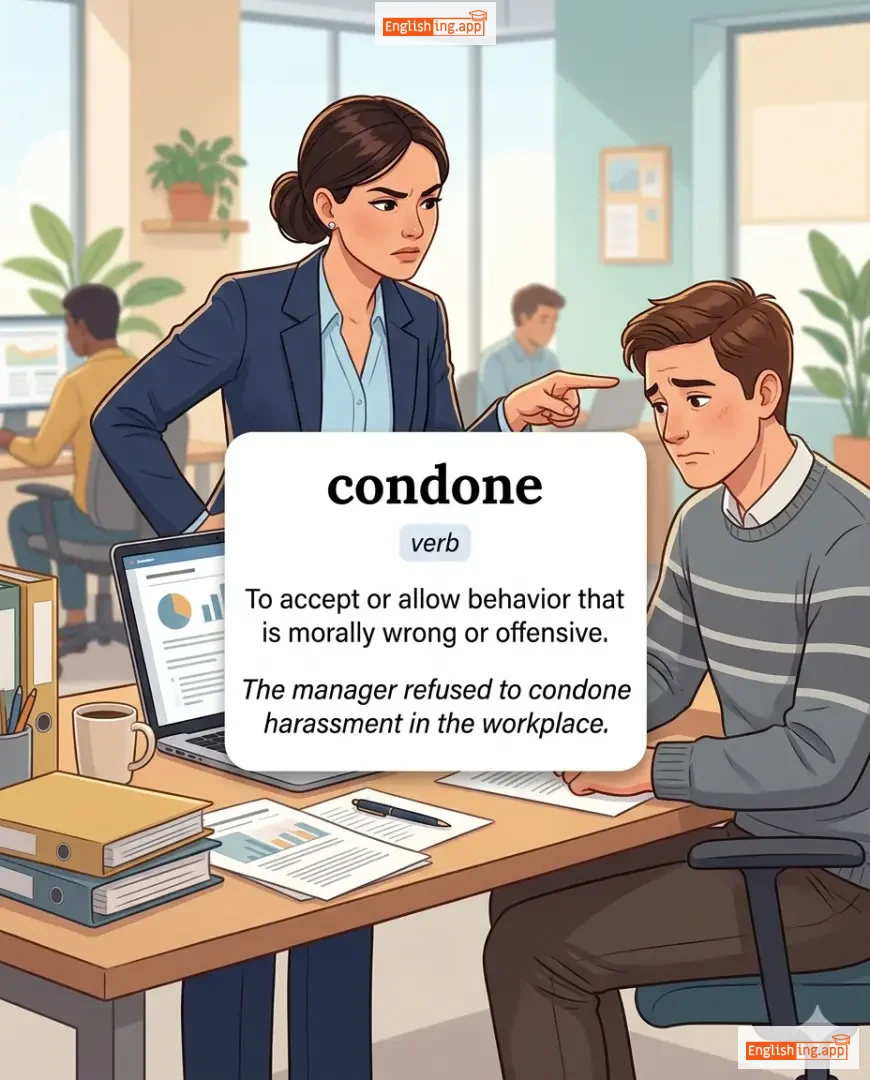
condone definition card — visual illustration of the meaning
verb
/kənˈdəʊn/
condonner (condonner)

To accept or allow behavior that is morally wrong or offensive.

"The manager refused to condone harassment in the workplace."

"Le responsable a refusé de condoner le harcèlement sur le lieu de travail." (Le responsable a refusé de condoner le harcèlement sur le lieu de travail.)
verb
/kənˈdjuːs/
contribuer (contribuer)

To help bring about a particular result; to contribute to something.

"Regular exercise conduces to better health."

"L'exercice régulier contribue à une meilleure santé." (L'exercice régulier contribue à une meilleure santé.)
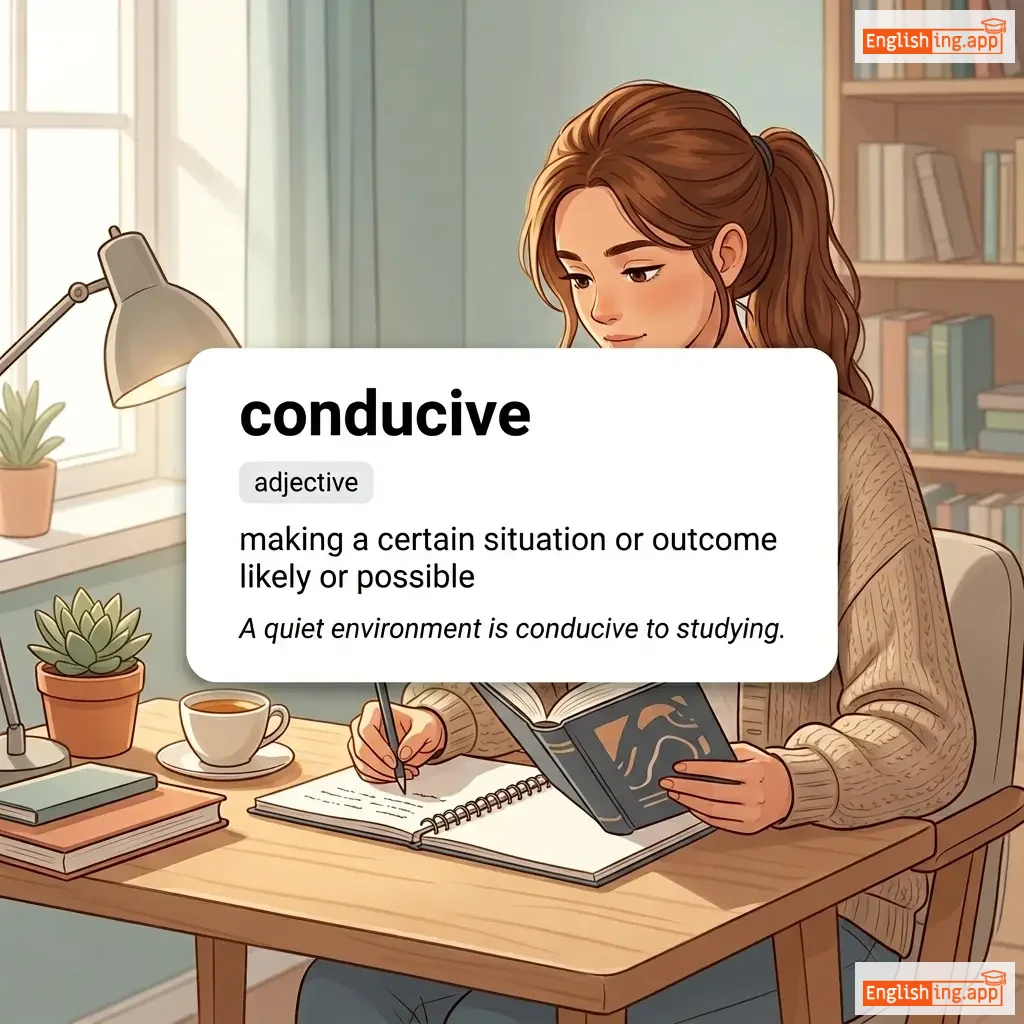
conducive definition card — visual illustration of the meaning
adjective
/kənˈdjuːsɪv/
favorable (favorable)

making a certain situation or outcome likely or possible

"A quiet environment is conducive to studying."

"Un environnement calme est favorable à l'étude." (Un environnement calme est favorable a l'etude.)
noun, verb
/ˈkɒndʌkt/ (noun), /kənˈdʌkt/ (verb)
comportement / conduire (comportement / conduire)

to organize or carry out; or a person's behavior

"The teacher conducted the exam fairly."

"L'enseignant a dirigé l'examen de manière équitable." (L'enseignant a dirigé l'examen de manière équitable.)
adjective
/kənˈdʌktəbl̩/
conductible (conductible)

capable of being conducted, especially electricity or heat

"Copper is highly conductible to electricity."

"Le cuivre est hautement conductible à l'électricité." (Le cuivre est hautement conductible à l'électricité.)
noun
/kənˈdʌktər/
directeur / conducteur (directeur / conducteur)

a person who directs a performance or someone who collects fares on public transport; or a material that conducts electricity

"The conductor waved his baton to start the orchestra."

"Le conducteur agita sa baguette pour commencer l'orchestre." (Le conducteur agita sa baguette pour commencer l'orchestre.)
noun
/ˈkɒndjuɪt/ or /ˈkɑːnduɪt/
conduit / moyen (conduit / moyen)

a channel or pipe for conveying water, electricity, or information

"The cable was placed inside a protective conduit."

"Le câble a été placé dans un conduit protecteur." (Le câble a été placé dans un conduit protecteur.)
noun
/kənˈfɛkʃəneri/
confiserie (konfiserie)

sweets, candies, and other food items made with sugar

"The shop sells a wide variety of confectionery."

"Le magasin vend une grande variété de confiserie." (Le magasin vend une grande variété de confiserie.)
noun
/kənˈfɛdərəsi/
confédération (confederation)

a group of states, people, or organizations united for a common purpose

"The southern states formed a confederacy during the civil war."

"Les états du sud ont formé une confédération pendant la guerre civile." (Les etats du sud ont forme une confederation pendant la guerre civile.)
noun/adjective
/kənˈfɛdərət/
confédéré (confedere)

a person, group, or state joined in an alliance or union; relating to a confederacy

"The confederate soldiers fought bravely in the war."

"Les soldats confédérés ont combattu courageusement dans la guerre." (Les soldats confédérés ont combattu courageusement dans la guerre.)
verb
/kənˈfɜːr/
consulter / accorder (consulter / accorder)

to discuss something important or to grant or bestow something

"The committee will confer to decide on the new policy."

"Le comité se réunira pour décider de la nouvelle politique." (Le comité se réunira pour décider de la nouvelle politique.)
noun
/ˌkɒnfəˈriː/
participant à la conférence (participant a la conference)

a person who takes part in a conference

"Each conferee received a badge at the registration desk."

"Chaque participant à la conférence a reçu un badge au comptoir d'inscription." (Chaque participant a la conference a recu un badge au comptoir d'inscription.)
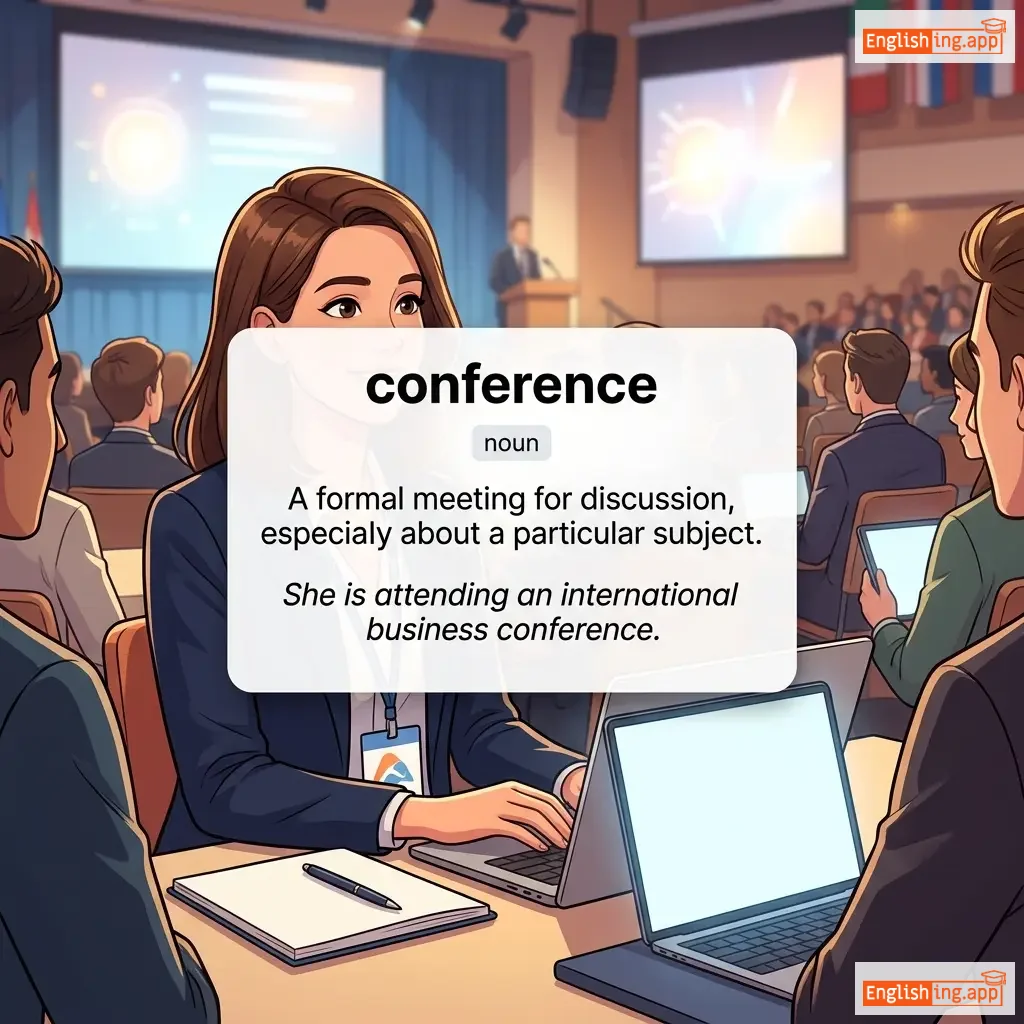
conference definition card — visual illustration of the meaning
noun
/ˈkɒnfərəns/
conférence (conference)

A formal meeting for discussion, especially about a particular subject.

"She is attending an international business conference."

"Elle assiste à une conférence internationale sur les affaires." (Elle assiste à une conférence internationale sur les affaires.)
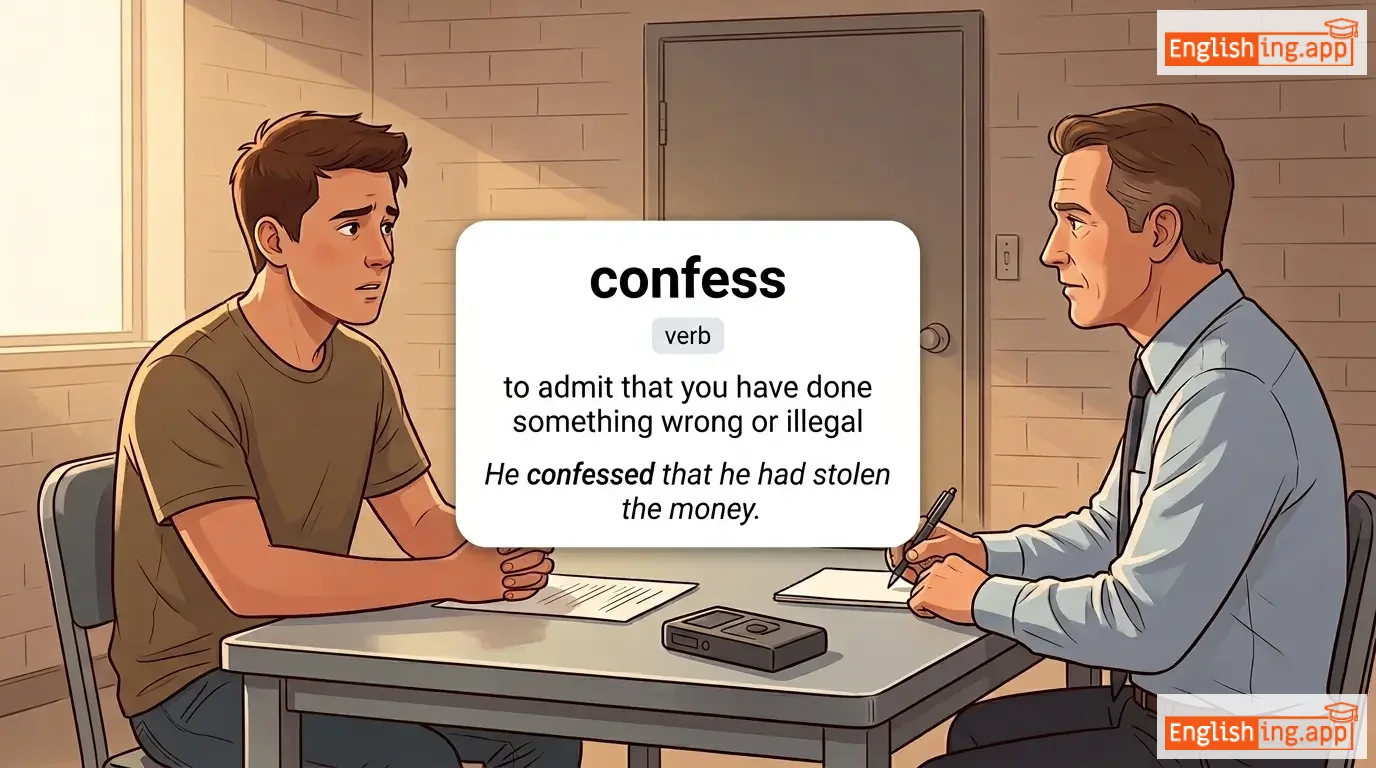
confess definition card — visual illustration of the meaning
verb
/kənˈfɛs/
avouer (avouer)

to admit that you have done something wrong or illegal

"He confessed that he had stolen the money."

"Il a avoué qu'il avait volé l'argent." (Il a avoué qu'il avait volé l'argent.)
noun
/kənˈfɛʃən/
confession (confession)

a statement admitting that one is guilty of a crime or has done something wrong

"The suspect made a full confession to the police."

"Le suspect a fait une confession complète à la police." (Le suspect a fait une confession complète à la police.)
noun
/kənˈfɛsər/
confesseur (confesseur)

A person who confesses sins or secrets, especially to a priest.

"The confessor listened patiently to the troubled man."

"Le confesseur écouta patiemment l'homme troublé." (Le confesseur écouta patiemment l'homme troublé.)