Vocabulaires

Découvrez, apprenez et maîtrisez le vocabulaire anglais

noun
/ˈbɪldɪŋ/
bâtiment (batiment)

A structure with a roof and walls, such as a house, school, or office.

"The old building was renovated into a museum."

"Le vieux bâtiment a été rénové en un musée." (Le vieux bâtiment a été rénové en un musée.)
noun
/bʌlb/
ampoule (ampoule)

a rounded glass part of an electric lamp that produces light when lit; also an underground storage organ in some plants

"The light bulb burned out, so she replaced it with a new one."

"L'ampoule a grillé, alors elle l'a remplacée par une nouvelle." (L'ampoule a grille, alors elle l'a remplacee par une nouvelle.)
adjective
/ˈbʌlbəs/
bulbeux / arrondi (bulbeux / arrondi)

Bulging, round, or swollen in shape; resembling a bulb.

"The frog had a bulbous nose and big eyes."

"La grenouille avait un nez bulbeux et de grands yeux." (La grenouille avait un nez bulbeux et de grands yeux.)
noun, verb
/bʌldʒ/
gonflement / protubérance (gonflement / protuberance)

A swelling or protruding part; to swell outward or protrude.

"The bag began to bulge with too many books inside."

"Le sac a commencé à gonfler avec trop de livres à l'intérieur." (Le sac a commencé à gonfler avec trop de livres à l'intérieur.)
noun, verb
/bʌlk/
en gros / masse (en gros / masse)

The mass or large size of something; to gain mass or volume.

"He bought rice in bulk to save money."

"Il a acheté du riz en gros pour économiser de l'argent." (Il a acheté du riz en gros pour économiser de l'argent.)
noun
/bʊl/
taureau (taureau)

a male animal of the cattle family; sometimes refers to a strong or aggressive man

"The bull charged across the field towards the red flag."

"Le taureau a chargé à travers le champ vers le drapeau rouge." (Le taureau a chargé à travers le champ vers le drapeau rouge.)
noun
/ˈbʊlɪt/
balle (balle)

A small, metal projectile fired from a gun.

"The soldier loaded a bullet into his rifle."

"Le soldat a chargé une balle dans son fusil." (Le soldat a charge une balle dans son fusil.)
noun
/ˈbʊljən/
or ou argent en vrac (or ou argent en vrac)

Gold or silver in bulk before being coined or made into jewelry.

"The bank stores gold bullion in its vaults."

"La banque conserve de l'or en vrac dans ses coffres." (La banque conserve de l'or en vrac dans ses coffres.)
noun
/ˈbʊlək/
bœuf de travail (boeuf de travail)

A young bull, especially a castrated one, raised for work or meat.

"The farmer used a bullock to plow the field."

"L'agriculteur a utilisé un bœuf de travail pour labourer le champ." (L'agriculteur a utilisé un bœuf de travail pour labourer le champ.)
noun, verb
/ˈbʊli/
intimidateur / tyran (intimidateur / tyran)

A person who habitually seeks to harm or intimidate those weaker; to intimidate or mistreat someone weaker.

"The teacher stopped the older boy from trying to bully his classmates."

"L'enseignant a arrêté le garçon plus âgé de tenter d'intimider ses camarades de classe." (L'enseignant a arrete le garcon plus age de tenter d'intimider ses camarades de classe.)
noun
/ˈbʊlrʌʃ/
jonc (jonc)

A tall plant with long leaves that grows in or near water, also known as a cattail.

"The pond was surrounded by tall bulrushes swaying in the wind."

"L'étang était entouré de hauts jonc swaying dans le vent." (L'étang était entouré de hauts jonc swaying dans le vent.)
noun
/ˈbʊlwərk/
rempart (rempart)

A strong wall or defensive structure; something that provides protection or support.

"The fortress walls served as a bulwark against enemy attacks."

"Les murs du fort ont servi de rempart contre les attaques ennemies." (Les murs du fort ont servi de rempart contre les attaques ennemies.)
noun
/bʌm/
fesses (fesses)

informal term for the buttocks; also a homeless or lazy person

"He sat on his bum all day doing nothing."

"Il est resté assis sur ses fesses toute la journée sans rien faire." (Il est reste assis sur ses fesses toute la journee sans rien faire.)
adjective
/ˈbʌmblɪŋ/
maladroit (maladroit)

Acting in a clumsy, awkward, or confused way.

"The bumbling waiter spilled the drinks on the table."

"Le serveur maladroit a renversé les boissons sur la table." (Le serveur maladroit a renversé les boissons sur la table.)
verb
/bʌmp/
coup (coup)

To hit something or someone by accident; to knock against something.

"He accidentally bumped into the door."

"Il a accidentellement heurté la porte." (Il a accidentellement heurté la porte.)
noun/adjective
/ˈbʌmpər/
pare-chocs (pare-chocs)

A protective bar at the front or back of a vehicle; also used to describe something unusually large or successful.

"The farmer celebrated a bumper harvest this year."

"Le fermier a célébré une récolte exceptionnelle cette année." (Le fermier a célébré une récolte exceptionnelle cette année.)
adjective
/ˈbʌmpʃəs/
prétentieux (pretentieux)

Arrogantly self-assertive or conceited.

"The bumptious student interrupted the teacher several times."

"L'étudiant prétentieux a interrompu le professeur plusieurs fois." (L'étudiant prétentieux a interrompu le professeur plusieurs fois.)
adjective
/ˈbʌmpi/
bosselé; cahoteux (bumpy)

having an uneven surface; rough; jolting

"The bumpy road made the car ride very uncomfortable."

"La route bosselée a rendu le trajet en voiture très inconfortable." (La route bosselée a rendu le trajet en voiture très inconfortable.)
noun
/bʌn/
petit pain (petit pain)

a small round bread roll, often sweet

"I bought fresh buns from the bakery this morning."

"J'ai acheté des pains frais à la boulangerie ce matin." (J'ai achete des pains frais a la boulangerie ce matin.)
noun
/bʌntʃ/
bouquet (bouquet)

a group of things that are fastened, held, or growing together

"She gave me a bunch of flowers for my birthday."

"Elle m'a donné un bouquet de fleurs pour mon anniversaire." (Elle m'a donné un bouquet de fleurs pour mon anniversaire.)
noun
/ˈbʌn.dəl/
paquet; bundle (paquet, bundle)

a collection of things or quantity of material tied or wrapped up together

"The mailman delivered a bundle of letters to our house."

"Le facteur a livré un colis de lettres chez nous." (Le facteur a livré un colis de lettres chez nous.)
verb
/ˈbʌŋɡəl/
embrouiller (embrouiller)

To carry out a task clumsily or incompetently.

"He bungled the presentation and confused the audience."

"Il a embrouillé la présentation et a confondu l'audience." (Il a embrouillé la présentation et a confondu l'audience.)
noun, verb
/ˈbʌŋkər/
bunker (bunker)

a reinforced underground shelter; to place or store something in a protected place

"They hid in a bunker during the air raid."

"Ils se sont cachés dans un bunker pendant le raid aérien." (ils se sont caches dans un bunker pendant le raid aerien)
noun/verb
/ˈbɔɪ/ or /ˈbuːi/
bouée, maintenir à flot (bouée, maintenir à flot)

A floating marker on water; to keep something afloat or encourage someone.

"The news buoyed their spirits after the loss."

"Les nouvelles ont élevé leur esprit après la perte." (Les nouvelles ont élevé leur esprit après la perte.)
noun
/ˈbɔɪənsi/ or /ˈbuːjənsi/
flottabilité, gaieté (flottabilite, gaite)

The ability to float in a liquid; cheerfulness and optimism.

"Her natural buoyancy lifted the mood of the group."

"Sa flottabilité naturelle a remonté le moral du groupe." (Sa flottabilite naturelle a remonte le moral du groupe.)
adjective
/ˈbɔɪənt/ or /ˈbuːjənt/
flottant, joyeux (flottant, joyeux)

Able to float easily; cheerful and optimistic.

"She remained buoyant despite the difficulties."

"Elle est restée joyeuse malgré les difficultés." (Elle est restée joyeuse malgré les difficultés.)
noun
/ˈbɜːrdn/
fardeau (fardeau)

a heavy load, especially one that is difficult to carry

"The financial burden was too heavy for him to bear."

"Le fardeau financier était trop lourd pour lui." (Le fardeau financier était trop lourd pour lui.)
noun
/ˈbjʊəroʊ/
bureau/agence (bureau/agence)

An office or agency that provides services or manages specific duties.

"The travel bureau helped them plan their vacation."

"Le bureau de voyage les a aidés à planifier leurs vacances." (Le bureau de voyage les a aides a planifier leurs vacances.)
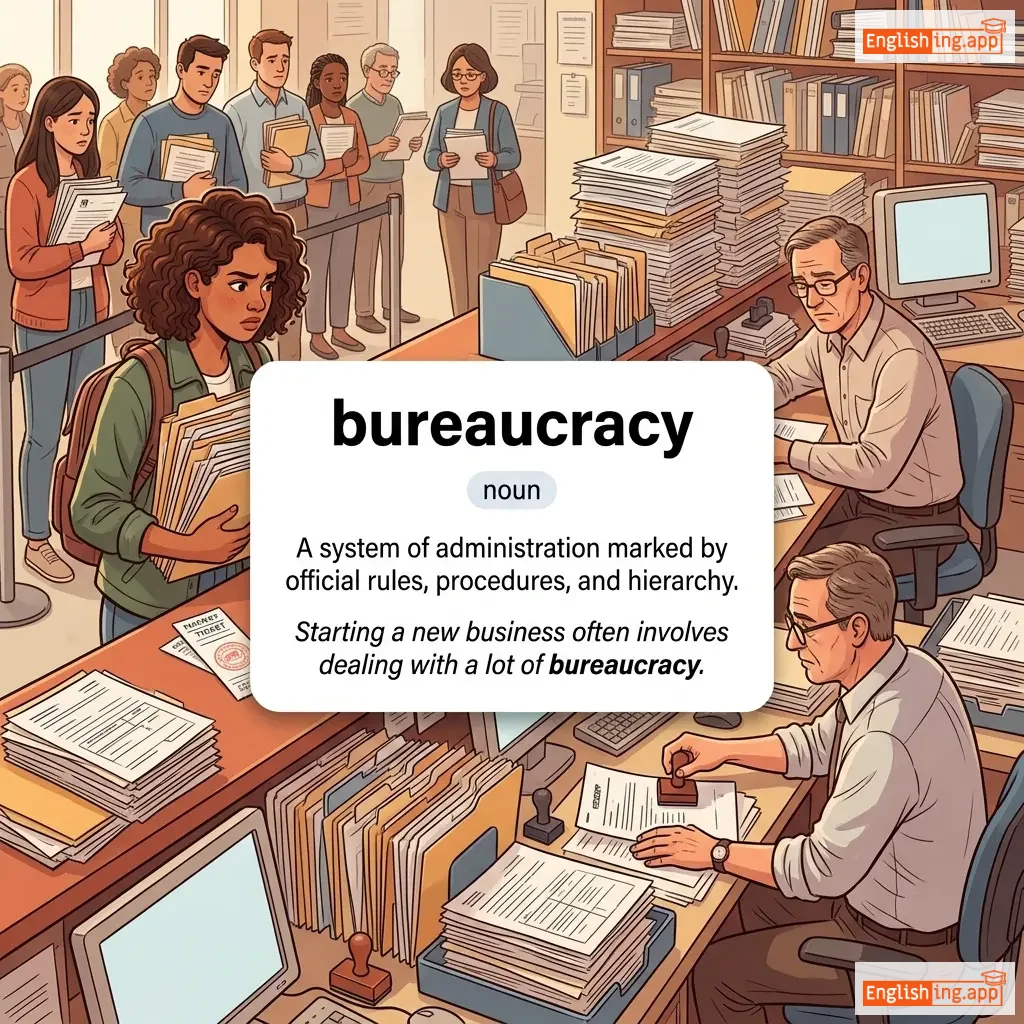
bureaucracy definition card — visual illustration of the meaning
noun
/bjʊˈrɒkrəsi/
bureaucratie (bureaucratie)

A system of administration marked by official rules, procedures, and hierarchy.

"Starting a new business often involves dealing with a lot of bureaucracy."

"Démarrer une nouvelle entreprise implique souvent de faire face à beaucoup de bureaucratie." (Demarrer une nouvelle entreprise implique souvent de faire face a beaucoup de bureaucratie.)
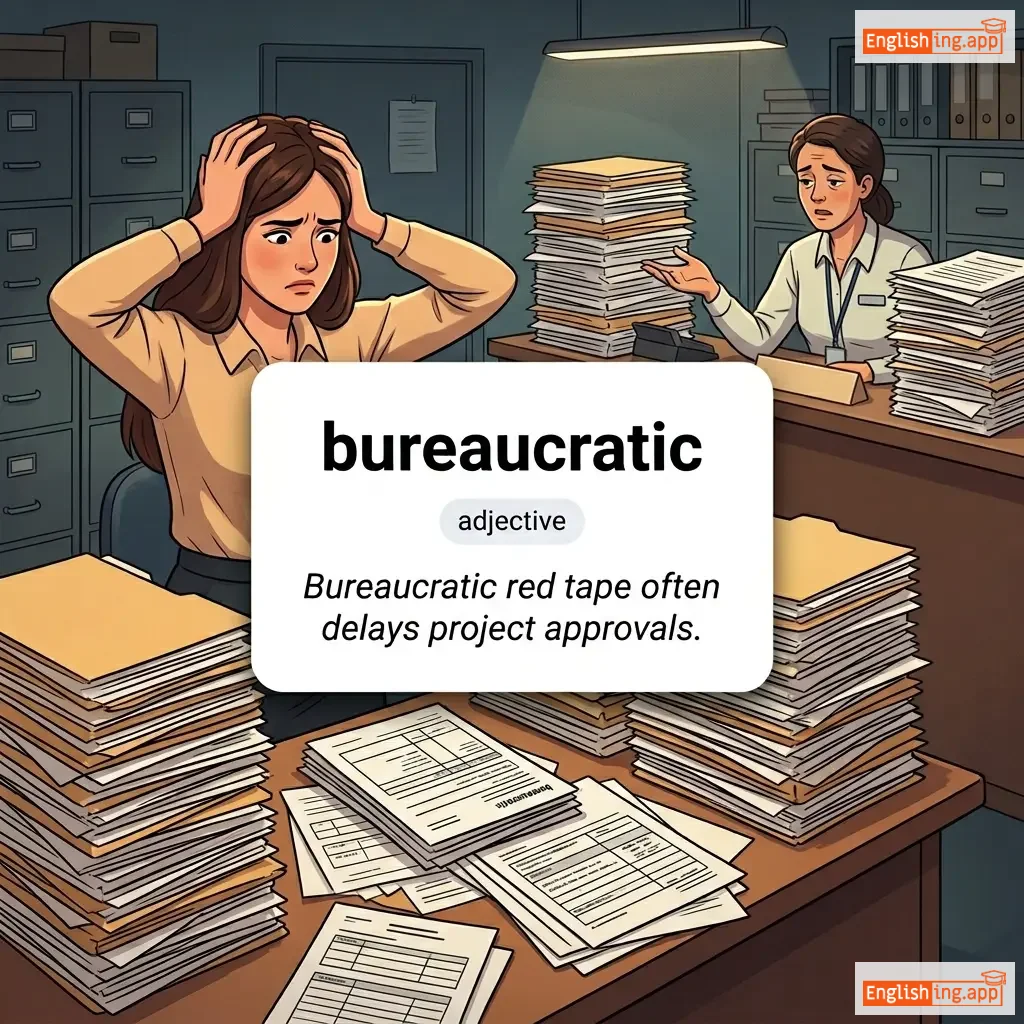
bureaucratic definition card — visual illustration of the meaning
adjective
ˌbjʊə.rəˈkræt.ɪk
bureaucratique (bureaucratique)

Involving or characterized by complex rules and procedures that can delay the achievement of goals.

"Bureaucratic red tape often delays project approvals."

"Les lourdeurs bureaucratiques retardent souvent l’approbation des projets." (les lourdeurs bureaucratiques retardent souvent l approbation des projets.)
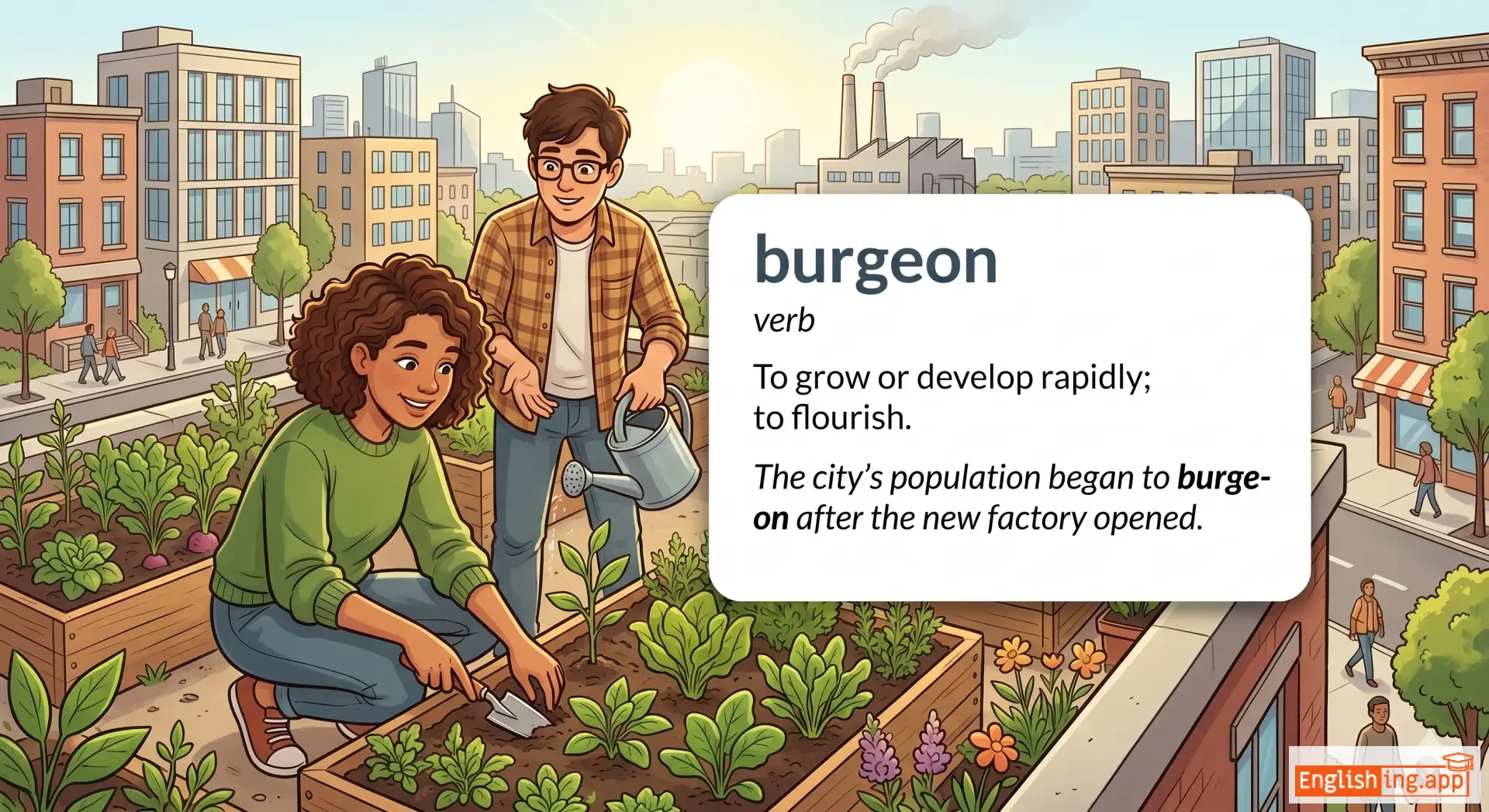
burgeon definition card — visual illustration of the meaning
verb
/ˈbɜːrdʒən/
croître rapidement (croître rapidement)

To grow or develop rapidly; to flourish.

"The city's population began to burgeon after the new factory opened."

"La population de la ville a commencé à croître rapidement après l'ouverture de la nouvelle usine." (La population de la ville a commencé à croître rapidement après l'ouverture de la nouvelle usine.)
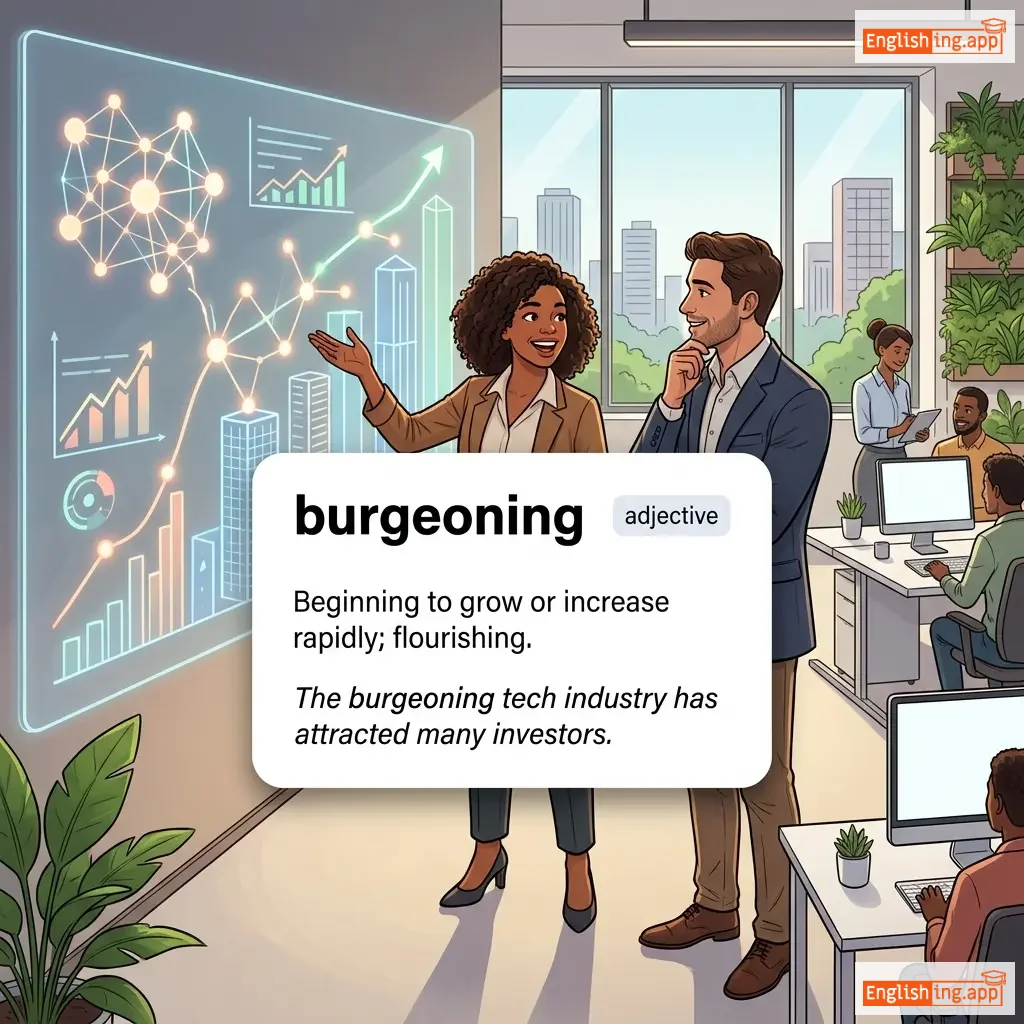
burgeoning definition card — visual illustration of the meaning
adjective
ˈbɜːdʒənɪŋ
en plein essor (an pleyn esor)

Beginning to grow or increase rapidly; flourishing.

"The burgeoning tech industry has attracted many investors."

"L'industrie technologique en pleine expansion a attiré de nombreux investisseurs." (L'industrie technologique en pleine expansion a attiré de nombreux investisseurs.)
🧑‍🤝‍🧑

burgess (bʏʁʒɛs)

noun
/ˈbɜːrdʒɪs/
citoyen de la ville (citoyen de la ville)

A citizen of a town or borough with full rights of citizenship.

"In medieval times, a burgess had the right to vote and hold property."

"Au Moyen Âge, un bourgeois avait le droit de voter et de posséder des biens." (Au Moyen Âge, un bourgeois avait le droit de voter et de posséder des biens.)
noun
/ˈbɜːrɡər/
bourgeois (bourgeois)

A citizen of a town, typically a member of the wealthy middle class.

"The burgher was respected as a prosperous merchant in the city."

"Le bourgeois était respecté comme un marchand prospère dans la ville." (Le bourgeois était respecté comme un marchand prospère dans la ville.)
noun
/ˈbɛriəl/
enterrement (enterrement)

the act of placing a dead body into the ground.

"The burial ceremony took place in the afternoon."

"La cérémonie de l'enterrement a eu lieu l'après-midi." (La cérémonie de l'enterrement a eu lieu l'après-midi.)
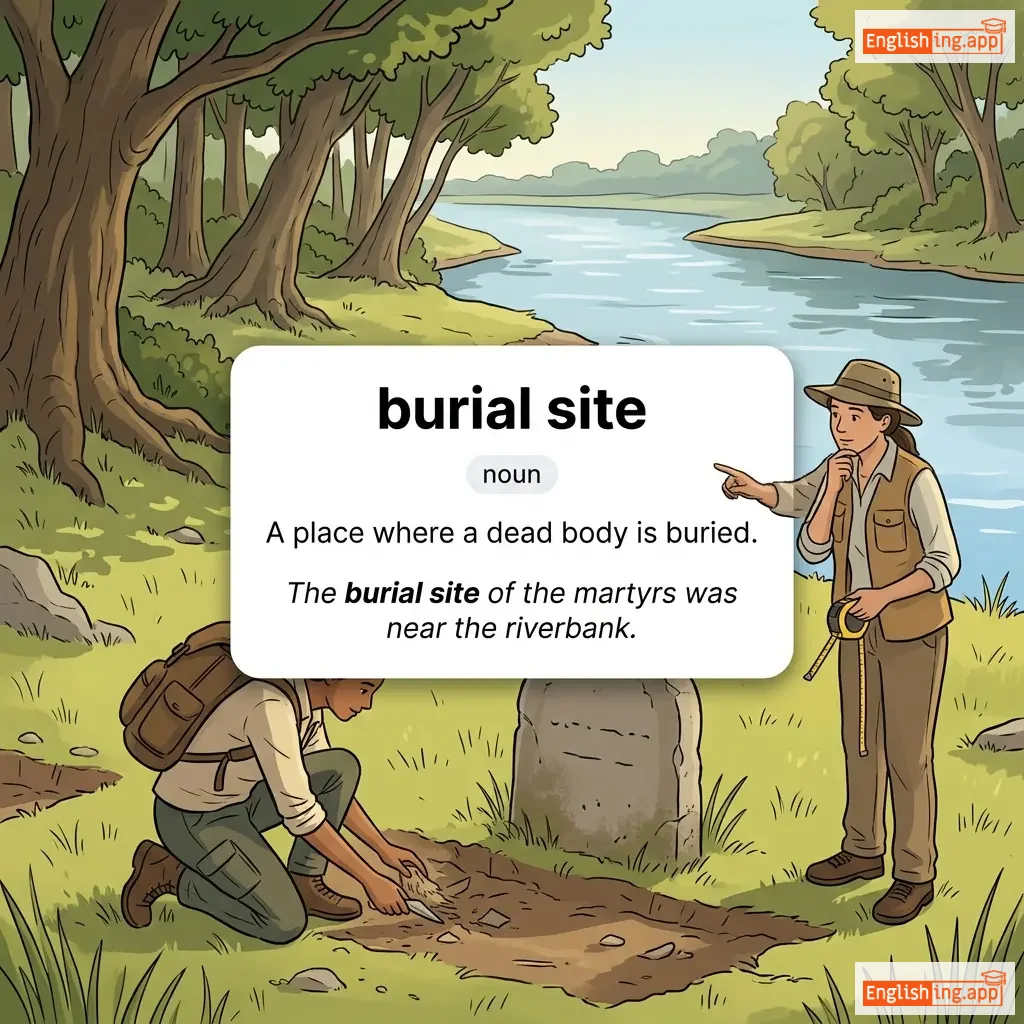
burial site definition card — visual illustration of the meaning
noun
ˈbɛriəl saɪt
site funéraire (site funéraire)

A place where a dead body is buried.

"The burial site of the martyrs was near the riverbank."

"Le site funéraire des martyrs était près de la rive." (Le site funéraire des martyrs était près de la rive.)
noun
/bɜːrˈlɛsk/
burlesque (burlesque)

A humorous and exaggerated imitation of a serious work; a type of theatrical entertainment involving comedy and parody.

"The play was a clever burlesque of traditional opera."

"La pièce était une burlesque ingénieuse de l'opéra traditionnel." (La piece etait une burlesque ingenieuse de l'opera traditionnel.)
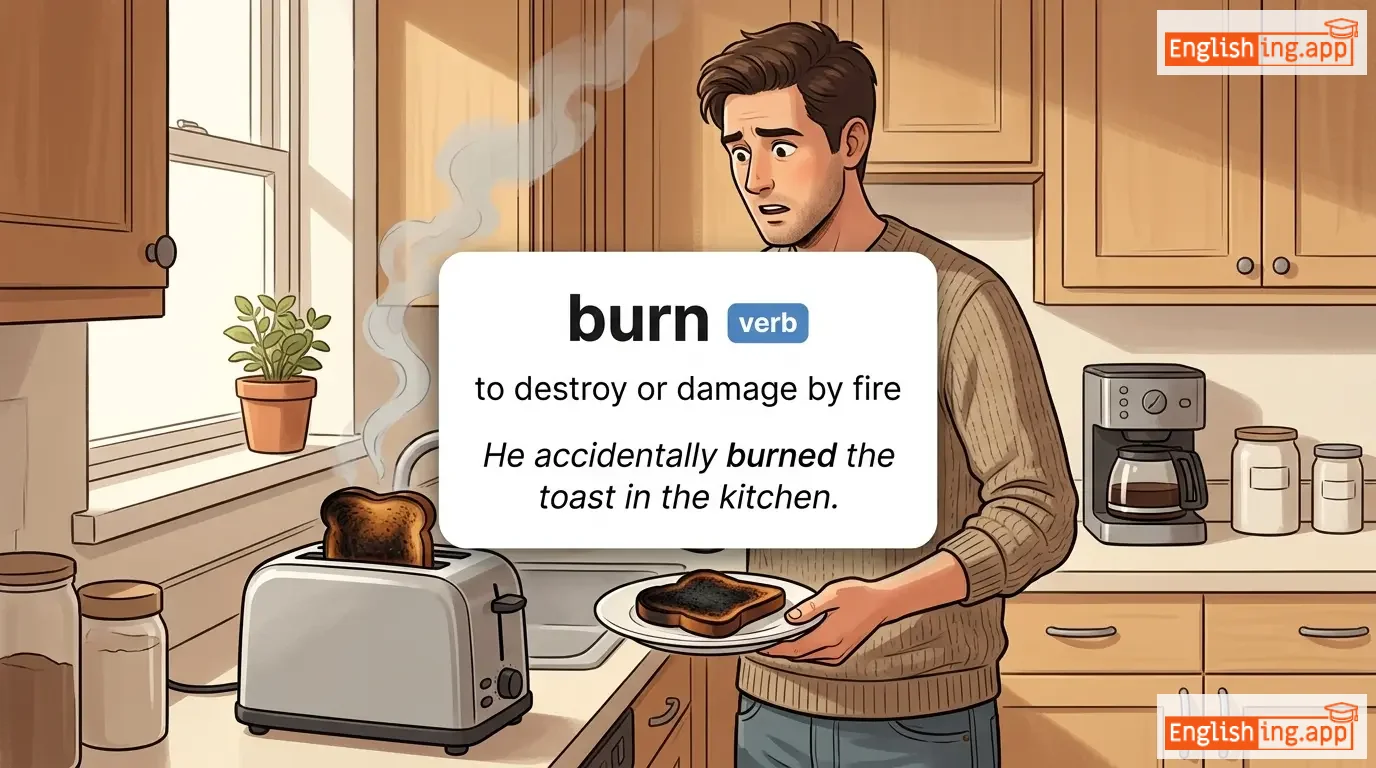
burn definition card — visual illustration of the meaning
verb
/bɜːrn/
brûler (bruler)

to destroy or damage by fire

"He accidentally burned the toast in the kitchen."

"Il a accidentellement brûlé le pain grillé dans la cuisine." (Il a accidentellement brule le pain grille dans la cuisine.)
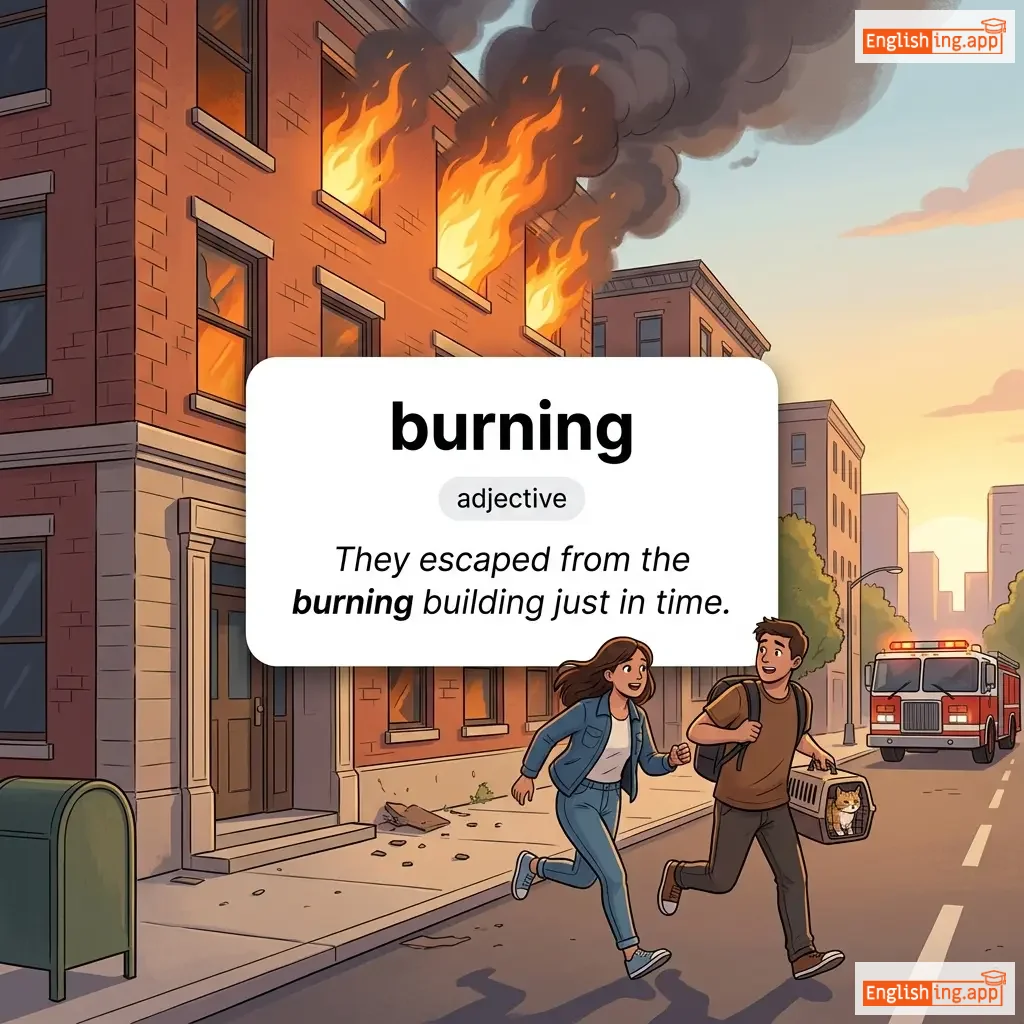
burning definition card — visual illustration of the meaning
adjective
/ˈbɜːnɪŋ/
enflammé (enflamme)

producing flames or intense heat; also used metaphorically for intense emotions or urgency

"They escaped from the burning building just in time."

"Ils ont échappé du bâtiment enflammé juste à temps." (Ils ont echappe du batiment enflamme juste a temps.)
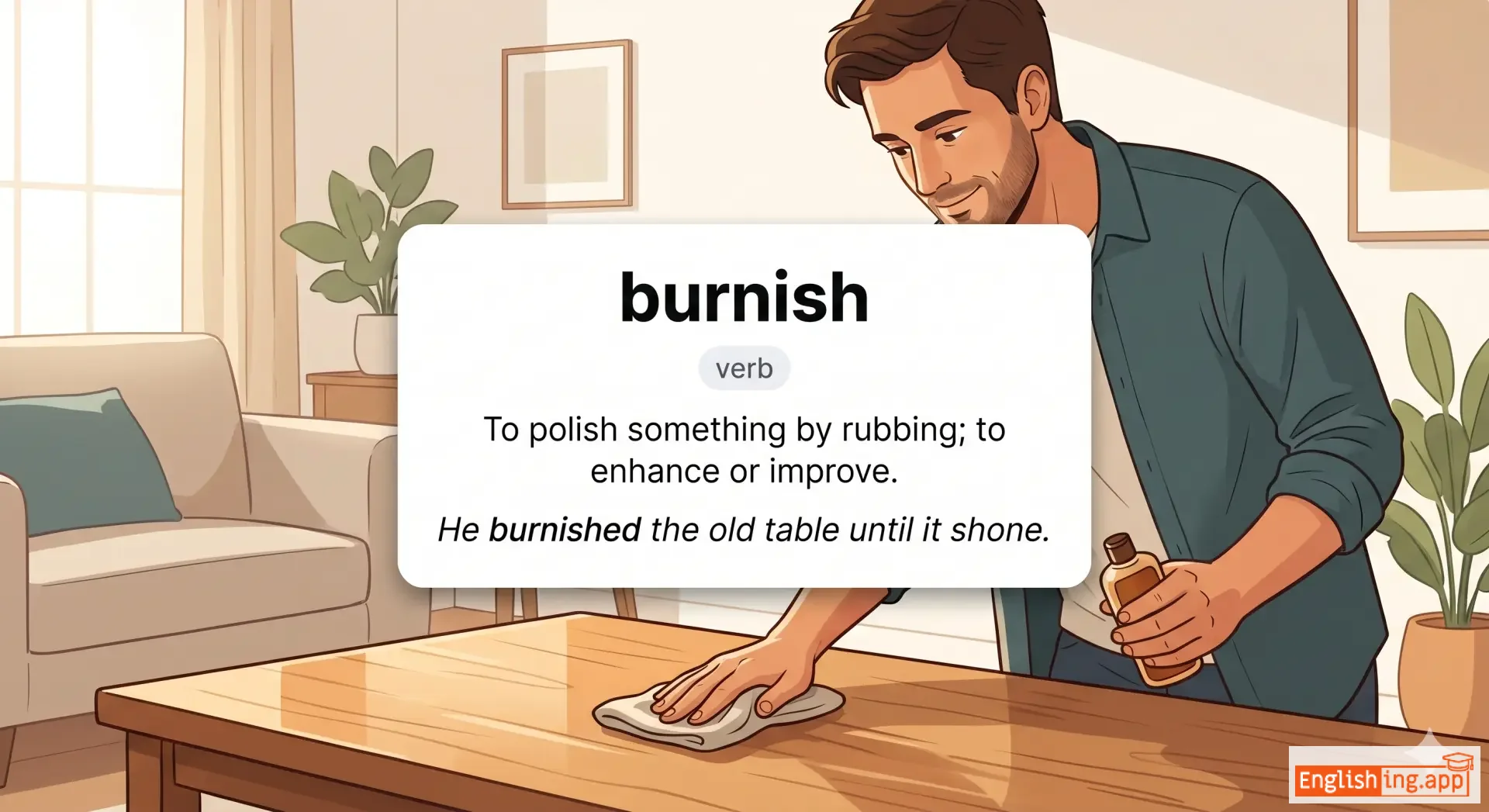
burnish definition card — visual illustration of the meaning
verb
/ˈbɜːrnɪʃ/
lustrer (lustrer)

To polish something by rubbing; to enhance or improve.

"He burnished the old table until it shone."

"Il a lustré la vieille table jusqu'à ce qu'elle brille." (Il a lustré la vieille table jusqu'à ce qu'elle brille.)
noun
/ˈbɜːrsər/
trésorier (tresorier)

An official in a school or college responsible for financial affairs.

"The bursar approved the budget for the new library."

"Le trésorier a approuvé le budget pour la nouvelle bibliothèque." (Le tresorier a approuve le budget pour la nouvelle bibliotheque.)
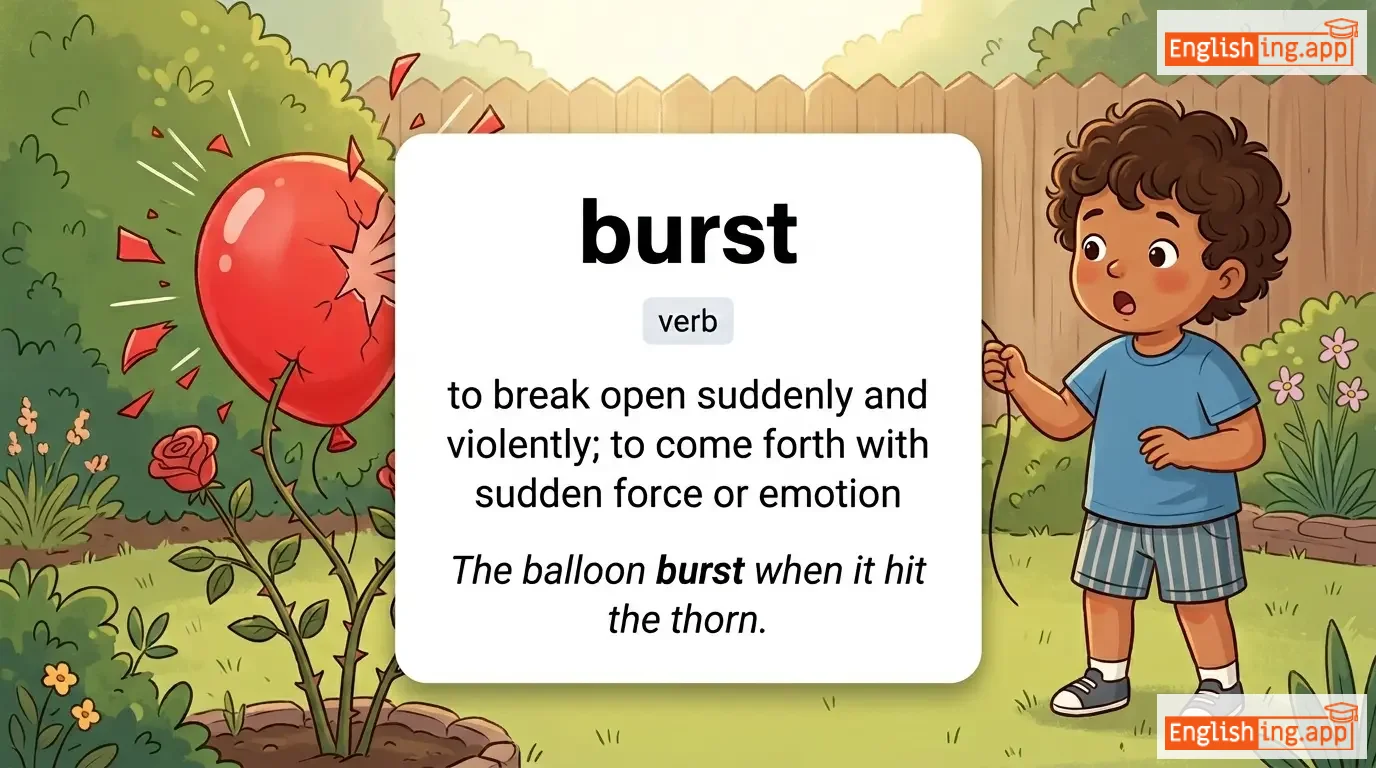
burst definition card — visual illustration of the meaning
verb
/bɜːst/
éclater (eclater)

to break open suddenly and violently; to come forth with sudden force or emotion

"The balloon burst when it hit the thorn."

"Le ballon a éclaté quand il a heurté l'épines." (Le ballon a éclaté quand il a heurté l'épines.)
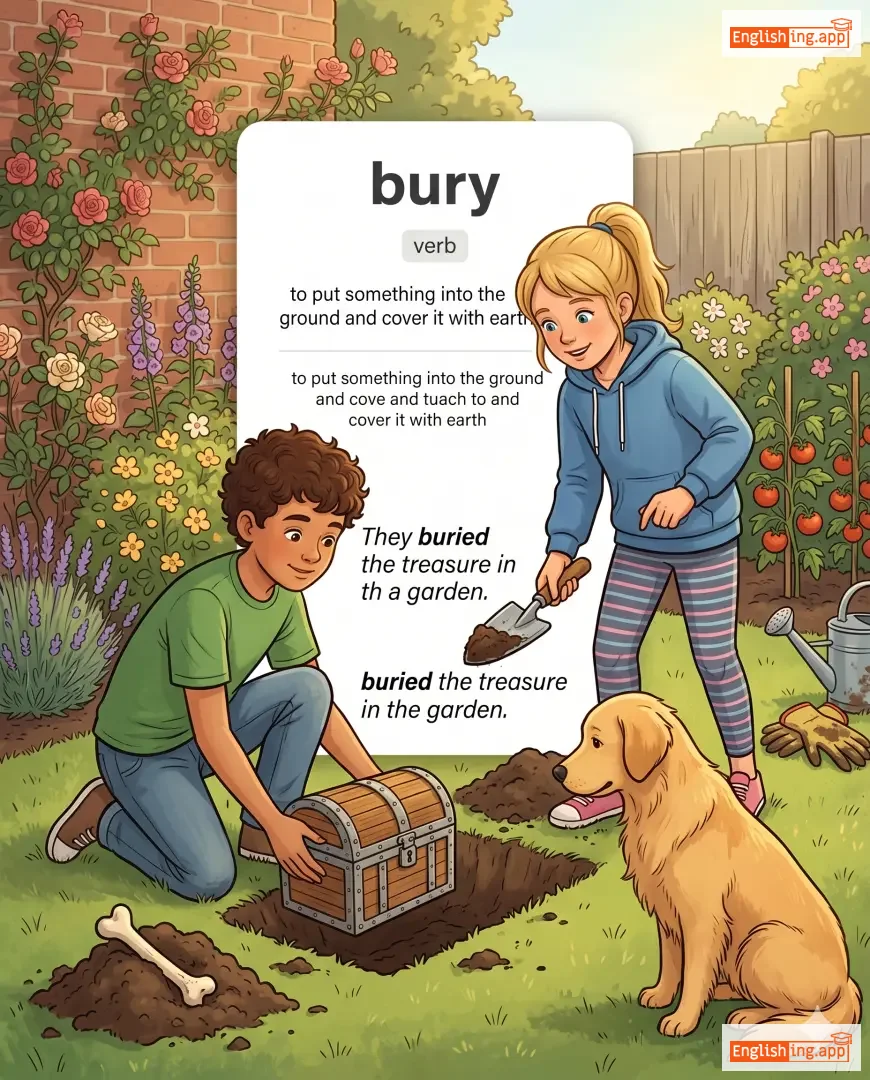
bury definition card — visual illustration of the meaning
verb
/ˈberi/
enterrer (enterrer)

to put something into the ground and cover it with earth

"They buried the treasure in the garden."

"Ils ont enterré le trésor dans le jardin." (Ils ont enterré le trésor dans le jardin.)
noun
/bʌs/
autobus (autobus)

a large motor vehicle carrying passengers by road

"We waited for the bus at the station."

"Nous avons attendu le bus à la station." (Nous avons attendu le bus a la station.)
noun
/bʊʃ/
buisson (buisson)

a plant with many small branches growing close to the ground; a shrub

"A rabbit was hiding under the bush."

"Un lapin se cachait sous le buisson." (Un lapin se cachait sous le buisson.)
noun
/ˈbɪznəs/
affaires (affaires)

the practice of making money by producing or buying and selling goods or services

"She started her own business last year."

"Elle a commencé son propre affaire l'année dernière." (Elle a commencé son propre affaire l'année dernière.)
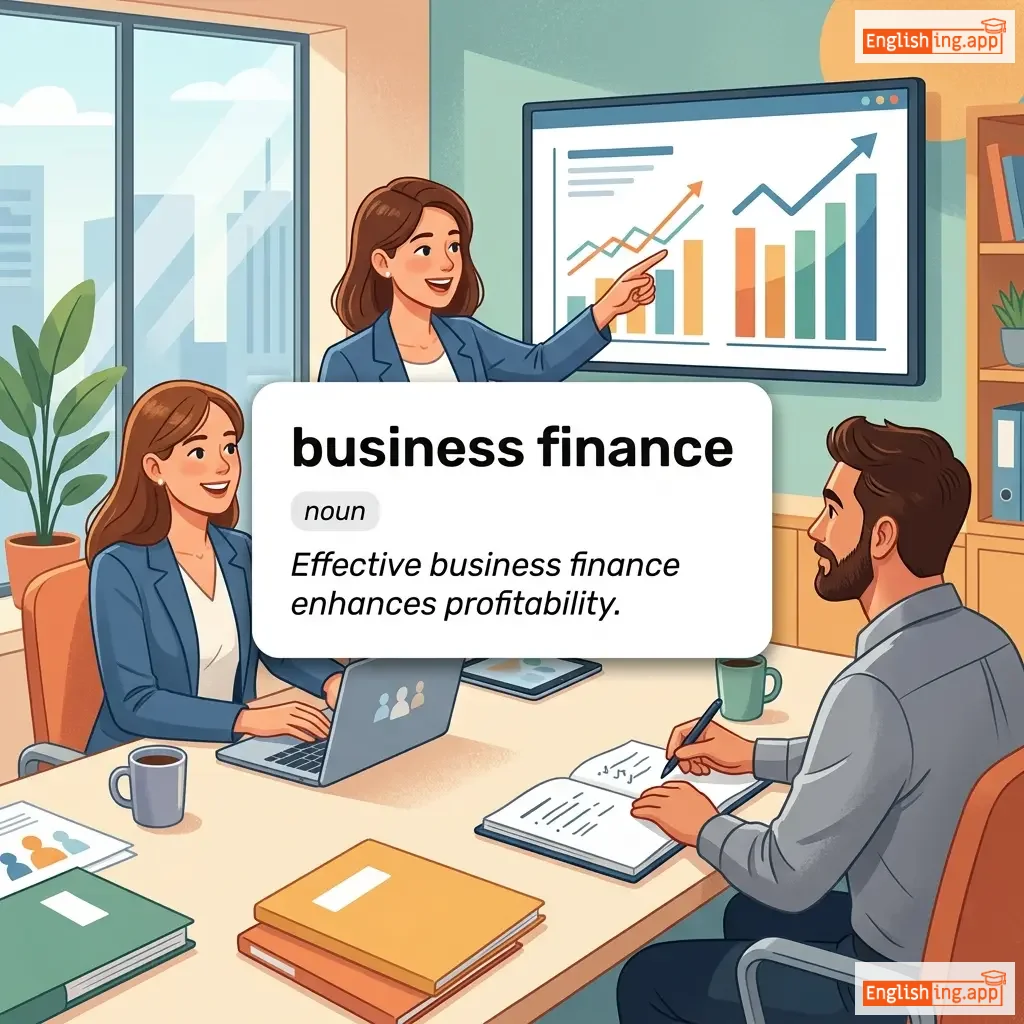
business finance definition card — visual illustration of the meaning
noun
ˈbɪz.nɪs ˈfaɪ.næns
finances d'entreprise (finans d'entreprise)

The area of finance that deals with sources of funding and the capital structure of corporations.

"Effective business finance enhances profitability."

"Une bonne finance d'entreprise améliore la rentabilité." (Une bonne finance d'entreprise ameliore la rentabilite.)
business success definition card — visual illustration of the meaning
noun
/bɪzˈnɛs sʌˈsɛs/
succès commercial (succes commercial)

The achievement of desired outcomes in business operations, typically measured by profitability, growth, and sustainability.

"Innovation drives business success."

"L'innovation conduit au succès commercial." (L'innovation conduit au succes commercial.)
noun
/ˈbɪznəsmæn/
homme d'affaires (homme d'affaires)

a person engaged in commercial or industrial business activities

"The businessman invested heavily in new technology."

"L'homme d'affaires a investi massivement dans les nouvelles technologies." (L'homme d'affaires a investi massivement dans les nouvelles technologies.)
noun
/ˈbɪznəsˌwʊmən/
femme d’affaires (femme d affaires)

a woman who works in business, especially one who owns or manages a company

"The businesswoman expanded her company into international markets."

"La femme d’affaires a développé son entreprise à l’international." (La femme d affaires a developpe son entreprise a l international)