Vocabulaires

Découvrez, apprenez et maîtrisez le vocabulaire anglais

noun
/ˈæpərtʃər/
ouverture / trou (ouverture / trou)

an opening, hole, or gap, especially one that lets in light

"Light entered through the small aperture in the wall."

"La lumière est entrée par la petite ouverture dans le mur." (La lumière est entrée par la petite ouverture dans le mur.)
apex definition card — visual illustration of the meaning
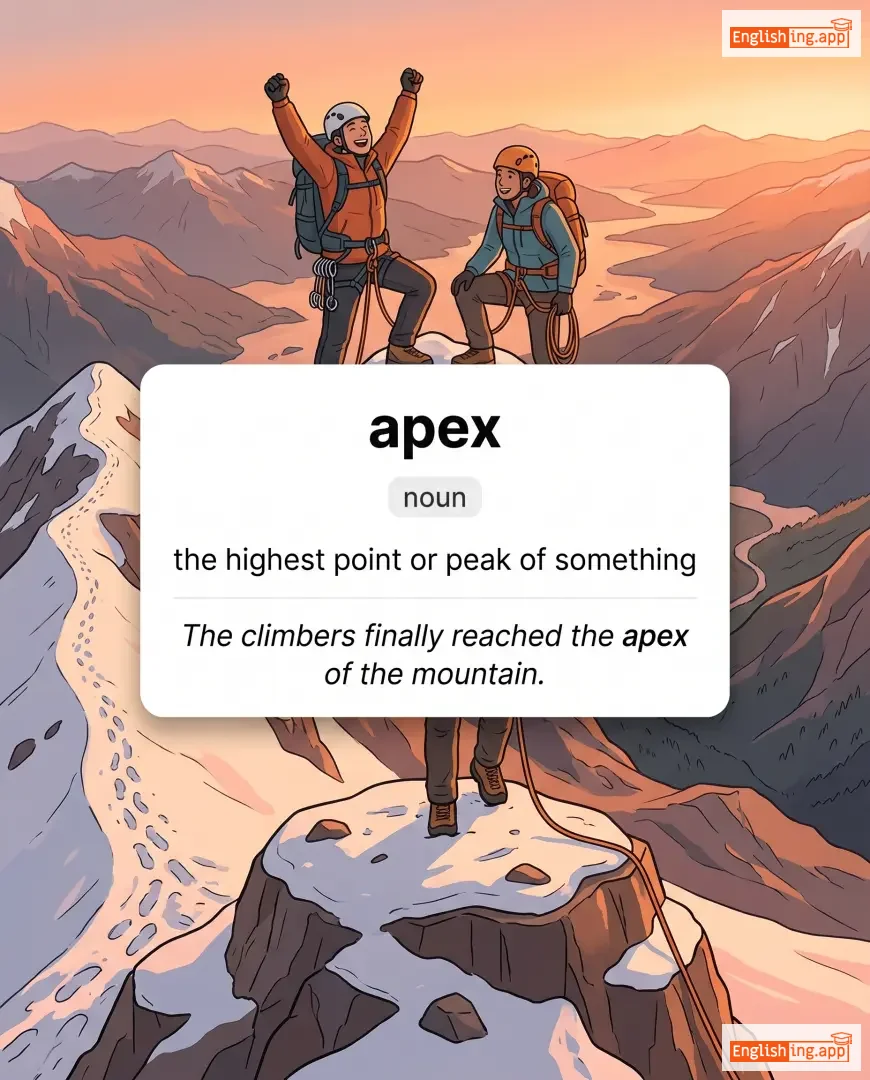
noun
/ˈeɪ.pɛks/
sommet (sommet)

the highest point or peak of something

"The climbers finally reached the apex of the mountain."

"Les grimpeurs ont finalement atteint le sommet de la montagne." (Les grimpeurs ont finalement atteint le sommet de la montagne.)
noun
/əˈfeɪ.ʒə/
aphasie (aphasie)

a medical condition that causes loss of ability to speak or understand language

"After the stroke, she was diagnosed with aphasia."

"Après l'accident vasculaire cérébral, elle a été diagnostiquée d'une aphasie." (apres l accident vasculaire cerebral elle a ete diagnostiquee dune aphasie)
noun
/ˈæf.ə.rɪ.zəm/
aphorisme (aforizm)

a short, witty saying that expresses a general truth or principle

"He began his speech with an aphorism about life and success."

"Il a commencé son discours par un aphorisme sur la vie et le succès." (Il a commence son discours par un aphorisme sur la vie et le succes.)
adjective
/ˌæf.əˈrɪs.tɪk/
style aphoristique (style aphoristique)

expressed in the style of a short, witty saying

"Her writing style is concise and aphoristic."

"Son style d'écriture est concis et aphoristique." (Son style d'écriture est concis et aphoristique.)
noun
/ˈeɪ.pi.ə.rɪst/
apiculteur (apiculteur)

a person who keeps and tends bees for honey production

"The apiarist collected fresh honey from the hives."

"L'apiculteur a récolté du miel frais des ruches." (L'apiculteur a recolte du miel frais des ruches.)
noun
/ˈeɪ.pi.ˌɛr.i/
ruche (ruche)

A place where beehives are kept, especially for commercial purposes.

"The farmer built a new apiary to produce organic honey."

"L'agriculteur a construit une nouvelle ruche pour produire du miel biologique." (L'agriculteur a construit une nouvelle ruche pour produire du miel biologique.)
noun
/ˈæp.ɪˌkʌl.tʃər/
apiculture (apiculture)

The practice of keeping and raising bees for honey and other products.

"Apiculture plays a vital role in agriculture by supporting pollination."

"L'apiculture joue un rôle vital dans l'agriculture en soutenant la pollinisation." (L'apiculture joue un rôle vital dans l'agriculture en soutenant la pollinisation.)
noun
/əˈplɒm/
aplomb (aplom)

Complete and confident self-assurance or poise.

"She handled the difficult questions with aplomb."

"Elle a gere les questions difficiles avec aplomb" (Elle a gere les questions difficiles avec aplomb)
adjective
/əˌpɒk.əˈlɪp.tɪk/
apocalyptique (apocalyptique)

Describing the end of the world, or something catastrophic and disastrous.

"The movie depicts an apocalyptic future after a nuclear war."

"Le film dépeint un futur apocalyptique après une guerre nucléaire." (Le film depint un futur apocalyptique apres une guerre nucleaire.)
adjective
/əˈpɒ.krɪ.fəl/
douteux (douteux)

Of doubtful authenticity, though widely circulated as true.

"The story about him saving the village is probably apocryphal."

"L'histoire de lui sauvant le village est probablement douteuse." (L'histoire de lui sauvant le village est probablement douteuse.)
apogee definition card — visual illustration of the meaning
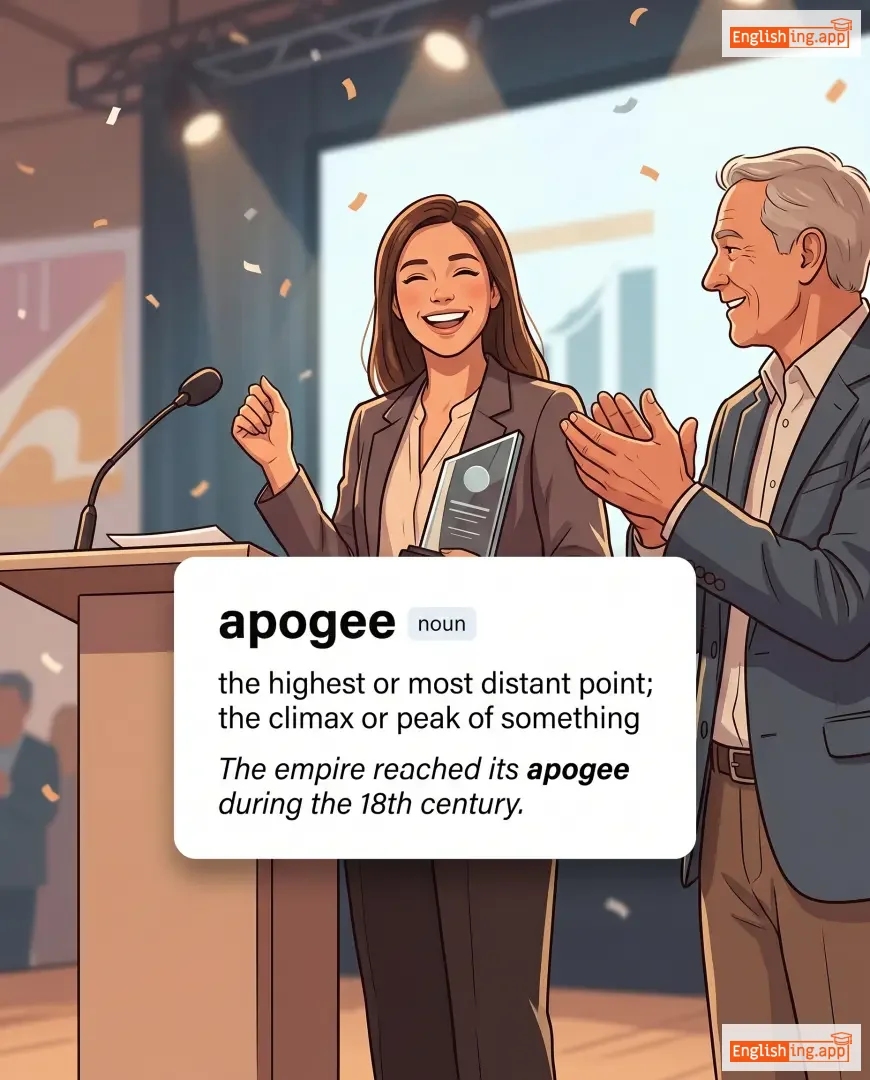
noun
/ˈæpədʒiː/
apogée (apogee)

the highest or most distant point; the climax or peak of something

"The empire reached its apogee during the 18th century."

"L'empire a atteint son apogée au XVIIIe siècle." (L'empire a atteint son apogee au dix-huitieme siecle.)
adjective
/ˌeɪpəˈlɪtɪkəl/
apolitique (apolitique)

not interested in or not connected with politics

"She prefers to stay apolitical and focus on her work."

"Elle préfère rester apolitique et se concentrer sur son travail." (Elle prefere rester apolitique et se concentrer sur son travail.)
noun
/əˈpɒlədʒɪst/
défenseur (defenseur)

a person who defends or justifies something, often a controversial belief or institution

"He is known as an apologist for authoritarian regimes."

"Il est connu comme un défenseur des régimes autoritaires." (Il est connu comme un defenseur des regimes autoritaires.)
verb
/əˈpɒlədʒaɪz/
s'excuser (s'excuser)

to say sorry for something wrong you have done

"He apologized for being late to the meeting."

"Il s'est excusé d'être en retard à la réunion." (Il s'est excusé d'être en retard à la réunion.)
noun
/ˈæpəˌlɔːɡ/
récit moral (recit moral)

a short moral story or fable intended to teach a lesson

"The teacher used an old apologue to explain honesty to the children."

"Le professeur a utilisé un ancien récit moral pour expliquer l'honnêteté aux enfants." (Le professeur a utilisé un ancien récit moral pour expliquer l'honnêteté aux enfants.)
noun
/əˈpɒlədʒi/
excuse (ekskuz)

a statement expressing regret for something wrong or hurtful

"He offered an apology for being late to the meeting."

"Il a présenté des excuses pour être en retard à la réunion." (Il a presente des excuses pour etre en retard a la reunion.)
noun
/əˈpɒfəsɪs/
apophase (apofasis)

A rhetorical device where the speaker brings up a subject by denying it or pretending to pass over it.

"The politician used apophasis by saying, 'I won’t even mention my opponent’s scandals.'"

"Le politicien a utilisé l'apophase en disant : « Je ne mentionnerai même pas les scandales de mon adversaire. »" (le politicien a utilise l apophase en disant je ne mentionnerai meme pas les scandales de mon adversaire)
noun
/ˈæpəfθɛm/
dicton ou maxime courte, concise et éducative (apofthem)

A short, pithy, and instructive saying or maxim.

"She always had a witty apophthegm to share at meetings."

"Elle avait toujours un apophtegme spirituel à partager lors des réunions." (Elle avait toujours un apophtegme spirituel à partager lors des réunions.)
adjective
/ˌæpəˈplɛktɪk/
apoplectique (apoplectique)

Extremely angry; furious.

"He was apoplectic when he heard about the unfair decision."

"Il était apoplectique lorsqu'il a entendu parler de la décision injuste." (Il etait apoplectique lorsqu'il a entendu parler de la decision injuste.)
noun
/ˈæpəplɛksi/
Perte soudaine de conscience ou de contrôle due à un AVC ou à une colère extrême (apoplexie)

A sudden loss of consciousness or control due to stroke or extreme anger.

"The old man nearly had apoplexy when he heard the shocking news."

"Le vieil homme a failli avoir une apoplexie lorsqu'il a entendu la nouvelle choquante." (Le vieil homme a failli avoir une apoplexie lorsqu'il a entendu la nouvelle choquante.)
noun
/əˈpɒstəsi/
apostasie (apostasie)

The abandonment or renunciation of a religious or political belief.

"His public apostasy shocked his followers."

"Son apostasie publique a choqué ses partisans." (Son apostasie publique a choqué ses partisans.)
noun
/ˈæpəˌsteɪt/
apostat (apostat)

A person who renounces a religious or political belief or principle.

"He was labeled an apostate after abandoning the faith of his community."

"Il a été étiqueté comme apostat après avoir abandonné la foi de sa communauté." (Il a été étiqueté comme apostat après avoir abandonné la foi de sa communauté.)
noun
/əˈpɒsəl/
apôtre, défenseur (apotre, defenseur)

A vigorous and pioneering advocate or supporter of a particular cause, often used for the early Christian disciples.

"He became an apostle of environmental protection."

"Il est devenu un apôtre de la protection de l'environnement." (Il est devenu un apotre de la protection de l'environnement.)
noun
/əˈpɒstrəfi/
apostrophe (apostrophe)

A punctuation mark (') used to indicate possession or the omission of letters or numbers.

"You need an apostrophe in the word 'children’s'."

"Vous avez besoin d'une apostrophe dans le mot 'children's'." (vousavezbesoinduneapostrophedanslemotchildren)
noun
/əˈpɒθəˌkɛri/
apothicaire (apothicaire)

A historical term for a person who prepared and sold medicines and drugs.

"The village apothecary provided remedies for many common illnesses."

"L'apothicaire du village a fourni des remèdes pour de nombreuses maladies courantes." (L'apothicaire du village a fourni des remedes pour de nombreuses maladies courantes.)
apothegm definition card — visual illustration of the meaning
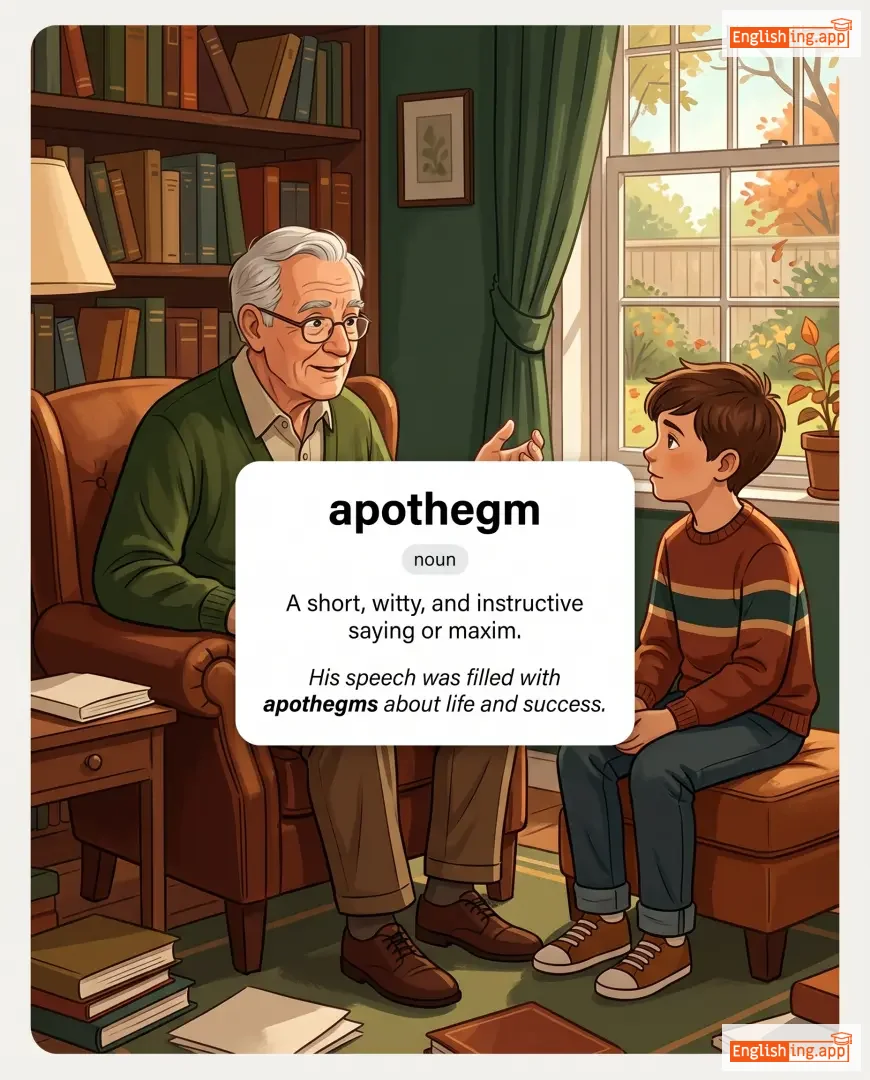
noun
/ˈæpəˌθɛm/
maxime, dicton (maxime, dicton)

A short, witty, and instructive saying or maxim.

"His speech was filled with apothegms about life and success."

"Son discours était rempli de maximes sur la vie et le succès." (Son discours était rempli de maximes sur la vie et le succès.)
noun
/əˌpɒθiˈoʊsɪs/
apothéose, point culminant (apotheose, point culminant)

The highest point of development; the perfect example of something; the elevation of someone to divine status.

"Many see the Renaissance as the apotheosis of art and culture in Europe."

"Beaucoup considèrent la Renaissance comme l'apothéose de l'art et de la culture en Europe." (Beaucoup considèrent la Renaissance comme l'apothéose de l'art et de la culture en Europe.)
verb
/əˈpɔːl/
choquer (choquer)

To shock or horrify someone with something unpleasant or bad.

"The cruelty of the crime appalled the entire community."

"La cruauté du crime a choqué toute la communauté." (La cruauté du crime a choqué toute la communauté.)
apparatus definition card — visual illustration of the meaning
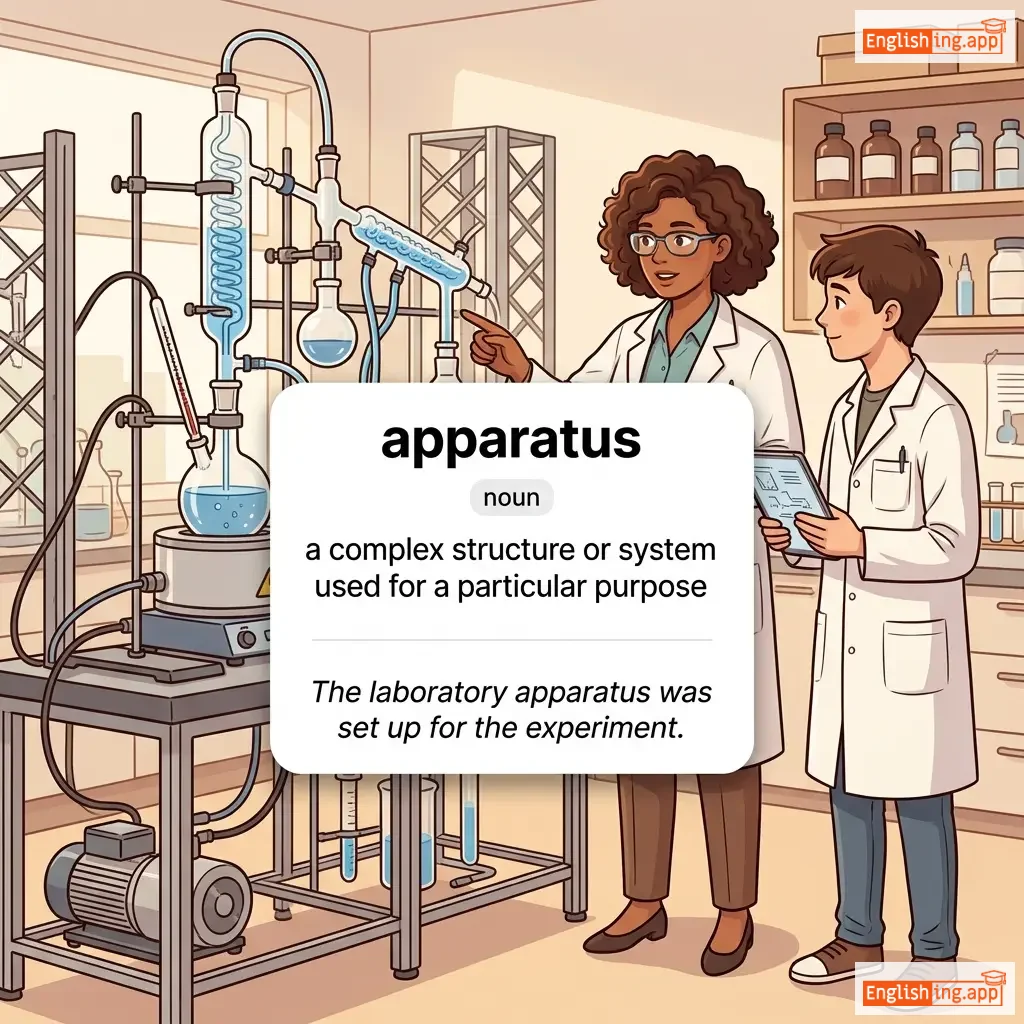
noun
/ˌæpəˈreɪtəs/
appareil (appareil)

a complex structure or system used for a particular purpose

"The laboratory apparatus was set up for the experiment."

"L'appareil de laboratoire a été configuré pour l'expérience." (L'appareil de laboratoire a été configuré pour l'expérience.)
noun
/əˈpærəl/
vêtements (vetements)

Clothing, especially formal or special clothes.

"The store specializes in wedding apparel."

"Le magasin se spécialise dans les vêtements de mariage." (Le magasin se spécialise dans les vêtements de mariage.)
adjective
/əˈpærənt/
apparent (aparant)

Clearly visible or understood; obvious.

"It soon became apparent that he was not telling the truth."

"Il est vite devenu apparent qu'il ne disait pas la vérité." (Il est vite devenu apparent qu'il ne disait pas la vérité.)
adverb
/əˈpærəntli/
apparemment (apparemment)

as far as one knows or can see; seemingly

"Apparently, she forgot about the meeting."

"Apparemment, elle a oublié la réunion." (Apparemment, elle a oublie la reunion.)
noun
/ˌæpəˈrɪʃən/
apparition fantomatique (apparition fantomatique)

A ghostly figure or an unusual or unexpected appearance.

"The children were frightened by the sudden apparition in the old house."

"Les enfants ont été effrayés par l'apparition soudaine dans la vieille maison." (Les enfants ont été effrayés par l'apparition soudaine dans la vieille maison.)
verb, noun
/əˈpiːl/
appel / attrait (appel / attrait)

to make a serious request; to be attractive or interesting; a formal request to a higher authority for a decision to be changed

"The charity appealed to the public for donations."

"La charité a fait appel au public pour des dons." (La charité a fait appel au public pour des dons.)
adjective
/əˈpiːlɪŋ/
attrayant (apiling)

attractive or interesting

"The design of the house is very appealing."

"Le design de la maison est tres attrayant." (Le design de la maison est tres attrayant.)
verb
/əˈpɪə/
apparaître (apparaître)

to become visible or come into sight; to seem

"She appeared suddenly at the door."

"Elle est apparue soudainement à la porte." (Elle est apparue soudainement à la porte.)
noun
/əˈpɪərəns/
apparence (apparence)

the way that someone or something looks

"His sudden appearance surprised everyone."

"Sa soudaine apparition surprit tout le monde." (Sa soudaine apparition surprit tout le monde.)
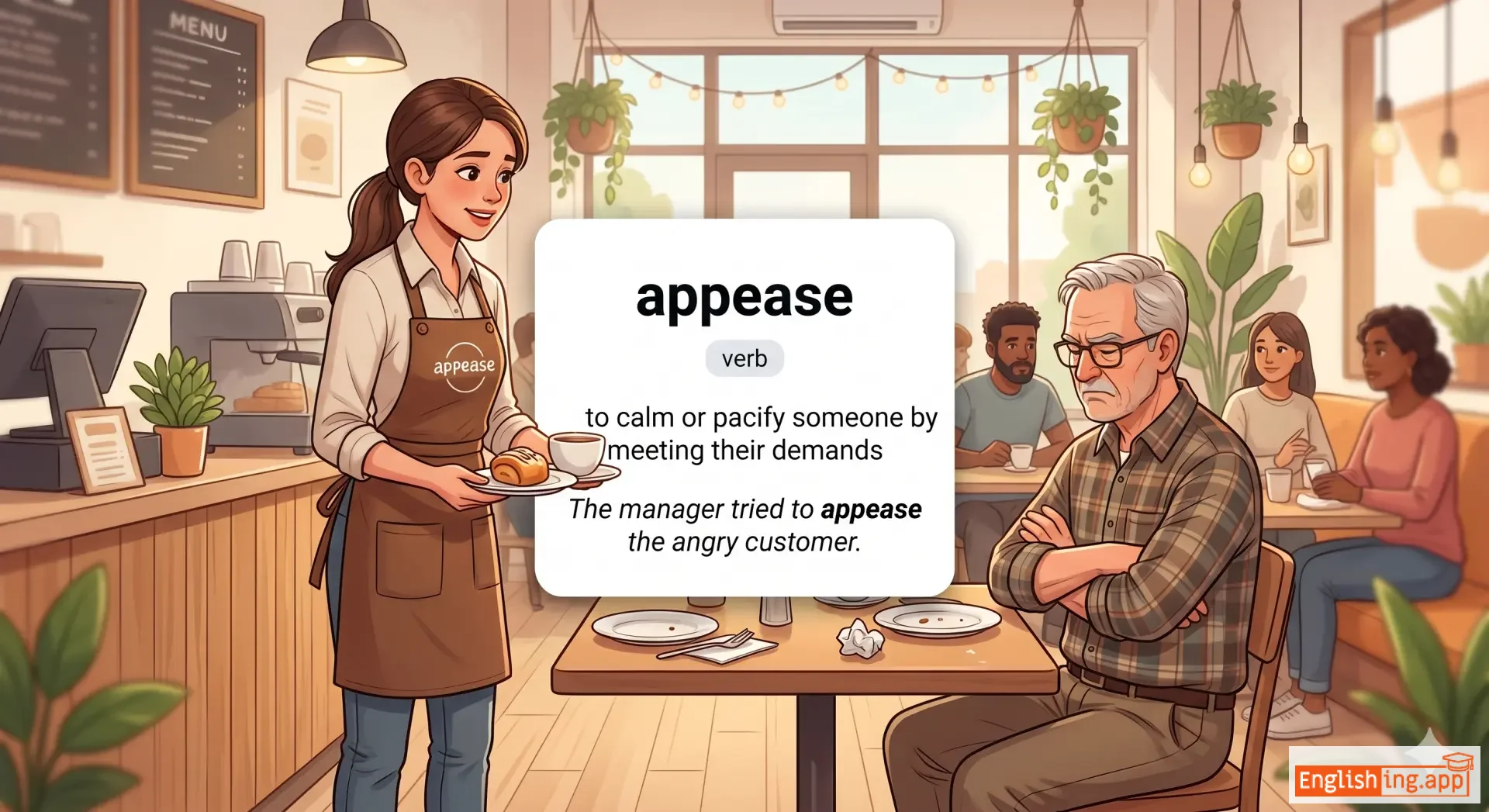
appease definition card — visual illustration of the meaning
verb
/əˈpiːz/
apaiser / satisfaire (apaiser / satisfaire)

to calm or pacify someone by meeting their demands

"The manager tried to appease the angry customer."

"Le manager a essayé d'apaiser le client en colère." (Le manager a essayé d'apaiser le client en colère.)
adjective
/ˈæpəˌleɪt/
relatif aux appels (relatif aux appels)

relating to appeals in a court of law

"The case was taken to an appellate court."

"L'affaire a été portée devant un tribunal d'appel." (L'affaire a été portée devant un tribunal d'appel.)
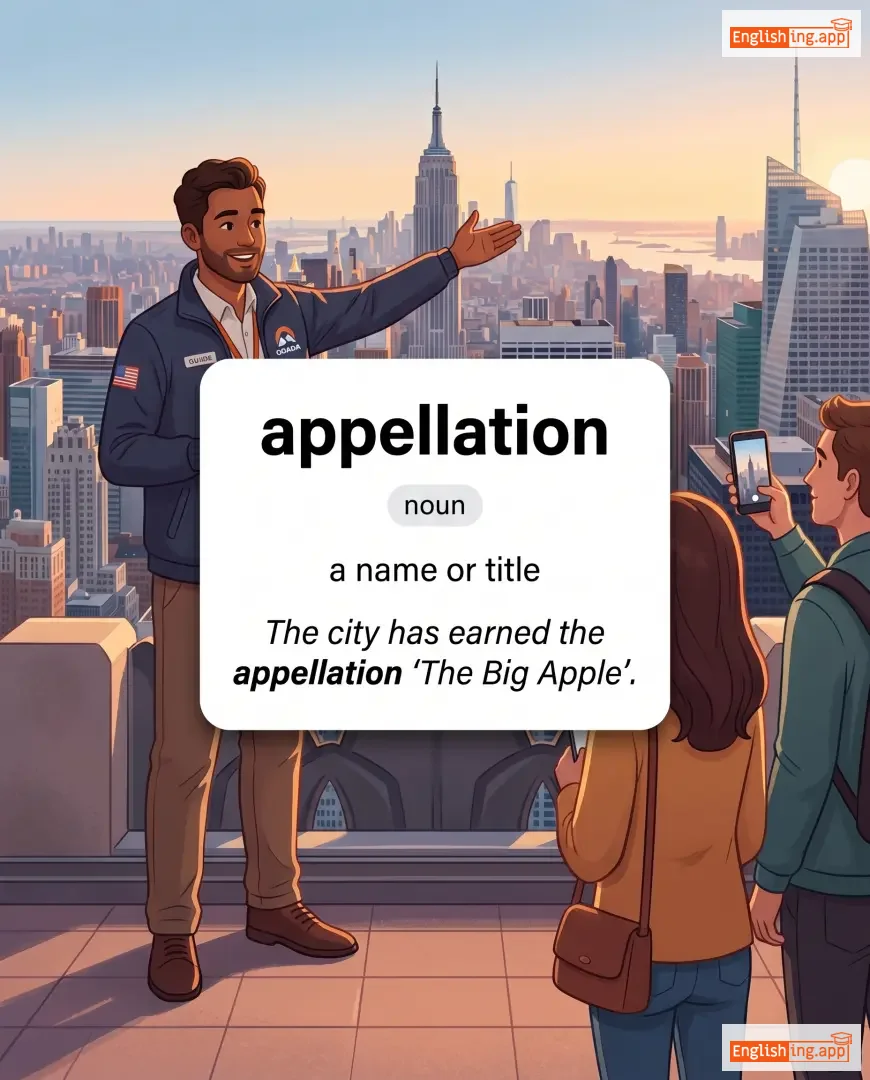
appellation definition card — visual illustration of the meaning
noun
/ˌæpəˈleɪʃən/
titre / nom (titre / nom)

a name or title

"The city has earned the appellation 'The Big Apple'."

"La ville a gagné le titre 'La Grande Pomme'." (La ville a gagné le titre 'La Grande Pomme'.)
verb
/əˈpɛnd/
ajouter (ajouter)

to add something as an attachment or supplement, usually at the end of a document or list

"She decided to append a note to the end of the report."

"Elle a décidé d'ajouter une note à la fin du rapport." (Elle a décidé d'ajouter une note à la fin du rapport.)
verb
/ˌæpərˈteɪn/
appartenir (appartenir)

to relate to or be connected with something

"The rules only appertain to members of the club."

"Les règles ne s'appliquent qu'aux membres du club." (Les règles ne s'appliquent qu'aux membres du club.)
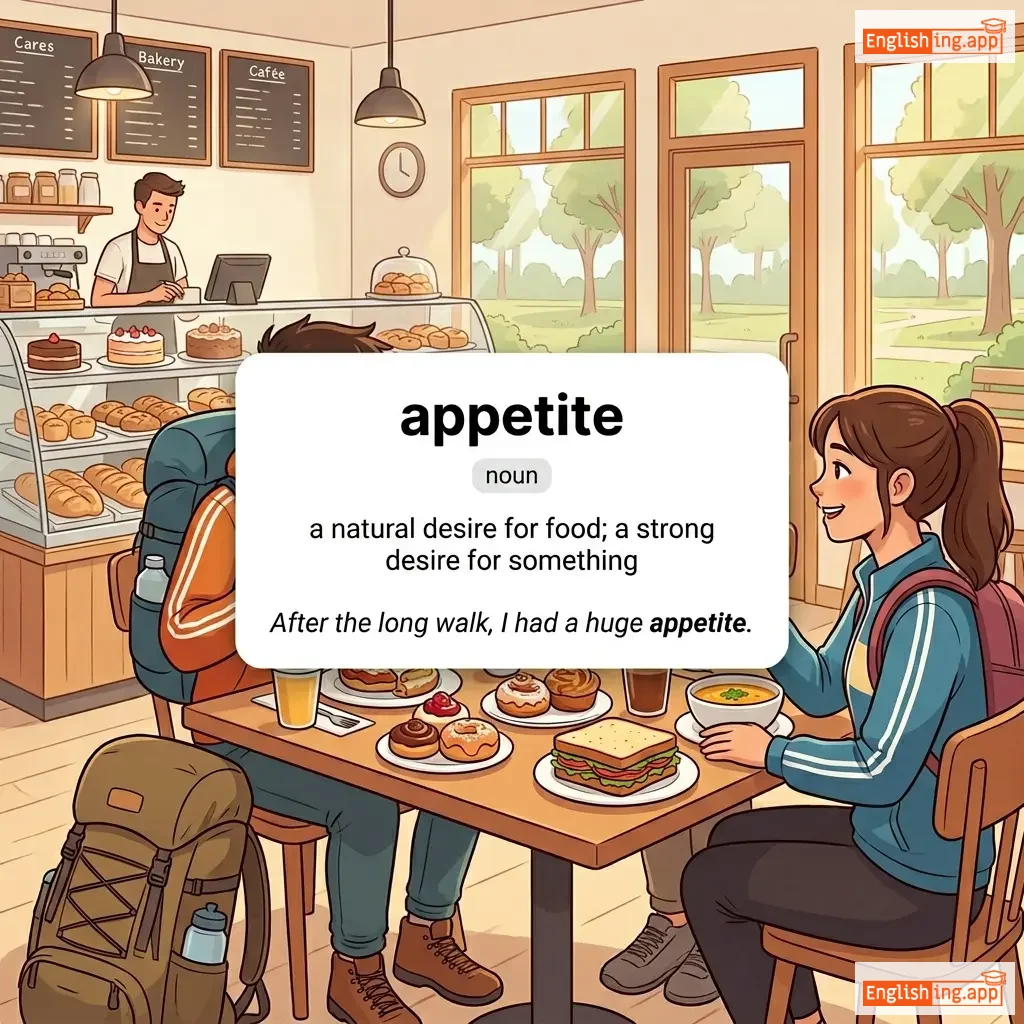
appetite definition card — visual illustration of the meaning
noun
/ˈæpɪtaɪt/
appétit (appetit)

a natural desire for food; a strong desire for something

"After the long walk, I had a huge appetite."

"Après la longue marche, j'avais un grand appétit." (Après la longue marche, j'avais un grand appétit.)
verb
/ˈæpɪtaɪz/
stimuler l’appétit (stimuler l appetit)

to stimulate the appetite; to make someone eager or interested

"The aroma of fresh bread will appetize the guests before dinner."

"L’odeur du pain frais va stimuler l’appétit des invités." (L odeur du pain frais va stimuler l appetit des invites)
verb
/əˈplɔːd/
applaudir (applaudir)

to show approval by clapping or expressing admiration

"The audience applauded the performance."

"Le public a applaudi la performance." (Le public a applaudi la performance.)
noun
/əˈplɔːz/
applaudissements (applaudissements)

the sound of people clapping their hands to show approval or enjoyment

"The actor received loud applause after his performance."

"L'acteur a reçu de vifs applaudissements après sa performance." (L'acteur a recu de vifs applaudissements apres sa performance.)
noun
/ˈæpəl/
pomme (pomme)

a round fruit with red, green, or yellow skin

"She ate a red apple for breakfast."

"Elle a mangé une pomme rouge au petit déjeuner." (Elle a mangé une pomme rouge au petit déjeuner.)
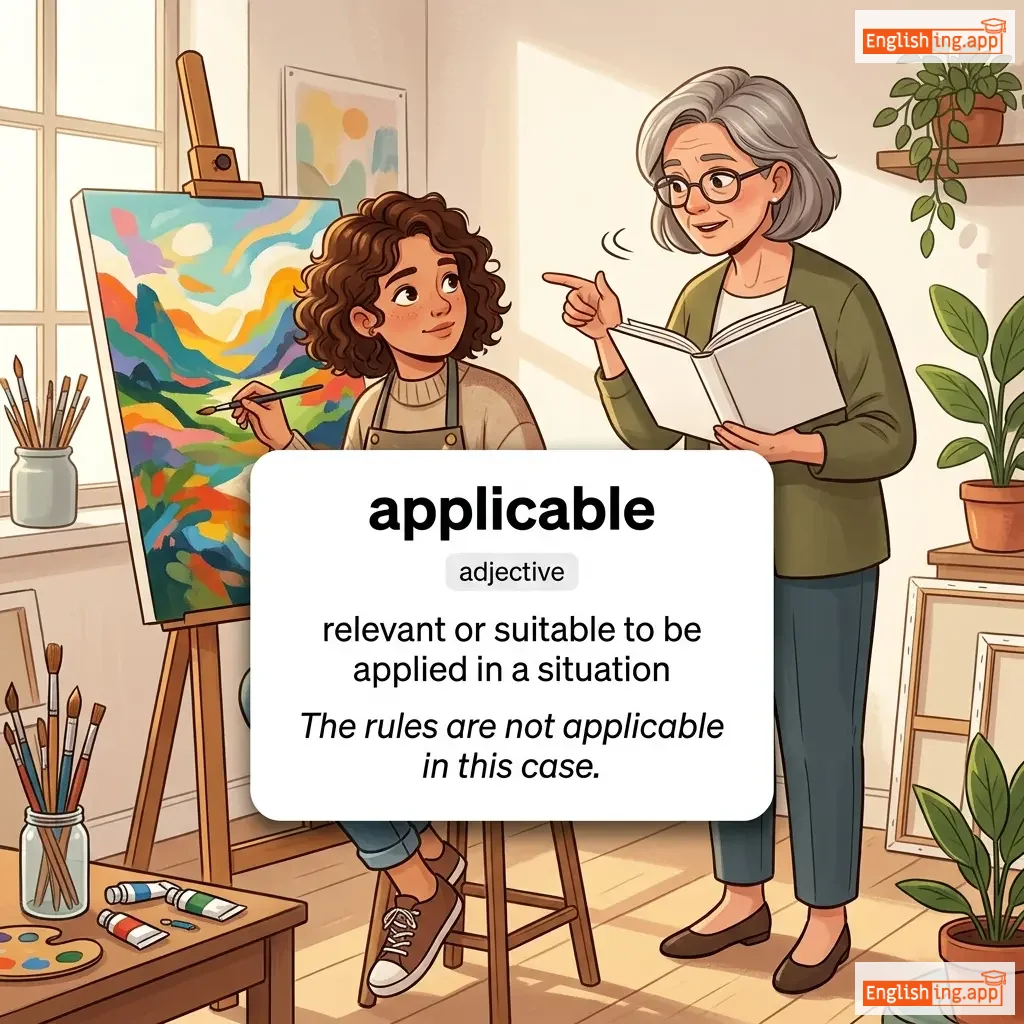
applicable definition card — visual illustration of the meaning
adjective
/ˈæplɪkəbl/
applicable (applicable)

relevant or suitable to be applied in a situation

"The rules are not applicable in this case."

"Les règles ne sont pas applicables dans ce cas." (Les regles ne sont pas applicables dans ce cas.)
noun
/ˈæplɪkənt/
candidat (candidat)

a person who applies for something, such as a job or a position

"The applicant was interviewed for the position."

"Le candidat a été interviewé pour le poste." (Le candidat a été interviewé pour le poste.)