Vocabularios

Descubra, aprenda y domine el vocabulario en inglés

preposition
/wɪð/
con (kon)

indicating the person or thing that is accompanying or involved with someone or something else

"She went to the market with her friend."

"Ella fue al mercado con su amiga." (Ella fue al mercado kon su amiga.)
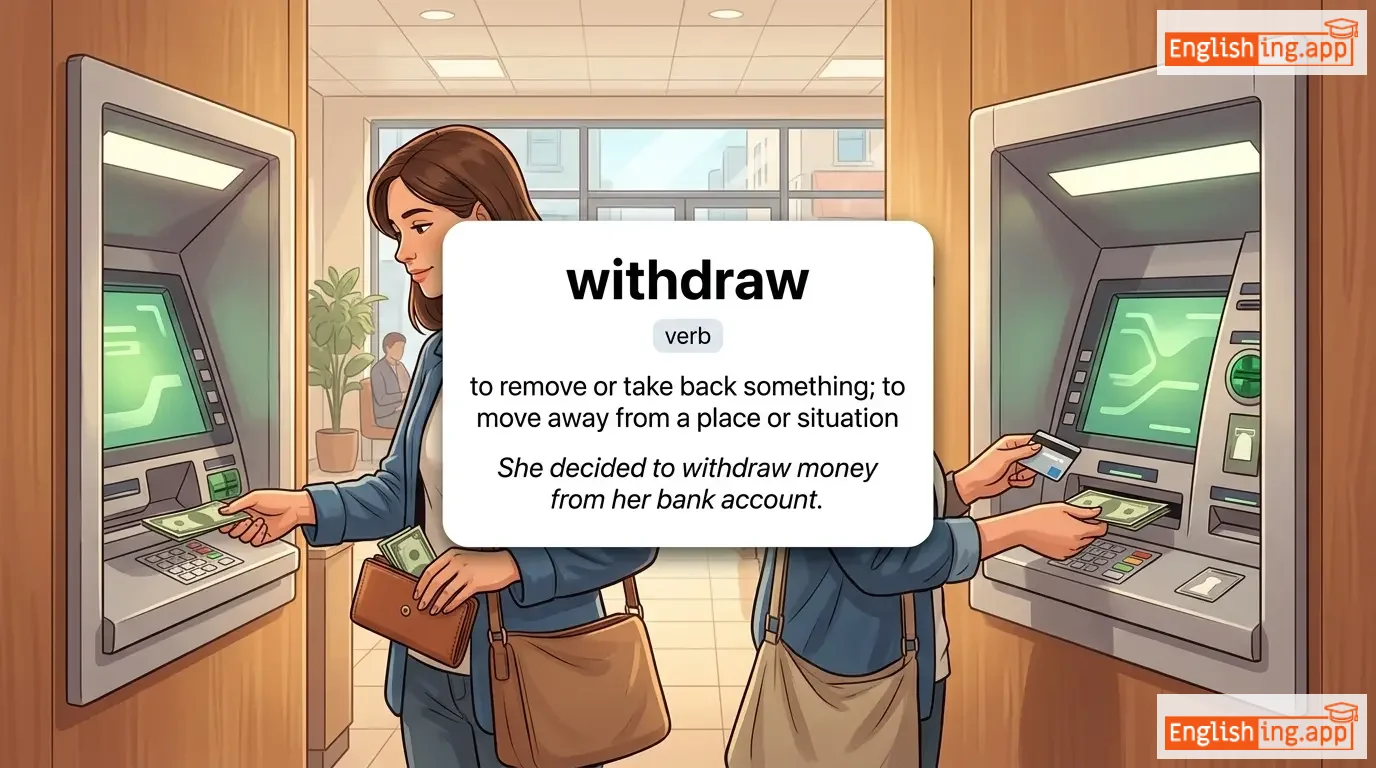
withdraw definition card — visual illustration of the meaning
verb
/wɪðˈdrɔː/
retirar (retirar)

to remove or take back something; to move away from a place or situation

"She decided to withdraw money from her bank account."

"Ella decidió retirar dinero de su cuenta bancaria." (Ella decidio retirar dinero de su cuenta bancaria.)
noun
/wɪðˈdrɔːəl/
retiro (retiro)

the act of taking something back or removing oneself from a situation

"He made a withdrawal of $500 from his bank account."

"Hizo un retiro de $500 de su cuenta bancaria." (Hizo un retiro de 500 dolares de su cuenta bancaria.)
adjective
/wɪðˈdrɔːn/
reservado (reservado)

quiet and shy; not wanting to talk to others

"After the incident, he became withdrawn and avoided his friends."

"Después del incidente, se volvió reservado y evitó a sus amigos." (Despues del incidente, se volvio reservado y evito a sus amigos.)
verb
/ˈwɪð.ər/
marchitar (marchitar)

to dry up and die, typically used for plants

"The flowers will wither without enough water."

"Las flores se marchitarán sin suficiente agua." (Las flores se marchitarán sin suficiente agua.)
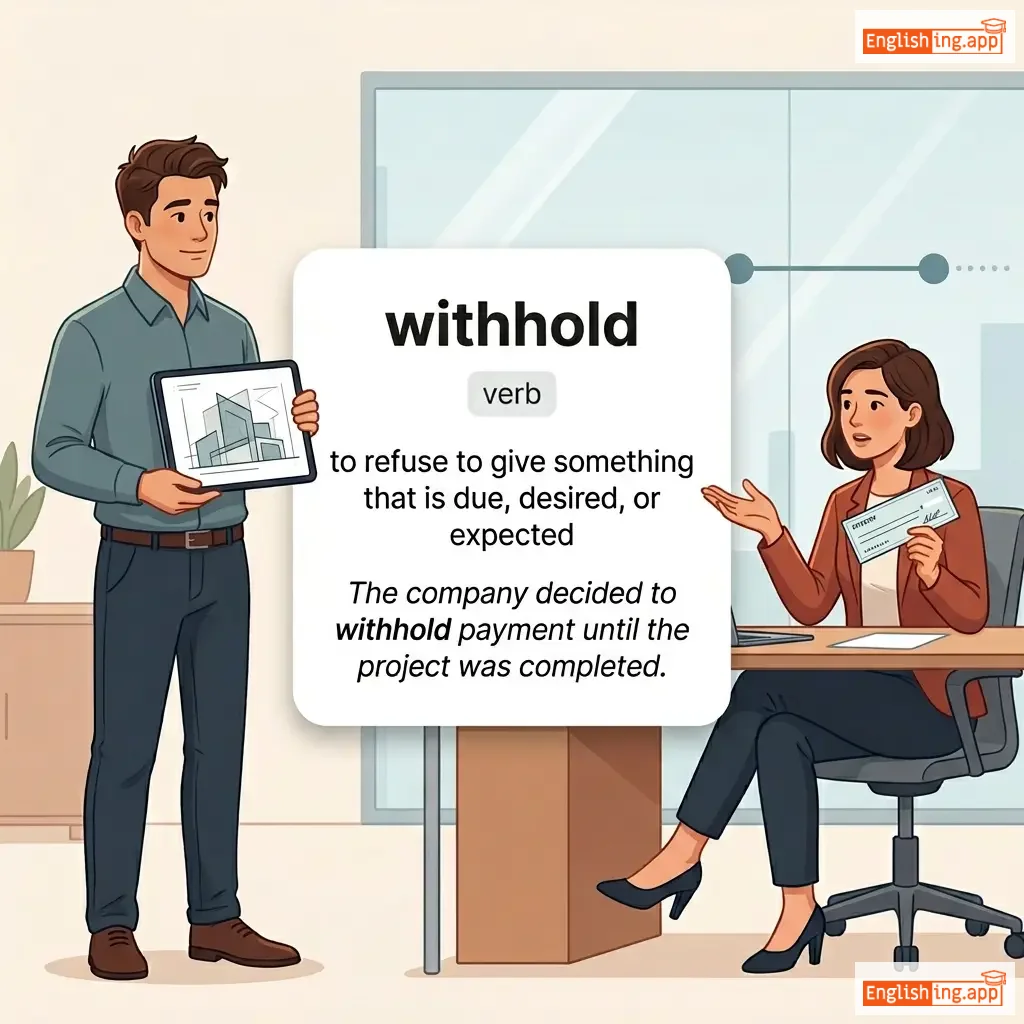
withhold definition card — visual illustration of the meaning
verb
/wɪðˈhoʊld/
retener (re-te-nehr)

to refuse to give something that is due, desired, or expected

"The company decided to withhold payment until the project was completed."

"La empresa decidió retener el pago hasta que se completara el proyecto." (La em-pre-sa de-ci-dió re-te-ner el pa-go has-ta que se com-ple-ta-ra el pro-yec-to.)
preposition
/wɪðˈɪn/
dentro (dentro)

inside the limits of something, or as part of a particular space or time

"The keys are within the drawer."

"Las llaves están dentro del cajón." (Las llaves están dentro del cajón.)
preposition
/wɪðˈaʊt/
sin (sin)

in the absence of, or not having something

"He left without saying goodbye."

"Él se fue sin decir adiós." (El se fue sin decir adiós.)
verb
/wɪðˈstænd/
soportar / resistir (soportar / resistir)

to resist or endure something without being harmed

"This building can withstand strong earthquakes."

"Este edificio puede soportar terremotos fuertes." (Este edificio puede soportar terremotos fuertes.)
adjective
/ˈwɪtləs/
tonto (tonto)

lacking intelligence or good sense

"It was a witless decision to leave the door unlocked."

"Fue una decisión tonta dejar la puerta desbloqueada." (Fue una decision tonta dejar la puerta desbloqueada.)
noun
/ˈwɪtlɪŋ/
tonto / farsante sabio (tonto / farsante sabio)

a person who has little wit or pretends to be witty

"He acted like a witling among scholars."

"Él actuó como un tonto entre los eruditos." (Él actuó como un tonto entre los eruditos.)
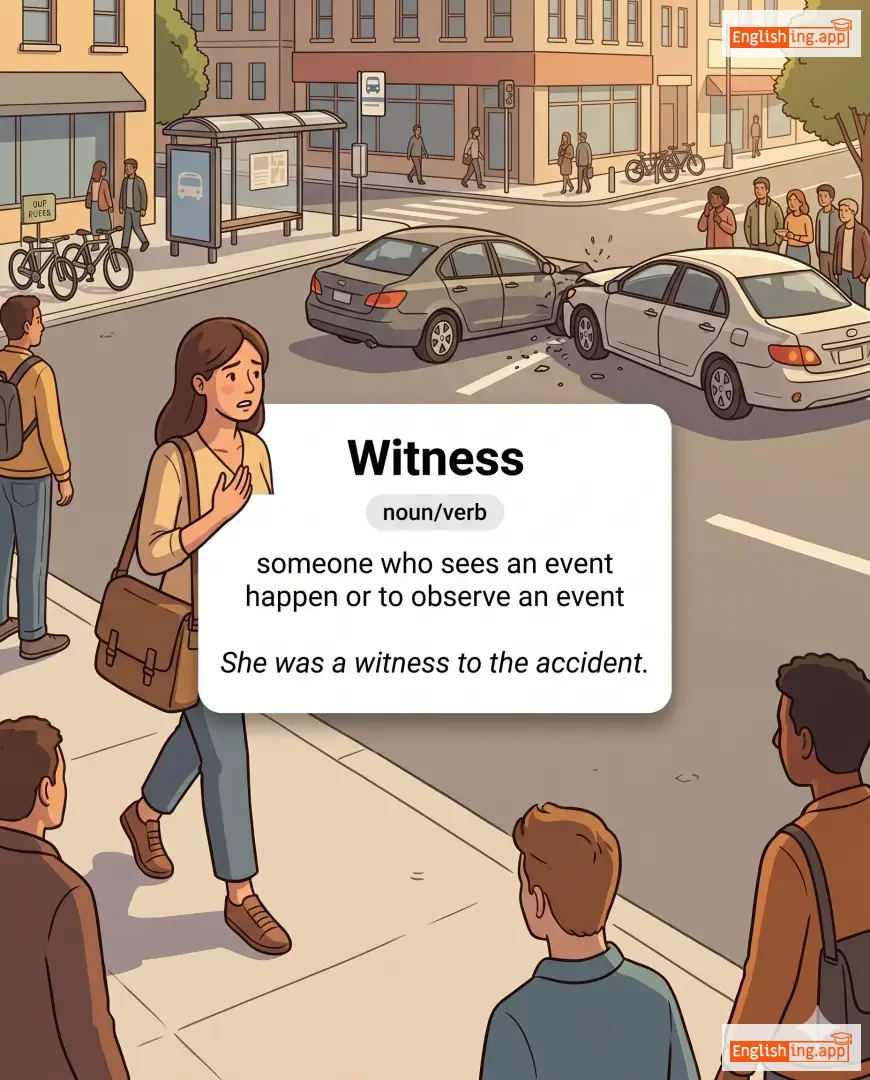
Witness definition card — visual illustration of the meaning
noun/verb
/ˈwɪtnɪs/
testigo (testigo)

someone who sees an event happen or to observe an event

"She was a witness to the accident."

"Ella fue testigo del accidente." (Ella fue testigo del accidente.)
noun
/ˈwɪtɪˌsɪzəm/
comentario ingenioso / chiste (comentario ingenioso / chiste)

a clever or funny remark

"Her witticism made everyone laugh during the meeting."

"Su comentario ingenioso hizo reír a todos durante la reunión." (Su comentario ingenioso hizo reír a todos durante la reunión.)
adverb
/ˈwɪtɪŋli/
conscientemente (conscientemente)

Consciously and intentionally; on purpose.

"He wittingly withheld information from the police."

"Él retuvo información conscientemente de la policía." (El retuvo informacion conscientemente de la policia.)
adjective
/ˈwɪt.i/
ingenioso; divertido (ingenioso; divertido)

having or showing quick intelligence; amusing in a clever way

"Her witty response to the critic's question impressed the entire audience."

"Su ingeniosa respuesta a la pregunta del crítico impresionó a toda la audiencia." (Su ingeniosa respuesta a la pregunta del crítico impresionó a toda la audiencia.)
🧙‍♂️

Wizard (wízard)

noun
/ˈwɪzərd/
mago (mago)

a man who is supposed to have magical powers; a person who is very skilled in a particular area

"The wizard performed amazing magic tricks."

"El mago realizó trucos mágicos impresionantes." (El mago realizó trucos mágicos impresionantes.)
noun
/ˈwɪzərdri/
destreza mágica (destreza magica)

The art or practice of magic; great skill or expertise in something.

"The programmer's wizardry amazed everyone in the room."

"La destreza del programador asombró a todos en la sala." (La destreza del programador asombró a todos en la sala.)
verb
/ˈwɪzn/
marchitarse (marchitarse)

To become dry, shrunken, and wrinkled.

"The flowers began to wizen after days without water."

"Las flores comenzaron a marchitarse después de varios días sin agua." (Las flores comenzaron a marchitarse después de varios días sin agua.)
adjective
/ˈwɪzn feɪst/
cara arrugada y marchita (cara arrugada y marchita)

Having a dry, wrinkled, and withered face.

"A wizen-faced old man sat quietly in the corner."

"Un hombre con la cara arrugada y marchita se sentó tranquilamente en la esquina." (Un hombre con la cara arrugada y marchita se sentó tranquilamente en la esquina.)
adjective
/ˈwɪznd/
arrugado (arrugado)

Shriveled, wrinkled, or withered, often due to age.

"The wizened tree stood in the field for centuries."

"El árbol arrugado estuvo en el campo durante siglos." (El árbol arrugado estuvo en el campo durante siglos.)
verb
/ˈwɒb.l̩/
tambalear (tambalear)

to move unsteadily from side to side; to shake or tremble slightly

"The table began to wobble when he leaned on it."

"La mesa comenzó a tambalear cuando él se apoyó sobre ella." (La mesa comenzo a tambalear cuando el se apoyó sobre ella.)
noun
/woʊ/
pena (pena)

great sorrow, distress, or trouble

"Her heart was filled with woe after hearing the sad news."

"Su corazón se llenó de pena al escuchar la triste noticia." (Su corazon se lleno de pena al escuchar la triste noticia.)
adjective
/ˈwoʊ.fəl/
lamentable (lamentable)

full of woe; very sad or miserable; also used to mean very bad or deplorable

"He gave me a woeful look when he lost the match."

"Me dio una mirada lamentable cuando perdió el partido." (Me dio una mirada lamentable cuando perdió el partido.)
noun
/woʊz/
aflicciones (aflicciones)

great sorrow or distress; troubles

"The company faced financial woes after the market crash."

"La compañía enfrentó problemas financieros después del colapso del mercado." (La compañia enfrentó problemas financieros después del colapso del mercado.)
noun
/wʊlf/
lobo (lobo)

a wild carnivorous animal related to the dog, living and hunting in packs

"The wolf howled loudly under the full moon."

"El lobo aulló fuertemente bajo la luna llena." (El lobo auyo fuertemente bajo la luna llena.)
noun
/ˈwɪmən/
mujer (mujer)

an adult human female

"The woman at the counter helped me."

"La mujer en el mostrador me ayudó." (La mujer en el mostrador me ayudó.)
noun
/ˈwʌndər/
maravilla (maravilla)

a feeling of amazement and admiration, caused by something beautiful, remarkable, or unfamiliar

"The view from the mountain was a true wonder."

"La vista desde la montaña fue una verdadera maravilla." (La vista desde la montaña fue una verdadera maravilla.)
adjective
/ˈwʌndərfəl/
maravilloso (maravilloso)

extremely good or impressive

"She had a wonderful time at the party."

"Ella tuvo un tiempo maravilloso en la fiesta." (Ella tuvo un tiempo maravilloso en la fiesta.)
adjective
/ˈwɒŋki/
inestable; poco fiable; que no funciona correctamente (wonki)

unstable; unreliable; not working properly

"The old chair was wonky and wobbled every time someone sat on it."

"La vieja silla estaba inestable y se tambaleaba cada vez que alguien se sentaba en ella." (La vieja silla estaba inestable y se tambaleaba cada vez que alguien se sentaba en ella)
adjective
/woʊnt/ or /wɔːnt/
acostumbrado (acostumbrado)

accustomed or used to doing something

"She rose early, as she was wont to do."

"Ella se levantó temprano, como solía hacer." (Ella se levantó temprano, como solía hacer.)
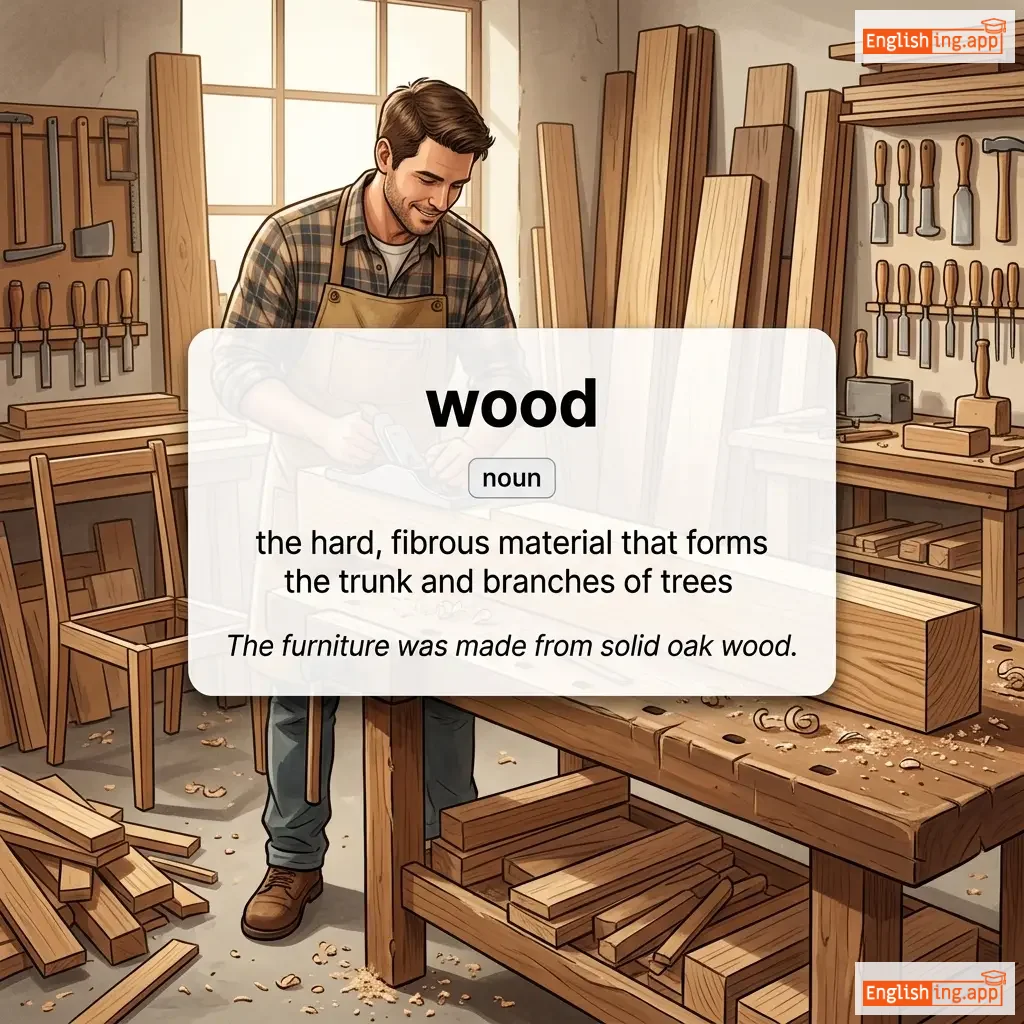
wood definition card — visual illustration of the meaning
noun
/wʊd/
madera (madera)

the hard, fibrous material that forms the trunk and branches of trees

"The furniture was made from solid oak wood."

"Los muebles estaban hechos de madera de roble sólido." (Los muebles estaban hechos de madera de roble solido.)
noun
/wʊd ˈæp.əl/
manzana de madera (manzana de madera)

a hard-shelled tropical fruit with aromatic pulp used in beverages and medicine

"The wood apple has a hard shell but sweet pulp inside."

"La manzana de madera tiene una cáscara dura pero pulpa dulce en su interior" (La manzana de madera tiene una cáscara dura pero pulpa dulce en su interior)
adjective
/ˈwʊdən/
de madera (de madera)

made of wood

"The house had beautiful wooden floors."

"La casa tenía hermosos pisos de madera." (La casa tenía hermosos pisos de madera.)
noun
/ˈwʊd.ən ˈsæn.dəl/
sandalia de madera (sandalia de madera)

a type of footwear made of wood, typically worn as traditional shoes

"She wore wooden sandals to the traditional ceremony."

"Ella llevaba sandalias de madera en la ceremonia tradicional." (Ella llevaba sandalias de madera en la ceremonia tradicional.)
noun
/ˈwʊd.pek.ər/
pájaro carpintero (pajaro carpintero)

a bird that pecks at tree bark to find insects and create nesting holes

"The woodpecker hammered against the oak tree."

"El pájaro carpintero golpeó contra el roble." (El pajaro carpintero golpeo contra el roble)
noun
/ˈwʊlən dres/
vestido de lana (vestido de lana)

a dress made from wool fabric, typically worn in cold weather

"She wore a warm woolen dress during the winter months."

"Ella llevaba un vestido de lana cálido durante los meses de invierno." (Ella llevaba un vestido de lana cálido durante los meses de invierno.)
noun
/wɜːrd/
palabra (palabra)

a single distinct meaningful element of speech or writing

"He looked up the word in the dictionary."

"Él buscó la palabra en el diccionario." (Él buscó la palabra en el diccionario.)
noun
/wɜːrd fɔːrˈmeɪʃən/
formación de palabras (formacion de palabras)

the process by which new words are created or existing words are modified in a language

"Word formation helps learners understand how new vocabulary develops in English."

"La formación de palabras ayuda a entender el vocabulario." (la formacion de palabras ayuda a entender el vocabulario)
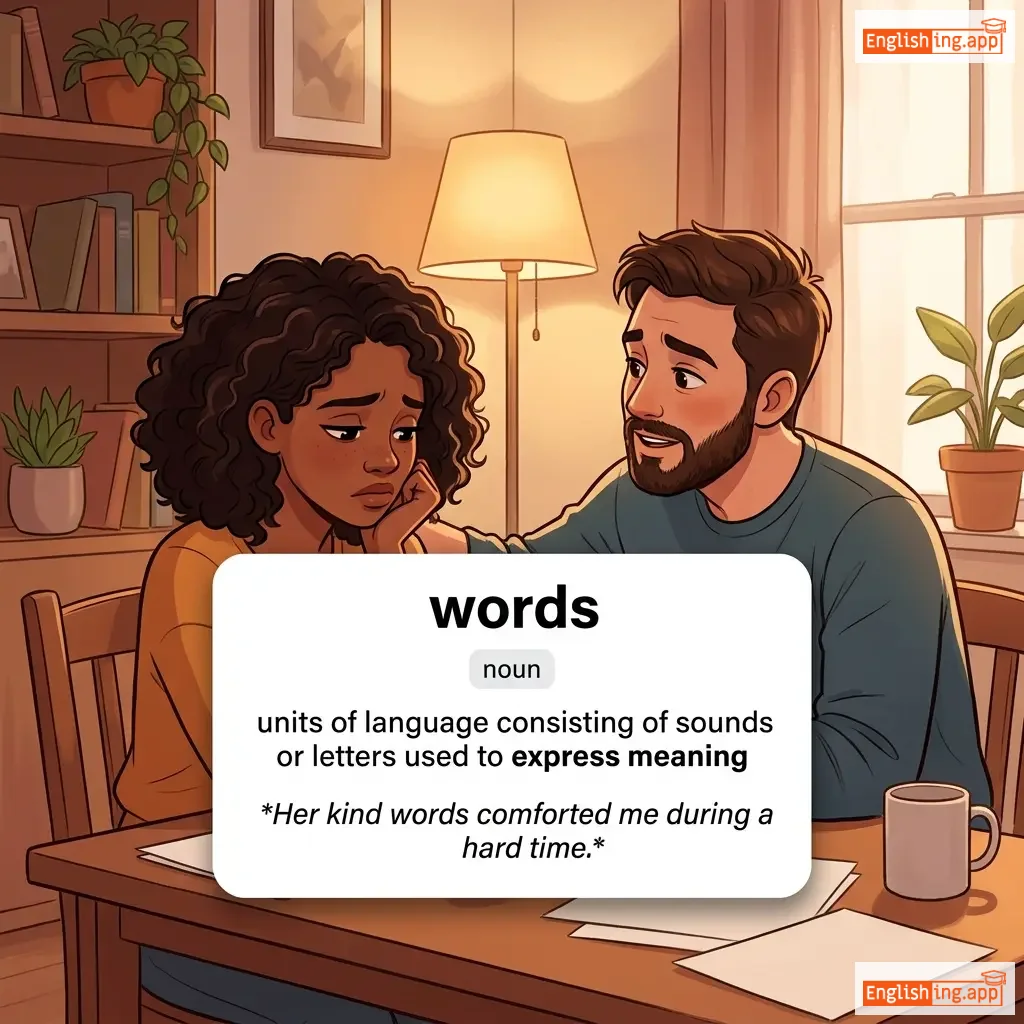
words definition card — visual illustration of the meaning
noun
/wɜːdz/
palabras (palabras)

units of language consisting of sounds or letters used to express meaning

"Her kind words comforted me during a hard time."

"Sus amables palabras me dieron consuelo durante un momento difícil." (Sus amables palabras me dieron consuelo durante un momento difícil.)
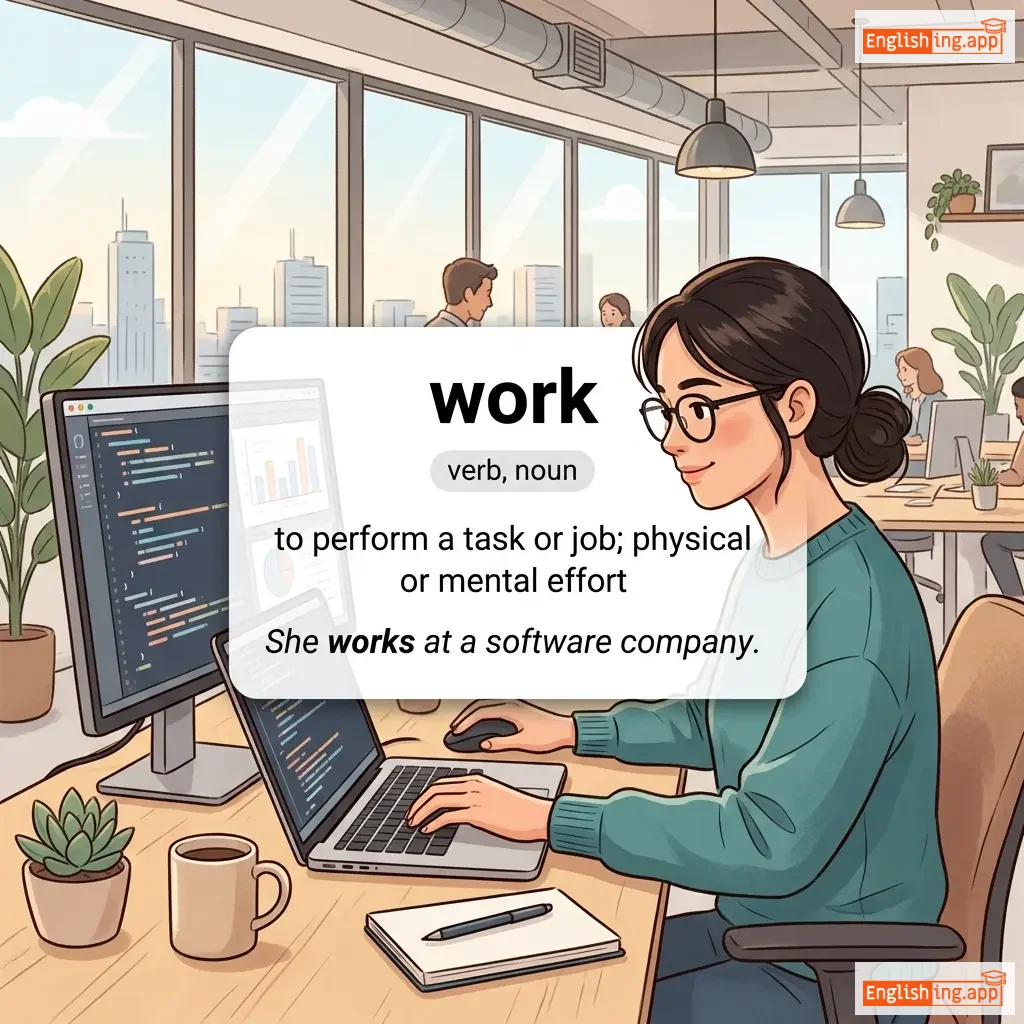
work definition card — visual illustration of the meaning
verb, noun
/wɜːrk/
trabajo (trabaho)

to perform a task or job; physical or mental effort

"She works at a software company."

"Ella trabaja en una empresa de software." (Ella trabaja en una empresa de software.)
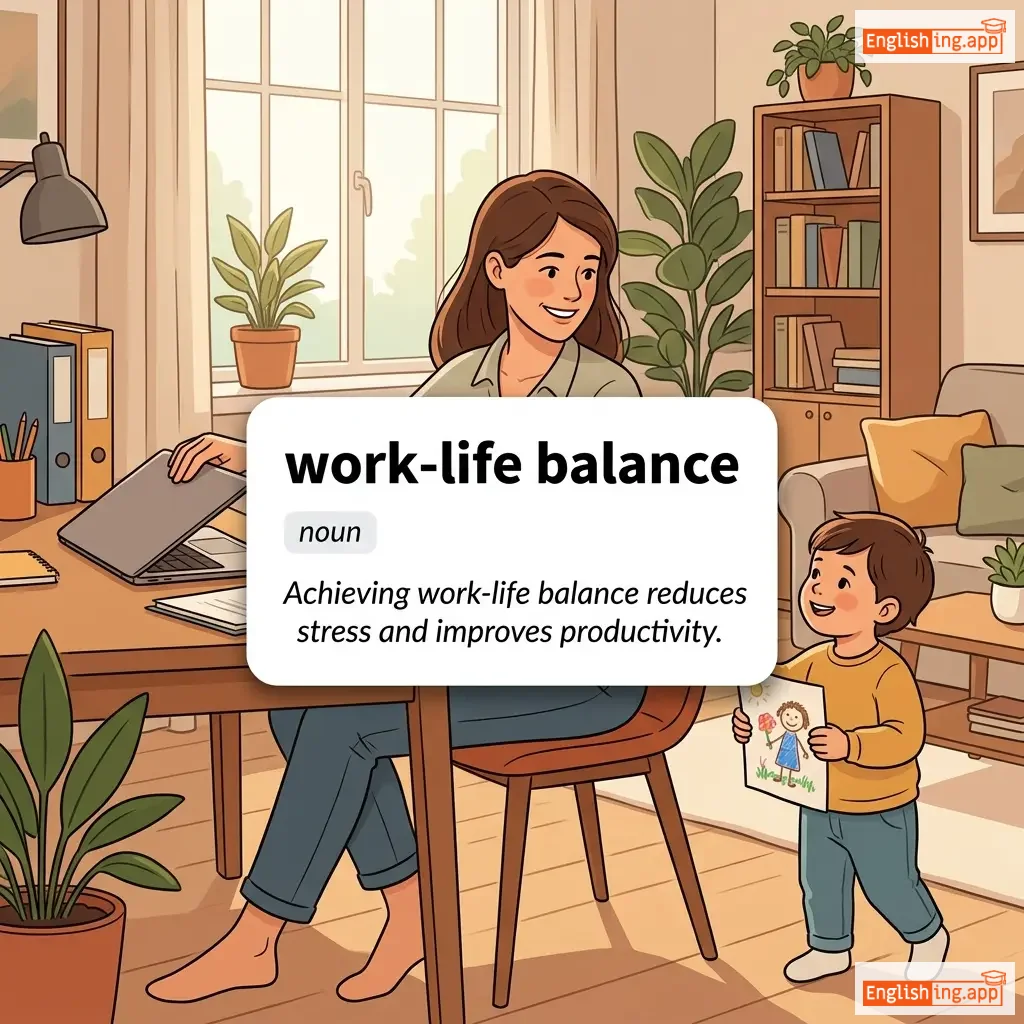
work-life balance definition card — visual illustration of the meaning
noun
/ˈwɜːrk laɪf ˈbæl.əns/
equilibrio entre trabajo y vida (equilibrio entre trabajo y vida)

The equilibrium between personal and professional life, ensuring neither dominates at the expense of the other.

"Achieving work-life balance reduces stress and improves productivity."

"Lograr el equilibrio entre trabajo y vida reduce el estrés y mejora la productividad." (Lograr el equilibrio entre trabajo y vida reduce el estrés y mejora la productividad.)
adjective
/ˈwɜːrkəbəl/
realizable; practicable (realizable; practicable)

capable of being done or put into effect; practical

"We need a workable solution to solve this problem quickly."

"Necesitamos una solución práctica para resolver este problema rápidamente." (Necesitamos una solución práctica para resolver este problema rápidamente.)
noun
/ˈwɜːrkər/
trabajador (trabajador)

a person who is employed to perform tasks or duties

"The workers were busy building the bridge."

"Los trabajadores estaban ocupados construyendo el puente." (Los trabajadores estaban ocupados construyendo el puente.)
workflow definition card — visual illustration of the meaning
noun
/ˈwɜːk.fləʊ/
flujo de trabajo, secuencia de procesos (flujo de trabajo, secuencia de procesos)

The sequence of processes through which a piece of work passes from initiation to completion.

"A well-structured workflow enhances productivity."

"Un flujo de trabajo bien estructurado mejora la productividad." (Un flujo de trabajo bien estructurado mejora la productividad.)
noun
/ˈwɜːrkˌfɔːrs/
fuerza laboral (fuerza laboral)

the people engaged in or available for work

"The company is looking to expand its workforce by 20%."

"La empresa está buscando expandir su fuerza laboral en un 20%." (La empresa está buscando expandir su fuerza laboral en un 20%.)
adjective
/ˈwɜːrkɪŋ/
trabajando (trabajando)

engaged in physical or mental effort to achieve a goal or task

"She is working on her project right now."

"Ella está trabajando en su proyecto ahora mismo." (Ella esta trabajando en su proyecto ahora mismo.)
noun
/ˈwɜːrkɪŋ mæn/
trabajador (trabajador)

a man engaged in manual labor or industrial work, often considered as part of the working class

"The working-man fought hard for better wages and conditions."

"El trabajador luchó duramente por mejores salarios y condiciones." (El trabajador luchó duramente por mejores salarios y condiciones.)
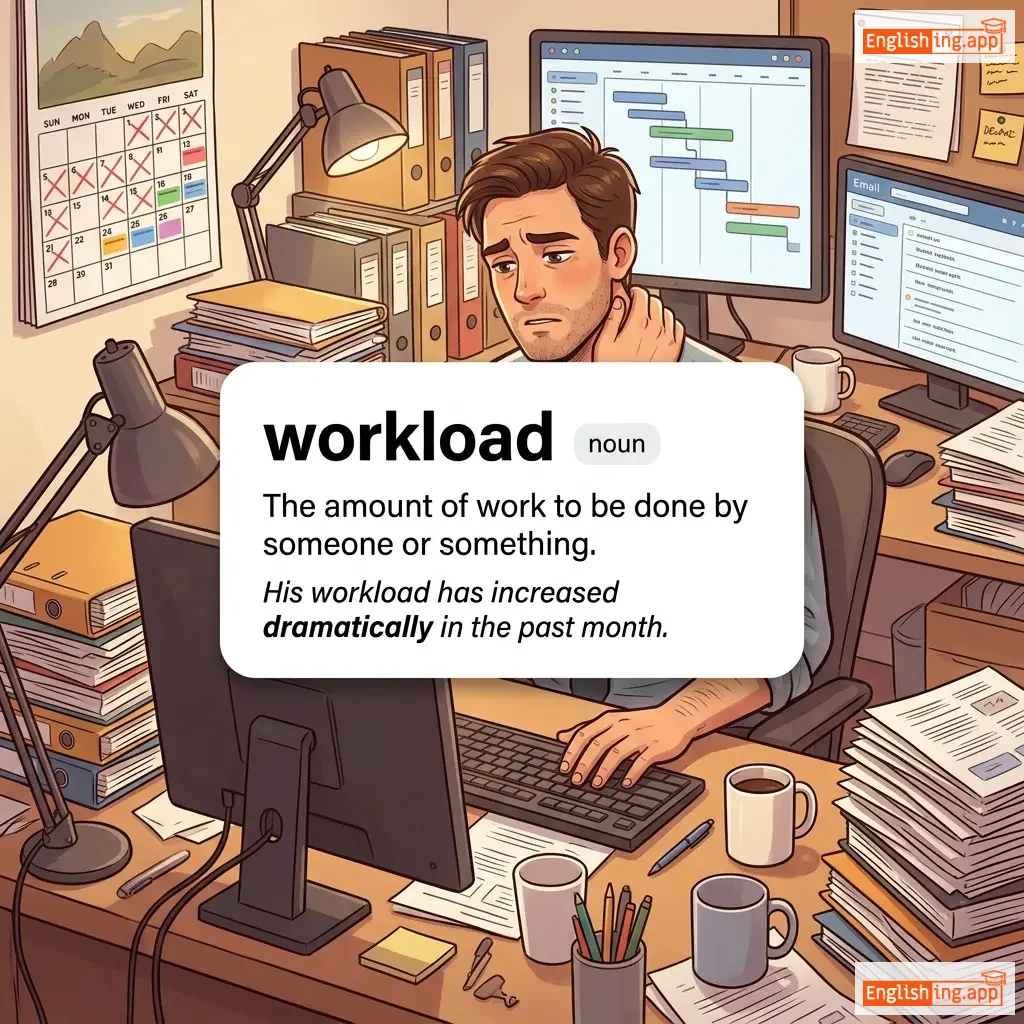
workload definition card — visual illustration of the meaning
noun
ˈwɜːrkˌləʊd
carga de trabajo (carga de trabajo)

The amount of work to be done by someone or something.

"His workload has increased dramatically in the past month."

"Su carga de trabajo ha aumentado drásticamente en el último mes." (Su carga de trabajo ha aumentado drásticamente en el último mes.)
adjective
/ˈwɜːkmənˌlaɪk/
trabajoso (trabajoso)

Showing efficient, competent, and practical skill, but without flair or creativity.

"The carpenter delivered a workmanlike performance on the project."

"El carpintero entregó una actuación de trabajo en el proyecto." (El carpintero entregó una actuación de trabajo en el proyecto.)
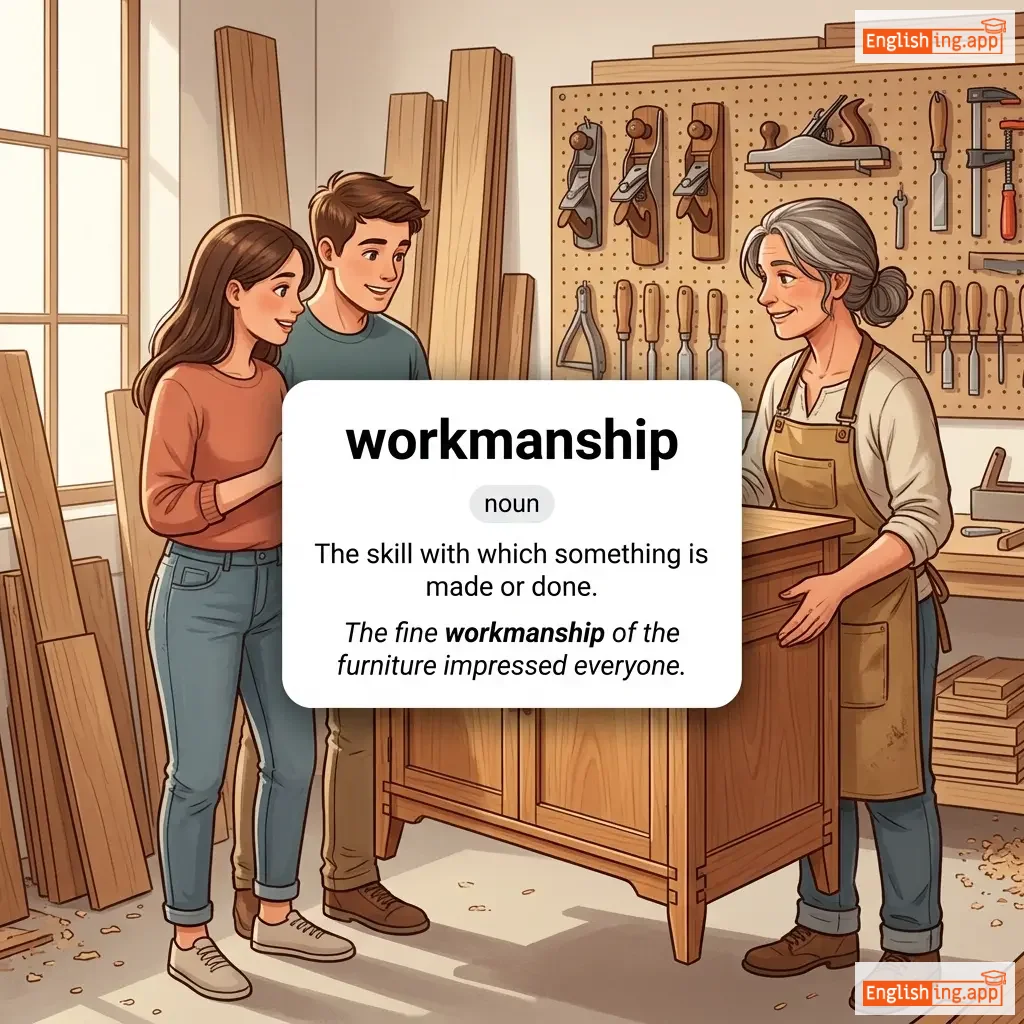
workmanship definition card — visual illustration of the meaning
noun
/ˈwɜːkmənˌʃɪp/
habilidad artesanal (habilidad artesanal)

The skill with which something is made or done.

"The fine workmanship of the furniture impressed everyone."

"La excelente habilidad artesanal de los muebles impresionó a todos." (La excelente habilidad artesanal de los muebles impresionó a todos.)