Vocabularios

Descubra, aprenda y domine el vocabulario en inglés

adverb
/wɛr/
dónde (donde)

in or at what place or position

"Where do you live?"

"¿Dónde vives?" (¿Dónde vives?)
noun
/ˈwɛrəˌbaʊts/
ubicación (ubicacion)

the place where someone or something is

"The police are trying to find out the suspect's whereabouts."

"La policía está tratando de encontrar la ubicación del sospechoso." (La policía está tratando de encontrar la ubicación del sospechoso.)
conjunction
/wɛərˈæz/
mientras que (mientras que)

used to introduce a contrast or comparison between two facts

"She prefers tea, whereas he likes coffee."

"A ella le gusta el té, mientras que a él le gusta el café." (A ella le gusta el té, mientras que a él le gusta el café.)
adverb
/wɛərˈbaɪ/
mediante (mediante)

by which; because of which

"The company agreed to a contract whereby it would pay the penalty."

"La empresa acordó un contrato mediante el cual pagaría la multa." (La empresa acordó un contrato mediante el cual pagaría la multa.)
adverb
/ˌwɛr.əˈpɒn/
inmediatamente después (inmediatamente despues)

Immediately after which; as a result of which.

"He confessed his mistake, whereupon she forgave him."

"Él confesó su error, inmediatamente después ella lo perdonó." (El confeso su error, inmediatamente despues ella lo perdono.)
adverb
/wɛrˈɛv.ər/
donde sea (donde sea)

In or to any place.

"You can find good people wherever you go."

"Puedes encontrar buenas personas donde sea que vayas." (Puedes encontrar buenas personas donde sea que vayas.)
adverb, noun
/ˈwɛə.wɪð/
medios (medios)

With which; the means or resources needed for something.

"He lacked the money wherewith to buy a new house."

"No tenía el dinero con el cual comprar una casa nueva." (No tenía el dinero con el cual comprar una casa nueva.)
verb
/wɛt/
afilar/estimular (afilar/estimular)

To sharpen the blade of a tool or to stimulate interest or appetite.

"The smell of food whetted my appetite."

"El olor de la comida aumentó mi apetito." (El olor de la comida aumento mi apetito.)
conjunction
/ˈwɛðər/
si (si)

used to express a doubt or choice between alternatives

"I don’t know whether I should go."

"No sé si debo ir." (No sé si debo ir.)
noun
/weɪ/
suero (suero)

the watery part of milk that separates from the curds when making cheese

"Protein powder is often made from whey."

"El polvo de proteína a menudo se hace con suero." (El polvo de proteína a menudo se hace con suero.)
pronoun
/wɪtʃ/
cuál (cual)

used to ask about one or more items from a defined set

"Which one do you prefer, the red or the blue?"

"¿Cuál prefieres, el rojo o el azul?" (¿Cuál prefieres, el rojo o el azul?)
noun, verb
/wɪf/
leve olor (leve olor)

A brief, faint smell or puff of air; to get a quick smell of something.

"I caught a whiff of perfume as she passed by."

"Sentí un leve olor a perfume mientras ella pasaba." (Sentí un leve olor a perfume mientras ella pasaba.)
conjunction
/waɪl/
mientras (mientras)

during the time that something is happening

"She was reading while waiting for the bus."

"Ella estaba leyendo mientras esperaba el autobús." (Ella estaba leyendo mientras esperaba el autobús.)
noun
/wɪm/
capricho (capricho)

a sudden or unpredictable idea, desire, or decision

"She bought the dress on a whim."

"Ella compró el vestido por capricho." (Ella compró el vestido por capricho.)
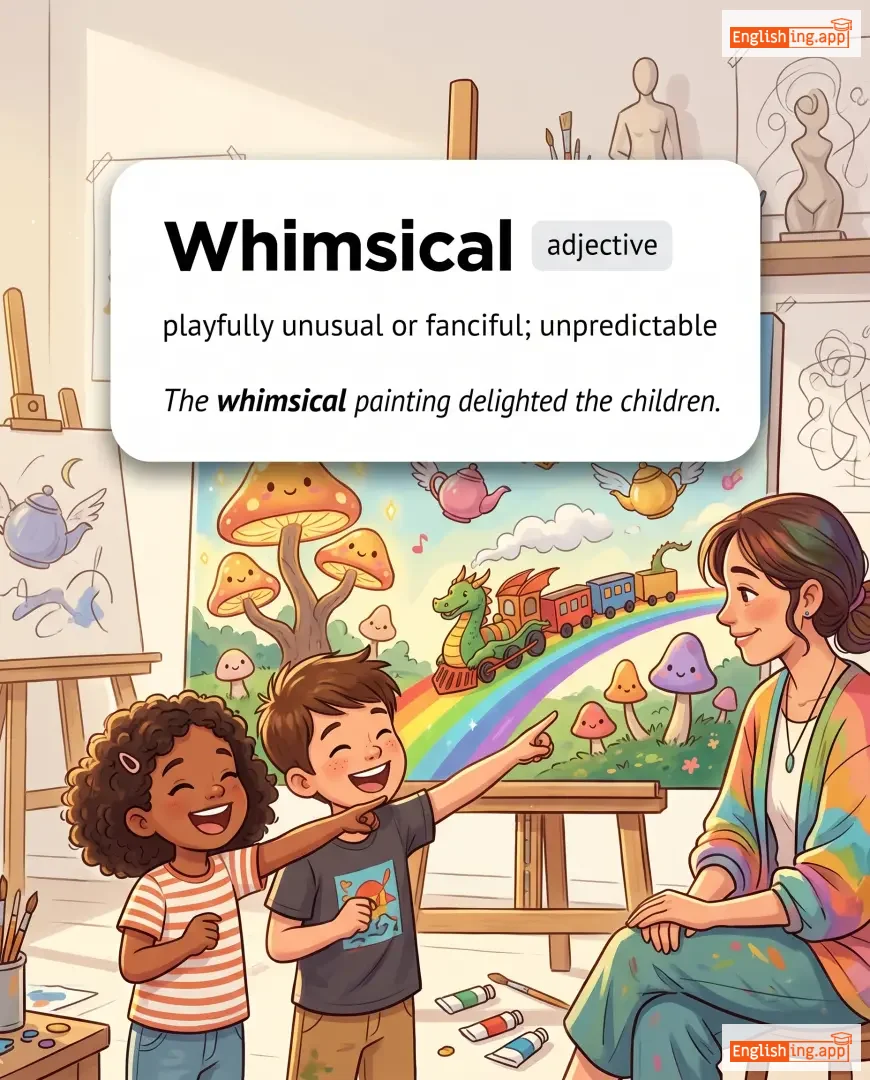
Whimsical definition card — visual illustration of the meaning
adjective
/ˈwɪmzɪkəl/
caprichoso (kaprichoso)

playfully unusual or fanciful; unpredictable

"The whimsical painting delighted the children."

"La pintura caprichosa deleitó a los niños." (La pintura caprichosa deleito a los ninos.)
adverb
/ˈwɪmzɪkli/
caprichosamente (wimzikli)

In a playful, fanciful, or capricious manner; with sudden changes of mind

"She decorated her room whimsically with colorful balloons."

"Ella decoró su habitación de forma caprichosa con globos coloridos." (Ella decoro su habitacion de forma caprichosa con globos coloridos.)
noun
/ˈwɪmzi/
capricho (capricho)

playful or fanciful behavior or humor

"Her stories were full of whimsy and imagination."

"Sus historias estaban llenas de capricho e imaginación." (Sus historias estaban llenas de capricho e imaginacion.)
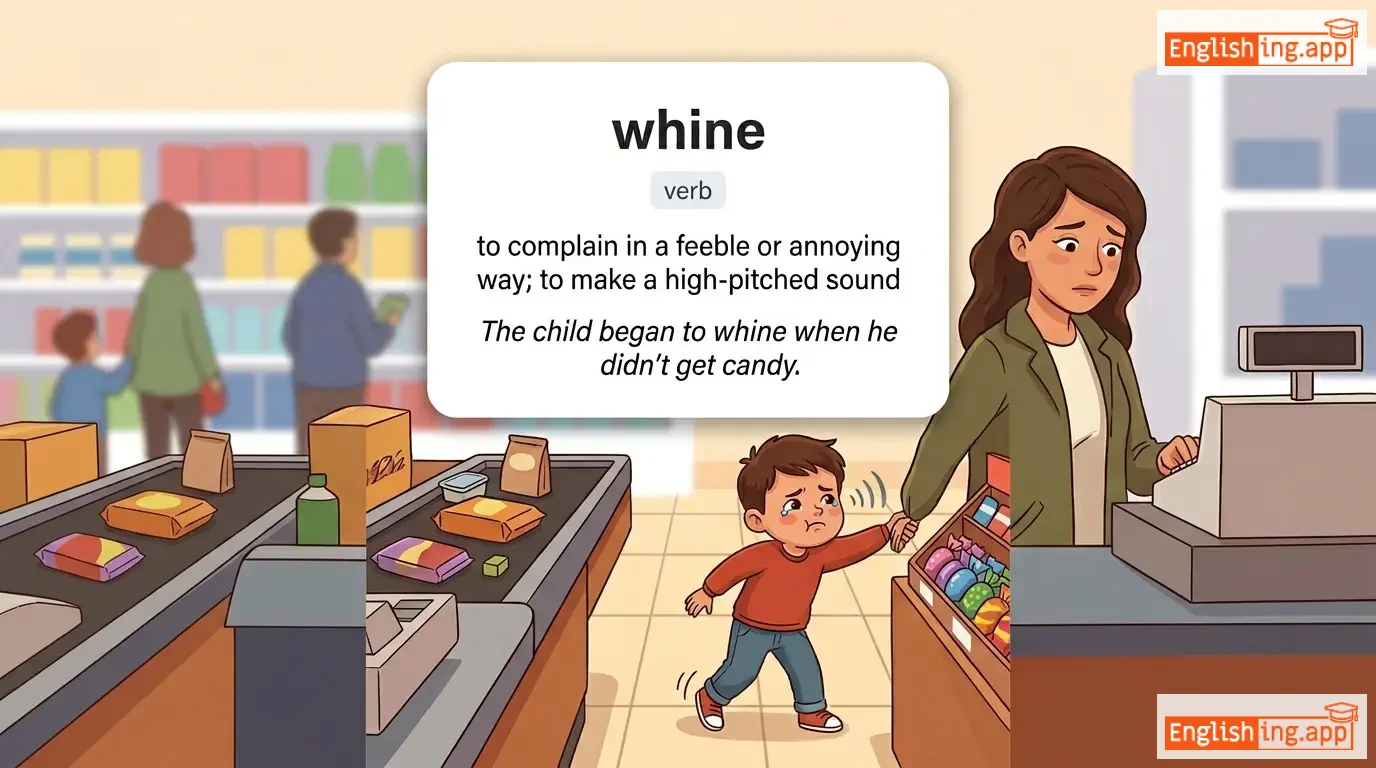
whine definition card — visual illustration of the meaning
verb
/waɪn/
quejarse (quejarse)

to complain in a feeble or annoying way; to make a high-pitched sound

"The child began to whine when he didn’t get candy."

"El niño comenzó a quejarse cuando no consiguió caramelos." (El niño comenzó a quejarse cuando no consiguió caramelos.)
verb
/ˈwɪni/
relincho (relincho)

to make the high-pitched sound a horse makes

"The horse whinnied when it saw its rider."

"El caballo relinchó cuando vio a su jinete." (El caballo relincho cuando vio a su jinete.)
verb
/wɪp/
azotar (azotar)

to strike or beat with a flexible instrument such as a rope or cord

"The trainer whipped the horse to make it run faster."

"El entrenador azotó al caballo para hacerlo correr más rápido." (El entrenador azotó al caballo para hacerlo correr más rápido.)
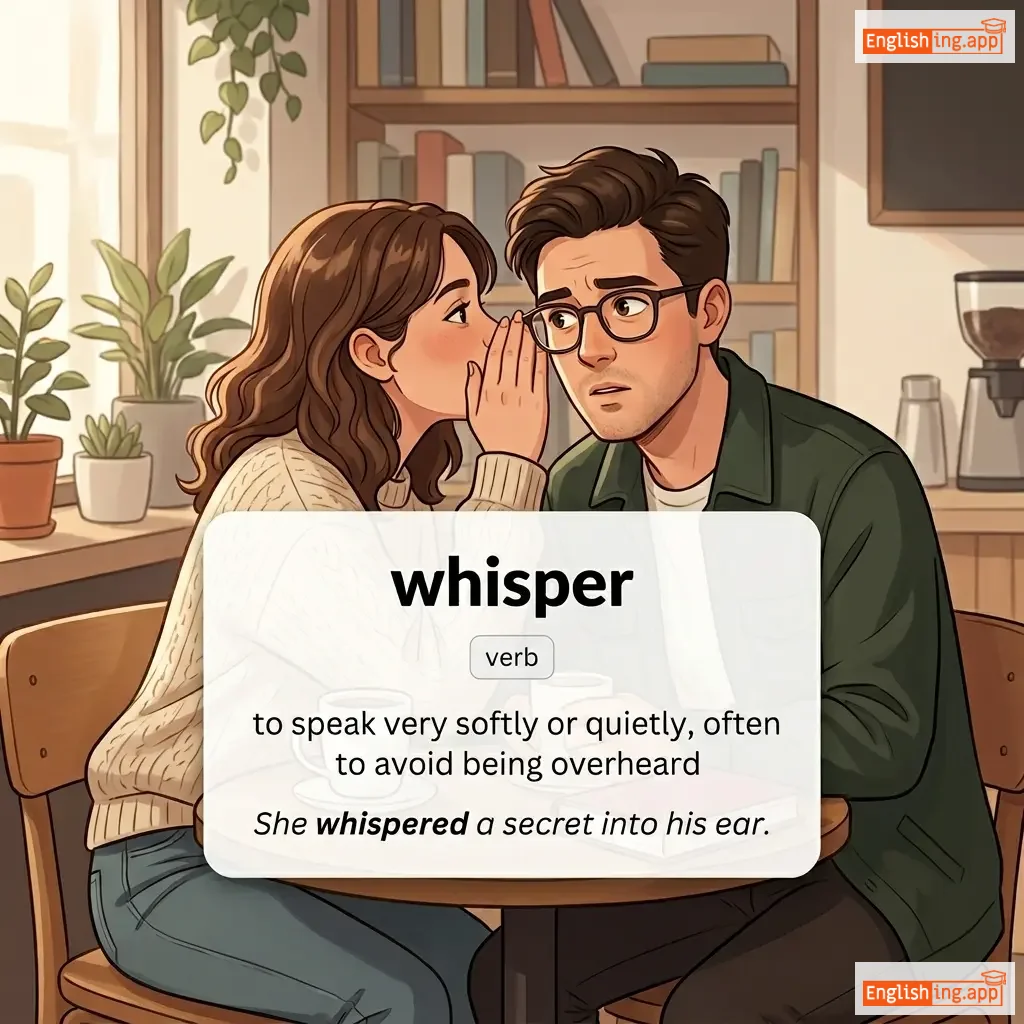
whisper definition card — visual illustration of the meaning
verb
/ˈwɪspər/
susurrar (susurrar)

to speak very softly or quietly, often to avoid being overheard

"She whispered a secret into his ear."

"Ella susurró un secreto en su oído." (Ella susurró un secreto en su oído.)
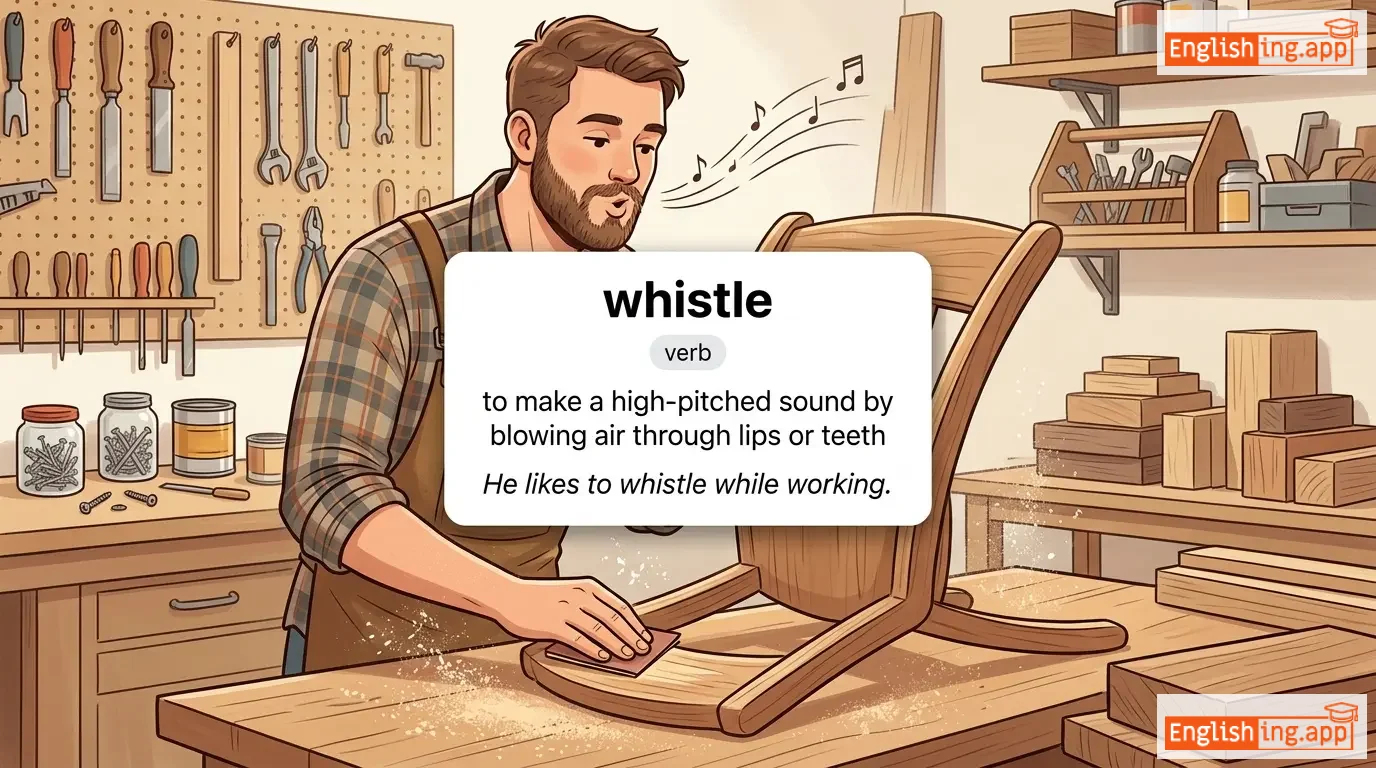
whistle definition card — visual illustration of the meaning
noun
/ˈwɪsəl/
silbato (silbato)

a small wind instrument that produces a high-pitched sound when blown

"The referee blew his whistle to start the game."

"El árbitro sopló su silbato para comenzar el juego." (El arbitro soplo su silbato para comenzar el juego.)
noun
/wɪt/
una cantidad muy pequeña (una cantidad muy pequeña)

a very small part or amount

"He doesn't care a whit about the outcome."

"Él no le importa ni un ápice el resultado." (Él no le importa ni un ápice el resultado.)
adjective
/waɪt/
blanco (blanco)

having the color of milk or fresh snow, the opposite of black

"She wore a beautiful white dress to the party."

"Ella llevaba un hermoso vestido blanco en la fiesta." (Ella llevaba un hermoso vestido blanco en la fiesta.)
noun
/waɪt ˈpɛpər/
pimienta blanca (pimienta blanca)

a spice made from dried peppercorns with the outer husk removed

"She added white pepper to the cream soup for a mild spicy flavor."

"Ella agregó pimienta blanca a la sopa de crema para darle un sabor suave y picante." (ella agregó pimienta blanca a la sopa de crema para darle un sabor suave y picante)
noun
/waɪt ænt/
hormiga blanca (hormiga blanca)

a small social insect that lives in colonies and feeds on wood and plant matter

"White ants damaged the wooden furniture in our house."

"Las hormigas blancas dañaron los muebles de madera de nuestra casa." (Las hormigas blancas dañaron los muebles de madera de nuestra casa.)
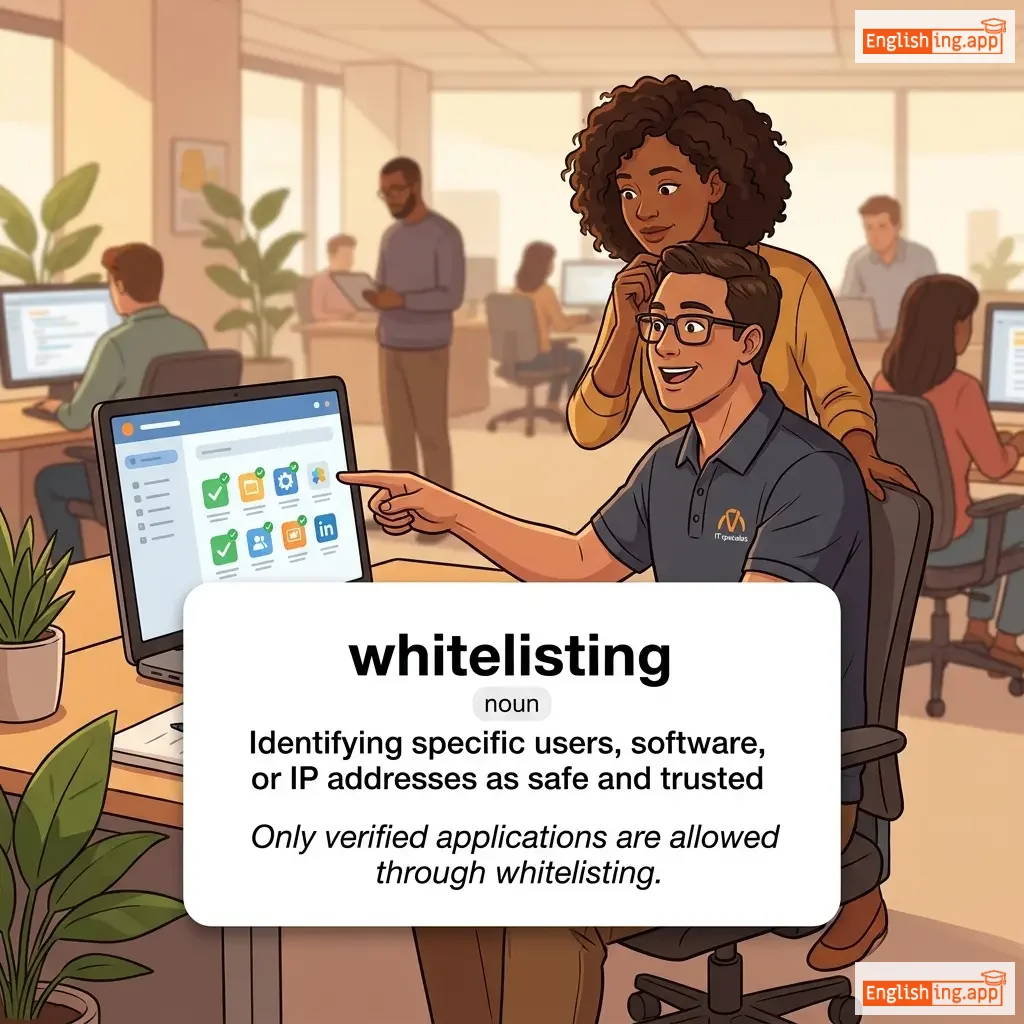
whitelisting definition card — visual illustration of the meaning
noun
/ˈwaɪt.lɪst.ɪŋ/
Identificación de usuarios, software o direcciones IP como seguros y confiables (Identificacion de usuarios, software o direcciones IP como seguros y confiables)

Identifying specific users, software, or IP addresses as safe and trusted

"Only verified applications are allowed through whitelisting."

"Solo las aplicaciones verificadas se permiten a través del sistema de lista blanca." (Solo las aplicaciones verificadas se permiten a través del sistema de lista blanca.)
verb
/ˈwaɪtˌwɑːʃ/
blanquear (blanquear)

to cover up faults, errors, or unpleasant facts; to paint with white paint or lime

"The report was criticized for trying to whitewash the company's failures."

"El informe fue criticado por tratar de blanquear los fracasos de la empresa." (El informe fue criticado por tratar de blanquear los fracasos de la empresa.)
verb
/ˈwɪtl/
tallar (tallar)

to carve or shape something by cutting off small pieces; to gradually reduce

"He spent the afternoon whittling a piece of wood into a toy."

"Él pasó la tarde tallando un trozo de madera en un juguete." (El paso la tarde tallando un trozo de madera en un juguete.)
pronoun
/huː/
quién (kien)

used to ask about a person or people

"Who is coming to the party tonight?"

"¿Quién viene a la fiesta esta noche?" (¿Quién viene a la fiesta esta noche?)
pronoun
/huːˈɛvər/
quien sea (kien sea)

any person who; no matter who

"Whoever wants to join the trip must register today."

"Quienquiera que quiera unirse al viaje debe registrarse hoy." (Kienkiera ke kiera unirse al viaje debe registrarse hoy.)
adjective
/hoʊl/
entero (entero)

all of something; complete or entire

"He ate the whole cake by himself."

"Él se comió el pastel entero él solo." (El se comió el pastel entero él solo.)
adjective
/ˌhoʊlˈhɑːrtɪd/
de todo corazón (de todo corazon)

showing complete sincerity and commitment; fully enthusiastic

"She gave her wholehearted support to the project."

"Ella dio su apoyo de todo corazón al proyecto." (Ella dio su apoyo de todo corazon al proyecto.)
adjective
/ˈhoʊlsəm/
saludable (saludable)

promoting health or well-being; morally good and beneficial

"The retreat offered wholesome food and peaceful surroundings."

"El retiro ofreció comida saludable y un entorno tranquilo." (El retiro ofreció comida saludable y un entorno tranquilo.)
adverb
/ˈhoʊlli/
totalmente (totalmente)

completely; entirely

"She is wholly devoted to her family."

"Ella está totalmente dedicada a su familia." (Ella esta totalmente dedicada a su familia.)
pronoun
/huːm/
a quien (a quien)

used to refer to the person or people that something is done to

"The man whom I met yesterday is my friend."

"El hombre a quien conocí ayer es mi amigo." (El hombre a quien conocí ayer es mi amigo.)
noun
/wɜːrl/
espiral (espiral)

A pattern of spirals or concentric circles, often found in fingerprints, shells, or flowers.

"The fingerprint displayed a clear whorl pattern."

"La huella dactilar mostraba un patrón claro de espiral." (La huella dactilar mostraba un patron claro de espiral.)
pronoun
/huːz/
cuyo (cuyo)

used to ask or talk about the person or thing that owns something

"The girl whose phone was stolen is my cousin."

"La chica cuyo teléfono fue robado es mi prima." (La chica cuyo teléfono fue robado es mi prima.)
adverb
/waɪ/
por qué (por que)

used to ask or talk about the reason for something

"Why did you leave so early?"

"¿Por qué te fuiste tan temprano?" (¿Por qué te fuiste tan temprano?)
noun
/wɪk/
mecha de vela (mecha de vela)

a cord or strand of cotton that burns to provide light in a candle or lamp

"The candle wick needs to be trimmed for better burning."

"La mecha de la vela necesita ser recortada para una mejor combustión." (La mecha de la vela necesita ser recortada para una mejor combustion.)
adjective
/ˈwɪkɪd/
malvado (malvado)

morally bad or evil; also informally very good or impressive

"The villain in the story was truly wicked."

"El villano en la historia era realmente malvado." (El villano en la historia era realmente malvado.)
noun
/ˈwɪkɪdnəs/
maldad, perversidad (maldad, perversidad)

Evil or morally bad behavior.

"The story highlights the wickedness of the cruel king."

"La historia destaca la maldad del cruel rey." (La historia destaca la maldad del cruel rey.)
adjective
/waɪd/
ancho (ancho)

having a great extent from side to side; broad

"The river is wide enough to fit a boat."

"El río es lo suficientemente ancho como para que quepa un bote." (El río es lo suficientemente ancho como para que quepa un bote.)
adverb
/ˈwaɪdli/
ampliamente (ampliamente)

to a great extent or degree

"The news of his promotion spread widely across the company."

"La noticia de su ascenso se extendió ampliamente por la empresa." (La noticia de su ascenso se extendió ampliamente por la empresa.)
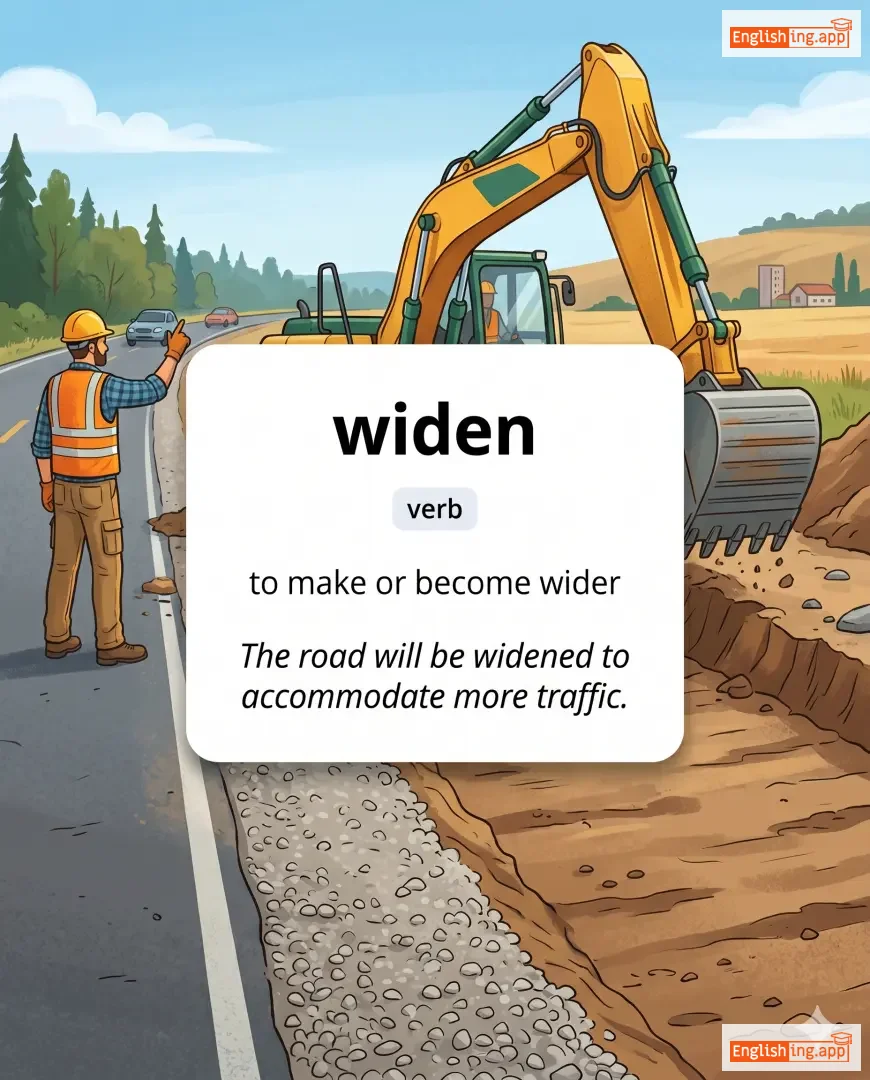
widen definition card — visual illustration of the meaning
verb
/ˈwaɪdən/
ensanchar (ensanchar)

to make or become wider

"The road will be widened to accommodate more traffic."

"La carretera será ensanchada para acomodar más tráfico." (La carretera sera ensanchada para acomodar mas trafico.)
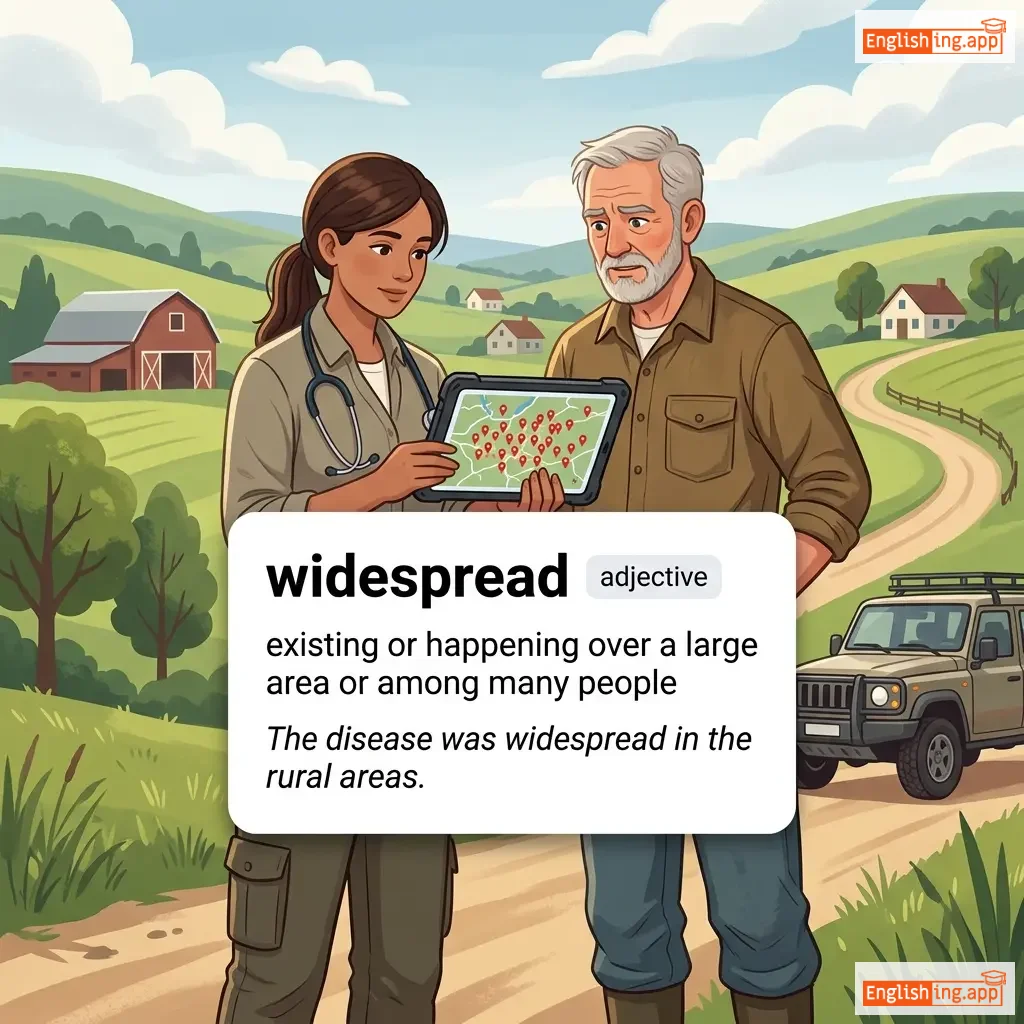
widespread definition card — visual illustration of the meaning
adjective
/ˈwaɪdˌsprɛd/
generalizado (generalizado)

existing or happening over a large area or among many people

"The disease was widespread in the rural areas."

"La enfermedad estaba generalizada en las zonas rurales." (La enfermedad estaba generalizada en las zonas rurales.)
noun
/ˈwɪdəʊ/
viuda (viuda)

a woman whose husband has died and who has not married again

"She became a widow at a very young age."

"Se convirtió en viuda a una edad muy temprana." (Se convirtio en viuda a una edad muy temprana.)
noun
/ˈwɪd.oʊ.ər/
viudo (viudo)

a man whose wife has died and who has not married again

"The elderly widower lived alone but had regular visits from his children."

"El anciano viudo vivía solo pero recibía visitas regulares de sus hijos." (El anciano viudo vivía solo pero recibía visitas regulares de sus hijos.)
noun
/wɪdθ/
ancho (ancho)

the measurement or extent of something from side to side

"The width of the table is 2 meters."

"El ancho de la mesa es de 2 metros." (El ancho de la mesa es de 2 metros.)
verb
/wiːld/
sujetar, usar (sujetar, usar)

To hold and use a weapon, tool, or power effectively.

"The warrior wielded his sword with great skill."

"El guerrero usó su espada con gran habilidad." (El guerrero usó su espada con gran habilidad.)