Vocabularios

Descubra, aprenda y domine el vocabulario en inglés

noun
/ˈʌndərwɛr/
ropa interior (ropa interior)

clothing worn under other clothes, next to the skin

"She bought new underwear from the department store."

"Ella compró nuevo ropa interior en la tienda departamental." (Ella compro nuevo ropa interior en la tienda departamental.)
verb
/ˌʌn.dəˈtʃɑːrdʒ/
cobrar menos (cobrar menos)

To charge less than the correct or fair amount.

"The shopkeeper accidentally undercharged me for the groceries."

"El tendero accidentalmente me cobró menos por las compras." (El tendero accidentalmente me cobró menos por las compras.)
noun
/ˈʌndərkləʊðz/
ropa interior (ropa interior)

Clothing worn beneath outer clothes, such as underwear or lingerie

"He folded his underclothes neatly before packing them."

"Él dobló su ropa interior cuidadosamente antes de empacarla." (El doblo su ropa interior cuidadosamente antes de empacarla)
verb
/ˈʌndərkʌt/
rebajar precios, debilitar (rebajar precios, debilitar)

to sell at a lower price than a competitor; to weaken or undermine something

"The company tried to undercut its rivals by offering lower prices."

"La empresa intentó undercut a sus rivales ofreciendo precios más bajos." (La empresa intentó undercut a sus rivales ofreciendo precios más bajos.)
noun
/ˈʌndərdɒɡ/
desvalido (desvalido)

a competitor thought to have little chance of winning; a weaker party in a contest

"The underdog team surprised everyone by winning the championship."

"El equipo desvalido sorprendió a todos al ganar el campeonato." (El equipo desvalido sorprendió a todos al ganar el campeonato.)
verb
/ˌʌndərˈɛstɪmeɪt/
subestimar (subestimar)

To judge something as less important or smaller than it really is.

"Never underestimate the power of teamwork."

"Nunca subestimes el poder del trabajo en equipo." (Nunca subestimes el poder del trabajo en equipo.)
adjective
/ˌʌndərɪkˈspoʊzd/
poco expuesto, descuidado (poko ekspuesto, deskuidado)

insufficiently exposed to light (in photography) or not given enough attention

"The photo was underexposed and looked too dark."

"La foto estaba poco expuesta y se veía demasiado oscura." (La foto estaba poko ekspuesta y se veia demasiado oscura.)
noun
/ˈʌndərˌɡɑːrmənt/
ropa interior (ropa interior)

a piece of clothing worn under outer clothes, usually next to the skin

"He bought new undergarments for the wedding."

"Compró ropa interior nueva para la boda." (Compró ropa interior nueva para la boda.)
verb
/ˌʌndərˈɡɜːrd/
sustentar, reforzar (sustentar, reforzar)

to provide support or foundation for; to strengthen

"Strong values undergird a healthy society."

"Los valores fuertes sustentan una sociedad saludable." (Los valores fuertes sustentan una sociedad saludable.)
verb
/ˌʌndərˈɡoʊ/
someterse (someterse)

to go through something, especially something unpleasant or difficult

"She had to undergo surgery to recover."

"Tuvo que someterse a cirugía para recuperarse." (Tuvo que someterse a cirugía para recuperarse.)
noun
/ˌʌndəˈɡrædʒuət/
estudiante de pregrado (estudiante de pregrado)

a student who has not yet earned a bachelor's degree

"She is an undergraduate studying computer science."

"Ella es una estudiante de pregrado estudiando ciencias de la computación." (Ella es una estudiante de pregrado estudiando ciencias de la computacion)
adjective
/ˈʌndərhænd/
engañoso (engañoso)

done secretly and dishonestly; deceitful

"The politician was accused of using underhand tactics to win the election."

"El político fue acusado de usar tácticas engañosas para ganar las elecciones." (El político fue acusado de usar tácticas engañosas para ganar las elecciones.)
adjective
/ˌʌndərˈhændɪd/
deshonesto (deshonesto)

acting or done in a dishonest or secret way

"They exposed the company's underhanded dealings with its suppliers."

"Ellos expusieron los tratos deshonestos de la empresa con sus proveedores." (Ellos expusieron los tratos deshonestos de la empresa con sus proveedores.)
verb
/ˌʌndərˈlaɪ/
subyacer (subyacer)

to be the hidden cause or basis of something

"Strong cultural traditions underlie the community's practices."

"Las fuertes tradiciones culturales subyacen a las prácticas de la comunidad." (Las fuertes tradiciones culturales subyacen a las prácticas de la comunidad.)
noun
/ˈʌndərlɪŋ/
subordinado (subordinado)

a person of low rank or importance; a subordinate

"The manager ordered his underlings to finish the task quickly."

"El gerente ordenó a sus subordinados terminar la tarea rápidamente." (El gerente ordenó a sus subordinados terminar la tarea rápidamente.)
adjective
/ˌʌndərˈlaɪɪŋ/
subyacente (subyacente)

basic or hidden but important; forming the foundation of something

"The underlying reason for the conflict was never addressed."

"La razón subyacente para el conflicto nunca fue abordada." (La razon subyacente para el conflicto nunca fue abordada.)
verb
/ˈʌndərˌmæn/
quedarse sin personal (quedarse sin personal)

to supply with fewer workers or personnel than needed

"The hospital was undermanned during the flu outbreak."

"El hospital estuvo con poco personal durante el brote de gripe." (El hospital estuvo con poco personal durante el brote de gripe.)
verb
/ˌʌndərˈmaɪn/
socavar (socavar)

to gradually weaken or damage something or someone

"Constant criticism can undermine a child's confidence."

"La crítica constante puede socavar la confianza de un niño." (La critica constante puede socavar la confianza de un nino)
preposition, adverb, adjective
/ˌʌndərˈniːθ/
debajo, bajo (debajo, bajo)

Located directly below or beneath something

"The keys were hidden underneath the pile of papers."

"Las llaves estaban escondidas debajo de la pila de papeles." (Las llaves estaban escondidas debajo de la pila de papeles)
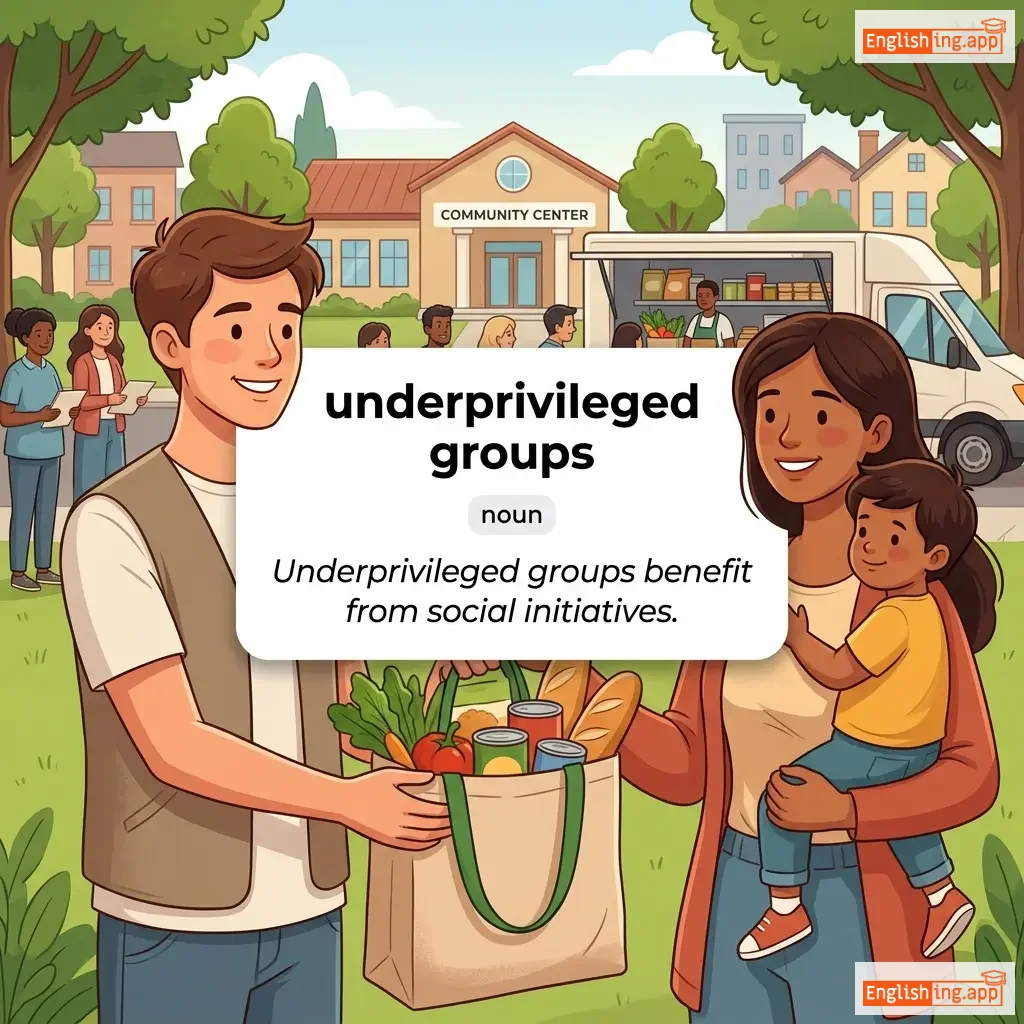
underprivileged groups definition card — visual illustration of the meaning
noun
ˌʌndərˈprɪvəlɪdʒd ɡruːps
grupos desfavorecidos (grupos desfavorecidos)

Groups of people who lack basic necessities or advantages that are available to other members of society.

"Underprivileged groups benefit from social initiatives."

"Los grupos desfavorecidos se benefician de las iniciativas sociales." (Los grupos desfavorecidos se benefician de las iniciativas sociales.)
verb
/ˌʌndəˈreɪt/
subestimar (subestimar)

to fail to recognize the full value or importance of something or someone

"Many people underrate the benefits of regular exercise."

"Muchas personas subestiman los beneficios del ejercicio regular." (Muchas personas subestiman los beneficios del ejercicio regular.)
verb
/ˌʌndərˈskɔːr/
subrayar (subrayar)

to emphasize or highlight something

"The incident underscored the need for better safety measures."

"El incidente subrayó la necesidad de mejores medidas de seguridad." (El incidente subrayo la necesidad de mejores medidas de seguridad.)
verb
/ˌʌndərˈsɛl/
vender a un precio más bajo (vender a un precio más bajo)

to sell something at a lower price than competitors or to downplay the value of something

"The shop undersold its rivals by offering huge discounts."

"La tienda vendió a sus rivales a un precio más bajo ofreciendo grandes descuentos." (La tienda vendió a sus rivales a un precio más bajo ofreciendo grandes descuentos.)
adjective
/ˌʌndərˈsaɪzd/
de tamaño pequeño (de tamano pequeno)

Smaller than the usual or expected size.

"The undersized puppy struggled to keep up with its siblings."

"El perrito de tamaño pequeño luchaba por mantenerse al día con sus hermanos." (El perrito de tamano pequeno luchaba por mantenerse al dia con sus hermanos.)
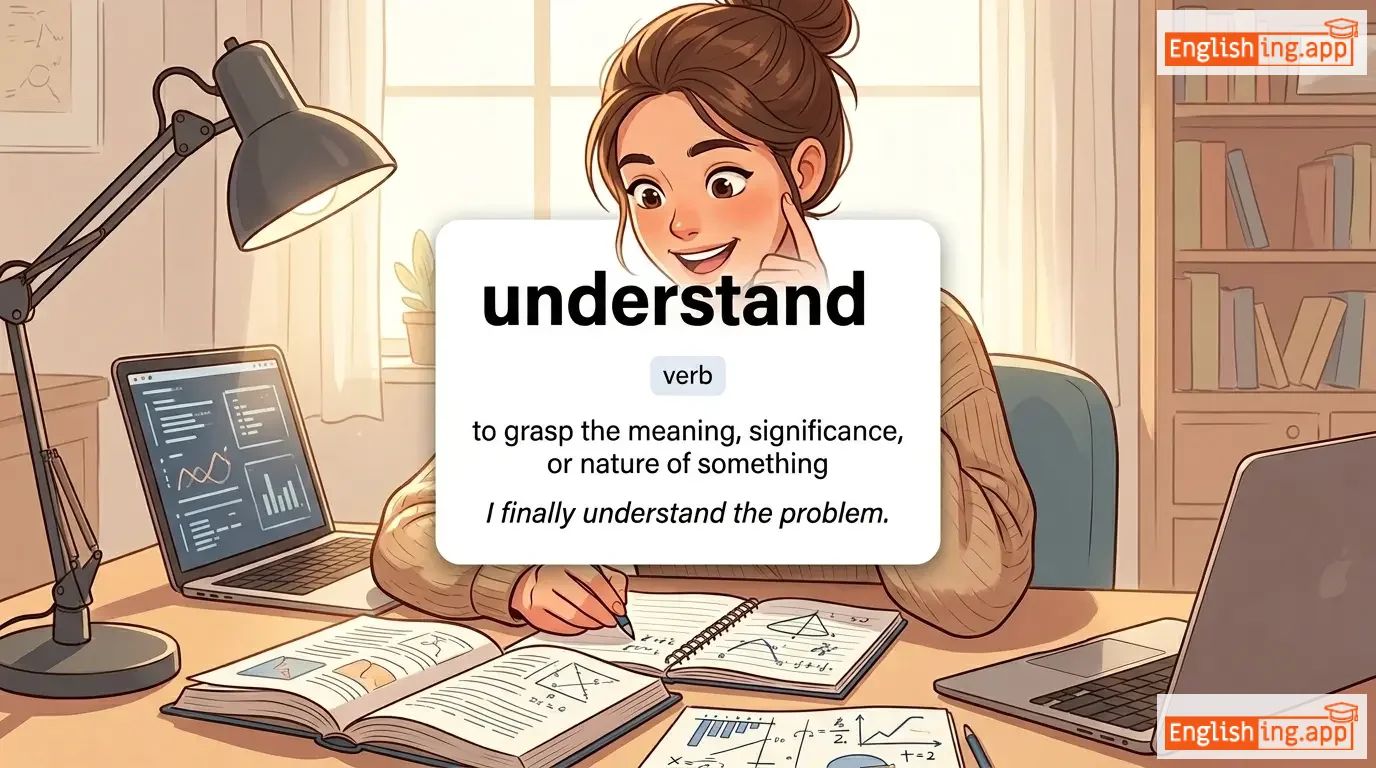
understand definition card — visual illustration of the meaning
verb
/ˌʌndərˈstænd/
entender (entender)

to grasp the meaning, significance, or nature of something

"I finally understand the problem."

"Finalmente entendí el problema." (Finalmente entendí el problema.)
adjective
/ˌʌndərˈstændəbl/
comprensible (comprensible)

Able to be understood; reasonable or justifiable.

"Her reaction was understandable given the situation."

"Su reacción fue comprensible dada la situación." (Su reaccion fue comprensible dada la situacion.)
noun
/ˌʌndərˈstændɪŋ/
comprensión (comprension)

the ability to grasp the meaning, significance, or nature of something

"Her understanding of the issue was impressive."

"Su comprensión del tema fue impresionante." (Su comprension del tema fue impresionante.)
verb
/ˌʌndərˈsteɪt/
minimizar (minimizar)

To describe something as being less important or serious than it really is.

"He tends to understate his achievements."

"Él tiende a restar importancia a sus logros." (Él tiende a restar importancia a sus logros.)
adjective
/ˌʌndərˈsteɪtɪd/
subestimado (subestimado)

Presented in a subtle and restrained way.

"She wore an elegant but understated dress."

"Ella llevaba un vestido elegante pero subestimado." (Ella llevaba un vestido elegante pero subestimado.)
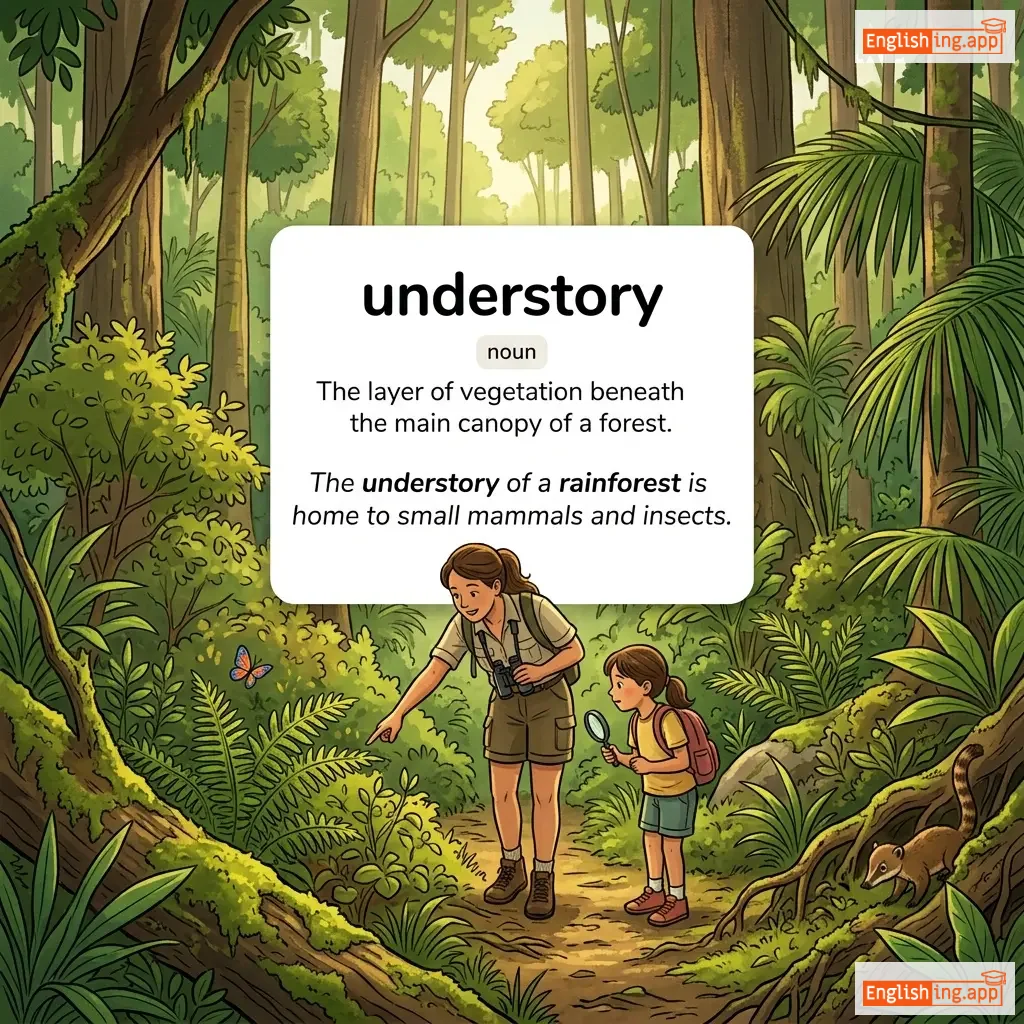
understory definition card — visual illustration of the meaning
noun
/ˈʌn.dɚˌstɔː.ri/
vegetación inferior (vegetacion inferior)

The layer of vegetation beneath the main canopy of a forest.

"The understory of a rainforest is home to small mammals and insects."

"La vegetación inferior de un bosque tropical es hogar de pequeños mamíferos e insectos." (La vegetacion inferior de un bosque tropical es hogar de pequenos mamiferos e insectos.)
noun
/ˈʌndərˌstʌdi/
doble de reparto (doble de reparto)

An actor who learns another's role to act as a replacement if needed.

"The understudy performed when the lead actor fell ill."

"El doble de reparto actuó cuando el actor principal se enfermó." (El doble de reparto actuó cuando el actor principal se enfermó.)
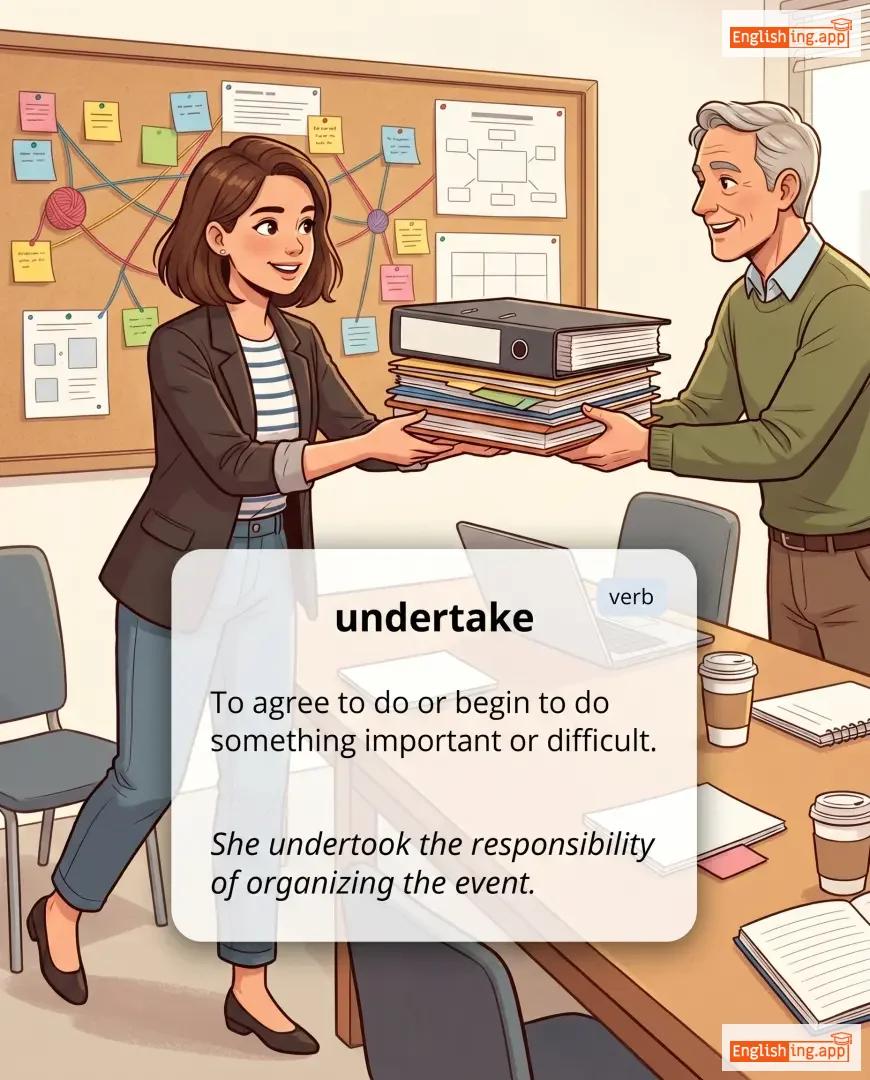
undertake definition card — visual illustration of the meaning
verb
/ˌʌndərˈteɪk/
emprender (emprender)

To agree to do or begin to do something important or difficult.

"She undertook the responsibility of organizing the event."

"Ella emprendió la responsabilidad de organizar el evento." (Ella emprendió la responsabilidad de organizar el evento.)
noun
/ˈʌndərˌteɪkər/
enterrador (enterrador)

A person whose job is to prepare the dead for burial and arrange funerals.

"The undertaker prepared the body for the funeral service."

"El enterrador preparó el cuerpo para el servicio funerario." (El enterrador preparó el cuerpo para el servicio funerario.)
noun
/ˈʌndərˌteɪkɪŋ/
empresa (empresa)

A task, project, or responsibility that someone agrees to do.

"Starting a new company is a difficult undertaking."

"Empezar una nueva empresa es una empresa difícil." (Empezar una nueva empresa es una empresa difícil.)
verb
/ˌʌndərˈvæljuː/
devaluar (devaluar)

To assign too low a value or importance to something or someone.

"She felt that her boss consistently undervalued her contributions."

"Ella sintió que su jefe constantemente no valoraba sus contribuciones." (Ella sintió que su jefe constantemente no valoraba sus contribuciones.)
noun
/ˈʌndərweər/
ropa interior (ropa interior)

Clothing worn beneath outer clothes, typically next to the skin.

"He bought new underwear for the trip."

"Compró ropa interior nueva para el viaje." (Compro ropa interior nueva para el viaje.)
noun
/ˈʌndərˌwɜːrld/
submundo (submundo)

The criminal world of organized crime or the mythical world of the dead.

"The detective spent years studying the secrets of the underworld."

"El detective pasó años estudiando los secretos del submundo." (El detective paso anos estudiando los secretos del submundo.)
verb
/ˈʌndərˌraɪt/
garantizar apoyo financiero (garantizar apoyo financiero)

To guarantee financial support, especially by agreeing to cover losses or risks; in insurance, to assess and accept risks.

"The bank agreed to underwrite the company's new bond issue."

"El banco acordó asegurar la nueva emisión de bonos de la empresa." (El banco acordó asegurar la nueva emisión de bonos de la empresa.)
adjective
/ˌʌndɪˈzaɪərəbl/
indeseable; perjudicial; desagradable (indeseable; perjudicial; desagradable)

not wanted or wished for; harmful or unpleasant

"The new policy had several undesirable consequences."

"La nueva política tuvo varias consecuencias indeseables." (La nueva politica tuvo varias consecuencias indeseables.)
adjective
/ˌʌndɪˈveləpt/
no desarrollado; inmaduro; primitivo (no desarrollado; inmaduro; primitivo)

not yet developed; immature or primitive

"The undeveloped land was later turned into a park."

"La tierra no desarrollada fue luego convertida en un parque." (La tierra no desarrollada fue luego convertida en un parque.)
adjective
/ˌʌndɪˈstɜːrbd/
ininterrumpido (ininterrumpido)

not interrupted or interfered with; calm and peaceful

"She slept undisturbed for eight hours."

"Ella durmió ininterrumpidamente durante ocho horas." (Ella durmió ininterrumpidamente durante ocho horas.)
adjective
/ʌnˈdɪvaɪdɪd/
Indiviso; completo; no separado ni dividido (indiviso; completo; no separado ni dividido)

whole; complete; not separated or split

"The team showed undivided attention to the coach's instructions."

"El equipo mostró atención indivisa a las instrucciones del entrenador." (El equipo mostró atención indivisa a las instrucciones del entrenador.)
adverb
/ʌnˈdaʊtɪdli/
sin duda (sin duda)

without a doubt, certainly

"He is undoubtedly the best player on the team."

"Él es sin duda el mejor jugador del equipo." (Él es sin duda el mejor jugador del equipo.)
adjective
/ʌnˈdjuː/
excesivo (excesivo)

More than is reasonable, excessive, or inappropriate.

"He placed undue pressure on his employees to meet the deadline."

"Puso una presión excesiva sobre sus empleados para cumplir con el plazo." (Puso una presion excesiva sobre sus empleados para cumplir con el plazo.)
verb
/ˈʌndjʊleɪt/
ondular (ondular)

To move with a smooth, wave-like motion.

"The snake undulated across the sand."

"La serpiente onduló a través de la arena." (La serpiente onduló a través de la arena.)
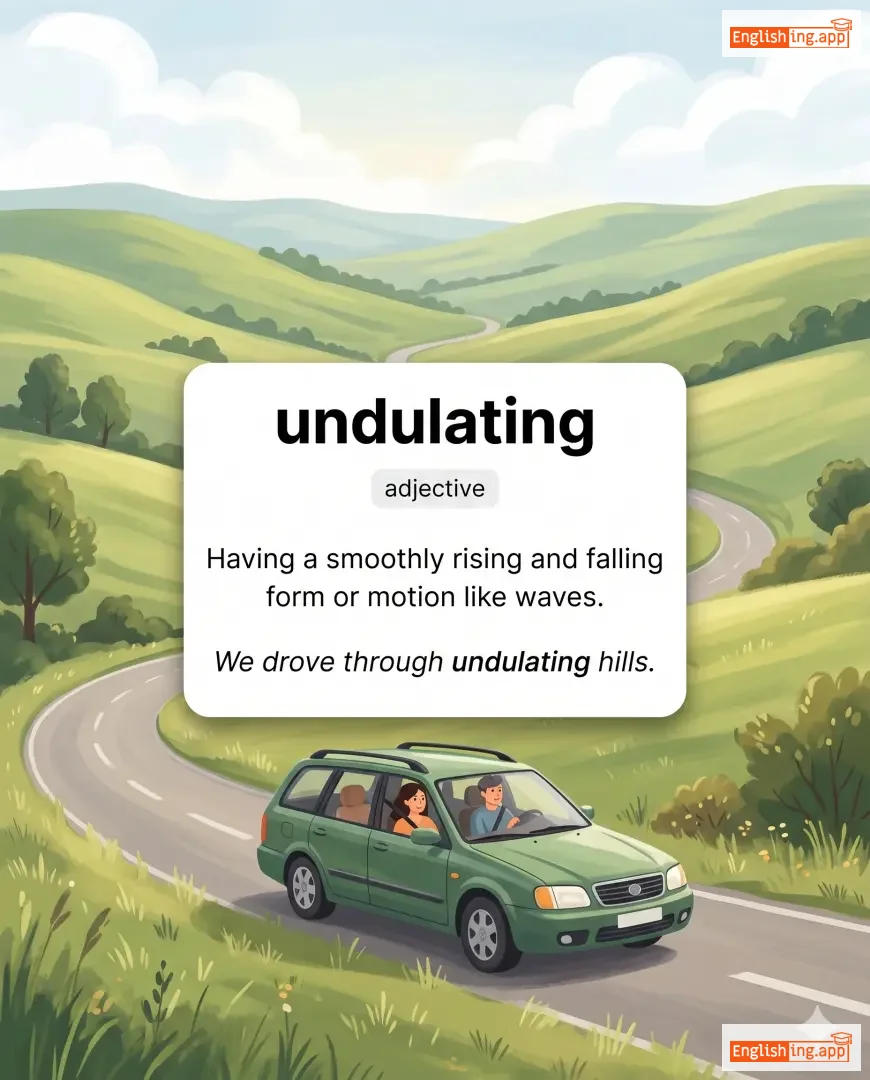
undulating definition card — visual illustration of the meaning
adjective
/ˈʌndjʊleɪtɪŋ/
ondulante (ondulante)

Having a smoothly rising and falling form or motion like waves.

"We drove through undulating hills."

"Condujimos por colinas onduladas." (Condujimos por colinas onduladas.)
adjective
/ˈʌndjʊləs/
ondulado (ondulado)

Having a wavy surface or form.

"The artist painted the undulous sea at sunset."

"El artista pintó el mar ondulado al atardecer." (El artista pintó el mar ondulado al atardecer.)
verb
/ʌnˈɜːθ/
desenterrar (desenterrar)

To dig up from the ground or to discover something hidden.

"Archaeologists unearthed ancient artifacts at the site."

"Los arqueólogos desenterraron artefactos antiguos en el sitio." (Los arqueólogos desenterraron artefactos antiguos en el sitio.)
adjective
/ʌnˈɜːrθli/
sobrenatural (sobrenatural)

Strange or unnatural in a way that seems not of this world

"The forest was filled with an unearthly glow."

"El bosque estaba lleno de un resplandor sobrenatural." (El bosque estaba lleno de un resplandor sobrenatural.)
adjective
/ʌnˈiːzi/
inquieto; ansioso; incómodo (inquieto; ansioso; incomodo)

worried; anxious; uncomfortable; restless

"She felt uneasy about walking alone at night."

"Ella se sentía inquieta al caminar sola de noche." (Ella se sentía inquieta al caminar sola de noche.)