Vocabularios

Descubra, aprenda y domine el vocabulario en inglés

noun
/ˈtoʊstər/
tostadora (tostadora)

an electric appliance used for toasting bread slices

"I put two slices of bread in the toaster for breakfast."

"Puse dos rebanadas de pan en la tostadora para el desayuno." (puse dos rebanadas de pan en la tostadora para el desayuno)
noun
/təˈbækoʊ/
tabaco (tabako)

a plant grown for its leaves, which are used in making cigarettes and cigars

"He stopped smoking tobacco after his health scare."

"Dejó de fumar tabaco después de su problema de salud." (Dejó de fumar tabaco después de su problema de salud.)
noun
/ˈtɒksɪn/
campana de alarma (campana de alarma)

an alarm bell or signal; a warning that something bad is about to happen

"The data breach sounded a tocsin for stricter security."

"La fuga de datos sonó como una campana de alarma para una seguridad más estricta." (La fuga de datos sono como una campana de alarma para una seguridad mas estricta.)
noun, adverb
/təˈdeɪ/
hoy (hoy)

on this present day

"She has a meeting today."

"Ella tiene una reunión hoy." (Ella tiene una reunión hoy.)
noun
/toʊ/
dedo del pie (dedo del pie)

any of the five digits at the end of the human foot

"He injured his toe while playing football."

"Se lesionó el dedo del pie mientras jugaba al fútbol." (Se lesió el dedo del pie mientras jugaba al fútbol.)
noun
/ˈtoʊɡə/
toga (toga)

A loose outer garment worn in ancient Rome, typically draped over the shoulders and body.

"The senator wore a white toga during the ceremony."

"El senador llevaba una toga blanca durante la ceremonia." (El senador llevaba una toga blanca durante la ceremonia.)
adverb
/təˈɡɛðər/
juntos (juntos)

with each other; in a group or combined form

"They worked together to solve the problem."

"Trabajaron juntos para resolver el problema." (Trabajaron juntos para resolver el problema.)
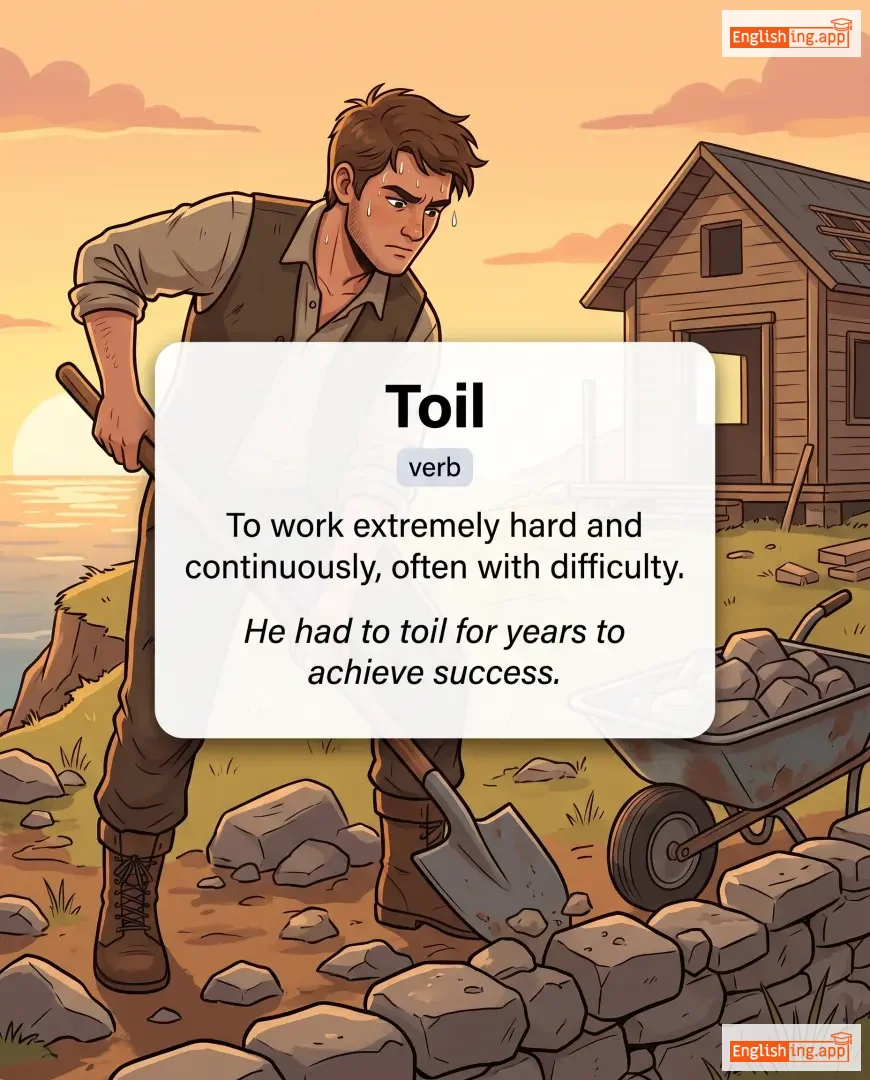
Toil definition card — visual illustration of the meaning
verb
/tɔɪl/
trabajar duro (trabajar duro)

To work extremely hard and continuously, often with difficulty.

"He had to toil for years to achieve success."

"Tuvo que trabajar duro durante años para lograr el éxito." (Tuvo que trabajar duro durante años para lograr el éxito.)
noun
/ˈtɔɪlət/
inodoro (inodoro)

a fixture used for the disposal of human waste

"The public toilet was clean and well maintained."

"El inodoro público estaba limpio y bien mantenido." (El inodoro publico estaba limpio y bien mantenido.)
adjective
/ˈtɔɪl.səm/
agotador (agotador)

Involving hard or exhausting work; laborious.

"The workers had a toilsome day in the hot sun."

"Los trabajadores tuvieron un día agotador bajo el sol caliente." (Los trabajadores tuvieron un día agotador bajo el sol caliente.)
noun
/ˈtoʊ.kən/
símbolo / ficha (simbolo / ficha)

A symbol or object that represents something, often given as a sign of appreciation or as a substitute for money.

"She gave him a small gift as a token of gratitude."

"Ella le dio un pequeño regalo como un token de gratitud." (Ella le dio un pequeno regalo como un token de gratitud.)
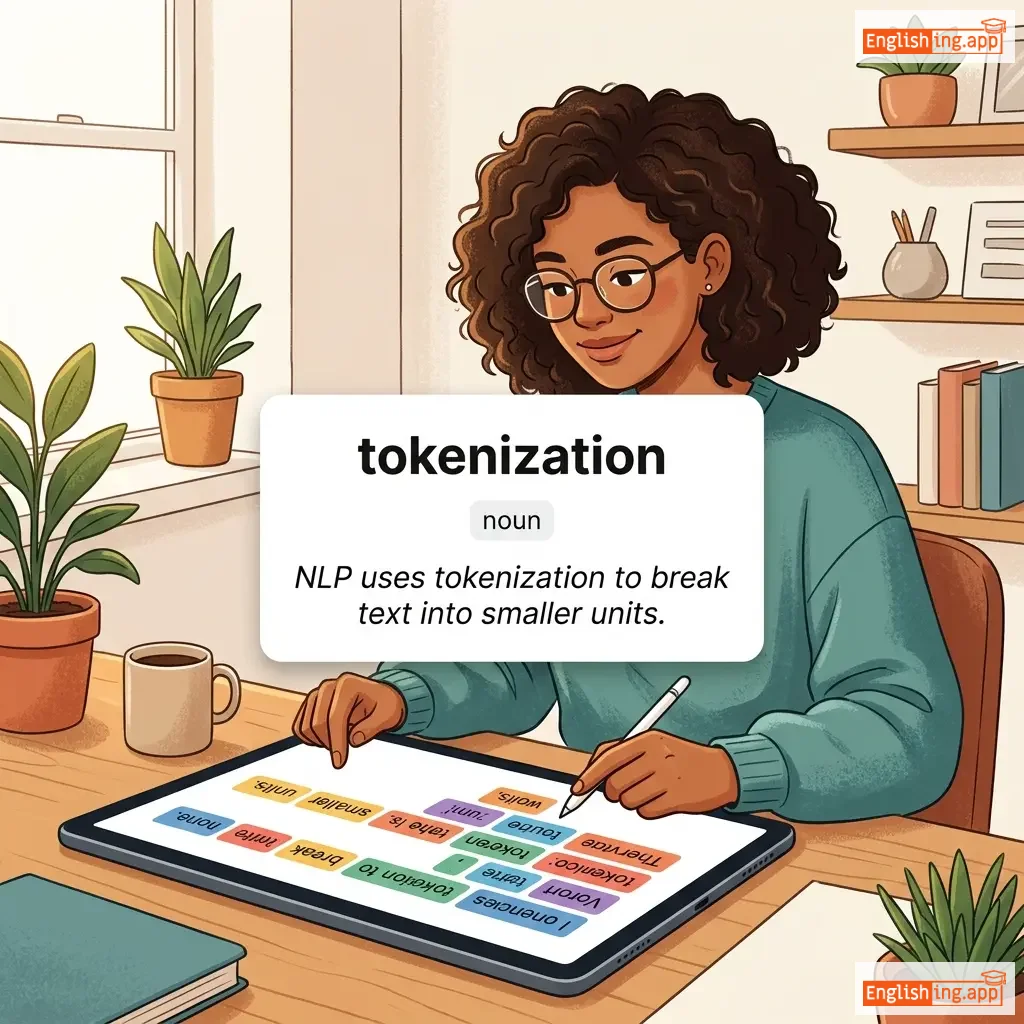
tokenization definition card — visual illustration of the meaning
noun
ˌtoʊ.kə.nɪˈzeɪ.ʃən
El proceso de dividir el texto en unidades más pequeñas como palabras, frases o símbolos para su análisis. (tokenization)

The process of breaking text into smaller units like words, phrases, or symbols for analysis.

"NLP uses tokenization to break text into smaller units."

"NLP utiliza la tokenización para dividir el texto en unidades más pequeñas." (NLP utiliza la tokenización para dividir el texto en unidades más pequeñas.)
adjective
/ˈtɒl.ər.ə.bəl/
tolerable (tolerable)

Able to be endured or put up with; fairly acceptable.

"The pain was tolerable after the medicine."

"El dolor era tolerable después de la medicina." (El dolor era tolerable después de la medicina.)
noun
/ˈtɒlərəns/
tolerancia (tolerancia)

The ability or willingness to accept or endure differences, behaviors, or opinions without hostility.

"Her tolerance for different cultures impressed everyone."

"Su tolerancia hacia las diferentes culturas impresionó a todos." (Su tolerancia hacia las diferentes culturas impresiono a todos.)
adjective
/ˈtɒlərənt/
tolerante (tolerante)

Showing willingness to allow the existence of opinions or behaviors that one dislikes or disagrees with.

"He is very tolerant of other people's beliefs."

"Él es muy tolerante con las creencias de los demás." (El es muy tolerante con las creencias de los demas.)
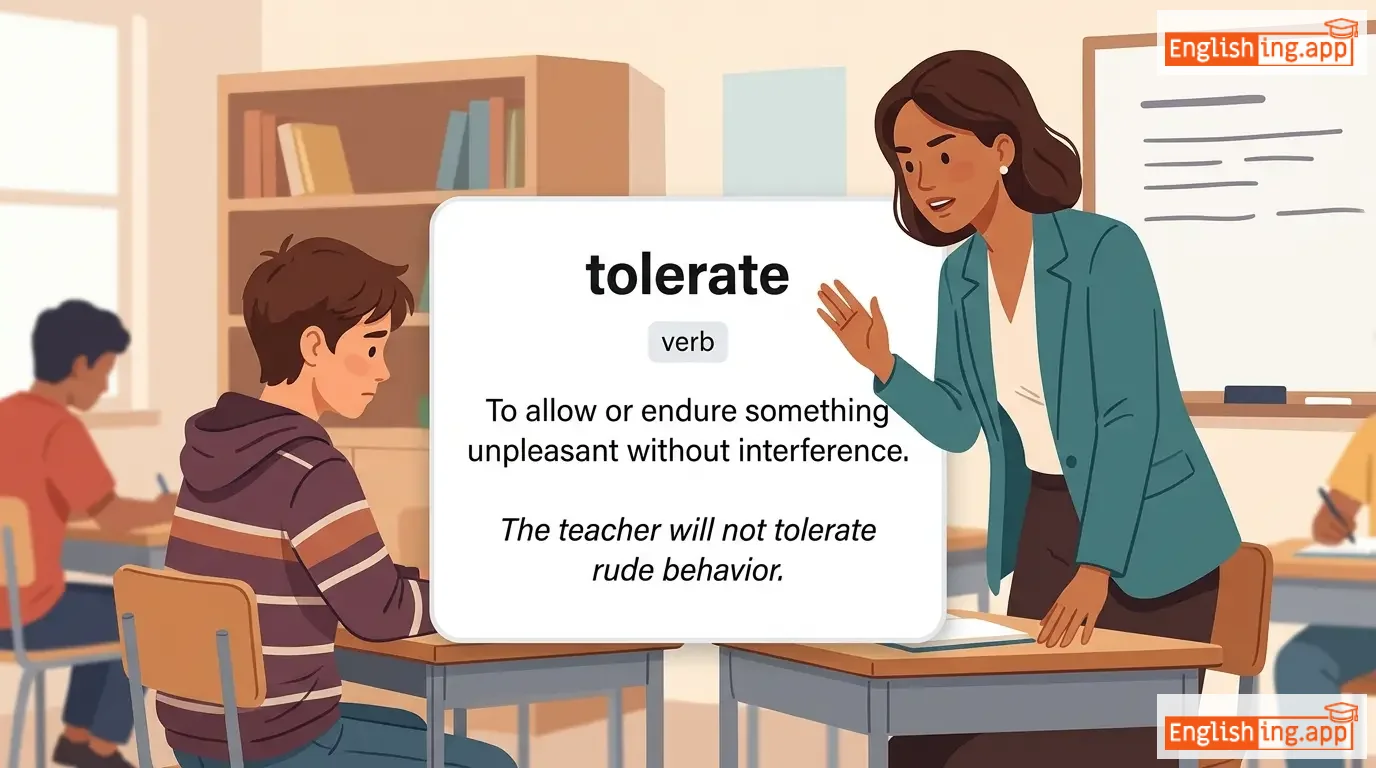
tolerate definition card — visual illustration of the meaning
verb
/ˈtɒləreɪt/
tolerar (tolerar)

To allow or endure something unpleasant without interference.

"The teacher will not tolerate rude behavior."

"La maestra no tolerará un comportamiento grosero." (La maestra no tolerará un comportamiento grosero.)
noun
/ˌtɒləˈreɪʃən/
tolerancia (tolerancia)

The practice of allowing something that one does not necessarily agree with.

"The government promoted religious toleration."

"El gobierno promovió la tolerancia religiosa." (El gobierno promovió la tolerancia religiosa.)
noun
/toʊl/
peaje / daño (peaje / dano)

A charge payable for using a road or bridge; also the extent of damage or suffering caused by something.

"The flood took a heavy toll on the village."

"La inundación causó un gran daño en el pueblo." (La inundacion causo un gran dano en el pueblo.)
noun
/təˈmeɪtoʊ/
tomate (tomate)

a red or yellowish fruit that is typically eaten as a vegetable

"I added some tomato to the salad."

"Añadí un poco de tomate a la ensalada." (Añadí un poco de tomate a la ensalada.)
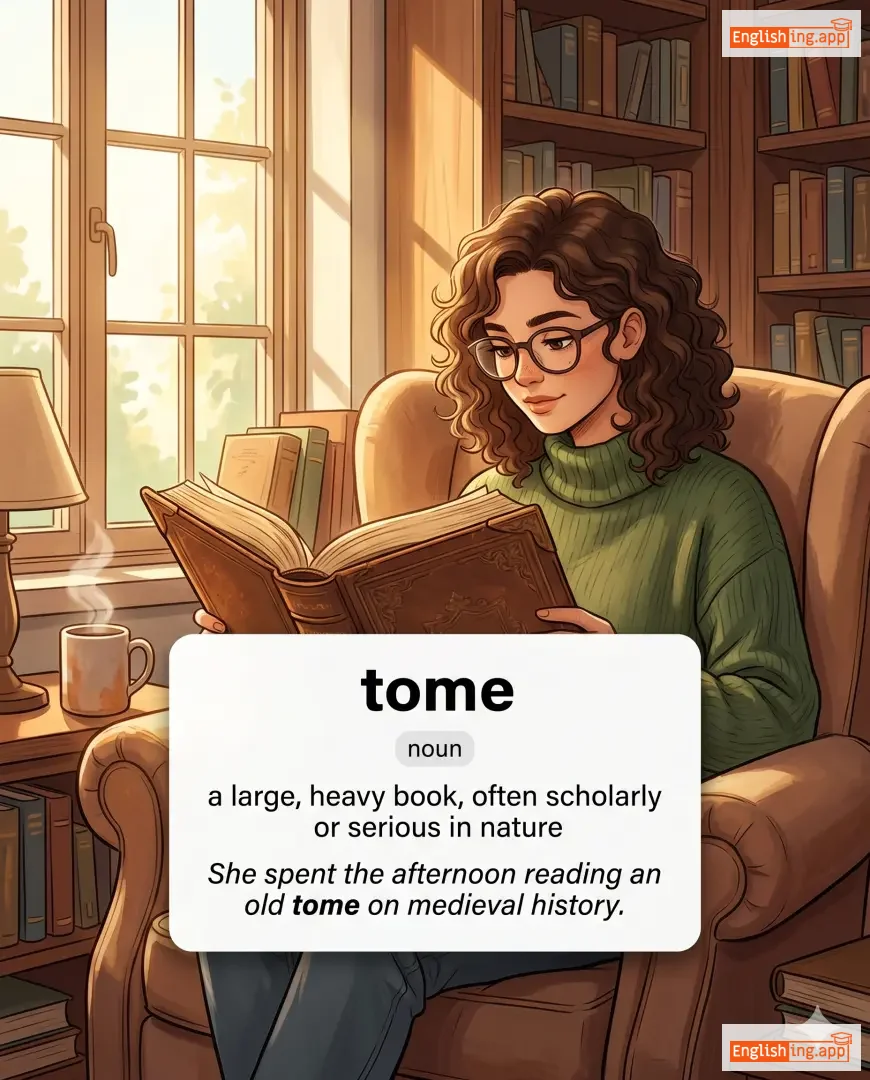
tome definition card — visual illustration of the meaning
noun
/toʊm/
gran libro (gran libro)

a large, heavy book, often scholarly or serious in nature

"She spent the afternoon reading an old tome on medieval history."

"Pasó la tarde leyendo un viejo gran libro sobre historia medieval." (Pasó la tarde leyendo un viejo gran libro sobre historia medieval.)
noun, adverb
/təˈmɒroʊ/
mañana (manana)

the day after today

"We are meeting tomorrow for the project discussion."

"Nos reuniremos mañana para discutir el proyecto." (Nos reuniremos manana para discutir el proyecto.)
noun
/tʌn/
tonelada (tonelada)

A unit of weight equal to 2,000 pounds (US) or 1,000 kilograms (metric); a large amount of something

"The truck carried a ton of apples to the market."

"El camión transportó una tonelada de manzanas al mercado." (El camion transporto una tonelada de manzanas al mercado.)
noun, verb
/toʊn/
tono (tono)

the general character or attitude of a place, piece of writing, situation, etc.

"The tone of the letter was very formal."

"El tono de la carta era muy formal." (El tono de la carta era muy formal.)
noun
/tɒŋ/
tenaza (tenaza)

a tool with two movable arms used to pick up and hold objects

"He used the tong to pick up the hot coal."

"Él usó la tenaza para levantar el carbón caliente." (El uso la tenaza para levantar el carbon caliente.)
noun
/tɒŋz/
tenazas (tenazas)

a tool consisting of two movable arms that are joined at one end, used for picking up and holding things

"Use the tongs to pick up the hot pieces of meat from the grill."

"Usa las tenazas para recoger los trozos calientes de carne de la parrilla." (Usa las tenazas para recoger los trozos calientes de carne de la parrilla.)
noun
/tʌŋ/
lengua (lengua)

a fleshy muscular organ in the mouth used for tasting, swallowing, and speaking

"She stuck out her tongue playfully."

"Ella sacó su lengua juguetonamente." (Ella saco su lengua juguetonamente.)
noun
/ˈtɒnɪk/
tónico (tonico)

a medicine or drink that restores or refreshes health and energy

"A glass of lemonade was the perfect tonic on a hot day."

"Un vaso de limonada fue el tónico perfecto en un día caluroso." (Un vaso de limonada fue el tonico perfecto en un dia caluroso.)
adverb, noun
/təˈnaɪt/
esta noche (esta noche)

on or during the night of the current day

"We're going to the party tonight."

"Vamos a la fiesta esta noche." (Vamos a la fiesta esta noche.)
adjective
/tɒnˈsɔːriəl/
relacionado con el barbero (relacionado con el barbero)

relating to barbers or hairdressing

"The town's new barber offered a wide range of tonsorial services."

"El nuevo barbero de la ciudad ofreció una amplia gama de servicios tonsoriales." (El nuevo barbero de la ciudad ofreció una amplia gama de servicios tonsoriales.)
noun
/ˈtɒnʃər/
tonsura (tonsura)

the practice of shaving or cutting the hair on the scalp, especially in a religious context

"The monk received his tonsure as part of his religious initiation."

"El monje recibió su tonsura como parte de su iniciación religiosa." (El monje recibio su tonsura como parte de su iniciacion religiosa.)
adverb
/tuː/
demasiado (demasiado)

to a higher degree than is desirable, permissible, or possible

"She is too tired to continue working."

"Está demasiado cansada para continuar trabajando." (Está demasiado cansada para continuar trabajando.)
noun
/tuːl/
herramienta (herramienta)

a device or implement used to carry out a particular function

"He used a hammer as a tool to fix the chair."

"Usó un martillo como herramienta para arreglar la silla." (Uso un martillo como herramienta para arreglar la silla.)
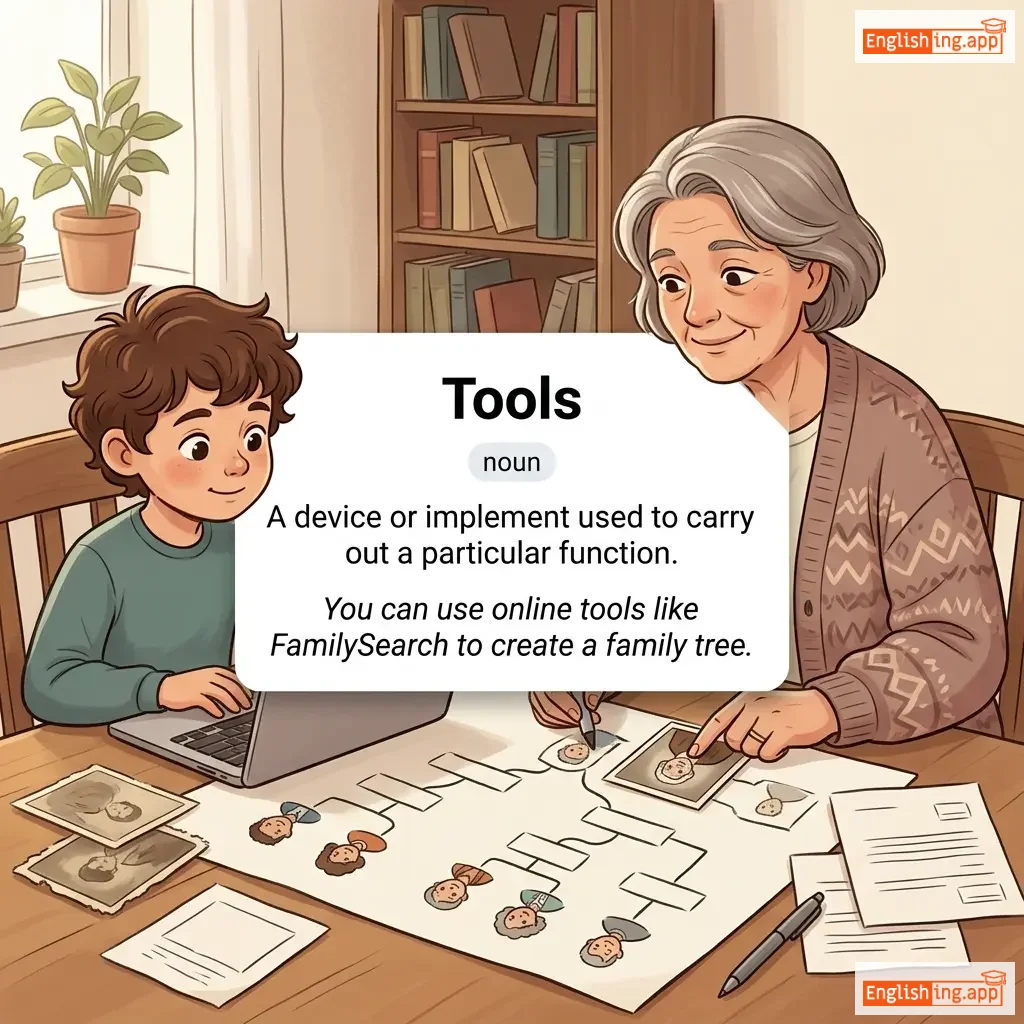
Tools definition card — visual illustration of the meaning
noun
tuːlz
herramientas (herramientas)

A device or implement used to carry out a particular function.

"You can use online tools like FamilySearch to create a family tree."

"Puedes usar herramientas en línea como FamilySearch para crear un árbol genealógico." (Puedes usar herramientas en línea como FamilySearch para crear un árbol genealógico.)
noun
/tuːθ/
diente (diente)

each of the hard, pointed structures in the mouth used for biting and chewing food

"He has a toothache and needs to see the dentist."

"Él tiene dolor de muelas y necesita ir al dentista." (Él tiene dolor de muelas y necesita ir al dentista.)
noun
/tɒp/
cima (seema)

the highest or uppermost point, part, or surface of something

"The book is on the top shelf."

"El libro está en la estantería superior." (El libro esta en la estanteria superior.)
noun
/ˈtoʊ.pæz/
topacio (topacio)

a precious stone, typically colorless, yellow, or blue, used in jewelry

"The queen's crown was adorned with a magnificent blue topaz."

"La corona de la reina estaba adornada con un magnífico topacio azul." (La corona de la reina estaba adornada con un magnifico topacio azul.)
noun
/ˈtɒpɪk/
tema (tema)

a subject of conversation, discussion, or writing

"The topic of the meeting was company expansion."

"El tema de la reunión fue la expansión de la empresa." (El tema de la reunion fue la expansion de la empresa.)
adjective
/ˈtɒp.məʊst/
más alto; superior (mas alto; superior)

highest in position or rank

"The flag was placed on the topmost branch of the tree."

"La bandera fue colocada en la rama más alta del árbol." (La bandera fue colocada en la rama más alta del árbol.)
noun
/təˈpɒɡrəfi/
topografía (topografia)

the arrangement of the natural and artificial physical features of an area

"The topography of the region made construction very challenging."

"La topografía de la región hizo que la construcción fuera muy desafiante." (La topografia de la region hizo que la construccion fuera muy desafiante.)
verb
/ˈtɒpl/
caer (kaer)

to fall or cause to fall over; to overthrow

"The earthquake caused the old building to topple."

"El terremoto causó que el viejo edificio se cayera." (El terremoto causó que el viejo edificio se cayera.)
noun
/ˈtɒpˌsɔɪl/
capa superficial del suelo (capa superficial del suelo)

the top layer of soil, which is rich in organic matter and nutrients

"Farmers rely on healthy topsoil for good crop yields."

"Los agricultores dependen de un suelo superficial saludable para obtener buenos rendimientos de cosecha." (Los agricultores dependen de un suelo superficial saludable para obtener buenos rendimientos de cosecha.)
adjective
/ˌtɒpsi ˈtɜːvi/
desordenado (desordenado)

in a state of confusion, disorder, or upside down

"The sudden announcement left the office in a topsy-turvy state."

"El anuncio repentino dejó la oficina en un estado completamente desordenado." (El anuncio repentino dejó la oficina en un estado completamente desordenado.)
noun
/tɔːrtʃ/
linterna (torch)

a portable electric lamp powered by batteries; a flaming stick used for light

"Use the torch to find your way in the dark."

"Usa la linterna para encontrar tu camino en la oscuridad." (Usa la linterna para encontrar tu camino en la oscuridad.)
noun, verb
/ˈtɔːr.ment/
tormento (tormento)

severe physical or mental suffering; to cause extreme suffering

"The prisoner was in constant torment."

"El prisionero estaba en constante tormento." (El prisionero estaba en constante tormento.)
noun
/tɔːrˈneɪdoʊ/
tornado (tornado)

a rapidly rotating column of air in contact with the ground and clouds, often destructive

"The tornado destroyed several houses in the village."

"El tornado destruyó varias casas en el pueblo" (El tornado destruyo varias casas en el pueblo)
noun/verb
/tɔːrˈpiːdoʊ/
torpedo (torpedo)

A self-propelled underwater missile; to attack or destroy something suddenly and forcefully.

"The submarine launched a torpedo at the enemy ship."

"El submarino lanzó un torpedo al barco enemigo." (El submarino lanzo un torpedo al barco enemigo.)
adjective
/ˈtɔːrpɪd/
lento (torpid)

Mentally or physically inactive; sluggish or lethargic.

"After the long hike, he felt torpid and unmotivated."

"Después de la larga caminata, se sintió lento y desmotivado." (Despues de la larga caminata, se sintió lento y desmotivado.)
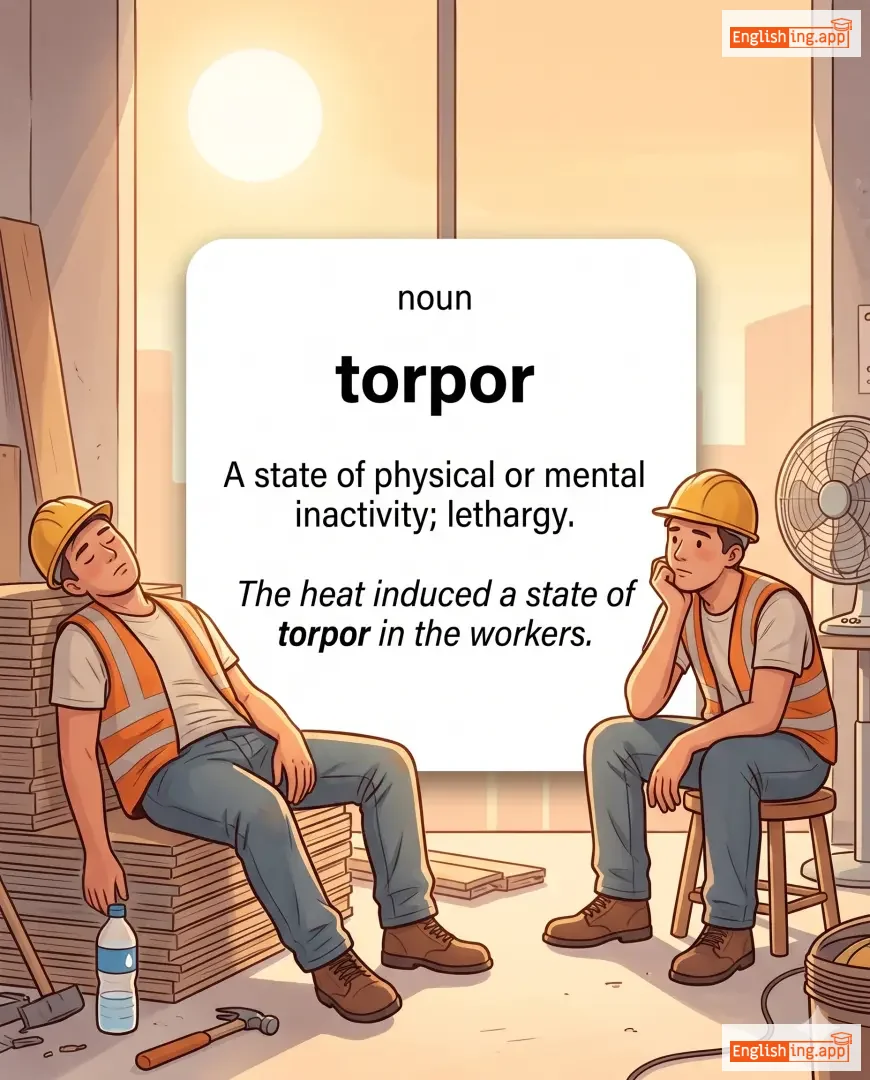
torpor definition card — visual illustration of the meaning
noun
/ˈtɔːrpər/
letargo (torpor)

A state of physical or mental inactivity; lethargy.

"The heat induced a state of torpor in the workers."

"El calor indujo un estado de letargo en los trabajadores." (El calor indujo un estado de letargo en los trabajadores.)
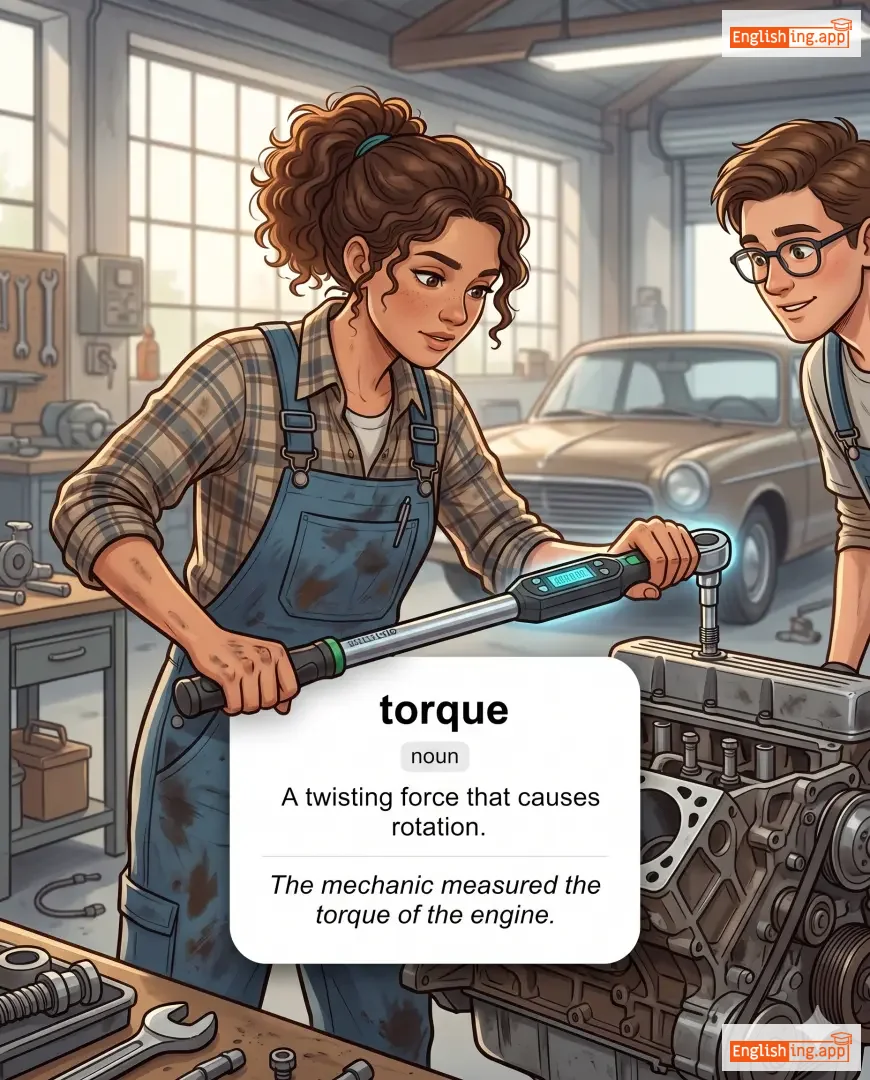
torque definition card — visual illustration of the meaning
noun
/tɔːrk/
torque (torque)

A twisting force that causes rotation.

"The mechanic measured the torque of the engine."

"El mecánico midió el torque del motor." (El mecanico midio el torque del motor.)
noun
/ˈtɔːrənt/
tormenta (tormenta)

A strong and fast-moving stream of water; a sudden, violent outpouring of something.

"A torrent of rain flooded the streets."

"Una tormenta de lluvia inundó las calles." (Una tormenta de lluvia inundo las calles.)