Vocabularios

Descubra, aprenda y domine el vocabulario en inglés

noun
/ˈtɛmpoʊ/
tempo, ritmo (tempo, ritmo)

The speed or pace at which a piece of music or activity is performed.

"The band played the song at a faster tempo than usual."

"La banda tocó la canción a un tempo más rápido de lo habitual." (La banda tocó la canción a un tempo más rápido de lo habitual.)
adjective
/ˈtɛmpərəl/
temporal (temporal)

Relating to worldly affairs or to time rather than spiritual matters.

"The monk gave up his temporal possessions to live a simple life."

"El monje renunció a sus posesiones temporales para vivir una vida simple." (El monje renunció a sus posesiones temporales para vivir una vida simple.)
adverb
/ˈtɛmpərɛrɪli/
temporalmente (temporalmente)

for a limited time; not permanently

"The road is closed temporarily for repairs."

"La carretera está cerrada temporalmente para reparaciones." (La carretera está cerrada temporalmente para reparaciones.)
adjective
/ˈtɛmpərɛri/
temporal (temporal)

Lasting for only a limited period of time; not permanent.

"She found a temporary job during the summer break."

"Ella encontró un trabajo temporal durante las vacaciones de verano." (Ella encontró un trabajo temporal durante las vacaciones de verano.)
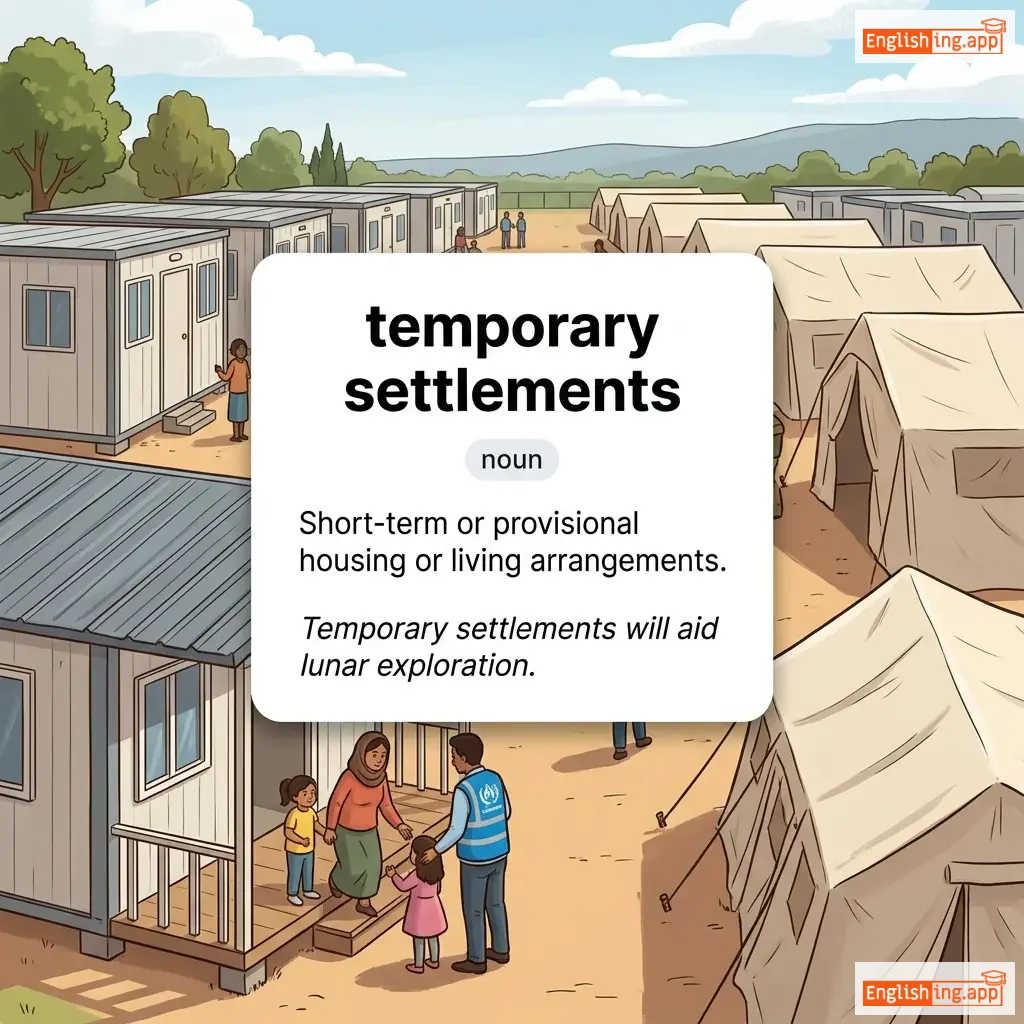
temporary settlements definition card — visual illustration of the meaning
noun
ˈtempəreri ˈsetlmənts
asentamientos temporales (asentamientos temporales)

Short-term or provisional housing or living arrangements.

"Temporary settlements will aid lunar exploration."

"Los asentamientos temporales ayudarán a la exploración lunar." (Los asentamientos temporales ayudarán a la exploración lunar.)
verb
/ˈtɛmpəˌraɪz/
posponer (posponer)

To delay making a decision or taking action in order to gain time.

"The politician temporized when asked about the controversial issue."

"El político pospuso cuando se le preguntó sobre el tema controvertido." (El político pospuso cuando se le preguntó sobre el tema controvertido.)
verb
/tɛmpt/
tentar (tentar)

to entice or attract someone to do something, often something wrong or unwise

"The smell of fresh bread tempted him to enter the bakery."

"El olor a pan recién hecho lo tentó a entrar en la panadería." (El olor a pan recién hecho lo tentó a entrar en la panadería.)
noun
/temp.ˈteɪ.ʃən/
tentación (tentacion)

the desire to do something wrong or unwise; an urge to have or do something

"He resisted the temptation to eat the entire chocolate cake."

"Él resistió la tentación de comer todo el pastel de chocolate." (El resistio la tentacion de comer todo el pastel de chocolate.)
noun
/ˈtɛmptər/
tentador (tentador)

a person or thing that entices someone into doing something wrong

"The tempter whispered false promises into his ear."

"El tentador susurró falsas promesas en su oído." (El tentador susurró falsas promesas en su oído.)
adjective
/ˈtemptɪŋ/
tentador (tentador)

appealing to or attracting someone, even if wrong or inadvisable; alluring

"The chocolate cake looked very tempting in the bakery window."

"El pastel de chocolate parecía muy tentador en la ventana de la pastelería." (El pastel de chocolate parecia muy tentador en la ventana de la pasteleria.)
noun
/tɛn/
diez (diez)

the number following nine and preceding eleven

"I have ten apples in the basket."

"Tengo diez manzanas en la canasta." (Tengo diez manzanas en la canasta.)
adjective
/ˈtɛnəbl/
defendible (defendible)

able to be defended or maintained against attack or objection

"His argument was strong and tenable in court."

"Su argumento fue fuerte y defendible en la corte." (Su argumento fue fuerte y defendible en la corte.)
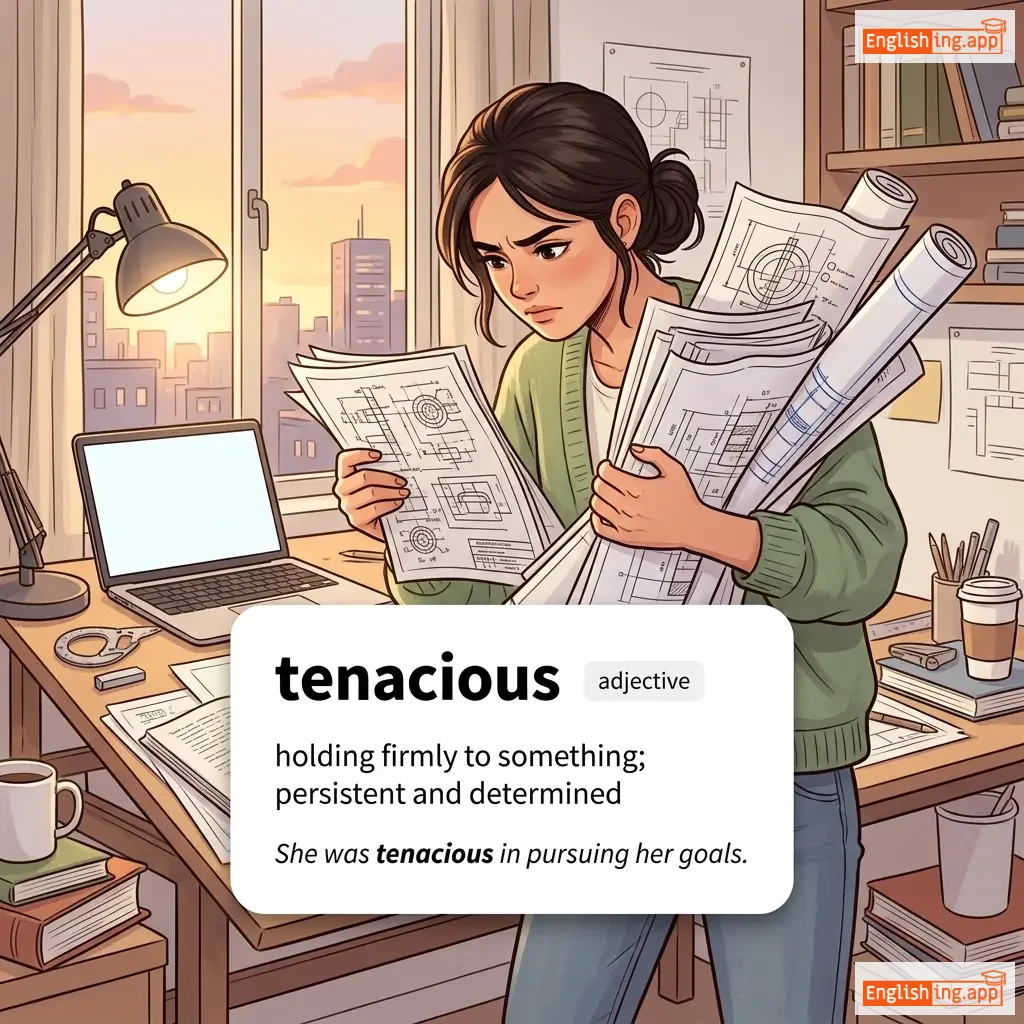
tenacious definition card — visual illustration of the meaning
adjective
/təˈneɪʃəs/
tenaz (tenaz)

holding firmly to something; persistent and determined

"She was tenacious in pursuing her goals."

"Ella fue tenaz en la búsqueda de sus metas." (Ella fue tenaz en la busqueda de sus metas.)
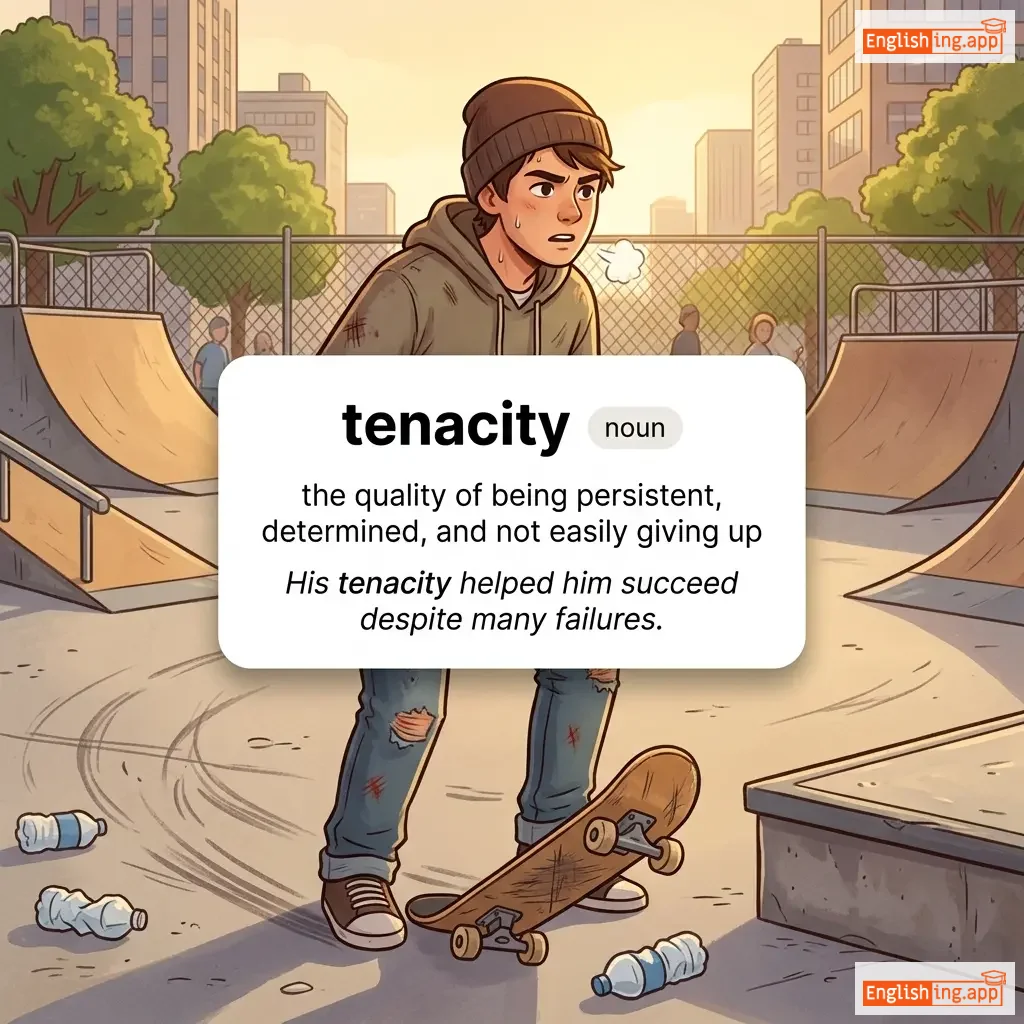
tenacity definition card — visual illustration of the meaning
noun
/təˈnæsəti/
tenacidad (tenacidad)

the quality of being persistent, determined, and not easily giving up

"His tenacity helped him succeed despite many failures."

"Su tenacidad le ayudó a tener éxito a pesar de muchos fracasos." (Su tenacidad le ayudo a tener exito a pesar de muchos fracasos.)
noun
/ˈtɛnənsi/
arrendamiento (arrendamiento)

The possession or occupation of land or property as a tenant.

"The tenancy agreement was signed for two years."

"El contrato de arrendamiento se firmó por dos años." (El contrato de arrendamiento se firmó por dos años.)
noun
/ˈtɛnənt/
inquilino (inquilino)

A person who occupies land or property rented from a landlord.

"The tenant paid the rent on time every month."

"El inquilino pagó el alquiler a tiempo cada mes" (El inquilino pagó el alquiler a tiempo cada mes)
verb
/tɛnd/
tender/cuidar (tender/cuidar)

To regularly behave in a particular way or to take care of something.

"She tends to wake up early in the morning."

"Ella tiende a despertarse temprano en la mañana." (Ella tiende a despertarse temprano en la mañana.)
noun
/ˈtɛndənsi/
tendencia (tendencia)

An inclination or likelihood to behave in a certain way.

"He has a tendency to forget small details."

"Él tiene la tendencia de olvidar los pequeños detalles." (El tiene la tendencia de olvidar los pequeños detalles.)
adjective
/tɛnˈdɛnʃəs/
tendencioso (tendencioso)

Expressing or promoting a particular cause or point of view, often biased.

"The article was criticized for its tendentious tone."

"El artículo fue criticado por su tono tendencioso." (El articulo fue criticado por su tono tendencioso.)
verb, noun, adjective
/ˈtɛndər/
propuesta / tierno (propuesta / tierno)

to offer formally; soft and delicate in texture or character; a formal offer or proposal

"The company tendered its resignation to the board."

"La compañía presentó su renuncia a la junta." (La compania presento su renuncia a la junta.)
noun
/ˈten.dər.nəs/
ternura (ternura)

gentleness and kindness; the quality of being easily hurt or damaged

"The mother showed great tenderness while caring for her sick child."

"La madre mostró gran ternura al cuidar a su hijo enfermo." (La madre mostro gran ternura al cuidar a su hijo enfermo.)
adjective
/ˈtɛnɪbrəs/
tenebroso (tenebroso)

dark, shadowy, or obscure

"The cave was damp and tenebrous, filled with eerie sounds."

"La cueva estaba húmeda y tenebrosa, llena de ruidos extraños." (La cueva estaba humeda y tenebrosa, llena de ruidos extranos.)
noun
/ˈtɛnəmənt/
inmueble de alquiler (inmueble de alquiler)

a large building divided into separate apartments, often in poor condition

"The family lived in a crowded tenement in the city."

"La familia vivió en un tenement atestado en la ciudad." (La familia vivió en un tenement atestado en la ciudad.)
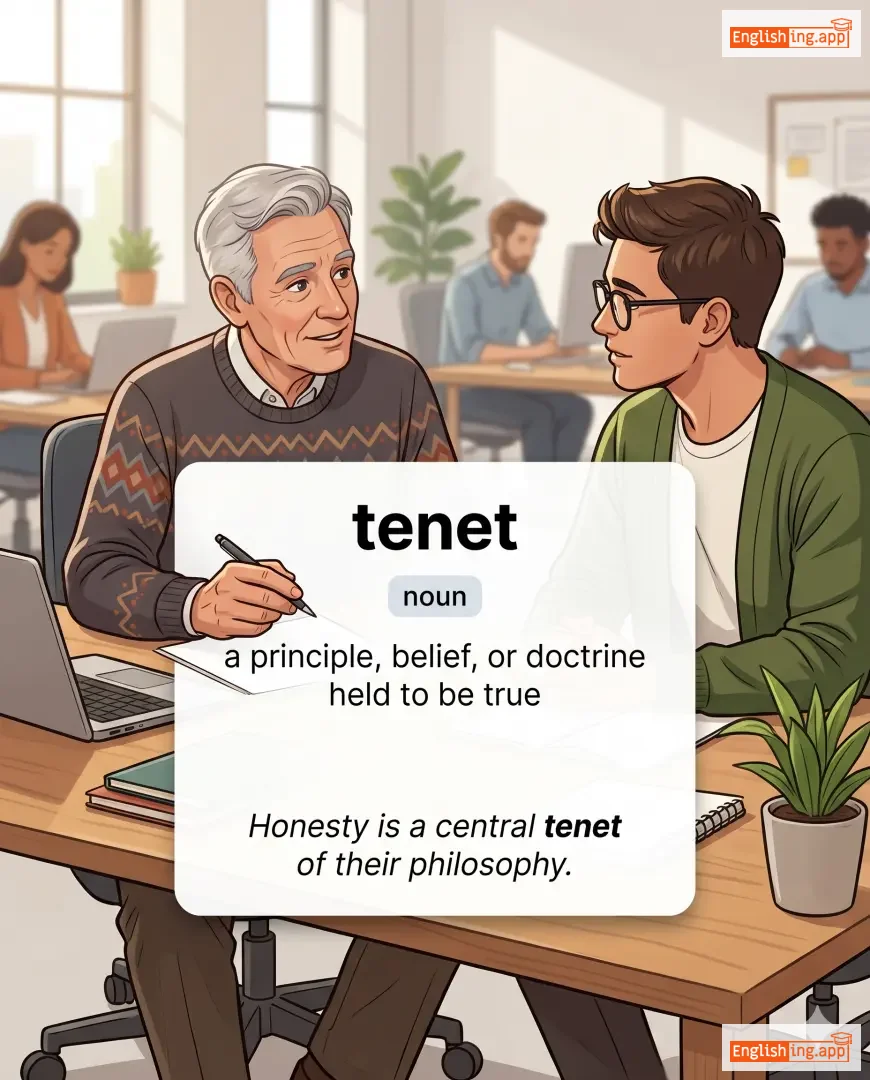
tenet definition card — visual illustration of the meaning
noun
/ˈtɛnɪt/
principio (principio)

a principle, belief, or doctrine held to be true

"Honesty is a central tenet of their philosophy."

"La honestidad es un principio central de su filosofía." (La honestidad es un principio central de su filosofía.)
noun
/ˈtɛnɪs/
tenis (tenis)

a sport played with rackets and a ball on a rectangular court

"He enjoys playing tennis with his friends on the weekends."

"Él disfruta jugar al tenis con sus amigos los fines de semana." (Él disfruta jugar al tenis con sus amigos los fines de semana.)
noun
/ˈtɛnər/
tenor / tono general (tenor / tono general)

the general meaning, drift, or character of something; a male singing voice between baritone and alto

"The overall tenor of his speech was hopeful and reassuring."

"El tenor general de su discurso era esperanzador y tranquilizador." (El tenor general de su discurso era esperanzador y tranquilizador.)
noun, adjective, verb
/tɛns/
tenso / tiempo verbal (tenso / tiempo verbal)

a grammatical category showing time reference; stretched tight or anxious

"She felt tense before the interview."

"Ella se sintió tensa antes de la entrevista." (Ella se sintió tensa antes de la entrevista.)
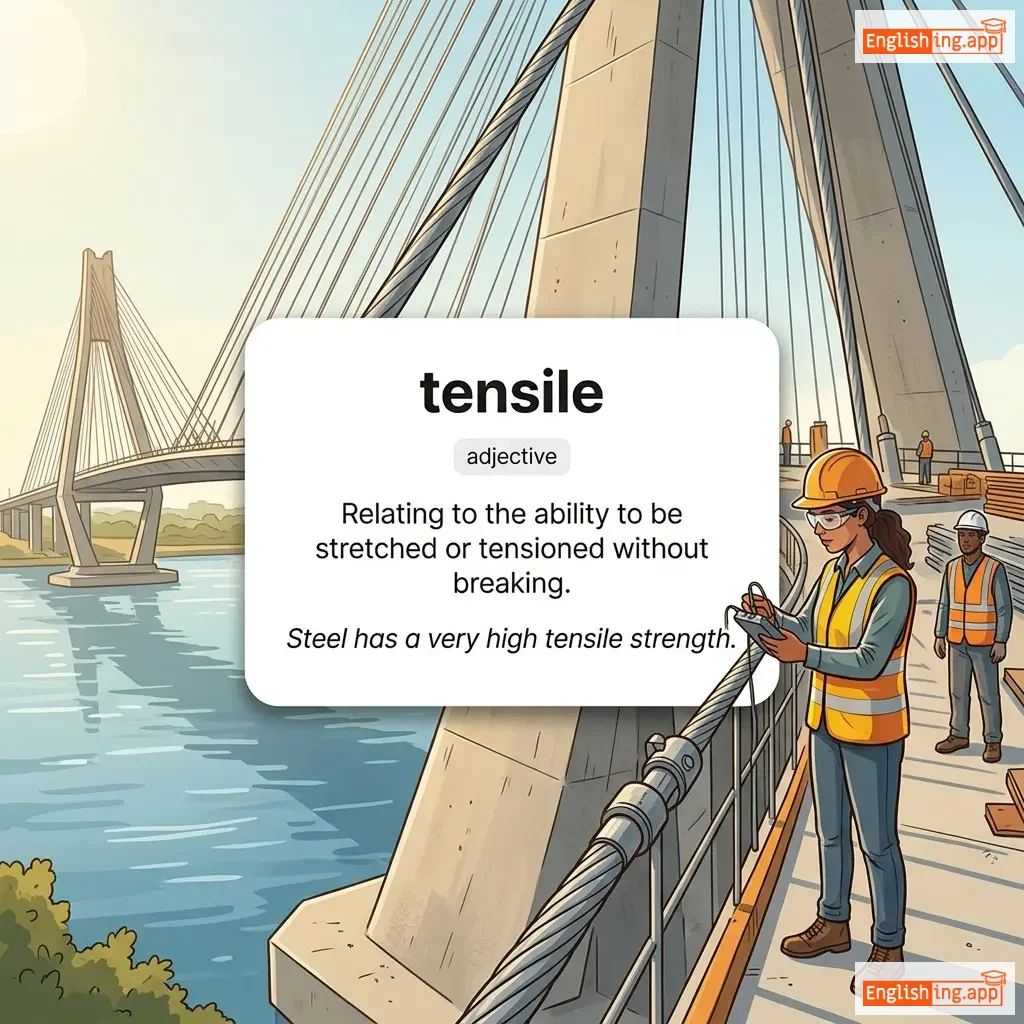
tensile definition card — visual illustration of the meaning
adjective
/ˈtɛn.saɪl/
tenaz (tenaz)

Relating to the ability to be stretched or tensioned without breaking.

"Steel has a very high tensile strength."

"El acero tiene una resistencia tenaz muy alta." (El acero tiene una resistencia tenaz muy alta.)
noun
/ˈtɛn.ʃən/
tensión (tension)

A state of being stretched tight; mental or emotional strain.

"There was a lot of tension in the room before the exam results were announced."

"Había mucha tensión en la sala antes de que se anunciaran los resultados del examen." (Había mucha tensión en la sala antes de que se anunciaran los resultados del examen.)
noun
/tɛnt/
tienda (tienda)

a portable shelter made of fabric, supported by poles and ropes

"We set up a tent for the camping trip."

"Montamos una tienda para el viaje de camping." (Montamos una tienda para el viaje de camping.)
adjective
/ˈtɛn.tə.tɪv/
tentativo (tentativo)

Not certain or fixed; done without confidence.

"She gave a tentative smile before agreeing."

"Ella dio una sonrisa tentativa antes de aceptar." (Ella dio una sonrisa tentativa antes de aceptar.)
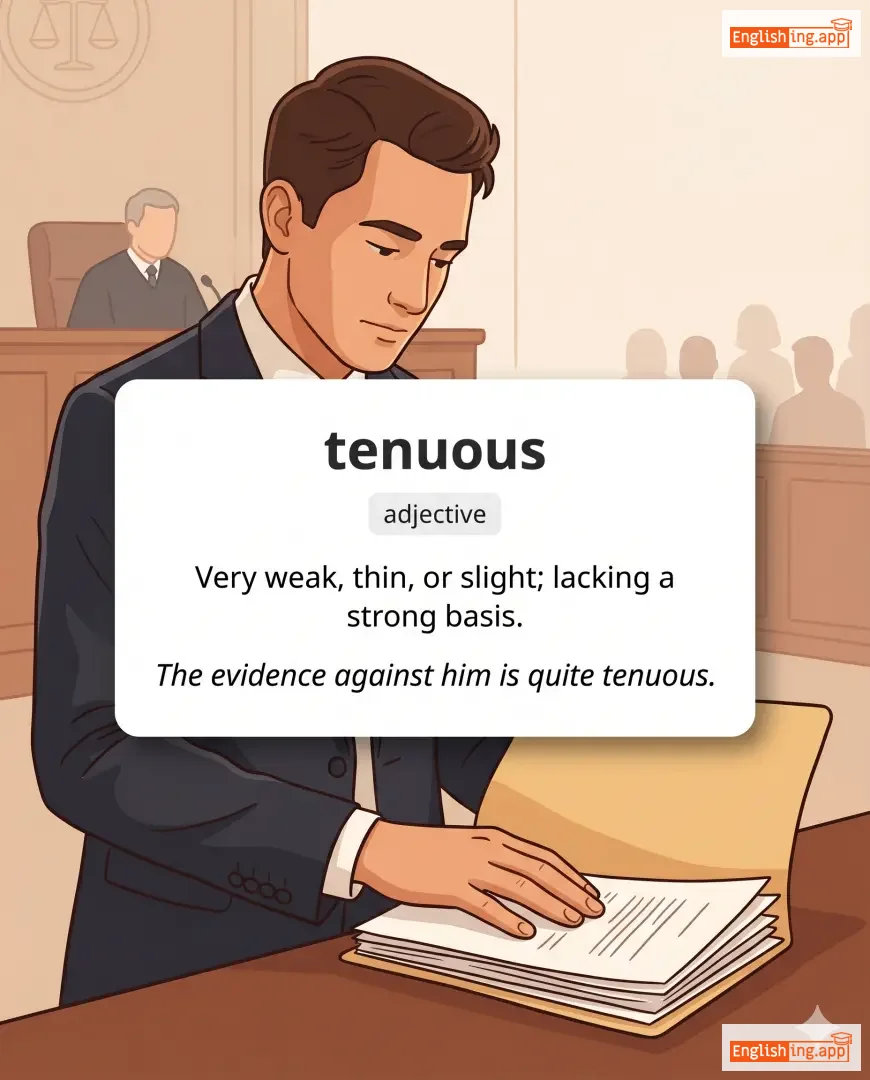
tenuous definition card — visual illustration of the meaning
adjective
/ˈtɛn.ju.əs/
débil / delgado (debil / delgado)

Very weak, thin, or slight; lacking a strong basis.

"The evidence against him is quite tenuous."

"La evidencia contra él es bastante débil." (La evidencia contra él es bastante débil.)
noun
/ˈtɛnjər/
mandato (mandato)

The period of time during which someone holds a position, office, or land.

"His tenure as president lasted for five years."

"Su mandato como presidente duró cinco años." (Su mandato como presidente duro cinco anos.)
adjective
/ˈtɛpɪd/
tibio, indiferente (tibio, indiferente)

Lukewarm; showing little enthusiasm or force.

"His speech received only a tepid response from the audience."

"Su discurso recibió solo una respuesta tibia del público." (Su discurso recibió solo una respuesta tibia del público.)
noun
/ˌtɜːsənˈtɛnəri/
tercentenario (tercentenario)

The 300th anniversary of an event.

"The city celebrated its tercentenary with a grand festival."

"La ciudad celebró su tercentenario con un gran festival." (La ciudad celebró su tercentenario con un gran festival.)
noun
/ˌtɜːdʒɪvərˈseɪʃən/
evasión, indecisión (evasión, indecision)

Evasion of straightforward action or speech; changing sides or being inconsistent.

"The politician’s tergiversation frustrated his supporters."

"La tergiversación del político frustró a sus seguidores." (La tergiversacion del politico frustro a sus seguidores.)
noun
/tɜːm/
término (termino)

a word or phrase used to describe a thing or to express a concept

"The term 'machine learning' is commonly used in technology."

"El término 'aprendizaje automático' se usa comúnmente en la tecnología." (El termino 'aprendizaje automatico' se usa comunmente en la tecnologia.)
noun
/ˈtɜːrməɡənt/
mujer dominante y temperamental (mujer dominante y temperamental)

A harsh-tempered or overbearing woman.

"The character was portrayed as a loud and domineering termagant."

"El personaje fue retratado como una mujer ruidosa y dominante." (El personaje fue retratado como una mujer ruidosa y dominante.)
noun/adjective
/ˈtɜːrmɪnəl/
terminal, final, enfermedad terminal (terminal, final, enfermedad terminal)

As a noun: A place where transport routes begin or end. As an adjective: Relating to the end or final stage of something, often an illness.

"He waited for the bus at the central terminal."

"Él esperó el autobús en la terminal central." (Él esperó el autobús en la terminal central.)
verb
/ˈtɜːrmɪˌneɪt/
terminar (terminar)

to bring something to an end or to stop something from continuing

"The company decided to terminate his contract."

"La compañía decidió terminar su contrato." (La compañia decidió terminar su contrato.)
noun
/ˌtɜːrmɪˈneɪʃən/
terminación (terminacion)

the act of ending something or the state of being ended

"The termination of the contract caused financial loss."

"La terminación del contrato causó una pérdida financiera." (La terminacion del contrato causo una perdida financiera.)
noun
/ˌtɜːrməˈnɑːlədʒi/
terminología (terminologia)

the set of technical or special words used in a particular subject

"Medical terminology can be difficult for new students to understand."

"La terminología médica puede ser difícil de entender para los nuevos estudiantes." (La terminologia medica puede ser dificil de entender para los nuevos estudiantes.)
noun
/ˈtɜːrmɪnəs/
punto final (punto final)

the final point or end of something, especially the final station on a railway line

"The train finally arrived at the terminus after a long journey."

"El tren finalmente llegó al terminus después de un largo viaje." (El tren finalmente llegó al terminus después de un largo viaje.)
noun
/tɜːmz/
términos (terminos)

plural of term; conditions or rules in a contract or agreement

"The terms of the agreement are clearly outlined in the contract."

"Los términos del acuerdo están claramente delineados en el contrato." (Los terminos del acuerdo estan claramente delineados en el contrato.)
noun
/təˈreɪn/
terreno (terreno)

a stretch of land, especially with regard to its physical features

"The soldiers had to cross rough terrain during the mission."

"Los soldados tuvieron que cruzar un terreno difícil durante la misión." (Los soldados tuvieron que cruzar un terreno dificil durante la mision.)
noun
/ˈterəpɪn/
una pequeña tortuga de agua dulce (una pequena tortuga de agua dulce)

a small freshwater turtle, especially one found in North America

"The terrapin slowly crawled into the pond."

"El terrapin se arrastró lentamente hacia el estanque." (El terrapin se arrastro lentamente hacia el estanque.)
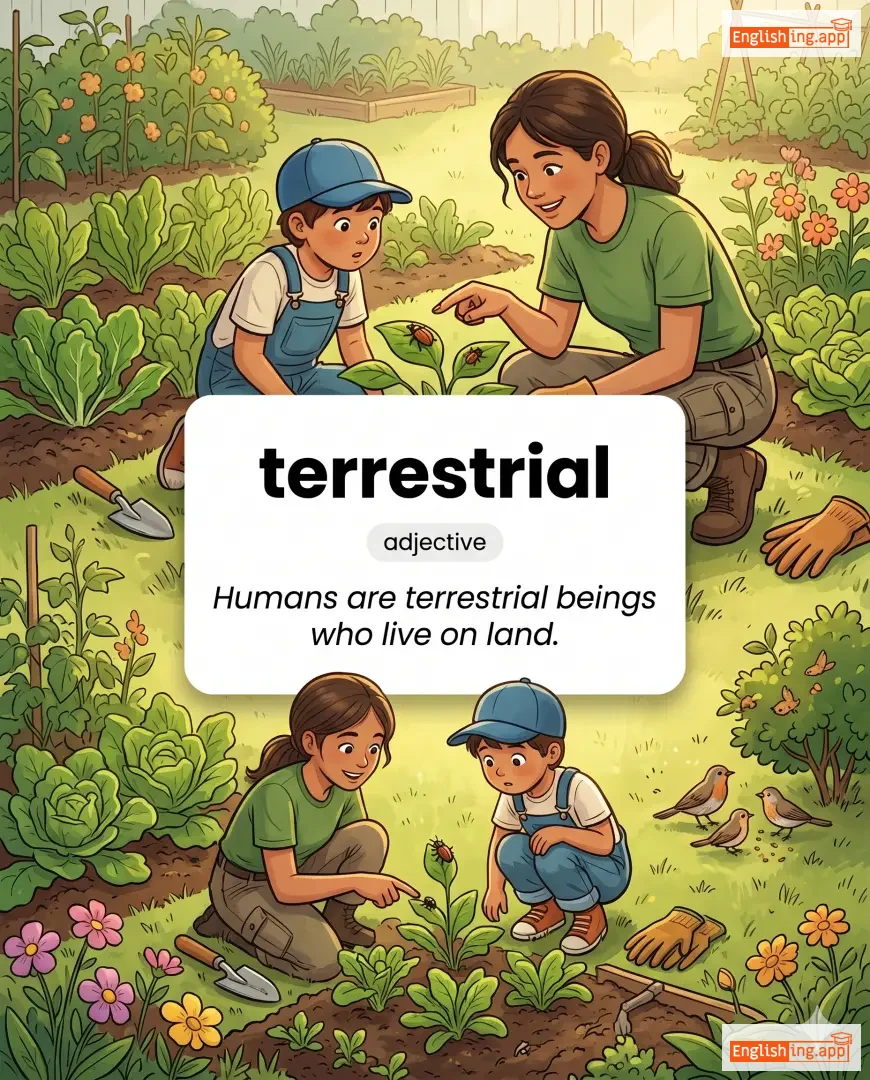
terrestrial definition card — visual illustration of the meaning
adjective
/təˈrɛstriəl/
terrestre (terrestre)

Relating to the Earth or land as opposed to the sea or air; living or growing on land.

"Humans are terrestrial beings who live on land."

"Los humanos son seres terrestres que viven en la tierra." (Los humanos son seres terrestres que viven en la tierra.)
adjective
/ˈtɛrɪbəl/
terrible (terrible)

extremely bad or unpleasant

"The food at that restaurant was terrible."

"La comida en ese restaurante fue terrible." (La comida en ese restaurante fue terrible)
adverb
/ˈtɛrəbli/
terriblemente (terriblemente)

to a very great or extreme degree; very badly or unpleasantly

"He felt terribly sad after hearing the news."

"Se sintió terriblemente triste después de escuchar la noticia." (Se sintió terriblemente triste después de escuchar la noticia.)
adjective
/təˈrɪfɪk/
fantástico (fantastico)

extremely good or excellent; very great or intense

"The concert last night was absolutely terrific."

"El concierto de anoche fue absolutamente fantástico." (El concierto de anoche fue absolutamente fantastico.)