Vocabularios

Descubra, aprenda y domine el vocabulario en inglés

noun
/ˈtiːtʃər/
maestro (maestro)

a person who teaches, especially in a school

"Mr. Smith is the teacher of the math class."

"El Sr. Smith es el maestro de la clase de matemáticas." (El Sr. Smith es el maestro de la clase de matemáticas.)
noun
/ˈtiːtʃɪŋ/
enseñanza (ensenanza)

the profession or practice of teaching

"Teaching is a noble profession."

"La enseñanza es una profesión noble." (La enseñanza es una profesión noble.)
noun
/tiːm/
equipo (equipo)

a group of people working together towards a common goal

"Our team won the match after a great effort."

"Nuestro equipo ganó el partido después de un gran esfuerzo." (Nuestro equipo ganó el partido después de un gran esfuerzo.)
noun
/ˈtiːmmeɪt/
compañero de equipo (compañero de equipo)

a member of the same team

"He congratulated his teammate after scoring the goal."

"Él felicitó a su compañero de equipo después de marcar el gol." (Él felicitó a su compañero de equipo después de marcar el gol.)
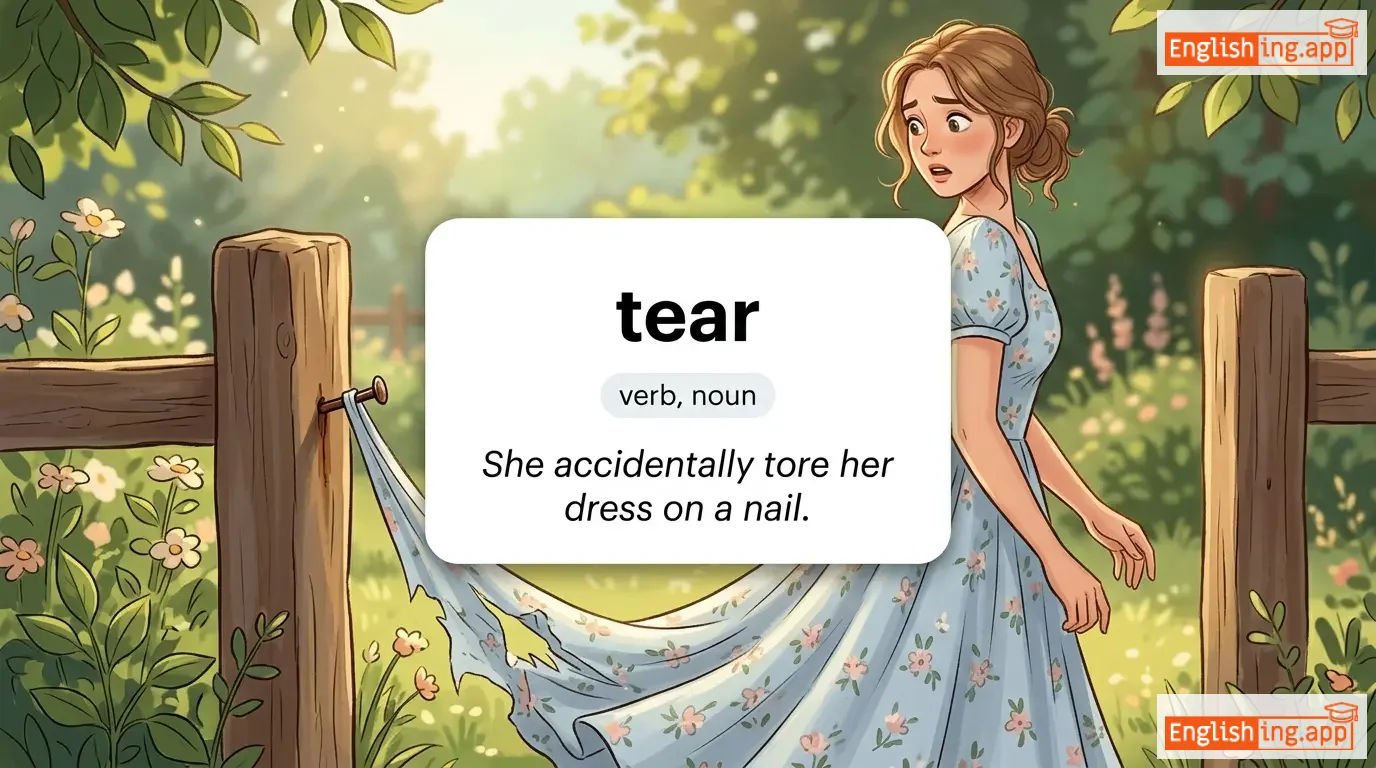
tear definition card — visual illustration of the meaning
verb, noun
/tɪər/ (noun: liquid) /tɛər/ (verb: rip)
lágrima / rasgar (lagrima / rasgar)

As a verb: to pull apart or rip something. As a noun: a drop of clear salty liquid produced by glands in your eyes.

"She accidentally tore her dress on a nail."

"Ella accidentalmente rompió su vestido con un clavo." (Ella accidentalmente rompió su vestido con un clavo.)
adjective
/ˈtɪərfəl/
lloroso; inclinado a llorar (lloroso; inclinado a llorar)

expressing or showing sadness and sorrow; inclined to weep

"She gave a tearful goodbye to her friends at the airport."

"Ella dio una despedida llorosa a sus amigos en el aeropuerto." (Ella dio una despedida llorosa a sus amigos en el aeropuerto.)
verb
/tiːz/
burlarse (burlarse)

to make fun of someone in a playful or unkind way

"Children often tease their younger siblings playfully."

"Los niños a menudo se burlan de sus hermanos pequeños juguetonamente." (Los ninos a menudo se burlan de sus hermanos pequenos juguetonamente.)
noun
/ˈtiːspuːn/
felicidad (felicidad)

a small spoon used for stirring drinks or eating soft foods, or for measuring small amounts of ingredients.

"Add a teaspoon of sugar to the tea."

"Ella no pudo esconder su felicidad cuando recibió el premio." (Ella no pudo esconder su felicidad cuando recibió el premio.)
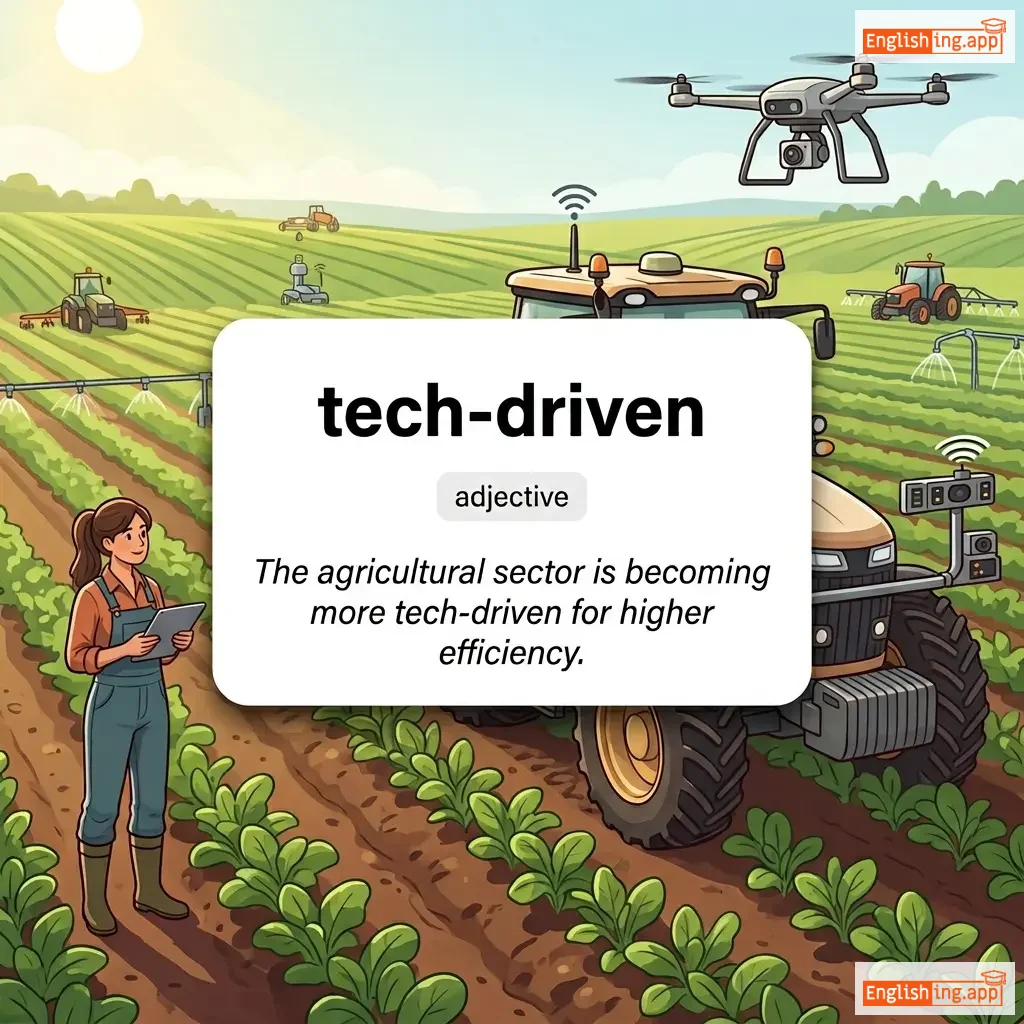
tech-driven definition card — visual illustration of the meaning
adjective
/tɛk ˈdrɪv.ən/
impulsado por la tecnología (impulsado por la tecnologia)

Powered or guided by technology; dependent on technological advancement for operation.

"The agricultural sector is becoming more tech-driven for higher efficiency."

"El sector agrícola está volviéndose más impulsado por la tecnología para una mayor eficiencia." (El sector agricola esta volviendose mas impulsado por la tecnologia para una mayor eficiencia.)
noun
/ˈtɛknɪk/
técnica (tecnica)

A method, skill, or art in a particular field, especially in the arts or sciences.

"The artist’s technic in watercolor impressed the judges."

"La técnica del artista en acuarela impresionó a los jueces." (La tecnica del artista en acuarela impresiono a los jueces.)
adjective
/ˈtɛknɪkəl/
técnico (tecnico)

relating to a specific subject, art, or craft, or its techniques.

"He has a technical background in engineering."

"Él tiene una formación técnica en ingeniería." (El tiene una formacion tecnico en ingenieria.)
noun
/ˌtɛknɪˈkæləti/
tecnicismo (tecnicismo)

A small detail of law, rule, or procedure; a minor point that affects an outcome.

"The case was dismissed on a technicality."

"El caso fue desestimado por una tecnicidad." (El caso fue desestimado por una tecnicidad.)
noun
/tɛkˈnɪʃən/
técnico (tecnico)

a person skilled in the practical aspects of a particular science, art, or job

"The technician repaired the computer within an hour."

"El técnico reparó la computadora en una hora." (El tecnico reparó la computadora en una hora.)
noun
/tɛkˈniːk/
técnica (tecnica)

A particular way of carrying out a task, especially with skill.

"She learned a new breathing technique in yoga class."

"Ella aprendió una nueva técnica de respiración en la clase de yoga." (Ella aprendió una nueva técnica de respiración en la clase de yoga.)
noun
/tɛkˈnɒɡrəfi/
tecnografía (tecnografia)

the descriptive study or writing about the practical arts, technologies, or technical methods of a society

"The anthropologist specialized in technography to understand indigenous tool-making traditions."

"El antropólogo se especializó en tecnografía para entender las tradiciones indígenas de fabricación de herramientas." (El antropologo se especializo en tecnografia para entender las tradiciones indigenas de fabricacion de herramientas.)
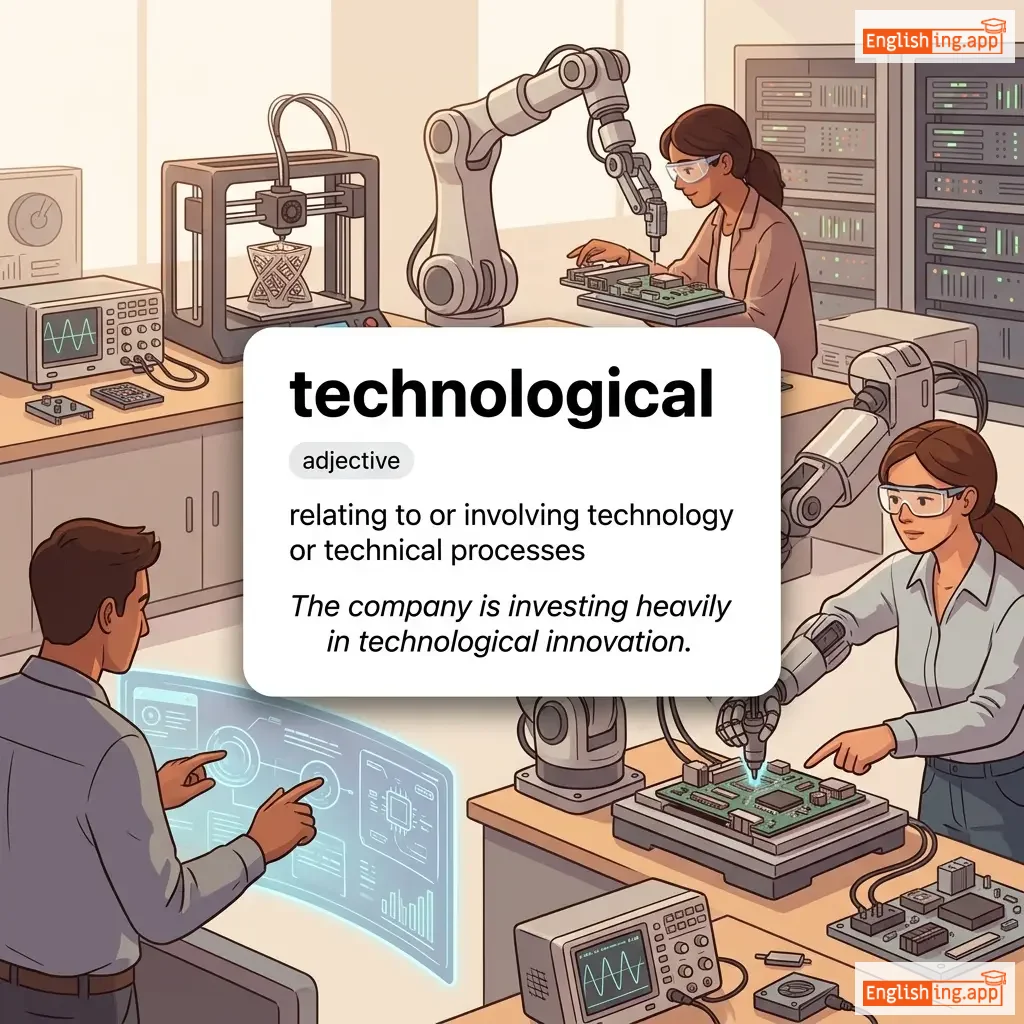
technological definition card — visual illustration of the meaning
adjective
/ˌteknəˈlɒdʒɪkəl/
tecnológico (tecnologico)

relating to or involving technology or technical processes

"The company is investing heavily in technological innovation."

"La empresa está invirtiendo mucho en la innovación tecnológica." (La empresa esta invirtiendo mucho en la innovacion tecnologica.)
technological advancement definition card — visual illustration of the meaning
noun
/tekˈnɒl.ə.dʒɪ.kəl ədˈvɑːns.mənt/
avance tecnológico (avance tecnologico)

Progress or improvement in technology that leads to better solutions or capabilities.

"Technological advancement is revolutionizing healthcare."

"El avance tecnológico está revolucionando la atención sanitaria." (El avance tecnologico esta revolucionando la atencion sanitaria.)
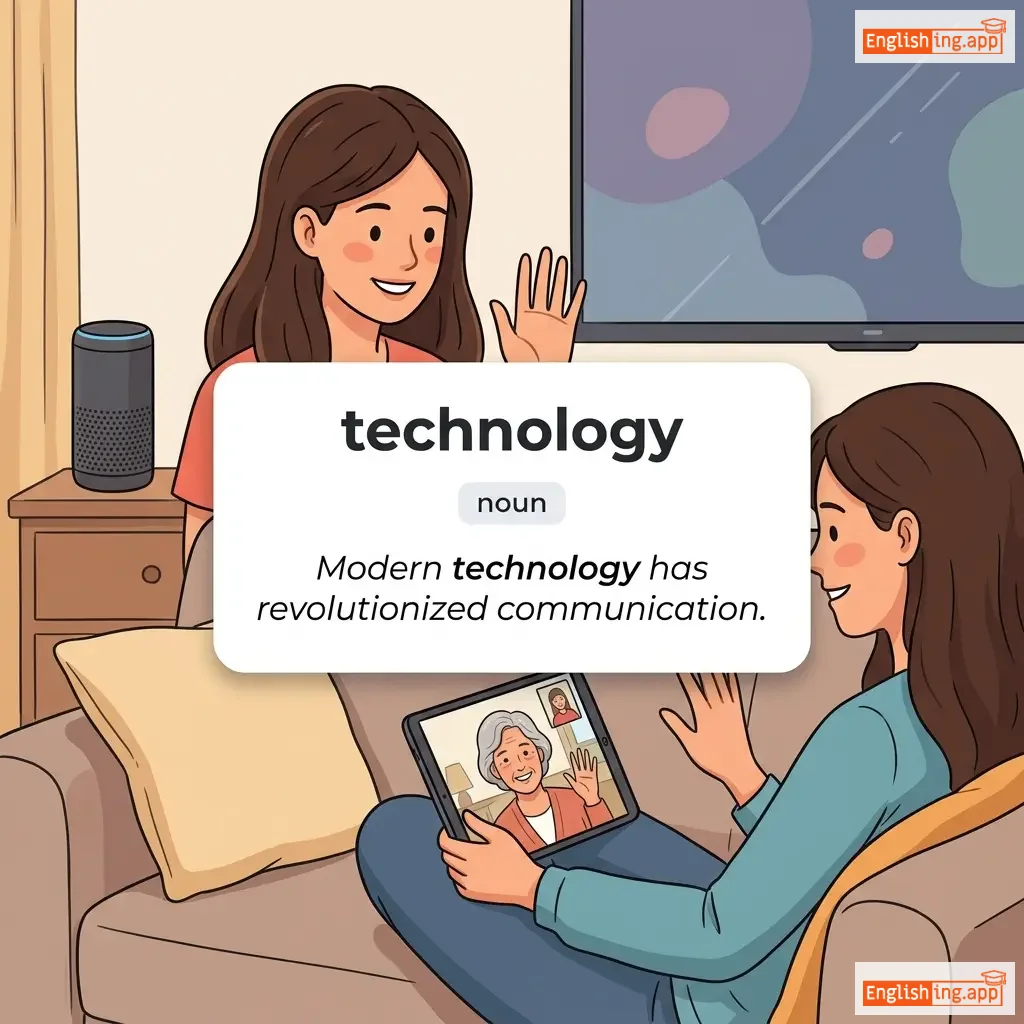
technology definition card — visual illustration of the meaning
noun
/tɛkˈnɒlədʒi/
tecnología (tecnologia)

the application of scientific knowledge for practical purposes, especially in industry

"Modern technology has revolutionized communication."

"La tecnología moderna ha revolucionado la comunicación." (La tecnologia moderna ha revolucionado la comunicacion.)
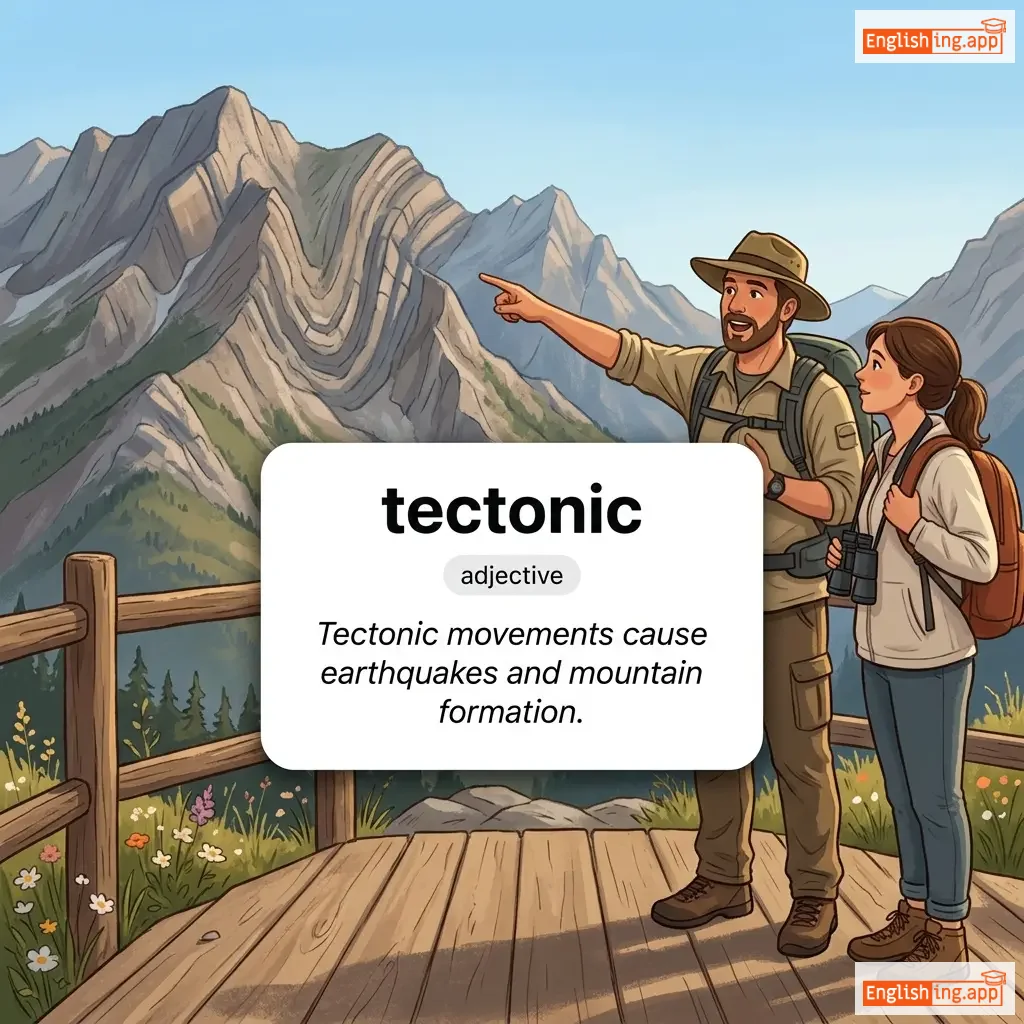
tectonic definition card — visual illustration of the meaning
adjective
/tɛkˈtɑː.nɪk/
tectónico (tectoniko)

Relating to the structure of the earth's crust and the large-scale processes that take place within it.

"Tectonic movements cause earthquakes and mountain formation."

"Los movimientos tectónicos causan terremotos y formación de montañas." (Los movimientos tectonicos causan terremotos y formacion de montanas.)
adjective
/ˈtiːdiəs/
tedioso (tedioso)

too long, slow, or dull; tiresome or monotonous

"Filling out endless forms can be a tedious task."

"Rellenar formularios interminables puede ser una tarea tediosa." (Rellenar formularios interminables puede ser una tarea tediosa.)
noun
/ˈtiːdiəm/
tedio (tedio)

the state of being tedious; monotony or boredom

"The tedium of long meetings often drains motivation."

"El tedio de las largas reuniones a menudo drena la motivación." (El tedio de las largas reuniones a menudo drena la motivación.)
verb
/tiːm/
abundar (abundar)

to be full of or swarming with

"The forest teems with wildlife."

"El bosque está lleno de vida salvaje." (El bosque está lleno de vida salvaje.)
adjective
/ˈtiːmɪŋ/
lleno (lleno)

full of or swarming with things or people

"The market was teeming with shoppers."

"El mercado estaba lleno de compradores." (El mercado estaba lleno de compradores.)
🧑‍🦱

teen (tíner)

noun
/tiːn/
adolescente (adolescente)

a person aged between 13 and 19 years.

"He's a teenager who loves sports."

"Él es un adolescente que ama los deportes." (El es un adolescente que ama los deportes.)
adjective
/ˈtiːnˌeɪdʒ/
adolescente (adolescente)

relating to or characteristic of people aged between 13 and 19 years old

"She spent her teenage years in a small town."

"Pasó sus años de adolescencia en un pequeño pueblo." (Paso sus años de adolescencia en un pequeño pueblo.)
noun
/ˈtiːneɪdʒər/
adolescente (adolescente)

a person aged between 13 and 19 years.

"Teenagers often enjoy hanging out with friends."

"Los adolescentes a menudo disfrutan pasar el rato con amigos." (Los adolescentes a menudo disfrutan pasar el rato con amigos.)
verb
/ˈtiːtər/
tambalear (tambalear)

to move or balance unsteadily; to wobble

"The glass began to teeter on the edge of the table."

"El vaso comenzó a tambalearse en el borde de la mesa." (El vaso comenzo a tambalearse en el borde de la mesa.)
noun
/tiːˈtoʊtəlɪzəm/
abstinencia total del alcohol (abstinencia total del alcohol)

the practice or principle of abstaining completely from alcoholic drinks

"He practiced teetotalism throughout his life."

"Él practicó el teetotalismo durante toda su vida." (El practico el teetotalismo durante toda su vida.)
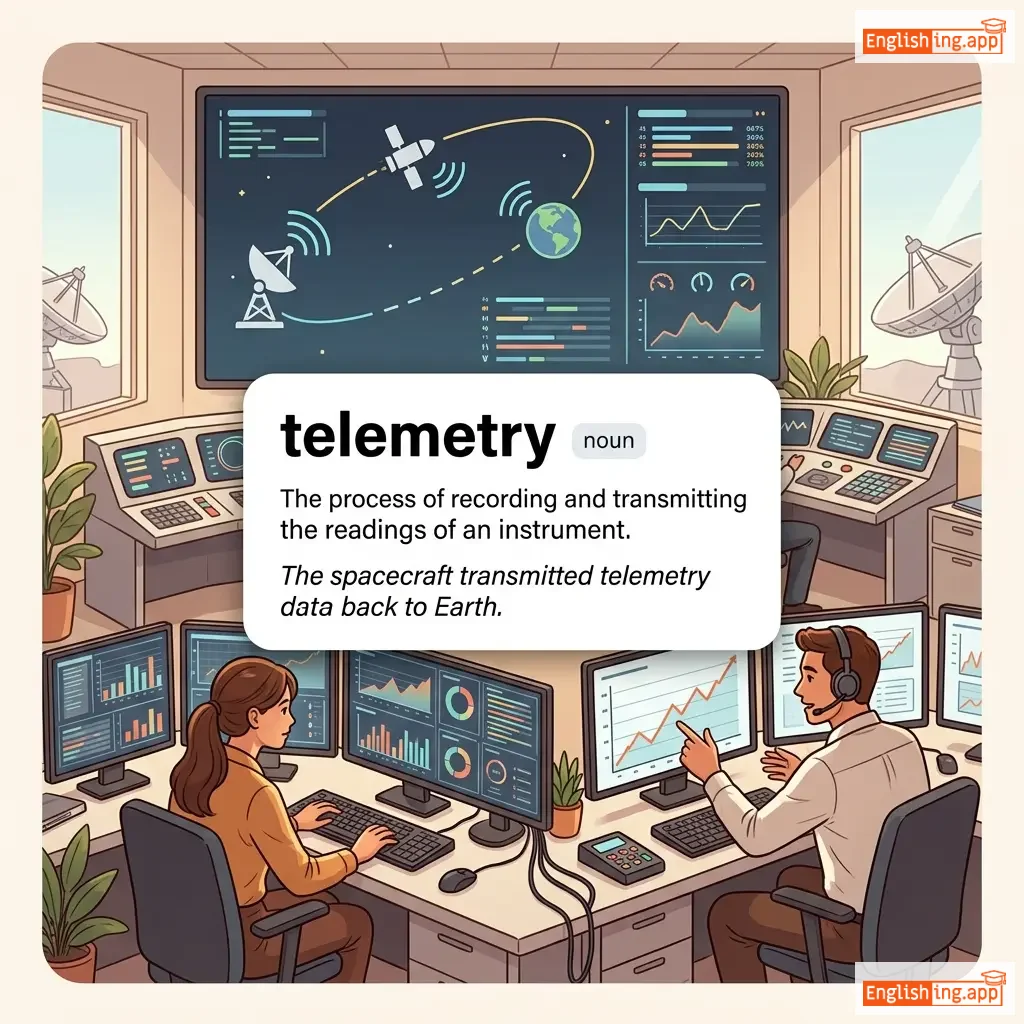
telemetry definition card — visual illustration of the meaning
noun
ˈtɛlɪˌmɛtri
telemetría (telemetria)

The process of recording and transmitting the readings of an instrument.

"The spacecraft transmitted telemetry data back to Earth."

"La nave espacial transmitió los datos de telemetría a la Tierra." (La nave espacial transmitió los datos de telemetría a la Tierra.)
noun
/ˌtɛliˈɒlədʒi/
teleología (teleologia)

the explanation of phenomena by the purpose they serve rather than by cause

"Aristotle is often associated with the concept of teleology in philosophy."

"Aristóteles a menudo se asocia con el concepto de teleología en la filosofía." (Aristoteles a menudo se asocia con el concepto de teleologia en la filosofia.)
noun
/təˈlɛpəθi/
telepatía (telepatia)

the supposed communication of thoughts or ideas by means other than the known senses

"The twins claimed to share telepathy with each other."

"Los gemelos afirmaron compartir telepatía entre sí." (Los gemelos afirmaron compartir telepatia entre si.)
noun
/ˈtɛlɪfəʊn/
teléfono (telefono)

a system for transmitting voices over a distance using wire or radio, typically for communication.

"I need to make a telephone call to my friend."

"Necesito hacer una llamada telefónica a mi amigo." (Necesito hacer una llamada telefónica a mi amigo.)
noun
/təˈlɛfəni/
telefonía (telefonia)

the technology and systems for transmitting voice over distances by telephone

"Modern telephony has evolved to include internet-based calls."

"La telefonía moderna ha evolucionado para incluir llamadas basadas en Internet." (La telefonia moderna ha evolucionado para incluir llamadas basadas en Internet.)
noun
/ˈtɛlɪˌskoʊp/
telescopio (telescopio)

An optical instrument used to make distant objects appear closer and larger by collecting and focusing light.

"The astronomer used a telescope to observe the distant planets."

"El astrónomo usó un telescopio para observar los planetas distantes." (El astronomo uso un telescopio para observar los planetas distantes.)
noun
/ˈtɛlɪˌvɪʒən/
televisión (television)

a device that receives television signals and displays them on a screen

"I like to watch the news on television."

"Me gusta ver las noticias en la televisión." (Me gusta ver las noticias en la television.)
tell definition card — visual illustration of the meaning
🗣️

tell (tel)

verb
/tɛl/
decir (decir)

to communicate information, give an account of something, or instruct someone to do something

"She asked him to tell the truth."

"Ella le pidió que dijera la verdad." (Ella le pidio que dijera la verdad.)
noun
/ˈtɛl.ər/
cajero; narrador (cajero; narrador)

A person who counts and manages money at a bank; a person who tells or relates something

"The bank teller counted the cash carefully before handing it over."

"El cajero del banco contó el efectivo cuidadosamente antes de entregarlo." (El cajero del banco conto el efectivo cuidadosamente antes de entregarlo.)
adjective
/ˈtɛlɪŋ/
revelador (revelador)

Revealing something significant or giving important information.

"Her silence was more telling than words."

"Su silencio era más revelador que las palabras." (Su silencio era mas revelador que las palabras.)
adjective
/ˈtɛlˌteɪl/
delator (delator)

Revealing something that is usually hidden; giving away a secret or clue.

"The telltale signs of fatigue were visible on his face."

"Los signos delatores de fatiga eran visibles en su rostro." (Los signos delatores de fatiga eran visibles en su rostro.)
adjective
/ˌtɛmɪˈrɛəriəs/
temerario (temerario)

Reckless or rash; showing a lack of caution.

"It was a temerarious decision to cross the river during the storm."

"Fue una decisión temeraria cruzar el río durante la tormenta." (Fue una decisión temeraria cruzar el río durante la tormenta.)
noun
/təˈmɛrɪti/
temeridad (temeridad)

Excessive confidence or boldness; audacity.

"He had the temerity to challenge the professor’s argument."

"Él tuvo la temeridad de desafiar el argumento del profesor." (El tuvo la temeridad de desafiar el argumento del profesor.)
verb
/ˈtɛmpər/
templar (templar)

to moderate, soften, or tone down something; also to strengthen by heat treatment (as in metal).

"She tried to temper her criticism with kindness."

"Ella trató de temperar su crítica con amabilidad." (Ella trato de temperar su critica con amabilidad.)
noun
/ˈtɛmpərəmənt/
temperamento (temperamento)

a person's characteristic mood, disposition, or nature.

"He has a calm temperament that makes him a good leader."

"Él tiene un temperamento calmado que lo convierte en un buen líder." (Él tiene un temperamento calmado que lo convierte en un buen líder.)
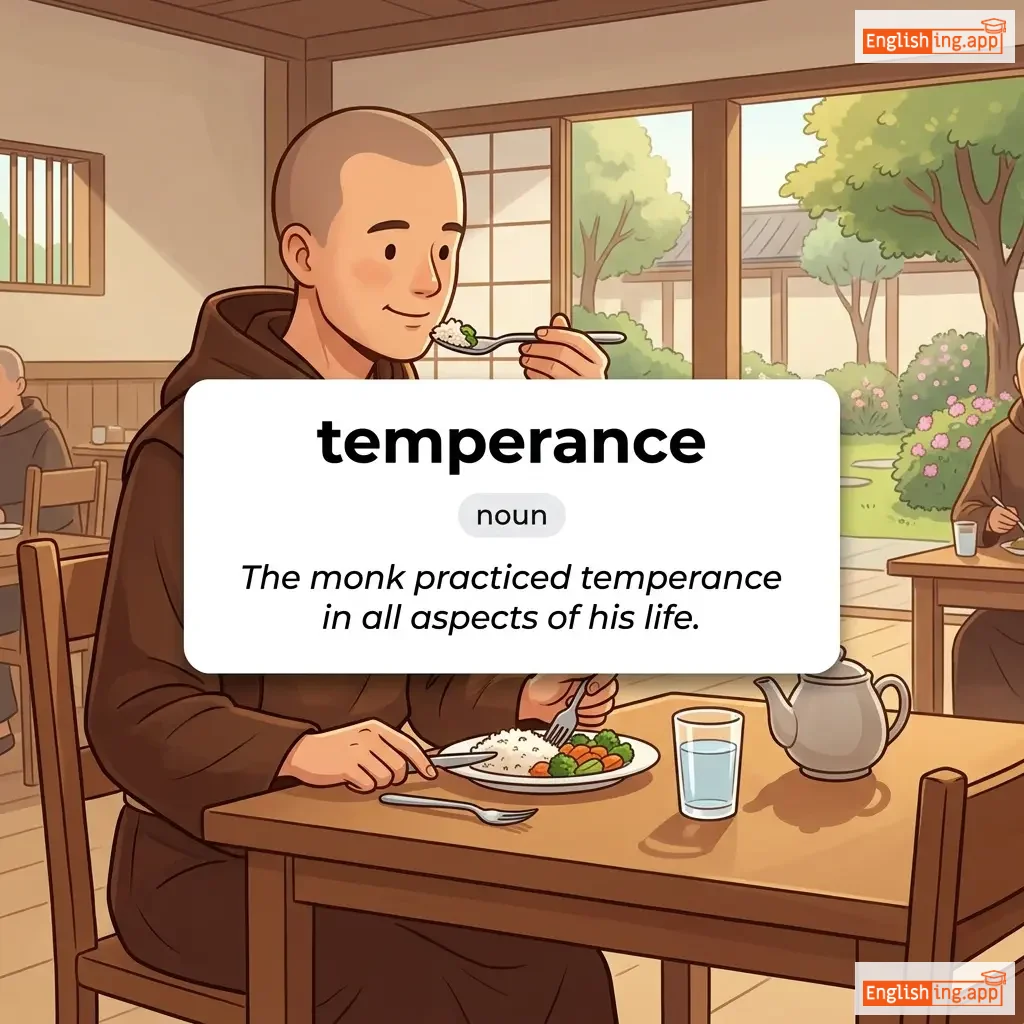
temperance definition card — visual illustration of the meaning
noun
/ˈtɛmpərəns/
templanza (templanza)

moderation in action, thought, or feeling; restraint, especially regarding alcohol.

"The monk practiced temperance in all aspects of his life."

"El monje practicaba la templanza en todos los aspectos de su vida." (El monje practicaba la templanza en todos los aspectos de su vida.)
adjective
/ˈtɛmpərət/
moderado (moderado)

showing moderation or self-restraint; also describing mild climate.

"He is known for his temperate behavior even in stressful situations."

"Es conocido por su comportamiento moderado incluso en situaciones estresantes." (Es conocido por su comportamiento moderado incluso en situaciones estresantes.)
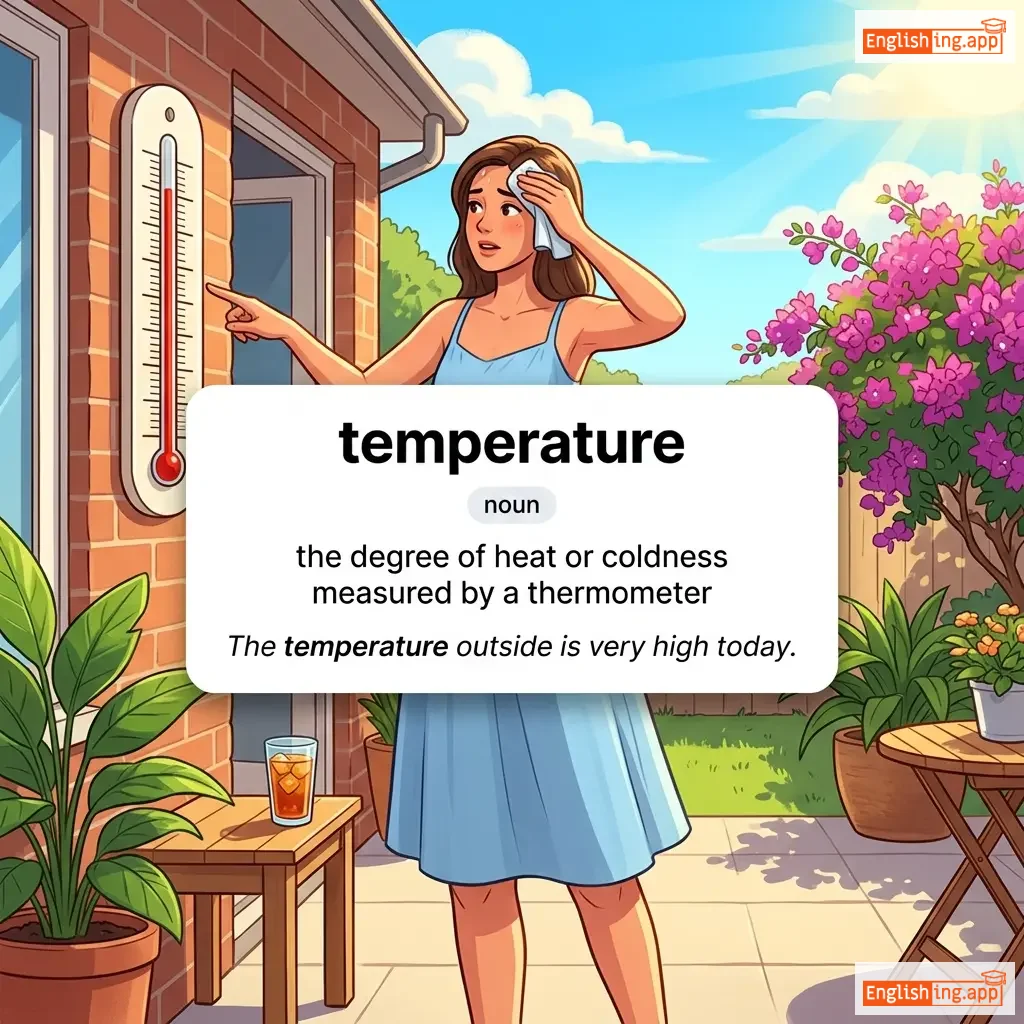
temperature definition card — visual illustration of the meaning
noun
/ˈtɛmpərətʃər/
temperatura (temperatura)

the degree of heat or coldness measured by a thermometer

"The temperature outside is very high today."

"La temperatura exterior es muy alta hoy." (La temperatura exterior es muy alta hoy.)
adjective
/ˈtɛmpərd/
templado (templado)

having a specified temper or disposition; strengthened or moderated.

"She gave a tempered response to the criticism."

"Ella dio una respuesta templada a las críticas." (Ella dio una respuesta templada a las criticas.)
noun
/ˈtem.pɪst/
tormenta (tormenta)

a violent storm with strong winds; a state of great disturbance or tumult

"The sailors struggled to navigate through the fierce tempest."

"Los marineros lucharon por navegar a través de la feroz tormenta." (Los marineros lucharon por navegar a través de la feroz tormenta.)
adjective
/tɛmˈpɛstjuəs/
tempestuoso, agitado (tempestuoso, agitado)

Characterized by strong and turbulent emotions or stormy conditions.

"Their tempestuous relationship often swung between love and anger."

"Su relación tempestuosa a menudo oscilaba entre el amor y la ira." (Su relacion tempestuosa a menudo oscilaba entre el amor y la ira.)
noun
/ˈtɛmpəl/
templo (templo)

a building used for the worship of a god or gods

"They visited an ancient temple during their trip to India."

"Visitaron un templo antiguo durante su viaje a la India." (Visitaron un templo antiguo durante su viaje a la India.)