Vocabularios

Descubra, aprenda y domine el vocabulario en inglés

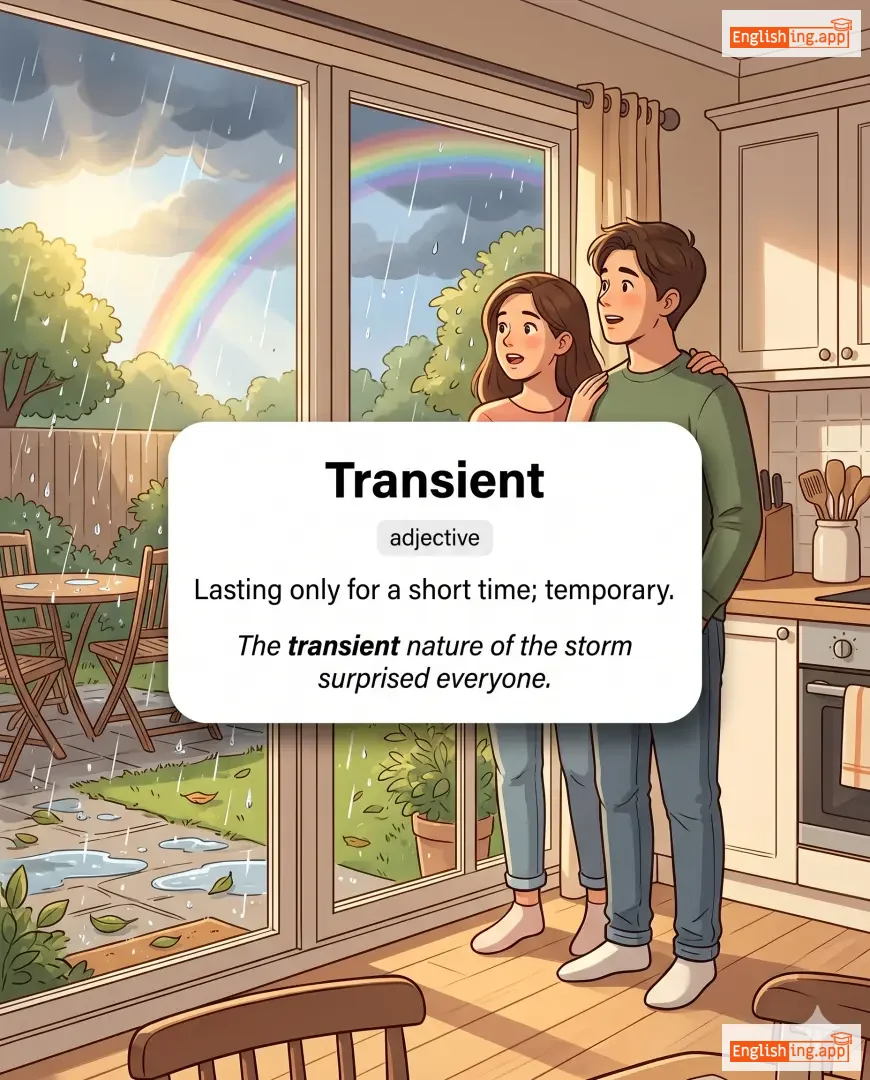
Transient definition card — visual illustration of the meaning
adjective
/ˈtrænziənt/
transitorio (transitorio)

Lasting only for a short time; temporary.

"The transient nature of the storm surprised everyone."

"La naturaleza transitoria de la tormenta sorprendió a todos." (La naturaleza transitoria de la tormenta sorprendió a todos.)
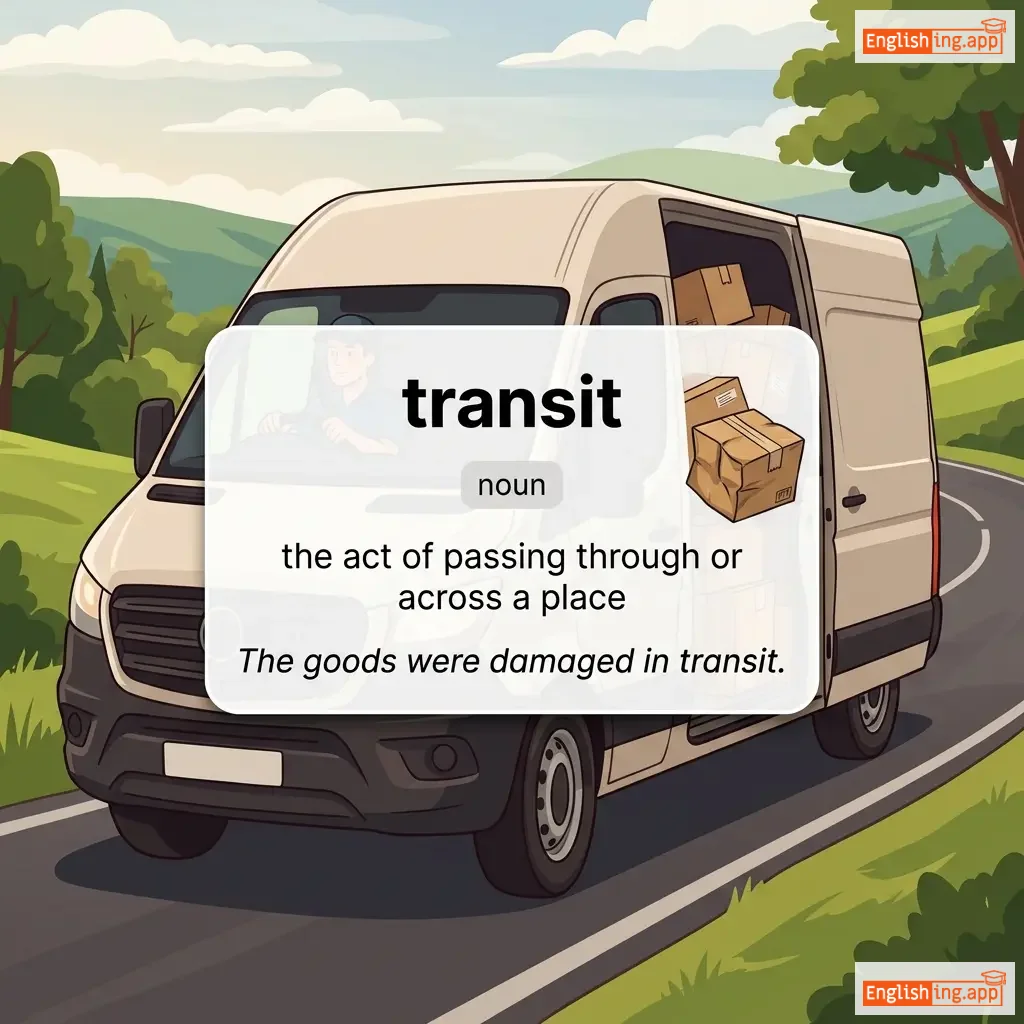
transit definition card — visual illustration of the meaning
noun
/ˈtrænzɪt/
transporte (transporte)

the act of passing through or across a place

"The goods were damaged in transit."

"Los bienes fueron dañados en tránsito." (Los bienes fueron danados en transito.)
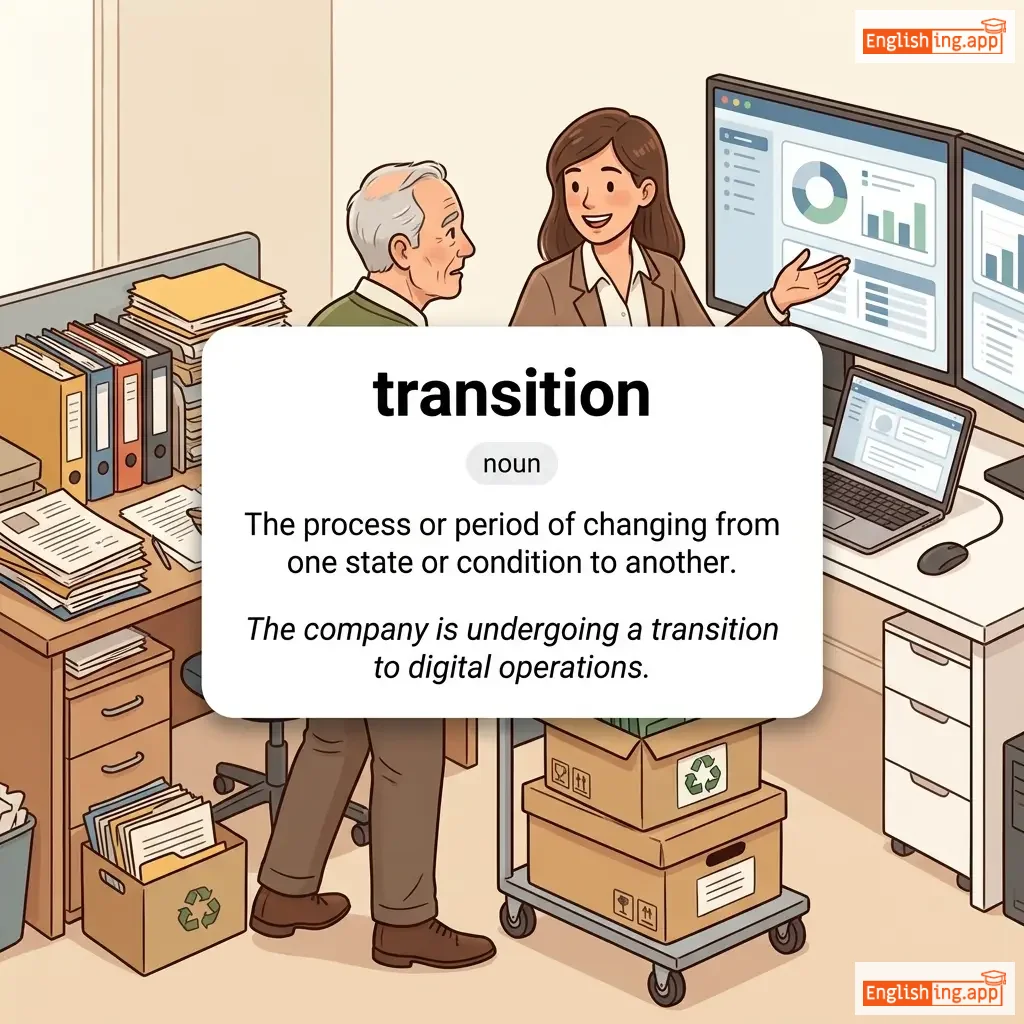
transition definition card — visual illustration of the meaning
noun
/trænˈzɪʃən/
transición (transicion)

The process or period of changing from one state or condition to another.

"The company is undergoing a transition to digital operations."

"La empresa está pasando por una transición hacia operaciones digitales." (La empresa esta pasando por una transicion hacia operaciones digitales.)
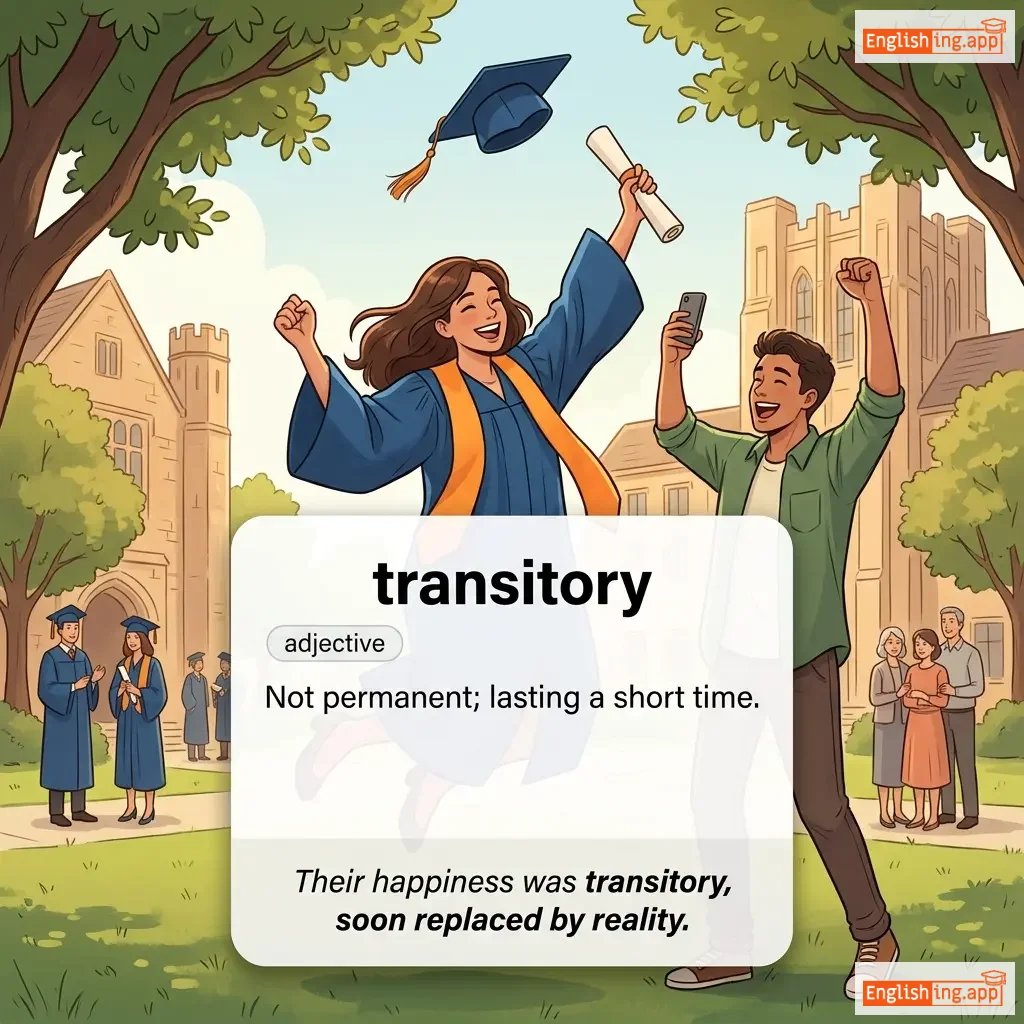
transitory definition card — visual illustration of the meaning
adjective
/ˈtrænzɪtɔːri/
transitorio (transitorio)

Not permanent; lasting a short time.

"Their happiness was transitory, soon replaced by reality."

"Su felicidad fue transitoria, pronto reemplazada por la realidad." (Su felicidad fue transitoria, pronto reemplazada por la realidad.)
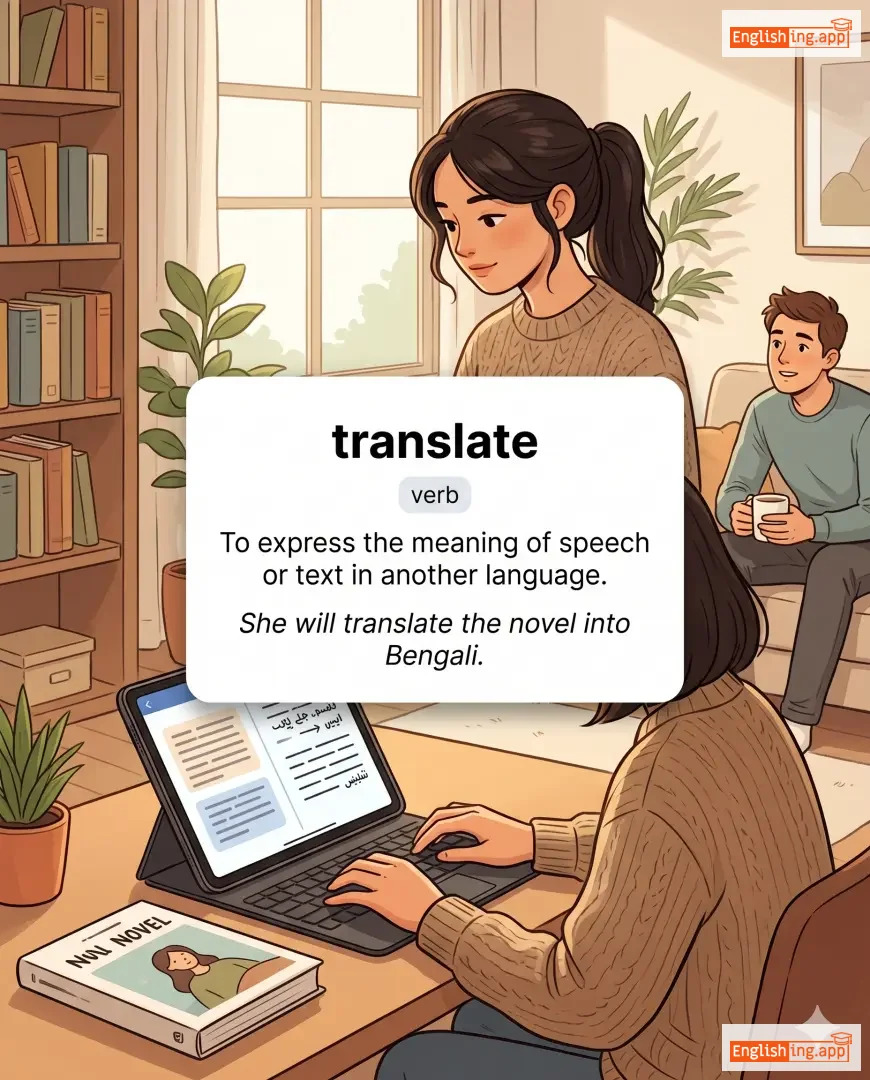
translate definition card — visual illustration of the meaning
verb
/trænsˈleɪt/
traducir (traducir)

To express the meaning of speech or text in another language.

"She will translate the novel into Bengali."

"Ella traducirá la novela al bengalí." (Ella traducira la novela al bengali.)
noun
/trænzˈleɪʃən/
traducción (traduccion)

the process of converting text or speech from one language into another

"She completed the translation of the book within two months."

"Ella completó la traducción del libro en dos meses." (Ella completo la traduccion del libro en dos meses.)
noun
/trænzˈleɪtər/
traductor (traductor)

a person or tool that converts words or text from one language into another

"The translator helped the tourists understand the guide."

"El traductor ayudó a los turistas a entender la guía." (El traductor ayudó a los turistas a entender la guía.)
noun
/trænsˈluːsəns/
semi-transparencia (semi-transparencia)

the quality of allowing light to pass through but not detailed shapes

"The translucence of the curtains filled the room with soft light."

"La semi-transparencia de las cortinas llenó la habitación de luz suave." (La semi-transparencia de las cortinas llenó la habitación de luz suave.)
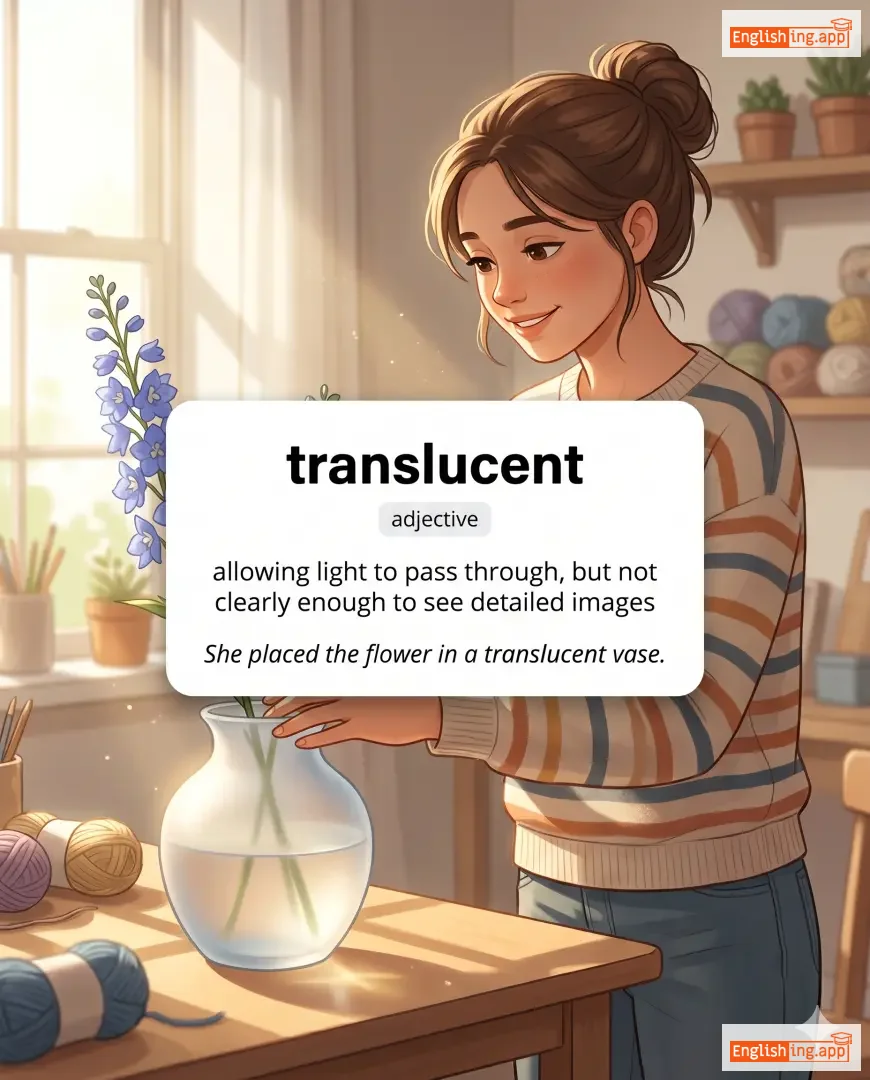
translucent definition card — visual illustration of the meaning
adjective
/trænsˈluːsənt/
semi-transparente (semi-transparente)

allowing light to pass through, but not clearly enough to see detailed images

"She placed the flower in a translucent vase."

"Colocó la flor en un jarrón semi-transparente." (Colocó la flor en un jarrón semi-transparente.)
adjective
/trænzˈmɪsəbl/
transmisible (transmisible)

able to be passed or spread from one person or thing to another

"COVID-19 is a highly transmissible disease."

"COVID-19 es una enfermedad altamente transmisible." (COVID-19 es una enfermedad altamente transmisible.)
noun
/trænzˈmɪʃən/
transmisión, envío (transmision, envio)

the act of sending, passing, or spreading something such as information, energy, or disease

"The transmission of data over the internet is very fast."

"La transmisión de datos por internet es muy rápida." (La transmision de datos por internet es muy rapida.)
verb
/trænzˈmɪt/
transmitir (transmitir)

to send or pass something from one place or person to another

"The antenna can transmit signals over a long distance."

"La antena puede transmitir señales a larga distancia." (La antena puede transmitir señales a larga distancia.)
verb
/trænzˈmjuːt/
transmutar (transmutar)

to change in form, nature, or substance

"Alchemy aimed to transmute lead into gold."

"La alquimia intentaba transmutar el plomo en oro." (La alquimia intentaba transmutar el plomo en oro.)
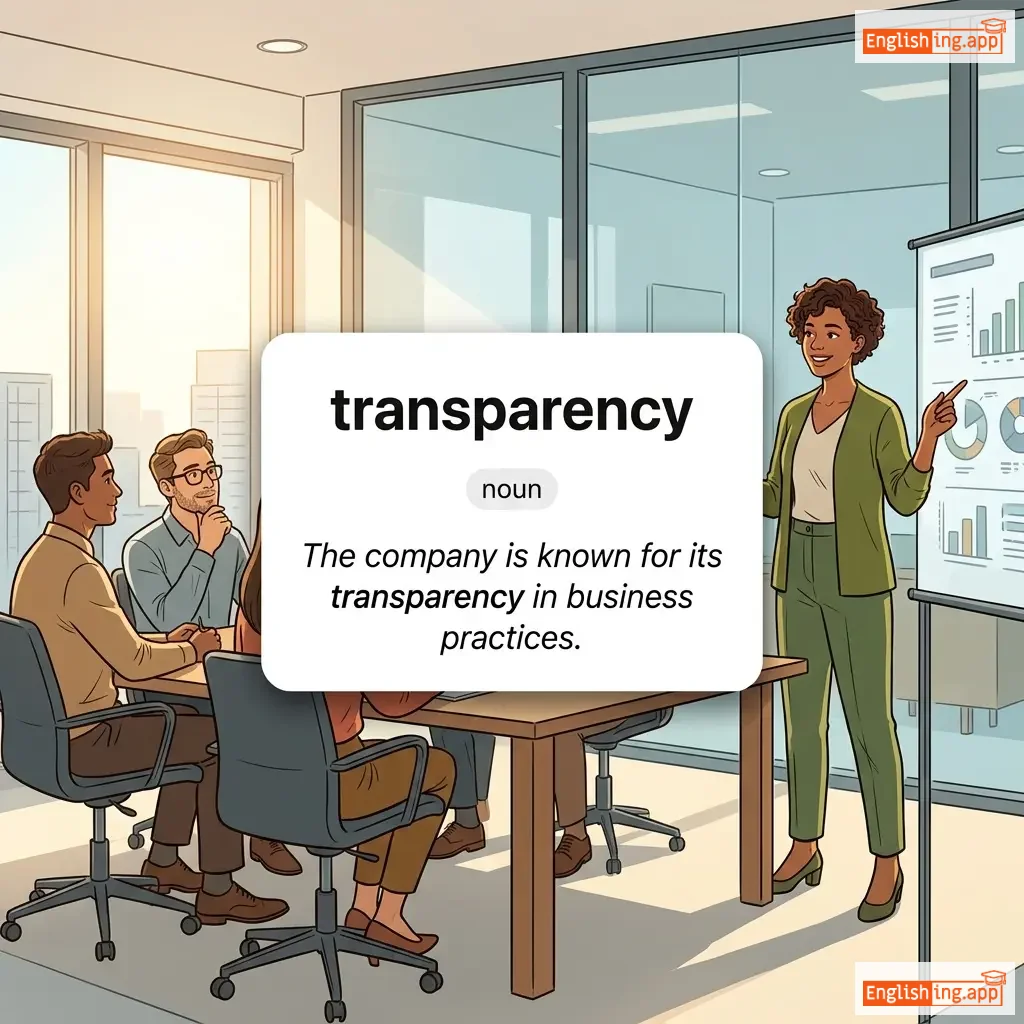
transparency definition card — visual illustration of the meaning
noun
/trænsˈpærənsi/
transparencia (transparencia)

the quality of being open and honest; the condition of being easily understood or seen through

"The company is known for its transparency in business practices."

"La empresa es conocida por su transparencia en las prácticas comerciales." (La empresa es conocida por su transparencia en las practicas comerciales.)
adjective
/trænsˈpɛrənt/
transparente (transparente)

allowing light to pass through so that objects behind can be clearly seen

"The glass is transparent enough to see through."

"El vidrio es lo suficientemente transparente como para ver a través de él." (El vidrio es lo suficientemente transparente como para ver a través de él.)
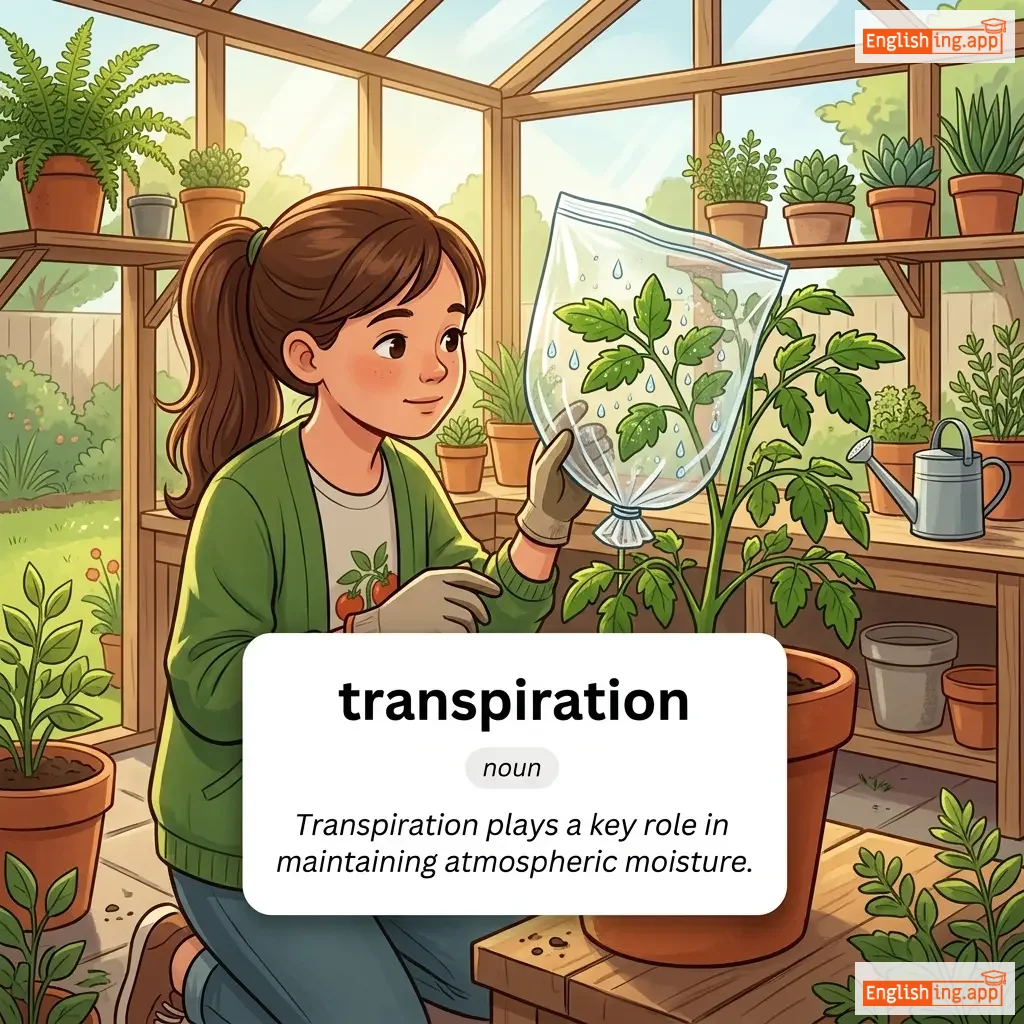
transpiration definition card — visual illustration of the meaning
noun
ˌtræn.spɪˈreɪ.ʃən
transpiración (transpiracion)

The process by which moisture is carried through plants from roots to small pores on the underside of leaves, where it changes to vapor and is released to the atmosphere.

"Transpiration plays a key role in maintaining atmospheric moisture."

"La transpiración juega un papel clave en el mantenimiento de la humedad atmosférica." (La transpiración juega un papel clave en el mantenimiento de la humedad atmosférica.)
verb
/trænˈspaɪər/
suceder (suceder)

to occur, happen, or become known

"It transpired that he had lied about his age."

"Resultó que él había mentido sobre su edad." (Resultó que él había mentido sobre su edad.)
verb
/ˈtrænsplænt/
trasplantar (trasplantar)

to move something, especially a plant or organ, from one place to another

"The doctors transplanted a kidney into the patient."

"Los médicos trasplantaron un riñón al paciente." (Los médicos trasplantaron un riñón al paciente.)
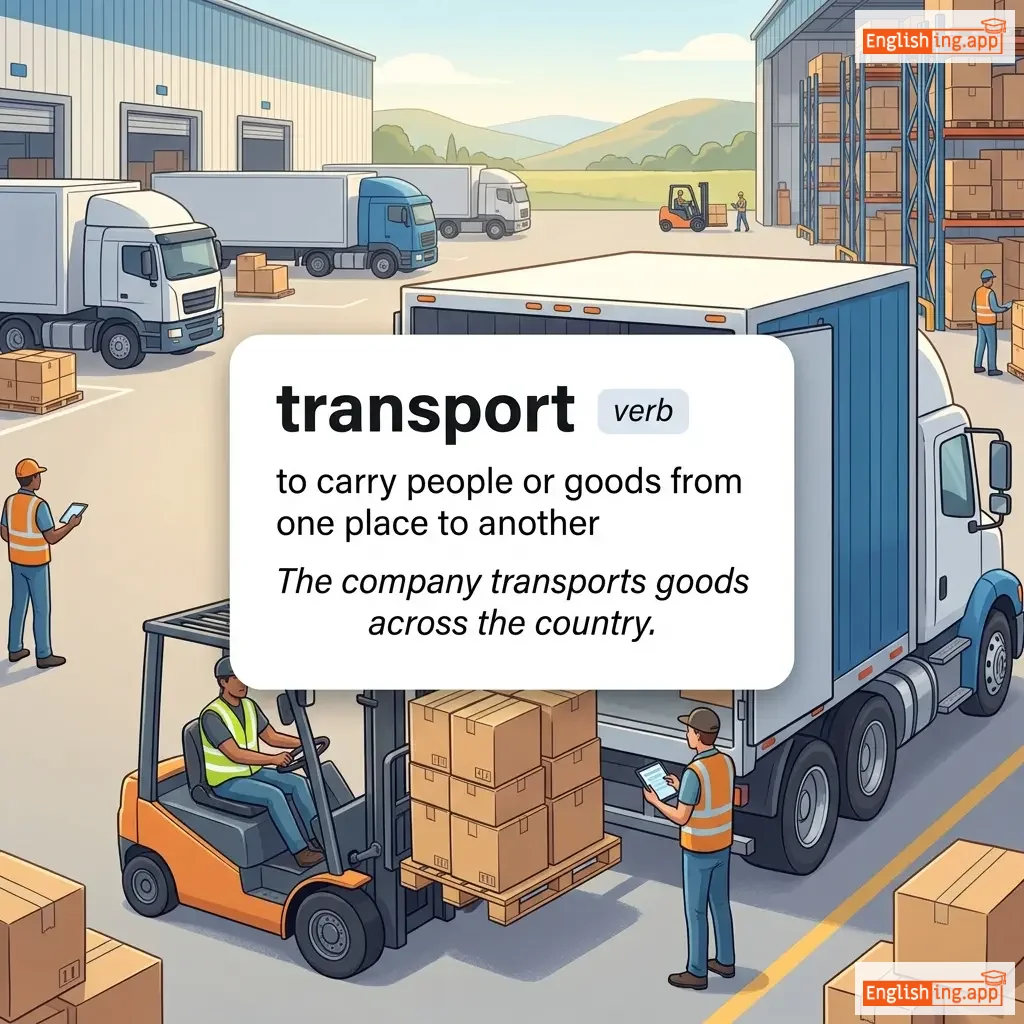
transport definition card — visual illustration of the meaning
verb
/ˈtrænspɔːrt/
transporte (transporte)

to carry people or goods from one place to another

"The company transports goods across the country."

"La empresa transporta mercancías por todo el país." (La empresa transporta mercancías por todo el país.)
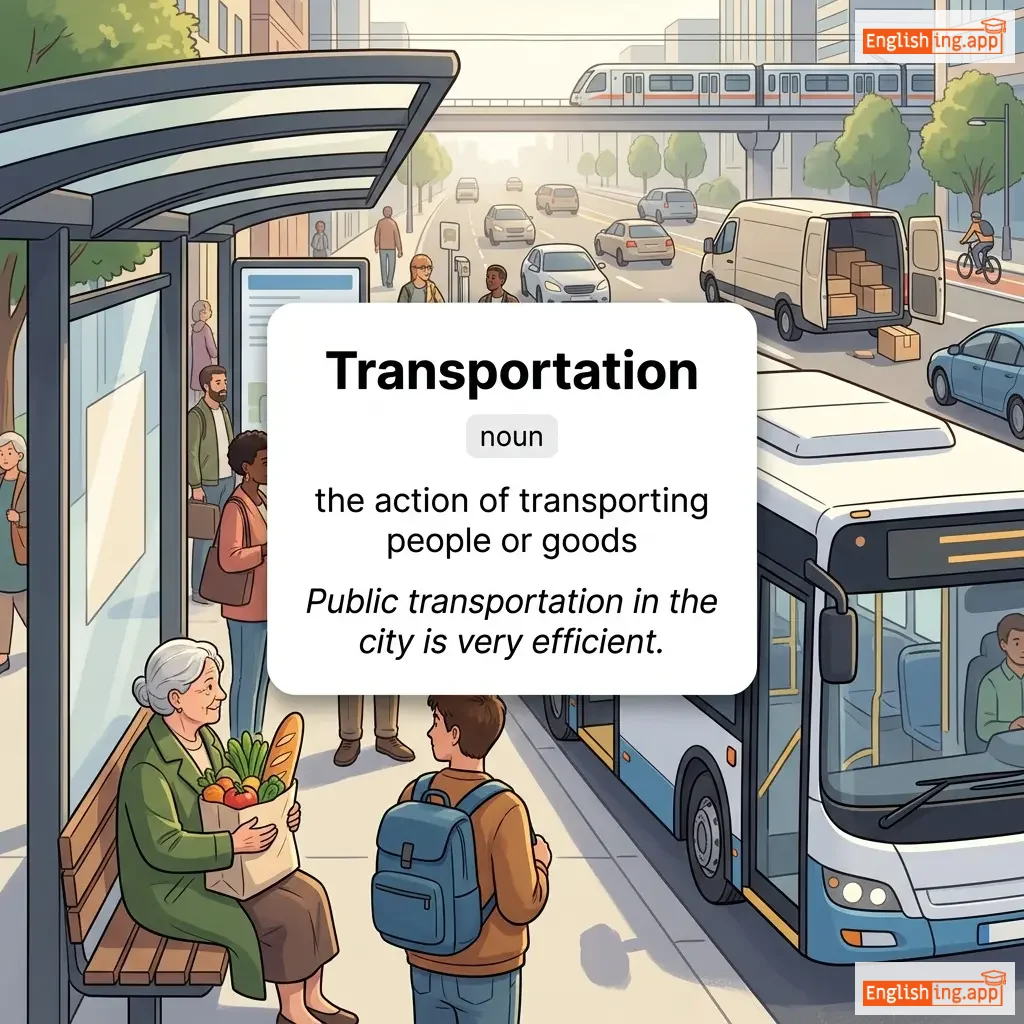
Transportation definition card — visual illustration of the meaning
noun
/ˌtræns.pɔːˈteɪ.ʃən/
transporte (transporte)

the action of transporting people or goods

"Public transportation in the city is very efficient."

"El transporte público en la ciudad es muy eficiente." (El transporte publico en la ciudad es muy eficiente.)
verb
/trænˈspoʊz/
trasponer (trasponer)

to change the order or position of something

"The editor transposed two paragraphs in the article."

"El editor transpuso dos párrafos en el artículo." (El editor transpuso dos párrafos en el artículo.)
noun
/ˌtrænspəˈzɪʃən/
transposición (transposicion)

the act of changing the order or position of something

"The transposition of digits caused an error in the calculation."

"La transposición de dígitos causó un error en el cálculo." (La transposicion de digitos causo un error en el calculo.)
adjective
/ˈtrænzvɜːrs/
transversal (transversal)

situated or lying across something

"The transverse road connects two highways."

"La carretera transversal conecta dos autopistas." (La carretera transversal conecta dos autopistas.)
verb
/træp/
atrapar (atrapar)

to catch or hold something or someone so they cannot escape

"The fox was trapped in a cage."

"El zorro estaba atrapado en una jaula." (El zorro estaba atrapado en una jaula.)
noun
/ˈtræpɪŋz/
adornos (adornos)

the outward signs, features, or objects associated with a role, event, or status

"The king appeared with all the trappings of royalty."

"El rey apareció con todos los adornos de la realeza." (El rey aparecio con todos los adornos de la realeza.)
noun
/træʃ/
basura (trash)

waste material; things that are no longer useful or wanted

"Please take out the trash before you go to bed."

"Por favor saca la basura antes de acostarte" (Por favor saca la basura antes de acostarte)
noun
/ˈtrɔːmə/
trauma (trauma)

a deeply distressing or disturbing experience; physical injury or emotional shock

"The accident left her with lasting emotional trauma."

"El accidente le dejó un trauma emocional duradero." (El accidente le dejo un trauma emocional duradero.)
adjective
/trɔːˈmætɪk/
traumático (traumatico)

Deeply distressing or disturbing, often related to emotional or physical injury.

"The accident was a traumatic experience for the entire family."

"El accidente fue una experiencia traumática para toda la familia." (El accidente fue una experiencia traumatica para toda la familia.)
travail definition card — visual illustration of the meaning
noun
/trəˈveɪl/
trabajo arduo (trabajo arduo)

Painful or laborious effort; suffering or hardship.

"After years of travail, she finally completed her degree."

"Después de años de trabajo arduo, finalmente completó su título." (Despues de años de trabajo arduo, finalmente completo su titulo.)
verb
/ˈtrævəl/
viajar (viajar)

to make a journey, typically to a distant or unfamiliar place

"I love to travel around the world and explore new cultures."

"Me encanta viajar por el mundo y explorar nuevas culturas." (Me encanta viajar por el mundo y explorar nuevas culturas.)
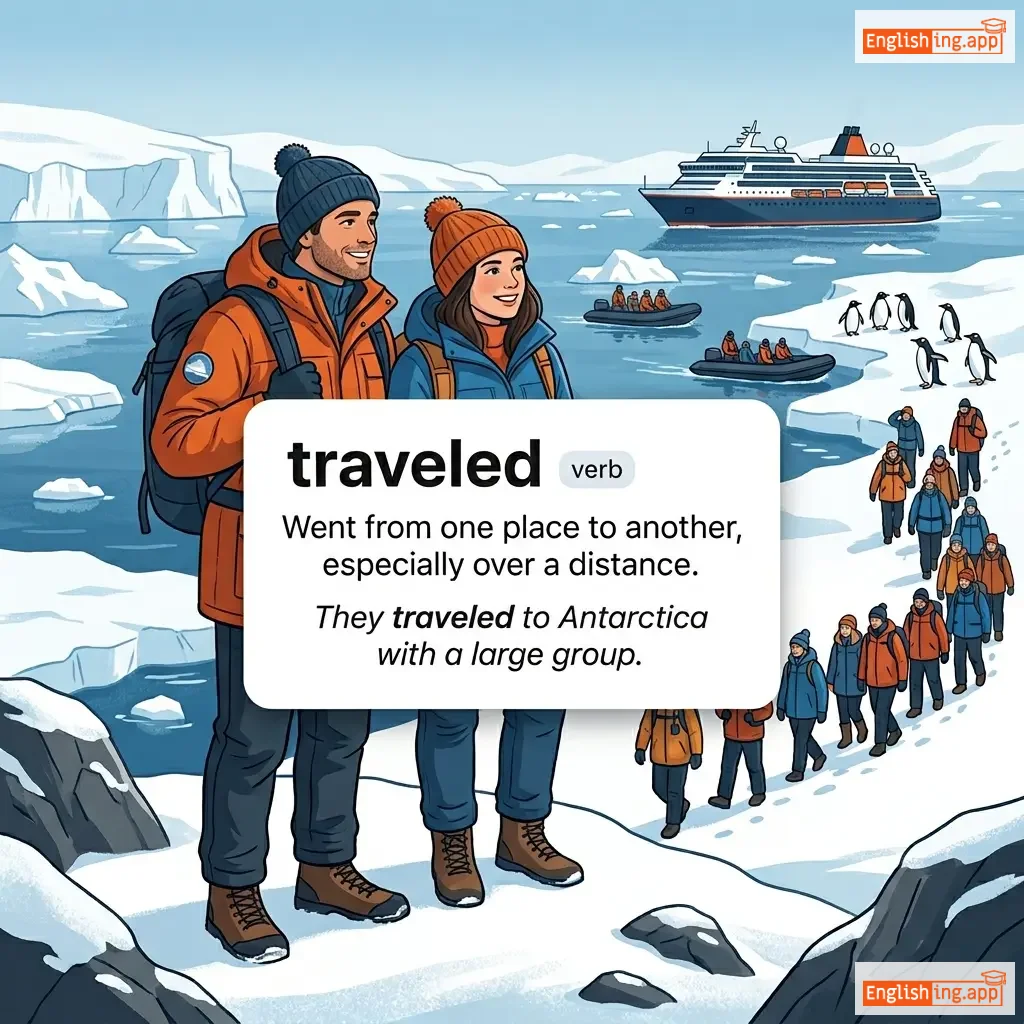
traveled definition card — visual illustration of the meaning
verb
/ˈtrævəld/
viajar (viajar)

Went from one place to another, especially over a distance.

"They traveled to Antarctica with a large group."

"Viajaron a la Antártida con un gran grupo." (Viajaron a la Antártida con un gran grupo.)
noun
/ˈtrævələr/
viajero (viajero)

a person who is traveling or who often travels

"The traveler rested at a small inn after a long journey."

"El viajero descansó en una pequeña posada después de un largo viaje." (El viajero descansó en una pequeña posada después de un largo viaje.)
noun
/ˈtrævələr/
viajero (viajero)

A person who is on a journey or frequently travels to different places.

"The traveller set out early in the morning to explore new lands."

"El viajero salió temprano por la mañana para explorar nuevas tierras." (El viajero salio temprano por la manana para explorar nuevas tierras.)
verb
/trəˈvɜːrs/
atravesar (atravesar)

To travel across or through something.

"They traversed the desert on camels."

"Ellos atravesaron el desierto en camellos." (Ellos atravesaron el desierto en camellos.)
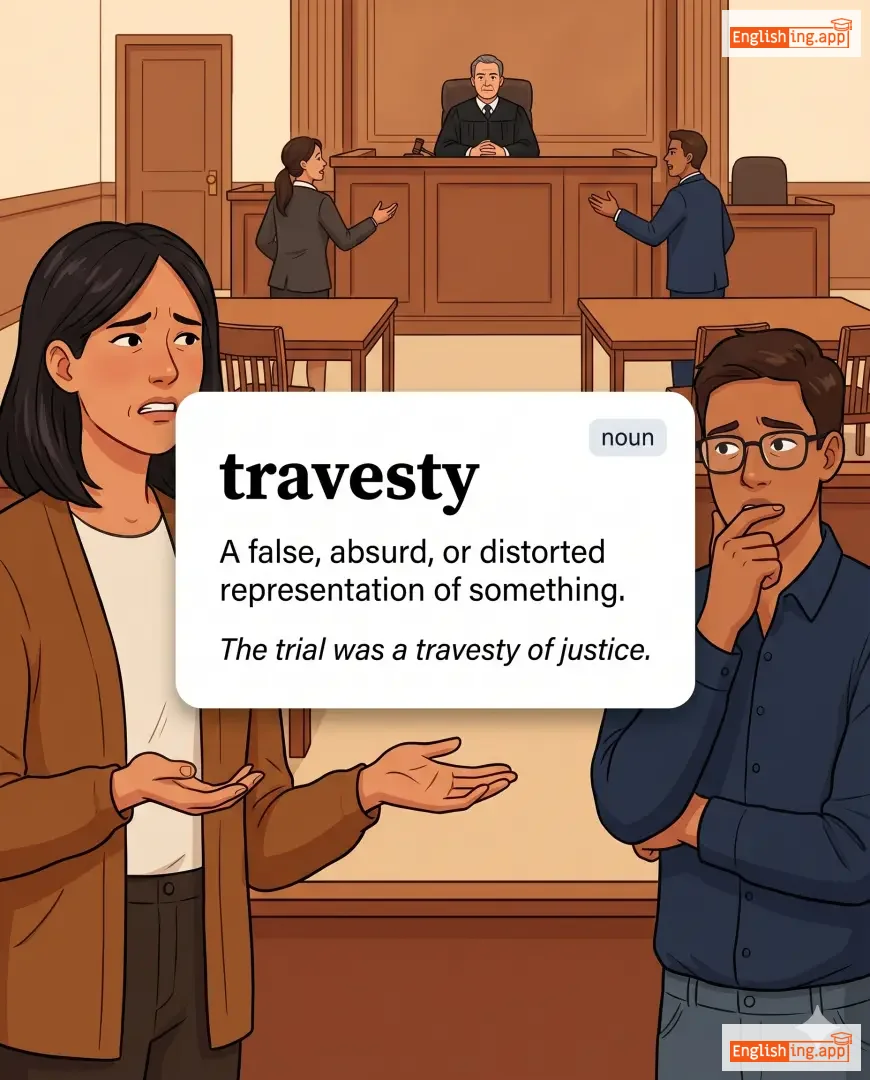
travesty definition card — visual illustration of the meaning
noun
/ˈtrævɪsti/
parodia (travesti)

A false, absurd, or distorted representation of something.

"The trial was a travesty of justice."

"El juicio fue una parodia de la justicia." (El juicio fue una parodia de la justicia)
noun
/treɪ/
bandeja (bandeja)

a flat, shallow container used for carrying or holding items

"She brought the tea cups on a silver tray."

"Ella trajo las tazas de té en una bandeja de plata." (Ella trajo las tazas de té en una bandeja de plata.)
adjective
/ˈtrɛtʃərəs/
traicionero (traicionero)

Dangerously unstable or deceptive; likely to betray trust.

"The treacherous road made driving difficult."

"La carretera traicionera hizo que conducir fuera difícil." (La carretera traicionera hizo que conducir fuera difícil.)
noun
/ˈtrɛtʃəri/
traición (traicion)

Betrayal of trust; deceptive action or nature.

"His treachery was revealed when he sided with the enemy."

"Su traición se reveló cuando se unió al enemigo." (Su traicion se reveló cuando se unió al enemigo.)
noun
/ˈtriːkəl/
jarabe espeso y dulce (jarabe espeso y dulce)

A thick, sweet syrup; excessively sentimental speech or writing.

"She poured treacle over the pancakes."

"Ella vertió el jarabe sobre los panqueques." (Ella vertió el jarabe sobre los panqueques.)
adjective
/ˈtriːkli/
Excesivamente dulce o sentimental, como la melaza. (Excesivamente dulce o sentimental, como la melaza.)

Excessively sweet or sentimental, like treacle.

"The movie was too treacly for my taste."

"La película era demasiado empalagosa para mi gusto." (La película era demasiado empalagosa para mi gusto.)
verb
/trɛd/
caminar (caminar)

To walk on or along something.

"Be careful not to tread on the flowers."

"Ten cuidado de no pisar las flores." (Ten cuidado de no pisar las flores.)
noun
/ˈtriːzən/
traición (traicion)

the crime of betraying one's country, especially by attempting to kill or overthrow the sovereign or government

"He was accused of treason against the state."

"Él fue acusado de traición contra el estado." (El fue acusado de traicion contra el estado.)
adjective
/ˈtriːzənəbl/
traicionero (traicionero)

Relating to or involving the crime of treason.

"The general was accused of treasonable conduct."

"El general fue acusado de conducta traicionera." (El general fue acusado de conducta traicionera.)
noun, verb
/ˈtrɛʒər/
tesoro (tesoro)

a collection of valuable things such as gold, jewels, or anything of great worth; to value something highly

"She kept the necklace as a family treasure."

"Ella guardó el collar como un tesoro familiar." (Ella guardó el collar como un tesoro familiar.)
noun
/ˈtrɛʒərər/
tesorero (tesorero)

a person responsible for managing the financial affairs of an organization

"The treasurer presented the annual financial report."

"El tesorero presentó el informe financiero anual." (El tesorero presento el informe financiero anual.)
verb
/triːt/
tratar (tratar)

to behave toward someone or something in a particular way

"The doctor treated me with great care during my recovery."

"El doctor me trató con mucho cuidado durante mi recuperación." (El doctor me trato con mucho cuidado durante mi recuperacion.)
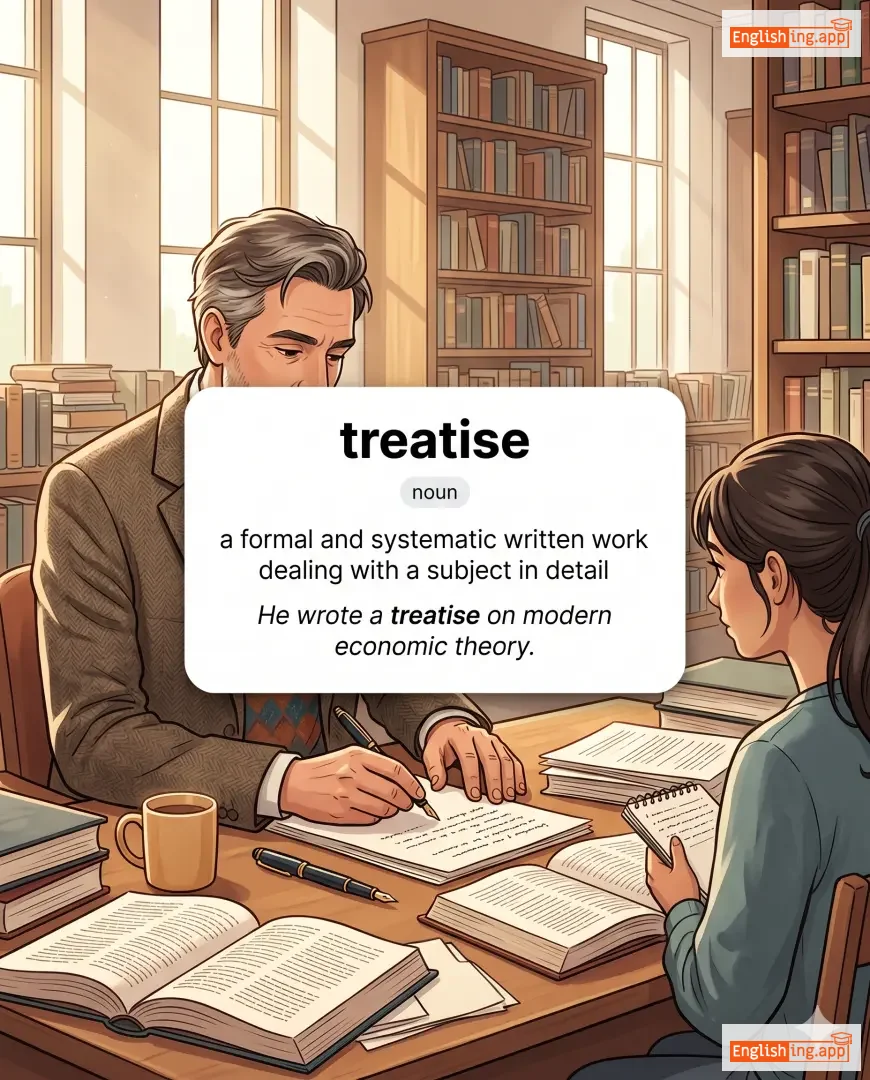
treatise definition card — visual illustration of the meaning
noun
/ˈtriːtɪs/
tratado (tratado)

a formal and systematic written work dealing with a subject in detail

"He wrote a treatise on modern economic theory."

"Escribió un tratado sobre la teoría económica moderna." (Escribió un tratado sobre la teoría económica moderna.)
noun
/ˈtriːtmənt/
tratamiento (tratamiento)

the action or manner of treating someone or something

"She received excellent treatment at the hospital."

"Recibió un excelente tratamiento en el hospital." (Recibió un excelente tratamiento en el hospital.)
noun
/ˈtriːti/
tratado (tratado)

a formally concluded and ratified agreement between states

"The two countries signed a peace treaty."

"Los dos países firmaron un tratado de paz." (Los dos paises firmaron un tratado de paz.)
adjective, noun, verb
/ˈtrɛbəl/
triplicado, tono alto (triplicado, tono alto)

triple; consisting of three parts; high-pitched sound in music

"The company's profits trebled in just two years."

"Las ganancias de la empresa se triplicaron en solo dos años." (Las ganancias de la empresa se triplicaron en solo dos años.)