Vocabularios

Descubra, aprenda y domine el vocabulario en inglés

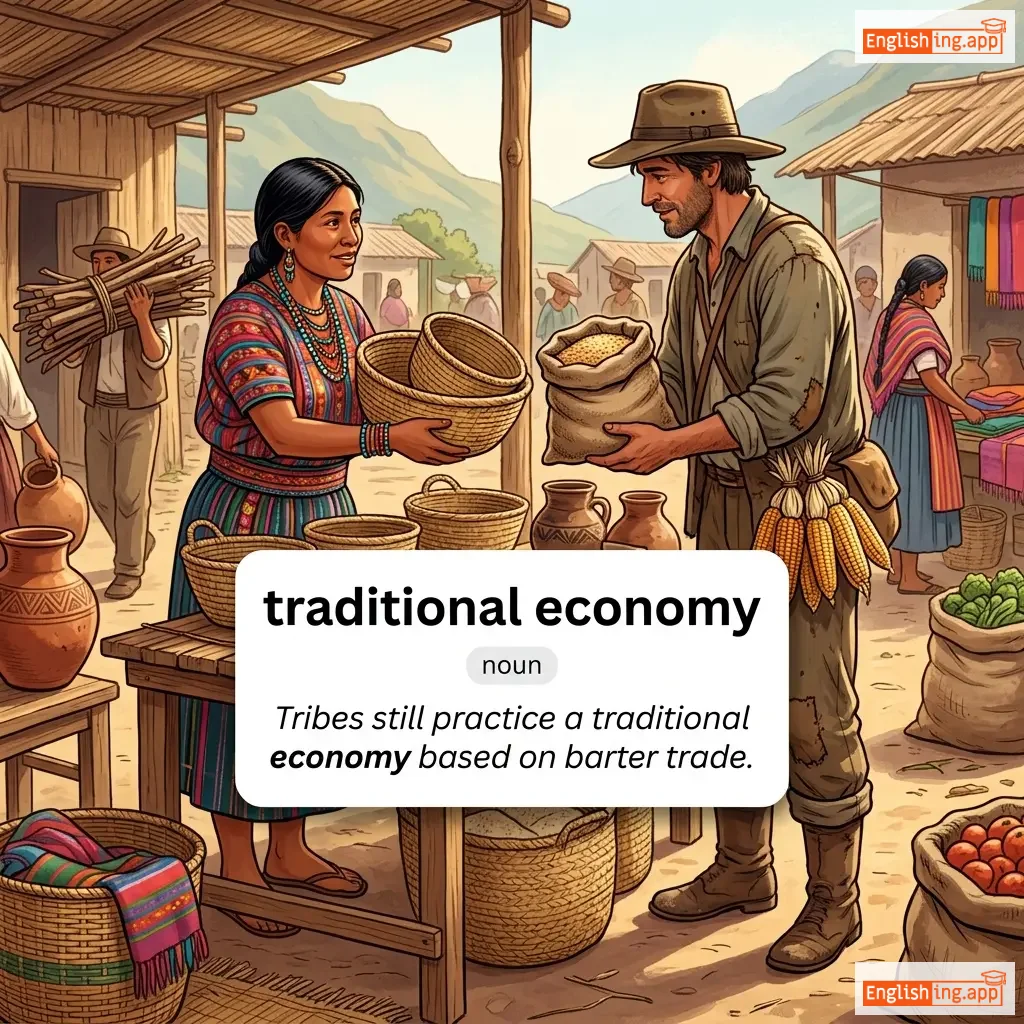
traditional economy definition card — visual illustration of the meaning
noun
/trəˈdɪʃ.ən.əl ɪˈkɒn.ə.mi/
economía tradicional (economia tradicional)

An economic system based on customs and traditions, often involving barter trade.

"Tribes still practice a traditional economy based on barter trade."

"Las tribus todavía practican una economía tradicional basada en el trueque." (Las tribus todavia practican una economia tradicional basada en el trueque.)
adverb
/trəˈdɪʃənəli/
tradicionalmente (tradicionalmente)

according to custom or long-established practice

"Bangladesh is traditionally known for its hospitality."

"Bangladesh es tradicionalmente conocido por su hospitalidad." (Bangladesh es tradicionalmente conocido por su hospitalidad.)
verb
/trəˈdjuːs/
difamar (difamar)

To speak badly of someone or tell lies to damage their reputation.

"He was furious when he found out that his rivals had traduced him."

"Estaba furioso cuando descubrió que sus rivales lo habían difamado." (Estaba furioso cuando descubrió que sus rivales lo habían difamado.)
noun
/ˈtræfɪk/
tráfico (trafico)

movement of vehicles, goods, or people

"There was heavy traffic on the highway this morning."

"Había mucho tráfico en la carretera esta mañana." (Había mucho tráfico en la carretera esta mañana.)
noun
/ˈtrædʒədi/
tragedia (tragedia)

an event causing great suffering or distress

"The earthquake was a tragedy for the entire country."

"El terremoto fue una tragedia para todo el país." (El terremoto fue una tragedia para todo el país.)
adjective
/ˈtrædʒɪk/
trágico (tragico)

causing great sadness or suffering; very unfortunate

"The news of the accident was truly tragic."

"La noticia del accidente fue realmente trágica." (La noticia del accidente fue realmente tragica.)
noun
/treɪl/
sendero (sendero)

a path or track left by something that has passed

"The hikers followed the trail through the forest."

"Los excursionistas siguieron el sendero a través del bosque." (Los excursionistas siguieron el sendero a través del bosque.)
noun
/ˈtreɪlər/
tráiler / avance (trailer / avance)

a preview of a movie or a vehicle used for transporting goods

"The movie trailer was released last week."

"El tráiler de la película fue lanzado la semana pasada." (El trailer de la pelicula fue lanzado la semana pasada.)
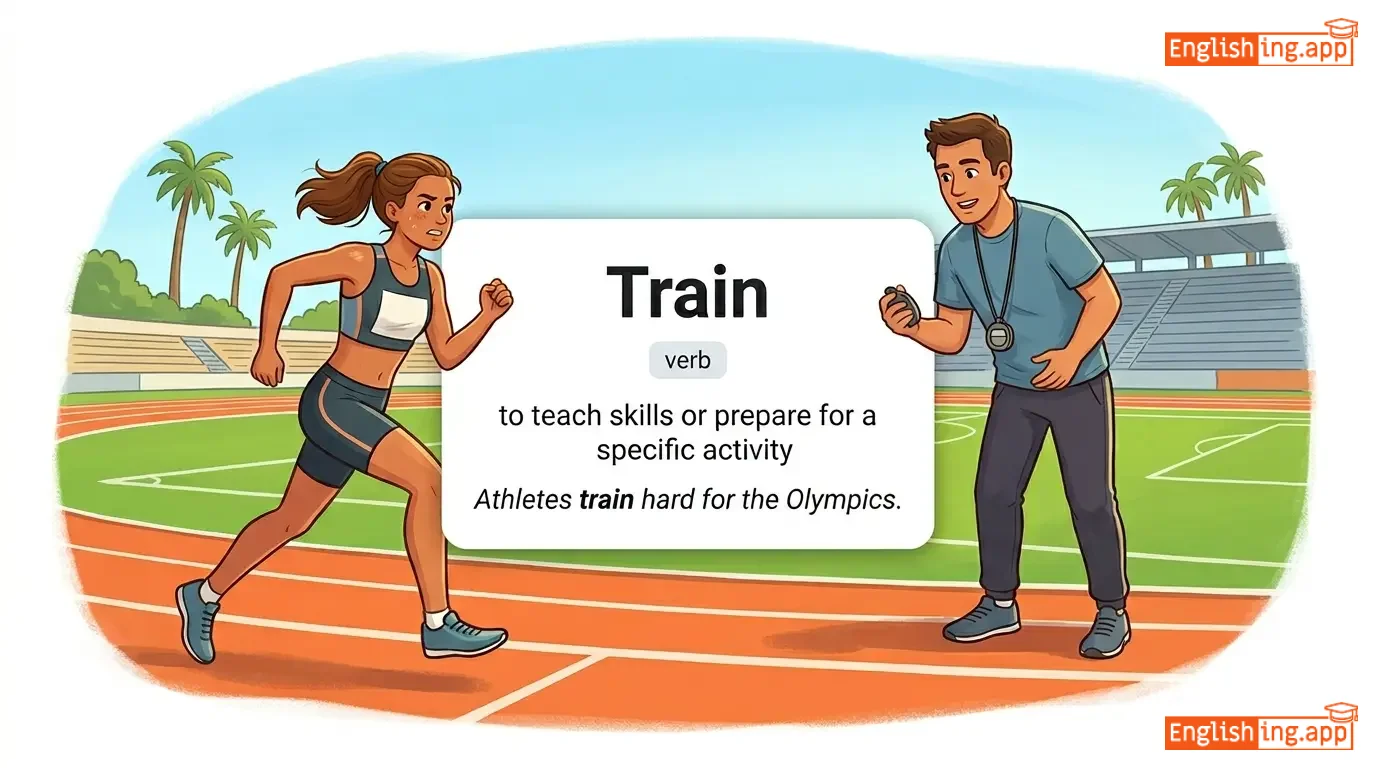
Train definition card — visual illustration of the meaning
noun
/treɪn/
tren (tren)

a series of connected vehicles that run on tracks and are used for transporting people or goods

"The train departed from the station on time."

"El tren partió de la estación a tiempo." (El tren partió de la estación a tiempo.)
noun
/treɪˈniː/
aprendiz; pasante (trainee)

a person undergoing training for a particular job or profession; a novice learner

"The medical trainee worked long hours to gain practical experience."

"El aprendiz médico trabajó largas horas para adquirir experiencia práctica." (El aprendiz medico trabajo largas horas para adquirir experiencia practica.)
noun
/ˈtreɪnər/
entrenador (entrenador)

a person who teaches skills or gives training

"The fitness trainer helped me improve my posture."

"El entrenador de fitness me ayudó a mejorar mi postura." (El entrenador de fitness me ayudo a mejorar mi postura.)
noun
/ˈtreɪnɪŋ/
entrenamiento (entrenamiento)

the process of teaching or learning a particular skill or type of behavior

"She completed her training as a nurse last year."

"Ella completó su entrenamiento como enfermera el año pasado." (Ella completó su entrenamiento como enfermera el año pasado.)
noun
/treɪt/
característica (caracteristica)

A distinguishing quality or characteristic, typically belonging to a person.

"Honesty is considered an admirable trait in a leader."

"La honestidad se considera una característica admirable en un líder." (La honestidad se considera una caracteristica admirable en un lider.)
noun
/ˈtreɪtər/
traidor (traidor)

A person who betrays their country, friends, or a cause by acting against them.

"The soldier was labeled a traitor for giving secrets to the enemy."

"El soldado fue etiquetado como traidor por dar secretos al enemigo." (El soldado fue etiquetado como traidor por dar secretos al enemigo.)
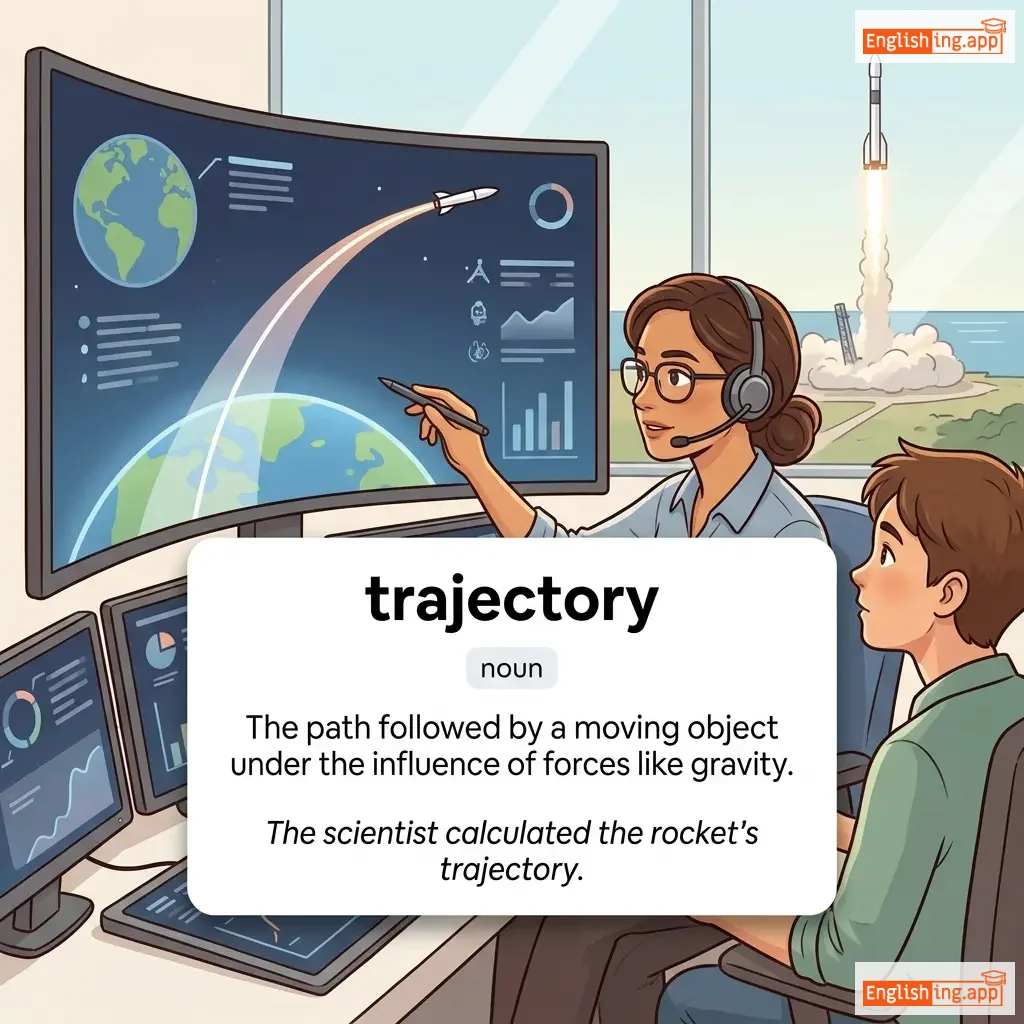
trajectory definition card — visual illustration of the meaning
noun
/trəˈdʒɛktəri/
trayectoria (trayectoria)

The path followed by a moving object under the influence of forces like gravity.

"The scientist calculated the rocket's trajectory."

"El científico calculó la trayectoria del cohete." (El científico calculó la trayectoria del cohete.)
noun
/træm kɑːr/
tranvía (tranvia)

An electric vehicle that runs on rails along the street

"The tram car stopped at every station in the city center."

"El tranvía se detuvo en cada estación en el centro de la ciudad." (El tranvia se detuvo en cada estacion en el centro de la ciudad.)
noun, verb
/ˈtræməl/
restricción (restriccion)

A restriction or impediment to freedom of action; to restrict.

"The strict rules trammel the creativity of the students."

"Las estrictas reglas truncan la creatividad de los estudiantes." (Las estrictas reglas truncan la creatividad de los estudiantes.)
verb, noun
/træmp/
vagabundo / caminar pesadamente (vagabundo / caminar pesadamente)

to walk heavily or noisily; a person who travels from place to place on foot, often homeless

"They tramped through the forest in heavy boots."

"Ellos caminaron a través del bosque con botas gruesas." (Ellos caminaron a través del bosque con botas gruesas.)
verb
/ˈtræmpəl/
pisotear (pisotear)

to tread heavily on something and cause damage or injury

"The crowd trampled the flowers in the park."

"La multitud pisoteó las flores en el parque." (La multitud pisoteó las flores en el parque.)
noun
/træns/
trance (trance)

a half-conscious state like dreaming, often with loss of awareness of surroundings

"She stared out of the window as if in a trance."

"Ella miraba por la ventana como si estuviera en trance." (Ella miraba por la ventana como si estuviera en trance.)
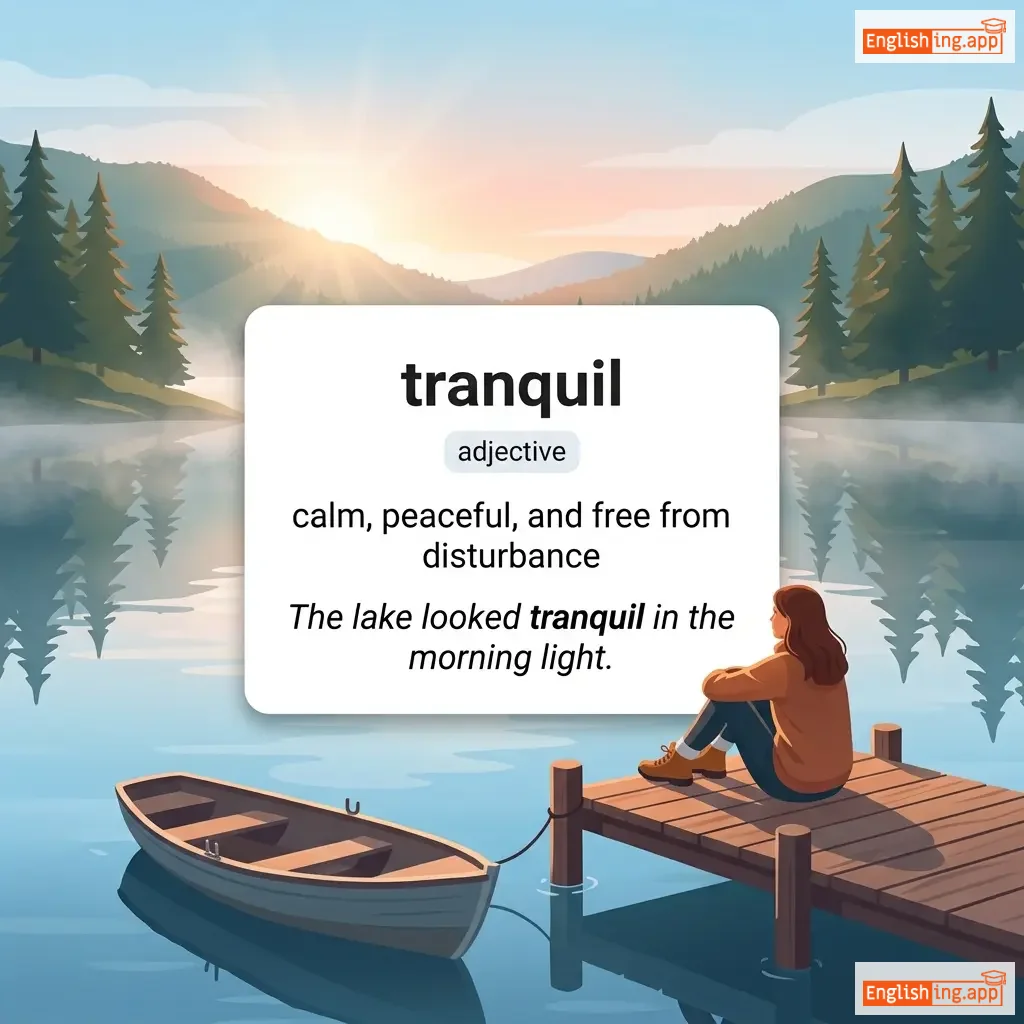
tranquil definition card — visual illustration of the meaning
adjective
/ˈtræŋkwɪl/
tranquilo (tranquilo)

calm, peaceful, and free from disturbance

"The lake looked tranquil in the morning light."

"El lago se veía tranquilo con la luz de la mañana." (El lago se veia tranquilo con la luz de la manana.)
noun
/træŋˈkwɪləti/
tranquilidad (tranquilidad)

the quality or state of being calm and peaceful

"He enjoyed the tranquility of the countryside."

"Él disfrutó de la tranquilidad del campo." (El disfruto de la tranquilidad del campo.)
verb
/ˈtræŋ.kwɪ.laɪz/
tranquilizar (tranquilizar)

to make someone or something calm or less anxious, often by using drugs

"The veterinarian had to tranquilize the tiger before moving it."

"El veterinario tuvo que tranquilizar al tigre antes de moverlo." (El veterinario tuvo que tranquilizar al tigre antes de moverlo.)
noun
/træŋˈkwɪl.ɪ.ti/
tranquilidad (tranquilidad)

the state of being calm, peaceful, and free from disturbance

"She enjoyed the tranquillity of the countryside after years in the city."

"Ella disfrutó de la tranquilidad del campo después de años en la ciudad." (Ella disfrutó de la tranquilidad del campo después de años en la ciudad.)
verb
/trænˈzækt/
realizar (realizar)

to conduct or carry out business, a deal, or activity

"Customers can transact their banking online."

"Los clientes pueden realizar sus transacciones bancarias en línea." (Los clientes pueden realizar sus transacciones bancarias en línea.)
noun
/trænˈzækʃən/
transacción (transaccion)

an instance of buying or selling something; a business deal or exchange

"Every online transaction is recorded for security purposes."

"Cada transacción en línea se registra con fines de seguridad." (Cada transacción en línea se registra con fines de seguridad.)
adjective
/trænzˈæl.paɪn/
más allá de los Alpes (mas alla de los Alpes)

situated beyond or across the Alps, especially from the viewpoint of Italy

"The Romans referred to France as Transalpine Gaul."

"Los romanos se referían a Francia como la Galia Transalpina." (Los romanos se referian a Francia como la Galia Transalpina.)
adjective
/ˌtræn.zətˈlæn.tɪk/
atravesar el océano atlántico (atravesar el oceano atlantico)

crossing or spanning the Atlantic Ocean

"They took a transatlantic flight from New York to London."

"Tomaron un vuelo transatlántico de Nueva York a Londres." (Tomaron un vuelo transatlantico de Nueva York a Londres.)
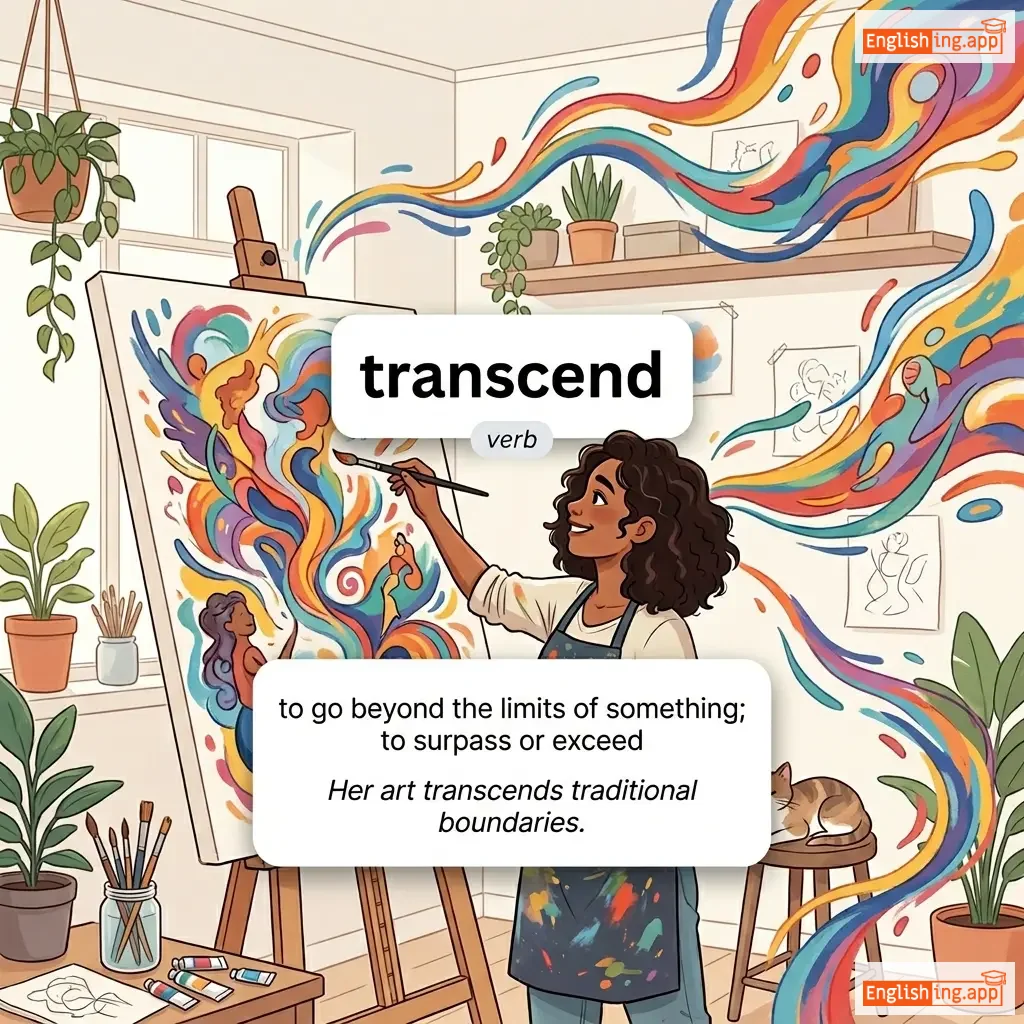
transcend definition card — visual illustration of the meaning
verb
/trænˈsɛnd/
trascender (trascender)

to go beyond the limits of something; to surpass or exceed

"Her art transcends traditional boundaries."

"Su arte transciende los límites tradicionales." (Su arte transciende los limites tradicionales.)
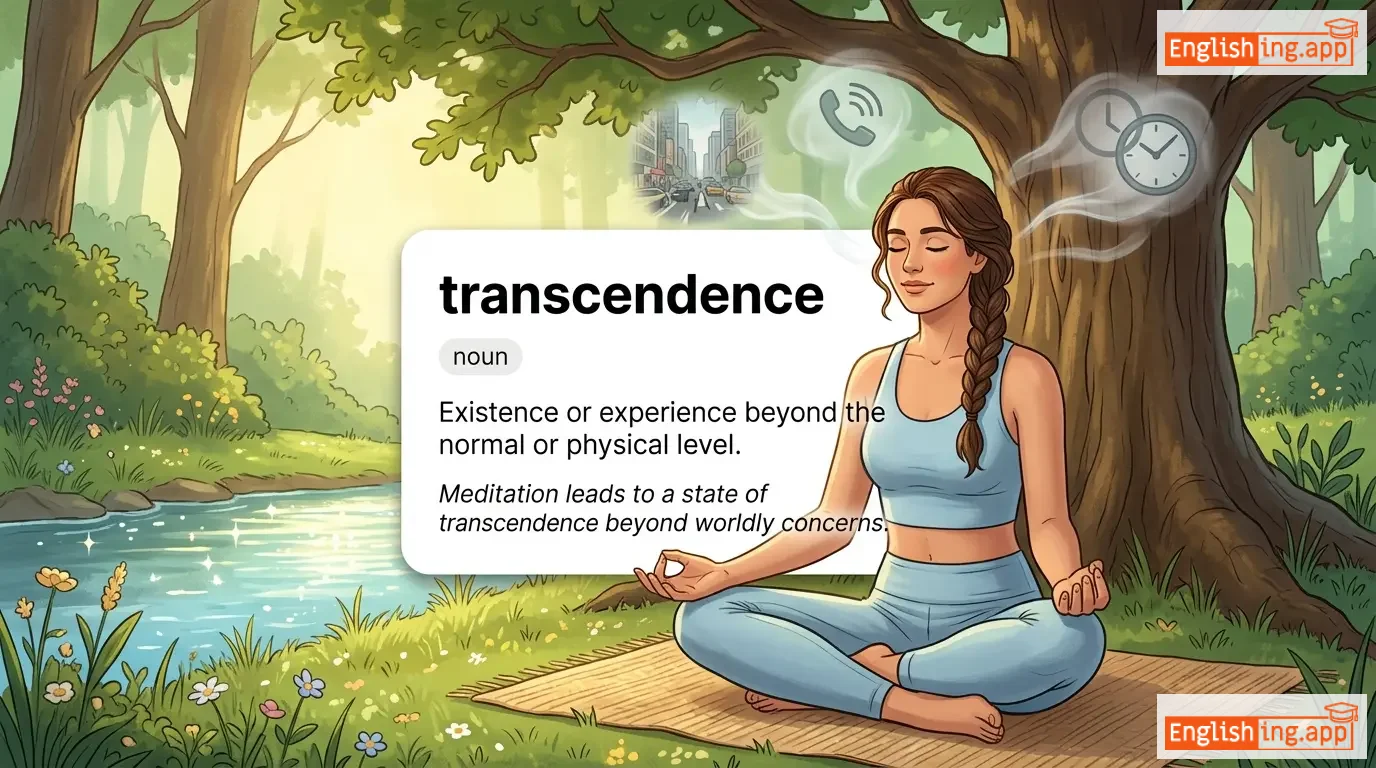
transcendence definition card — visual illustration of the meaning
noun
/trænˈsɛnd.əns/
existencia o experiencia más allá del nivel normal o físico (existencia o experiencia mas alla del nivel normal o fisico)

Existence or experience beyond the normal or physical level.

"Meditation leads to a state of transcendence beyond worldly concerns."

"La meditación lleva a un estado de trascendencia más allá de las preocupaciones mundanas." (La meditacion lleva a un estado de trascendencia mas alla de las preocupaciones mundanas.)
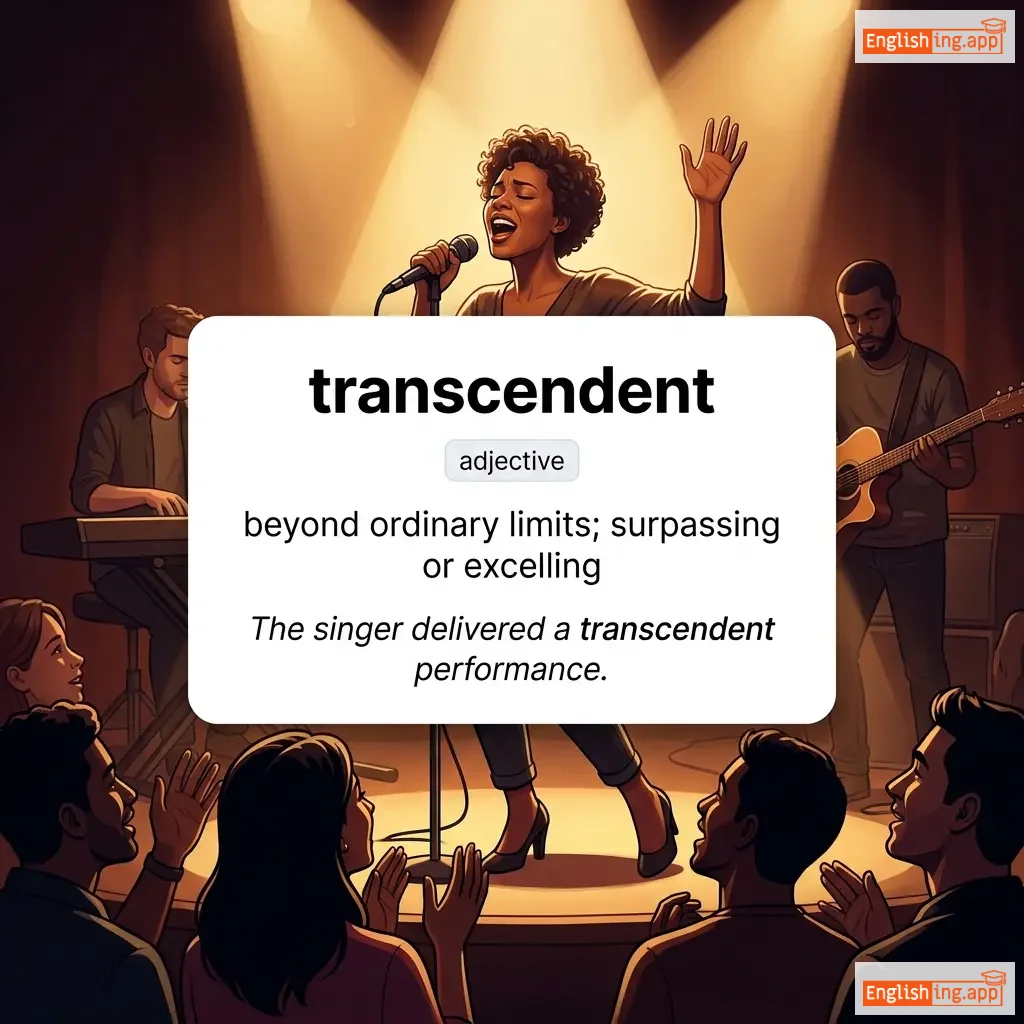
transcendent definition card — visual illustration of the meaning
adjective
/trænˈsɛndənt/
trascendente (trascendente)

beyond ordinary limits; surpassing or excelling

"The singer delivered a transcendent performance."

"El cantante dio una actuación trascendental." (El cantante dio una actuacion trascendental.)
adjective
/ˌtræn.senˈdɛn.təl/
trascendental (trascendental)

relating to the spiritual or non-physical realm; surpassing ordinary experience

"Meditation can lead to transcendental experiences."

"La meditación puede llevar a experiencias trascendentales." (La meditacion puede llevar a experiencias trascendentales.)
verb
/trænˈskraɪb/
transcribir (transcribir)

to make a written copy of spoken words or notes

"The secretary transcribed the meeting minutes."

"La secretaria transcribió las actas de la reunión." (La secretaria transcribió las actas de la reunión.)
noun
/ˈtrænskrɪpt/
transcripción (transcripcion)

a written or printed version of material originally presented in another medium

"The professor asked for a transcript of the meeting."

"El profesor pidió una transcripción de la reunión." (El profesor pidió una transcripción de la reunión.)
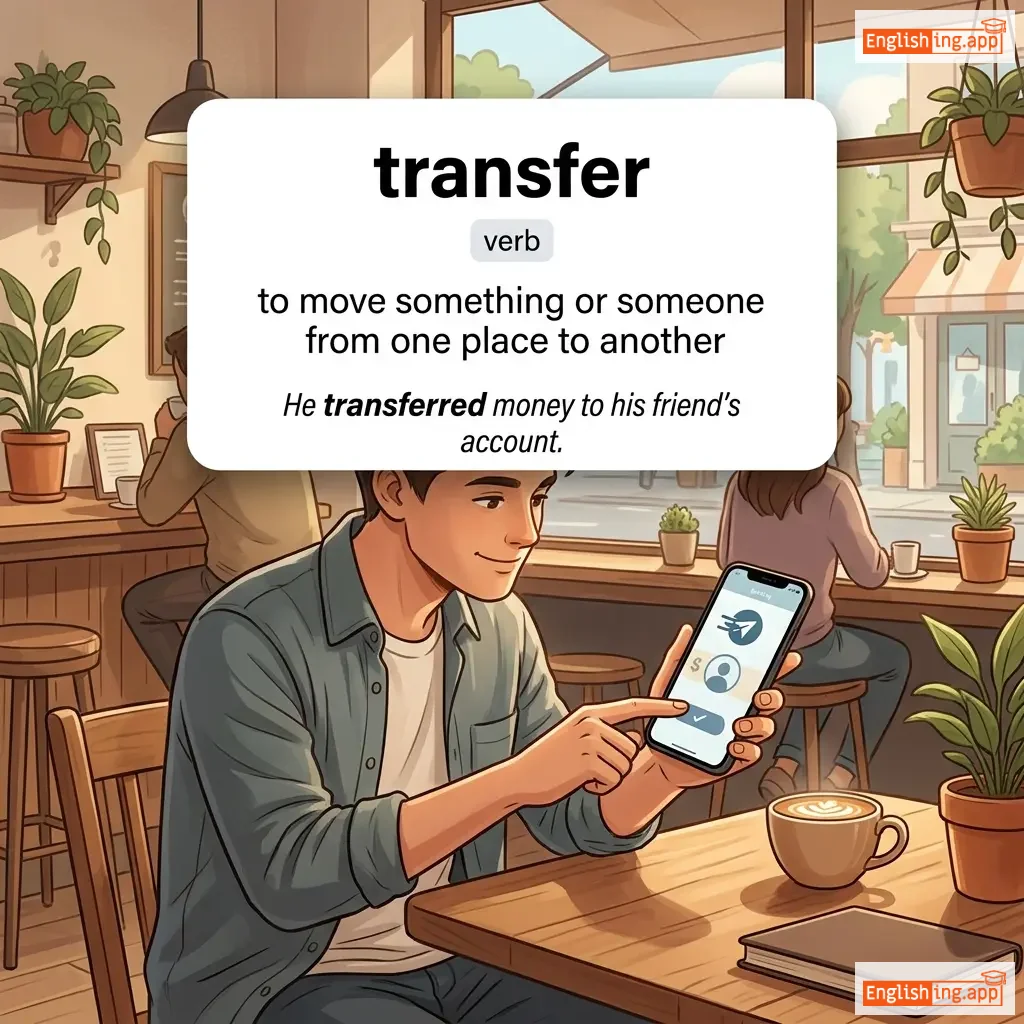
transfer definition card — visual illustration of the meaning
verb
/ˈtrænsfɜːr/
felicidad (felicidad)

to move something or someone from one place to another

"He transferred money to his friend's account."

"No pudo ocultar su felicidad cuando recibió el premio." (No pudo ocultar su felicidad cuando recibió el premio.)
adjective
/ˈtrænsfərəbl/
transferible (transferible)

Able to be moved, passed, or changed from one person, place, or situation to another.

"The ticket is transferable to another passenger."

"El boleto es transferible a otro pasajero." (El boleto es transferible a otro pasajero.)
noun
/ˌtrænsfəˈriː/
cesionario (cesionario)

A person to whom a right, property, or responsibility is transferred.

"The transferee must sign the contract before taking ownership."

"El cesionario debe firmar el contrato antes de tomar posesión." (El cesionario debe firmar el contrato antes de tomar posesión.)
noun
/ˈtrænsfərəns/
transferencia (transferencia)

The act of moving something from one place, person, or situation to another.

"The transference of knowledge is essential in education."

"La transferencia de conocimiento es esencial en la educación." (La transferencia de conocimiento es esencial en la educación.)
noun
/trænsˈfɜːrər/
transferidor (transferidor)

A person who transfers something, such as property, rights, or responsibilities, to another.

"The transferrer is responsible for ensuring the property is legally passed on."

"El transferidor es responsable de asegurarse de que la propiedad se transfiera legalmente." (El transferidor es responsable de asegurarse de que la propiedad se transfiera legalmente.)
verb
/trænsˈfɪɡjʊər/
transformar (transformar)

To transform the outward appearance or form, often in a way that elevates or glorifies.

"The artist managed to transfigure simple clay into a beautiful sculpture."

"El artista logró transformar el barro simple en una hermosa escultura." (El artista logró transformar el barro simple en una hermosa escultura.)
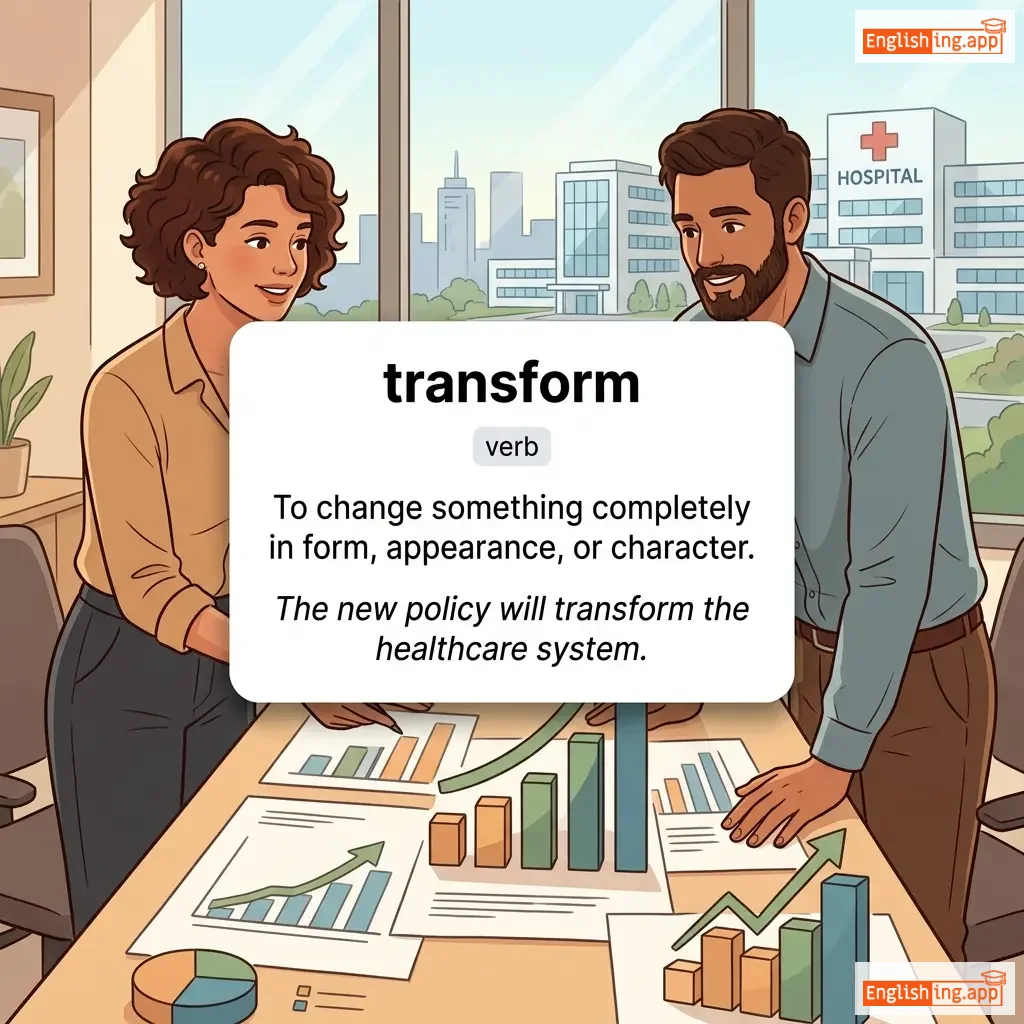
transform definition card — visual illustration of the meaning
verb
/trænsˈfɔːrm/
transformar (transformar)

To change something completely in form, appearance, or character.

"The new policy will transform the healthcare system."

"La nueva política transformará el sistema de salud." (La nueva política transformará el sistema de salud.)
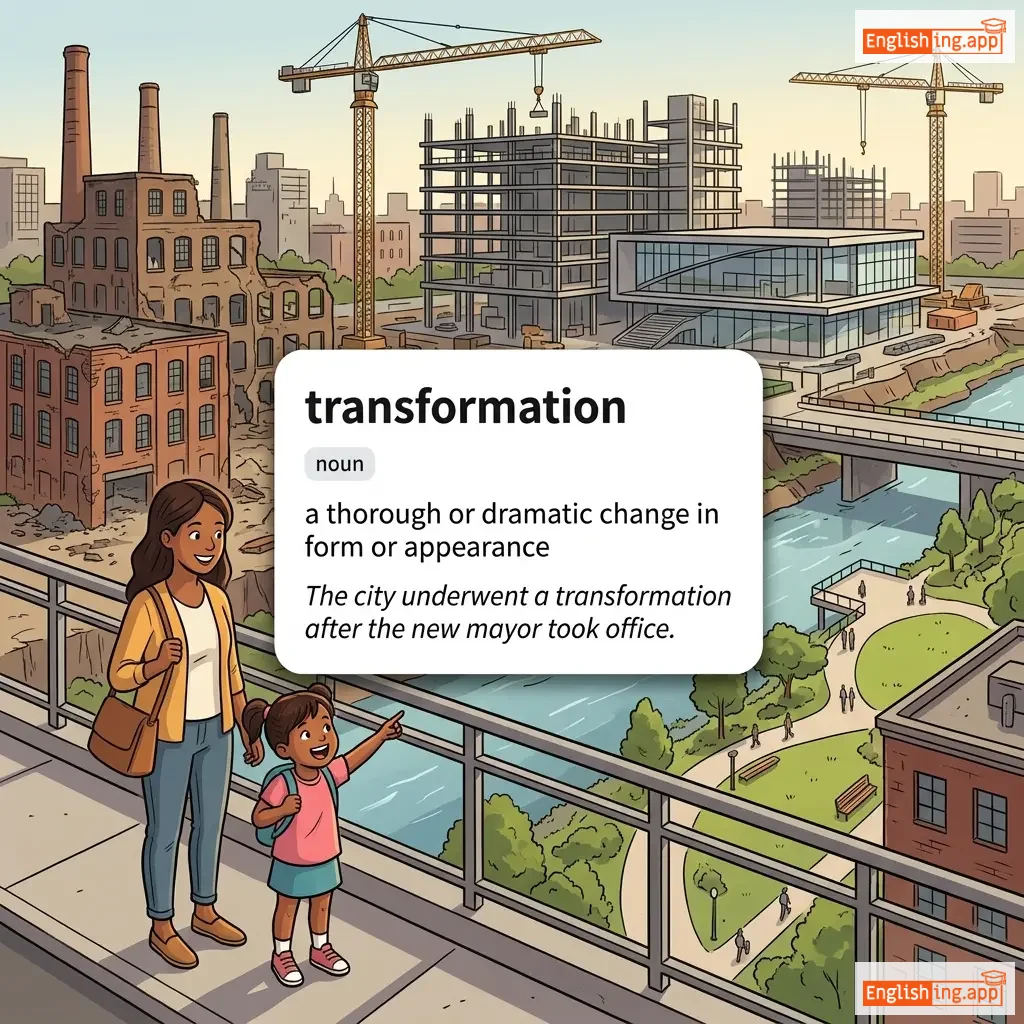
transformation definition card — visual illustration of the meaning
noun
/ˌtrænsfərˈmeɪʃən/
transformación (transformacion)

a thorough or dramatic change in form or appearance

"The city underwent a transformation after the new mayor took office."

"La ciudad experimentó una transformación después de que el nuevo alcalde asumiera el cargo." (La ciudad experimento una transformacion despues de que el nuevo alcalde asumiera el cargo.)
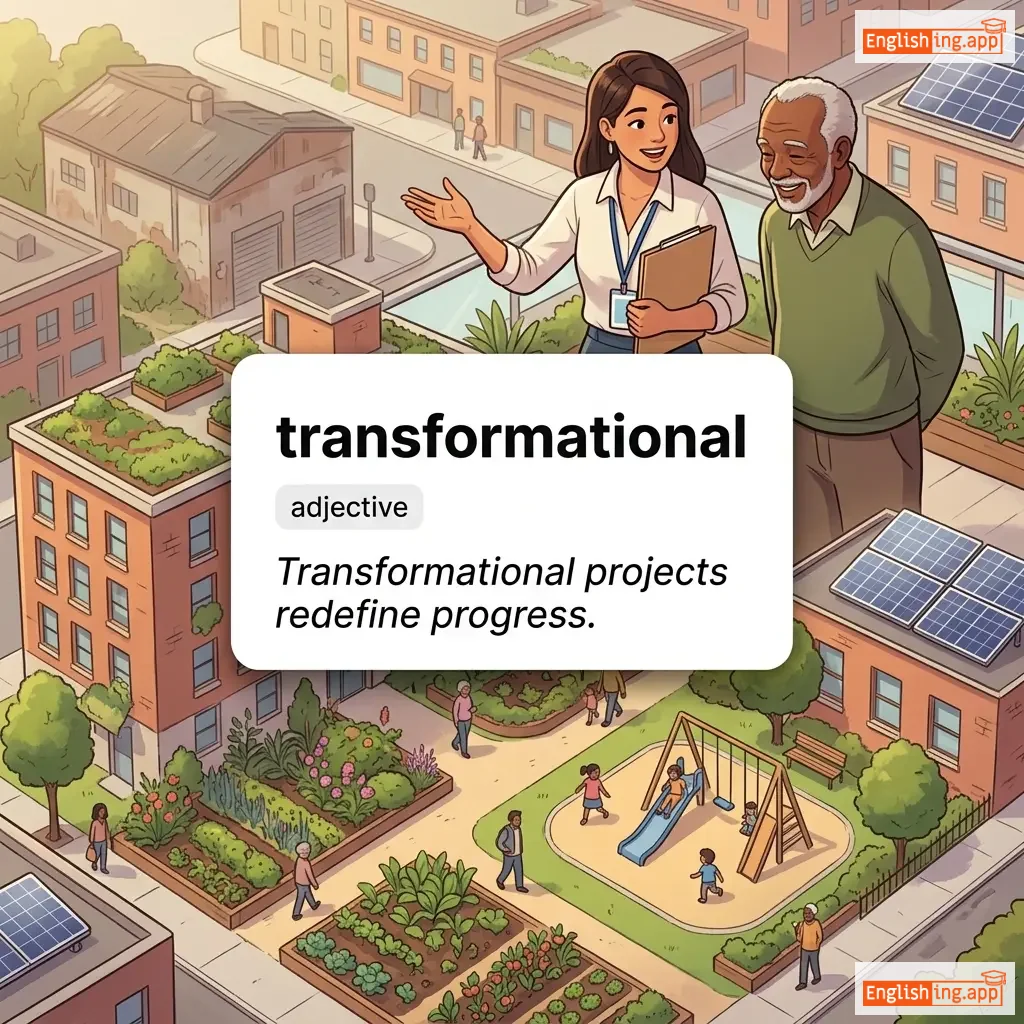
transformational definition card — visual illustration of the meaning
adjective
ˌtræns.fəˈmeɪ.ʃən.əl
transformacional (transformacional)

Causing or able to cause an important and lasting change in someone or something.

"Transformational projects redefine progress."

"Los proyectos transformacionales redefinen el progreso." (Los proyectos transformacionales redefinen el progreso.)
transformative definition card — visual illustration of the meaning
adjective
/trænsˈfɔː.mə.tɪv/
transformador (transformador)

Causing a marked change in someone or something.

"His transformative ideas changed the direction of the company."

"Sus ideas transformadoras cambiaron la dirección de la empresa." (Sus ideas transformadoras cambiaron la dirección de la empresa.)
verb
/trænsˈfjuːz/
transferir sangre u otro fluido a una vena o parte del cuerpo (transferir sangre u otro fluido a una vena o parte del cuerpo)

to transfer blood or another fluid into a vein or body part; to instill a quality or idea into someone or something

"The doctor had to transfuse blood into the patient after the surgery."

"El doctor tuvo que transfundir sangre al paciente después de la cirugía." (El doctor tuvo que transfundir sangre al paciente después de la cirugía.)
adjective
/trænsˈfjuːzəbl̩/
transfundible (transfundible)

capable of being transfused, especially referring to blood or fluids

"Only transfusible blood types are used in the hospital."

"Solo se utilizan los tipos de sangre transfusibles en el hospital." (Solo se utilizan los tipos de sangre transfusibles en el hospital.)
noun
/trænsˈfjuːʒən/
transfusión sanguínea (transfusion sanguínea)

the process of transferring blood or another fluid into a person's vein

"The patient received a blood transfusion after the accident."

"El paciente recibió una transfusión de sangre después del accidente." (El paciente recibió una transfusión de sangre después del accidente.)
verb
/trænsˈɡrɛs/
transgredir (transgredir)

to go beyond the limits of a moral law, command, or boundary; to sin

"He apologized after realizing he had transgressed the community's rules."

"Él se disculpó después de darse cuenta de que había transgredido las reglas de la comunidad." (El se disculpo despues de darse cuenta de que habia transgredido las reglas de la comunidad.)
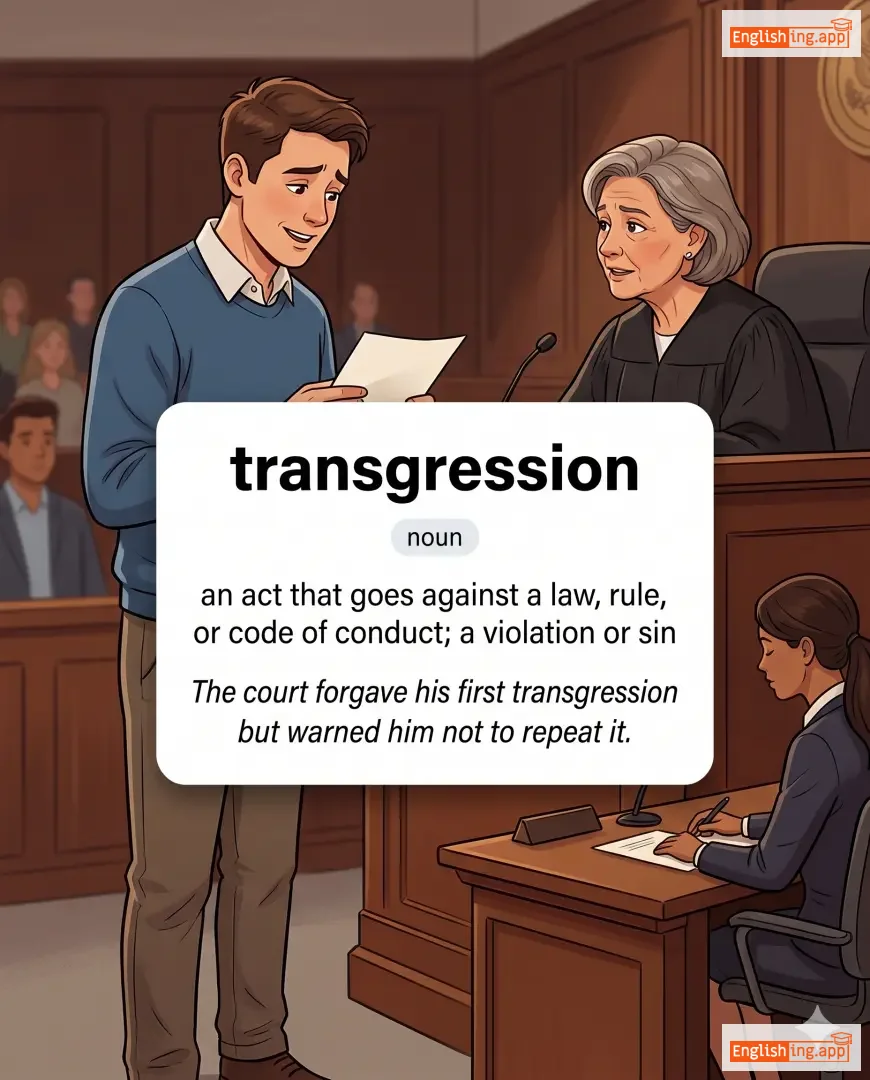
transgression definition card — visual illustration of the meaning
noun
/trænsˈɡrɛʃən/
transgresión, delito (transgresion, delito)

an act that goes against a law, rule, or code of conduct; a violation or sin

"The court forgave his first transgression but warned him not to repeat it."

"El tribunal perdonó su primera transgresión pero le advirtió que no la repitiera." (El tribunal perdono su primera transgresion pero le advirtio que no la repitiera.)
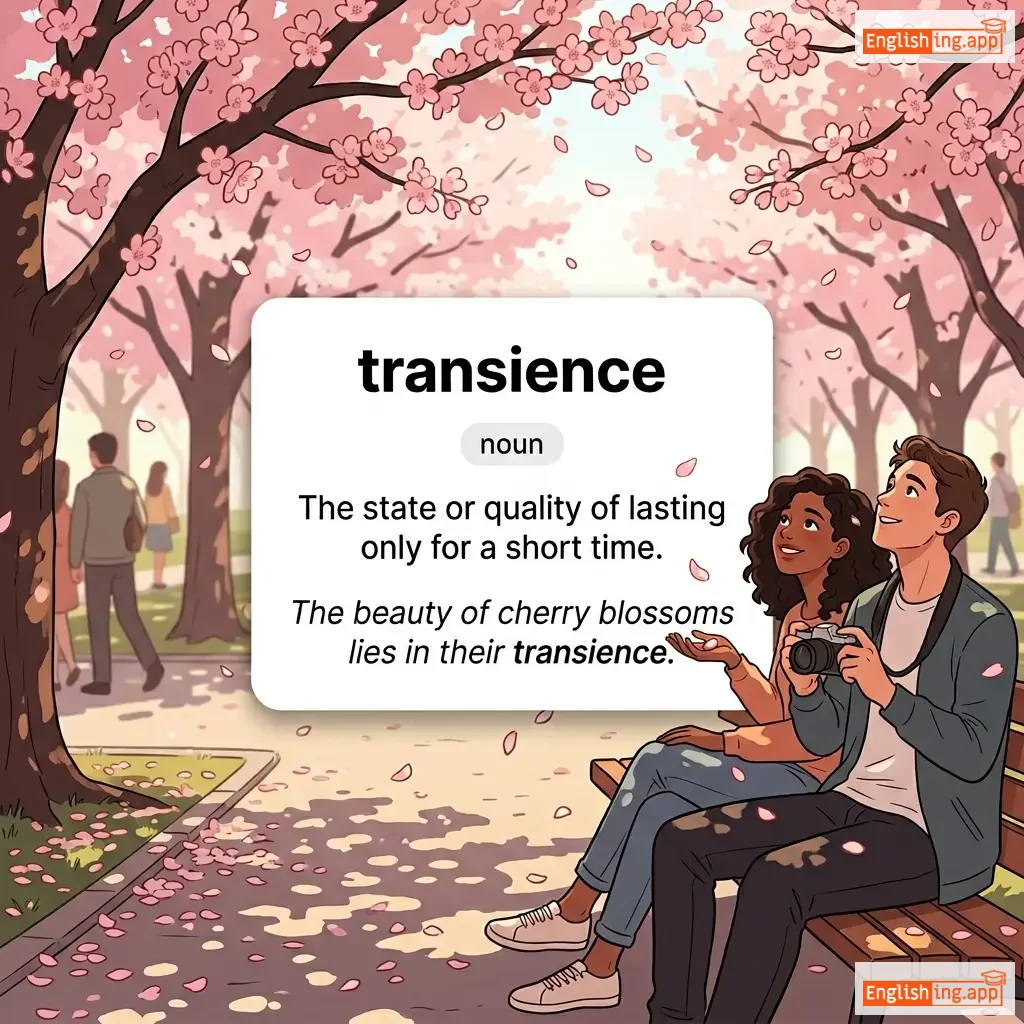
transience definition card — visual illustration of the meaning
noun
/ˈtrænziəns/
transitoriedad (transitoriedad)

The state or quality of lasting only for a short time.

"The beauty of cherry blossoms lies in their transience."

"La belleza de las flores de cerezo radica en su transitoriedad." (La belleza de las flores de cerezo radica en su transitoriedad.)