Vocabularios

Descubra, aprenda y domine el vocabulario en inglés

noun
/stʌf/
cosas (cosas)

a collection of things or materials, typically unspecified or uncountable

"She packed all her stuff into the suitcase."

"Ella empacó todas sus cosas en la maleta." (Ella empacó todas sus cosas en la maleta.)
adjective
/ˈstʌf.i/
falta de aire fresco; mal ventilado; actitud formal y conservadora (falta de aire fresco; mal ventilado; actitud formal y conservadora)

lacking fresh air; poorly ventilated; formal and conservative in attitude

"The room was stuffy and needed fresh air."

"La habitación estaba viciada y necesitaba aire fresco." (La habitacion estaba viciada y necesitaba aire fresco.)
verb
/ˈstʌltɪfaɪ/
hacer parecer tonto o dificultar la efectividad y el entusiasmo (hacer parecer tonto o dificultar la efectividad y el entusiasmo)

to make someone or something appear foolish, or to hinder effectiveness and enthusiasm

"The repetitive tasks seemed to stultify the workers' creativity."

"Las tareas repetitivas parecían atontar la creatividad de los trabajadores." (Las tareas repetitivas parecían atontar la creatividad de los trabajadores.)
verb
/ˈstʌmbəl/
tropezar (tropezar)

to trip or lose balance while walking or running; to make a mistake or falter

"He stumbled on the uneven pavement."

"Él tropezó en el pavimento desigual." (Él tropezó en el pavimento desigual.)
noun/verb
/stʌmp/
tronco de árbol, desconcertar (tronco de arbol, desconcertar)

the base of a tree left after the trunk is cut down; to puzzle or confuse

"The question completely stumped the students."

"La pregunta desconcertó completamente a los estudiantes." (La pregunta desconcertó completamente a los estudiantes.)
adjective
/ˈstʌm.pi/
bajo y grueso (bajo y grueso)

short and thick; having a short, thick appearance

"The stumpy little dog wagged its tail enthusiastically."

"El perrito bajo y grueso movió su cola con entusiasmo." (El perrito bajo y grueso movió su cola con entusiasmo.)
verb
/stʌn/
atónito, desconcertado (atonito, desconcertado)

to shock or surprise someone greatly; to knock someone unconscious or dazed

"The news of her sudden resignation stunned everyone."

"La noticia de su renuncia repentina dejó a todos atónitos." (La noticia de su renuncia repentina dejo a todos atonitos.)
adjective
/ˈstʌnɪŋ/
impresionante (impresionante)

extremely impressive or attractive

"The view from the top of the mountain was absolutely stunning."

"La vista desde la cima de la montaña era absolutamente impresionante." (La vista desde la cima de la montaña era absolutamente impresionante.)
noun/verb
/stʌnt/
truco, hazaña, obstaculizar el crecimiento (truko, hazana, obstaculizar el crecimiento)

a daring or unusual action performed for entertainment or publicity; to hinder growth or development

"The actor performed a dangerous stunt in the movie."

"El actor realizó un stunt peligroso en la película." (El akto realizo un stunt peligroso en la pelicula.)
verb
/ˈstjuːpɪˌfaɪ/
dejar atónito (dejar atonito)

to make someone unable to think clearly, usually because of surprise or shock

"The magician's tricks stupefied the audience."

"Los trucos del mago dejaron atónita a la audiencia." (Los trucos del mago dejaron atonita a la audiencia.)
adjective
/stjuːˈpɛndəs/
asombroso (asombroso)

extremely impressive; amazing in size, degree, or excellence

"The magician’s performance was simply stupendous."

"La actuación del mago fue simplemente asombrosa." (La actuacion del mago fue simplemente asombrosa.)
adjective
/ˈstjuːpɪd/
estúpido (estupido)

lacking intelligence or common sense

"It was a stupid mistake to leave the keys inside the car."

"Fue un error estúpido dejar las llaves dentro del coche." (Fue un error estupido dejar las llaves dentro del coche.)
noun
/stjuːˈpɪdəti/
estupidez (estupidez)

lack of intelligence or common sense

"His stupidity caused a lot of problems for the team."

"Su estupidez causó muchos problemas al equipo." (Su estupidez causó muchos problemas al equipo)
noun
/ˈstjuːpər/
estupor (estupor)

a state of near-unconsciousness or insensibility

"He remained in a stupor after hearing the shocking news."

"Él permaneció en un estupor después de escuchar la noticia impactante." (Él permaneció en un estupor después de escuchar la noticia impactante.)
adjective
/ˈstɜːrdi/
fuerte (fuerte)

strongly and solidly built; not easily weakened

"The carpenter made a sturdy wooden table."

"El carpintero hizo una mesa de madera fuerte." (El carpintero hizo una mesa de madera fuerte.)
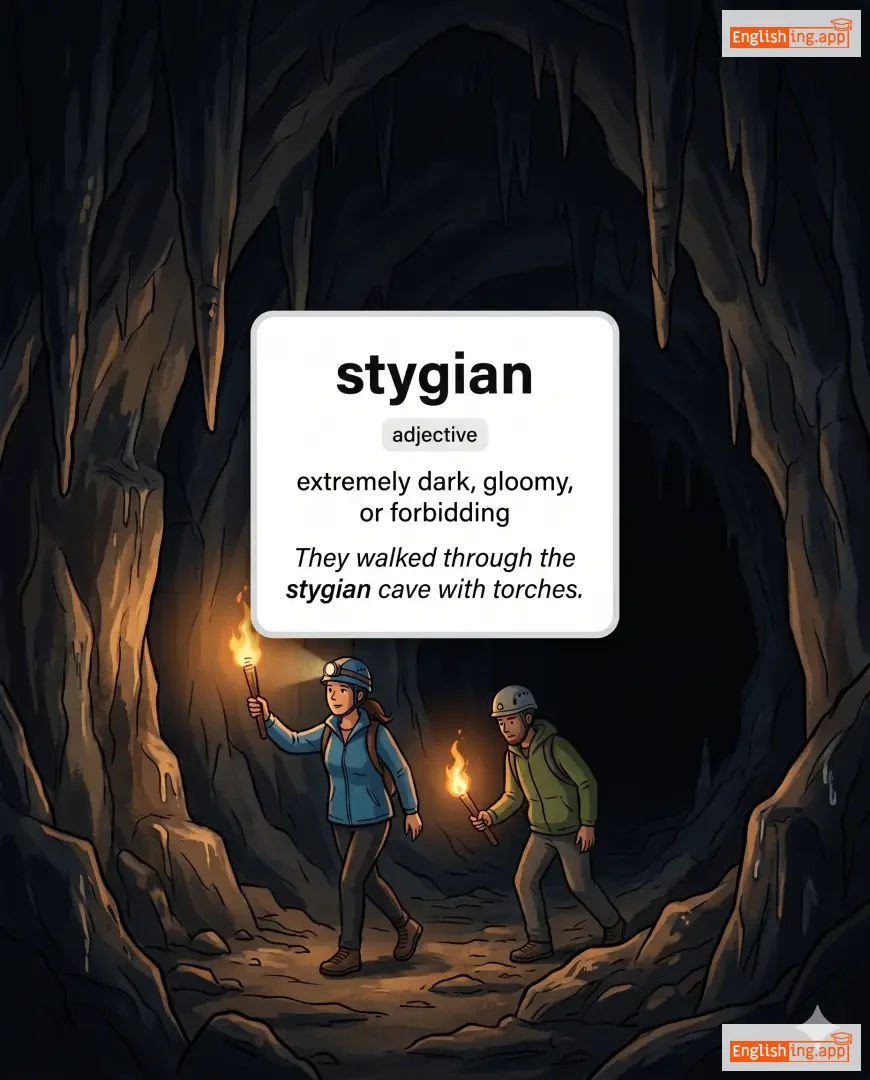
stygian definition card — visual illustration of the meaning
adjective
/ˈstɪdʒiən/
tenebroso (tenebroso)

extremely dark, gloomy, or forbidding

"They walked through the stygian cave with torches."

"Caminaban a través de la cueva tenebrosa con antorchas." (Caminaban a través de la cueva tenebrosa con antorchas.)
noun
/staɪl/
estilo (estilo)

a particular way of doing or presenting something, often reflecting individual preferences or trends

"Her style of dress is both elegant and modern."

"Su estilo de vestir es tanto elegante como moderno." (Su estilo de vestir es tanto elegante como moderno.)
adjective
/ˈstaɪ.lɪʃ/
elegante y atractivo; que tiene distinción o buen gusto en su apariencia (elegante y atractivo; que tiene distincion o buen gusto en su apariencia)

fashionable and attractive; having elegance or taste in appearance

"She wore a stylish dress to the party."

"Ella llevó un vestido elegante a la fiesta." (Ella llevo un vestido elegante a la fiesta.)
noun
/ˈstaɪləs/
estilógrafo (estilografo)

a small tool used for writing, drawing, or touching screens

"She used a stylus to draw on her tablet."

"Usó un estilógrafo para dibujar en su tableta." (Uso un estilografo para dibujar en su tableta.)
verb
/ˈstaɪmi/
obstruir (obstruir)

to prevent or hinder the progress of something

"The new regulations could stymie small businesses."

"Las nuevas regulaciones podrían obstaculizar a las pequeñas empresas." (Las nuevas regulaciones podrían obstaculizar a las pequeñas empresas.)
noun
/ˈsweɪʒən/
persuasión (persuasion)

the act of persuading or influencing someone

"The leader used gentle suasion to win support for the plan."

"El líder usó una suave persuasión para ganar apoyo para el plan." (El líder usó una suave persuasión para ganar apoyo para el plan.)
adjective
/swɑːv/
atractivo y refinado (atractivo y refinado)

charming, confident, and elegant, often in a smooth or polished way

"He was a suave gentleman who impressed everyone at the party."

"Era un caballero refinado que impresionó a todos en la fiesta." (Era un caballero refinado que impresionó a todos en la fiesta.)
noun
/ˈswɑːvɪti/
suavidad y encanto (suavidad y encanto)

smoothness and charm in manner

"His suavity made him popular in social gatherings."

"Su suavidad lo hizo popular en reuniones sociales." (Su suavidad lo hizo popular en reuniones sociales.)
adverb
/ˌsʌb ˈroʊzə/
en secreto (en secreto)

secretly, in confidence, or in private

"The deal was made sub rosa to avoid public scrutiny."

"El trato se hizo sub rosa para evitar el escrutinio público." (El trato se hizo sub rosa para evitar el escrutinio público.)
noun
/ˈsʌb.mə.riːn/
submarino (submarino)

a warship with a streamlined hull designed to operate completely submerged in the sea

"The submarine dived deep into the ocean to avoid detection."

"El submarino se sumergió profundamente en el océano para evitar ser detectado." (El submarino se sumergió profundamente en el océano para evitar ser detectado.)
adjective
/ˈsʌb.æs.ɪd/
ligeramente ácido (ligeramente acido)

Slightly sour or acidic in taste or nature.

"The fruit had a subacid flavor that was refreshing on a hot day."

"La fruta tenía un sabor ligeramente ácido que era refrescante en un día caluroso." (La fruta tenía un sabor ligeramente ácido que era refrescante en un día caluroso.)
noun
/sʌbˈɔːl.tən/
persona en una posición subordinada; en el ejército, un oficial joven (subaltern)

A person holding a subordinate position; in the military, a junior officer.

"The subaltern was responsible for leading a small platoon of soldiers."

"El subalterno era responsable de dirigir un pequeño pelotón de soldados." (El subalterno era responsable de dirigir un pequeño pelotón de soldados.)
adjective
/ˌsʌb.əˈkwɒt.ɪk/
subacuático (subacuatico)

Existing, living, or located under water.

"Divers explored the subaquatic cave system filled with rare fish."

"Los buzos exploraron el sistema de cavernas subacuáticas llenas de peces raros." (Los buzos exploraron el sistema de cavernas subacuáticas llenas de peces raros.)
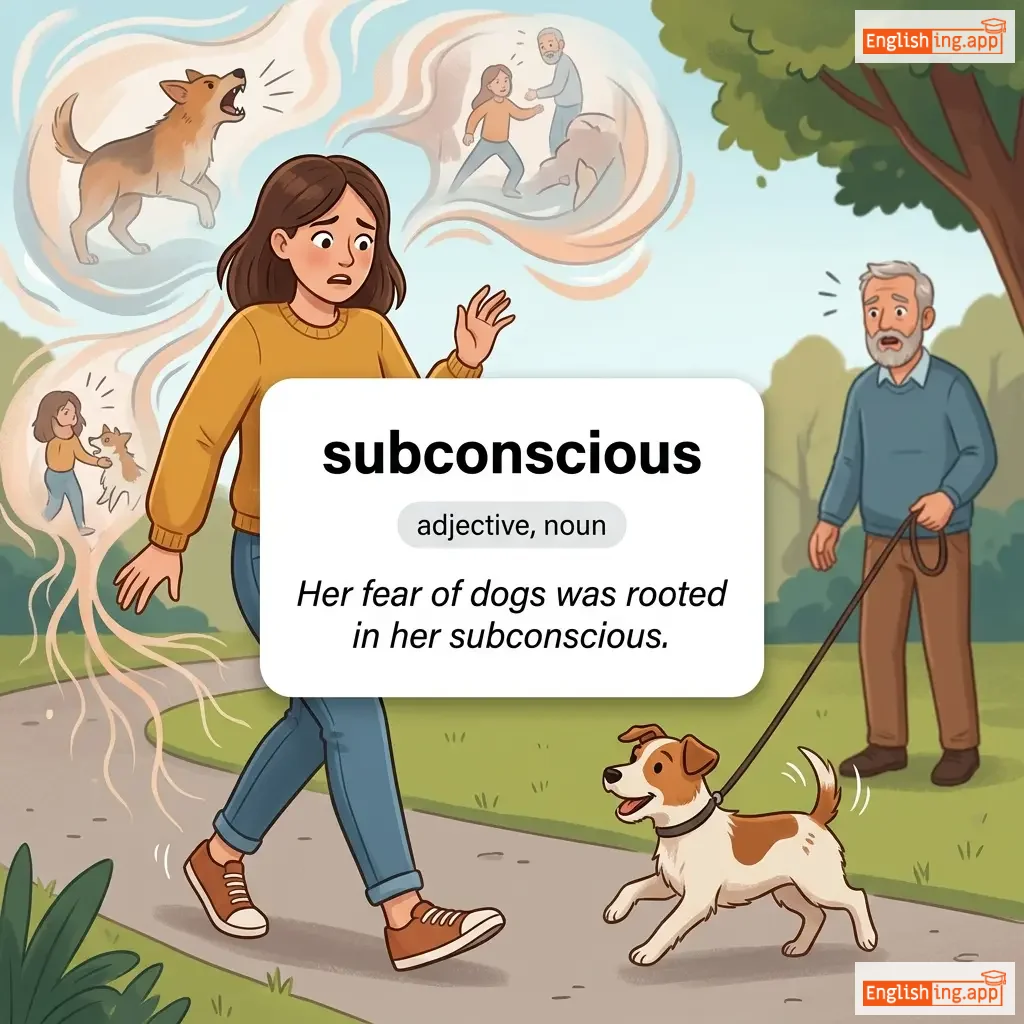
subconscious definition card — visual illustration of the meaning
adjective, noun
/ˌsʌbˈkɒn.ʃəs/
subconsciente (subkonsiente)

Relating to the part of the mind that influences thoughts and actions without full awareness.

"Her fear of dogs was rooted in her subconscious."

"Su miedo a los perros estaba arraigado en su subconsciente." (Su miedo a los perros estaba arraigado en su subconsciente.)
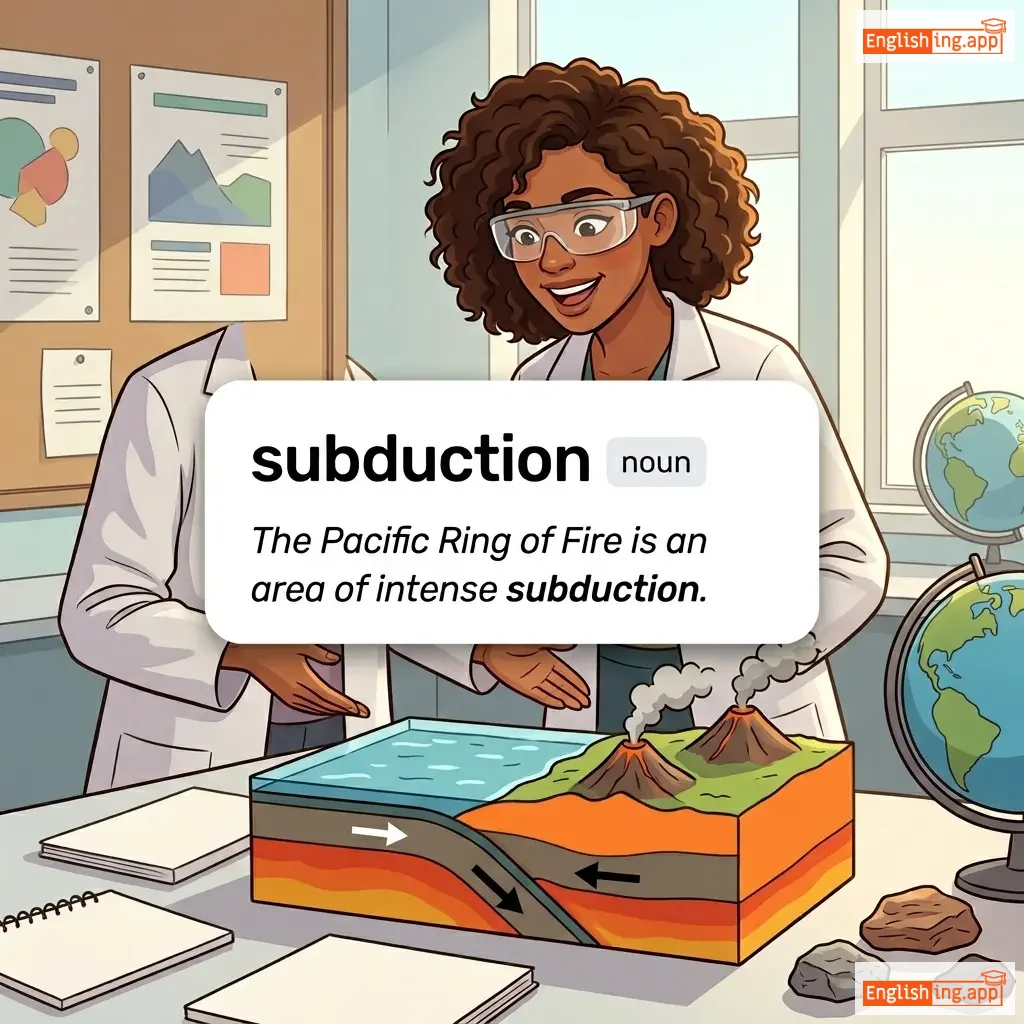
subduction definition card — visual illustration of the meaning
noun
/səbˈdʌk.ʃən/
El movimiento lateral y hacia abajo de una capa de la corteza terrestre hacia el manto debajo de otra capa. (El movimiento lateral y hacia abajo de una capa de la corteza terrestre hacia el manto debajo de otra capa.)

The lateral and downward movement of the edge of a plate of the earth's crust into the mantle beneath another plate.

"The Pacific Ring of Fire is an area of intense subduction."

"El anillo de fuego del Pacífico es un área de intensa subducción." (El anillo de fuego del Pacífico es un área de intensa subducción.)
verb
/səbˈdjuː/
someter (someter)

To bring under control, especially by force; to overcome or quiet.

"The army was able to subdue the rebellion quickly."

"El ejército pudo someter la rebelión rápidamente." (El ejército pudo someter la rebelión rápidamente.)
adjective
/sʌbˈdʒeɪsənt/
subyacente (subyacente)

lying immediately beneath; underlying

"The geological survey revealed subjacent layers of rock."

"La encuesta geológica reveló capas subyacentes de roca." (La encuesta geológica reveló capas subyacentes de roca.)
noun/verb/adjective
/ˈsʌbdʒɪkt/ (noun), /səbˈdʒɛkt/ (verb)
tema (tema)

noun: a topic or theme; verb: to cause to undergo; adjective: dependent or under authority

"The teacher introduced a new subject in class."

"El maestro presentó una nueva asignatura en la clase." (El maestro presentó una nueva asignatura en la clase.)
noun
/səbˈdʒɛkʃən/
subyugación (subyugacion)

the act of bringing someone or something under control or domination

"The people suffered under the subjection of a cruel ruler."

"El pueblo sufrió bajo la subyugación de un gobernante cruel." (El pueblo sufrió bajo la subyugación de un gobernante cruel.)
adjective
/səbˈdʒɛktɪv/
subjetivo (subjetivo)

based on personal feelings, tastes, or opinions rather than facts

"Beauty is often considered a subjective concept."

"La belleza a menudo se considera un concepto subjetivo." (La belleza a menudo se considera un concepto subjetivo.)
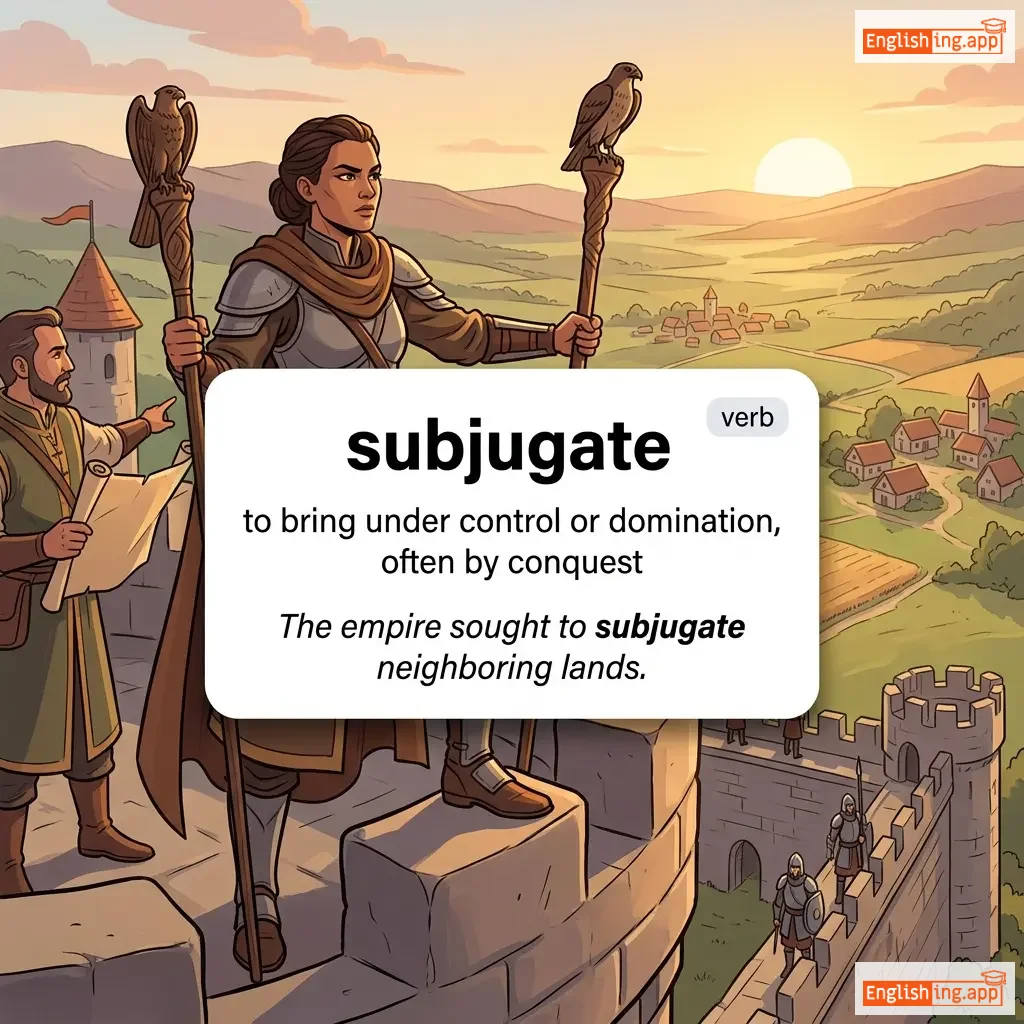
subjugate definition card — visual illustration of the meaning
verb
/ˈsʌbdʒʊˌɡeɪt/
subyugar (subyugar)

to bring under control or domination, often by conquest

"The empire sought to subjugate neighboring lands."

"El imperio trató de subyugar las tierras vecinas." (El imperio trato de subyugar las tierras vecinas.)
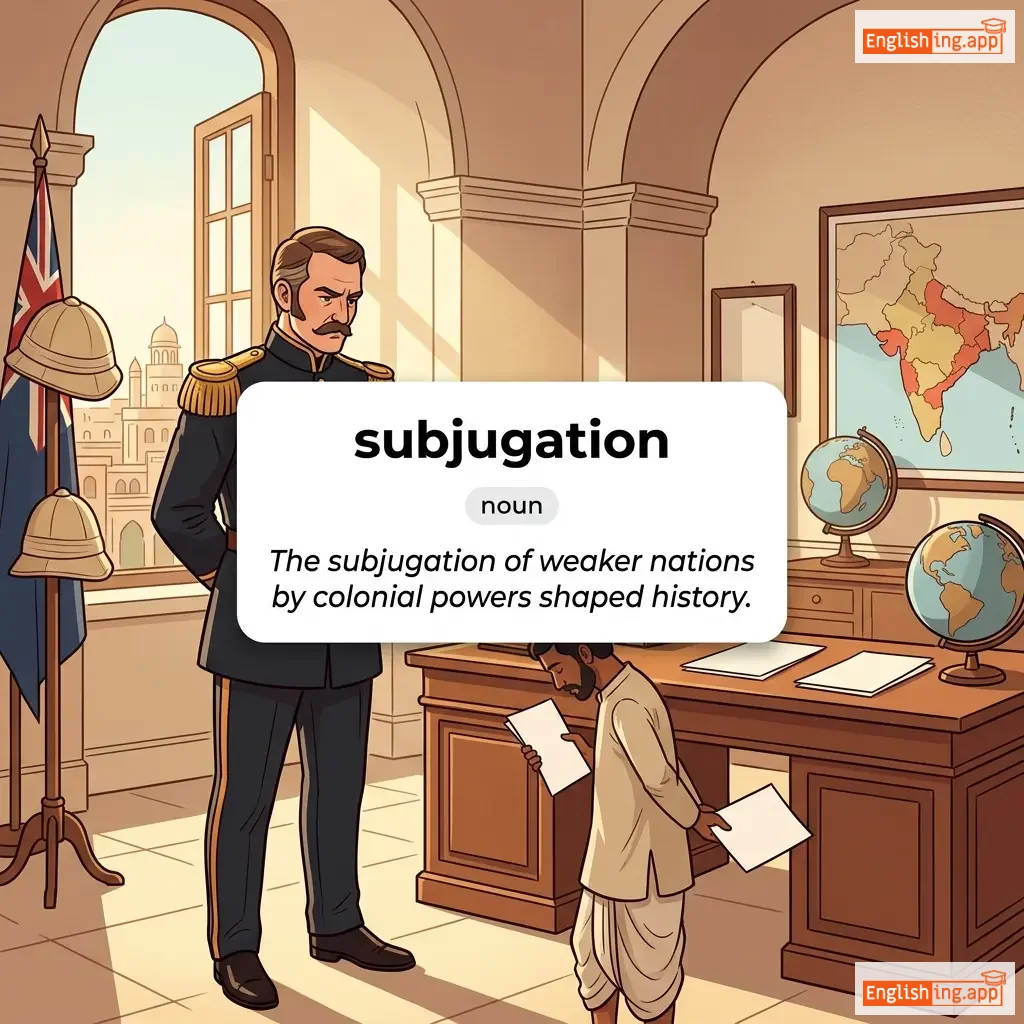
subjugation definition card — visual illustration of the meaning
noun
ˌsʌb.dʒʊˈɡeɪ.ʃən
subyugación o dominación (subyugacion o dominacion)

The action of bringing someone or something under domination or control, especially by force.

"The subjugation of weaker nations by colonial powers shaped history."

"La subyugación de naciones más débiles por parte de potencias coloniales dio forma a la historia." (La subyugacion de naciones mas debiles por parte de potencias coloniales dio forma a la historia.)
verb
/ˈsʌblɪmeɪt/
transformar en actividades más elevadas (transformar en actividades más elevadas)

to redirect strong emotions or desires into socially acceptable activities or channels

"She sublimated her anger into painting beautiful landscapes."

"Ella sublimó su ira en pintar hermosos paisajes." (Ella sublimó su ira en pintar hermosos paisajes.)
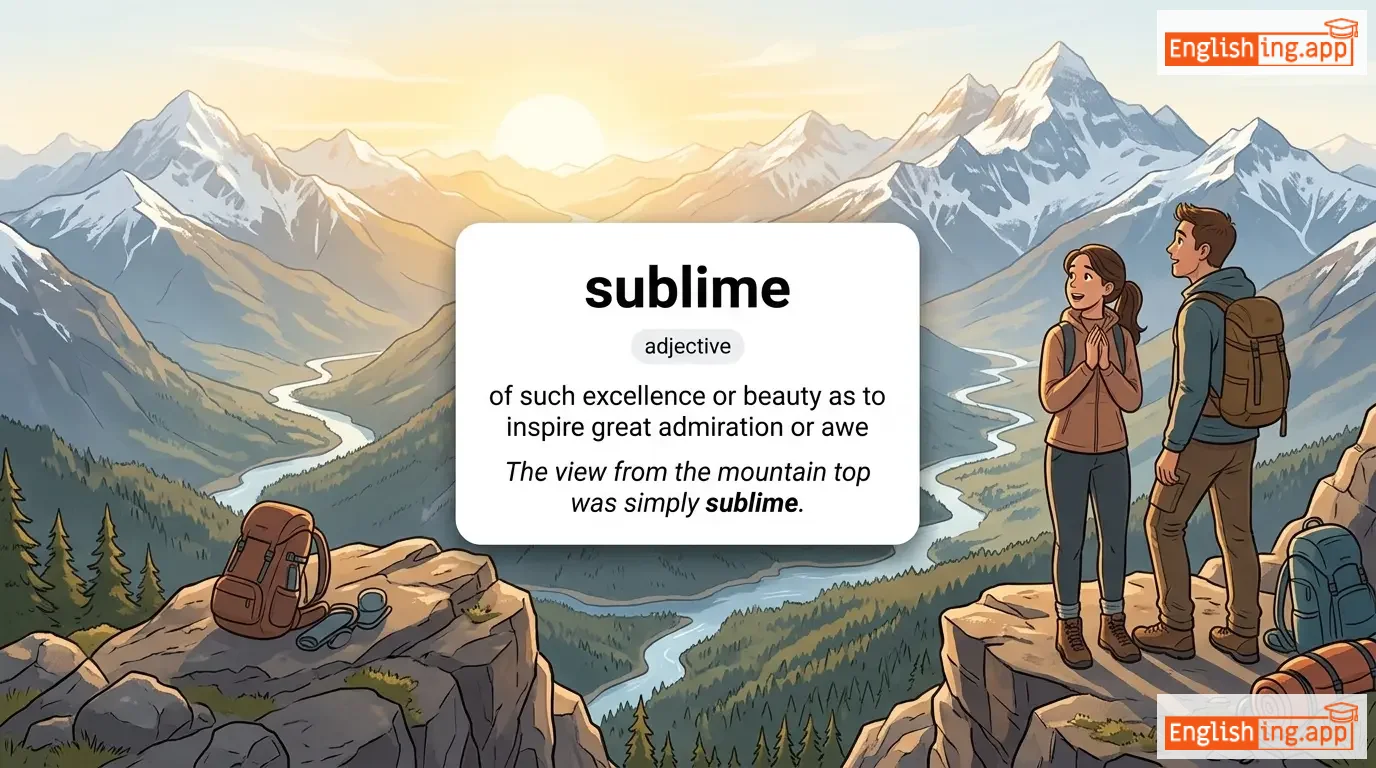
sublime definition card — visual illustration of the meaning
adjective
/səˈblaɪm/
sublime (sublime)

of such excellence or beauty as to inspire great admiration or awe

"The view from the mountain top was simply sublime."

"La vista desde la cima de la montaña era simplemente sublime." (La vista desde la cima de la montaña era simplemente sublime.)
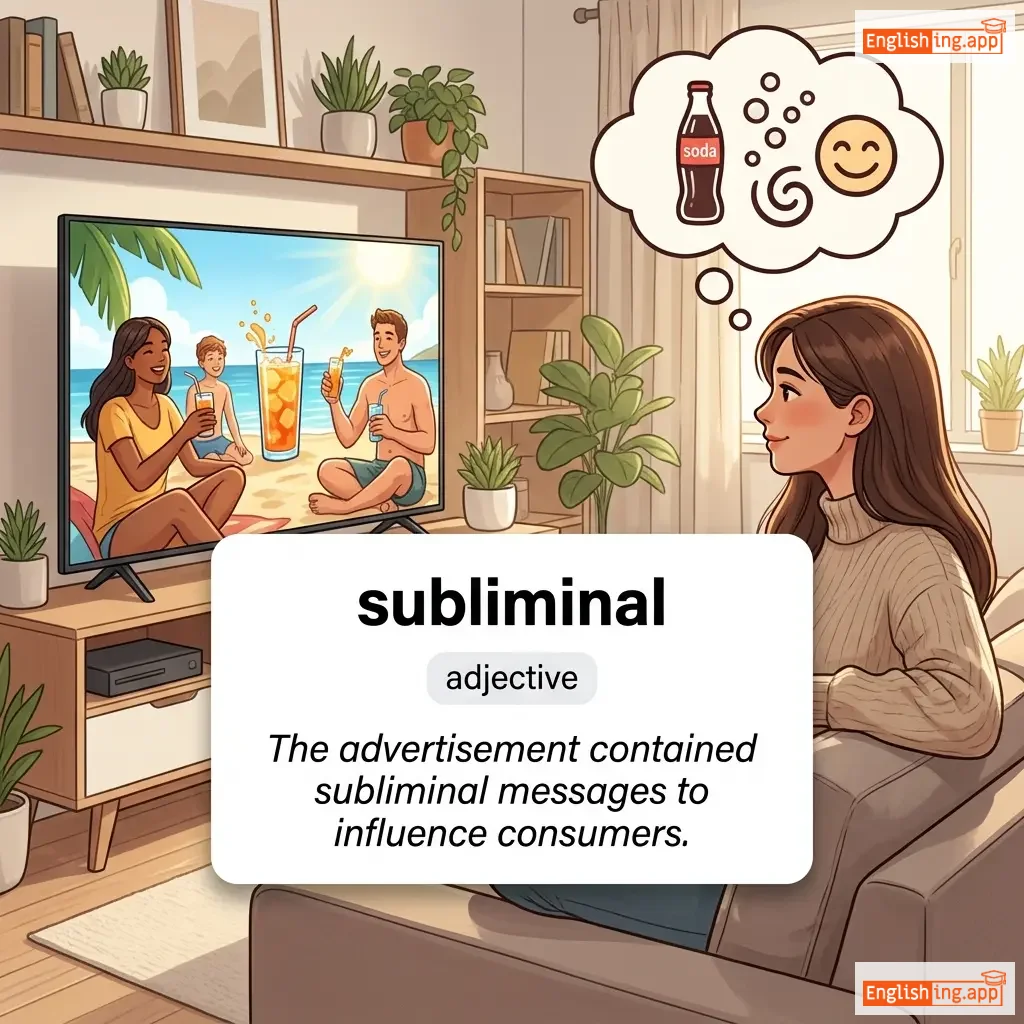
subliminal definition card — visual illustration of the meaning
adjective
/sʌbˈlɪmɪnəl/
subliminal (subliminal)

below the threshold of conscious perception but still influencing behavior or feelings

"The advertisement contained subliminal messages to influence consumers."

"El anuncio contenía mensajes subliminales para influir en los consumidores." (El anuncio contenia mensajes subliminales para influir en los consumidores.)
adjective
/sʌbˈlɪŋɡwəl/
sublingual (sublingual)

situated or applied under the tongue

"The doctor prescribed a sublingual tablet for faster absorption."

"El doctor recetó una tableta sublingual para una absorción más rápida." (El doctor recetó una tableta sublingual para una absorción más rápida.)
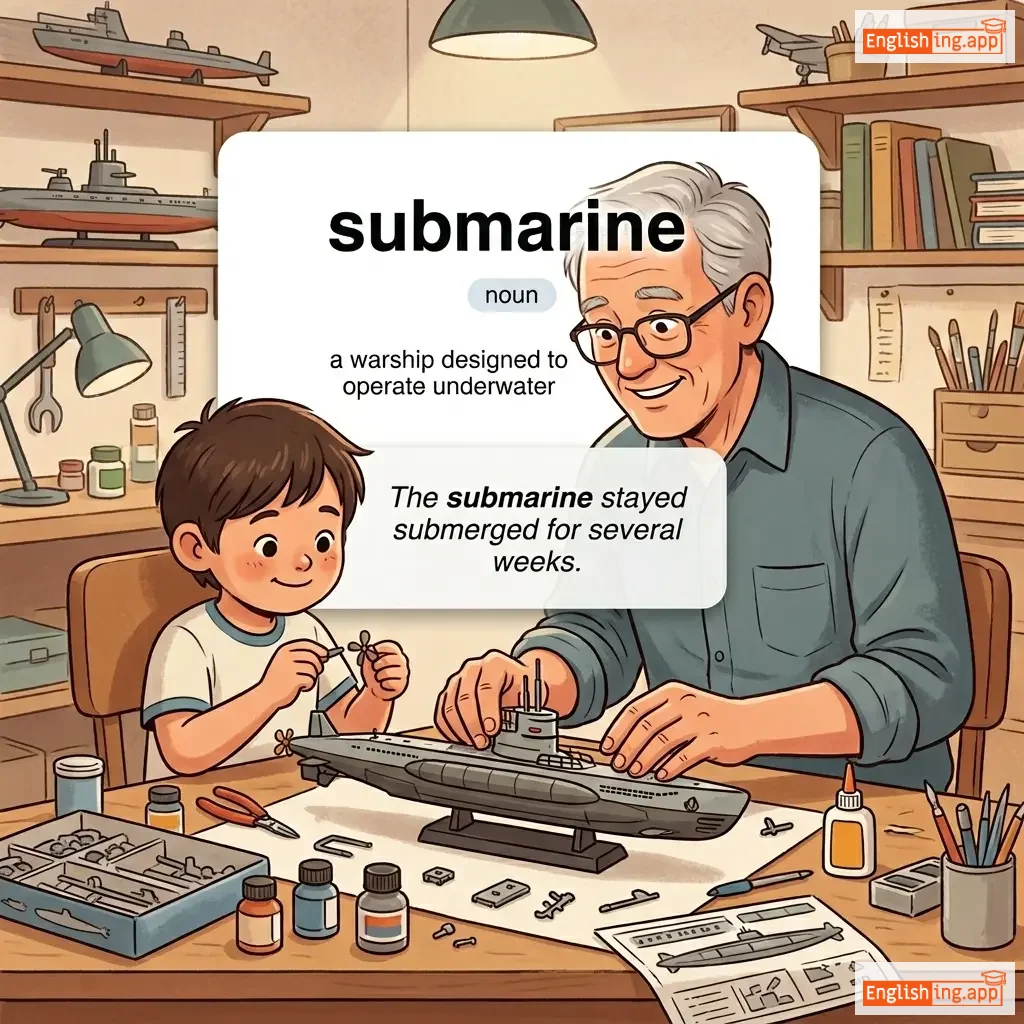
submarine definition card — visual illustration of the meaning
noun
/ˈsʌbməriːn/
submarino (submarino)

a warship designed to operate underwater

"The submarine stayed submerged for several weeks."

"El submarino permaneció sumergido durante varias semanas." (El submarino permaneció sumergido durante varias semanas.)
verb
/səbˈmɜːrdʒ/
sumergir (sumergir)

to put under water or cover with liquid

"The floodwaters threatened to submerge the village."

"Las aguas de la inundación amenazaron con sumergir el pueblo." (Las aguas de la inundación amenazaron con sumergir el pueblo.)
noun
/səbˈmɜːrdʒəns/
inmersión (inmersion)

the act or process of being submerged or going underwater

"The submergence of coastal areas is a major concern due to rising sea levels."

"La inmersión de las áreas costeras es una preocupación importante debido al aumento del nivel del mar." (La inmersion de las areas costeras es una preocupacion importante debido al aumento del nivel del mar.)
adjective, noun
/səbˈmɜːrsəbl/
sumergible (sumergible)

capable of being submerged; a small underwater craft

"The scientists explored the deep ocean using a submersible."

"Los científicos exploraron el océano profundo utilizando un sumergible." (Los científicos exploraron el océano profundo utilizando un sumergible.)
noun
/səbˈmɜːrʒən/
inmersión (inmersion)

the state of being under water

"The submersion of the fields lasted for several days after the heavy rain."

"La inmersión de los campos duró varios días después de la lluvia fuerte." (La inmersion de los campos duro varios dias despues de la lluvia fuerte.)
noun
/səbˈmɪʃən/
rendición, presentación (rendicion, presentacion)

the act of yielding to authority or presenting something for consideration

"Her submission of the report was appreciated by the manager."

"Su presentación del informe fue apreciada por el gerente." (Su presentacion del informe fue apreciada por el gerente.)
adjective
/səbˈmɪsɪv/
sumiso (sumiso)

ready to conform to the authority or will of others; meekly obedient or passive

"She was too submissive to challenge her boss's unfair decision."

"Ella era demasiado sumisa para desafiar la decisión injusta de su jefe." (Ella era demasiado sumisa para desafiar la decisión injusta de su jefe.)
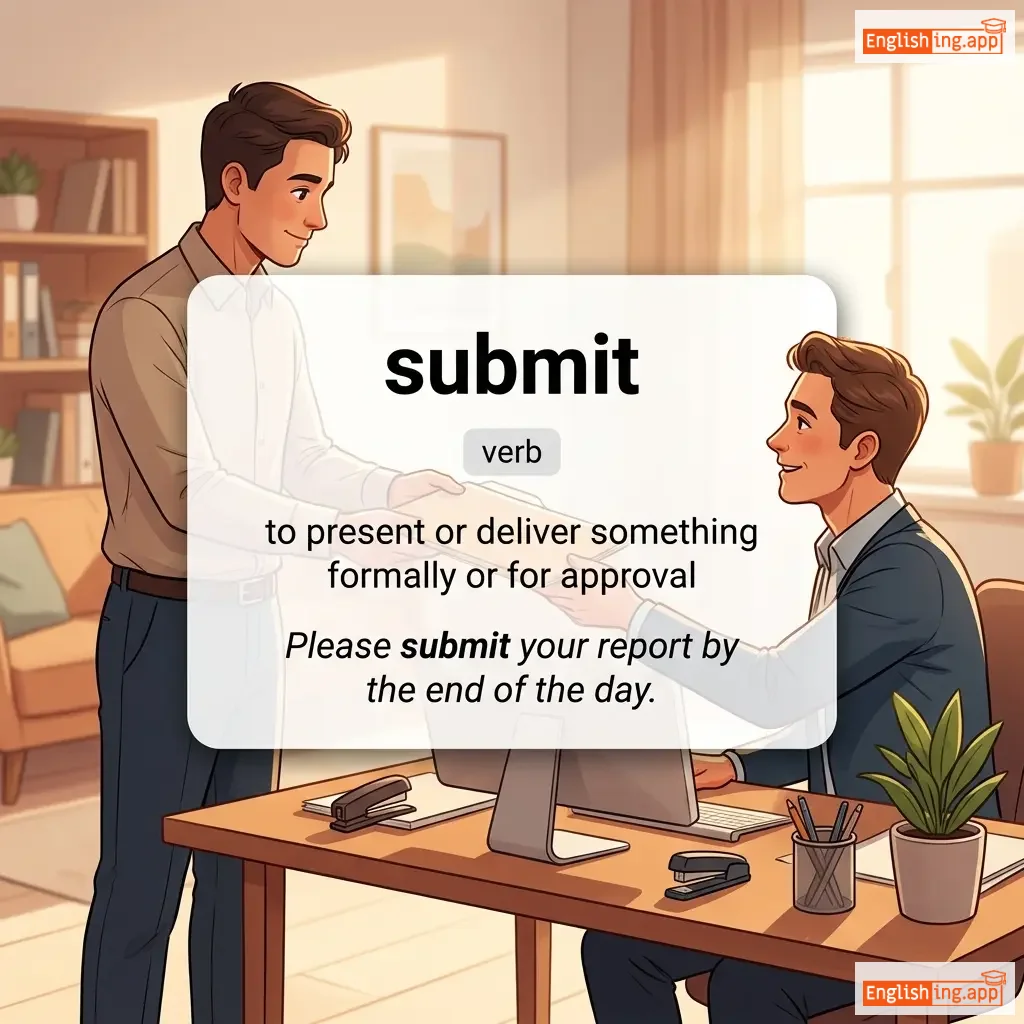
submit definition card — visual illustration of the meaning
verb
/səbˈmɪt/
enviar (enviar)

to present or deliver something formally or for approval

"Please submit your report by the end of the day."

"Por favor, envíe su informe al final del día." (Por favor, envie su informe al final del dia.)
noun
/səbˈmɪtəl/
entrega (entrega)

the act of submitting something, especially a document for consideration or approval

"The contractor sent the submittal to the client for approval."

"El contratista envió la entrega al cliente para su aprobación." (El contratista envió la entrega al cliente para su aprobación.)