Vocabularios

Descubra, aprenda y domine el vocabulario en inglés

verb
/ˈstɪp.əl/
cubrir con pequeños puntos (cubrir con pequenos puntos)

to cover a surface with numerous small dots or specks, often in drawing or painting

"The artist stippled the canvas to create a textured effect."

"El artista cubrió el lienzo con pequeños puntos para crear un efecto texturizado." (El artista cubrió el lienzo con pequeños puntos para crear un efecto texturizado.)
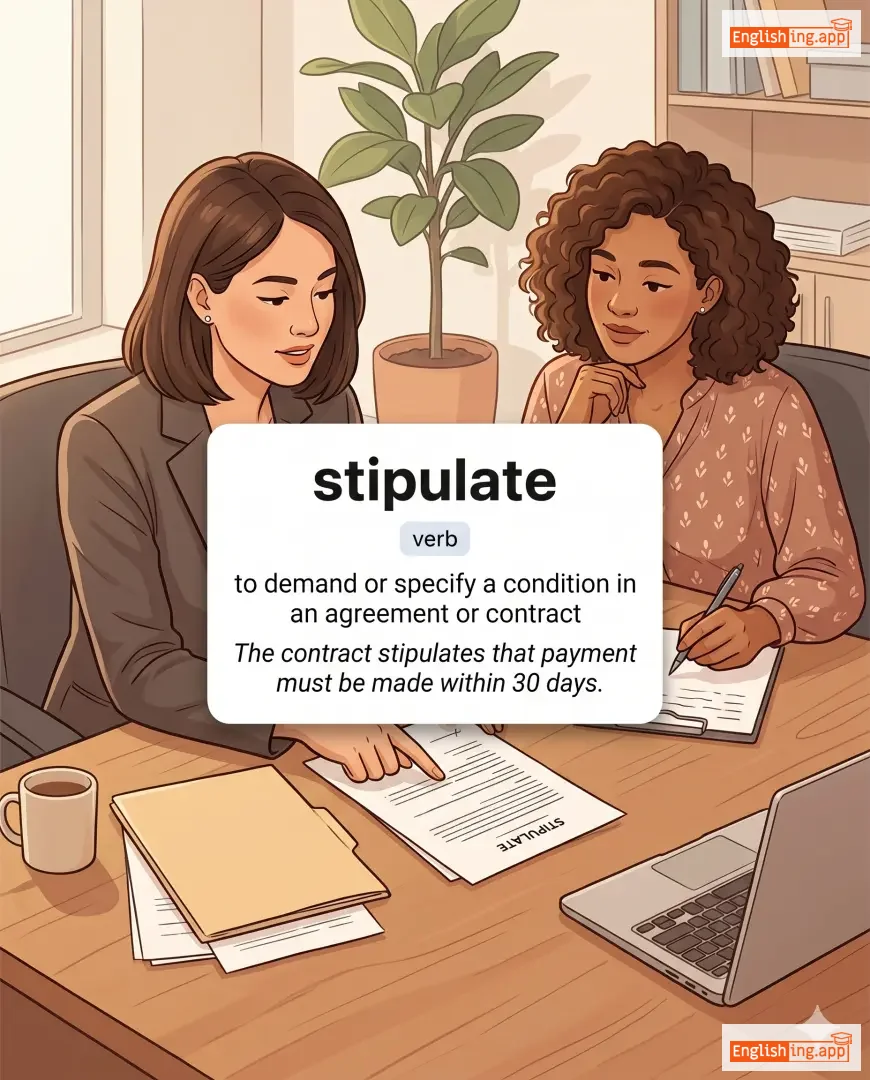
stipulate definition card — visual illustration of the meaning
verb
/ˈstɪp.jʊ.leɪt/
establecer (establecer)

to demand or specify a condition in an agreement or contract

"The contract stipulates that payment must be made within 30 days."

"El contrato estipula que el pago debe realizarse dentro de 30 días." (El contrato estipula que el pago debe realizarse dentro de 30 días.)
verb
/stɜːr/
revolver (revolver)

to mix or move something in a circular motion, especially in liquid

"She stirred the soup to make sure it didn't burn."

"Ella revolvió la sopa para asegurarse de que no se quemara." (Ella revolvió la sopa para asegurarse de que no se quemara.)
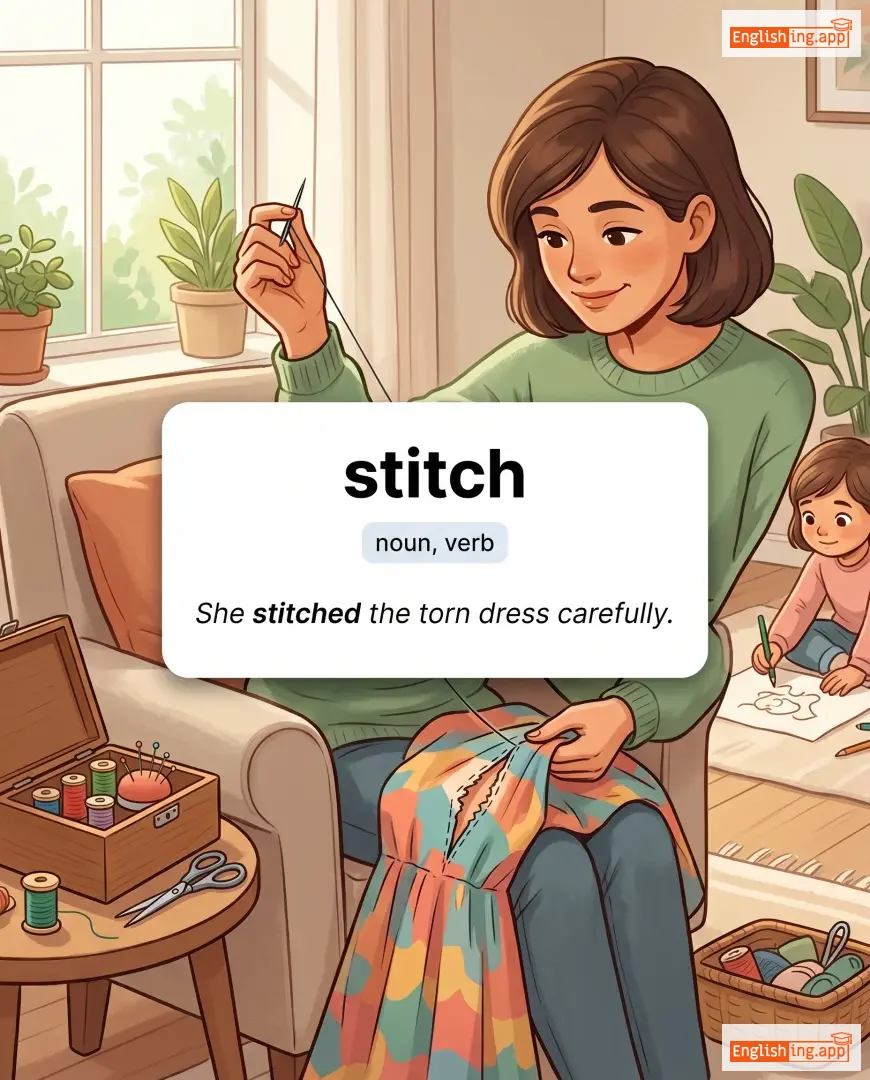
stitch definition card — visual illustration of the meaning
noun, verb
/stɪtʃ/
felicidad (felicidad)

to sew fabric together using a needle and thread; also a single loop of thread in sewing

"She stitched the torn dress carefully."

"Ella cosió el vestido roto con cuidado." (Ella cosió el vestido roto con cuidado.)
noun, verb
/stɒk/
inventario (inventario)

a supply of goods kept for sale or use; to keep or fill with goods

"The shop stocks a wide variety of products."

"La tienda tiene una amplia variedad de productos." (La tienda tiene una amplia variedad de productos.)
noun
/stɒˈkeɪd/
murallas de madera (murallas de madera)

a defensive barrier made of strong posts or timbers, often around a fort or prison

"The prisoners were kept inside the wooden stockade."

"Los prisioneros fueron mantenidos dentro de las murallas de madera." (Los prisioneros fueron mantenidos dentro de las murallas de madera.)
adjective
/ˈstɒdʒi/
pesado, anticuado (pesado, anticuado)

Dull, uninspired, or old-fashioned; also heavy and hard to digest when referring to food.

"The lecture was so stodgy that many students struggled to stay awake."

"La conferencia fue tan pesada que muchos estudiantes tuvieron dificultades para mantenerse despiertos." (La conferencia fue tan pesada que muchos estudiantes tuvieron dificultades para mantenerse despiertos.)
adjective
/ˈstoʊɪk/
estoico, imperturbable (estoiko, imperturbable)

Showing little or no emotion, even in difficult situations.

"She remained stoic during the crisis, never showing fear or panic."

"Ella permaneció estoica durante la crisis, sin mostrar miedo ni pánico." (Ella permaneció estoica durante la crisis, sin mostrar miedo ni panico.)
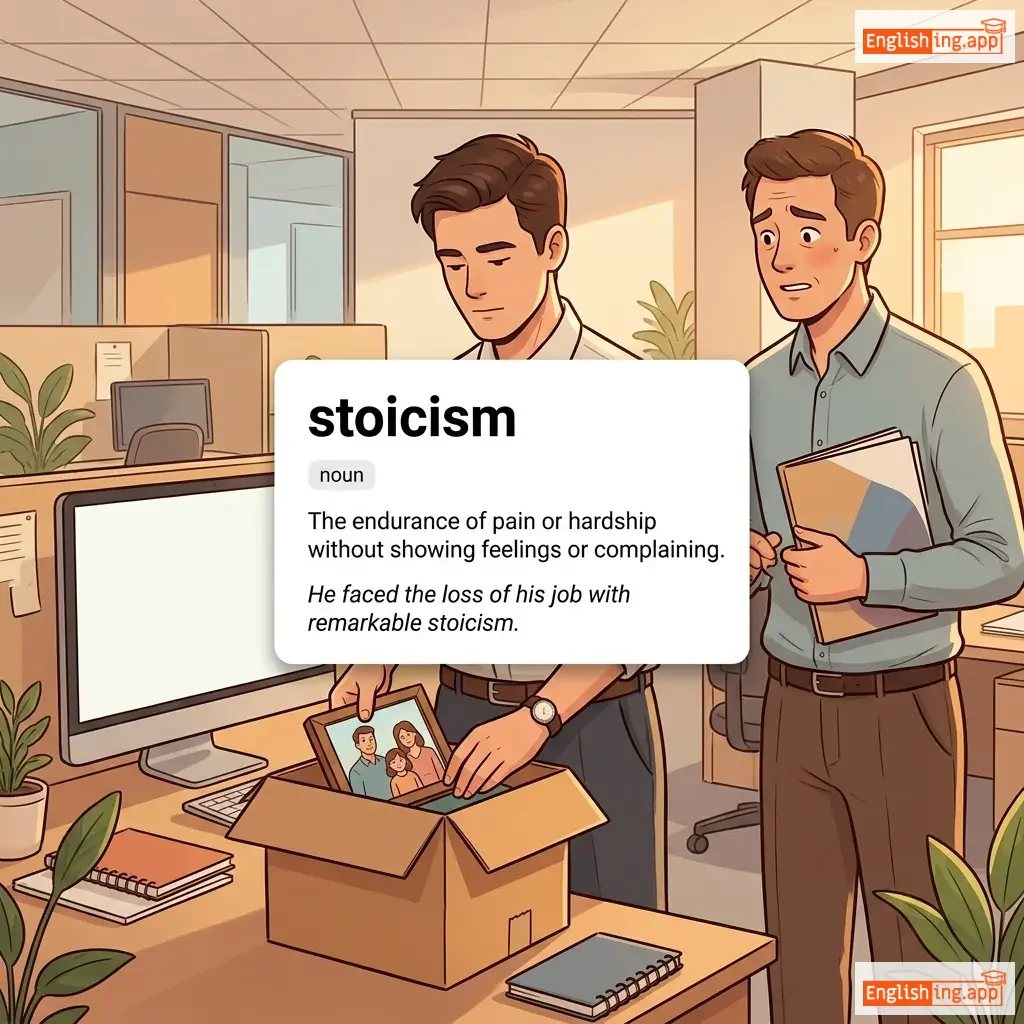
stoicism definition card — visual illustration of the meaning
noun
/ˈstoʊɪˌsɪzəm/
estoicismo (estoicismo)

The endurance of pain or hardship without showing feelings or complaining.

"He faced the loss of his job with remarkable stoicism."

"Enfrentó la pérdida de su trabajo con un estoicismo notable." (Enfrentó la pérdida de su trabajo con un estoicismo notable.)
verb
/stoʊk/
avivar el fuego; fomentar o aumentar un sentimiento o actividad fuerte (avivar el fuego; fomentar o aumentar un sentimiento o actividad fuerte)

To add fuel to a fire; to encourage or increase a strong feeling or activity.

"The politician’s speech stoked anger among the crowd."

"El discurso del político encendió la ira entre la multitud." (El discurso del politico encendio la ira entre la multitud.)
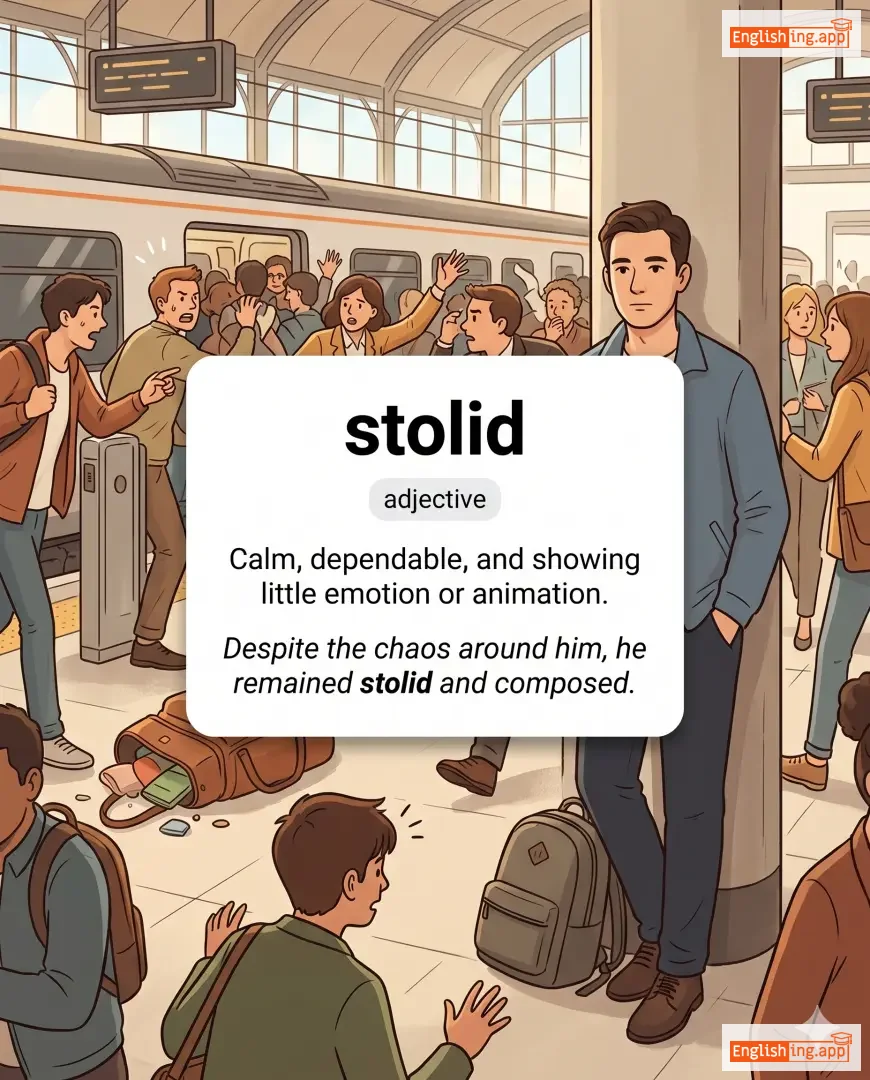
stolid definition card — visual illustration of the meaning
adjective
/ˈstɒlɪd/
calmo, imperturbable (calmo, imperturbable)

Calm, dependable, and showing little emotion or animation.

"Despite the chaos around him, he remained stolid and composed."

"A pesar del caos a su alrededor, permaneció tranquilo y sereno." (A pesar del caos a su alrededor, permaneció tranquilo y sereno.)
noun/verb
/ˈstʌmək/
estómago / soportar (estomago / soportar)

The internal organ in which food is digested; also to tolerate or endure something

"She couldn’t stomach the sight of violence."

"Ella no pudo soportar la visión de la violencia." (Ella no pudo soportar la visión de la violencia.)
noun
/ˈstʌmək eɪk/
dolor de estómago (dolor de estomago)

Pain in the stomach or abdominal area

"I have a stomach ache after eating too much."

"Tengo un dolor de estómago después de comer demasiado." (Tengo un dolor de estomago despues de comer demasiado)
noun
/stoʊn/
piedra (piedra)

a hard, naturally occurring mineral material found in the earth

"He threw a stone into the lake."

"Lanzó una piedra al lago." (Lanzo una piedra al lago.)
verb
/ˈstoʊnwɔːl/
bloquear (bloquear)

To delay or block progress by refusing to cooperate or answer

"The witness tried to stonewall during the investigation."

"El testigo intentó hacer stonewall durante la investigación." (El testigo intentó hacer stonewall durante la investigación.)
verb/noun
/stuːp/
felicidad (felicidad)

To bend one's body forward and downward; also a small porch or staircase at the entrance of a house

"He had to stoop to pick up the coin."

"No pudo esconder su felicidad cuando recibió el premio." (No pudo esconder su felicidad cuando recibió el premio.)
verb
/stɑːp/
detener (detener)

to bring to an end or cause to cease

"Please stop talking while I’m working."

"Por favor, deja de hablar mientras estoy trabajando." (Por favor, deja de hablar mientras estoy trabajando.)
noun
/ˈstɒpɪdʒ/
parada; detención (parada; detencion)

The act of stopping or ceasing; a halt in operation or activity

"The sudden stoppage of the train caused delays for all passengers."

"La parada repentina del tren causó retrasos a todos los pasajeros." (La parada repentina del tren causo retrasos a todos los pasajeros.)
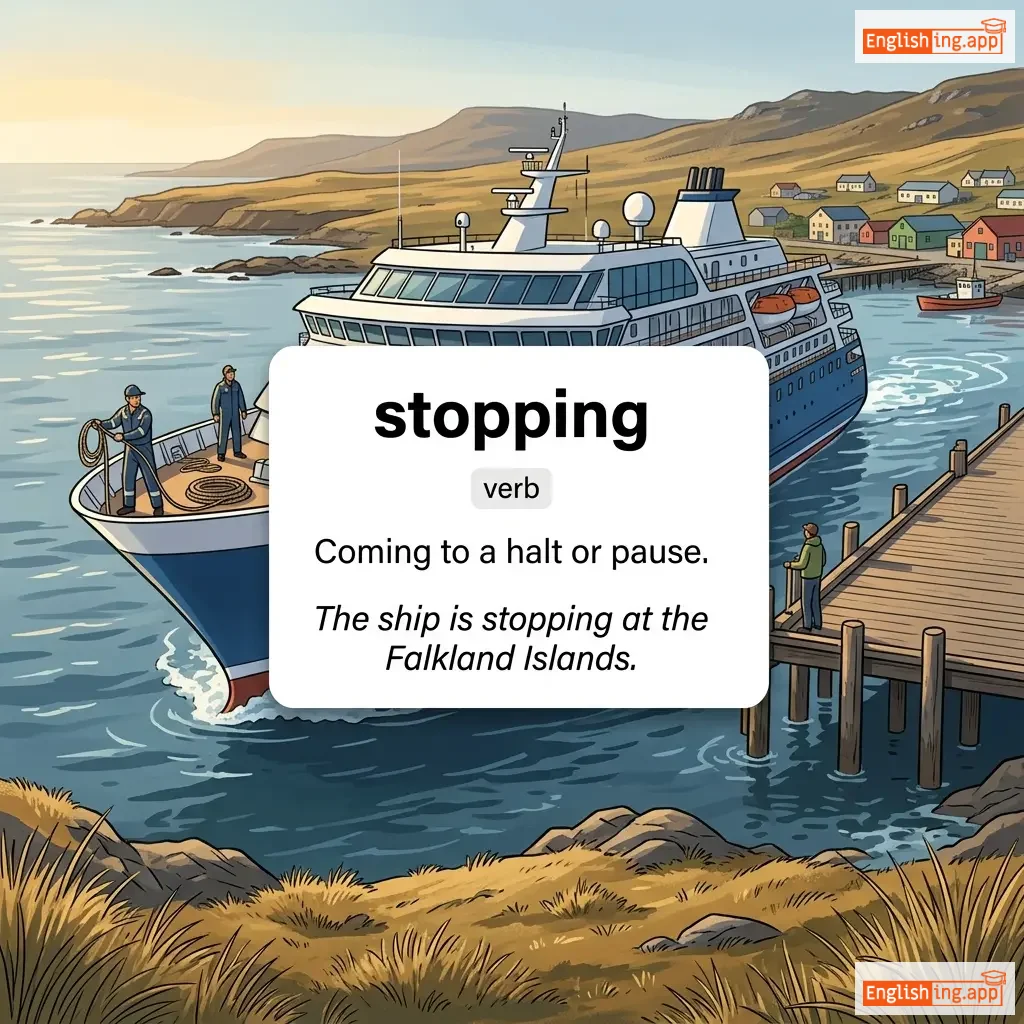
stopping definition card — visual illustration of the meaning
verb
/ˈstɒpɪŋ/
detener (detener)

Coming to a halt or pause.

"The ship is stopping at the Falkland Islands."

"El barco está deteniéndose en las Islas Malvinas." (El barco está deteniéndose en las Islas Malvinas.)
noun
/ˈstɔːrɪdʒ/
almacenamiento (almacenamiento)

the action or method of storing something for future use

"The warehouse offers plenty of storage space."

"El almacén ofrece mucho espacio de almacenamiento." (El almacén ofrece mucho espacio de almacenamiento.)
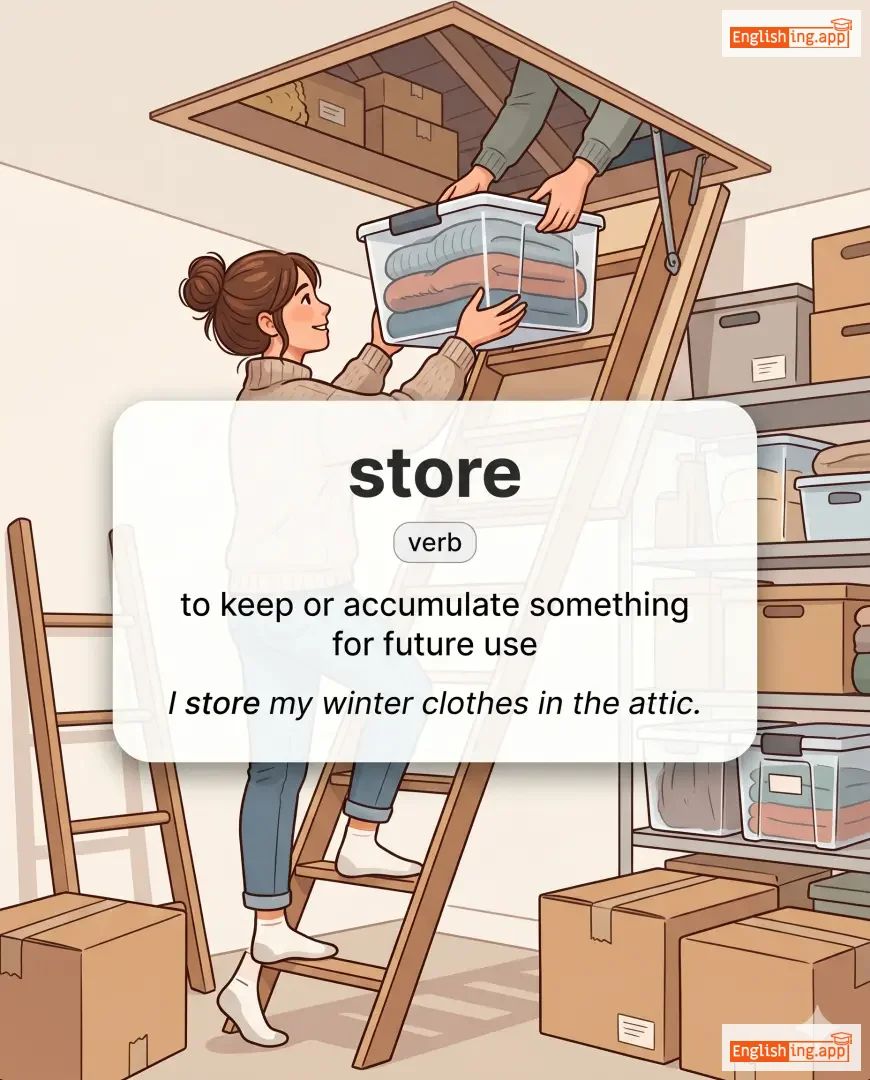
store definition card — visual illustration of the meaning
verb
/stɔːr/
almacenar (almacenar)

to keep or accumulate something for future use

"I store my winter clothes in the attic."

"Yo guardo mi ropa de invierno en el ático." (Yo guardo mi ropa de invierno en el ático.)
noun
/ˈstɔːrhaʊs/
almacén (almacen)

A place where goods, supplies, or valuables are stored; a repository

"The warehouse acted as a storehouse for all the imported goods."

"El almacén actuaba como un storehouse para todos los productos importados." (El almacen actuaba como un storehouse para todos los productos importados.)
noun
/stɔːrk/
Cigüeña (cigüena)

large wading bird with long legs and a long neck

"The stork built its nest on top of the tall chimney."

"La cigüeña construyó su nido en la cima de la chimenea alta." (La cigüeña construyó su nido en la cima de la chimenea alta.)
noun
/stɔːrm/
tormenta (tormenta)

a violent disturbance of the atmosphere with strong winds, rain, and often thunder

"The storm caused major flooding in the area."

"La tormenta causó una gran inundación en la zona." (La tormenta causo una gran inundacion en la zona.)
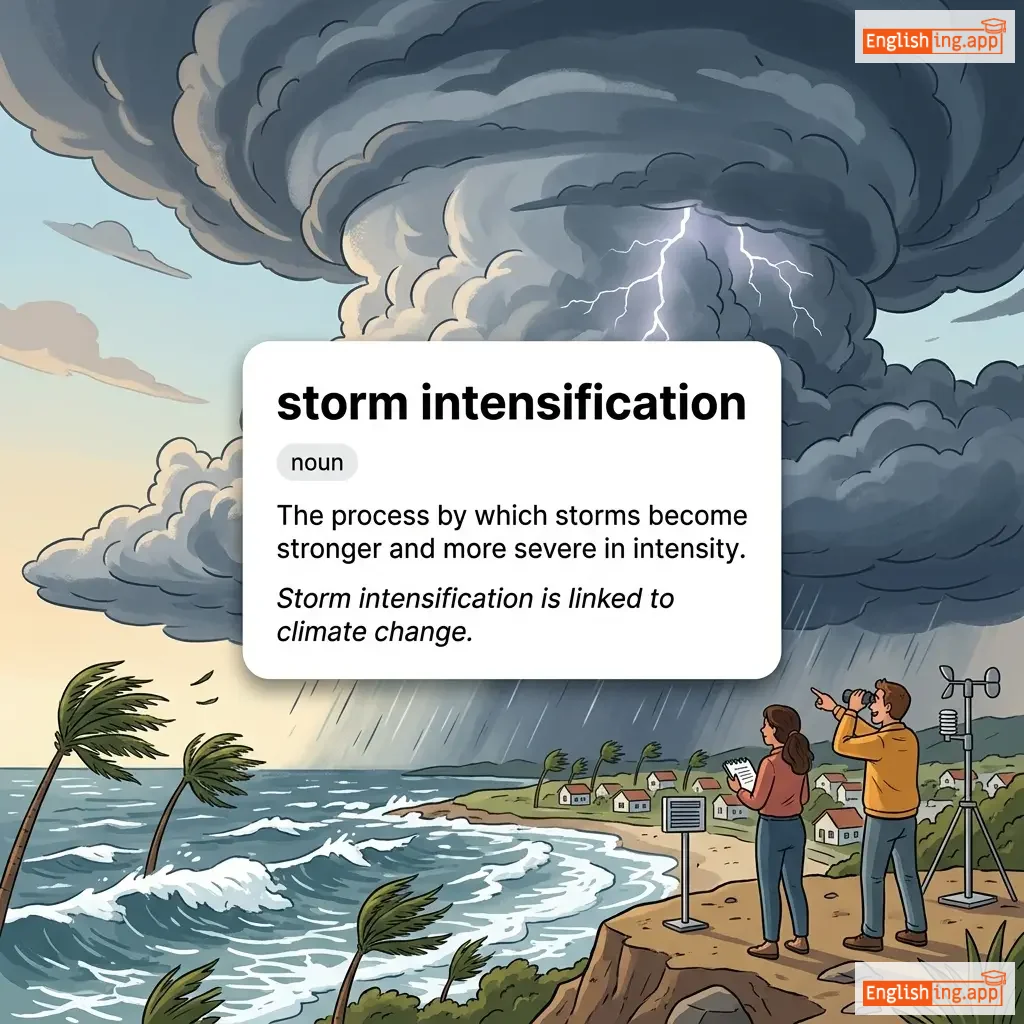
storm intensification definition card — visual illustration of the meaning
noun
stɔːrm ɪnˌtensɪfɪˈkeɪʃən
intensificación de la tormenta (intensificacion de la tormenta)

The process by which storms become stronger and more severe in intensity.

"Storm intensification is linked to climate change."

"La intensificación de la tormenta está vinculada al cambio climático." (La intensificacion de la tormenta esta vinculada al cambio climatico.)
noun
/ˈstɔːri/
historia (historia)

a narrative of real or imaginary events

"She told a fascinating story about her travels."

"Ella contó una fascinante historia sobre sus viajes." (Ella conto una fascinante historia sobre sus viajes.)
adjective/noun
/staʊt/
grueso / robusto (grueso / robusto)

Strong, thick, or heavily built; also a kind of dark beer

"The stout man lifted the heavy box with ease."

"El hombre grueso levantó la caja pesada con facilidad." (El hombre grueso levantó la caja pesada con facilidad.)
adjective
/ˌstaʊtˈhɑːrtɪd/
valiente (valiente)

Brave, determined, and courageous

"The stouthearted soldier never gave up."

"El soldado valiente nunca se rindió." (El soldado valiente nunca se rindió.)
noun
/stoʊv/
estufa (estufa)

a device that produces heat for cooking or heating

"She cooked rice on the gas stove."

"Cocinó arroz en la estufa de gas." (Cocinó arroz en la estufa de gas.)
noun
/ˈstoʊəˌweɪ/
polizón (polizon)

A person who hides on a ship, plane, or other vehicle in order to travel secretly without paying.

"The crew discovered a stowaway hiding in the cargo hold."

"La tripulación descubrió un polizón escondido en el compartimento de carga." (La tripulacion descubrio un polizon escondido en el compartimento de carga.)
verb
/ˈstræɡəl/
moverse de manera desordenada (moverse de manera desordenada)

To move or spread in an irregular, scattered, or untidy way.

"The children began to straggle behind on the long hike."

"Los niños empezaron a quedarse atrás en la larga caminata." (Los niños empezaron a quedarse atrás en la larga caminata.)
adjective, adverb
/streɪt/
recto (recto)

Extending or moving uniformly in one direction only; not curved or bent.

"He walked straight to the door without stopping."

"Caminó recto hacia la puerta sin detenerse." (Camino recto hacia la puerta sin detenerse.)
adjective
/ˌstreɪt ˈfɔːr.wərd/
honesto y claro; no complicado; fácil de entender (honesto y claro; no complicado; fácil de entender)

honest and open; not complicated; easy to understand

"His explanation was very straightforward and easy to follow."

"Su explicación fue muy clara y fácil de seguir." (Su explicación fue muy clara y fácil de seguir.)
verb
/ˈstreɪtən/
alisar (alisar)

to make something straight or tidy; to correct or organize

"She straightened her hair before the meeting."

"Ella se alisó el cabello antes de la reunión." (Ella se alisó el cabello antes de la reunión.)
adjective
/ˌstreɪtˈfɔːwəd/
directo (directo)

easy to understand or do; simple

"Her explanation was straightforward and clear."

"Su explicación fue directa y clara." (Su explicacion fue directa y clara.)
noun, verb
/streɪn/
estrés / tensión (estres / tension)

To force something beyond its normal limits; to injure by overexertion; or a type or variety of something.

"He strained his back while lifting the heavy box."

"Se tensó la espalda mientras levantaba la caja pesada." (Se tensó la espalda mientras levantaba la caja pesada.)
noun
/ˈstreɪnər/
colador (colador)

a device having holes punched in it or made of crossed wires for separating solid matter from a liquid

"Use a strainer to drain the pasta water."

"Usa un colador para drenar el agua de la pasta." (Usa un colador para drenar el agua de la pasta.)
noun
/streɪt/
estrecho (estrecho)

A narrow passage of water connecting two seas or two large areas of water.

"The Strait of Gibraltar connects the Atlantic Ocean and the Mediterranean Sea."

"El estrecho de Gibraltar conecta el océano Atlántico y el mar Mediterráneo." (El estrecho de Gibraltar conecta el océano Atlántico y el mar Mediterráneo.)
noun
/strəˈmoʊ.ni.əm ˌflaʊ.ər/
flor de estramonio (flor de estramonio)

A trumpet-shaped white or purple flower from the jimsonweed plant, known for its toxic properties

"The stramonium flower blooms at night with a sweet fragrance."

"La flor de estramonio florece de noche con una fragancia dulce." (la flor de estramonio florece de noche con una fragancia dulce)
noun, verb
/strænd/
hilo / varado (hilo / varado)

Noun: A single thin length of thread, wire, or similar. Verb: To leave someone or something without a way of moving or leaving.

"The storm stranded many tourists on the island."

"La tormenta dejó a muchos turistas varados en la isla." (La tormenta dejo a muchos turistas varados en la isla.)
adjective
/streɪndʒ/
extraño (extrano)

unusual or not normal

"It was strange to see him at the party after so long."

"Era extraño verlo en la fiesta después de tanto tiempo." (Era extrano verlo en la fiesta despues de tanto tiempo.)
noun
/ˈstreɪndʒər/
extraño (extrano)

A person whom one does not know.

"A stranger knocked on the door at midnight."

"Un extraño tocó la puerta a la medianoche." (Un extrano toco la puerta a la medianoche.)
verb
/ˈstræŋɡəl/
estrangular (estrangular)

to kill or stop someone or something by squeezing the throat or restricting flow

"The villain tried to strangle his opponent in the dark alley."

"El villano intentó estrangular a su oponente en el callejón oscuro." (El villano intentó estrangular a su oponente en el callejón oscuro.)
noun
/ˈstrætədʒəm/
estratagema (estratagema)

a plan or scheme designed to achieve a particular goal, often by trickery

"The general devised a clever stratagem to outwit the enemy."

"El general ideó una astuta estratagema para engañar al enemigo." (El general ideó una astuta estratagema para engañar al enemigo.)
strategic definition card — visual illustration of the meaning
adjective
/strəˈtiːdʒɪk/
estratégico (estrategico)

relating to the identification of long-term or overall aims and interests and the means of achieving them

"His strategic thinking helped the company grow."

"Su pensamiento estratégico ayudó a la empresa a crecer." (Su pensamiento estrategico ayudo a la empresa a crecer.)
strategic insights definition card — visual illustration of the meaning
noun
/strəˈtiː.dʒɪk ˈɪn.saɪts/
perspectivas estratégicas (perspectivas estrategicas)

Deep understanding and wisdom gained through careful analysis for planning purposes.

"Strategic insights guide policymaking."

"Las perspectivas estratégicas guían la toma de decisiones políticas." (Las perspectivas estratégicas guían la toma de decisiones políticas.)
strategies definition card — visual illustration of the meaning
noun
ˈstræt.ə.dʒiz
estrategias (estrategias)

A plan of action designed to achieve a long-term or overall aim.

"Effective strategies ensure success."

"Las estrategias efectivas aseguran el éxito." (Las estrategias efectivas aseguran el exito.)
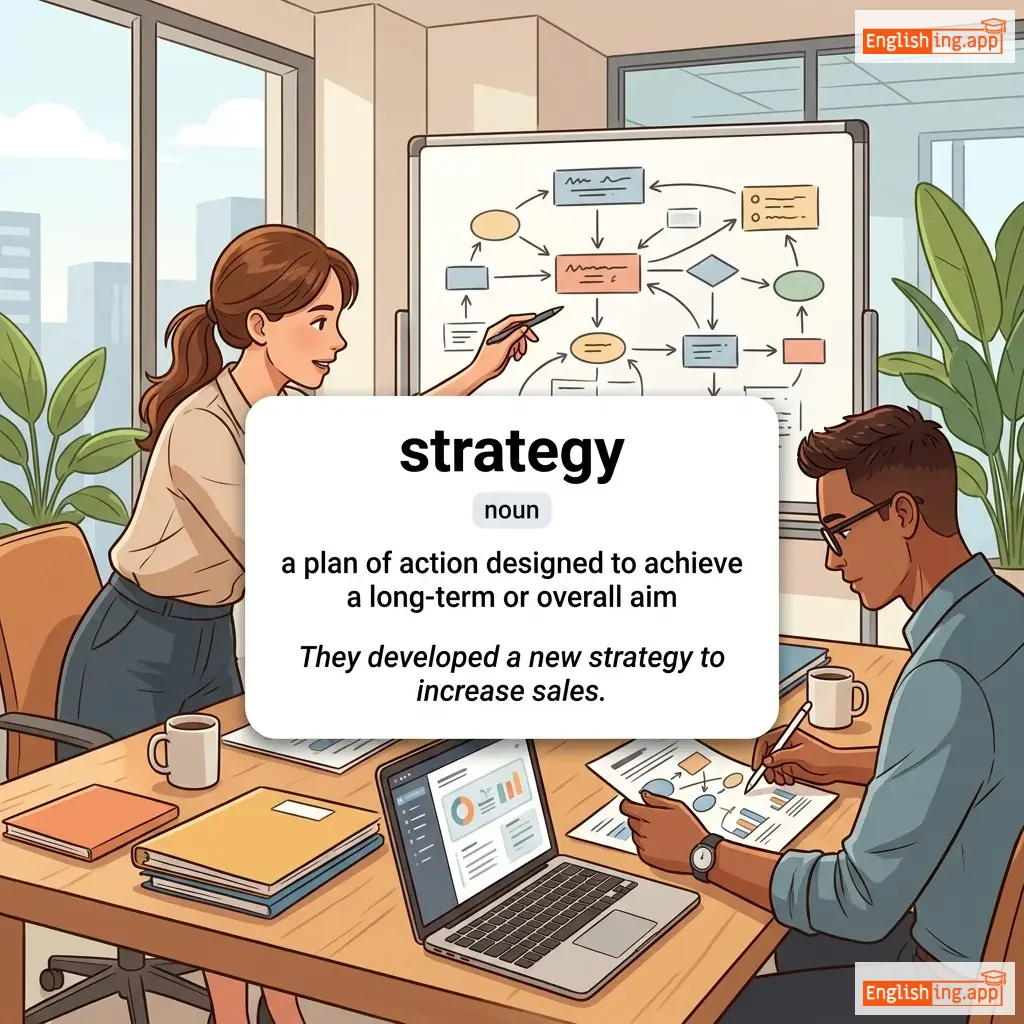
strategy definition card — visual illustration of the meaning
noun
/ˈstrætədʒi/
estrategia (estrategia)

a plan of action designed to achieve a long-term or overall aim

"They developed a new strategy to increase sales."

"Desarrollaron una nueva estrategia para aumentar las ventas." (Desarrollaron una nueva estrategia para aumentar las ventas.)
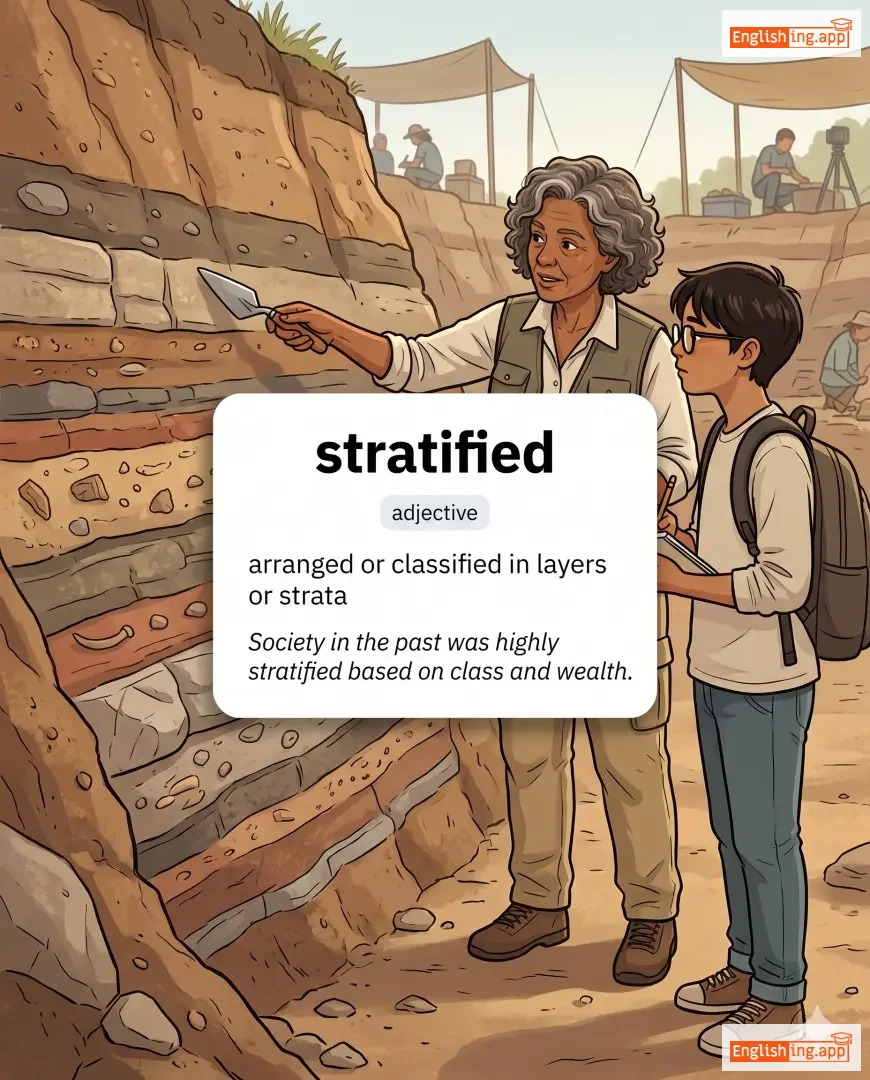
stratified definition card — visual illustration of the meaning
adjective
/ˈstrætɪfaɪd/
estratificado (stratifaid)

arranged or classified in layers or strata

"Society in the past was highly stratified based on class and wealth."

"La sociedad en el pasado estaba altamente estratificada según la clase y la riqueza." (La sociedad en el pasado estaba altamente estratificada segun la clase y la riqueza.)
verb
/ˈstrætɪfaɪ/
estratificar (estratificar)

to arrange or divide into layers, classes, or categories

"The researchers plan to stratify the data based on age groups."

"Los investigadores planean estratificar los datos según los grupos de edad." (Los investigadores planean estratificar los datos según los grupos de edad.)