Vocabularios

Descubra, aprenda y domine el vocabulario en inglés

noun
/steɪk/
bistec (bistek)

a thick slice of meat, typically beef, cooked by grilling or frying

"He ordered a grilled steak with vegetables."

"Él pidió un bistec a la parrilla con verduras." (El pidio un bistek a la parrilla con verduras.)
steal definition card — visual illustration of the meaning
🕵️‍♂️

steal (estil)

verb
/stiːl/
robar (robar)

to take something without permission or right

"He tried to steal my wallet while I wasn't looking."

"Trató de robar mi billetera mientras no estaba mirando." (Trató de robar mi billetera mientras no estaba mirando.)
noun
/stɛlθ/
sigilo, moverse en secreto (sigilo, moverse en secreto)

The act of moving, doing, or achieving something quietly and secretly.

"The cat moved with stealth towards its prey."

"El gato se movió sigilosamente hacia su presa." (El gato se movió sigilosamente hacia su presa.)
noun, verb
/stiːm/
vapor (vapor)

the vapor into which water is converted when heated; to emit or treat with steam

"The kettle was steaming on the stove."

"La tetera estaba vaporando en la estufa." (La tetera estaba vaporando en la estufa.)
noun
/ˈstiː.mər/
vapor (vapor)

a ship or boat powered by steam engines

"The old steamer crossed the river slowly."

"El viejo vapor cruzó el río lentamente." (El viejo vapor cruzó el río lentamente.)
noun
/stiːl/
acero (acero)

a strong, hard metal made of iron and carbon

"The building was made from steel to ensure its durability."

"El edificio fue hecho de acero para garantizar su durabilidad." (El edificio fue hecho de acero para garantizar su durabilidad.)
adjective
/stiːp/
empinado, excesivo (empinado, excesivo)

Having a sharp inclination or high slope; also can mean excessive (as in price).

"The hikers climbed a steep mountain trail."

"Los excursionistas subieron un sendero empinado en la montaña." (Los excursionistas subieron un sendero empinado en la montaña.)
adjective
/stiːpt/
empapado (empapado)

Completely surrounded by or filled with a particular quality, influence, or experience.

"The town is steeped in history and tradition."

"La ciudad está empapada en historia y tradición." (La ciudad está empapada en historia y tradición.)
verb
/stɪə(r)/
dirigir (dirigir)

to guide or control the movement of a vehicle, vessel, or person

"He steered the car carefully through the narrow street."

"Él dirigió el coche cuidadosamente por la calle estrecha." (El dirigio el coche cuidadosamente por la calle estrecha.)
noun
/staɪn/
taza de cerveza (taza de cerveza)

A large beer mug, typically made of glass or stoneware.

"He raised his stein to toast his friends."

"Él levantó su stein para brindar por sus amigos." (El levantó su stein para brindar por sus amigos.)
adjective
/ˈstɛlər/
excepcional (excepcional)

Relating to stars; outstanding or excellent.

"She gave a stellar performance in the play."

"Ella dio una actuación excepcional en la obra." (Ella dio una actuacion excepcional en la obra.)
noun, verb
/stɛm/
tallo / frenar (tallo / frenar)

Noun: The main stalk of a plant. Verb: To stop or restrict the flow or development of something.

"The gardener cut the stem of the rose; New policies aim to stem the flow of pollution."

"El jardinero cortó el tallo de la rosa; Las nuevas políticas buscan frenar el flujo de contaminación." (El jardinero cortó el tallo de la rosa; Las nuevas políticas buscan frenar el flujo de contaminación.)
noun
/stɛntʃ/
hedor (hedor)

A very strong and unpleasant smell.

"The stench of garbage filled the alley."

"El hedor de la basura llenó el callejón." (El hedor de la basura llenó el callejón.)
noun
/ˈstɛnsəl/
plantilla (plantilla)

A thin sheet of material with a design cut out, used to produce the design on the surface below by applying paint or ink through the cut-out holes.

"The artist used a stencil to paint identical stars on the wall."

"El artista usó una plantilla para pintar estrellas idénticas en la pared." (El artista usó una plantilla para pintar estrellas idénticas en la pared.)
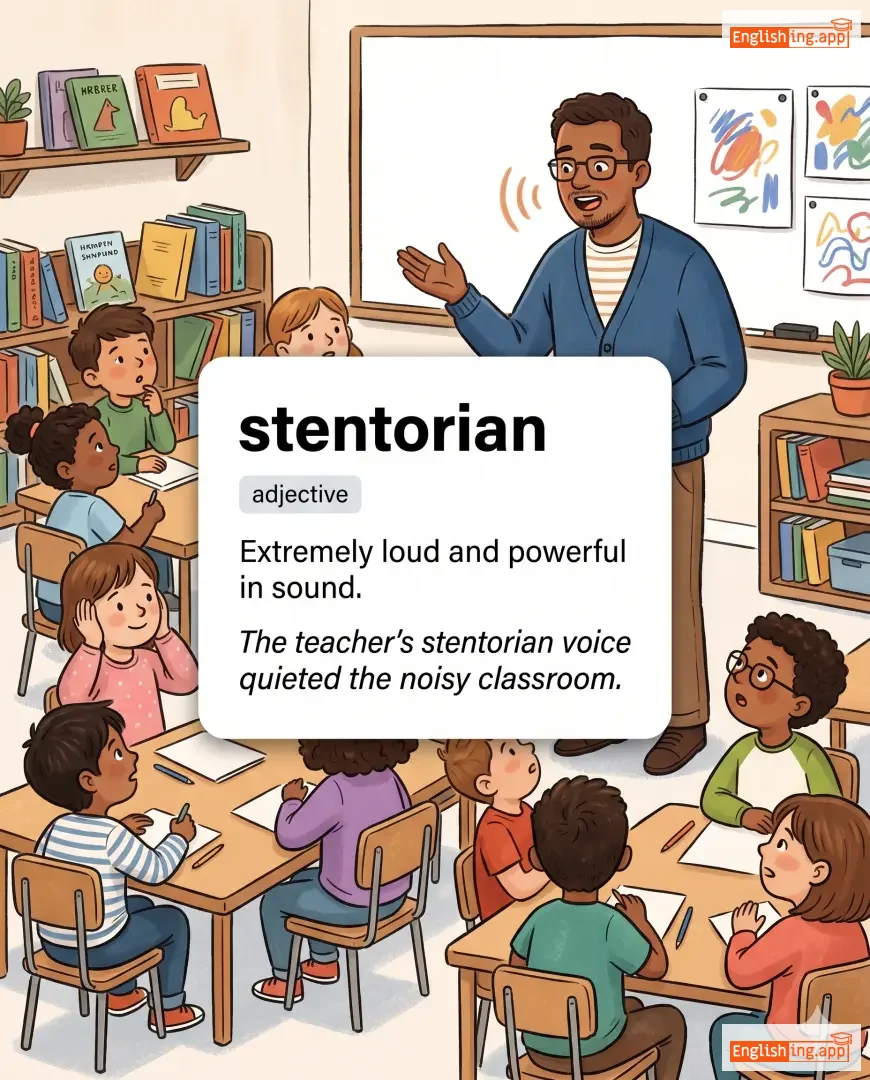
stentorian definition card — visual illustration of the meaning
adjective
/stɛnˈtɔːriən/
estruendoso (estruendoso)

Extremely loud and powerful in sound.

"The teacher’s stentorian voice quieted the noisy classroom."

"La voz estentórica del maestro calló el ruidoso salón de clases." (La voz estentórica del maestro calló el ruidoso salón de clases.)
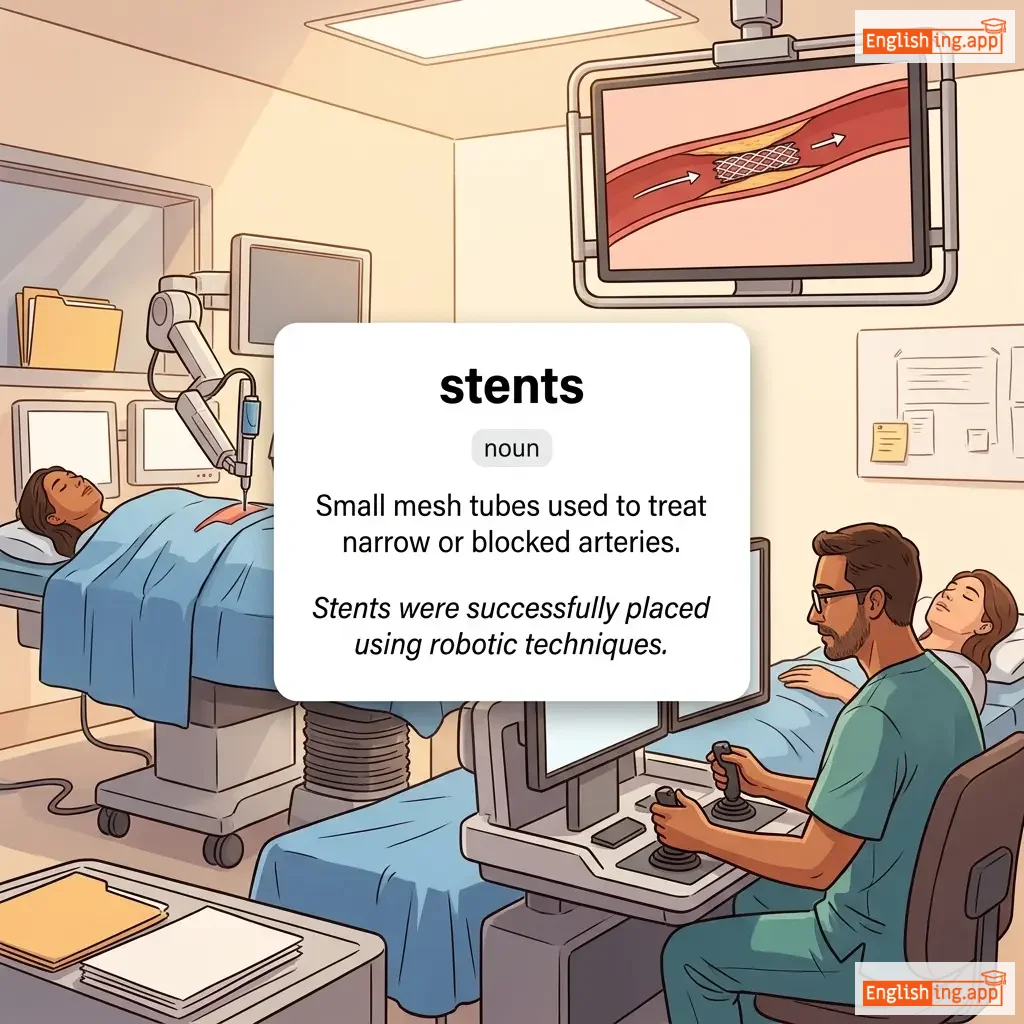
stents definition card — visual illustration of the meaning
noun
/stents/
stents (stents)

Small mesh tubes used to treat narrow or blocked arteries.

"Stents were successfully placed using robotic techniques."

"Los stents fueron colocados con éxito utilizando técnicas robóticas." (Los stents fueron colocados con éxito utilizando técnicas robóticas.)
noun
/stɛp/
paso (paso)

a movement made by lifting one foot and putting it down in a new position

"She took a step towards the door."

"Ella dio un paso hacia la puerta." (Ella dio un paso hacia la puerta)
noun
/stɛp/
estepa (estepa)

A large flat area of unforested grassland, especially in southeastern Europe or Siberia.

"The nomads traveled across the vast steppe with their herds."

"Los nómadas viajaban por la vasta estepa con sus rebaños." (Los nómadas viajaban por la vasta estepa con sus rebaños.)
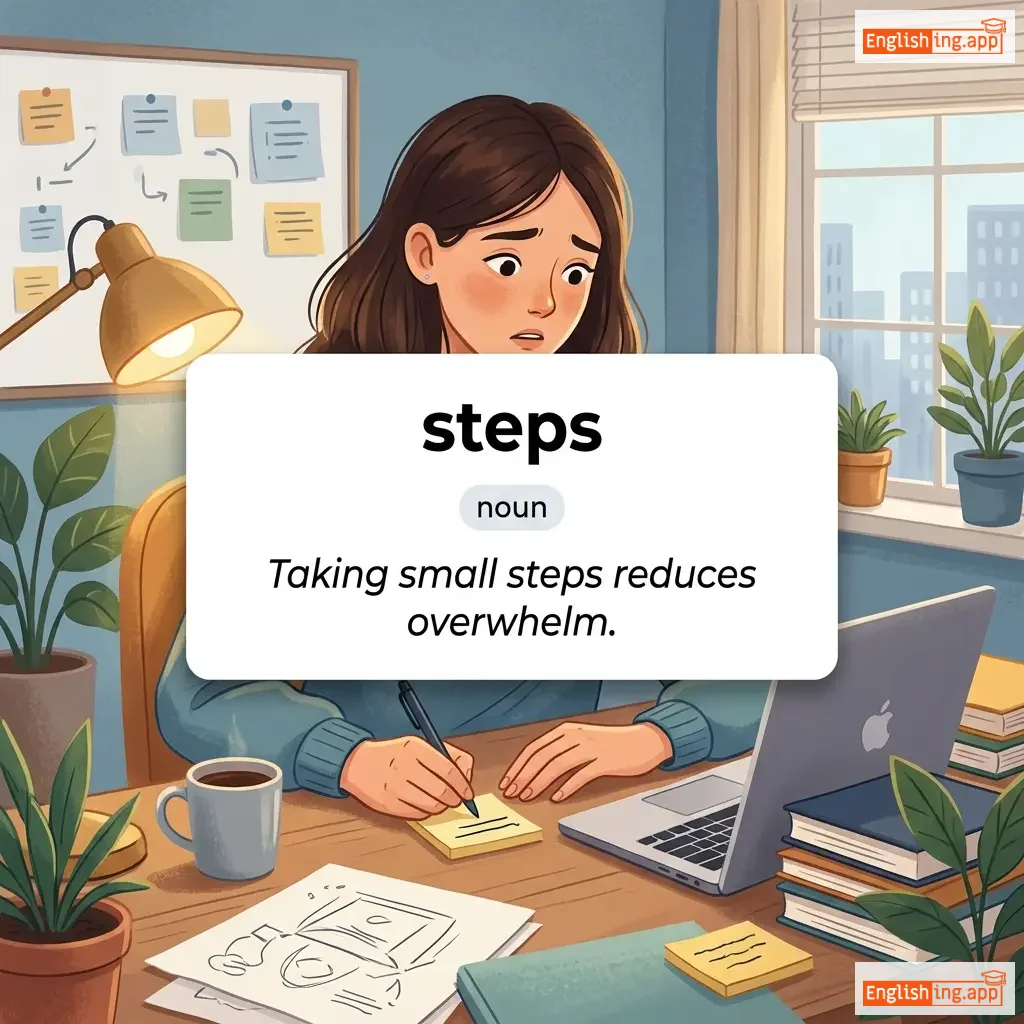
steps definition card — visual illustration of the meaning
noun
/stɛps/
pasos (pasos)

A measure or action, especially one of a series taken in order to deal with or achieve a particular thing.

"Taking small steps reduces overwhelm."

"Dar pequeños pasos reduce el agobio." (Dar pequeños pasos reduce el agobio.)
noun
/ˈstɛriəˌtaɪp/
estereotipo (estereotipo)

A widely held but oversimplified and fixed idea of a particular type of person or thing.

"It is a stereotype that all gamers are antisocial."

"Es un estereotipo que todos los jugadores son antisociales." (Es un estereotipo que todos los jugadores son antisociales.)
adjective
/ˈstɛriəˌtaɪpt/
estereotipado (estereotipado)

Conforming to a fixed or oversimplified idea of what someone or something is like.

"His stereotyped jokes failed to impress the audience."

"Sus chistes estereotipados no lograron impresionar a la audiencia." (Sus chistes estereotipados no lograron impresionar a la audiencia.)
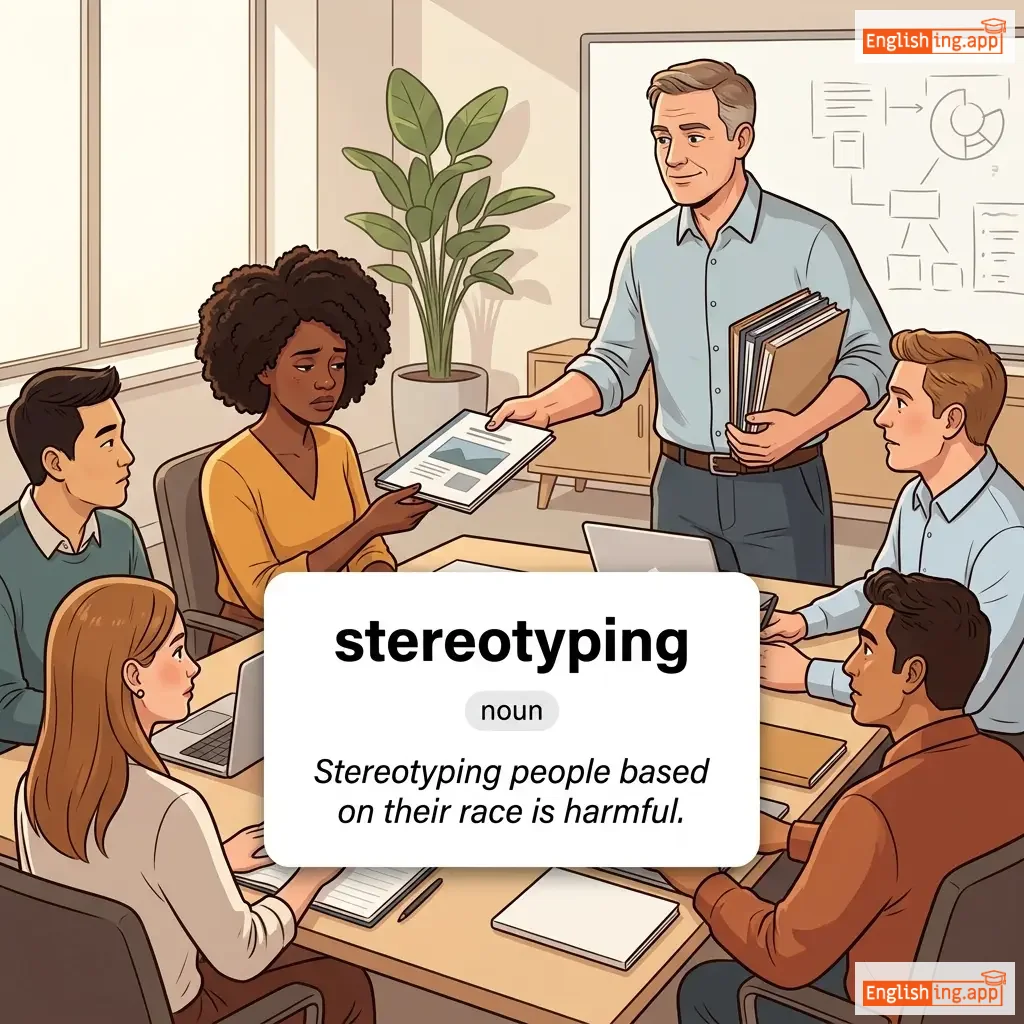
stereotyping definition card — visual illustration of the meaning
noun
/ˈstɛə.rɪ.əʊˌtaɪ.pɪŋ/
estereotipar (estereotipar)

A widely held but fixed and oversimplified image or idea of a particular type of person or thing.

"Stereotyping people based on their race is harmful."

"Estereotipar a las personas según su raza es perjudicial." (Estereotipar a las personas según su raza es perjudicial.)
adjective
/ˈstɛr.aɪl/
estéril (esteril)

Free from bacteria or other living microorganisms; incapable of producing offspring.

"The surgeon worked in a sterile environment to avoid infection."

"El cirujano trabajó en un ambiente estéril para evitar infecciones." (El cirujano trabajó en un ambiente estéril para evitar infecciones.)
noun/adjective
/ˈstɜː.lɪŋ/
moneda británica / excelente (moneda británica / excelente)

British money, especially pounds; of excellent quality.

"She was praised for her sterling work on the project."

"Fue elogiada por su excelente trabajo en el proyecto." (Fue elogiada por su excelente trabajo en el proyecto.)
adjective/noun
/stɜːrn/
estricto / la parte trasera de un barco (estricto / la parte trasera de un barco)

Serious and strict in manner or attitude; the back part of a ship.

"The teacher gave the students a stern warning before the exam."

"El maestro dio a los estudiantes una advertencia severa antes del examen." (El maestro dio a los estudiantes una advertencia severa antes del examen.)
adjective
/ˈstɜːr.tər.əs/
ronquido fuerte (ronquido fuerte)

Characterized by heavy snoring or breathing.

"The patient’s stertorous breathing alarmed the nurses."

"La respiración estertorosa del paciente alarmó a las enfermeras." (La respiración estertorosa del paciente alarmó a las enfermeras.)
noun
/ˈstiː.vəˌdɔːr/
estibador (estibador)

A person employed to load and unload cargo from ships.

"The stevedores worked tirelessly to unload the cargo before dawn."

"Los estibadores trabajaron incansablemente para descargar la carga antes del amanecer." (Los estibadores trabajaron incansablemente para descargar la carga antes del amanecer.)
abbreviation (noun/pronoun)
/ˈsʌmθɪŋ/
algo (algo)

abbreviation for 'something'

"Can you give me sth. to write with?"

"¿Puedes darme algo con qué escribir?" (¿Puedes darme algo con qué escribir?)
verb
/stɪk/
pegar (pegar)

to adhere or attach something to a surface

"The glue will stick to the paper."

"El pegamento se pegará al papel." (El pegamento se pegará al papel.)
noun
/ˈstɪklər/
persona estricta con las normas (persona estricta con las normas)

a person who insists on a certain quality or standard of behavior

"He is a stickler for punctuality and never tolerates delays."

"Él es muy estricto con la puntualidad y no tolera retrasos." (El es muy estricto con la puntualidad y no tolera retrasos)
adjective
/ˈstɪki/
pegajoso (pegajoso)

having the quality of adhering or clinging; difficult to remove or deal with

"The candy is too sticky to eat with your hands."

"El caramelo es demasiado pegajoso para comer con las manos." (El caramelo es demasiado pegajoso para comer con las manos.)
adjective
/stɪf/
rígido (rigido)

rigid, difficult to bend or move

"After the long run, his legs felt very stiff."

"Después de la larga carrera, sus piernas se sintieron muy rígidas." (Despues de la larga carrera, sus piernas se sintieron muy rigidas.)
verb
/ˈstaɪfl/
sofocar (sofo-kar)

to prevent or restrain an action, idea, or emotion; to suffocate

"She tried to stifle a laugh during the serious meeting."

"Ella intentó sofocar una risa durante la reunión seria." (Ella intento sofocar una risa durante la reunion seria.)
verb
/ˈstaɪfəld/
sofocar (sofocar)

to suppress, hold back, or prevent something from happening

"He stifled a laugh during the serious meeting."

"Él sofocó una risa durante la reunión seria." (Él sofocó una risa durante la reunión seria.)
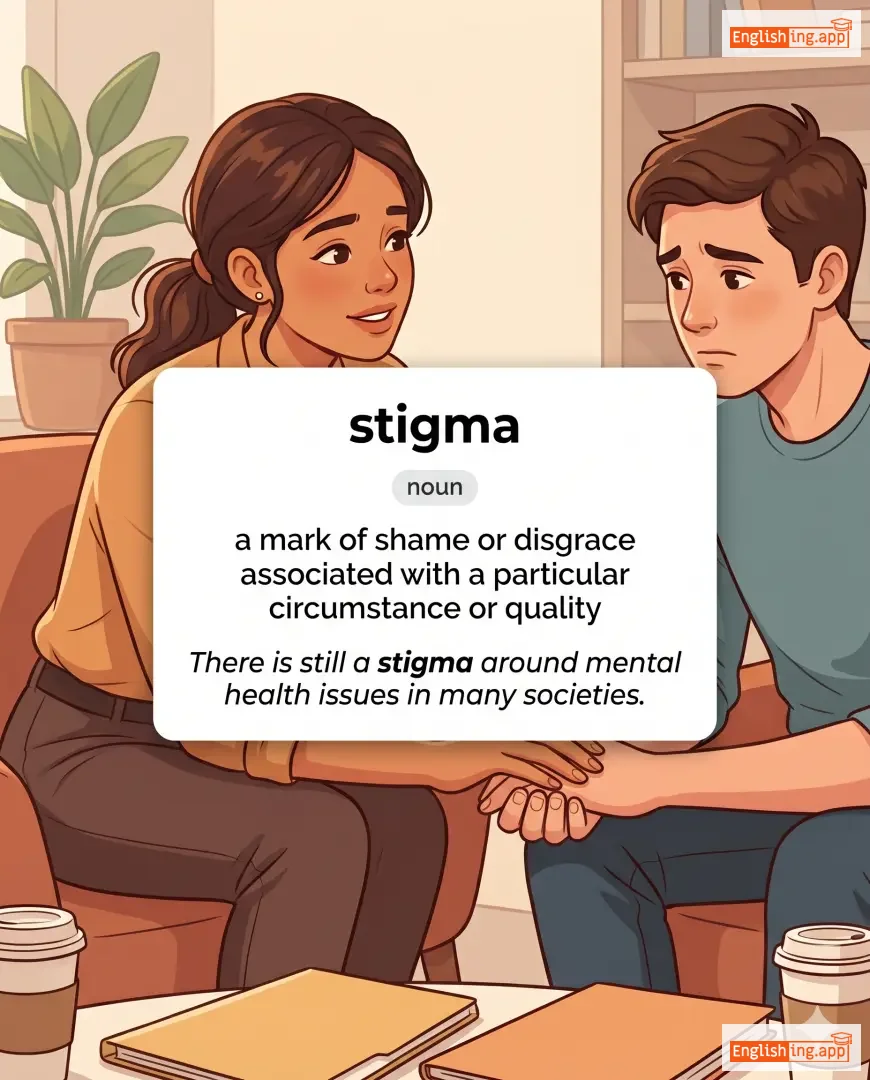
stigma definition card — visual illustration of the meaning
noun
/ˈstɪɡmə/
estigma (estigma)

a mark of shame or disgrace associated with a particular circumstance or quality

"There is still a stigma around mental health issues in many societies."

"Todavía existe un estigma en torno a los problemas de salud mental en muchas sociedades." (Todavía existe un estigma en torno a los problemas de salud mental en muchas sociedades.)
verb
/ˈstɪɡmətaɪz/
estigmatizar (estigmatizar)

to describe or regard someone as worthy of disgrace or disapproval

"People with certain illnesses are often unfairly stigmatized."

"Las personas con ciertas enfermedades a menudo son estigmatizadas de manera injusta." (Las personas con ciertas enfermedades a menudo son estigmatizadas de manera injusta.)
noun
/stɪˈlɛtoʊ/
zapato de tacón delgado / daga (zapato de tacon delgado / daga)

A small, thin, high-heeled shoe or a dagger with a slender blade.

"She wore elegant stiletto heels to the party."

"Ella llevaba unos elegantes tacones stilettos a la fiesta." (Ella llevaba unos elegantes tacones stilettos a la fiesta.)
adjective
/stɪl/
tranquilo (tranquilo)

not moving or making a sound

"The water was still, reflecting the sky."

"El agua estaba tranquila, reflejando el cielo." (El agua estaba tranquila, reflejando el cielo.)
adjective
/ˈstɪltɪd/
artificial, forzado (artificial, forzado)

Speech or writing that is stiff, unnatural, or overly formal.

"His speech sounded stilted and rehearsed."

"Su discurso sonaba forzado y ensayado." (Su discurso sonaba forzado y ensayado.)
noun
/ˈstɪmjʊlənt/
estimulante (estimulante)

A substance that raises levels of physiological or nervous activity in the body.

"Coffee is a common stimulant that helps people stay awake."

"El café es un estimulante común que ayuda a las personas a mantenerse despiertas" (El café es un estimulante común que ayuda a las personas a mantenerse despiertas)
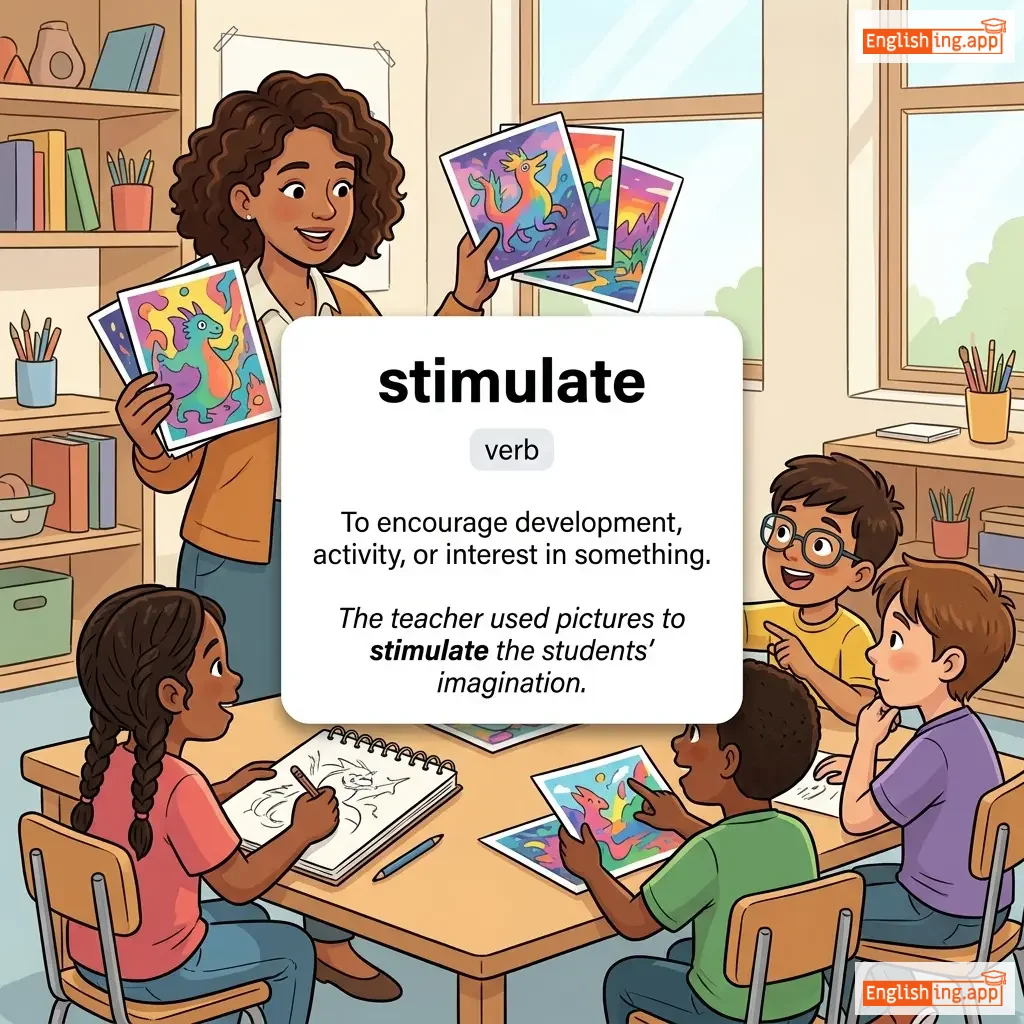
stimulate definition card — visual illustration of the meaning
verb
/ˈstɪmjʊˌleɪt/
estimular, fomentar (estimular, fomentar)

To encourage development, activity, or interest in something.

"The teacher used pictures to stimulate the students' imagination."

"El maestro usó imágenes para estimular la imaginación de los estudiantes." (El maestro usó imágenes para estimular la imaginación de los estudiantes.)
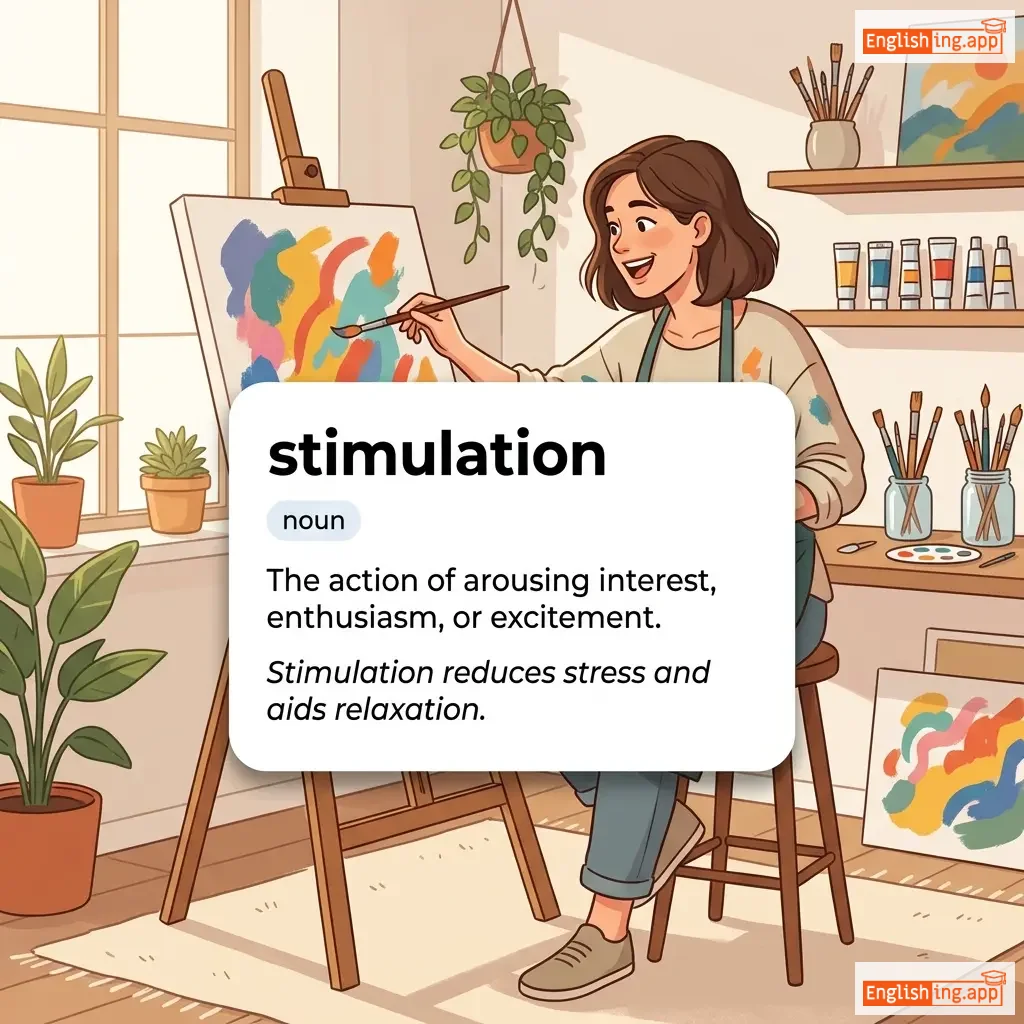
stimulation definition card — visual illustration of the meaning
noun
/ˌstɪm.jəˈleɪ.ʃən/
estimulación (estimulación)

The action of arousing interest, enthusiasm, or excitement.

"Stimulation reduces stress and aids relaxation."

"La estimulación reduce el estrés y ayuda a la relajación." (La estimulación reduce el estrés y ayuda a la relajación.)
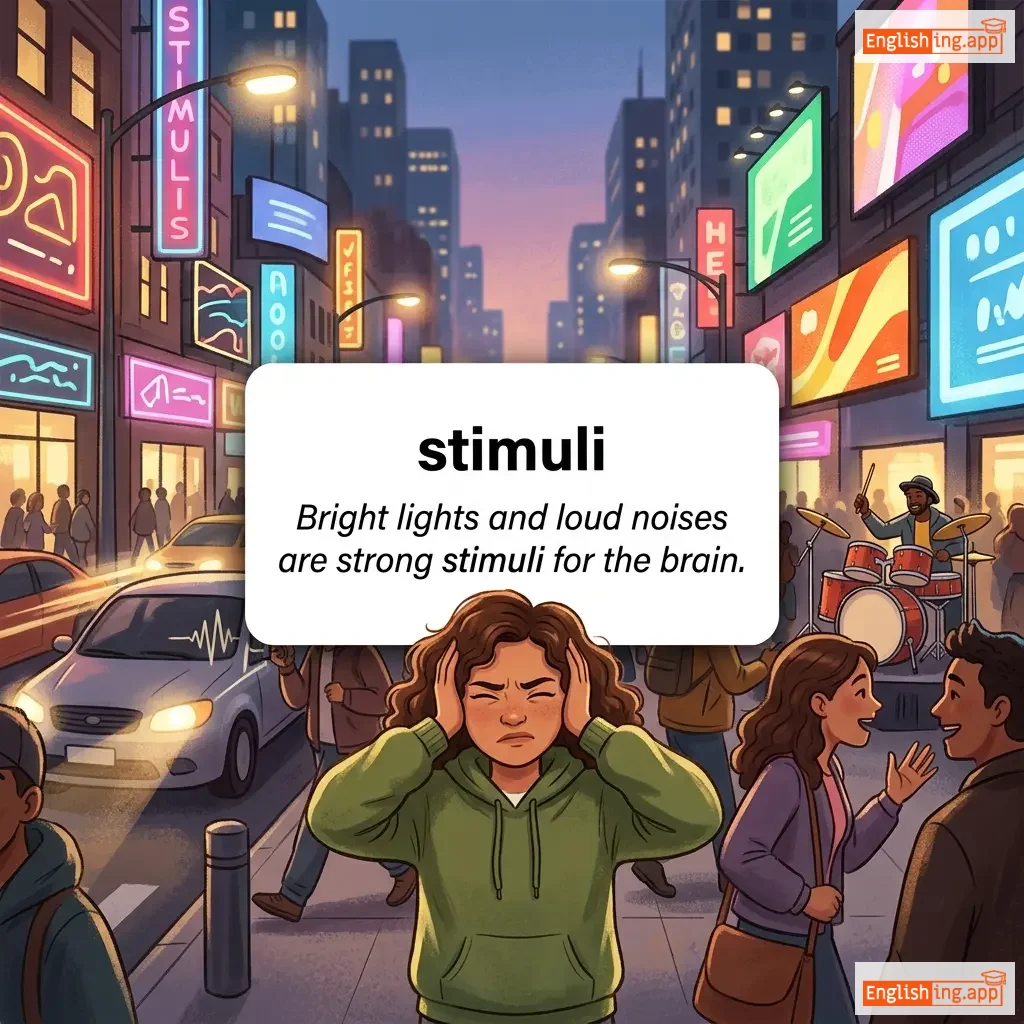
stimuli definition card — visual illustration of the meaning
noun (plural of stimulus)
/ˈstɪm.jʊ.laɪ/
estímulo (estímulo)

Things or events that evoke a specific functional reaction in an organ or tissue.

"Bright lights and loud noises are strong stimuli for the brain."

"Luces brillantes y ruidos fuertes son estímulos fuertes para el cerebro." (Luces brillantes y ruidos fuertes son estimulos fuertes para el cerebro.)
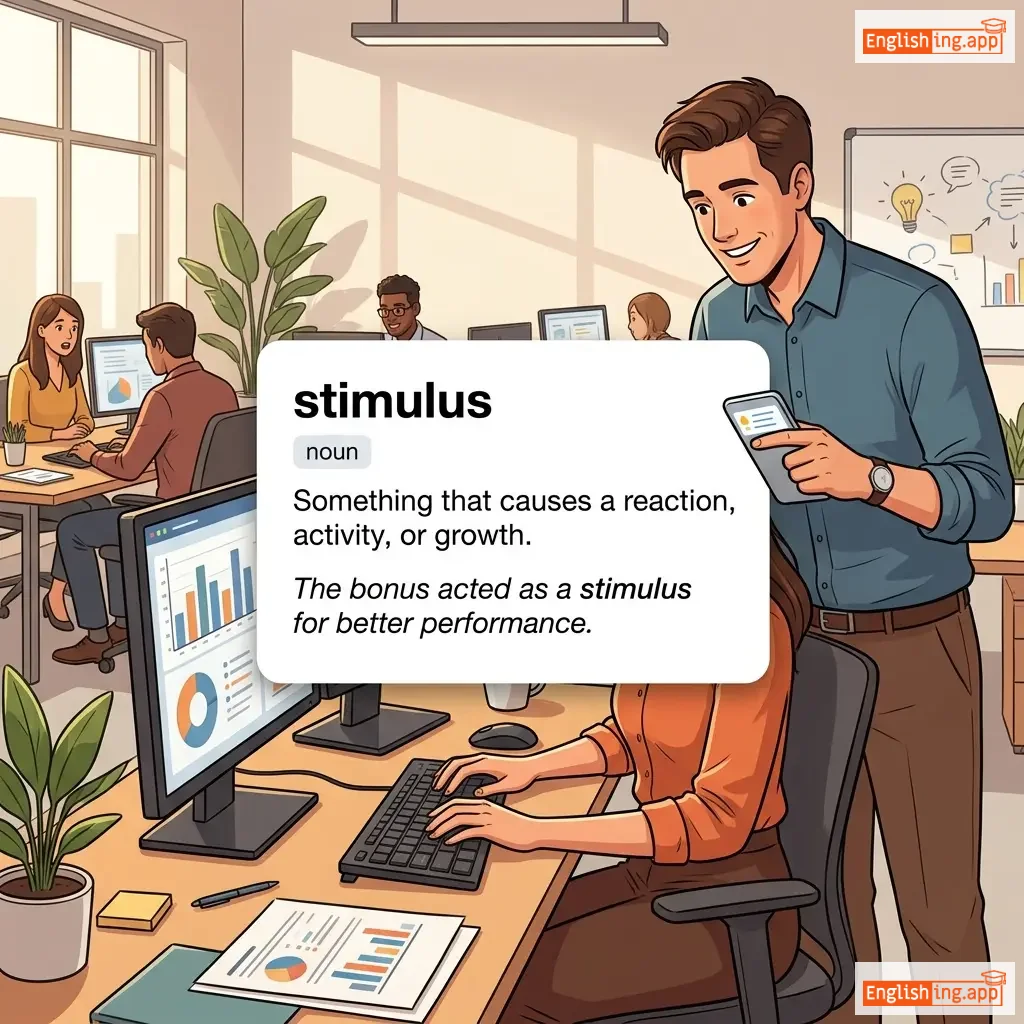
stimulus definition card — visual illustration of the meaning
noun
/ˈstɪmjʊləs/
factor que causa una reacción, estímulo (factor que causa una reaccion, estimulo)

Something that causes a reaction, activity, or growth.

"The bonus acted as a stimulus for better performance."

"El bono actuó como un estímulo para un mejor rendimiento." (El bono actuó como un estímulo para un mejor rendimiento.)
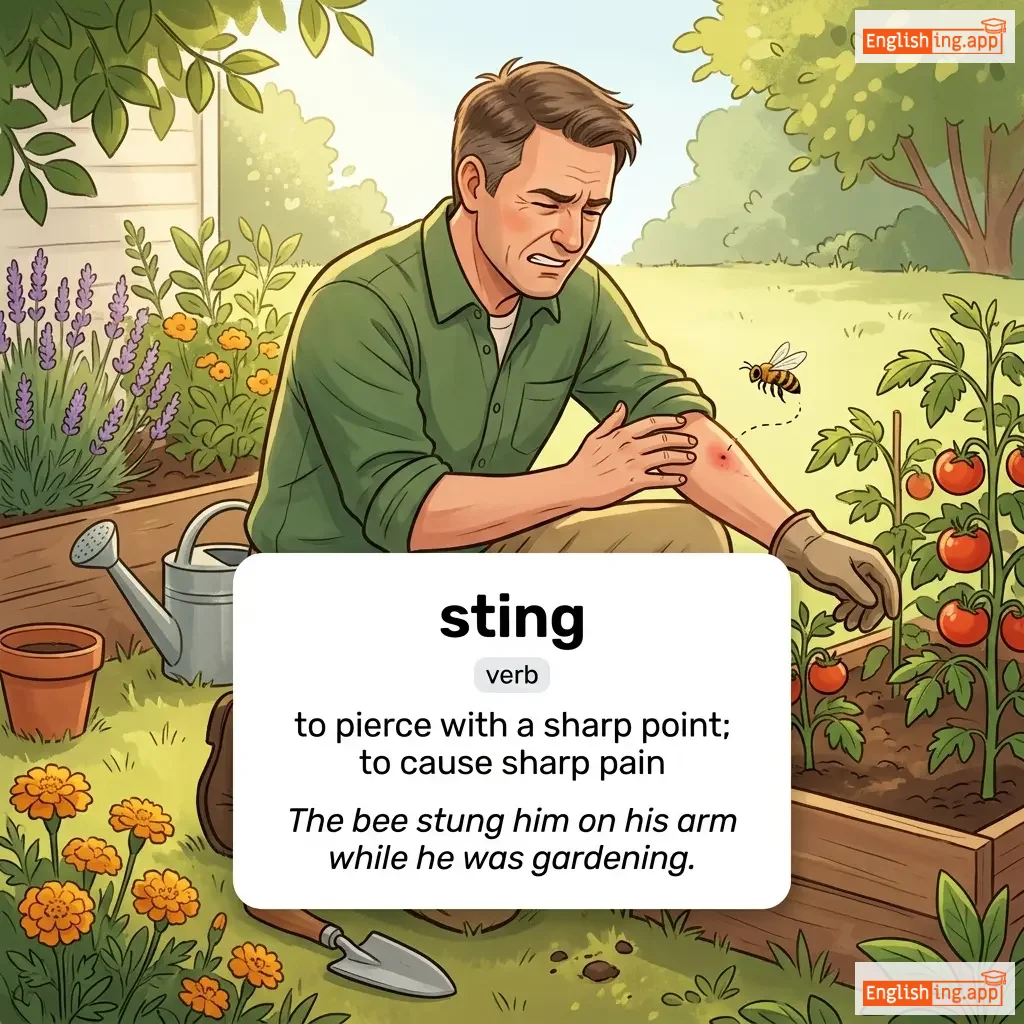
sting definition card — visual illustration of the meaning
verb
/stɪŋ/
picar (pikar)

to pierce with a sharp point; to cause sharp pain

"The bee stung him on his arm while he was gardening."

"La abeja lo picó en el brazo mientras él estaba jardineando." (La abeya lo pico en el brazo mientras el estaba jardineando)
adjective
/ˈstɪndʒi/
tacaño (tacano)

unwilling to spend or give; miserly

"He is too stingy to buy a gift for his friend."

"Es demasiado tacaño para comprar un regalo para su amigo." (Es demasiado tacano para comprar un regalo para su amigo.)
verb
/stɪŋk/
oler mal (oler mal)

to smell very unpleasant

"The garbage bin stinks in the hot sun."

"El bote de basura huele mal bajo el sol caliente." (El bote de basura huele mal bajo el sol caliente.)
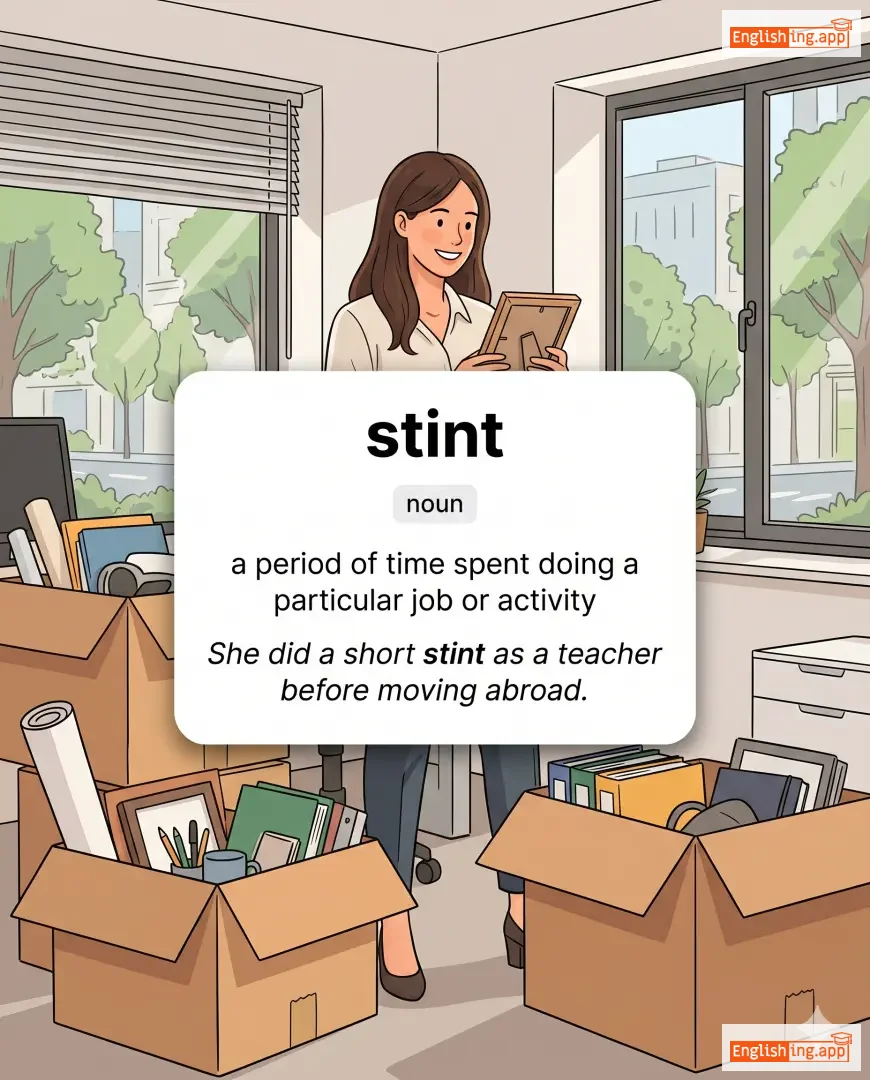
stint definition card — visual illustration of the meaning
noun
/stɪnt/
trabajo temporal (trabajo temporal)

a period of time spent doing a particular job or activity

"She did a short stint as a teacher before moving abroad."

"Ella hizo un corto trabajo como profesora antes de mudarse al extranjero." (Ella hizo un corto trabajo como profesora antes de mudarse al extranjero.)
verb
/ˈstɪntɪŋ/
dar con tacañería (dar con tacañería)

to supply sparingly or with restrictions

"He never stinting his efforts to help the poor."

"Él nunca escatima esfuerzos para ayudar a los pobres." (Él nunca escatima esfuerzos para ayudar a los pobres.)
noun
/ˈstaɪpɛnd/
estipendio (estipendio)

a fixed regular payment, usually for services or to cover living expenses

"The university provides a monthly stipend to its research students."

"La universidad proporciona un estipendio mensual a sus estudiantes de investigación." (La universidad proporciona un estipendio mensual a sus estudiantes de investigación.)