Vocabularios

Descubra, aprenda y domine el vocabulario en inglés

noun
/stæns/
postura (postura)

a person's attitude, opinion, or position on an issue

"The company took a strong stance on environmental protection."

"La empresa adoptó una postura firme sobre la protección del medio ambiente." (La empresa adopto una postura firme sobre la proteccion del medio ambiente.)
verb
/stɑːntʃ/
detener el flujo de sangre (detener el flujo de sangre)

to stop the flow of blood or liquid from a wound or source

"The nurse quickly stanched the bleeding from the cut."

"la enfermera rápidamente detuvo el sangrado de la herida." (la enfermera rapidamente detuvo el sangrado de la herida.)
noun
/ˈstænʃən/
poste de soporte (poste de soporte)

a strong upright bar or post used as support or to control movement

"The red rope was attached to the stanchions to guide the crowd."

"La cuerda roja estaba unida a los estanchiones para guiar a la multitud." (La cuerda roja estaba unida a los estanchiones para guiar a la multitud.)
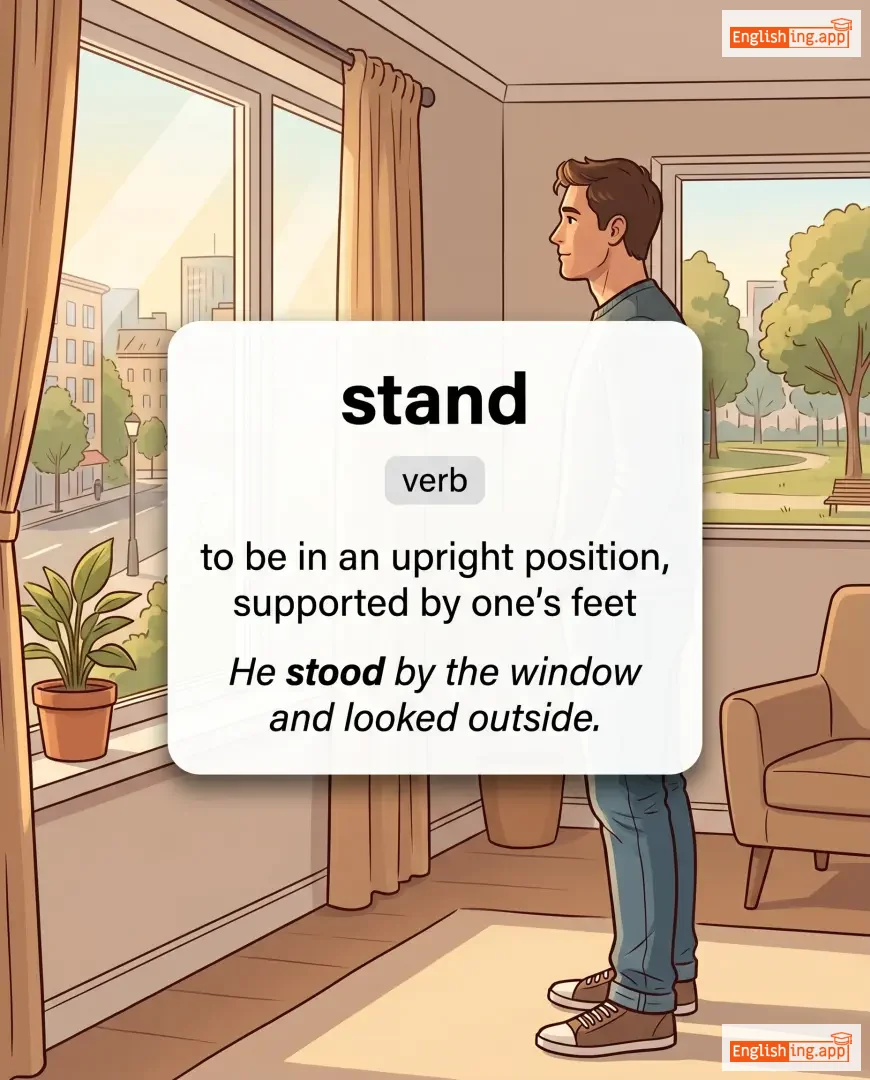
stand definition card — visual illustration of the meaning
verb
/stænd/
estar de pie (estar de pie)

to be in an upright position, supported by one's feet

"He stood by the window and looked outside."

"Él estaba de pie junto a la ventana y miraba afuera." (El estaba de pie junto a la ventana y miraba afuera.)
noun
/ˈstændərd/
estándar (estandar)

a level of quality or achievement, or a measure of comparison

"This car meets all the safety standards."

"Este coche cumple con todos los estándares de seguridad." (Este coche cumple con todos los estandares de seguridad.)
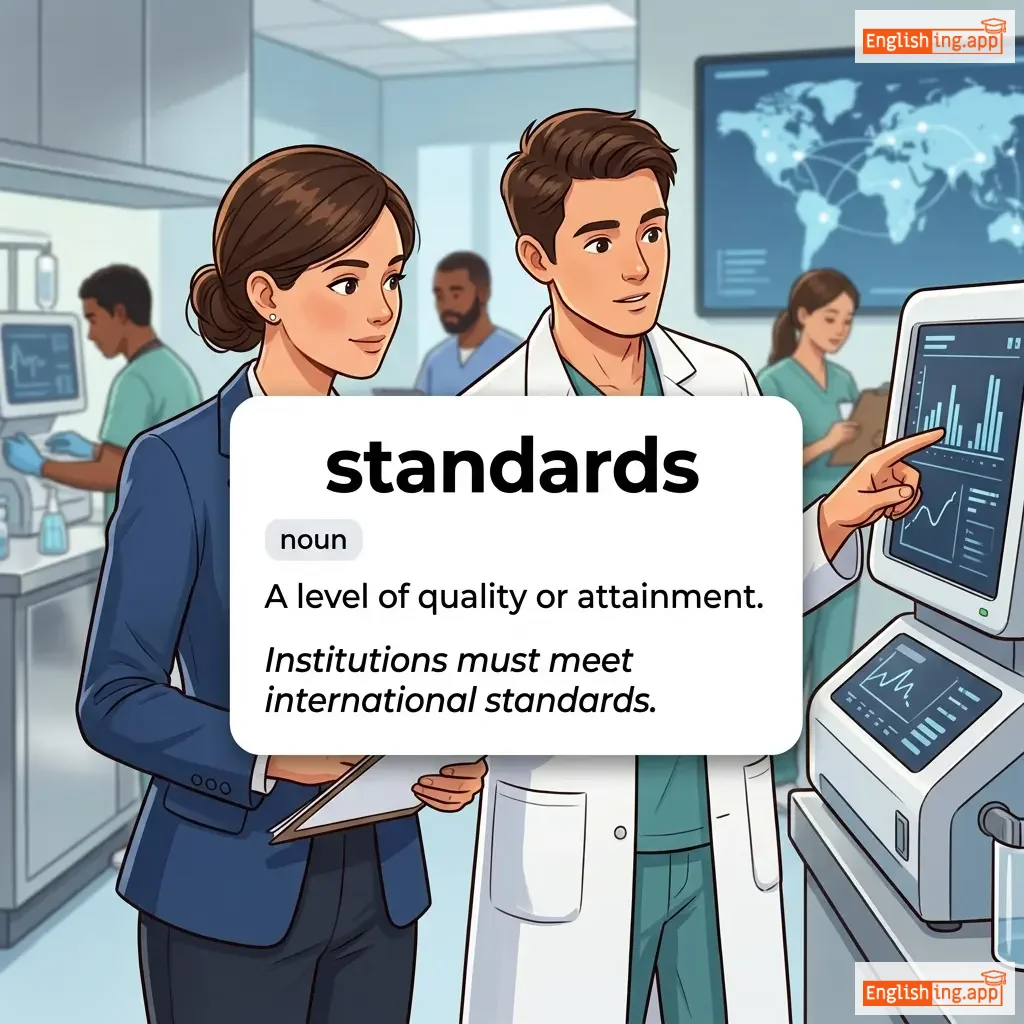
standards definition card — visual illustration of the meaning
noun
ˈstæn.dədz
estándares (estandares)

A level of quality or attainment.

"Institutions must meet international standards."

"Las instituciones deben cumplir con los estándares internacionales." (Las instituciones deben cumplir con los estándares internacionales.)
noun/adjective
/ˈstændɪŋ/
posición / prestigio (posicion / prestigio)

status, reputation, or position; also the act of being upright on the feet

"He has high standing in the community for his charity work."

"Tiene un alto prestigio en la comunidad por su trabajo de caridad." (Tiene un alto prestigio en la comunidad por su trabajo de caridad.)
noun
/ˈstændˌstɪl/
paro (paro)

a situation in which all movement or activity stops

"The traffic came to a standstill after the accident."

"El tráfico llegó a un paro después del accidente." (El trafico llego a un paro despues del accidente.)
noun
/ˈstænzə/
estrofa (estrofa)

a group of lines forming a unit in a poem or song

"The poem begins with a stanza describing nature."

"El poema comienza con una estrofa que describe la naturaleza." (El poema comienza con una estrofa que describe la naturaleza.)
noun
/stɑːr/
estrella (estreya)

a luminous point in the night sky, a famous person

"The movie star smiled for the cameras."

"La estrella de cine sonrió para las cámaras." (La estrella de cine sonrió para las cámaras.)
noun
/stɑːr ˈæn.ɪs/
anís estrellado (anis estrellado)

star-shaped spice pod with a licorice-like flavor used in cooking

"She added star anise to the soup for aromatic flavor."

"Ella agregó anís estrellado a la sopa para darle un sabor aromático." (Ella agregó anís estrellado a la sopa para darle un sabor aromático.)
noun
/stɑːr fɪʃ/
estrella de mar (estreya de mar)

a marine echinoderm with five or more radiating arms, typically found on the sea floor

"The starfish slowly moved across the ocean floor searching for food."

"La estrella de mar se movía lentamente por el fondo del océano buscando comida." (la estreya de mar se movia lentamente por el fondo del oseano buscando komida)
noun
/stɑːr fruːts/
frutas estrella (frutas estrella)

yellow tropical fruits that form a star shape when sliced crosswise; tangy and crisp taste

"When you slice star fruits, they look like beautiful yellow stars on your plate."

"Cuando cortas las frutas estrella, se ven como hermosas estrellas amarillas en tu plato." (Cuando cortas las frutas estrella, se ven como hermosas estrellas amarillas en tu plato.)
verb
/stɛə/
mirar fijamente (mirar fijamente)

to look at something with a fixed gaze

"She stared at the painting for hours."

"Ella miró fijamente la pintura durante horas." (Ella miro fijamente la pintura durante horas.)
adjective
/stɑːrk/
severo, agudo (severo, agudo)

Severe, sharp, or clearly defined; plain and without any decoration.

"The stark contrast between poverty and wealth was evident in the city."

"La fuerte diferencia entre la pobreza y la riqueza era evidente en la ciudad." (La fuerte diferencia entre la pobreza y la riqueza era evidente en la ciudad.)
adjective
/ˈstɑː.ri/
estrellado; brillante; (estari)

full of stars; shining like stars; relating to stars

"We enjoyed the starry night sky while camping in the mountains."

"Disfrutamos del cielo estrellado mientras acampábamos en las montañas." (disfrutamos del cielo estrellado mientras acampábamos en las montañas.)
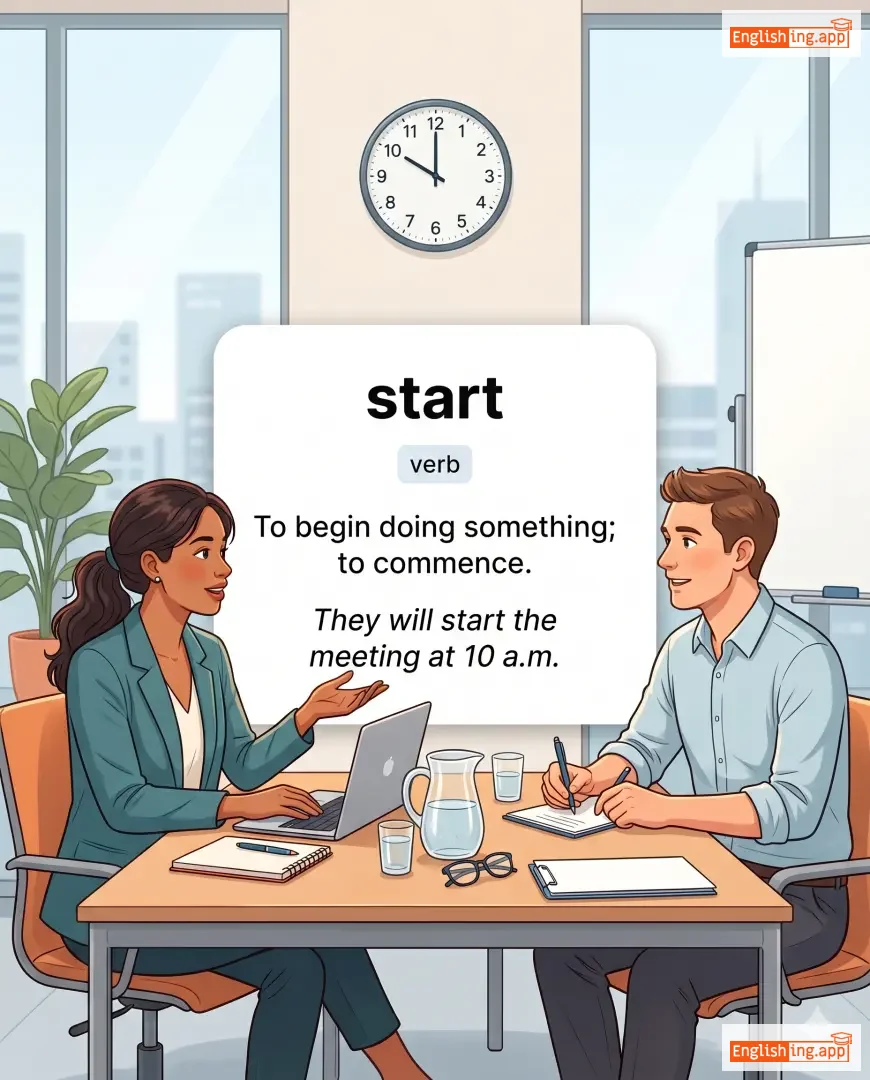
start definition card — visual illustration of the meaning
verb
/stɑːrt/
comenzar (comenzar)

To begin doing something; to commence.

"They will start the meeting at 10 a.m."

"Ellos comenzarán la reunión a las 10 a.m." (Ellos comenzarán la reunión a las 10 a.m.)
noun
/ˈstɑːrtər/
persona o cosa que inicia algo; el primer plato de una comida (persona o cosa que inicia algo; el primer plato de una comida)

a person or thing that starts something; the first course of a meal

"The starter of the meal was a fresh salad."

"El primer plato de la comida era una ensalada fresca." (El primer plato de la comida era una ensalada fresca.)
verb
/ˈstɑːtɪŋ/
comenzar (comenzar)

beginning to do or experience something

"She is starting a new job next week."

"Ella está comenzando un nuevo trabajo la próxima semana." (Ella está comenzando un nuevo trabajo la próxima semana.)
verb
/ˈstɑːrtl/
sobresaltar (sobresaltar)

To surprise or frighten someone suddenly.

"The loud noise startled the children."

"El ruido fuerte sobresaltó a los niños." (El ruido fuerte sobresaltó a los niños.)
adjective
/ˈstɑːrtəld/
sobresaltado (sobresaltado)

suddenly shocked or surprised by something unexpected

"She was startled by the loud noise outside."

"Ella se sobresaltó por el ruido fuerte afuera." (Ella se sobresaltó por el ruido fuerte afuera.)
startup definition card — visual illustration of the meaning
noun
ˈstɑːtʌp
nueva empresa, emprendimiento empresarial (nueva empresa, emprendimiento empresarial)

New company, business venture.

"The startup grew into a global brand."

"El startup creció hasta convertirse en una marca global." (El startup creció hasta convertirse en una marca global.)
noun
/stɑːˈveɪ.ʃən/
inanición (inanicion)

suffering or death caused by lack of food; extreme hunger

"Many people died of starvation during the famine."

"Muchas personas murieron de inanición durante la hambruna." (muchas personas murieron de inanicion durante la hambruna.)
verb
/stɑːv/
morir de hambre (morir de hambre)

to suffer or die from lack of food

"He was left to starve in the desert."

"Él fue dejado para morir de hambre en el desierto." (Él fue dejado para morir de hambre en el desierto.)
noun
/ˈsteɪsɪs/ or /ˈstæsɪs/
estasis (estasis)

A state of inactivity or equilibrium; a situation where nothing changes.

"The negotiations reached a state of stasis with no progress made."

"Las negociaciones llegaron a un estado de estasis sin avances." (Las negociaciones llegaron a un estado de estasis sin avances.)
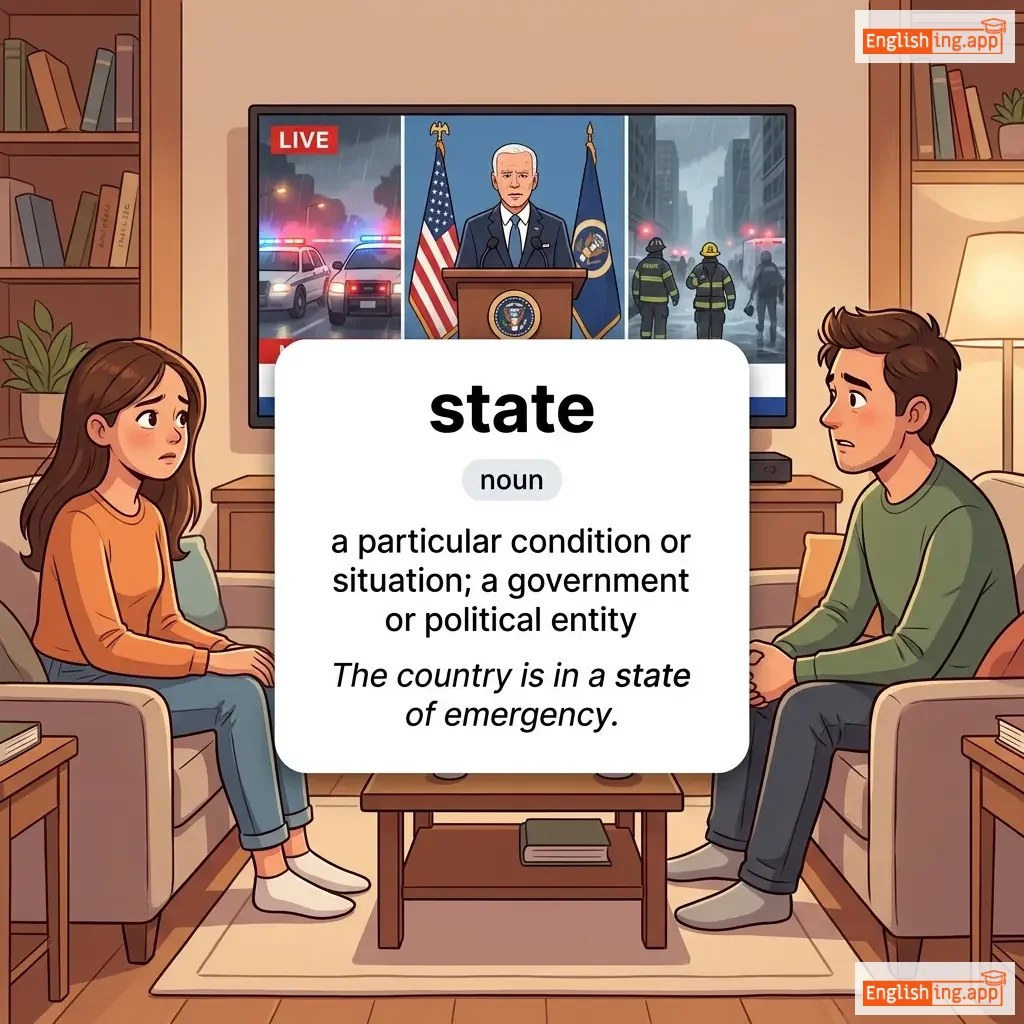
state definition card — visual illustration of the meaning
noun
/steɪt/
estado (estado)

a particular condition or situation; a government or political entity

"The country is in a state of emergency."

"El país está en estado de emergencia." (El pais esta en estado de emergencia.)
noun
/ˈsteɪtkraft/
arte del gobierno (arte del gobierno)

The art of governing and managing state affairs effectively.

"The leader was praised for his exceptional statecraft in handling international relations."

"El líder fue elogiado por su excepcional arte del gobierno en el manejo de relaciones internacionales." (El líder fue elogiado por su excepcional arte del gobierno en el manejo de relaciones internacionales.)
adjective
/ˈsteɪtli/
majestuoso y digno (majestuoso y digno)

Having a dignified, majestic, and impressive appearance or manner.

"The stately mansion stood at the end of the long driveway."

"La majestuosa mansión se encontraba al final del largo camino de entrada." (La majestuosa mansión se encontraba al final del largo camino de entrada.)
noun
/ˈsteɪtmənt/
declaración (declaracion)

a clear expression of something in speech or writing

"She made a statement about the company's new policies."

"Ella hizo una declaración sobre las nuevas políticas de la empresa." (Ella hizo una declaracion sobre las nuevas politicas de la empresa.)
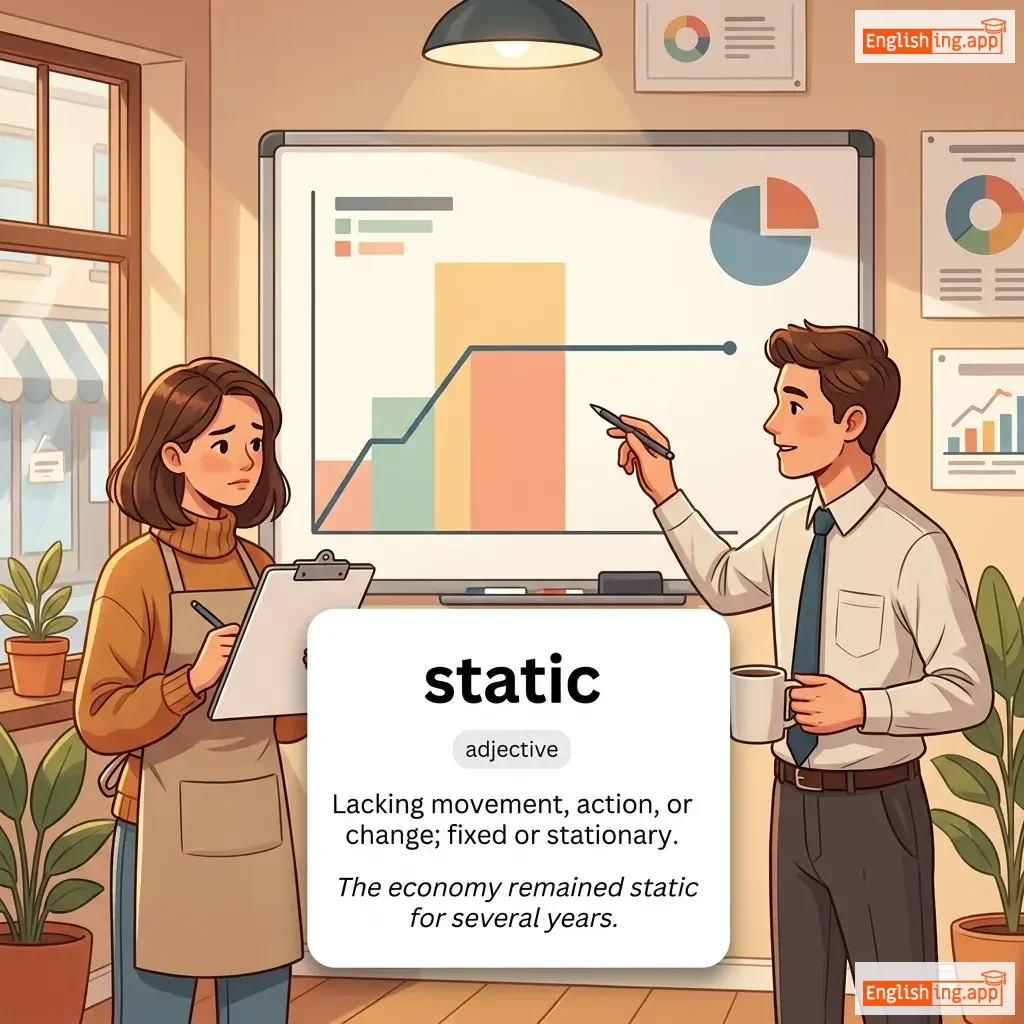
static definition card — visual illustration of the meaning
adjective
/ˈstætɪk/
estático (estatico)

Lacking movement, action, or change; fixed or stationary.

"The economy remained static for several years."

"La economía permaneció estática durante varios años." (La economia permanecio estatica durante varios anos.)
noun
/ˈstætɪks/
estática (estática)

The branch of mechanics dealing with bodies at rest and forces in equilibrium.

"She is studying statics as part of her engineering course."

"Ella está estudiando estática como parte de su curso de ingeniería." (Ella está estudiando estática como parte de su curso de ingeniería.)
noun
/ˈsteɪʃən/
estación (estacion)

a place where a particular service is provided, especially for transportation

"We arrived at the station just in time for the train."

"Llegamos a la estación justo a tiempo para el tren." (Llegamos a la estacion justo a tiempo para el tren.)
adjective
/ˈsteɪʃəˌneri/
estático (estatico)

Not moving or not intended to be moved.

"The car remained stationary at the red light."

"El coche permaneció estacionario en el semáforo rojo." (El coche permaneció estacionario en el semáforo rojo.)
noun
/ˈsteɪ.ʃən.ər/
papelería (papeleria)

a person who sells paper, pens, pencils, and other office supplies

"The stationer recommended the best pens for writing exams."

"El estacionista recomendó los mejores bolígrafos para los exámenes." (El estacionista recomendó los mejores bolígrafos para los exámenes.)
adjective
/stəˈtɪstɪkəl/
estadístico (estadistico)

relating to the use or analysis of numerical data

"The report provides statistical data about population growth."

"El informe proporciona datos estadísticos sobre el crecimiento de la población." (El informe proporciona datos estadisticos sobre el crecimiento de la poblacion.)
noun
/ˌstætɪˈstɪʃən/
estadístico (estadistico)

A person who specializes in collecting, analyzing, and interpreting numerical data.

"The statistician presented the survey results with great clarity."

"El estadístico presentó los resultados de la encuesta con gran claridad." (El estadistico presento los resultados de la encuesta con gran claridad.)
noun
/stəˈtɪstɪks/
estadísticas (estadísticas)

the practice or science of collecting and analyzing numerical data

"The statistics showed an increase in the number of users last year."

"Las estadísticas mostraron un aumento en el número de usuarios el año pasado." (Las estadísticas mostraron un aumento en el número de usuarios el año pasado.)
noun
/ˈstætʃuː/
estatua (estatua)

a carved or cast figure of a person or animal, especially one that is life-size or larger

"They built a statue of the national hero in the city square."

"Construyeron una estatua del héroe nacional en la plaza de la ciudad." (Construyeron una estatua del heroe nacional en la plaza de la ciudad.)
adjective
/ˌstætʃuˈɛsk/
de estatua (de estatua)

Having the grace, beauty, or dignity of a statue; tall and attractively proportioned.

"She had a statuesque figure that turned heads wherever she went."

"Ella tenía una figura de estatua que hacía que todos se giraran donde quiera que fuera." (Ella tenía una figura de estatua que hacía que todos se giraran donde quiera que fuera.)
noun
/ˌstætʃuˈɛt/
estatuilla (estatuilla)

A small statue, usually decorative or artistic.

"The artist won a gold statuette for his work."

"El artista ganó una estatuilla de oro por su trabajo." (El artista gano una estatuilla de oro por su trabajo.)
noun
/ˈstætʃər/
estatura, prestigio (estatura, prestigio)

A person's natural height or their reputation and importance.

"Her intellectual stature made her a respected figure in academia."

"Su estatura intelectual la convirtió en una figura respetada en el mundo académico." (Su estatura intelectual la convirtio en una figura respetada en el mundo academico.)
noun
/ˈsteɪtəs/
estado (estado)

the social or professional position or condition of someone or something

"His social status improved after the promotion."

"Su estado social mejoró después de la promoción." (Su estado social mejoró después de la promoción.)
noun
/ˈsteɪtəs kwoʊ/
status quo (status quo)

The existing state of affairs, especially regarding social or political issues.

"The government decided to maintain the status quo until further review."

"El gobierno decidió mantener el status quo hasta una revisión posterior." (El gobierno decidió mantener el status quo hasta una revisión posterior.)
noun
/ˈstætʃuːt/
ley (ley)

A written law passed by a legislative body.

"The new statute protects workers' rights."

"La nueva ley protege los derechos de los trabajadores." (La nueva ley protege los derechos de los trabajadores.)
adjective
/ˈstætʃətɔːri/
estatutario (estatutario)

Required, permitted, or enacted by law.

"The company must comply with all statutory regulations."

"La empresa debe cumplir con todas las regulaciones estatutarias." (La empresa debe cumplir con todas las regulaciones estatutarias.)
adjective
/stɔːntʃ/
firme, leal (firme, leal)

Loyal, committed, and firm in support.

"She is a staunch supporter of environmental protection."

"Ella es una firme defensora de la protección del medio ambiente." (Ella es una firme defensora de la protección del medio ambiente.)
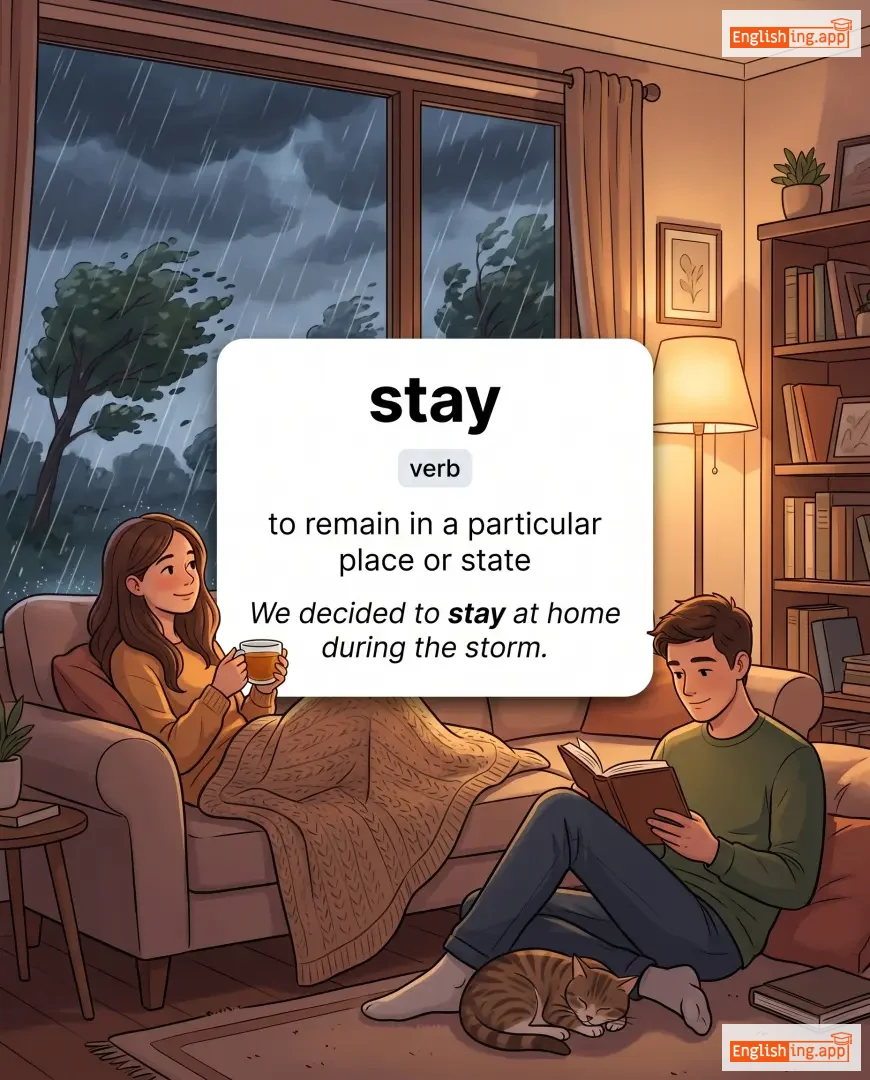
stay definition card — visual illustration of the meaning
verb
/steɪ/
quedarse (quedarse)

to remain in a particular place or state

"We decided to stay at home during the storm."

"Decidimos quedarnos en casa durante la tormenta." (Decidimos quedarnos en casa durante la tormenta.)
adjective
/ˈstɛdfæst/
firme, leal (firme, leal)

Firm, loyal, and unwavering in purpose or support.

"He remained steadfast in his determination to succeed."

"Él se mantuvo firme en su determinación de tener éxito." (El se mantuvo firme en su determinacion de tener exito.)
adverb
/ˈstɛdɪli/
de manera constante (de manera constante)

in a regular and continuous way; without stopping or changing

"The company's profits have been increasing steadily."

"Las ganancias de la empresa han aumentado de manera constante." (Las ganancias de la empresa han aumentado de manera constante.)
adjective
/ˈstɛdi/
firme (firme)

firm, stable, and not likely to change suddenly

"He kept his hand steady while painting the picture."

"Mantuvo su mano firme mientras pintaba el cuadro." (Mantuvo su mano firme mientras pintaba el cuadro.)