Vocabularios

Descubra, aprenda y domine el vocabulario en inglés

adjective
/spraɪ/
ágil (agil)

active and lively, especially in old age

"The spry grandmother surprised everyone with her quick dance steps."

"La abuela ágil sorprendió a todos con sus rápidos pasos de baile." (La abuela agil sorprendio a todos con sus rapidos pasos de baile.)
noun
/spjuːm/
espuma (espuma)

Froth or foam, especially found on waves or liquids.

"The waves crashed against the rocks, leaving spume in the air."

"Las olas chocaron contra las rocas, dejando espuma en el aire." (Las olas chocaron contra las rocas, dejando espuma en el aire.)
verb
/spɜːr/
estimular / incentivar (estimular / incentivar)

To encourage or motivate someone to take action.

"The teacher's praise spurred him to study harder."

"El elogio del maestro lo estimuló a estudiar más duro." (El elogio del maestro lo estimulo a estudiar mas duro.)
adjective
/ˈspjʊəriəs/
falso / fraudulento (falso / fraudulento)

Not genuine, authentic, or true; false or fake.

"The report was based on spurious claims."

"El informe se basó en afirmaciones falsas." (El informe se basó en afirmaciones falsas.)
verb
/spɜːrn/
rechazar con desdén (rechazar con desden)

To reject something or someone with disdain or contempt.

"She spurned his offer of help."

"Ella rechazó su oferta de ayuda con desdén." (Ella rechazo su oferta de ayuda con desden.)
🕵️‍♂️

spy (espái)

verb
/spaɪ/
espía (espia)

to secretly collect information about a person, group, or country

"He was caught spying on his neighbor through the window."

"Lo atraparon espiando a su vecino a través de la ventana." (Lo atraparon espiando a su vecino a través de la ventana.)
verb
/ˈskwɒbəl/
discutir ruidosamente sobre algo sin importancia (discutir ruidosamente sobre algo sin importancia)

To argue noisily over something small or unimportant.

"The children squabbled over the last piece of cake."

"Los niños discutían por el último trozo de pastel." (Los niños discutían por el último trozo de pastel.)
noun
/skwɒd/
escuadra (escuadra)

a small group of people organized for a specific purpose or task, often in the military or sports

"The football squad trained hard before the championship match."

"El equipo de fútbol entrenó duro antes del partido de campeonato." (El equipo de futbol entrenó duro antes del partido de campeonato.)
adjective
/ˈskwɒlɪd/
extremadamente sucio (extremadamente sucio)

extremely dirty and unpleasant, often due to poverty or neglect

"He lived in a squalid room with broken furniture."

"Vivía en una habitación sucia con muebles rotos." (Vivía en una habitación sucia con muebles rotos.)
noun
/skwɔːl/
ráfaga (rafaga)

a sudden violent gust of wind, often accompanied by rain, snow, or sleet

"A sudden squall caught the sailors off guard."

"Una ráfaga repentina sorprendió a los marineros." (Una rafaga repentina sorprendio a los marineros.)
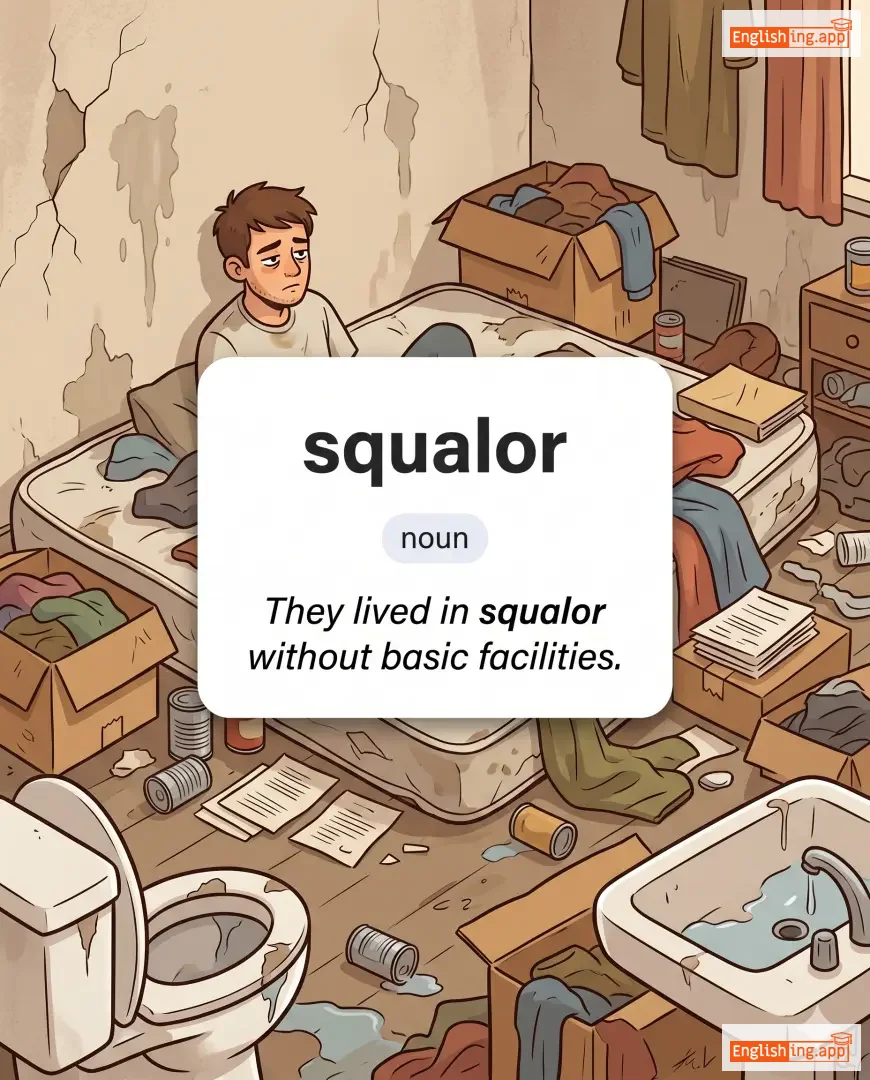
squalor definition card — visual illustration of the meaning
noun
/ˈskwɒlər/
miseria (miseria)

the state of being extremely dirty and unpleasant, especially due to poverty or neglect

"They lived in squalor without basic facilities."

"Vivían en la miseria sin instalaciones básicas." (Vivían en la miseria sin instalaciones básicas.)
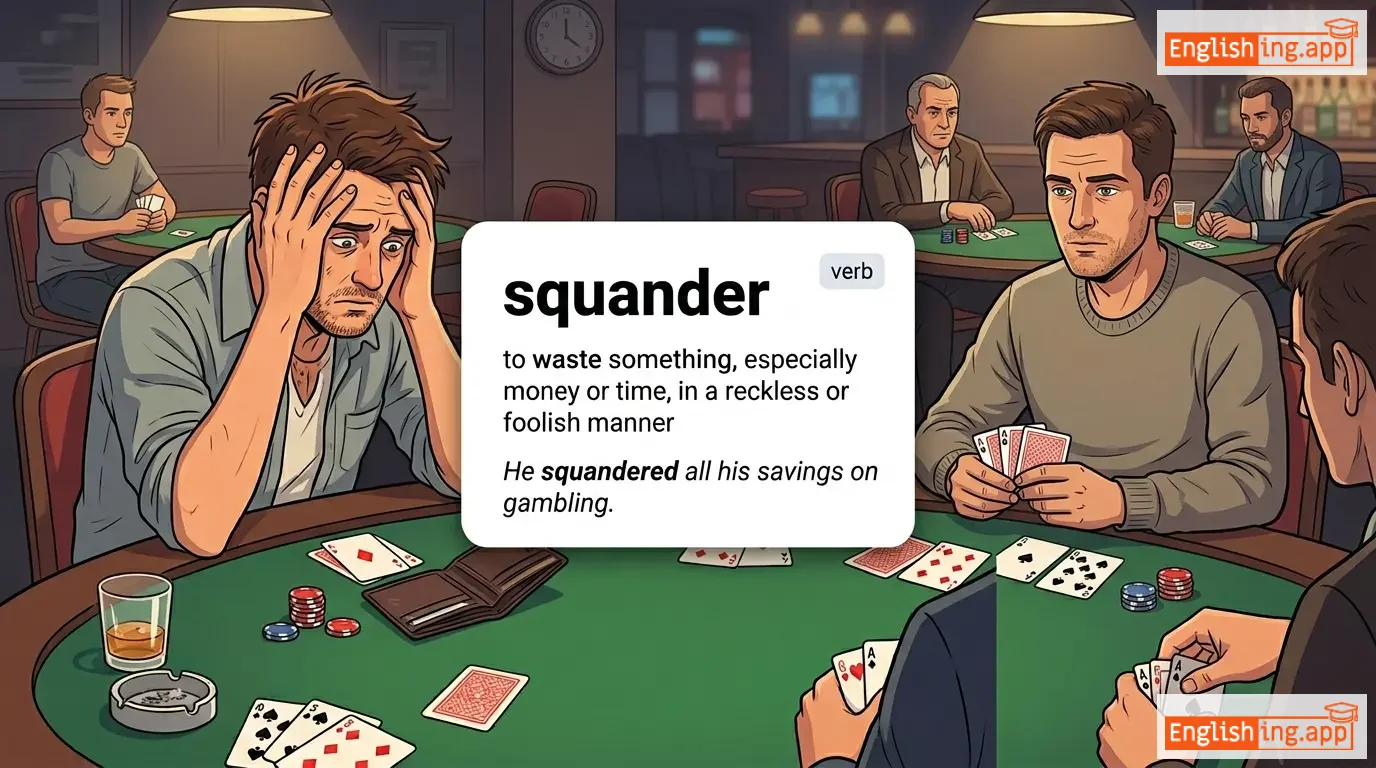
squander definition card — visual illustration of the meaning
verb
/ˈskwɒndər/
desperdiciar (desperdiciar)

to waste something, especially money or time, in a reckless or foolish manner

"He squandered all his savings on gambling."

"Él desperdició todos sus ahorros en el juego." (Él desperdició todos sus ahorros en el juego.)
noun
/skwɛə(r)/
cuadrado (cuadrado)

a shape with four equal straight sides and four right angles

"The table has a square shape."

"La mesa tiene una forma cuadrada." (La mesa tiene una forma cuadrada.)
verb
/skwɒʃ/
aplastar (aplastar)

to crush or squeeze something with force so that it becomes flat or broken

"She accidentally squashed the bug with her shoe."

"Ella accidentalmente aplastó el insecto con su zapato." (Ella accidentalmente aplastó el insecto con su zapato.)
/skwɒt/
agacharse (agacharse)

to crouch or sit with knees bent and body close to the ground

"He squatted down to tie his shoes."

"Se agachó para atarse los zapatos." (Se agachó para atarse los zapatos.)
noun
/ˈskwɒtər/
ocupante ilegal (ocupante ilegal)

a person who unlawfully occupies an uninhabited building or unused land

"The police removed the squatters from the abandoned house."

"La policía sacó a los ocupantes ilegales de la casa abandonada." (La policía sacó a los ocupantes ilegales de la casa abandonada.)
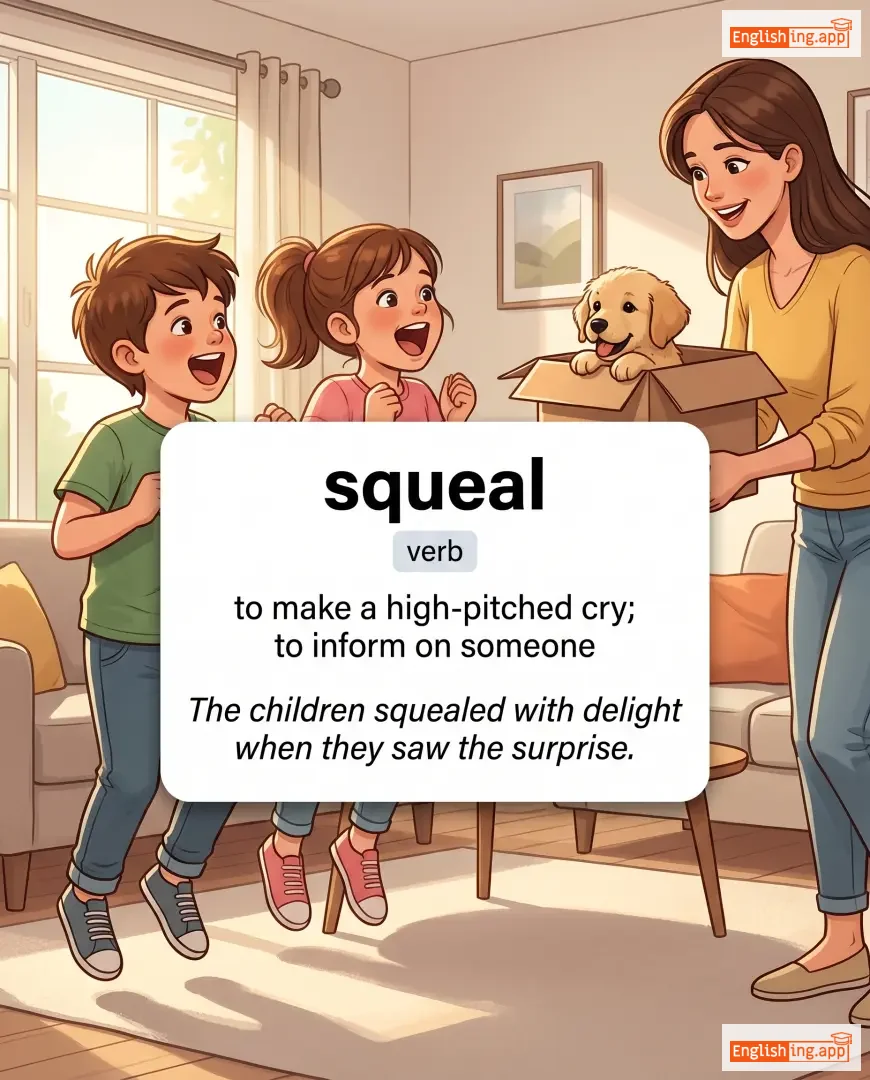
squeal definition card — visual illustration of the meaning
verb
/skwiːl/
chillar (chillar)

to make a high-pitched cry; to inform on someone

"The children squealed with delight when they saw the surprise."

"Los niños chillaron de alegría cuando vieron la sorpresa." (Los ninos chillaron de alegria cuando vieron la sorpresa.)
adjective
/ˈskwiːmɪʃ/
fácilmente propenso a sentirse enfermo, mareado o disgustado (facilmente propenso a sentirse enfermo, mareado o disgustado)

easily made to feel sick, faint, or disgusted

"She felt squeamish at the sight of blood."

"Se sintió mareada al ver sangre." (Se sintió mareada al ver sangre.)
verb
/skwiːz/
apretar (apretar)

to press something firmly, especially from all sides in order to extract or compress it

"She squeezed the toothpaste to get the last bit."

"Ella apretó el tubo de pasta de dientes para sacar el último poco." (Ella apretó el tubo de pasta de dientes para sacar el último poco.)
verb
/skwɛltʃ/
hacer un sonido suave, como caminar en el barro; suprimir o callar (hacer un sonido suave, como caminar en el barro; suprimir o callar)

to make a soft sucking sound, such as when walking on mud; to suppress or silence

"His boots squelched in the wet ground."

"Sus botas hicieron un ruido de squelch en el suelo mojado." (Sus botas hicieron un ruido de squelch en el suelo mojado.)
verb
/skwɪnt/
entrecerrar los ojos (entrecerrar los ojos)

to look with partly closed eyes

"She squinted at the bright sunlight."

"Ella entrecerró los ojos por la luz brillante del sol." (Ella entrecerró los ojos por la luz brillante del sol.)
noun
/ˈskwɪr.əl/
ardilla (ardilla)

a small agile tree-dwelling rodent with a long bushy tail

"The squirrel gathered nuts for winter."

"La ardilla recogió nueces para el invierno." (La ardilla recogio nueces para el invierno.)
verb, noun
/stæb/
apuñalar (apunalar)

to pierce or wound with a pointed weapon or object

"He was stabbed in the back during the altercation."

"Fue apuñalado en la espalda durante la pelea." (Fue apuñalado en la espalda durante la pelea.)
noun
/stəˈbɪləti/
estabilidad (estabilidad)

the quality of being steady and unchanging over time

"The stability of the economy is crucial for growth."

"La estabilidad de la economía es crucial para el crecimiento." (La estabilidad de la economia es crucial para el crecimiento.)
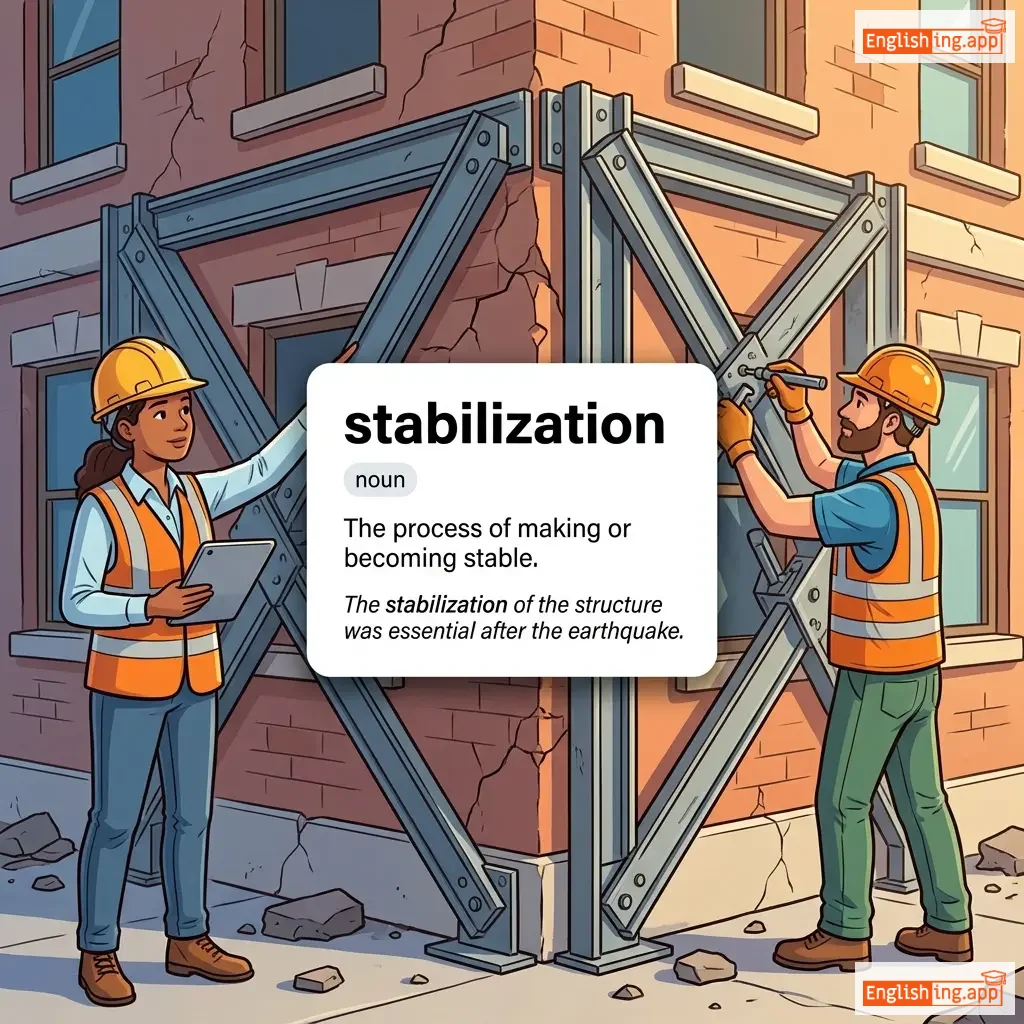
stabilization definition card — visual illustration of the meaning
noun
ˌsteɪbəlaɪˈzeɪʃən
estabilización (estabilizacion)

The process of making or becoming stable.

"The stabilization of the structure was essential after the earthquake."

"La estabilización de la estructura fue esencial después del terremoto." (La estabilización de la estructura fue esencial después del terremoto.)
verb
/ˈsteɪ.bə.laɪz/
estabilizar (estabilizar)

to make something steady, secure, or unlikely to change suddenly

"The government took measures to stabilize the economy."

"El gobierno tomó medidas para estabilizar la economía." (El gobierno tomó medidas para estabilizar la economía.)
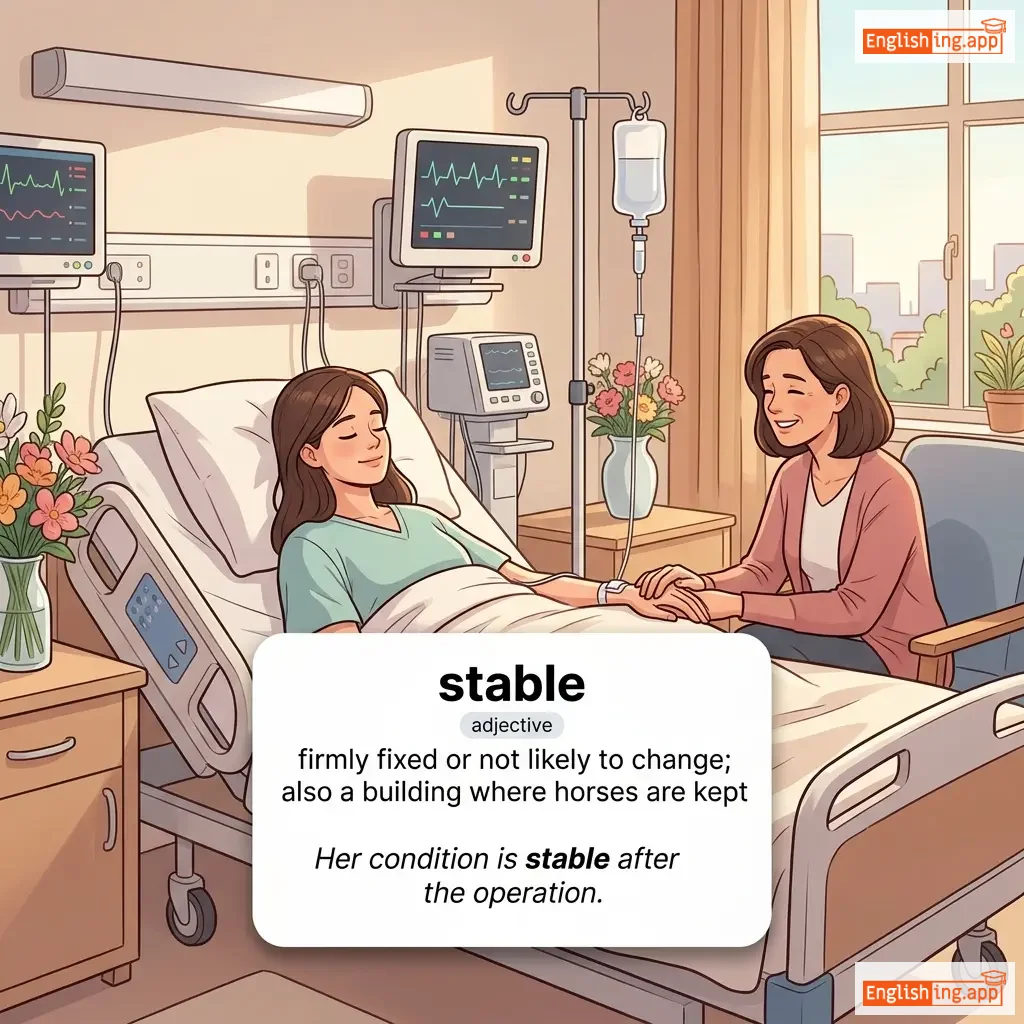
stable definition card — visual illustration of the meaning
adjective
/ˈsteɪ.bəl/
estable / establo (estable / establo)

firmly fixed or not likely to change; also a building where horses are kept

"Her condition is stable after the operation."

"Su condición es estable después de la operación." (Su condicion es estable despues de la operacion.)
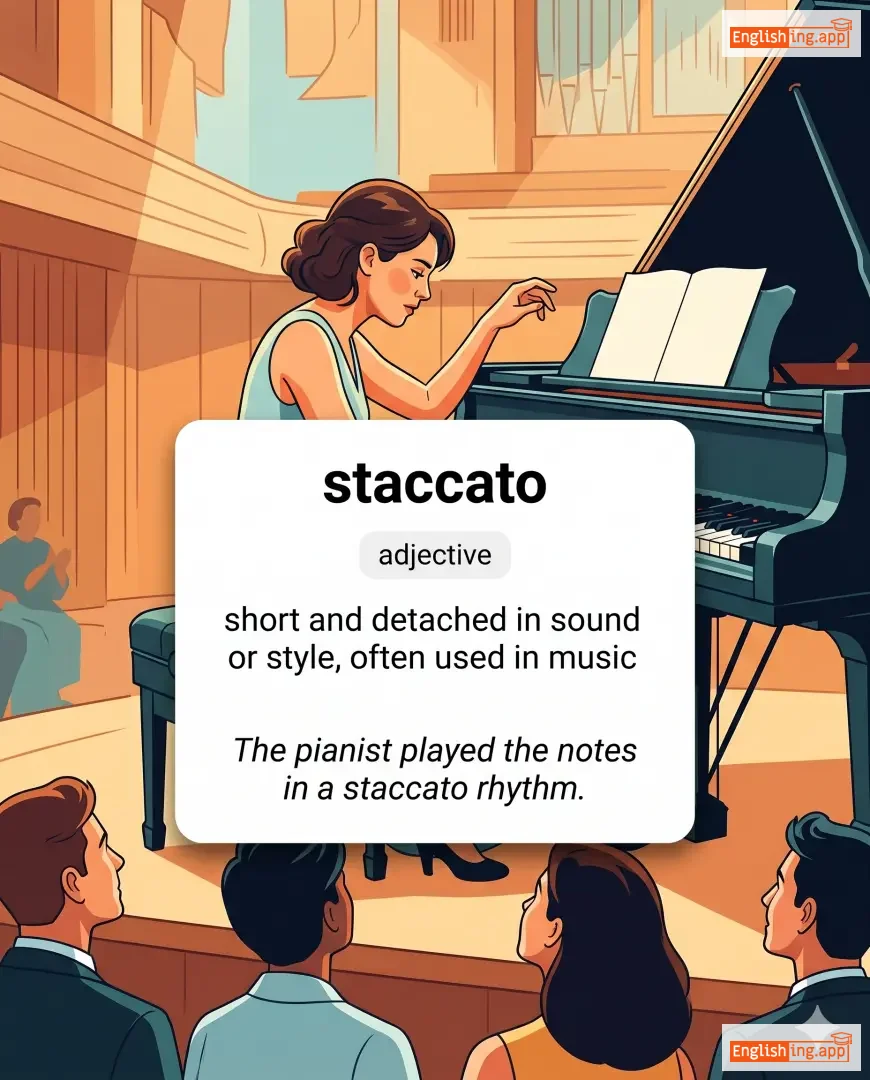
staccato definition card — visual illustration of the meaning
adjective
/stəˈkɑː.təʊ/
detallado y separado (detallado y separado)

short and detached in sound or style, often used in music

"The pianist played the notes in a staccato rhythm."

"El pianista tocó las notas en un ritmo estacato." (El pianista tocó las notas en un ritmo estacato.)
verb
/stæk/
apilar o amontonar (apilar o amontonar)

to arrange things in a neat pile or one on top of another

"He stacked the books neatly on the shelf."

"Él apiló los libros ordenadamente en la estantería." (Él apiló los libros ordenadamente en la estantería.)
noun
/ˈsteɪdiəm/
estadio (estadio)

a large structure with seating for sports, concerts, or other events

"Thousands of fans filled the stadium to watch the final match."

"Miles de aficionados llenaron el estadio para ver el partido final." (Miles de aficionados llenaron el estadio para ver el partido final.)
👩‍💼

staff (staff)

noun
/stæf/
personal (personal)

a group of employees working together in an organization

"The staff at the hospital are very helpful."

"El personal en el hospital es muy servicial." (El personal en el hospital es muy servicial.)
noun
/steɪdʒ/
escenario (escenario)

a raised platform or area for performances or presentations

"The actor stepped onto the stage to deliver his speech."

"El actor subió al escenario para dar su discurso." (El actor subió al escenario para dar su discurso.)
adjective
/ˈstæɡ.nənt/
estancado (estancado)

not moving, changing, or developing; inactive

"The company’s growth remained stagnant for several years."

"El crecimiento de la empresa permaneció estancado durante varios años." (El crecimiento de la empresa permaneció estancado durante varios años.)
verb
/ˈstæɡ.neɪt/
estancarse (estancarse)

to stop developing, progressing, or moving

"Without innovation, the business will stagnate."

"sin innovación, el negocio se estancará." (sin innovacion, el negocio se estancara.)
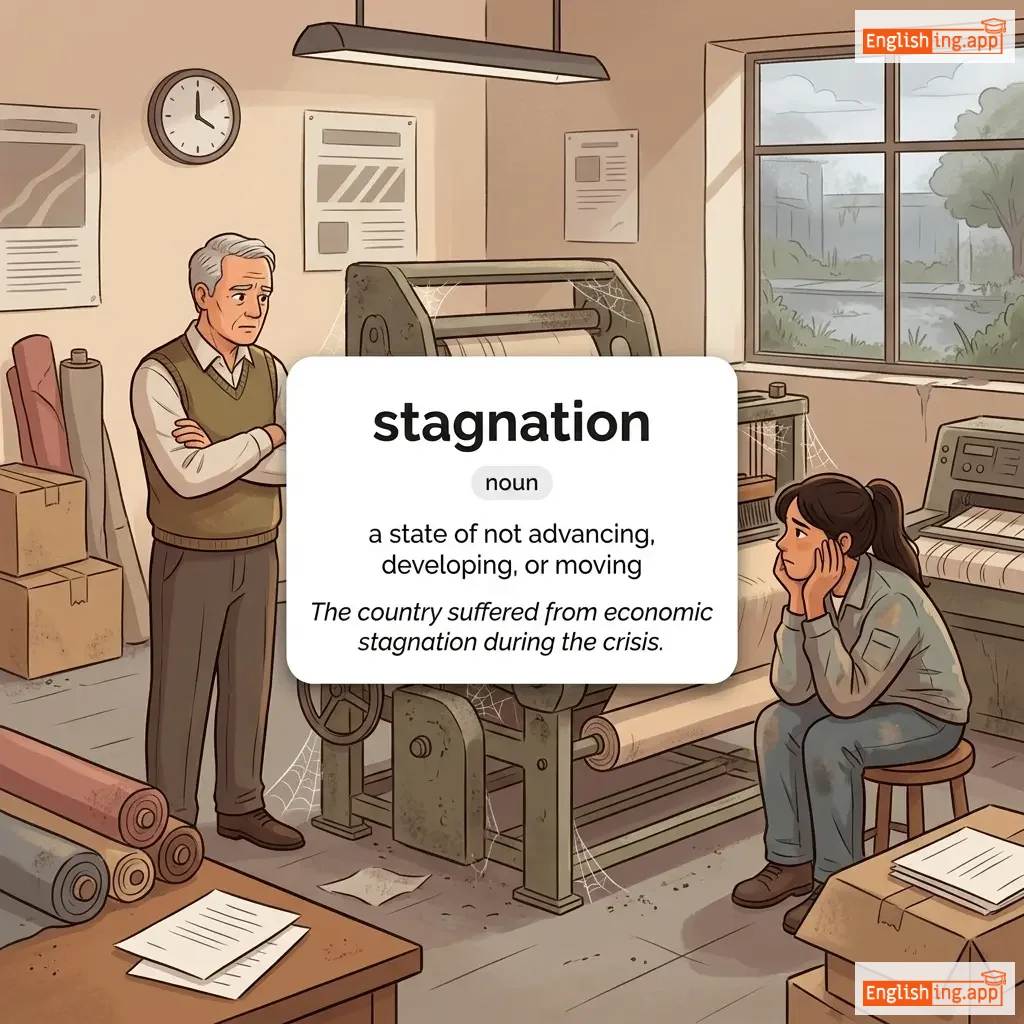
stagnation definition card — visual illustration of the meaning
noun
/stæɡˈneɪ.ʃən/
estancamiento (estancamiento)

a state of not advancing, developing, or moving

"The country suffered from economic stagnation during the crisis."

"El país sufrió de estancamiento económico durante la crisis." (El pais sufrio de estancamiento economico durante la crisis.)
adjective
/ˈsteɪ.dʒi/
excesivamente teatral (excesivamente teatral)

Overly theatrical, artificial, or exaggerated in manner or style.

"Her performance felt stagy and unnatural."

"Su actuación se sintió excesivamente teatral y antinatural." (Su actuacion se sintio excesivamente teatral y antinatural.)
adjective
/steɪd/
serio, respetable (serio, respetable)

Serious, respectable, and unadventurous.

"He came from a staid family background."

"Él vino de una familia seria." (El vino de una familia seria.)
verb
/steɪn/
mancha (mancha)

to mark or discolor something permanently; a spot or mark left behind

"The coffee spilled and stained the tablecloth."

"El café se derramó y manchó el mantel." (El cafe se derramo y mancho el mantel.)
noun
/stɛə/
escalón (escalon)

a step or set of steps leading from one level to another

"He tripped on the stair and fell down."

"Se tropezó con el escalón y cayó." (Se tropezó con el escalón y cayó.)
noun, verb
/steɪk/
participación, riesgo (participacion, riesgo)

A share or interest in a business or venture; to risk or support something of value.

"He has a major stake in the new company."

"Él tiene una participación importante en la nueva empresa." (El tiene una participacion importante en la nueva empresa.)
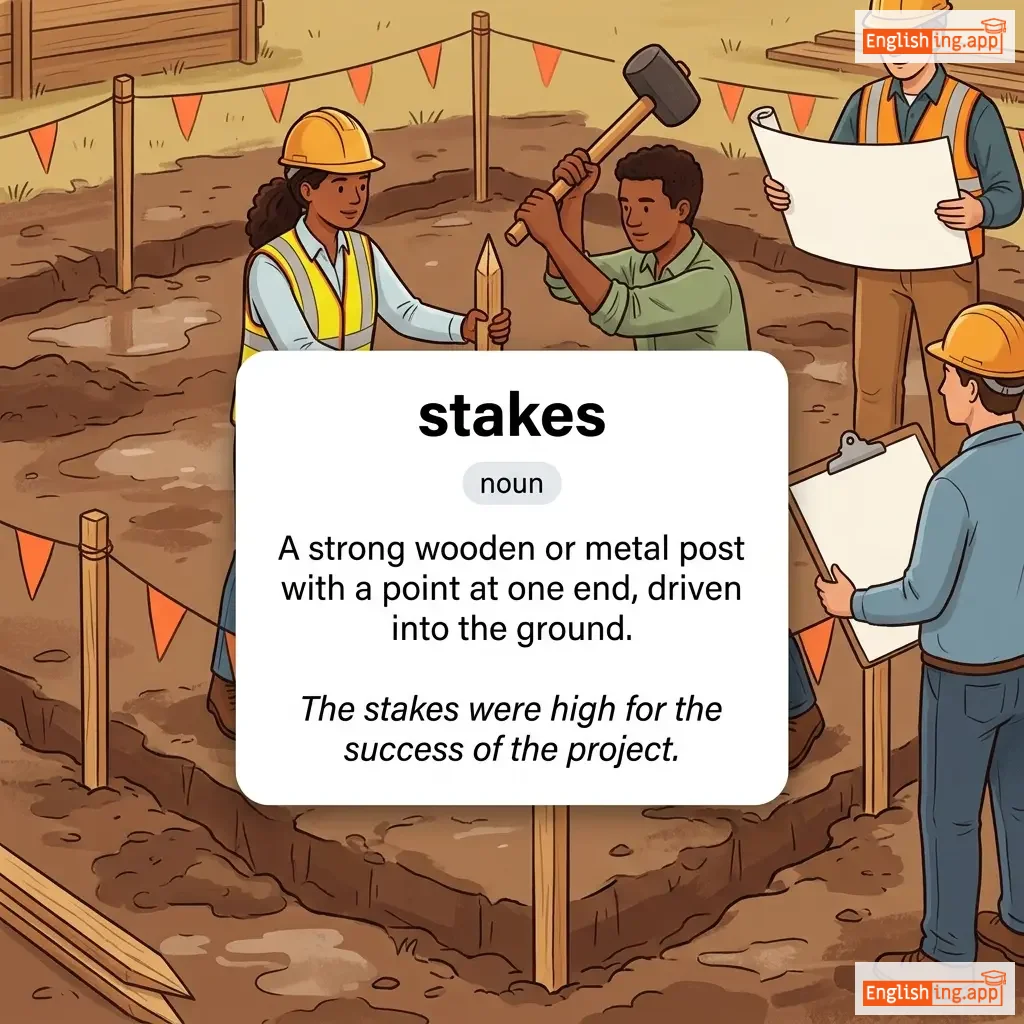
stakes definition card — visual illustration of the meaning
noun
steɪks
apuesta (apuesta)

A strong wooden or metal post with a point at one end, driven into the ground.

"The stakes were high for the success of the project."

"Las apuestas eran altas para el éxito del proyecto." (Las apuestas eran altas para el éxito del proyecto.)
adjective
/steɪl/
rancio; viejo; sin frescura (esteyl)

no longer fresh; lacking originality or novelty

"The bread became stale after sitting out for three days."

"El pan se volvió rancio después de estar fuera durante tres días." (El pan se volvió rancio después de estar fuera durante tres días.)
noun
/ˈsteɪl.meɪt/
empate (empate)

A situation in which no progress can be made or no party can win.

"Negotiations ended in a stalemate."

"Las negociaciones terminaron en un empate." (Las negociaciones terminaron en un empate.)
verb, noun
/stɔːl/
detener, puesto pequeño (detener, puesto pequeno)

to stop or cause to stop temporarily; a small shop or stand

"The car stalled on the way to the office."

"El coche se detuvo en el camino hacia la oficina." (El coche se detuvo en el camino hacia la oficina.)
noun
/ˈstæl.i.ən/
caballo macho para cría (caballo macho para cría)

An adult male horse that is not castrated, often used for breeding.

"The farm owns a powerful stallion for breeding purposes."

"La granja posee un caballo macho poderoso para fines de cría." (La granja posee un caballo macho poderoso para fines de cría.)
adjective
/ˈstɔːlwərt/
firme, leal (firme, leal)

Loyal, reliable, and hardworking; strongly built or sturdy.

"She has always been a stalwart supporter of the community."

"Ella siempre ha sido una firme defensora de la comunidad." (Ella siempre ha sido una firme defensora de la comunidad.)
noun
/ˈstæmɪnə/
resistencia (resistencia)

The physical or mental strength to sustain prolonged effort or activity.

"Marathon runners need great stamina to finish the race."

"Los corredores de maratón necesitan gran resistencia para terminar la carrera." (Los corredores de maraton necesitan gran resistencia para terminar la carrera.)
verb
/ˈstæmər/
tartamudear (tartamudear)

To speak with sudden involuntary pauses and a tendency to repeat the initial letters of words.

"The nervous student began to stammer during his speech."

"El estudiante nervioso comenzó a tartamudear durante su discurso." (El estudiante nervioso comenzó a tartamudear durante su discurso.)
verb
/stæmp/
estampar / pisotear (estampar / pisotear)

To bring down (one's foot) heavily on the ground; to imprint a mark or seal.

"She stamped her foot in frustration."

"Ella estampó su pie por frustración." (Ella estampó su pie por frustración.)
noun/verb
/stæmˈpiːd/
estampida (estampida)

A sudden, uncontrolled rush of people or animals; to cause a mass movement.

"The loud noise caused a stampede of the crowd."

"El fuerte ruido causó una estampida de la multitud." (El fuerte ruido causó una estampida de la multitud.)