Vocabularios

Descubra, aprenda y domine el vocabulario en inglés

adjective
/ˈʃɪft.ləs/
perezoso (perezoso)

Lacking ambition or the ability to accomplish anything; lazy and unmotivated.

"He was seen as a shiftless young man with no goals."

"Se le vio como un joven perezoso sin metas." (Se le vio como un joven perezoso sin metas.)
verb
/ˈʃɪmər/
brillar tenuemente (brillar tenuemente)

To shine with a soft, wavering light.

"The lake shimmered under the moonlight."

"El lago brillaba bajo la luz de la luna." (El lago brillaba bajo la luz de la luna.)
verb
/ʃaɪn/
brillar (brillar)

to give out a bright light or glow

"The sun will shine brightly tomorrow."

"El sol brillará intensamente mañana." (El sol brillará intensamente mañana.)
adjective
/ˈʃaɪ.ni/
brillante; reluciente; (brillante; reluciente;)

reflecting light; bright and polished; glossy

"The shiny new car caught everyone's attention."

"El coche nuevo brillante llamó la atención de todos." (El coche nuevo brillante llamó la atención de todos.)
noun
/ʃɪp/
barco (barco)

a large boat used for travel or transporting goods across water

"The ship set sail across the ocean."

"El barco zarpó a través del océano." (El barco zarpo a través del oceano.)
noun
/ˈʃɪpɪŋ/
transporte (transporte)

the process of transporting goods

"The shipping of the products was delayed due to weather conditions."

"El transporte de los productos se retrasó debido a las condiciones climáticas." (El transporte de los productos se retrasó debido a las condiciones climáticas.)
adjective
/ˈʃɪpˌʃeɪp/
ordenado (ordenado)

Neat, tidy, and in good order.

"She kept her office shipshape at all times."

"Ella mantenía su oficina ordenada todo el tiempo." (Ella mantenía su oficina ordenada todo el tiempo.)
verb
/ʃɜːrk/
evitar (evitar)

to avoid or neglect a duty or responsibility

"He always tries to shirk his responsibilities at work."

"Él siempre trata de evitar sus responsabilidades en el trabajo." (El siempre trata de evitar sus responsabilidades en el trabajo.)
noun
/ʃɜːrt/
camisa (camisa)

a piece of clothing worn on the upper body, usually with sleeves and a collar

"He wore a blue shirt to the party."

"Él llevó una camisa azul a la fiesta." (Él llevó una camisa azul a la fiesta.)
noun
/ʃɪt/
caca (caca)

a vulgar term for feces or excrement

"The dog made a mess by leaving its shit on the floor."

"El perro hizo un desorden al dejar su caca en el suelo." (El perro hizo un desorden al dejar su caca en el suelo.)
noun
/ʃoʊl/
cardumen (cardumen)

a large group of fish swimming together; a shallow place in water

"We saw a shoal of fish near the coast."

"Vimos un cardumen de peces cerca de la costa." (Vimos un cardumen de peces cerca de la costa.)
noun
/ʃɒk/
shock (shock)

a sudden upsetting or surprising event or experience

"The news of his sudden departure was a shock to everyone."

"La noticia de su repentina partida fue un shock para todos." (La noticia de su repentina partida fue un shock para todos.)
adjective
/ˈʃɒkɪŋ/
sorprendente (sorprendente)

causing surprise or disbelief; startling

"The news of the accident was shocking to everyone."

"La noticia del accidente fue sorprendente para todos." (La noticia del accidente fue sorprendente para todos.)
adjective
/ˈʃɑːdi/
de mala calidad (de mala calidad)

badly made or done; of poor quality

"The contractor did a shoddy job on the repairs."

"El contratista hizo un trabajo de mala calidad en las reparaciones." (El contratista hizo un trabajo de mala calidad en las reparaciones.)
noun
/ʃuː/
zapato (zapato)

a covering for the foot, typically made of leather, with a sturdy sole and heel

"She bought a new pair of shoes for the wedding."

"Ella compró un par de zapatos nuevos para la boda." (Ella compro un par de zapatos nuevos para la boda.)
verb
/ʃuːt/
disparar / tomar una foto (disparar / tomar una foto)

to fire a bullet or arrow from a weapon; to take a photograph or film

"He learned how to shoot a bow and arrow."

"Él aprendió a disparar un arco y flecha." (Él aprendió a disparar un arco y flecha.)
noun
/ˈʃuːtɪŋ/
rodaje (rodaje)

the action of shooting a gun, camera, or similar device

"The shooting of the movie took several months."

"El rodaje de la película tomó varios meses." (El rodaje de la película tomó varios meses.)
noun
/ʃɒp/
tienda (tienda)

a place where goods are sold to customers

"I need to go to the shop to buy some groceries."

"Necesito ir a la tienda para comprar algunos víveres." (Necesito ir a la tienda para comprar algunos víveres.)
noun
/ˈʃɒpɪŋ/
compras (compras)

the activity of going to shops to buy things

"She spent the afternoon shopping for clothes."

"Pasó la tarde de compras para ropa." (Pasó la tarde de compras para ropa.)
adjective
/ˈʃɑːpwɔːrn/
gastado / viejo (gastado / viejo)

worn or faded from being displayed in a shop; no longer fresh or original

"The shopworn shoes were sold at a discount."

"Los zapatos shopworn se vendieron con descuento." (Los zapatos shopworn se vendieron con descuento.)
noun
/ʃɔːr/
orilla (orilla)

the land along the edge of a sea, lake, or other large body of water

"We walked along the shore of the lake."

"Caminamos a lo largo de la orilla del lago." (Caminamos a lo largo de la orilla del lago.)
adjective
/ʃɔːrt/
corto (corto)

having little length or duration

"She wore a short dress for the party."

"Ella llevaba un vestido corto para la fiesta." (Ella llevaba un vestido corto para la fiesta.)
adjective
/ˈʃɔːrt ˌsaɪtɪd/
miopía; visión a corto plazo (miopia; vision a corto plazo)

lacking foresight or consideration for the future; myopic

"His short-sighted decision to quit school early affected his career prospects."

"Su decisión miope de abandonar la escuela temprano afectó sus perspectivas profesionales." (su desicion miope de abandonar la escuela temprano afecto sus perspectivas profesionales.)
adjective
/ˈʃɔːrt ˌtempərd/
irritable; fácilmente enfadado (irritable; facilmente enfadado)

quick to lose one's temper; easily angered

"She became short-tempered when the traffic made her late for the meeting."

"Ella se volvió irritable cuando el tráfico la hizo llegar tarde a la reunión." (Ella se volvio irritable cuando el trafico la hizo llegar tarde a la reunion.)
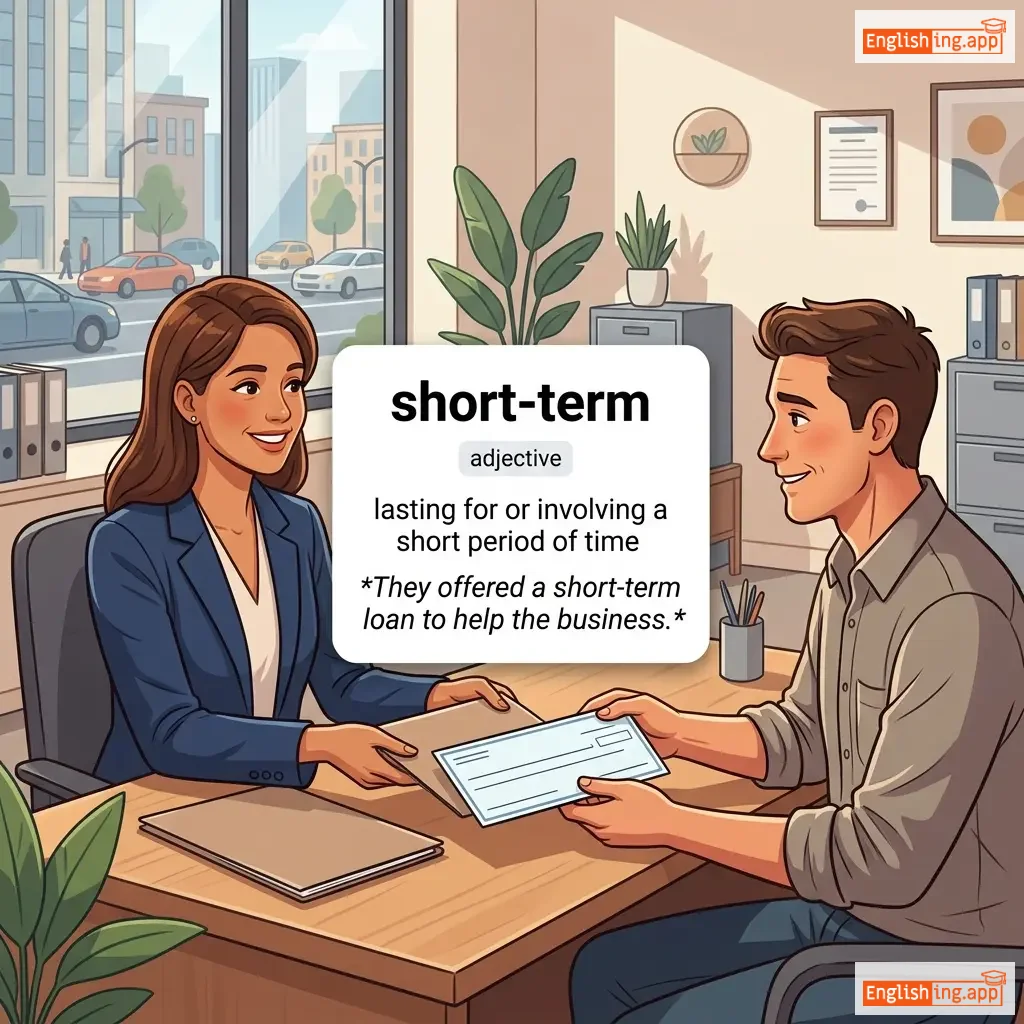
short-term definition card — visual illustration of the meaning
adjective
/ˈʃɔːrt tɜːrm/
a corto plazo (a corto plazo)

lasting for or involving a short period of time

"They offered a short-term loan to help the business."

"Ofrecieron un préstamo a corto plazo para ayudar al negocio." (Ofrecieron un préstamo a corto plazo para ayudar al negocio.)
noun
/ˈʃɔːrtɪdʒ/
escasez (escasez)

a state or situation in which something needed cannot be obtained in sufficient amounts

"There is a shortage of skilled workers in the industry."

"Hay escasez de trabajadores cualificados en la industria." (Hay escasez de trabajadores cualificados en la industria.)
noun
/ˈʃɔːrt.kʌm.ɪŋ/
deficiencia; falta; defecto (deficiencia; falta; defecto)

a fault or failure to meet a certain standard; a deficiency

"Despite his many talents, he has some shortcomings."

"A pesar de sus muchos talentos, tiene algunas deficiencias." (A pesar de sus muchos talentos, tiene algunas deficiencias.)
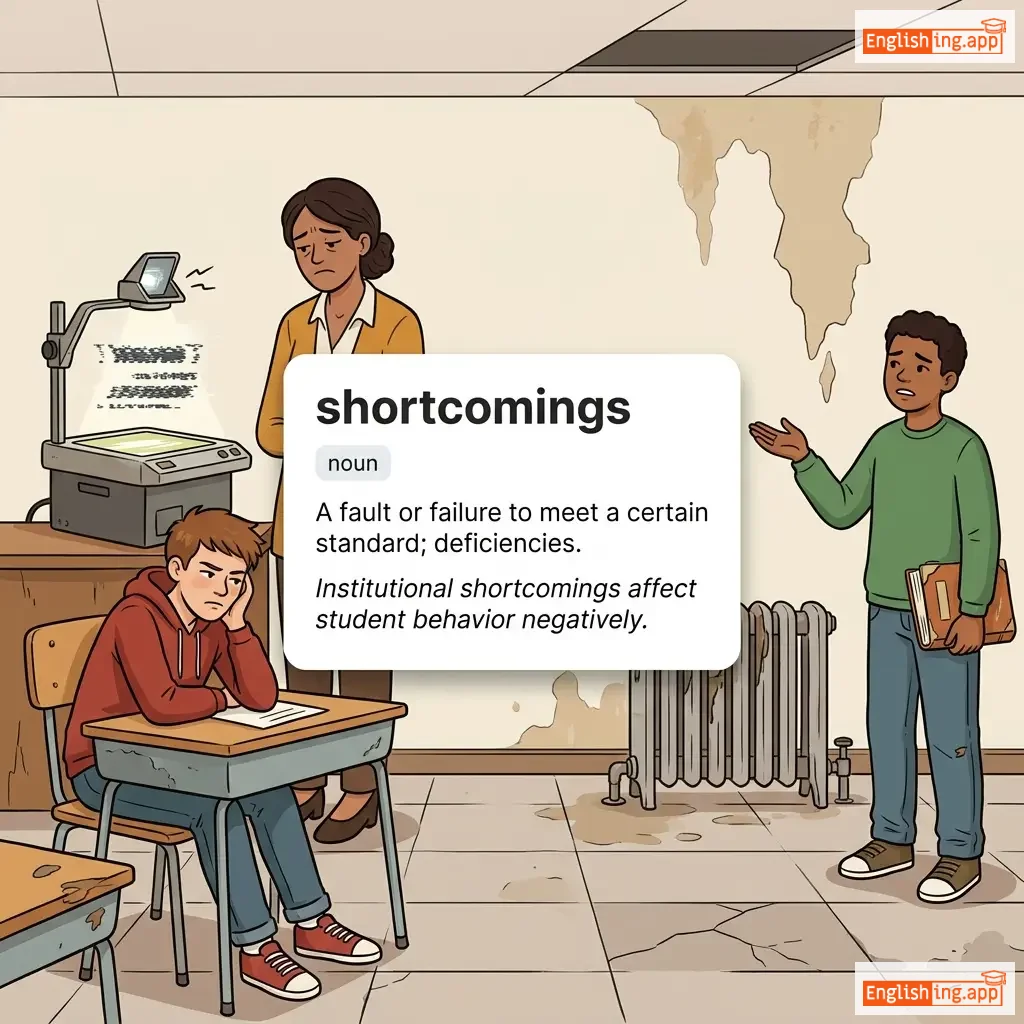
shortcomings definition card — visual illustration of the meaning
noun
ˈʃɔːtkʌmɪŋz
deficiencias (deficiencias)

A fault or failure to meet a certain standard; deficiencies.

"Institutional shortcomings affect student behavior negatively."

"Las deficiencias institucionales afectan negativamente el comportamiento de los estudiantes." (Las deficiencias institucionales afectan negativamente el comportamiento de los estudiantes.)
verb
/ˈʃɔːrtn/
acortar (acortar)

To make something shorter in length, duration, or extent

"She decided to shorten her speech to fit the time limit."

"Decidió acortar su discurso para ajustarse al límite de tiempo." (Decidio acortar su discurso para ajustarse al limite de tiempo.)
adverb
/ˈʃɔːrtli/
pronto (pronto)

in a short time; soon

"He will be back shortly."

"Él regresará pronto." (Él regresará pronto.)
noun
/ʃɔːrts/
pantalones cortos (pantalones cortos)

a short garment worn on the lower half of the body that covers each leg separately, usually above the knees.

"He wore a pair of blue shorts to the beach."

"Él usó un par de pantalones cortos azules en la playa." (Él usó un par de pantalones cortos azules en la playa.)
noun, verb
/ʃɒt/
tiro (tiro)

a single attempt to hit something, usually with a weapon or a ball

"He took a shot at the goal."

"Él tomó un tiro hacia la portería." (Él tomó un tiro hacia la portería.)
modal verb
/ʃʊd/
debería (deberia)

used to indicate obligation or duty

"You should study for your exams."

"Deberías estudiar para tus exámenes." (Deberias estudiar para tus examenes.)
noun
/ˈʃoʊldər/
hombro (hombro)

the upper joint of the human arm and the part of the body to which it is attached

"He hurt his shoulder while lifting weights."

"Se lastimó el hombro mientras levantaba pesas." (Se lastimo el hombro mientras levantaba pesas.)
verb
/ʃaʊt/
gritar (gritar)

to say something very loudly

"He shouted at the top of his lungs to get their attention."

"Él gritó tan fuerte como pudo para captar su atención." (El grito tan fuerte como pudo para captar su atencion.)
verb
/ʃʌv/
empujar (empujar)

to push someone or something roughly

"He shoved the box into the corner."

"Él empujó la caja hacia la esquina." (Él empujó la caja hacia la esquina.)
noun
/ˈʃʌv.əl/
pala (pala)

a tool with a broad flat blade and long handle used for digging and moving earth, snow, or other materials

"He grabbed a shovel to clear the snow from the driveway."

"Él agarró una pala para limpiar la nieve del camino de entrada." (El agarro una pala para limpiar la nieve del camino de entrada.)
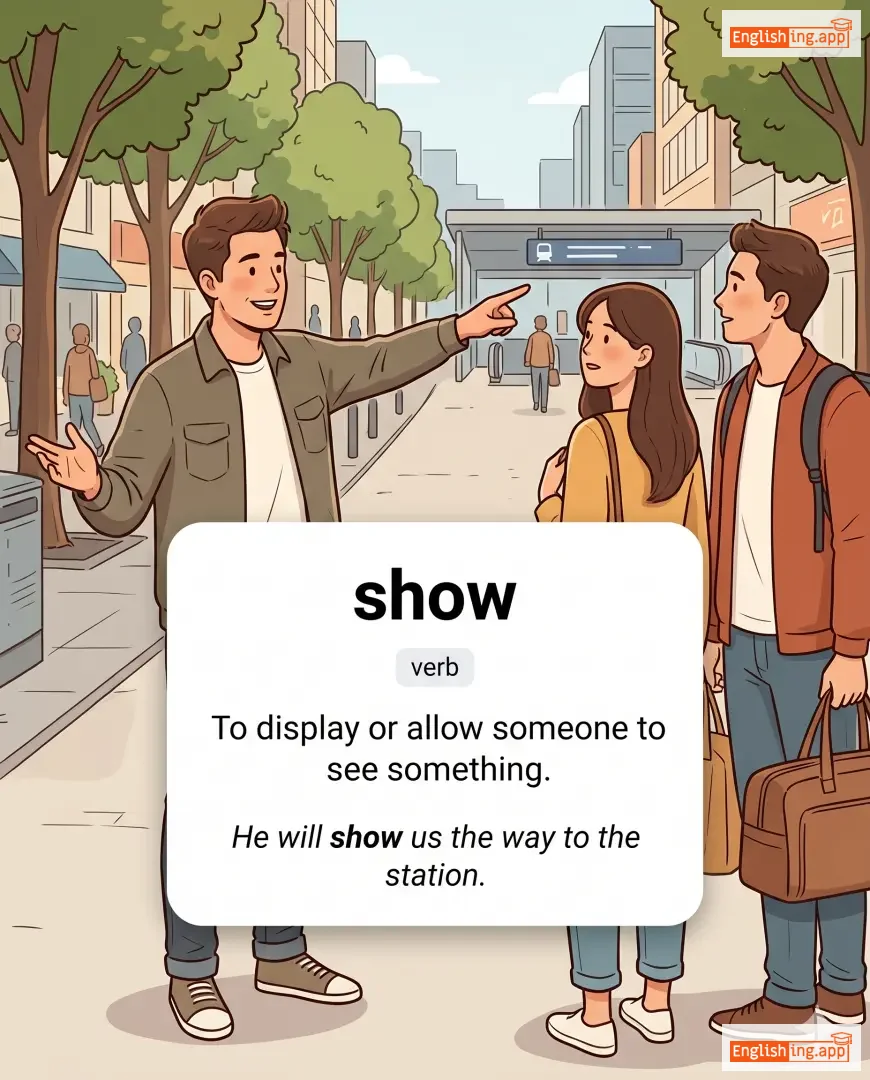
show definition card — visual illustration of the meaning
verb
/ʃoʊ/
mostrar (mostrar)

To display or allow someone to see something.

"He will show us the way to the station."

"Él nos mostrará el camino a la estación." (El nos mostrara el camino a la estacion.)
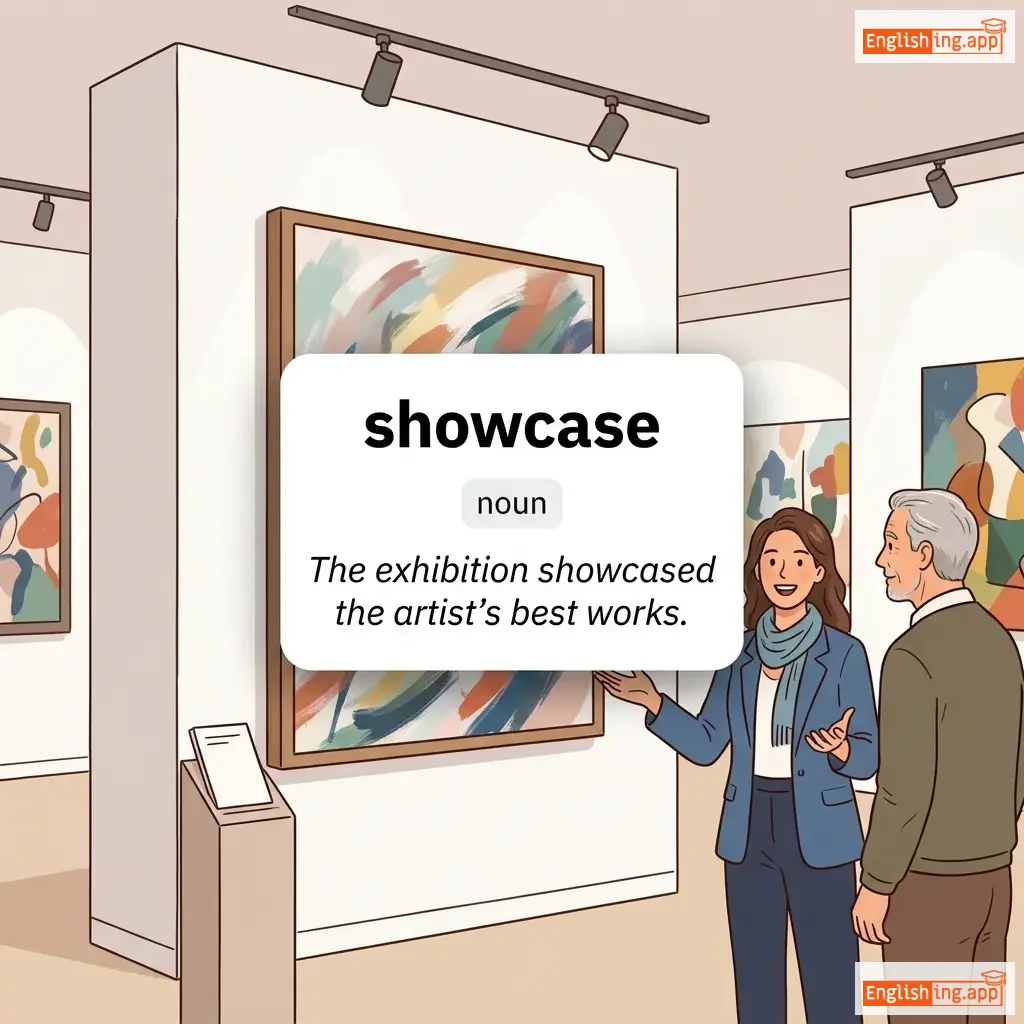
showcase definition card — visual illustration of the meaning
noun
/ˈʃəʊ.keɪs/
vitrina, exhibir algo de manera atractiva o favorable (vitrina, exhibir algo de manera atractiva o favorable)

A display case or exhibition; to present something in an attractive or favorable way.

"The exhibition showcased the artist's best works."

"La exposición mostró las mejores obras del artista." (La exposicion mostro las mejores obras del artista.)
noun
/ˈʃaʊər/
ducha (shower)

a brief fall of rain or snow or a device for taking a bath or washing oneself

"After the workout, I took a quick shower to refresh myself."

"Despues del entrenamiento, me di una ducha rapida para refrescarme." (Despues del entrenamiento, me di una ducha rapida para refrescarme.)
/ʃrɛd/
triturar (triturar)

to tear or cut something into small pieces

"She shredded the old documents before throwing them away."

"Ella trituró los viejos documentos antes de tirarlos." (Ella trituró los viejos documentos antes de tirarlos.)
noun
/ʃruː/
mujer irritable / animal parecido a un ratón (mujer irritable / animal parecido a un raton)

a small mouse-like animal; also a woman with a bad temper

"The play describes a strong-willed woman as a shrew."

"La obra describe a una mujer de voluntad fuerte como una mujer irritable." (La obra describe a una mujer de voluntad fuerte como una mujer irritable.)
adjective
/ʃruːd/
astuto (astuto)

having sharp judgment and practical intelligence

"She made a shrewd investment in real estate."

"Ella hizo una astuta inversión en bienes raíces." (Ella hizo una astuta inversion en bienes raices.)
verb
/ʃriːk/
gritar (gritar)

to make a loud, high-pitched cry

"She shrieked when she saw the spider."

"Ella gritó cuando vio la araña." (Ella gritó cuando vio la araña.)
adjective
/ʃrɪl/
sonido agudo (sonido agudo)

High-pitched and piercing in sound.

"The shrill whistle startled everyone in the room."

"El silbido agudo sorprendió a todos en la sala." (El silbido agudo sorprendió a todos en la sala.)
noun
/ʃrɪmp/
camarón (camarón)

a small marine crustacean that is often used as food.

"We ordered grilled shrimp for dinner."

"Pedimos camarones a la parrilla para la cena." (Pedimos camarones a la parrilla para la cena.)
noun
/ʃraɪn/
santuario (santuario)

A place regarded as holy, often associated with a saint or deity.

"Thousands of pilgrims visit the shrine each year."

"Miles de peregrinos visitan el santuario cada año." (Miles de peregrinos visitan el santuario cada año.)
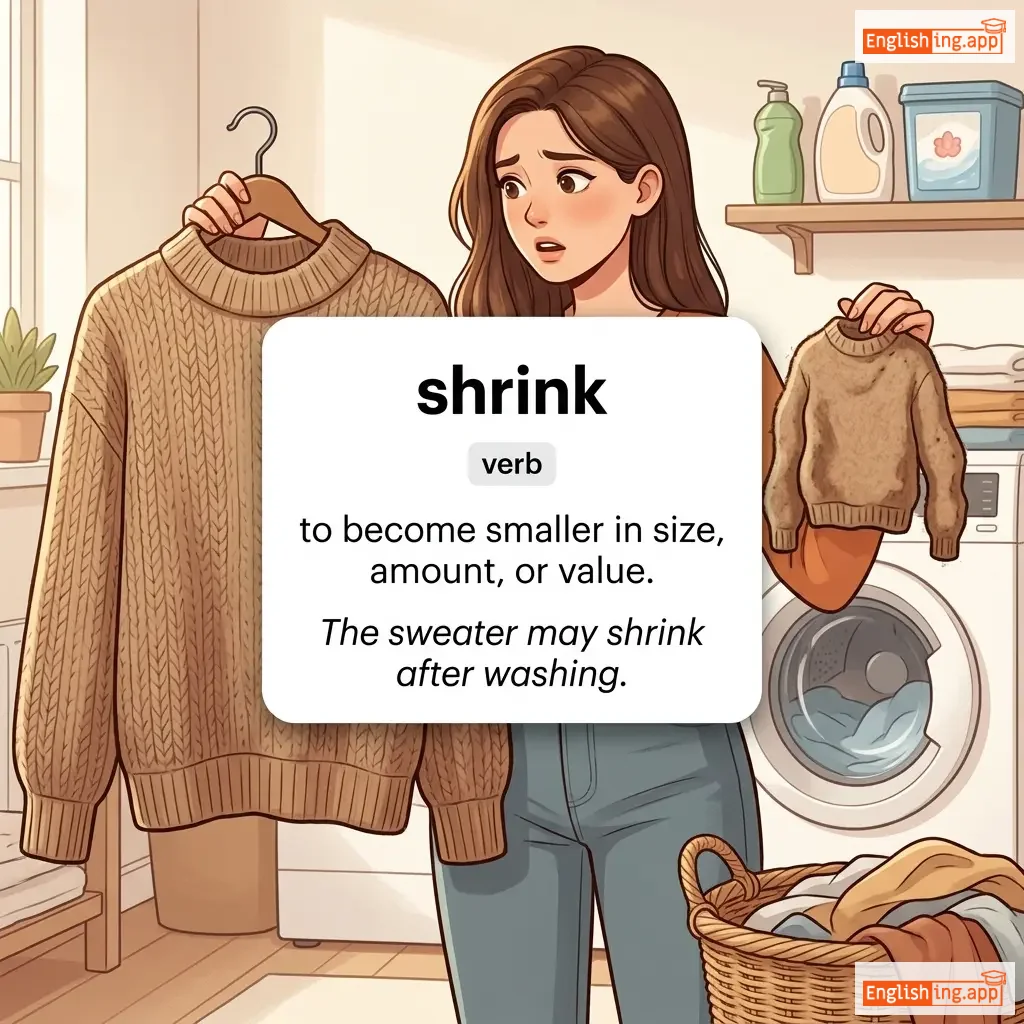
shrink definition card — visual illustration of the meaning
verb
/ʃrɪŋk/
felicidad (felicidad)

to become smaller in size, amount, or value.

"The sweater may shrink after washing."

"No pudo ocultar su felicidad cuando recibió el premio." (No pudo ocultar su felicidad cuando recibió el premio.)
noun
/ˈʃrɪŋkɪdʒ/
encogimiento (encogimiento)

The process of becoming smaller in size, amount, or value.

"The company reported a shrinkage in profits this quarter."

"La empresa reportó un encogimiento en las ganancias de este trimestre." (La empresa reporto un encogimiento en las ganancias de este trimestre.)
verb
/ˈʃrɪvəl/
arrugar (arrugar)

To become dry, wrinkled, and smaller due to lack of moisture.

"The flowers shriveled under the hot sun."

"Las flores se arrugaron bajo el sol caliente." (Las flores se arrugaron bajo el sol caliente.)