Vocabularios

Descubra, aprenda y domine el vocabulario en inglés

adjective
/rɪˈɡret.ə.bəl/
lamentable; desafortunado; deplorable (lamentable; desafortunado; deplorable)

causing or deserving regret; unfortunate; deplorable

"It is regrettable that so many talented people left the company."

"Es lamentable que tantas personas talentosas hayan dejado la empresa." (Es lamentable que tantas personas talentosas hayan dejado la empresa.)
adjective
/ˈrɛɡjələr/
regular (regular)

Happening at fixed intervals; usual or normal in pattern or quality

"He is a regular visitor to the library."

"Él es un visitante regular de la biblioteca." (El es un visitante regular de la biblioteca.)
noun
/ˌreɡ.jʊˈlær.ɪ.ti/
regularidad (regularidad)

the quality of being regular; occurring at fixed intervals or in a consistent pattern

"The regularity of his exercise routine helped him stay healthy."

"La regularidad de su rutina de ejercicios lo ayudó a mantenerse saludable." (La regularidad de su rutina de ejercicios lo ayudó a mantenerse saludable.)
adverb
/ˈrɛɡjələrli/
regularmente (regularmente)

at regular intervals; in a regular manner

"She exercises regularly to stay healthy."

"Ella hace ejercicio regularmente para mantenerse saludable." (Ella hace ejercicio regularmente para mantenerse saludable.)
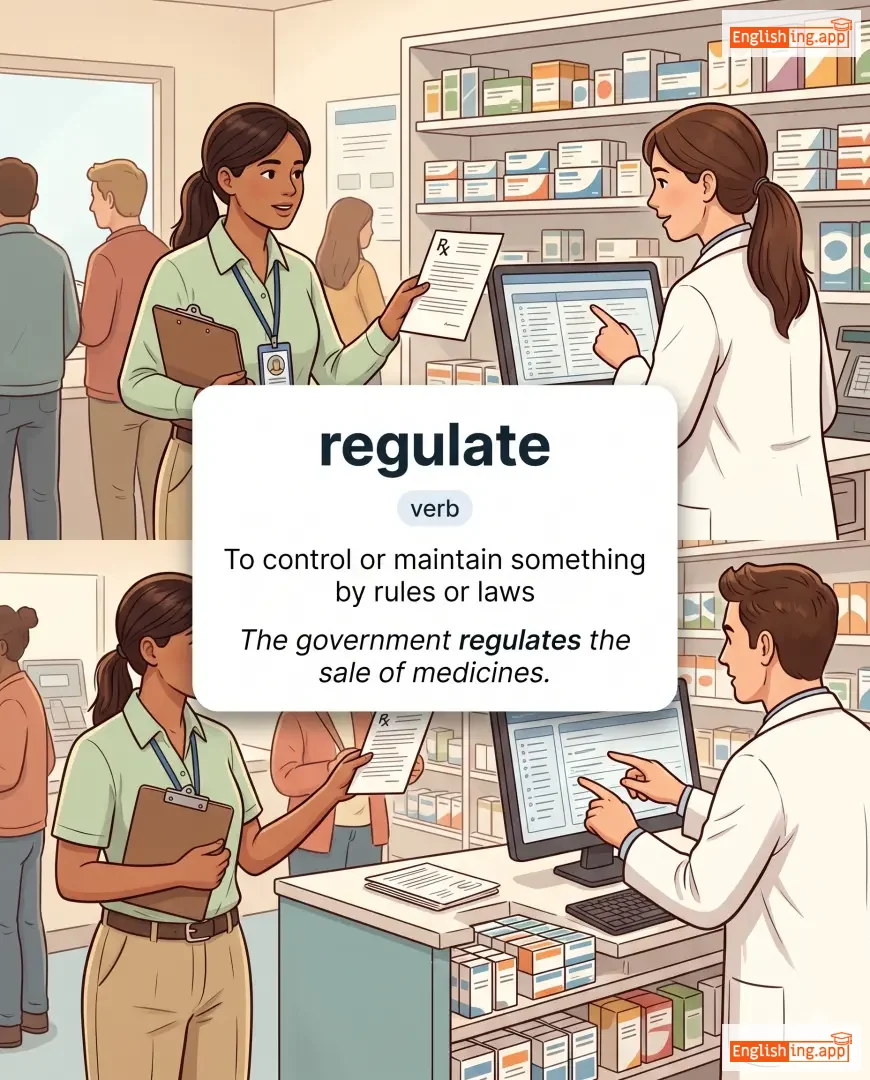
regulate definition card — visual illustration of the meaning
verb
/ˈrɛɡjʊˌleɪt/
regular (regular)

To control or maintain something by rules or laws

"The government regulates the sale of medicines."

"El gobierno regula la venta de medicamentos." (El gobierno regula la venta de medicamentos.)
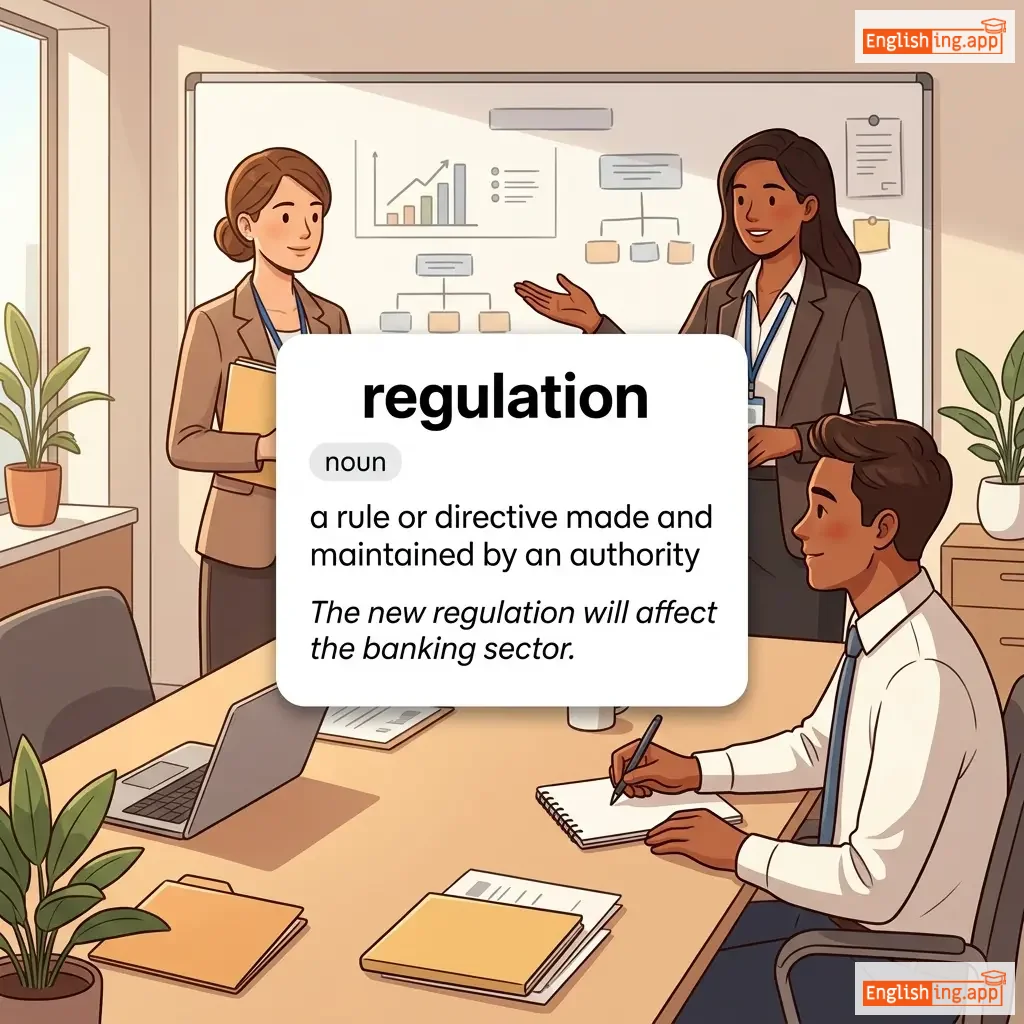
regulation definition card — visual illustration of the meaning
noun
/ˌrɛɡjuˈleɪʃən/
regulación (regulacion)

a rule or directive made and maintained by an authority

"The new regulation will affect the banking sector."

"La nueva regulación afectará al sector bancario." (La nueva regulacion afectara al sector bancario.)
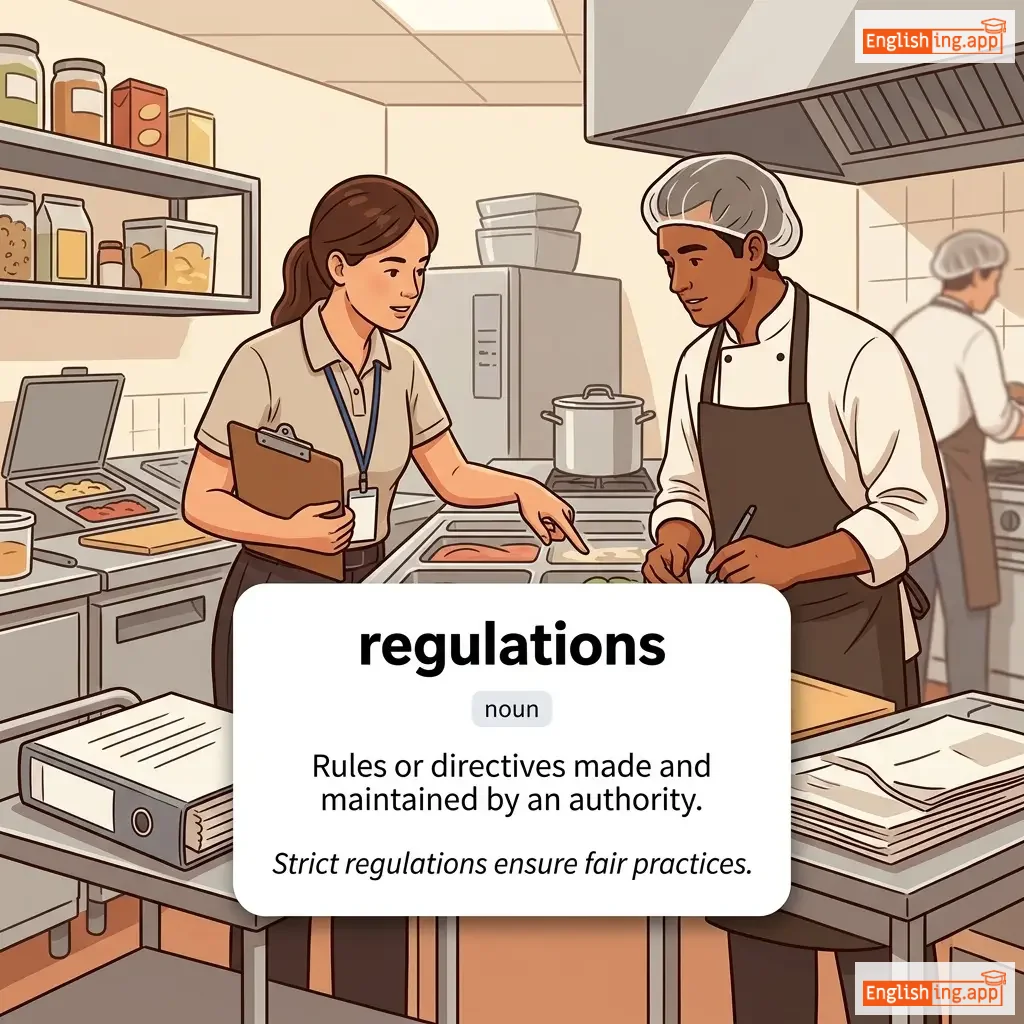
regulations definition card — visual illustration of the meaning
noun
/ˌreɡ.jʊˈleɪ.ʃənz/
regulaciones (regulaciones)

Rules or directives made and maintained by an authority.

"Strict regulations ensure fair practices."

"Las estrictas regulaciones aseguran prácticas justas." (Las estrictas regulaciones aseguran prácticas justas.)
noun
/ˈrɛɡjəleɪtər/
regulador (regulador)

a person or device that controls or maintains the operation of a system

"The government appointed a new regulator for the financial sector."

"El gobierno nombró un nuevo regulador para el sector financiero." (El gobierno nombró un nuevo regulador para el sector financiero.)
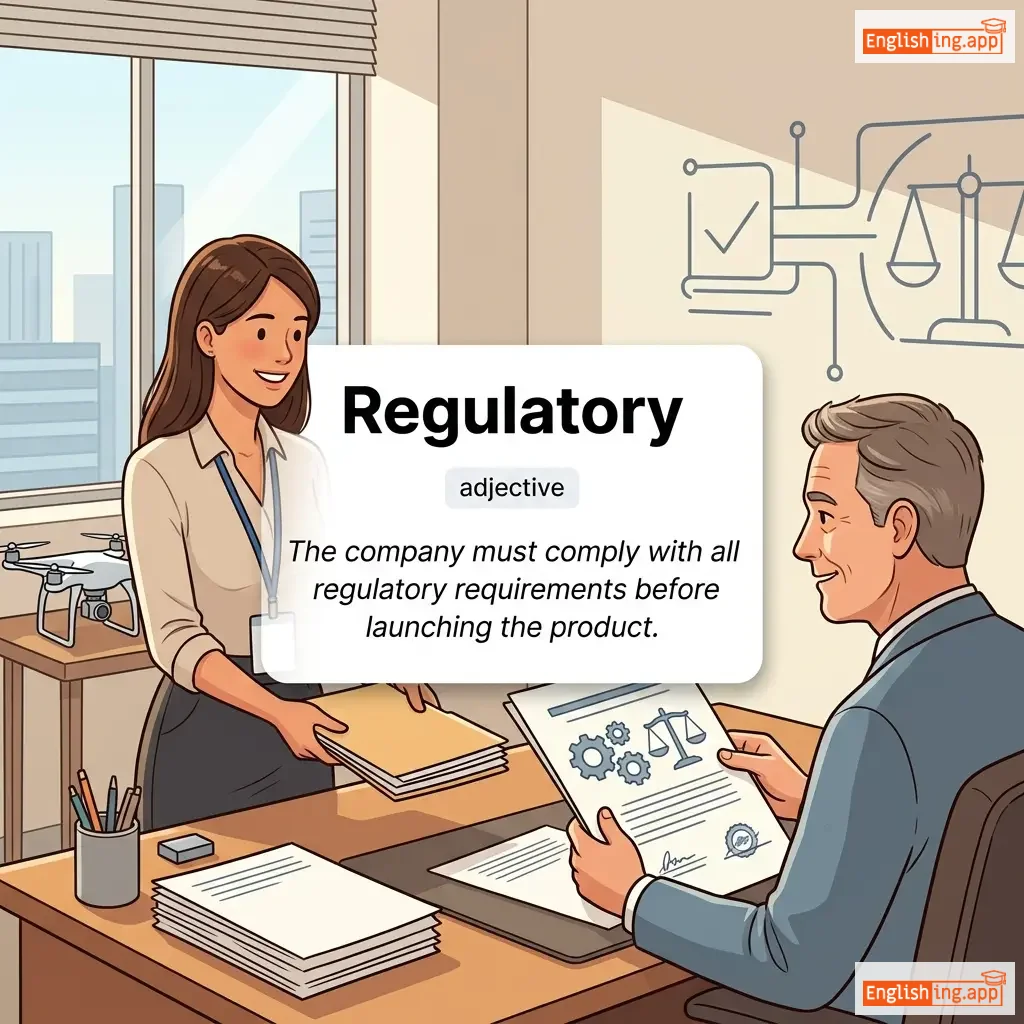
Regulatory definition card — visual illustration of the meaning
adjective
/ˈrɛɡjʊlətɔːri/
regulatorio (regulatorio)

relating to the rules or laws made by an authority to control an activity or process

"The company must comply with all regulatory requirements before launching the product."

"La empresa debe cumplir con todos los requisitos regulatorios antes de lanzar el producto." (La empresa debe cumplir con todos los requisitos regulatorios antes de lanzar el producto.)
verb
/ˌriːhəˈbɪlɪteɪt/
rehabilitar (rehabilitar)

to restore someone to health, normal life, or a good condition after illness, injury, or imprisonment

"The clinic helps rehabilitate injured athletes."

"La clínica ayuda a rehabilitar a los atletas lesionados." (La clínica ayuda a rehabilitar a los atletas lesionados.)
noun
/ˌriːhəˌbɪlɪˈteɪʃən/
felicidad (felicidad)

the process of restoring someone or something to health or normal life through training or therapy

"After the accident, he went through months of rehabilitation to walk again."

"Ella no pudo esconder su felicidad cuando recibió el premio." (Ella no pudo esconder su felicidad cuando recibió el premio.)
noun
/rɪˈhɜːrsəl/
ensayo (ensayo)

a practice or trial performance of a play, music, or other work for later public performance

"The actors had a final rehearsal before the play."

"Los actores tuvieron un ensayo final antes de la obra." (Los actores tuvieron un ensayo final antes de la obra.)
verb, noun
/reɪn/
reinado (reinado)

to rule as a king or queen; the period during which a sovereign rules

"Queen Elizabeth II reigned for many decades."

"La reina Isabel II reinó durante muchas décadas." (La reina Isabel II reinó durante muchas décadas.)
verb
/ˌriːɪmˈbɜːrs/
reembolsar (reembolsar)

to pay back money to someone who has spent it or lost it

"The company reimbursed him for travel expenses."

"La empresa le reembolsó los gastos de viaje." (La empresa le reembolsó los gastos de viaje.)
noun/verb
/reɪn/
rienda / control (rienda / control)

A strap used to control a horse; to control or guide something.

"The rider pulled the rein to stop the horse."

"El jinete tiró de las riendas para detener el caballo." (El jinete tiro de las riendas para detener el caballo.)
noun
/ˈreɪn.dɪər/
reno (reno)

a large deer with branched horns that lives in cold northern areas

"Santa's reindeer pulled his sleigh across the sky."

"El reno de Santa tiró su trineo a través del cielo." (El reno de Santa tiró su trineo a través del cielo)
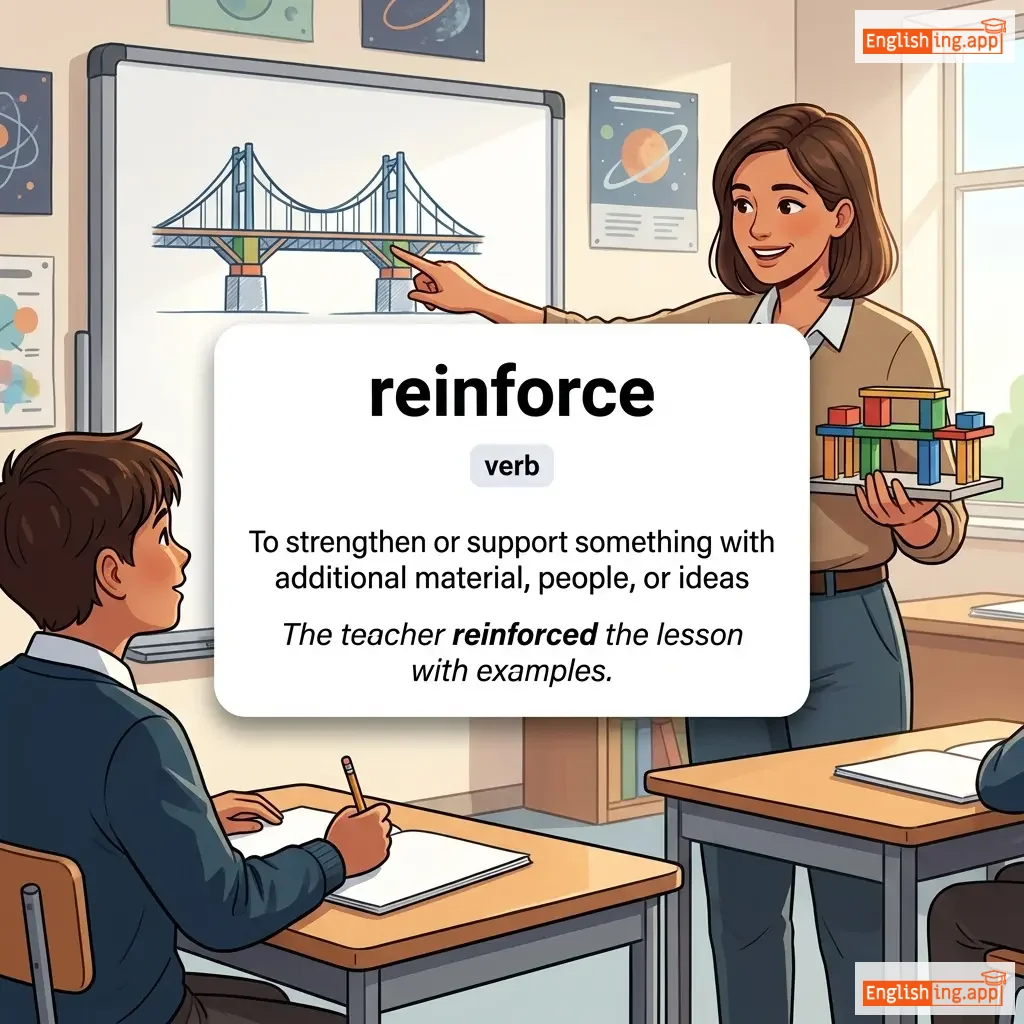
reinforce definition card — visual illustration of the meaning
verb
/ˌriːɪnˈfɔːrs/
reforzar (reforzar)

To strengthen or support something with additional material, people, or ideas

"The teacher reinforced the lesson with examples."

"El maestro reforzó la lección con ejemplos." (El maestro reforzó la lección con ejemplos.)
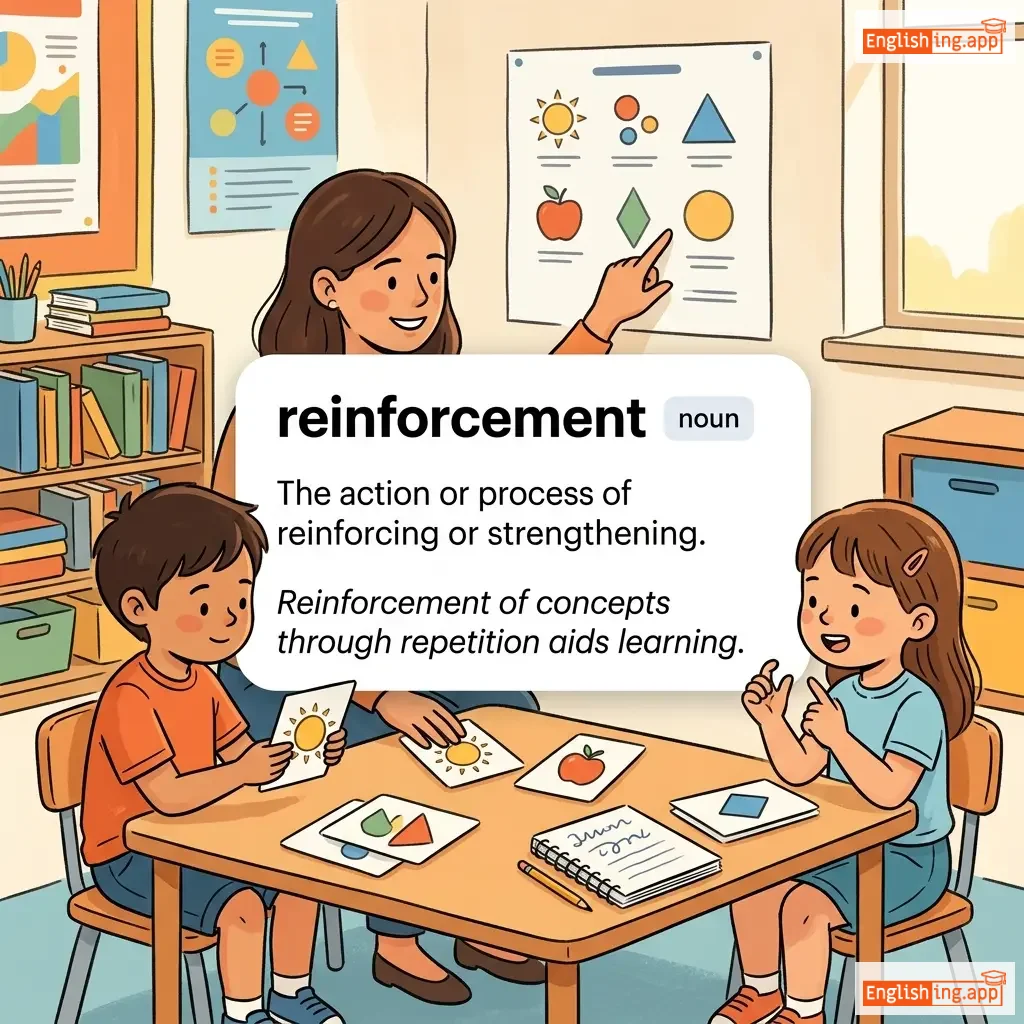
reinforcement definition card — visual illustration of the meaning
noun
ˌriː.ɪnˈfɔːrs.mənt
refuerzo o fortalecimiento (refuerzo o fortalecimiento)

The action or process of reinforcing or strengthening.

"Reinforcement of concepts through repetition aids learning."

"El refuerzo de conceptos a través de la repetición ayuda al aprendizaje." (El refuerzo de conceptos a través de la repetición ayuda al aprendizaje.)
verb
/ˌriːɪnˈsteɪt/
reinstaurar (reinstaurar)

To restore someone or something to their former position or condition.

"The company decided to reinstate the suspended employee."

"La empresa decidió reinstaurar al empleado suspendido." (La empresa decidio reinstaurar al empleado suspendido.)
verb
/ˌriːɪnˈtɪɡreɪt/
reintegrar (reintegrar)

To bring someone or something back into a group or society after being separated.

"The program helps prisoners reintegrate into society."

"El programa ayuda a los prisioneros a reintegrarse en la sociedad." (El programa ayuda a los prisioneros a reintegrarse en la sociedad.)
verb
/riˈɪtəreɪt/
reiterar (reiterar)

To say something again or repeatedly for emphasis or clarity.

"The teacher reiterated the importance of honesty."

"El maestro reiteró la importancia de la honestidad." (El maestro reiteró la importancia de la honestidad.)
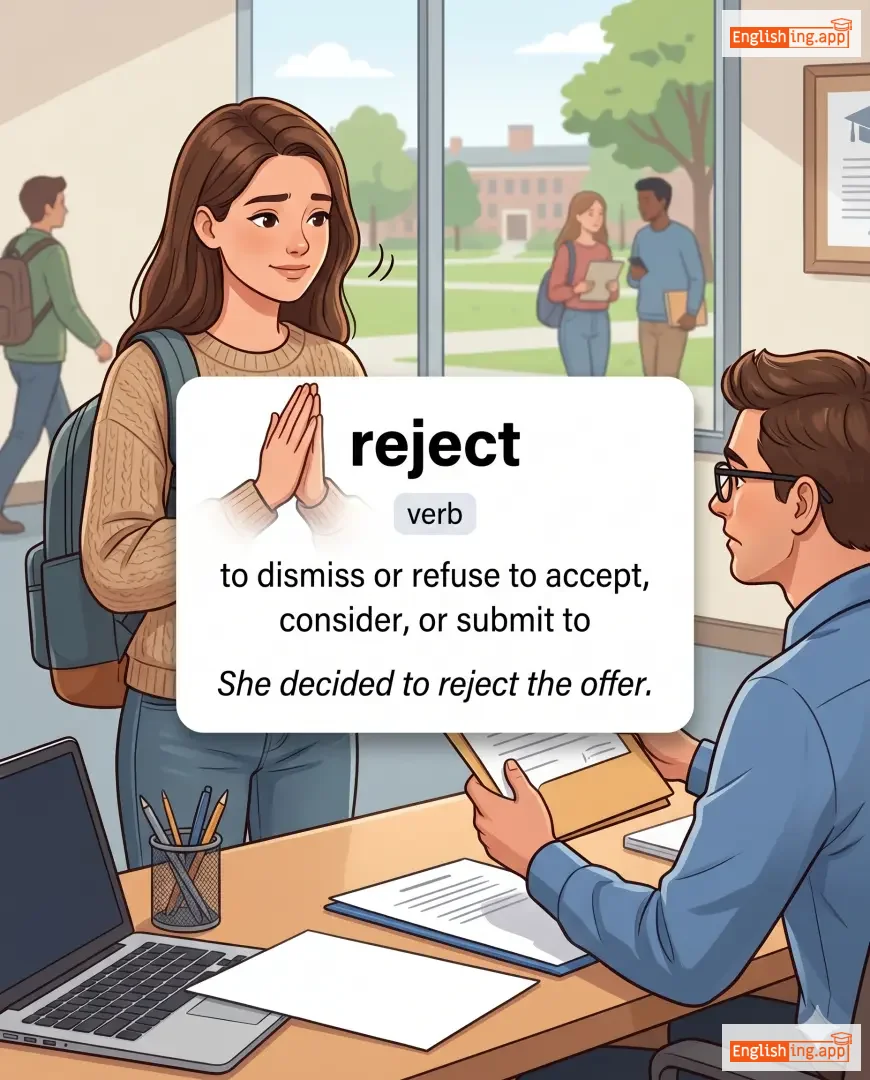
reject definition card — visual illustration of the meaning
verb
/rɪˈdʒɛkt/
rechazar (rejazar)

to dismiss or refuse to accept, consider, or submit to

"She decided to reject the offer."

"Ella decidió rechazar la oferta." (Ella decidió rechazar la oferta.)
noun
/rɪˈdʒɛkʃən/
rechazo (rechazo)

the action of refusing or dismissing something or someone

"Her rejection of the offer surprised everyone."

"Su rechazo a la oferta sorprendió a todos." (Su rechaço a la oferta sorprendió a todos.)
verb
/rɪˈdʒɔɪs/
regocijarse (regocijarse)

To feel or show great joy or delight.

"The fans rejoiced after their team won the championship."

"Los fanáticos se regocijaron después de que su equipo ganara el campeonato." (Los fanaticos se regocijaron despues de que su equipo ganara el campeonato.)
noun
/rɪˈdʒɔɪsɪŋ/
alegría (alegria)

The action of showing great joy or happiness

"There was much rejoicing after the victory."

"Hubo mucha alegría después de la victoria." (Hubo mucha alegria despues de la victoria.)
verb
/riˈdʒɔɪn/
reunirse de nuevo (reunirse de nuevo)

to join again or return to a group, place, or activity

"After a short break, she decided to rejoin the team."

"Después de una breve pausa, decidió reunirse de nuevo con el equipo." (Después de una breve pausa, decidió reunirse de nuevo con el equipo.)
noun
/rɪˈdʒɔɪndər/
réplica (replika)

a quick or witty reply; a response to a remark or argument

"His sharp rejoinder silenced the crowd."

"Su aguda réplica silenció a la multitud." (su aguda replica silencio a la multitud.)
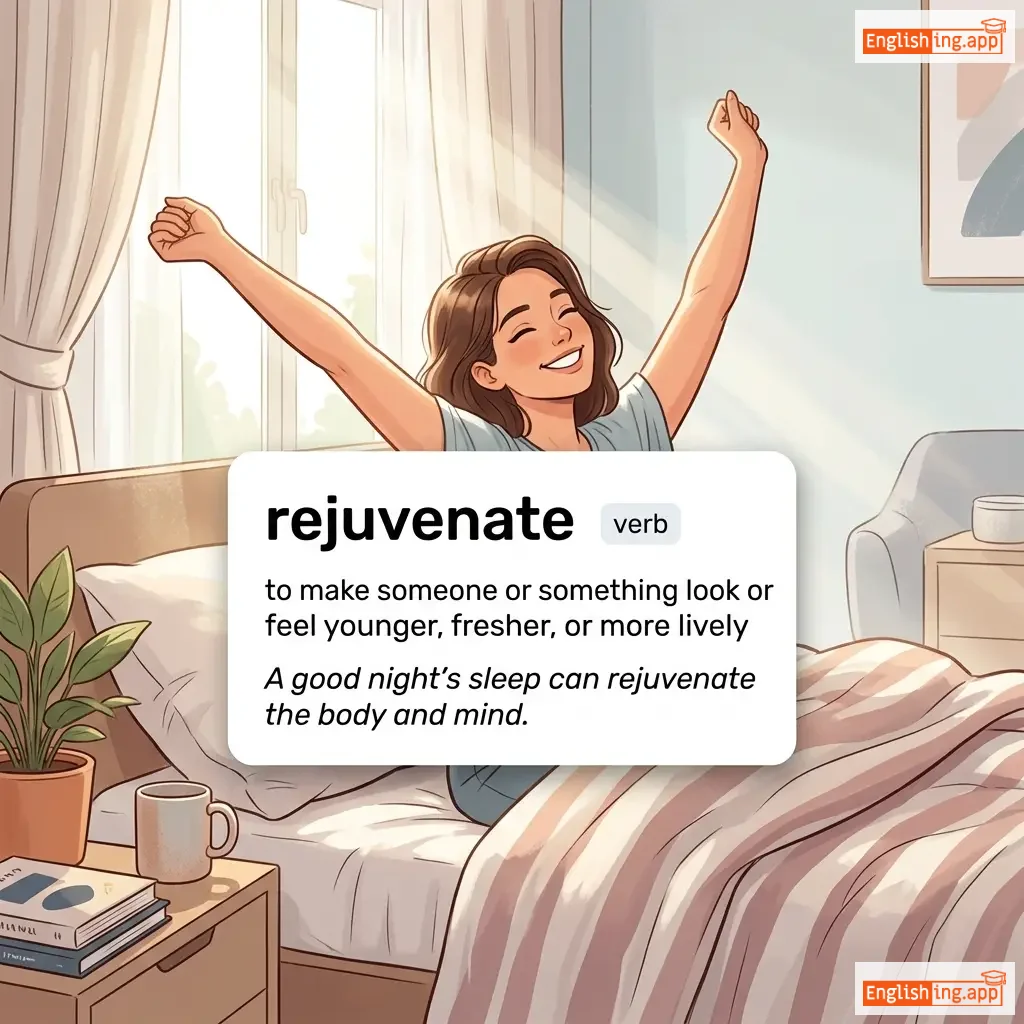
rejuvenate definition card — visual illustration of the meaning
verb
/rɪˈdʒuːvəˌneɪt/
rejuvenecer (rejuvenecer)

to make someone or something look or feel younger, fresher, or more lively

"A good night's sleep can rejuvenate the body and mind."

"Una buena noche de sueño puede rejuvenecer el cuerpo y la mente." (Una buena noche de sueño puede rejuvenecer el cuerpo y la mente.)
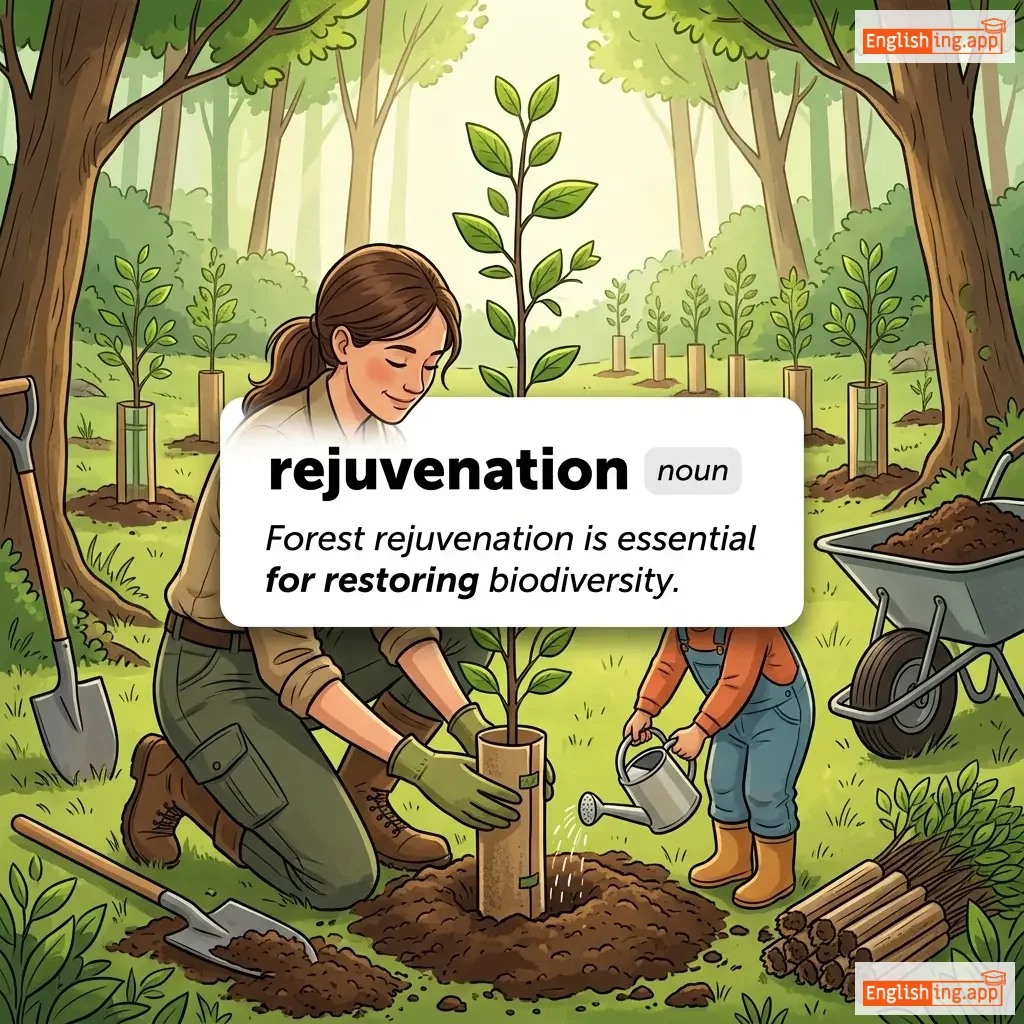
rejuvenation definition card — visual illustration of the meaning
noun
rɪˌdʒuː.vɪˈneɪ.ʃən
rejuvenecimiento (rejuvenecimiento)

The action or process of making someone or something look or feel better, younger, or more vital.

"Forest rejuvenation is essential for restoring biodiversity."

"La rejuvenecimiento forestal es esencial para restaurar la biodiversidad." (La rejuvenecimiento forestal es esencial para restaurar la biodiversidad.)
noun
/rɪˌdʒuːvəˈnɛsəns/
rejuvenecimiento (rejuvenecimiento)

the action or process of becoming young or fresh again

"The forest showed signs of rejuvenescence after the rains."

"El bosque mostró señales de rejuvenecimiento después de las lluvias." (El bosque mostró señales de rejuvenecimiento después de las lluvias.)
noun/verb
/rɪˈlæps/
recaída (recaida)

to return to a worse condition, especially after improvement; a deterioration after recovery

"After months of progress, he suffered a relapse."

"Después de meses de progreso, sufrió una recaída." (despues de meses de progreso, sufrio una recaida.)
verb
/rɪˈleɪt/
relacionar (relasionar)

to show or make a connection between things or people

"She could relate to his feelings of loss."

"Ella podía identificarse con sus sentimientos de pérdida." (Ella podia identificarse con sus sentimientos de perdida.)
adjective
/rɪˈleɪtɪd/
relacionado (relacionado)

connected or associated with something else

"The documents are all related to the same project."

"Los documentos están todos relacionados con el mismo proyecto." (Los documentos están todos relacionados con el mismo proyecto.)
noun
/rɪˈleɪʃən/
relación (relacion)

the way in which two or more concepts, objects, or people are connected

"Their relation has always been one of mutual respect."

"Su relación siempre ha sido una de respeto mutuo." (Su relacion siempre ha sido una de respeto mutuo.)
noun
/rɪˈleɪʃənʃɪp/
relación (relacion)

the state of being connected or involved with someone or something in a significant way

"They have a strong, supportive relationship."

"Ellos tienen una relación fuerte y de apoyo." (Ellos tienen una relación fuerte y de apoyo.)
👨‍👩‍👧‍👦

Relative (relativo)

noun
/ˈrɛlətɪv/
familiar (familiar)

a person who is part of your family

"He invited his close relatives to the wedding."

"Invitó a sus familiares cercanos a la boda." (Invito a sus familiares cercanos a la boda.)
adverb
/ˈrɛlətɪvli/
relativamente (relativamente)

in comparison with something else

"The task was relatively easy compared to others."

"La tarea era relativamente fácil en comparación con las demás." (La tarea era relativamente facil en comparacion con las demas.)
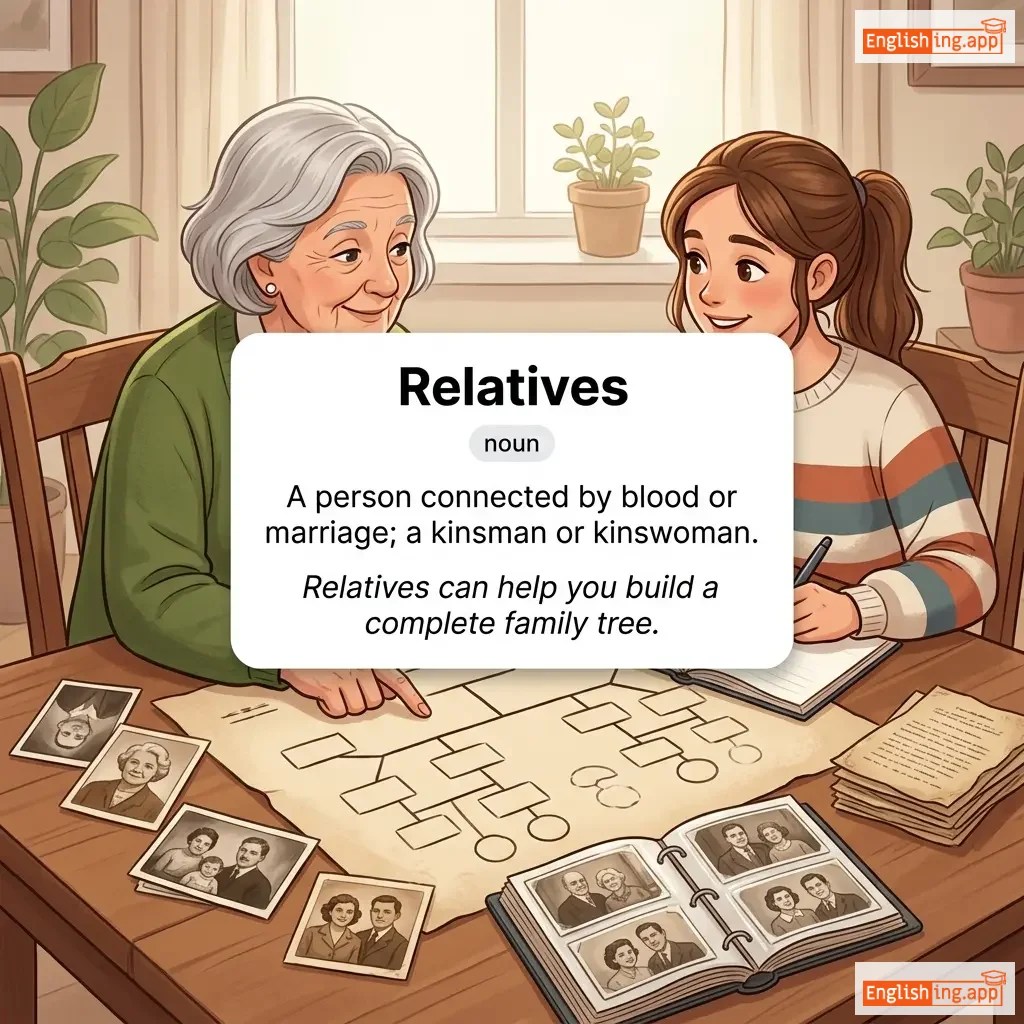
Relatives definition card — visual illustration of the meaning
👨‍👩‍👧‍👦

Relatives (relativos)

noun
ˈrɛlətɪvz
familiares (familiares)

A person connected by blood or marriage; a kinsman or kinswoman.

"Relatives can help you build a complete family tree."

"Los familiares pueden ayudarte a construir un árbol genealógico completo." (Los familiares pueden ayudarte a construir un árbol genealógico completo.)
verb
/rɪˈlæks/
relajarse (relajarse)

to make or become less tense or anxious; to rest

"After a long day, she likes to relax with a good book."

"Después de un largo día, le gusta relajarse con un buen libro." (Después de un largo día, le gusta relajarse con un buen libro.)
adjective
/rɪˈlækst/
relajado (relajado)

free from tension or stress; calm and comfortable

"She felt relaxed after listening to soft music."

"Se sintió relajado después de escuchar música suave." (Se sintio relajado despues de escuchar musica suave)
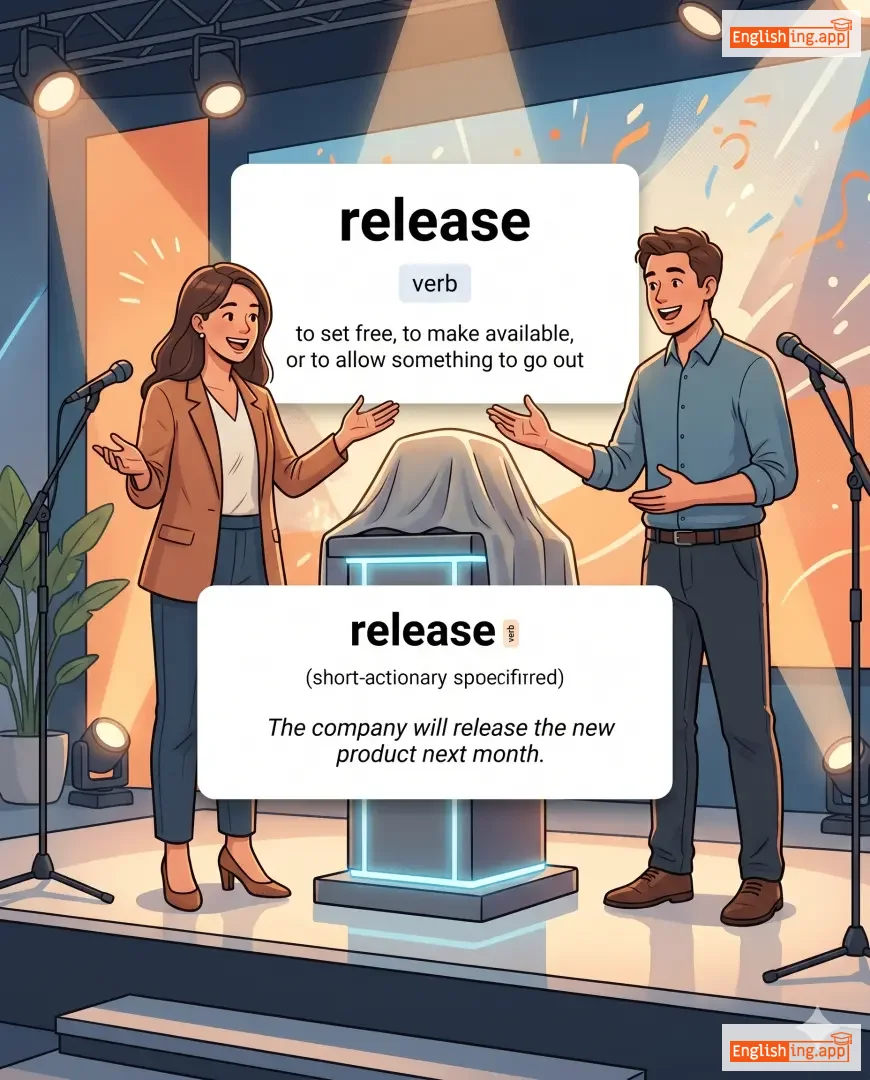
release definition card — visual illustration of the meaning
verb
/rɪˈliːs/
liberación, lanzamiento (liberacion, lanzamiento)

to set free, to make available, or to allow something to go out

"The company will release the new product next month."

"La compañía lanzará el nuevo producto el próximo mes." (La compania lanzara el nuevo producto el proximo mes.)
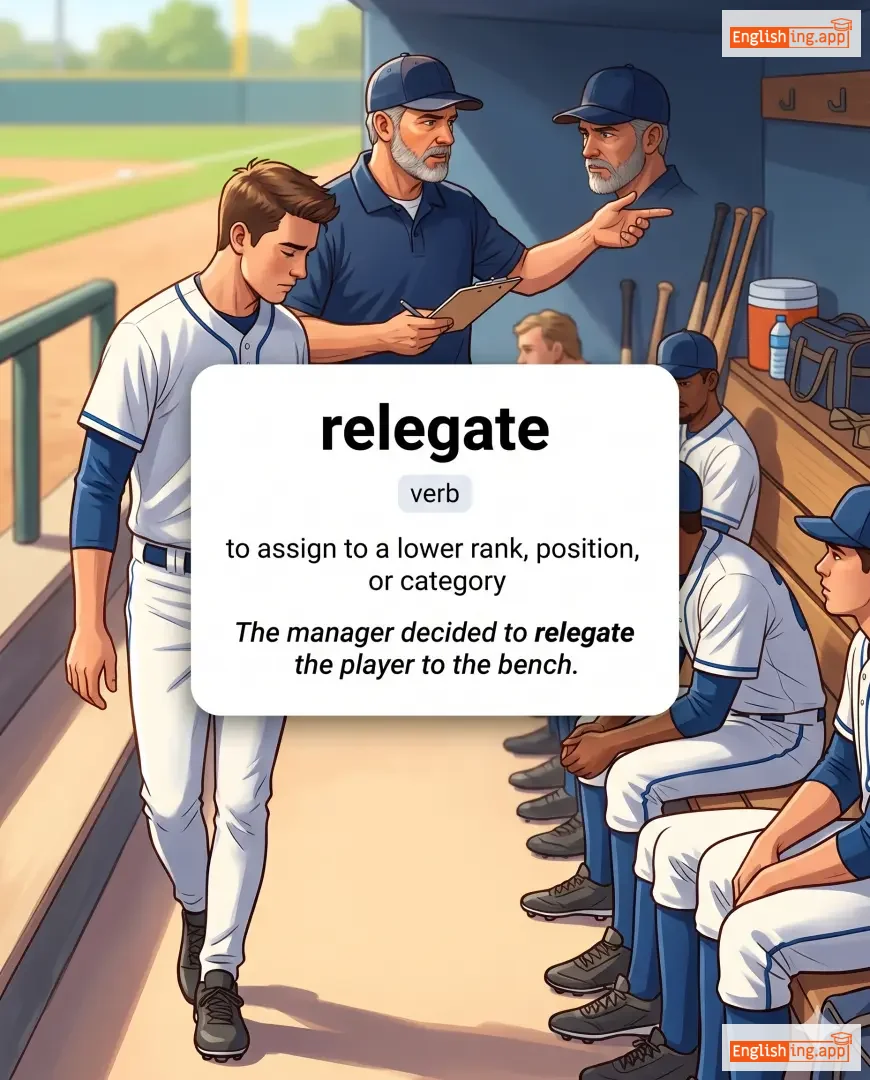
relegate definition card — visual illustration of the meaning
verb
/ˈrɛlɪɡeɪt/
relegar (relegar)

to assign to a lower rank, position, or category

"The manager decided to relegate the player to the bench."

"El gerente decidió relegar al jugador al banco." (El gerente decidió relegar al jugador al banco.)
verb
/rɪˈlɛnt/
ceder, ser más suave (ceder, ser mas suave)

to become less severe, harsh, or strict

"After hours of begging, she finally relented."

"Después de horas de súplicas, finalmente cedió." (Despues de horas de suplicas, finalmente cedió.)
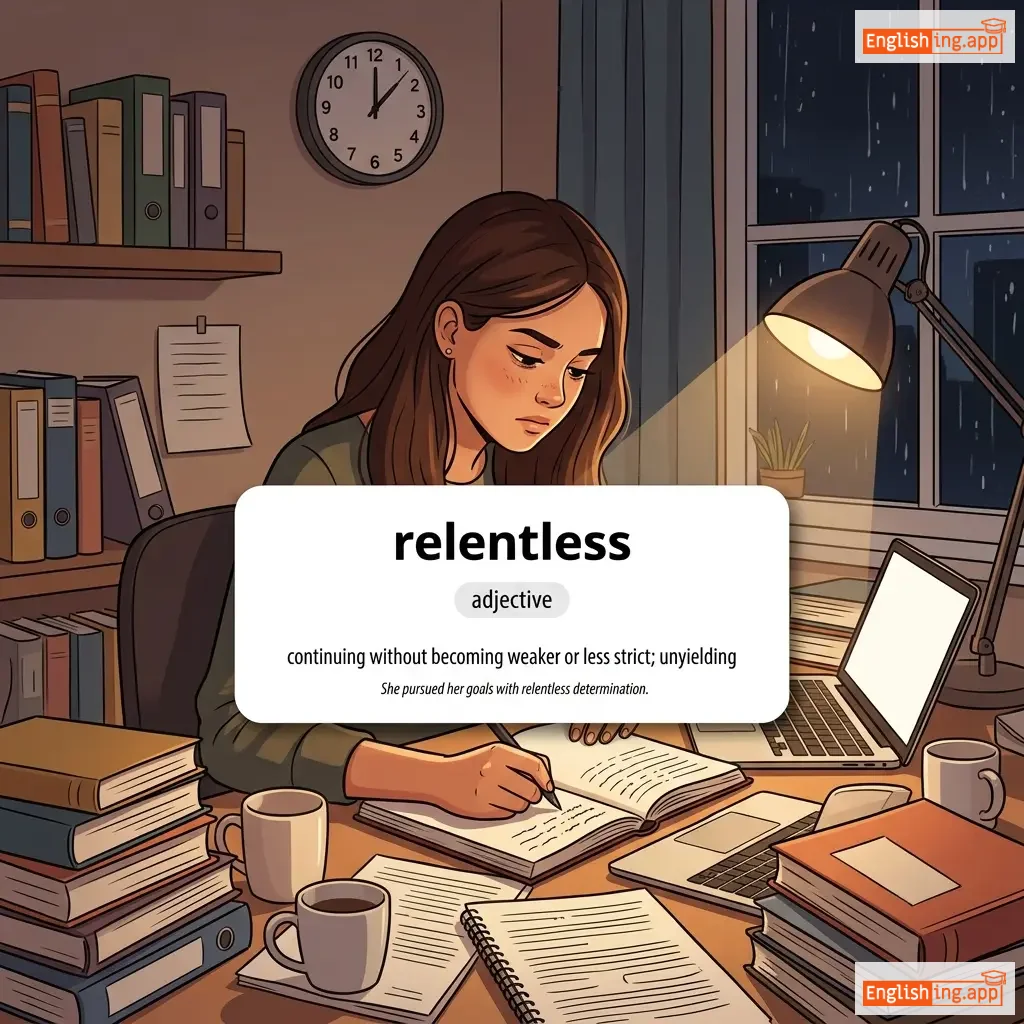
relentless definition card — visual illustration of the meaning
adjective
/rɪˈlɛntləs/
implacable (relentless)

continuing without becoming weaker or less strict; unyielding

"She pursued her goals with relentless determination."

"Ella persiguio sus metas con una determinacion implacable." (Ella persiguio sus metas con una determinacion implacable)
noun
/ˈrɛlɪvəns/
relevancia (relevancia)

the quality or state of being closely connected or appropriate

"The relevance of the information was clear to everyone."

"La relevancia de la información era clara para todos." (La relevancia de la información era clara para todos.)
noun
/ˈrɛlɪvənsi/
relevancia (relevancia)

the quality of being closely connected or appropriate

"The professor questioned the relevancy of the example to the topic."

"El profesor cuestionó la relevancia del ejemplo con respecto al tema." (El profesor cuestionó la relevancia del ejemplo con respecto al tema.)
adjective
/ˈrɛl.ə.vənt/
relevante (relevante)

closely connected or appropriate to what is being considered or done

"Your comments are not relevant to the discussion."

"Tus comentarios no son relevantes para la discusión." (Tus comentarios no son relevantes para la discusion.)
noun
/rɪˌlaɪəˈbɪləti/
fiabilidad (fiabilidad)

the quality of being trustworthy or performing consistently well

"Customers value the reliability of our service."

"Los clientes valoran la fiabilidad de nuestro servicio." (Los clientes valoran la fiabilidad de nuestro servicio.)
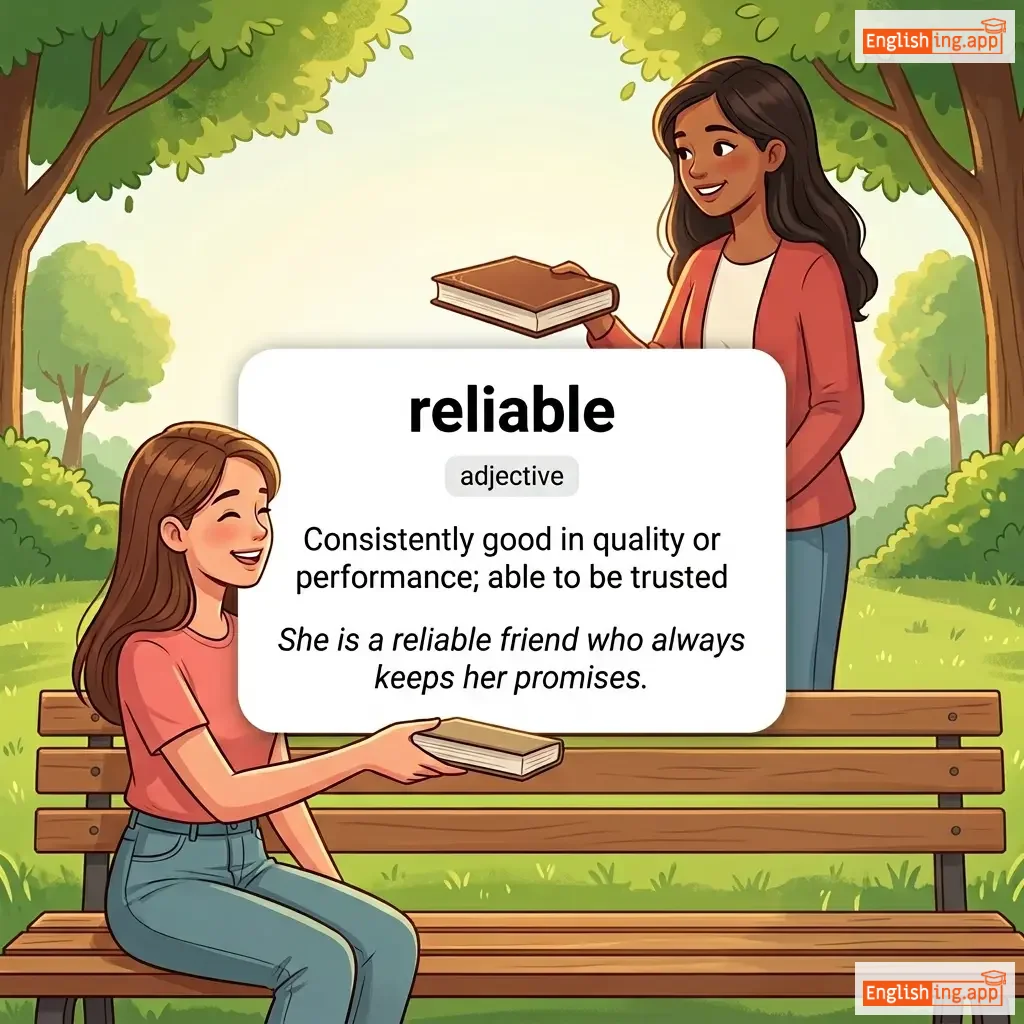
reliable definition card — visual illustration of the meaning
adjective
/rɪˈlaɪəbl/
confiable (konfiable)

Consistently good in quality or performance; able to be trusted

"She is a reliable friend who always keeps her promises."

"Ella es una amiga confiable que siempre cumple sus promesas." (Ella es una amiga confiable que siempre cumple sus promesas.)
noun
/rɪˈlaɪ.əns/
dependencia (dependencia)

dependence on or trust in someone or something

"Her reliance on her friends helped her through difficult times."

"Su dependencia de sus amigos la ayudó a superar tiempos difíciles." (Su dependencia de sus amigos la ayudó a superar tiempos difíciles.)