Vocabularios

Descubra, aprenda y domine el vocabulario en inglés

noun, verb
/rɪər/
parte trasera / criar (parte trasera / criar)

the back part of something; to bring up or raise children or animals

"The mother cat reared her kittens in a quiet corner."

"La madre gata crió a sus gatitos en una esquina tranquila." (La madre gata crió a sus gatitos en una esquina tranquila.)
verb
/ˌriːəˈreɪndʒ/
reorganizar (reorganizar)

to change the order or position of something

"She decided to rearrange the furniture in her living room."

"Ella decidió reorganizar los muebles en su sala de estar." (Ella decidió reorganizar los muebles en su sala de estar.)
noun, verb
/ˈriːzən/
razón, motivo (razon, motivo)

A cause, explanation, or justification for an action or event; to think or argue logically.

"There is no reason to be upset."

"No hay razón para estar molesto." (No hay razon para estar molesto.)
adjective
/ˈriːzənəbl/
razonable (razonable)

Fair and sensible; having sound judgment; not extreme or excessive.

"The price of the meal was quite reasonable."

"El precio de la comida fue bastante razonable." (El precio de la comida fue bastante razonable.)
adverb
/ˈriːzənəbli/
razonablemente (razonablemente)

in a fair, sensible, or logical manner

"The price was reasonably low compared to other products."

"El precio era razonablemente bajo en comparación con otros productos." (El precio era razonablemente bajo en comparacion con otros productos.)
noun
/ˈriːzənɪŋ/
razonamiento (razonamiento)

the process of thinking about something in a logical way in order to form a conclusion or judgment

"Her reasoning for leaving was clear and logical."

"Su razonamiento para irse fue claro y lógico." (Su razonamiento para irse fue claro y lógico.)
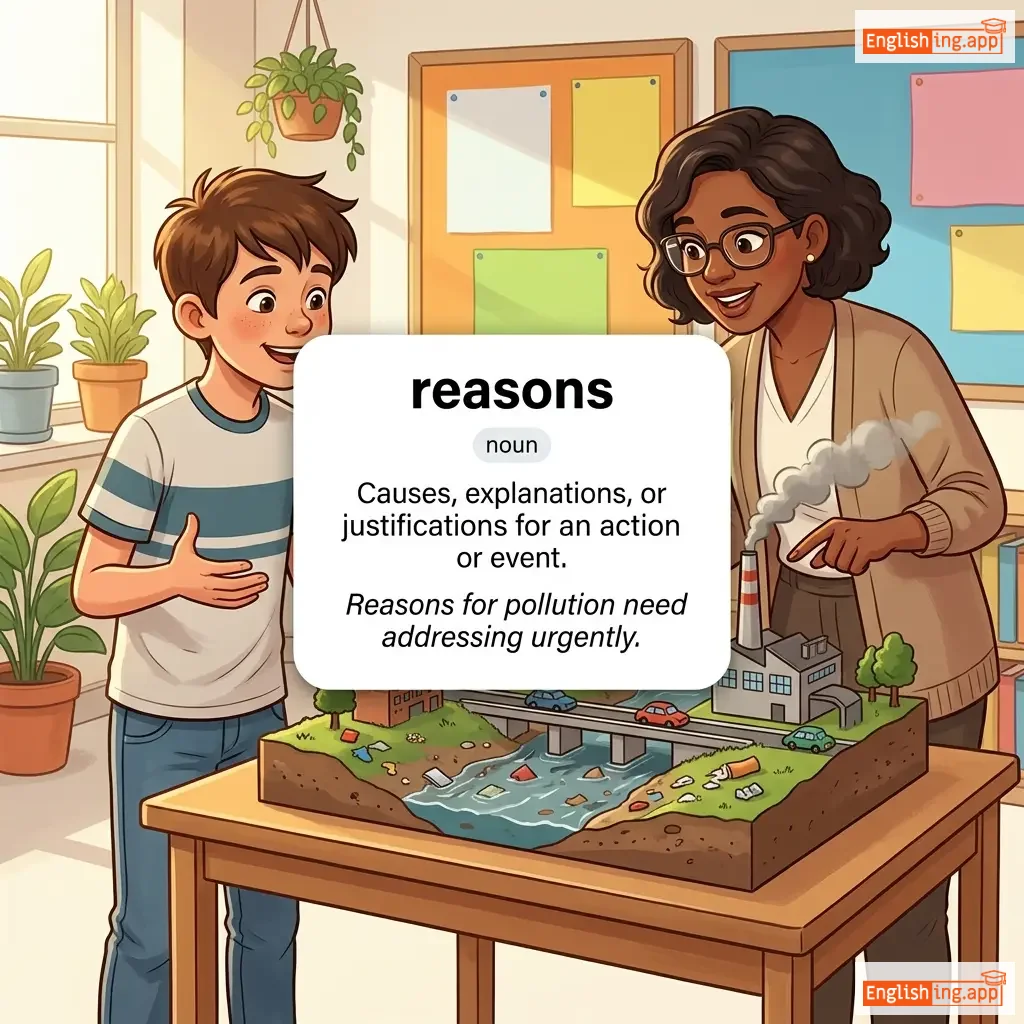
reasons definition card — visual illustration of the meaning
noun
/ˈriː.zənz/
razones (razones)

Causes, explanations, or justifications for an action or event.

"Reasons for pollution need addressing urgently."

"Las razones de la contaminación deben abordarse urgentemente." (Las razones de la contaminación deben abordarse urgentemente.)
noun
/ˌriː.əˈʃʊr.əns/
reaseguro (reaseguro)

comfort or confidence given to someone to remove their fears or doubts

"She needed reassurance that everything would be okay."

"Ella necesitaba un reaseguro de que todo estaría bien." (Ella necesitaba un reaseguro de que todo estaría bien.)
verb
/ˌriːəˈʃʊr/
tranquilizar (tranquilizar)

to say or do something to remove someone's doubts or fears

"The teacher reassured the students before the exam."

"El maestro tranquilizó a los estudiantes antes del examen." (El maestro tranquilizó a los estudiantes antes del examen.)
noun
/ˈriːbeɪt/
descuento/reembolso (descuento/reembolso)

a partial refund given to someone who has paid too much money for something

"The store offered a rebate on bulk purchases."

"La tienda ofreció un descuento en compras al por mayor." (La tienda ofreció un descuento en compras al por mayor.)
noun, verb
/ˈreb.əl/
rebelde / rebelarse (rebelde / rebelarse)

a person who resists authority or control; to resist or fight against authority

"The students rebelled against the new dress code."

"Los estudiantes se rebelaron contra el nuevo código de vestimenta." (Los estudiantes se rebelaron contra el nuevo código de vestimenta.)
noun
/rɪˈbɛljən/
rebelión (rebelion)

an act of violent or open resistance to an established government or ruler

"The rebellion was crushed by the army after a few months."

"La rebelión fue sofocada por el ejército después de unos meses." (La rebelion fue sofocada por el ejercito despues de unos meses.)
adjective
/rɪˈbɛljəs/
rebelde (rebelde)

resisting authority or control; showing a desire to rebel

"The rebellious teenager refused to follow the school rules."

"El adolescente rebelde se negó a seguir las reglas de la escuela." (El adolescente rebelde se negó a seguir las reglas de la escuela.)
verb
/rɪˈbʌf/
rechazar (rechazar)

to reject or refuse in a sharp or abrupt way

"She rebuffed his invitation to dinner."

"Ella rechazó su invitación a cenar." (Ella rechazó su invitación a cenar.)
verb
/ˌriːˈbɪld/
reconstruir (reconstruir)

to build something again after it has been damaged or destroyed

"The villagers worked together to rebuild the bridge after the flood."

"Los aldeanos trabajaron juntos para reconstruir el puente después de la inundación." (Los aldeanos trabajaron juntos para reconstruir el puente despues de la inundacion.)
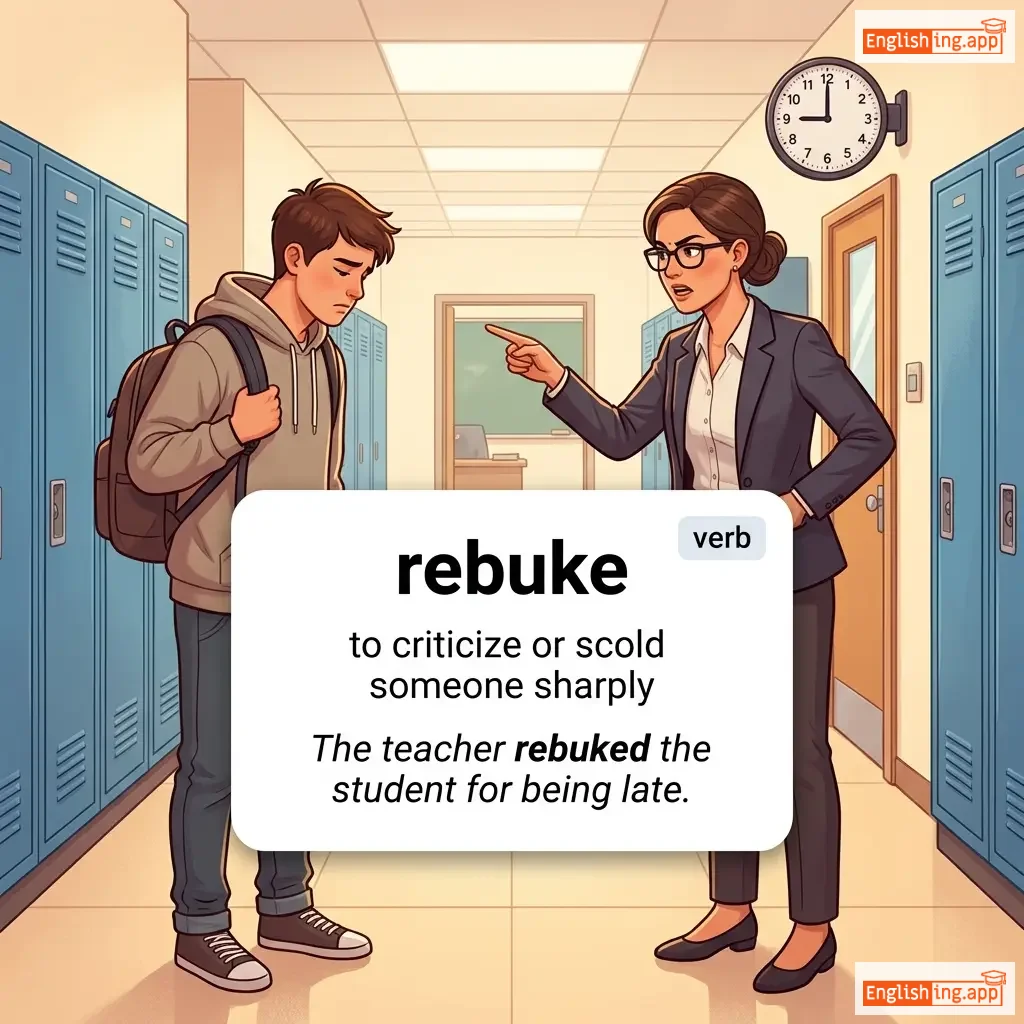
rebuke definition card — visual illustration of the meaning
verb
/rɪˈbjuːk/
reprender (reprender)

to criticize or scold someone sharply

"The teacher rebuked the student for being late."

"El maestro reprendió al estudiante por llegar tarde." (El maestro reprendió al estudiante por llegar tarde.)
noun
/ˈriːbəs/
rebus (rebus)

a puzzle in which words are represented by pictures, symbols, or letters

"The children enjoyed solving the rebus puzzles in the magazine."

"A los niños les encantaba resolver los rompecabezas de rebus en la revista." (A los niños les encantaba resolver los rompecabezas de rebus en la revista.)
verb
/rɪˈbʌt/
refutar (refutar)

to argue against or prove wrong; to refute

"The lawyer rebutted the false accusations with strong evidence."

"El abogado refutó las falsas acusaciones con pruebas contundentes." (El abogado refutó las falsas acusaciones con pruebas contundentes.)
noun
/rɪˈbʌtəl/
refutación (refutacion)

a statement or argument made to oppose or disprove another

"Her rebuttal was clear and convincing."

"Su refutación fue clara y convincente." (Su refutacion fue clara y convincente.)
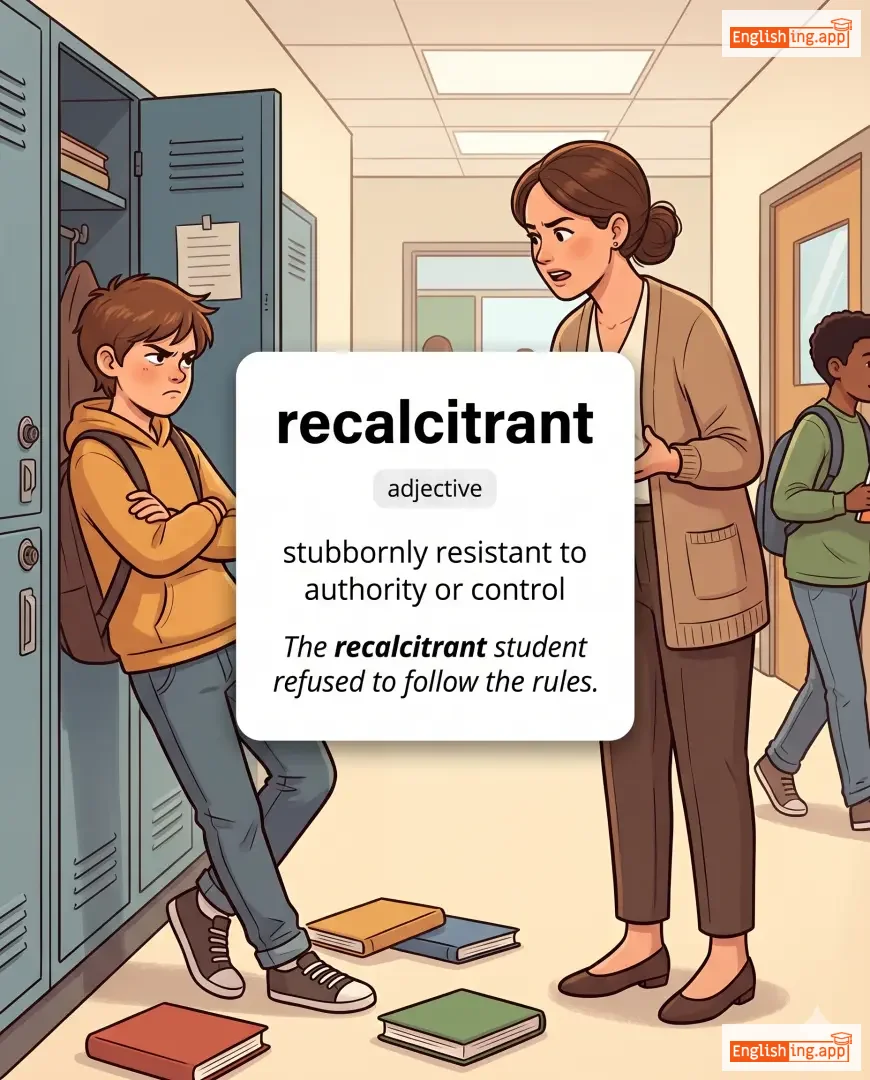
recalcitrant definition card — visual illustration of the meaning
adjective
/rɪˈkælsɪtrənt/
recalcitrante (rekalsitrante)

stubbornly resistant to authority or control

"The recalcitrant student refused to follow the rules."

"El estudiante recalcitrante se negó a seguir las reglas." (El estudiante recalcitrante se nego a seguir las reglas.)
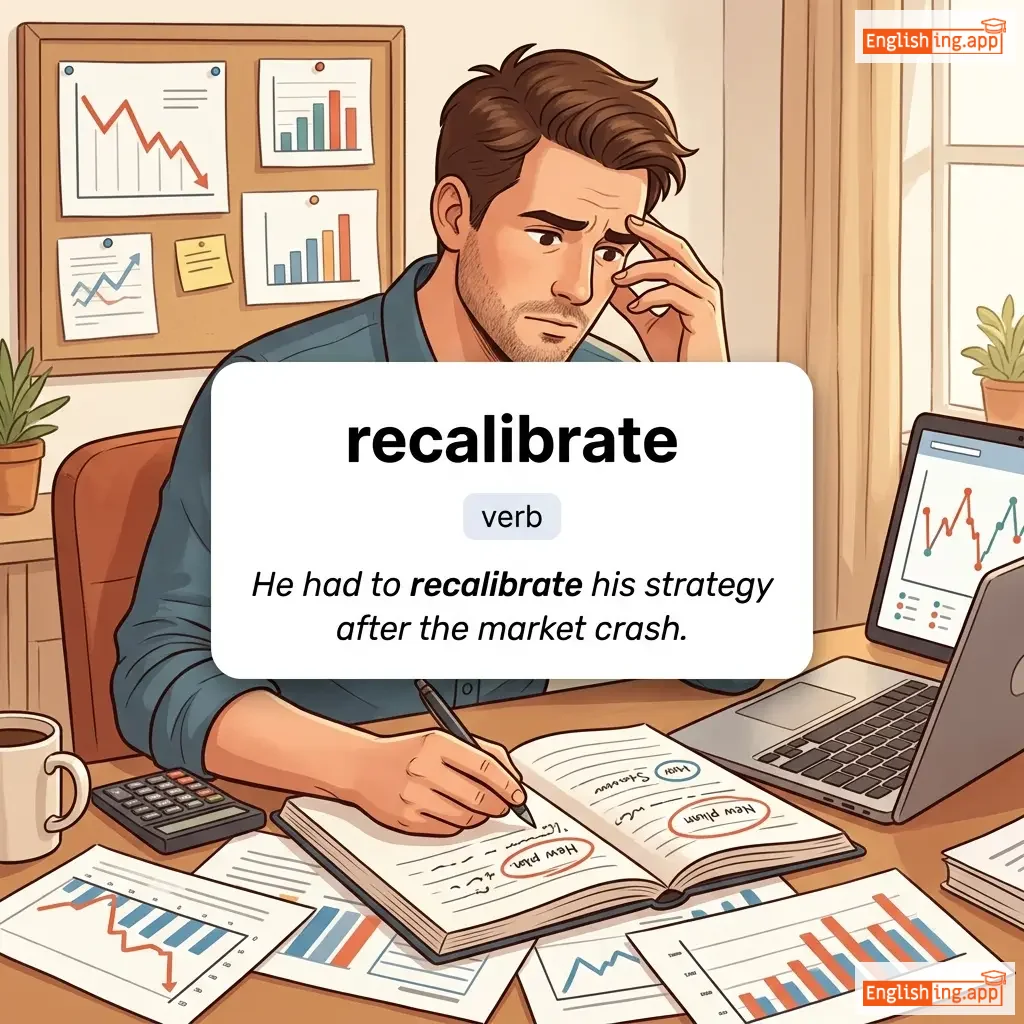
recalibrate definition card — visual illustration of the meaning
verb
ˌriːˈkæl.ɪ.breɪt
recalibrar (recalibrar)

To adjust or modify according to a new standard or plan; to reassess and realign.

"He had to recalibrate his strategy after the market crash."

"Él tuvo que recalibrar su estrategia después del colapso del mercado." (Él tuvo que recalibrar su estrategia después del colapso del mercado.)
verb
/rɪˈkɔːl/
recordar (recordar)

to bring (a memory, fact, or situation) back into one's mind

"I can't recall the last time we met."

"No puedo recordar la última vez que nos encontramos." (No puedo recordar la última vez que nos encontramos.)
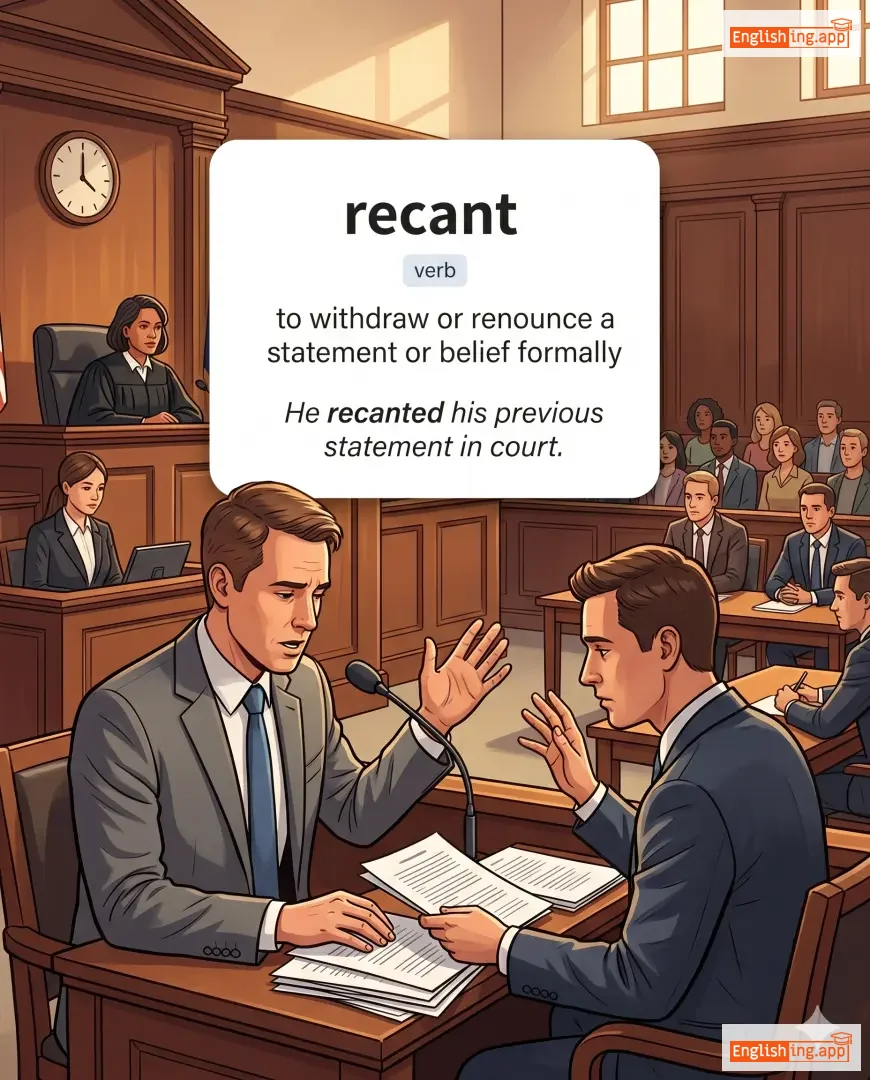
recant definition card — visual illustration of the meaning
verb
/rɪˈkænt/
revocar (revocar)

to withdraw or renounce a statement or belief formally

"He recanted his previous statement in court."

"Él retractó su declaración anterior en la corte." (Él retractó su declaración anterior en la corte.)
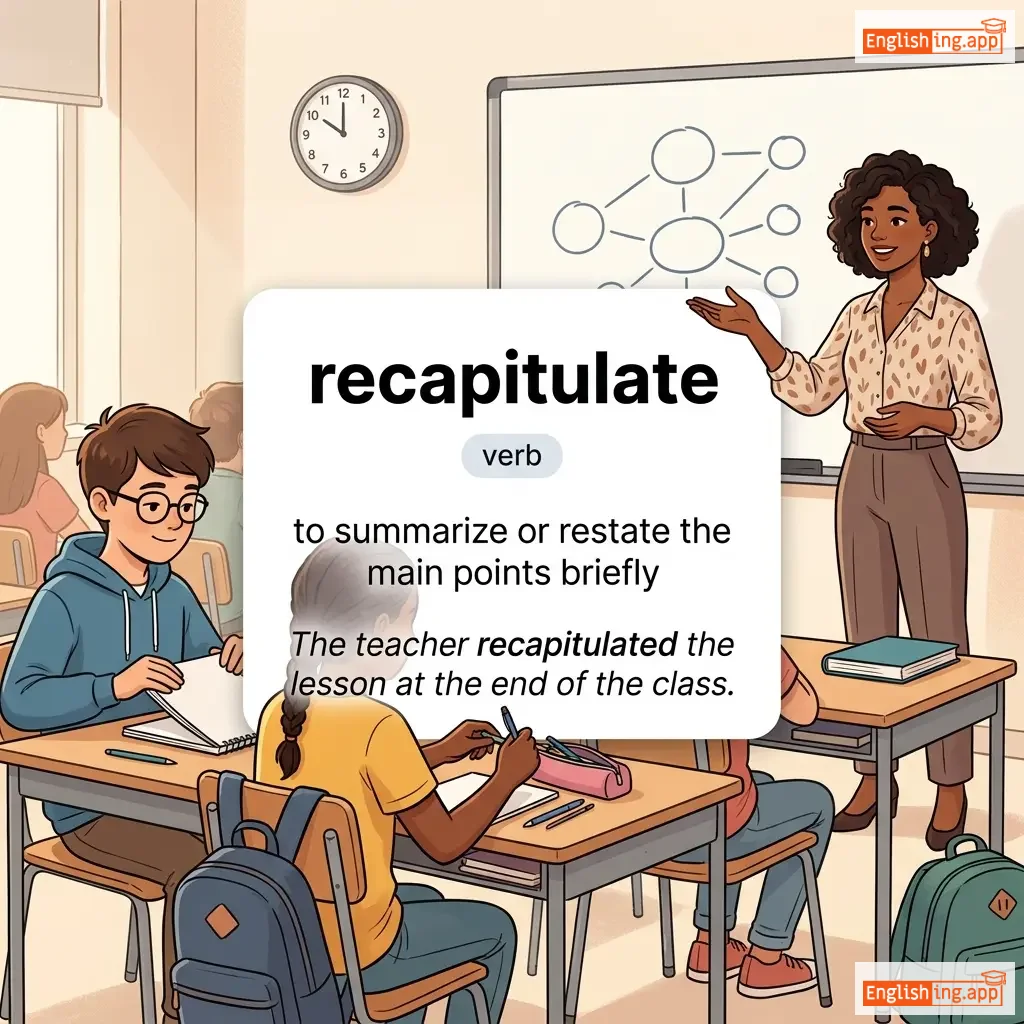
recapitulate definition card — visual illustration of the meaning
verb
/ˌriːkəˈpɪtjʊleɪt/
recapitular (recapitular)

to summarize or restate the main points briefly

"The teacher recapitulated the lesson at the end of the class."

"El maestro recapituló la lección al final de la clase." (El maestro recapituló la lección al final de la clase.)
noun
/ˌriːkəˌpɪtjʊˈleɪʃən/
recapitulación (recapitulacion)

The act of summarizing or repeating the main points of something.

"The professor gave a brief recapitulation of the lecture before ending the class."

"El profesor dio una breve recapitulación de la conferencia antes de terminar la clase." (El profesor dio una breve recapitulación de la conferencia antes de terminar la clase.)
verb
/riːˈkæptʃər/
recapturar (recapturar)

To take back or regain possession of something.

"The army managed to recapture the lost territory."

"El ejército logró recapturar el territorio perdido." (El ejérciro logró recapturar el territorio perdido.)
verb
/ˌriːˈkæst/
recast (recast)

To present or change something in a different form or style.

"The director decided to recast the role with a younger actor."

"El director decidió rehacer el papel con un actor más joven." (El director decidió rehacer el papel con un actor más joven.)
verb
/rɪˈsiːd/
retroceder (retroceder)

To move back or further away from a previous position.

"The floodwaters began to recede after the heavy rain stopped."

"Las aguas de la inundación comenzaron a retroceder después de que la lluvia intensa paró." (Las aguas de la inundación comenzaron a retroceder después de que la lluvia intensa paró.)
adjective, noun
/rɪˈsiːvəbl/
cobrable (cobrable)

Money that is owed to a company and is expected to be paid.

"The company's receivables increased significantly this quarter."

"Los cobros de la empresa aumentaron significativamente este trimestre." (Los cobros de la empresa aumentaron significativamente este trimestre.)
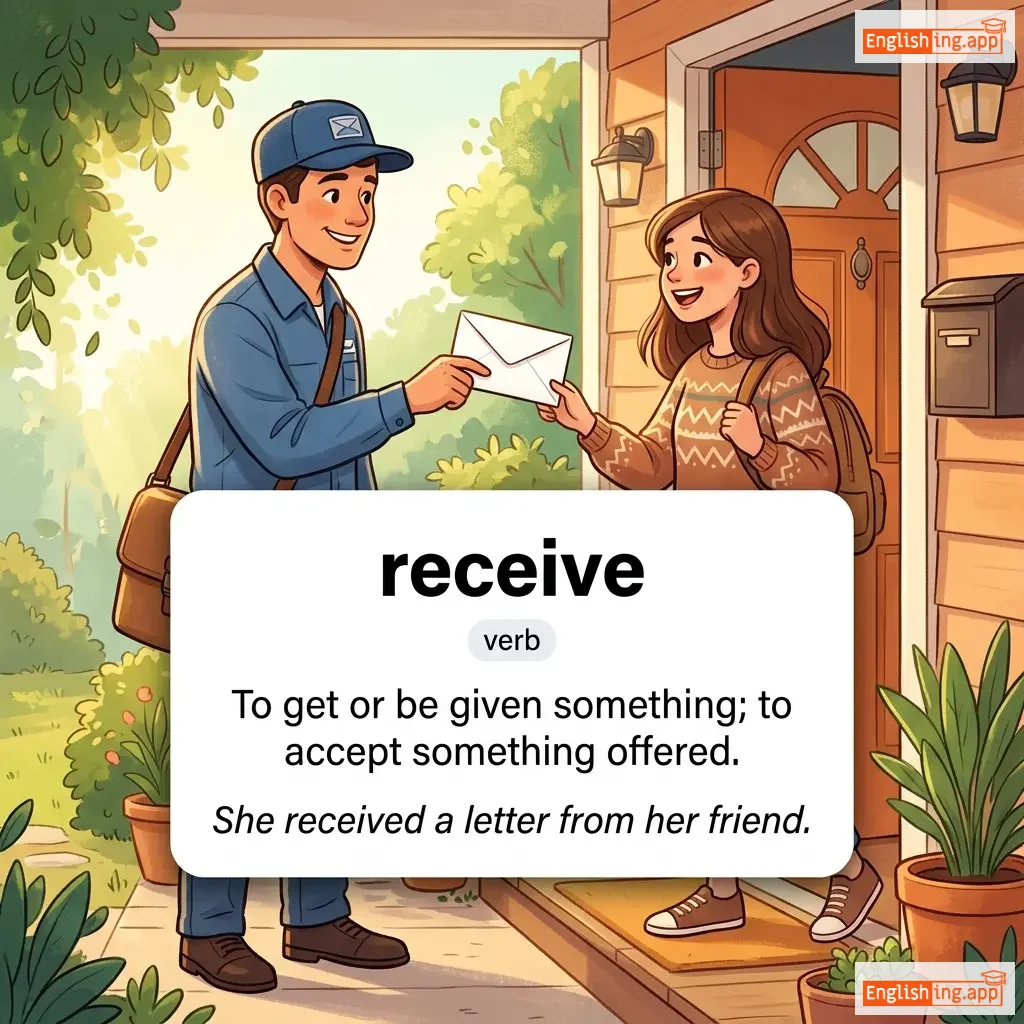
receive definition card — visual illustration of the meaning
verb
/rɪˈsiːv/
recibir (recibir)

To get or be given something; to accept something offered.

"She received a letter from her friend."

"Ella recibió una carta de su amiga." (Ella recibió una carta de su amiga.)
noun
/rɪˈsiːvər/
receptor (receptor)

a person or device that receives something such as a signal, message, or object

"The radio receiver picks up signals from distant stations."

"El receptor de radio recibe señales de estaciones distantes." (El receptor de radio recibe señales de estaciones distantes.)
adjective
/ˈriːsənt/
reciente (reciente)

having happened or started only a short time ago

"The recent developments have been quite exciting."

"Los desarrollos recientes han sido bastante emocionantes." (Los desarrollos recientes han sido bastante emocionantes.)
adverb
/ˈriːsəntli/
recientemente (recientemente)

in the recent past; not long ago

"I recently visited the museum."

"Recientemente visité el museo." (Recientemente visité el museo.)
noun
/rɪˈsepʃən/
recepción (recepcion)

the act of receiving something or someone; a formal social gathering

"We attended a wedding reception at the hotel."

"Asistimos a una recepción de boda en el hotel." (Asistimos a una recepcion de boda en el hotel.)
adjective
/rɪˈsɛptɪv/
receptivo (receptivo)

Willing to listen to or accept new ideas, suggestions, or experiences.

"She was receptive to feedback from her colleagues."

"Ella estaba receptiva a los comentarios de sus colegas." (Ella estaba receptiva a los comentarios de sus colegas.)
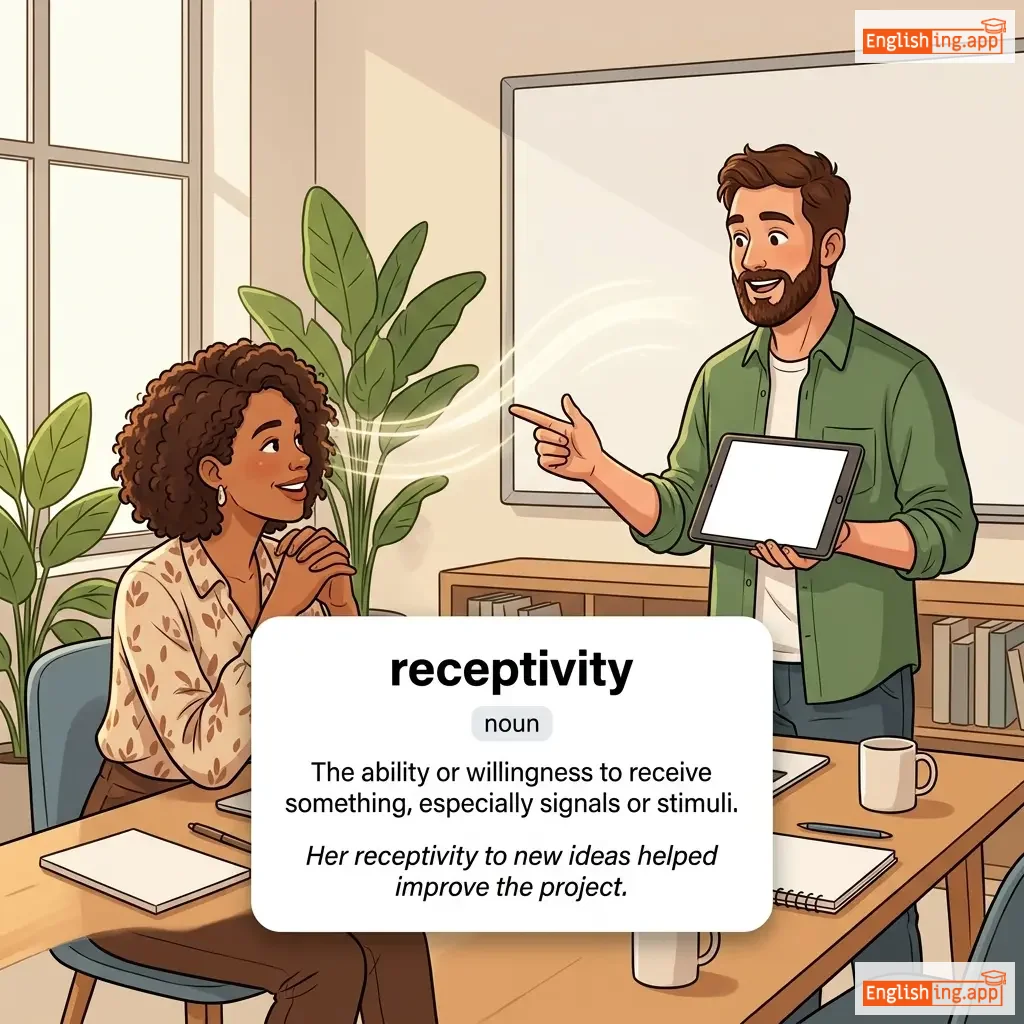
receptivity definition card — visual illustration of the meaning
noun
/rɪˌsɛptɪˈvɪti/
receptividad (receptividad)

The ability or willingness to receive something, especially signals or stimuli.

"Her receptivity to new ideas helped improve the project."

"Su receptividad a nuevas ideas ayudó a mejorar el proyecto." (Su receptividad a nuevas ideas ayudó a mejorar el proyecto.)
noun
/rɪˈsɛs/
recreo (recreo)

A short break from work or school; also a small space set back in a wall.

"The children played outside during recess."

"Los niños jugaron afuera durante el recreo." (Los niños jugaron afuera durante el recreo.)
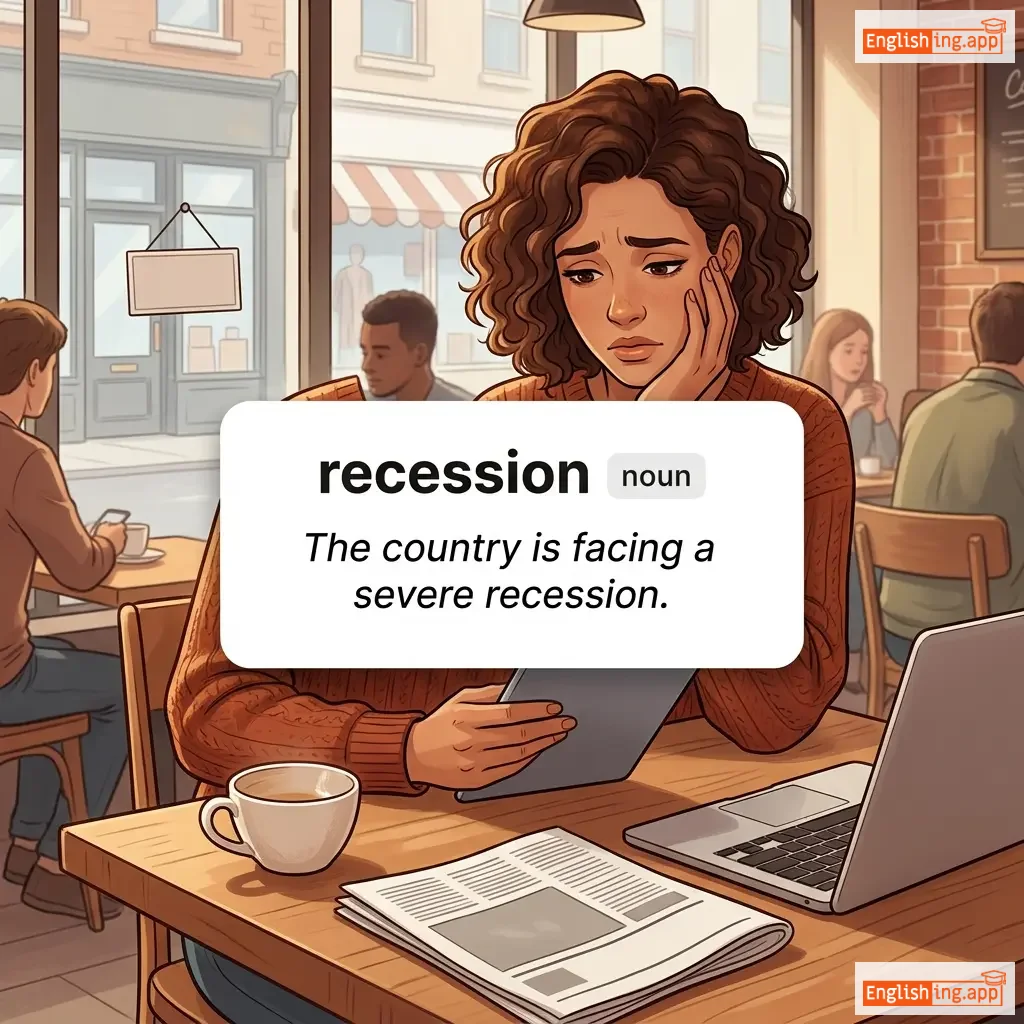
recession definition card — visual illustration of the meaning
noun
/rɪˈsɛʃən/
recesión (recesion)

A period of temporary economic decline during which trade and industrial activity are reduced.

"The country is facing a severe recession."

"El país enfrenta una recesión severa." (El pais enfrenta una recesion severa.)
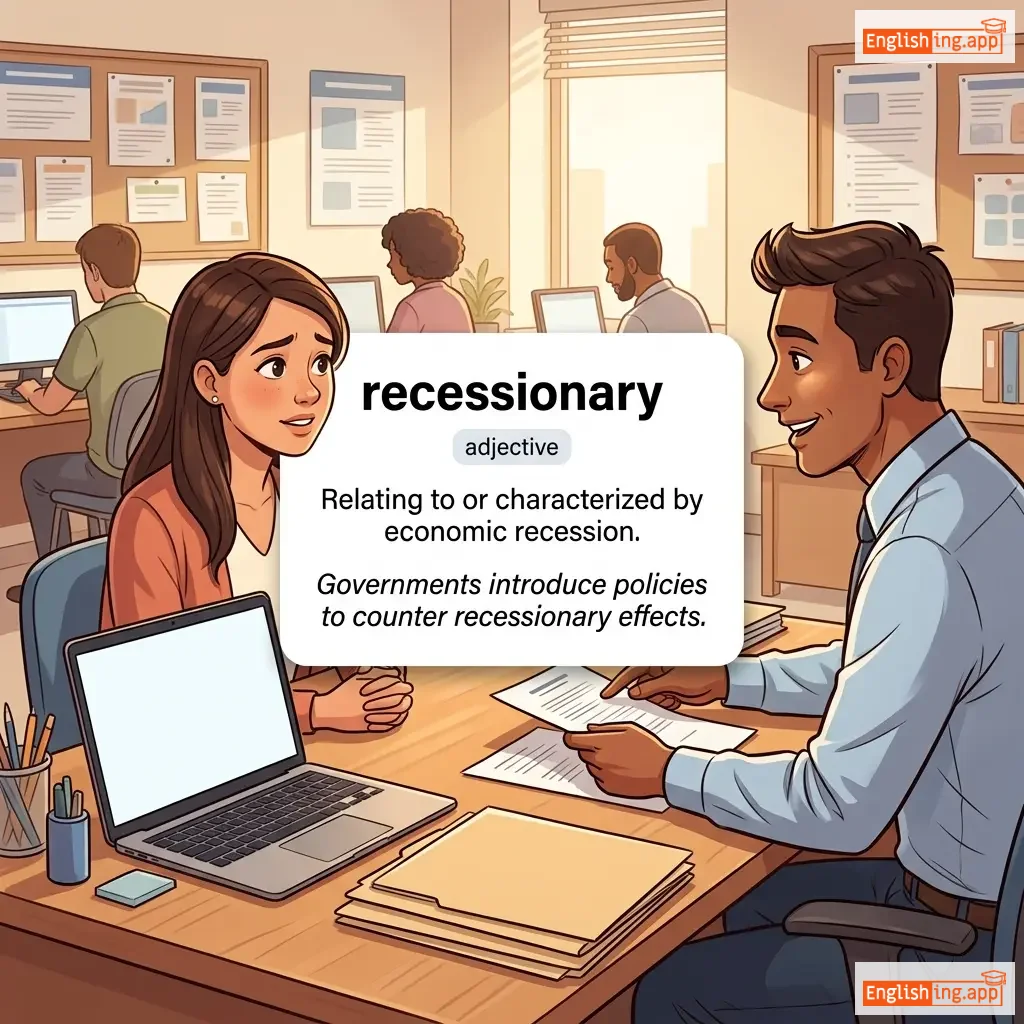
recessionary definition card — visual illustration of the meaning
adjective
rɪˈsɛʃ.ən.er.i
recesivo (recesivo)

Relating to or characterized by economic recession.

"Governments introduce policies to counter recessionary effects."

"Los gobiernos introducen políticas para contrarrestar los efectos recesivos." (Los gobiernos introducen políticas para contrarrestar los efectos recesivos.)
adjective
/rɪˈsɛsɪv/
recesivo (recesivo)

In genetics, relating to a trait that is expressed only when two copies of the gene are present.

"Blue eye color is often a recessive trait."

"El color de ojos azules es a menudo un rasgo recesivo." (El color de ojos azules es a menudo un rasgo recesivo.)
adjective
/rəˈʃɛrʃ/
exclusivo (exclusivo)

Rare, exotic, or obscure, often in a sophisticated or refined way.

"The gallery displayed many recherche artworks from unknown artists."

"La galería exhibió muchas obras de arte exclusivas de artistas desconocidos." (La galeria exhibio muchas obras de arte exclusivas de artistas desconocidos.)
noun
/rɪˈsɪdɪˌvɪzəm/
recidivismo (residivismo)

The tendency of a convicted criminal to reoffend or relapse into criminal behavior.

"The government introduced new programs to reduce recidivism among former inmates."

"El gobierno introdujo nuevos programas para reducir el recidivismo entre antiguos reclusos." (El gobierno introdujo nuevos programas para reducir el recidivismo entre antiguos reclusos.)
noun
/rɪˈsɪdɪvɪst/
recidivista (recidivista)

A person who repeatedly commits crimes, especially after having been punished.

"The police identified him as a recidivist who had been arrested several times before."

"La policía lo identificó como un recidivista que había sido arrestado varias veces antes." (La policía lo identificó como un recidivista que había sido arrestado varias veces antes.)
noun
/ˈrɛsɪpi/
receta (receta)

a set of instructions for preparing a particular dish, including a list of the ingredients required

"I found a great recipe for chocolate cake."

"Encontré una gran receta para pastel de chocolate." (Encontre una gran receta para pastel de chocolate.)
noun
/rɪˈsɪpiənt/
receptor (receptor)

A person who receives something, such as an award, gift, or message.

"She was the recipient of the award for best performance."

"Ella fue la receptora del premio por mejor desempeño." (Ella fue la receptora del premio por mejor desempeño.)
adjective
/rɪˈsɪprəkəl/
recíproco (reciproco)

Given, felt, or done in return; mutual.

"Their relationship is based on reciprocal respect and trust."

"Su relación se basa en el respeto y la confianza recíprocos." (Su relación se basa en el respeto y la confianza recíprocos.)
verb
/rɪˈsɪprəˌkeɪt/
reciprocidad (reciprocidad)

To respond to an action or gesture by making a corresponding one.

"She smiled at him, and he reciprocated with a warm hug."

"Ella sonrió, y él reciprocó con un abrazo cálido." (Ella sonrió, y él reciprocó con un abrazo cálido.)
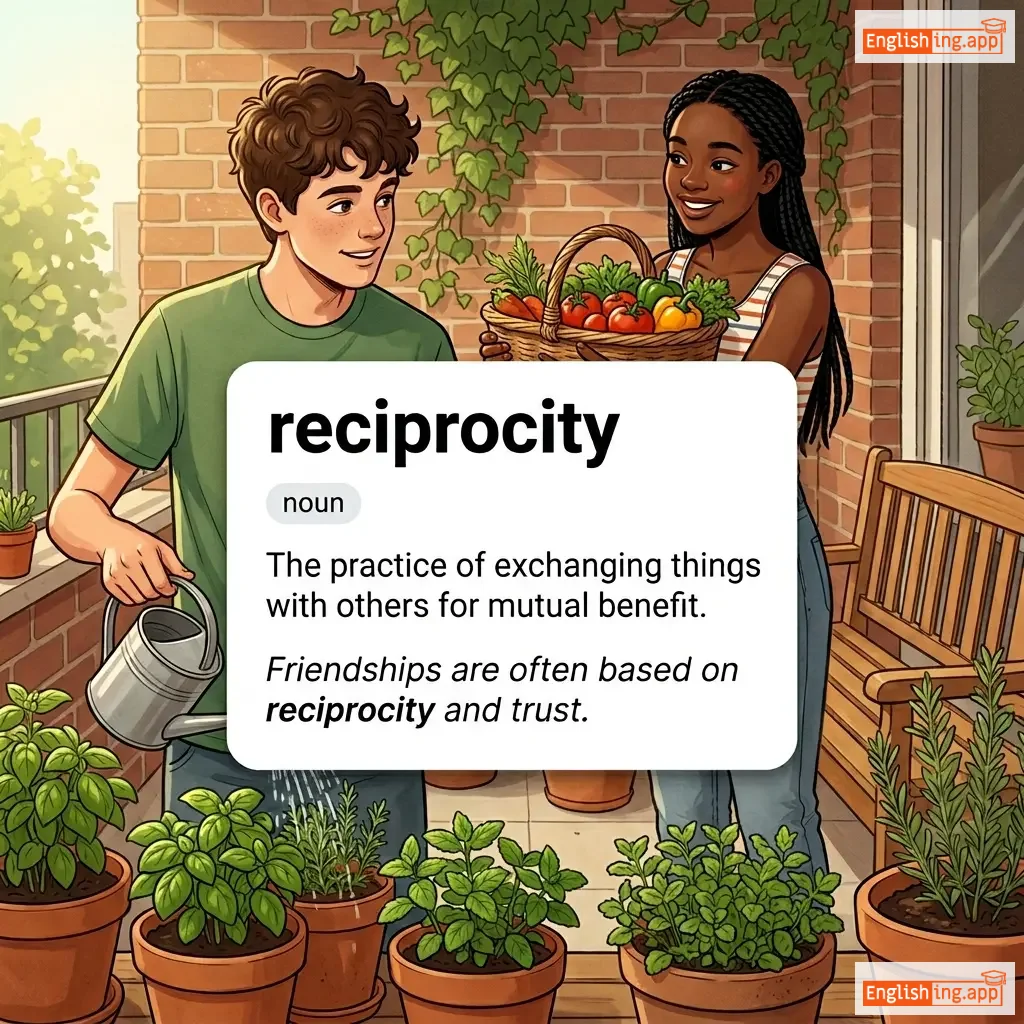
reciprocity definition card — visual illustration of the meaning
noun
/ˌrɛsɪˈprɒsɪti/
reciprocidad (reciprocidad)

The practice of exchanging things with others for mutual benefit.

"Friendships are often based on reciprocity and trust."

"Las amistades a menudo se basan en la reciprocidad y la confianza." (Las amistades a menudo se basan en la reciprocidad y la confianza.)
noun
/rɪˈsaɪtl/
recital (recital)

A performance of music, dance, or poetry, usually by a soloist.

"She gave a piano recital at the concert hall."

"Ella dio un recital de piano en la sala de conciertos." (Ella dio un recital de piano en la sala de conciertos.)
noun
/ˌrɛsɪˈteɪʃən/
recitación (recitacion)

The act of reading or repeating something aloud, especially poetry or passages.

"The student won the prize for her poetry recitation."

"La estudiante ganó el premio por su recitación de poesía." (La estudiante gano el premio por su recitacion de poesia.)