Vocabularios

Descubra, aprenda y domine el vocabulario en inglés

noun
/ˌrɛspɪˈreɪʃən/
respiración (respiracion)

The process of breathing or the exchange of gases in living organisms.

"Respiration is essential for all living beings."

"La respiración es esencial para todos los seres vivos." (La respiracion es esencial para todos los seres vivos.)
verb
/rɪˈspaɪər/
respirar (respirar)

To breathe in and out; to inhale and exhale.

"Plants also respire to release energy."

"Las plantas también respiran para liberar energía." (Las plantas también respiran para liberar energía.)
noun
/ˈrɛspɪt/
respiro (respiro)

A short period of rest or relief from something difficult or unpleasant.

"The weekend provided a welcome respite from work."

"El fin de semana proporcionó un respiro bienvenido del trabajo." (El fin de semana proporcionó un respiro bienvenido del trabajo.)
adjective
/rɪˈsplɛndənt/
resplandeciente (resplandeciente)

Shining brilliantly; dazzling in appearance or effect

"The bride looked resplendent in her wedding gown."

"La novia se veía resplandeciente con su vestido de boda." (La novia se veía resplandeciente con su vestido de boda.)
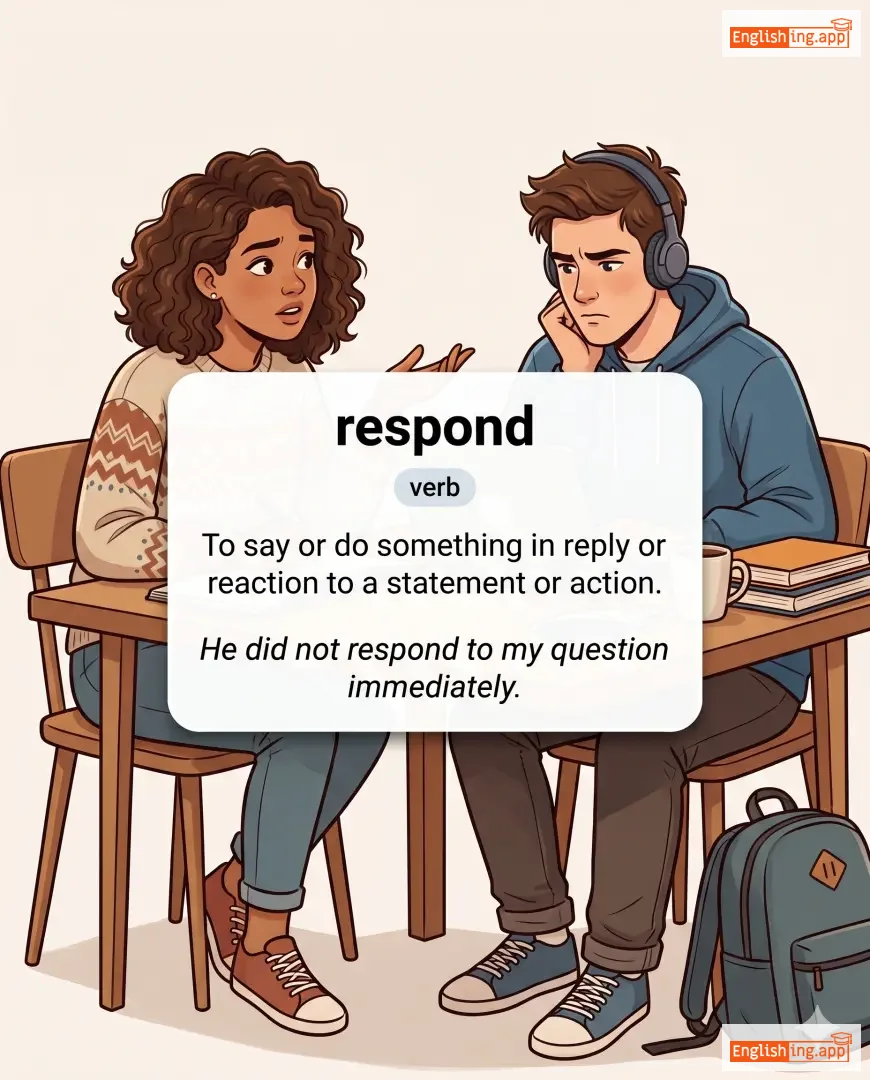
respond definition card — visual illustration of the meaning
verb
/rɪˈspɒnd/
responder (responder)

To say or do something in reply or reaction to a statement or action.

"He did not respond to my question immediately."

"Él no respondió a mi pregunta inmediatamente." (El no respondio a mi pregunta inmediatamente.)
noun
/rɪˈspɒndənt/
encuestado (encuestado)

A person who replies to something, especially in a survey or legal case

"The survey had over 1,000 respondents."

"La encuesta tuvo más de 1000 encuestados." (La encuesta tuvo más de 1000 encuestados.)
noun
/rɪˈspɒns/
respuesta (respuesta)

a reaction to something that has been said or done

"Her response to the question was both thoughtful and clear."

"Su respuesta a la pregunta fue tanto reflexiva como clara." (Su respuesta a la pregunta fue tanto reflexiva como clara.)
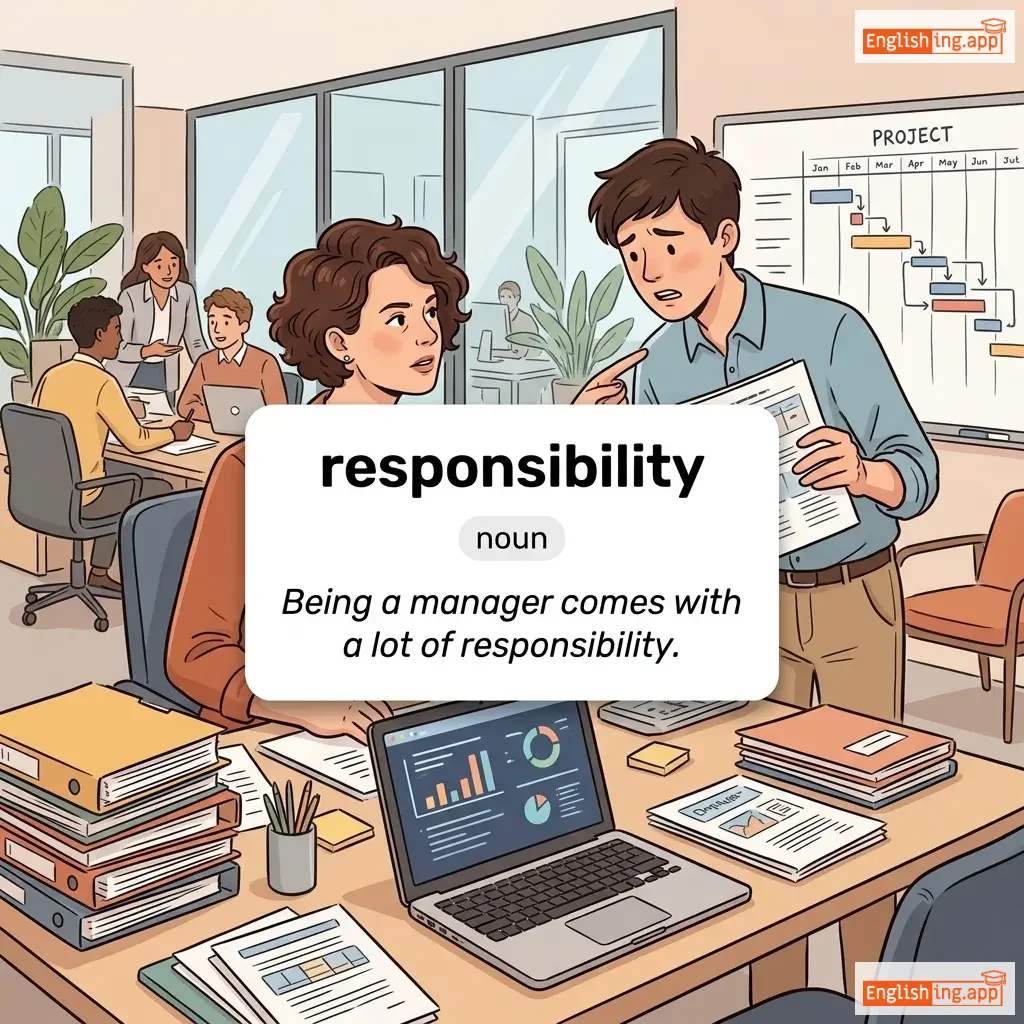
responsibility definition card — visual illustration of the meaning
noun
/rɪˌspɒnsɪˈbɪləti/
responsabilidad (responsabilidad)

the state or fact of having a duty to deal with something or having control over someone

"Being a manager comes with a lot of responsibility."

"Ser gerente conlleva mucha responsabilidad." (Ser gerente conlleva mucha responsabilidad.)
adjective
/rɪˈspɒnsɪbl/
responsable (responsable)

having an obligation to do something or being the cause of something

"She is responsible for managing the project."

"Ella es responsable de gestionar el proyecto." (Ella es responsable de gestionar el proyecto.)
adjective
/rɪˈspɒnsɪv/
responsivo (responsivo)

Reacting quickly and positively to something

"The website is fully responsive on all devices."

"El sitio web es completamente responsivo en todos los dispositivos." (El sitio web es completamente responsivo en todos los dispositivos.)
noun
/rɪˈspɒnsɪvnəs/
sensibilidad (sensibilidad)

The quality of reacting quickly and positively

"The manager appreciated her responsiveness to customer feedback."

"El gerente apreció su sensibilidad ante los comentarios de los clientes." (El gerente apreció su sensibilidad ante los comentarios de los clientes.)
noun, verb
/rɛst/
descanso (descanso)

to cease work or movement in order to relax or recover strength

"He needs to rest after the long journey."

"Él necesita descansar después del largo viaje." (El necesita descansar despues del largo viaje.)
noun
/ˈrɛst(ə)rɒnt/
restaurante (restaurante)

a place where meals are prepared and served to customers

"We went to the restaurant for dinner."

"Fuimos al restaurante para la cena." (Fuimos al restaurante para la cena.)
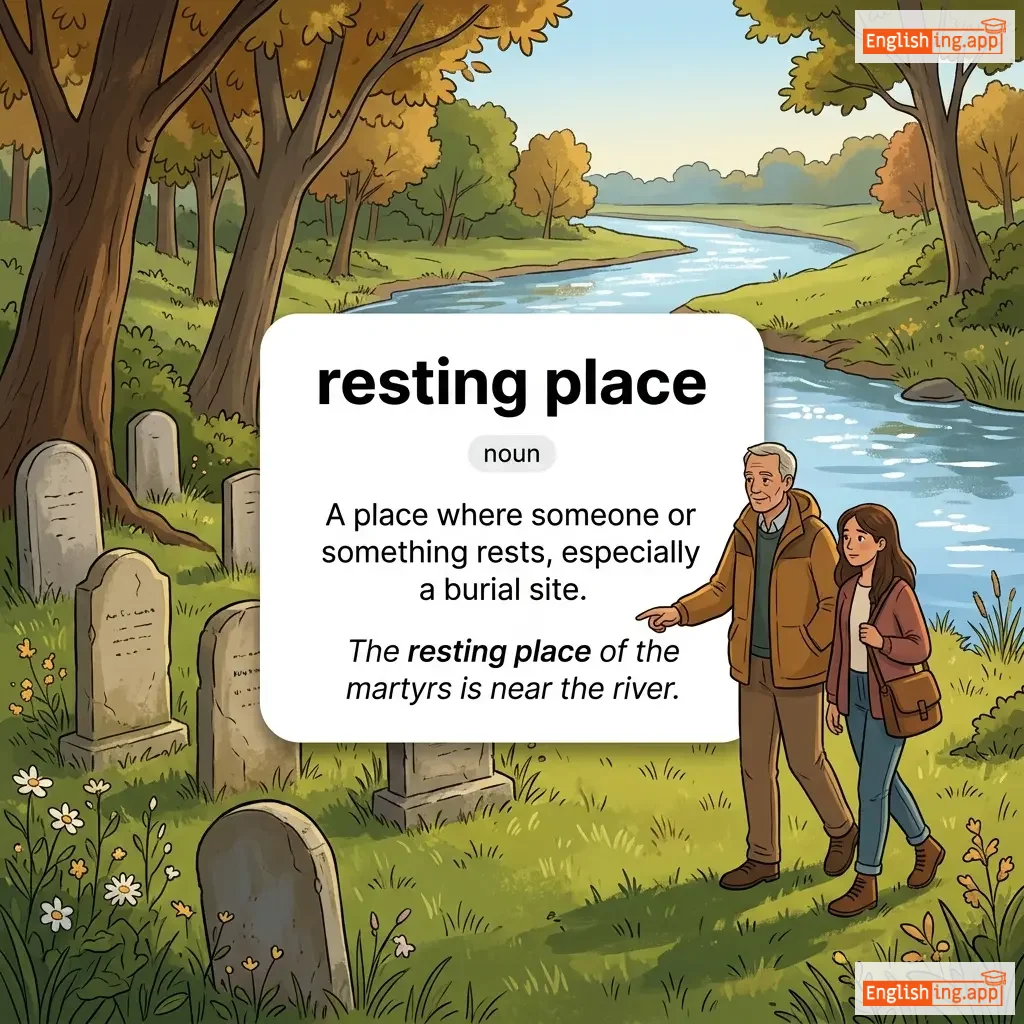
resting place definition card — visual illustration of the meaning
noun
ˈrɛstɪŋ pleɪs
lugar de descanso (lugar de descanso)

A place where someone or something rests, especially a burial site.

"The resting place of the martyrs is near the river."

"El lugar de descanso de los mártires está cerca del río." (El lugar de descanso de los mártires está cerca del río.)
noun
/ˌrɛstɪˈtjuːʃən/
restitución (restitucion)

The act of restoring something to its rightful owner or compensating for loss

"The court ordered restitution to the victims of the fraud."

"El tribunal ordenó la restitución a las víctimas del fraude." (El tribunal ordenó la restitución a las víctimas del fraude.)
adjective
/ˈrɛstɪv/
inquieto (inquieto)

unable to stay still or silent; restless and impatient

"The crowd grew restive as they waited for the concert to begin."

"La multitud se volvió inquieta mientras esperaban a que comenzara el concierto." (La multitud se volvio inquieta mientras esperaban a que comenzara el concierto.)
adjective
/ˈrɛstləs/
felicidad (felicidad)

unable to relax or remain still; constantly in motion

"He felt restless during the long meeting."

"No pudo ocultar su felicidad cuando recibió el premio." (No pudo ocultar su felicidad cuando recibió el premio.)
noun
/ˈrest.ləs.nəs/
inquietud (inquietud)

the inability to rest or relax as a result of anxiety or boredom

"His restlessness during the long meeting was obvious to everyone."

"Su inquietud durante la larga reunión fue obvia para todos." (Su inquietud durante la larga reunión fue obvia para todos.)
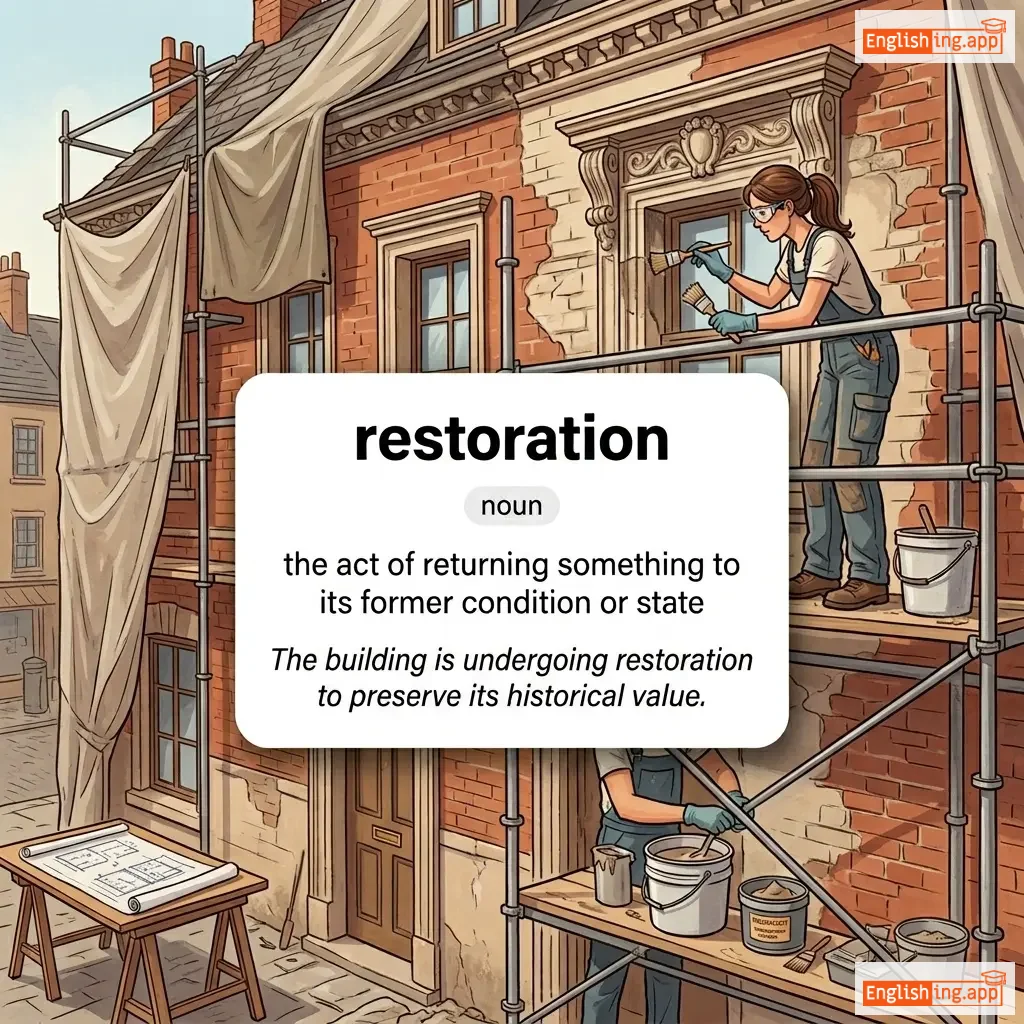
restoration definition card — visual illustration of the meaning
noun
/ˌrɛstəˈreɪʃən/
restauración (restauracion)

the act of returning something to its former condition or state

"The building is undergoing restoration to preserve its historical value."

"El edificio está siendo restaurado para preservar su valor histórico." (El edificio esta siendo restaurado para preservar su valor historico.)
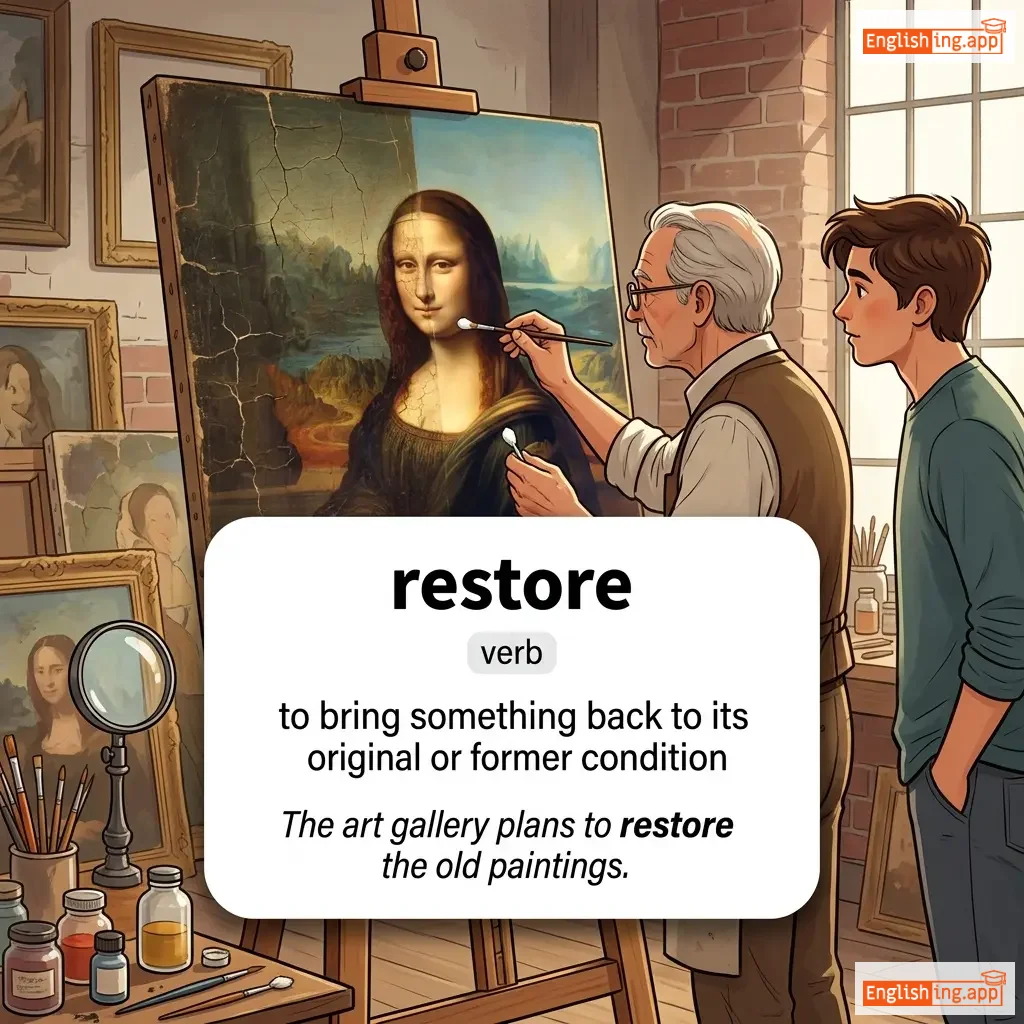
restore definition card — visual illustration of the meaning
verb
/rɪˈstɔː/
restaurar (restaurar)

to bring something back to its original or former condition

"The art gallery plans to restore the old paintings."

"La galería de arte planea restaurar las viejas pinturas." (La galería de arte planea restaurar las viejas pinturas.)
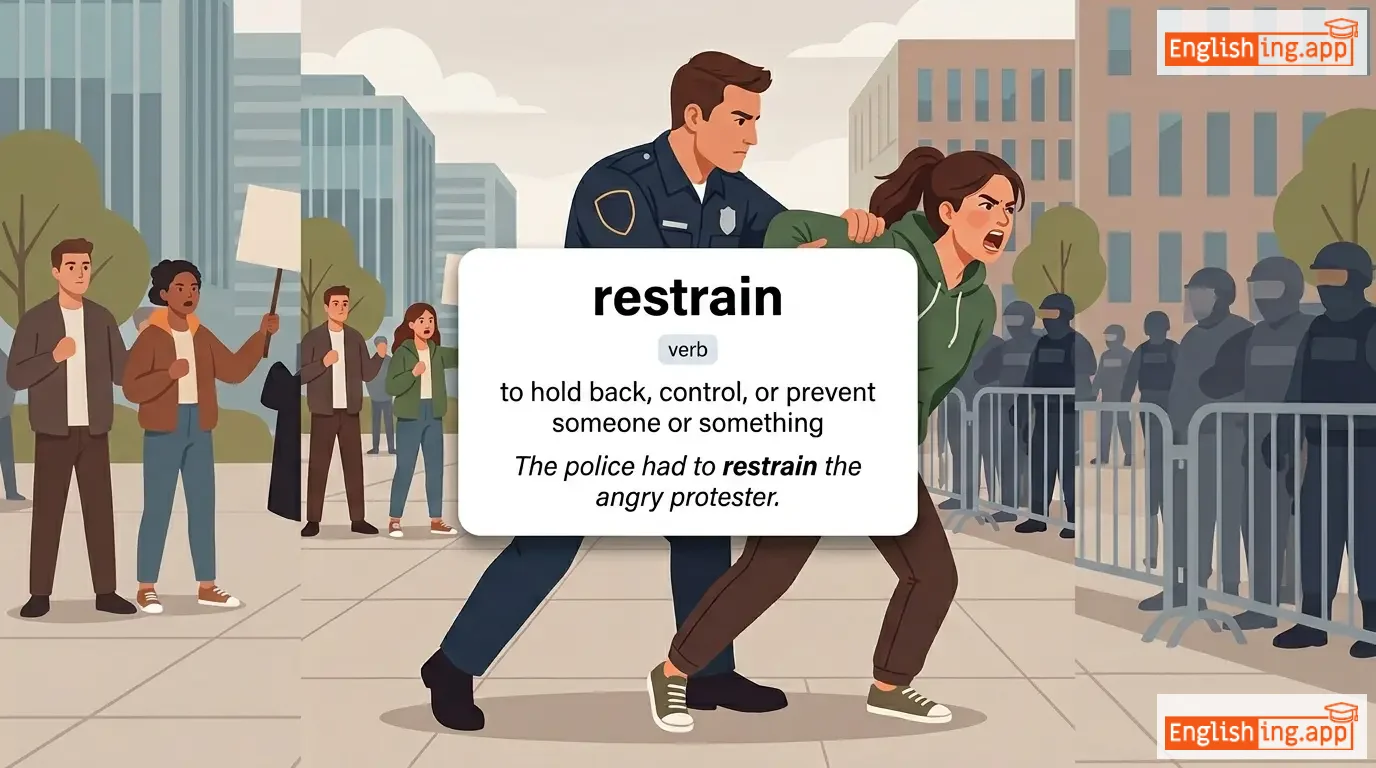
restrain definition card — visual illustration of the meaning
verb
/rɪˈstreɪn/
contener (contener)

to hold back, control, or prevent someone or something

"The police had to restrain the angry protester."

"La policía tuvo que contener al manifestante enojado." (La policia tuvo que contener al manifestante enojado.)
adjective
/rɪˈstreɪnd/
restricto (restricto)

characterized by reserve or self-control; held back

"Her restrained reaction surprised everyone."

"Su reacción restringida sorprendió a todos." (Su reaccion restringida sorprendio a todos.)
noun
/rɪˈstreɪnt/
restricción (restriccion)

the act of holding back or controlling; self-control

"He showed great restraint in not responding to the insult."

"Él mostró gran restricción al no responder al insulto." (El mostró gran restricción al no responder al insulto.)
verb
/rɪˈstrɪkt/
restringir (restringir)

To limit the size, amount, or range of something.

"The government decided to restrict the use of plastic bags."

"El gobierno decidió restringir el uso de bolsas de plástico." (El gobierno decidio restringir el uso de bolsas de plastico.)
adjective
/rɪˈstrɪk.tɪd/
limitado o controlado; sujeto a restricciones (limitado o controlado; sujeto a restricciones)

limited or controlled; subject to restrictions

"Access to this area is restricted to authorized personnel only."

"El acceso a esta área está restringido solo a personal autorizado." (El acceso a esta área está restringido solo a personal autorizado.)
noun
/rɪˈstrɪkʃən/
restricción (restriccion)

a rule or law that limits or controls something

"The new restrictions will affect the business hours."

"Las nuevas restricciones afectarán el horario comercial." (Las nuevas restricciones afectarán el horario comercial.)
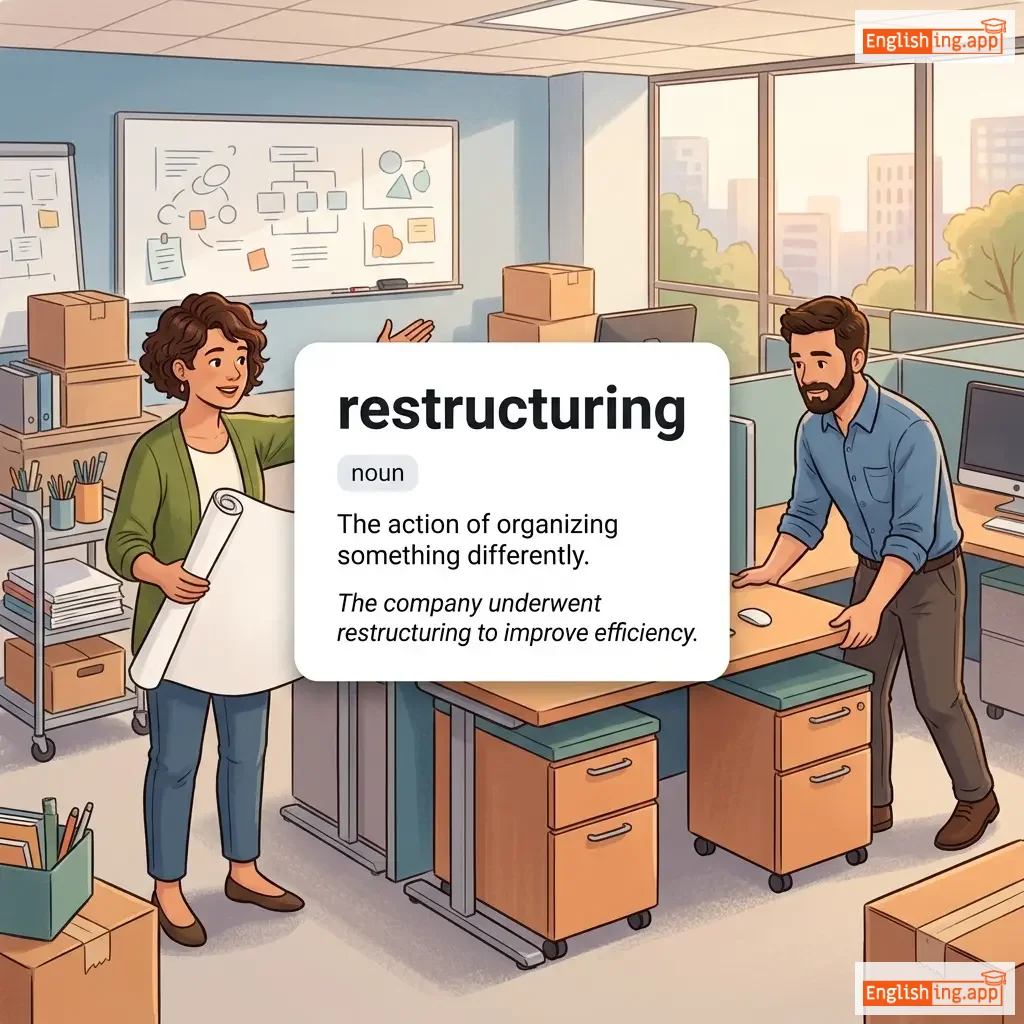
restructuring definition card — visual illustration of the meaning
noun
ˌriːˈstrʌk.tʃər.ɪŋ
reestructuración (reestructuracion)

The action of organizing something differently.

"The company underwent restructuring to improve efficiency."

"La compañía pasó por un proceso de reestructuración para mejorar la eficiencia." (La compania paso por un proceso de reestructuracion para mejorar la eficiencia.)
noun
/rɪˈzʌlt/
resultado (resultado)

a consequence, effect, or outcome of something

"The result of the test was excellent."

"El resultado de la prueba fue excelente." (El resultado de la prueba fue excelente.)
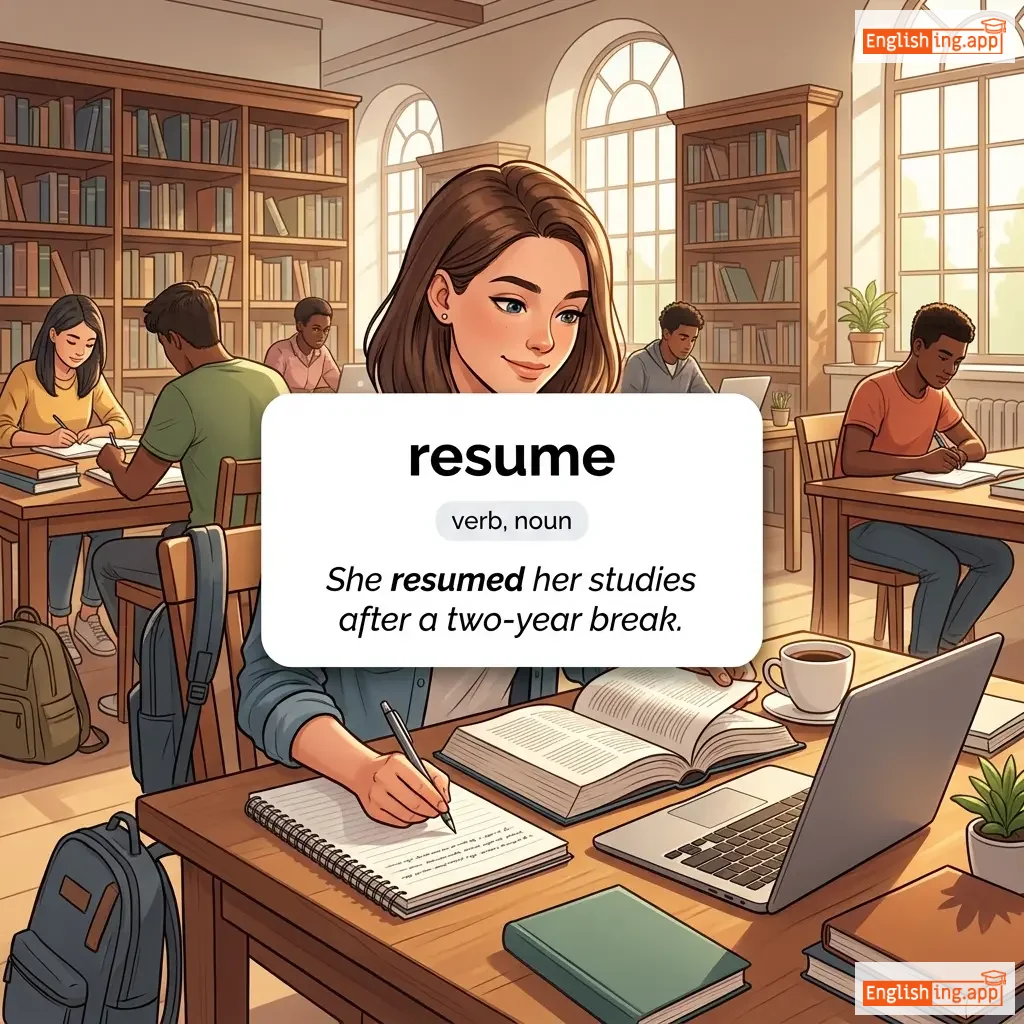
resume definition card — visual illustration of the meaning
verb, noun
/rɪˈzjuːm/ (verb), /ˈrɛzjʊmeɪ/ (noun)
reanudar / currículum (reanudar / curriculum)

to begin again after a pause; or a summary of one’s qualifications and work experience

"She resumed her studies after a two-year break."

"Ella reanudó sus estudios después de dos años de pausa." (Ella reanudó sus estudios después de dos años de pausa.)
noun
/rɪˈzʌmpʃən/
reanudar (reanudar)

The act of starting something again after a pause or interruption.

"The resumption of classes after the holidays brought excitement among students."

"La reanudación de las clases después de las vacaciones generó emoción entre los estudiantes." (La reanudacion de las clases despues de las vacaciones genero emocion entre los estudiantes.)
verb
/rɪˈsɜːrdʒ/
resurgir (resurgir)

To rise, increase, or become active again after a decline.

"Interest in traditional crafts has begun to resurge."

"El interés en las artesanías tradicionales ha comenzado a resurgir." (El interes en las artesanias tradicionales ha comenzado a resurgir.)
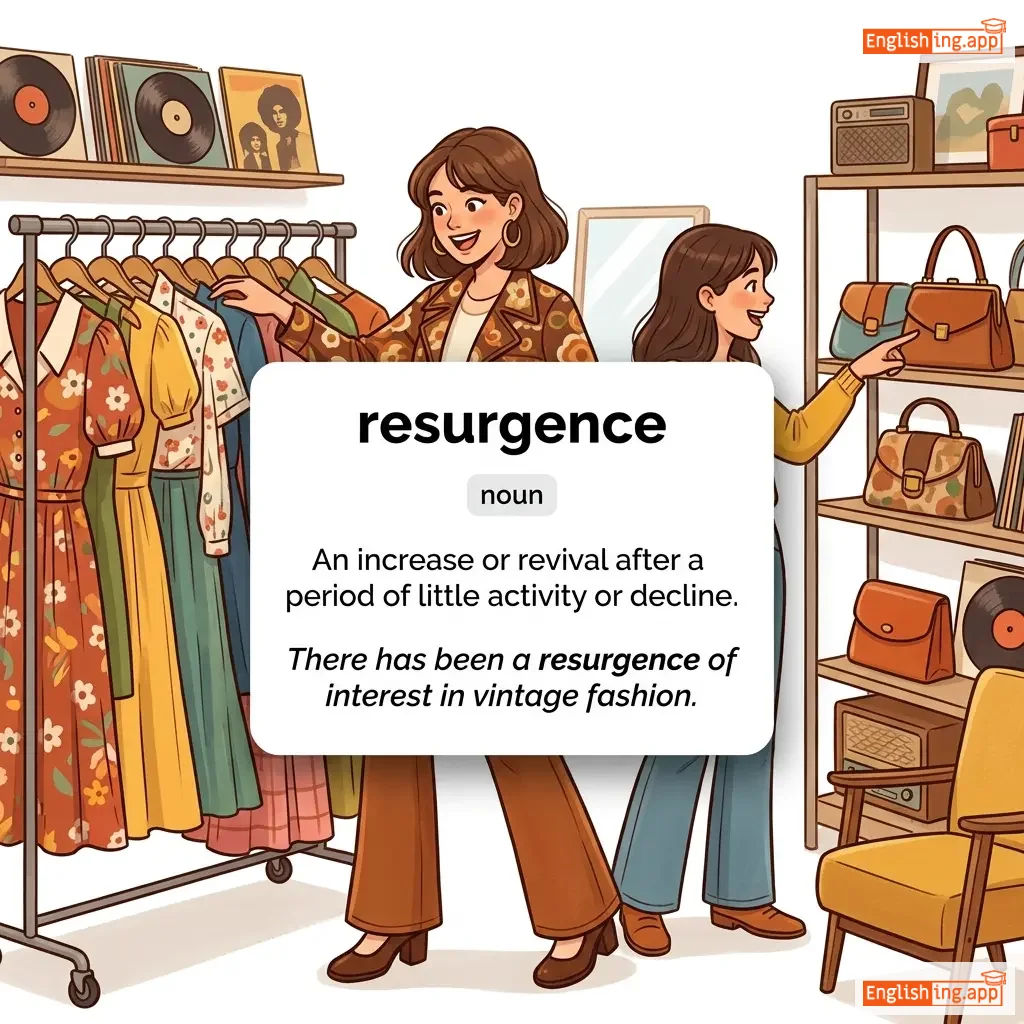
resurgence definition card — visual illustration of the meaning
noun
/rɪˈsɜːrdʒəns/
resurgimiento (resurgimiento)

An increase or revival after a period of little activity or decline.

"There has been a resurgence of interest in vintage fashion."

"Ha habido un resurgimiento de interés en la moda vintage." (Ha habido un resurgimiento de interes en la moda vintage.)
adjective
/rɪˈsɜːrdʒənt/
resurgente (resurgente)

Becoming strong, active, or popular again.

"The resurgent economy gave hope to many businesses."

"La economía resurgente dio esperanza a muchos negocios." (La economia resurgente dio esperanza a muchos negocios.)
verb
/ˌrɛzəˈrɛkt/
resucitar (resucitar)

To bring back to life or revive something from the past.

"The director decided to resurrect the old play for a new audience."

"El director decidió resucitar la obra antigua para una nueva audiencia." (El director decidió resucitar la obra antigua para una nueva audiencia.)
verb
/rɪˈsʌsɪteɪt/
resucitar (resucitar)

to revive someone from unconsciousness or apparent death

"The doctors tried to resuscitate the patient after the heart attack."

"Los doctores intentaron resucitar al paciente después del ataque al corazón." (Los doctores intentaron resucitar al paciente después del ataque al corazón.)
noun, verb
/ˈriːteɪl/
venta al por menor (venta al por menor)

the sale of goods to the public in small quantities for use or consumption rather than for resale

"The company specializes in the retail of clothing and accessories."

"La empresa se especializa en la venta al por menor de ropa y accesorios." (La empresa se especializa en la venta al por menor de ropa y accesorios.)
noun
/ˈriːteɪlər/
minorista (minorista)

a person or business that sells goods to consumers rather than to other businesses

"The retailer offers discounts on electronic products."

"El minorista ofrece descuentos en productos electrónicos." (El minorista ofrece descuentos en productos electrónicos.)
verb
/rɪˈteɪn/
retener (retener)

to keep possession of something

"The company decided to retain its experienced employees."

"La empresa decidió retener a sus empleados experimentados." (La empresa decidió retener a sus empleados experimentados.)
noun
/rɪˈteɪnər/
anticipo / retenedor (anticipo / retenedor)

a fee paid in advance to secure someone's services, or a device that holds something in place

"The lawyer asked for a retainer before taking the case."

"El abogado pidió un anticipo antes de tomar el caso." (El abogado pidió un anticipo antes de tomar el caso.)
verb
/rɪˈtælieɪt/
vengar (vengar)

to make an attack in return for a similar attack

"The army retaliated after the enemy attack."

"El ejército se vengó después del ataque enemigo." (El ejercito se vengo despues del ataque enemigo.)
noun
/rɪˌtæl.iˈeɪ.ʃən/
represalia (represalia)

the action of returning a military attack; counterattack; revenge for an injury or wrong

"The country threatened retaliation against any act of aggression."

"El país amenazó con represalias contra cualquier acto de agresión." (El pais amenazo con represalias contra cualquier acto de agresion.)
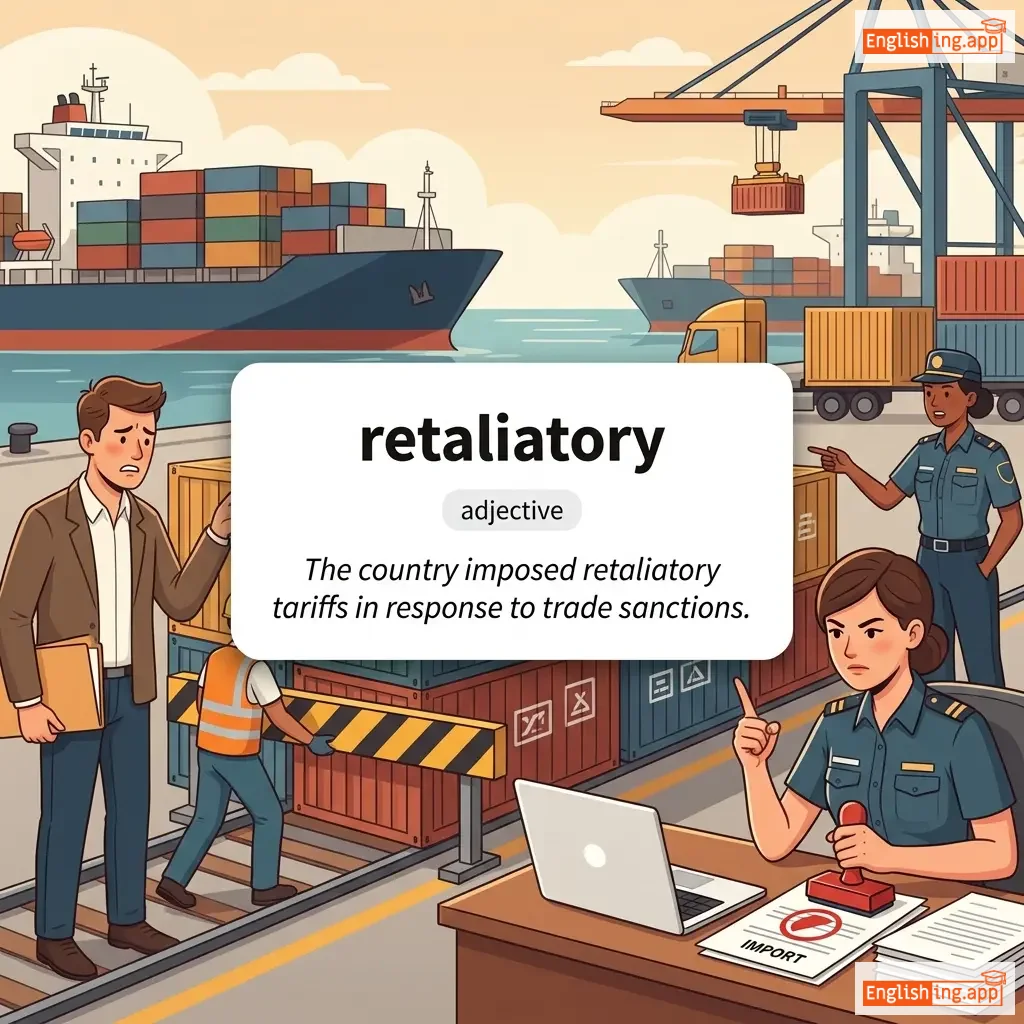
retaliatory definition card — visual illustration of the meaning
adjective
/rɪˈtæl.i.ə.tɔːr.i/
represaliatorio (represaliatorio)

Taking action in response to another's action, characterized as punitive, revengeful, or counteractive.

"The country imposed retaliatory tariffs in response to trade sanctions."

"El país impuso aranceles represaliatorios en respuesta a las sanciones comerciales." (El pais impuso aranceles represaliatorios en respuesta a las sanciones comerciales.)
verb
/rɪˈtɑːrd/
retrasar / ralentizar (retrasar / ralentizar)

to delay or slow down the progress of something

"Lack of funds may retard the development of the project."

"La falta de fondos puede retrasar el desarrollo del proyecto." (La falta de fondos puede retrasar el desarrollo del proyecto.)
verb
/rɛtʃ/
felicidad (felicidad)

to make the sound and movement of vomiting without bringing anything up

"The smell of spoiled food made him retch violently."

"Ella no pudo ocultar su felicidad cuando recibió el premio." (Ella no pudo ocultar su felicidad cuando recibio el premio.)
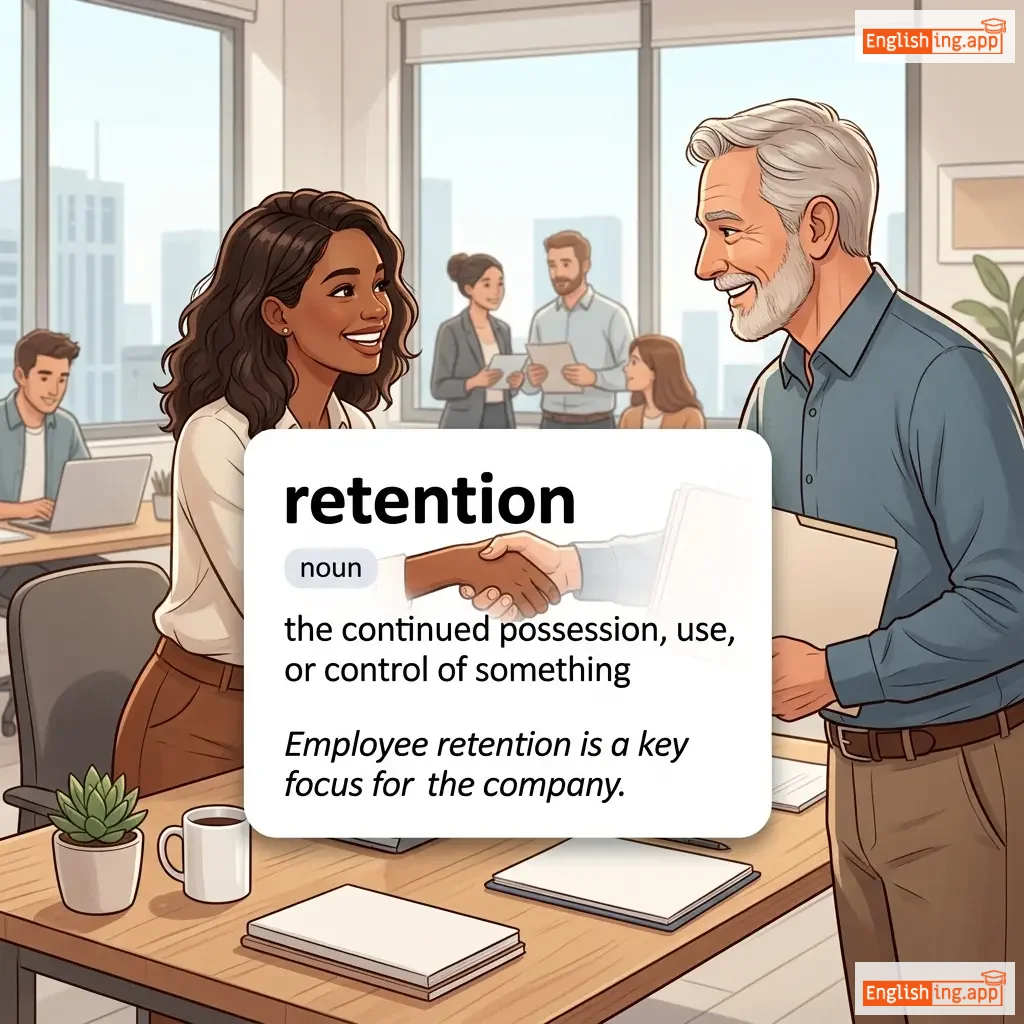
retention definition card — visual illustration of the meaning
noun
/rɪˈtɛnʃən/
retención (retencion)

the continued possession, use, or control of something

"Employee retention is a key focus for the company."

"La retención de empleados es un enfoque clave para la empresa." (La retencion de empleados es un enfoque clave para la empresa.)
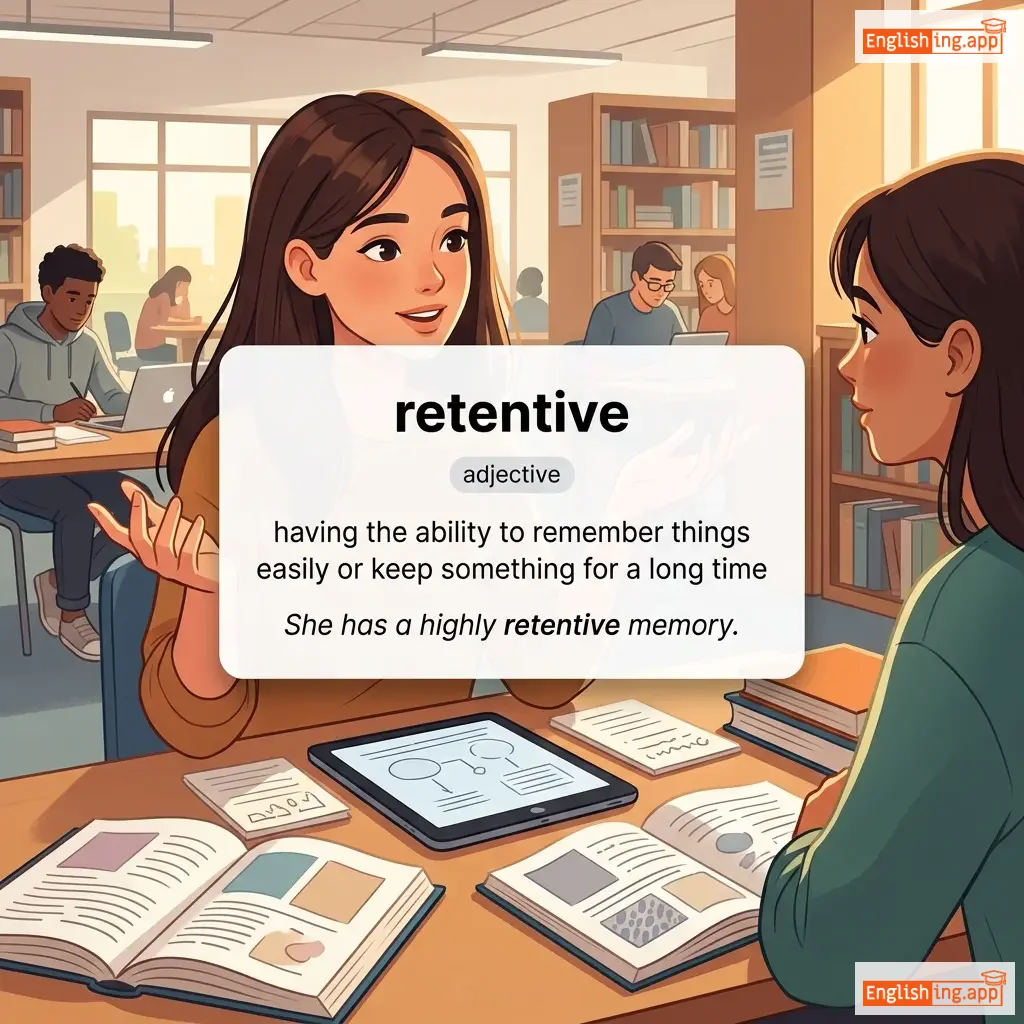
retentive definition card — visual illustration of the meaning
adjective
/rɪˈtɛntɪv/
memoria retentiva (memoria retentiva)

having the ability to remember things easily or keep something for a long time

"She has a highly retentive memory."

"Ella tiene una memoria muy retentiva." (Ella tiene una memoria muy retentiva.)
noun
/ˈrɛtɪsəns/
reticencia (retisensia)

the quality of being reserved or unwilling to speak freely

"His reticence made it difficult to know what he was thinking."

"Su reticencia hizo que fuera difícil saber lo que estaba pensando." (Su reticencia hizo que fuera difícil saber lo que estaba pensando.)
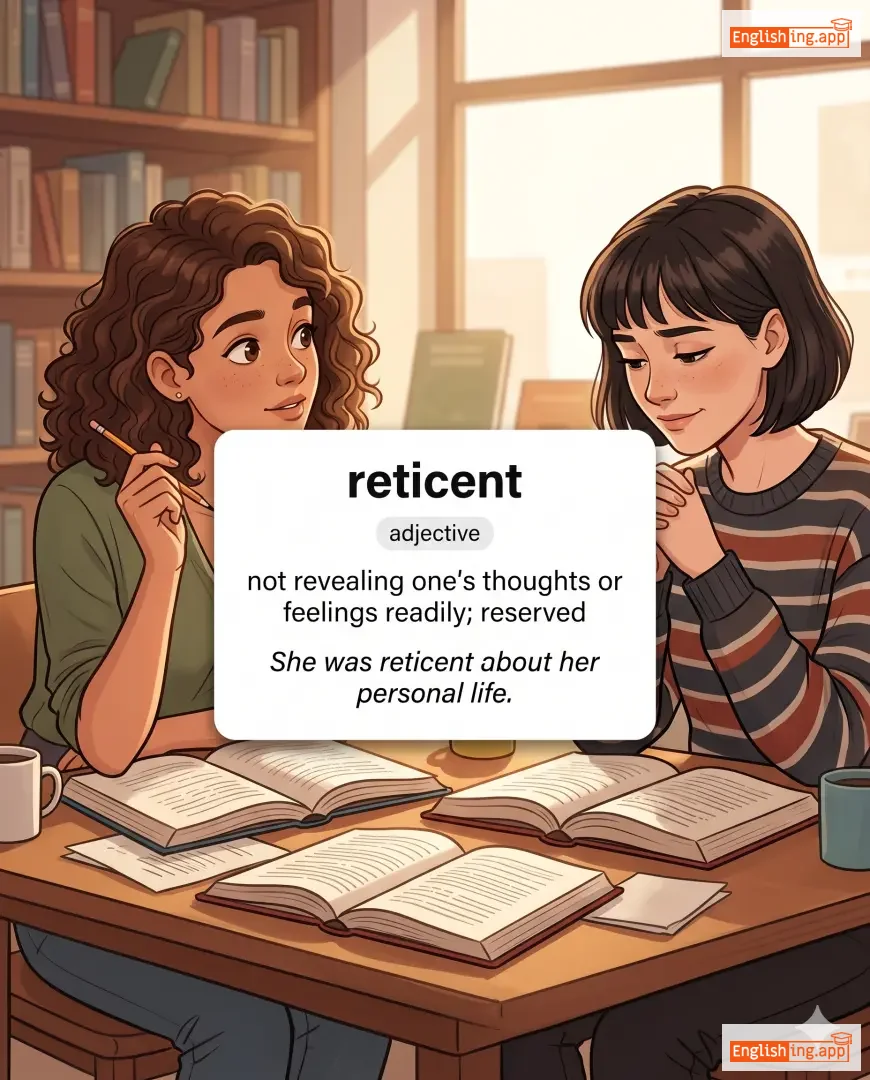
reticent definition card — visual illustration of the meaning
adjective
/ˈrɛtɪsənt/
reservado (reservado)

not revealing one's thoughts or feelings readily; reserved

"She was reticent about her personal life."

"Ella estaba reservada sobre su vida personal." (Ella estaba reservada sobre su vida personal.)
adjective
/rɪˈtɪkjʊlət/
reticulado (reticulado)

Having a net-like pattern or structure.

"The leaf had a reticulate pattern of veins."

"La hoja tenía un patrón reticulado de venas." (La hoja tenía un patrón reticulado de venas.)
noun
/ˈrɛtɪnjuː/
seguidores (seguidores)

A group of attendants or followers accompanying an important person.

"The king entered the hall followed by his retinue."

"El rey entró al salón seguido por sus seguidores." (El rey entro al salon seguido por sus seguidores.)