Vocabularios

Descubra, aprenda y domine el vocabulario en inglés

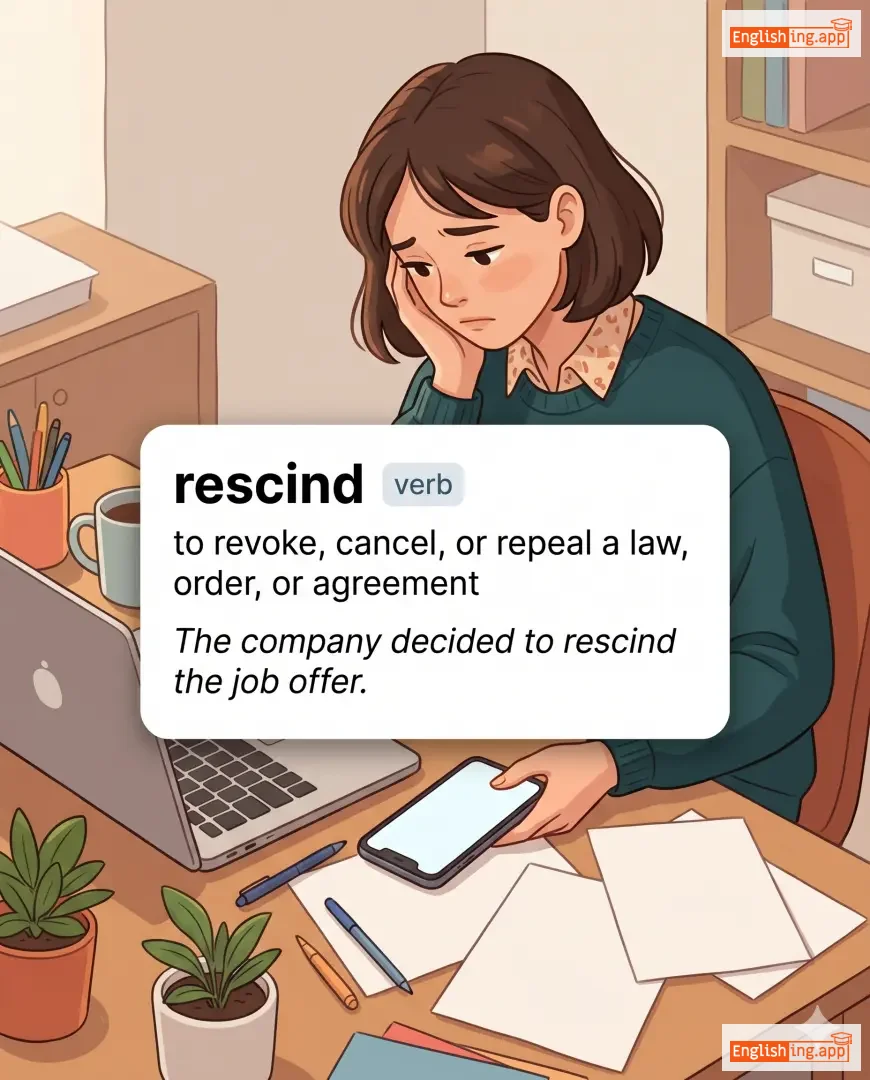
rescind definition card — visual illustration of the meaning
verb
/rɪˈsɪnd/
rescindir (rescindir)

to revoke, cancel, or repeal a law, order, or agreement

"The company decided to rescind the job offer."

"La empresa decidió rescindir la oferta de trabajo." (La empresa decidió rescindir la oferta de trabajo.)
noun
/rɪˈsɪʒən/
rescisión (rescision)

the cancellation or annulment of a law, contract, or agreement

"The rescission of the contract left both parties disappointed."

"La rescisión del contrato dejó a ambas partes decepcionadas." (La rescision del contrato dejo a ambas partes decepcionadas.)
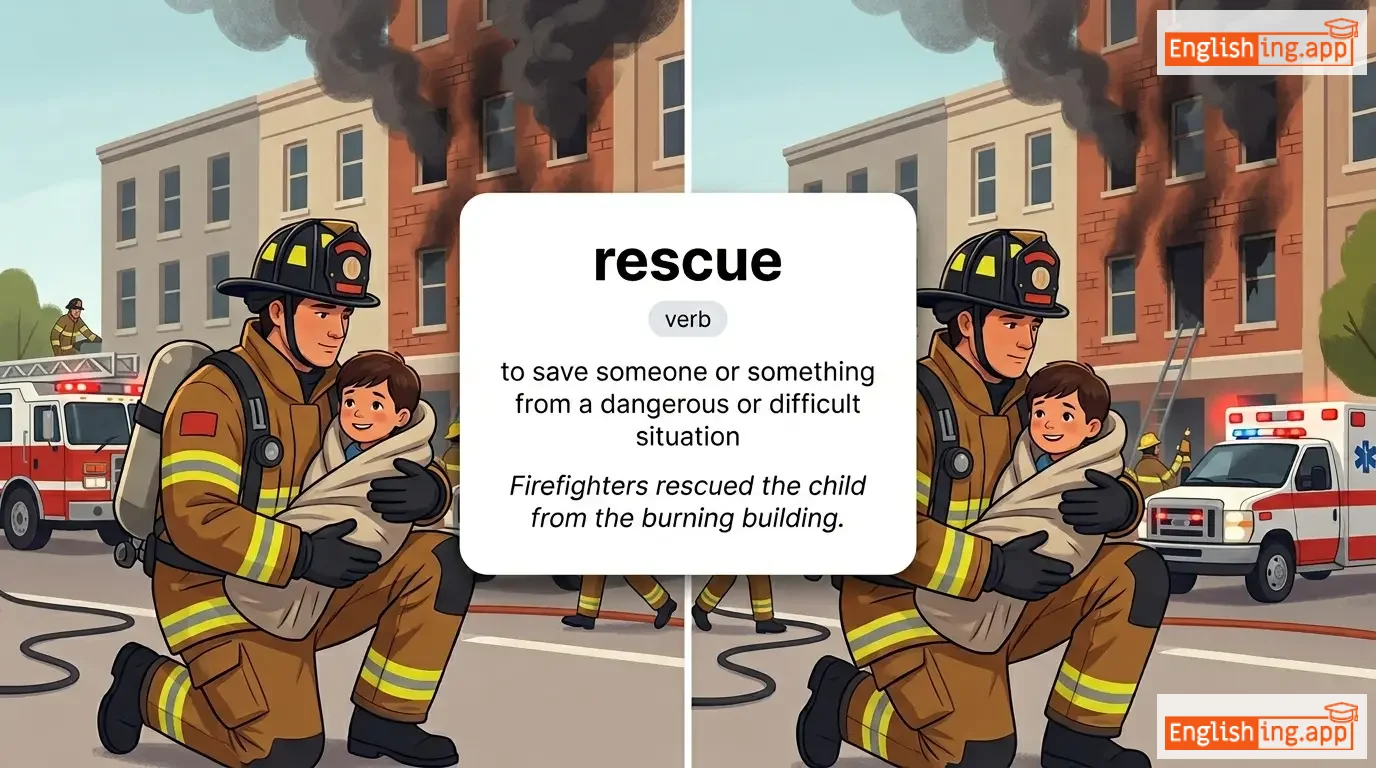
rescue definition card — visual illustration of the meaning
verb
/ˈrɛskjuː/
rescatar (rescatar)

to save someone or something from a dangerous or difficult situation

"Firefighters rescued the child from the burning building."

"Los bomberos rescataron al niño del edificio en llamas." (Los bomberos rescataron al niño del edificio en llamas.)
research definition card — visual illustration of the meaning
noun
/rɪˈsɜːtʃ/
investigación (investigacion)

the systematic investigation into and study of materials and sources in order to establish facts and reach new conclusions

"She conducted research on climate change effects."

"Ella realizó una investigación sobre los efectos del cambio climático." (Ella realizo una investigacion sobre los efectos del cambio climatico.)
noun
/rɪˈsɜːtʃə(r)/
investigador (investigador)

a person who conducts research

"The researcher published her findings in a scientific journal."

"El investigador publicó sus hallazgos en una revista científica." (El investigador publico sus hallazgos en una revista cientifica.)
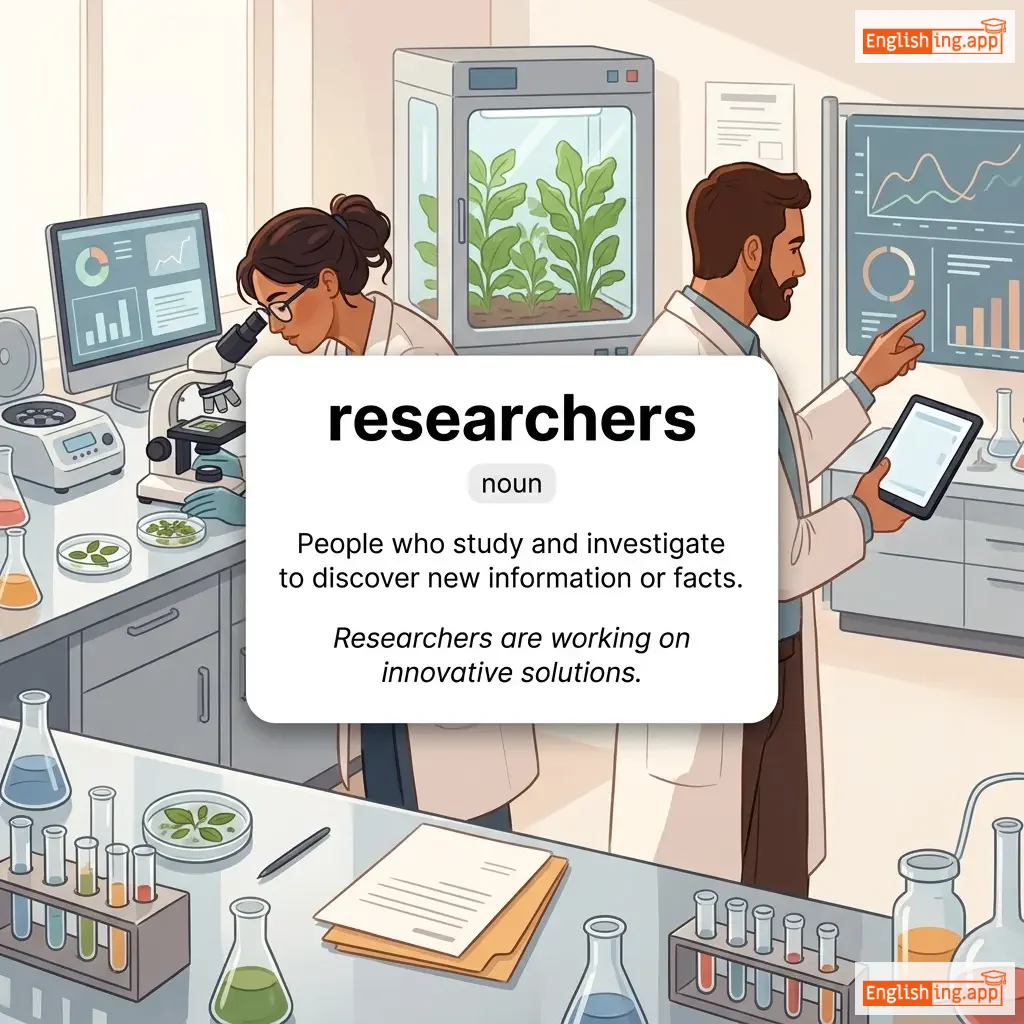
researchers definition card — visual illustration of the meaning
noun
rɪˈsɜː.tʃəz
investigadores (investigadores)

People who study and investigate to discover new information or facts.

"Researchers are working on innovative solutions."

"Los investigadores están trabajando en soluciones innovadoras." (Los investigadores están trabajando en soluciones innovadoras.)
verb
/ˌriːˈsiːt/
reubicar (reubicar)

to seat someone again or to fit something back into its place

"The usher had to reseat the guests after the interruption."

"El acomodador tuvo que reubicar a los invitados después de la interrupción." (El acomodador tuvo que reubicar a los invitados después de la interrupción.)
noun
/rɪˈzembləns/
semejanza (semehanza)

the state of being alike or similar, especially in appearance

"There is a strong resemblance between the two brothers."

"Hay una fuerte semejanza entre los dos hermanos." (Hay una fuerte semejanza entre los dos hermanos.)
verb
/rɪˈzɛmbəl/
parecerse a (parecerse a)

to look like or be similar to something or someone

"She resembles her mother in both appearance and mannerisms."

"Ella se parece a su madre tanto en su apariencia como en sus gestos." (Ella se parece a su madre tanto en su apariencia como en sus gestos.)
verb
/rɪˈzɛnt/
resentir (resentir)

to feel bitterness or displeasure about something or someone

"She began to resent the constant criticism from her boss."

"Ella comenzó a resentir la constante crítica de su jefe." (Ella comenzó a resentir la constante crítica de su jefe.)
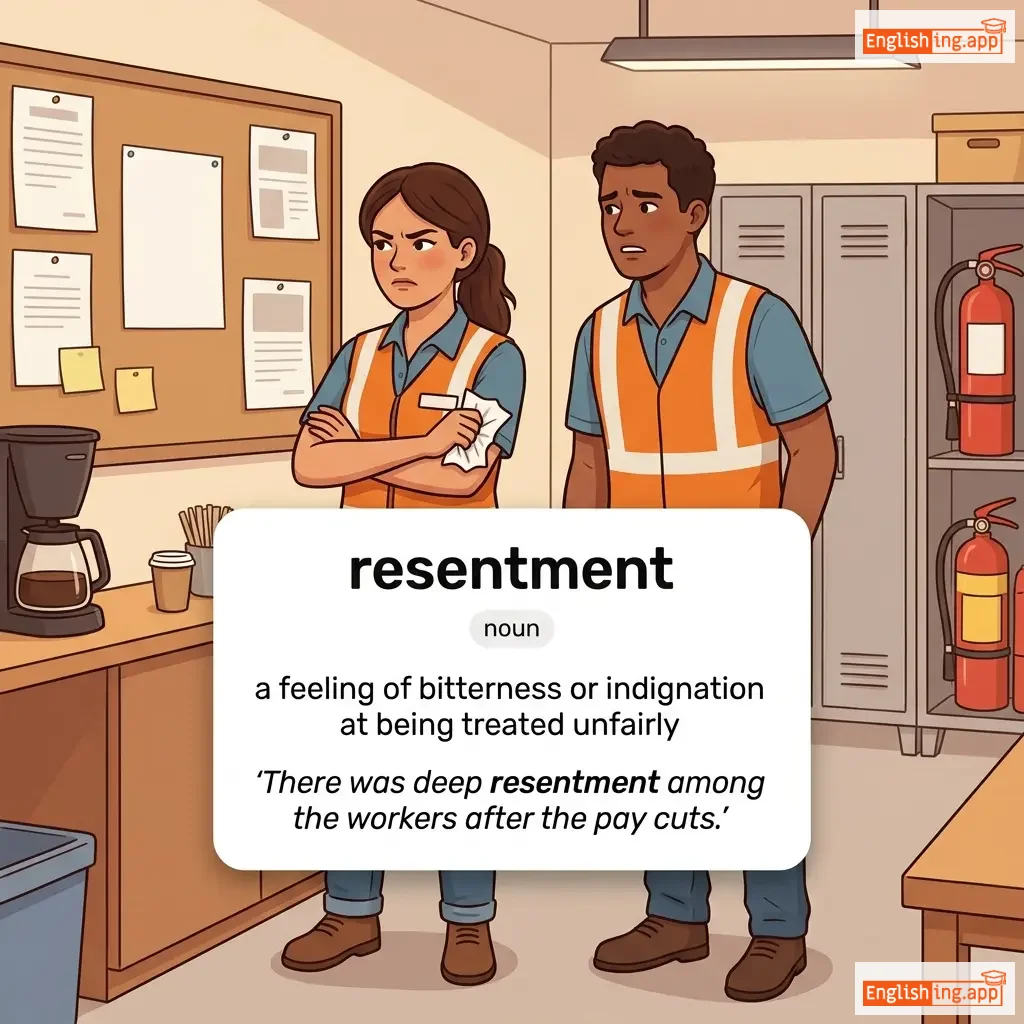
resentment definition card — visual illustration of the meaning
noun
/rɪˈzɛntmənt/
resentimiento (resentimiento)

a feeling of bitterness or indignation at being treated unfairly

"There was deep resentment among the workers after the pay cuts."

"Hubo un profundo resentimiento entre los trabajadores después de los recortes salariales." (Hubo un profundo resentimiento entre los trabajadores después de los recortes salariales.)
noun
/ˌrɛzərˈveɪʃən/
reserva (reserva)

an arrangement made in advance to secure accommodation, a seat, or service

"He made a reservation at the hotel for the weekend."

"Hizo una reservación en el hotel para el fin de semana." (Hizo una reservación en el hotel para el fin de semana.)
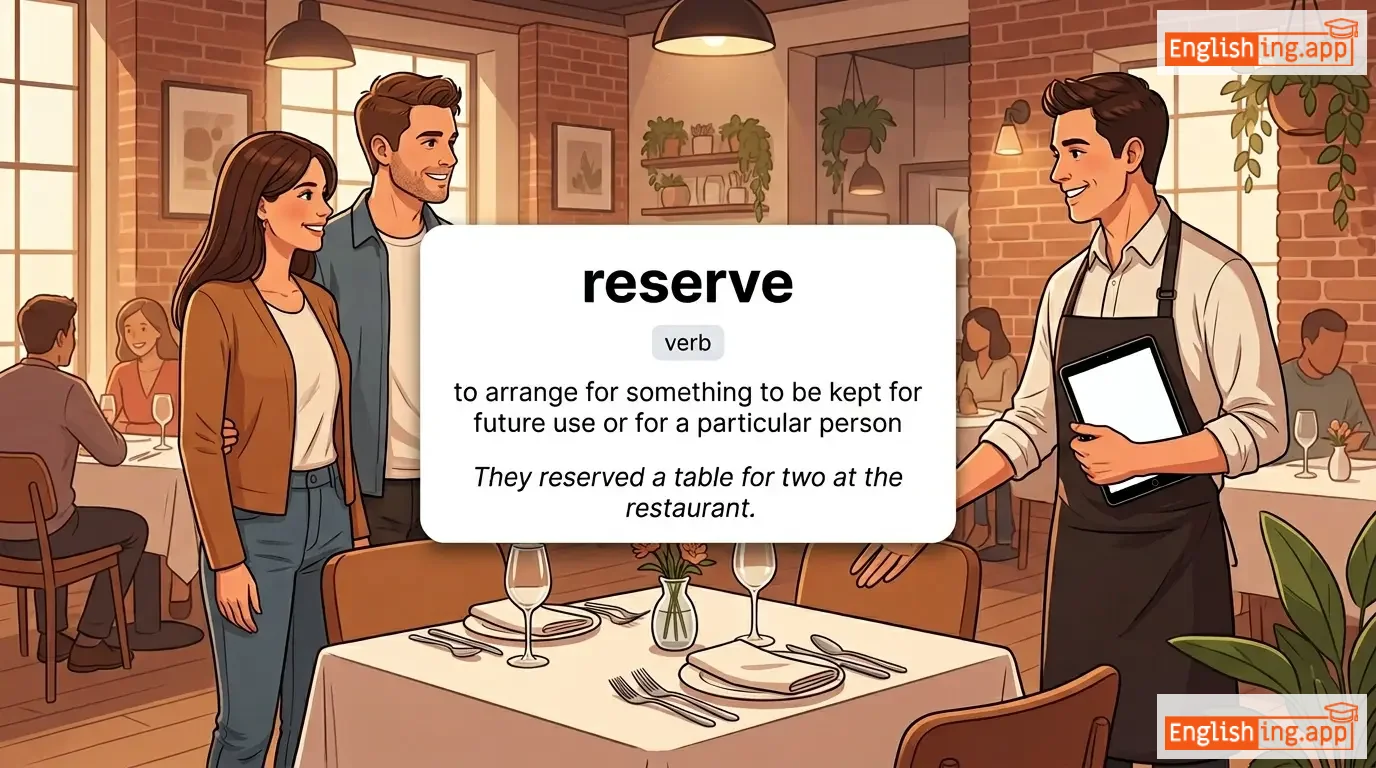
reserve definition card — visual illustration of the meaning
verb
/rɪˈzɜːrv/
reservar (reservar)

to arrange for something to be kept for future use or for a particular person

"They reserved a table for two at the restaurant."

"Ellos reservaron una mesa para dos en el restaurante." (Ellos reservaron una mesa para dos en el restaurante.)
adjective
/rɪˈzɜːrvd/
reservado / contenido (reservado / contenido)

quiet, restrained, or not openly expressive of feelings

"He is a reserved person who rarely shares his thoughts."

"Él es una persona reservada que rara vez comparte sus pensamientos." (El es una persona reservado que rara vez comparte sus pensamientos.)
noun
/ˈrɛzərvwɑːr/
embalse (embalse)

A large natural or artificial lake used as a source of water supply.

"The city built a new reservoir to ensure enough drinking water for its residents."

"La ciudad construyó un nuevo embalse para garantizar suficiente agua potable para sus residentes." (La ciudad construyó un nuevo embalse para garantizar suficiente agua potable para sus residentes.)
verb
/rɪˈzaɪd/
residir (residir)

to live or dwell in a particular place

"They reside in a large house near the river."

"Ellos residen en una casa grande cerca del río." (Ellos residen en una casa grande cerca del río.)
noun
/ˈrɛzɪdəns/
residencia (residencia)

a place where someone lives; a home or dwelling

"He recently moved to a new residence near the city center."

"Recientemente se mudó a una nueva residencia cerca del centro de la ciudad." (Recientemente se mudó a una nueva residencia cerca del centro de la ciudad.)
noun
/ˈrɛzɪdənt/
residente (residente)

A person who lives in a particular place.

"Every resident of the building must follow the safety rules."

"Cada residente del edificio debe seguir las reglas de seguridad." (Cada residente del edificio debe seguir las reglas de seguridad.)
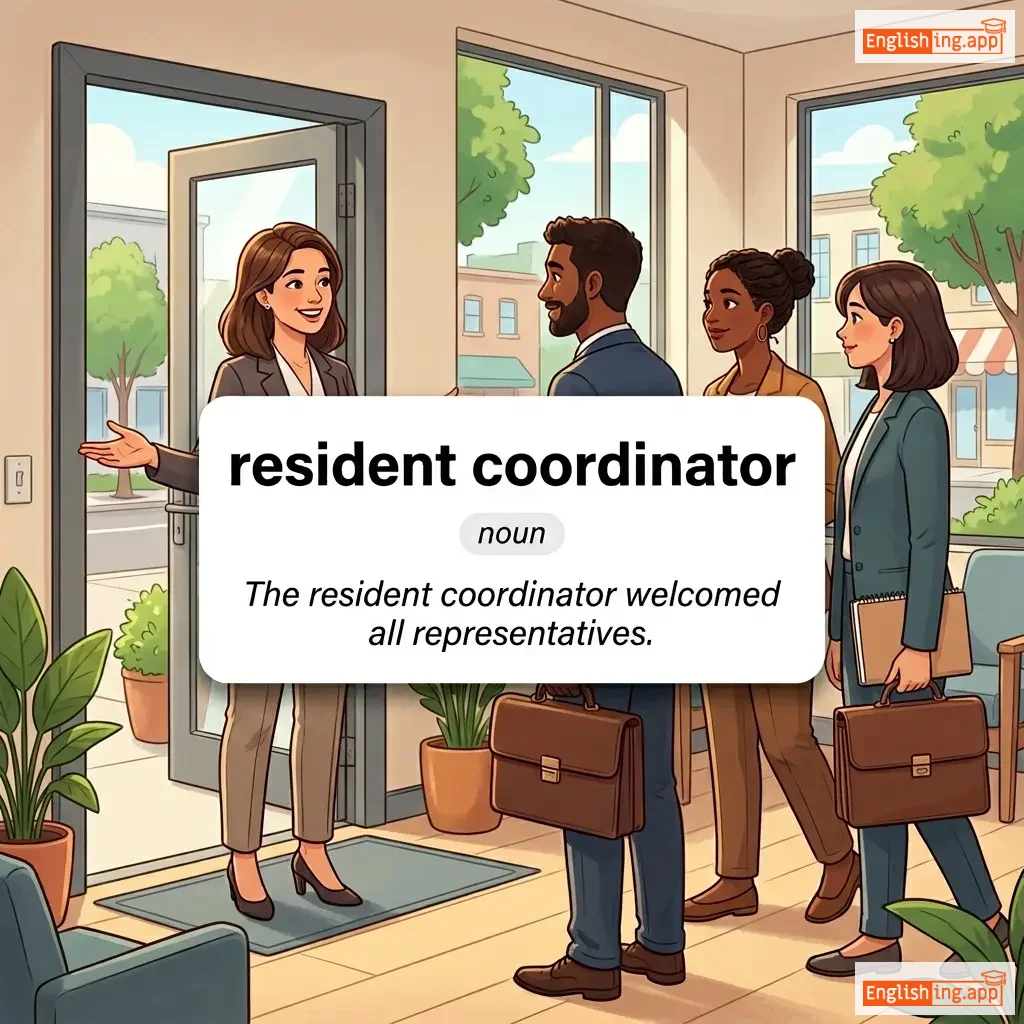
resident coordinator definition card — visual illustration of the meaning
noun
/ˈrez.ɪ.dənt ˈkəʊ.ɔː.dɪ.neɪ.tər/
coordinador residente (coordinador residente)

A local administrator or official who coordinates activities in a specific region.

"The resident coordinator welcomed all representatives."

"El coordinador residente dio la bienvenida a todos los representantes." (El coordinador residente dio la bienvenida a todos los representantes.)
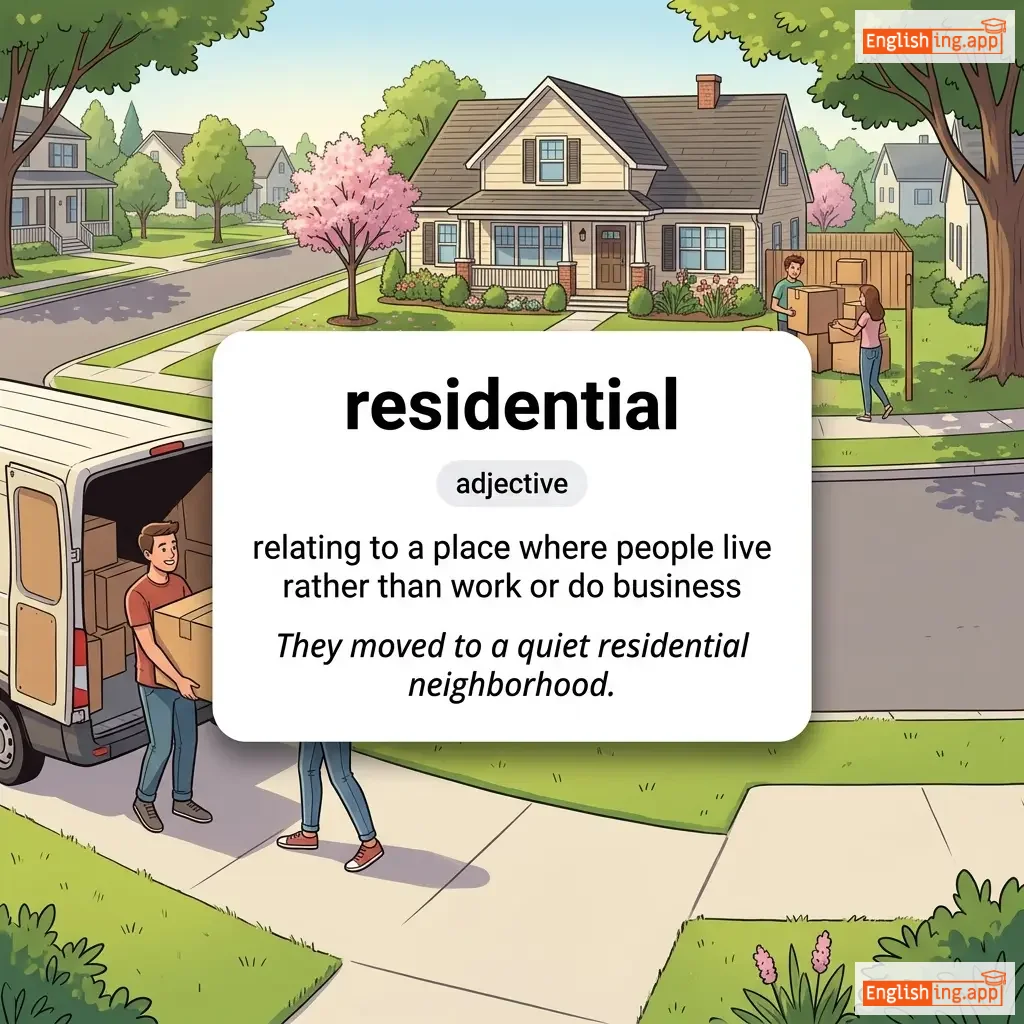
residential definition card — visual illustration of the meaning
adjective
/ˌrɛzɪˈdɛnʃəl/
residencial (residencial)

relating to a place where people live rather than work or do business

"They moved to a quiet residential neighborhood."

"Se mudaron a un tranquilo vecindario residencial." (Se mudaron a un tranquilo vecindario residencial.)
adjective
/rɪˈzɪdjuəl/
residual (residual)

Remaining after the greater part has gone.

"The patient experienced residual pain after the surgery."

"El paciente experimentó dolor residual después de la cirugía." (El paciente experimento dolor residual despues de la cirugia.)
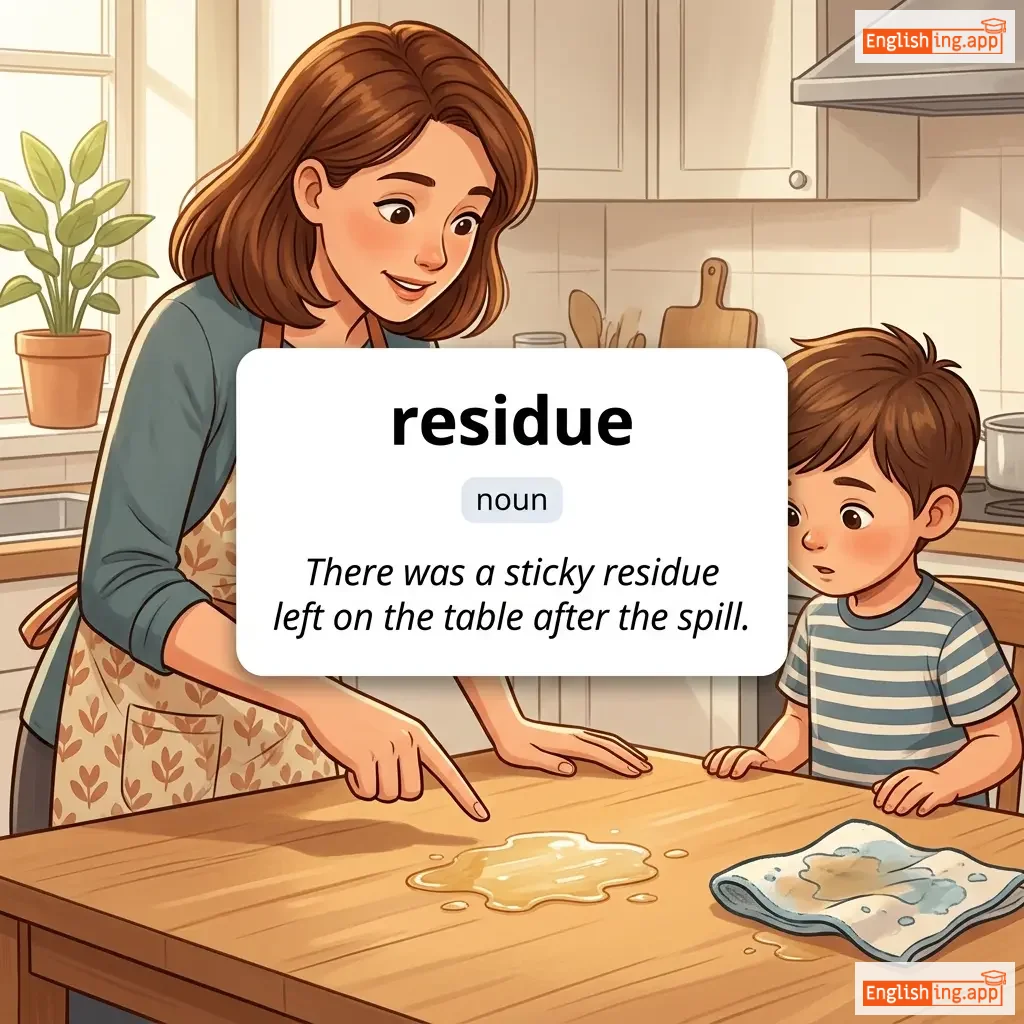
residue definition card — visual illustration of the meaning
noun
/ˈrɛzɪdjuː/
residuo (residuo)

A small amount of something that remains after the main part has been removed or used.

"There was a sticky residue left on the table after the spill."

"Quedó un residuo pegajoso sobre la mesa después del derrame." (Quedo un residuo pegajoso sobre la mesa despues del derrame.)
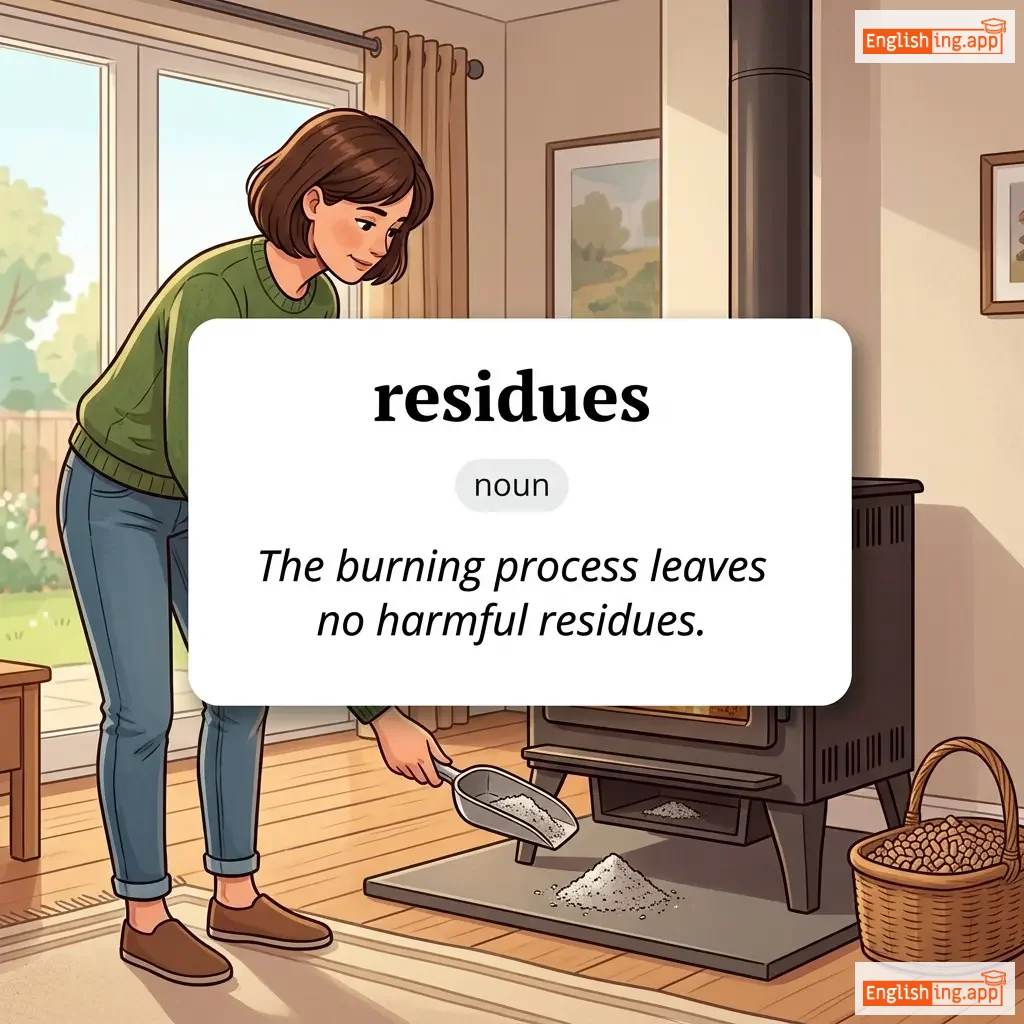
residues definition card — visual illustration of the meaning
noun
ˈrez.ɪ.djuːz
restos (restos)

A small amount of something that remains after the main part has gone or been taken or used.

"The burning process leaves no harmful residues."

"El proceso de combustión no deja residuos dañinos." (El proceso de combustion no deja residuos daninos.)
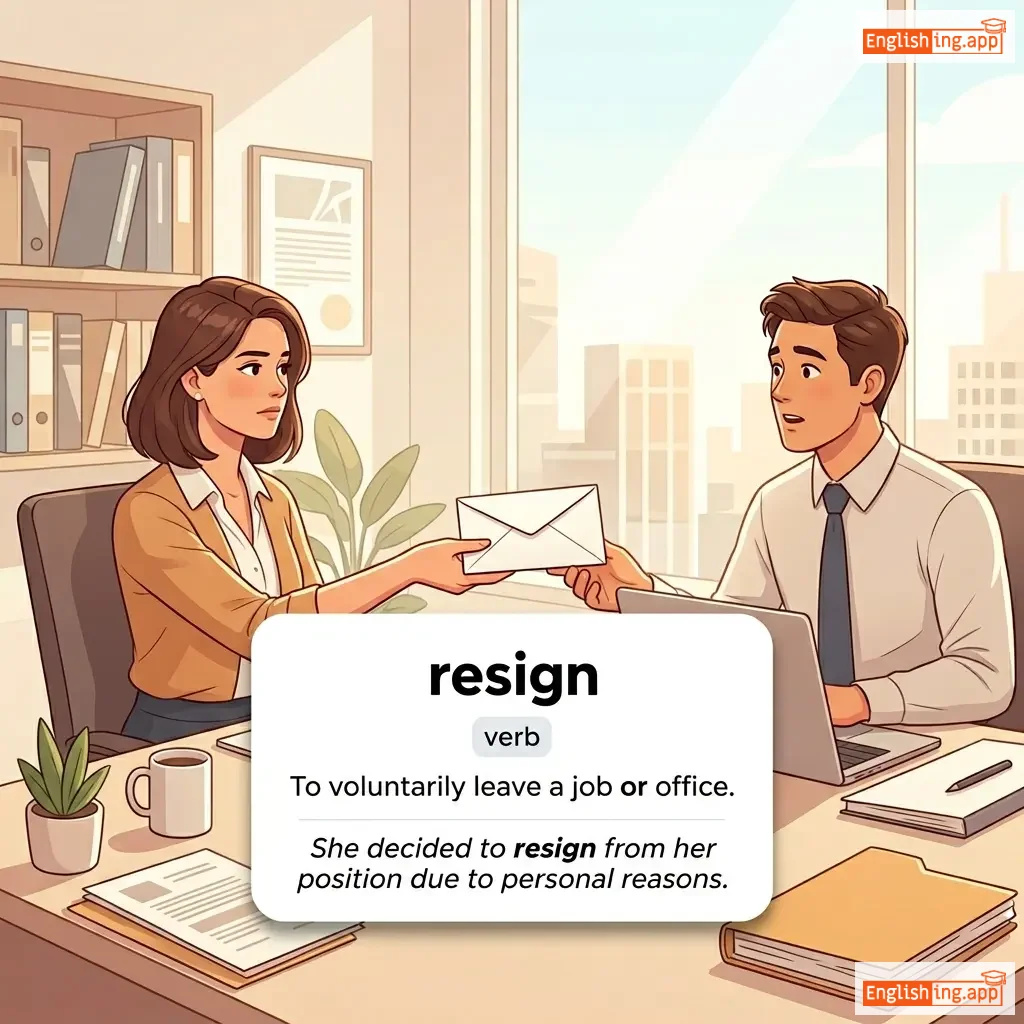
resign definition card — visual illustration of the meaning
verb
/rɪˈzaɪn/
renunciar (renunciar)

To voluntarily leave a job or office.

"She decided to resign from her position due to personal reasons."

"Ella decidió renunciar a su puesto por razones personales." (Ella decidió renunciar a su puesto por razones personales.)
resignation definition card — visual illustration of the meaning
noun
/ˌrɛzɪɡˈneɪʃən/
renuncia (renuncia)

The act of giving up a job or position; acceptance of something undesirable but inevitable.

"The CEO submitted his resignation yesterday."

"El CEO presentó su renuncia ayer." (El CEO presentó su renuncia ayer.)
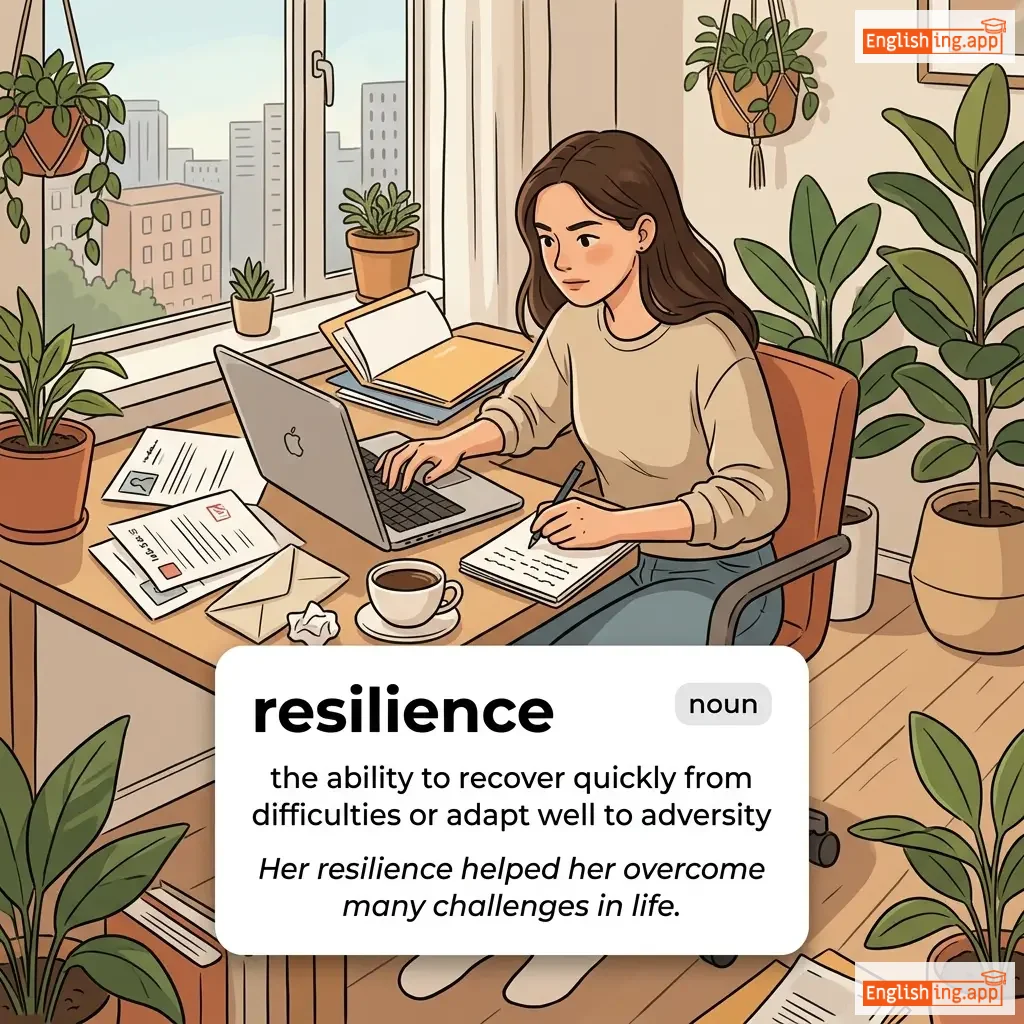
resilience definition card — visual illustration of the meaning
noun
/rɪˈzɪliəns/
resiliencia (resiliencia)

the ability to recover quickly from difficulties or adapt well to adversity

"Her resilience helped her overcome many challenges in life."

"Su resiliencia le ayudó a superar muchos desafíos en la vida." (Su resiliencia le ayudo a superar muchos desafios en la vida.)
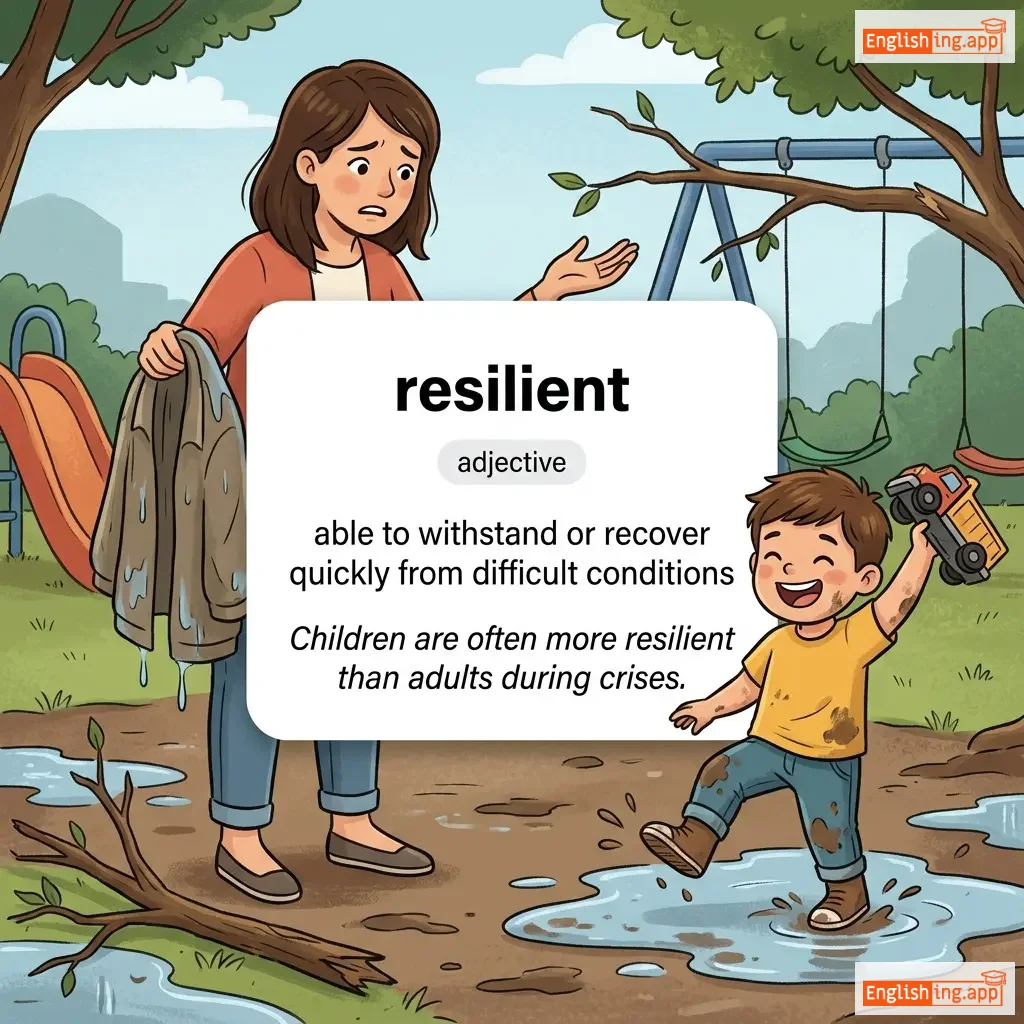
resilient definition card — visual illustration of the meaning
adjective
/rɪˈzɪliənt/
resistente (resistente)

able to withstand or recover quickly from difficult conditions

"Children are often more resilient than adults during crises."

"Los niños a menudo son más resistentes que los adultos durante las crisis." (Los ninos a menudo son mas resistentes que los adultos durante las crisis.)
noun
/ˈrɛzɪn/
resina (resina)

a sticky organic substance, usually secreted by plants, often used in varnishes or plastics

"The craftsman used natural resin to make the sculpture shine."

"El artesano usó resina natural para hacer que la escultura brillara." (El artesano uso resina natural para hacer que la escultura brillara.)
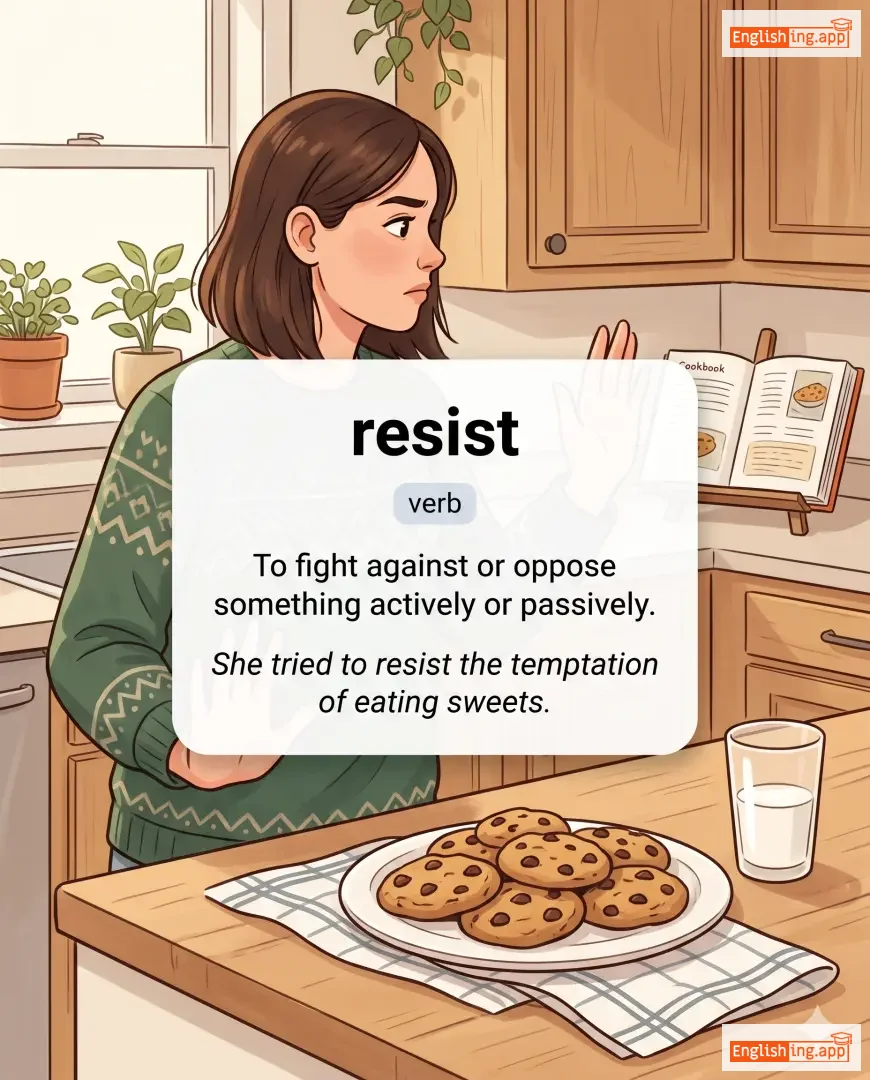
resist definition card — visual illustration of the meaning
verb
/rɪˈzɪst/
resistir (resistir)

To fight against or oppose something actively or passively.

"She tried to resist the temptation of eating sweets."

"Ella trató de resistir la tentación de comer dulces." (Ella trato de resistir la tentacion de comer dulces.)
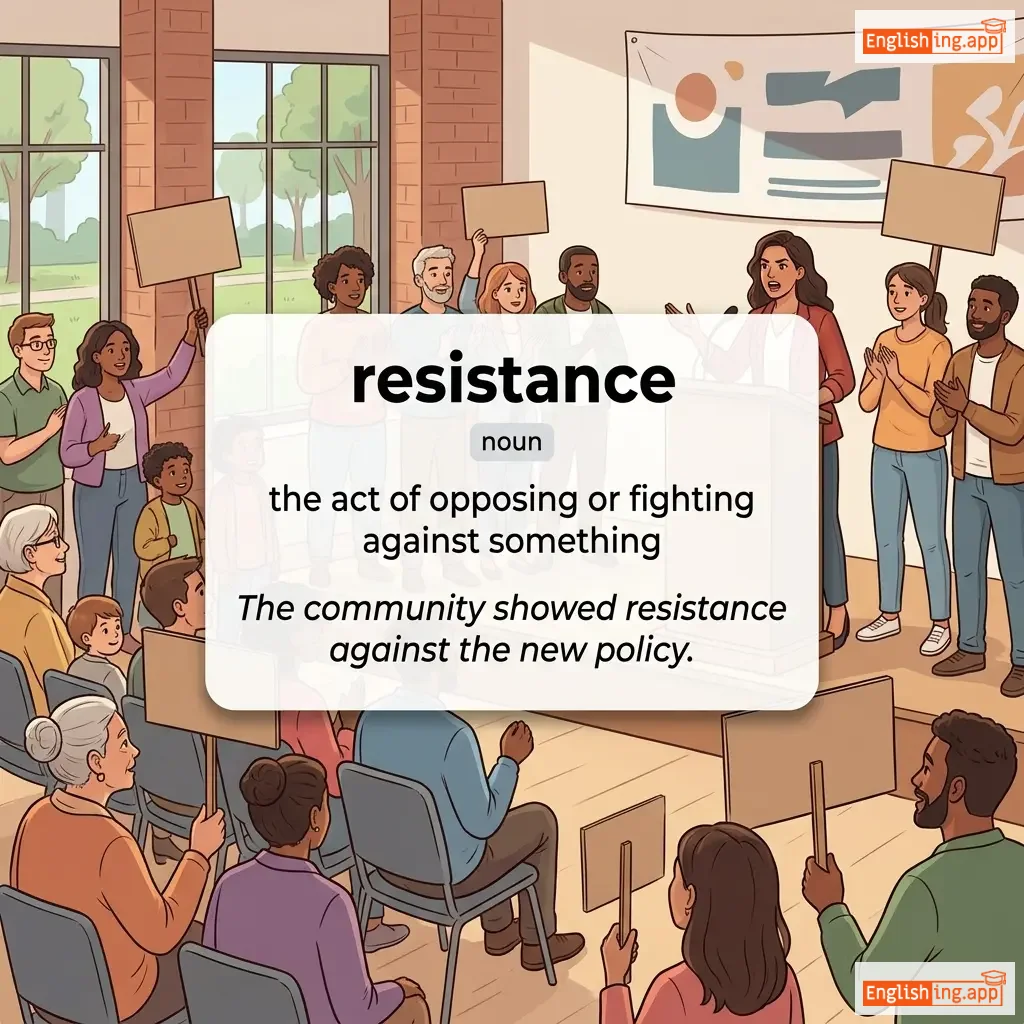
resistance definition card — visual illustration of the meaning
noun
/rɪˈzɪstəns/
resistencia (resistencia)

the act of opposing or fighting against something

"The community showed resistance against the new policy."

"La comunidad mostró resistencia contra la nueva política." (La comunidad mostró resistencia contra la nueva política.)
adjective
/rɪˈzɪstənt/
resistente (resistente)

not affected by something; able to oppose or withstand

"This fabric is resistant to water and stains."

"Este tejido es resistente al agua y las manchas." (Este tejido es resistente al agua y las manchas.)
adjective
/rɪˈzɪstɪv/
resistivo (resistivo)

tending to resist or oppose; in physics, relating to electrical resistance

"The material has resistive properties that slow down current flow."

"El material tiene propiedades resistivas que desaceleran el flujo de corriente." (El material tiene propiedades resistivas que desaceleran el flujo de corriente.)
adjective
/rɪˈzɪstləs/
irresistible (irresistible)

Impossible to resist; having an overpowering effect.

"She felt a resistless urge to laugh at the joke."

"Ella sintió un impulso irresistible de reírse de la broma." (Ella sintió un impulso irresistible de reírse de la broma.)
adjective
/ˈrɛzəluːt/
resoluto (resoluto)

Admirably purposeful, determined, and unwavering.

"He remained resolute despite the many challenges."

"Él permaneció resoluto a pesar de los muchos desafíos." (El permanezio resoluto a pesar de los muchos desafios)
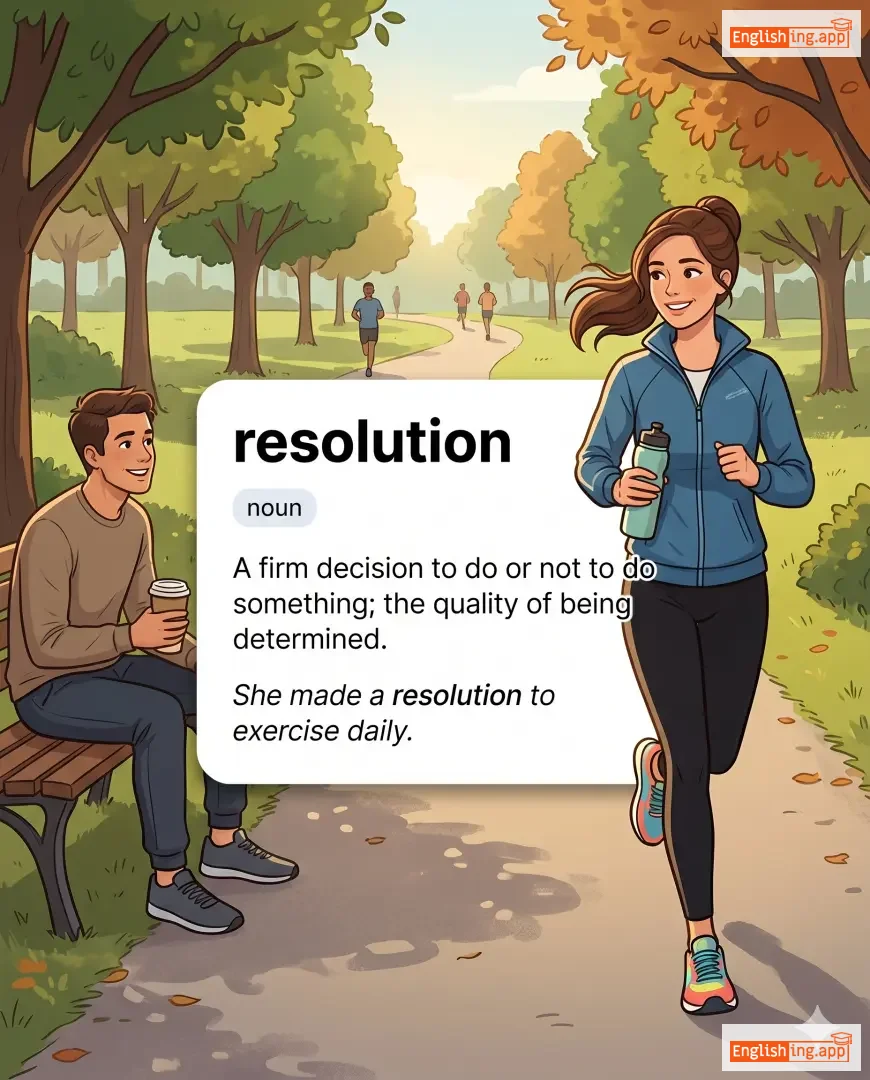
resolution definition card — visual illustration of the meaning
noun
/ˌrɛzəˈluːʃən/
resolución (resolucion)

A firm decision to do or not to do something; the quality of being determined.

"She made a resolution to exercise daily."

"Ella tomó una resolución de hacer ejercicio todos los días." (Ella tomo una resolucion de hacer ejercicio todos los dias.)
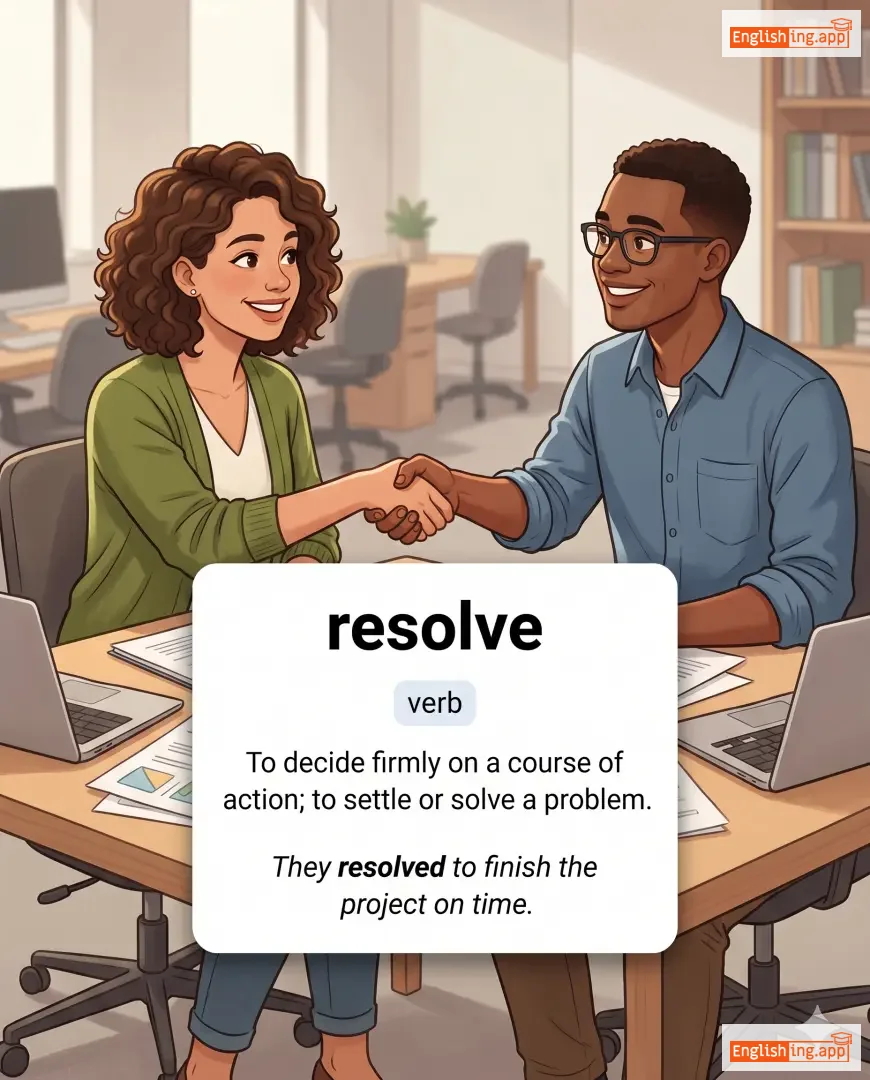
resolve definition card — visual illustration of the meaning
verb
/rɪˈzɒlv/
resolver / solucionar (resolver / solucionar)

To decide firmly on a course of action; to settle or solve a problem.

"They resolved to finish the project on time."

"Ellos resolvieron terminar el proyecto a tiempo." (Ellos resolvieron terminar el proyecto a tiempo.)
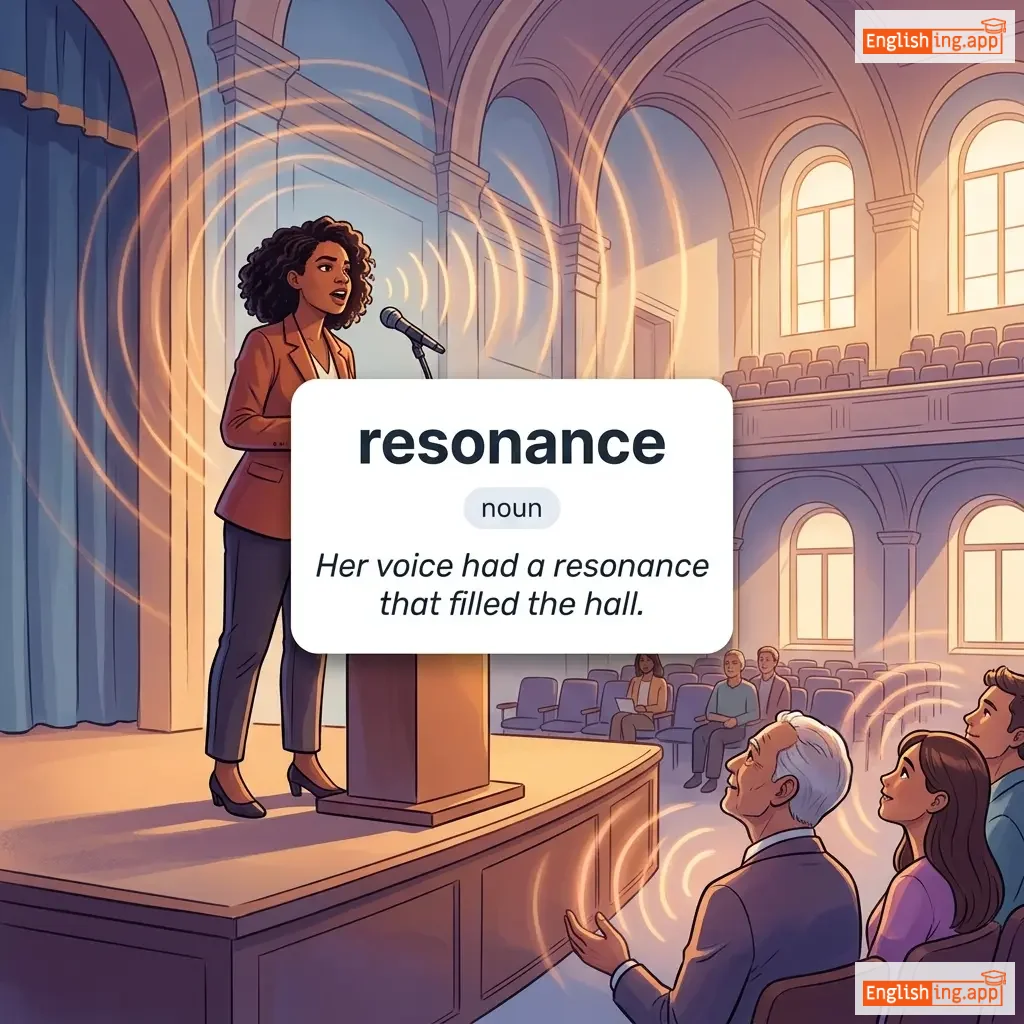
resonance definition card — visual illustration of the meaning
noun
/ˈrɛzənəns/
resonancia (resonancia)

The quality of a sound being deep, full, and reverberating; the ability to evoke a strong response.

"Her voice had a resonance that filled the hall."

"Su voz tenía una resonancia que llenaba el salón." (Su voz tenía una resonancia que llenaba el salón.)
adjective
/ˈrɛzənənt/
resonante (resonante)

Deep, clear, and continuing to sound or echo.

"The resonant voice of the speaker filled the hall."

"La voz resonante del orador llenó la sala." (La voz resonante del orador llenó la sala.)
verb
/ˈrɛzəneɪt/
resonar (resonar)

To produce or be filled with a deep, full, and reverberating sound; to evoke a feeling or memory.

"Her words resonated with the audience."

"Sus palabras resonaron con la audiencia." (Sus palabras resonaron con la audiencia.)
noun, verb
/rɪˈzɔːrt/
resort / último recurso (resort / ultimo recurso)

A place for rest or recreation; to turn to something for help or solution.

"They stayed at a beach resort during their vacation."

"Ellos se quedaron en un resort en la playa durante sus vacaciones." (Ellos se quedaron en un resort en la playa durante sus vacaciones.)
verb
/rɪˈzaʊnd/
resonar (resonar)

To fill a place with sound; to be celebrated or talked about widely.

"The hall resounded with applause."

"El salón resonó con aplausos." (El salon resonó con aplausos.)
noun
/rɪˈsɔːrs/
recurso (recurso)

A supply of materials, money, or assets that can be used when needed.

"Water is a vital natural resource."

"El agua es un recurso natural vital." (El agua es un recurso natural vital.)
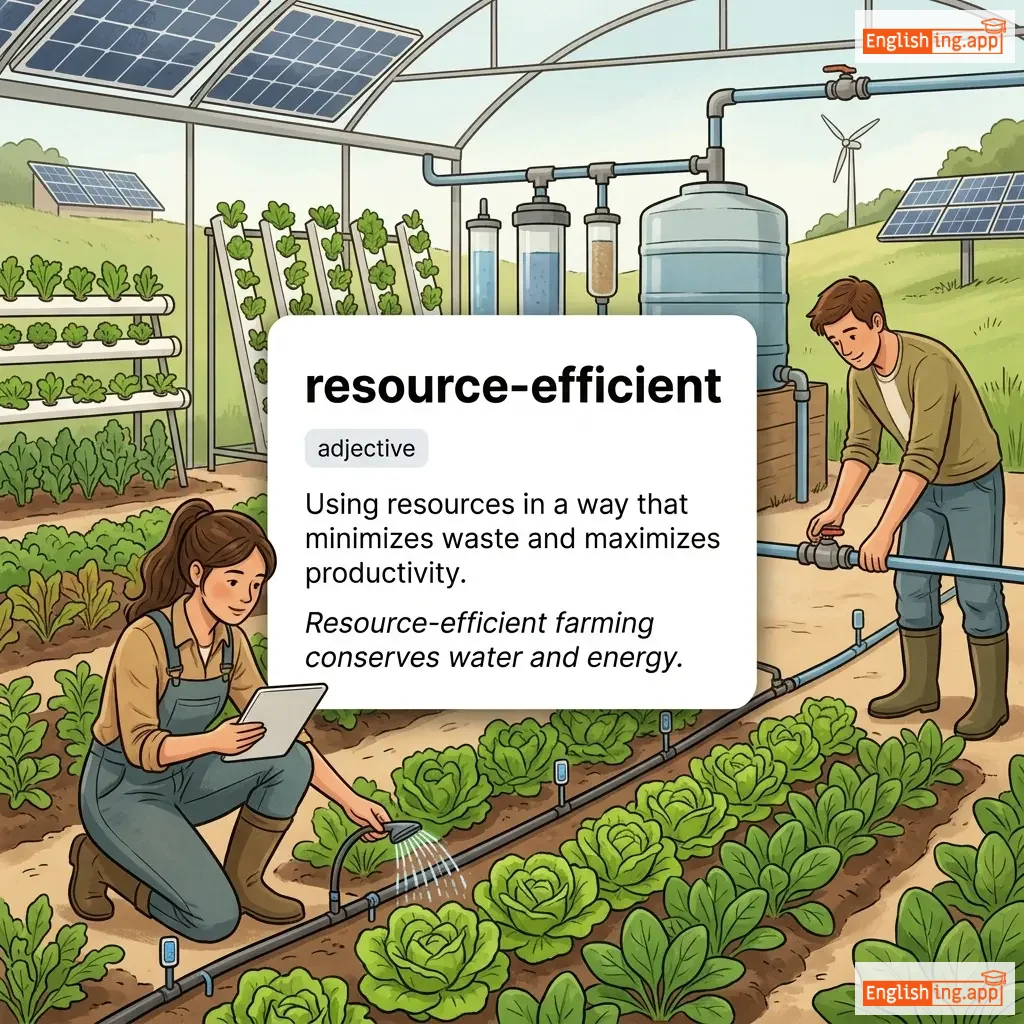
resource-efficient definition card — visual illustration of the meaning
adjective
/rɪˈsɔːrs ɪˈfɪʃ.ənt/
eficiente en el uso de recursos (eficiente en el uso de recursos)

Using resources in a way that minimizes waste and maximizes productivity.

"Resource-efficient farming conserves water and energy."

"La agricultura eficiente en el uso de recursos conserva agua y energía." (La agricultura eficiente en el uso de recursos conserva agua y energía.)
adjective
/rɪˈsɔːrsfəl/

Having the ability to find quick and clever ways to overcome difficulties.

"She is very resourceful when it comes to solving unexpected problems."

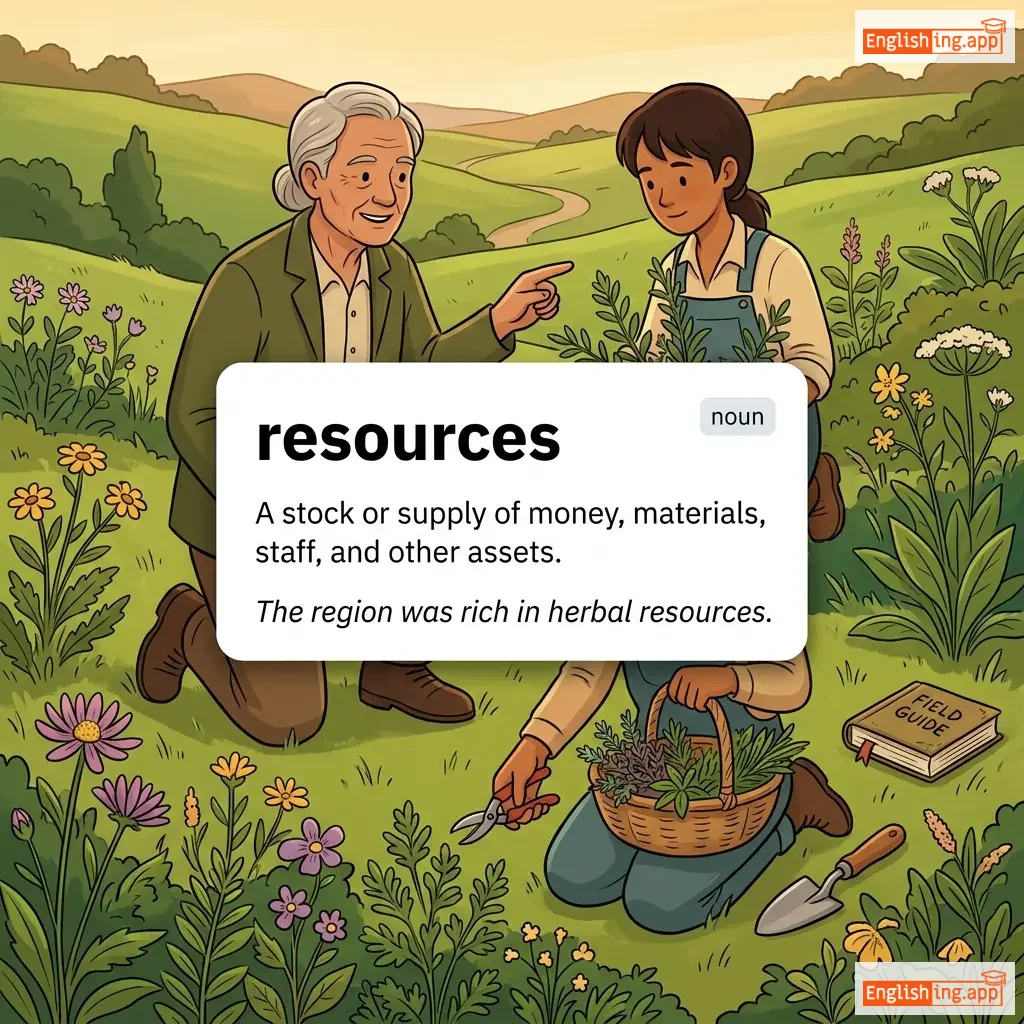
resources definition card — visual illustration of the meaning
noun
/rɪˈzɔː.sɪz/
recursos (recursos)

A stock or supply of money, materials, staff, and other assets.

"The region was rich in herbal resources."

"La región estaba rica en recursos herbales." (La region estaba rica en recursos herbales.)
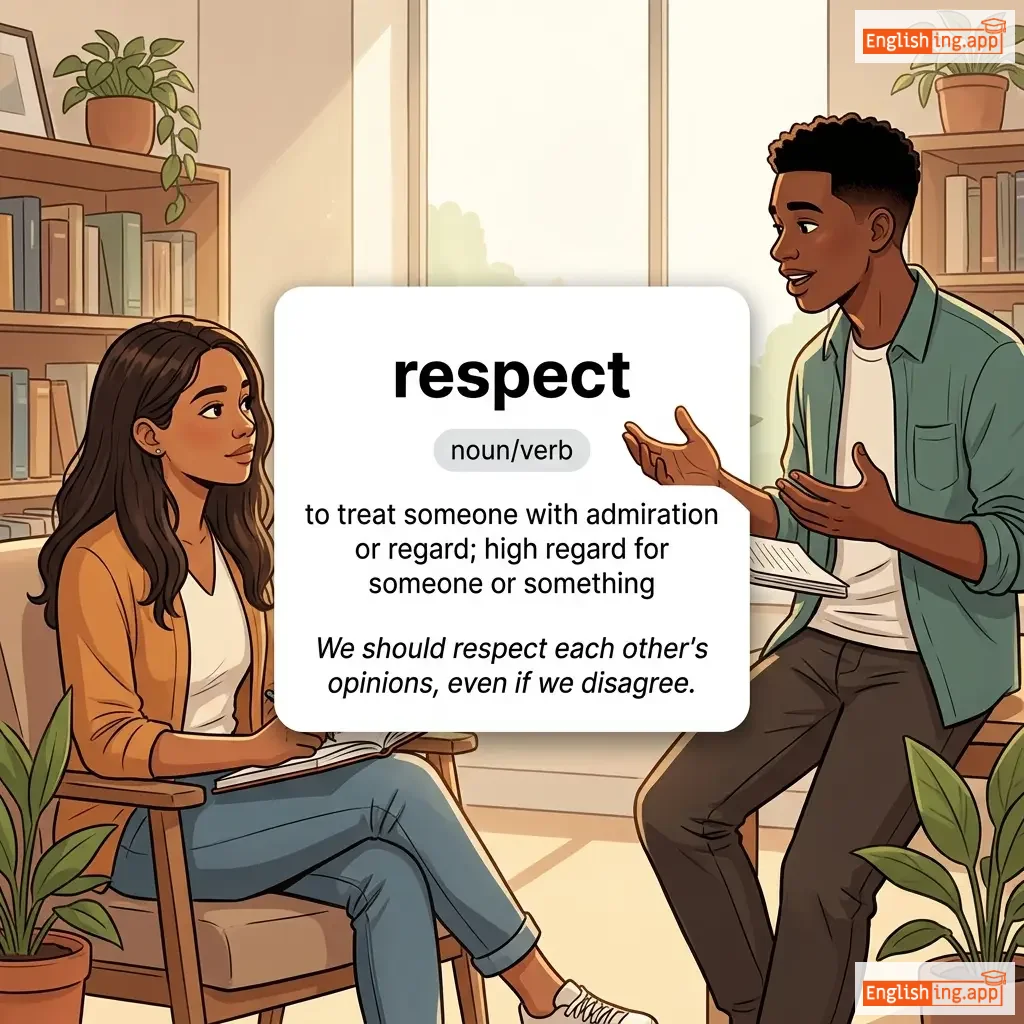
respect definition card — visual illustration of the meaning
noun/verb
/rɪˈspɛkt/
respeto (respeto)

to treat someone with admiration or regard; high regard for someone or something

"We should respect each other's opinions, even if we disagree."

"Debemos respetar las opiniones de los demás, incluso si no estamos de acuerdo." (Debemos respetar las opiniones de los demas, incluso si no estamos de acuerdo.)
adjective
/rɪˈspek.tə.bəl/
respetable (respetable)

worthy of respect; having good reputation; decent

"He comes from a respectable family in the community."

"Él viene de una familia respetable en la comunidad." (El viene de una familia respetable en la comunidad.)
adverb
/rɪˈspek.tə.bli/
de manera respetable; decente; (de manera respetable; decente;)

in a way that is worthy of respect; decently; properly

"She was dressed respectably for the interview."

"Ella estaba vestida de manera respetable para la entrevista." (Ella estaba vestida de manera respetable para la entrevista.)
adjective
/rɪˈspɛktɪv/
respectivo (respectivo)

belonging or relating separately to each of the people or things already mentioned

"The students were in their respective rooms."

"Los estudiantes estaban en sus respectivos cuartos." (Los estudiantes estaban en sus respectivos cuartos.)
adverb
/rɪˈspɛktɪvli/
respectivamente (respectivamente)

Separately and in the order already mentioned.

"The two teams scored 3 and 5 points, respectively."

"Los dos equipos anotaron 3 y 5 puntos, respectivamente." (Los dos equipos anotaron 3 y 5 puntos, respectivamente.)