Vocabularios

Descubra, aprenda y domine el vocabulario en inglés

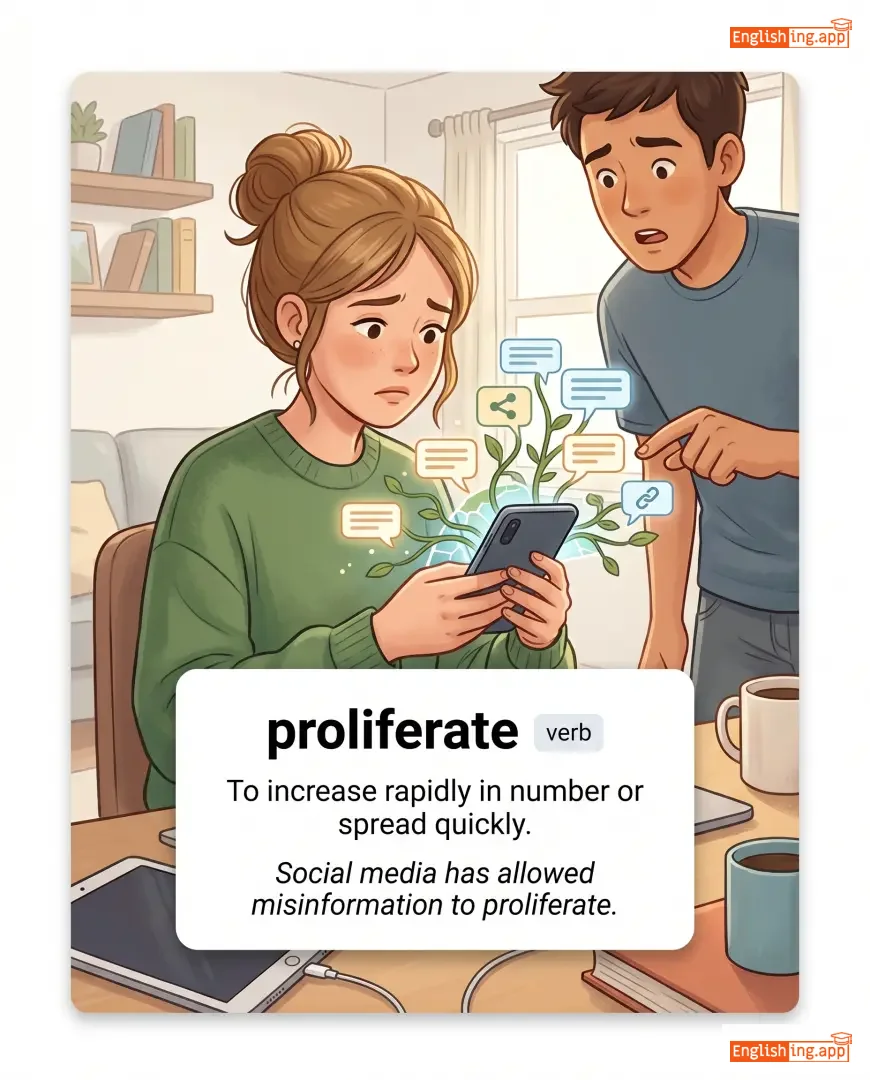
proliferate definition card — visual illustration of the meaning
verb
/prəˈlɪfəreɪt/
proliferar (proliferar)

To increase rapidly in number or spread quickly.

"Social media has allowed misinformation to proliferate."

"Las redes sociales han permitido que la desinformación se prolifere." (Las redes sociales han permitido que la desinformación se prolifere.)
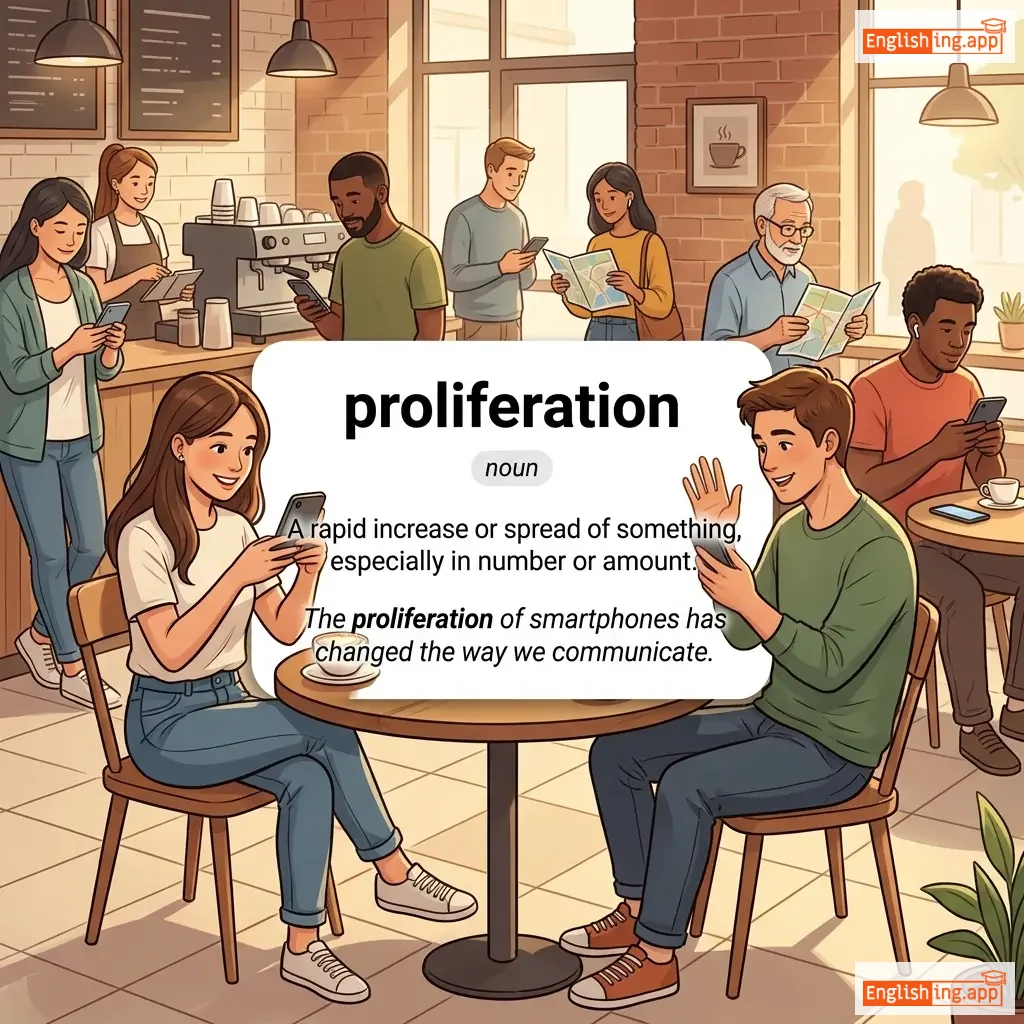
proliferation definition card — visual illustration of the meaning
noun
/prəˌlɪfəˈreɪʃən/
proliferación, expansión (proliferacion, expansion)

A rapid increase or spread of something, especially in number or amount.

"The proliferation of smartphones has changed the way we communicate."

"La proliferación de teléfonos inteligentes ha cambiado la manera en que nos comunicamos." (La proliferacion de telefonos inteligentes ha cambiado la manera en que nos comunicamos.)
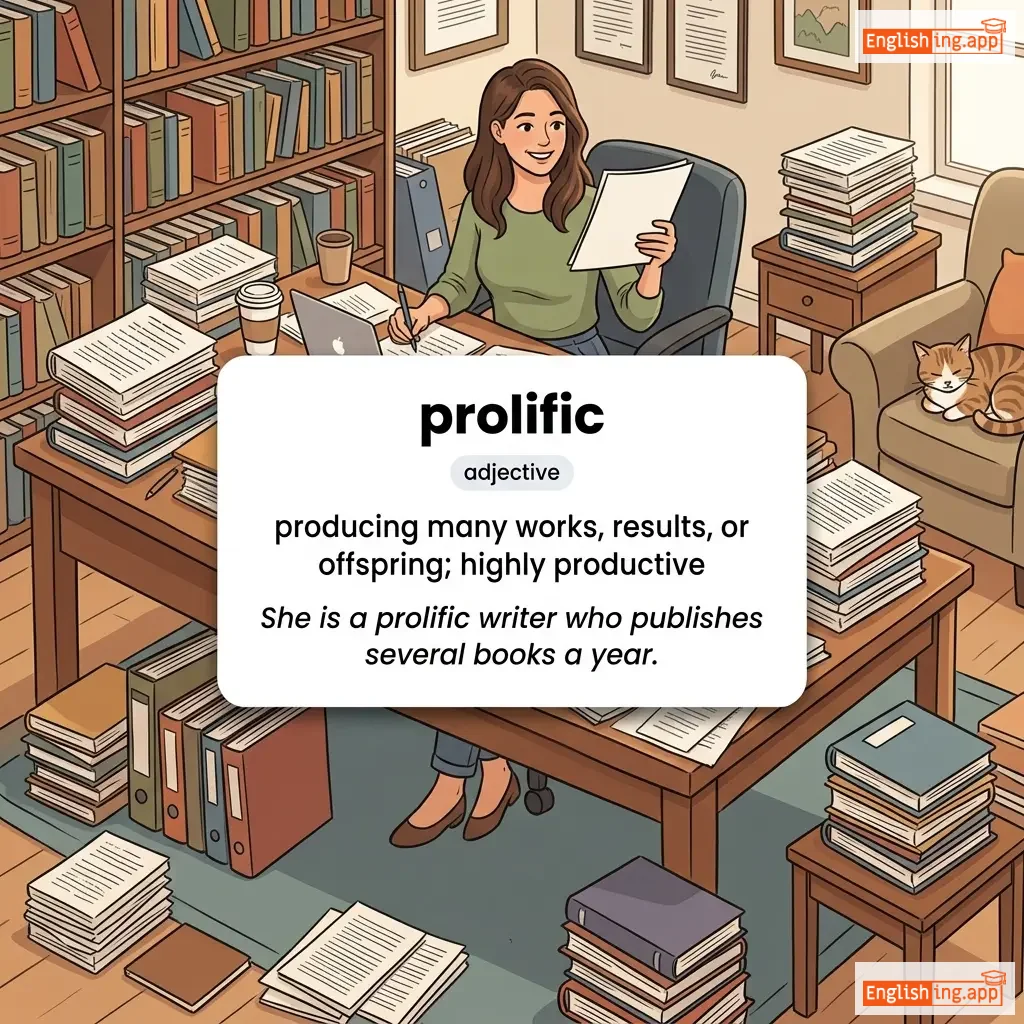
prolific definition card — visual illustration of the meaning
adjective
/prəˈlɪfɪk/
prolífico (prolifico)

producing many works, results, or offspring; highly productive

"She is a prolific writer who publishes several books a year."

"Es una escritora prolífica que publica varios libros al año." (Es una escritora prolifica que publica varios libros al año.)
adjective
/ˈprəʊ.lɪks/
excesivamente largo (excesivamente largo)

using too many words; tediously lengthy

"The professor’s prolix lecture put many students to sleep."

"La conferencia prolija del profesor hizo que muchos estudiantes se quedaran dormidos." (La conferencia prolija del profesor hizo que muchos estudiantes se quedaran dormidos.)
noun
/prəˈlɪksɪti/
prolijidad (prolijidad)

the quality of being tediously wordy and long

"The book’s prolixity made it difficult to read in one sitting."

"La prolijidad del libro hizo que fuera difícil leerlo en una sola sesión." (La prolijidad del libro hizo que fuera difícil leerlo en una sola sesión.)
noun
/ˈprəʊ.lɒɡ/
prólogo (prologo)

an introduction to a book, play, or event

"The novel begins with a short prologue set in the past."

"La novela comienza con un corto prólogo establecido en el pasado." (La novela comienza con un corto prólogo establecido en el pasado.)
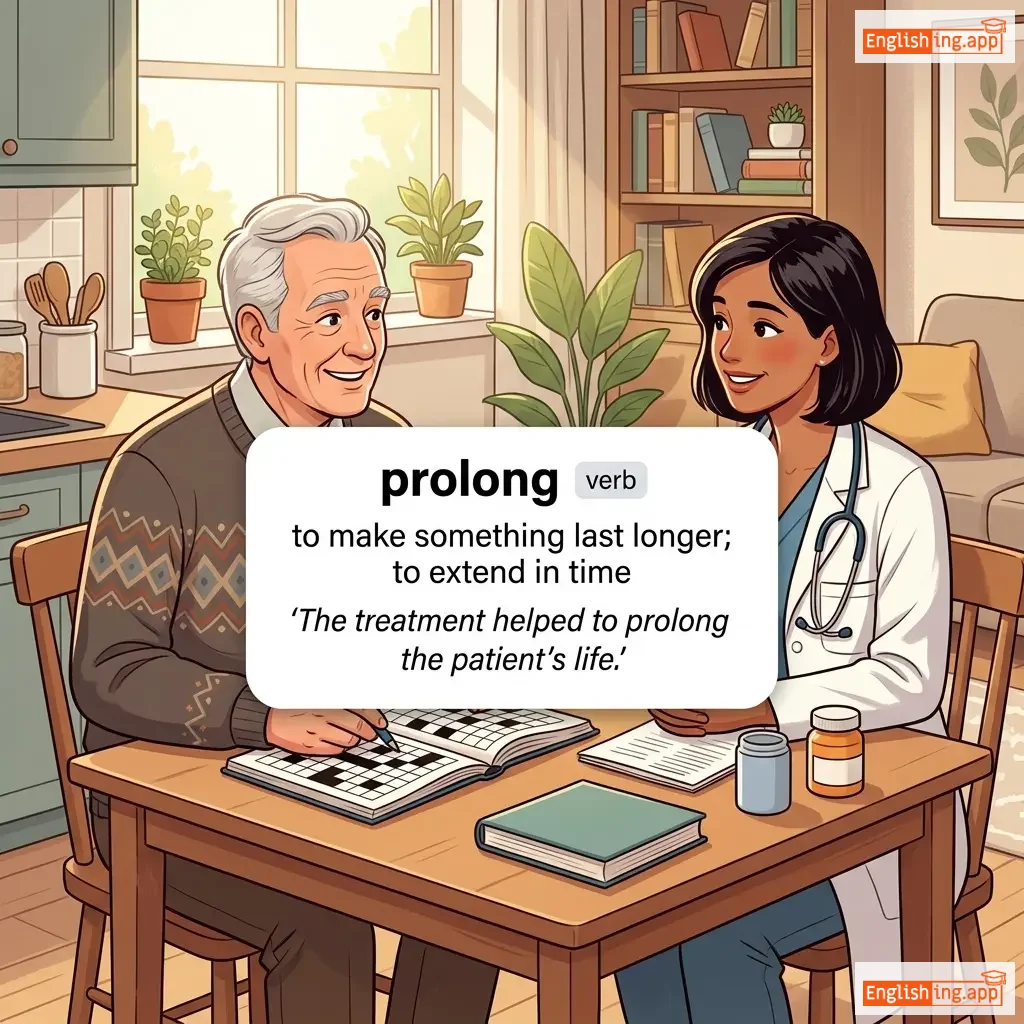
prolong definition card — visual illustration of the meaning
verb
/prəˈlɒŋ/
prolongar (prolongar)

to make something last longer; to extend in time

"The treatment helped to prolong the patient’s life."

"El tratamiento ayudó a prolongar la vida del paciente." (El tratamiento ayudo a prolongar la vida del paciente.)
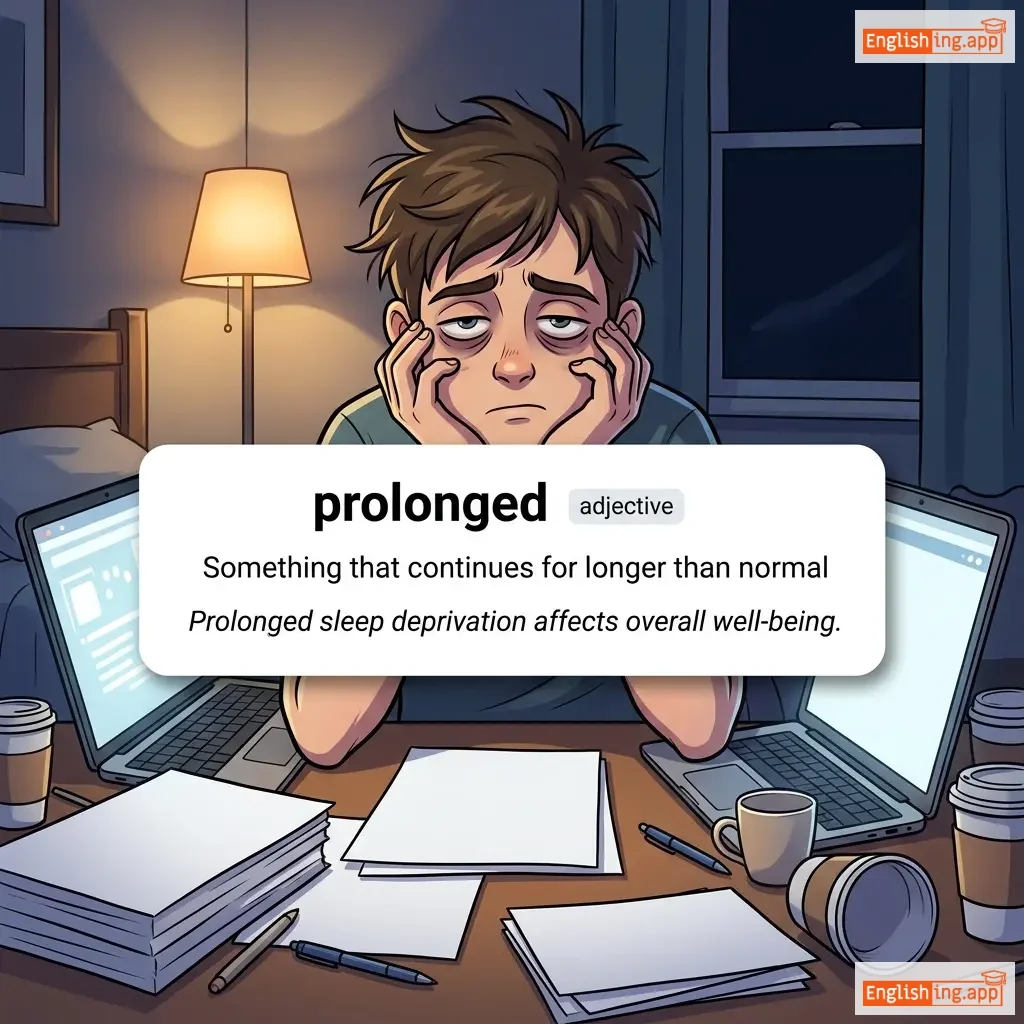
prolonged definition card — visual illustration of the meaning
adjective
prəˈlɒŋd
prolongado (prolongado)

Something that continues for longer than normal

"Prolonged sleep deprivation affects overall well-being."

"La privación prolongada de sueño afecta el bienestar general." (La privación prolongada de sueño afecta el bienestar general.)
noun, verb
/ˌprɒməˈneɪd/
paseo (paseo)

A leisurely walk or stroll, especially in a public place for pleasure or display.

"They went for a promenade along the seaside."

"Fueron a un paseo por la costa." (Fueron a un paseo por la costa.)
noun
/ˈprɒmɪnəns/
prominencia (prominencia)

The state of being important, famous, or easily noticed.

"Her work gained prominence after the award."

"Su trabajo ganó prominencia después del premio." (Su trabajo ganó prominencia después del premio.)
adjective
/ˈprɒmɪnənt/
prominente (prominente)

Important, famous, or easily noticeable.

"He is a prominent leader in the community."

"Él es un líder prominente en la comunidad." (Él es un líder prominente en la comunidad.)
adjective
/prəˈmɪskjuəs/
promiscuo (promiskwo)

Having or showing a casual and unselective approach, often used to describe indiscriminate sexual relationships.

"The novel depicts a character with a promiscuous lifestyle."

"La novela describe a un personaje con un estilo de vida promiscuo." (La novela describe a un personaje con un estilo de vida promiscuo.)
noun
/ˈprɒmɪs/
promesa (promesa)

a statement that one will definitely do something or that something will happen

"I made a promise to help her with the project."

"Hice una promesa de ayudarla con el proyecto." (Hice una promesa de ayudarla con el proyecto.)
adjective
/ˈprɒmɪsɪŋ/
prometedor (prometedor)

showing signs of future success or potential

"She is a promising young scientist with great ideas."

"Ella es una joven científica prometedora con grandes ideas." (Ella es una joven cientifica prometedora con grandes ideas.)
adjective
/ˈprɒmɪsəri/
promisorio (promisorio)

Containing or conveying a promise, especially in writing.

"He signed a promissory note to repay the loan."

"Él firmó un pagaré para devolver el préstamo." (Él firmó un pagaré para devolver el préstamo.)
noun
/ˈprɒm.ən.tɔːr.i/
promontorio (promontorio)

A high point of land or rock projecting into a body of water.

"The lighthouse stood on a promontory overlooking the sea."

"El faro estaba en un promontorio con vistas al mar." (El faro estaba en un promontorio con vistas al mar.)
promote definition card — visual illustration of the meaning
verb
/prəˈmoʊt/
promover / fomentar (promover / fomentar)

To support or encourage the growth, sale, or acceptance of something.

"The company worked hard to promote its new product."

"La empresa trabajó arduamente para promover su nuevo producto." (La empresa trabajó arduamente para promover su nuevo producto.)
noun
/prəˈmoʊ.tər/
promotor (promotor)

A person or organization that helps to organize or finance an event, business, or product launch.

"The promoter organized a concert for the new band."

"El promotor organizó un concierto para la nueva banda." (El promotor organizó un concierto para la nueva banda.)
promoting definition card — visual illustration of the meaning
verb
prəˈmoʊtɪŋ
promover (promover)

To support or actively encourage a cause, venture, or aim; to help or encourage the progress or development of something.

"Promoting education can significantly improve children's lives."

"Promover la educación puede mejorar significativamente la vida de los niños." (Promover la educación puede mejorar significativamente la vida de los niños.)
noun
/prəˈmoʊʃən/
ascenso, promoción (ascenso, promocion)

the act of raising someone to a higher position or of marketing something to increase sales or awareness

"The company announced a big promotion campaign for their new product."

"La empresa anunció una gran campaña de promoción para su nuevo producto." (La empresa anuncio una gran campana de promocion para su nuevo producto.)
verb, noun, adjective
/prɑːmpt/
provocar / rápido (provocar / rapido)

To cause someone to take action; done without delay.

"His speech prompted the audience to ask questions."

"Su discurso provocó que la audiencia hiciera preguntas." (Su discurso provoco que la audiencia hiciera preguntas.)
verb
/ˈprɑː.məl.ɡeɪt/
promulgar (promulgar)

To announce or make a law, decree, or idea officially known.

"The government promulgated new regulations on data privacy."

"El gobierno promulgó nuevas regulaciones sobre privacidad de datos." (El gobierno promulgó nuevas regulaciones sobre privacidad de datos.)
adjective
/proʊn/
propenso (propenso)

likely to suffer from or experience something, especially something unfortunate

"He is prone to headaches when he works too long."

"Él es propenso a los dolores de cabeza cuando trabaja demasiado tiempo." (El es propenso a los dolores de cabeza cuando trabaja demasiado tiempo.)
noun
/prɔːŋ/
pico de tenedor (piko de tenedor)

a projecting pointed part, such as one of the pointed ends of a fork

"The fork has four prongs."

"El tenedor tiene cuatro picos." (El tenedor tiene cuatro picos.)
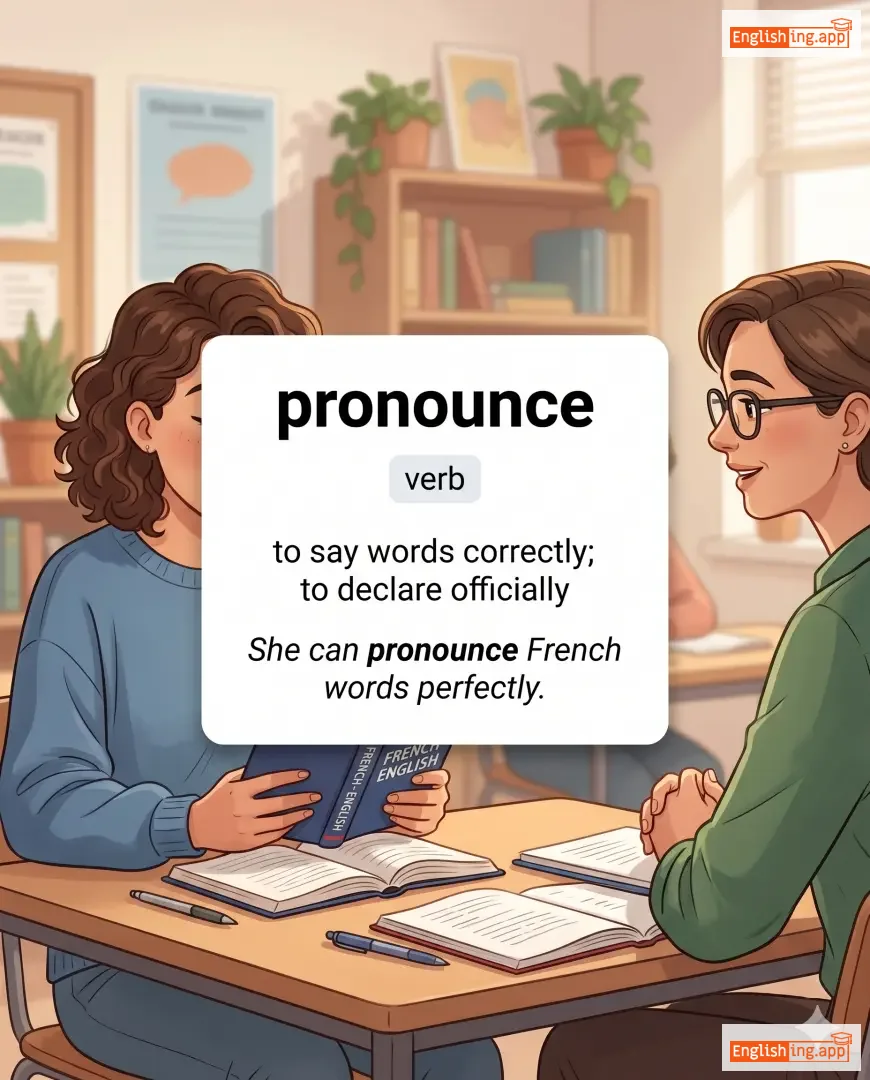
pronounce definition card — visual illustration of the meaning
verb
/prəˈnaʊns/
pronunciar (pronunciar)

to say words correctly; to declare officially

"She can pronounce French words perfectly."

"Ella puede pronunciar las palabras francesas perfectamente." (Ella puede pronunciar las palabras francesas perfectamente.)
adjective
/prəˈnaʊnst/
pronunciado (pronunciado)

very noticeable or strongly marked

"There is a pronounced difference between the two styles."

"Hay una diferencia pronunciada entre los dos estilos." (Hay una diferencia pronunciada entre los dos estilos.)
noun
/prəˌnʌnsiˈeɪʃən/
pronunciación (pronunciacion)

the way a word or language is spoken; the act or result of pronouncing words

"Her pronunciation of French words has improved significantly."

"Su pronunciación de palabras francesas ha mejorado mucho." (su pronunciacion de palabras francesas ha mejorado mucho)
🧑‍⚖️

proof (pruf)

noun
/pruːf/
prueba (prueba)

evidence or argument establishing a fact or the truth of a statement

"The detective presented proof of the suspect's guilt."

"El detective presentó prueba de la culpabilidad del sospechoso." (El detective presento prueba de la culpabilidad del sospechoso.)
verb
/ˈpruːfˌriːd/
corregir (corregir)

to read written material and mark any errors

"She proofread the report before submission."

"Ella corrigió el informe antes de la entrega." (Ella corrigió el informe antes de la entrega.)
noun
/prɒp/
accesorio (accesorio)

an object used on stage by actors during a performance; something that supports or holds up

"The actor forgot his prop on stage."

"El actor olvidó su accesorio en el escenario." (El actor olvido su accesorio en el escenario.)
noun
/ˌprɒpəˈɡændə/
propaganda (propaganda)

Information, especially biased or misleading, used to promote a political cause or point of view.

"The regime spread propaganda to control public opinion."

"El régimen difundió propaganda para controlar la opinión pública." (El regimen difundio propaganda para controlar la opinion publica.)
verb
/ˈprɒpəɡeɪt/
propagar (propagar)

To spread or transmit an idea, belief, or information widely; also to reproduce in plants or animals.

"Scientists work to propagate the species in captivity."

"Los científicos trabajan para propagar las especies en cautiverio." (Los científicos trabajan para propagar las especies en cautiverio.)
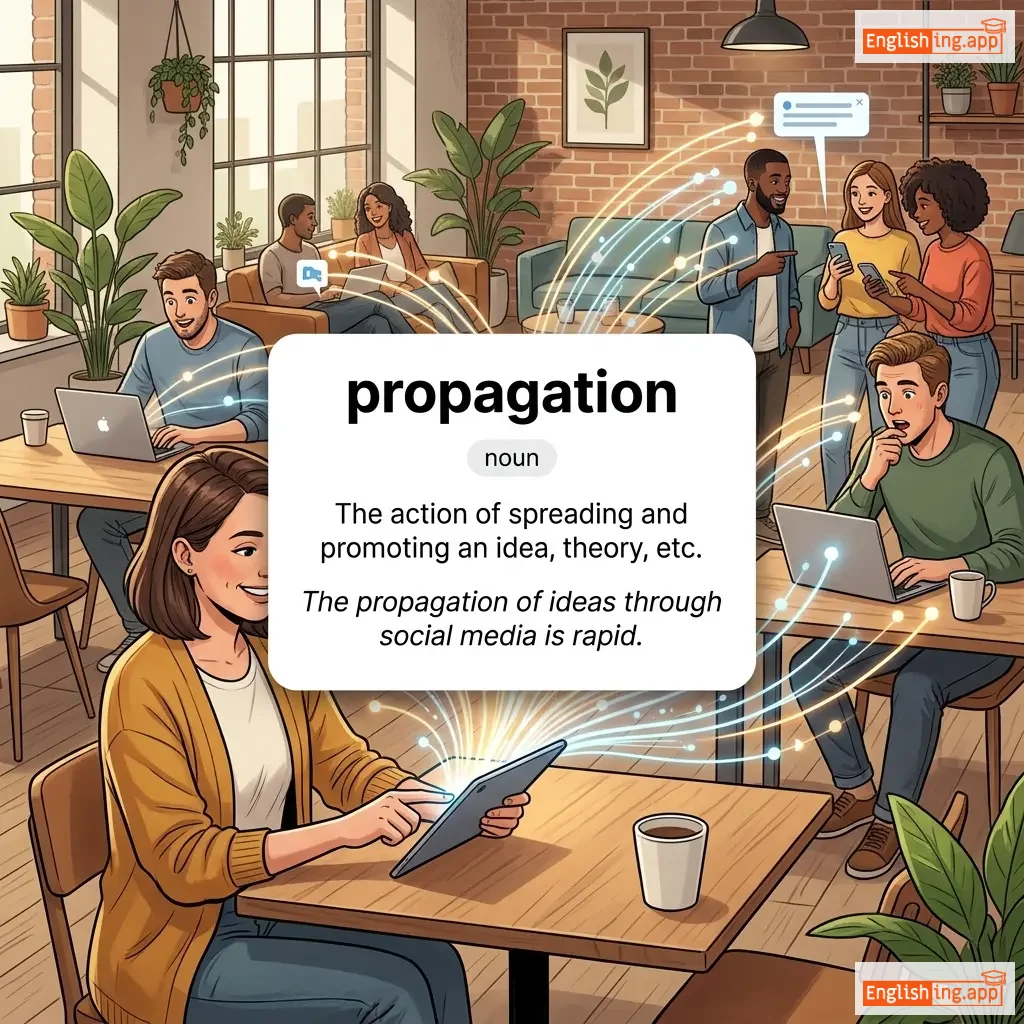
propagation definition card — visual illustration of the meaning
noun
/ˌprɒpəˈɡeɪʃən/
propagación, difusión (propagacion, difusion)

The action of spreading and promoting an idea, theory, etc.

"The propagation of ideas through social media is rapid."

"La propagación de ideas a través de las redes sociales es rápida." (La propagacion de ideas a traves de las redes sociales es rapida.)
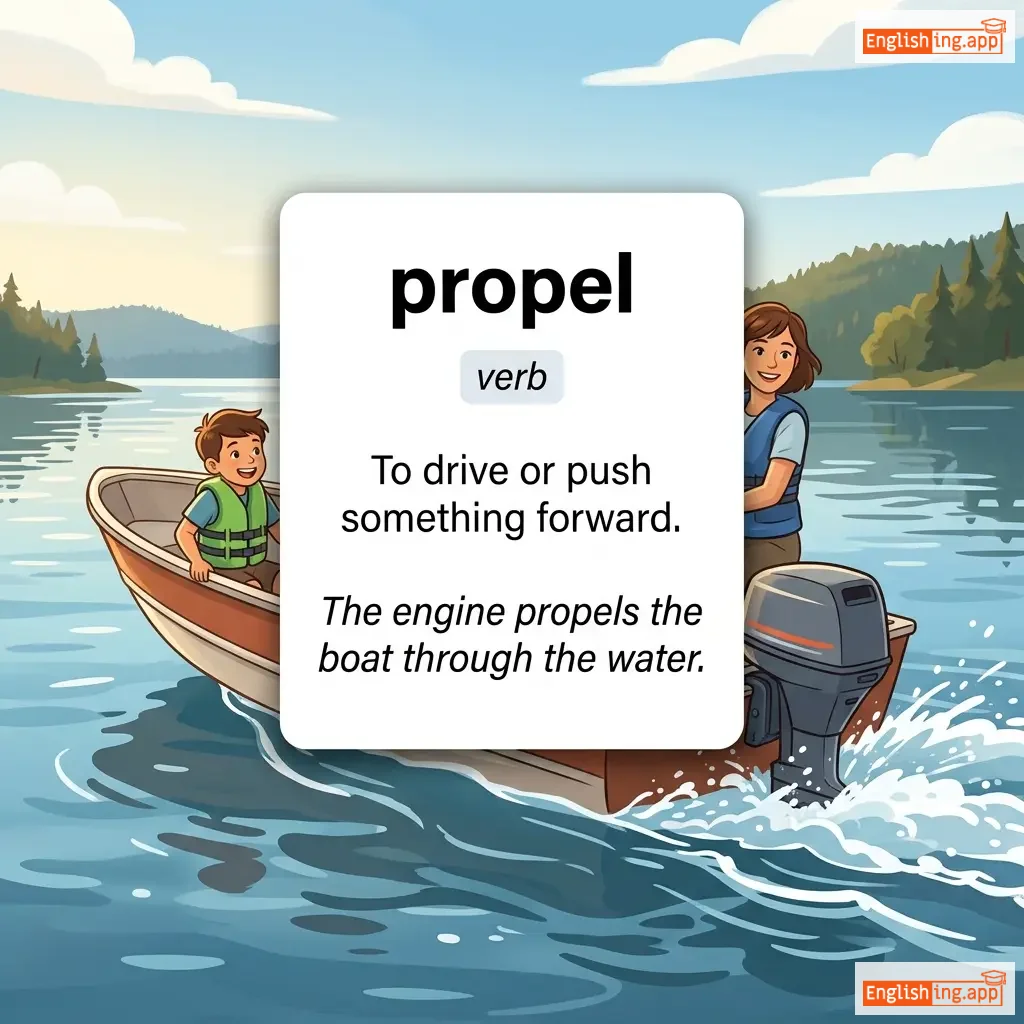
propel definition card — visual illustration of the meaning
verb
/prəˈpɛl/
impulsar (impulsar)

To drive or push something forward.

"The engine propels the boat through the water."

"El motor impulsa el bote a través del agua." (El motor impulsa el bote a través del agua.)
noun
/prəˈpɛlənt/
propelente (propelente)

A substance that drives or pushes something forward, especially fuel in rockets or engines.

"The rocket uses a liquid propellant to launch into space."

"El cohete utiliza un propelente líquido para lanzarse al espacio." (El cohete utiliza un propelente líquido para lanzarse al espacio.)
noun
/prəˈpɛlər/
hélice (helice)

A mechanical device with blades that rotates to drive a ship, aircraft, or other vehicle forward.

"The airplane’s propeller cut through the air with great speed."

"La hélice del avión cortó el aire con gran velocidad." (La helice del avion corto el aire con gran velocidad.)
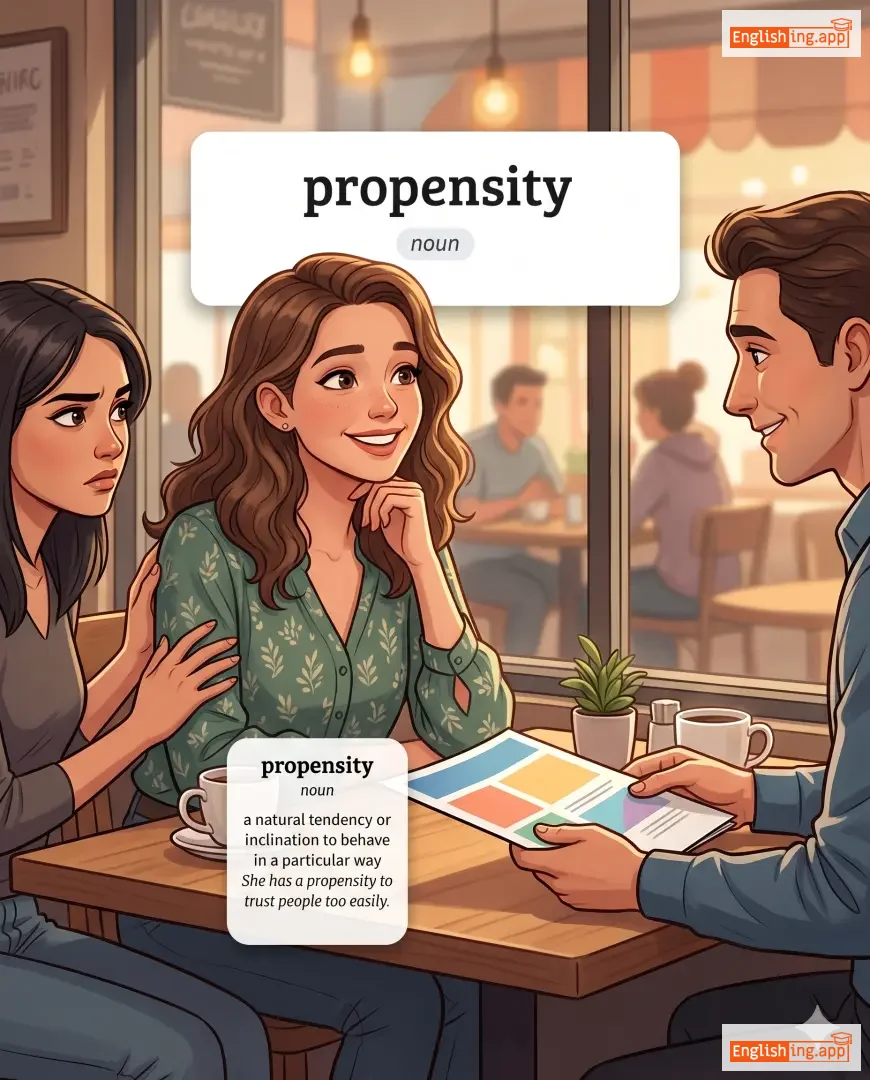
propensity definition card — visual illustration of the meaning
noun
/prəˈpɛnsəti/
propensión (propension)

a natural tendency or inclination to behave in a particular way

"She has a propensity to trust people too easily."

"Ella tiene una propensión a confiar demasiado en la gente." (Ella tiene una propension a confiar demasiado en la gente.)
adjective
/ˈprɒpər/
apropiado (apropiado)

conforming to accepted standards of behavior or morality

"He made sure to wear proper attire for the interview."

"Se aseguró de llevar ropa apropiada para la entrevista." (Se aseguro de llevar ropa apropiada para la entrevista.)
adverb
/ˈprɒpərli/
correctamente (correctamente)

in the correct or suitable manner

"He performed the task properly to avoid mistakes."

"Él realizó la tarea correctamente para evitar errores." (Él realizó la tarea correctamente para evitar errores.)
noun
/ˈprɒpərti/
propiedad (propiedad)

a thing or things that belong to someone; possessions or real estate

"The old mansion is his family’s property."

"La antigua mansión es propiedad de su familia." (La antigua mansión es propiedad de su familia.)
noun
/ˈprɒfəsi/
profecía (profecia)

a prediction or message about the future, often believed to be divinely inspired

"The prophecy foretold the rise of a great leader."

"La profecía predijo el ascenso de un gran líder." (La profecia predijo el ascenso de un gran lider)
verb
/ˈprɒfəsaɪ/
profetizar (profeh-teh-thar)

to state or predict that something will happen in the future, especially as if divinely inspired

"The monk prophesied that peace would return to the land."

"El monje profetizó que la paz regresaría a la tierra." (El mon-heh pro-feh-tee-tho keh lah pahth reh-gre-sah-ree-ah ah lah tee-er-rah.)
adjective
/prəˈfɛtɪk/
profético (prophético)

accurately predicting or describing what will happen in the future

"His prophetic words came true after many years."

"Sus palabras proféticas se hicieron realidad después de muchos años." (Sus palabras proféticas se hicieron realidad después de muchos años.)
adjective
/ˌprɒfɪˈlæktɪk/
profiláctico (profi-lactico)

intended to prevent disease or an unwanted outcome; protective

"The doctor prescribed a prophylactic treatment to prevent infection."

"El doctor recetó un tratamiento profiláctico para prevenir la infección." (El doctor recetó un tratamiento profiláctico para prevenir la infección.)
noun
/prəˈpɪŋkwɪti/
proximidad (proximidad)

the state of being close to someone or something; proximity

"The propinquity of their houses made them close friends."

"La proximidad de sus casas los hizo amigos cercanos." (La proximidad de sus casas los hizo amigos cercanos.)
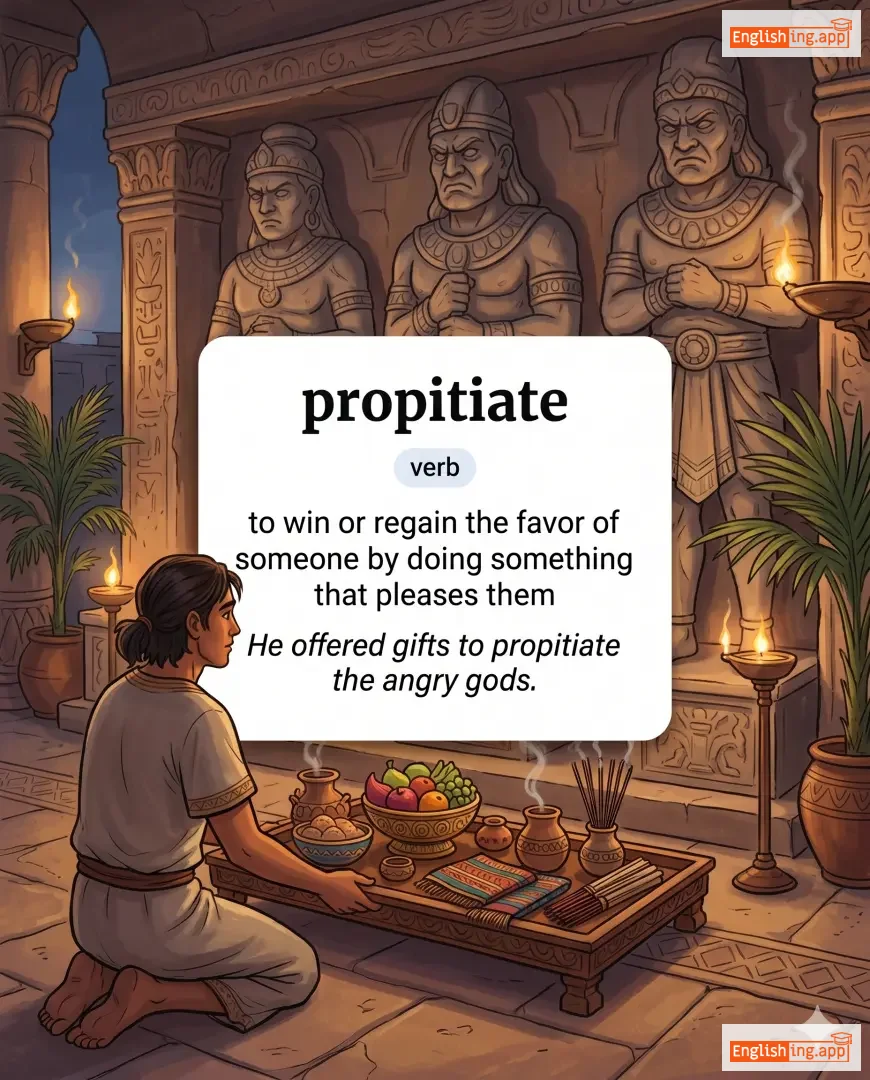
propitiate definition card — visual illustration of the meaning
verb
/prəˈpɪʃieɪt/
propiciar (propiciar)

to win or regain the favor of someone by doing something that pleases them

"He offered gifts to propitiate the angry gods."

"Él ofreció regalos para propiciar a los dioses enojados." (Él ofreció regalos para propiciar a los dioses enojados.)
adjective
/prəˈpɪʃəs/
propicio (propicio)

giving or indicating a good chance of success; favorable

"The sunny weather was a propitious start to the picnic."

"El clima soleado fue un comienzo propicio para el picnic." (El clima soleado fue un comienzo propicio para el picnic.)
noun
/prəˈpoʊnənt/
defensor, proponente (defensor, proponente)

a person who advocates for or supports a particular idea, cause, or plan

"She is a strong proponent of renewable energy."

"Ella es una fuerte defensora de la energía renovable." (Ella es una fuerte defensora de la energía renovable.)
noun
/prəˈpɔːʃən/
proporción (proporcion)

a part, share, or number considered in comparative relation to a whole

"The proportion of students passing the exam was high."

"La proporción de estudiantes que aprobaron el examen fue alta." (La proporcion de estudiantes que aprobaron el examen fue alta.)
adjective
/prəˈpɔːrʃənət/
proporcional (proporcional)

Corresponding in size, degree, or intensity; balanced in relation.

"The punishment should be proportionate to the crime."

"La pena debe ser proporcional al crimen." (La pena debe ser proporcional al crimen.)