Vocabularios

Descubra, aprenda y domine el vocabulario en inglés

adjective
/ˈplaɪəbəl/
flexible (flexible)

easily bent or flexible; adaptable

"The metal is pliable enough to be shaped into jewelry."

"El metal es lo suficientemente flexible como para ser moldeado en joyas." (El metal es lo suficientemente flexible como para ser moldeado en joyas.)
adjective
/ˈplaɪənt/
flexible, fácilmente influenciable o adaptable (flexible, facilmente influenciable o adaptable)

flexible; easily influenced or adaptable

"She has a pliant personality that adapts well to new situations."

"Ella tiene una personalidad flexible que se adapta bien a nuevas situaciones." (Ella tiene una personalidad flexible que se adapta bien a nuevas situaciones.)
noun
/plaɪt/
dificultad, situación peligrosa (dificultad, situacion peligrosa)

a difficult or dangerous situation

"The refugees described their plight during the war."

"Los refugiados describieron su difícil situación durante la guerra." (Los refugiados describieron su dificil situacion durante la guerra.)
verb
/plɒd/
trabajar lentamente y con esfuerzo (trabajar lentamente y con esfuerzo)

to work slowly and steadily, often with effort or difficulty

"He plodded through his homework despite feeling tired."

"Él hizo su tarea lentamente aunque se sentía cansado." (El hizo su tarea lentamente aunque se sentía cansado.)
adjective
/ˈplɒd.ɪŋ/
lento y aburrido (lento y aburrido)

slow-moving and unexciting; showing steady effort

"The movie was entertaining but a bit plodding in the middle."

"La película fue entretenida, pero un poco lenta y aburrida en el medio." (La pelicula fue entretenida, pero un poco lenta y aburrida en el medio.)
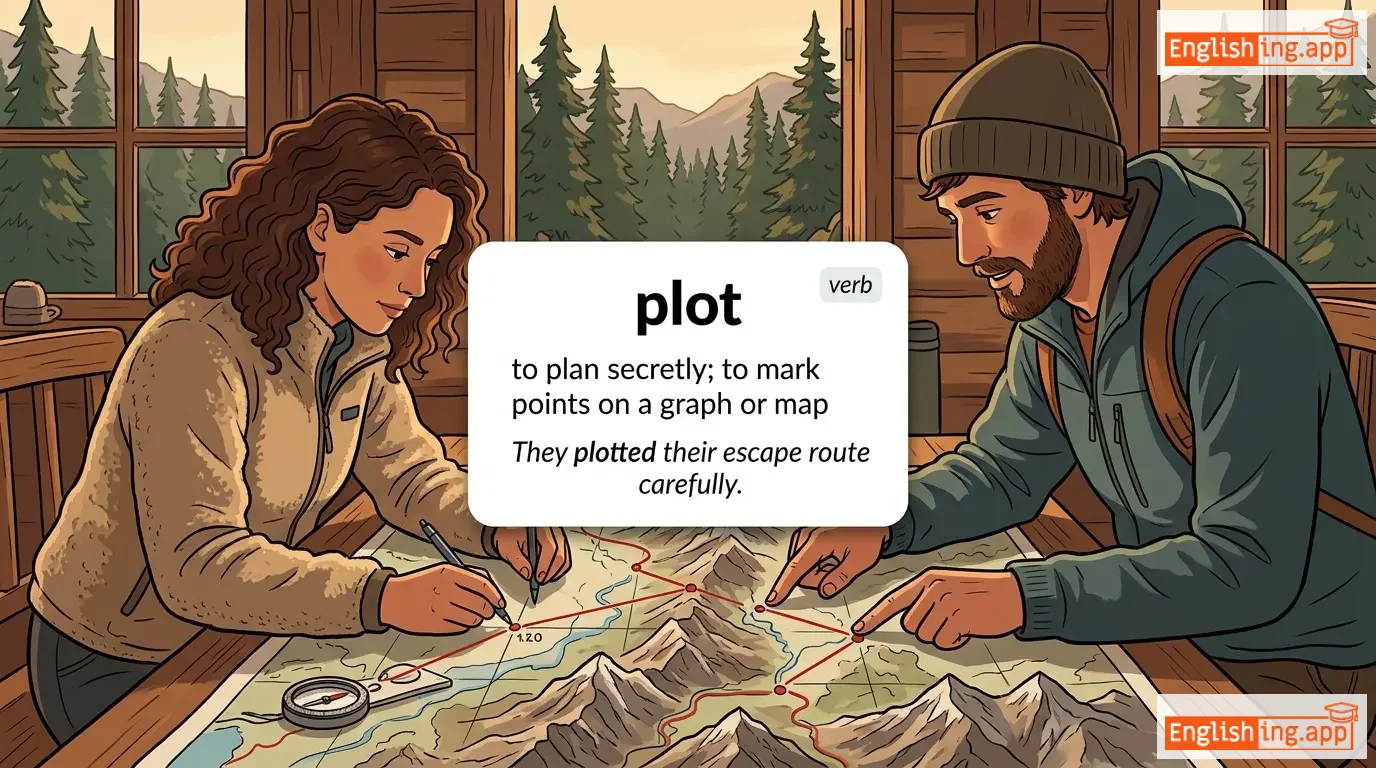
plot definition card — visual illustration of the meaning
noun
/plɒt/
trama (trama)

a secret plan or scheme, often with bad intentions

"The villain made a plot to steal the treasure."

"El villano hizo una trama para robar el tesoro." (El villano hizo una trama para robar el tesoro.)
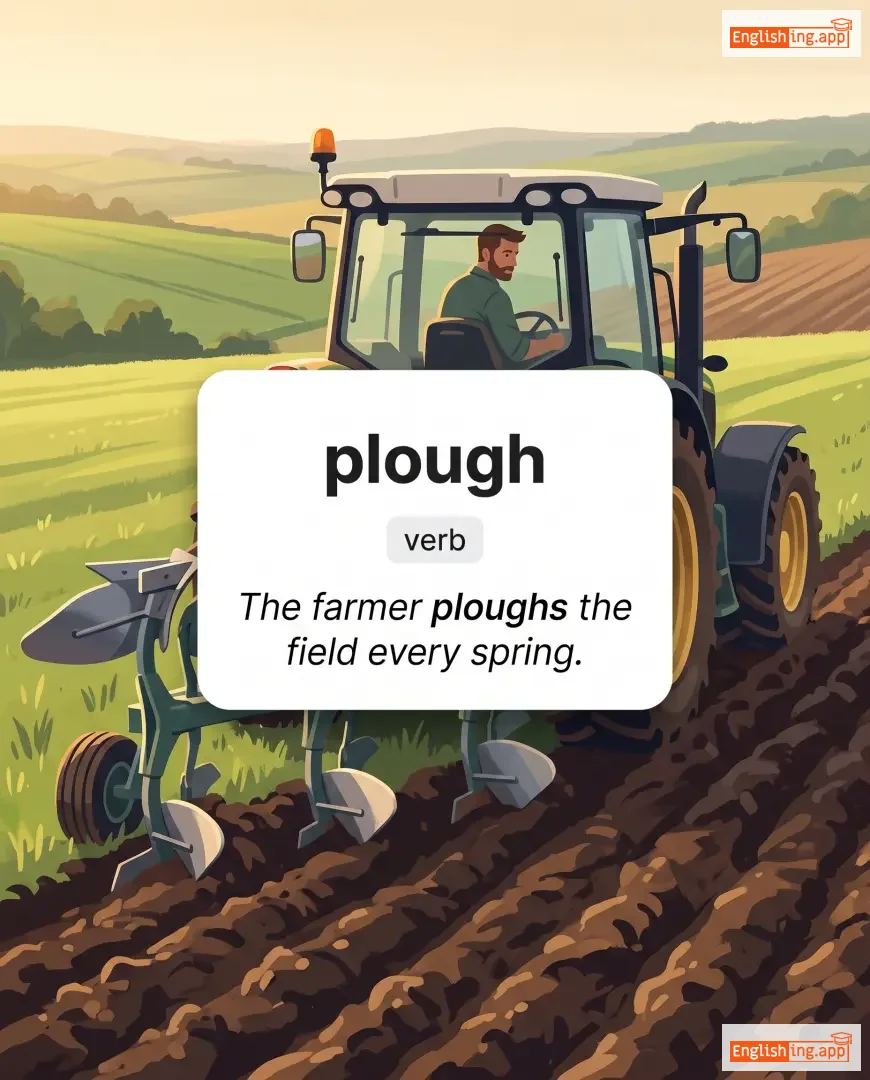
plough definition card — visual illustration of the meaning
noun
/plaʊ/
arado (arado)

a large farming tool used to break up and turn over soil before planting crops

"The oxen pulled the heavy plough across the field."

"Los bueyes tiraron el pesado arado por el campo." (Los bueyes tiraron el pesado arado por el campo.)
noun
/plɔɪ/
estratagema astuta (estrategema astuta)

a clever plan or action designed to gain an advantage

"She used a clever ploy to win the debate."

"Ella usó una táctica astuta para ganar el debate." (Ella uso una tactica astuta para ganar el debate.)
verb
/plʌk/
arrancar, reunir coraje (arrancar, reunir coraje)

to take hold of and quickly remove; to gather courage or determination

"She plucked a flower from the garden."

"Ella arrancó una flor del jardín." (Ella arranco una flor del jardin.)
adjective
/ˈplʌk.i/
valiente (valiente)

having or showing courage and determination

"The plucky child rescued the kitten from the tree."

"El niño valiente rescató al gatito del árbol." (El nino valiente rescató al gatito del arbol.)
noun
/plʌɡ/
enchufe (enchufe)

a device used to connect or block an opening

"She inserted the plug into the socket."

"Ella insertó el enchufe en el enchufe." (Ella insertó el enchufe en el enchufe.)
noun
/plʌm/
ciruela (ciruela)

a small round fruit with smooth red or purple skin, sweet flesh, and a single large seed

"The purple plum was juicy and delicious."

"La ciruela morada estaba jugosa y deliciosa." (La ciruela morada estaba jugosa y deliciosa.)
noun
/ˈpluː.mɪdʒ/
plumaje (plumaje)

the feathers covering a bird's body

"The peacock's plumage was vibrant and eye-catching."

"El plumaje del pavo real era vibrante y llamativo." (El plumaje del pavo real era vibrante y llamativo.)
verb
/plʌm/
medir la profundidad o examinar de cerca (medir la profundidad o examinar de cerca)

to measure the depth of water or examine closely

"They used a line to plumb the depth of the lake."

"Ellos usaron una línea para medir la profundidad del lago." (Ellos usaron una línea para medir la profundidad del lago.)
noun
/ˈplʌm.ər/
fontanero (fontanero)

a person who installs or repairs water pipes

"The plumber fixed the leaking pipe in the kitchen."

"El fontanero arregló la tubería con fugas en la cocina." (El fontanero arregló la tubería con fugas en la cocina.)
noun
/pluːm/
una gran pluma suave o algo que se asemeje a una pluma (una gran pluma suave o algo que se asemeje a una pluma)

a large, soft feather or something resembling a feather

"The soldier wore a red plume on his helmet."

"El soldado llevaba una pluma roja en su casco." (El soldado llevaba una pluma roja en su casco.)
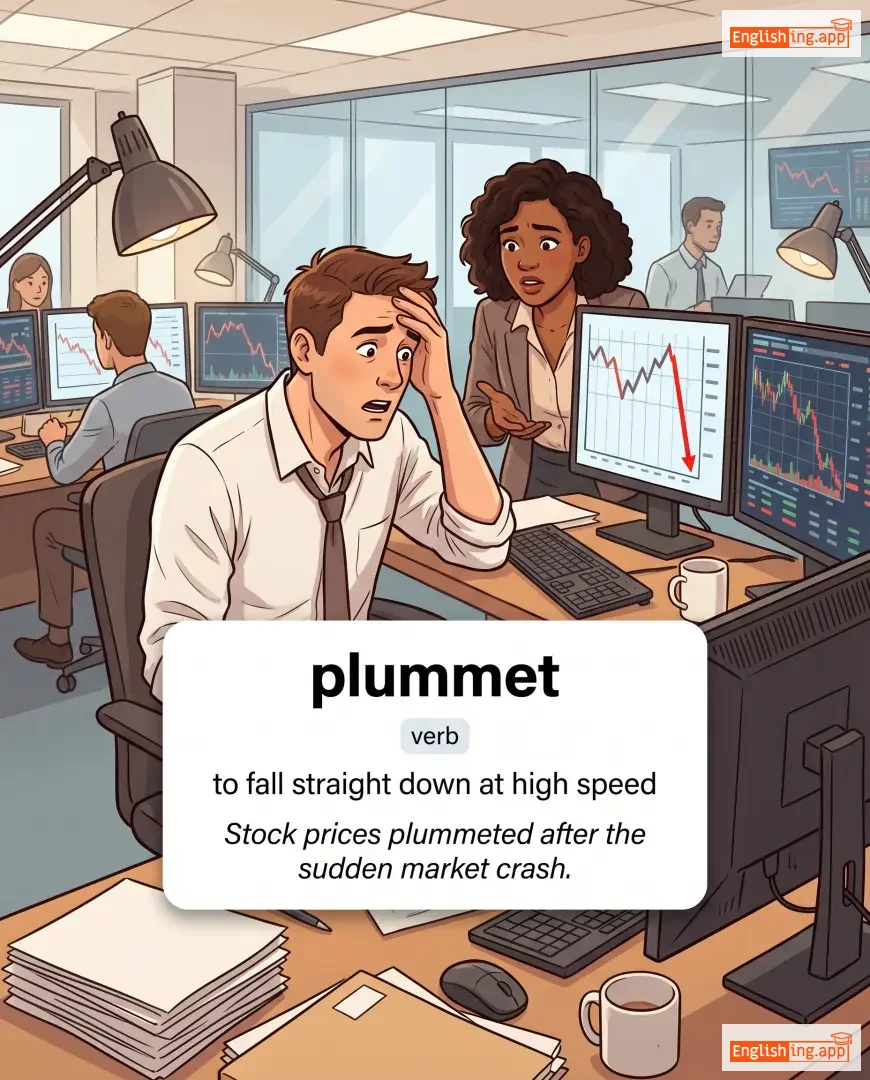
plummet definition card — visual illustration of the meaning
verb
/ˈplʌm.ɪt/
caer verticalmente a alta velocidad (caer verticalmente a alta velocidad)

to fall straight down at high speed

"Stock prices plummeted after the sudden market crash."

"Los precios de las acciones cayeron repentinamente después del colapso del mercado." (Los precios de las acciones cayeron repentinamente después del colapso del mercado.)
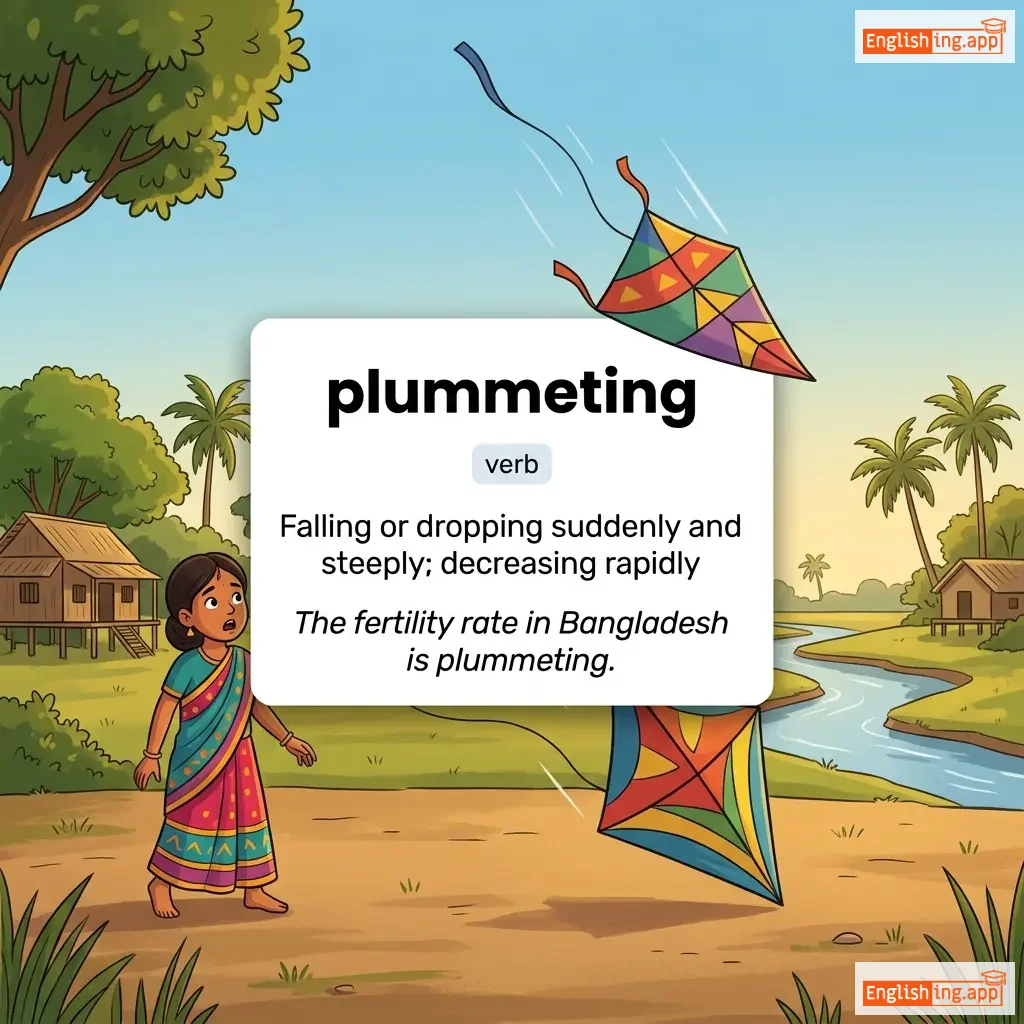
plummeting definition card — visual illustration of the meaning
verb
ˈplʌmɪtɪŋ
caída repentina (caida repentina)

Falling or dropping suddenly and steeply; decreasing rapidly

"The fertility rate in Bangladesh is plummeting."

"La tasa de fertilidad en Bangladesh está cayendo rápidamente." (La tasa de fertilidad en Bangladesh esta cayendo rapidamente.)
adjective
/plʌmp/
gordo o redondeado (gordo o redondeado)

having a full, rounded shape; pleasantly fat

"The cat was plump and well-fed."

"El gato estaba gordo y bien alimentado." (El gato estaba gordo y bien alimentado.)
noun
/ˈplʌn.dər.ər/
saqueador (saqueador)

a person who steals goods, especially during war or civil disorder

"The plunderers ransacked the village after the battle."

"Los saqueadores saquearon el pueblo después de la batalla." (Los saqueadores saquearon el pueblo después de la batalla.)
verb
/plʌndʒ/
saltar o bucear rápidamente; caer bruscamente (saltar o bucear rapidamente; caer bruscamente)

to jump or dive quickly; to fall sharply

"She plunged into the swimming pool."

"Ella se zambulló en la piscina." (Ella se zambulló en la piscina.)
adjective
/ˌpluːˈpɜːrfɪkt/
pluscuamperfecto (pluscuamperfecto)

a verb tense expressing an action completed before another past action

"By the time she arrived, he had finished his homework, showing the pluperfect tense."

"Para cuando ella llegó, él ya había terminado su tarea, mostrando el tiempo pluscuamperfecto." (Para cuando ella llego, el ya habia terminado su tarea, mostrando el tiempo pluscuamperfecto.)
adjective
/ˈplʊrəl/
plural (plural)

denoting more than one person or thing

"The word 'cats' is the plural of 'cat'."

"La palabra 'gatos' es el plural de 'gato'." (La palabra 'gatos' es el plural de 'gato'.)
noun
/plʊəˈrælɪti/
pluralidad o mayoría (pluralidad o mayoria)

the state of being multiple; the greater part or majority

"In the election, she won by a plurality of votes."

"En la elección, ella ganó por una pluralidad de votos." (En la eleccion, ella gano por una pluralidad de votos.)
preposition/conjunction/noun/adjective
/plʌs/
más/ventaja (mas/ventaja)

in addition to; a positive aspect or advantage

"She received an A plus on her exam."

"Obtuvo un A plus en su examen." (Obtuvo un A plus en su examen.)
noun
/pluːˈtɒkrəsi/
gobierno de los ricos (gobierno de los ricos)

a system of government where the wealthy hold power

"The country was ruled as a plutocracy."

"El país fue gobernado como una plutocracia." (El pais fue gobernado como una plutocracia.)
noun
/piːˈɛm/
p.m. (pee em)

abbreviation for post meridiem; after midday

"The meeting is scheduled at 3 pm."

"La reunión está programada para las 3 p.m." (La reunion esta programada para las tres pm)
adjective
/njuːˈmætɪk/
neumático (neumatiko)

operated by air or gas under pressure

"The factory uses pneumatic tools for assembly."

"La fábrica usa herramientas neumáticas para el ensamblaje." (La fabrica usa herramientas neumaticas para el ensamblaje.)
noun
/ˈpɒkɪt/
bolsillo (poket)

a small, enclosed space in clothing for carrying items

"He put his phone in his pocket."

"Él puso su teléfono en su bolsillo." (El puso su telefono en su bolsillo)
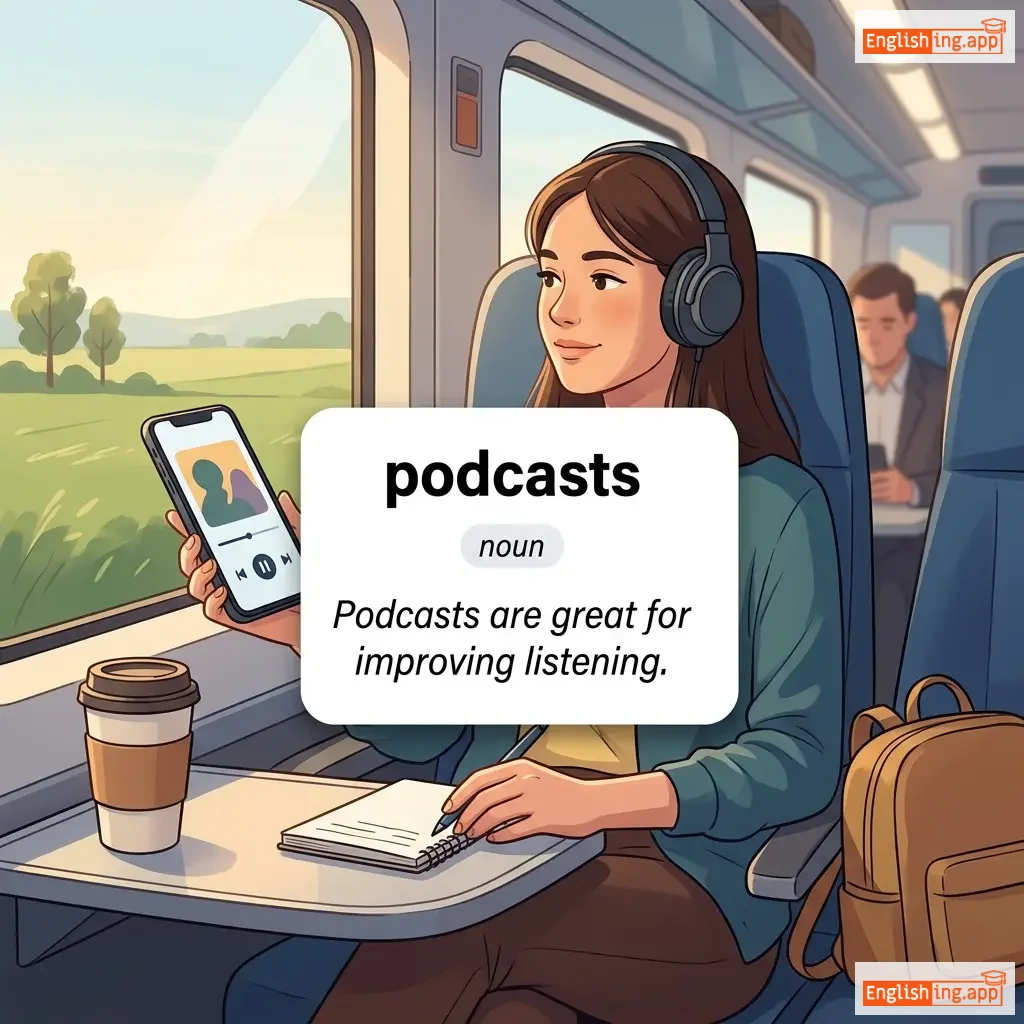
podcasts definition card — visual illustration of the meaning
noun
ˈpɒdkɑːsts
pódcast (podcast)

A digital audio or video file or recording, usually part of a themed series, that can be downloaded from a website to a media player or computer.

"Podcasts are great for improving listening."

"Los pódcast son geniales para mejorar la escucha." (Los podcasts son geniales para mejorar la escucha.)
noun
/ˈpoʊdiətrɪst/
podólogo (podologo)

a doctor specializing in foot care

"I have an appointment with the podiatrist for my ankle pain."

"Tengo una cita con el podólogo para el dolor de tobillo." (Tengo una cita con el podologo para el dolor de tobillo.)
noun
/ˈpoʊdiəm/
podio (podio)

a small platform on which a person stands to speak or conduct an orchestra

"The speaker stepped onto the podium to deliver the speech."

"El orador subió al podio para dar el discurso." (El orador subió al podio para dar el discurso.)
noun
/ˈpoʊɪm/
poema (poema)

a piece of writing that expresses ideas, feelings, or tells a story in a distinct form, often using rhyme or meter

"She wrote a beautiful poem for her mother."

"Ella escribió un hermoso poema para su madre." (Ella escribió un hermoso poema para su madre.)
noun
/ˈpoʊ.ə.si/
poesía (poesia)

poetry; the art or composition of poems

"The anthology was filled with romantic poesy."

"La antología estaba llena de poesía romántica." (La antologia estaba llena de poesia romantica.)
noun
/ˈpoʊɪt/
poeta (poeta)

a person who writes poems

"The poet wrote about love and nature."

"El poeta escribió sobre el amor y la naturaleza." (El poeta escribió sobre el amor y la naturaleza.)
noun
/ˈpoʊ.ɪˌtæs.tər/
un poeta inferior o trivial (un poeta inferior o trivial)

an inferior or trivial poet

"He was mocked as a poetaster by the literary critics."

"Fue ridiculizado como un poetáster por los críticos literarios." (Fue ridiculizado como un poetáster por los críticos literarios.)
adjective
/poʊˈɛt.ɪk/
poético (poetico)

having qualities of poetry; expressive, beautiful, or imaginative

"Her speech had a poetic rhythm that captivated the audience."

"Su discurso tenía un ritmo poético que cautivó a la audiencia." (Su discurso tenía un ritmo poético que cautivó a la audiencia.)
noun
/poʊˈɛt.ɪks/
poética, teoría de la poesía (poetica, teoria de la poesia)

the study or theory of poetry and its principles

"He wrote a book on poetics explaining the art of verse."

"Escribió un libro sobre poética explicando el arte del verso." (Escribió un libro sobre poetica explicando el arte del verso.)
noun
/ˈpoʊɪtri/
poesía (poesia)

a literary form that uses rhythmic and metaphorical language to express emotions or ideas

"She loves reading poetry in her free time."

"A ella le encanta leer poesía en su tiempo libre." (A ella le encanta leer poesia en su tiempo libre.)
noun
/ˈpɔɪ.nən.si/
tristeza, congoja (tristeza, congoja)

the quality of evoking a keen sense of sadness or regret; emotionally touching

"The poignancy of the farewell brought tears to everyone's eyes."

"La tristeza de la despedida trajo lágrimas a los ojos de todos." (La tristeza de la despedida trajo lágrimas a los ojos de todos.)
adjective
/ˈpɔɪ.njənt/
conmovedor, profundo (conmovedor, profundo)

evoking a keen sense of sadness or regret; deeply touching

"The movie's ending was so poignant that many in the audience were moved to tears."

"El final de la película fue tan conmovedor que muchos en la audiencia se conmovieron hasta las lágrimas." (El final de la pelicula fue tan conmovedor que muchos en la audiencia se conmovieron hasta las lagrimas.)
noun
/pɔɪnt/
punto (punto)

a particular spot, location, or position in space

"The mountain peak is the highest point in the region."

"La cima de la montaña es el punto más alto de la región." (La cima de la montaña es el punto mas alto de la region.)
adjective
/ˈpɔɪn.tɪd/
afilado; directo y claro (afilado; directo y claro)

having a sharp end; direct and unambiguous

"She made a pointed remark about his behavior."

"Ella hizo un comentario directo sobre su comportamiento." (Ella hizo un comentario directo sobre su comportamiento.)
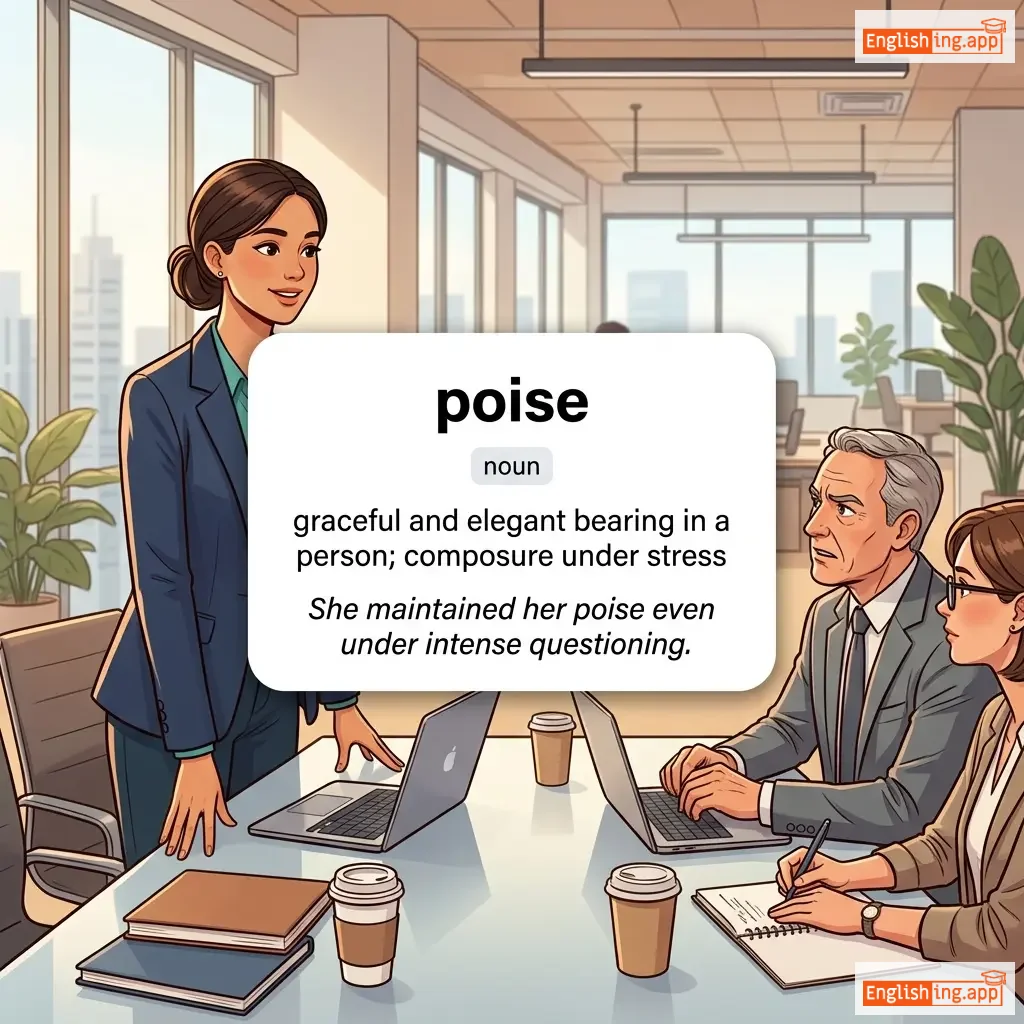
poise definition card — visual illustration of the meaning
noun
/pɔɪz/
gracia, compostura, calma (gracia, compostura, calma)

graceful and elegant bearing in a person; composure under stress

"She maintained her poise even under intense questioning."

"Ella mantuvo su compostura incluso bajo un intenso interrogatorio." (Ella mantuvo su compostura incluso bajo un intenso interrogatorio.)
noun
/ˈpɔɪ.zən/
veneno (beneno)

a substance that is capable of causing death or illness

"The snake's bite contains deadly poison."

"La mordedura de la serpiente contiene veneno mortal." (La mordedura de la serpiente contiene veneno mortal.)
adjective
/ˈpɔɪzənəs/
venenoso (venenoso)

Containing poison; capable of causing illness or death.

"Some mushrooms are highly poisonous."

"Algunos hongos son muy venenosos." (Algunos hongos son muy venenosos.)
verb
/poʊk/
empujar (empujar)

to push something with a finger or a pointed object

"He poked the fire with a stick."

"Él empujó el fuego con un palo." (El empujó el fuego con un palo.)
adjective
/ˈpoʊ.lər/
polar, relacionado con los polos (polar, relacionado con los polos)

relating to the North or South Pole; opposite in nature or character

"Penguins live in polar regions of the Earth."

"Los pingüinos viven en las regiones polares de la Tierra." (Los pingüinos viven en las regiones polares de la Tierra.)
noun
/ˈpoʊ.lər beər/
oso polar (oso polar)

a large white bear that lives in the Arctic regions

"The polar bear swims in the icy Arctic waters."

"El oso polar nada en las frías aguas del Ártico." (El oso polar nada en las frías aguas del Ártico.)
noun
/poʊˈlær.ɪ.ti/
polaridad (polaridad)

the state of having two opposite or contradictory tendencies, opinions, or aspects

"The polarity between the two political parties is growing stronger."

"La polaridad entre los dos partidos políticos está creciendo." (La polaridad entre los dos partidos políticos está creciendo.)