Vocabularios

Descubra, aprenda y domine el vocabulario en inglés

noun
/ˈfɪzɪks/
física (fisica)

the natural science that studies matter, energy, and the interactions between them

"She decided to major in physics at the university."

"Decidió especializarse en física en la universidad." (Decidio especializarse en fisica en la universidad.)
noun
/ˌfɪzɪˈɑːkrəsi/
fisiocracia (fisiocracia)

an economic theory that land and its natural products are the source of wealth

"Physiocracy emphasized the importance of agriculture in national wealth."

"La fisiocracia enfatizó la importancia de la agricultura en la riqueza nacional." (La fisiocracia enfatizo la importancia de la agricultura en la riqueza nacional.)
noun
/ˌfɪziˈɒnəmi/
estudio de las características faciales (estudio de las características faciales)

the study of facial features to judge character or personality

"He believed in physiognomy and tried to read people's personalities from their faces."

"Él creía en la fisiognomía e intentaba leer las personalidades de las personas desde sus rostros." (Él creía en la fisiognomía e intentaba leer las personalidades de las personas desde sus rostros.)
noun
/ˌfɪziˈɑːɡrəfi/
fisiografía (fisiografia)

the study of the physical features of the earth's surface

"He specialized in physiography to understand the landscape of the region."

"Se especializó en fisiografía para comprender el paisaje de la región." (Se especializo en fisiografia para comprender el paisaje de la region.)
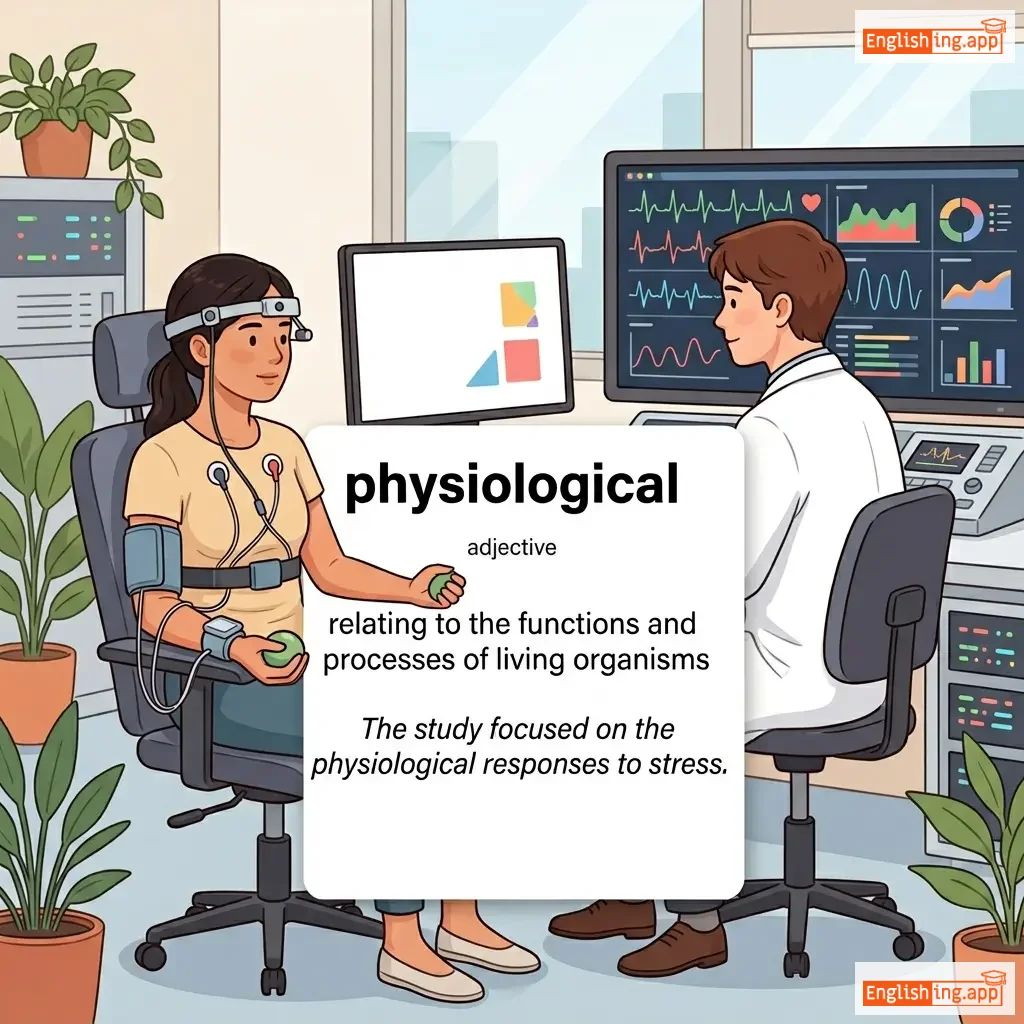
physiological definition card — visual illustration of the meaning
adjective
/ˌfɪziəˈlɑːdʒɪkəl/
fisiológico (fisiologico)

relating to the functions and processes of living organisms

"The study focused on the physiological responses to stress."

"El estudio se centró en las respuestas fisiológicas al estrés." (El estudio se centro en las respuestas fisiologicas al estres.)
noun
/ˌfɪziˈɑːlədʒi/
fisiología (fisiologia)

the scientific study of the functions and mechanisms in a living system

"She is majoring in human physiology at the university."

"Ella está especializándose en fisiología humana en la universidad." (Ella esta especializandose en fisiologia humana en la universidad.)
noun
/fɪˈziːk/
físico (fisico)

the form, size, and development of a person's body

"He has an athletic physique due to years of training."

"Él tiene una constitución atlética debido a años de entrenamiento." (El tiene una constitucion atletica debido a anos de entrenamiento.)
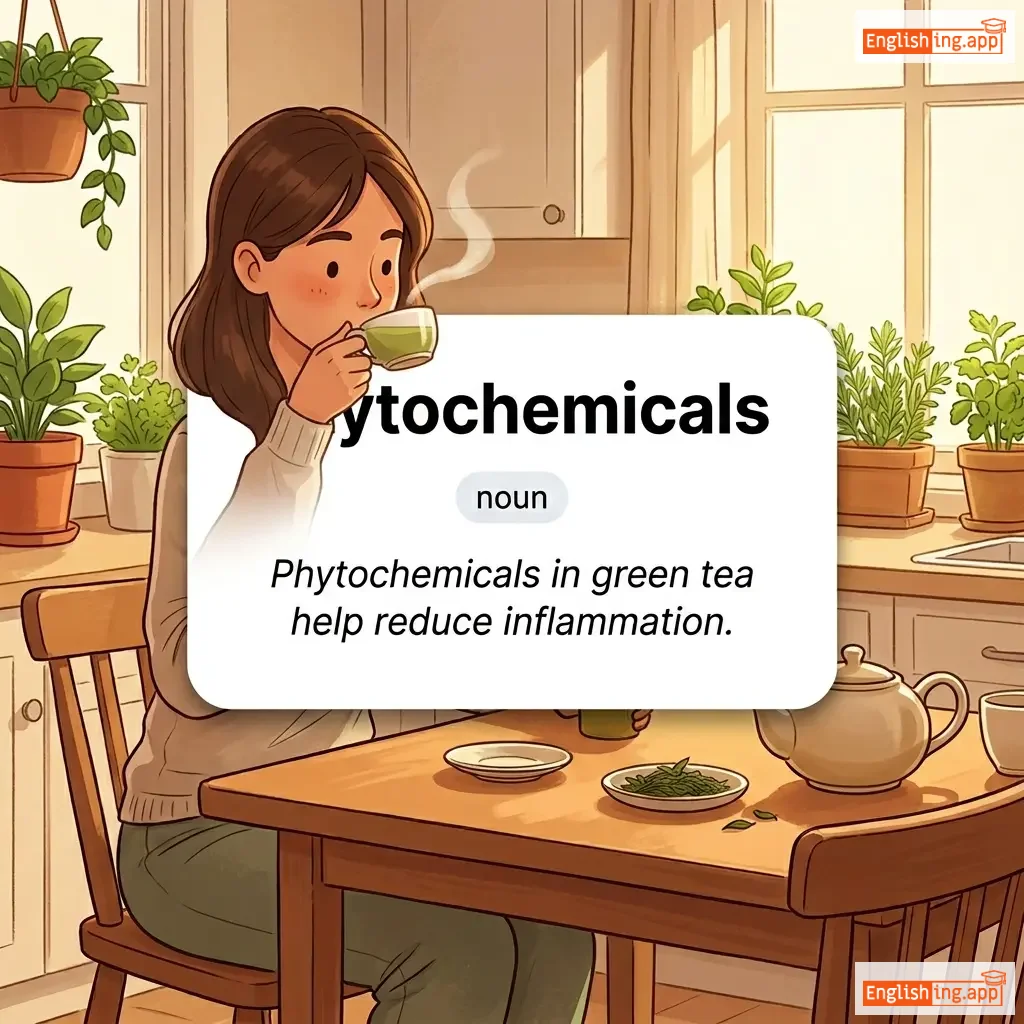
phytochemicals definition card — visual illustration of the meaning
noun
/ˌfaɪ.təʊˈkem.ɪ.kəlz/
fitonutrientes (fitonutrientes)

Natural chemical compounds produced by plants that provide health benefits beyond basic nutrition, often having antioxidant properties.

"Phytochemicals in green tea help reduce inflammation."

"Los fitonutrientes en el té verde ayudan a reducir la inflamación." (Los fitonutrientes en el te verde ayudan a reducir la inflamacion.)
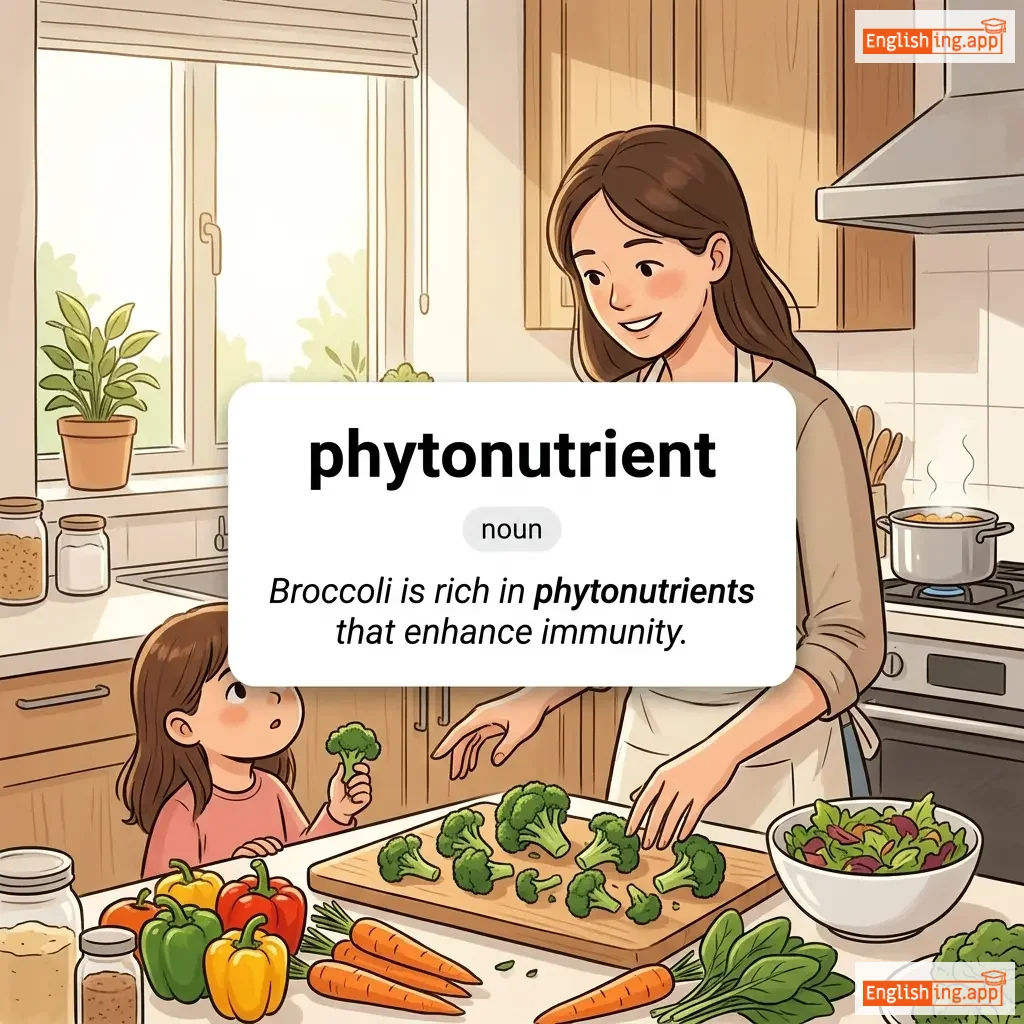
phytonutrient definition card — visual illustration of the meaning
noun
ˈfaɪ.təʊˌnjuː.tri.ənt
fitonutriente (fitonutriente)

Chemical compounds produced by plants that are beneficial to human health but not essential nutrients.

"Broccoli is rich in phytonutrients that enhance immunity."

"El brócoli es rico en fitonutrientes que mejoran la inmunidad." (El brocoli es rico en fitonutrientes que mejoran la inmunidad.)
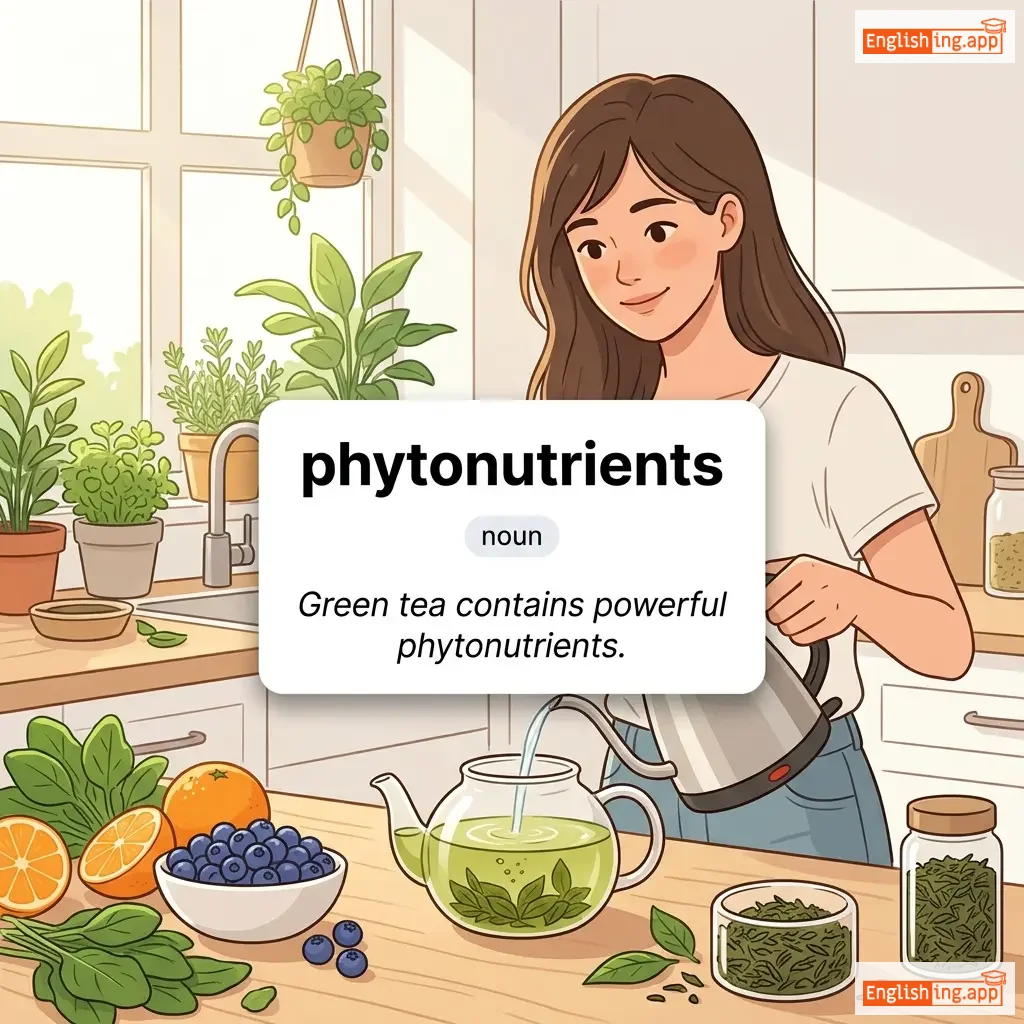
phytonutrients definition card — visual illustration of the meaning
noun
ˈfaɪ.təʊˌnjuː.tri.ənts
fitonutrientes (fitonutrientes)

Bioactive compounds found in plants that have health benefits beyond basic nutrition.

"Green tea contains powerful phytonutrients."

"El té verde contiene poderosos fitonutrientes." (El té verde contiene poderosos fitonutrientes.)
noun
/piˈænoʊ/
piano (peeahno)

a large musical instrument with a keyboard, played by pressing keys that cause hammers to strike strings

"She played a beautiful tune on the piano during the concert."

"Ella tocó una hermosa melodía en el piano durante el concierto."
adjective
/ˌpɪkəˈrɛsk/
historia de un héroe pícaro (historia de un heroe picaro)

relating to a style of fiction depicting the adventures of a roguish hero

"The novel is a picaresque tale of a clever vagabond."

"La novela es una historia picaresca de un astuto vagabundo." (La novela es una historia picaresca de un astuto vagabundo.)
adjective
/ˌpɪkəˈjuːn/
insignificante, trivial (insignificante, trivial)

of little value or importance; trivial

"He complained about the picayune details of the contract."

"Se quejaba de los detalles triviales del contrato." (Se quejaba de los detalles triviales del contrato.)
noun
/ˈpɪkəloʊ/
flauta pequeña (flauta pequena)

a small flute, higher in pitch than the regular flute

"She played a lively tune on the piccolo during the concert."

"Ella tocó una melodía animada en el piccolo durante el concierto." (Ella toco una melodia animada en el piccolo durante el concierto.)
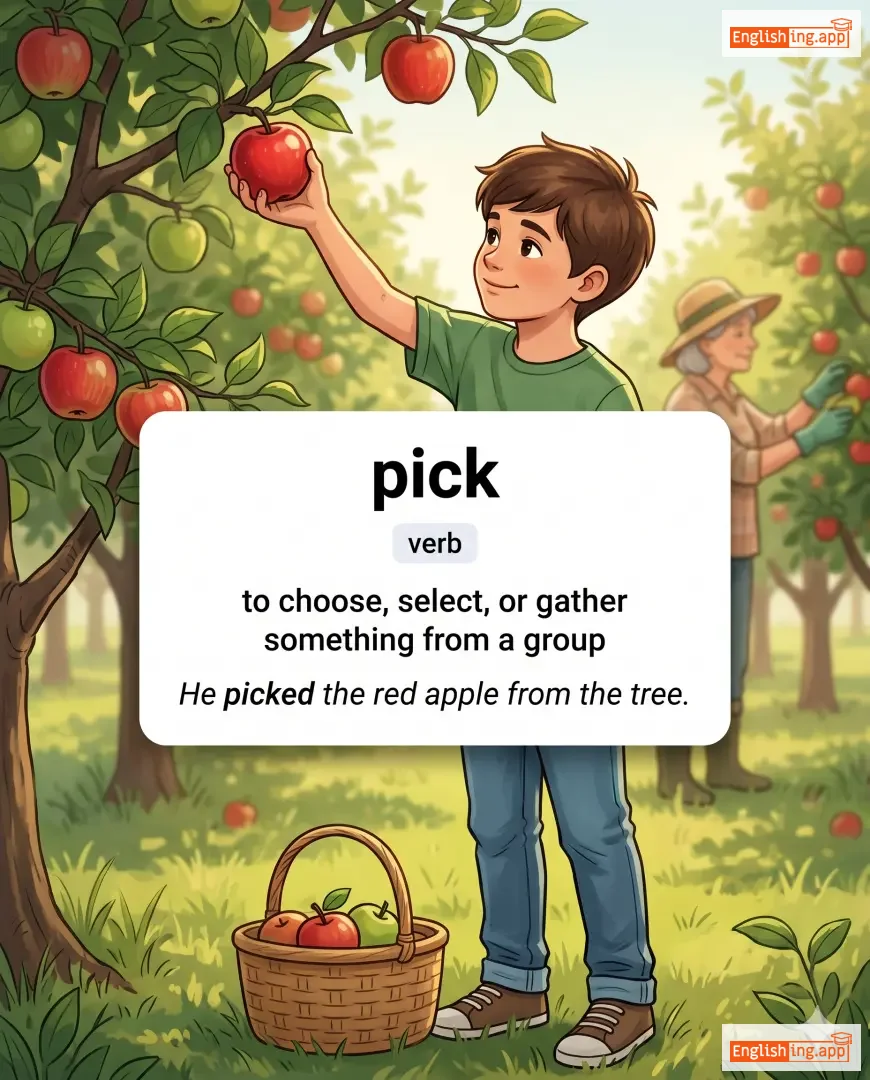
pick definition card — visual illustration of the meaning
verb
/pɪk/
elegir (elegir)

to choose, select, or gather something from a group

"He picked the red apple from the tree."

"Él escogió la manzana roja del árbol." (Él escogió la manzana roja del árbol.)
phrasal verb
/pɪk ʌp/
recoger; levantar; adquirir (recoger; levantar; adquirir)

to lift something; to collect or receive someone or something; to learn or acquire gradually; to improve or increase

"She picked up the book from the floor."

"Ella recogió el libro del suelo." (Ella recogio el libro del suelo)
noun
/ˈpɪk.æks/
pico (piko)

a tool with a heavy metal head and long handle used for breaking up hard ground or rock

"The miner used a pick-axe to break through the rocky surface."

"El minero usó un pico para romper la superficie rocosa." (El minero uso un pico para romper la superficie rocosa.)
noun
/ˈpɪkʌp/
camión pequeño con una parte trasera abierta; el acto de recoger o mejorar algo (camion pequeno con una parte trasera abierta; el acto de recoger o mejorar algo)

a small truck with an open back; the act of collecting or improving something

"The company scheduled a pickup for the returned goods."

"La empresa programó una recogida para los productos devueltos." (La empresa programó una recogida para los productos devueltos.)
noun
/ˈpɪktʃər/
imagen (imagen)

a visual representation made by painting, drawing, or photography

"The picture on the wall was painted by a famous artist."

"La imagen en la pared fue pintada por un artista famoso." (La imagen en la pared fue pintada por un artista famoso.)
adjective
/ˈpɪdlɪŋ/
insignificante, trivial (insignificante, trivial)

trivial or insignificant; very small

"He made a piddling amount of money from that deal."

"Él ganó una cantidad insignificante de dinero con ese trato." (El gano una cantidad insignificante de dinero con ese trato.)
noun
/paɪ/
pastel (pastel)

a baked dish typically consisting of a pastry crust and filling

"She baked an apple pie for dessert."

"Ella horneó un pastel de manzana para el postre." (Ella horneó un pastel de manzana para el postre.)
adjective
/ˈpaɪbɔːld/
de dos colores manchados (de dos colores manchados)

having irregular patches of two colors, especially black and white

"The farmer owns a piebald horse with black and white spots."

"El granjero tiene un caballo piebald con manchas negras y blancas." (El granjero tiene un caballo piebald con manchas negras y blancas.)
noun
/piːs/
un pedazo (un pedazo)

a portion or part of something

"He gave me a piece of cake."

"Él me dio un pedazo de pastel." (El me dio un pedazo de pastel.)
noun
/ˈpiːs ɡʊdz/
tela por pieza (tela por pieza)

textiles or fabrics sold by the yard or meter; cloth materials

"The tailor bought piece-goods from the wholesale market to make custom dresses."

"El sastre compró tela por pieza del mercado mayorista para hacer vestidos a medida." (El sastre compro tela por pieza del mercado mayorista para hacer vestidos a medida.)
adjective
/ˈpiːsmiːl/
hecho por etapas (hecho por etapas)

done or made in separate stages rather than all at once

"The construction of the new building was carried out piecemeal over several years."

"La construcción del nuevo edificio se llevó a cabo por etapas durante varios años." (La construccion del nuevo edificio se llevo a cabo por etapas durante varios anos.)
adjective
/paɪd/
de varios colores (de varios colores)

having two or more different colors, typically in blotches

"The pied cat had black and white patches all over its body."

"El gato pied tenía manchas negras y blancas por todo su cuerpo." (El gato pied tenía manchas negras y blancas por todo su cuerpo.)
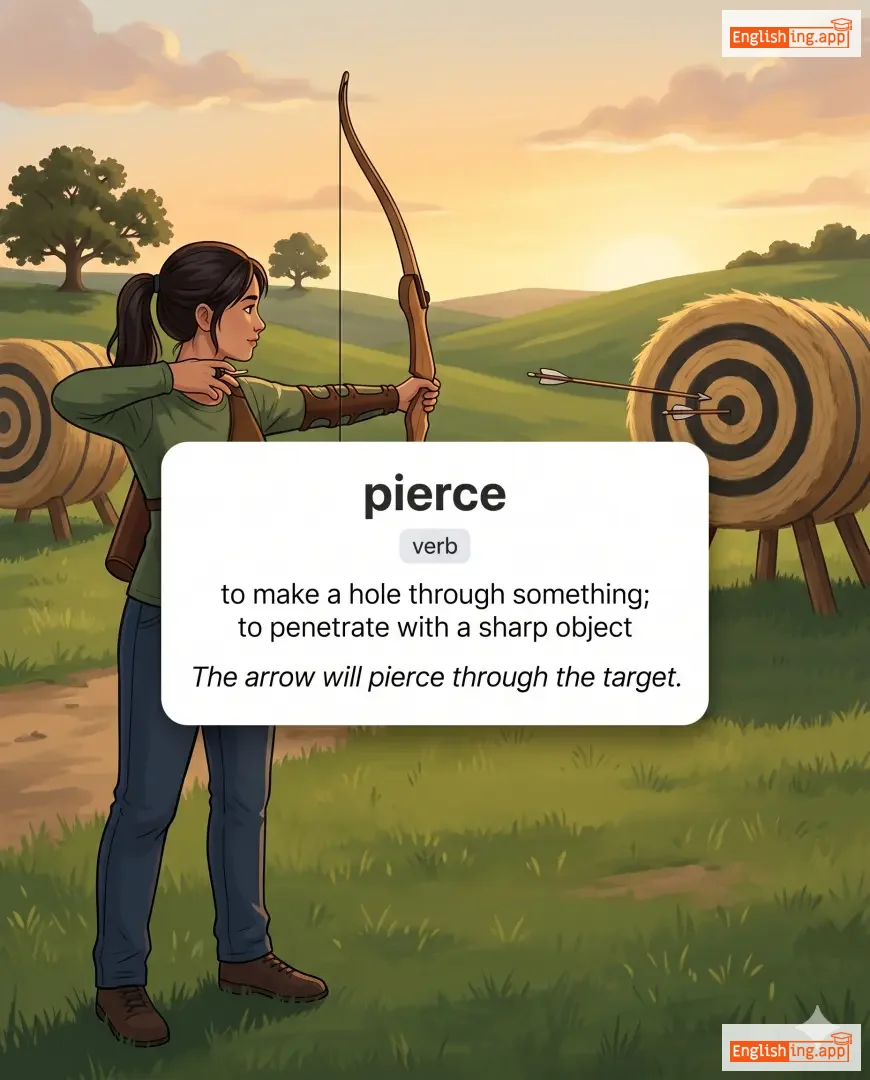
pierce definition card — visual illustration of the meaning
verb
/pɪəs/
perforar (perforar)

to make a hole through something; to penetrate with a sharp object

"The arrow will pierce through the target."

"La flecha atravesará el objetivo." (La flecha atravesará el objetivo.)
Piety definition card — visual illustration of the meaning
noun
/ˈpaɪəti/
piedad (piedad)

the quality of being religious or showing reverence for God

"Her piety was evident in the way she prayed every morning."

"Su piedad era evidente en la forma en que rezaba todas las mañanas." (Su piedad era evidente en la forma en que rezaba todas las mañanas.)
noun
/pɪɡ/
cerdo (cerdo)

a farm animal with a snout used for digging and a curly tail; kept for meat such as pork or bacon

"The pig rolled happily in the mud."

"El cerdo rodó felizmente en el barro." (El cerdo rodo felizmente en el barro.)
noun
/ˈpɪdʒ.ən/
paloma (paloma)

a grey and white bird with a fat body that is common in cities

"The pigeon pecked at breadcrumbs on the sidewalk."

"La paloma picoteó migas de pan en la acera." (La paloma picoteo migas de pan en la acera.)
noun
/ˈpɪɡmənt/
pigmento (pigmento)

a natural or artificial substance used to give color to something

"The artist mixed different pigments to create the perfect shade of blue."

"El artista mezcló diferentes pigmentos para crear el tono perfecto de azul." (El artista mezcló diferentes pigmentos para crear el tono perfecto de azul.)
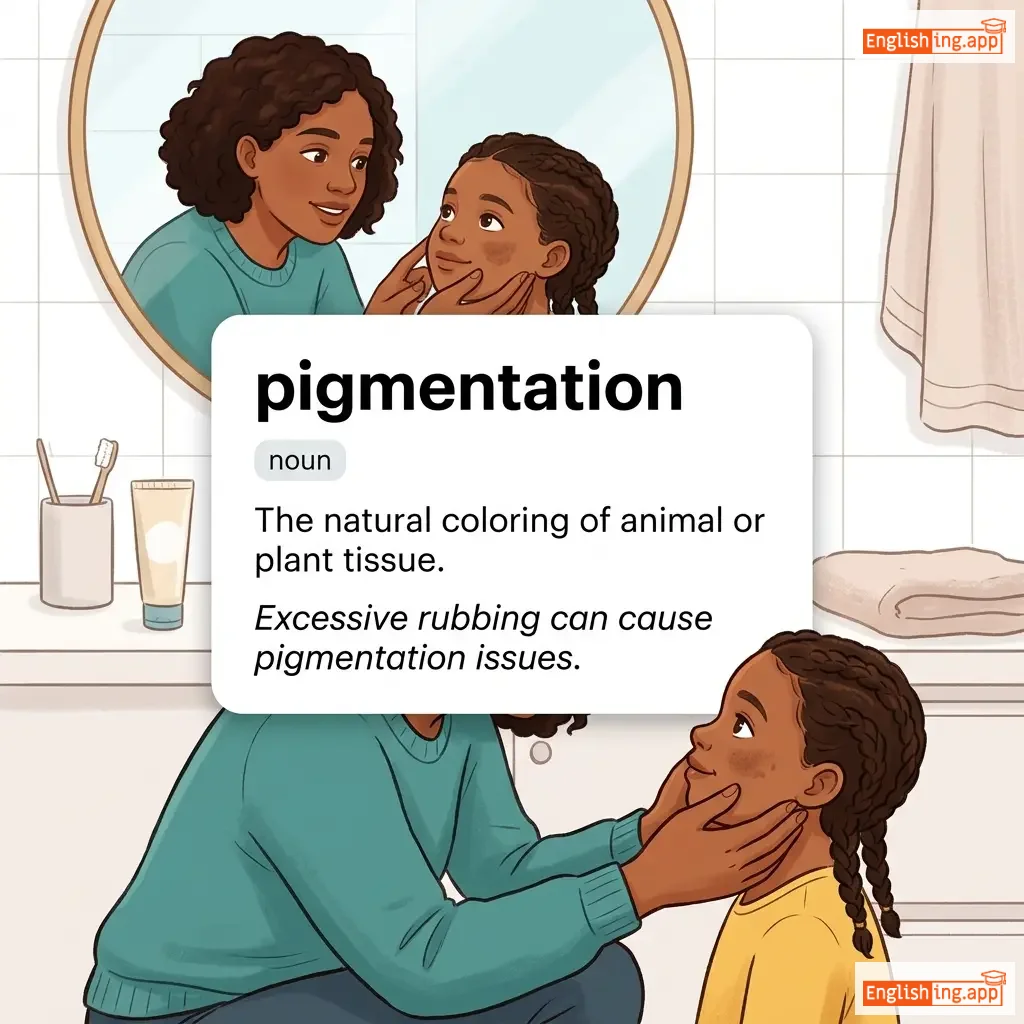
pigmentation definition card — visual illustration of the meaning
noun
/ˌpɪɡ.menˈteɪ.ʃən/
pigmentación (pigmentacion)

The natural coloring of animal or plant tissue.

"Excessive rubbing can cause pigmentation issues."

"El frotamiento excesivo puede causar problemas de pigmentación." (El frotamiento excesivo puede causar problemas de pigmentacion.)
noun
/paɪl/
montón (monton)

a large amount of something stacked or placed in a heap

"He placed the books in a pile on the table."

"Colocó los libros en un montón sobre la mesa." (Coloco los libros en un monton sobre la mesa.)
🕵️‍♂️

pilfer (pílfer)

verb
/ˈpɪlfər/
robar (robar)

to steal things of small value or in small quantities

"The employee was caught pilfering office supplies."

"El empleado fue atrapado robando suministros de oficina." (El empleado fue atrapado robando suministros de oficina.)
noun
/ˈpɪl.fər.ɪdʒ/
hurto (hurto)

the theft of small amounts or items, especially from one's workplace

"The company installed cameras to prevent pilferage."

"La empresa instaló cámaras para prevenir el hurto." (La empresa instalo camaras para prevenir el hurto.)
🚶‍♂️

Pilgrim (pílgrim)

noun
/ˈpɪl.ɡrɪm/
peregrino; viajero (peregrino; viajero)

a person who journeys to a sacred place for religious reasons; a traveler

"The pilgrim walked for days to reach the holy shrine."

"El peregrino caminó durante días para llegar al santuario sagrado." (El peregrino camino durante dias para llegar al santuario sagrado.)
noun
/pɪl/
pastilla (pastilla)

a small round piece of medicine to be swallowed

"He took a pill to relieve his headache."

"Tomó una pastilla para aliviar su dolor de cabeza." (Tomo una pastilla para aliviar su dolor de cabeza.)
🏴‍☠️

pillage (pílejdʒ)

verb
/ˈpɪlɪdʒ/
saquear (saquear)

to rob or plunder a place, especially during war

"The invading army pillaged the village and took all valuables."

"El ejército invasor saqueó la aldea y se llevó todas las cosas valiosas." (El ejército invasor saqueó la aldea y se llevó todas las cosas valiosas.)
noun
/ˈpɪlər/
columna (columna)

a strong vertical support or mainstay of a structure or system

"The ancient temple was supported by massive stone pillars."

"El antiguo templo fue sostenido por enormes columnas de piedra." (El antiguo templo fue sostenido por enormes columnas de piedra.)
noun
/pɪˈlɑːf/
pilav (pilav)

a dish of rice cooked in seasoned broth, often with meat and vegetables

"We enjoyed a delicious chicken pillaw for dinner."

"Disfrutamos de un delicioso pilav de pollo para la cena." (Disfrutamos de un delicioso pilav de pollo para la cena.)
noun/verb
/ˈpɪləri/
dispositivo de castigo público (dispositivo de castigo público)

a device for publicly punishing someone / to expose to public ridicule

"The corrupt official was placed in the pillory for the town to jeer at."

"El funcionario corrupto fue puesto en el píloris para que la gente se burlara de él." (El funcionario corrupto fue puesto en el píloris para que la gente se burlara de él.)
noun
/ˈpɪloʊ/
almohada (almohada)

a soft cushion filled with material used to support the head while sleeping or resting

"She placed her head on the soft pillow and fell asleep quickly."

"Ella colocó su cabeza sobre la suave almohada y se quedó dormida rápidamente." (Ella coloco su cabeza sobre la suave almohada y se quedo dormida rapidamente.)
noun/verb
/ˈpaɪlət/
piloto (piloto)

a person who operates an aircraft / to guide or lead through a trial

"She piloted the plane safely through the storm."

"Ella pilotó el avión de forma segura a través de la tormenta." (Ella pilotó el avión de forma segura a través de la tormenta.)
noun
/ˈpɪm.pəl/
grano (grano)

a small, inflamed elevation of the skin; a spot on the skin, especially on the face

"She was embarrassed about the pimple on her forehead."

"Ella estaba avergonzada por el grano en su frente." (Ella estaba avergonzada por el grano en su frente.)
noun
/pɪn/
alfiler (alfiler)

a small thin piece of metal used to fasten or hold things together

"She used a pin to attach the note to the board."

"Ella usó un alfiler para fijar la nota en la pizarra." (Ella uso un alfiler para fijar la nota en la pizarra.)
noun
/ˈpɪnsərz/
alicates (alicates)

a gripping tool with two arms used for holding or pulling objects

"He used pincers to remove the hot nail from the wood."

"Usó unos alicates para quitar el clavo caliente de la madera." (Uso unos alicates para quitar el clavo caliente de la madera.)
verb
/pɪntʃ/
pellizcar (pellizcar)

to squeeze tightly between the fingers; to take a small amount

"She pinched a bit of salt into the soup."

"Ella echó un poco de sal en la sopa." (Ella echó un poco de sal en la sopa.)
noun
/ˈpɪntʃərz/
pinzas (pinzas)

a tool used for gripping or squeezing objects

"Use the pinchers to remove the hot coal safely."

"Usa los pínchers para quitar el carbón caliente de manera segura." (Usa los pinchers para quitar el carbón caliente de manera segura.)
verb
/paɪn/
ansiar profundamente (ansiar profundamente)

to long intensely for something or someone; to suffer from longing

"He pined for his hometown after moving abroad."

"Después de mudarse al extranjero, él extrañaba profundamente su ciudad natal." (Despues de mudarse al extranjero, él extrañaba profundamente su ciudad natal.)
noun
/ˈpaɪn.æp.əl/
piña (pina)

a large tropical fruit with a tough skin and sweet yellow flesh

"The pineapple has a crown of spiky leaves on top."

"La piña tiene una corona de hojas puntiagudas en la parte superior." (La pina tiene una corona de hojas puntiagudas en la parte superior)