Vocabularios

Descubra, aprenda y domine el vocabulario en inglés

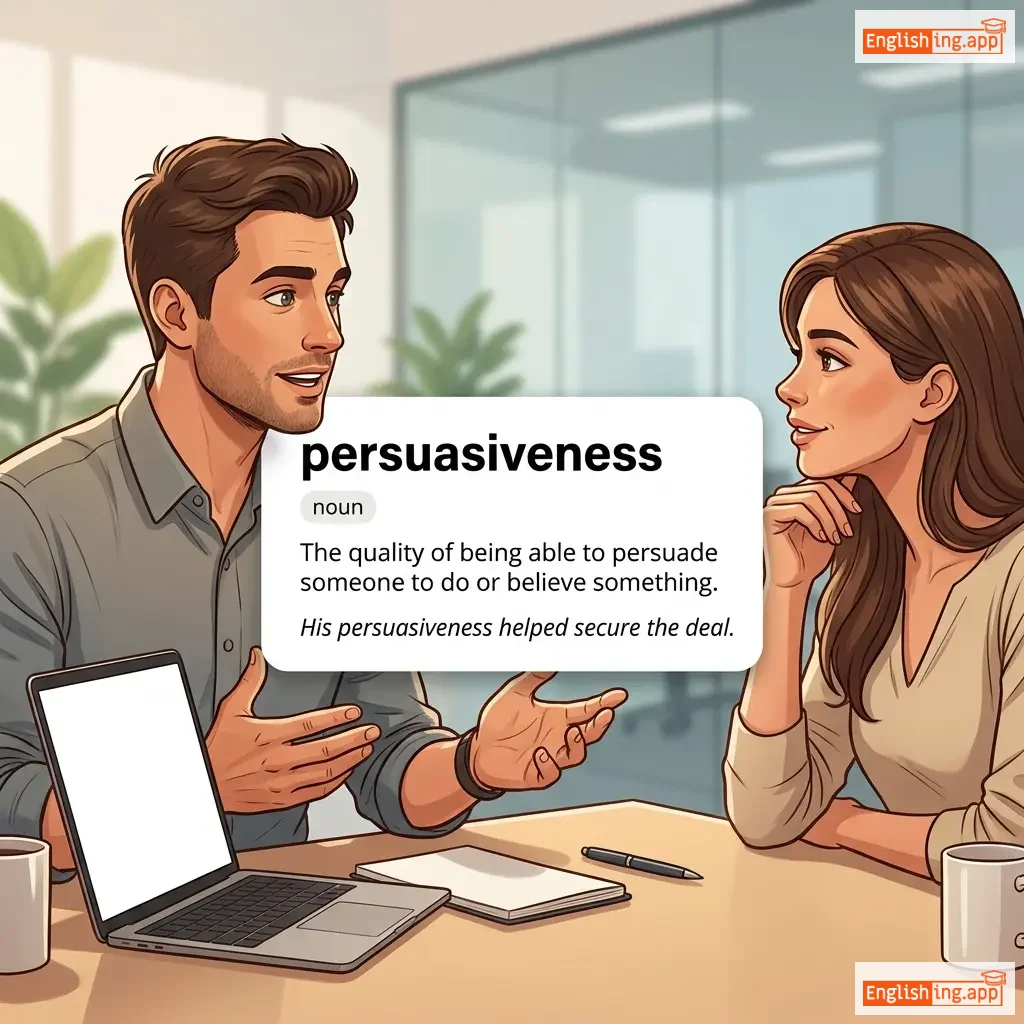
persuasiveness definition card — visual illustration of the meaning
noun
/pərˈsweɪ.sɪv.nəs/
persuasión (persuasion)

The quality of being able to persuade someone to do or believe something.

"His persuasiveness helped secure the deal."

"Su persuasión ayudó a asegurar el trato." (Su persuasion ayudo a asegurar el trato.)
adjective
/pɜːrt/
atrevido pero encantador (atrevido pero encantador)

attractively lively or cheeky in manner or style

"She gave a pert reply that made everyone laugh."

"Ella dio una respuesta atrevida que hizo reír a todos." (Ella dio una respuesta atrevida que hizo reír a todos.)
verb
/pərˈteɪn/
relacionarse (relacionarse)

to relate or have reference to something

"The rules pertain to all students in the school."

"Las reglas se aplican a todos los estudiantes en la escuela." (Las reglas se aplican a todos los estudiantes en la escuela.)
adjective
/ˌpɜːrtɪˈneɪʃəs/
tenaz (tenaz)

holding firmly to an opinion, purpose, or course of action; stubbornly persistent

"The pertinacious lawyer refused to give up the case."

"El abogado tenaz se negó a abandonar el caso." (El abogado tenaz se nego a abandonar el caso.)
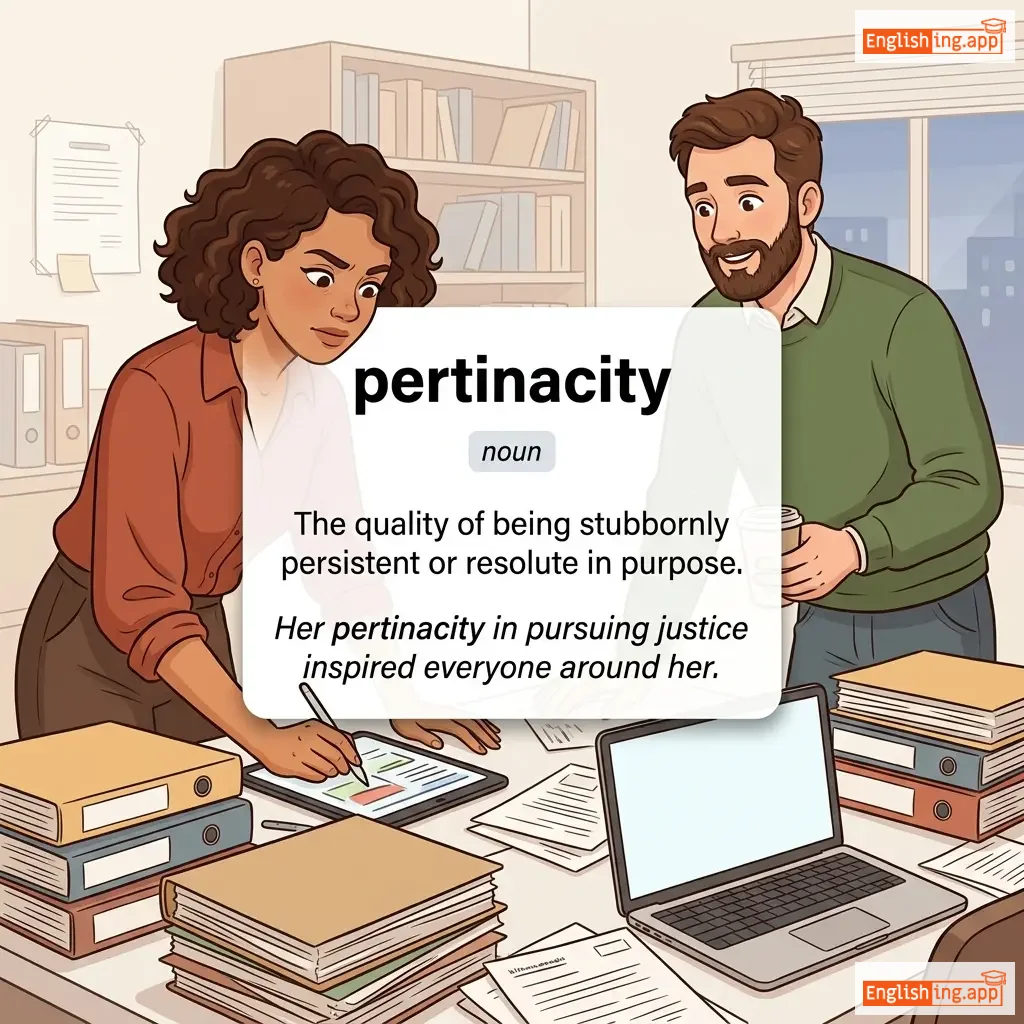
pertinacity definition card — visual illustration of the meaning
noun
/ˌpɜːrtɪˈnæsɪti/
pertinacia (pertinacia)

The quality of being stubbornly persistent or resolute in purpose.

"Her pertinacity in pursuing justice inspired everyone around her."

"Su pertinacia en perseguir la justicia inspiró a todos a su alrededor." (su pertinacia en perseguir la justicia inspiro a todos a su alrededor)
adjective
/ˈpɜːrtɪnənt/
pertinente (pertinente)

Relevant or applicable to a particular matter.

"She asked a pertinent question during the meeting."

"Ella hizo una pregunta pertinente durante la reunión." (Ella hizo una pregunta pertinente durante la reunión.)
noun
/ˈpɜːrtnəs/
descaro (descaro)

boldness or forwardness in speech or behavior; sauciness

"Her pertness during the meeting surprised everyone."

"Su descaro durante la reunión sorprendió a todos." (Su descaro durante la reunión sorprendió a todos.)
verb
/pərˈtɜːrb/
perturbar (perturbar)

To disturb or unsettle greatly in mind.

"The sudden noise perturbed the students during the exam."

"El ruido repentino perturbó a los estudiantes durante el examen." (El ruido repentino perturbó a los estudiantes durante el examen.)
noun
/ˌpɜːrtərˈbeɪʃn/
perturbación (perturbacion)

A state of anxiety, disturbance, or disorder.

"The announcement caused a perturbation in the financial markets."

"El anuncio causó una perturbación en los mercados financieros." (El anuncio causo una perturbacion en los mercados financieros.)
adjective
/pərˈtɜːrbd/
perturbado (perturbado)

feeling anxious, unsettled, or disturbed

"He looked perturbed after hearing the bad news."

"Se veía perturbado después de escuchar las malas noticias." (Se veia perturbado despues de escuchar las malas noticias.)
noun
/pəˈruːzl/
lectura cuidadosa (lectura cuidadosa)

The action of reading or examining something carefully.

"The contract was given to the lawyer for perusal."

"El contrato fue dado al abogado para su lectura cuidadosa." (El contrato fue dado al abogado para su lectura cuidadosa.)
verb
/pəˈruːz/
felicidad (felicidad)

to read something carefully and thoroughly; sometimes used to mean to browse casually

"She sat down to peruse the contract before signing it."

"Ella no podía ocultar su felicidad cuando recibió el premio." (Ella no podía ocultar su felicidad cuando recibió el premio.)
verb
/pəˈveɪd/
permeabilizar (permeabilizar)

to spread through and be present in every part of something

"The smell of fresh flowers pervaded the entire room."

"El aroma de las flores frescas permeó toda la habitación." (El aroma de las flores frescas permeó toda la habitación.)
noun
/pəˈveɪʒən/
pervasión (pervasion)

the act of spreading through or being present everywhere in something

"There was a pervasion of hope throughout the community."

"Había una pervasión de esperanza en toda la comunidad." (Había una pervasión de esperanza en toda la comunidad.)
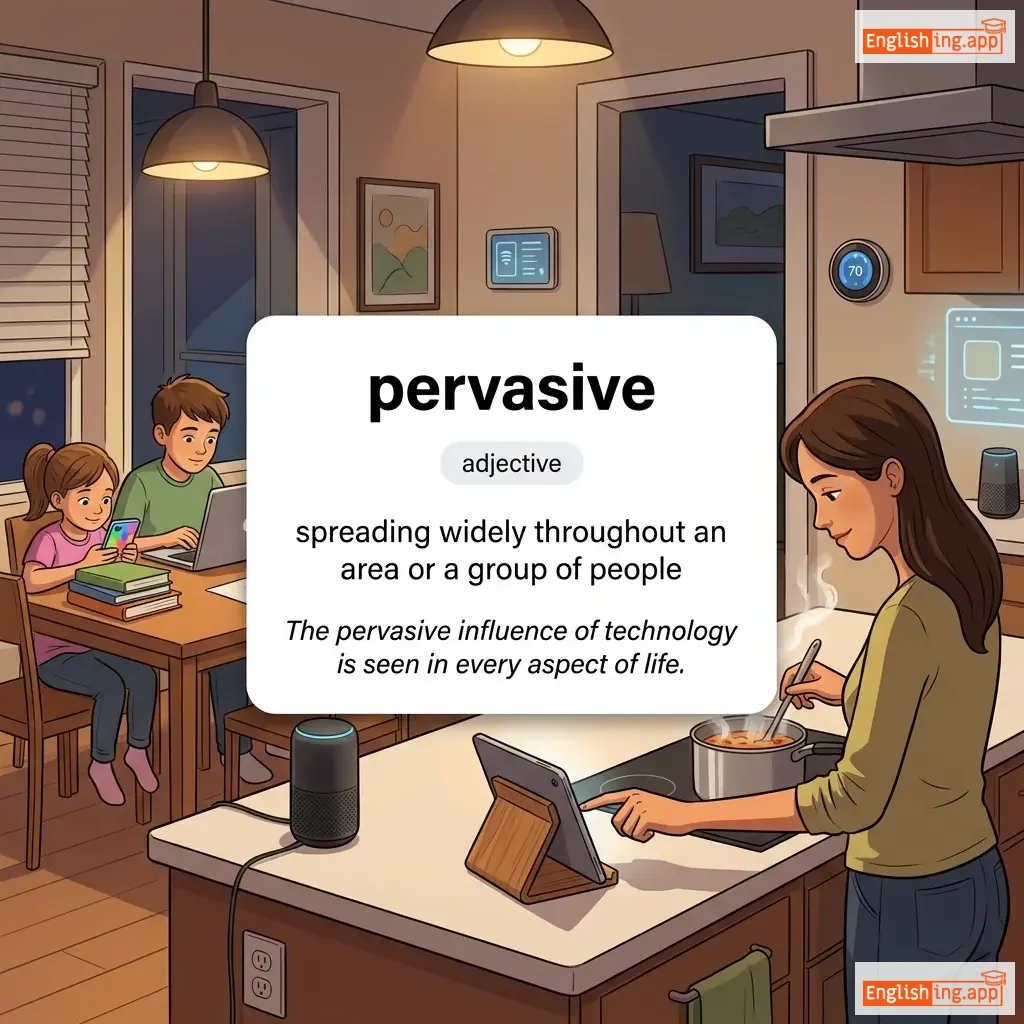
pervasive definition card — visual illustration of the meaning
adjective
/pərˈveɪsɪv/
pervasivo (pervasivo)

spreading widely throughout an area or a group of people

"The pervasive influence of technology is seen in every aspect of life."

"La influencia pervasiva de la tecnología se ve en todos los aspectos de la vida." (La influencia pervasiva de la tecnología se ve en todos los aspectos de la vida.)
adjective
/pərˈvɜːrs/
perverso (perverso)

showing a deliberate desire to behave in a way that is unreasonable, contrary, or unacceptable

"He took a perverse pleasure in upsetting his colleagues."

"Él tomó un placer perverso al molestar a sus compañeros." (Él tomó un placer perverso al molestar a sus compañeros.)
noun
/pərˈvɜːrʒən/
perversión (perversion)

The act of distorting or corrupting the original meaning, purpose, or state of something.

"The regime’s censorship was seen as a perversion of free speech."

"La censura del régimen se consideró una perversión de la libertad de expresión." (La censura del regimen se considero una perversion de la libertad de expresion.)
noun
/pərˈvɜːrsəti/
perversidad (perversidad)

A deliberate and obstinate desire to behave in an unreasonable or unacceptable way.

"Out of sheer perversity, he refused to follow the simple instructions."

"Por pura perversidad, se negó a seguir las simples instrucciones." (Por pura perversidad, se negó a seguir las simples instrucciones.)
verb/noun
/pərˈvɜːrt/
pervertir / persona pervertida (pervertir / persona pervertida)

As a verb: to distort the meaning or purpose of something; as a noun: a person with abnormal or immoral sexual behavior.

"He tried to pervert the truth to escape punishment."

"Él trató de pervertir la verdad para escapar del castigo." (Él trató de pervertir la verdad para escapar del castigo.)
adjective
/ˈpɜːrviəs/
permeable (permeable)

Allowing water, air, or other substances to pass through; permeable.

"The soil here is pervious to rainwater."

"El suelo aquí es permeable al agua de lluvia." (El suelo aquí es permeable al agua de lluvia.)
noun
/ˈpesɪˌmɪzəm/
pesimismo (pesimismo)

A tendency to see the worst aspect of things or believe the worst will happen.

"Her constant pessimism made it hard to stay optimistic."

"Su constante pesimismo hacía difícil mantener una actitud optimista." (Su constante pesimismo hacía difícil mantener una actitud optimista.)
noun
/ˈpes.ə.mɪst/
pesimista (pesimista)

a person who tends to see the worst aspect of things or believes that the worst will happen; someone who lacks hope or confidence in the future

"Being a pessimist, he always expected the worst outcome."

"Siendo un pesimista, siempre esperaba el peor resultado." (Siendo un pesimista, siempre esperaba el peor resultado)
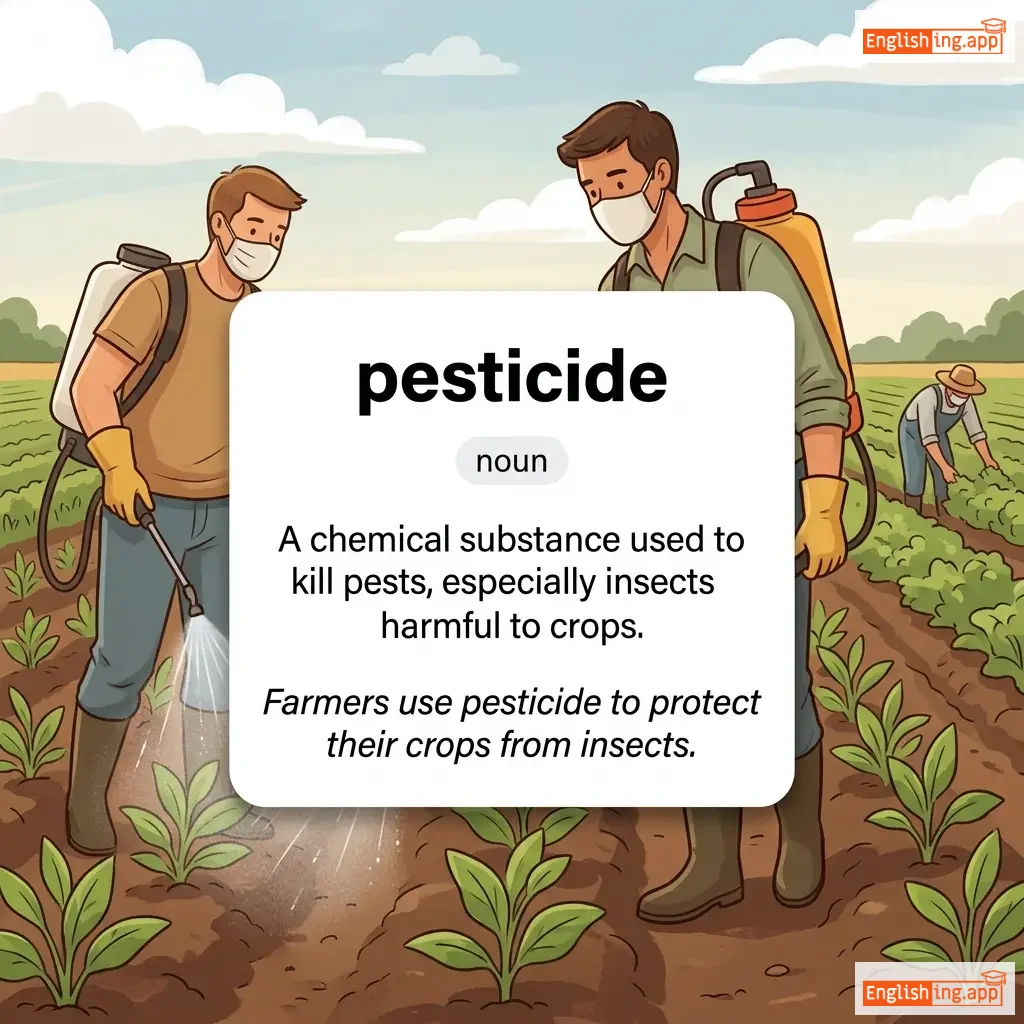
pesticide definition card — visual illustration of the meaning
noun
/ˈpɛstɪsaɪd/
pesticida (pesticida)

A chemical substance used to kill pests, especially insects harmful to crops.

"Farmers use pesticide to protect their crops from insects."

"Los agricultores usan pesticidas para proteger sus cultivos de los insectos." (Los agricultores usan pesticidas para proteger sus cultivos de los insectos.)
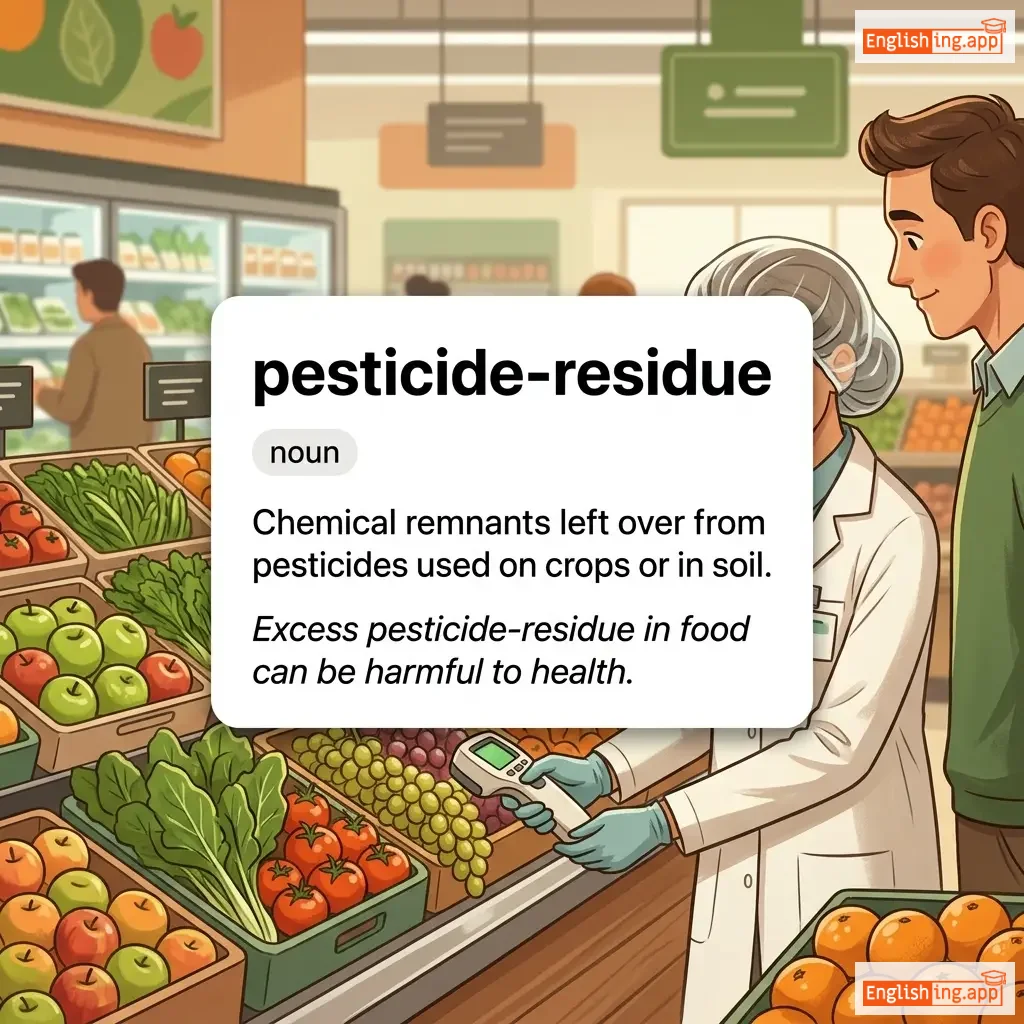
pesticide-residue definition card — visual illustration of the meaning
noun
/ˈpɛs.tɪ.saɪd ˈrɛz.ɪ.djuː/
residuos de pesticidas (residuos de pesticidas)

Chemical remnants left over from pesticides used on crops or in soil.

"Excess pesticide-residue in food can be harmful to health."

"El exceso de residuos de pesticidas en los alimentos puede ser perjudicial para la salud." (El exceso de residuos de pesticidas en los alimentos puede ser perjudicial para la salud.)
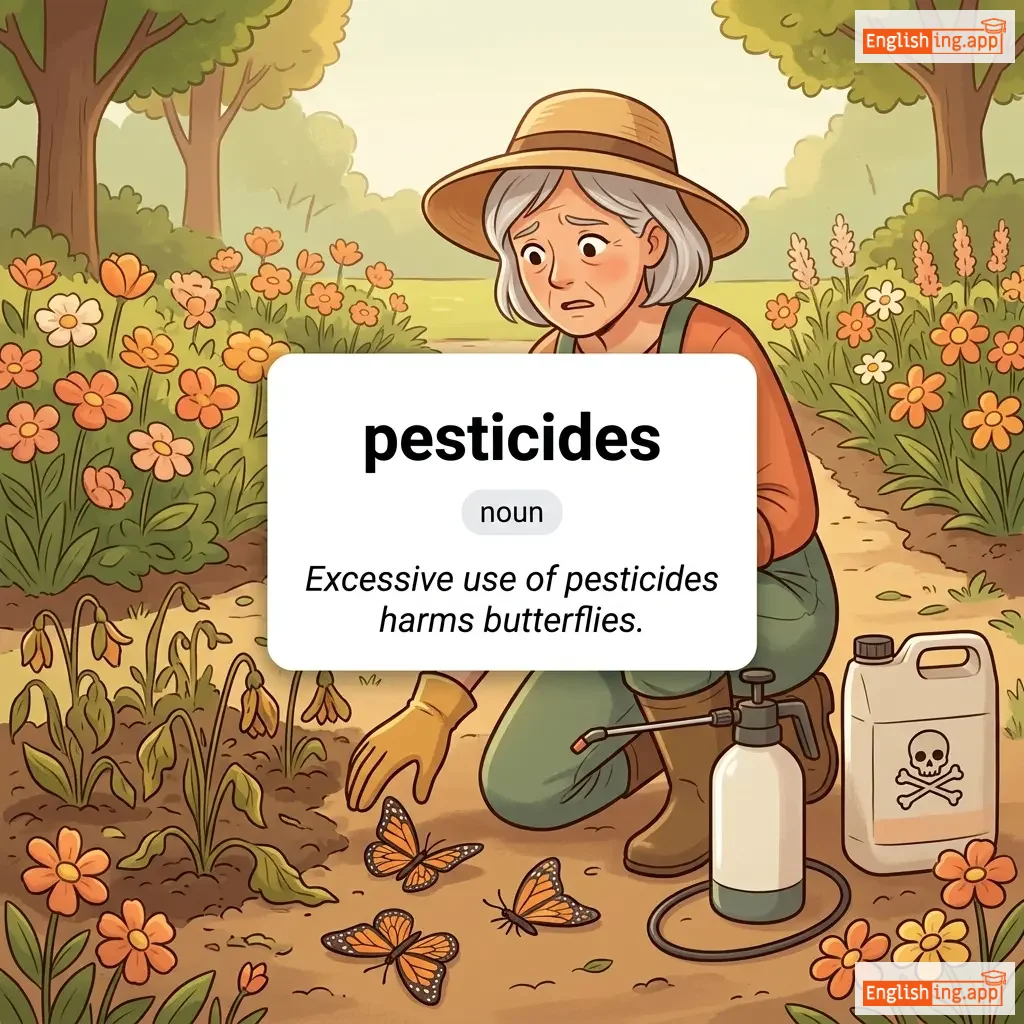
pesticides definition card — visual illustration of the meaning
noun
ˈpɛstɪsaɪdz
pesticidas (pesticidas)

Chemical substances used to kill pests, but harmful to beneficial insects like butterflies.

"Excessive use of pesticides harms butterflies."

"El uso excesivo de pesticidas daña a las mariposas." (El uso excesivo de pesticidas dania a las mariposas.)
noun
/ˈpɛstɪləns/
peste (peste)

A deadly or virulent epidemic disease that spreads rapidly.

"The medieval city was devastated by a pestilence."

"La ciudad medieval fue devastada por una peste." (La ciudad medieval fue devastada por una peste.)
adjective
/ˈpɛstɪlənt/
pestilente (pestilente)

Causing or tending to cause death or destruction; harmful or pernicious.

"The pestilent atmosphere of the swamp made people sick."

"La atmósfera pestilente del pantano hizo que la gente se enfermara." (La atmosfera pestilente del pantano hizo que la gente se enfermara.)
adjective
/ˌpɛstɪˈlɛnʃəl/
pestilente (pestilente)

Relating to or causing pestilence; very harmful, troublesome, or dangerous.

"The pestilential smell of the garbage filled the street."

"El pestilente olor de la basura llenó la calle." (El pestilente olor de la basura llenó la calle.)
noun
/ˈpɛsəl/
pistilo (pistilo)

A heavy tool with a rounded end used for crushing or grinding substances in a mortar.

"She used a pestle to grind the spices."

"Ella usó un pistilo para moler las especias." (Ella usó un pistilo para moler las especias.)
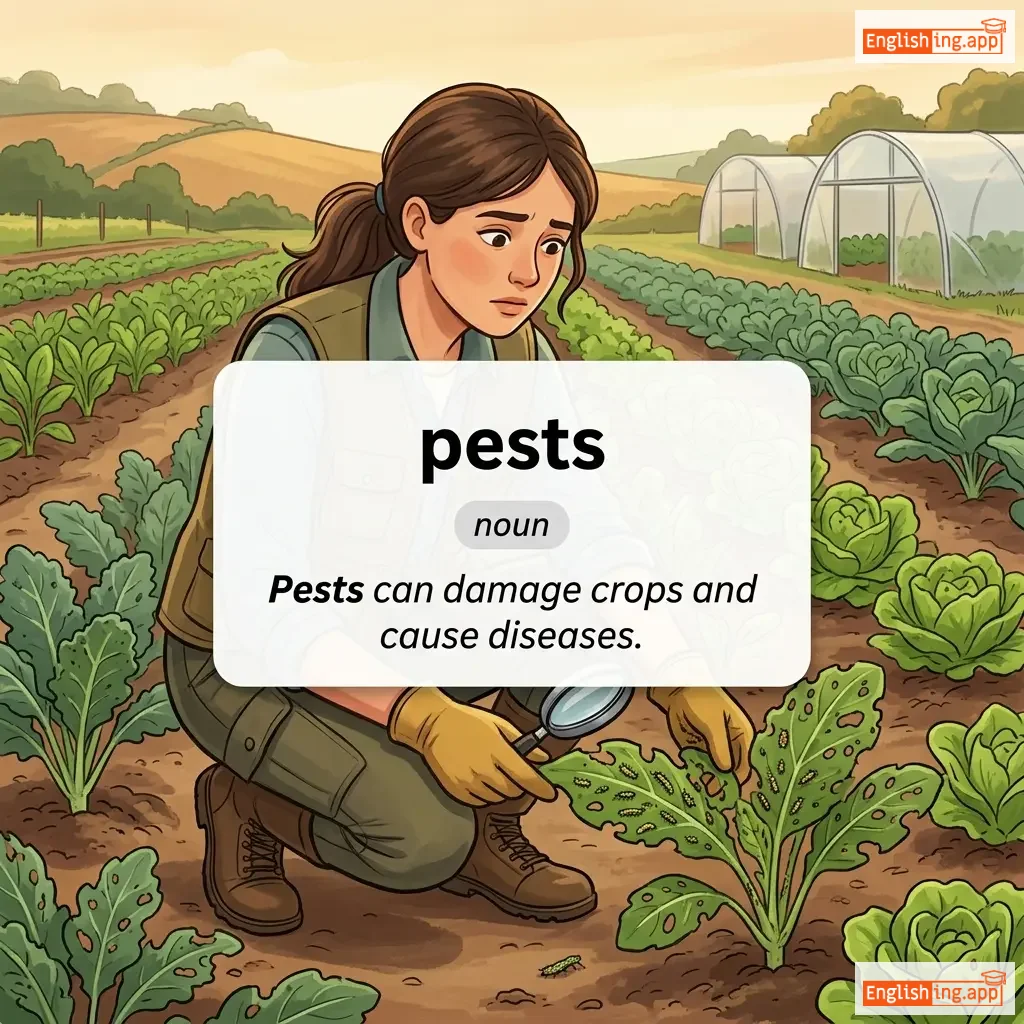
pests definition card — visual illustration of the meaning
noun
pɛsts
plagas, insectos dañinos (plagas, insectos daninos)

Harmful or troublesome creatures, especially insects or small animals that damage crops, food, or living spaces.

"Pests can damage crops and cause diseases."

"Las plagas pueden dañar los cultivos y causar enfermedades." (Las plagas pueden danar los cultivos y causar enfermedades.)
noun
/pɛt/
mascota (mascota)

a domesticated animal kept for companionship or pleasure

"My dog is my favorite pet."

"Mi perro es mi mascota favorita." (Mi perro es mi mascota favorita.)
noun
/ˈpetəl/
pétalo (petalo)

One of the colored segments of a flower that forms the corolla

"Each petal of the daisy was white with a yellow center."

"Cada pétalo de la margarita era blanco con un centro amarillo." (cada petalo de la margarita era blanco con un centro amarillo)
verb
/ˈpiːtər/
disminuir gradualmente (disminuir gradualmente)

to diminish gradually and come to an end; to fade or dwindle away

"The excitement of the event began to peter out after a few hours."

"La emoción del evento comenzó a disminuir después de unas horas." (La emocion del evento comenzo a disminuir despues de unas horas.)
noun
/pəˈtɪʃən/
petición (peticion)

a formal written request, typically signed by many people, appealing to authority about a cause

"They signed a petition to improve road safety in the area."

"Firmaron una petición para mejorar la seguridad vial en la zona." (Firmaron una peticion para mejorar la seguridad vial en la zona.)
verb
/ˈpɛtrɪfaɪ/
petrificar (petrificar)

to make someone so frightened that they are unable to move or think; to turn into stone

"The loud noise petrified the little child."

"El ruido fuerte petrificó al niño pequeño." (El ruido fuerte petrificó al niño pequeño.)
noun
/ˈpɛtrəˌɡræf/
descripción de rocas (descripcion de rocas)

a description or representation of rocks, especially in detailed scientific writing

"The scientist studied the petrograph to understand the rock composition."

"El científico estudió el petrográfico para entender la composición de la roca." (El cientifico estudio el petrográfico para entender la composicion de la roca.)
noun
/ˈpetɪkoʊt/
enagua (enagua)

an undergarment worn by women under a dress or skirt

"She wore a white petticoat under her dress."

"Ella llevaba un peto blanco debajo de su vestido." (Ella llevaba un peto blanco debajo de su vestido.)
verb
/ˈpɛtɪˌfɒɡ/
discutir sobre trivialidades (discutir sobre trivialidades)

to argue or quibble over trivial matters; to engage in petty, dishonest practices

"The lawyer was accused of trying to pettifog instead of addressing the real issue."

"Se acusó al abogado de tratar de discutir sobre temas triviales en lugar de abordar el verdadero problema." (Se acusó al abogado de tratar de discutir sobre temas triviales en lugar de abordar el verdadero problema.)
adjective
/ˈpɛti/
insignificante (insignificante)

Of little importance or trivial; also describes a person overly concerned with small or unimportant matters.

"She often gets upset over the most petty things."

"A menudo se molesta por las cosas más insignificantes." (A menudo se molesta por las cosas más insignificantes.)
noun
/ˈpɛtjʊləns/
petulancia (petulancia)

The quality of being childishly sulky or bad-tempered.

"His petulance during the meeting annoyed everyone."

"Su petulancia durante la reunión molestó a todos." (Su petulancia durante la reunión molestó a todos.)
adjective
/ˈpɛtjʊlənt/
irritable (irritable)

Childishly sulky or bad-tempered.

"The child became petulant when denied more candy."

"El niño se volvió irritable cuando no le dieron más dulces." (El niño se volvió irritable cuando no le dieron más dulces.)
noun
/ˈfeɪlæŋks/
falange (falange)

A group of people or things arranged in a compact, close formation; also an ancient Greek military formation.

"A phalanx of reporters waited outside the courthouse."

"Un grupo de reporteros esperaba afuera del tribunal." (Un grupo de reporteros esperaba afuera del tribunal.)
noun
/ˈfænˌtæzəm/
fantasma (fantasma)

an illusion, ghost, or figment of the imagination

"The child claimed to see a phantasm in the old house."

"El niño afirmó ver un fantasma en la casa antigua." (El niño afirmo ver un fantasma en la casa antigua.)
adjective
/ˌfæntæzməˈɡɒrɪkəl/
fantasmagórico (fantasmagorico)

Having a fantastic, dreamlike, or surreal appearance, often shifting or illusory.

"The movie created a phantasmagorical vision of another world."

"La película creó una visión fantasmagórica de otro mundo." (La pelicula creo una vision fantasmagorica de otro mundo.)
adjective
/ˌfærɪˈseɪɪkəl/
farisaico (farisaico)

Excessively concerned with formal rules or outward show of morality, often in a hypocritical way.

"His pharisaical behavior made people doubt his sincerity."

"Su comportamiento farisaico hizo que la gente dudara de su sinceridad." (Su comportamiento farisaico hizo que la gente dudara de su sinceridad.)
noun
/ˈfærɪsiː/
persona hipócrita (persona hipocrita)

A member of an ancient Jewish sect; by extension, a self-righteous or hypocritical person.

"He acted like a pharisee, judging others while ignoring his own faults."

"Él actuó como un fariseo, juzgando a los demás mientras ignoraba sus propios errores." (Él actuó como un fariseo, juzgando a los demás mientras ignoraba sus propios errores.)
noun
/ˌfɑːrməkəˈpiːə/
farmacopea (farmacopea)

An official book listing medicinal drugs, their effects, and directions for use.

"The doctor referred to the pharmacopoeia to check the drug's proper dosage."

"El doctor consultó la farmacopea para verificar la dosis correcta del medicamento." (El doctor consultó la farmacopea para verificar la dosis correcta del medicamento.)
noun
/ˈfɑːrməsi/
farmacia (farmacia)

A place where medicinal drugs are prepared and sold.

"I went to the pharmacy to buy antibiotics."

"Fui a la farmacia a comprar antibióticos." (Fui a la farmacia a comprar antibióticos.)
noun
/feɪz/
fase (fase)

a distinct period or stage in a process of development

"We are in the final phase of the project."

"Estamos en la fase final del proyecto." (Estamos en la fase final del proyecto.)
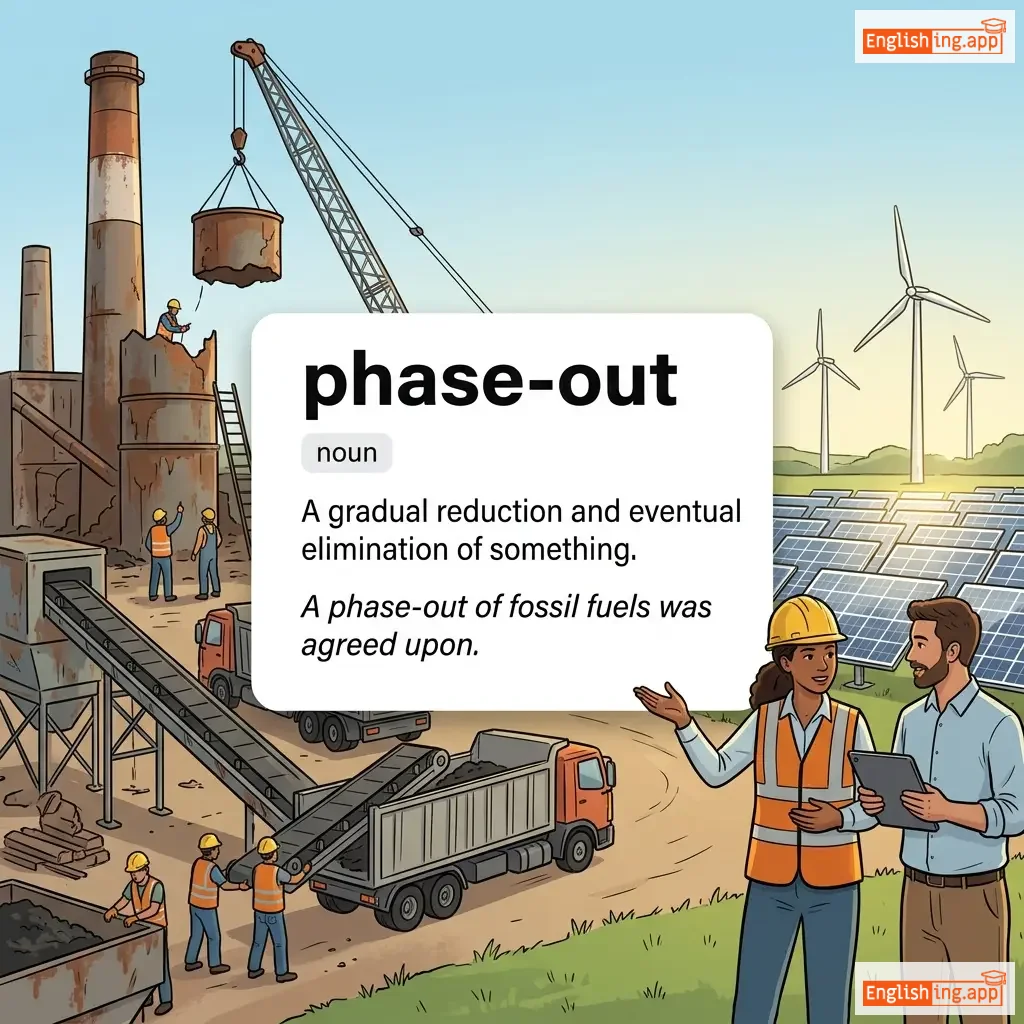
phase-out definition card — visual illustration of the meaning
noun
ˈfeɪz.aʊt
eliminación gradual (eliminacion gradual)

A gradual reduction and eventual elimination of something.

"A phase-out of fossil fuels was agreed upon."

"Se acordó la eliminación gradual de los combustibles fósiles." (Se acuerdo la eliminacion gradual de los combustibles fosiles.)