Vocabularios

Descubra, aprenda y domine el vocabulario en inglés

verb
/aʊtˈlɪv/
sobrevivir (sobrevivir)

to live longer than someone or something else

"She outlived all her siblings."

"Ella vivió más tiempo que todos sus hermanos." (Ella vivió más tiempo que todos sus hermanos.)
noun
/ˈaʊtlʊk/
perspectiva, pronóstico (perspectiva, pronostico)

a person's general attitude or view; a forecast or prospect

"The economic outlook for the year is positive."

"El pronóstico económico para el año es positivo." (El pronóstico económico para el año es positivo.)
verb
/ˌaʊtməˈnuːvər/
superar astutamente (superar astutamente)

to gain an advantage over an opponent by skillful or clever action

"The smaller company managed to outmaneuver its larger rival."

"La empresa más pequeña logró superar astutamente a su rival más grande." (La empresa mas pequena logro superar astutamente a su rival mas grande.)
adjective
/aʊtˈmoʊdɪd/
desfasado (desfasado)

No longer in fashion or useful; outdated.

"That old computer is completely outmoded."

"Esa computadora antigua está completamente desfasada." (Esa computadora antigua está completamente desfasada.)
noun
/ˈaʊtpoʊst/
puesto avanzado (puesto avanzado)

A small military camp or position at some distance from the main force, used especially as a guard.

"The soldiers were stationed at a remote outpost."

"Los soldados fueron apostados en un puesto avanzado remoto." (Los soldados fueron apostados en un puesto avanzado remoto.)
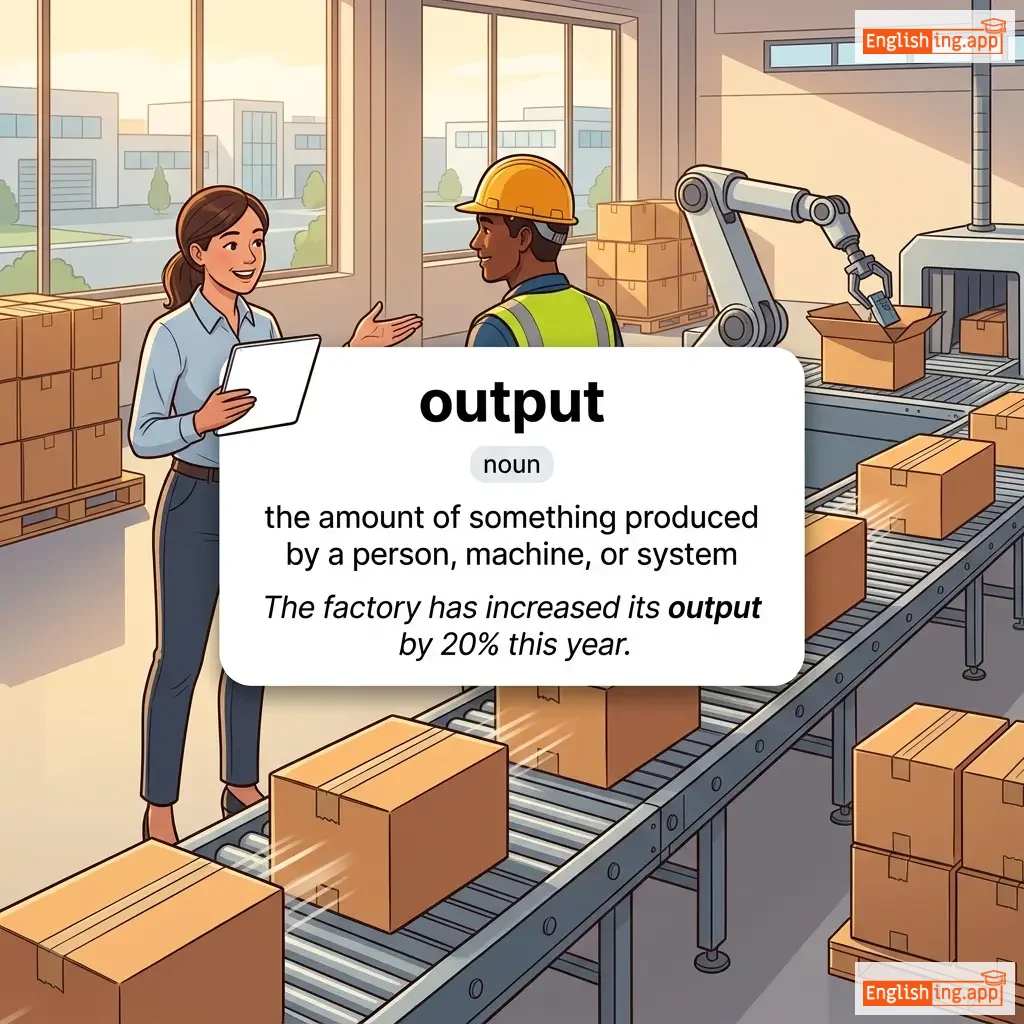
output definition card — visual illustration of the meaning
noun
/ˈaʊtpʊt/
producción (produccion)

the amount of something produced by a person, machine, or system

"The factory has increased its output by 20% this year."

"La fábrica ha aumentado su producción en un 20% este año." (La fabrica ha aumentado su produccion en un 20% este ano.)
noun/verb
/ˈaʊtreɪdʒ/
indignación (indignacion)

A strong feeling of anger and shock; to arouse anger or shock.

"The unfair decision caused public outrage."

"La decisión injusta causó una indignación pública." (La decision injusta causo una indignacion publica.)
adjective
/aʊtˈreɪdʒəs/
atroz (atroz)

Shockingly bad or excessive; very unusual or amusing.

"The comedian told an outrageous joke."

"El comediante contó un chiste atroz." (El comediante contó un chiste atroz.)
noun
/ˈaʊtriːtʃ/
expansión de la asistencia (expansion de la asistencia)

The act of providing services or support to people who might not otherwise have access to them.

"The charity launched a new outreach program for the homeless."

"La caridad lanzó un nuevo programa de expansión de la asistencia para las personas sin hogar." (La caridad lanzo un nuevo programa de expansion de la asistencia para las personas sin hogar.)
verb
/aʊtˈraɪd/
adelantar (adelantar)

to ride faster, farther, or better than someone else

"The young rider managed to outride his competitors in the race."

"El joven jinete logró adelantar a sus competidores en la carrera." (El joven jinete logró adelantar a sus competidores en la carrera.)
noun
/ˈaʊtˌrɪɡər/
estructura de refuerzo (estructura de refuerzo)

a projecting structure on a boat, used for stability, or a boat fitted with such support

"The fisherman paddled his outrigger canoe across the lagoon."

"El pescador remó su canoa con outtrigger a través de la laguna." (El pescador remó su canoa con outtrigger a través de la laguna.)
adverb/adjective
/ˌaʊtˈraɪt/
totalmente (totalmente)

completely, instantly, or without reservation

"She rejected the offer outright without any hesitation."

"Ella rechazó la oferta sin ninguna duda." (Ella rechazo la oferta sin ninguna duda.)
noun
/ˈaʊtˌsɛt/
comienzo (comienzo)

the beginning or start of something

"From the outset, the project seemed ambitious but achievable."

"Desde el comienzo, el proyecto parecía ambicioso pero alcanzable." (Desde el comienzo, el proyecto parecía ambicioso pero alcanzable.)
noun/adjective/adverb
/ˌaʊtˈsaɪd/
afuera (afuera)

the external part or surface of something; beyond the boundary

"Children were playing outside in the yard."

"Los niños estaban jugando afuera en el jardín." (Los niños estaban jugando afuera en el jardín.)
noun
/ˌaʊtˈsaɪdə(r)/
extranjero (extranjero)

a person who is not accepted as a member of a particular group or community

"As a new student, she often felt like an outsider at school."

"Como estudiante nuevo, a menudo se sentía como una extranjera en la escuela." (Como estudiante nuevo, a menudo se sentía como una extranjera en la escuela.)
noun
/ˈaʊtˌskɜːrt/
las afueras de la ciudad (las afueras de la ciudad)

the outer edge or border of a town or city

"They built a new factory on the outskirts of the city."

"Construyeron una nueva fábrica en las afueras de la ciudad." (Construyeron una nueva fábrica en las afueras de la ciudad.)
noun
/ˈaʊtskɜːrts/
afueras de la ciudad (afuera de la ciudad)

The outer parts of a town or city, away from the center.

"They moved to the outskirts of the city for a quieter life."

"Se mudaron a las afueras de la ciudad para una vida más tranquila." (Se mudaron a las afueras de la ciudad para una vida más tranquila.)
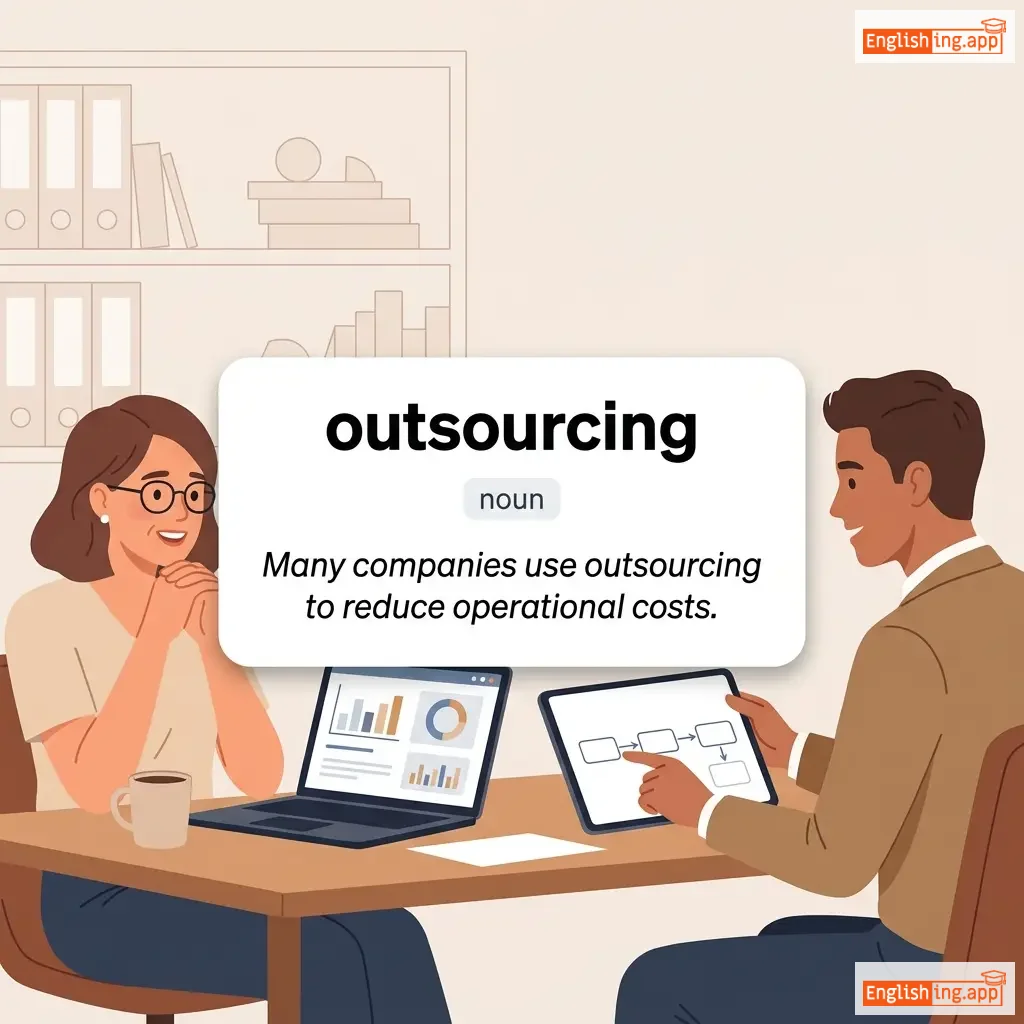
outsourcing definition card — visual illustration of the meaning
noun
ˈaʊt.sɔː.sɪŋ
subcontratación (subcontratacion)

The practice of having certain job functions done outside a company instead of having an in-house department or employee handle them.

"Many companies use outsourcing to reduce operational costs."

"Muchas empresas utilizan la subcontratación para reducir los costos operativos." (Muchas empresas utilizan la subcontratacion para reducir los costos operativos.)
adjective
/ˌaʊtˈspoʊkən/
franco (franko)

Expressing opinions or feelings freely and openly.

"She is known for being outspoken about social issues."

"Es conocida por ser franca sobre los problemas sociales." (Es conocida por ser franca sobre los problemas sociales.)
adjective
/aʊtˈstændɪŋ/
extraordinario (extraordinario)

extremely good or impressive; not yet resolved or paid

"She received an award for her outstanding performance."

"Recibió un premio por su actuación extraordinaria." (Recibió un premio por su actuación extraordinaria.)
verb
/ˌaʊtˈstrɛtʃ/
extender (extender)

To extend or stretch something outward.

"He outstretched his hand to help her up."

"Él extendió su mano para ayudarla a levantarse." (El extendió su mano para ayudarla a levantarse.)
verb
/ˌaʊtˈstrɪp/
superar (superar)

To go faster or do better than someone or something; to surpass.

"The company outstripped its competitors in sales last year."

"La compañía superó a sus competidores en ventas el año pasado." (La compañía superó a sus competidores en ventas el año pasado.)
adverb
/ˈaʊtwədli/
externamente; superficialmente; (externamente; superficialmente;)

on the surface; externally; in appearance

"Outwardly, he seemed calm, but inside he was nervous."

"Exteriormente, parecía tranquilo, pero por dentro estaba nervioso." (Exteriormente, parecía tranquilo, pero por dentro estaba nervioso.)
verb
/ˌaʊtˈweɪ/
ser más importante (ser mas importante)

To be more important, valuable, or significant than something else.

"The benefits of the new policy outweigh the risks."

"Los beneficios de la nueva política superan los riesgos." (Los beneficios de la nueva política superan los riesgos.)
verb
/aʊtˈwɪt/
superar con astucia (superar con astucia)

to defeat or gain an advantage over someone by being more clever or cunning

"The fox managed to outwit the hunters."

"El zorro logró engañar a los cazadores." (El zorro logró engañar a los cazadores.)
noun
/oʊˈveɪʃən/
ovación (ovacion)

an enthusiastic show of approval, especially by clapping hands

"The actor received a standing ovation after his performance."

"El actor recibió una ovación de pie después de su actuación." (El actor recibio una ovacion de pie despues de su actuacion.)
noun
/ˈʌvən/
horno (horno)

a chamber used for baking, roasting, or heating food

"I put the pizza in the oven to bake."

"Puse la pizza en el horno para hornearla." (Puse la pizza en el horno para hornearla.)
preposition, adverb
/ˈoʊvər/
sobre (sobre)

across, on top of, or beyond

"The book is lying over the table."

"El libro está sobre la mesa." (El libro está sobre la mesa.)
noun
/ˈoʊ.vər ɡroʊθ/
crecimiento excesivo (kreh-see-MYEN-to ehk-SESS-ee-vo)

excessive growth beyond normal size; too much development or expansion

"The overgrowth of weeds made the garden look untidy."

"El crecimiento excesivo de las malas hierbas hizo que el jardín pareciera descuidado." (El crecimiento excesivo de las malas hierbas hizo que el jardin pareciera descuidado.)
noun
/ˈoʊ.vər spɪl/
desbordamiento (desbordamiento)

the overflow of liquid from a container; excess that cannot be contained

"The overspill from the river flooded nearby farms."

"El desbordamiento del río inundó las granjas cercanas." (El desbordamiento del río inundó las granjas cercanas.)
adjective, adverb
/ˈoʊvərɔːl/
en general (en general)

in general or as a whole

"Overall, the project has been successful."

"En general, el proyecto ha sido exitoso." (En general, el proyecto ha sido exitoso.)
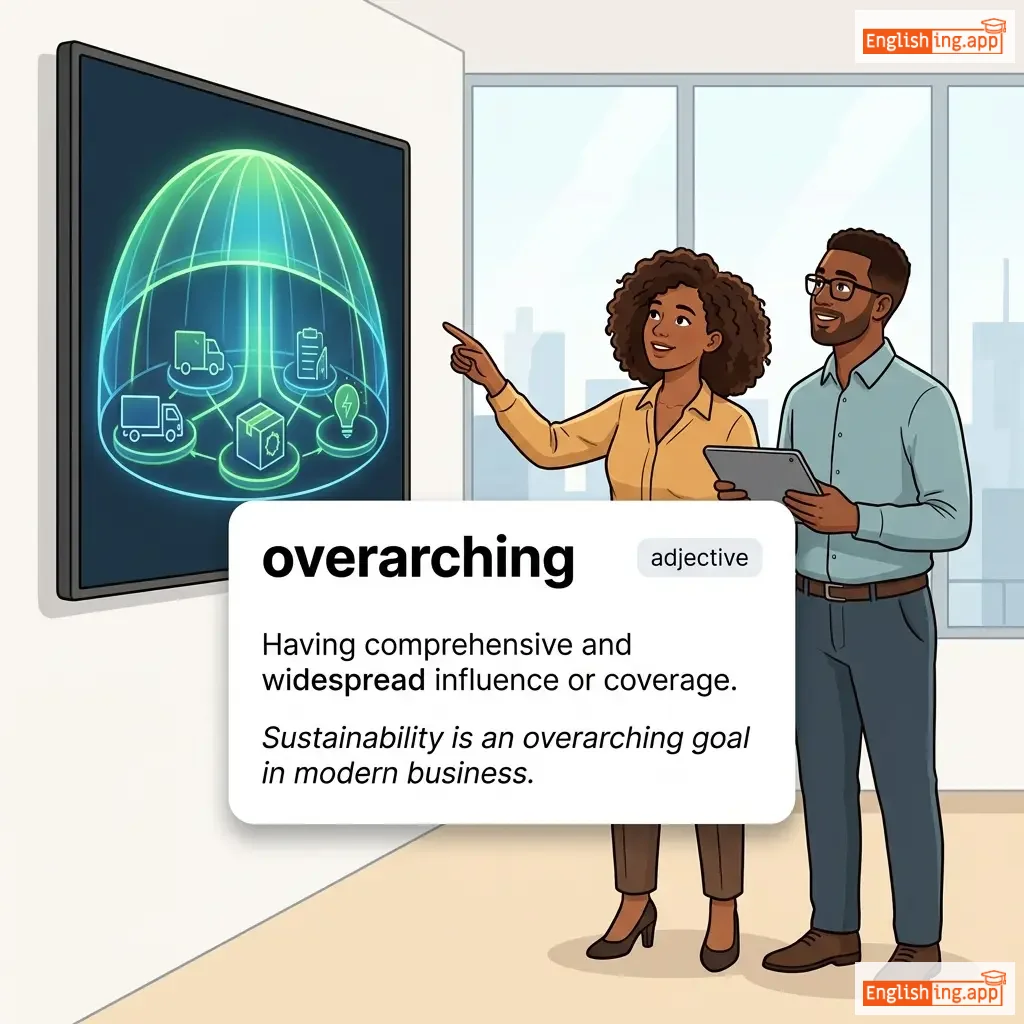
overarching definition card — visual illustration of the meaning
adjective
/ˌoʊ.vɚˈɑːr.tʃɪŋ/
global o integral (global o integral)

Having comprehensive and widespread influence or coverage.

"Sustainability is an overarching goal in modern business."

"La sostenibilidad es un objetivo integral en los negocios modernos." (La sostenibilidad es un objetivo integral en los negocios modernos.)
adjective
/ˌoʊvərˈbɛrɪŋ/
opresivo (opresivo)

unpleasantly or arrogantly domineering

"His overbearing attitude made everyone uncomfortable."

"Su actitud opresiva hizo que todos se sintieran incómodos." (Su actitud opresiva hizo que todos se sintieran incómodos.)
adjective
/ˌoʊvərˈbloʊn/
exagerado (exagerado)

excessively exaggerated or inflated

"The controversy was overblown by the media."

"La controversia fue exagerada por los medios." (La controversia fue exagerada por los medios.)
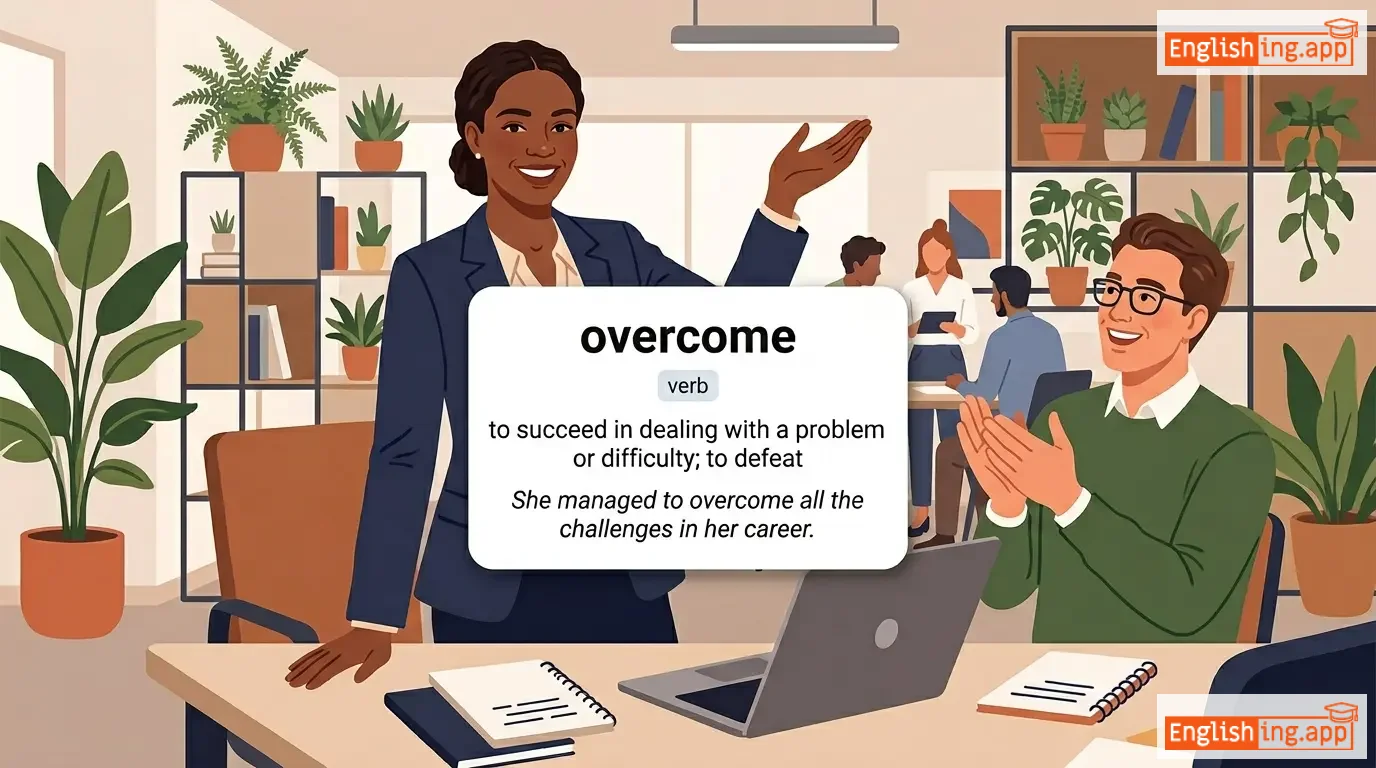
overcome definition card — visual illustration of the meaning
verb
/ˌoʊvərˈkʌm/
superar (superar)

to succeed in dealing with a problem or difficulty; to defeat

"She managed to overcome all the challenges in her career."

"Ella logró superar todos los desafíos en su carrera." (Ella logró superar todos los desafíos en su carrera.)
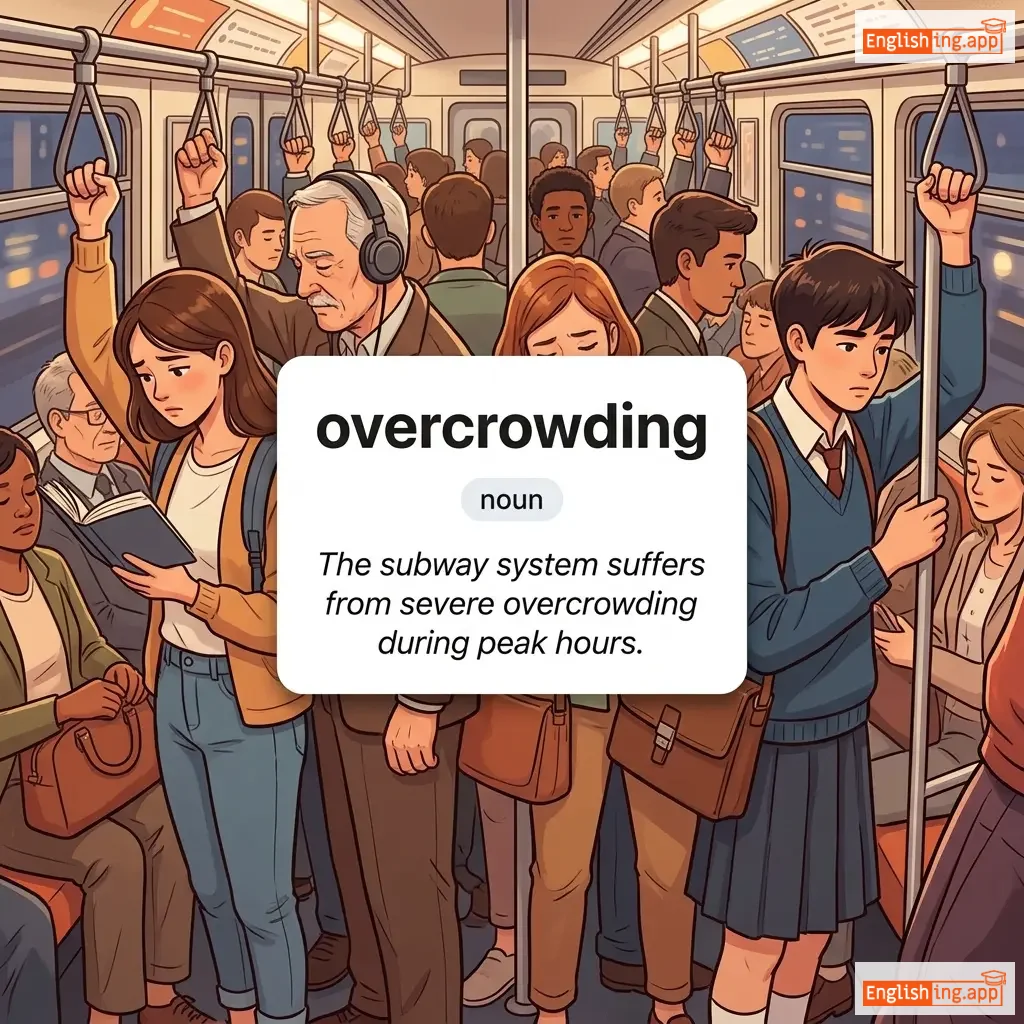
overcrowding definition card — visual illustration of the meaning
noun
/ˌoʊ.vɚˈkraʊ.dɪŋ/
hacinamiento excesivo (hacinamiento excesivo)

Excessive crowd or packed condition, having more people or vehicles in a place than the approved capacity.

"The subway system suffers from severe overcrowding during peak hours."

"El sistema de metro sufre de severo hacinamiento durante las horas pico." (El sistema de metro sufre de severo hacinamiento durante las horas pico.)
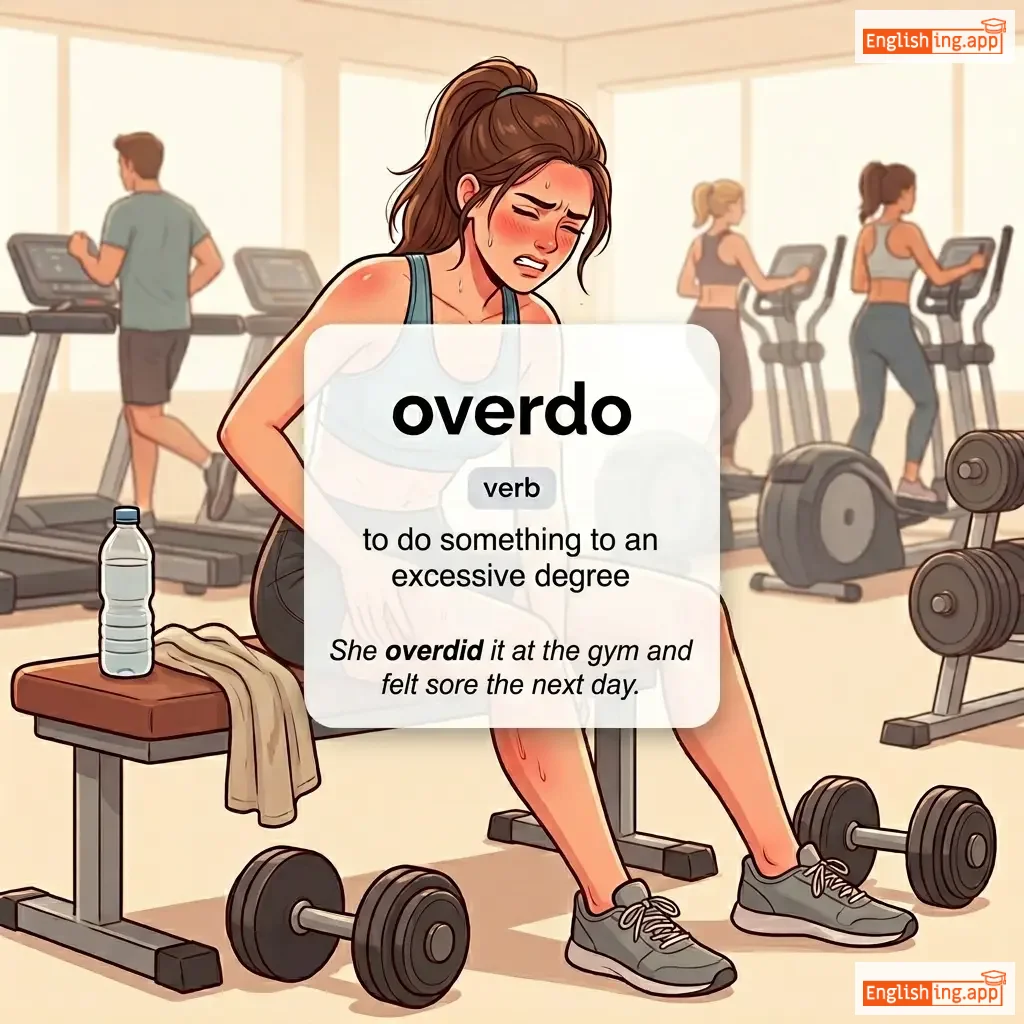
overdo definition card — visual illustration of the meaning
verb
/ˌoʊvərˈduː/
excesivo (excesivo)

to do something to an excessive degree

"She overdid it at the gym and felt sore the next day."

"Lo hizo en exceso en el gimnasio y se sintió adolorida al día siguiente." (Lo hizo en exceso en el gimnasio y se sintió adolorida al día siguiente.)
noun/verb
/ˈoʊvərˌdoʊs/
sobredosis (sobredosis)

An excessive and dangerous amount of a drug; to take too much of a substance.

"He was rushed to the hospital after a drug overdose."

"Fue llevado al hospital después de una sobredosis de drogas." (Fue llevado al hospital después de una sobredosis de drogas.)
verb
/ˌoʊvərˈiːt/
felicidad (felicidad)

To eat more food than the body needs.

"She tends to overeat when she is stressed."

"Ella no pudo ocultar su felicidad cuando recibió el premio." (Ella no pudo ocultar su felicidad cuando recibió el premio.)
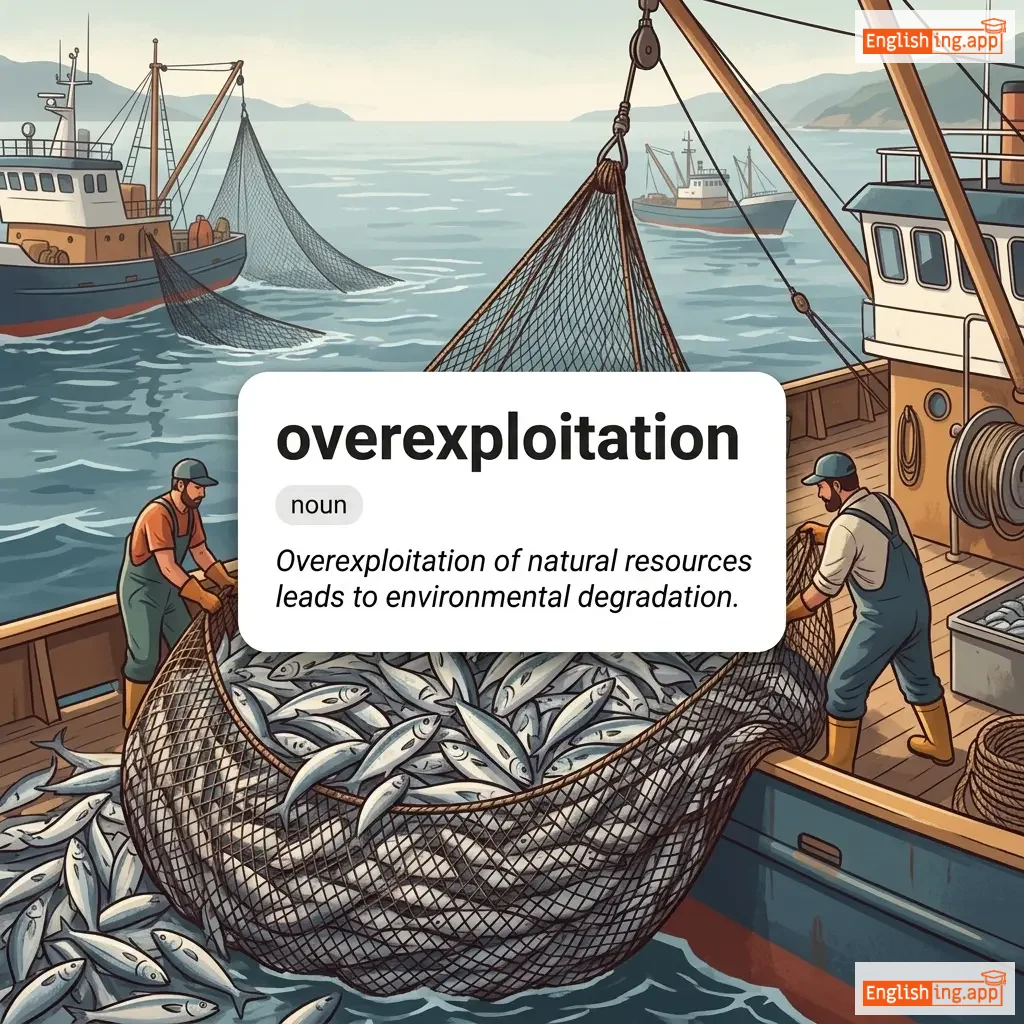
overexploitation definition card — visual illustration of the meaning
noun
/ˌəʊvərɪksˌplɔɪˈteɪʃən/
sobreexplotación (sobreexplotacion)

The unsustainable use of natural resources at a rate that exceeds their ability to regenerate, leading to depletion and environmental degradation.

"Overexploitation of natural resources leads to environmental degradation."

"La sobreexplotación de los recursos naturales conduce a la degradación ambiental." (La sobreexplotacion de los recursos naturales conduce a la degradacion ambiental.)
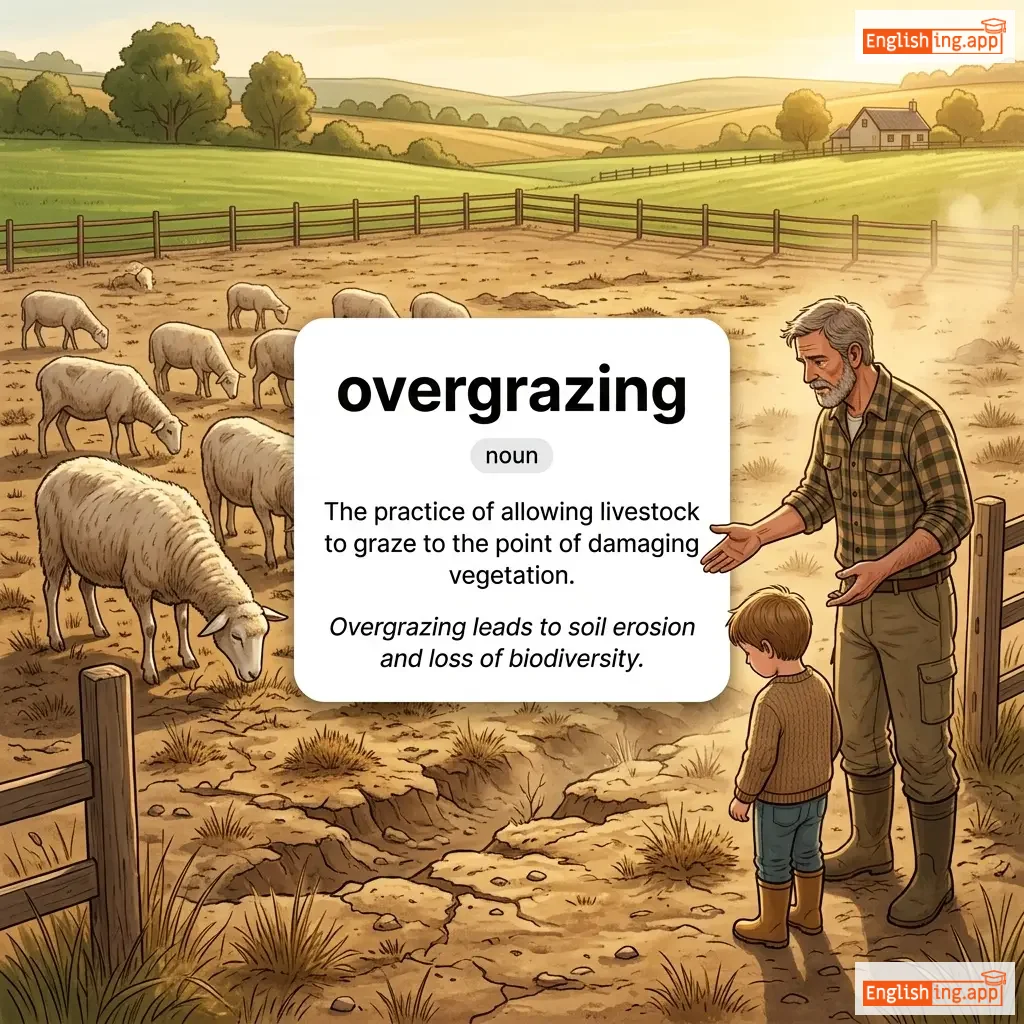
overgrazing definition card — visual illustration of the meaning
noun
ˌoʊ.vɚˈɡreɪ.zɪŋ
sobrepastoreo (sobrepastoreo)

The practice of allowing livestock to graze to the point of damaging vegetation.

"Overgrazing leads to soil erosion and loss of biodiversity."

"El sobrepastoreo lleva a la erosión del suelo y la pérdida de biodiversidad." (El sobrepastoreo lleva a la erosion del suelo y la perdida de biodiversidad.)
noun/verb
/ˈoʊvərˌhæŋ/
saliente (saliente)

To extend outward and hang over something; a projecting part.

"The roof overhang provides shade in the summer."

"El alero proporciona sombra en el verano." (El alero proporciona sombra en el verano.)
verb
/ˈoʊvərˌhɔːl/
revisión completa (revision completa)

to examine thoroughly and repair or improve something that is worn or ineffective

"The company decided to overhaul its outdated computer system."

"La compañía decidió hacer una revisión completa a su sistema de computadoras obsoleto." (La compania decidio hacer una revision completa a su sistema de computadoras obsoleto.)
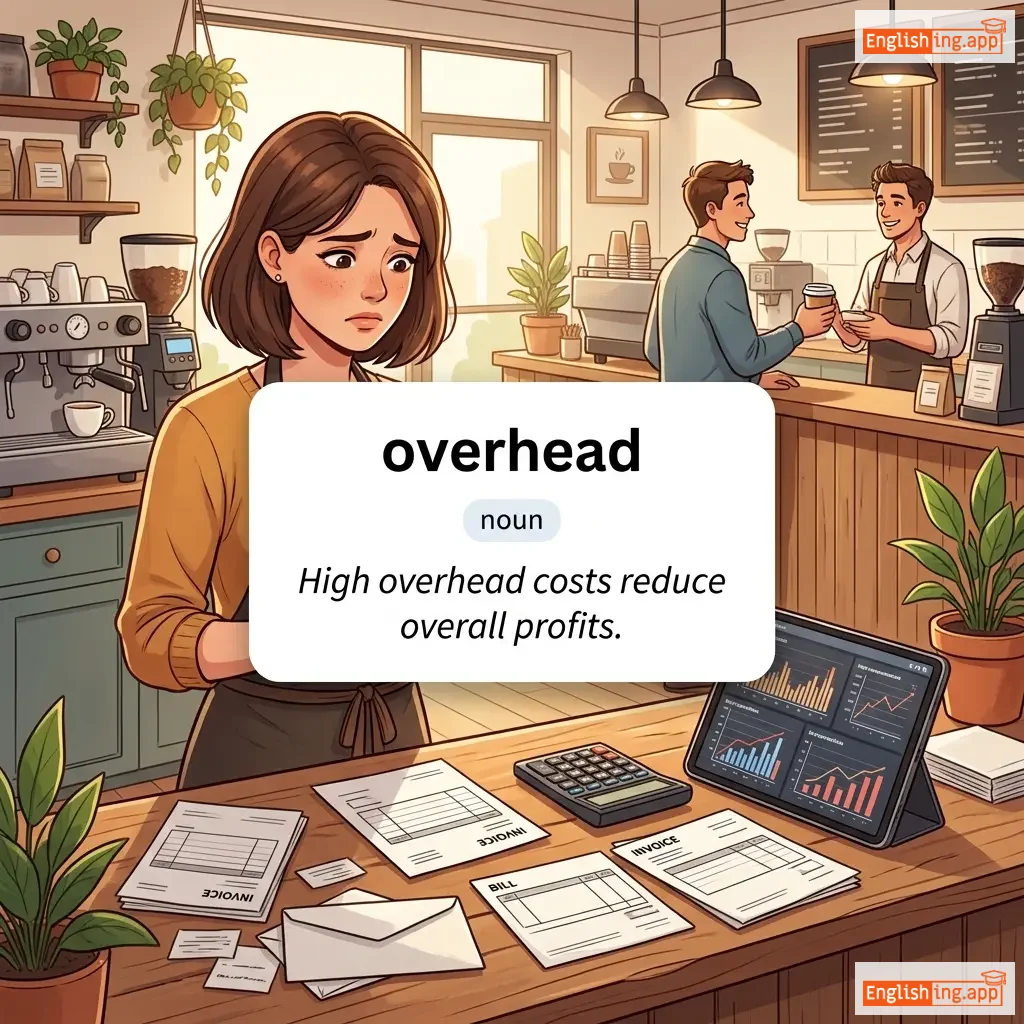
overhead definition card — visual illustration of the meaning
noun
ˈəʊ.və.hed
gastos generales de negocio que no están directamente relacionados con la creación de un producto o servicio (gastos generales de negocio que no estan directamente relacionados con la creacion de un producto o servicio)

Ongoing business expenses not directly attributable to creating a product or service.

"High overhead costs reduce overall profits."

"Los altos costos generales reducen las ganancias generales." (Los altos costos generales reducen las ganancias generales.)
noun/verb
/ˌoʊvərˈlæp/
solapamiento (solapamiento)

To extend over and cover partly; an area where things coincide.

"The two meetings overlap by an hour."

"Las dos reuniones se solapan por una hora." (Las dos reuniones se solapan por una hora.)
verb
/ˌoʊvərˈliːp/
saltar por encima (saltar por encima)

To jump over something; to omit or disregard something.

"He managed to overleap the fence easily."

"Él logró saltar la cerca fácilmente." (Él logró saltar la cerca fácilmente.)
noun
/ˈoʊ.vər.let/
colchón adicional (colchon adicional)

a thin mattress or pad placed over a bed for additional comfort

"The overlet makes the bed more comfortable to sleep on."

"El overlet hace la cama más cómoda para dormir." (El overlet hace la cama más cómoda para dormir.)
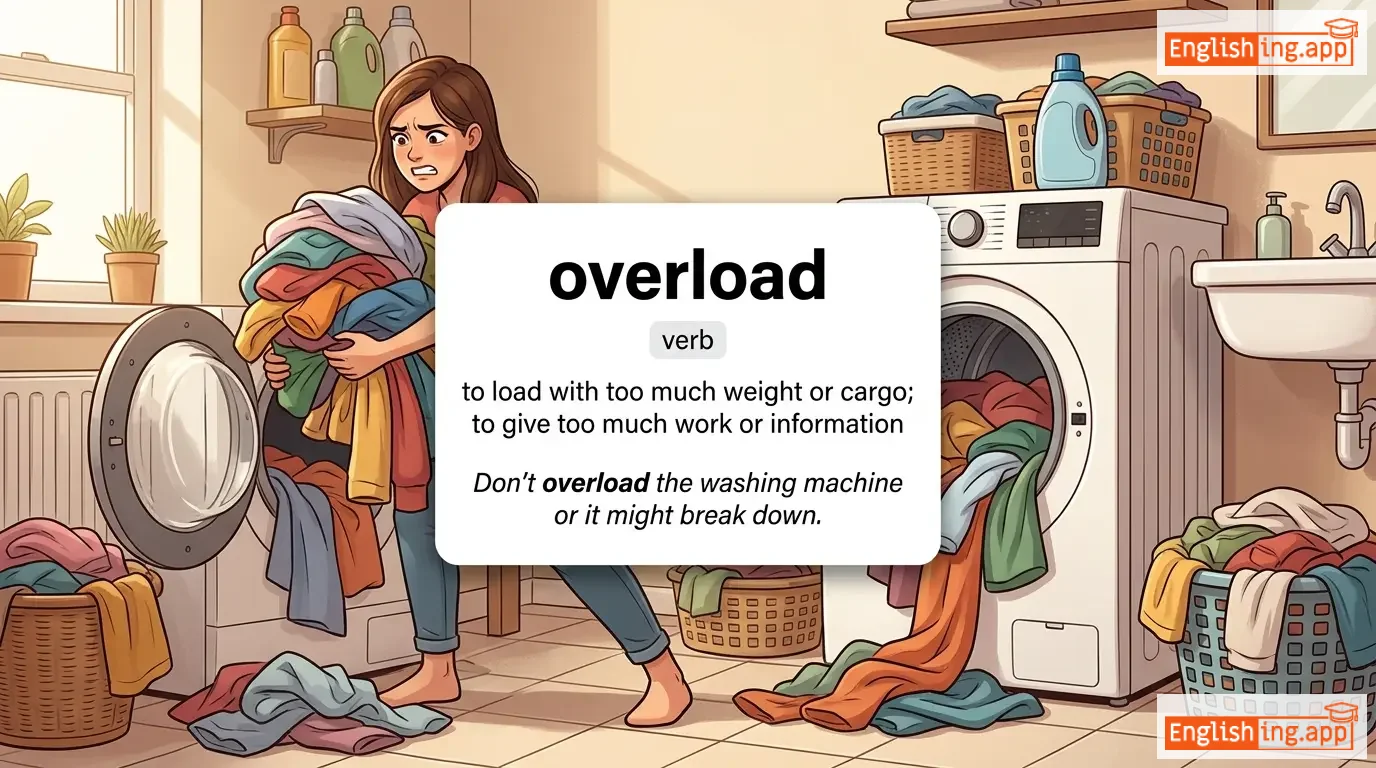
overload definition card — visual illustration of the meaning
verb
/ˌoʊvərˈloʊd/
sobrecargar (sobrecargar)

to load with too much weight or cargo; to give too much work or information

"Don't overload the washing machine or it might break down."

"No sobrecargues la lavadora o podría romperse." (No sobrecargues la lavadora o podría romperse.)
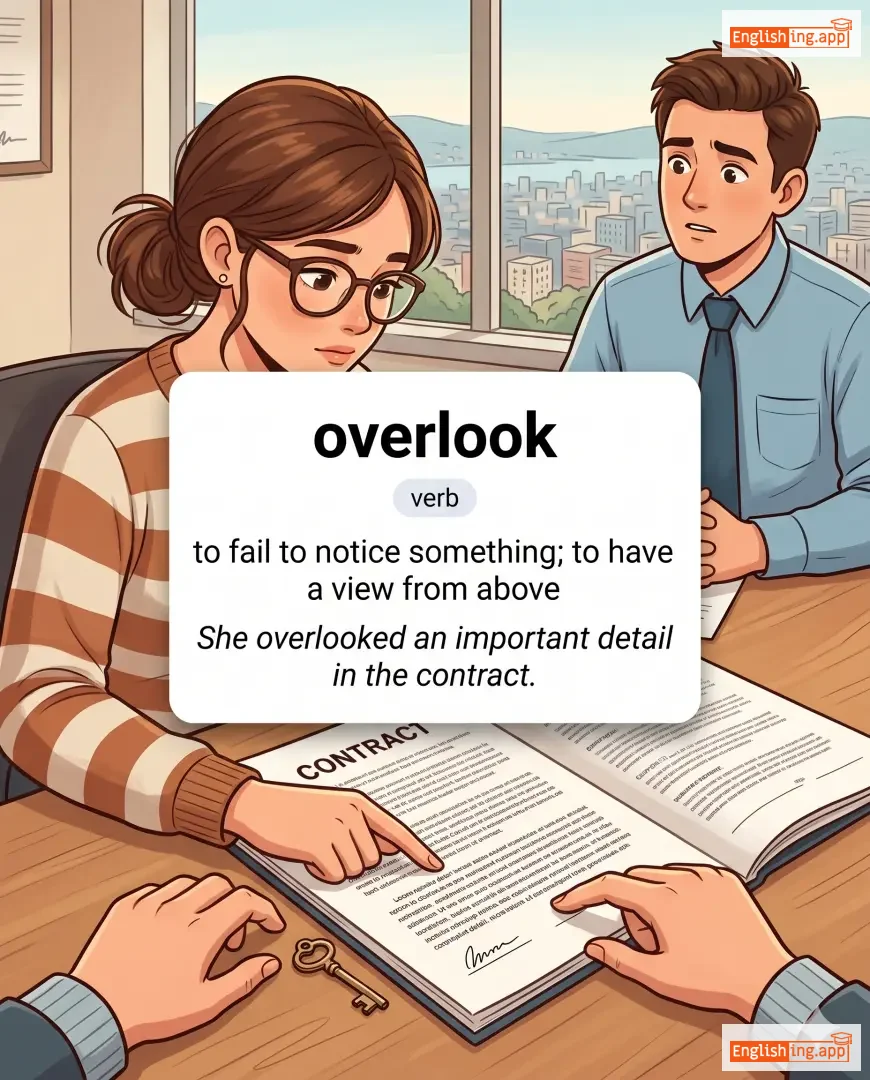
overlook definition card — visual illustration of the meaning
verb
/ˌoʊvərˈlʊk/
pasar por alto (pasar por alto)

to fail to notice something; to have a view from above

"She overlooked an important detail in the contract."

"Ella pasó por alto un detalle importante en el contrato." (Ella paso por alto un detalle importante en el contrato.)
noun
/ˈoʊvərlɔːrd/
señor (senyor)

A ruler, master, or person of great power and authority over others.

"The peasants were forced to pay taxes to their overlord."

"Los campesinos fueron obligados a pagar impuestos a su señor." (Los campesinos fueron obligados a pagar impuestos a su señor.)