Vocabularios

Descubra, aprenda y domine el vocabulario en inglés

adjective
/nɪˈɡoʊ.ʃi.ə.bəl/
negociable (negociable)

Open to discussion or modification; capable of being bargained for.

"The salary offered is negotiable."

"El salario ofrecido es negociable." (El salario ofrecido es negociable.)
verb
/nɪˈɡoʊ.ʃi.eɪt/
negociar (negociar)

To discuss something formally in order to reach an agreement.

"They negotiated a fair deal with the supplier."

"Negociaron un trato justo con el proveedor." (Negociaron un trato justo con el proveedor.)
noun
/nɪɡoʊˈʃiːeɪʃən/
negociación (negociacion)

a discussion aimed at reaching an agreement

"The negotiation between the two companies was successful."

"La negociación entre las dos empresas fue exitosa." (La negociacion entre las dos empresas fue exitosa.)
noun
/ˈneɪbər/
vecino (vecino)

a person living next door or nearby

"My neighbor lent me some sugar when I ran out."

"Mi vecino me prestó algo de azúcar cuando me quedé sin." (Mi vecino me prestó algo de azúcar cuando me quedé sin.)
noun
/ˈneɪbərˌhʊd/
vecindario (vecindario)

a district or area around or near a particular place

"I grew up in a quiet neighborhood."

"Crecí en un vecindario tranquilo." (Creci en un vecindario tranquilo.)
adjective
/ˈneɪbərɪŋ/
vecino (vecino)

situated near or next to another place; adjacent or nearby.

"They visited a neighboring village for the festival."

"Visitaron un pueblo vecino para el festival." (Visitaron un pueblo vecino para el festival.)
noun
/ˈneɪ.bər/
vecino; de al lado (vecino; de al lado)

a person who lives near or next to another person

"My neighbour is very friendly and helpful."

"Mi vecino es muy amigable y servicial." (Mi vecino es muy amigable y servicial.)
adjective
/ˈneɪ.bər.ɪŋ/
vecino; adyacente; contiguo (vecino; adyacente; contiguo)

situated next to or very near; adjacent; bordering

"We often visit our neighbouring countries for trade."

"A menudo visitamos nuestros países vecinos para el comercio." (A menudo visitamos nuestros paises vecinos para el comercio.)
conjunction
/ˈniːðər/
ni uno ni otro (ni uno ni otro)

used to connect two negative alternatives

"Neither the manager nor the assistant could attend the meeting."

"Ni el gerente ni el asistente pudieron asistir a la reunión." (ni el gerente ni el asistente pudieron asistir a la reunion)
noun
/ˈnɛm.ə.sɪs/
enemigo / rival (enemigo / rival)

A long-standing rival or an inescapable agent of downfall.

"For years, he considered his colleague to be his nemesis."

"Durante años, consideró a su colega como su enemigo." (Durante años, consideró a su colega como su enemigo.)
noun
/ˌniːoʊˈdɑːrwɪnɪzəm/
neodarwinismo (neodarwinismo)

A modern interpretation of Darwin's theory of evolution, integrating genetics and natural selection.

"Neo-Darwinism combines Darwin’s theory of natural selection with modern genetics."

"El neodarwinismo combina la teoría de selección natural de Darwin con la genética moderna." (El neodarwinismo combina la teoria de seleccion natural de Darwin con la genetica moderna.)
noun
/ˌniːoʊˈlætɪn/
neo-latín (neo-latin)

The use of Latin language for scholarly, scientific, and literary purposes after the medieval period.

"Many scientific names are derived from Neo-Latin."

"Muchos nombres científicos provienen del neo-latín." (Muchos nombres científicos provienen del neo-latín.)
noun
/niːˈɒkrəsi/
Gobierno dirigido por funcionarios inexpertos o nuevos (Gobierno dirigido por funcionarios inexpertos o nuevos)

A government or leadership run by inexperienced or new officials.

"The sudden revolution led to a neocracy with inexperienced leaders."

"La repentina revolución dio lugar a una neocracia con líderes inexpertos." (La repentina revolución dio lugar a una neocracia con líderes inexpertos.)
adjective
/ˌniːoʊˈlɪθɪk/
neolítico (neolitico)

Relating to the later part of the Stone Age, when ground or polished stone weapons and tools prevailed.

"Neolithic communities began practicing agriculture and domesticating animals."

"Las comunidades neolíticas comenzaron a practicar la agricultura y a domesticar animales." (Las comunidades neolíticas comenzaron a practicar la agricultura y a domesticar animales.)
noun
/niːˈɒlədʒɪzəm/
neologismo (neologismo)

A newly coined word or expression.

"The internet has given rise to many neologisms like 'selfie' and 'hashtag'."

"Internet ha dado lugar a muchos neologismos como 'selfie' y 'hashtag'." (Internet ha dado lugar a muchos neologismos como 'selfie' y 'hashtag'.)
noun
/niˈɒlədʒi/
el uso de nuevas palabras o el estudio de su origen (el uso de nuevas palabras o el estudio de su origen)

The use of new words or the study of their origin.

"The professor specialized in neology, studying the creation of modern slang."

"El profesor se especializó en neología, estudiando la creación de jerga moderna." (El profesor se especializó en neología, estudiando la creación de jerga moderna.)
noun
/ˌniːoʊˈpeɪɡənɪzəm/
neopaganismo (neopaganismo)

Modern religious movements influenced by or claiming to be derived from the various historical pagan beliefs of pre-modern Europe.

"Neopaganism has gained popularity as people seek spiritual alternatives to mainstream religions."

"El neopaganismo ha ganado popularidad a medida que las personas buscan alternativas espirituales a las religiones principales." (El neopaganismo ha ganado popularidad a medida que las personas buscan alternativas espirituales a las religiones principales.)
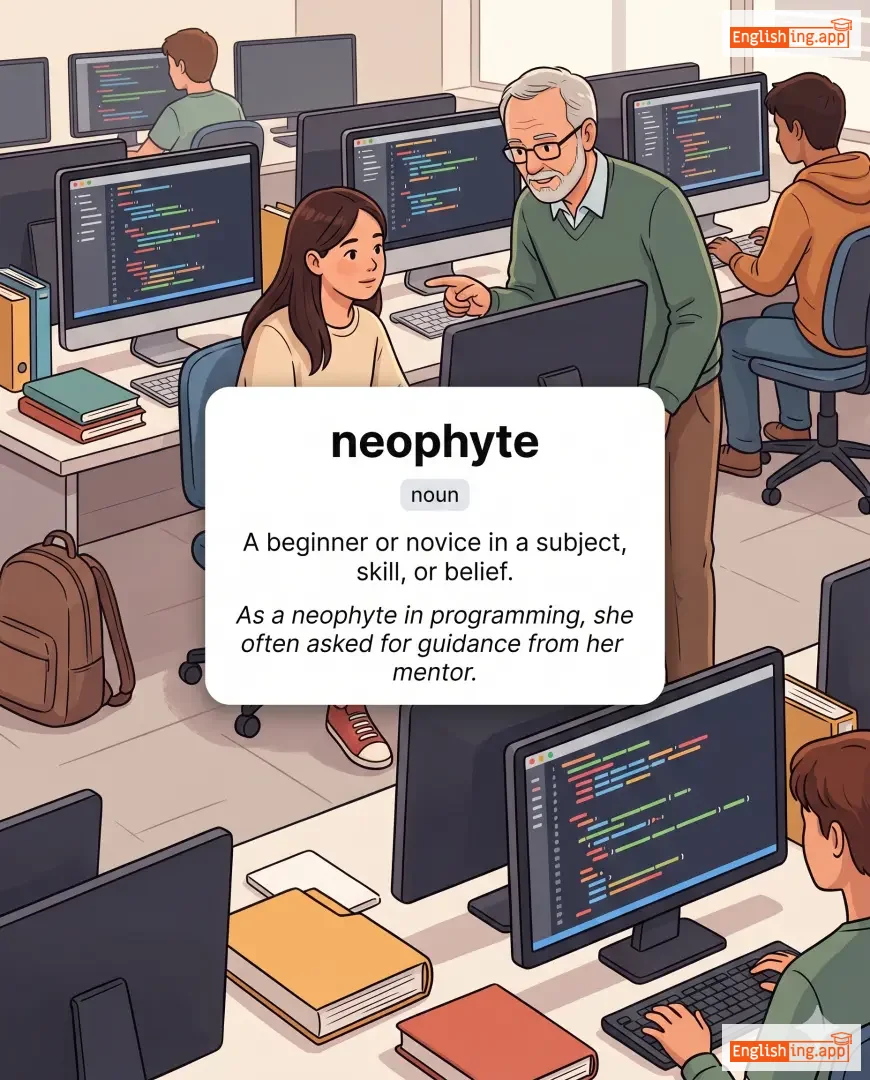
neophyte definition card — visual illustration of the meaning
noun
/ˈniːəˌfaɪt/
neófito (neofito)

A beginner or novice in a subject, skill, or belief.

"As a neophyte in programming, she often asked for guidance from her mentor."

"Como neófita en programación, a menudo pedía orientación a su mentor." (Como neófita en programación, a menudo pedía orientación a su mentor.)
noun
/ˈnefjuː/
sobrino (sobrino)

the son of one’s brother or sister

"My nephew is studying at the university."

"Mi sobrino estudia en la universidad." (mi sobrino estudia en la universidad)
noun
/ˈnɛpətɪzəm/
nepotismo (nepotismo)

The practice of giving unfair advantages to relatives, especially in jobs or positions of power.

"The company was accused of nepotism after the manager hired his brother."

"La empresa fue acusada de nepotismo después de que el gerente contratara a su hermano." (La empresa fue acusada de nepotismo despues de que el gerente contratara a su hermano.)
noun, verb
/nɜːrv/
nervio; coraje (nervio; coraje)

A bundle of fibers in the body that transmits signals between the brain and other parts; also courage or audacity.

"She gathered the nerve to speak in front of the large audience."

"Ella reunió el valor para hablar frente a la gran audiencia." (Ella reunió el valor para hablar frente a la gran audiencia.)
adjective
/ˈnɜːrvəs/
nervioso/a (nervioso/a)

anxious, worried, or fearful about something

"She felt nervous before giving her presentation."

"Ella se sintió nerviosa antes de dar su presentación." (Ella se sintió nerviosa antes de dar su presentación.)
noun
/nɛst/
nido (nido)

a structure built by birds or other animals to hold their eggs or young.

"The bird built a nest in the tall tree."

"El pájaro construyó un nido en el árbol alto." (El pajaro construyo un nido en el arbol alto.)
verb
/ˈnɛsəl/
acurrucarse (acurrucarse)

to settle or lie comfortably within or against something

"The child nestled into her mother's arms."

"El niño se acurrucó en los brazos de su madre." (El niño se acurrucó en los brazos de su madre.)
noun
/ˈnɛslɪŋ/
pichón (pichon)

a young bird that has not yet left the nest

"The nestling waited for its parent to bring food."

"El pichón esperó a que su padre trajera comida." (El pichon espero a que su padre trajera comida.)
noun
/nɛt/
red (red)

a piece of material made of threads or ropes woven together, used to catch or hold things

"The fisherman cast his net into the sea."

"El pescador lanzó su red al mar." (El pescador lanzó su red al mar.)
adjective
/ˈnɛðər/
inferior (inferior)

situated down or below; lower

"They explored the nether regions of the cave."

"Exploraron las regiones inferiores de la cueva." (Exploraron las regiones inferiores de la cueva.)
noun
/ˈnɛtl̩/
planta con espinas que causa irritación al tocarla (planta con espinas que causa irritación al tocarla)

a plant with stinging hairs that cause irritation when touched

"He accidentally brushed against the nettle and felt a sharp sting."

"Él accidentalmente rozó la ortiga y sintió un ardor agudo." (Él accidentalmente rozó la ortiga y sintió un ardor agudo.)
adjective
/ˈnɛtlˌsʌm/
irritante (irritante)

Causing irritation, annoyance, or difficulty.

"The nettlesome rules frustrated the workers."

"Las reglas irritantes frustraron a los trabajadores." (Las reglas irritantes frustraron a los trabajadores.)
noun
/ˈnɛtˌwɜrk/
red (red)

A system of interconnected people, things, or computers.

"She built a strong professional network."

"Ella construyó una red profesional sólida." (Ella construyó una red profesional sólida.)
networking definition card — visual illustration of the meaning
noun
/ˈnɛtˌwɜːkɪŋ/
redes sociales (redes sociales)

The action of establishing connections and relationships, especially for career or business purposes.

"Networking is important for career development."

"Las redes sociales son importantes para el desarrollo profesional." (Las redes sociales son importantes para el desarrollo profesional.)
adjective
/ˈnjʊrəl/
neuronal (neuronal)

Relating to nerves or the nervous system.

"Scientists study neural connections in the brain."

"Los científicos estudian las conexiones neuronales en el cerebro." (Loscientificosestudianlasconexionesneuronalesenelcerebro)
noun
/njʊˈrældʒə/
dolor neural (dolor neural)

intense, often intermittent pain along a nerve pathway

"The patient suffers from neuralgia in her face."

"El paciente sufre de neuralgia en su cara." (El paciente sufre de neuralgia en su cara.)
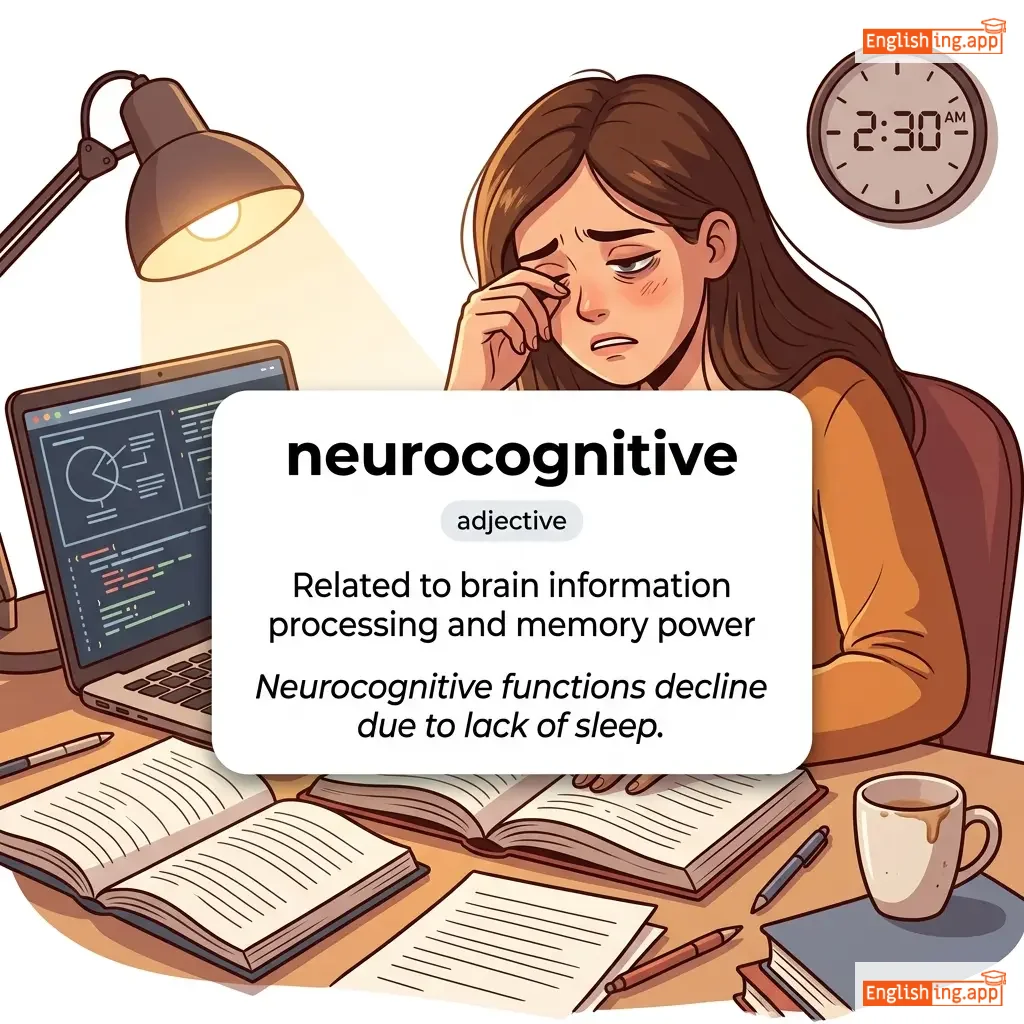
neurocognitive definition card — visual illustration of the meaning
adjective
ˌnjʊəroʊˈkɒɡnɪtɪv
neurocognitivo (neurocognitivo)

Related to brain information processing and memory power

"Neurocognitive functions decline due to lack of sleep."

"Las funciones neurocognitivas disminuyen debido a la falta de sueño." (Las funciones neurocognitivas disminuyen debido a la falta de sueño.)
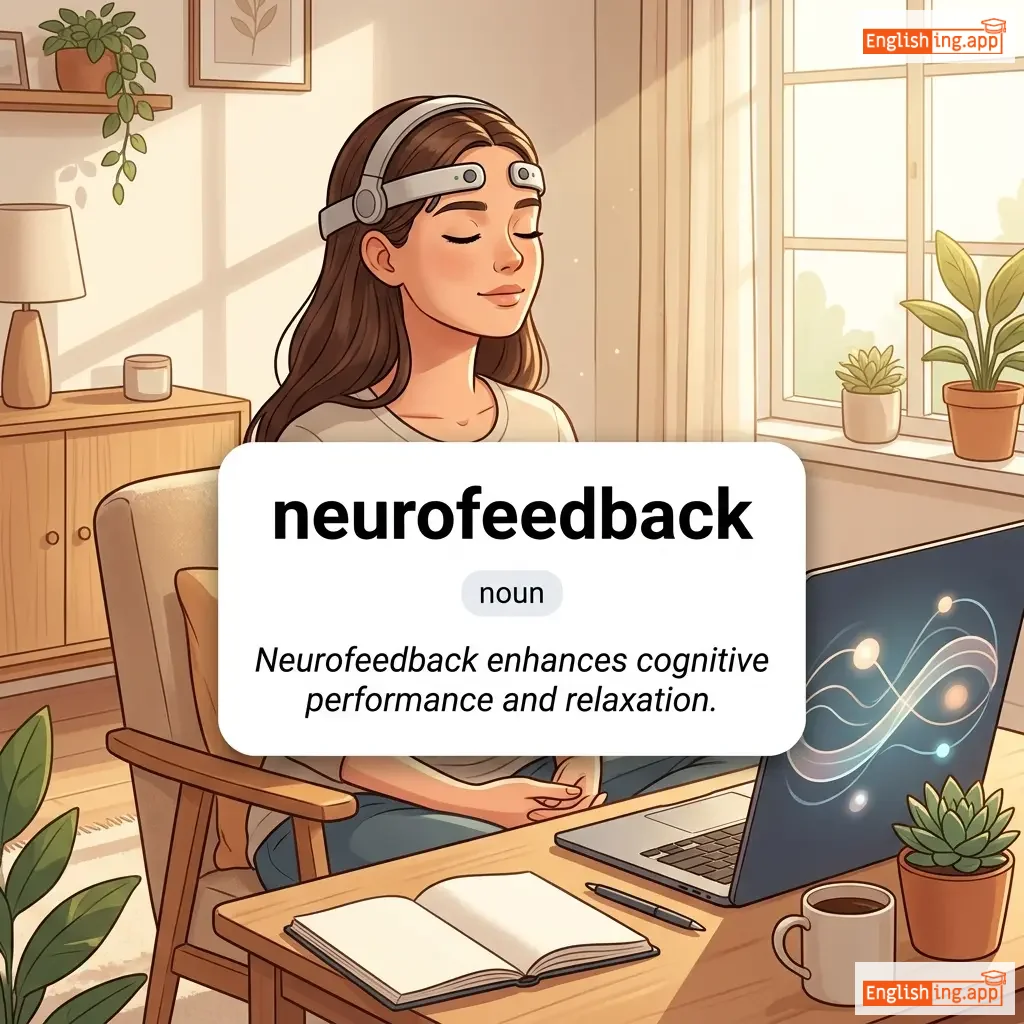
neurofeedback definition card — visual illustration of the meaning
noun
ˈnjʊə.rəʊ ˌfiːd.bæk
técnica que utiliza actividades cerebrales en tiempo real para enseñar la autorregulación de la función cerebral (neurofeedback)

A technique that uses real-time displays of brain activity to teach self-regulation of brain function.

"Neurofeedback enhances cognitive performance and relaxation."

"El neurofeedback mejora el rendimiento cognitivo y la relajación." (El neurofeedback mejora el rendimiento cognitivo y la relajación.)
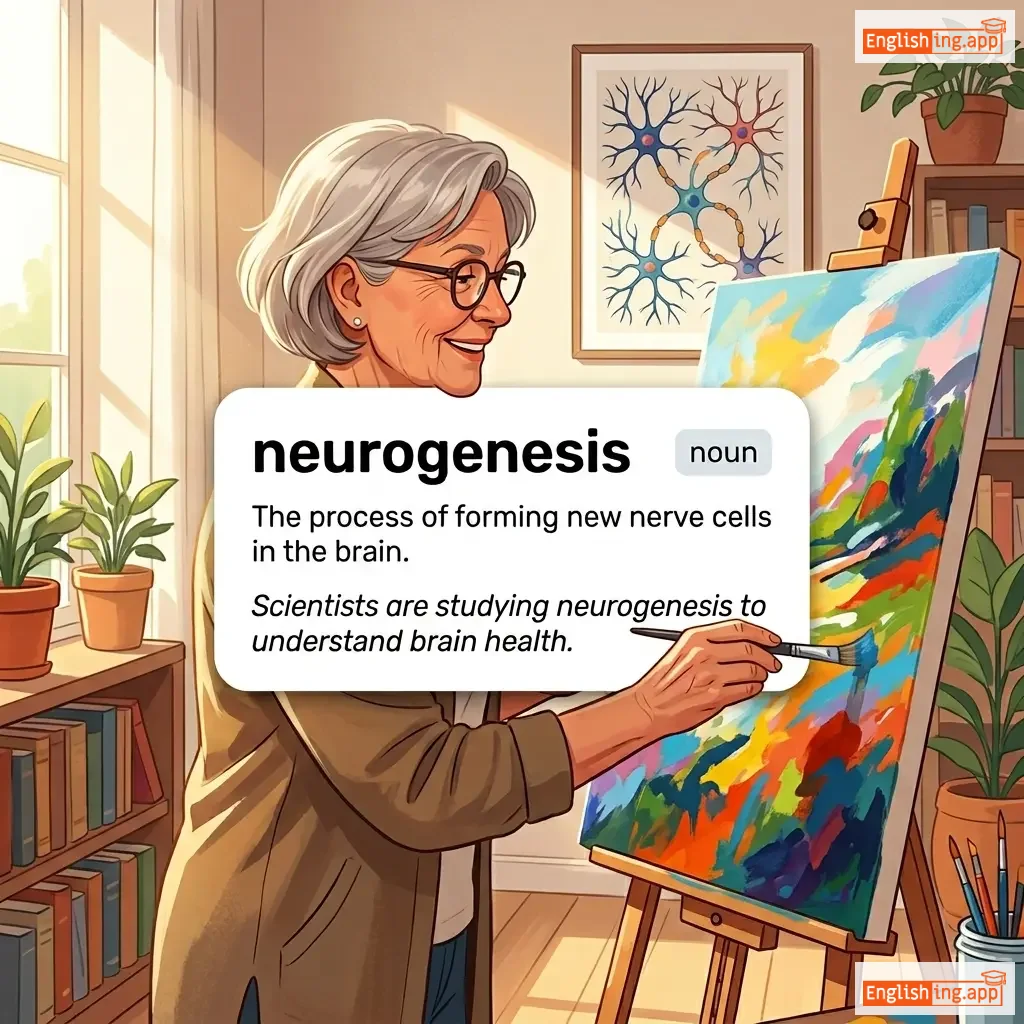
neurogenesis definition card — visual illustration of the meaning
noun
/ˌnjʊə.rəʊˈdʒɛn.ɪ.sɪs/
formación de nuevas células nerviosas (formacion de nuevas celulas nerviosas)

The process of forming new nerve cells in the brain.

"Scientists are studying neurogenesis to understand brain health."

"Los científicos están estudiando la neurogénesis para comprender la salud cerebral." (Los cientificos estan estudiando la neurogenesis para comprender la salud cerebral.)
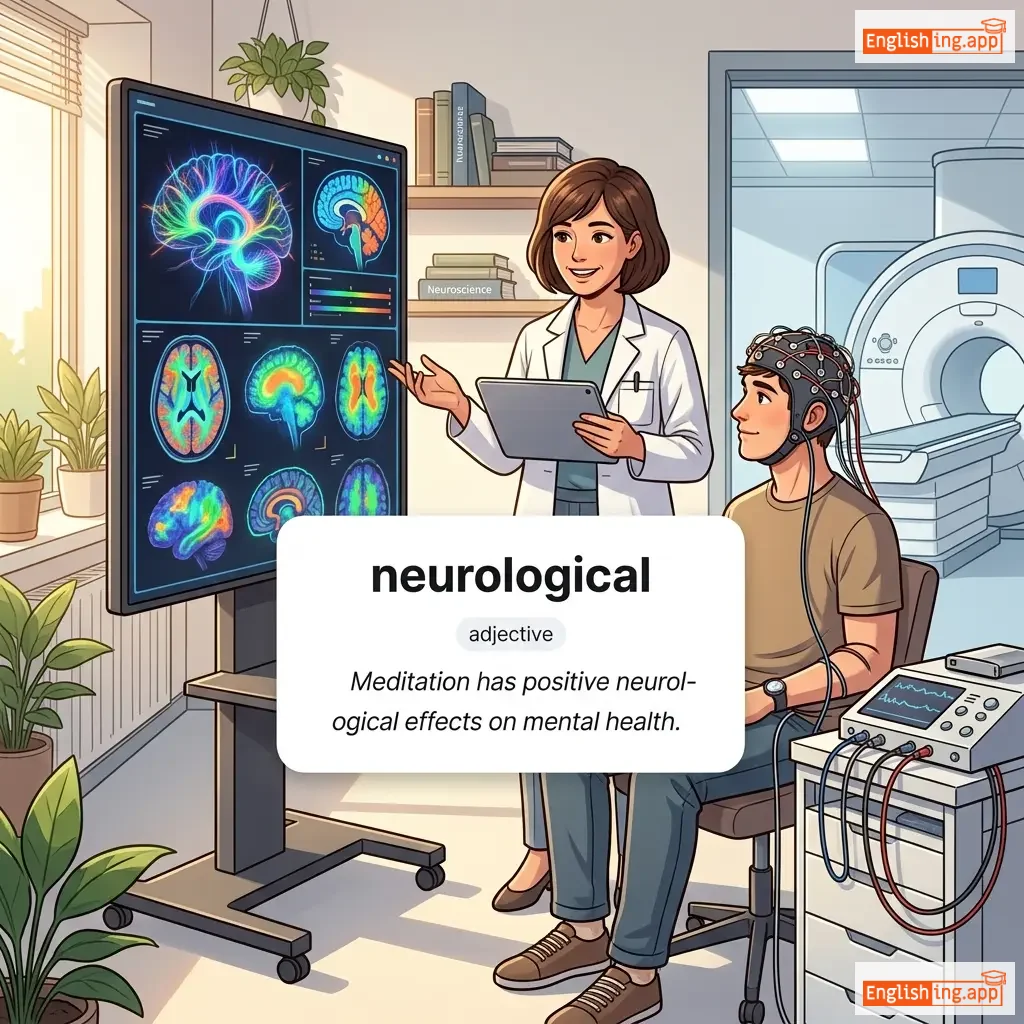
neurological definition card — visual illustration of the meaning
adjective
/ˌnjʊə.rəˈlɒdʒ.ɪ.kəl/
neurológico (neurologico)

Relating to the anatomy, functions, and organic disorders of nerves and the nervous system.

"Meditation has positive neurological effects on mental health."

"La meditación tiene efectos neurológicos positivos en la salud mental." (La meditacion tiene efectos neurologicos positivos en la salud mental.)
noun
/njʊˈrɑːlədʒi/
neurología (neurologia)

The branch of medicine that deals with disorders of the nervous system.

"She specializes in neurology and treats patients with brain diseases."

"Ella se especializa en neurología y trata a pacientes con enfermedades del cerebro." (Ella se especializa en neurologia y trata a pacientes con enfermedades del cerebro.)
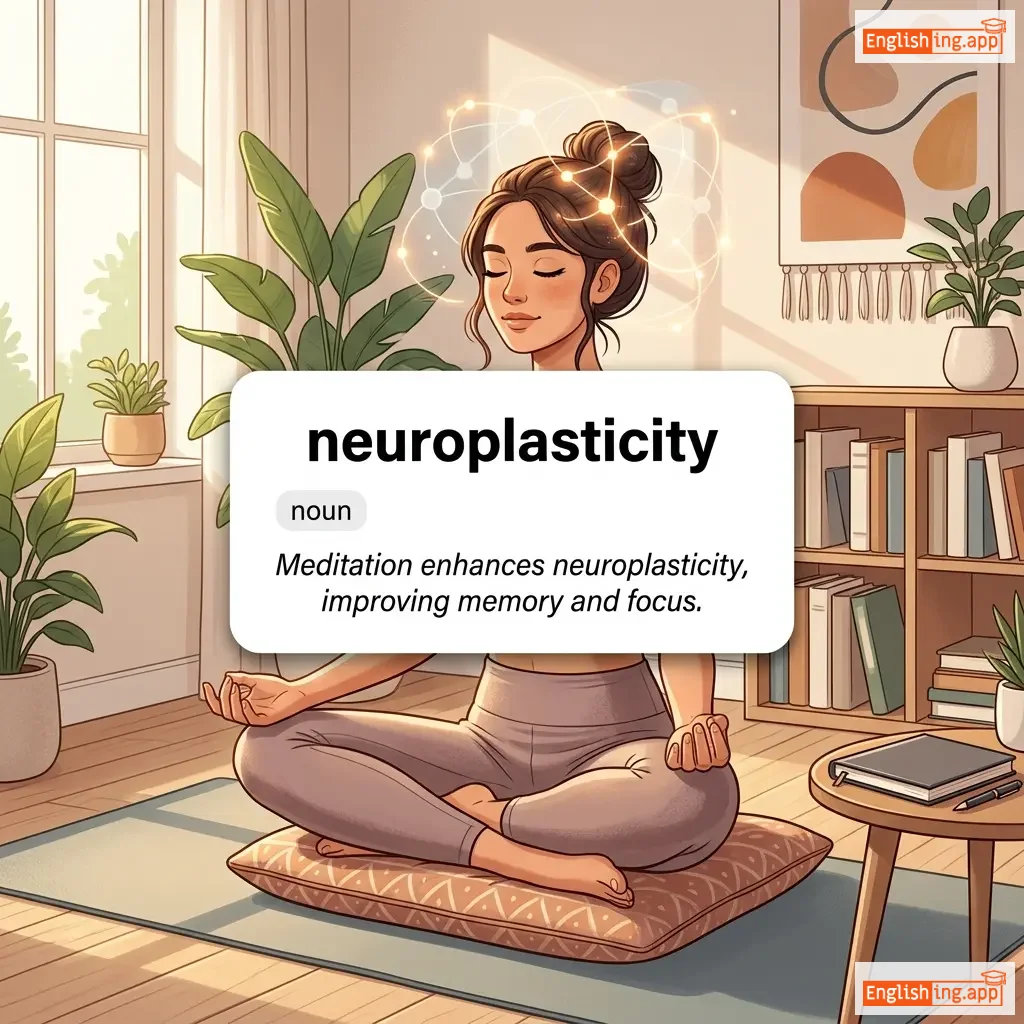
neuroplasticity definition card — visual illustration of the meaning
noun
ˌnjʊə.rəʊ.plæsˈtɪ.sɪ.ti
neuroplasticidad (neuroplasticidad)

The ability of the brain to reorganize itself by forming new neural connections throughout life.

"Meditation enhances neuroplasticity, improving memory and focus."

"La meditación aumenta la neuroplasticidad, mejorando la memoria y la concentración." (La meditacion aumenta la neuroplasticidad, mejorando la memoria y la concentracion.)
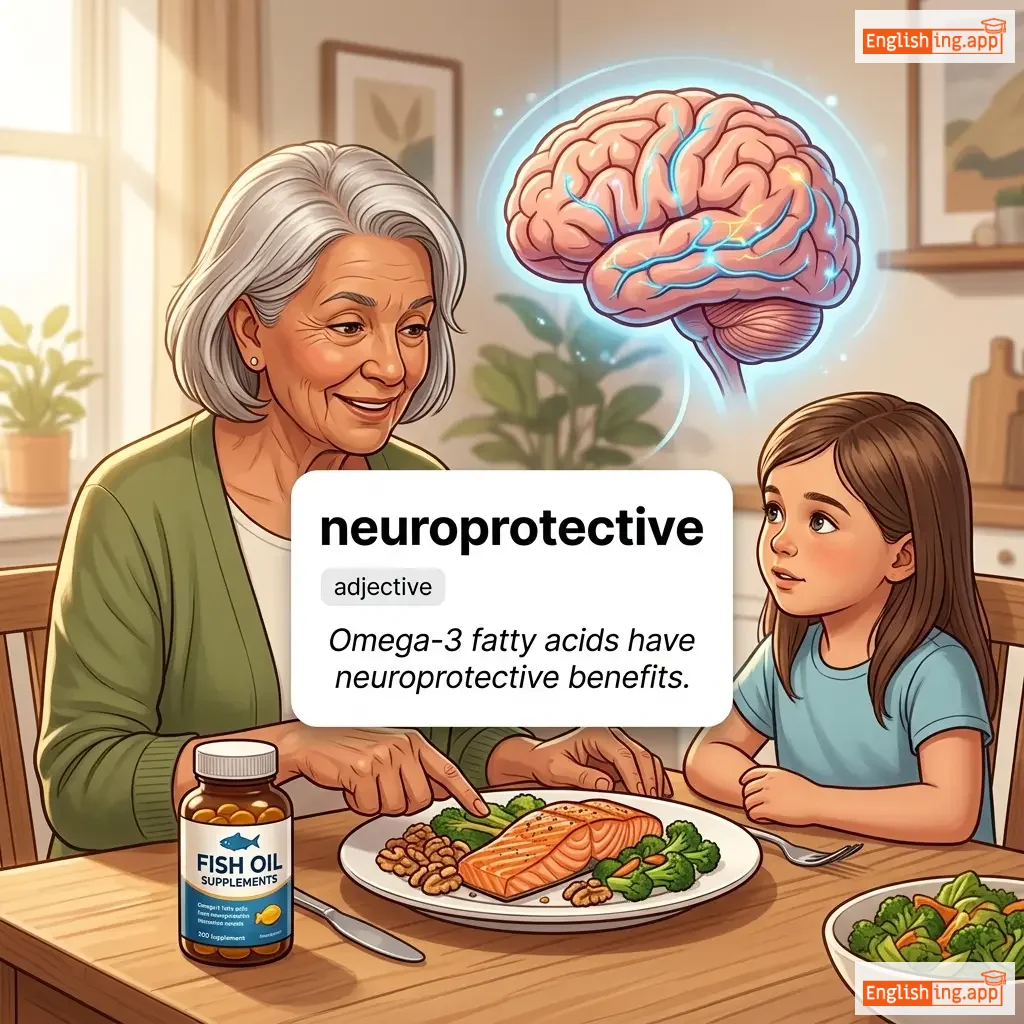
neuroprotective definition card — visual illustration of the meaning
adjective
ˌnjʊə.rəʊ.prəˈtek.tɪv
neuroprotector (neuroprotector)

Having the ability to protect nerve cells from damage, degeneration, or impaired function.

"Omega-3 fatty acids have neuroprotective benefits."

"Los ácidos grasos omega-3 tienen beneficios neuroprotectores." (Los ácidos grasos omega-3 tienen beneficios neuroprotectores.)
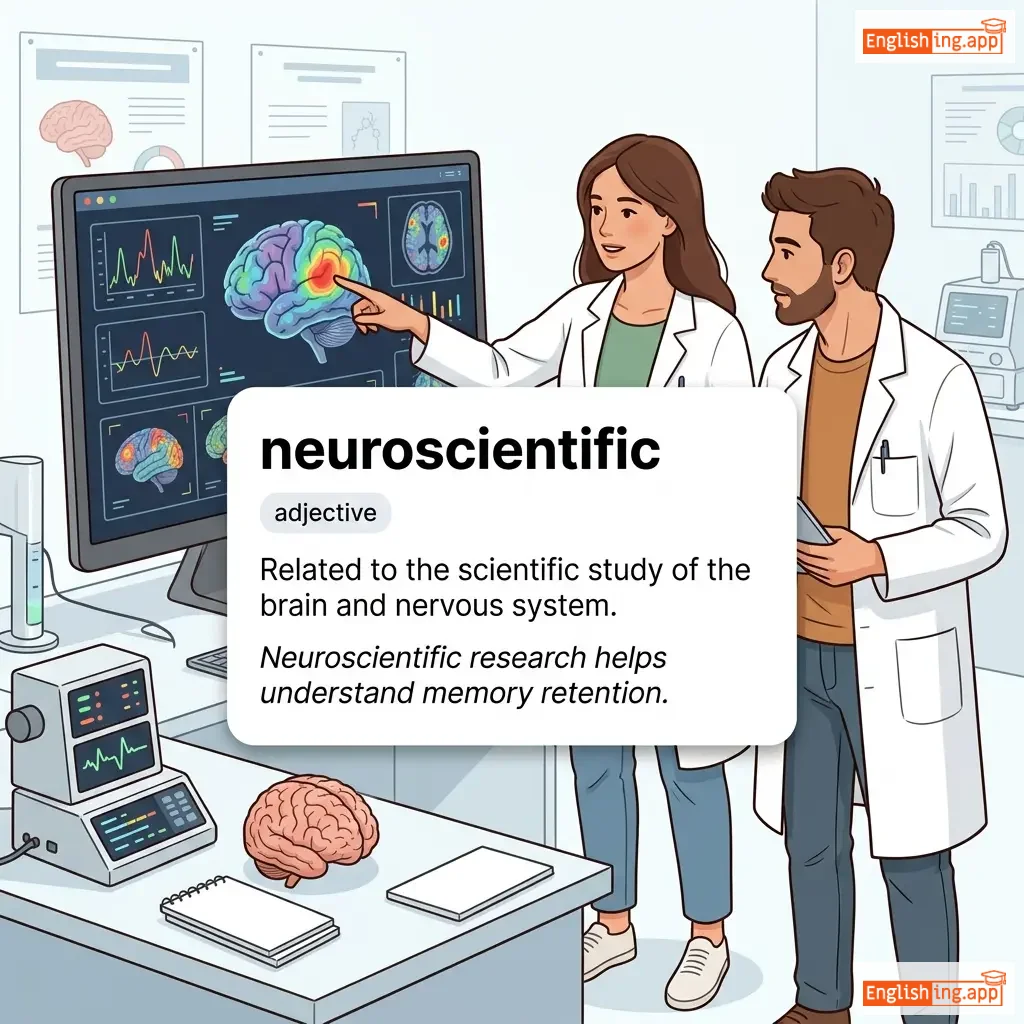
neuroscientific definition card — visual illustration of the meaning
adjective
ˌnjʊə.rəʊ.saɪənˈtɪ.fɪk
relacionado con la neurociencia (relacionado con la neurociencia)

Related to the scientific study of the brain and nervous system.

"Neuroscientific research helps understand memory retention."

"La investigación neurocientífica ayuda a entender la retención de la memoria." (La investigacion neurocientifica ayuda a entender la retencion de la memoria.)
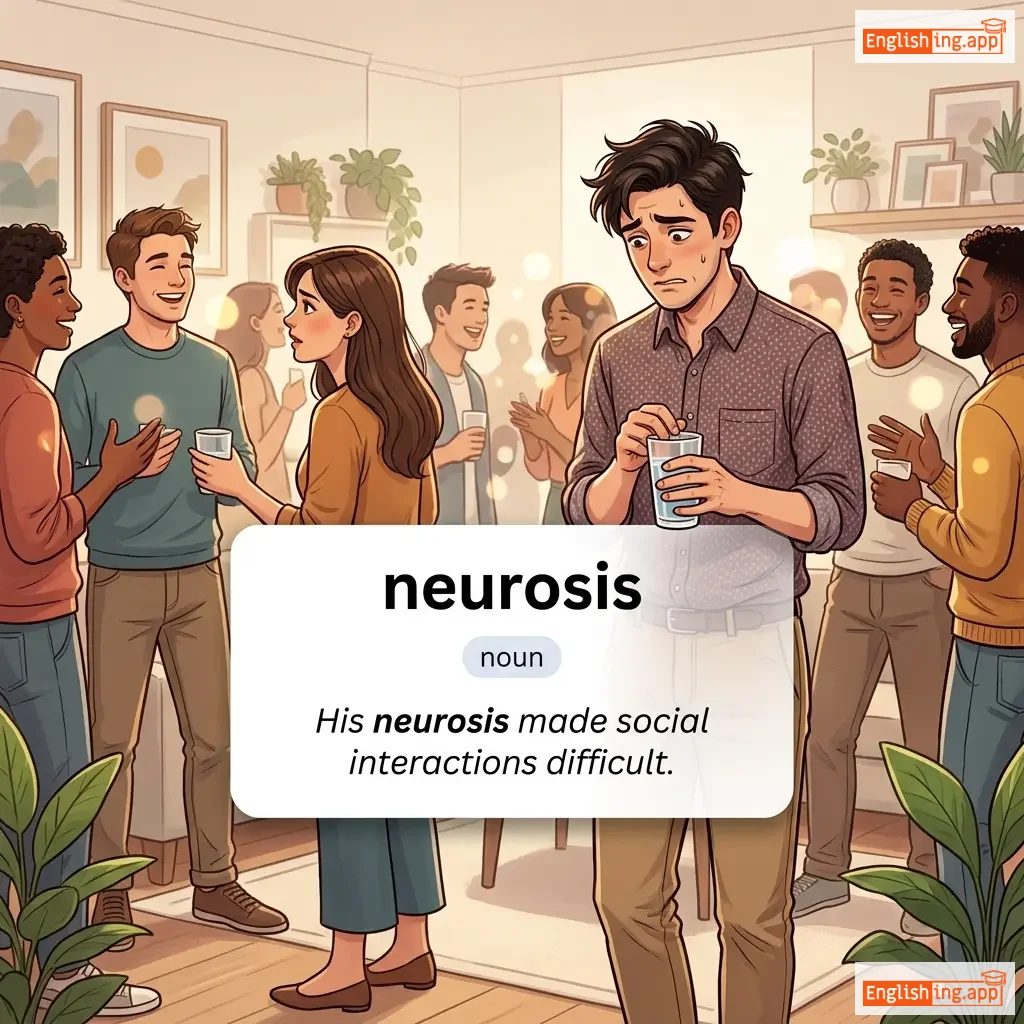
neurosis definition card — visual illustration of the meaning
noun
/njʊəˈrəʊ.sɪs/
trastorno neurótico (trastorno neurotico)

A relatively mild mental illness that is not caused by organic disease, involving symptoms of stress.

"His neurosis made social interactions difficult."

"Su neurosis hizo que las interacciones sociales fueran difíciles." (Su neurosis hizo que las interacciones sociales fueran dificiles.)
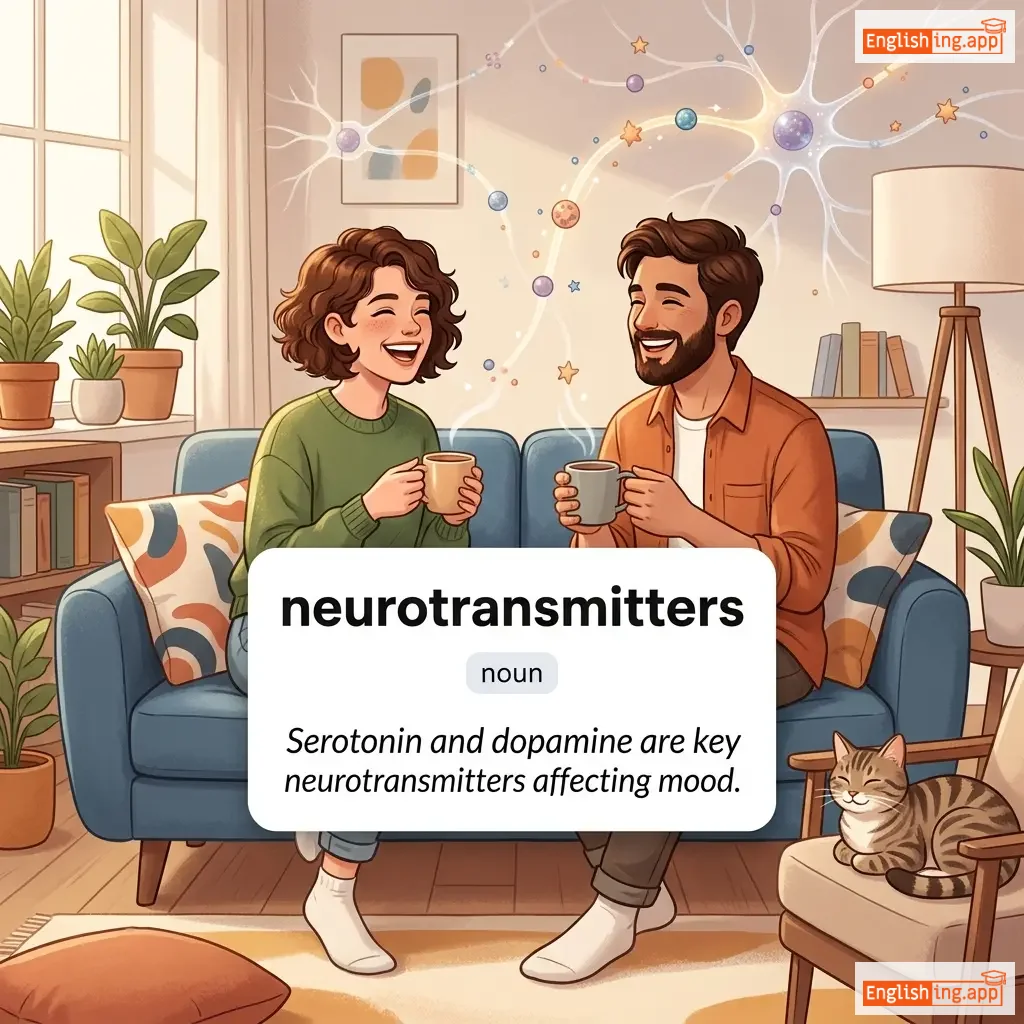
neurotransmitters definition card — visual illustration of the meaning
noun
/ˈnjʊə.rəʊ.trænsˌmɪt.ərs/
neurotransmisores (neurotransmisores)

Chemical messengers that transmit signals across nerve synapses, affecting mood, behavior, and cognitive functions.

"Serotonin and dopamine are key neurotransmitters affecting mood."

"La serotonina y la dopamina son neurotransmisores clave que afectan el estado de ánimo." (La serotonina y la dopamina son neurotransmisores clave que afectan el estado de animo.)
verb
/ˈnuːtər/
esterilizar (esterilizar)

To remove the reproductive organs of an animal; or having no gender.

"They decided to neuter their cat to prevent more kittens."

"Decidieron esterilizar a su gato para evitar más gatitos." (Decidieron esterilizar a su gato para evitar más gatitos.)
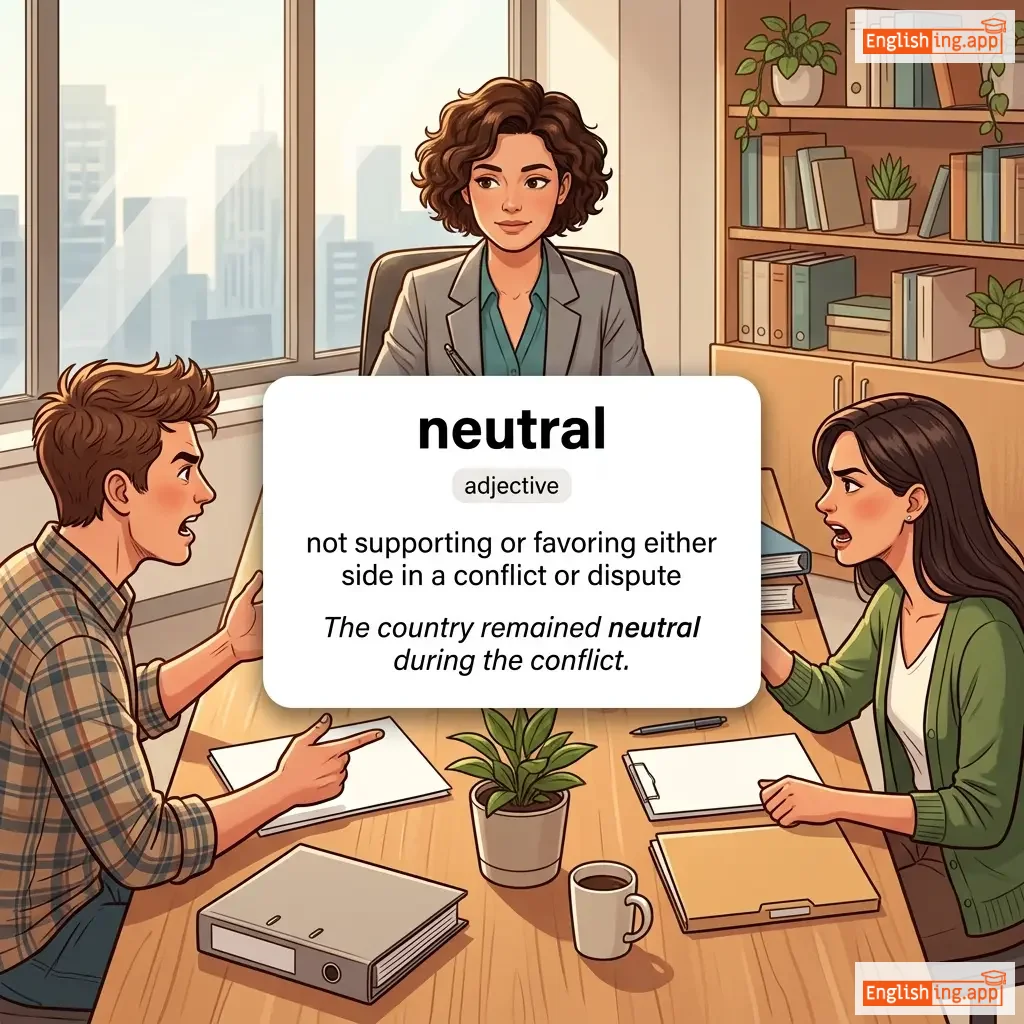
neutral definition card — visual illustration of the meaning
adjective
/ˈnjuːtrəl/
neutral (neutral)

not supporting or favoring either side in a conflict or dispute

"The country remained neutral during the conflict."

"El país permaneció neutral durante el conflicto." (El pais permaneció neutral durante el conflicto.)
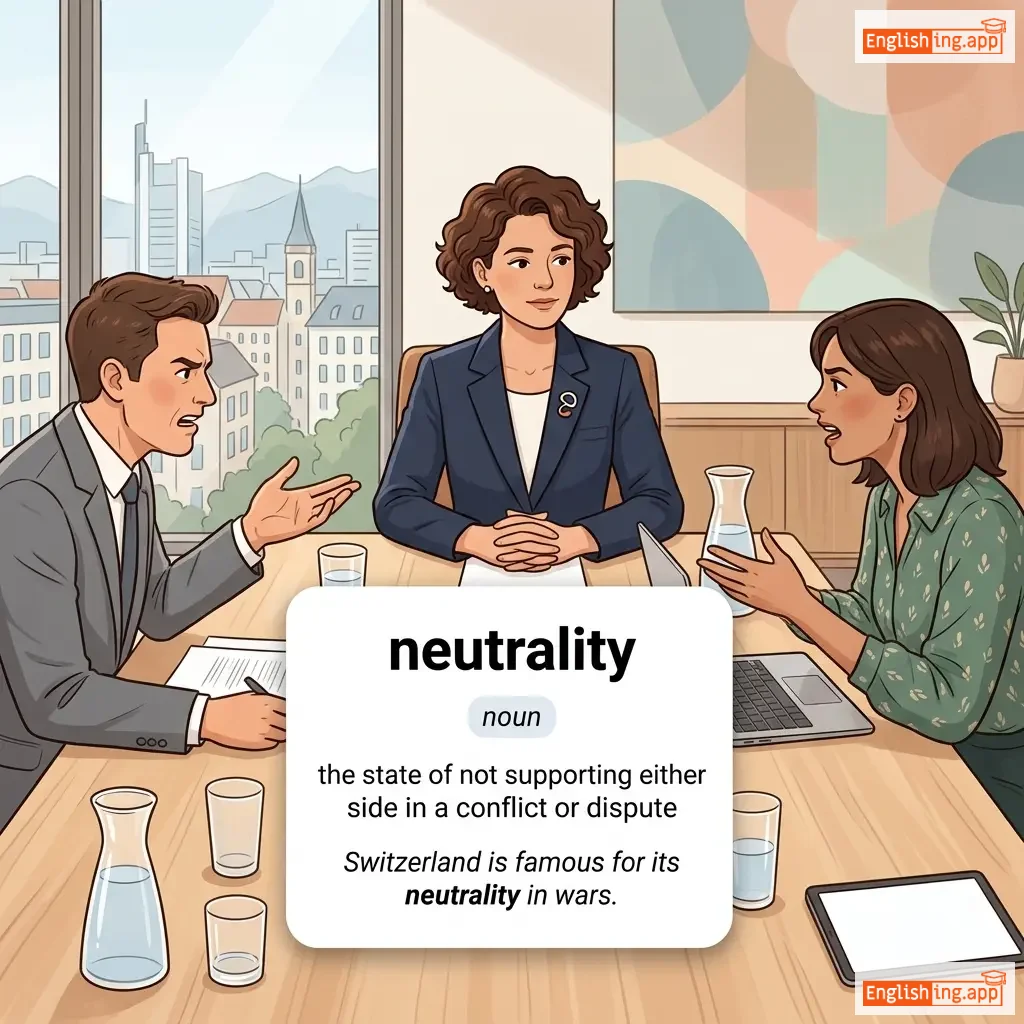
neutrality definition card — visual illustration of the meaning
noun
/nuːˈtræl.ə.ti/
neutralidad (neutralidad)

the state of not supporting either side in a conflict or dispute

"Switzerland is famous for its neutrality in wars."

"Suiza es famosa por su neutralidad en las guerras." (Suiza es famosa por su neutralidad en las guerras.)
verb
/ˈnjuːtrəlaɪz/
neutralizar (neutralizar)

to make something ineffective or harmless

"The medicine helped neutralize the poison in his system."

"La medicina ayudó a neutralizar el veneno en su sistema." (La medicina ayudo a neutralizar el veneno en su sistema.)
adverb
/ˈnɛvər/
nunca (nunca)

at no time in the past or future; not ever

"I have never seen such a beautiful sunset."

"Nunca he visto un atardecer tan hermoso." (Nunca he visto un atardecer tan hermoso.)
adverb
/ˌnɛvəðəˈlɛs/
sin embargo (nevertheless)

in spite of that; however

"He was tired; nevertheless, he kept working."

"Él estaba cansado; sin embargo, siguió trabajando." (El estaba cansado; sin embargo, siguio trabajando.)
adjective
/njuː/
nuevo (nuevo)

recently made, discovered, or introduced; not existing before

"He bought a new car yesterday."

"Él compró un coche nuevo ayer." (El compró un coche nuevo ayer.)