Vocabularios

Descubra, aprenda y domine el vocabulario en inglés

adjective
/ˈnɔːtɪkəl/
náutico (nautico)

relating to ships, sailors, or navigation on water

"He studied nautical charts before setting sail."

"Estudió mapas náuticos antes de zarpar." (Estudió mapas náuticos antes de zarpar.)
adjective
/ˈneɪvəl/
naval (naval)

relating to a country's navy or military ships

"The country invested heavily in naval defense."

"El país invirtió fuertemente en defensa naval." (El pais invirtió fuertemente en defensa naval.)
noun
/ˈneɪ.vəl fɔːrs/
fuerzas navales (fuerzas navales)

the branch of a nation's armed services that conducts military operations at sea

"The naval force protected the country's coastline from enemy attacks."

"Las fuerzas navales protegieron la costa del país de los ataques enemigos" (Las fuerzas navales protegieron la costa del pais de los ataques enemigos)
noun
/neɪv/
nave central de la iglesia (nave central de la iglesia)

the central part of a church building intended to accommodate the congregation

"The choir sang beautifully in the church nave."

"El coro cantó hermosamente en la nave de la iglesia." (El coro cantó hermosamente en la nave de la iglesia.)
noun
/ˈneɪvəl/
ombligo (ombligo)

the small hollow or raised area in the middle of the stomach, also called the belly button

"The baby’s navel was carefully cleaned after birth."

"El ombligo del bebé fue limpiado cuidadosamente después del nacimiento." (El ombligo del bebe fue limpiado cuidadosamente despues del nacimiento.)
adjective
/ˈnæv.ɪ.ɡə.bəl/
navegable (navegable)

Able to be sailed on or through by ships or boats.

"The river is navigable for large cargo ships."

"El río es navegable para grandes barcos de carga." (El río es navegable para grandes barcos de carga.)
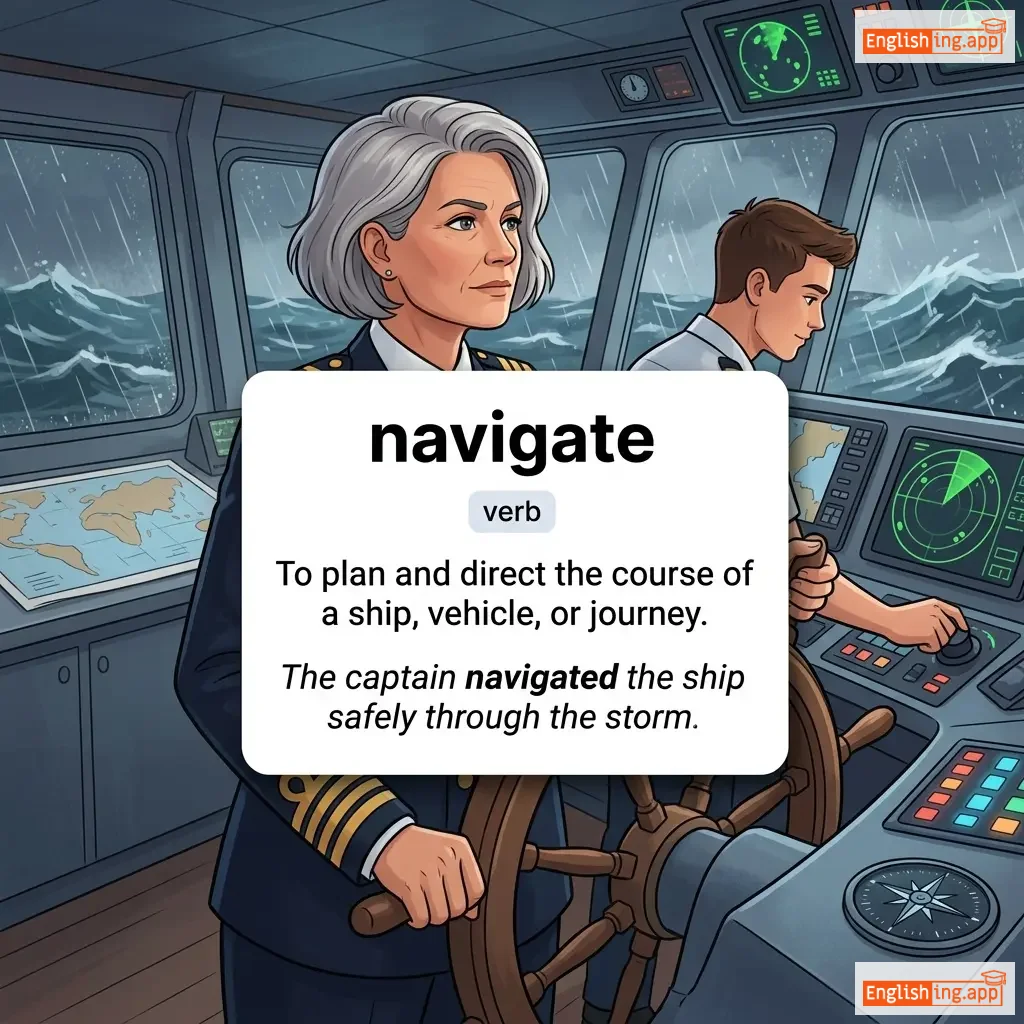
navigate definition card — visual illustration of the meaning
verb
/ˈnæv.ɪ.ɡeɪt/
navegar (navegar)

To plan and direct the course of a ship, vehicle, or journey.

"The captain navigated the ship safely through the storm."

"El capitán navegó el barco de manera segura a través de la tormenta." (El capitan navego el barco de manera segura a traves de la tormenta.)
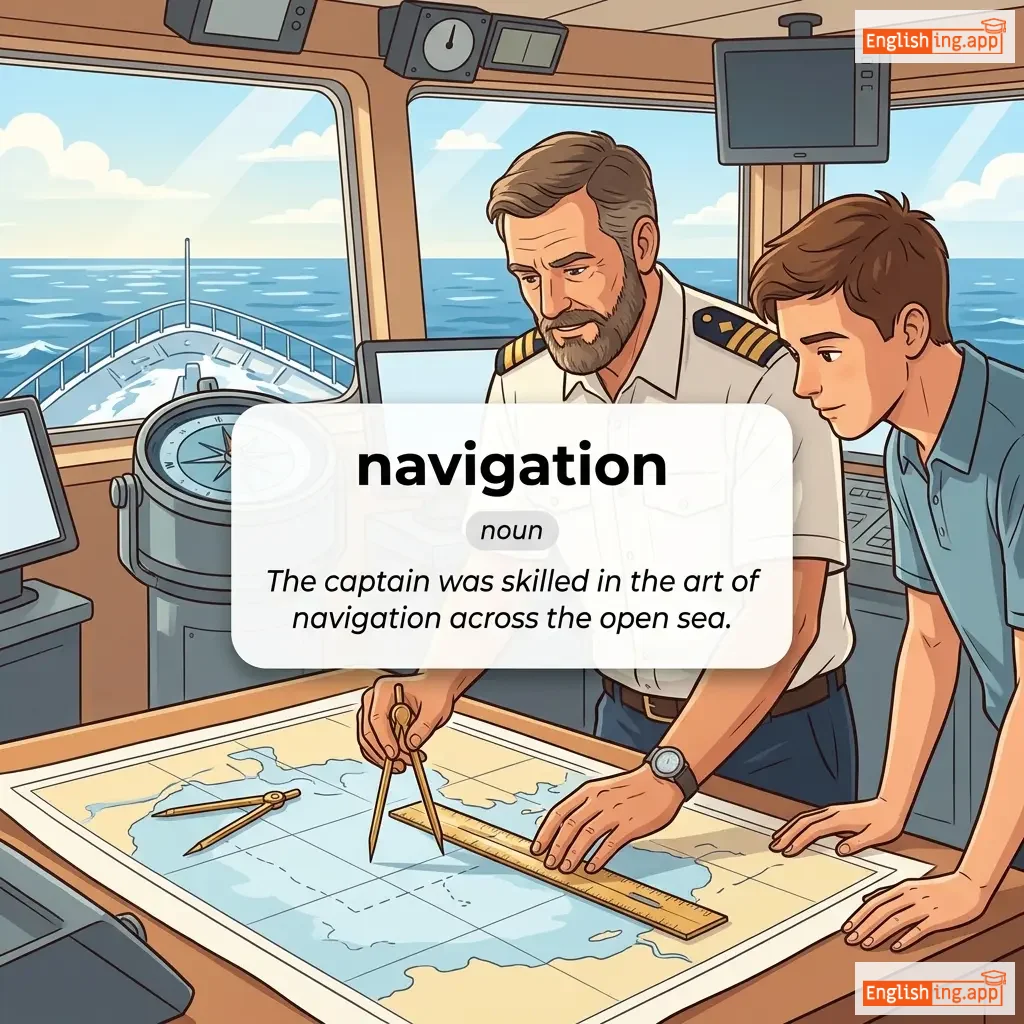
navigation definition card — visual illustration of the meaning
noun
/ˌnævɪˈɡeɪʃən/
navegación (navegacion)

the process or activity of accurately determining one's position and planning and following a route

"The captain was skilled in the art of navigation across the open sea."

"El capitán era experto en el arte de la navegación a través del mar abierto." (El capitan era experto en el arte de la navegacion a traves del mar abierto.)
noun
/ˈneɪvi/
marina (marina)

the branch of armed forces that conducts military operations at sea

"He joined the navy after graduating from college."

"Se unió a la marina después de graduarse de la universidad." (Se unió a la marina después de graduarse de la universidad.)
noun
/ˈneɪˌseɪ.ɪŋ/
expresión negativa (expresion negativa)

The act of expressing negative or pessimistic views.

"His constant naysaying discouraged the team."

"Su constante expresión negativa desmotivó al equipo." (Su constante expresion negativa desmotivo al equipo.)
noun
/ˌɛn.biː.esˈpiː/
espacio no rompible (espacio no rompible)

a non-breaking space character in HTML used to prevent an automatic line break at its position

"Use   in HTML to add a space that won't break into a new line."

"Usa   en HTML para agregar un espacio que no se rompa en una nueva línea." (Usa   en HTML para agregar un espacio que no se rompa en una nueva linea.)
noun
/niːp/
marea baja (marea baja)

A tide just after the first or third quarters of the moon when the difference between high and low tide is least.

"During a neap tide, the water level change is minimal."

"Durante una marea baja, el cambio en el nivel del agua es mínimo." (Durante una marea baja, el cambio en el nivel del agua es minimo.)
preposition
/nɪə(r)/
cerca (cerca)

At or to a short distance away; close in space, time, or relationship.

"There is a park near my house."

"Hay un parque cerca de mi casa." (Hay un parque cerca de mi casa.)
adverb
/ˈnɪərbaɪ/
cerca; en las cercanías (cerca; en las cercanias)

close to; not far away; in the neighborhood

"There is a grocery store nearby."

"Hay una tienda de comestibles cerca." (Hay una tienda de comestibles cerca.)
adjective
/ˈnɪəˌbaɪ/
cerca (cerca)

close to a particular place or person

"The nearest gas station is nearby."

"La estación de gasolina más cercana está cerca." (La estacion de gasolina mas cercana esta cerca.)
adverb
/ˈnɪəli/
casi (casi)

almost, but not completely

"She nearly missed the bus."

"Casi perdió el autobús." (Casi perdio el autobus.)
adjective
/niːt/
ordenado (ordenado)

tidy, orderly, and well-arranged; simple and elegant

"His handwriting is very neat and easy to read."

"Su escritura es muy ordenada y fácil de leer." (Su escritura es muy ordenada y fácil de leer.)
adverb
/ˈniːtli/
ordenadamente; cuidadosamente (ordenadamente; cuidadosamente)

in a tidy and orderly way; carefully and precisely

"She arranged the books neatly on the shelf."

"Ella arregló los libros ordenadamente en la estantería." (Ella arreglo los libros ordenadamente en la estantería.)
noun
/ˈneb.jʊ.lə/
nebulosa (nebulosa)

A cloud of gas and dust in outer space, sometimes visible in the night sky.

"The Orion Nebula is one of the brightest in the sky."

"La Nebulosa de Orión es una de las más brillantes en el cielo." (La Nebulosa de Orión es una de las más brillantes en el cielo.)
adjective
/ˈnɛbjələs/
nebuloso (nebuloso)

Unclear, vague, or ill-defined; resembling a cloud or haze.

"His plan for the future was still nebulous and hard to understand."

"Su plan para el futuro seguía siendo nebuloso y difícil de entender." (Su plan para el futuro seguía siendo nebuloso y difícil de entender.)
adverb
/ˌnɛsəˈsɛrɪli/
necesariamente (necesariamente)

as a necessary result; inevitably

"It doesn’t necessarily mean you’re wrong."

"No significa necesariamente que estés equivocado." (No significa necesariamente que estés equivocado.)
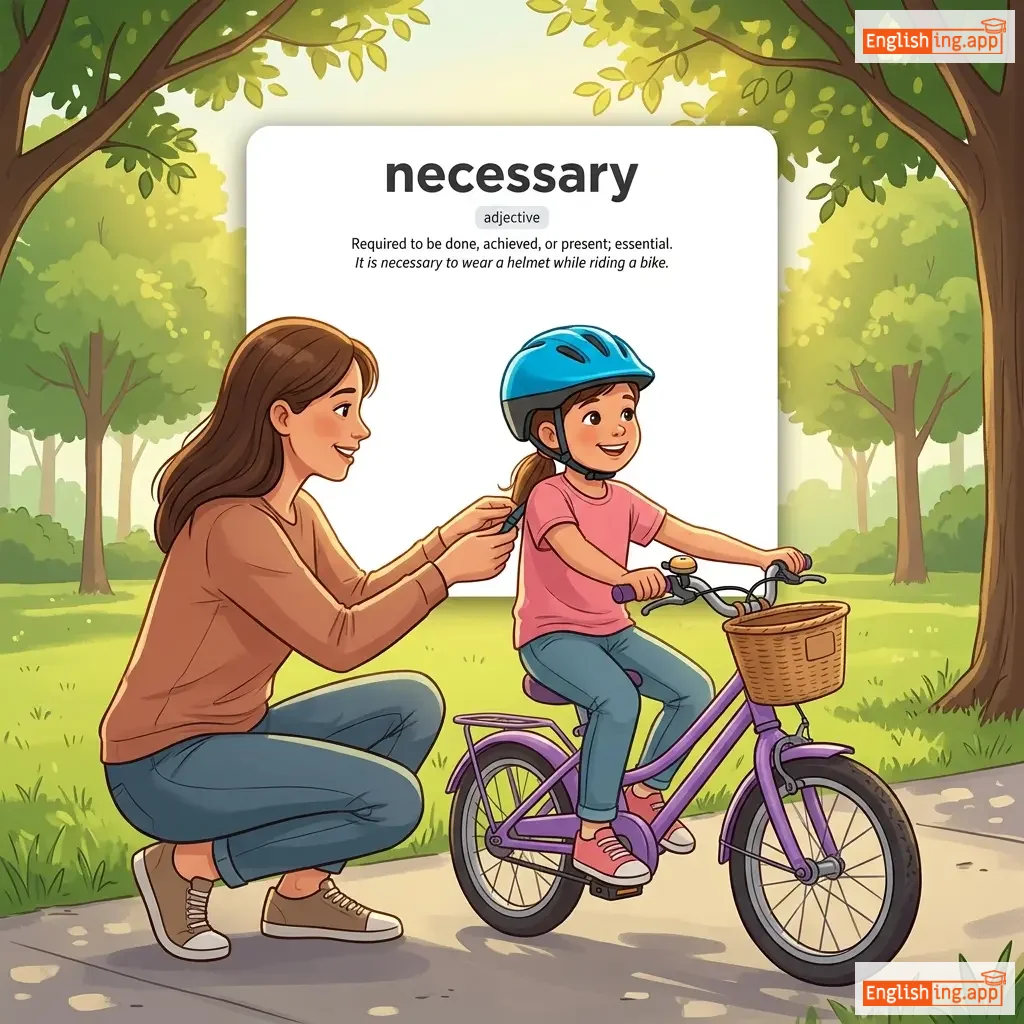
necessary definition card — visual illustration of the meaning
adjective
/ˈnɛsəsɛri/
necesario (necesario)

Required to be done, achieved, or present; essential.

"It is necessary to wear a helmet while riding a bike."

"Es necesario usar un casco mientras se monta en una bicicleta." (es necesario usar un casco mientras se monta en una bicicleta)
verb
/nəˈsɛsɪteɪt/
hacer necesario (hacer necesario)

To make something necessary or unavoidable.

"The heavy rains necessitated the cancellation of the event."

"Las fuertes lluvias hicieron inevitable la cancelación del evento." (Las fuertes lluvias hicieron inevitable la cancelación del evento.)
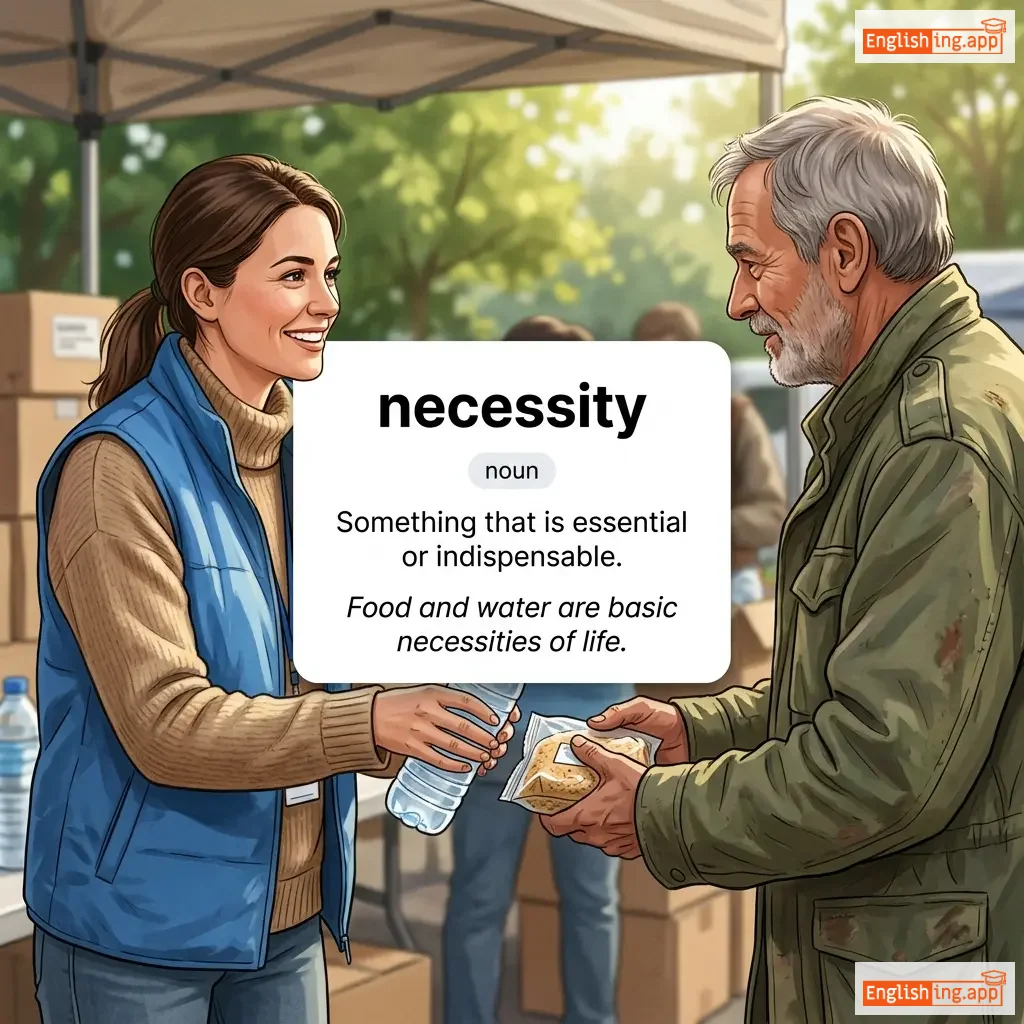
necessity definition card — visual illustration of the meaning
noun
/nəˈsɛsəti/
necesidad (necesidad)

Something that is essential or indispensable.

"Food and water are basic necessities of life."

"La comida y el agua son necesidades básicas de la vida." (La comida y el agua son necesidades básicas de la vida.)
noun
/nɛk/
cuello (cuello)

the part of the body connecting the head and the shoulders

"She wore a necklace around her neck."

"Ella llevaba un collar alrededor de su cuello." (Ella llevaba un collar alrededor de su cuello.)
noun
/ˈnek.ləs/
collar (koyar)

a piece of jewelry that is worn around the neck

"She wore a beautiful diamond necklace to the party."

"Ella llevaba un hermoso collar de diamantes en la fiesta." (Ella llevaba un hermoso collar de diamantes en la fiesta.)
noun
/ˈnɛkˌlaɪn/
escote (escote)

the edge of a garment around the neck, especially as cut to form a particular shape

"The dress has a beautiful V-shaped neckline."

"El vestido tiene un hermoso escote en forma de V." (El vestido tiene un hermoso escote en forma de V.)
noun
/ˈnek.taɪ/
corbata (corbata)

a strip of cloth worn around the neck under a shirt collar and tied in front

"He adjusted his necktie before the important meeting."

"Él ajustó su corbata antes de la importante reunión." (Él ajustó su corbata antes de la importante reunión.)
noun
/nɪˈkrɒlədʒi/
necrológico (necrologico)

An obituary notice or a list of people who have recently died.

"The newspaper published a necrology of notable figures who passed away that year."

"El periódico publicó una necrología de figuras notables que fallecieron ese año." (El periodico publico una necrologia de figuras notables que fallecieron ese ano.)
noun
/ˈnɛkrəˌmænsər/
necromante (nekro-man-ser)

a person who practices necromancy; a wizard or magician who claims to communicate with the dead

"The villagers feared the old necromancer who lived at the edge of the forest."

"Los aldeanos temían al viejo necromante que vivía al borde del bosque." (Los aldeanos temian al viejo necromante que vivia al borde del bosque.)
noun
/ˈnɛkrəˌmænsi/
necromancia (necromancia)

the practice of communicating with the dead, often to predict the future

"Ancient texts described rituals of necromancy performed by priests."

"Los textos antiguos describen rituales de necromancia realizados por sacerdotes." (Los textos antiguos describen rituales de necromancia realizados por sacerdotes.)
noun
/nəˈkrɒpəlɪs/
necrópolis (necropolis)

a large ancient cemetery with elaborate tombs

"The archaeologists discovered artifacts in the necropolis of the ancient city."

"Los arqueólogos descubrieron artefactos en la necrópolis de la antigua ciudad." (Los arqueólogos descubrieron artefactos en la necrópolis de la antigua ciudad.)
noun
/nɛˈkroʊsɪs/
necrósis (necrosis)

the death of body tissue due to disease, injury, or lack of blood supply

"The doctor explained that the patient’s wound showed signs of necrosis."

"El doctor explicó que la herida del paciente mostraba signos de necrosis." (El doctor explico que la herida del paciente mostraba signos de necrosis.)
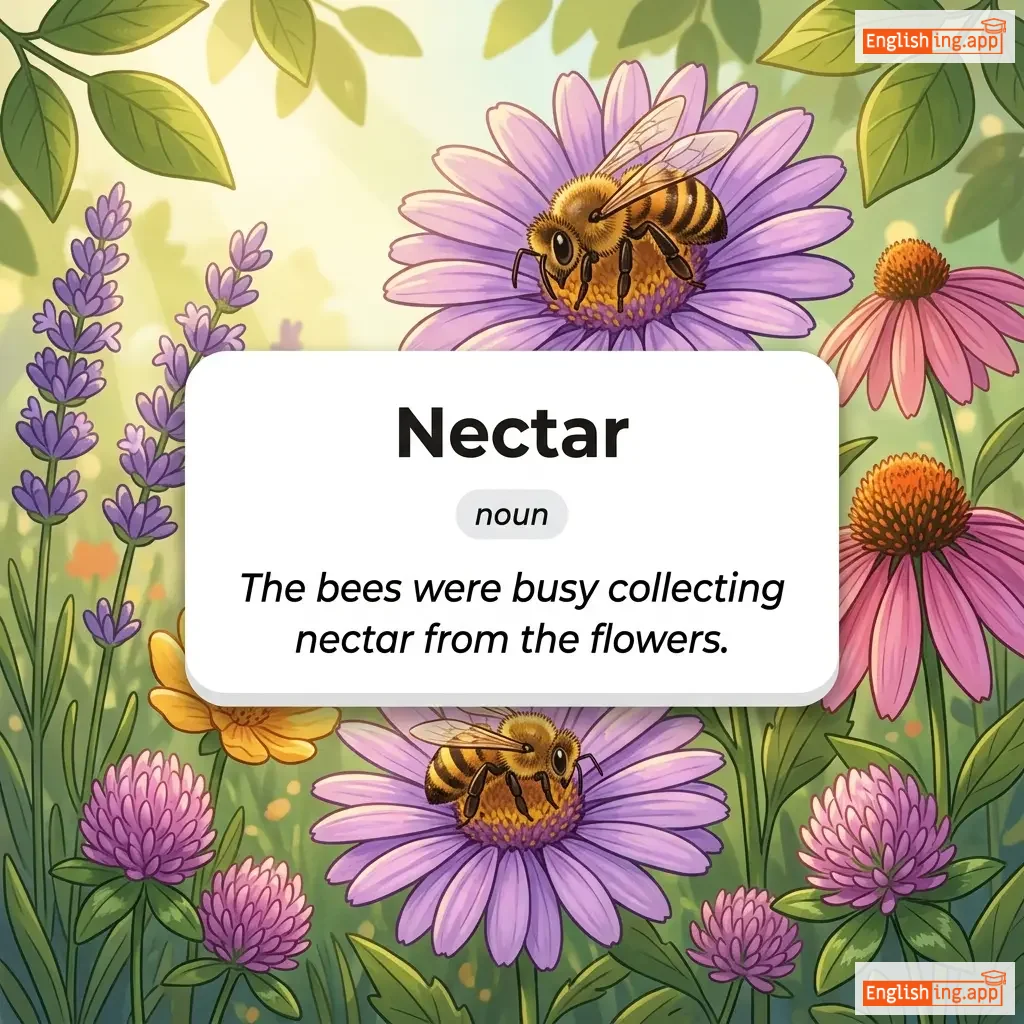
Nectar definition card — visual illustration of the meaning
noun
/ˈnɛktər/
néctar (nectar)

a sweet liquid produced by flowers and collected by bees; in mythology, the drink of the gods

"The bees were busy collecting nectar from the flowers."

"Las abejas estaban ocupadas recolectando néctar de las flores." (Las abejas estaban ocupadas recolectando nectar de las flores.)
noun
/ˈnɛktəriːn/
néctarina (variedad de durazno de piel lisa) (nectarina)

A smooth-skinned variety of peach.

"She bought a basket of fresh nectarines from the market."

"Ella compró una canasta de nectarinas frescas del mercado." (Ella compro una canasta de nectarinas frescas del mercado.)
need definition card — visual illustration of the meaning
verb
/niːd/
necesidad (necesidad)

to require something or someone

"I need your help with this task."

"Necesito tu ayuda con esta tarea." (Necesito tu ayuda con esta tarea.)
noun, verb
/ˈniː.dəl/
aguja (aguja)

a small thin metal tool with a point used for sewing or injecting; to provoke or annoy someone

"The nurse used a sterile needle for the injection."

"La enfermera usó una aguja estéril para la inyección." (La enfermera uso una aguja esteril para la inyeccion.)
adjective
/ˈniːd.ləs/
innecesario (innecesario)

unnecessary; not required; without purpose

"The argument was needless and could have been avoided."

"La discusión fue innecesaria y podría haberse evitado." (La discusion fue innecesaria y podria haberse evitado.)
noun
/ˈniːdəlwɜːrk/
trabajo de aguja, bordado (trabajo de aguja, bordado)

The craft of sewing, embroidery, or knitting done with a needle.

"Her grandmother taught her the art of needlework."

"Su abuela le enseñó el arte del trabajo a mano." (Su abuela le enseñó el arte del trabajo a mano.)
adjective
/ˈniːdi/
necesitado (necesitado)

Lacking the basic necessities of life; poor.

"The charity provides food and shelter for needy families."

"La caridad proporciona comida y refugio a las familias necesitadas." (La caridad proporciona comida y refugio a las familias necesitadas.)
adjective
/nɪˈfɛəriəs/
malévolo, criminal o moralmente malo (malevolo, criminal o moralmente malo)

Wicked, criminal, or morally bad.

"The police uncovered a nefarious plot to cheat investors."

"La policía descubrió un complot malévolo para engañar a los inversores." (La policia descubrio un complot malevolo para enganhar a los inversores.)
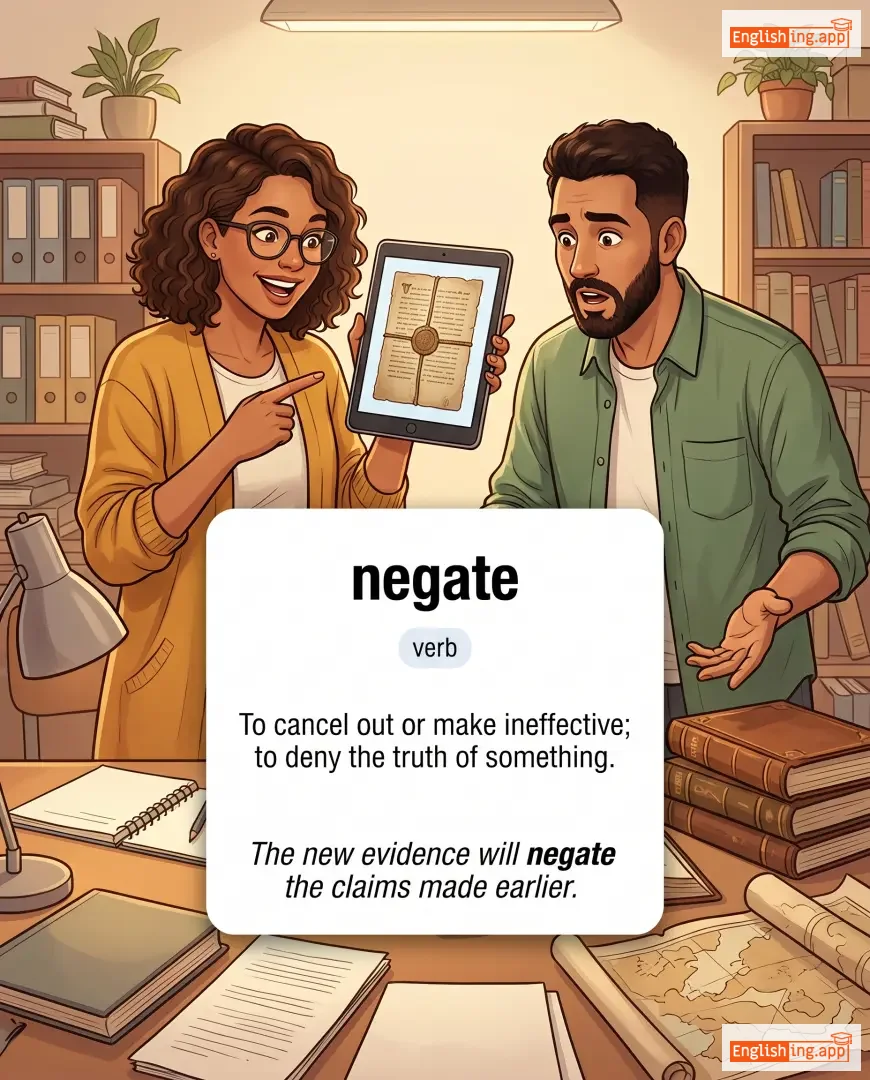
negate definition card — visual illustration of the meaning
verb
/nɪˈɡeɪt/
negar, invalidar (negar, invalidar)

To cancel out or make ineffective; to deny the truth of something.

"The new evidence will negate the claims made earlier."

"Las nuevas pruebas invalidarán las afirmaciones hechas anteriormente." (Las nuevas pruebas invalidarán las afirmaciones hechas anteriormente.)
noun
/nɪˈɡeɪʃən/
negación (negacion)

The act of denying something; the contradiction or absence of something.

"The theory is built on the negation of traditional beliefs."

"La teoría se basa en la negación de las creencias tradicionales." (La teoria se basa en la negacion de las creencias tradicionales.)
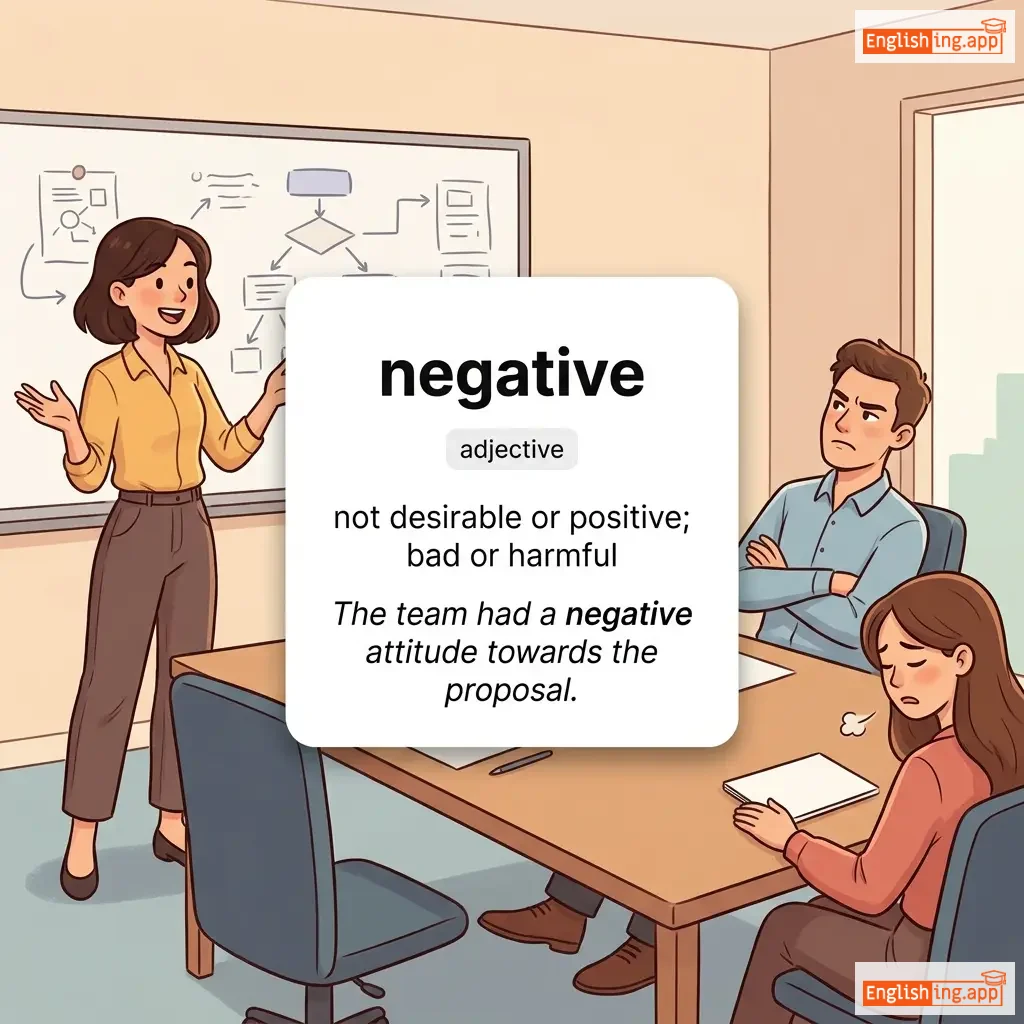
negative definition card — visual illustration of the meaning
adjective
/ˈnɛɡətɪv/
negativo (negativo)

not desirable or positive; bad or harmful

"The team had a negative attitude towards the proposal."

"El equipo tenía una actitud negativa hacia la propuesta." (El equipo tenía una actitud negativa hacia la propuesta.)
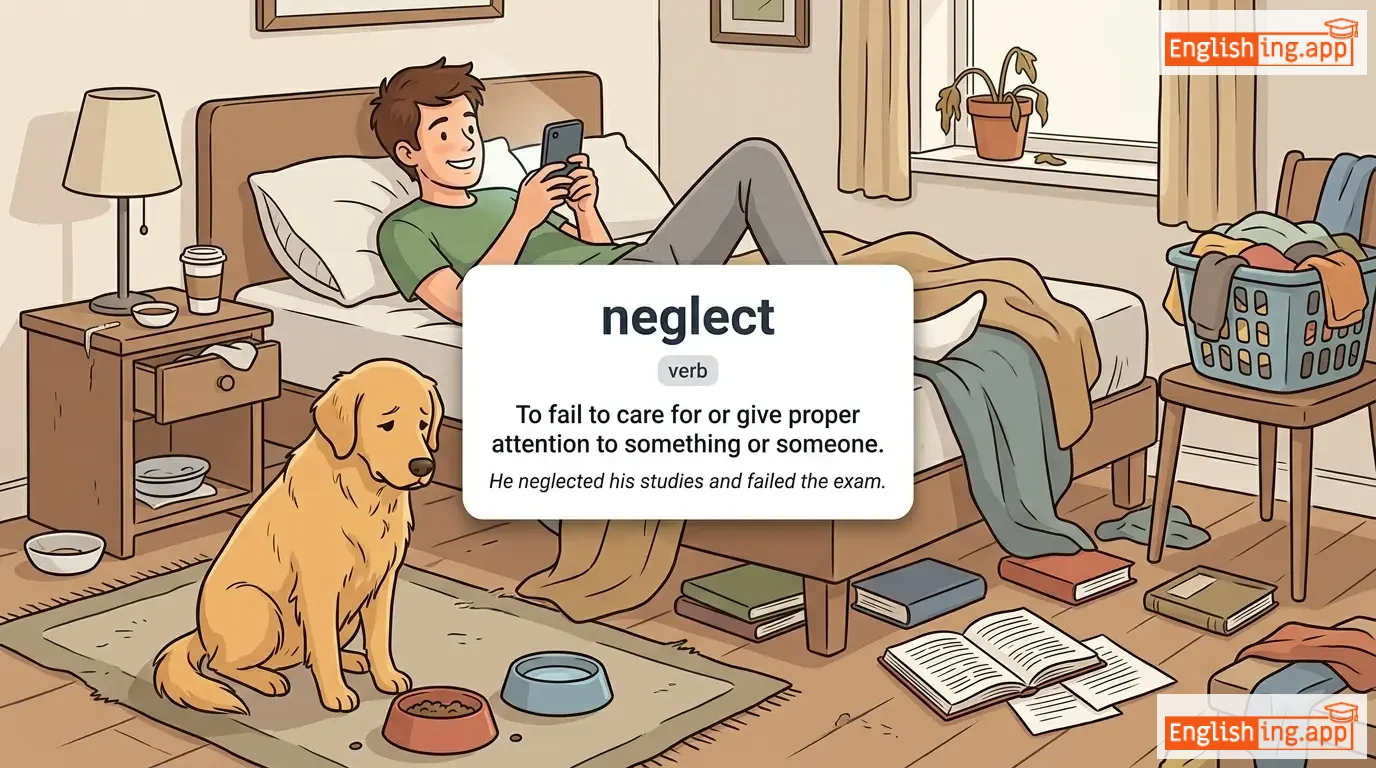
neglect definition card — visual illustration of the meaning
verb
/nɪˈɡlɛkt/
negligencia (negligencia)

To fail to care for or give proper attention to something or someone.

"He neglected his studies and failed the exam."

"Él descuidó sus estudios y suspendió el examen." (Él descuidó sus estudios y suspendió el examen.)
adjective
/nɪˈɡlɛktfʊl/
desatento (desatento)

Failing to give proper care or attention.

"The neglectful parent left the child alone for hours."

"El padre desatento dejó al niño solo durante horas." (El padre desatento dejo al nino solo durante horas.)
noun
/ˌnɛɡlɪˈʒeɪ/
bata de seda ligera (bata de seda ligera)

A woman's light dressing gown, often made of thin or silky material.

"She wore a silk negligee before going to bed."

"Ella usaba una bata de seda antes de irse a la cama." (Ella usaba una bata de seda antes de irse a la cama.)
noun
/ˈnɛɡlɪdʒəns/
negligencia (negligencia)

Failure to take proper care in doing something, often resulting in damage or harm.

"The accident was caused by the driver's negligence."

"El accidente fue causado por la negligencia del conductor." (El accidente fue causado por la negligencia del conductor.)
adjective
/ˈnɛɡ.lɪ.dʒənt/
negligente (negligente)

Failing to take proper care in doing something; careless.

"The company was found negligent in providing workplace safety."

"La empresa fue considerada negligente al proporcionar seguridad en el lugar de trabajo." (La empresa fue considerada negligente al proporcionar seguridad en el lugar de trabajo.)
adjective
/ˈnɛɡ.lɪ.dʒə.bəl/
insignificante (insignificante)

So small or unimportant as to be not worth considering; insignificant.

"The cost of the error was negligible."

"El costo del error fue insignificante." (El costo del error fue insignificante.)