Vocabularios

Descubra, aprenda y domine el vocabulario en inglés

noun
/ˈlɒkətɪv/
locativo (lokativo)

a grammatical case indicating location or place

"In Latin, the locative case is used to indicate location."

"En latín, el caso locativo se usa para indicar ubicación." (En latin, el caso locativo se usa para indicar ubicacion.)
noun
/lɒx/
laguna (laguna)

a lake or sea inlet, especially in Scotland

"Tourists visit Loch Ness to search for the legendary monster."

"Los turistas visitan Loch Ness para buscar al monstruo legendario." (Los turistas visitan Loch Ness para buscar al monstruo legendario.)
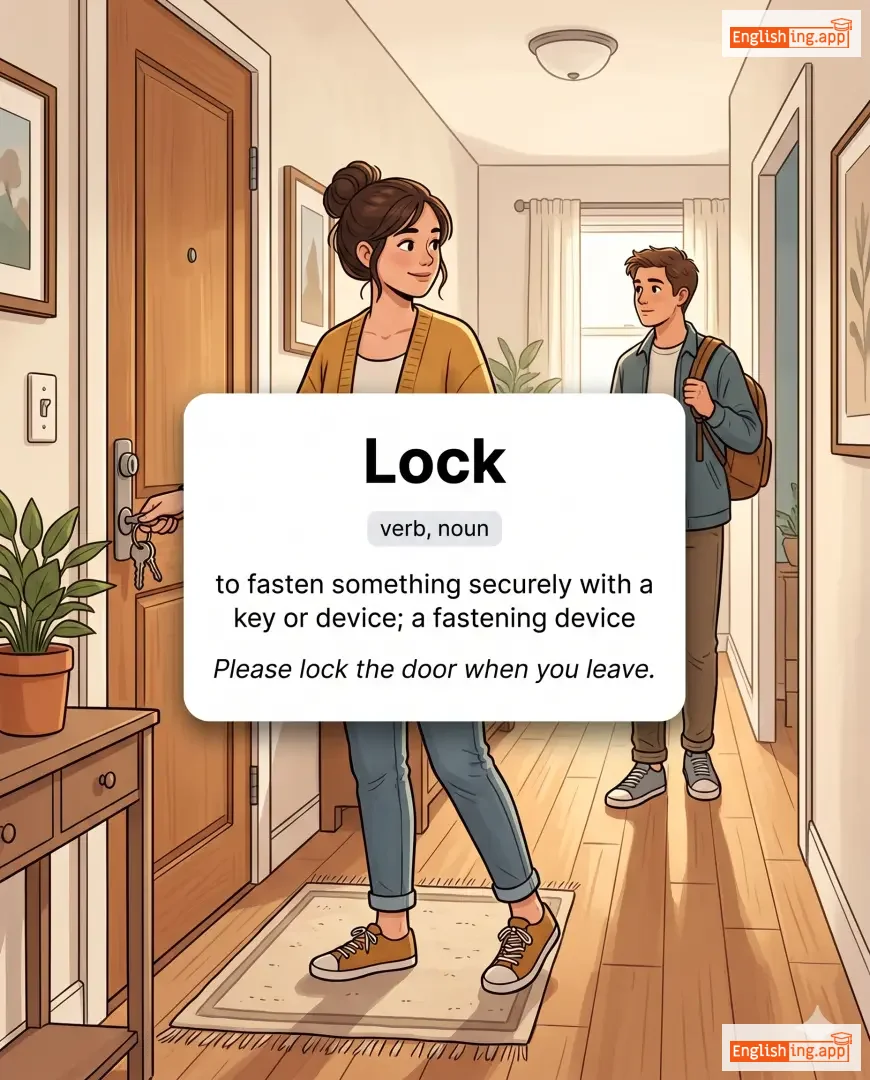
Lock definition card — visual illustration of the meaning
verb, noun
/lɒk/
cerradura, bloquear (cerradura, bloquear)

to fasten something securely with a key or device; a fastening device

"Please lock the door when you leave."

"Por favor, cierra la puerta cuando te vayas." (Por favor, cierra la puerta cuando te vayas.)
noun
/ˈlɒk.ɪt/
colgante (colgante)

a small ornamental case, typically made of gold or silver, worn on a chain around the neck

"She kept her grandmother's photo in the locket."

"Ella guardaba la foto de su abuela en el colgante." (Ella guardaba la foto de su abuela en el colgante)
noun
/ˌloʊkəˈmoʊʃən/
movimiento (movimiento)

movement or the ability to move from one place to another

"Walking is the most common form of human locomotion."

"Caminar es la forma más común de locomoción humana." (Caminar es la forma más común de locomoción humana.)
noun
/ˌloʊ.kəˈmoʊ.tɪv/
locomotora (lokomotora)

A powered rail vehicle used for pulling trains.

"The old steam locomotive was restored for the museum."

"La antigua locomotora de vapor fue restaurada para el museo." (La antigua locomotora de vapor fue restaurada para el museo.)
noun
/ˈloʊ.kəst/
langosta (langosta)

a large insect that flies in groups and eats crops

"The locusts destroyed the entire wheat field."

"Las langostas destruyeron todo el campo de trigo." (Las langostas destruyeron todo el campo de trigo.)
noun
/loʊd/
vetas minerales (vetas minerales)

A rich source of something, often a vein of valuable metal in the earth.

"The miners discovered a rich lode of silver."

"Los mineros descubrieron una rica veta de plata." (Los mineros descubrieron una rica veta de plata.)
noun
/ˈlɒdʒ.mənt/
alojamiento temporal (alojamiento temporal)

The act of lodging or a place of temporary stay; also a deposit of something.

"The soldiers found lodgment in the abandoned house."

"Los soldados encontraron alojamiento temporal en la casa abandonada." (Los soldados encontraron alojamiento temporal en la casa abandonada.)
noun
/lɒft/
ático (atico)

An upper room or space, often under the roof of a building.

"She converted the old loft into a modern studio."

"Ella convirtió el viejo ático en un moderno estudio." (Ella convirtió el viejo ático en un moderno estudio.)
adjective
/ˈlɒf.ti/
alto (alto)

Of great height; elevated in character or style; noble.

"He set himself the lofty goal of ending poverty."

"Se fijó como meta lo lofty de terminar con la pobreza." (Se fijó como meta lo lofty de terminar con la pobreza.)
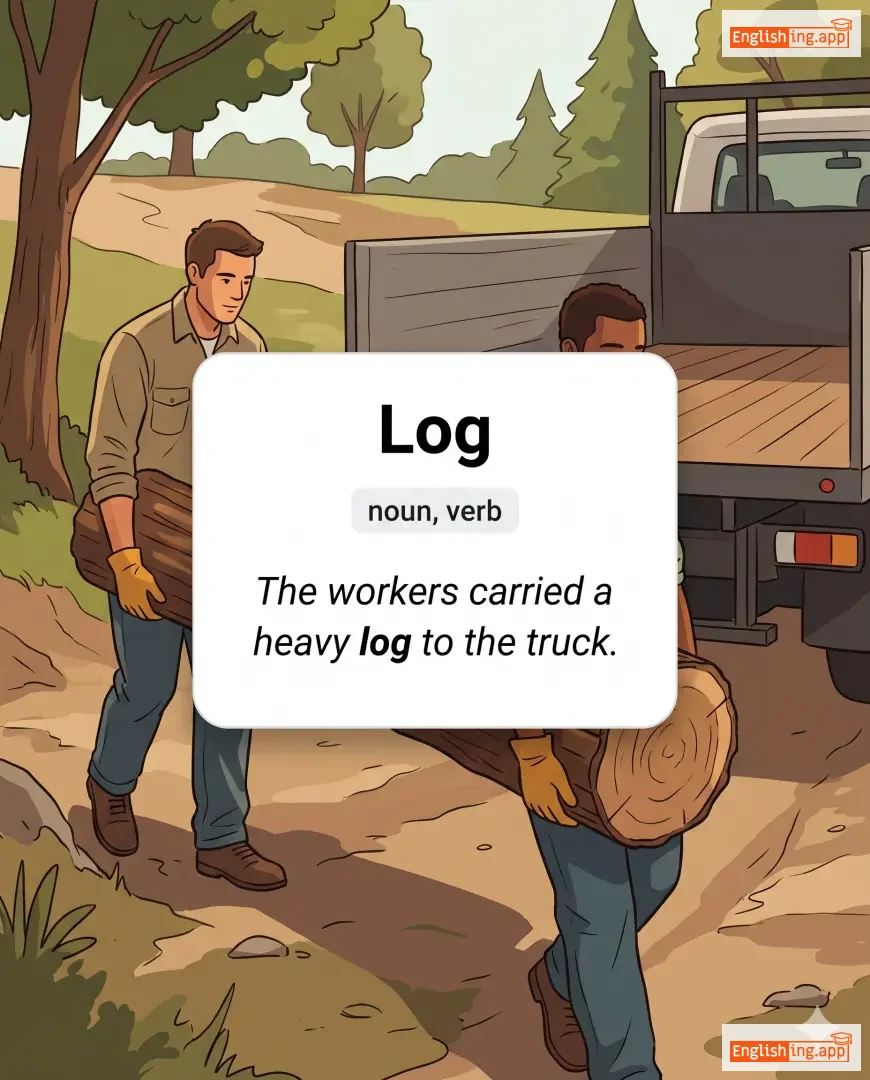
Log definition card — visual illustration of the meaning
noun, verb
/lɒɡ/
tronco, registro (tronco, registro)

A part of the trunk or a large branch of a tree that has fallen or been cut off; also to record information systematically.

"The workers carried a heavy log to the truck."

"Los trabajadores llevaron un tronco pesado al camión." (Los trabajadores llevaron un tronco pesado al camión.)
noun
/ˈlɒdʒɪk/
lógica (logica)

Reasoning conducted or assessed according to strict principles of validity.

"Her argument was based on sound logic."

"Su argumento se basaba en una lógica sólida." (Su argumento se basaba en una logica solida.)
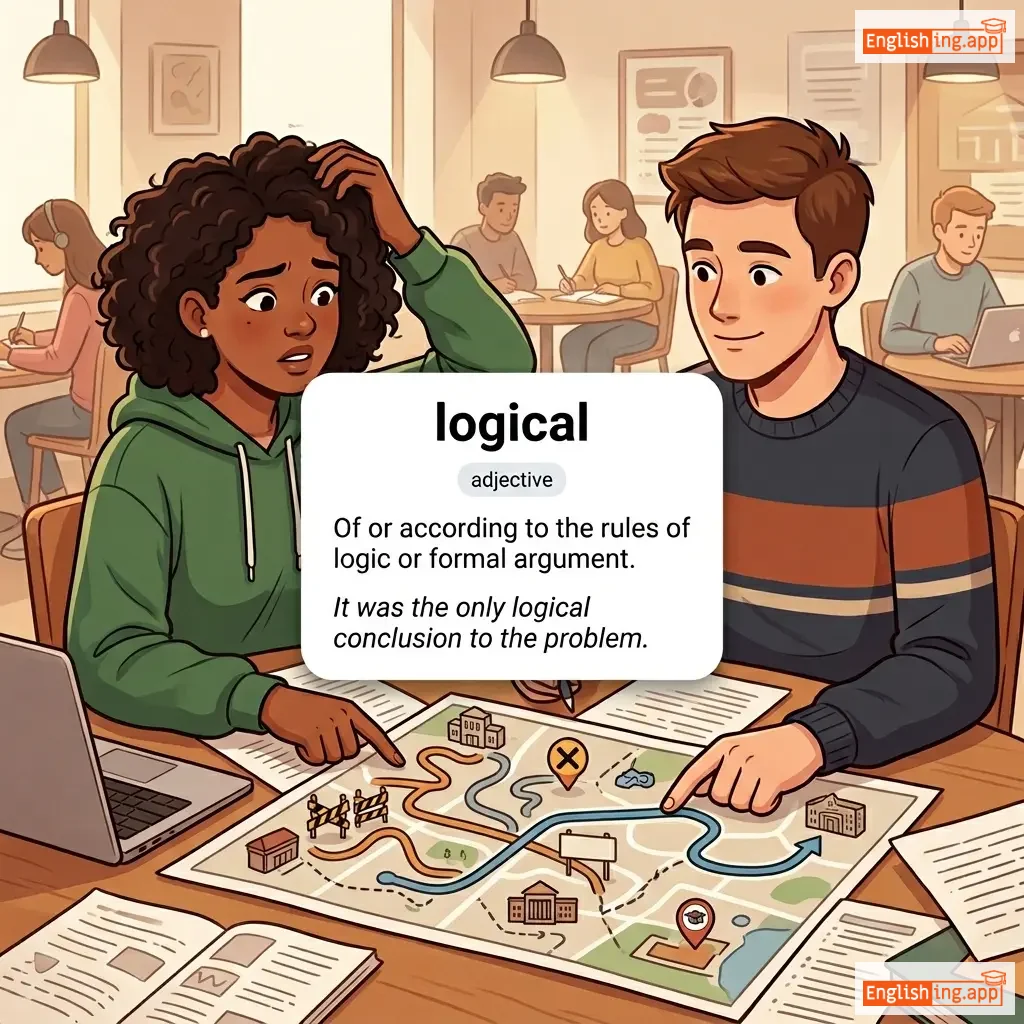
logical definition card — visual illustration of the meaning
adjective
/ˈlɒdʒɪkəl/
lógico (logico)

Of or according to the rules of logic or formal argument.

"It was the only logical conclusion to the problem."

"Era la única conclusión lógica para el problema." (Era la unica conclusion logica para el problema.)
noun
/ləˈdʒɪʃən/
lógico (logiko)

A person skilled in logic and reasoning.

"Aristotle is considered one of the greatest logicians in history."

"Aristóteles es considerado uno de los más grandes lógicos de la historia." (Aristoteles es considerado uno de los mas grandes logicos de la historia.)
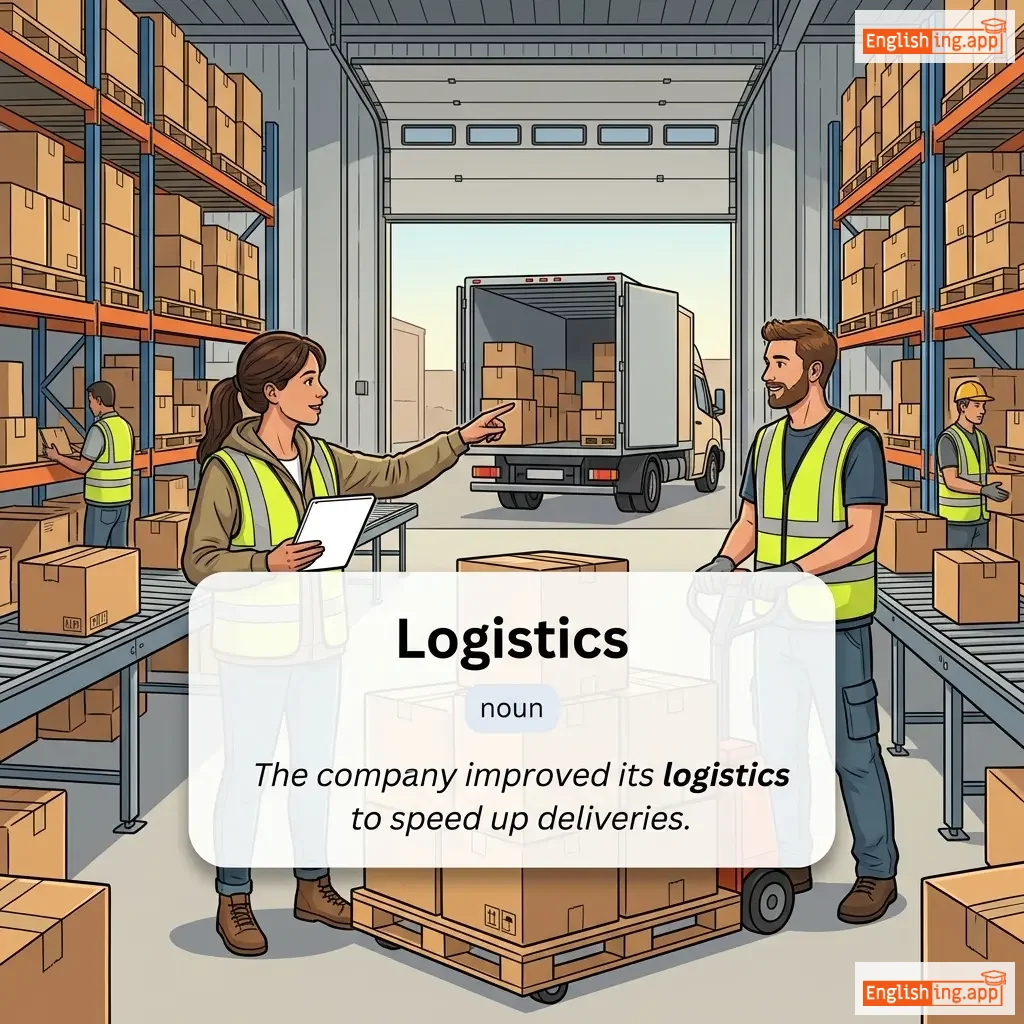
Logistics definition card — visual illustration of the meaning
noun
/ləˈdʒɪs.tɪks/
logística (logistica)

Supply chain management or operation, managing the flow of goods, services or information efficiently.

"The company improved its logistics to speed up deliveries."

"La empresa mejoró su logística para agilizar las entregas." (La empresa mejoro su logistica para agilizar las entregas.)
noun
/ˈləʊɡəʊ/
logotipo (logo)

a symbol or other small design adopted by an organization to identify its products, uniform, vehicles, etc.

"The company's logo was redesigned to reflect its new image."

"El logotipo de la empresa fue rediseñado para reflejar su nueva imagen." (El logotipo de la empresa fue redisenado para reflejar su nueva imagen)
verb
/ˈlɔɪtər/
merodear, estar de pie sin propósito (merodear, estar de pie sin proposito)

To stand or wait around idly without apparent purpose.

"The teenagers were told not to loiter outside the shop."

"Se les dijo a los adolescentes que no merodearan fuera de la tienda." (Se les dijo a los adolescentes que no merodearan fuera de la tienda.)
noun
/ˈlɔɪtərər/
persona que vaga sin propósito en un lugar (persona que vaga sin proposito en un lugar)

A person who lingers aimlessly in a place without purpose.

"The police questioned the loiterer outside the store."

"La policía interrogó al loiterer fuera de la tienda." (La policia interrogo al loiterer fuera de la tienda.)
verb
/lɑːl/
sentarse perezosamente (sentarse perezosamente)

To sit, lie, or stand in a lazy, relaxed way.

"He lolled on the sofa after a long day at work."

"Se desplomó en el sofá después de un largo día de trabajo." (Se desplomó en el sofá después de un largo día de trabajo.)
noun
/ˈloʊnlinəs/
soledad (soledad)

The state of being alone and feeling sad about it.

"She felt a deep sense of loneliness after moving to the new city."

"Ella sintió una profunda sensación de soledad después de mudarse a la nueva ciudad." (Ella sintió una profunda sensación de soledad después de mudarse a la nueva ciudad.)
adjective
/ˈloʊnli/
solo (solo)

feeling sad because one has no friends or company.

"He felt lonely after moving to a new city."

"Se sintió solo después de mudarse a una nueva ciudad." (Se sintió solo después de mudarse a una nueva ciudad.)
adjective
/lɔːŋ/
largo (largo)

Measuring a great distance from end to end; lasting for a large amount of time.

"They waited a long time for the train."

"Esperaron mucho tiempo para el tren." (Esperaron mucho tiempo para el tren.)
noun
/lɔːŋ ɡɔːrd/
calabaza larga (calabaza larga)

an elongated green vegetable belonging to the cucumber family, used in cooking

"She sliced the long gourd thinly for the stir-fry dish."

"Ella cortó la calabaza larga finamente para el plato de salteado." (Ella corto la calabaza larga finamente para el plato de salteado.)
noun
/lɔːŋ ˈpepər/
pimienta larga (pimienta larga)

a flowering vine in the family Piperaceae, cultivated for its fruit which is used as a spice

"Long pepper was more valuable than black pepper in ancient times."

"La pimienta larga era más valiosa que la pimienta negra en tiempos antiguos." (La pimienta larga era más valiosa que la pimienta negra en tiempos antiguos.)
noun
/lɒŋ ˈwɪskəd ˈkætfɪʃ/
bagre de bigotes largos (bagre de bigotes largos)

A type of freshwater fish with long whisker-like barbels around its mouth

"The fisherman caught a long whiskered catfish in the river."

"El pescador atrapó un bagre de bigotes largos en el río." (el pescador atrapo un bagre de bigotes largos en el rio)
adjective
/ˈlɒŋ ˈstændɪŋ/
de larga duración (de larga duracion)

having existed or continued for a long period of time

"They have a long-standing relationship with their suppliers."

"Tienen una relación de larga duración con sus proveedores." (Tienen una relacion de larga duracion con sus proveedores.)
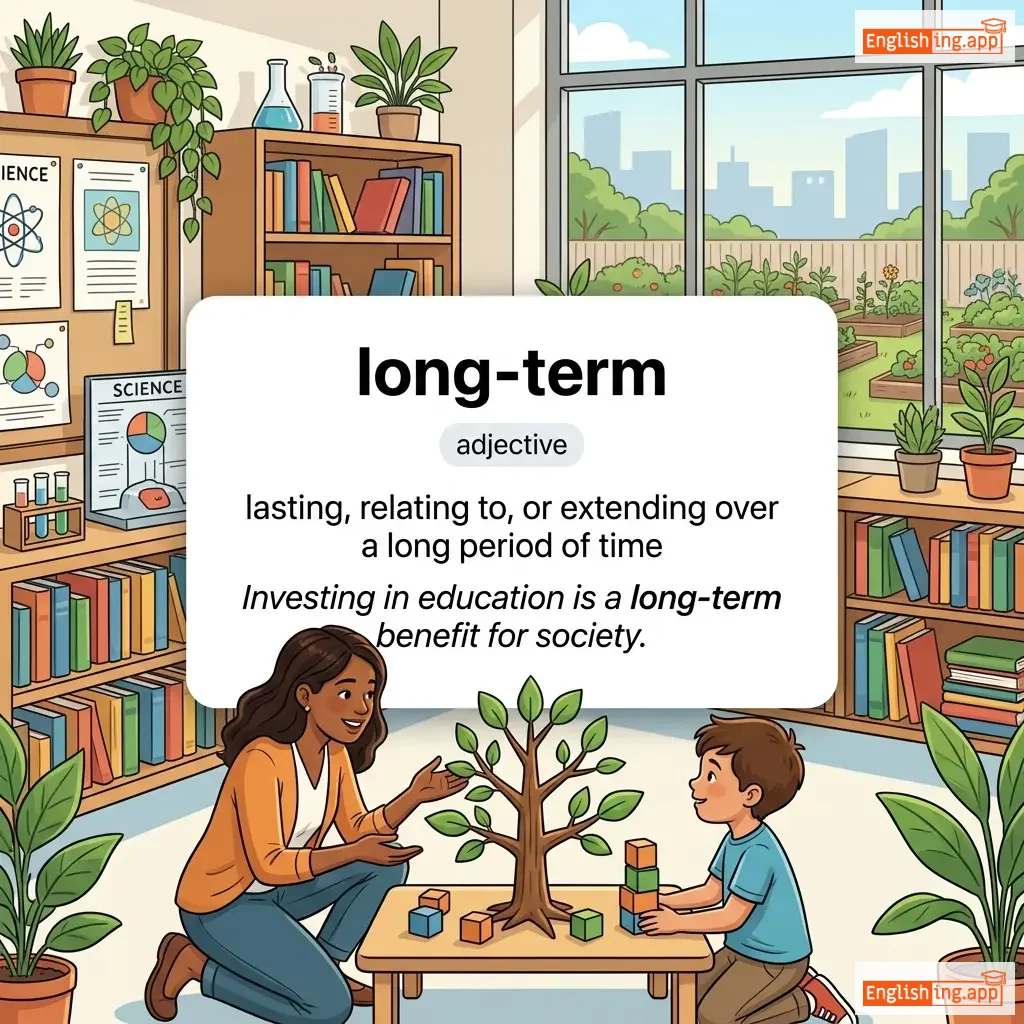
long-term definition card — visual illustration of the meaning
adjective
/ˌlɔːŋ ˈtɜːrm/
a largo plazo (a largo plazo)

lasting, relating to, or extending over a long period of time

"Investing in education is a long-term benefit for society."

"Invertir en educación es un beneficio a largo plazo para la sociedad." (Invertir en educación es un beneficio a largo plazo para la sociedad.)
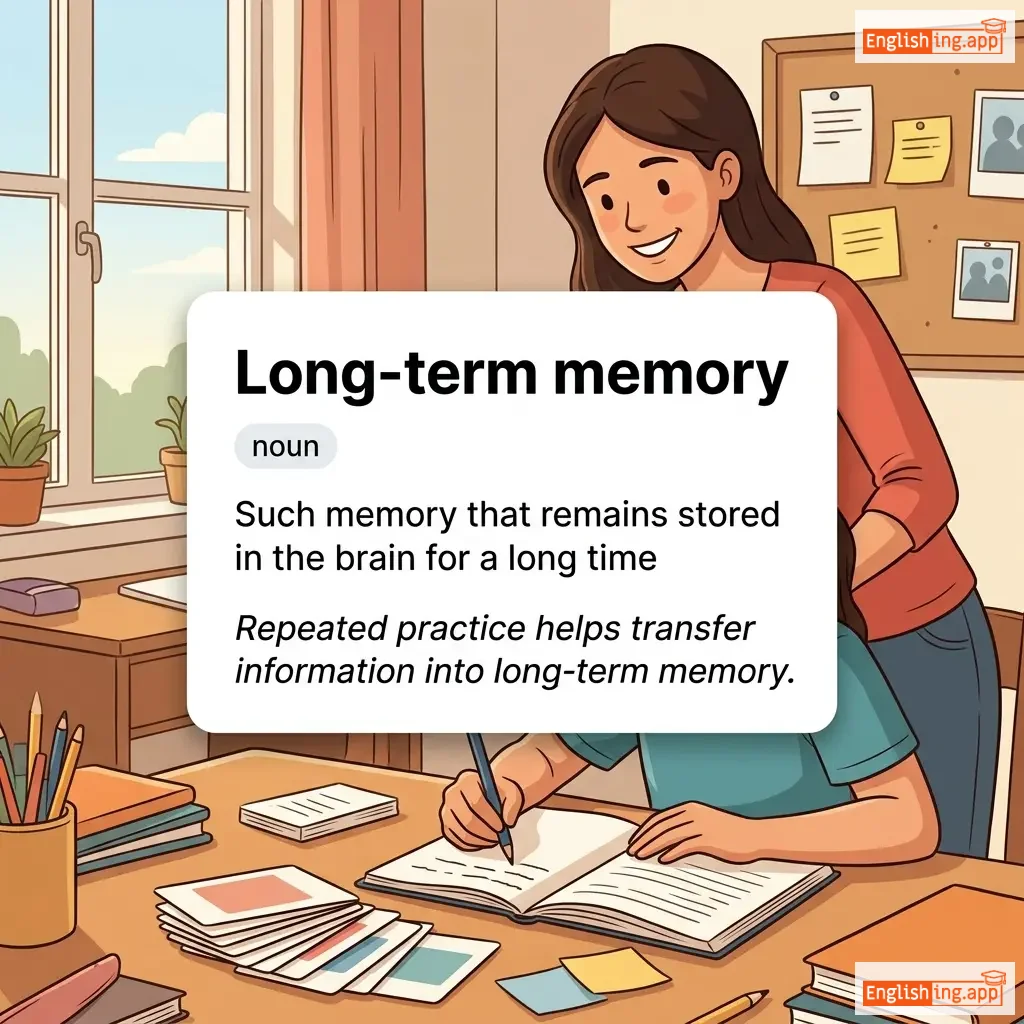
Long-term memory definition card — visual illustration of the meaning
noun
ˈlɒŋ tɜːm ˈmɛm.ər.i
memoria a largo plazo (memoria a largo plazo)

Such memory that remains stored in the brain for a long time

"Repeated practice helps transfer information into long-term memory."

"La práctica repetida ayuda a transferir información a la memoria a largo plazo." (La práctica repetida ayuda a transferir información a la memoria a largo plazo.)
adjective, adverb
/ˈlɒŋ taɪm/
de larga data (de larga data)

lasting or existing for a long period of time; having continued for many years

"She is a long-time friend of my family."

"Ella es una amiga de larga data de mi familia." (Ella es una amiga de larga data de mi familia)
noun
/ˈlɔːŋ.ɡən/
longan (Longan)

a small round tropical fruit with translucent white flesh and sweet taste, related to lychee

"Longan fruits are often eaten fresh or dried and are popular in Asian desserts."

"Las frutas longan se comen a menudo frescas o secas y son populares en los postres asiaticos." (Las frutas longan se comen a menudo frescas o secas y son populares en los postres asiaticos.)
noun
/lɔnˈdʒɛvəti/
longevidad (longevidad)

Long life or long existence of something.

"Good habits contribute to health and longevity."

"Los buenos hábitos contribuyen a la salud y longevidad." (Los buenos hábitos contribuyen a la salud y longevidad.)
noun
anhelo; deseo profundo (anhelo; deseo profundo)
noun
longitud geográfica (longitud geografica)
adjective
/ˈlɔːŋtaɪm/
de largo tiempo (de largo tiempo)

having existed or continued for a long time

"They are longtime friends who met in college."

"Son amigos de largo tiempo que se conocieron en la universidad." (Son amigos de largo tiempo que se conocieron en la universidad.)
/lʊk/
mirar (mirar)

to direct one's gaze in a particular direction

"She looked out the window at the rain."

"Ella miró hacia la ventana a la lluvia." (Ella miro hacia la ventana a la lluvia.)
phrasal verb
/lʊk ˈɑːftər/
cuidar de (cuidar de)

to take care of someone or something; to be responsible for someone’s well-being

"She looks after her younger brother while their parents are at work."

"Ella cuida de su hermano menor mientras sus padres trabajan." (Ella cuida de su hermano menor mientras sus padres trabajan)
noun
/ˈlʊkɪŋ ɡlæs/
espejo (espejo)

a mirror; a piece of glass that reflects images

"She looked at herself in the looking glass."

"Ella se miró en el espejo." (ella se miro en el espejo)
noun
/ˈlʊkaʊt/
vigilancia, vigilancia (vigilancia, vigilancia)

A place for watching; a person keeping watch.

"The guard kept a lookout for suspicious activity."

"El guardia mantenía un lookout para actividades sospechosas." (El guardia mantenía un lookout para actividades sospechosas.)
🌩️

Loom (lum)

verb
/luːm/
aparecer, surgir (aparecer, surgir)

to appear as a large, often frightening or unclear shape, usually something threatening or about to happen

"Dark clouds loomed over the city, signaling an approaching storm."

"Nubes oscuras aparecieron sobre la ciudad, señalando una tormenta que se acercaba." (Nubes oscuras aparecieron sobre la ciudad, señalando una tormenta que se acercaba.)
adjective
/ˈluː.ni/
loco; tonto; inestable mentalmente (loko; tonto; inestable mentalmente)

crazy; silly; mentally unstable

"His loony behavior made everyone laugh."

"Su comportamiento loco hizo reír a todos." (su comportamiento loko hizo reir a todos)
noun
/luːp/
bucle, lazo (bucle, lazo)

a shape produced by a curve that bends around and crosses itself

"The string formed a neat loop around the package."

"La cuerda formó un lazo limpio alrededor del paquete." (La cuerda formó un lazo limpio alrededor del paquete.)
adjective
/ˈluːpi/
loco (loco)

crazy, silly, or eccentric

"After working all night, he felt a little loopy."

"Después de trabajar toda la noche, se sintió un poco loco." (Despues de trabajar toda la noche, se sintio un poco loco.)
adjective
/luːs/
suelo (suelo)

not firmly or tightly fixed in place

"The screw is loose and needs tightening."

"El tornillo está suelto y necesita apretarse." (El tornillo está suelto y necesita apretarse.)
verb
/luːt/
saquear (saquear)

to steal goods, typically during war, riot, or chaos

"The rioters looted several shops during the protest."

"Los manifestantes saquearon varias tiendas durante la protesta." (Los manifestantes saquearon varias tiendas durante la protesta.)
verb
/loʊp/
correr o moverse con grandes zancadas (correr o moverse con grandes zancadas)

to run or move with a long, bounding stride

"The horse loped gracefully across the field."

"El caballo se movía elegantemente por el campo." (El caballo se movía elegantemente por el campo.)
adjective
/ˈlɑːpˌsaɪdɪd/
desigual, torcido (desigual, torcido)

with one side lower, larger, or different from the other; uneven or imbalanced

"The cake looked lopsided after being decorated in a hurry."

"El pastel se veía desigual después de ser decorado rápidamente." (El pastel se veía desigual después de ser decorado rápidamente.)
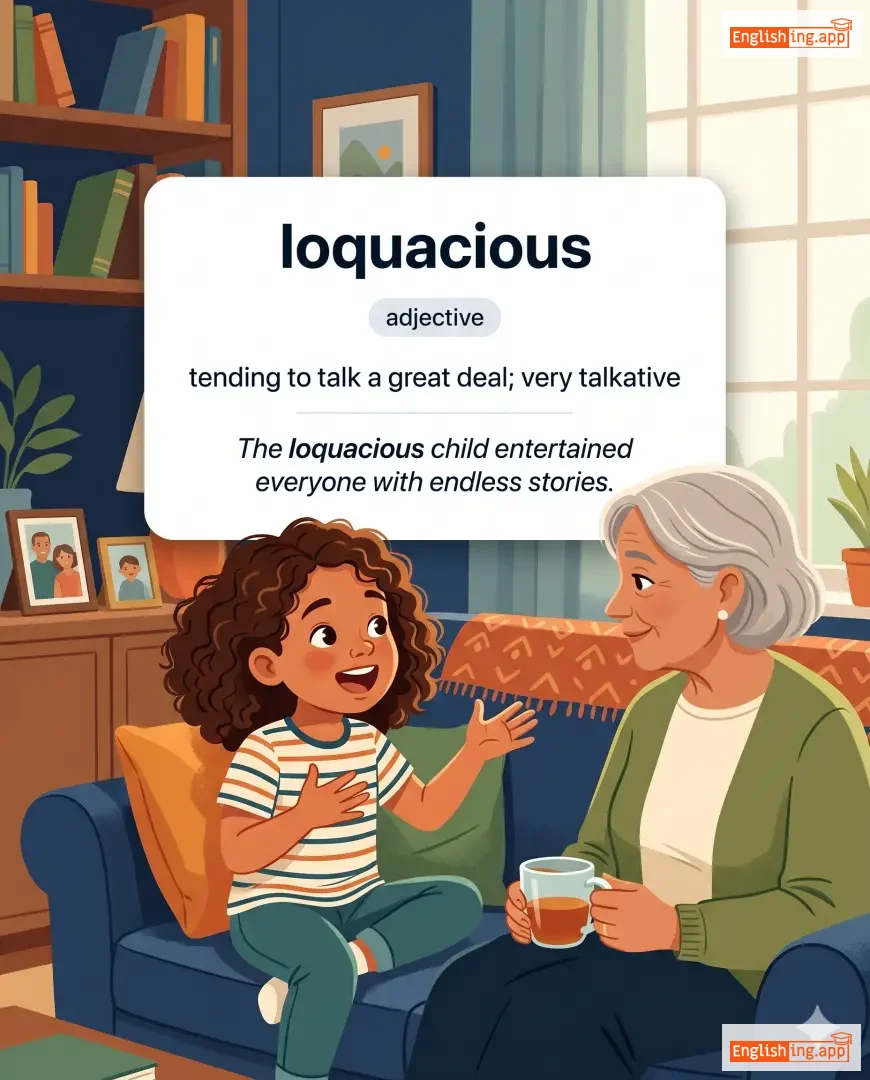
loquacious definition card — visual illustration of the meaning
adjective
/loʊˈkweɪʃəs/
locuaz (loquaz)

tending to talk a great deal; very talkative

"The loquacious child entertained everyone with endless stories."

"El niño locuaz entretuvo a todos con historias interminables." (El nino locuaz entretuvo a todos con historias interminables.)
noun
/ˈlɔːrdlɪŋ/
señorito (señorito)

A young or petty lord; someone of minor nobility.

"The arrogant lordling demanded respect despite his lack of experience."

"El arrogante señorito exigió respeto a pesar de su falta de experiencia." (El arrogante señorito exigió respeto a pesar de su falta de experiencia.)
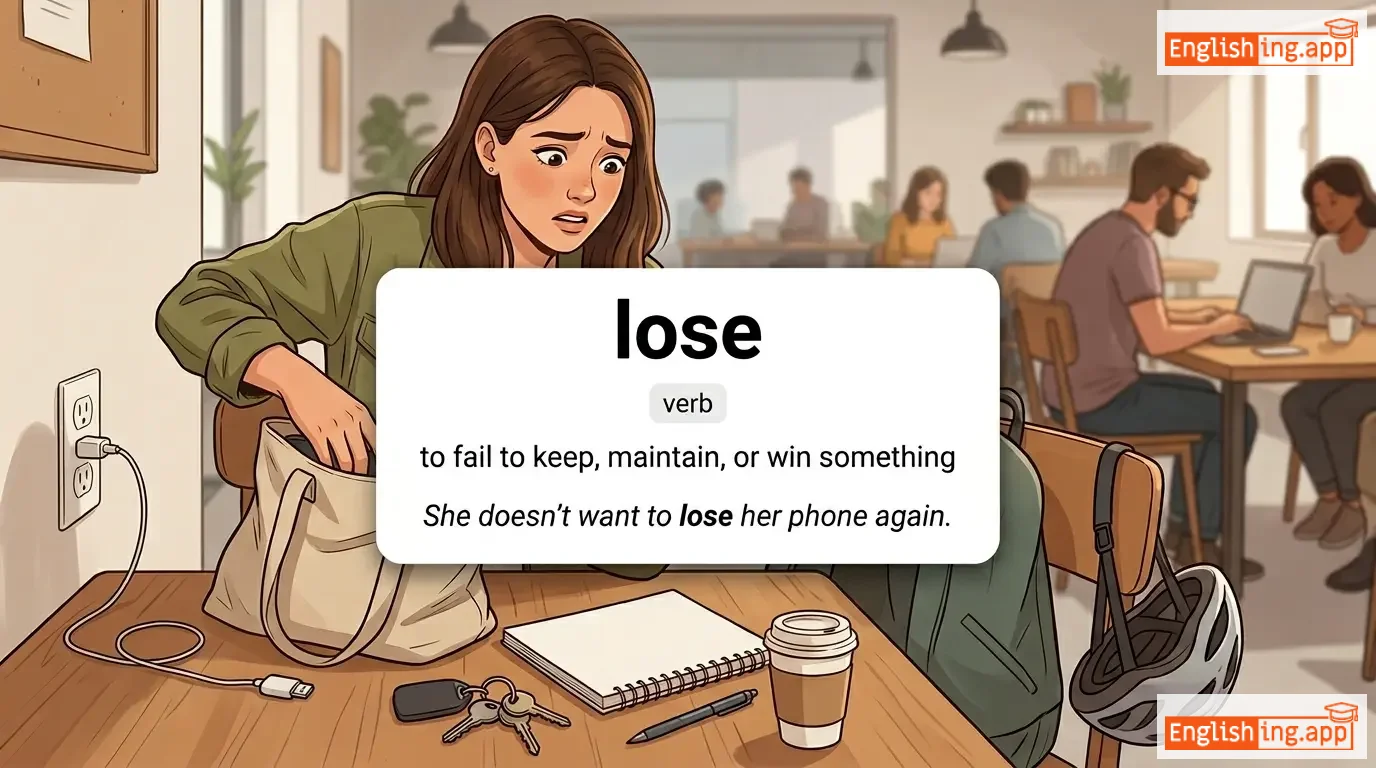
lose definition card — visual illustration of the meaning
verb
/luːz/
felicidad (felicidad)

to fail to keep, maintain, or win something

"She doesn’t want to lose her phone again."

"Ella no pudo ocultar su felicidad cuando recibió el premio." (Ella no pudo ocultar su felicidad cuando recibió el premio.)