Vocabularios

Descubra, aprenda y domine el vocabulario en inglés

noun
/ˈlɪstɪŋ/
lista (lista)

a series of items or names written or printed in a specific order

"The listing of available jobs was updated daily."

"La lista de trabajos disponibles se actualizaba a diario." (La lista de trabajos disponibles se actualizaba a diario.)
adjective
/ˈlɪstləs/
sin energía (sin energia)

lacking energy, enthusiasm, or interest

"She felt listless after working long hours without rest."

"Se sintió sin energía después de trabajar durante largas horas sin descanso." (Se sintió sin energia después de trabajar durante largas horas sin descanso.)
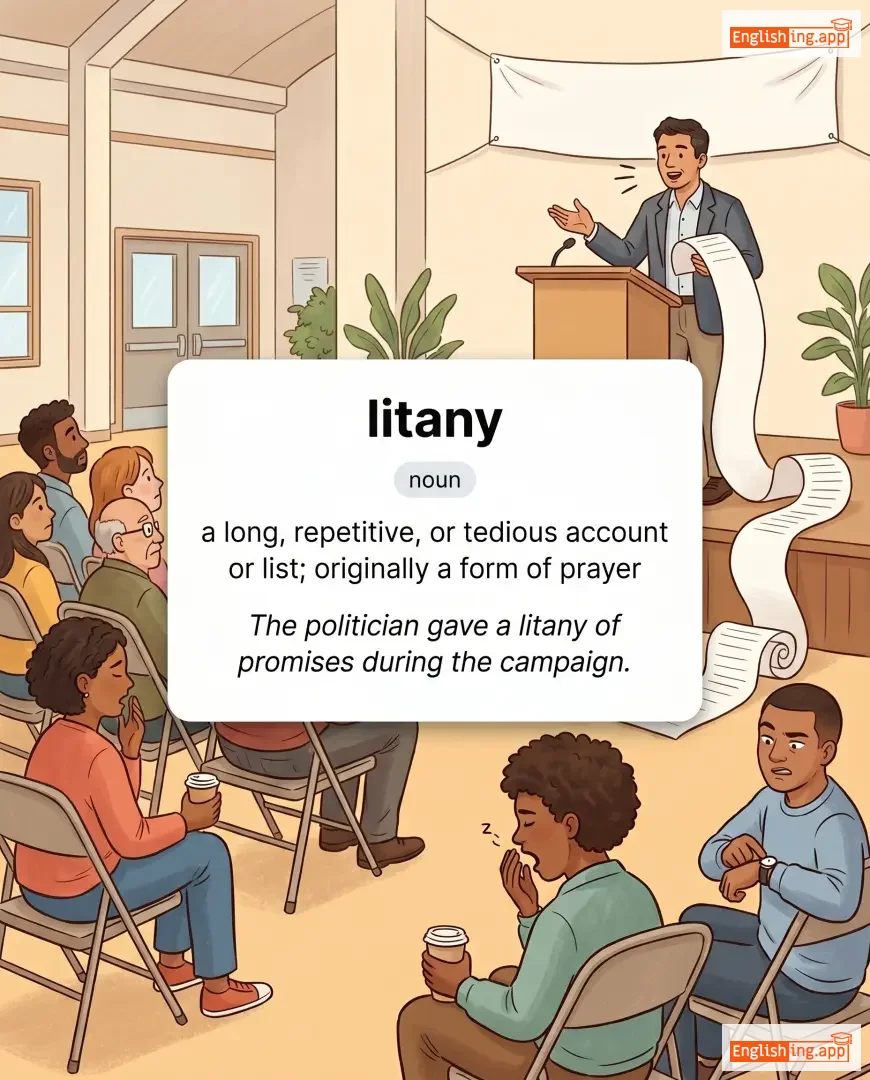
litany definition card — visual illustration of the meaning
noun
/ˈlɪtəni/
litany (litany)

a long, repetitive, or tedious account or list; originally a form of prayer

"The politician gave a litany of promises during the campaign."

"El político dio una larga lista de promesas durante la campaña." (El político dio una larga lista de promesas durante la campaña.)
noun
/ˈlaɪtʃi/
lichi (lichi)

a small oval pink-red tropical fruit with white translucent flesh and sweet taste

"The litchi has a rough pink shell that you peel to eat the sweet white fruit inside."

"El litchi tiene una cáscara rosa rugosa que se pela para comer la fruta blanca y dulce en su interior." (El litchi tiene una cascara rosa rugosa que se pela para comer la fruta blanca y dulce en su interior.)
noun
/ˈlɪtə(r)/
litro (liter)

a metric unit of volume equal to one cubic decimeter

"The recipe calls for two liters of water."

"La receta requiere dos litros de agua." (La receta requiere dos litros de agua.)
noun
/ˈlɪtərəsi/
alfabetización (alfabetizacion)

the ability to read and write

"Literacy programs help reduce poverty in rural areas."

"Los programas de alfabetización ayudan a reducir la pobreza en las zonas rurales." (Los programas de alfabetización ayudan a reducir la pobreza en las zonas rurales.)
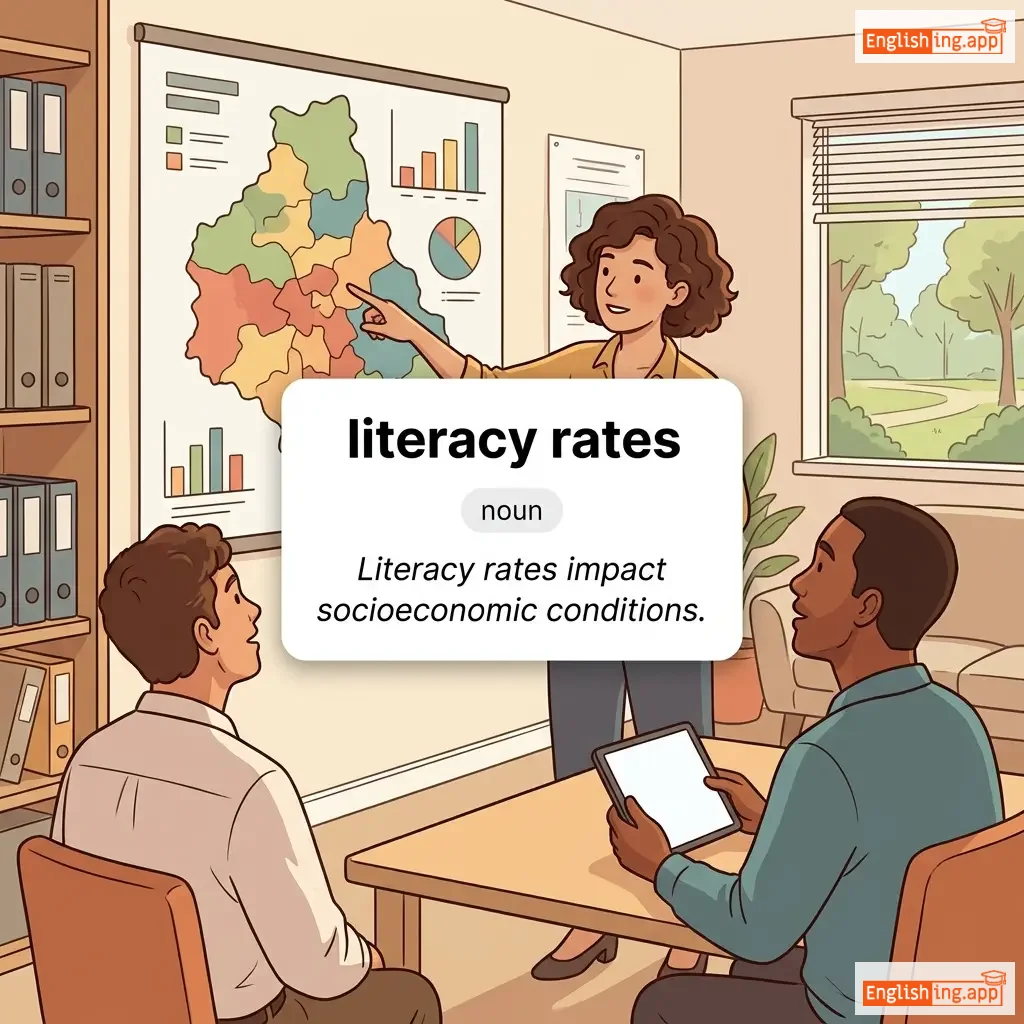
literacy rates definition card — visual illustration of the meaning
noun
ˈlɪt.ər.ə.si ˌreɪts
tasas de alfabetización (tasas de alfabetizacion)

The percentage of people in a population who can read and write; measures of educational levels in a population.

"Literacy rates impact socioeconomic conditions."

"Las tasas de alfabetización afectan las condiciones socioeconómicas." (Las tasas de alfabetizacion afectan las condiciones socioeconomicas.)
adjective
/ˈlɪtərəl/
literal (literal)

taking words in their usual or most basic sense without metaphor or exaggeration

"His comment was meant as a joke, not to be taken in a literal sense."

"Su comentario fue dicho en tono de broma, no para tomarse de manera literal." (Su comentario fue dicho en tono de broma, no para tomarse de manera literal.)
adverb
/ˈlɪtərəli/
literalmente (literalmente)

in a literal manner or sense; exactly

"He was literally running for three hours without stopping."

"Él estuvo corriendo literalmente durante tres horas sin detenerse." (Él estuvo corriendo literalmente durante tres horas sin detenerse.)
adjective
/ˈlɪtərɛri/
literario (literario)

concerning the writing, study, or content of literature

"She is a well-known figure in the literary world."

"Ella es una figura conocida en el mundo literario." (Ella es una figura conocida en el mundo literario.)
adjective
/ˈlɪt.ər.ət/
alfabetizado; educado; bien educado (literet)

able to read and write; educated; well-educated

"She is a very literate person who reads extensively."

"Ella es una persona muy alfabetizada que lee extensamente." (ella es una persona muy alfabetizada que lee extensamente.)
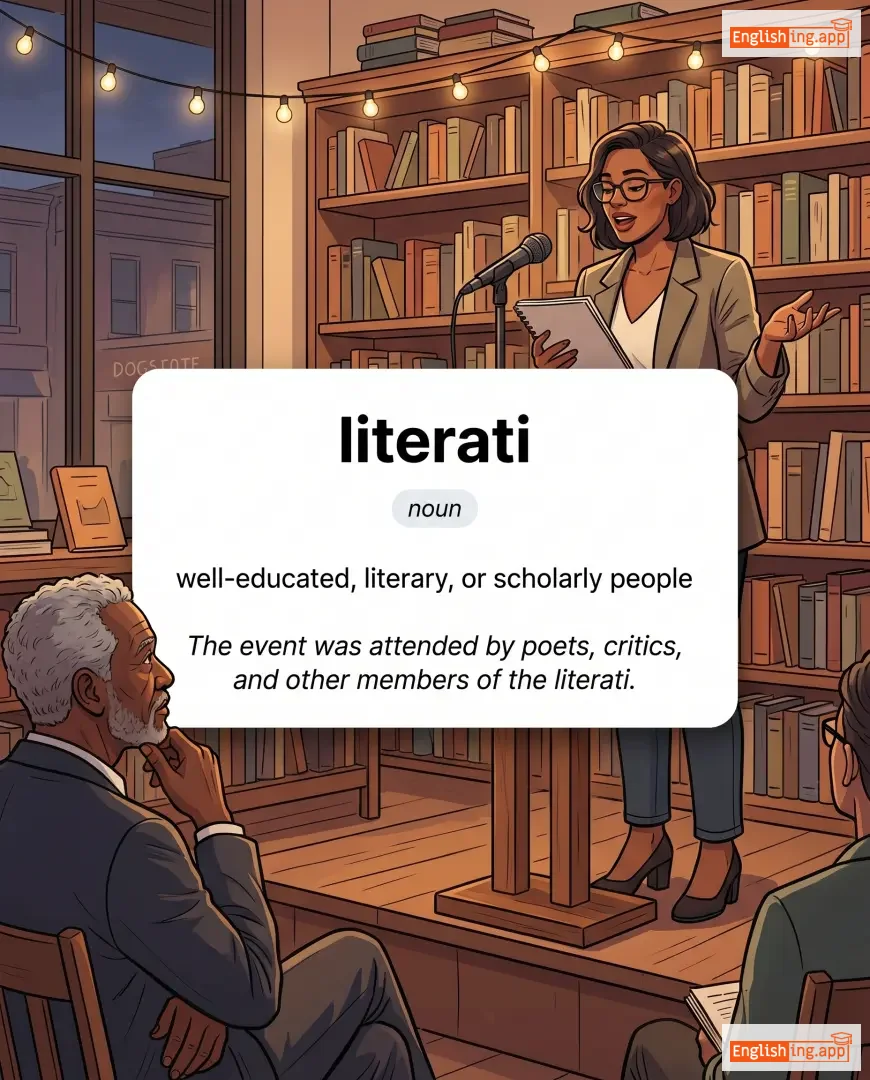
literati definition card — visual illustration of the meaning
noun
/ˌlɪt.əˈrɑː.ti/
literatos (literatos)

well-educated, literary, or scholarly people

"The event was attended by poets, critics, and other members of the literati."

"El evento fue asistido por poetas, críticos y otros miembros de los literatos." (El evento fue asistido por poetas, críticos y otros miembros de los literatos.)
noun
/ˈlɪtərətʃər/
literatura (literatura)

written works, especially those considered of superior or lasting artistic merit

"He studied English literature at university."

"Estudió literatura inglesa en la universidad." (Estudió literatura inglesa en la universidad.)
/laɪð/
flexible y grácil (flexible y gracil)

thin, supple, and graceful in movement

"The lithe dancer captivated the audience with her graceful spins."

"La bailarina flexible cautivó a la audiencia con sus giros gráciles." (La bailarina flexible cautivo a la audiencia con sus giros gráciles.)
adjective
/ˈlaɪðsəm/
flexible y grácil (flexible y gracil)

gracefully flexible and supple

"Her lithesome figure allowed her to move like a ballerina."

"Su figura flexible le permitió moverse como una bailarina." (Su figura flexible le permitió moverse como una bailarina.)
noun
/ˈlɪθəˌɡræf/
litografía (impresión de piedra) (litografia (impresion de piedra))

a print made by lithography, often artistic

"The museum displayed a rare lithograph from the 19th century."

"El museo exhibió una rara litografía del siglo XIX." (El museo exhibio una rara litografia del siglo XIX.)
noun
/ˈlɪθəˌtaɪp/
litotipo (superficie de impresión) (litotipo (superficie de impresion))

a printing surface or type made for lithography

"The printer used a lithotype to produce multiple copies of the design."

"La impresora usó un litotipo para producir varias copias del diseño." (La impresora uso un litotipo para producir varias copias del diseño.)
noun
/ˈlɪtɪɡənt/
demandante (demandante)

a person involved in a lawsuit

"The court summoned both litigants for the hearing."

"El tribunal citó a ambos demandantes para la audiencia." (El tribunal citó a ambos demandantes para la audiencia.)
verb
/ˈlɪtɪˌɡeɪt/
litigar (litigar)

to engage in legal proceedings or take a dispute to court

"The company decided to litigate the contract dispute."

"La empresa decidió litigar la disputa contractual." (La empresa decidió litigar la disputa contractual.)
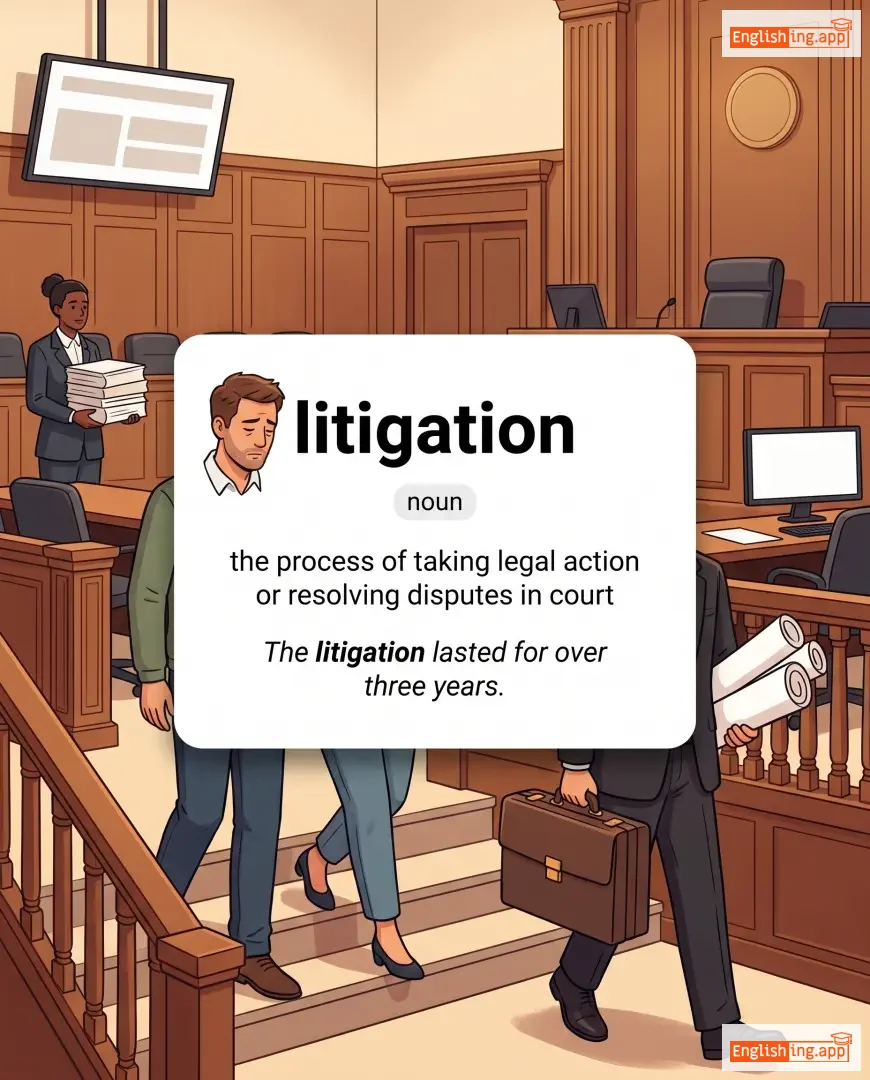
litigation definition card — visual illustration of the meaning
noun
/ˌlɪtɪˈɡeɪʃən/
litigio (litigio)

the process of taking legal action or resolving disputes in court

"The litigation lasted for over three years."

"El litigio duró más de tres años." (El litigio duró más de tres años.)
adjective
/lɪˈtɪdʒəs/
litigioso (litigioso)

prone to engage in lawsuits or overly inclined to argue legally

"He is known as a litigious neighbor who often sues people."

"Es conocido como un vecino litigioso que frecuentemente demanda a las personas." (Es conocido como un vecino litigioso que frecuentemente demanda a las personas.)
noun
/ˈlaɪtoʊtiːz/
litotes (litotes)

a figure of speech in which an affirmative is expressed by the negative of its contrary

"Saying 'not bad' as a compliment is an example of litotes."

"Decir 'no está mal' como un cumplido es un ejemplo de litotes." (Decir 'no está mal' como un cumplido es un ejemplo de litotes.)
noun
/ˈliːtər/
litro (litro)

a metric unit of volume equal to 1,000 cubic centimeters; commonly used to measure liquids

"She bought a litre of milk from the shop."

"Compró un litro de leche en la tienda." (compro un litro de leche en la tienda)
noun/verb
/ˈlɪtər/
basura (basura)

rubbish or waste left lying in a public place; to make a place untidy by leaving rubbish

"The park was full of litter after the festival."

"El parque estaba lleno de basura después del festival." (El parque estaba lleno de basura después del festival.)
adjective
/ˈlɪtl/
pequeño (pequeno)

Small in size, amount, or degree.

"He drank a little water before going to bed."

"Él bebió un poco de agua antes de irse a la cama." (El bebio un poco de agua antes de irse a la cama.)
adjective
/ˈlɪtərəl/
litoral (litoral)

Related to or situated on the shore of the sea or a lake.

"The littoral zone is home to many unique marine species."

"La zona litoral es el hogar de muchas especies marinas únicas." (La zona litoral es el hogar de muchas especies marinas únicas.)
noun
/ˈlɪtərdʒi/
liturgia (liturgia)

A form or formulary according to which public religious worship is conducted.

"The priest followed the liturgy during the Sunday mass."

"El sacerdote siguió la liturgia durante la misa del domingo." (El sacerdote siguió la liturgia durante la misa del domingo.)
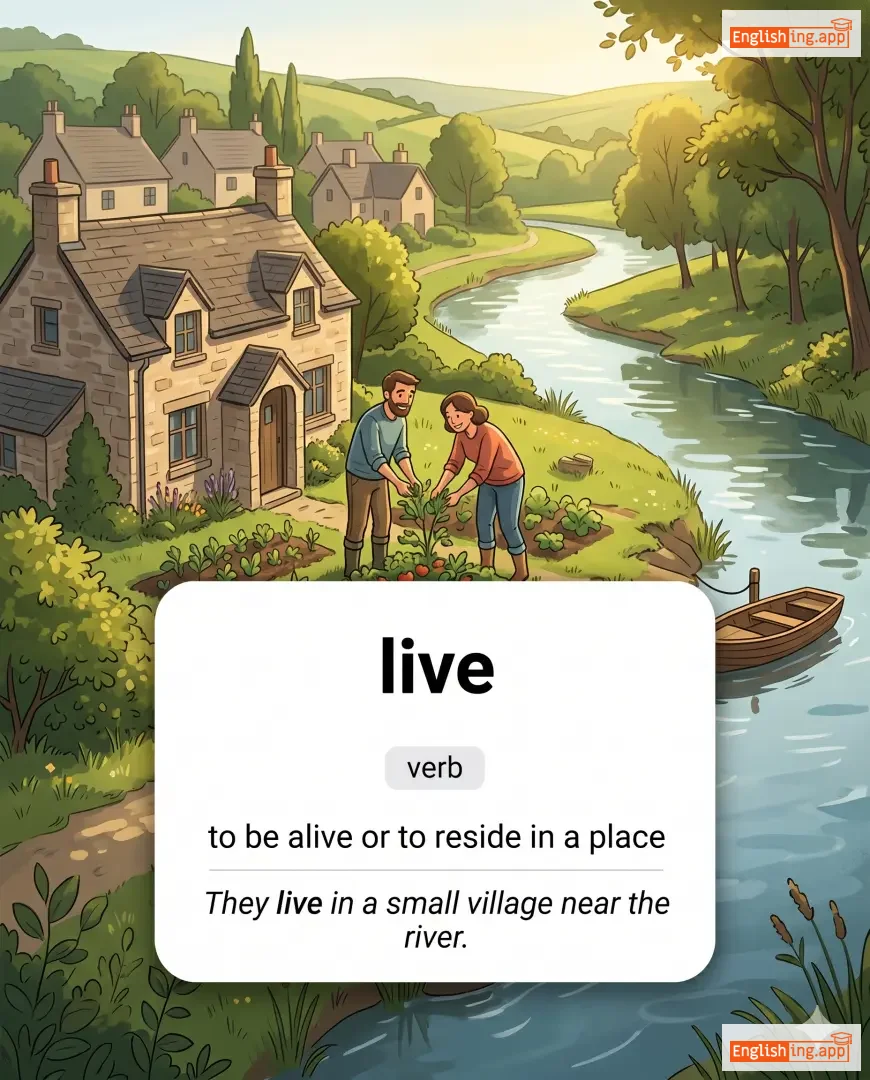
live definition card — visual illustration of the meaning
verb
/lɪv/
vivir (vivir)

to be alive or to reside in a place

"They live in a small village near the river."

"Ellos viven en un pequeño pueblo cerca del río." (Ellos viven en un pequeño pueblo cerca del río.)
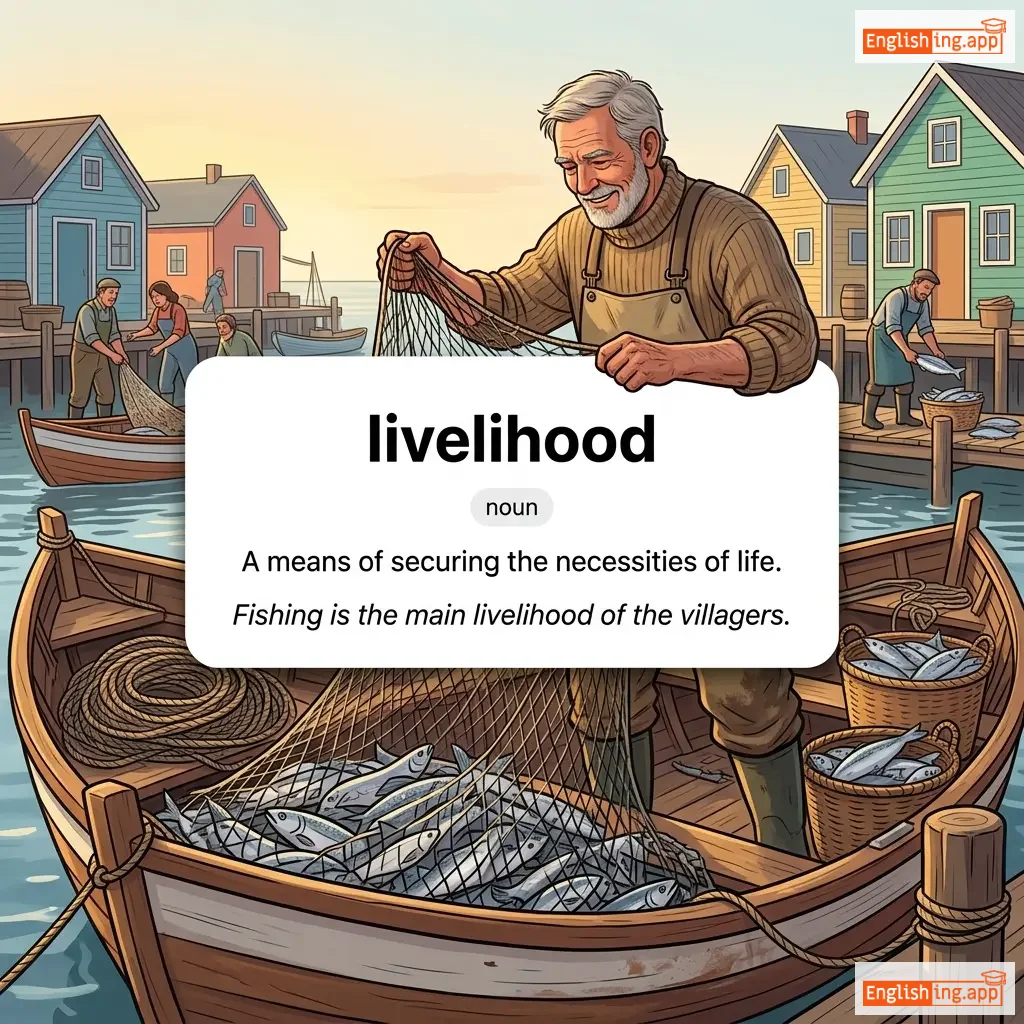
livelihood definition card — visual illustration of the meaning
noun
/ˈlaɪvlihʊd/
medio de vida (medio de vida)

A means of securing the necessities of life.

"Fishing is the main livelihood of the villagers."

"La pesca es el principal medio de vida de los aldeanos." (La pesca es el principal medio de vida de los aldeanos.)
adjective
/ˈlaɪv.li/
animado; vivaz; alegre (laivli)

full of life and energy; animated; cheerful

"The children had a lively discussion about their favorite books."

"Los niños tuvieron una discusión animada sobre sus libros favoritos." (Los niños tuvieron una discusión animada sobre sus libros favoritos.)
noun
/ˈlɪvər/
hígado (higado)

a large organ in the body that cleans the blood and produces bile to help digest food.

"The liver plays a vital role in removing toxins from the body."

"El hígado juega un papel vital en la eliminación de toxinas del cuerpo." (El higado juega un papel vital en la eliminacion de toxinas del cuerpo.)
noun
/ˈlaɪv.stɒk/
ganado (ganado)

farm animals such as cattle, sheep, and pigs that are kept for use or profit

"The farmer raised livestock to supply meat and milk for the market."

"El granjero criaba ganado para suministrar carne y leche para el mercado." (El granjero criaba ganado para suministrar carne y leche para el mercado.)
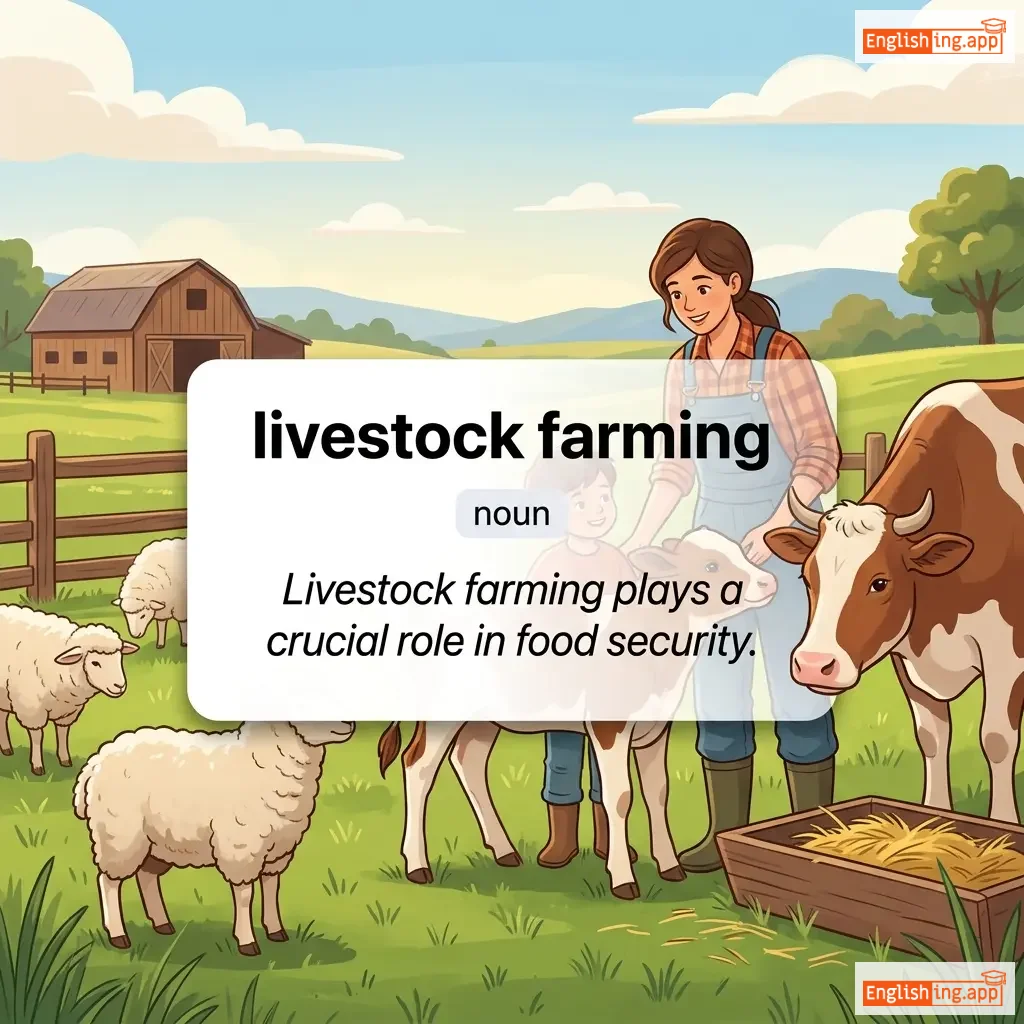
livestock farming definition card — visual illustration of the meaning
noun
ˈlaɪv.stɒk ˈfɑː.mɪŋ
crianza de ganado (crianca de ganado)

The breeding, raising, and care of farm animals such as cattle, horses, sheep, and pigs for food, fiber, and other products.

"Livestock farming plays a crucial role in food security."

"La crianza de ganado juega un papel crucial en la seguridad alimentaria." (La crianza de ganado juega un papel crucial en la seguridad alimentaria.)
adjective
/ˈlɪvɪd/
furioso (furioso)

Extremely angry; furious.

"She was livid when she found out about the betrayal."

"Ella estaba furiosa cuando descubrió la traición." (Ella estaba furiosa cuando descubrió la traición.)
noun/adjective
/ˈlɪvɪŋ/
vida / sustento (vida / sustento)

the state of being alive; or a way of earning money

"He makes his living as a teacher."

"Él gana su sustento como maestro." (El gana su sustento como maestro.)
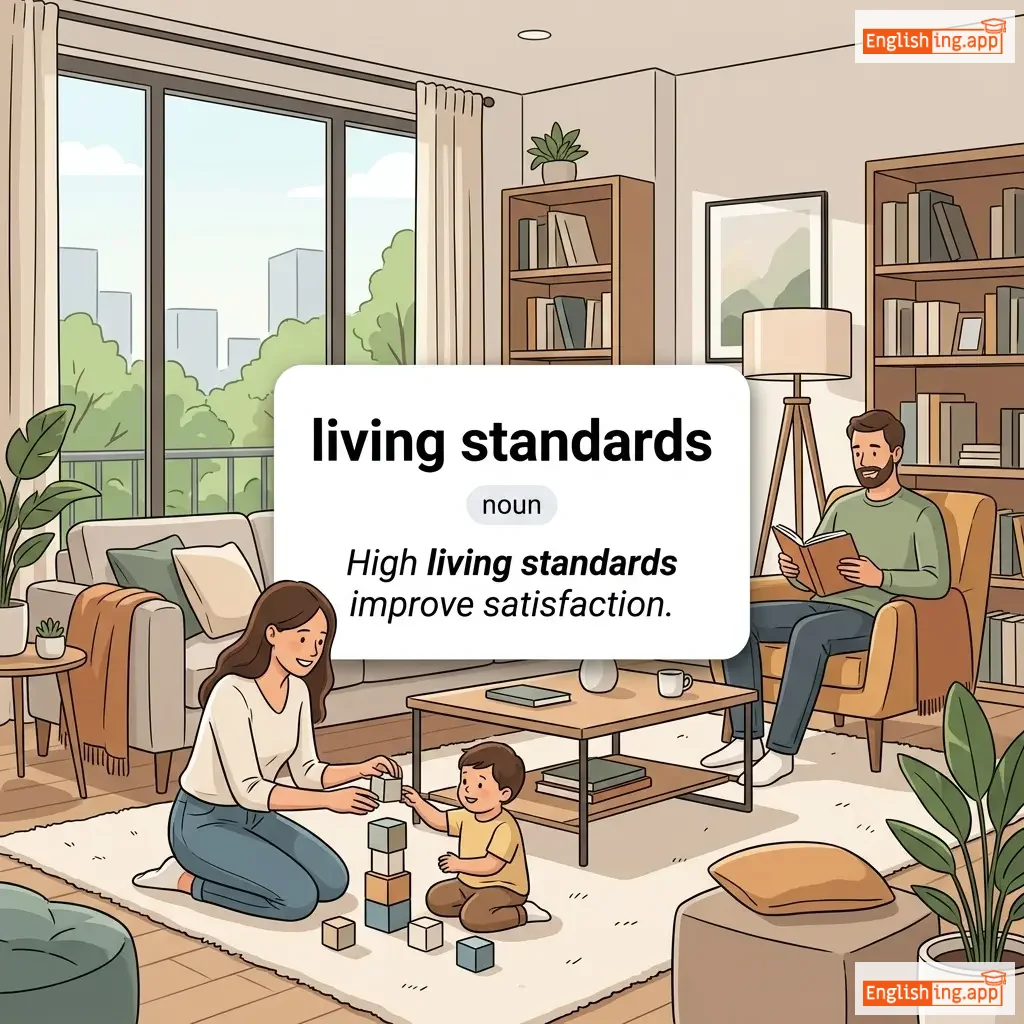
living standards definition card — visual illustration of the meaning
noun
ˈlɪv.ɪŋ ˈstæn.dədz
estándares de vida (estandares de vida)

The degree of wealth and material comfort available to a person or community; quality of life.

"High living standards improve satisfaction."

"Altos estándares de vida mejoran la satisfacción." (Altos estándares de vida mejoran la satisfacción.)
noun
/ˈlɪzərd/
lagarto (lagarto)

A small reptile with a long body, four legs, and a tail, often found on walls or in gardens.

"A lizard crawled across the wall."

"Un lagarto caminaba por la pared." (Un lagarto caminaba por la pared.)
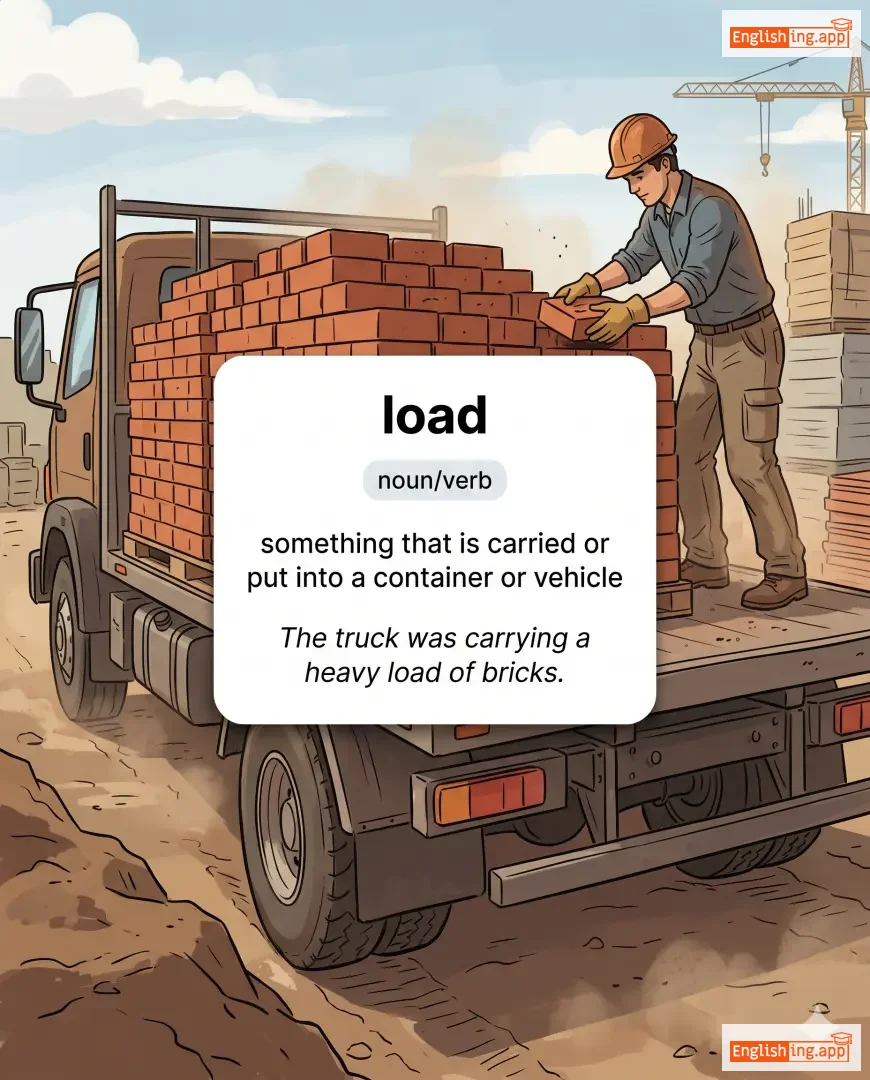
load definition card — visual illustration of the meaning
noun/verb
/loʊd/
carga (carga)

something that is carried or put into a container or vehicle

"The truck was carrying a heavy load of bricks."

"El camión estaba llevando una carga pesada de ladrillos." (El camión estaba llevando una carga pesada de ladrillos.)
noun
/loʊf/
pan (pan)

a shaped mass of bread baked as a unit

"She bought a fresh loaf of bread from the bakery."

"Ella compró una barra de pan fresco de la panadería." (Ella compro una barra de pan fresco de la panaderia.)
noun
/ˈloʊfər/
holgazán (holgazan)

A person who is lazy and avoids work; also a type of slip-on shoe.

"He was called a loafer because he never did his job properly."

"Lo llamaron holgazán porque nunca hacía bien su trabajo." (Lo llamaron holgazan porque nunca hacia bien su trabajo.)
noun
/loʊm/
suelo fértil (suelo fertil)

A fertile soil of clay and sand containing humus.

"The farmer used loam to improve the fertility of the field."

"El agricultor utilizó suelo fértil para mejorar la fertilidad del campo." (El agricultor utilizo suelo fertil para mejorar la fertilidad del campo.)
noun
/loʊn/
préstamo (prestamo)

money that is borrowed and expected to be paid back with interest

"She took a loan from the bank to buy a house."

"Tomó un préstamo del banco para comprar una casa." (tomo un prestamo del banco para comprar una casa.)
adjective
/loʊθ/
reacio (reacio)

reluctant or unwilling to do something

"She was loath to admit her mistake in front of everyone."

"Ella estaba reacia a admitir su error frente a todos." (Ella estaba reacia a admitir su error frente a todos.)
verb
/loʊð/
detestar (detestar)

to feel intense dislike or disgust for

"He absolutely loathes being late to meetings."

"Él odia llegar tarde a las reuniones." (Él odia llegar tarde a las reuniones.)
adjective
/ˈloʊð.səm/
repulsivo (repulsivo)

causing hatred or disgust; repulsive

"The loathsome smell from the garbage made everyone leave the room."

"El olor repulsivo de la basura hizo que todos abandonaran la habitación." (El olor repulsivo de la basura hizo que todos abandonaran la habitacion.)
noun
/ˈlɒbi/
vestíbulo (vestibulo)

a large open area near the entrance of a building; also a group trying to influence decisions.

"We met the manager in the hotel lobby before the meeting."

"Nos encontramos con el gerente en el vestíbulo del hotel antes de la reunión." (Nos encontramos con el gerente en el vestibulo del hotel antes de la reunion.)
noun
/ˈlɒbstər/
langosta (langosta)

a large marine crustacean with claws and a hard shell

"The lobster was served with melted butter and lemon."

"La langosta se sirvió con mantequilla derretida y limón." (la langosta se sirvio con mantequilla derretida y limon.)
adjective/noun
/ˈloʊkəl/
local (local)

relating to a particular area or neighborhood

"We prefer buying fruits from the local market."

"Preferimos comprar frutas del mercado local." (Preferimos comprar frutas del mercado local.)
verb
/loʊˈkeɪt/
localizar (lokalizar)

to find the exact position or place of something

"They managed to locate the missing keys under the couch."

"Ellos lograron localizar las llaves perdidas debajo del sofá." (Ellos lograron localizar las llaves perdidas debajo del sofá.)
noun
/loʊˈkeɪʃən/
ubicación (ubicacion)

a particular place or position

"This cafe is in a beautiful location near the lake."

"Este café está en una ubicación hermosa cerca del lago." (Este cafe esta en una hermosa ubicacion cerca del lago.)